RACIAL DIFFERENCES IN THE QUALITY OF HOME HEALTH CARE: WHAT ARE THE CONTRIBUTING FACTORS?
Suzanne Brown Daly
A dissertation submitted to the faculty at the University of North Carolina at Chapel Hill in partial fulfillment of the requirements for the degree of Doctor of Philosophy in the School of
Nursing.
Chapel Hill 2016
Approved by: Barbara Mark
G. Rumay Alexander Mary R. Lynn
ABSTRACT
Suzanne Brown Daly: Racial Differences in the Quality of Home Health Care: What are the Contributing Factors?
(under the direction of Barbara Mark)
Background: Racial disparities in the quality of care have been documented in numerous health care settings. However, there are no published studies in which quality of care has been
compared between home healthcare agencies that serve a high and low percentage of African American patients (High and Low AA HHAs).
Objective: Guided by the theory of institutional racism, the overall purpose of this study was two-fold: to document whether racial differences in the quality of home health care exist and, if found, explore the relationship between market, community, organizational, nurse staffing characteristics and racial differences in quality of care.
Methods: This study employed a retrospective, non-experimental, descriptive design. There were five data sets: the Outcome and Assessment Information Set, the Provider of Services File, the Area Resource File, the Healthcare Cost Report Information System, and Home Health Compare. Four analyses were conducted: two descriptive analyses to compare patient characteristics between High and Low AA HHAs and to compare quality of care measures between High and Low AA HHAs; a multiple regression analysis to assess which characteristics (market, community, organizational, nurse staffing) influence differences in quality of care; and a logistic regression analysis to examine variation in quality among High AA HHAs.
Medicare certified for fewer years compared to Low AA HHAs. High AA HHAs had lower quality of care scores for two of the six outcome measures. Community and organizational
characteristics were more likely to be associated with observed racial differences than were market and nurse staffing characteristics. Organizational characteristics had more influence on variation in quality of care for High AA HHAs compared to market, community, and nurse staffing characteristics.
Conclusions: This study provided mixed evidence that differences in quality of home health care exist between High and Low AA HHAs. However, additional studies are needed to further our understanding of how policies and practices of social institutions can perpetuate racial
ACKNOWLEDGEMENTS
This has been a long, long journey and I would not have finished if I had not had guidance and support from my committee and encouragement and support from my family.
I want to start out by thanking Dr. Barbara Mark for her endless support, guidance, and patience with me over nearly 10 years. Dr. Mark always knew when to give me that extra push that I needed and when to give me some space and time to make the best decisions for myself and my family. I don’t know how she got assigned as my advisor when I first started the program, but I could not have asked for a better advisor, committee chair, and mentor. I’m sure there were many times she wondered if I would ever finish, but she has always been patient with me and has given me valuable support and guidance for which I am truly grateful.
Thank you also to Dr. Don Pathman and Dr. Rumay Alexander for sharing your knowledge about disparities and institutional racism. Dr. Pathman introduced me to racial disparities in health care, ultimately igniting my passion for understanding the causes of racial disparities in quality of care. Dr. Alexander has helped me take a wider view of potential causes of racial disparities by introducing me to the theory of institutional racism. Both Dr. Pathman and Dr. Alexander have provided me with invaluable knowledge and guidance on this journey and have helped make me a better scholar.
I also want to thank Dr. Jennifer Craft Morgan for helping me to understand the statistical analysis piece of my dissertation. Dr. Morgan answered many long e-mails from me and helped guide me through questions and concerns that I had about the analysis and results of my
committee, helped me create the SAS code for the analysis portion of my dissertation. Dr. Schwartz went out of his way to help me and I owe him a debt of gratitude. Thanks also to Dr. Mary Lynn for her thoughtful insight into the statistical methods chosen for this study, for not giving up on those pesky tables and helping me to reformat then, and for her encouragement to always write more clearly and succinctly.
I want to thank my neighbors Sharon Fowler and Wilson Knight for helping my family in so many different ways—from caring for my children for free to mowing the yard to painting our house. You have removed untold amounts of stress from my life over the past eight years and I thank you.
I want to thank my family for being with me on this seemingly endless journey. To my sister Amanda: Thank you for your encouragement, for helping me to laugh about conceptual models and theories, for your financial support, and for making sure I am dressed appropriately for my dissertation defense! To my Dad: You have always believed in me, believed that I could do anything I want to, for as long as I can remember. Your support (financially and emotionally) and encouragement of “student monkey” has been invaluable. To my Mom: Words cannot express my gratitude to you. You pushed me to return to school after having Aidan, when I didn’t want to go back. You have spent countless hours driving to and from Durham (to and from Atlanta, GA) to help me finish school. I’ve lost track of how many times you have been up here to drive carpool, make dinner, and take care of my children so I can get a little more done. You have helped us financially, practically, and emotionally. I would not have finished if it weren’t for all of your help.
TABLE OF CONTENTS
LIST OF TABLES ... xiv
LIST OF FIGURES ... xv
CHAPTER 1: BACKGROUND AND SIGNIFICANCE... 1
Problem Statement ... 1
Background ... 2
Report of the Secretary’s Task Force on Black and Minority Health ... 3
American Medical Association Report ... 3
Institute of Medicine 2003 Report ... 4
AHRQ National Healthcare Quality and Disparities Report ... 4
Department of Health and Human Services 2011 Action Plan ... 5
Disparities in Quality of Care Between African Americans and Whites ... 6
Shift in Focus of Disparities Research ... 9
Factors that Contribute to Disparities in Care... 13
Variation in Quality in High AA HHAs ... 14
Home Health Care... 16
Definition of Home Health Care ... 16
Home Healthcare Recipients... 17
Payers of Home Health Care... 18
Home Healthcare Agencies ... 19
Study Purpose and Aims ... 19
Focus on African American Patients ... 21
Study Significance ... 22
Organization of the Dissertation ... 25
CHAPTER 2: THEORETICAL FRAMEWORK ... 26
Introduction ... 26
Race and Racism ... 27
Race... 27
Racism... 29
Theory of Institutional Racism ... 34
Origins of Institutional Racism in the United States ... 34
Mechanisms of Institutional Racism ... 37
Factors that Maintain Institutional Racism ... 42
Limitations of the Theory of Institutional Racism ... 45
Rationale for Using the Theory of Institutional Racism ... 46
Conceptual Model Development ... 47
Summary ... 49
CHAPTER 3: LITERATURE REVIEW ... 50
Introduction ... 50
Comparison of Nursing Homes and Home Healthcare Agencies ... 51
Factors that Contribute to Disparities in Care... 54
Market Characteristics ... 54
Community Characteristics ... 58
Organizational Characteristics ... 67
Nurse Staffing Characteristics ... 77
Summary ... 82
CHAPTER 4: RESEARCH METHODS ... 84
Introduction ... 84
Research Design... 84
Data Sources ... 85
Outcome and Assessment Information Set and Home Health Compare ... 85
Provider of Services File and Healthcare Cost Report Information System ... 89
Area Resource File ... 90
Measures ... 91
African American Serving Status ... 91
Aim 1 ... 93
Aims 2, 3, and 4 ... 98
Independent Variables ... 100
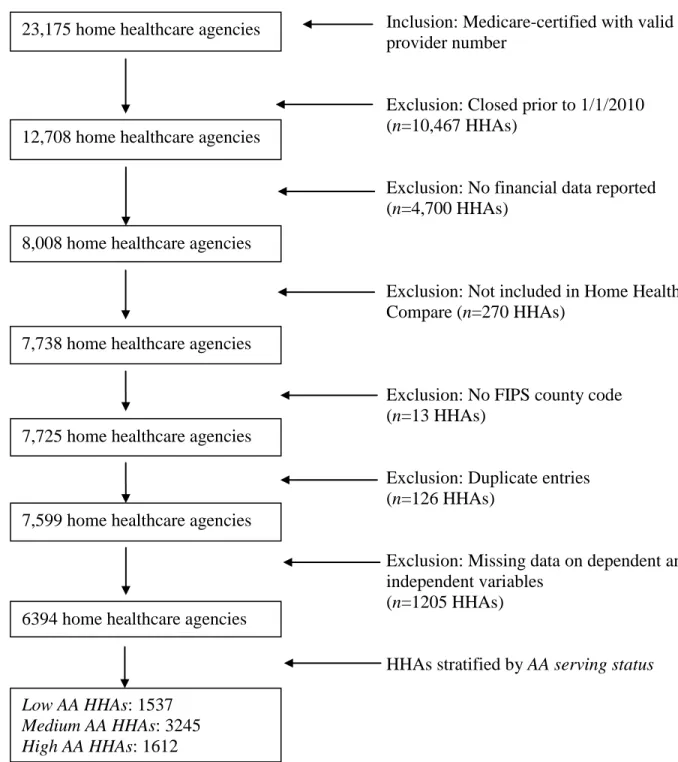
Sample... 107
Sampling Plan for Aim 1 ... 107
Sampling Plan for Aim 2 and Aim 3 ... 109
Sampling Plan for Aim 4 ... 110
Data Analysis Plan ... 111
Data Aggregation, Linkage, and Categorization of Datasets ... 111
Sensitivity Analyses ... 112
Univariate Analysis ... 112
Bivariate Analysis ... 113
Multivariate Analyses ... 114
CHAPTER 5: RESULTS ... 118
Introduction ... 118
Study Samples ... 118
Aim 1 ... 118
Aim 2 and Aim 3... 119
Aim 4 ... 119
Results ... 120
Aim 1 ... 120
Aim 2 ... 124
Aim 3 and Aim 4... 132
Summary ... 175
CHAPTER 6: DISCUSSION ... 176
Introduction ... 176
Institutional Racism ... 176
Aim 1 ... 177
Racial Makeup of Home Healthcare Agencies ... 178
Age, Length of Stay, and Health Status ... 179
Patient Insurance ... 180
Aim 2 ... 181
Quality of Care Outcome Indicators ... 182
Market Characteristics ... 184
Community Characteristics ... 185
Organizational Characteristics ... 186
Nurse Staffing Characteristics ... 188
Outcome Variable O2: How Often Home Healthcare Patients
Got Better at Getting In and Out of Bed ... 191
Outcome Variable O10: How Often Home Healthcare Patients Had to be Admitted to the Hospital ... 192
Market and Nurse Staffing Characteristics ... 192
Community and Organizational Characteristics ... 193
Aim 3 Summary ... 196
Aim 4 ... 197
Outcome Variable O3: How Often Home Healthcare Patients Got Better at Bathing ... 198
Outcome Variable O4: How Often Home Healthcare Patients Had Less Pain When Moving Around ... 198
Outcome Variable O10: How Often Home Healthcare Patients Had to be Admitted to the Hospital ... 198
Characteristics that Differentiated High- and Low-Quality High AA HHAs ... 199
Aim 4 Summary ... 201
Policy Implications ... 201
Limitations ... 209
Theory of Institutional Racism ... 209
Endogeneity ... 210
Measurement Error ... 212
The Home Health Compare Data ... 213
Suggestions for Future Research ... 214
Conclusion ... 218
APPENDIX B. MULTIPLE REGRESSION RESULTS: OUTCOME VARIABLE O3—HOW OFTEN HOME HEALTHCARE PATIENTS
GOT BETTER AT BATHING ... 224 APPENDIX C. MULTIPLE REGRESSION RESULTS: OUTCOME
VARIABLE O4—HOW OFTEN HOME HEALTHCARE PATIENTS
HAD LESS PAIN WHEN MOVING AROUND ... 228 APPENDIX D: LOGISTIC REGRESSION RESULTS: OUTCOME
VARIABLE O1—HOW OFTEN HOME HEALTHCARE PATIENTS
GOT BETTER AT WALKING OR MOVING AROUND ... 232 APPENDIX E: LOGISTIC REGRESSION RESULTS: OUTCOME
VARIABLE O2—HOW OFTEN HOME HEALTHCARE PATIENTS
GOT BETTER AT GETTING IN AND OUT OF BED ... 233 APPENDIX F: LOGISTIC REGRESSION RESULTS: OUTCOME
VARIABLE O8—HOW OFTEN HOME HEALTHCARE PATIENTS GOT BETTER AT TAKING THEIR MEDICATIONS CORRECTLY
LIST OF TABLES
Table 1. Aim 1 Variables, Definitions, and Data Sources ... 96 Table 2. Aims 2, 3, and 4 Variables, Definitions, and Data Sources ... 104 Table 3. Aim 4 Outcome Variables and Groups ... 120 Table 4. Descriptive Statistics and Pairwise Comparison Results of Aim 1
Variables by Level of AA Serving Status ... 121 Table 5. Descriptive Statistics and Pairwise Comparison Results of Aim 2
Variables by Level of AA Serving Status ... 125 Table 6. Multiple Regression Results: Outcome Variable O2—How Often
Home Healthcare Patients Got Better at Getting In and Out of Bed ... 133 Table 7. Summary Table: Outcome Variable O2—How Often Home
Healthcare Patients Got Better at Getting In and Out of Bed ... 143 Table 8. Multiple Regression Results: Outcome Variable O8—How Often
Home Healthcare Patients Got Better at Taking Their Medications Correctly
by Mouth ... 144 Table 9. Summary Table: Outcome Variable O8—How Often Home
Healthcare Patients Got Better at Taking Their Medications Correctly by Mouth ... 155 Table 10. Multiple Regression Results: Outcome Variable O10—How Often
Home Healthcare Patients Had to Be Admitted to the Hospital ... 157 Table 11. Summary Table: Outcome Variable O10—How Often Home
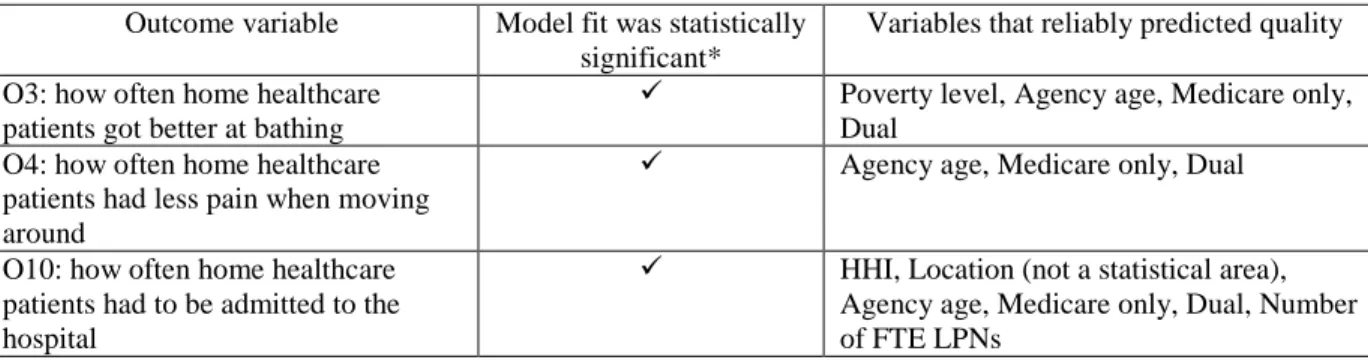
Healthcare Patients Had to Be Admitted to the Hospital ... 167 Table 12. Logistic Regression Results: Outcome Variable O3—How Often
Home Healthcare Patients Got Better at Bathing ... 169 Table 13. Logistic Regression Results: Outcome Variable O4—How Often
Home Healthcare Patients Had Less Pain When Moving Around ... 171 Table 14. Logistic Regression Results: Outcome Variable O10—How Often
LIST OF FIGURES
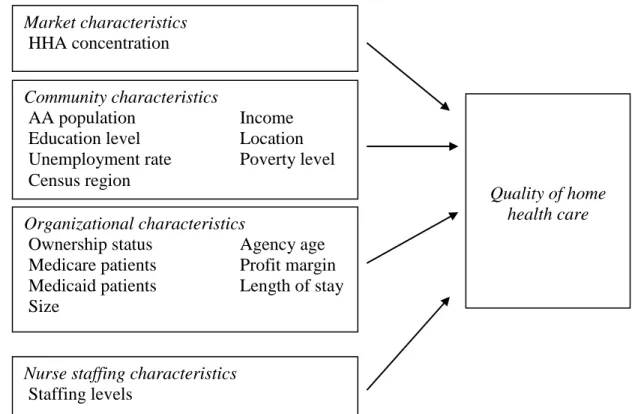
Figure 1. Conceptual model of factors that affect quality of home
CHAPTER 1: BACKGROUND AND SIGNIFICANCE
Problem Statement
In 2003, the Institute of Medicine (IOM) published a landmark report that extensively documented racial and ethnic disparities in the quality of health care. Disparities in the quality of health care, as measured by differences in treatment such as receipt of certain medications or surgery, were found in nearly every type of healthcare setting and across a number of illnesses (Smedley, Stith, & Nelson, 2003). Since the IOM report, racial disparities in quality of care have continued to be documented in a number of studies and in the yearly Agency for Healthcare Research and Quality (AHRQ) National Quality and Disparities Report (previously named the National Healthcare Disparities Report) (Agency for Healthcare Research and Quality [AHRQ], 2015; Klonoff, 2009). Racial disparities pose a significant moral problem for healthcare
providers, policy makers, and patients: Unequal quality of care often leads to worse outcomes for racial minorities, including premature death, and has been identified as a potential contributor to the persistent gaps in health status between minorities and non-minorities (AHRQ, 2015;
Smedley et al., 2003).
has been slow. This leaves minority patients, and in particular African American patients, vulnerable to poor-quality home health care. Therefore, identifying the factors that contribute to racial differences in the quality of home health care could lead to the development and
implementation of policies and interventions that are effective at reducing racial differences in quality of care.
The purpose of this chapter is to provide background information on disparities in the quality of health care, to describe home health care, to state the purpose and aims of this study, and to explain the significance of this study. Major topics discussed include the following: evidence of disparities in quality of care, the recent shift in focus of disparities research, factors that likely contribute to disparities in home health care, a description of home health care, and why the study focuses specifically on African American patients rather than all minorities.
Background
Racial disparities in health, access to health care, and quality of health care in the United States have been extensively documented for decades (Benz, Espinosa, Welsh, & Fontes, 2011; Hasnain-Wynia & Beal, 2012; Klonoff, 2009; Koh, Graham, & Glied, 2011; Smedley et al., 2003). However, it was the Report of the Secretary’s Task Force on Black and Minority Health (referred to as the “Heckler Report”) published in 1985 by the U.S. Department of Health and Human Services (DHHS) that first brought the issue of racial disparities in health and health care to national prominence (Benz et al., 2011; Hasnain-Wynia & Beal, 2012). This report was
al., 2011). The DHHS released the “2011 Action Plan to Reduce Racial and Ethnic Health Disparities,” a plan that aims to reduce disparities by taking advantage of the Affordable Care Act of 2010, transforming the healthcare system, and increasing public awareness of disparities (Koh et al., 2011).
Report of the Secretary’s Task Force on Black and Minority Health
The Report of the Secretary’s Task Force on Black and Minority Health (hereafter referred to as the “Heckler Report”) described the findings and recommendations of an 18-member task force appointed by Secretary of Health Margaret Heckler to directly assess the persistent health status disparities found between Whites and minority Americans (Heckler, 1985). The task force examined the national morbidity and mortality data for minorities and non-minorities as well as health status indicators (e.g., physician visits and self-assessed health status) for both groups (Heckler, 1985). The most significant contributions of the report were its
extensive documentation of disparities in health status between Whites and minorities—it pushed minority health issues onto the national agenda and it directly led to the creation of the Office of Minority Health (Gamble & Stone, 2006; Heckler, 1985).
American Medical Association Report
Institute of Medicine 2003 Report
In 1999 the U.S. Congress requested that the IOM specifically examine the relationship between race and ethnicity and quality of health care, independent of patients’ insurance status, level of education, socioeconomic status, and any other factors known to affect access to care (Smedley et al., 2003). The result was the 2003 report “Unequal Treatment,” which has been widely cited throughout disparities literature. In addition to documenting disparities in the quality of care, the report provided researchers with a standard definition of disparities that has become broadly used by disparities researchers. The IOM defined disparities in quality of care as “racial or ethnic differences in the quality of healthcare that are not due to access-related factors or clinical needs, preferences, and appropriateness of intervention” (Smedley et al., 2003, pp. 3–4).
The IOM report also provided numerous recommendations to reduce and eliminate disparities such as: increasing public awareness of racial and ethnic disparities; increasing the proportion of racial and ethnic minority health professionals; using evidence-based guidelines to provide consistently high quality care to patients; include cultural competency training for health professionals; collect data on patients’ race, ethnicity, socioeconomic status, and primary
language and stratify quality reports using patient demographic data; and continue funding of research that identifies the causes of racial disparities in care (Smedley et al., 2003).
AHRQ National Healthcare Quality and Disparities Report
comprehensive summary of disparities in the United States, and present a “national roadmap” for reducing disparities in healthcare quality and access to care (AHRQ, 2003). The AHRQ’s
operational definition of disparities in quality of care for their NHDR is “the differences or gaps in care experienced by one population compared with another population” (AHRQ, 2010, p. 1). To meet the definition of a disparity, AHRQ requires that the “differences” between populations be statistically significant and differ from the reference group by at least 10% (Hebert, Sisk, & Howell, 2008).
The first NHDR indicated that racial and ethnic minorities and people of lower socioeconomic status experienced significantly poorer quality of care compared to the White majority and those of higher socioeconomic status (AHRQ, 2003). Similar to the 2003 IOM report, disparities were identified across the healthcare system for all types of conditions and in every healthcare setting (AHRQ, 2003). In addition, the authors of the 2003 NHDR found that the reasons for disparities in quality and access were not well understood (AHRQ, 2003). Since the first NHDR was published, there have been 11 additional yearly reports. With each
subsequent report the authors have noted that despite efforts to reduce disparities, they persist, in some cases worsening. The most recent National Healthcare Quality and Disparities Report indicates that although quality of care has improved, racial disparities are common across the healthcare system and a number are either staying the same or worsening (AHRQ, 2015).
Department of Health and Human Services 2011 Action Plan
administrators to identify disparities. Medicaid coverage has significantly expanded in many states, covering individuals up to 133% of the federal poverty level, and there was parity in Medicaid and Medicare payment rates for primary care providers in 2013 and 2014 (funded by the federal government), though many states (at least 24) do not have plans to continue to fund these increased rates (Burwell, 2014; Hasnain-Wynia & Beal, 2012; Kaiser Family Foundation [KFF], 2014; Koh et al., 2011). The National Center on Minority Health and Health Disparities has become an Institute, leading to a significant expansion of research on disparities and
solutions (Hasnain-Wynia & Beal, 2012). In addition, $11 billion in funds (over 5 years; the first of the awards was made in 2014) will be spent on improving community health centers, which tend to serve a significant number of low income minority patients (Bureau of Primary Health Care, 2016; Koh et al., 2011). Taken together, these initiatives could lead to greater insurance coverage for minorities and improved access to care and ultimately equitable care for all Americans.
Disparities in Quality of Care Between African Americans and Whites
Numerous studies across the majority of healthcare settings and types of illnesses have indicated that there are disparities between the quality of care provided to African American and White patients (AHRQ, 2015; Hasnain-Wynia et al., 2010; Howell, Egorova, Balbierz, Zeitlin, & Hebert, 2016; Keating, Kouri, He, Weeks, & Winer, 2009; Klonoff, 2009; Regenbogen,
of smoking) (Keating et al., 2009; Klonoff, 2009; Regenbogen et al., 2009). Once access and disease severity are controlled for, researchers have found that, compared to White patients, African American patients are more likely to receive a) care that is considered less effective, b) care that is of poorer quality based on established markers of high-quality care, and c) higher rates of less desirable procedures such as amputation (Klonoff, 2009; Konetzka & Werner, 2009; Regenbogen et al., 2009; Smedley et al., 2003).
revascularization for White and African American patients after an acute myocardial infarction, African American patients were transferred more slowly to hospitals with revascularization, were less likely to receive revascularization once transferred, and had higher long-term mortality rates (Cooke, Nallamothu, Kahn, Birkmeyer, & Iwashyna, 2011; Popescu, Vaughan-Sarrazin, & Rosenthal, 2007). In a 2009 study, Regenbogen et al. found that African American patients with lower extremity arterial disease were much more likely to undergo limb amputation compared to White patients. African American patients are more likely to be hospitalized for preventable conditions—problems that might not have occurred had they received appropriate preventive care (Smedley et al., 2003). Finally, there has been an increased focus on 30-day readmission following a 2007 Medicare Payment and Advisory Commission (MedPAC) report to the U.S. Congress that indicated 75% of Medicare readmissions were avoidable and that these
readmissions were costing Medicare $15 billion per year (McHugh, Carthon, & Kang, 2011). As an example, elderly African American patients have been found to have higher rates of
readmission for acute myocardial infarction, congestive heart failure, and pneumonia compared to elderly Whites (Joynt, Orav, & Jha, 2011).
experienced significantly worse functional outcomes such as improvement in grooming, bathing, and walking (Brega et al., 2005).
Racial disparities in health and health care are costly in terms of lives lost and the burden on patients, families, and the healthcare system (LaVeist, Gaskin, & Richard, 2009). There are recent estimates that the elimination of health disparities would have reduced direct medical care expenditures from 2003 to 2006 by $229.4 billion (LaVeist et al. 2009). Disparities have been estimated to cost $1.2 trillion in lost wages and productivity between 2003 and 2006 (Bahls, 2011;LaVeist et al., 2009). The cost in 2009 to African American and Hispanic patients of providing care for preventable conditions such as diabetes, high blood pressure, and stroke was approximately $24 billion (Bahls, 2011). In addition, when a group of individuals is less healthy, the result is an increase in costs for health care for not only those individuals but also the entire country (Smedley et al., 2003). The burden of health disparities then is on not only the
individuals who experience inequitable care but also the nation as a whole. Thus, reducing disparities and improving quality of care for one segment of the population could directly and indirectly benefit the entire country (Bahls, 2011; Smedley et al., 2003).
Shift in Focus of Disparities Research
The focus of disparities research, until recently, has largely been on within-facility disparities and the patient and provider contribution to disparities (Gaskin, Dinwiddie, Chan, & McCleary, 2012; Griffith et al., 2007). Therefore, most initiatives focused on enhancing patient-provider communication, providing cross-cultural education to healthcare patient-providers so that they have a greater awareness of cultural and social factors that might influence a patient’s care, and educating patients so that they play a more active role in decision-making and managing their health care (Griffith et al., 2007; Smedley et al., 2003). However, these individual-level
2007). An alternative explanation is that disparities in care are due, in part, to differences between the organizations from which African Americans and Whites receive care (Brooks-Carthon, Kutney-Lee, Sloane, Cimiotti, & Aiken, 2011; Creanga, Bateman, Mhyre, Kuklina, Shilkrut, & Callaghan, 2014; Hasnain-Wynia et al., 2007; Howell et al., 2016). Thus, recent research has begun to identify and characterize organizations that provide care for African American patients in terms of both structural features (e.g., type of ownership, number of beds, nurse:patient ratio) and the communities in which they are located (Brooks-Carthon et al., 2011; Hasnain-Wynia et al., 2007).
providing lower overall quality of care and that everyone in the facility is receiving poor quality of care, not just one group (Konetzka & Werner, 2009). In fact, a recent study has shown that hospitals that serve high percentages of African American patients have poorer outcomes for all their patients, not just the African American patients (Lopez & Jha, 2013). In this case,
interventions would be aimed at lower-performing facilities and helping these facilities improve overall quality of care (Lopez & Jha, 2013).
Researchers have found that African American patients receive health care in different settings than White patients (Gaskin et al., 2012; Hasnain-Wynia et al., 2010; Jha, Orav, Li, & Epstein, 2007). This is at least partly due to patients’ often seeking care within their own communities, which tend to be racially segregated (Gaskin et al., 2012; Konetzka & Werner, 2009; LaVeist, Pollack, Thorpe, Fesahazion, & Gaskin, 2011). Acute and outpatient care settings that disproportionately serve African American patients have lower quality of care and have physicians who are less well trained and less often board certified (Bach, Pham, Schrag, Tate, & Hargraves, 2004; Creanga et al., 2014; Howell et al., 2016; Lucas, Stukel, Morris, Siewers, & Birkmeyer, 2006; Jha et al., 2007). Hospitals that serve a large percentage of African American patients also have reports of lower levels of patient satisfaction and lower levels of nurse satisfaction (Brooks-Carthon et al., 2011). Inpatient care for African American patients is
concentrated in a small percentage of hospitals with poorer quality of care (Hasnain-Wynia et al., 2007). Twenty-five percent of hospitals provide care for almost 90% of elderly African
disparities in nearly 40% of the quality measures (37 out of 95 measures) and the majority of these disparities were explained by site of care, suggesting that a likely cause of racial disparities is that minority patients receive care in lower-performing hospitals. In addition, mortality rates and surgical mortality rates are higher for elderly patients admitted with acute myocardial infarction in hospitals that care for a high percentage of African American patients (Skinner, Chandra, Staiger, Lee, & McClellan, 2005; Lucas et al., 2006). Finally, in terms of obstetric care, hospitals that serve a high percentage of minority patients have higher rates of severe maternal morbidity and perform more poorly on delivery-related indicators of care compared to hospitals that serve a low percentage of minority patients (Creanga et al., 2014; Howell et al., 2016).
In the outpatient setting, Varkey et al. (2009) found that clinics with a higher proportion of minority patients (greater than 30% minority) were more likely to have less access to medical supplies and referrals to specialists and also fewer examination rooms per physician. Patients seen at these clinics were also more likely to be covered by Medicaid, report depression, experience problems with substance abuse, and have lower health literacy and more complex medical problems. Physicians at clinics with a higher proportion of minority patients were also less likely to have high rates of job satisfaction and more likely to report working in a chaotic working environment (Varkey et al., 2009). In a separate study, Reschovsky and O’Malley (2008) found that high minority outpatient practices (greater than 70% minority patients) were highly dependent on Medicaid and have lower private insurance reimbursements, leading to constrained resources for physicians.
more health-related deficiencies, and poorer quality of care (Mor, Zinn, Angelelli, Teno, & Miller, 2004; Smith, Feng, Fennell, Zinn, & Mor, 2007). Compared with nursing homes that serve a low percentage of African American patients (Low AA NHs), those that serve a high percentage of African American patients (High AA NHs) provide poorer quality of care, have fewer resources to improve quality, and have different structural and contextual characteristics such as profit status, size, and location (Miller, Papandonatos, Fennell, & Mor, 2006; Mor et al., 2004; Smith et al., 2007). High AA NHs are more likely to use chemical and physical restraints, have more inspection deficiencies that cause actual harm to patients or place them in immediate danger, have a higher incidence of pressure ulcers, and are more likely to be terminated from Medicare/Medicaid participation (Li et al., 2011; Miller et al., 2006; Mor et al., 2004; Smith et al., 2007). In addition, residents of High AA NHs are more likely to have lower quality of life compared to residents of Low AA NHs (Shippee, Henning-Smith, Rhee, Held, & Kane, 2016). Whether quality of care is lower in home healthcare agencies that serve a high proportion of African American patients (High AA HHAs) than it is in those that serve a low proportion of African American patients (Low AA HHAs) is an unexplored area of research.
Factors that Contribute to Disparities in Care
predictors of quality in home healthcare agencies; predictors of quality in nursing homes; and disparities between nursing homes—to guide conceptual model development and variable identification.
In long-term care, quality of care is influenced by market, community, organizational, and nurse staffing characteristics (Brega, Jordan, & Schlenker, 2003; Castle & Engberg, 2007). Several of these factors have also been investigated as possible causes of disparities between High AA and Low AA nursing homes (Fennell, Miller, & Mor, 2000; Miller et al., 2006; Mor et al., 2004). Characteristics from each of these groups (market, community, organizational, and nurse staffing) were examined in this study to determine if they influenced differences in quality of care–either individually or together—between High AA and Low AA HHAs. The research on these predictors and their application to racial disparities in home health care will be fully discussed in Chapter 3.
Variation in Quality in High AA HHAs
As with other healthcare organizations, those that are High AA likely vary in the quality of care they provide, with some providing exceptional quality and others providing poor quality. Unfortunately, there are no studies in which variation in quality of care among High AA
to the needs of their patient population and was able to effectively communicate their patients’ needs throughout their organization; and the ability to use limited resources effectively (Gaskin & LaVeist, 2009). In addition, they found that lower-performing minority-serving hospitals were under-resourced both in terms of financial capabilities and actual human resources (Gaskin & LaVeist, 2009).
High AA HHAs likely face unique challenges to providing high-quality care. Identifying and understanding factors that help or hinder the provision of high-quality care in these
organizations can help administrators, researchers, and policy makers design interventions and policies that are likely to be the most effective at helping low-quality High AA HHAs provide high-quality care to their patients. Although it will require further study to identify the specific practices used by high-quality High AA HHAs, this study could possibly identify a starting point for further investigation of these agencies.
Home Health Care
Definition of Home Health Care
Although the terms home care and home health care are often used interchangeably they do not mean the same thing. The term home care simply refers to any type of care that is
Association for Home Care and Hospice [NAHC], 2010). These services are typically paid for by Medicare or Medicaid with a small percentage of services paid for by private insurance (Kaye et al., 2010; NAHC, 2010).
Home Healthcare Recipients
There are estimates that in 2013 3.5 million Medicare recipients received home healthcare services from approximately 12,613 Medicare-certified home healthcare agencies (Medicare Payment Advisory Commission [MedPAC], 2015). The majority of home healthcare users were aged 65 (less than 18% were under 65) and were women (nearly 63%) (Harris-Kojetin et al., 2013). In terms of race, the majority (approximately 78%) of home healthcare patients were White or “other” (“other” includes Asian, Native Hawaiian or other Pacific Islander, American Indian, Alaskan Native, and multiple races) while 14% were African
American and slightly over 8% were Hispanic (Harris-Kojetin et al., 2013). In comparison, in the 2010 Census, older individuals (aged 65 and over) made up only 13% of the overall U.S.
population, women constituted half of the population, and African Americans accounted for 13% of the total population (U.S. Census Bureau, 2013). Finally, most home healthcare patients live in a Metropolitan Statistical Area, which is a geographic entity defined by the U.S. Office of Management and Budget containing a core urban area with a population of at least 50,000 or more (U.S. Census Bureau, 2010a).
user was 1.9 in 2013, up from an average of 1.6 in 2002 (MedPAC, 2015), indicating longer lengths of stay over the past decade. The most common diagnoses of home healthcare patients in 2007 were hypertension, heart disease, and diabetes (Caffrey, Sengupta, Moss, Harris-Kojetin, & Valverde, 2011; Jones, Harris-Kojetin, & Valverde, 2012; NAHC, 2010).
Though there is general descriptive information available about home healthcare patients, nothing is known about the potential differences between home healthcare patients served by High AA HHAs and those served by Low AA HHAs. However, there is research that suggests that patients served by hospitals that are lower-performing and treat a high percentage of African American patients differ significantly from those patients that are served by higher-performing hospitals that care for a lower percentage of African American patients (Popescu, Werner, Vaughan-Sarrazin, & Cram, 2009). In 2009, Popescu and colleagues examined organizational and patient characteristics of high- and low-performing hospitals that reported performance on acute myocardial infarction quality measures. They found that Medicare beneficiaries with an acute myocardial infarction who were treated by lower-performing hospitals differed
significantly from those who were treated by intermediate- and higher-performing hospitals (Popescu et al., 2009). For example, patients treated by lower-performing hospitals were more likely to be female, reside in lower-income communities, and had higher rates of comorbidity (Popescu et al., 2009). Such information is important for home healthcare agencies to know because they might need more or different staff and might need to provide different support to their patients. This study provides some initial insight into whether or not there are important differences between the patients served by High and Low AA HHAs.
Payers of Home Health Care
healthcare expenditures in 2014 (Centers for Medicare and Medicaid Services [CMS], 2015c). In fiscal year (FY) 2014, Medicare spending on home health care accounted for approximately 3% of total Medicare expenditures (Cubanski et al., 2015). However, Medicaid is projected to become the largest payer of home healthcare services over the next decade as a result of consumer preferences for in-home care instead of institutional care and as states increase
spending on home healthcare for disabled individuals and decrease spending on institutional care (NAHC, 2010; Ng et al., 2010; Pratt, 2010). Medicaid spending on home healthcare services was $29.6 billion in FY 2014, an increase of over $16 billion from FY 2004.
Home Healthcare Agencies
In 2013 there were 12,613 home healthcare agencies (MedPAC, 2015). The majority of all home healthcare agencies is for-profit and is not part of a healthcare system (Harris-Kojetin et al., 2013; MedPAC, 2015). In addition, nearly all were certified by Medicare, Medicaid, or both. Nearly half of all home healthcare agencies were located in the South and most agencies (nearly 84%) were located in a metropolitan statistical area (Harris-Kojetin et al., 2013). The majority of patients referred to home healthcare agencies were referred by either a hospital or physician’s office. Approximately 40% of all Medicare certified home healthcare agencies were small, completing between 1 and 100 “episodes of care” per year (Harris-Kojetin et al., 2013). Finally, registered nurses made up the majority (54%) of nursing employees for home healthcare
agencies and the majority of home healthcare agencies provided social work services and at least one type of therapeutic services (e.g., physical therapy) (Harris-Kojetin et al., 2013).
Study Purpose and Aims
effort to provide information needed to affect policies to decrease racial differences in quality of home health care.
Therefore, the specific aims of the study were to:
1. Compare patient characteristics in High AA HHAs to those in Low AA HHAs using patient demographic variables available as part of the Center for Medicare and Medicaid’s (CMS) Outcome and Assessment Information Set (OASIS) data.
2. Compare the quality of care in High AA HHAs to Low AA HHAs using quality measures reported on the CMS’s Home Health Compare Web site.
3. Assess whether and which market, community, organizational, and nurse staffing characteristics individually and together account for differences in quality of care provided to patients of High and Low AA HHAs.
4. Examine the variation in quality among High AA HHAs and identify the factors (market, community, organizational, nurse staffing) that differentiate high- and low-quality High AA HHAs.
Differences or Disparities
Low AA HHAs. We will use the term “differences” to discuss results from this study, but will use the term “disparities” when reporting other research that uses the term or when discussing the general state of disparities knowledge and research.
Focus on African American Patients
This study focused on quality of care for African American home healthcare patients rather than all racial minority patients. Studies have shown that White, African American, and Hispanic patients receive care from hospitals and other healthcare organizations that are
structurally and organizationally different (Jha et al., 2007; Jha, Orav, Zheng, & Epstein, 2008). For example, the hospitals that care for 45% of African American patients are typically large (greater than 400 beds), located in the South, private not-for-profit, urban, have a medical and surgical intensive care unit, and serve a high percentage of Medicaid patients (Jha et al., 2007). In comparison, hospitals that care for over half of all Hispanic patients are more likely to be medium-sized (100–400 beds), located in the West, for-profit, serve a high percentage of Medicaid patients, and not have a surgical or medical intensive care unit (Jha et al., 2008). Less is known about patients from other racial and ethnic minority groups because of the limited amount of data available. Given these findings, there may be factors and mechanisms specific to the organizations that care for different groups of racial and ethnic minority patients that affect quality of care for these groups and need to be addressed by the organizations that provide their health care (Popescu et al., 2009).
detailed understanding of the home healthcare organizations that care specifically for a higher percentage of African American patients. Such insight could lead to the identification of the factors that might be contributing to racial differences in the quality of care for African American home healthcare patients.
Study Significance
Focusing on racial differences in the quality of home health care is important for three reasons: there is limited evidence regarding the existence of racial disparities in home health care, the U.S. population is aging and experiencing a shift in demographics, and the use of home health care is expected to increase. Compared to numerous studies that have documented racial disparities between and within hospitals, ambulatory care clinics, and nursing homes, there are only three studies that have examined racial disparities in the quality of home health care. Peng and colleagues (2003) analyzed social support and health status outcomes of White, African American, Hispanic, and Asian patients using the OASIS data from a single home healthcare agency. They found that at discharge African American patients had no supportive services compared to the three other groups and that compared to White and African American patients, Hispanic and Asian patients showed more impairment in instrumental activities of daily living (Peng et al., 2003). Brega and colleagues (2005) examined differences in functional outcomes of home healthcare users using a nationally representative sample from the OASIS data. Brega et al. (2005) controlled for functional status on admission and found that African American patients had significantly poorer outcomes compared to White patients. Finally, Towne and colleagues (2015) compared home healthcare quality of care outcome measures for home healthcare
Americans/Alaskan Natives. They found that home healthcare agencies located in areas with a higher concentration of Native Americans/Alaskan Natives had poorer quality outcome measures compared to agencies located in areas with a low concentration of Native Americans/Alaskan Natives (Towner et al., 2015). These studies provide an indication that racial disparities in the quality of home health care likely do exist, but further research is needed to both document the existence of racial differences and begin to identify their causes.
Home health care is going to become increasingly important as the demographic
landscape of the United States begins to shift. Currently, Americans over the age of 65 make up 13% of the total population. However, the oldest of the 76 million baby boomers have begun to turn 65 and by the year 2030 there are projections that 20% of the U.S. population will be 65 and older (Feng, Fennell, Tyler, Clark, & Mor, 2011; Administration on Aging, 2014). In addition, the number of older racial and ethnic minorities is expected to increase at a significant rate as well: The percent of African Americans over the age of 65 is expected to double from 1% to nearly 2% by the year 2030 (Feng et al., 2011; Administration on Aging, 2014). Also, the number of younger Americans—those who are working-age and children—will decrease as a percentage of the population (Passel & Cohn, 2008), meaning baby boomers will likely need to rely more heavily on outside resources for their health needs as they age. Finally, in 2014 non-Hispanic Whites made up 62.1% of the U.S. population (U.S. Census Bureau, 2015). By the year 2050, Whites are expected to be a minority, accounting for only 47% of the total population (Smedley et al., 2003; Passel & Cohn, 2008).
2010) and is expected to increase to approximately $156 billion by 2024 (nursing home care is expected in increase to $274 billion in 2024) (CMS, 2015a). And although nursing home care has long been the dominant force in long-term care and will continue to play a considerable role, home health care is becoming a significant part of the range of long-term care services provided to elderly and disabled individuals (Jung, Shea, & Warner, 2010; Stone, 2004). Use of home health care is expected to increase for several reasons: home health care is the preferred option for older and disabled individuals, home health care is typically a less expensive option, states are seeking ways to reduce costs by shifting funding to non-institutional services, and The Affordable Care Act of 2010 contains several provisions such as expanding the Medicaid Home and Community Based Services program and improving the direct care workforce that promote the increased use of home health care (Feng et al., 2011; Henry J. Kaiser Family Foundation, 2010).
Given the projected demographic changes in the U.S. population and the expected increase in the use of home health care, it is likely that a significant number of home health patients will be members of a racial or ethnic minority group. Thus, it is important to identify any differences in quality of home health care that currently exist and develop interventions and policies that can reduce or eliminate these differences. Therefore, by identifying and assessing the impact of specific factors that might contribute to differences in quality of home health care, the proposed study has the potential to result in the development of interventions that could lead to improved quality at High AA HHAs and thus reduce differences in quality of home health care.
This study also has the potential to significantly influence policy related to home health care. Broad approaches to improving overall quality of care, such as traditional pay for
increasing disparities in care (McHugh et al., 2010; Smith, Dynan, Fairbrother, Chabi, &
Simpson, 2012; Werner, Konetzka, & Kruse, 2008). The premise behind pay for performance is that hospitals and other healthcare organizations are held accountable for their actions and that withholding reimbursement for preventable adverse events (e.g., falls) will provide healthcare organizations with extra incentive to prevent these adverse events from occurring (Smith et al., 2012). However, organizations that disproportionately care for African American patients (and those that care for a high percentage of other minority groups) often do not have the resources to implement quality improvement initiatives and are therefore not able to achieve the improvement in quality indicators needed to receive increases in Medicare reimbursement associated with pay for performance (McHugh et al., 2010; Werner, Goldman, & Dudley, 2008).
By identifying the factors that contribute to limited resources and how resource
constraints might affect quality of care at High AA HHAs, this study has the potential to provide policy makers with new leverage points for intervention such as redesigning pay for performance schemes to more adequately support the implementation of quality improvement initiatives at home healthcare agencies that face resource constraints (Konetzka & Werner, 2009).
Organization of the Dissertation
CHAPTER 2: THEORETICAL FRAMEWORK
Introduction
Theories have not been used to guide the majority of disparities research and this has contributed to a limited understanding of the concepts that might be important in understanding the causes of disparities in quality of care and thus researchers’ ability to design successful interventions. Therefore, this study is guided by the theory of institutional racism. The theory of institutional racism posits that the policies and practices of social institutions, regardless of intentionality, can result in racial inequality for African Americans (and other minority group members) (Better, 2008; Feagin & Feagin, 1986; Ture & Hamilton, 1992). Since the late 1960s when Stokely Carmichael (later known as Kwame Ture) and Charles Hamilton described institutional racism in their book “Black Power: The Politics of Liberation in America,” researchers have been examining how intentionally and unintentionally racist policies and practices of social institutions in the United States perpetuate racial inequalities (Berard, 2008; Better, 2008; Jones, 1997; Ture & Hamilton, 1992). Using the theory of institutional racism provides a potentially useful approach to identifying and explaining how the policies and practices of social institutions transmit racism and therefore might contribute to differences in the quality of home health care (Griffith et al., 2007).
the rationale for using the theory of institutional racism to guide this study. The chapter
concludes with a discussion of how the theory of institutional racism influenced the development of the conceptual model—which shows market, community, organizational, and nurse staffing characteristics reflecting various types and sources of institutional racism stemming from policies and practices of social institutions—and contributes to differences in quality of home health care between High and Low AA HHAs.
Race and Racism
Race
Marcello Malphighi, and Carl Linnaeus hypothesized that dark-skinned individuals were defective and inferior to Whites, providing support for and lending credence to the widely held beliefs of White superiority (Byrd & Clayton, 2001a). Early English settlers and colonists brought these beliefs—that there were inherent biological differences between light- and dark-skinned individuals—to the English colonies in what would become America, where they had tremendous influence over the development of American culture.
Scientists, philosophers, and lay people now understand that there are far fewer significant biological differences within the human species than previously thought and that outward features such as hair texture and facial structure have no impact on intelligence,
Racism
Racism is the mechanism by which members (or a single individual) of one group are oppressed and persecuted (Better, 2008; Byrd & Clayton, 2001a; Jones, 1997). Interestingly, racism can be directed at members of minority or majority groups. It is an act or practice that is rooted in a belief of superiority on the part of the group or individuals perpetuating the racist behavior or acts (Berard, 2008; Byrd & Clayton, 2001a). Racism occurs at different levels, including the individual and institutional level (Jones, 1997). Racism perpetuated by the White majority group will be the focus in this study.
Individual racism. At the individual level, racism is a specific action by an individual, often based on a belief in the superiority of one’s own race that has negative consequences for a disadvantaged individual or group (Better, 2008; Jones, 1997). There are different types of individual racism, the two described here are “dominative” and “aversive” (Jones, 1997). The “dominative” individual is one who acts openly on his beliefs that Whites are superior to African Americans (or any other racial minority group) (Jones, 1997). This is the individual who would commit acts of violence against African Americans to perpetuate racial inequality. Such behavior is often referred to as overt racism—it is racism that is out in the open for all to see and hear. Although overt individual acts such as these have decreased in recent years, they do still occur (Better, 2008; Jones, 1997). For example, there are numerous instances of politicians (and others) making “off-camera” remarks about minority groups, often referring to a specific group having a lack of interest in working or being “takers.”
with African American families because he thinks that African Americans do not have the same cultural standards as Whites (Jones, 1997). As another example, some Whites do not want their children educated in the same classroom (or school) as African American or other minority children because the minority children “do not have a good work ethic” and they are afraid this will affect their children. This type of racism is hidden and it is one type of racism that pervades American society today (Better, 2008; Feagin, 2006; Jones, 1997).
Institutional racism. In comparison, institutional racism can be defined as intentionally or unintentionally racist policies, practices, and procedures of social institutions that produce and maintain racial inequalities (Better, 2008; Jones, 1997). Not all policies and practices of social institutions are racist or have racist outcomes. Indeed, some help protect members of society from harm, socialize young people, and maintain the general health of the society (Trepagnier, 2010). However, policies and practices of social institutions can also serve to maintain racial inequality, either intentionally or unintentionally (Jones, 1997).
Social institutions are created by individuals, operate in all societies, and serve to reduce uncertainty by providing structure and stability to social life (Better, 2008; North, 1991; Scott & Davis, 2007). The policies and practices of social institutions are the rules, both formal and informal, that constrain the choices of individual members of society (North, 1991). These formal and informal rules regulate the environment and interactions and tell people what is acceptable and unacceptable. For example, the Constitution of the United States, part of the social institution of government, created formal laws that citizens are compelled to follow or face penalties (North, 1991). As another example, the U.S. Congress, again part of the social
with the formal law of Title VI of The Civil Rights Act of 1964 (i.e., integrate their hospitals) or face the penalty of not receiving Medicare funding (Smith, 2001). Thus, the choices of
segregated hospitals—to integrate or not—were constrained by the law. In contrast, an informal rule could be the unwritten rules that perpetuate continued racial discrimination in the housing market (Smedley et al., 2003). Recent housing audit studies have indicated that African
American auditors (e.g., individuals posing as buyers) were shown fewer housing options
compared to White auditors and that African American auditors were steered away from “White” neighborhoods (Smedley et al., 2003). Because The Fair Housing Act of 1968 barred
discrimination in housing, such practices cannot be written down or made legitimate but are rather the result of a shared understanding among those in the housing market (Better, 2008; Scott & Davis, 2007; Smedley et al., 2003). These informal rules, also part of the fabric of the social institution of the housing market, constrain the choices of African Americans and contribute to the continued residential racial segregation that is evident today (Better, 2008; Smedley et al., 2003).
with other influential agents or to avoid social penalties that might result (Scott & Davis, 2007). Thus, individuals or groups might choose to comply with the formal and informal rules of social institutions as a way to obtain rewards rather than on the basis of their agreement with the rule (North, 1991; Scott & Davis, 2007).
The norms and values of society are also transmitted through these formal and informal rules (i.e., institutional policies and practices) stemming from social institutions. For example, the norm of what defines racism has shifted over the past 50-plus years, since the civil rights era. In the years before the Civil Rights Act of 1964, intentional overt racism and discrimination were the norm in the United States and this was reflected in institutional policies and practices such as segregation in the educational and healthcare systems (Better, 2008; Jones, 1997; Smith, 2001). Since the Civil Rights Act of 1964 was passed, unintentional and covert racism have slowly become the norm in the United States (Better, 2008; Jones, 1997). Such a change is reflected in the slow transition of policies and practices of social institutions from being intentionally to unintentionally racist (Better, 2008; Jones, 1997; Smith, 2001). At one time it was socially acceptable, especially in the South, to use threats of violence (e.g., shooting, cross burning, lynching) and enforced segregation, which were supported by some social institutions (either formally or informally), as a way to try to keep Whites and African Americans separate (Better, 2008; Ture & Hamilton, 1992). As norms and values in the United States evolved over the years, intentionally racist policies and practices were outlawed and most Americans would say they consider such acts to be unacceptable (Better, 2008; Jones, 1997; Smith, 2001; Trepagnier, 2010).
minority groups (Better, 2008; Jones, 1997; Smith, 2001). For example, Medicare is part of the social institution of health care. It was created—along with its numerous policies and practices— to provide access to health care and combat unequal treatment for older adults (over the age of 65) and disabled individuals in the United States, regardless of race or socioeconomic status (Smith, 2001). And Medicare has been successful in that many older adults and disabled individuals who did not have healthcare coverage have been able to access health care and the overall health of these at-risk populations (i.e., older adults and disabled individuals) has
improved since the Medicare program was established (Smedley et al., 2003; Smith, 2001). At its inception, Medicare provided hospitals with a new source of revenue that enabled them to
expand or build new hospitals. When Medicare was implemented in 1966, White flight” out of the inner cities as a way to avoid integration had already begun (Smith, 2001). Eager to target the more lucrative Medicare population now located in the suburbs, numerous administrators made the decision to close inner city “Black” hospitals (or merge these with “White” hospitals) and use new Medicare dollars to build new hospitals in the suburbs (Smith, 2001). Thus, although the purpose of Medicare funding to hospitals was to increase access to care for older adults and disabled individuals and improve their health, one of the initial negative consequences was that access for African Americans (older adults and others in the community), few of whom lived in the suburbs in the 1960s and 1970s, decreased and, in turn, their health status suffered (Smith, 2001). This is an unfortunate but clear example of the negative effects for African Americans of an unintentionally racist practice stemming from a social institution.
1991).Thus, in the next section the theory of institutional racism will be described in further detail, including a description of the origins of institutional racism, a comparison of direct and indirect institutional racism, factors that serve to maintain institutional racism, and the limitations of the theory of institutional racism. In addition, the rationale for using the theory to guide this study will be discussed.
Theory of Institutional Racism
Origins of Institutional Racism in the United States
Individual racism. Institutional racism in the United States is rooted in individual racism. As the British colonized North America in the seventeenth century, they brought with them their nearly universal belief in the biological, intellectual, and cultural inferiority of dark-skinned individuals, particularly those of African descent (Byrd & Clayton, 2001a). In addition, British colonizers also believed in the immutability of these differences—that there was nothing that could be done to change the “nature” of dark-skinned individuals so there was no reason to treat dark-skinned individuals as equal to Whites or to allow them to mix with Whites because their inferior status might “taint” White people (Byrd & Clayton, 2001a).
These beliefs of White superiority were supported, almost universally, by the scientific, legal, political, and religious scholars of the day. Thus, individual beliefs were rationalized and legitimized by social institutions such as the church and scientific community and were
Slavery and the pre-Civil Rights era. British settlers came to North American in search of religious freedom and new economic opportunities and were intent on establishing permanent colonies (Byrd & Clayton, 2001b). Thus, it became necessary for these early settlers to clear and farm the land and create a workforce to sustain and grow the economy of the colonies. Initially, European indentured servants and American Indians were used by colonists to farm the land, but both were later replaced by Black Africans (Byrd & Clayton, 2001b). Black Africans were chosen for several reasons, including that they were easy to track and identify and, unlike indentured servants and American Indians, had no allies in the colonies. But it was the beliefs of the colonists that Black Africans were biologically, intellectually, and culturally inferior to Whites—which were supported by scientific and religious scholars—that provided the
justification for the establishment and perpetuation of the institution of slavery (Byrd & Clayton, 2001b).
The enslavement of Black Africans provided the early British colonizers and, later, Americans with a cheap and abundant source of labor and thus White land owners were able to accrue significant wealth that was passed on for generations (Better, 2008; Byrd & Clayton, 2001a). To support and sustain the institution of slavery and the resulting White economic and social privilege and power, racism became embedded in other institutions such as education, housing, and health care (Better, 2008; Byrd & Clayton, 2001a). For example, the institution of slavery required that slaves be kept ignorant and therefore they were not educated in the
God’s will. If slaves had been allowed an education, they might have gained broader knowledge that would have made it more likely that they would resist being enslaved (Better, 2008). In addition, slaves were closely guarded and forced to live in separate housing from Whites because there was always the possibility they might flee or somehow injure White owners or their
families (Better, 2008). Thus, racism became embedded in the social institution of housing. All of these policies and practices served the purpose of reinforcing the idea that slaves were inferior to Whites and that they should be kept separate from Whites (Better, 2008).
The social institution of health care was also affected by the institution of slavery. Because slaves were deemed biologically inferior to Whites, there was a belief that they did not deserve, or need, the same type of health care that Whites received. Slaves were cheap labor and it was the rare slave who was deemed so important to his owner that he was provided health care similar in quality to that of Whites (Byrd & Clayton, 2001a). Thus, a healthcare system separate from and inferior to the developing White healthcare system was established (Byrd & Clayton, 2001a). When free Black Africans or slaves were in need of health care, their choices were limited to slave midwives, plantation owners’ wives, traditional African healers, or dangerous hospital facilities (poorhouse hospitals or dirty almshouses). The nation’s earliest hospitals, established in the mid- to late eighteenth century, discriminated against free Black Africans (Byrd & Clayton, 2001a).
the nation’s healthcare system and the reforms that took place in the late nineteenth and early twentieth centuries (Byrd & Clayton, 2001a). New hospitals, such as Johns Hopkins Hospital, were established with a policy of racial segregation. These hospitals not only cared for patients but they trained physicians, nurses, and other healthcare providers. Thus, physicians, nurses and other healthcare providers educated from the late nineteenth century until the 1960s were taught that segregation was the norm and that Black Americans did not need or deserve the same care as Whites given their inferior status (Better, 2008; Byrd & Clayton, 2001a).
Thus, a two-tier system—one for the White majority and one for African Americans and other racial minorities—with policies and practices designed to sustain racial inequality was established in nearly every social institution in America as a result of the need to support the institution of slavery and to maintain White economic and social privilege (Better, 2008). As the institution of slavery was dismantled and replaced by Jim Crow laws, which were then outlawed by The Civil Rights Act of 1964, the more overtly racist policies and practices disappeared, only to be replaced by other policies and practices that continue to result in White economic and social privilege and racial inequality (Better, 2008).
Mechanisms of Institutional Racism
Racial inequality is perpetuated by the intentionally or unintentionally racist policies and practices that are created and implemented by social institutions. Regardless of intentionality, the result is the same—perpetuation of racial inequality (Feagin & Feagin, 1986). However,
distinguishing between intentional and unintentional racism is important because the
mechanisms for producing racial inequality are different and therefore the interventions will be different.
Power: The Politics of Liberation” (Ture & Hamilton, 1992). They defined institutional racism as covert acts of racism (racist policies and practices) on the part of social institutions that are rooted in a sense of superiority on the part of the majority group and supported by individuals (Ture & Hamilton, 1992). Thus, Ture and Hamilton (1992) attribute institutional racism to Whites as a group, arguing that the “White power structure” in the United States supports racist institutional policies and practices that result in problems such as the high infant mortality rate for African American children and continued residential racial segregation (Berard, 2008).
The type of institutional racism described by Ture and Hamilton (1992) is referred to by Feagin and Feagin (1986) as direct institutional racism. The direct form of institutional racism exists when institutions develop and use policies and practices that are intentionally designed to cause harm to racial minority groups (Feagin & Feagin, 1986). These policies and practices can be blatant and obvious or subtle and covert (Feagin & Feagin, 1986). Though examples of direct institutional racism still exist (e.g., gerrymandering of voting districts, school board decisions to have children go to “neighborhood” schools; selective advertising of unskilled or low-skill jobs), they have declined since the adoption of The Civil Rights Act of 1964 (Berard, 2008: Jones, 1997).
Jones, 1997). Thus, the unintentionally racist policies and practices of a social institution are, indirectly, the result of racism in either a) another institution (“side-effect” racism) or b) an institution’s own past (“past-in-present” racism) (Berard, 2008; Feagin & Feagin, 1986). Most institutional policies and practices now fall into the category of indirect institutional racism (Better, 2008; Feagin & Feagin, 1986; Jones, 1997) and it is these policies and practices of social institutions that are the focus of this study.
Side-effect racism. In side-effect racism the policies and practices of one social
institution can be influenced by other closely related institutions (Better, 2008; Feagin & Feagin, 1986). Thus, the policies and practices of the social institution of health care can be affected by the policies and practices of institutions such as banking, housing, and education. For example, minorities often live in highly segregated communities partially as a result of racist lending policies that were established when discrimination was legal (Williams & Collins, 2001). These communities generally lack an adequate tax base and community resources and thus have poor-quality schools. The practices of these schools are such that they do not adequately prepare students for college, not necessarily because the institution of education is racist but because the schools in segregated communities lack the resources to provide a high-quality education (Williams & Collins, 2001). These students then are not able to go on to college—an outcome that results in systematic disadvantage for minority students. Because these minority students do not go to college, there are fewer minority healthcare providers such as physicians, nurse