INDIRECT EFFECTS OF RECLASSIFICATION FROM THE FOOTBALL CHAMPIONSHIP SUBDIVISION TO THE FOOTBALL BOWL SUBDIVISION
Ross Adam Schwarzber
A thesis submitted to the faculty at the University of North Carolina at Chapel Hill in partial fulfillment of the requirements for the degree of Master of Arts in the Department of
Exercise and Sport Science (Sport Administration).
Chapel Hill 2014
Approved by:
Coyte G. Cooper
Barbara Osborne
© 2014
ABSTRACT
ROSS ADAM SCHWARZBER: Indirect Effects of Reclassification from the Football Championship Subdivision to the Football Bowl Subdivision
(Under the direction of Coyte G. Cooper)
The purpose of this study was to investigate and analyze the indirect effects of an
NCAA member institution’s reclassification from the Football Championship Subdivision
(FCS) to the Football Bowl Subdivision (FBS) during the years 2003 to 2012. The study
analyzed the impacts of reclassification on financial contributions to the athletic department
and to the general university fund, and the nonfinancial impacts of reclassification on student
applications, student enrollment, student admission, university selectivity, and student
quality. Descriptive statistics were used to examine the raw data totals over the time period
analyzed and to examine the differences in averaged totals between a four-year
pre-reclassification time period and a four-year post-pre-reclassification time period at the
reclassified institutions, a control group of FBS institutions, and a control group of FCS
To my family, Harriet, Marvin, and Meridith, for their unconditional love and support.
To Lori Zeller, for her love, support, patience, and encouragement.
ACKNOWLEDGEMENTS
There is no way this thesis would be completed without the patience and support of
the Sport Administration faculty, especially Dr. Ed Shields, Dr. Coyte Cooper, and Professor
Barbara Osborne. Thank you all. I greatly appreciate everything you have each done for me
over the last few years. Special thanks are due to Cindy Atkins for her patience and for
always having the answers. And thank you to Dr. Richard Southall for your support during
TABLE OF CONTENTS
LIST OF TABLES... ix
LIST OF FIGURES ...x
LIST OF ABBREVIATIONS... xi
CHAPTER I: INTRODUCTION... 1-14 NCAA FCS to FBS Reclassification History ...5
NCAA FCS to FBS Reclassification Bylaws and Requirements ...5
The Future of NCAA FCS to FBS Reclassification ...7
Statement of Purpose ...8
Research Question ...8
Definition of Terms...9
Assumptions...12
Limitations ...12
Delimitations...13
Significance of the Study ...13
CHAPTER II: REVIEW OF LITERATURE ... 15-50 Brand Theory ...15
Branding in Higher Education ...16
Intercollegiate Athletics and Branding in Higher Education...20
Reclassification through Football as a Branding Vehicle...23
Indirect nonfinancial effects ...36
Indirect effects from reclassification ...43
Summary ...50
CHAPTER III: METHODOLOGY ... 51-60 Sample...51
Data Collection ...52
Variables ...54
Data Availability...57
Data Analysis ...59
CHAPTER IV: RESULTS... 61-79 Research Question 1A: Total Athletic Gift...61
Research Question 1B: Total Academic Gift...63
Research Question 1C: Athletic Donations Allocation Percentage...66
Research Question 1D: Total Applicants...68
Research Question 1E: Total Admissions...70
Research Question 1F: Total Freshmen Enrollment...72
Research Question 1G: University Selectivity ...75
Research Question 1H: Incoming Freshmen Student Quality ...77
CHAPTER V: DISCUSSION... 80-88 Effect of Reclassification on FAU and FIU...81
Recommendations for Future Research ...87
APPENDIX A: List of institutions that reclassified from FCS to FBS from 1978 to 2013...89
APPENDIX B: Concordance between ACT Composite Score and Sum of SAT Critical Reading and Mathematics Scores ...90
APPENDIX C: Percentage of incoming students submitting SAT and/or ACT scores & standardized test score used in data analysis ...91
APPENDIX D: Expanded Data – Total Athletic Gift ...92
APPENDIX E: Expanded Data – Total Academic Gift...95
APPENDIX F: Expanded Data – Athletic Donations Allocation Percentage ...98
APPENDIX G: Expanded Data – Total Applicants ...101
APPENDIX H: Expanded Data – Total Admissions...105
APPENDIX I: Expanded Data – Total Freshmen Enrollment...109
APPENDIX J: Expanded Data – University Selectivity...113
APPENDIX K: Expanded Data – Incoming Freshmen Student Quality...117
Table 3.2 - Institutions omitted from indirect financial effect variable analysis ...58
Table 3.3 - Institutions omitted from indirect nonfinancial effect variable analysis ...59
Table 4.1 - Total athletic gift pre-reclassification vs. post-reclassification...61
Table 4.2 - Total academic gift pre-reclassification vs. post-reclassification...64
Table 4.3 - Athletic donations allocation percentage pre-reclassification vs. post-reclassification ...66
Table 4.4 - Total applicants pre-reclassification vs. post-reclassification ...69
Table 4.5 - Total admissions pre-reclassification vs. post-reclassification ...71
Table 4.6 - Total freshmen enrollment pre-reclassification vs. post-reclassification ...73
Table 4.7 - University selectivity pre-reclassification vs. post-reclassification ...75
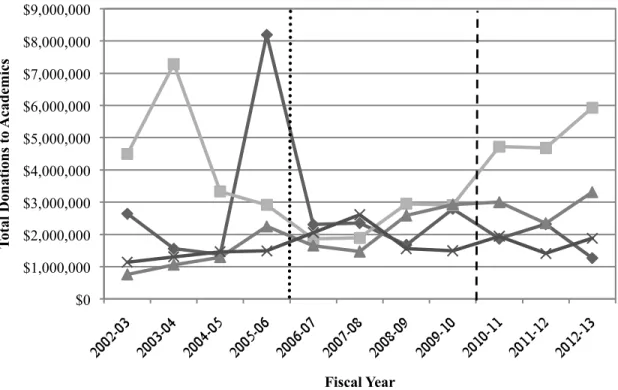
Figure 4.2 - Year-by-year total academic gift...65
Figure 4.3 - Year-by-year athletic donations allocation percentage ...67
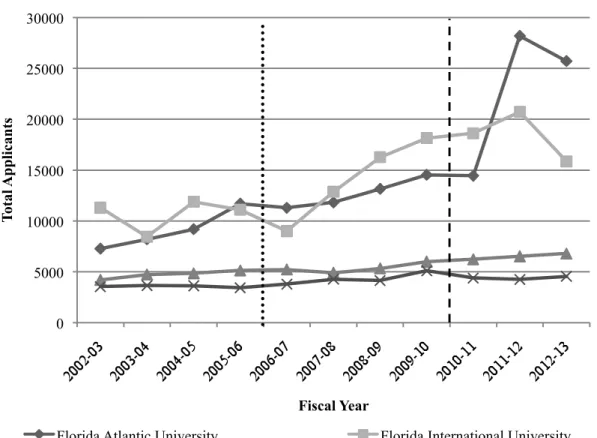
Figure 4.4 - Year-by-year total applicants ...70
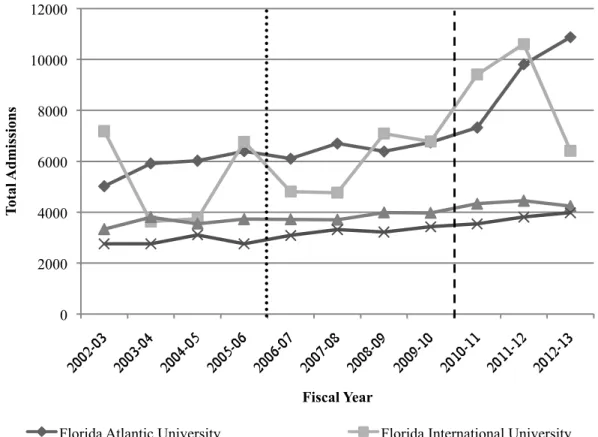
Figure 4.5 - Year-by-year total admissions...72
Figure 4.6 - Year-by-year total freshmen enrollment ...74
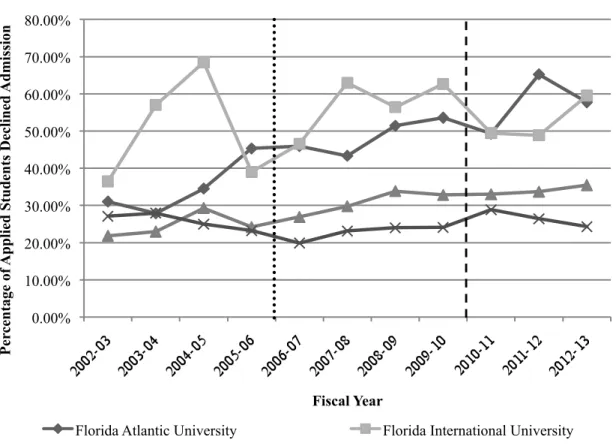
Figure 4.7 - Year-by-year university selectivity ...76
BCS Bowl Championship Series
CDS Common Data Set
FAU Florida Atlantic University
FBS Football Bowl Subdivision
FCS Football Championship Subdivision
FIU Florida International University
FY Fiscal Year
IPEDS Integrated Postsecondary Education Data System
NCAA National Collegiate Athletic Association
SEC Southeastern Conference
VSE Voluntary Support of Education
CHAPTER I INTRODUCTION
In 1906, the organization known today as the National Collegiate Athletic
Association (NCAA) was created to reform the game of football. This action was in response
to serious concerns held by many, including President Theodore Roosevelt, about the violent
conduct within the game that led to several deaths and a great number of injuries (“1905
Movement to Reform Football,” n.d.).Today, over one century later, the NCAA is a
member-driven organization of over 1,200 schools that exists to govern intercollegiate
athletics and the experience of student-athletes who participate in a sport (“Membership,”
2014).
Today’s NCAA divisional structure consists of three main divisions that have
identical purposes, but apply it in different philosophical, operational, and legislative ways
(Frieder & Fulks, 2007). Division I institutions must sponsor at least 14 sports and “generally
have the biggest student bodies, manage the largest athletics budgets and offer the most
generous number of scholarships” (“About,” 2014). Division II members also provide
athletic scholarships, but fewer than Division I, and generally operate with far fewer financial
resources while supporting at least 10 sports (Frieder & Fulks, 2007). Division III institutions
must also sponsor at least 10 sports, but do not offer financial aid to students based on
athletic ability, and integrate athletics more fully into the university’s academic and social
In 1978, NCAA legislation split football-sponsoring Division I institutions into two
subdivisions: Division I-A and Division I-AA (Director, 1978). The bylaw established a set
of minimum criteria for I-A membership (including sport sponsorship, scheduling, and
attendance), and 139 of 144 members initially joined the I-A subdivision, with the other five
joining 28 Division II institutions reclassifying upward to form the I-AA subdivision
(Director, 1978). However, in the first few years after the subdivision establishment, nearly
30 Division I-A members left the subdivision and found a home in Division I-AA (FBS
Members Since 1978, 2013).
Today, members of the Football Bowl Subdivision (FBS, formerly known as Division
I-A) are required to sponsor 16 sports (at least 8 of which must be all-female sports), meet
football scheduling requirements against FBS opponents, average 15,000 actual or paid
attendance for home football games over a rolling two-year period, and meet a minimum
financial aid requirement to spend at least $4 million on athletics grants-in-aid annually
(NCAA Division I Manual, 2013, p. 351). Members of the Football Championship
Subdivision (FCS, formerly known as Division I-AA) must sponsor 14 sports (at least 7 of
which must be all-female sports), meet a less restrictive scheduling requirement, and meet
the overall financial aid requirements expected of all Division I institutions (NCAA Division
I Manual, 2013, p. 353).
Prior to 1984, NCAA contracts restricted television broadcasts of college football
games. The restrictions limited the number of games specific networks were allowed to air
each weekend and the number of times any one university could appear on television in a
given season (Staples, 2012). The rules existed because the NCAA feared that televising
(Staples, 2012). The landmark decision issued that year by the United States Supreme Court
in NCAA v. Board of Regents of the University of Oklahoma ruled that the NCAA television
agreements were in violation of antitrust law, and opened the door for universities to sign
their own television contracts (NCAA v. Board of Regents of Univ. of Okla., 1984). The
business of college football was never the same again.
Changing technology, viewing habits, and the business of television created a perfect
storm of events to bring unprecedented revenue to college football that continues to grow to
record levels today (Staples, 2012). In 1996, the Southeastern Conference (SEC) signed a
five-year, $17-million per year deal with CBS. Just twelve years later in 2008, the SEC began
15-year contracts with CBS and ESPN worth a total of $2.85 billion (Staples, 2012).
As conferences began signing their own valuable television deals in the early-1990s,
FBS institutions competing as independents or in weaker conferences looked for new
affiliations that could offer a larger share of the television pie (Staples, 2012). The
introduction of the Bowl Championship Series (BCS) in 1997 provided a new way of
determining a FBS national champion, which encouraged institutions to position themselves
in conferences with guaranteed access to the exclusive bowl games and the accompanying
financial rewards (Maisel, 2014). Forty-four FBS schools changed conference between 1997
and 2014, with some moving conferences multiple times (Maisel, 2014). During that time
period, twelve additional schools formerly without a football program, or with one in the
FCS, decided to also make their way into the FBS (Maisel, 2014). The College Football
Playoff, successor to the BCS system, stands to make invited schools even richer as a result
With conferences creating their own television networks and television revenue
payouts to institutions reaching multiples of tens of millions of dollars per year, institutions
across the country are researching the feasibility of reclassifying from FCS to the more
lucrative FBS (Alden & Associates, 2010; CarrSports Consulting, LLC., 2013). However, the
financial picture is not all positive. The cost of participating in the FBS has never been
higher. Median total expenses of a FBS institution’s athletic department have increased by
94.1% since the 2004 fiscal year, while median generated revenues, spurred by the growth of
television revenue, have only increased by 77.5% in the same time period (Fulks, 2013). The
difference between the median athletic department budget size between the two subdivisions
is substantial: $56,265,000 in FBS compared to $14,115,000 in FCS.
With the grim financial commitments of participating in the FBS, why then would
FCS schools want to reclassify? A former University of Massachusetts administrator
declared,
Everyone in I-AA loses money and doesn’t get much for it. But even a crummy team in I-A football has higher visibility than a great team in I-AA. So while there are more costs to move up, the universities think that maybe they’ll at least get something for it (Pennington, 2012, para. 57).
The additional exposure expected by administrators could result in “an increase in
applications, an increased academic pool, greater diversity and immeasurable intrinsic
benefits” (Frieder & Fulks, 2007, p. 7). This study aims to measure and examine the indirect
effects of reclassification from FCS to FBS on an NCAA Division I institution to better
inform university and athletic administrators in their reclassification decision-making
NCAA FCS to FBS Reclassification History
Since the establishment of the Division I subdivisions in 1978, a total of 22
institutions have reclassified from FCS to FBS (Appendix A). In 2007, the NCAA Division I
Board of Directors adopted Proposal No. 2007-10, a four-year moratorium that stated:
No institution may begin the Division I provisional or reclassification member process (including the exploratory process), no institution may begin the
multidivisional membership reclassification and no new single-sport or multisport conference shall be elected to Division I conference membership (NCAA
Membership – Division I Membership – Moratorium, 2007, “Intent”, para. 1).
The moratorium’s prohibition of multidivisional membership reclassification prevented FCS
institutions from beginning the process of reclassifying to FBS. Western Kentucky
University began the reclassification process prior to the adoption of the proposal and was
permitted to complete the process, becoming a full FBS member in 2009. The purpose of this
legislation was to address the large number of institutions seeking to reclassify to Division I
and potentially adopt new requirements of institutions looking joining Division I (Copeland,
2007).
NCAA FCS to FBS Reclassification Bylaws and Requirements
According to Bylaw 20.4.2 of the 2013-14 NCAA Division I Manual (2013), an
institution must first have a “bona fide invitation” to become a member of a FBS conference
before they are permitted to begin the reclassification process. To begin the process, the
NCAA national office must receive a written intention to reclassify from the chancellor or
president of the FCS institution by June 1st two years prior to when the institution wants to
have full FBS membership. As described in Bylaw 22, the application must also include a
strategic plan showing a commitment to the philosophy of Division I, and consideration of
peer review (NCAA Division I Manual, 2013, p. 377). As soon as the national office receives
the application, the institution becomes immediately ineligible for participation in the FCS
Championship playoffs (NCAA Division I Manual, 2013, p. 341).
A reclassifying institution must meet specific requirements during each year of the
transitional process. During the first year, an institution must send representatives to the
NCAA national office to attend an orientation regarding FBS membership requirements,
must submit an updated strategic plan with an annual report recapping the first year of the
process and addressing any feedback received, and must self-report any violations to the
Administration Cabinet (NCAA Division I Manual, 2013, p. 340). During the second year, an
institution must send an updated strategic plan and new annual report that shows satisfactory
compliance with FBS membership requirements, and must again self-report any violations
(NCAA Division I Manual, 2013, p. 340). The membership requirements certification
document confirms (a) compliance with FBS sports sponsorship requirements, (b)
compliance with FBS scheduling requirements, (c) compliance with FBS attendance
requirements, and (d) compliance with FBS financial aid requirements (“NCAA Division I
Membership Requirements Certification - Football Bowl Subdivision,” 2013). During the
two-year period, the institution must also hire a third party to complete a compliance review
that is subject to approval by the Administration Cabinet (NCAA Division I Manual, 2013, p.
340).
An institution that meets all FBS membership criteria and has complied with all steps
of the reclassification process is elected to full FBS membership by the Division I Board of
Directors on August 1 two years after the start of the process (NCAA Division I Manual,
The Future of NCAA FCS to FBS Reclassification
As of August 2013, five institutions were in the FCS to FBS reclassification process
(“Multidivision and Reclassifying for 2013-14,” 2013). Georgia State University and the
University of Texas at San Antonio are in the middle of year two and are scheduled to
become full FBS members in August 2014, pending satisfactory completion of all
aforementioned steps. Appalachian State University, Georgia Southern University, and Old
Dominion University are all completing year one of the two-year reclassification process and
are scheduled to have active FBS membership for the 2015-16 academic year.
The future of NCAA membership is presently up for debate. The five “power”
conferences with priority in the College Football Playoff – the ACC, Big Ten, Big 12, Pac
12, and SEC – have pushed for the ability to provide better support to student-athletes (“SEC
ponders ‘Division IV,’” 2014). Such support could include the ability “to pay full cost of
college attendance, provide long-term medical coverage and offer incentives to kids who
return to school and complete degrees” (“SEC ponders ‘Division IV,’” 2014, para. 4). SEC
Commissioner Mike Slive has threatened the possibility of the five conferences breaking
away from the rest of Division I, FBS and FCS, to create their own “Division IV” that would
provide autonomy for those institutions to decide on its own bylaws for governance of
student-athlete support (“SEC ponders ‘Division IV,’” 2014). Big Ten Commissioner Jim
Delaney has made comments that suggest the power conferences want to wrest hold of
creating and administering the rules, leaving the NCAA with little responsibility (Infante,
2014, April 22).
Some speculate that any autonomy given to the power conferences holds the potential
membership structure (Infante, 2014, May 7). Should legislation pass that permits institutions
to provide the full cost of attendance to student-athletes, the 93 FBS institutions that already
operate at an annual net loss will be challenged to fund millions of dollars in new expenses
(Ringo, 2014). Institutions considering reclassification to FBS must carefully consider the
current and potential future costs of reclassification. Historically, no Division I-A or FBS
institution has reclassified to Division I-AA or FCS since 1981; seven institutions that were
Division I-A members have altogether dropped their football program since 1981
(“Classification history,” 2013).
Statement of Purpose
The purpose of this study is to investigate and analyze the indirect effects of an
NCAA member institution’s reclassification from the Football Championship Subdivision to
the Football Bowl Subdivision during the years 2003 to 2012. This study will analyze (a)
impacts of reclassification on financial contributions to the athletic department and to the
general university fund, and (b) the nonfinancial impacts of reclassification on student
applications, student enrollment, student admission, university selectivity, and student
quality.
Research Question
1) Are there differences in the following variables at institutions that reclassified from FCS to
FBS between 2003 and 2012 in the years prior to reclassification compared to the years after
reclassification, and in comparison to a control group of FBS institutions that remained full
members of the FBS during the listed time period, and a control group of FCS institutions
that remained full members of the FCS during the listed time period?
[1B] Total Academic Gift
[1C] Athletic Donations Allocation Percentage
[1D] Total Applicants
[1E] Total Admissions
[1F] Total Freshmen Enrollment
[1G] University Selectivity
[1H] Incoming Freshmen Student Quality
Definition of Terms
• Allocated revenues: Financial support given to an athletics department from sources
that includes “student fees directly allocated to athletics; financial transfers directly
from the general fund to athletics (i.e. direct institutional support); indirect
institutional support, such as the payment of utilities, maintenance, support salaries,
etc. by the institution on behalf of athletics; and direct governmental support which is
the receipt of funds from state and local governmental agencies that are designated
for athletics” (Fulks, 2013, p. 9).
• Athletic success: An athletic program that wins at a greater frequency than it loses and
participates in postseason competition. Operationally defined in different specific
ways by multiple studies in Chapter II.
• Bowl Championship Series (BCS): Football postseason showcase involving five
games featuring ten teams from the Football Bowl Subdivision that is designed to
select the two best college football teams in the country to compete for the national
championship (“The BCS is...,” 2013). The BCS began in 1998 and was replaced for
• Bylaw: Legislation adopted by the NCAA membership and applied to its members
with the purpose of governing conduct, fostering competition, and promoting its
values (NCAA Division I Manual, 2013).
• College Football Playoff: A new postseason format for determining the Football
Bowl Subdivision national championship beginning in 2014. The College Football
Playoff features two semifinal games, and a national championship game that will
rotate between six major bowl game sites (“College football playoff set,” 2013).
• Donations: Financial contributions made by an individual to an athletic department
foundation or a university general academic fund.
• Feasibility study: A thorough report conducted by a university, or by a third party on
behalf of a university, that is an evaluation of the viability of reclassifying its athletic
program to membership in a different NCAA subdivision.
• Fiscal year: The accounting period used by athletic departments, running from July to
June, that aligns with the academic year.
• Football Bowl Subdivision (FBS): Formerly known as Division I-A. The FBS is
subdivision of NCAA Division I that is comprised of member institutions that
compete at the most competitive level of intercollegiate athletics. Member institutions
must meet specific subdivision requirements involving sport sponsorship, attendance,
scheduling, and financial aid. More information can be found in Bylaw 20.9.9
(NCAA Division I Manual, 2013).
• Football Championship Subdivision (FCS): Formerly known as Division I-AA. The
FCS is a subdivision of NCAA Division I that is comprised of member institutions
scheduling, and financial aid, but do not have a specific football attendance
requirement. More information can be found in Bylaw 20.9.10 (NCAA Division I
Manual, 2013).
• Fundraising: The actions taken by an athletic department or university to cultivate
financial contributions to the department or institution.
• Generated revenues: Revenues “produced by the athletics department and include
ticket sales, radio and television receipts, alumni contributions, guarantees, royalties,
NCAA distributions and other revenue sources that are not dependent upon
institutional entities outside the athletics department” (Fulks, 2013, p. 9).
• Incoming student quality: The academic quality of an institution’s incoming freshmen
class, as measured by the student body’s SAT scores.
• Indirect effects of college athletics: Quantified in two ways: indirect financial effects
and indirect nonfinancial effects (Litan, Orszag, & Orszag, 2003). Indirect financial
effects include donations to the athletic department or university academic fund.
Indirect nonfinancial effects include improvements in the number and quality of
freshmen applications.
• “Power” Conference: The five Football Bowl Subdivision “power” conferences have
priority in the College Football Playoff: the Atlantic Coast Conference, the Big Ten
Conference, the Big Twelve Conference, the Pac Twelve Conference, and the
Southeastern Conference.
• Reclassification: The process in which an NCAA member institution leaves one
divisional classification and joins a new divisional classification, meeting the bylaws
• Student Admissions: The number of applied prospective students selected by an
institution of higher education to matriculate as freshmen in the upcoming academic
year.
• Student Applications: The number of prospective students who submit formal
applications to an institution of higher education to potentially enroll in the upcoming
academic year.
• Student Enrollment: The number of prospective students who accepted offers of
admission conferred by an institution of higher education.
• University Selectivity: The percentage of applied prospective students who are
presented offers of admission by an institution of higher education.
Assumptions
• It is assumed that all data reported in accessed published databases and university
published reports is accurate.
Limitations
• Variables will be analyzed for fiscal years 2003 to 2013 due to the limited availability
of data in selected published databases.
• Institutions missing one or more years of data in the selected databases for a
particular variable will not be analyzed for that variable.
• Athletic department budgeted financial data collected prior to fiscal year 2004 cannot
be used for comparison due to numerous changes in the data reporting survey used by
the NCAA (Fulks, 2013).
• Data from individual institutions used in the NCAA’s 2013 Revenues & Expenses
accurate replication of the analysis of operating revenues and operating expenses
conducted by Orszag and Israel (2009).
Delimitations
• This study will only include institutions that reclassified from FCS to FBS between
2003 and 2012. The landscape of college athletics changed significantly in the last
decade with conference realignment and the exponential increases in athletic
expenses. Limiting the study to the universities that reclassified during the proposed
time frame will provide a relevant and representative profile of the effects of
reclassification in today’s collegiate athletics landscape.
Significance of the Study
The results of this study are beneficial for Football Championship Subdivision
university administrators and athletic administrators who are researching the decision to enter
the reclassification process to join the Football Bowl Subdivision. It may also be beneficial
for university administrators and athletic administrators at Football Bowl Subdivision
institutions who are considering reclassifying down to the Football Championship
Subdivision. It is important for decision-makers to be aware of the direct and indirect effects
of reclassification on the institution so that they can make an informed decision. Financial
analysis shows that the majority of FBS athletic departments operate at a net loss and require
direct financial subsidies from the university and student body. As a result, any tangible,
quantifiable evidence that the indirect effects of reclassification benefit the institution will
make it easier for decision-makers to gather the support of university stakeholders behind the
decision to reclassify. Tangible, quantifiable evidence that the effects of reclassification will
afford to. A gap in the research exists in the lack of a comprehensive study on the indirect
effects of reclassification from FCS to the FBS. This study aims to provide and analyze
empirical evidence of these effects to empower university administrators and athletic
CHAPTER II
REVIEW OF LITERATURE
A university decides to reclassify its intercollegiate athletics program when it
determines that its current NCAA divisional membership is no longer appropriate. In the case
of upward reclassification, membership in a higher division is seen as a positive gain for the
university and athletics program. Branding is the process by which an organization searches
for an appropriate identity and positions itself in the marketplace. As a result, brand theory
will be used as the theoretical framework to guide this research.
Brand Theory
What is a brand? Complicating the literature on brand theory is the realization that
there is no consensus on the definition of brand (Chapleo, 2005; Hankinson, 2001). Aaker
(1991) defines brand as “a distinguishing name and/or symbol intended to identify the goods
or services of either one seller or a group of sellers, and to differentiate those goods or
services from those of competitors” (p. 7). Others believe a brand is more than just a logo,
symbol or design (Chapleo, 2005). Murphy (1998) proposes a more all-encompassing
definition in which “the brand is a synthesis of all the elements, physical, aesthetic, rational
and emotional” (p. 3).
Through consideration of multiple definitions, differentiation as an element of
branding becomes a consistent theme. A brand is the identity an organization creates to
distinguish itself from the competition (Aaker, 1991; Doyle, 1990). Elaborating further,
the features that enable stakeholders to choose one product over another (brand personality)”
(Frost & Cooke, 1999, p. 22).
The branding concept is composed of both tangible and intangible elements, and as a
result, defining success in branding is highly subjective (Chapleo, 2005). However, it is
generally accepted that some brands achieve greater “success” than others (Chapleo, 2005).
The ability for a brand to be a source of competitive advantage is widely recognized by both
managers and academics (Louro & Cunha, 2001). A successful brand communicates the
organization’s identity and mission through clear and consistent outreach efforts that
distinguish it in the marketplace (Chapleo, 2009; Kurz, Scannell, & Veeder, 2008).
According to Doyle (1990), “a successful brand is a name, symbol, design, or some
combination, which identifies the ‘product’ of a particular organization as having a
sustainable differential advantage” (p. 6). Frost and Cooke (1999) broke the branding concept
into four components – identity, image, performance and reputation. They believe effective
branding involves a clear, positive organizational identity, which is executed honestly, and
conveyed clearly to stakeholders. Successful branding leads to positive interactions and
organizational credibility with stakeholders (Frost & Cooke, 1999).
Branding in Higher Education
University branding has become a popular topic in literature on higher education.
Ali-Choudhury, Bennett, and Savani (2009) define university brand as the composition of brand
management actions conducted by an institution. The purpose of university branding is to
create awareness, and promote attraction and loyalty (Bulotaite, 2003). Branding in higher
education involves building, managing, and developing the associations, emotions, and
brand involves a university confronting itself with questions of “what are we”, “what do we
stand for”, “what do we want to be”, and “what do we want to stand for” (Waeraas &
Solbakk, 2009). In this process, a university must precisely define its values and
characteristics (Waeraas & Solbakk, 2009), and must understand how the brand will be
perceived in the mind of their targeted public (Lockwood & Hadd, 2007; Yavas & Shemwell,
1996).
In addition to its own marketing efforts, a university’s image is shaped from word of
mouth and past experiences (Ivy, 2001). The brand identity is felt by university stakeholders,
which include students, faculty, administration, alumni, funding sources, business leaders,
elected officials, and the media (Ali-Choudhury et al., 2009; Joseph, Mullen, & Spake,
2012).The brand must be communicated clearly and consistently to gain positive equity with
all of the relevant stakeholders and targeted publics (Alessandri, Yang, & Kinsey, 2006;
Melewar & Akel, 2005; Waeraas & Solbakk, 2009).
The importance of university branding is underscored in light of declining worldwide
student enrollment and funding sources. Universities are in competition with one another to
recruit students and academic staff (Ali-Choudhury et al., 2009; Melewar & Akel, 2005;
Veloutsou, Lewis, & Paton, 2004). Lockwood and Hadd (2007) state, “Virtually all students
are brand shoppers – but not all colleges have developed effective brand strategies” (p. 3). A
university’s image is perceived in relation to the images of its competitors (Ivy, 2001), and
universities must carefully determine their brand to differentiate themselves to attract
prospective students, potential donors, and research funding (Ivy, 2001; Joseph et al., 2012).
Establishing differentiation as a pillar of a university branding platform is a common
Goonawardana, 2007; Lockwood & Hadd, 2007; Yavas & Shemwell, 1996). The student
marketplace is not homogenous and students are subject to a wide range of messaging from
interested universities (Veloutsou et al., 2004). Universities must research their prospective
students’ wants and needs (Veloutsou et al., 2004). With this information, a university can
establish a competitive advantage by developing a brand strategy that matches its unique
selling points with the type of students it wants to recruit (Melewar & Akel, 2005; Veloutsou
et al., 2004).
Chapleo (2005) found that institutions with a focused public relations strategy and
consistent visual identity are more frequently considered as having a “successful brand” (p.
57). According to Sevier (2007), a successful university brand results in “more and better
students, more full and fuller-paying students, more students who will persist, better faculty
and staff, more donated dollars, more media attention, more research dollars, and more
strategic partners” (p. 46).
Many obstacles can stand in the way of developing a successful university brand. By
nature, a university is a complex organization (Bulotaite, 2003). Chapleo (2005) found that
an institution could face issues where a strong subbrand within the university can outshine
and potentially conflict with the institution’s overall brand. Developing a consistent identity
can be difficult for a university with many strong, unique departments (Waeraas & Solbakk,
2009). Universities can also experience branding challenges when administrators believe
there is very little that differentiates their institution from competitors (Ali-Choudhury et al.,
2009; Chapleo, 2005). Additionally, administrators face challenges in building a brand that
A university’s brand can face significant issues if leadership is not unified in support
of the brand identity (Chapleo, 2009; Lockwood & Hadd, 2007). Internally this can be
demonstrated when an established university culture and restrictive budgets hinder branding
efforts (Chapleo, 2005). Antorini and Schultz (2005) believe there exists a paradox where
branding can both encourage homogeneity between institutions and discourage a university
from promoting its unique elements. This “conformity trap” consists of four independent
“blind spots” that can reflect unrecognized issues in the search for branding: the uniqueness
paradox, the narcissism dynamic, the leadership monopoly, and path dependency (Antorini &
Schultz, 2005). The uniqueness paradox refers to an organization’s efforts to promote its
individuality that unintentionally results in clichéd and widely used messaging. The
narcissism dynamic describes the potential narcissistic motives behind an organization’s
quest for individuality. Leadership monopoly refers to the idea that the organization’s
management employs a closed-minded branding decision-making process that encourages
groupthink and enables erroneous decision-making. Lastly, path dependency describes
management’s tendency to lose flexibility and fully commit to promises made to stakeholders
that may not actually be the best course of action (Antorini & Schultz, 2005). These “blind
spots” can eliminate a brand’s competitive advantage in the marketplace.
Waeraas & Solbakk (2009) found that a pragmatic approach to branding might be
more appropriate when considering the complexity of a higher education institution. This
method allows for emphasizing the many strengths and voices within the institution and
presents the institution with a better chance at becoming a strong brand (Waeraas & Solbakk,
can avoid the pitfalls of the aforementioned “uniqueness paradox” and support a unified
university brand.
Intercollegiate Athletics and Branding in Higher Education
The literature shows the higher education industry has become highly competitive in
its efforts to recruit students and faculty. Institutions face critical decisions to allocate
resources to initiatives that will strengthen the university’s brand (Bouchet & Hutchinson,
2010; Toma, 1999). Universities are unique from other organizations because they often
present two distinct identities to the public – an academic identity, and an athletic identity
(Alessandri et al., 2006). As one of the largest units within the university structure, the
athletics program has become very influential (Padilla & Baumer, 1994; Putler & Wolfe,
1999). The athletics department is often referred to as the “front porch” of a university,
becoming the most visible element of the institution, and receiving significant media
exposure (Judson & Carpenter, 2005; Padilla & Baumer, 1994; Putler & Wolfe, 1999; Toma,
1999). This exposure has forced administrators “to consider the desired brand image of both
the university and the athletic department” (Hutchinson & Bennett, 2012, p. 435). Because of
this, a university’s athletic department is a unique tool available to universities to
differentiate their brand identity in the higher education marketplace (Kurz et al, 2008; Toma
& Cross, 1998).
Intercollegiate athletics has become a defining element of higher education in
America (Toma, 1999). A university’s success, or mere participation, in intercollegiate
athletics can alone significantly enhance awareness of an institution (Goff, 2000; Judson &
Carpenter, 2005). Big-time athletics departments are often viewed as “distinctive, central,
entrust athletics to be a program that is the face of the institution to most external constituents
(Toma & Cross, 1998). It is important to note that athletics’ influence on university branding
is not restricted to “big-time” athletics programs (Putler & Wolfe, 1999), and is seen
throughout the divisions of NCAA competition.
A university’s brand equity is derived from the public’s knowledge of and
perceptions of the institution’s assets (Roy, Graeff, & Harmon, 2008). When a university
finds it difficult to distinguish its academic offerings and prestige in the eyes of external
constituents, its intercollegiate athletic program may be used as a source of differentiation
(Toma, 1999). For institutions with widely respected academic offerings, “many potential
donors and potential students are more likely to become aware of, and interested in, the
institution due to its participating in a major bowl game…than they are due to the work of a
Nobel prize-winning chemist” (Goff, 2000, p. 91). For outsiders who may not have any
personal interaction with a university’s academic product, perceptions created about the
athletic department can help shape perceptions about the academic side of the institution
(Roy et al., 2008). However, a university brand cannot rely exclusively on athletics. It is
important for universities to use athletics as a branding tool, but to also have a strong
academic product to sell. Otherwise, the university risks being seen as a football factory
(Toma, 1999). Toma (1999) summarized the difficulties of finding balance and
differentiation when branding in higher education:
When the differences between universities’ overall institutional profiles are very limited, it is
critical to take advantage of any assets, including athletics, which can help strengthen the
brand.
In athletics, universities have an asset that can spread the institution’s brand to a
much wider targeted demographic. While the marketing of academics may only target
prospective students and faculty, athletics as a key element of university brand is effective
even from afar, as interest in athletics on TV or the Internet can bond external constituents to
a university and lead to positive outcomes in identification and support (Toma, 1999).
Gladden, Milne, and Sutton (1998) defined support as central to a college’s brand equity. An
athletics program’s support can be separated into five subgroups: students, alumnae,
faculty/staff, local supporters who adopt the university’s athletic teams as their own, and
remote supporters who are not local, but remain engaged with the athletic teams through the
various forms of media (Gladden et al., 1998). University administrators within admissions,
advancement, development, alumni relations, community relations, and governmental
relations all have a unique opportunity to advance various institutional efforts through the
intercollegiate athletic program (Toma, 1999).
Athletics as a focal point of university branding has the potential for great benefits.
Understanding brand equity and how to manipulate it can allow administrators to increase the
image, awareness, and revenues of an athletic department (Gladden et al., 1998; Judson &
Carpenter, 2005; Lee, Miloch, Kraft, & Tatum, 2008). A university that develops a strong
brand through athletics can realize potential benefits in student applications and enrollment
increases (Judson & Carpenter, 2005; Putler & Wolfe, 1999), increased fundraising (Gladden
(Putler & Wolfe, 1999; Toma, 1999), governmental relations (Toma, 1999), merchandise and
ticket revenues, sponsorship revenues, and event atmosphere (Gladden et al., 1998).
Reclassification through Football as a Branding Vehicle
Institutional participation in intercollegiate athletics most often takes place in one of
three NCAA divisions. Generally, the amount of resources an institution devotes to its
athletics program determines where it competes in the NCAA division structure (Sweitzer,
2009). The larger institutions cluster in Division I, the most costly and most competitive level
of athletics, while smaller schools tend to group in Division III (Sweitzer, 2009). Movement
between NCAA divisions and athletic conferences can be part of an institutional brand
positioning strategy (Roy et al., 2008). Roy et al. (2008) stated, “By moving their football
teams to NCAA Division I-A football membership, universities can reposition their athletic
brand using product category as a basis for positioning, benefiting from shared associations
with established I-A institutions” (p. 17).
Many institutions with football programs aspire to obtain membership in Division I in
an attempt to realize the benefits and attention associated with high-profile spectator sports
like football (Sweitzer, 2009). Within the athletics program, football has become a focal
element of the overall brand building strategy and a vehicle through which an institution can
connect with internal and external constituents (Roy et al., 2008). According to Toma and
Cross (1998), football has become one of the main points of reference for university
outsiders when considering the qualities of a university. A high-profile football program can
generate intense emotions and identification with the university among students and external
constituents (Toma, 1999). Football’s significance to the university is on display when on a
of a social experience” (Roy et al., 2008, p. 11). The general public, who may never
experience a university’s academic offering, “may identify with it through its football team”
and the football team “can be a source of civic pride” (Roy et al., 2008, p. 12). Roy et al.
(2008) found the general public believes football has a greater impact on a university’s image
than academics. The authors propose an explanation attributing this belief to the public’s lack
of exposure to university academics and their established interest in university athletics. As
Roy et al. (2008) note, some university stakeholders may have reservations about the
importance football is perceived to have compared to academics; however, the authors
believe “athletics can actually help to develop and enhance the academic image of a
university” (p. 28).
Within their NCAA divisional membership, universities also aspire to group
themselves within athletic conferences with peer institutions that share their approach,
characteristics, and location (Sweitzer, 2009). Institutions typically compete with fellow
conference members on the field and off the field in recruiting students, hiring and retaining
faculty, or attracting funding (Sweitzer, 2009). The similar missions and geographic
closeness “creates a peer group useful in benchmarking, one that may even heighten
competition between and among members” (Sweitzer, 2009, p. 55).
Direct Financial Effects of Intercollegiate Athletics and Reclassification
Litan et al. (2003) summarize two contrasting views about the effects of
intercollegiate athletics on higher education institutions. The first perspective suggests
“athletic programs generate a variety of direct and indirect benefits for the school sponsoring
them” and is often reflected in stories about athletic success bringing national attention and
believes that intercollegiate athletics “impose substantial financial and other costs on
universities and undermine the academic mission of higher education” (Litan et al., 2003, p.
8). We will address the concerns about the financial costs of partaking in intercollegiate
athletics first.
The NCAA’s most recent Revenues & Expenses report compiles financial data from
every institution that participates in intercollegiate athletics within the membership divisions
from Fiscal Year (FY) 2004 to 2012. To fairly compare financial health of institutions
participating in FCS with institutions that participate in FBS we will analyze total expenses
of intercollegiate athletic programs and total generated revenues. Total generated revenues
only includes revenues earned by the athletics department and does not include allocated
revenues that come from outside athletics, such as direct institutional support, indirect
institutional support, student fees, and governmental support (Fulks, 2013).
Despite the downturn in the U.S. economy during the recession of the late 2000s,
intercollegiate athletics spending was mostly unaffected (Fulks, 2013). Median total expenses
of intercollegiate athletic programs in both the FBS and the FCS have nearly doubled in the
last eight years (Fulks, 2013). FBS median expenses for Fiscal Year 2012 increased by an
average of 10.8% over the prior year while median generated athletic revenues only
increased 4.6% (Fulks, 2013). Additionally, only 23 of 120 athletics programs at the FBS
level reported positive net revenues in 2012 (Fulks, 2013). The median net deficit for the
remaining 97 schools, all of which reported losses, was $14,645,000 in 2012 – a deficit that
grew over 20% from 2011. Institutions must subsidize their athletic programs with allocated
revenues to make up budget deficits. Institutional subsidies average 20 percent of the total
While reclassification is a way for institutions to create a branding strategy through
athletics, “repositioning an institution via a move to NCAA Division I-A football
membership does not guarantee acceptance from stakeholder groups” (Roy et al., 2008, p.
17). Stakeholders must perceive the university is committed to competing in the new division
and investing the necessary resources, otherwise “the effectiveness of repositioning the
institution brand via the football program could be diminished” (Roy et al., 2008, p. 17). The
costs of competing in FBS are substantial in comparison to FCS. In FY2012, the median
budget size at the FBS level was $56,265,000, while the median budget size at the FCS level
is $14,115,000 (Fulks, 2013). In other words, an FCS team with a budget that falls exactly in
the middle of their FCS peers that wants to reclassify to the FBS would need to increase their
budget nearly 300% to fall exactly in the middle of their new FBS peers. Fulks (2013) notes,
“Over the past two years, expenses at the FBS level have increased at rates nearly double
those of the other two subdivisions” (p. 8).
The trend of the increasing costs of participating in intercollegiate athletics is
expected to continue. The Knight Commission on Intercollegiate Athletics’ 2010 report
“Restoring the Balance: Dollars, Values and the Future of College Sports” predicts that by
2020, the top FBS programs are expected to have athletics budgets exceeding $250 million.
A 2009 Knight commission survey found that a large majority of university presidents
“believe today’s revenue and spending trends are not sustainable for athletics programs as a
whole” (Knight Commission on Intercollegiate Athletics, 2010, p. 8) The survey found half
of university presidents are concerned about the amount of institutional resources needed to
situation may eventually force them to cut sports (Knight Commission on Intercollegiate
Athletics, 2010).
Frieder and Fulks (2007) note that reclassifying schools hope the increase in revenues
that may come from ticket sales, conference distributions, postseason appearances, and
athletic fundraising will overcome the inevitable increases in expenditures. Unfortunately,
Jones (2014) states that “the cost of athletic scholarships, escalating coaches’ salaries, and
the need to improve athletic facilities means that many schools which move to the FBS lose
millions of dollars on football” (p. 2). Bouchet and Hutchinson (2010) note that the
university often has to absorb the losses of its athletics program, and suggest the current
landscape of collegiate athletics has created an unintended consequence of “a group of
institutions that do not have the resources to compete at such a level, yet battle constant
isomorphic pressures to stay the course regarding their athletic pursuits” (p. 291).
In 2007, in response to the large number of institutions who had reclassified and the
large number that were looking to reclassify, the NCAA Division I Board of Directors
instituted a four-year moratorium that prevented any institution from beginning the Division I
provisional or reclassification member process or the multidivisional membership
reclassification process, and prohibited any new single-sport or multisport conference from
obtaining Division I conference membership (NCAA Membership – Division I Membership
– Moratorium, 2007). The purpose of this legislation was to address the large number of
institutions seeking to reclassify to Division I and potentially adopt new standards for joining
Division I (Copeland, 2007). The moratorium on reclassification prevented all FCS
institutions (aside from Western Kentucky University, who already began the reclassification
aforementioned financial concerns about FBS participation, three schools – the University of
Massachusetts, Amherst, the University of South Alabama, and Texas State University–San
Marcos – each lined up to submit paperwork declaring their intent to reclassify as soon as the
moratorium was lifted in 2011 (Brown, 2011). In the past three years, several more
institutions have begun the reclassification process and many other universities are
conducting internal feasibility studies to consider the possibility of future reclassification
(Pennington, 2012).
Anecdotal evidence of schools that reclassify projects an uphill battle. At the
University of Massachusetts, football expenses have far surpassed projections and revenues
have fallen short of projections just one year into full FBS membership (Dosh, 2013). The
university’s Ad Hoc Committee on FBS Football released a report that concluded football
expenses for 2013 totaled $9 million, while projected generated revenue was only $2.7
million – a $6.3 million cost to the university, and double what it spent on its football budget
in its final season at the FCS level (Dosh, 2013). Daniel Fulks, an accounting professor at
Transylvania University and also an NCAA researcher states that “the reality is that football
schools who move up a division almost always lose even more money” (Pennington, 2012,
para. 9).
With the financial picture seemingly so bleak, why do universities still choose to
reclassify? From an institutional perspective, reclassification “may yield an increase in
reputation and prestige, as the perceived quality of an institution’s academic program is often
tied to the success of its athletics program” (Frieder & Fulks, 2007, p. 7). This is the most
cited reason by administrators whose institutions have made the move to FBS (Estes, 2012).
new athletic conference at the FBS level can be a motivating factor for reclassification
(Sweitzer, 2009). Quantitatively measuring these types of benefits is impossible, “partly
because so many are psychological and intended to generate prestige instead of revenue”
(Sweitzer, 2009, p. 57).
Sweitzer (2009) states that institutions that choose to reclassify understand the
financial risks involved with their investment in athletics, “but they also covet the benefits
that can come with increased exposure” (p. 56). An administrator at the University of Buffalo
stated, “the purpose of FBS football is to brand the university – it gives us exposure in places
we could never go before” (Pennington, 2012, para. 54). In deference to the slim prospects of
on-field success in the immediate years after reclassification, a former University of
Massachusetts administrator proclaimed,
Everyone in I-AA loses money and doesn’t get much for it. But even a crummy team in I-A football has higher visibility than a great team in I-AA. So while there are more costs to move up, the universities think that maybe they’ll at least get something for it. (Pennington, 2012, para. 57).
The additional exposure expected by administrators could result in “an increase in
applications, an increased academic pool, greater diversity and immeasurable intrinsic
benefits” (Frieder & Fulks, 2007, p. 7).
Indirect Effects of Intercollegiate Athletics and Reclassification
This brings us back to the other view of college athletics – one that suggests a variety
of indirect effects may exist from expanded or more successful athletic programs (Litan et
al., 2003). Litan et al. (2003) describe, “Indirect effects come in two quantifiable forms:
indirect financial effects and indirect non-financial but nonetheless quantifiable effects” (p.
10). Indirect financial effects include donations to athletics or the university, while indirect
applications (Litan et al., 2003). The authors add that non-quantifiable effects, such as
improved school spirit, “are difficult to examine in an empirical fashion but may manifest
themselves indirectly through quantifiable factors (e.g., applications)” (p. 10).
Indirect financial effects. Finding external sources of revenue has become critical for institutions of higher education as the recession of the late 2000s caused institutional
budgets to tighten and caused governmental support for public institutions to shrink (Stinson
& Howard, 2010). Institutions have turned to the athletic program to attract private donations
to both the athletic program and the institution (Getz & Siegfried, 2010; Gladden et al., 1998;
Goff, 2000; Roy et al., 2008). Getz & Siegfried (2010) write,
As a form of advertising, public relations, and consumption (entertainment),
intercollegiate athletics may increase financial donations to a university from former athletes, from sports fans who are not alumni, from alumni who are not sports fans, or from people who are not directly connected to the institution. (p. 4).
Bouchet and Hutchinson’s (2010) interviews of university administrators at Southern
Methodist University revealed that they believe athletics is a focal point of their brand
strategy, and football specifically, will have a positive effect on contributions to the
university.
Athletic administrators view on-campus athletic competitions as key events for
activating fundraising efforts (Gladden et al., 1998). Athletic departments can build
value-added attractions surrounding the athletic contests to captivate the supporters who come to
campus and potentially increase donations (Gladden et al., 1998). Often members of the
athletics fundraising staff meet with current and potential donors on the concourse, in the
seating area, and especially in any premium club locations during football and men’s and
women’s basketball games. Alumni are especially targeted at these events. Roy et al. (2008)
after graduation, and that returning to campus allows them to maintain old bonds and create
new ones that can potentially lead to future generations affiliating with the institution and
attending the university. Athletic administrators can also activate increases in school spirit
and pride for students at athletic contests (Roy et al., 2008) through priority seating and
interactive promotions to draw them to games. Roy et al. (2008) state, “Identifying with an
institution’s football team can be instrumental in building bonds between students and an
institution that will extend for years beyond their time on campus” (p. 11).
The existing literature on private giving to athletics and universities focuses primarily
on its relationship with athletic success, however a few studies examined overall donor
motivations, and the effects of athletics fundraising on academic fundraising.
Donor motivation studies brought mixed results. Surveys of donors at NCAA
Division I-A institutions found that giving to athletics was based more on reciprocity (i.e., to
receive priority seating for athletic contests) than philanthropic purposes. However, Hebing’s
(2004) survey of donor motivations found that alumni were more motivated to give out of
loyalty to the school and a desire to build a successful athletic program and institution than
non-alumni. Stinson and Howard (2010) interviewed sixty-five donors from two Division I-A
institutions and found several consistent themes about intercollegiate athletics’ role in donor
development. They found that intercollegiate athletics acts as the “window” through which
external stakeholders are introduced to the university; this introduction occurs most often
through football and at a young age. Additionally, the institution can leverage the emotional
connection stakeholders have with the athletic program and cultivate gifts to the academic
Research has also been mixed on whether athletic fundraising has a symbiotic effect
on academic fundraising, or whether there is a crowding-out effect (Stinson & Howard,
2010). Stinson and Howard (2010) state, “The increased need for fundraising by both
academic and athletic programs can lead to tensions between the two groups of fundraisers”
(p. 313). McCormick and Tinsley (1990) found no truth to the belief that donations to the
athletic department come at the expense of donations to the university. Their study found a
positive, significant relationship between donations to a university’s general fund and
donations to support athletics. A qualitative study by Stinson and Howard (2010) found that
most donors had very different motives for making academic or athletic donations, but the
authors still concluded that types of donations are possible depending on the institution’s
fundraising structure and strategy.
Empirical research on the effects of athletics success on private giving is mixed.
Some studies believe athletic achievements substantially increase donations to universities
(Goff, 2000), while others believe success sometimes increases donations to a “small and
transitory” degree (Frank, 2004, p. 33), and still others assert “it is a popular myth that there
is direct correlation” between athletic success and donations to a university (Bouchet &
Hutchinson, 2010, p. 290).
Studies on the effects of athletics success on private giving approach the topic from
different perspectives. For comparison purposes, it is important to note who is doing the
giving and to whom they’re giving. The existing research sometimes breaks down general
giving between alumni giving and nonalumni giving, and also sometimes differentiates
Sigelman and Carter analyzed all Division I programs with an intercollegiate football
program over a multi-year time period and found no relationship between measures of
athletic success and increased alumni giving to the university annual fund (Sigelman &
Carter, 1979).
Brooker and Klastorin (1981) selected 58 institutions that were members of major
athletic conferences or major independents and found significant relationships over a
nine-year period between athletic success and alumni giving to the university annual fund, but
emphasized the dependence on institutional factors such as conference groupings, whether
the institution is public or private, the size of the institution, and others. Two years later,
Sigelman and Bookheimer (1983) challenged Brooker and Klastorin’s findings and once
again found no significant relationship between athletic success and alumni donations to the
university annual fund at 60 major universities during the 1980-81 academic year. However,
Sigelman and Bookheimer did find a significant positive relationship in a parallel study that
showed football success leads to an increase in donations to the athletics program.
Coughlin and Erekson’s (1984) survey of 56 Division I-A institutions in 1980-81 that
included “nearly all of the schools playing big-time college football” found that participation
in a football post-season bowl game, as well as conference affiliation were two of the
primary determinants of contributions to athletic departments. In an analysis of thirty years of
donations at Mississippi State, Grimes and Chressanthis (1994) found overall athletic
department success had a positive impact on alumni contributions to the institution’s
academic endowment, and that the television exposure gained by the athletic program is
violations committed by the football team might negatively effect donations made by alumni,
suggesting that alumni expect a balance of ethics with athletic success.
Baade and Sundberg (1996) studied alumni giving to the university annual fund at
over 300 institutions in the NCAA membership between 1973-90. The authors found that
Division I-A institutions’ (both public and private) football postseason bowl appearances had
a significant positive relationship with levels of alumni giving to the university annual fund.
Rhoads and Gerking’s (2000) study of 87 NCAA Division I universities who have
made a commitment to athletics, analyzed over a ten-year period, found a significant positive
relationship between football bowl victories and alumni donations to academics, but no
impact of athletic success on donations by nonalumni.
Turner, Meserve and Bowen (2001) studied alumni giving over a ten-year period at
fifteen private institutions with high academic standards – including 5 Division I-A
institutions, and 4 Division I-AA institutions. The study focused on the giving records of the
incoming freshman class of 1976 as alumni. The authors found no relationship between
athletic success and alumni donations to either the athletic department or university general
fund.
In studies of Division I-A schools from 1993-2007, Litan et al. (2003) found no
evidence of a relationship between football spending or success and alumni giving to the
football program. This result was confirmed in two follow-up studies by Orszag and Orszag
(2005) and Orszag and Israel (2009).
Humphreys and Mondello’s (2007) survey of Division I institutions over a
with “restricted donations”, a data source variable that includes donations to athletics, but
does not provide specific athletic donation data.
Stinson and Howard (2007) studied Division I-A over a six-year period to determine
if there were relationships between athletic success, individual donations by alumni and
nonalumni, and whether donations were made to athletics or academics. The authors found
that athletic success does not differently affect donations by alumni or nonalumni. Football
success was found to have a significant positive impact on individual donations to the athletic
department, but no impact on academic giving (Stinson & Howard, 2007). In fact, football
success significantly increases the percentage of total donations that go to athletics, while
decreasing the percentage of total donations going to academics.
Cohen, Whisenant, and Walsh (2011) studied overall levels of donations to athletics
at the University of Miami, a successful Division I-A football program, over an eleven-year
period during which they participated in two football national championship games. The
authors found no positive relationship between the football team’s winning percentage and
the amount of donations to the athletic department, but did find a negative relationship
between winning percentage and the size of the average contribution. The authors believe
this is due in part to donations motivated by access to tickets during the years in which the
team played for the national championship. Donors who wanted to secure championship
game tickets had to reach a minimum donation level, and most simply met that level rather
than surpass it with additional contributions (Cohen et al., 2011).
Existing empirical research into donations to athletic departments and institutional
academic funds has a clear specific focus on the impact of athletic success. The overall