Video Games as an entertainment genre have been around for about thirty five years. The first thirty were dominated by relatively simple control devices - joysticks and D-Pads, as well as sporadic use of light guns and foot pad technology. We are entering an era where control will move beyond these simple implementations. Rather than being bound to the fingers and feet, full body movement is becoming ever more prevalent. While the aforementioned use of the fingers and feet isn't likely to fade out completely, the ways in which they manipulate the controllers will. Instead of dance pads alone, we will have pedals; instead of games being designed to fit the controllers, the controllers will be designed to fit the games, as we see in titles such as Guitar Hero and Dance Dance Revolution. New technologies and styles of gaming are drawing more and more people to the hobby. The question remains, then: what impact will this new degree of interaction have on the finer aspects of gaming, such as system usability, market trends, and user well being, in both the short and long term?
This paper seeks to examine the impact of motion-based control systems on the video game industry. We discuss the issues of usability, marketability, health and well-being. In addition, a pilot study was undertaken to evaluate the correlation between motion-based control systems and user fatigue. Motion capture data from a small number of participants was gathered while they play a title for the Nintendo Wii. Pre- and Post-Test questionnaires were administered, and the data was compiled and examined.
Headings:
by
Joshua B. Purvis
A Master’s paper submitted to the faculty of the School of Information and Library Science of the University of North Carolina at Chapel Hill
in partial fulfillment of the requirements for the degree of Master of Science in
Information Science.
Chapel Hill, North Carolina May 2009
Approved by
Table
of
Contents
1. INTRODUCTION ... 2
1.1 THE THREE ELEMENTS OF GAME DEVELOPMENT ... 4
1.1.1 The Impact of the Console ... 5
1.1.2 The Impact of the Controller ... 6
1.1.3 The Impact of the Software ... 11
1.2 WHY STUDY GAME CONTROLS? ... 13
2. LITERATURE REVIEW ... 16
2.1 USABILITY, ACCESSIBILITY, AND FUN ... 16
2.2 IMPACT ON THE MARKET ... 19
2.3 HEALTH AND WELL‐BEING ... 22
2.4 BENEFICIAL ASIDES ... 26
3. METHODOLOGY ... 28
3.1 DEVELOPMENT OF THE SYSTEM ... 28
3.2 PROCEDURE FOR TESTING ... 32
3.3 DATA ANALYSIS ... 33
4. RESULTS ... 35
4.1 PRE‐TEST QUESTIONNAIRE ... 35
4.2 POST‐TEST QUESTIONNAIRE ... 36
4.3 CAPTURE DATA ... 37
5. DISCUSSION ... 41
6. CONCLUSION ... 45
7. BIBLIOGRAPHY ... 48
8. APPENDICES ... 51
8.1 APPENDIX A: PRE‐TEST QUESTIONNAIRE ... 51
8.2 APPENDIX B: POSTTEST QUESTIONNAIRE ... 53
8.3 APPENDIX C: RECRUITMENT LETTER ... 54
1. Introduction
For the past decade, the electronic gaming industry has experienced a period of explosive growth, many times greater than that of other forms of popular entertainment. According to statistics provided by the NPD Group, U.S. video and computer game sales increased 28.4% over the course of the 2006-07 sales year, far in excess of the movie and music industries. This trend continued into the 2007-08 fiscal year, where the games market pulled in over $18.8 billion, representing a 40% increase from the previous year's $13.5 billion. While much of this growth can be attributed to the maturation of the market (a result of increasing processing capabilities and declining manufacturing costs for electronics), some would argue that it is changes to the very nature of play that is driving the industry. The development of improved technologies as well as broader game genres and contexts have allowed game studios to explore new areas with their titles, which has in turn expanded the commercial audience. Of particular interest in this paper are developments in interface technologies - notably video game controllers.
Motion-based control systems for video games – that is, methods of manipulating game content using greater movements of the body as opposed to button-presses - are a relatively old concept in the electronic gaming industry. Over the years, several
afforded users primitive use of hand-motion to control supporting games, and in 1993Sega introduced the Activator accessory that translated movements of appendages through spatial areas as button-presses. However, due to the primitive implementations in these technologies and lack of support from game developers, both failed to make a lasting impact on the market.
The past several years have brought about a revival of motion-based control as a platform for extending game play. Numerous games have launched to increasing
popularity, including Konami's Dance Dance Revoluiton (a dance simulator characterized by a step-pad for key press replication), and more recently the Harmonix/Neversoft title Guitar Hero (and later Rock Band), which features simulated musical instruments as implements of control. Sony Computer Entertainment released in 2004 its Eye Toy peripheral, which used a camera attached to the system to track player body movement and make approximations on positioning for game control. Furthermore, in recent years major industry players such as Nintendo have begun incorporating motion-based control systems into their foremost console offerings. Nintendo in particular has made this a standard feature required of all games created for their “Wii” console, which, in
combination with its explosive popularity, has quickly introduced this relatively untested technology to the average consumer.
both a better understanding of the impact this largely untested technology might have on user interaction, as well as insight into any possible problems it might introduce in terms of user frustration and fatigue.
An overview of concepts key to the discussion of game controllers, as well as a dissection of literature relevant to the topic at hand follows. We will explore the concepts of usability and fatigue, and their bearing on current implementations of controller
technology. A research framework and pilot study are then outlined in order to give an example as to how these topics might be approached from an empirical standpoint. Limited test results are provided and analyzed, and conclusions are drawn as to what these results suggest, and where research might go from here.
This paper investigates the scope of the migration from analog control systems to more expressive motion-based controls. We discuss not only the impact of such controls on the video game genre, but also on the player.
1.1
The
Three
Elements
of
Game
Development
The video game market hinges around three functional limitations: the platform on which the games run (generally referred to as the console); the means through which the player interacts with the machine (the controller); and the game software itself. While this paper focuses primarily on control issues, this topic does not exist in a
1.1.1
The
Impact
of
the
Console
The video game industry has evolved primarily in response to the platform, rather than the interface. While control systems do play a large role in the design and
development of video games, the majority of growth has been bound to the output power of the physical hardware on which the games run. These platforms are most commonly referred to as consoles. Consoles are nothing more than fixed-spec computer systems with custom user interfaces (Cummings, 2008). These highly specialized collections of components form a standardized basis on which studios can develop their games. Console development is attractive to game studios as it reduces the number of variables that need to be taken into account when producing a title, as the developer is more or less guaranteed that the device on which their product will be run will have specific, known hardware settings with no real functional deviation. Consoles are similarly attractive to end-users as they are much easier to work with than standard computers; physical connections are few, often consisting of nothing more than a power cable and a set of color-coded audio/video cables that attach to a television set. Furthermore, consoles abstract the often obtuse nature of software installation; one need only insert the cartridge or disc for the desired game into the system and press the power button.
To date, there have been seven "generations" of consoles, ranging from the earliest days of consumer use with the Magnavox Odyssey and Coleco Telstar, to more modern implementations such as the Sony Playstation 3, Microsoft Xbox 360, and Nintendo Wii.1 Console hardware releases tend to fall into a four to six year refresh
1
pattern, with manufacturers releasing new systems within a similar time frame for competitive purposes. Each new generation of consoles features hardware capabilities above and beyond that of the former. For the first twenty years of development, this was primarily achieved via increases in the number of bits featured in the central processing unit of the console; perhaps the most publicized example is the progression from 1983's 8-bit Nintendo Entertainment System, to the 16-bit Super Nintendo Entertainment System in 1990, and onwards to the Nintendo 64 in 1995 (Nintendo having skipped the 32-bit stage due to developmental issues with Sony). After this point, games were no longer bound so much by the central processing power of the system, as opposed to limitations in graphical output, and so attention turned to producing more feature-rich devices. Increased commercialization of consumer-level computer hardware and declining costs in materials led to the introduction of more elaborate specifications and features – internal networking, disk storage, and prior-generation emulation stand as relevant examples.
1.1.2
The
Impact
of
the
Controller
just as key presses, and the directional controls - referred to within the industry as the "d-pad" or "joystick" - relays data in much the same way as a mouse. Where the console controller deviates from its more pervasive cousins, however, is in its simplicity. There are a limited number of buttons on the average game controller - generally around 16 in more recent iterations - and the majority of these are meant to be operated with the thumbs. Furthermore, these devices are designed to fit in the palm of the hand - unlike a computer keyboard or mouse, the average game controller does not require a surface in order to be used effectively.
With the inseparable nature of the console and the controller, one might expect the advancements of one to coincide with the other. It may come as a surprise then that the standard implementation of the console controller is one of the few features of gaming that have not experienced dramaticevolution over time. Whereas each new generation of console hardware typically improves upon the last with the introduction of more advanced graphical and audio processors, enhanced definition outputs, and storage and networking capabilities, there has been little innovation in the controller market. Occasional updates are made such as the addition of a button or trigger, or the
implementation of features that have no impact on the input itself such as wireless
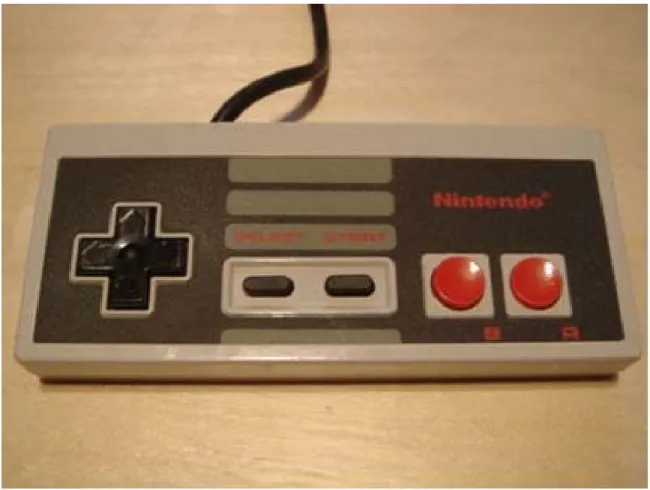
from 1983, a device considered iconic of early controller designs of the period.
Figure 1: An original NES controller, circa 1983. Notice the lack of input options ‐ four directions, start, pause, A,
and B.
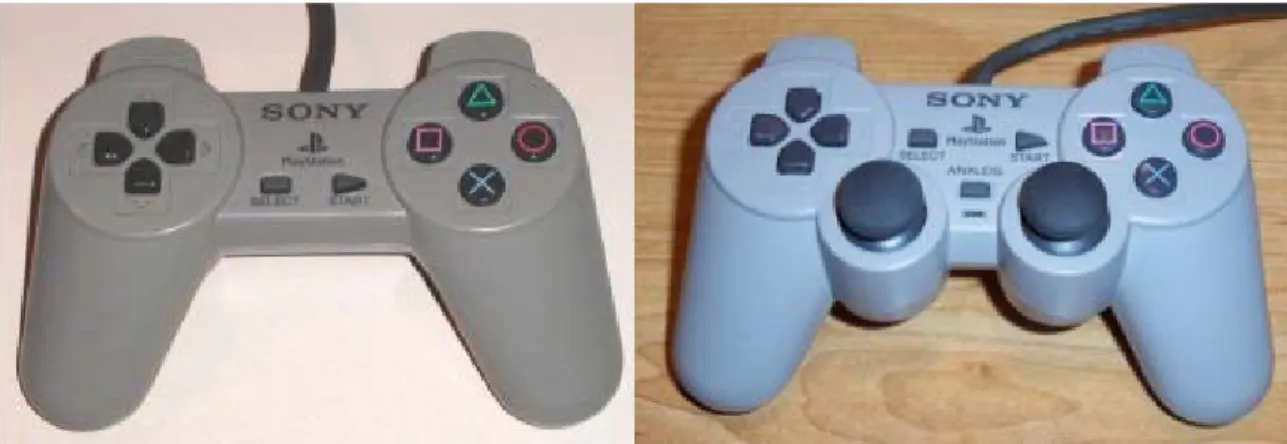
Figure 2: Left, a first‐generation Playstation Controller (1995); Right, the "Dual Shock" revision (1997). Index
triggers are located at the top of each controller, above the buttom clusters on each side.
activated by the right thumb, two analog thumb sticks, a directional pad, and four auxiliary triggers - two for each index finger (Figure 2).
Where things have become interesting are in the innovations of the twenty first century. Beginning in the early 2000s, maturation of the video games market in combination with the declining cost and increased sophistication of small-scale
electronics led to a revival of efforts by developers to introduce proprietary input devices. These devices were highly specialized, with button mappings tailored for specific titles as opposed to the more generic "catch-all" approach of the standard controller. This was rather risky on the part of developers; consumers had already been burned by shoddy implementations of proprietary inputs (namely the Mattel Power Glove, Nintendo Power Pad, and Sega Activator); the sales of such devices, which were expensive to
What made this push different from previous attempts at introducing new technologies to the masses was the fact that this time around, both the hardware and the software were ready. Previous attempts at creating such devices had failed, in part because the necessary hardware wasn't in place, and further due to the dearth of software that truly leveraged the technology. By the turn of the century however, not only were developers capable of producing functional, affordable input devices, but they were also able to back them up with the software necessary to move units. Companies used arcades as a means for demoing their products; Dance Dance Revolution gained a good head of steam in the arcade setting long before being ported to the console arena. Guitar Hero followed shortly, and the popularity of these two titles would rekindle commercial interest in motion-based gaming.
Nintendo is the company most lauded (or derided, depending on the source) for grabbing the proverbial bull by the horns and driving the industry into the motion-control era. The video games giant had fallen behind in the "console wars" during the late 90s and early 2000s due to poor hardware design decisions and licensing restrictions that soured developers of more hardcore titles on their platforms; it needed something to recapture the market lead. While other companies such as Sony and Microsoft were competing for the claim of the most powerful platform - a battle Nintendo had little chance of winning - the Japanese manufacturer decided to take a different approach. They would design a console based on emergent control systems, and embrace innovative game design as opposed to critical acclaim. The result was the Nintendo Wii
players to play games using movement as a means of control. The "Wiimote," as it is fondly called, has a wide range of attachments to increase its functionality. Figure 3 shows one of these attachments - the "nunchuck" - alongside an early design for a similar device by Michael Tse in 1991 (US Patent number D318496).
Figure 3: Left, Michael Tse's ergonomic joystick, patented in 1991; right, the Nintendo Nunchuck, an add‐on for its
Wiimote.
1.1.3
The
Impact
of
the
Software
games, such as video, audio, and physics rendering, as well as input processing. The reuse of these more generalized features and systems not only expedites the development process, but also greatly reduces costs incurred by the company. Popular examples of "game engines" are Epic Games' Unreal Engine and Valve's Source Engine; each of these systems have seen wide use throughout the industry in a large number of titles.2
During the formative years of the video game industry, consumer computer hardware was still its infancy. Processor speeds, memory sizes, and storage options remained relatively low, while demanding a high premium that placed them out of reach for home use. Game studios were forced to limit their developmental aims to programs that could run on severely limited hardware configurations. As such, virtually all game play experiences introduced until the mid-90s were two-dimensional in nature.
With the limited amount of interaction featured in early titles, there was no need for controllers to feature more than four dedicated directions of movement. Controllers of the era only supported the directions of up and down, left and right. Eight-directional input featuring the 45 degree interims (up-left, up-right, down-left, down-right) could be calculated when two buttons were pressed in tandem, though this was by and large ignored by the majority of titles. Despite these limitations, the market progressed; in a two-dimensional universe these directions were more than sufficient for control. Players navigated game environments by pressing the appropriate buttons: pressing the left button moved to the left, pressing right moved right, etc. In addition to this, the vast majority of games were designed such that action progressed from left to right, in much the same manner as reading a book in the Latin tradition.
2
As briefly mentioned earlier in this document, the progression of the industry to three-dimensional game development proved to be more trying. While early consoles featuring three-dimensional capabilities such as the Sony Playstation and Sega Saturn initially implemented standard controllers as hardware interfaces, it became clear that cardinal movement was no longer sufficient. Rather than circular control, games required spherical. Nowhere was this more apparent than in the "First-Person Shooter" (FPS) genre. The emergence of this genre of gaming was featured primarily on the personal computer world. Popularized by titles such as ID Entertainment's Doom and Quake franchises, the genre drew its name from the camera style implemented in representative titles. Ironically enough, the keyboard and mouse control structure was well suited for the FPS style of play - forward and reverse movement and strafing maneuvers could be handled by small key clusters via the left hand (WASD being the most popular), while turning and weapon activation could be managed with the mouse.
The popularization of the FPS genre required that console manufacturers develop control systems that would allow for their implementation on home hardware. This led to controller revisions that resulted in the dual thumb-stick design that dominated most of the late 90's and early 2000's. Standard implementation of this technology within games was for the left stick to control directional movement, while the right allowed for pitch and yaw. At this point, developers had all the tools they needed to build games that employed the three-dimensional perspective.
The declining cost of small-scale electronics had created an environment conducive to the evolution of the controller. Accelerometers, Bluetooth, and other technologies provide cheap and effective means through which manufacturers can enhance the feature set of a console/controller pairing. For the first time in history, it is not only technologically feasible, but also financially permissive to develop control systems that do not require the user to adapt to their limitations, but rather grow to embrace the natural reactions of the player. Instead of pressing a button to swing a racquet, players can literally swing the controller. Whereas before a sword slash might have been initiated via an obtuse combination of button presses; now, the same action can be enforced using the swift stroke of a tablet pen.
This trend is what Donald Norman (2008) refers to as the advent of "physicality," defined as "the return to physical devices, where we control things with physical body movement, but turning, moving, and manipulation appropriate mechanical devices." (pp 46) According to Norman, the natural inclination of human beings is to operate and interact with things using "tangible objects and physical controls." As such, the introduction of motion-based control devices provide a new and exciting frontier for researchers in the field of HCI.
This tendency towards more genuine movements to enforce game control has benefits for more than just researchers, of course. Beckhaus and associates (2005) suggest that it is a lack of physical engagement that limits player enjoyment of games; by reintroducing this level of interaction - whether through hand motions, dance
levels of entertainment. The question is then whether or not these systems will have the desired impact.
2. Literature Review
A good amount of literature is available on the topic of video game control systems, though only a small percentage of the corpus is related to motion-based controls in particular. What is available is primarily focused on the topics of usability,
marketability, and health concerns, with some discussion of fringe benefits.
2.1
Usability,
Accessibility,
and
Fun
In her 2002 Master's Paper submission for Indiana University, Melissa Federoff approaches the topic of usability as it applies to the field of video games. She asserts that there is an inherent relationship between usability and fun, suggesting that games with greater attention to the former are more likely to be found enjoyable by the user. Federoff insists that creating an enjoyable experience is the primary goal of all video games, stating “[I]f a game is not fun to play, it will not sell in the marketplace” (pp. 5).
the flexibility for the user to reconfigure the controls to best suit their play style (pp. 13). The first of these requirements are easily addressed by motion-based control systems, which are inherently easy to learn due to their leverage of natural movement. Motion-based controls do not lend themselves as well to the latter issue, however. Consider a video game about baseball. Using a standard controller, it would be quite easy to remap the "swing" command to any of the buttons - indeed, pressing one key is just as obvious as pressing another. Motion controls, on the other hand, require adherence to logical movement; in order to swing a bat in the real world, one is forced to adhere to obvious laws of force and motion. Motion-based controls are bound by the same rule sets; input becomes continuous, rather than discrete, increasing the complexity. This increase in complexity comes at the cost of concession to the player. Zhang and Hartmann (2007) provide support for this issue in implementations such as dance pads, stating that "[T]he use of such inputs is still predetermined and does not engage the larger environment in which play takes place" (pp. 2020). They go on to laud the Wii,
however, as "pav[ing] the way for new physical gaming paradigms" (pp. 2020). Dyck et al point to a negative impact of key remapping, however, arguing that giving the user complete control over key mappings "may sometimes lead to chaos" due to users altering standardized commands (2003).
In efforts to expand upon the relationship between usability and fun, Federoff cites Lombard (2000), who notes that immersion plays a large part in the user’s
be seen as contributory to his perception of fun. We can extend this concept to control systems; if the design is such that it limits natural user input as little as possible, it may be considered more conducive to the enjoyment of the game. By allowing users to interact with a game in a more natural manner, with motions evoking logical responses, these emergent input devices help suspend the disbelief of the player - thus promoting fun.
Lindley and associates elaborate on this issue in their discussion of motion-based play and user engagement. In their 2008 article, the researchers suggest that "controllers that allow for natural movements have the potential to offer greater affordances for social interaction" (pp. 511). According to Lindley et al, it is the greater engagement and expressiveness exhibited by motion-based controls that make such games more stimulating in not only the physical, but also the social context; players are able to communicate more efficiently with each other using motion controls as opposed to standard controls. Body movements contain more interpretable data than simple button presses - the intensity of reactions can do more to emphasize the excitement of the moment than frantic button presses, and similarly creates more spectacle for observers, and thus more entertainment.
positive traits of the implementation. The more exaggerated movements of motion controls introduce issues of embarrassment and self-consciousness for the player, creating a schism that prevents total emersion.
2.2
Impact
on
the
Market
The maturation of the games market and shift towards emergent control solutions has impacted more than just the software and hardware; it has expanded the industry's audience as well. Michael McWhertor, staff writer for the gaming news network Kotaku, points to the more user-friendly, interactive, and social nature of games based on
emergent control techniques as playing a large part in the massive influx of "casual gamers" into the global player base. McWhertor suggests that this is good for the market, because it expands the audience for other, more "hard core" titles. "If someone new to video games tries a game like Wii Fit or Brain Age," writes McWhertor, "That breaks down one barrier. Then maybe the person will be more inclined to try a more traditional game like Mario Kart Wii, which can get the family playing together." (2008).
"Video games used to be taken far more seriously than they are now; [...] People
want to play games, but without the huge investment of time and money games used to
take up. [...] There is just an increasingly diminishing core of hard core game players
and increasing number of light, casual, "least-possible-investment" players." (Cuthbert, 2007).
In effect, there is no evidence to support the claim that introduction to simple motion-based titles will “hook” casual players; while they are have irrefutably expanded the market greatly, the difference in play styles between titles focused on movement from those that do not is simply too vast. Whereas most movement-based titles are designed to be more social experiences – party games, friendly competitions and the like – the
complexities of “core” games remove much of this interaction. Thus, they cannot leverage the more definitive and popular traits of casual games to expand their audience.
Mikel Reparaz (2007) of GamesRadar US weighs in on the issue as well,
contending that efforts to cater to incoming clientele will lessen the amount of resources companies allot to the development of more "hard core" titles. In his article, The Death of Hardcore Gaming?, Reparaz writes:
"[T]he industry-wide push to turn grandmas into gamers has raised a worrisome
question: as more and more companies shift their attention to these seemingly innocuous
Reparaz's question is a good one. Consider that there are more casual gamers than hardcore gamers. Additionally, "hardcore" games cost more to develop than casual games, the former featuring greater attention to details such as graphics, audio
orchestration, and story, while the latter adheres to simpler graphics and mechanics. A studio can develop a number of casual titles that appeal to a much larger audience for the cost of a single triple-A title, and sell each at a similar price as the latter. Simple
economics would require that companies turn their attention towards the casual market, where production costs are less, and potential profits are more.
Groen (2007) shares a similar view as Reparaz, even going as far as to accuse the Nintendo Wii in particular of destroying the hardcore market. "Before long," writes Groen, "we are going to learn the answer to a very important, and largely unasked question: What happens to an industry when the consumers don't demand quality?" (2007). He argues that Nintendo's new breed of gamer has proven to have "very low standards for quality." Groen's question is an interesting one; the video game industry is one in which success has traditionally coincided with quality and attention to detail. What will become of the industry in the face of an ever-growing market with decreased emphasis on these design paradigms?
Regardless of the direction of the market, the simple fact remains: motion-based control systems have turned more people than ever on to the video game pastime.
2.3
Health
and
Well
Being
In a letter to the editor of The New England Journal of Medicine, Dr. Julio Bonis, M.D., brought attention to a condition he had recently diagnosed in a patient - acute wiiitis. According to Bonis, the condition manifested itself as an intense pain in the patient's right shoulder, "consistent with acute tendonitis isolated to the right
infraspinatus." He went on to declare the malady a variation of the slightly more popular - though no less exotic - "nintendinitis." Nintendinitis is more commonly referred to in the medical community as tenosynovitis - a type of repetitive stress injury, often
stemming from prolonged and/or intense usage of a video game controller (Reinstein 1983; Griffiths, 2004); this relationship with video games has led the adoption of the more colorful nomenclature in reference to the disorder (Brasington, 1990). Bonis prescribed a treatment of ibuprofen for one week, after which the patient made a full recovery (2007).
While 'wiiitis' may come across as a rather tongue-in-cheek diagnosis, it never the less draws attention to the inherent dangers of the introduction of new technologies to the unprepared masses. Video games have been long associated with a wide range of
further issues, such as sprains and calluses, blistering, joint pain, lacerations, and bruising (Höysniemi, 2006).
Motion-based games are much more involved than their standard-issue cousins; they are more akin to actual exercise, and as such pose many of the same dangers as the routines they are designed to emulate. Wii Sports: Tennis is a particularly good example: this title allows users to play a virtual game of tennis using the Wii remote, with swings of the controller registering identical swings of the in-game racquet. The sport of tennis has been characterized with its fair share of health hazards, most popularly in the form of "tennis elbow," a condition featuring pain or tenderness of the elbow region. Tennis Elbow is not limited to just the sport of tennis, of course, but rather any activity that stresses that region of the arm; it is more pronounced in racquet sports due to the nature of play. As Wii Sports: Tennis encourages players to enact the same motions as they would in a real game of tennis, it similarly introduces them to the same sorts of injuries. Physicians have been attributing games to the formation of such conditions for many years now (Bright and Bringhurst 1992). Having already faced concerns of such injuries with traditional interfaces, it is only logical to expect a proliferation with these more advanced, energy-intensive control systems.
injure themselves if care is not taken to clear the area prior to play. Furthermore, the International Residential Code (IRC) defines the minimum size of a living room area as 120 sqft, with ceilings 7 ft in height, while contractors suggesting the average dimensions of such an area to be 225 sqft. Taking into account areal displacement of furniture and player body size, as well as restrictions enforced by the input device in the form of minimum range to the receiver, this doesn't leave much room for movement. Thus, the likelihood of colliding with a fellow player is much increased, as all players inhabit the same space and require more room to perform than with standard interfaces.
While the shift from standard to motion-based control systems does introduce a number of health concerns, it also conveniently addresses others that have traditionally been associated with the video game genre. Schott and Hodgetts (2006) point to a tendency of the literature to characterize traditional games as sedentary in nature, promoting poor health conditions such as obesity (pp 310). The more active nature of emergent controls, however, puts players in a position to do more than simply tap buttons or pull triggers. This can help alleviate repetitive stress injuries often associated with controller use (Macgregor, 2000). Dance pads and drum machines likewise require greater motor activity, which can lead to the same benefits obtained by other forms of exercise. One Tanya Jessen (2005) of Seattle purportedly lost 95 lbs over the course of a year by using DDR as the basis for a regular fitness routine.
begun to incorporate Wii usage into the repertoires as a means of promoting participant engagement and improved health (Desch, 2009; Fairbairn, 2009).
Graves et al. (2008) acknowledge the increased physical stimulation of such products in their paper examining the energy expenditure of adolescents engaged in Wii-based play, and confirm that motion-Wii-based systems do entail a far greater degree of activity on the part of the player. Using various titles from the Wii Sports collection, in addition to a title based on standard input methods for comparison, the researchers measured the active and resting heart rates of participants, their respiratory activity, and overall movement via accelerometers attached to both the arms and the hips of each participant. Unsurprisingly, the results of their study showed significantly higher energy expenditure in games with motion based control systems. What was particularly
interesting, however, was the amount of deviation between various titles implementing motion technologies. While Wii Sports: Bowling and Wii Sports: Tennis featured relatively similar results from their respective 15-minute play sessions, Wii Sports: Boxing showed a much greater increase in overall movement. This highlights the fact that it is not simply the technology itself that contributes to physical interaction, but the design of the game as well.
Griffiths article was published nearly two years before the release of the Nintendo Wii; there are undoubtedly far more applications of these more modern technologies to the issues he described at the time.
2.4
Beneficial
Asides
A paper published in the Archives of Surgery by Rosser and associates (2007) found a correlation between laparoscopic surgical skills and exposure to video games. In their study, the group discovered that participants who spent time in excess of three hours per week playing video games completed objectives nearly 39% faster than their peers, while making 47% fewer errors. This study displayed a startling correlation between game play skills and surgical skills, which is all the more interesting considering that the majority of titles available at the time of the study were still bound to traditional control structures. This begs the questions as to whether further improvements would be recorded for participants who had greater experience with modern controller implementations such as those implemented by the Nintendo Wii and Nintendo DS systems. The release of commercial franchises based on surgical situations (such as the Trauma Center series) could make revisiting this study even more interesting down the line, to see if such statistics increase even more in a motion-based world.
introduction to the sport through the Wii. Their results showed that individuals with wii-based training performed noticeably better than those without, to the tune of 18.35 points on average. This suggests that interactive control systems provide enough correlation to the real-world events they are simulating that they can serve as a solid training basis for individuals.
3. Methodology
In order to better express the types of testing and experimentation that might be applied to the issue of examining the impact of emerging controller technologies on usability and user well-being, a documented pilot process was developed which makes use of the popular Nintendo Wii platform. While some research has been performed using this particular device for things such as gesture tracing (Schlömer et al, 2008) and general movement tracking (Graves et al, 2006), little information has been gathered as to the correlation between motion-control usage and fatigue. This experiment was designed to track the gross total movement of a player during a motion-intensive play session with the Wii system, in order to study the relationship between the two entities.
Work was divided into four major pieces. The initial experiment design was guided by the IRB process, which served as a useful tool for identifying components critical to the study. In addition to the experiment itself, a privacy policy, pre-test survey, post-test questionnaire, and recruitment email were authored.
3.1
Development
of
the
System
popularity of the Wii Sports package, as well as the rather friendly learning curve
associated with the activities it emulates - that is, it was assumed that most players would have at least some general understanding of the various sports contained in the package, whereas they might not be as familiar with a more fantastical or elaborate setting.
Furthermore, these titles were relatively simple to understand from the input-perspective. These traits made Wii Sports a more approachable package, attractive to both casual and core gamers alike.
Wii Sports: Tennis was chosen as the particular focus of this study, the foremost reason being that the tennis "simulation" is one of the more active titles in the collection. With a high degree of arm movement as compared to the baseball or bowling titles also featured in the package, it was deemed most suitable for study based on the limitations of our data collection implementation we previously discussed. Similarly, the range of movement required to simulate full-motion tennis swings - notably serves and returns - is more pronounced than that featured in Wii Sports: Boxing, a title which also presents, ironically enough, a steeper learning curve than that of the tennis game.
amassing an average of 30 minutes - 5 hours of play per week); and "Hardcore,"
(denoting average weekly game play in excess of five hours per week). Ownership and prior exposure to the Wii console, and prior exposure to the sport of tennis were also noted.
A post-test questionnaire was issued in attempts to gauge feelings of fatigue (Appendix B). Players were queried as to their physical state following the experiment, as well as how difficult they found the tasks presented to them. Furthermore, users with prior exposure to the Wii were queried as to whether or not they felt the movement tracking device had any impact on their usual play.
Late in the developmental cycle the functionality of the Wii Sports skill tracking system was identified as a potential complication. As an individual plays a particular Wii Sports title, the game adjusts its difficulty curve as a result of wins and losses. What this implied was that as a player improved at the core game featured, the difficulty would increase, and thus presumably the amount of movement required on behalf of the participant in order to conquer his or her digital opponent. If one were to expand this study to a longer timeline, such information could be extremely useful for evaluation. For the purposes of this pilot, however, the ramping difficult feature was ignored. This study was primarily interested in single-encounter captures; with no repeat participants, no relevant multi-encounter data could be captured. With this in mind, the default player profile was reset after each session in order to level the playing field, as continuous usage of one profile would skew the result set by altering the difficulty based on the previous participants.
implementation of a low cost movement tracking tool. The Wii remote (officially "wiimote") transmits its position continuously via the Bluetooth protocol, but a way to tap into that output in order to store and display it was needed. Unfortunately, Bluetooth functions in a one-to-one configuration for security purposes, and does not permit
eavesdropping without the assistance of prohibitively expensive packet-sniffing
hardware. "Tricking" the device to pair with a router capable of splitting the data stream was also a possibility, but much like the packet-sniffing hardware, the cost of this solution was also deemed unreasonable for the purposes of this pilot.
However, it was possible to create a second stream of data from an extra
Bluetooth repeater module stripped from a spare wiimote and attached to the participant's forearm. This second repeater was synced with a Bluetooth receiver running on a nearby computer acting as the "capture" device. Although low-tech, this solution proved to provide valuable data. A drawback included the fact that some of the finer grained wrist motions were lost due to the location of the second repeater, as well as total absence of button data. It should thus be noted that capture data from the experiment almost represents arm-motion (both discretely and via full-body movement) exclusively. Having access to the data stream from the Wii was worthless without the
allowing the application to be written once, and then executed on any device featuring a Bluetooth receiver and the Java Runtime Environment. The tool constructed from this library features a graphical display component for the accelerometer, which provides visual feedback for the device usage. The application also features a logging mechanism that writes out the movements of the controller to a text file, noting the time of the write in milliseconds, as well as the x, y, and z coordinates of the remote. By using this logging feature, it is possible to discern whether prolonged usage of the device leads to longer and longer response times between actions, indicative of fatigue.
After data was captured, it needed to be processed before it could be effectively studied. For this, a two-part application suite was written. The first portion of this toolset takes the delimited capture data from our initial testing, and finds the Euclidean distance for each point logged - i.e., the absolute distance moved from one point to the next. This data is then written out to another log file, and passed to the second part of the suite, which handles averaging the data over fixed amounts of time. The experiment required users to play for 20 minutes; with that in mind, the second algorithm was
designed to divide the time up into 30-second chunks, and then average the total distance moved for each segment. Test data was later exported and graphed for easier
consumption.
3.2
Procedure
for
Testing
Carolina, Chapel Hill. These individuals ranged in skill level from non-gamer to enthusiast.
Participants were brought into the lab environment individually, where they were issued a short statement explaining the nature of the study, the data being collected, and their rights as test subjects. They were allowed to ask any questions they liked of the researchers regarding the experiment beforehand. Each individual was required to fill out a pre-experiment questionnaire, which collected basic information about the participant - age, sex, experience, etc. After this process was complete, participants were escorted to the test area, where they were affixed with the movement tracking device and instructed in its use. Participants then played Wii Sports: Tennis for twenty minutes. At the end of the testing session, they were escorted back into the lab, where they filled out an exit questionnaire and were then released.
No personal information (name, address, etc) was taken from any test participants.
3.3
Data
Analysis
with a total of 40 data points for each individual. The graphs for test subjects could then be compared, and larger averages across all participants viewed.
In addition to basic movement average graphs, player data was compiled and put through both Linear and Polynomial Regression testing. Use of these methods allowed us to determine relative trends in the data.
4. Results
4.1
Pre
Test
Questionnaire
Average movement for each participant is denoted in Figure 3; each colored line corresponds to a unique individual. Of the five participants, two were defined as
"hardcore" gamers, two as "casual" gamers, and one as a "non-gamer." To reiterate, these denominations came as a result of the participant's response to the question of average play time per week; non-gamers were less than 30 minutes of play, casual up to five hours, and hardcore five hours and beyond. The average gross movement for all participants is indicated by the dark blue line.
Data collected from pre-test questionnaires indicated a predominantly male group. Four males, ages 23-38, participated in the study. The test group also featured one
female, age 32. Responses to the pre-test questionnaire revealed that all participants had at least some prior exposure to the sport of tennis. Each participant had likewise
completed their bachelors degree, with all participants serving as candidates in various Masters programs. Only three of the five participants had prior exposure to the Wii console, and only two of those three actually owned the device.
"hardcore" gamers were present in this group. All individuals in the "very comfortable" subset owned at least three consoles.
Of the participants, two rated themselves as "Very Comfortable" with the
Wiimote; one responded "Somewhat Comfortable," with the other two listing themselves as "Somewhat Uncomfortable."
4.2
Post
Test
Questionnaire
Participant response to overall workload was low to moderate, with the majority of scores falling in the 2-4 range. Task difficulty was likewise listed as generally low, with a peak score of 3 from one participant. Physical Effort and Fatigue remained
moderate, in the 3-4 range, with higher responses coming from individuals whose capture data expressed a more aggressive play-style (see section 4.3). Overall Impression from participants was high, with a minimum score of 5 and a maximum of 6.
Responses to the short-answer sections of the questionnaire revealed that most players found that their activity increased over the course of the session, as they became more comfortable with the controls and started to enjoy the game more. Those without prior experience with the Wii were surprised at how effective the motion control was, though one admitted that menu navigation was somewhat confusing.
4.3
Capture
Data
Figure 4: Average movement distances for each participant, in addition to overall average for all participants.
Average movement for each participant is denoted in Figure 3; each colored line corresponds to a unique individual. Participants listed as "hardcore" gamers were individuals one and two, represented by the red and yellow lines. "Casual" gamers were individuals three and five, represented as green and pink on the graph. Participant four, the "non-gamer," is represented by the light blue line.
previous millisecond. The x-axis shows progression in 30-second intervals over the course of the 20-minute session. The average range of movement falls in the 4 to 8 unit bounds, with a minimum change of 4.57 units moved (5.25 minutes) and a peak of 6.91 units moved (19.25 minutes).
Figure 5: Linear Regression for average participant movement.
Figure 6: Polynomial Regression for average participant movement.
Figure 5 shows the overall average for all participants with applied polynomial regression. Again, the data shows an overall increase for the session. Note that the largest transitions appear in the periods 0-7 minutes, and 16-20 minutes. There is relatively little change in the span between 7 and 16 minutes; in fact it is during this period that we see the only real decrease in movement, starting at 11.5 minutes and ending at 14 minutes.
end-of-game excitement, second wind, or improvements in play technique on the part of the user.
5. Discussion
One of this experiment's greatest limitations resulted from the nature of the data capture method. As discussed earlier, direct output from the primary remote could not be captured, and as such the data set does not reflect the precise movement of the controller. Instead, it traces greater arm-movement of the participant. While this was a worrisome factor during the initial development and testing phases, it was later found to be
advantageous to the fundamental goals of the experiment. While tracing Wiimote data itself would presumably provide researchers with an estimation of the amount of movement being performed by the participant, this is actually not the case. Due to the nature of the tracking algorithm, quick wrist movements can evoke the same degree of response in-game as greater arm movement - that is to say, a quick flick of the wrist can produce the same reaction within a game as a full swing of the arm. As a result, tracking via a secondary device attached to the arm actually provides much more credible data, as it more accurate measures gross movement of the individual as opposed to more limited wrist movement.
As an example, consider Figure 3. The questionnaire results of participants three and five (green and pink lines, respectively) identified them as casual-gamers who also had little prior experience with the Wii whatsoever; their movement scores remain in the lower registers of the chart. In contrast, participants one and two classified themselves as a 'hardcore', with prior exposure to the Wii. The movements of the latter participants show higher levels of change as opposed to those of the former. The reasoning behind this is indeterminable with the data present; perhaps subject aggressiveness, or an inherently higher level of competition in hardcore versus casual gamers could be attributed.
Interestingly enough, participant four (light blue line in figure 3) was defined as a "non-gamer," and coincidentally had the highest levels of movement of all participants. Researchers noted this individual exhibited a noticeably aggressive play style, much more athletic in nature - as though they were playing an actual game of tennis as opposed to a simulation. This could perhaps be attributed to the participant's total lack of exposure to the Wii console in general. Regardless, these factors highlighted the value of measuring movement at the arm-level as opposed to the wrist or controller, with the former being more valuable for determining overall physiological participation in the game.
The test was designed around one continuous session versus the computer, with difficulty settings returned to their defaults between participants. Because the skill was set to zero for each session, the data may be skewed for testers who were not challenged enough or testers who, despite the low skill, were pushed to overcome the computer. Furthermore, the limited amount of time spent playing the game could have skewed the data in favor of users who had more prior experience with the system; with the exception of participant 4, individuals with less exposure also had less movement, perhaps
suggesting that some time is needed to become comfortable with the interface. This hypothesis is supported by the responses on the post-test questionnaire we discussed previously: novice participants noted that physical effort increased once they had become familiar with the controls and could instead focus on the game itself.
An unanticipated finding in this pilot was the fact that, over time, general motor activity for the participants seemed to increase. It was presumed that over longer durations of play, participants would grow weary, with a greater delay between their movement actions. While movement was predictably spiky for all individuals,
actively monitored might have also played some part in encouraging higher performance in the participants.
The most logical reason for this apparent increase in energy is the limited amount of time that participants were required to play. With sessions running only 20 minutes in duration, it is quite possible that participants did not have ample time to exhaust
themselves. The gradual increase could be seen as a "warm-up" phase, which would coincide with some of the responses to the post-test questionnaire regarding increased enjoyment after becoming more familiar with the controls; perhaps on a longer timeline, results would have been more in tune with what was expected.
Of course, an obvious element that we have yet to address is the idea that perhaps the participants were just having fun. The real value of emergent controller designs lies in their ability to facilitate greater degrees of interaction for the players. How this
manifests itself varies from controller to controller, and its impact affects everything from the concrete - i.e., usability and facilitation - to the more abstract, hard-to-define
6. Conclusion
The results of our initial inquiry into the impact of motion-based games on user fatigue and system usability are sparse; the pilot nature of the study did not allow for copious amounts of data to be obtained. Furthermore, limitations in funding and capture technologies prevented exploration of more elaborate data sets.
Despite these limitations, however, the study proved useful in expanding the present understanding of the impacts of motion-based technologies on fatigue and usability. The point of the pilot was to develop a template for exploring such concepts, and to lay a bit of ground work for future experimentation. To that end, the project was a success; a motion capture application was successfully developed for the Wii, brief initial testing was performed, and some amount of data was captured and evaluated.
play, rather than the style of the games. Similarly, subjects could be brought back for repeat sessions, in order to measure how play changes as they grow more accustomed with the system.
In a related line of inquiry it might also be interesting to see data in situations where the testers are either matched against high level computer opponents at the start, or faced up against human opponents. This would allow researchers to track whether competition and peer response provoked higher degrees of movement from the players
The value of this study could be greatly increased by the addition of
health-monitoring software to track statistics such as player heart and respiratory rates as seen in the Graves study (2008). The system implemented in the pilot is useful in that it allows for the analysis of arm movement over the course of a play session; however, it provides no actual physiological data to support any conclusions that might be drawn from the data. Furthermore, the physical implementation of the device makes it rather
cumbersome, which may have some impact on the data; a more refined method of capture could reduce - or perhaps even eliminate - such digression. More tracking units could be implemented in order to obtain overall body movement data - wrists, arms, legs, and hips would make particularly good points of contact. In addition to this, data could be collected beforehand pertaining to the physical condition of the participant - weight, exercise regime, etc. This would allow for comparisons between the amount of perceived fatigue in individuals deemed "out of shape" versus those who partake in regular
exercise.
similar game that relied on traditional control systems as opposed to motion-based controls. Comparing the activity of an individual playing a tennis game with a joystick and button combination as opposed to the wiimote would have exhibited the overall difference between energy expenditure between the two control systems. Unfortunately, few games have been written for both a motion-based platform and a standard platform; those that have, such as Capcom’s Resident Evil 4 or Nintendo's The Legend of
Zelda:Twilight Princess, are what are considered "core" games, and thus feature steep difficulty curves that would not have been complimentary to the experience ranges of the players, nor the time allotted for the experiment. In the future, there may be any number of cross-platform titles that can be enjoyed by a larger audience with both traditional and motion-based control systems; in such an instance, comparison tests between the two would be interesting.
Regardless of any such changes, the basic premise of the experiment remains intact. Motion-based control systems are the future of gaming; there's no way around it. The people have spoken with their wallets, and in doing so have instigated a shift in the industry away from more traditional play styles to those that incorporate more elaborate input devices. The popularity of Guitar Hero, of Rock Band, of Dance Dance Revolution and the Wii have set the industry on a path, though none of us yet know where it may lead. What impact emergent control systems will have on the market, the industry, and - most importantly - the player have yet to be seen. Further research into these concepts is needed so that we will be prepared to for the future, and to give developers the
7. Bibliography
Archambault, D. et al. (2008). Towards generalised accessibility of computer games. Lecture Notes in Computer Science, 5093/2008, 518-527.
Beckhaus, S., Blom, K.J., & Haringer, M. (2005). A new gaming device and interaction method for a first-person-shooter. Proceedings of the Comptuer Science and Magic 2005. Retrieved 7 June 2008 from
hamburg.de/files/20-ChairIO_FPS-CSam2005-BeckhausBlomHaringer.pdf Booker, L. (2008). Casual gamers aren't necessarily gamers. Kotaku. Retrieved 20 April
2009 from
http://www.kotaku.com.au/2008/03/casual_gamers_arent_necessarily_gamers/ Brasington, R. (1990). Nintendinitis. New England Journal of Medicine, 322, 1474.
Bright, D.A. & Bringhurst, D.C. (1992). Nintendo elbow. Western Journal of Medicine,
156(6), 667-668.
Dyck, J, Gutwin, C, Brown, B, & Pinelle, D. (2003) Learning from games: hci design innovations in entertainment software. Proceedings, 2003.
Cleary, A.G., McKendrick, H., & Sills, J.A. (2002). Hard-arm vibration syndrome may be associated with prolonged use of vibrating computer games. British Medical Journal, 324, 301.
Croal, N. (2007) The Dylan cuthbert interview, part ii. Newsweek. Retrieved 20 April 2009 from dylan-cuthbert-interview-part-ii.aspx
Cummings, A.H. (2007). The evolution of game controllers and control schemes and their effect on their games. The 17th Annual University of Southhampton Multimedia Systems Conference, January 2007. Retrieved 15 November 2008 from http://mms.ecs.soton.ac.uk/2007/
children-with-cf/
Dörrfuß, K. et al. (2008). Video games can improve performance in sports - An
empirical study with wii sports bowling. Seminar Human Computer Interaction. Otto-Friedrich University Bamberg, Germany.
Fairbairn, A. (2009). Elderly keeping fit with the wii. Retrieved 25 March 2009 from http://www.neowin.net/news/gamers/09/01/29/elderly-keeping-fit-with-the-wii Federoff, M. A. (2002). Heuristics and usability guidelines for the creation and evaluation
of fun in video games. Thesis at the University Graduate School of Indiana University. Retrieved 4/9/2008 at
http://citeseerx.ist.psu.edu/viewdoc/download?doi=10.1.1.89.8294&rep=rep1&ty pe=pdf
Graves, L.E.F., Ridgers, N.D., & Stratton, G. (2008) The contribution of upper limb and total body movement to adolescents' energy expenditure whilst playing nintendo wii. European Journal of Applied Physiology, 104, 617-623.
Griffiths, M. (2004). Can videogames be good for your health?. Journal of Health Psychology. 2004(9),339-344.
Groen, A. (2007) Nintendo Wii, harbringer for the death of gaming. Blend Games. Retrieved April 2009 from Nintendo-Wii-Harbinger-For-The-Death-Of-Gaming-3703.html
Höysniemi, J. (2006). International survey on the dance dance revolution game. Computers in Entertainment, 4(2), article 8.
Ingham, Tim. (2008). Ubisoft: Casual audience is demanding more. casualgaming.biz. Retrieved 17 April 2009 from Casual-audience-is-demanding-more
Jessen, T. (2005). Weightloss Stories. Get Up Move. Retrieved 8 August 2008 from http://www.getupmove.com/weightloss/tanya.asp
Lindley, S., Couteur, J.L., Bianchi-Berthouze, N. (2008). Stirring up experience through movement and game play: Effects on engagement and social behavior. CHI 2008 Proceedings, 511-514.
Macgregor, D.M. (2000) Nintendonitis? A case report of the repetitive strain injury in a child as a result of playing computer games. Scottish Medical Journal, 45(5), 150. McWhertor, M. (2008). 2008: The year of the casual gamer? Kotaku. Retrieved 20 April
2009 from http://kotaku.com/5102815/2008-the-year-of-the-casual-gamer Norman, D.A. (2007). The next ui breakthrough, part 2: Physicality. Interactions,14(4), 46-47.
Quirk, J. A. et al. (1995). First seizures associated with playing electronic screen games: A community based study in Great Britain. Annals ofNeurology, 37, 110–124.
Raparaz, M. (2007). The death of hardcore gaming? Games Radar. Retrieved 12 December 2008 from hardcore-gaming/a-20070830123231729045/g-20060308165433320026
Reinstein, L. (1983). De Quervain’s stenosing tenosynovitis in a video games player.
Archives ofPhysical and Medical Rehabilitation, 64, 434–435.
Rosser, J.C., et al. (2007). The impact of video games on training surgeons in the 21st
century. Archives of Surgury, 142(2),181-186.
Schlömer, T. et al. (2008). Gesture recognition with a wii controller. Proceedings, TEI'08, Feb 18-20, pp 11-14.
Schott, G. & Hodgetts, D.. (2006). Health and digital gaming: The benefits of a community of practice. Journal of Health Psychology, 11(2), 309-316. Zhang, H. & Hartmann, B. (2007) Building upon everyday play. CHI 2007 (April
8. Appendices
8.1
Appendix
A:
Pre
Test
Questionnaire
Wii Assessment
Demographics
Age ___
Sex ___
Please indicate the highest level of education completed.
___ Grammar School
___ High School or equivalent
___ Vocational/Technical School (2 year) ___ Some College
___ College Graduate (4 year) ___ Master's Degree (MS) ___ Doctoral Degree (PhD)
___ Professional Degree (MD,JD, etc.)
___ Other
Gaming Experience
How comfortable do you consider yourself with electronic gaming, either on a personal computer or a console
___ Very comfortable ___ Somewhat comfortable
___ Neither comfortable nor uncomfortable ___ Somewhat uncomfortable
___ Very uncomfortable
How many gaming consoles are in your household (including portable systems)?
___ 0 ___ 1 ___ 2
How many hours per week do you use a computer or a console to play games?
___ Less than 1 ___ 1 to 2 hours ___ 3 to 5 hours ___ 6 to 10 hours
___ 11 to 20 hours/week ___ Over 20 hours/week
Nintendo Wii Experience
Do you own a Nintendo Wii or have regular access to one?
Yes ___ No___
If yes, how many times a week do you use the Wii on average over the last month?
___ 0 ___ 1 - 5 ___ 6 -10 ___ 10 or more
How many times have you played Wii Sports: Tennis
___ 0 ___ 1 - 5 ___ 6 -10 ___ 10 or more
How comfortable do you consider yourself to be with Wii remote controller?
___ Very comfortable ___ Somewhat comfortable
___ Neither comfortable nor uncomfortable ___ Somewhat uncomfortable
8.2
Appendix
B:
Post
Test
Questionnaire
Wii Assessment: Post-Test Questionnaire
Rate your overall impression about the following items:
Overall Workload
Low 1 2 3 4 5 6 7 High
Task Difficulty
Low 1 2 3 4 5 6 7 High
Physical Effort
Low 1 2 3 4 5 6 7 High
Fatigue
Low 1 2 3 4 5 6 7 High
Overall Impression
Negative 1 2 3 4 5 6 7 Positive
Did your level of physical effort change over the course of the test? Please explain why.
Did the Wii remote controller function how you expected it to or were you surprised by the interaction?
8.3
Appendix
C:
Recruitment
Letter
SUBJECT: Research Subjects are Needed to Evaluate the Nintendo Wii Gaming Console
MESSAGE: Would you like to play on a Nintendo Wii Console and help a group of Information Science students in their research at the same time?
We are looking for participants for a research study that will include playing a Nintendo Wii game for twenty minutes, and then completing a short exit survey recounting the experience. The game will involve using the Wii Remote
(http://en.wikipedia.org/wiki/Wii_Remote) to play the Wii Sports:
Tennis game (http://en.wikipedia.org/wiki/Wii_Sports). This
title features non-traditional interaction with a game console and some related physical activity.
We are interested in working with participants with any level of gaming experience.
Benefits to participants: besides the fun time you could have playing with the Wii system, participants will be entered into a drawing to win a $50 dollar gift certificate to the Varsity Theater in Chapel Hill.
To be eligible to partake in this study, you must meet the following requirements:
- able to read and write in English,
- fully sighted (with or without corrective lenses)
- possess full range of motion in at least one arm