Running head: PARENTAL WARMTH AND CONTROL
Bidirectional Relations between Parenting and Behavior Problems from Age 8 to 13 in Nine
Countries
Jennifer E. Lansford, Duke University, Durham, NC, USA
W. Andrew Rothenberg, University of North Carolina, Chapel Hill, NC, USA
Todd M. Jensen, University of North Carolina, Chapel Hill, NC, USA
Melissa A. Lippold, University of North Carolina, Chapel Hill, NC, USA
Dario Bacchini, University of Naples “Federico II,” Naples, Italy
Marc H. Bornstein, Eunice Kennedy Shriver National Institute of Child Health and Human Development, Bethesda, MD, USA, and Institute for Fiscal Studies, UK
Lei Chang, University of Macau, China
Kirby Deater-Deckard, University of Massachusetts, Amherst, MA, USA
Laura Di Giunta, Università di Roma “La Sapienza,” Rome, Italy
Kenneth A. Dodge, Duke University, Durham, NC, USA
Patrick S. Malone, Duke University, Durham, NC, USA
Paul Oburu, Maseno University, Maseno, Kenya
Concetta Pastorelli, Università di Roma “La Sapienza,” Rome, Italy
Ann T. Skinner, Duke University, Durham, NC, USA
Emma Sorbring, University West, Trollhättan, Sweden
Laurence Steinberg, Temple University, Philadelphia, PA, USA and King Abdulaziz University,
Jeddah, Saudi Arabia
Liliana Maria Uribe Tirado, Universidad San Buenaventura, Medellín, Colombia
Liane Peña Alampay, Ateneo de Manila University, Quezon City, Philippines
Suha M. Al-Hassan, Hashemite University, Zarqa, Jordan, and Emirates College for Advanced
Education, Abu Dhabi, UAE
Author Note
This research has been funded by the Eunice Kennedy Shriver National Institute of Child Health and Human Development grant RO1-HD054805; predoctoral fellowships provided by the
National Institute of Child Health and Human Development (T32-HD07376) through the Center
for Developmental Science, University of North Carolina at Chapel Hill; and Fogarty
International Center grant RO3-TW008141. This research also was supported by the Intramural
Research Program of the NIH/NICHD and the ERC (695300-HKADeC-ERC-2015-AdG). The
content is solely the responsibility of the authors and does not necessarily represent the official
views of the NIH or NICHD. Preparation of the manuscript was supported by the Society for
Research on Adolescence.
Address correspondence to Jennifer E. Lansford, Duke University, Center for Child and
Family Policy, Box 90545, Durham, NC 27708, USA. Phone and fax: 309-243-5322. Email:
Abstract
This study used data from 12 cultural groups in 9 countries (China, Colombia, Italy, Jordan,
Kenya, Philippines, Sweden, Thailand, and United States; N = 1,298) to understand the cross-cultural generalizability of how parental warmth and control are bidirectionally related to
externalizing and internalizing behaviors from childhood to early adolescence. Mothers, fathers,
and children completed measures when children were ages 8 to 13. Multiple-group
autoregressive, cross-lagged structural equation models revealed that child effects rather than
parent effects may better characterize how warmth and control are related to child externalizing
and internalizing behaviors over time, and that parent effects may be more characteristic of
relations between parental warmth and control and child externalizing and internalizing behavior
Bidirectional Relations between Parenting and Behavior Problems from Age 8 to 13 in Nine Countries
A number of parenting theories emphasize that parenting involves behavioral aspects,
such as control, restrictiveness, and permissiveness, as well as emotional aspects, such as
warmth, acceptance, hostility, and rejection (see Bornstein, 2015; Darling & Steinberg, 1993).
Early theories described parenting in relation to parental dominance versus submission and
rejection versus acceptance (Symonds, 1939); detachment versus involvement and hostility
versus warmth (Baldwin, 1955); strictness versus permissiveness and hostility versus warmth
(Sears, Maccoby, & Levin, 1957); control versus autonomy and hostility versus love (Schaefer,
1959); and restrictiveness versus permissiveness and hostility versus warmth (Becker, 1964).
Parenting typologies have used a two-by-two matrix depicting high versus low levels of warmth
on one axis and high versus low levels of control on the other to differentiate authoritarian,
permissive, neglecting, and authoritative parents on the basis of whether they are high or low on
each dimension (Baumrind, 1967; Maccoby & Martin, 1983). Thus, dimensions broadly
characterized as warmth and control have served as cornerstones in several major theories of
parenting.
Parents’ warmth and control have been found to be related to several aspects of
adolescents’ adjustment in both cross-sectional and longitudinal studies. For example, early
research demonstrated that children of authoritative parents who are high in both warmth and
control have higher levels of academic and social competence than children of authoritarian
parents who are low in warmth or permissive parents who are low in control (Baumrind, 1971).
More recent meta-analyses have demonstrated links between positive aspects of parenting (more
(Kawabata, Alink, Tseng, van IJzendoorn, & Crick, 2011) and fewer internalizing problems
(Yap, Pilkington, Ryan, & Jorm, 2014). There has been more controversy in the literature about
the role of control than the role of warmth in relation to adolescents’ adjustment. For example,
differentiated perspectives on control have emerged to distinguish behavioral control (i.e.,
parents’ efforts to remain aware of, and potentially redirect, adolescents’ behavior) from
psychological control (i.e., parents’ efforts to control adolescents’ thoughts and feelings), with
somewhat controversial effects of behavioral control but detrimental effects of psychological
control (Barber, Stolz, & Olsen, 2005). Meta-analyses have found robust links between
psychological control and delinquency (Hoeve et al., 2009) and between monitoring (a form of
behavioral control) and less risky adolescent sexual behavior (Dittus et al., 2015), although it can
be difficult to distinguish between behavioral and psychological control in some measures.
Lack of appropriate behavioral control comes about because parents’ supervision and
discipline are too lax, too harsh, or inconsistent, all of which are related to adolescents’
externalizing and internalizing problems (Davies & Cummings, 1994). In addition, parental
rejection (lack of warmth) often involves negative emotions, intrusiveness, and withdrawal that
predict adolescents’ own anger, dysphoria, withdrawal, and noncompliance, contributing to both
externalizing and internalizing problems (Davies & Cummings, 1994). Adolescents are more
willing to disclose information about their activities and whereabouts if they perceive their
parents to be warm and supportive, which facilitates parents’ ability to exert appropriate
behavioral control and decreases adolescents’ problem behaviors (Klevens & Hall, 2014).
Parental warmth and support are also related to fewer depressive symptoms, perhaps in part
because parental warmth boosts adolescents’ self-esteem and helps buffer them from life stress
Although the majority of theories and empirical studies focus on how parenting affects
adolescents’ adjustment, transactional and reciprocal models emphasize that children and
adolescents also elicit particular types of parenting (e.g., Patterson, Reid, & Dishion, 1992;
Sameroff, 1975). A large literature on child effects demonstrates that when children evince
problems, their parents withdraw or become more authoritarian (e.g., Albrecht, Galambos, &
Jansson, 2007; Reitz, Dekovic, & Meijer, 2006; Rueter & Conger, 1998; Stice & Barrera, 1995).
For example, adolescent internalizing, externalizing, and academic achievement predict
subsequent involvement from a nonresident father (Hawkins, Amato, & King, 2007). Over time,
when adolescents engage in problem behavior, their parents become less warm and more hostile,
whereas parents become warmer and less hostile over time when their adolescents are
functioning more positively (Williams & Steinberg, 2011).
Several important theoretical perspectives now emphasize the importance of situating
parenting within broader cultural contexts to be able better to understand the meaning imparted
to children and adolescents by particular parenting behaviors (e.g., Bornstein, 2012; Harkness &
Super, 2002; Rubin & Chung, 2006; see also Stein & Lippold, this issue). Empirical studies have
investigated parental warmth and control in a number of countries and cultural groups. Focusing
on different ethnic groups within the United States, Hill, Bromell, Tyson, and Flint (2007)
argued that parental control and autonomy granting are shaped by cultural, neighborhood, and
socioeconomic factors. For example, in five cultural groups (in Costa Rica, Thailand, and three
racial groups in South Africa), traditional measures of psychological control were improved by
the addition of items regarding adolescents’ perceptions of their parents’ disrespect (Barber, Xia,
Olsen, McNeely, & Bose, 2012). Likewise, in a study of adolescents in 12 cultural groups from
Barber (2010) found that parents in all groups demonstrate love by providing rare and valued
commodities, but the nature of these commodities (e.g., time, support for education) varied
across groups. Associations between more parental warmth and fewer adolescent behavior
problems have been demonstrated in many countries (see Khaleque & Rohner, 2002; Rohner &
Lansford, in press).
In analyses using data from the same sample of participants as in the present study, when
children were 8 years old, on average, warmth was found to correlate with control in different
ways across nine countries (Deater-Deckard et al., 2011). For example, in Kenya, warmth and
control were moderately to strongly positively correlated (r ranging from .44 to .85, depending on whether mothers, fathers, or children were reporting). By contrast, warmth and control were
negatively correlated for European Americans in the United States (r ranging from -.35 to -.18). These different patterns of covariation between warmth and control in different cultural groups
suggest that warmth and control may be related differently to youth adjustment depending on the
broader context in which they are situated. Indeed, country or cultural context has been found to
moderate links between parental warmth and control and child and adolescent outcomes (e.g.,
Louie, Oh, & Lau, 2013).
The Present Study
Although theories of parenting espouse the importance of situating parenting within
broader cultural contexts (e.g., Bornstein, 2012), there have been few empirical tests of whether
the tenets of major theories of parenting hold in diverse international contexts. In keeping with
the theme of the Special Section, this study examines to what extent parenting theories that have
been developed primarily with respect to relationships between parents and younger children
hypotheses related to how parental warmth and control are linked to youth outcomes based on
theory. Further, this study tests whether bidirectional relations between parenting and youth
outcomes vary based on the cultural context. We analyze data reported by mothers, fathers, and
children in nine countries (China, Colombia, Italy, Jordan, Kenya, Philippines, Sweden,
Thailand, and the United States), annually for six years, beginning when children were 8 years
old, on average. We test whether associations between parental warmth and control and
subsequent child externalizing and internalizing behavior as well as associations between child
externalizing and internalizing behavior and subsequent parental warmth and control are
consistent across cultural groups. We also test whether parental warmth and control are
consistently related to externalizing and internalizing behaviors from childhood to early
adolescence or whether the relations vary with age.
Method Participants
Participants included 1,298 children (M = 8.29 years, SD = .66, range = 7 to 10 years; 51% girls), their mothers (N = 1,275), and their fathers (n = 1,032) at wave 1 of 6 annual waves. Families were drawn from Shanghai, China (n = 121), Medellín, Colombia (n = 108), Naples, Italy (n = 100), Rome, Italy (n = 103), Zarqa, Jordan (n = 114), Kisumu, Kenya (n = 100), Manila, Philippines (n = 120), Trollhättan/Vänersborg, Sweden (n = 101), Chiang Mai, Thailand (n = 120), and Durham, North Carolina, United States (n = 111 European Americans, n = 103 African Americans, n = 97 Latin Americans). In total, participants represented 12 distinct ethnic/cultural groups across 9 countries. Participants were recruited through letters sent from
schools. Initial response rates varied across countries (from 24% to nearly 100%), primarily
obtained in countries in which the schools were more involved in recruiting. For example, in the
United States, we were allowed to bring recruiting letters to the schools, and classroom teachers
were asked to send the letters home with children. Children whose parents were willing for us to
contact them to explain the study were asked to return a form to school with their contact
information. We were then able to contact those families to try to obtain their consent to
participate, scheduling interviews to take place in participants’ homes (yielding a 24%
participation rate). By contrast, in China, once the schools agreed to participate, the schools
informed parents that the school would be participating in the study and allowed our researchers
to use the school space to conduct the interviews. Nearly 100% of the parents in the Chinese
sample agreed to participate once the schools informed them of the schools’ participation.
Most parents (82%) were married, and nonresidential parents were able to provide data.
Nearly all were biological parents, with 3% being grandparents, stepparents, or other adult
caregivers. Sampling focused on including families from the majority ethnic group in each
country; the exception was in Kenya where we sampled Luo (3rd largest ethnic group, 13% of population), and in the United States, where we sampled equal proportions of European
American, African American, and Latin American families. To ensure economic diversity, we
included students from private and public schools and from high- to low-income families,
sampled in proportions representative of each recruitment area. Child age and gender did not
vary across countries. Data for the present study were drawn from interviews at the time of
recruitment as well as one, two, four, and five years after recruitment (at waves 1, 2, 3, 5, and 6
of the larger study because these were the times at which data relevant to the current questions
were collected). Retention rates were very high: At the follow-up interview five years after the
provided follow-up data did not differ from the original sample with respect to child gender,
parents’ marital status, or mothers’ education. Table 1 provides descriptive information about the
demographics of the samples at the time of recruitment.
Procedure and Measures
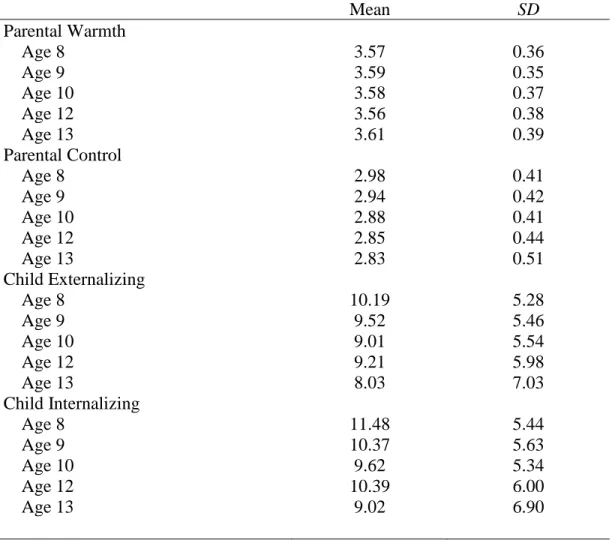
Table 2 provides the descriptive statistics for all substantive measures. Measures were
administered in the predominant language of each country, following forward- and
back-translation and meetings to resolve any item-by-item ambiguities in linguistic or semantic
content (Erkut, 2010). Translators were fluent in English and the target language. In addition to
translating the measures, translators noted items that did not translate well, were inappropriate
for the participants, were culturally insensitive, or elicited multiple meanings and suggested
improvements (Maxwell, 1996; Peña, 2007). Country coordinators and the translators reviewed
the discrepant items and made appropriate modifications. Measures were administered in
Mandarin Chinese (China), Spanish (Colombia and the United States), Italian (Italy), Arabic
(Jordan), Dholuo (Kenya), Filipino (the Philippines), Swedish (Sweden), Thai (Thailand), and
American English (the United States and the Philippines).
Interviews lasted 1.5 to 2 hours at each wave and were conducted in participants’ homes,
schools, or at other locations chosen by the participants. Procedures were approved by local
Institutional Review Boards (IRBs) at universities in each participating country. Mothers and
fathers provided written informed consent, and children provided assent. Family members were
interviewed separately to ensure privacy. At the first assessment point (when children were 8
years old), all interviews for parents as well as children were conducted orally. In subsequent
years, parents were given the choice of completing the measures in writing or orally, with the
aid to help the participants understand the response scales). The measures were administered to
children orally until the age of 10; after that point, children were given the option of completing
the measures orally or in writing. Children were given small gifts or monetary compensation to
thank them for their participation, and parents were given modest financial compensation,
families were entered into drawings for prizes, or modest financial contributions were made to
children’s schools.
Parental warmth and control. When children were ages 8, 9, 10, 12, and 13 (on average), mothers and fathers completed the Parental Acceptance-Rejection/Control
Questionnaire-Short Form (PARQ; Rohner, 2005). Children completed the child-report version
of the measure when they were ages 8, 9, 10, and 12 (on average), providing separate ratings
about their mothers and fathers. The measure includes 8 items capturing parental warmth (e.g.,
parents saying nice things to and taking a real interest in the child) and 5 items capturing
behavioral control (e.g., parents insisting on complete obedience). Parents and children rated the
frequency of each behavior on a modified 4-point scale (1 = never or almost never, 2 = once a month, 3 = once a week, or 4 = every day). In a meta-analysis of the reliability of the PARQ using data from 51 studies in 8 countries, Khaleque and Rohner (2002) concluded that internal consistency (α) reliabilities exceeded .70 in all groups, effect sizes were homogenous across
groups, and convergent and discriminant validity were demonstrated (Rohner, 2005). We found strong internal consistency for this measure across reporters in the present sample (αs = .84 to
.89; see Putnick et al., 2015, for additional information). For this study, we used the family mean
of parental warmth and control, which was the average of child and parent reports of each
Child externalizing and internalizing behaviors. Mothers and fathers completed Achenbach’s (1991) Child Behavior Checklist when children were ages 8-10 and 12-13.
Children completed the Youth Self Report (Achenbach, 1991) at ages 8-10 and 12. Participants
were asked to rate how true each item was of the child during the last six months (0 = not true, 1 = somewhat or sometimes true, 2 = very or often true). The Externalizing Behavior scale
summed across 33 items (for parent reports) or 30 items (for youth reports) capturing behaviors
such as lying, truancy, vandalism, bullying, drug and alcohol use, disobedience, tantrums,
sudden mood change, and physical violence. The Internalizing Behavior scale summed across 31 items (for parent reports) or 29 items (for youth reports) measuring behaviors and emotions such
asloneliness, self-consciousness, nervousness, sadness, and anxiety. The Achenbach measures
are among the most widely used instruments in international research, with translations in over
100 languages and strong, well-documented psychometric properties (e.g., Achenbach &
Rescorla, 2006). As reported by Putnick et al. (2015), both Internalizing Behavior (α = .84 to .87) and Externalizing Behavior (α = .84 to .88) scale scores demonstrated strong internal
consistency in the present sample. For this study, we used the family mean of child externalizing
and internalizing behavior, which was the average of child and parent reports of each construct at
each wave.
Demographic control variables. Child gender and number of years of mother and father education at the first time point examined in the current study (i.e., when children were 8 years
old) were included in study analyses as covariates.
Analysis Plan
We utilized an autoregressive, cross-lagged structural equation modeling framework in
analyses proceeded in a series of steps. First, mean scores were computed from all available
mother, father, and child reports on parental warmth, parental control, child externalizing, and
child internalizing behaviors at each time point (e.g., mother self-report, father self-report,
child-report on mother, and child-child-report on father responses were combined to create a wave 1 parental
warmth variable). Using mean scores as observed indicators in the model dramatically helps with
model estimation and power by bolstering the model’s sample-size-to-parameters ratio (Kline,
2011), which became especially important in subsequent steps of the analysis. Additionally, the
decision to combine reports at each time point to compute mean scores was substantively
supported by significant correlations among mother, father, and child reports of parental warmth
(rs = .21-.70, p< .01), parental control (rs = .18-.62, p < .01), child externalizing (rs = .25-.60, p < .01), and child internalizing (rs = .19-.43, p < .01) across all time points. This decision was further supported by high levels of interrater consistency in each of these constructs across
cultural groups, as only 2 of 48 measures of interrater consistency fell below .70 across mother,
father, and child reports in each of the 12 cultural groups (see Table 3). These significant
correlations and interrater consistencies across cultural group indicated that mother, father, and
child reports were associated closely and suitable for mean-score estimation. Alternative models
in which latent variables were estimated for warmth, control, externalizing, and internalizing
behaviors at each wave were explored but ultimately abandoned due to difficulties with model
convergence and fit, largely as a consequence of attempting to estimate 5 latent variables per
construct (one for each time point) across 12 different cultural groups.
After mean scores were created, separate linear regression models testing the unique
associations of study covariates (i.e., mother education, father education, and child gender) with
time point across waves were examined (e.g., in one such model, age 8 externalizing behavior
was regressed on child gender, mother education, and father education). Covariates with
associations significant at p < .10 with any of our outcome variables at a particular time point were retained in subsequent analyses; all others were trimmed from further hypothesis testing to
ensure model parsimony (e.g., if child gender was significantly associated with child
externalizing behavior at age 10, but not age 12, then the association between these two variables
at age 10 was retained in further analyses, but the association at age 12 was trimmed).
Next, four separate structural models exploring longitudinal associations between (a)
parental warmth and child externalizing behavior, (b) parental warmth and child internalizing
behavior, (c) parental control and child externalizing behavior, and (d) parental control and child
internalizing behavior were each estimated utilizing full information maximum likelihood
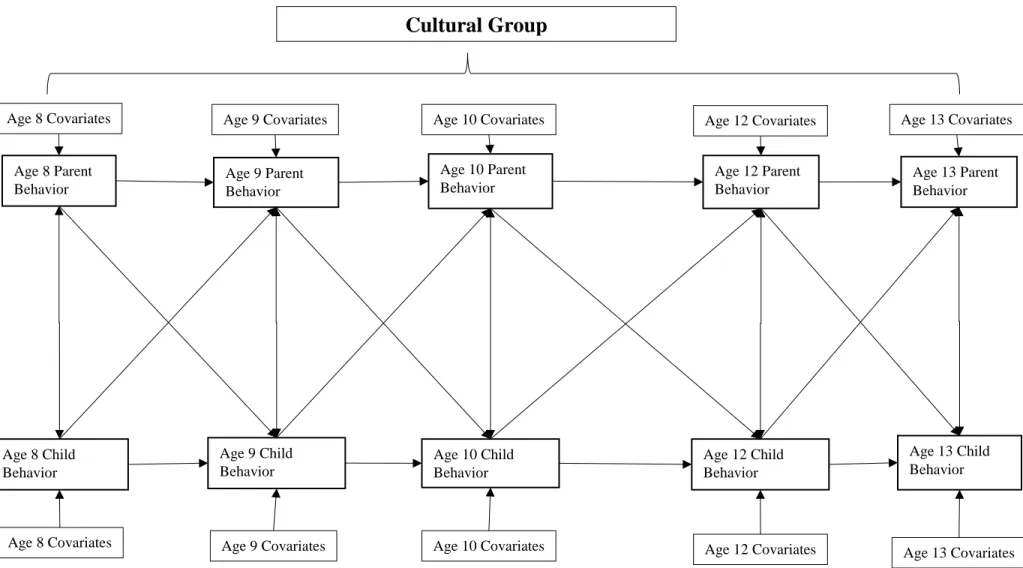
estimation procedures to handle missing data (Enders, 2010). The general structure of each of
these models is depicted in Figure 1. Each model was autoregressive (e.g., in the parental
warmth models, age 13 warmth was regressed on age 12 warmth, which was regressed on age 10
warmth, etc.) and cross-lagged (e.g., in the parental warmth-child externalizing behavior model,
parental warmth at age 8 predicted child externalizing behavior at age 9, and child externalizing
behavior at age 8 also predicted parental warmth at age 9; see Figure 1). Thus, these models
allowed us to test both parent- and child-driven effects—that is, how child behavior at one wave
predicts parenting at the next wave and how parenting at one wave predicts child behavior at the
next. Additionally, to account for contemporaneous shared-method variance, correlations
between contemporaneous measures were specified in each model (e.g., parental warmth and
child externalizing behavior at age 8 were correlated; see Figure 1). Furthermore, to improve
were added to each model (e.g., parental warmth at age 8 was associated with warmth at ages 10,
12, and 13 in addition to predicting age 9 parental warmth).
Once the four structural models were fit, multiple-group comparison analyses at the level
of the cultural group (12 groups total) were conducted to examine differences in models across
cultural groups. Following procedures established in our prior work (Coauthor et al., 2017), all
paths in each of the four models were initially constrained to be equal across all cultural groups.
Then, for each of the four models, paths were iteratively freed to vary across cultural groups. A
path was allowed to vary freely across cultural groups if a χ2 difference test revealed that the
model fit significantly better with the path freed than when it was constrained to be equal across
cultural groups.
Paths were freed to vary across culture and tested using χ2 difference tests in the same
order in every model. First, all paths associating covariates with parenting and child behavior
constructs were freed at once and tested. Second, all correlations between contemporaneous
measures, and correlations between different measures of each construct at non-adjacent time
points were freed at once and tested. Third, each autoregressive stability path was freed
at-a-time and tested across cultural group. Fourth and finally, each cross-lagged path was freed
one-at-a-time and tested across cultural group. We iteratively freed paths in this way (i.e., waiting to
free cross-lagged paths until last) to ensure we were conservative in the reporting of our
significant findings. In other words, we wanted to be sure that, if there were any significant
similarities or differences in our cross-lag paths across culture (which represented tests of our
core study questions), that those significant differences were “real” and not just a
misappropriation of variance that was better accounted for by freeing other paths across groups.
the first paths freed to vary across groups, and the results were identical. Therefore, we are fairly
confident stability and differences in cross-lagged paths in this study are robust and valid.
Analyzing the data in this way was advantageous for answering our study questions, as it
allowed us to identify with precision the age-specific paths that might vary (or not) across
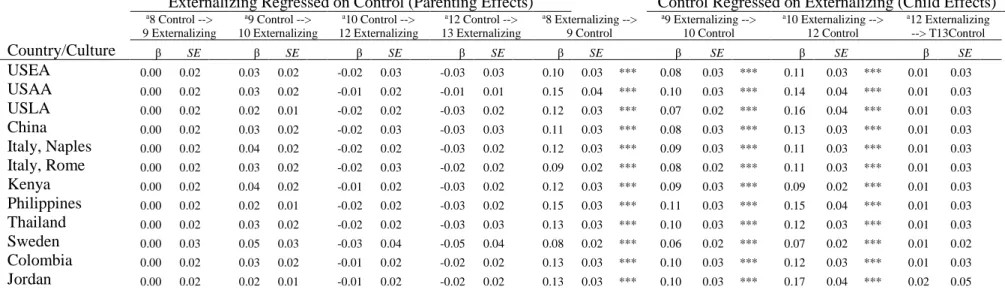
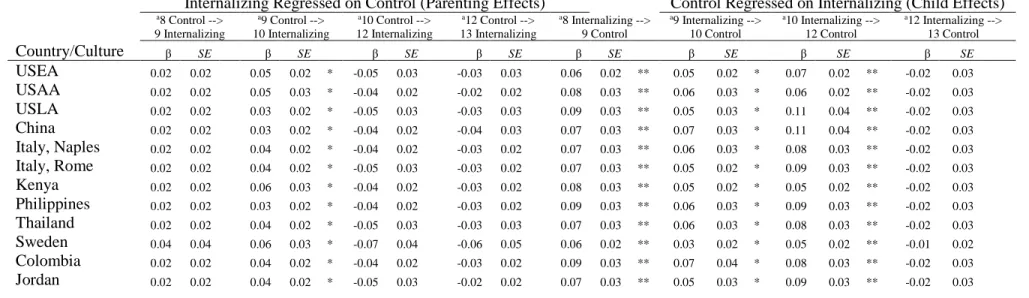
cultural groups. Results from the final autoregressive path models are depicted in Tables 4-7.
Notably, all significant cross-lagged associations depicted in Tables 4-7 and discussed below
remained after controlling for demographic, autoregressive, and contemporaneous correlates.
Results
Findings from each of the four final models will be discussed in turn. Skewness and
kurtosis estimates for all mean scores fell in acceptable ranges (skew < 2.0, kurtosis < 7.0),
suggesting no violation of the assumption of normally distributed indicators. Evaluation of
model fit was based upon recommended fit index cut-off values that indicate excellent model fit
(Comparative Fit Index (CFI)/Tucker-Lewis Index (TLI) cut-off values > 0.95, Root Mean
Square Error of Approximation (RMSEA) cut-off value < 0.05, Standardized Root Mean Square
Residual (SRMR) cut-off value < .08; Schreiber, Stage, King, Nora, & Barlow, 2006).
Standardized parameter estimates and standard errors are provided in Tables 4-7. Therefore,
notable results will be described below, but readers are referred to Tables 4-7 for greater detail.
Effects of demographic covariates (i.e., child gender, mother and father education) are not
presented individually in the text or tables because the vast majority of demographic covariates
included in the final models were non-significant and numerous. For instance, in the Parent
Warmth-Child Externalizing Model, 14 total covariate effects were found significant in initial
regression analyses (as described in the Analysis Plan) and therefore estimated in each of 12
estimated. However, only 12 (7%) of those effects remained significant in the final multi-group
model. Therefore, reporting each individual covariate effect in all four models seemed both
inefficient (because most were non-significant in final models) and untenable (due to space
limitations).
The few covariates that were significant in final models did not display any noticeable
patterns of significance at particular time points or within particular cultural groups. When
effects were significant, however, they were associated with study constructs in expected
directions. Across the four final models, child gender was occasionally significantly associated
with both externalizing and internalizing child behavior such that boys demonstrated greater
externalizing symptoms and girls demonstrated greater internalizing symptoms. Child gender did
not seem to be associated with differences in parental warmth or control. Similarly, mother and
father education were only occasionally associated with child behavior and parenting behavior
across the four final models. More years of mother and father education were associated with
greater parental warmth, less parental control, and less child externalizing and internalizing
behavior. Despite the fact that most covariate effects were non-significant in the final models,
controlling for child gender and parent education in these analyses is necessary to demonstrate
the robustness of significant findings. To that end, it is important to note that all significant
effects reported in Tables 4-7 emerged from final models that controlled for such covariates.
Parental Warmth – Child Externalizing Behavior Model
The final model (Table 4) fit the data well (χ2 [413] = 505.55, p < .01, RMSEA = 0.05,
CFI = 0.98, TLI = 0.96, SRMR = 0.09) and substantially better than the initial model that was
constrained to be equal across groups (χ2 [440] = 905.75, p < .01). In the final model, all paths
four cross-lagged paths predicting child externalizing behavior from parental warmth, and three
of the four cross-lagged paths predicting parental warmth from child externalizing behavior (with
the lone exception being age 12 child externalizing behavior predicting age 13parental warmth)
were constrained to be equal across groups. Freeing these cross-lagged paths to vary across
groups did not significantly improve model fit. Several notable results with regards to
cross-lagged paths depicting child effects on subsequent parenting and cross-cross-lagged paths depicting
parenting effects on subsequent child behavior emerged.
With regard to child effects, in each cultural group, child externalizing behavior at ages 8,
9, and 10 was significantly negatively associated with subsequent parental warmth at ages 9, 10,
and 12, respectively (Table 4). These results indicate that high child externalizing behavior at
each of these ages predicts lower parental warmth at the next age. Additionally, for the
Colombian cultural group, this negative association was also found between child externalizing
behavior at age 12 and parental warmth at age 13.
With regard to parenting effects, in each cultural group, parental warmth at age 9 was
negatively associated with child externalizing behavior at age 10, indicating that high parental
warmth was associated with subsequent lower child externalizing behavior. No other significant
effects of parental warmth on subsequent child externalizing behavior were found.
Parental Warmth – Child Internalizing Behavior Model
The final model (Table 5) fit the data significantly better than the initial model that was
constrained to be equal across groups (χ2 [451] = 907.45, p < .01). This model fit the data well (χ2 [413] = 505.55, p < .01, RMSEA = 0.05, CFI = 0.97, TLI = 0.94, SRMR = 0.08). In the final
model, all paths were freed to vary across cultural groups except for several cross-lagged paths.
warmth, and paths from age 8 internalizing behavior to age 9 parental warmth and from age 10
internalizing behavior to age 12 parental warmth were constrained to be equal across groups.
Freeing these cross-lagged paths to vary across group did not significantly improve model fit.
Several noteworthy results with regards to cross-lagged paths depicting child effects on
subsequent parenting and parenting effects on subsequent child behavior emerged.
With regard to child effects, in each cultural group, child internalizing behavior at ages 8
and 10 was significantly negatively associated with subsequent parental warmth at ages 9 and 12,
respectively (Table 5). These results indicate that high child internalizing behavior at each of
these ages predicts lower parental warmth at the next age. Additionally, for several but not all
cultural groups, this negative association was found between child internalizing behavior at ages
9 and 12 and parental warmth at ages 10 and 13, respectively.
With regards to parenting effects, in each cultural group, parental warmth at ages 8 and 9
was negatively associated with child internalizing behavior at ages 9 and 10, respectively,
indicating that high parental warmth was associated with subsequent lower child internalizing
behavior. No other significant effects of parental warmth on subsequent child internalizing
behavior were found.
Parental Control – Child Externalizing Behavior Model
The final model (Table 6) fit the data significantly better than the initial model that was constrained to be equal across groups (χ2 [473] = 816.61, p < .01) and fit the data well (χ2 [376] =
425.59, p = .04, RMSEA = 0.04, CFI = 0.99, TLI = 0.98, SRMR = 0.07). In the final model, all paths were freed to vary across cultural groups except for the eight cross-lagged paths. Freeing
Significant cross-lagged paths depicting child effects on subsequent parenting and parenting
effects on subsequent child behavior are discussed below.
With regard to child effects, in each cultural group, child externalizing behavior at ages 8,
9, and 10 was significantly positively associated with subsequent parental control at ages 9, 10,
and 12, respectively (Table 6). These results indicate that high child externalizing behavior at
each of these ages predicts higher parental control at the next age. In terms of parenting effects,
no significant effects of parental control on subsequent child externalizing behavior were found.
Parental Control – Child Internalizing Behavior Model
The final model (Table 7) fit the data significantly better than the initial model that was
constrained to be equal across groups (χ2[495] = 851.69, p < .01). This model fit the data well (χ2 [352] = 448.34, p < .01, RMSEA = 0.05, CFI = 0.97, TLI = 0.93, SRMR = 0.07). In the final model, all paths were freed to vary across cultural groups except for the eight cross-lagged paths.
Freeing these cross-lagged paths to vary across groups did not significantly improve model fit.
Notable results with regard to cross-lagged paths depicting child effects on subsequent parenting
and parenting effects on subsequent child behavior are considered below.
Turning to the child effects, in each cultural group, child internalizing behavior at ages 8,
9, and 10 was significantly positively associated with subsequent parental control at ages 9, 10,
and 12, respectively (Table 7). These results indicate that high child internalizing behavior at
each of these waves predicts higher parental control at the next wave. With respect to parenting
effects, in each cultural group, parental control at age 9 was significantly positively associated
with child internalizing behavior at age 10. No other significant effects of parental control on
subsequent child internalizing behavior were found.
Aligning with major parenting theories that stress the importance of situating parenting
within broader family and cultural contexts (e.g., Bornstein, 2012), and which emphasize the
transactional and reciprocal models of parenting that are applied across both mother and father
parenting behaviors (e.g., Patterson, Reid, & Dishion, 1992), the current study focused on the
investigation of family-wide perceptions of parenting (i.e., combining mother, father, and child
reports of parenting). However, as a sensitivity analysis, we investigated whether study results
substantively changed if we ran separate models that included only mother- or father-reported
warmth, control, child externalizing, and child internalizing behaviors. Therefore, we re-ran the
final four study models outlined above separately for fathers and mothers. Two notable
differences emerged in these sensitivity analyses. First, in the Parent Control-Child Internalizing
model for fathers, no significant effects emerged. This result stands in contrast to results in the
combined model, where child internalizing behavior at ages 8, 9, and 10 was significantly
positively associated with subsequent parental control at ages 9, 10, and 12, respectively (Table 7). Second, in the Parent Control-Child Externalizing model, mother (β = 0.49, p = .03) and
father (β = 0.49, p = .055) control at age 9 significantly predicted child externalizing behavior at
age 10, whereas in the combined model parent control at age 9 predicted child externalizing
behavior at age 10 at a marginally significant level (β = 0.43, p = .09). Other paths in these
models, and the six other mother- and father-specific models, revealed no substantive differences
in model results. Due to the relatively small number of differences seen, and the fact that
examination of mother- and father-specific parenting differences is beyond the scope of the
current manuscript, we do not report on these models further.
Across cultural groups, our findings suggest that from ages 8 to 13, children had a large
effect on subsequent parenting: more child externalizing and internalizing behavior problems at a
given age generally predict less parental warmth and more parental control at the next age,
controlling for stability in parenting and child behavior over time and contemporaneous
correlations between parenting and child behavior. There was less evidence that parenting
affected child behavior; parental warmth and control at a given age did not consistently predict
child externalizing and internalizing behavior at the next age, but some effects were found in mid
to late childhood rather than early adolescence. Parents appear to react to high child externalizing
or internalizing behavior by decreasing subsequent warmth and increasing subsequent control.
Child-driven effects on parents’ behavior appear to occur across the entirety of the transition
from late childhood (i.e., ages 8-9) to early adolescence (i.e., ages 10-13). Together these
findings suggest that parenting theories that hinge on parental warmth and control have broad
applicability across cultural groups and that child-effects play an important role, as we found
more evidence for similarities than differences across groups in the ways that parental warmth
and control are related to child externalizing and internalizing behaviors.
Evidence-based interventions for both externalizing and internalizing behavior emphasize
the ongoing importance of parent-demonstrated warmth in the face of behavior problems (e.g.,
Connell et al., 2008). Practitioners and parent training interventions sometimes include parental
warmth and control as targets of change. Earlier intervention is generally more effective than
later intervention (Brooks-Gunn, 2003; National Center for Parent, Family, and Community
Engagement, 2015), so parent training interventions that target parents of children may be more
effective than interventions that target parents of adolescents. During adolescence, involving
important if the goal is to effect change in adolescents’ behavior. In addition, our findings
suggest that interventions should include components that address issues of parental reactivity
and that help parents learn strategies for responding to adolescents’ externalizing and
internalizing behaviors without decreasing warmth or increasing control.
It appears that there are fewer parent-driven effects (i.e., effects of warmth and control)
on child externalizing and internalizing problems. Yet, those effects that do exist appear to be
developmentally specific and consistent across cultures. Parental warmth when children are
around age 9 is consistently negatively associated with subsequent child externalizing and
internalizing problems at age 10. Higher parental warmth predicts lower externalizing and
internalizing symptoms. Similarly, parental control when children are around age 9 is
consistently positively associated with subsequent child externalizing behavior at age 10. The
only other significant parent-driven effect emerged with regard to parental warmth when children
were around age 8 being negatively associated with child externalizing behavior at age 9.
Therefore, it may be that parenting during the transition from late childhood to early adolescence
is especially influential in shaping subsequent adolescent behavior problems, but once children
reach adolescence, other factors (such as peers, identity formation, and school environment)
became more effective shapers of child behavior (e.g., Albert, Chein, & Steinberg, 2013; Marin
& Brown, 2008; Van Ryzin, Fosco, & Dishion, 2012). Across cultural groups, parenting effects
fade as children’s ability to make social comparisons (i.e., compare themselves to their peers)
improve (around ages 8-10; see Siegler & Alibali, 2004). The shift from parent to peer influence
on child behavior may be most pronounced across this transition (see Bornstein, Jager, &
It is also possible that measures that capture parental warmth and control well during
childhood do so less well during adolescence as demonstrations of warmth and appropriate forms
of control change. In addition, parenting dimensions other than warmth and control might
become more relevant as children progress into adolescence. For example, parents may
increasingly take on advisory roles about issues external to the family such as what classes to
take in school or possible career paths, and part of parents’ important function may be to
facilitate adolescents’ peer relationships and extracurricular interests by hosting adolescent
gatherings or providing transportation.
Parents often find it more difficult and less rewarding to parent adolescents than children
(e.g., Nomaguchi, 2012; Pickhardt, 2013). One reason that the process of parenting adolescents
is perceived as being more challenging than the process of parenting children may involve the
developmental shift from parent effects on children to child effects on parents that characterizes
the transition to adolescence. If parents are less able to influence their adolescents than they were
their children, this could make the process of being a parent of an adolescent frustrating and
stressful and may account at least in part for the increase in mental health problems and decrease
in life satisfaction that parents experience as their children enter adolescence (Steinberg, 2001).
Parent-driven effects on child behavior problems appear to be largely consistent across
cultures. It may be that, just as corporal punishment and harsh discipline increase child
externalizing and internalizing behavior cross-culturally (Lansford, Sharma et al., 2014), both
parental warmth and control are broadly generalizable mechanisms for influencing behavior in
late childhood. It is especially notable that all of these effects persist after controlling for
inter-time correlations among contemporaneous parental warmth and control and child externalizing
is perhaps most impressive that these effects persist even after accounting for autoregressive
parameters (i.e., parenting predicts subsequent child behavior problems, and vice versa, even
after accounting for prior child behavior problems and parenting). These results align with extant
developmental research that suggests that, as children age, child effects on parenting behavior
increase relative to parenting effects on child behavior (Hawkins et al., 2007;Stice & Barrera,
1995; Vuchinich, Bank, & Patterson, 1992). We note, however, that correlations between
parents’ warmth and control and children’s externalizing and internalizing problems may also be
driven by genetic factors. For example, low parental warmth and high child internalizing
problems may both result from a genetic predisposition toward depressive symptoms.
Nevertheless, our findings are consistent with child effects demonstrated in an experimental
setting: When conduct-disordered boys were paired with mothers of other conduct-disordered
boys and (separately) with mothers of non-conduct-disordered boys, conduct-disordered boys
elicited negative parenting from both sets of mothers (Anderson, Lytton, & Romney 1986).
Although our results replicate prior findings, they also notably expand them by capturing the
phenomena across an unprecedented range of cultures.
Taken together, the findings suggest that parenting theories that emphasize the role of
parents in influencing adolescents’ behavior and empirical findings that do not take into account
child effects are missing important pieces of the developmental story. Bidirectional and
transactional effects have long been incorporated in conceptual models of how parents influence
children and children influence parents over time (e.g., Patterson et al., 1992; Sameroff, 1975),
and empirical tests increasingly incorporate bidirectional relations (see Pettit & Arsiwalla, 2008,
childhood to adolescence and across 12 cultural groups in nine countries suggest the importance
of a central role for child effects in future parenting theories and empirical research.
Limitations and Directions for Future Research
These analyses examined parental warmth, parental control, and youth behavior problems
in the context of late childhood and early adolescence. An important direction for future research
will be to extend the analyses into later stages of adolescence. Although parental warmth appears
to be an important feature of parent-child relationships throughout adolescence and into
adulthood (e.g., Ramsey & Gentzler, 2015), the role of parental control in other studies appears
to change developmentally and in ways that are dependent upon the broader cultural context. For
example, parents are more controlling in China than in the United States (Ng, Pomerantz, &
Deng, 2014). During early adolescence, American adolescents gain more autonomy in making
decisions than Chinese adolescents, and decision-making autonomy is more strongly related to
emotional well-being in the United States than in China (Qin, Pomerantz, & Wang, 2009).
Similarly, in the Philippines even adult children continue to rely on their parents for guidance in
a pattern better characterized as being interdependent than independent (Alampay, 2014). Thus,
future research that tracks parental warmth and control in relation to externalizing and
internalizing problems into later adolescence in different countries will be important for
understanding the full extent of how these constructs, which are central to parenting theories,
apply to adolescents in diverse cultures. In addition, as parents help their adolescents navigate an
increasingly diverse world, it will be important to understand how immigrant families handle
challenges that might stem from differences in the expected developmental trajectories of
destination, as discrepancies between the two may be particularly challenging for both parents
and adolescents (Bornstein, 2017).
A strength of this study was the inclusion of data reported by mothers, fathers, and their
children. The models were constructed using composite variables that took into account all of
these perspectives; however, we did not explicitly attend to whether different reporters regarded
parental warmth and control similarly. Indeed, robustness and sensitivity analyses in the present
study did reveal minor differences in associations between parenting and child psychopathology
in models that solely captured maternal and paternal reports of these constructs, compared to the
combined reporter models used in the current study. However, it is important to note that the
differences we did find resulted from models that included only single reporters (i.e., mothers or
fathers) reporting on both parenting and child behavior, and that the majority of our mother- and
father-specific models revealed few substantive differences in results when compared to our
combined model. Therefore, we concluded that these mother- and father-specific differences,
though notable enough to warrant future investigation of gender-specific cross-cultural
differences in parenting, ultimately did not threaten the major substantive inferences drawn in the
current study (i.e., that child behavior symptoms had a large effect on subsequent parenting
behavior across the transition from late childhood to early adolescence, and that parent effects on
subsequent child behavior emerged in late childhood). Additionally, extant research has found
that in some families, parents and youth may have substantial agreement on parents’ warmth and
control, whereas in other families, individual family members may not share these perceptions
(Jager, Yuen, Bornstein, Putnick, & Hendricks, 2014). A direction for future research will be to
further examine distinctions among, mother, father, and youth perceptions, as well as how well
Finally, we caution that, although the full sample was more diverse than is typical in
studies of parenting and adolescent adjustment, the national/cultural subsamples were not fully
representative of the cultures or nations from which they derived. In addition to diversity in
national origin, families also are diverse with respect to socioeconomic status and structure,
which also affect relations between parenting and adolescents’ development (Jones et al., this
issue; Murry & Lippold, this issue; Pearce, Hayward, Chassin, & Curran, this issue). Therefore,
the results cannot be generalized to reflect country-wide effects and should not be
overgeneralized to cultural groups that were not included in the study. Further investigation of
within-country differences based on socioeconomic status and family structure is warranted.
However, the robustness of the findings across the nine countries (and 12 cultural groups) that
were included lends confidence in the replicability of the findings.
Conclusions
Taken together, the findings suggest three main conclusions. First, parenting theories that
emphasize parental warmth and control are relevant across cultural groups. We found more
evidence of similarities than differences across groups in how parental warmth and control were
related to child externalizing and internalizing behaviors. Second, child effects rather than parent
effects may better characterize how parental warmth and control are related to child externalizing
and internalizing behaviors over the transition from preadolescence to adolescence. Child effects
were found to be developmentally consistent across the age range of 8 to 13 years. Third, parent
effects may be more characteristic of how parental warmth and control are related to
externalizing and internalizing during childhood than early adolescence. Across cultures, as
children transition to adolescence they appear to begin exerting greater influence over their
References
Achenbach, T. M. (1991). Integrative guide for the 1991 CBCL 14-18, YSR, and TRF Profiles. Burlington, VT: University of Vermont, Department of Psychiatry.
Achenbach, T. M., & Rescorla, L. A. (2006). Multicultural understanding of child and
adolescent psychopathology: Implications for mental health assessment. New York, NY: Guilford Press.
Alampay, L. P. (2014). Parenting in the Philippines. In H. Selin (Ed.), Parenting across cultures: Childrearing, motherhood and fatherhood in non-Western cultures (pp. 105-121). The Netherlands: Springer.
Albert, D., Chein, J., & Steinberg, L. (2013). Peer influences on adolescent decision making.
Current Directions in Psychological Science, 22, 114-120. doi: 10.1177/0963721412471347
Albrecht, A. K., Galambos, N. L., & Jansson, S. M. (2007). Adolescents’ internalizing and
aggressive behaviors and perceptions of parents’ psychological control: A panel study
examining direction of effects. Journal of Youth and Adolescence, 36, 673-684. doi: 10.1007/s10964-007-9191-5
Anderson, K. E., Lytton, H., & Romney, D. M. (1986). Mothers' interactions with normal and
conduct-disordered boys: Who affects whom? Developmental Psychology, 22, 604-609. Baldwin, A. L. (1955). Behavior and development in childhood. New York, NY: Dryden. Barber, B. K., Stolz, H. E., & Olsen, J. A. (2005). Parental support, psychological control, and
behavioral control: Assessing relevance across time, culture, and method. Monographs of the Society for Research in Child Development, 70(4), 1-137. doi:
Barber, B. K., Xia, M., Olsen, J. A., McNeely, C. A., & Bose, K. (2012). Feeling disrespected by
parents: Refining the measurement and understanding of psychological control. Journal of Adolescence, 35, 273-287. doi: 10.1016/j.adolescence.2011.10.010
Baumrind, D. (1967). Child care practices anteceding three patterns of preschool behavior.
Genetic Psychology Monographs, 75, 43-88.
Baumrind, D. (1971). Current patterns of parental authority. Developmental Psychology Monographs, 4, 1-102. doi: 10.1037/h0030372
Becker, W. (1964). Consequences of different kinds of parental discipline.
In M. Hoffman & L. Hoffman (Eds.), Review of child development
research, Vol. 1 (pp. 169-208). New York, NY: Russell Sage Foundation. Bornstein, M. H. (2012). Cultural approaches to parenting. Parenting: Science and Practice, 12,
212-221. doi: 10.1080/15295192.2012.683359
Bornstein, M. H. (2015). Children’s parents. In M. H. Bornstein & T. Leventhal (Eds.),
Ecological settings and processes in developmental systems. Vol. 4 of the Handbook of child psychology and developmental science (7th ed., pp. 55-132). Hoboken, NJ: Wiley. Bornstein, M. H. (2017). The specificity principle in acculturation science. Perspectives on
Psychological Science, 12, 3–45.
Bornstein, M. H., Jager, J., & Steinberg, L. D. (2012). Adolescents, parents, friends/peers: A
relationships model (with commentary and illustrations). In I. Weiner (Ed.), Handbook of psychology (2nd ed.), R. M. Lerner, M. A. Easterbrooks, & J. Mistry (Eds.), Volume 6. Developmental psychology (pp. 393-433). New York, NY: Wiley.
Brooks-Gunn, J. (2003). Do you believe in magic?: What we can expect from early childhood
17(1), 3-15.
Connell, A., Bullock, B. M., Dishion, T. J., Shaw, D., Wilson, M., & Gardner, F. (2008). Family
intervention effects on co-occurring early childhood behavioral and emotional problems:
A latent transition analysis approach. Journal of Abnormal Child Psychology, 36, 1211– 1225. doi: 10.1007/s10802-008-9244-6
Darling, N., & Steinberg, L. (1993). Parenting style as context: An integrative model.
Psychological Bulletin, 113, 487-496. doi: 10.1037/0033-2909.113.3.487
Davies, P. T., & Cummings, E. M. (1994). Marital conflict and child adjustment: An emotional
security hypothesis. Psychological Bulletin, 116, 387-411. doi: 10.1037/0033-2909.116.3.387
Deater-Deckard, K., Lansford, J. E., Malone, P. S., Alampay, L. P., Sorbring, E., Bacchini,
D….Al-Hassan, S. M. (2011). The association between parental warmth and control in
thirteen cultural groups. Journal of Family Psychology, 25, 790-794. doi: 10.1037/a0025120
Dittus, P. J., Michael, S. L., Becasen, J. S., Gloppen, K. M., McCarthy, K., & Guilamo-Ramos,
V. (2015). Parental monitoring and its associations with adolescent sexual risk behavior:
A meta-analysis. Pediatrics, 136, e1587-e1599. doi:10.1542/peds.2015-0305
Enders, C. K. (2010). Applied missing data analysis. New York: Guildford Press.
Erkut, S. (2010). Developing multiple language versions of instruments for intercultural
Harkness, S., & Super, C. M. (2002). Culture and parenting. In M. H. Bornstein (Ed.), Handbook of parenting. Vol. 2. The biology and ecology of parenting (pp. 253-280). Mahwah, NJ: Erlbaum.
Hawkins, D. N., Amato, P. R., & King, V. (2007). Nonresident father involvement and
adolescent well-being: Father effects or child effects? American Sociological Review, 72, 990-1010.
Hill, N. E., Bromell, L., Tyson, F., & Flint, R. (2007). Developmental commentary: Ecological
perspectives on parental influences during adolescence. Journal of Clinical Child and Adolescent Psychology, 36, 367 – 377. doi: 10.1080/15374410701444322
Hoeve, M., Dubas, J. S., Eichelsheim, V. I., van der Laan, P. H., Smeenk, W., & Gerris, J. R.
(2009). The relationship between parenting and delinquency: A meta-analysis. Journal of Abnormal Child Psychology, 37, 749-775. doi: 10.1007/s10802-009-9310-8
Jager, J., Yuen, C. X., Bornstein, M. H., Putnick, D. L., & Hendricks, C. (2014). The relations of
family members’ unique and shared perspectives of family dysfunction to dyad
adjustment. Journal of Family Psychology, 28, 407-414.
Johnson, L. E., & Greenberg, M. T. (2013). Parenting and early adolescent internalizing: The
importance of teasing apart anxiety and depressive symptoms. Journal of Early Adolescence, 33, 201–226. doi: 10.1177/0272431611435261
Kawabata, Y., Alink, L. R. A., Tseng, W.-L., van IJzendoorn, M. H., & Crick, N. R. (2011).
Maternal and paternal parenting styles associated with relational aggression in children
Khaleque, A., & Rohner, R. P. (2002). Perceived parental acceptance-rejection and
psychological adjustment: A meta-analysis of cross-cultural and intracultural studies.
Journal of Marriage and the Family, 64, 54-64. doi: 10.1111/j.1741-3737.2002.00054.x Klevens, J., & Hall, J. (2014). The importance of parental warmth, support, and control in
preventing adolescent misbehavior. Journal of Child and Adolescent Behavior, 2, 121. doi: 10.4172/2375-4494.1000121
Kline, R. B. (2011). Principles and practices of structural equation modeling (3rd ed.). New York, NY: Guilford Press.
Lansford, J. E., Laird, R. D., Pettit, G. S., Bates, J. E., & Dodge, K. A. (2014). Mothers’ and
fathers’ autonomy-relevant parenting: Longitudinal links with adolescents’ externalizing
and internalizing behavior. Journal of Youth and Adolescence, 43, 1877-1889. doi: 10.1007/s10964-013-0079-2
Lansford, J. E., Sharma, C., Malone, P. S., Woodlief, D., Dodge, K. A., Oburu, P….Di Giunta,
L. (2014). Corporal punishment, maternal warmth, and child adjustment: A longitudinal
study in eight countries. Journal of Clinical Child and Adolescent Psychology, 43, 670-685. doi: 10.1080/15374416.2014.893518
Louie, J. Y., Oh, B. J., & Lau, A. S. (2013). Cultural differences in the links between parental
control and children's emotional expressivity. Cultural Diversity and Ethnic Minority Psychology, 19, 424-434. doi: 10.1037/a0032820
Maccoby, E. E., & Martin, J. A. (1983). Socialization in the context of the family: Parent-child
Marin, P., & Brown, B. (2008). The school environment and adolescent well-being: Beyond academics. Child Trends Research Brief. Washington, DC: Child Trends
Maxwell, B. (1996). Translation and cultural adaptation of the survey instruments. In M. O.
Martin & D. L. Kelly (Eds.), Third International Mathematics and Science Study
(TIMSS) technical report, Volume I: Design and development. Chestnut Hill, MA: Boston College.
McNeely, C. A., & Barber, B. K. (2010). How do parents make adolescents feel loved?
Perspectives on supportive parenting from adolescents in 12 cultures. Journal of Adolescent Research, 25, 601-631. doi: 10.1177/0743558409357235
Muthén, L. K., & Muthén, B. O. (1998-2015). Mplus User’s Guide (7th ed.). Los Angeles, CA: Muthén, & Muthén.
National Center for Parent, Family, and Community Engagement. (2015). Compendium of parenting interventions. Washington, DC: National Center on Parent, Family, and Community Engagement, Office of Head Start, U.S. Department of Health & Human
Services.
Ng, F. F., Pomerantz, E. M., & Deng, C. (2014). Why are Chinese parents more psychologically
controlling than American parents? “My child is my report card”. Child Development, 85, 355-369. doi: 10.1111/cdev.12102
Nomaguchi, K. M. (2012). Parenthood and psychological well-being: Clarifying the role of child
age and parent-child relationship quality. Social Science Research, 41, 489-498. doi: 10.1016/j.ssresearch.2011.08.001
Peña, E. D. (2007). Lost in translation: Methodological considerations in cross-cultural research.
Child Development, 78, 1255-1264. doi: 10.1111/j.1467-8624.2007.01064.x Pettit, G. S., & Arsiwalla, D. D. (2008). Commentary on special section on “Bidirectional
parent–child relationships”: The continuing evolution of dynamic, transactional models
of parenting and youth behavior problems. Journal of Abnormal Child Psychology, 36, 711–718. doi: 10.1007/s10802-008-9242-8
Pickhardt, C. (2013). Surviving your child's adolescence: How to understand, and even enjoy, the rocky road to independence. San Francisco, CA: Jossey-Bass.
Putnick, D. L., Bornstein, M. H., Lansford, J. E., Malone, P. S., Pastorelli, C., Skinner, A. T.…
& Oburu, P. (2015). Perceived mother and father acceptance-rejection predict four unique
aspects of child adjustment across nine countries. Journal of Child Psychology and Psychiatry, 56, 923-932. doi: 10.1111/jcpp.12366
Qin, L., Pomerantz, E. M., & Wang, Q. (2009). Are gains in decision-making autonomy during
early adolescence beneficial for emotional functioning? The case of the United States and
China. Child Development, 80, 1705-1721. doi: 10.1111/j.1467-8624.2009.01363.x Ramsey, M. A., & Gentzler, A. L. (2015). An upwardspiral:Bidirectionalassociationsbetween
positiveaffectandpositiveaspectsofcloserelationshipsacrossthelifespan.
Developmental Review, 36, 58-104. doi: 10.1016/j.dr.2015.01.003
Reitz, E., Dekovic, M., & Meijer, A. M. (2006). Relations between parenting and externalizing
and internalizing problem behavior in early adolescence: Child behavior as moderator
Rohner, R. P. (2005). Parental Acceptance-Rejection Questionnaire (PARQ): Test manual. In R.
P. Rohner & A. Khaleque (Eds.), Handbook for the study of parental acceptance and rejection (4th ed., pp. 43-106). Storrs, CT: Center for the Study of Parental Acceptance and Rejection, University of Connecticut.
Rohner, R. P., & Lansford, J. E. (in press). Deep structure of the human affectional system:
Introduction to Interpersonal Acceptance-Rejection Theory. Journal of Family Theory & Review.
Rothenberg, W. A., Hussong, A. M., & Chassin, L. (2017). Intergenerational continuity in high conflict family environments: Investigating a mediating depressive pathway. Manuscript submitted for publication.
Rubin, K. H., & Chung, O. B. (Eds.). (2006). Parenting beliefs, behaviors, and parent-child relations. New York, NY: Psychology Press.
Rueter, M. A., & Conger, R. D. (1998). Reciprocal influences between parenting and adolescent
problem-solving behavior. Developmental Psychology, 34, 1470-1482.
Sameroff, A. J. (1975). Early influences on development: Fact or fancy? Merrill-Palmer Quarterly, 21, 267-294.
Schaefer, E. S. (1959). A circumplex model for maternal behavior. Journal of Abnormal and Social Psychology, 59, 226-335. doi: 10.1037/h0041114
Schreiber, J. B., Stage, F. K., King, J., Nora, A., & Barlow, E. A. (2006). Reporting structural
equation modeling and confirmatory factor analysis results: A review. The Journal of Educational Research, 99, 323-337. doi:10.3200/JOER.99.6.323-338
Siegler, R. S., & Alibali, M. W. (2004). Children’s thinking (4th ed.). Upper Saddle River, NJ: Prentice Hall.
Steinberg, L. (2001). We know some things: Parent–adolescent relationships in retrospect and
prospect. Journal of Research on Adolescence, 11, 1-19. doi: 10.1111/1532-7795.00001 Stice, E., & Barrera, M., Jr. (1995). A longitudinal examination of the reciprocal relations
between perceived parenting and adolescents’ substance use and externalizing
behaviors. Developmental Psychology, 31, 322–334. doi: 10.1037/0012-1649.31.2.322 Symonds, P. M. (1939). The psychology of parent-child relationships. New York, NY:
Appleton-Century-Crofts.
Van Ryzin, M. J., Fosco, G. M., & Dishion, T. J. (2012). Family and peer predictors of substance
use from early adolescence to early adulthood: An 11-year prospective analysis.
Addictive Behaviors, 37, 1314-1324. doi: 10.1016/j.addbeh.2012.06.020
Vuchinich, S., Bank, L., & Patterson, G. R. (1992). Parenting, peers, and the stability of
antisocial behavior in preadolescent boys. Developmental Psychology, 28, 510–521. Williams, L., & Steinberg, L. (2011). Reciprocal relations between parenting and adjustment in a
sample of juvenile offenders. Child Development, 82, 633-645. doi: 10.1111/j.1467-8624.2010.01523.x
Yap, M. B., Pilkington, P. D., Ryan, S. M., & Jorm, A. F. (2014). Parental factors associated
with depression and anxiety in young people: A systematic review and meta-analysis.
Table 1
Descriptive Statistics for Demographics by Cultural Group
Group Mother’s
Education
Father’s
Education
Child Gender
(% girls)
Child Age at
Recruitment
Shanghai, China 13.55 (2.88) 14.00 (3.07) 52 8.51 (.34)
Medellín, Colombia 10.64 (5.60) 9.91 (5.32) 56 8.22 (.49)
Naples, Italy 10.14 (4.35) 10.73 (4.16) 52 8.31 (.49)
Rome, Italy 14.14 (4.07) 13.75 (4.09) 50 8.34 (.77)
Zarqa, Jordan 13.13 (2.18) 13.24 (3.16) 47 8.47 (.50)
Kisumu, Kenya 10.69 (3.65) 12.29 (3.60) 60 8.45 (.65)
Manila, Philippines 13.61 (4.07) 13.90 (3.84) 49 8.03 (.35)
Trollhättan, Sweden 13.92 (2.48) 13.73 (2.98) 48 7.77 (.42)
Chiang Mai, Thailand 12.30 (4.76) 12.76 (4.22) 49 7.71 (.63)
U.S. African American 13.65 (2.36) 13.45 (2.66) 52 8.60 (.61)
U.S. European American 16.95 (2.84) 17.29 (3.04) 41 8.63 (.57)
U.S. Latino 9.83 (4.08) 9.61 (3.90) 54 8.58 (.74)
Table 2. Descriptive Statistics for Substantive Measures, Full Sample (N = 1,298).
Mean SD
Parental Warmth
Age 8 3.57 0.36
Age 9 3.59 0.35
Age 10 3.58 0.37
Age 12 3.56 0.38
Age 13 3.61 0.39
Parental Control
Age 8 2.98 0.41
Age 9 2.94 0.42
Age 10 2.88 0.41
Age 12 2.85 0.44
Age 13 2.83 0.51
Child Externalizing
Age 8 10.19 5.28
Age 9 9.52 5.46
Age 10 9.01 5.54
Age 12 9.21 5.98
Age 13 8.03 7.03
Child Internalizing
Age 8 11.48 5.44
Age 9 10.37 5.63
Age 10 9.62 5.34
Age 12 10.39 6.00
Age 13 9.02 6.90