THE COACH-ATHLETE RELATIONSHIP AND ATHLETE PSYCHOLOGICAL OUTCOMES
Victoria McGee
An undergraduate thesis submitted to the faculty at the University of North Carolina at Chapel Hill in partial fulfillment of the requirements for undergraduate honors in
the Department of Exercise and Sport Science in the College of Arts & Sciences.
Chapel Hill 2016
Approved by:
J. D. DeFreese
Joseph B. Myers
ABSTRACT
Victoria McGee: The Coach-Athlete Relationship and Athlete Psychological Outcomes
(Under the direction of Dr. J.D. DeFreese)
Athletes’ relationships with their coaches have important implications for outcomes
of psychological health. Further examination of these associations is needed to
identify the aspects of the coach-athlete relationship most linked to athlete burnout
and engagement. This study examined associations among athlete perceptions of
the coach-athlete relationship and burnout and engagement across a competitive
season. We hypothesized that athlete endorsement of higher levels of markers of the
coach-athlete relationship (closeness, commitment, and complementarity) would be
negatively associated with perceptions of burnout and positively associated with
perceptions of engagement. Participants were female collegiate rowers (N=37;
Mage=19.3 years, SD=1.18) who completed online self-report assessments of study
variables across four seasonal survey waves. Multilevel linear modeling analyses
revealed closeness, one of the coach-athlete relationship markers, to be a significant
predictor of seasonal global burnout and engagement. Study findings inform the
design of interventions to promote engagement and deter burnout via improving
TABLE OF CONTENTS
LIST OF TABLES…..……….……...…..………....v
CHAPTER 1…..……….……...………..……...1
Research Questions…..……….……….……...………..……5
CHAPTER 2…..……….……...………..……...7
Coach-Athlete Relationship………..7
Self-Determination Theory………..9
Athlete Burnout……….……….………..13
Athlete Engagement………..……….15
CHAPTER 3…..……….……...………..……18
Recruitment…..……….……...………18
Participants…..……….……....………..19
Instrumentation…..……….……....………20
Demographics…..……….…20
Coach-Athlete Relationship Questionnaire (CART-Q)……….…21
Perceived Stress Scale (PSS)……….……….…21
Sport Motivation Scale (SMS)……….……22
Athlete Burnout Questionnaire (ABQ)….………..23
Athlete Engagement Questionnaire (AEQ)……….………...……..24
Procedure………..……….………..24
Analysis Methods……….26
Results……….……...………..……41
Preliminary Data Screening…………....………41
Descriptive Statistics……….………41
Discussion……….……...………..……44
LIST OF TABLES
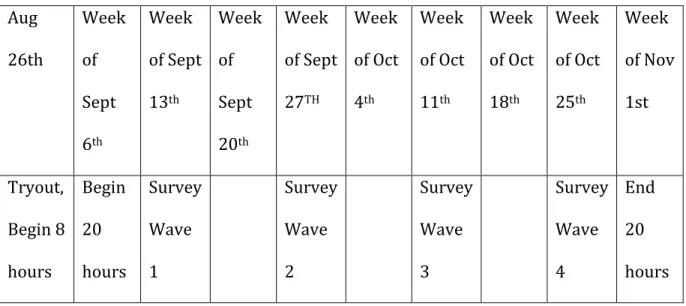
Table 1. Expected Survey Wave Schedule….……….……...………..……...26
Table 2. Within-Person Variation Models for Global Burnout……….52
Table 3. Within-Person Variation Models for Emotional/Physical Exhaustion...…….52
Table 4. Within-Person Variation Models for Reduced Sense of Accomplishment….53 Table 5. Within-Person Variation Models for Sport Devaluation………..……….53
Table 6. Within-Person Variation Models for Global Engagement………...……….54
Table 7. Within-Person Variation Models for Confidence…….……….54
Table 8. Within-Person Variation Models for Vigor………..……….55
Table 9. Within-Person Variation Models for Dedication………..……….55
Table 10. Within-Person Variation Models for Enthusiasm……….……….56
Table 11. Means, Standard Deviations, and Internal Consistency Reliability Values for Study Variables by Wave……….………...………….57
Table 12. Means and Standard Deviations for Study Variables, Stacked Data……….……….58
CHAPTER 1
The athletic coach is one of the most influential social actors when it comes
to athletes’ motivation and subsequent performance (Mageau & Vallerand, 2003). In
a given season, the NCAA allows teams to practice and compete for 20 hours
maximum per week (NCAA, 2009). However, a 2008 report by the NCAA found that
the average hours spent per week in-season on athletic activities by Division 1
student-athletes in women’s sports ranges from 29.3 to 37.1 hours (NCAA, 2008).
Accordingly, for the duration of a season on a team of 30 to 50 athletes, a coach
could have up to 10,000 hours of combined influence on his/her athletes. As a result
of these continuous coach-athlete interactions, the athlete can potentially learn
strategies to enhance performance and have social experiences which promote
psychological outcomes such as stress, motivation, and self-efficacy (Jowett &
Wylleman, 2006). Moreover, athletes’ social perceptions, including those of the
coach, within the dynamic and demanding environment of competitive sport are
associated with both adaptive and maladaptive outcomes of athlete psychological
health and well-being including burnout and engagement (Mageau & Vallerand,
2003; Udry et al, 1997; Hodge, Lonsdale, Jackson, 2009).
Across all collegiate levels, women’s rowing has an average roster of 50.2
participants and has grown from only being offered at 6.9% of schools in 1977 to
being offered at 16.2% of schools in 2014 (Acosta & Carpenter, 2014). Despite these
numbers, rowing is a sport typically associated with high attrition rates within their
rosters each season (Macur, 2004). Thus, efforts to prevent dropout via improved
Additionally, research investigations of these outcomes (e.g. burnout, engagement)
will further inform practice efforts to promote athlete well-being in women’s rowing
via positive experiences in the social sport environment. Accordingly, the
coach-athlete relationship may be particularly important to understanding this because of
the impact coaching practices can have on rowers’ continuation in the sport (Coon,
2015).
The coach-athlete relationship (CAR) is described as the situation in which
coaches’ and athletes’ emotions, thoughts, and behaviors are mutually and causally
interconnected (Jowett & Ntoumanis, 2004). Specifically, this relationship is
conceptualized to be reflected by perceptions of its three components of closeness,
commitment, and complementarity, which are representative of the affective,
cognitive, and behavioral aspects, respectively, of interactions between coaches and
athletes. Closeness is defined as how the coach and athlete feel emotionally close to
each other in the relationship. Commitment refers to individuals’ intentions to
maintain their coach-athlete relationship over time. Complementarity reflects the
extent that coaches and athletes work co-operatively. Higher levels of these three
components are associated with a stronger, more adaptive coach-athlete
relationship.
Relationships perceived as close and significant, as coach-athlete
relationships often are, affect one’s views about oneself. Indeed, the coach-athlete
relationship has been shown to be positively associated with fulfillment of
psychological needs, therefore impacting the motivational processes and
(SDT) (Riley & Smith, 2011; Hodge, Lonsdale, Jackson, 2009). Self-determination
theory, a prominent theory of sport motivation and psychological health, proposes
that social factors within an environment influence an individual’s level of
satisfaction of the psychological needs of autonomy, competence, and relatedness. It
has been found that satisfaction of these needs positively correlates with higher
endorsement of positive aspects of the coach-athlete relationship levels by athletes
(Riley & Smith, 2011). Needs satisfaction has also been positively associated with
athlete engagement, which is a positive psychological outcome, and negatively
associated with burnout, a negative psychological outcome (Hodge, Lonsdale,
Jackson, 2009). Therefore, guided by this theory, the coach, a key actor in the social
environment of the athlete, has great potential to impact the athletes’ psychological
outcomes, including experience of athlete burnout or engagement.
Motivation is a key antecedent of burnout, and SDT, a prominent
motivational theory, is one way to understand both psychological experiences (Li et
al, 2013; Goodger et al, 2007). Intrinsic motivation has been deemed a more positive
motivational trend, while extrinsic motivation leads to maladaptive outcomes such
as athlete burnout (Pelletier et al, 1995). Based on the motivation continuum
formed as a part of the SDT, athletes with more intrinsic motivation, as it is the most
determined form of motivation, were more likely to freely experience and
self-endorse an activity, therefore leading to lower levels of athlete burnout than
athletes experiencing more extrinsic motivation (Lemyre, Treasure, Roberts, 2006).
Athlete engagement may be developed via an alternative motivational pathway
an understanding of sport motivation is central to the understanding of athlete
burnout and engagement experiences within the social environment of sport.
Athlete burnout is a cognitive-affective syndrome of physical/emotional
exhaustion, sport devaluation, and reduced athletic accomplishment (Raedeke,
1997). Physical/emotional exhaustion is characterized by mental and physical
fatigues resulting from intense training and/or competition. Sport devaluation
refers to the loss of interest in sport including resentment towards participating. An
athlete feeling unable to achieve personal goals or perform up to individual
expectations characterizes reduced accomplishment. Though not a dimension of
burnout, perceptions of psychological stress have been supported as an important
antecedent to the burnout experience. For example, an event, such as an intense
training load, may produce athlete perceptions of the event as a stressor and create
a behavioral response that leads to burnout (Smith, 1986; Udry et al, 1997). As a
result of this well-studied positive association between sport stress and burnout
(Goodger et al., 2007), it should be accounted for in studies examining athlete
psychological health outcomes.
Beyond athlete burnout, the distinct, yet related athlete psychological
outcome of athlete engagement also may be impacted by the coach-athlete
relationship. Athlete engagement is the persistent, positive, cognitive-affective
experience in sport that is characterized by vigor, confidence, dedication, and
enthusiasm (Hodge, Lonsdale, Jackson, 2009). Vigor is a sense of liveliness.
Confidence is a belief in one’s own ability to achieve a high level of performance and
Enthusiasm is described as excitement and enjoyment. Global athlete engagement
has been linked to lower levels of burnout (DeFreese & Smith, 2014). Athlete
burnout and engagement are two distinct, yet related constructs; athlete
engagement is important to look at because it is the more positive, adaptive athlete
psychological health outcome. Therefore, coaches should look to promote athlete
engagement as a way to improve the overall health and wellbeing of athletes as
opposed to only identifying burnout in their athletes.
After a review of the current literature, a clear limitation is a lack of studies
that look at the impact of the coach-athlete relationship on athlete psychological
outcomes over the course of an entire season. Furthermore, minimal studies have
been conducted with populations of collegiate female rowing teams, which have
been shown to have a high attrition rate (Coon, 2015), making the psychological
outcomes of burnout and engagement particularly salient. To address these
important knowledge gaps, the purpose of the following study was to examine the
association of athlete perceptions of the coach-athlete relationship (closeness,
commitment, and complementarity) with athlete burnout and engagement in a
sample of collegiate female rowers over the course of a competitive season. We
hypothesized that
A) Athlete endorsement of higher levels of markers of the coach-athlete
relationship (i.e. closeness, commitment, complementarity) would be
negatively associated with athlete burnout perceptions across the
B) Athlete endorsement of higher levels of the markers of the coach-athlete
relationship would be positively associated with athlete engagement
perceptions across the competitive season.
Based on current evidence and theory, it is also important to account for sport
motivation and psychological stress as important burnout and engagement
antecedents in order to examine relationships among focal study variables in the
context of key covariates. To further explore the relative importance of
coach-athlete relationship variables within the context of common burnout and
engagement antecedents, additional, exploratory study hypotheses included
A) Athlete endorsement of higher levels of markers of the coach-athlete
relationship (i.e. closeness, commitment, complementarity) would be
negatively associated with athlete burnout perceptions across the
competitive season.
B) Athlete endorsement of higher levels of the markers of the coach-athlete
relationship would be positively associated with athlete engagement
CHAPTER 2 The Coach-Athlete Relationship
This research study examined the relationships between coaches and
athletes and the subsequent effect on athlete burnout and engagement after
accounting for sport motivation and perceived stress. The coach-athlete relationship
is the situation in which coaches’ and athletes’ emotions, thoughts, and behaviors
are mutually and causally interconnected (Jowett & Ntoumanis, 2004). The
relationship is conceptualized by perceptions of its three components: closeness,
commitment, and complementarity. Closeness is defined as how the coach and
athlete feel emotionally close to each other in the relationship. Commitment refers
to the individuals’ intentions to maintain their coach-athlete relationship over time.
Complementarity reflects the extent that coaches and athletes work co-operatively.
Higher levels of these three components are associated with a stronger, more
adaptive, coach-athlete relationship, and Jowett and Ntoumanis found that the lack
of any of these three components led to conflict in the coach-athlete relationship.
The coach-athlete relationship was measured with the Coach-Athlete Relationship
Questionnaire (CART-Q) in which both the coach and the athlete can be subjects.
Developed by Dr. Sophia Jowett, the CART-Q is a reliable and valid measure of the
coach-athlete relationship, particularly to assess the quality of the coach-athlete
relationship in student-athletes (Jowett, 2009). Jowett and Ntoumanis did note that
future research looking at the CAR and related outcomes was needed.
The coach-athlete relationship is unique in regards to the reciprocal nature
while coaching behaviors also impact the athlete in a variety of ways (Mageau &
Vallerand, 2003). In a review of the literature, Mageau and Vallerand (2003) stated
that interactions and feedback between coaches and athletes impact the attitudes
and behaviors of the coaches as well as the motivation, behavioral and psychological
outcomes of the athletes. For example, coaches’ behaviors in the form of autonomy
supportive behaviors have a beneficial impact on the psychological needs of the
athletes and in turn nurture the intrinsic and self-determined extrinsic motivation
of those athletes. Riley and Smith (2011) also found that the nature of the
coach-athlete relationship impacts the fulfillment of psychological needs and that social
relationships in general impact the motivational process. Smith and Smoll (2014)
describe the process of how an athlete’s perception and recall of coaching behaviors
impacts that athlete’s evaluation of his/her sport experiences. Moreover, athletes’
perceptions of greater training and instruction, social support, and positive
feedback, areas guided by coaches, were associated with more positive outcomes
(perceived competence and enjoyment) and fewer negative outcomes (burnout)
(Price & Weiss, 2000). Accordingly, coaches’ behaviors have been shown to have
great potential to impact the behavioral and psychological outcomes of their
athletes.
Coaching behaviors are often grouped into one of two coach-created
motivational climates: the mastery climate and the performance climate. The
coach-promoted mastery climate, which reinforces effort and learning from athletes,
positively corresponds with higher levels of confidence, dedication, enthusiasm, and
2015). Research has also found that higher levels of closeness, commitment, and
complementarity (in the coach-athlete relationship) exist when the coach
emphasizes role importance, cooperation, and improvement (Olympiou, Jowett, and
Duda, 2008). Role importance, cooperation, and improvement are characteristic of
task involving features of the coach-created environment as opposed to the ego
involving features such as punitive responses to mistakes, rivalry, and unequal
recognition. These features of the coach-created environment stem from the
achievement goal theory which proposes that task oriented goals are adaptive and
empowering while ego goals are maladaptive and compromising (Nicholls, 1984).
Self-Determination Theory
Self-determination theory is a theory of motivation that posits that
psychological outcomes are influenced by the nature of one’s motivation (Ryan &
Deci, 2000). Motivation runs along a continuum of self-determined motivation. The
more self-determined the athlete’s motivation for sport, the more adaptive it is in
persisting in the face of struggle/failure and the more adaptive it is for athlete
psychological health (e.g., promotion of engagement and deterrence of burnout).
SDT further states that motivation is influenced by three psychological needs:
autonomy, competence, and relatedness. Autonomy is the feeling of personal choice
or control, competence is a sense of success and being effective in one’s
environment, and relatedness is the social connection to others reflected by feelings
of acceptance and belonging. The social environment determines the extent to
which these three psychological needs can be either fulfilled or thwarted. In the
athlete perceptions of their relationship with the coach and psychological outcomes
of burnout and engagement. Therefore, our focus was on the motivational outcomes
posited by the theory (i.e., the self-determination continuum). Accordingly, we did
not assess need satisfaction explicitly in the current study.
Smith et al’s 2015 study, “The relationship between observed and perceived
assessments of the coach-created motivational environment and links to athlete
motivation”, examined links between the coach-created motivational climate and
athlete motivation. Observers rated the degree to which the coaching climate was
autonomy supportive, controlling, task-involving, ego-involving and relatedness
supportive. Athletes and coaches then completed questionnaires assessing their
perceptions of the coach-created climate in relation to the previously mentioned
dimensions of the environment; athletes also completed a measure of their
sport-based motivation regulations. The study was guided by both achievement goal
theory and self-determination theory. Smith et al found that there was a positive
relationship between coach-perceived social support and athletes’ autonomous
motivation; there was also a positive relationship between coach-perceived use of
controlling behaviors and athletes’ controlled and amotivation. These findings
suggest that athletes value an activity when coaches create a warm, supportive and
caring environment, and participate in the activity out of personal interest and
enjoyment. The current study does not directly assess the athletes’ motivational
climate nor needs satisfaction; however, the research by Smith et al guides our
hypotheses because it links the coach created social environment to the quality of
build off this research by exploring the link between the coach-athlete relationship
and specific athlete psychological health outcomes of burnout and engagement.
The most self-determined form of motivation is intrinsic motivation, which
refers to doing an activity for the inherent satisfaction of the activity itself (Ryan &
Deci, 2000). The most non self-determined form of motivation is amotivation, a state
characterized by unwillingness and a lack of recognition that one’s actions have an
effect on the outcomes. Extrinsic motivation lies along the motivation continuum,
with some categories characterized by more self-determined forms of motivation
than others. Intrinsic motivation has been deemed a more positive motivational
trend, in which athletes participate in activities for their own sake (i.e., enjoyment,
learning, mastery) inherently promoting competence and self-determination,
leading to engagement with that activity. On the other side, extrinsic motivation
leads to maladaptive outcomes such as athlete burnout; the athlete experiences a
loss of competence and self-determination during some activity, resulting in an
overall decrease in intrinsic motivation and identification and an increase in
amotivation and external regulation (Pelletier et al, 1995). The degree to which
motivation is more or less self-determined for sport, then, is asserted to impact
athlete motivational, psychological (burnout, engagement) and behavioral (i.e.,
attrition/dropout) outcomes.
Coon’s 2015 study, “Predicting College Women Rowers’ Motivation and
Persistence: A Self-Determination Theory Approach”, examined individual and
social-contextual factors that contributed to collegiate female rowers’ motivation
satisfaction, motivation for rowing, and perceptions of coaches’ behaviors. Athletes
participated in the surveys at two different time points in order to assess the
variables both at the end of the previous season and the start of the new season.
This also allowed Coon to measure how many athletes “persisted” or dropped out
from the sport between the two time survey periods. Coon found that true novices
had less perceived competence as compared to their peers, and athletes working
directly with their head coach felt more competent and autonomous than athletes
working with a secondary coach. Autonomy and coach relatedness were positively
correlated with intrinsic motivation and negatively related to athletes’ amotivation.
Amotivation at Time 1 predicted rower dropout at Time 2, while participants
continuing in their sport felt similar needs satisfaction and motivation at the two
times. These findings support previous research utilizing SDT in sport (specifically
collegiate rowing) by showcasing that satisfaction of athlete’s basic needs and
self-determined forms of motivation predict persistence in sport, while amotivation
(neither intrinsic or extrinsic motivation) predicts dropout, specifically in the
collegiate women’s rowing environment. The current study was reviewed because
of its seminal investigation of motivation and behavior within collegiate rowing as
well as its use of SDT to guide such work. Informed by this seminal study, future
work in this area should examine how different aspects of the rower’s environment
impact motivation and the subsequent impact that has on psychological health
outcomes including athlete burnout and engagement. The current study attempts to
Athlete Burnout
Athlete burnout is a cognitive-affective syndrome of physical/emotional
exhaustion, sport devaluation, and reduced athletic accomplishment (Raedeke,
1997). Physical/emotional exhaustion is mental and physical fatigues resulting from
intense training and/or competition. Sport devaluation refers to the loss of interest
in sport including resentment towards participating. An athlete feeling unable to
achieve personal goals or perform up to individual expectations characterizes
reduced accomplishment. Burnout is different than dropout from sport: not all
burned out athletes quit participating in sports, and dropout from sport can be the
result of another different outside factor (DeFreese, Smith, & Raedeke, 2015).
Goodger et al. (2007) found that across 22 samples of burnout research, five
themes of psychological factors impacting burnout were most common: motivation,
coping with adversity, response to training and recovery, role of significant others,
and identity. Two different frameworks can explain burnout: self-determination as
it relates to motivation and entrapment in sport, and stress. Raedeke (1997) found
that athletes were involved in sport for two reasons: attraction, they want to be
involved, and entrapment, they have to be involved. Athletes who felt entrapped by
their sport participation had higher burnout scores on the Athlete Burnout
Questionnaire than athletes who were involved in the sport for attraction-related
reasons. This is important to study in relation to the coach-athlete relationship
because the coach, as a factor in the social environment, plays a role in impacting
how an athlete views his/her sporting experiences (Smith & Smoll, 2014).
motivation is the most self-determined form of motivation and athletes
experiencing this engage in sport for pleasure and satisfaction of the activity
(Pelletier et al., 1995). SDT assumes that amotivation may lead to dropout or
burnout. In a study of female collegiate rowers, amotivation at time point one
predicted dropout at time point two (Coon, 2015). Another assumption provided by
SDT is that the coach and his/her behaviors contribute to the social environment of
the athlete. Therefore, coaching behaviors have a direct impact on the athlete’s
fulfillment or thwarting of the basic psychological needs. Coon (2015) found that in
a longitudinal study of female collegiate rowers, autonomy and coach relatedness
were positively related to intrinsic motivation (more self-determined).
Athlete stress has been conceptualized as a key burnout antecedent.
According to Smith (1986), burnout is a maladaptive stress response that results
from the athlete’s perceived resources being inadequate to meet sport demands. A
systematic literature review on burnout found perceived stress to be consistently
and positively is associated with burnout perceptions (Goodger et al, 2007).
Athletes have identified potential sources of stress as high training and competitive
demands (Gould et al, 1997). Athletes also often describe interactions with peers
and coaches as negative more often than positive when dealing with burnout and
stress, particularly when that stress was related to an injury that prevented them
from practicing and competing. Udry et al. (1997) found that coaches’ own
emotional depletion prevented them from having positive social interactions with
athletes during the stressor and hindered clear communication between the coach
emotional exhaustion provide less positive feedback; coaches’ autocratic styles
result in negative psychological responses from athletes that are precursors to
burnout. These include higher stress, anxiety, and self-criticism. This relates to the
fundamental psychological needs of autonomy, relatedness, and competence in that
low autonomy results in higher stress, anxiety, and self-criticism, which increases an
athlete’s susceptibility to burnout (Lemyre et al., 2006). In addition, research
supports a positive association between negative sport-based social interactions
and burnout (Smith et al, 2010). For example, DeFreese and Smith (2014) found
that social support and negative social interactions over the course of a competitive
season contributed to burnout and psychological wellbeing for collegiate athletes.
Specifically, social support was negatively associated with burnout and positively
associated with well-being while negative social interactions were positively
associated with burnout and negatively associated with well-being. This study
included multiple sources of social interactions, including coaches. Based on these
findings, future work should focus of the impact of athlete perceptions of coaches on
burnout as other psychological outcomes including engagement.
Athlete Engagement
Athlete engagement is the persistent, positive, cognitive-affective experience
in sport that is characterized by vigor, confidence, dedication, and enthusiasm
(Hodge, Lonsdale, Jackson, 2009). Vigor is a sense of liveliness. Confidence is a belief
in one’s own ability to achieve a high level of performance and success in respect to
one’s goals. Dedication is a desire to invest in one’s goals. Enthusiasm is described as
athletes’ needs satisfaction, specifically competence and autonomy, were good
predictors of athlete engagement, i.e. positive psychological outcome. Lonsdale,
Hodge, and Rose (2009) supplement this by adding that needs satisfaction in
athletes leads to more self-determined forms of motivation, culminating in positive
psychological experiences. They found that if an athlete’s motives for participating
in sport were more self-determined, there was a negative correlation with burnout.
Curran et al.’s 2015 study, “Relationships Between the Coach-Created
Motivational Climate and Athlete Engagement in Youth Sport”, predicted that a
mastery climate, created by the coach, would positively correspond with athlete
engagement. Youth soccer players completed a survey that included the Perceived
Motivational Climate in Sport Questionnaire and the Athlete Engagement
Questionnaire. Their findings supported that the coach-created mastery climate
positively corresponded with confidence, dedication, enthusiasm, and vigor (i.e.
engagement). The researchers surmised that a coach-created mastery climate is a
potential antecedent to athlete engagement and should be considered when looking
to increase athlete engagement. This is important to the study at hand because
through the framework of SDT, the coach is an important social factor in the lives of
athletes and has an impact on the psychological outcomes, such as was found here
with the coach-created motivational climate and athlete engagement.
The coach-athlete relationship is an important factor in the social
environment of athletes. Continuing under the SDT framework, while considering
stress and motivation, it is necessary to examine the effects the coach-athlete
engagement over time. After reviewing the extant literature, remaining key
knowledge gaps include the need for studies that: 1) examine the impact of the
coach-athlete relationship on athlete psychological outcomes, 2) utilize temporal
(multi-time point) designs and 3) are conducted with female collegiate rowing
populations. These knowledge gaps are examined within the current study and
frame study purposes. Moreover, based on the previous literature to date,
psychological stress and sport motivation should be accounted for in examinations
of the influence of the social environment (examined via the coach-athlete
relationship in the current study) on athlete psychological outcomes of athlete
burnout and engagement over time. Accordingly, they are examined as a means to
place study findings within the well-develop existing bodies of research on these
CHAPTER 3
A multi-time point observational design was utilized to complete this study.
Utilization of this design allowed researchers to collect information regarding the
athlete’s perceptions of the coach-athlete relationship and psychological health
outcomes at multiple time points across the competitive season. The five
questionnaires used to measure study variables of interest were the Coach-Athlete
Relationship Questionnaire (CART-Q), Perceived Stress Scale (PSS), Sport
Motivation Scale (SMS), Athlete Burnout Questionnaire (ABQ), and the Athlete
Engagement Questionnaire (AEQ). Participants were told they were completing a
study on athlete social experiences and psychological health. The specific
procedures of the study are outlined below. Briefly, we examined how
student-athletes’ perceptions of their coach-athlete relationships with their primary coach
were associated with athlete burnout and engagement across the fall competitive
season. In assessing these associations relative to the broader knowledge base on
burnout and engagement, we accounted for athlete perceptions of stress and sport
motivation in exploratory follow-up models.
Recruitment
The researchers contacted the coaches of the UNC women’s Division 1
rowing team and received permission to attend a team meeting in the beginning of
fall 2015 in order to recruit participants and give them a brief introduction to study
procedures. During the meeting, the researchers stated they were conducting a
study on athlete social interactions and psychological health outcomes in collegiate
informed that the study was completely voluntary and they did not have to
participate, in addition, they could discontinue the study at any point if they no
longer felt comfortable participating. Following this meeting, participants were
contacted via a coach/administrator provided team email list and offered the
opportunity to participate in the first study time point (i.e. survey wave). Consent
was obtained as part of the online survey protocol. Following participation in the
first survey wave, participants responded to an online questionnaire at three
additional time points spaced equally across the fall competitive season.
Participants
Thirty-seven UNC-Chapel Hill Division 1 rowers (all female) between the
ages of 18-23 years old participated in this study. The researchers recruited from a
pool of approximately seventy-five student-athletes on the rowing team (NCAA,
varsity rowing program). This group was chosen because there are limited studies
on women’s rowing and this intensive training sport has important implications for
the understanding of athlete psychological health within the social environment of
collegiate sport (Coon, 2015).
Inclusion criteria
In order to have been included in this study, a participant must be an active
member of the UNC women’s novice or varsity rowing program as well as both
training and competing during the current participation season. The participant
must also have been a full time member of UNC-Chapel Hill and be able to read
Exclusion criteria
Participants were excluded from the study if they were not at least 18 years
of age at the time of study enrollment.
Instrumentation Demographics
There were two sections of demographics questions asked, general and
rowing specific, in the questionnaire. On the initial survey wave, both general
demographics and rowing specific demographics information were gathered. The
general demographics information included participant self-report: age, gender,
race/ethnicity, school attended, sport played, number of years the participant has
been playing this sport, number of years the participant has been playing this sport
on this team, and whether or not the participant participated in this sport prior to
college.
On the remaining three survey waves, only the rowing specific demographics
information was collected. This included self-reported: varsity/novice team
participation, what boat the participant was in (i.e. competitive ranking), whether or
not the boat the participant was in had changed since the last survey, how recently
the athlete participated in formal competition, the participants current training
load, whether or not the participant was in taper, injured or unable to practice at the
time of the assessment wave. The boat the participant was in refers to his/her
competitive ranking. The top competitive ranking is the Varsity 8 (V8). The V8 is the
top eight rowers based on speed and rowing technique and the best coxswain. The
after them. Below the varsity boats are the novice boats, which can also be referred
to as the 3V8.
Coach-Athlete Relationship Questionnaire (CART-Q)
The Coach-Athlete Relationship Questionnaire (CART-Q) was used to assess
athlete self-report perceptions of the coach-athlete relationship via the three factors
of closeness, complementarity, and commitment (Jowett 2009). The 11-measure
CART-Q measures student-athlete perceptions of the relationship from both Meta
and direct perspectives. The meta-perspective reflects the athlete’s perception of
how the coach thinks, feels, and behaves towards him/her (e.g. “My coach likes
me”). The direct perspective reflects the athlete’s perceptions of personal feelings,
thoughts, and behaviors relative to the coach (e.g. “I like my coach”). The
participants rated each item based on a 7-point Likert scale ranging from 1 (strongly
disagree) to 7 (strongly agree). Subscale scores are calculated by averaging all the
times from each respective subscale. Higher scores on the CART-Q subscales are
reflective of higher feelings of closeness, complementarity and commitment of the
coach-athlete relationship from the athlete perspective. The internal consistency
reliability scores of the CART-Q has been previously supported and ranged from
0.78 to 0.87 for the direct subscales and 0.82 to 0.90 for the meta-perspective
subscales (Jowett, 2009). This measure has been used with a collegiate athlete
sample (Jowett, 2009), providing some evidence of population-specific validity.
Perceived Stress Scale (PSS)
The Perceived Stress Scale (PSS) was used to assess athlete self-report
are rated on a 5-point Likert scale (1: never, 5: very often), and a sport stress score
is calculated by averaging scores on all items. Scores from the PSS have been
positively associated with athlete burnout scores and have been shown to possess
acceptable internal consistency validity for use in collegiate athlete populations
(DeFreese & Smith, 2013; 2014). Internal consistency reliability scores for the PSS
have alpha coefficients ranging from 0.81 to 0.86 in previous studies with
competitive athletes (Raedeke & Smith, 2001).
Sport Motivation Scale (SMS)
The Sport Motivation Scale (SMS) was utilized to assess athlete self-report
perceptions of motivation for sport. The SMS assesses sport motivation via seven
subscales of motivation for sport: three for intrinsic motivation (IM to Know, IM to
Accomplish Things, IM to Experience Stimulations); three for extrinsic motivation
(External Regulation, Introjection, Identification); and amotivation. The 28 question
SMS asks participants to respond to “Why do you practice your sport” on a 7-point
Likert scale ranging from 1 (does not correspond at all) to 7 (corresponds exactly).
Subscale scores were determined by averaging item scores within each subscale.
The SMS was used to account for motivation in the current study as coaching
behaviors have been found to have an impact on motivation as well as an
association with athlete outcomes like burnout (Mageau and Vallerand, 2003). In
the present study, internal consistency reliability values were α = .74 to .92. To
calculate the degree to which sport motivation was self-determined, the five
subscales were used to create a self-determined motivation index using the
Introjected Regulation and External Regulation) – 2*Amotivation (Sarrazin,
Vallerand, Guillet, Pelletier, & Cury, 2002). Possible scores on this self-determined
motivation index range from -18 to 18. Higher scores indicate that an athlete is
motivated to participate in sport for relatively more self-determined reasons. The
SMS subscale and index scores have shown validity in collegiate athlete population
(DeFreese & Smith, 2014; Pelletier et al, 1995) and has been found to have internal
consistency reliability for individual subscales with alpha coefficients ranging from
0.73 to 0.95 (Pelletier et al, 1995).
Athlete Burnout Questionnaire (ABQ)
The Athlete Burnout Questionnaire (ABQ) was utilized to assess athlete
self-report perceptions of burnout and contains three subscales of burnout (i.e.
dimensions) of emotional and physical exhaustion, reduced sense of sport
accomplishment, and sport devaluation (Raedake and Smith, 2001). The 15-item
self-report assessment is rated on a 5-point Likert scale ranging from 1, “almost
never”, to 5, “almost always”. Subscale scores were calculated by averaging item
scores corresponding to individual burnout dimensions and an overall burnout
score was then calculated by averaging scores on all items. Higher scores reflect the
individual is experiencing higher athlete burnout, whereas lower scores indicate the
individual is experiencing less athlete burnout. The ABQ has been found to exhibit
strong internal consistency reliability for each subscale with alpha coefficients
ranging from 0.84 to 0.91 in former collegiate athlete samples (Raedeke and Smith,
2001). Validity of the ABQ has been exhibited in a myriad of athlete populations
decision to utilize the ABQ to measure collegiate athlete burnout within the current
study.
Athlete Engagement Questionnaire (AEQ)
The Athlete Engagement Questionnaire (AEQ) was utilized to assess athlete
self-report perceptions of engagement with the sport context. The AEQ is a 16-item
self-report that evaluates four dimensions (i.e. subscales) of athlete engagement
including confidence, vigor, dedication, and enthusiasm (Lonsdale, Hodge, Jackson,
2007). The AEQ is measured on a 5-point Likert scale with 1 referring to “almost
never” and 5 referring to “almost always”, and scores reflect overall athlete
engagement. Each subscale score is determined by averaging item scores linked to
each respective subscale. Higher scores represent higher levels of engagement. The
AEQ has been found to exhibit acceptable internal consistency reliability for each
subscale with alpha coefficients ranging from 0.85 to 0.92 in former athlete
populations (Lonsdale, Hodge, Jackson, 2007). The AEQ has also been found to be a
valid measure of athlete engagement based on previous research with former
athlete populations (Lonsdale, Hodge, Jackson, 2007).
Procedure
Data were collected via a Qualtrics survey distributed through an
administrator/coach provided email list. Qualtrics is an online survey system that
allows data to be collected anonymously by linking email addresses to each survey.
Participants were asked to respond to an online questionnaire at four different time
points (survey waves) throughout the fall semester. At each of the four waves of
motivation, athlete burnout, athlete engagement, and the coach-athlete relationship.
The athletes were asked to think about their primary coach when answering
questions, and were reminded to do this during the remaining survey waves. The
general demographics information was only collected at the first wave. Participants
were required to answer whether or not they were over the age of 18, with an
answer of no skipping them to the end of the survey. Participants were also required
to enter their email address at the completion of each wave to aid in linking data
across survey waves.
The survey waves were determined by examining the fall rowing season
schedule; 20 hours is the maximum amount of time each week the NCAA allows
student-athletes to spend on their respective sports and includes time spent both at
practices and competition. The rowing team enters this training/competition phase
on September 8th. The competitive season following the start of this training phase was split into four training segments. Each segment represented an approximately
one week training window and was separated from the subsequent window by a
one-week assessment buffer. This first survey wave took place during the second
week the team was in the 20-hour training/competition phase; the final survey
wave occurred in the last full week of the 20-hour training/competition phase. The
other two waves were spaced evenly between the first and fourth survey waves. See
Table 1: Expected Survey Wave Schedule Aug 26th Week of Sept 6th Week of Sept 13th Week of Sept 20th Week of Sept 27TH Week of Oct 4th Week of Oct 11th Week of Oct 18th Week of Oct 25th Week of Nov 1st Tryout, Begin 8 hours Begin 20 hours Survey Wave 1 Survey Wave 2 Survey Wave 3 Survey Wave 4 End 20 hours
For each specific survey wave, the online survey was sent to individual
participants via Qualtrics.com (a secure email distribution vendor). The schedule for
reminders is adapted from the Dillman method for survey distribution (2007). Each
survey was made available for a week with reminders sent to participants at 2 and 7
days after the initial email. After 7 days, no more email correspondence occurred
until the next survey wave. Following the fourth survey wave, all communication
with potential participants ceased. The initial team meeting took 20 minutes and
each survey wave too no longer than 20 minutes to complete; thus, the total time a
participant spent participating in the study was no longer than 100 minutes.
Analysis Methods
Preliminary data screening was performed according to best practice
(Tabachnick & Fidell, 2007). This involved examining each data wave for potential
missing values, outliers, and violations of assumptions of multivariate analysis.
psychometric scale with .70 used as a cut-off criterion for acceptability. Descriptive
statistics and scale reliabilities were calculated for all study variables at every time
point. This was done to identify the nature and magnitude of relationships between
participant perceptions of the coach-athlete relationship and athlete psychological
outcomes. Missing data from a completed assessment wave were replaced with
values calculated via mean imputation.
Multilevel linear modeling (MLM; Singer & Willett, 2003) was then
conducted to examine relationships among the study variables of athlete
perceptions of their relationship with their primary coach and psychological
outcomes of interest (i.e. burnout and engagement) over time while accounting for
perceived stress and sport motivation. MLM is suitable for the testing of study
hypotheses because it accounts for the nesting of repeated measures data within a
longitudinal design while allowing for the investigation of both between- and
within-subject predictors of change in study outcomes of psychological health
CHAPTER 4
For athletes, the coach is an important member of their social environment,
and therefore has great potential to impact athlete psychological health. The
coach-athlete relationship has been shown to be positively associated with the fulfillment
of psychological needs, therefore impacting motivational processes and subsequent
psychological health outcomes (Riley & Smith, 2011; Hodge, Lonsdale, Jackson,
2009). The psychological health outcomes of athlete burnout and athlete
engagement are particularly salient to the athletic population because the overall
health and wellbeing of athletes leads to individuals who are more satisfied and
happy and are therefore more likely to persist through both good and bad
sport-related experiences (Jowett & Shanmugam, 2016). Therefore, a deeper
understanding of the impact the coach-athlete relationship has on athlete
psychological experiences is crucial to further understanding of athlete
psychological health and wellbeing. To address this research need in the present
study, we examined how coach-athlete interactions link with athlete burnout and
engagement experiences in collegiate rowers.
Athlete burnout is a cognitive-affective syndrome of physical/emotional
exhaustion, sport devaluation, and reduced athletic accomplishment (Raedeke,
1997). Physical/emotional exhaustion is characterized by mental and physical
fatigues resulting from intense training and/or competition. Sport devaluation
refers to the loss of interest in sport including resentment towards participating. An
relates to motivation and entrapment in sport, and stress have both been used to
explain burnout. Raedeke (1997) found that athletes who felt entrapped by their
sport participation had higher burnout scores on the Athlete Burnout Questionnaire
than athletes who were involve in the sport for attraction-related reasons. The
coach, as a factor in the social environment, plays a role in impacting how an athlete
views his/her sporting experiences (Smith & Smoll, 2014), and therefore the coach
has the potential to negatively contribute to burnout in athletes.
In addition to motivation, perceived stress has been consistently and
positively associated with burnout perceptions (Goodger et al, 2007). Athletes have
identified potential sources of stress as high training and competitive demands
(Gould et al, 1997). Athlete perceptions of an event as a stressor can create a
behavioral response that leads to burnout. A study by Udry et al (1997) asked either
injured or burned out athletes (i.e. athletes experiencing stress) to describe their
interactions with their coaches, and found that athletes viewed these interactions
more negative than positive when experiencing stress. Therefore, if an athlete
experiencing a stressor had a better coach-athlete interaction during the stressor,
he/she would potentially be able to deter the negative effects of burnout or injury.
Athlete burnout and engagement are two distinct, yet related constructs;
athlete engagement is important to look at because it is the more positive, adaptive
athlete psychological health outcome. Athlete engagement is the persistent, positive,
cognitive-affective experience in sport that is characterized by vigor, confidence,
dedication, and enthusiasm (Hodge, Lonsdale, Jackson, 2009). Vigor is a sense of
performance and success in respect to one’s goals. Dedication is a desire to invest in
one’s goals. Enthusiasm is described as excitement and enjoyment. Global athlete
engagement has been linked to lower levels of burnout (DeFreese & Smith, 2014).
Coaching behaviors have been positively correlated with athlete engagement;
Curran et al (2015) found that the coach-created mastery climate, which reinforces
learning and effort from athletes, positively corresponded with confidence,
dedication, enthusiasm, and vigor (i.e. engagement) in athletes. Therefore, coaches
should look to promote athlete engagement as a way to improve the overall health
and wellbeing of athletes as opposed to only identifying burnout in their athletes.
Self-determination theory, a prominent theory of sport motivation and
psychological health, proposes that social factors within an environment influence
an individual’s level of satisfaction of the psychological needs of autonomy,
competence, and relatedness. It has been found that satisfaction of these needs
positively correlates with higher endorsement of positive aspects of the
coach-athlete relationship levels by coach-athletes (Riley & Smith, 2011). Needs satisfaction has
also been positively associated with athlete engagement, which is a positive
psychological outcome, and negatively associated with burnout, a negative
psychological outcome (Hodge, Lonsdale, Jackson, 2009). Therefore, guided by this
theory, the coach, a key actor within the dynamic social environment of the athlete,
has great potential to impact the athletes’ psychological outcomes, including athlete
perceptions of engagement and burnout.
Additionally, SDT posits that psychological outcomes are influenced by the
continuum of self-determined motivation. The more self-determined the athlete’s
motivation for sport, the more adaptive it is in persisting in the face of
struggle/failure and the more adaptive it is for athlete psychological health (e.g.
promotion of engagement and deterrence of burnout). The focus in our study was
on the motivational outcomes, athlete burnout and engagement; however, in
understanding other antecedents of burnout and engagement, it is important to
account for athlete motivation.
One important psychosocial variable which has the potential to impact
athlete psychosocial outcomes is the coach-athlete relationship. Relationships
perceived as close and significant, as coach-athlete relationships often are, affect
one’s views about oneself. The coach-athlete relationship is the situation in which
coaches’ and athletes’ emotions, thoughts, and behaviors are mutually and casually
interconnected (Jowett and Ntoumanis, 2004). The relationship consists of three
components: closeness, commitment, and complementarity. Higher levels of these
three components are associated with a stronger, more adaptive coach-athlete
relationship. Fulfillment of psychological needs is one explanation of the link
between the coach-athlete relationship and positive outcomes such as performance
success and personal satisfaction (Jowett & Shanmugam, 2016). Based on the SDT
framework, the coach-athlete relationship is an important social antecedent for
athlete psychological health outcomes and therefore warrants further investigation
into the association between the coach-athlete relationship and such outcomes.
One sport which represents a particularly unique environment to examine
burnout and engagement is varsity, collegiate rowing. Across all collegiate levels,
women’s rowing has an average roster of 50.2 participants and has grown from only
being offered at 6.9% of schools in 1977 to being offered at 16.2% of schools in
2014 (Acosta & Carpenter, 2014). However, rowing is a sport typically associated
with high attrition rates within their rosters each season (Macur, 2014). Coon
(2015) examined individual and social-contextual factors that contributed to
collegiate female rower’s motivation and continued participation (or dropout) from
sport. Coon measured basic needs satisfaction, motivation for rowing, and
perceptions of coaches’ behaviors. The findings from this study supported previous
research utilizing SDT in sport by showcasing that satisfaction of athlete’s basic
needs and self-determined forms of motivation predict persistence in sport, while
amotivation (neither intrinsic or extrinsic motivation) predicts dropout, specifically
in the collegiate women’s rowing environment. Therefore, efforts to prevent
dropout via improved athlete motivation and outcomes of psychological health (e.g.
burnout, engagement) are needed. Research investigations of these outcomes will
further inform practice efforts to promote athlete well-being in women’s rowing via
positive experiences in the social sport environment, specifically from coaches.
Review of the current literature provides three remaining key knowledge
gaps relative to the coach-athlete relationship and athlete psychological health: 1) a
need to examine the impact of the coach-athlete relationship on athlete
psychological health outcomes including burnout and engagement, 2) a need to
utilize temporal (multi-time point) designs and 3) a need to conduct research with
the purpose of the following study was to examine the association of athlete
perceptions of the coach-athlete relationship (closeness, commitment, and
complementarity) with athlete burnout and engagement in a sample of collegiate
female rowers over the course of a competitive season. We hypothesize that
A) Athlete endorsement of higher levels of markers of the coach-athlete
relationship (i.e. closeness, commitment, complementarity) would be
negatively associated with athlete burnout perceptions across the
competitive season.
B) Athlete endorsement of higher levels of the markers of the coach-athlete
relationship would be positively associated with athlete engagement
perceptions across the competitive season.
Sport-based burnout theory further informs other key burnout (and engagement)
antecedents which merit consideration along with coach-athlete relationship
antecedents. Therefore, to further explore the relative importance of coach-athlete
relationship variables within the context of common burnout and engagement
antecedents, we explored additional hypotheses that, after controlling for perceived
stress and sport motivation,
A) Athlete endorsement of higher levels of markers of the coach-athlete
relationship (i.e. closeness, commitment, complementarity) would be
negatively associated with athlete burnout perceptions across the
B) Athlete endorsement of higher levels of the markers of the coach-athlete
relationship would be positively associated with athlete engagement
perceptions across the competitive season.
METHOD
Participants
Data were collected from female Division 1 collegiate rowers from the
University of North Carolina at Chapel Hill. Participants (N=37; Mage=19.3 years,
SD=1.18) completed online self-report assessments of study variables across four
seasonal survey waves. The majority of participants did not identify as Hispanic or
Latino, and most were white. Approximately 20% had rowed before college. 46% of
participants were varsity members, 54% novice. 46% have rowed for one year, 13%
have rowed for two years, 26% have rowed for 3 years, and 16% have rowed for
four or more years. 60% of participants have been on the team for one year. This
population was chosen because there are limited studies on women’s rowing and
this intensive training sport has important implications for the understanding of
athlete psychological health within the social environment of collegiate sport (Coon,
2015).
Design and Measures
A multi-time point observational design was utilized to complete this study.
Utilization of this design allowed researchers to collect information regarding the
athlete’s perceptions of the coach-athlete relationship and psychological health
told they were completing a study on athlete social experiences and psychological
health. Measures of the following variables comprised the questionnaires:
Demographics. The initial survey wave gathered both general demographics
and rowing specific demographics information. The general demographics
information included participant self-report: age, gender, race/ethnicity, school
attended, sport played, number of years the participant has been playing this sport,
number of years the participant has been playing this sport on this team, and
whether or not the participant participated in this sport prior to college. The
remaining three survey waves gathered only rowing specific demographics
information. This included self-reported: varsity/novice team participation, what
boat the participant was in (i.e. competitive ranking), whether or not the boat the
participant was in had changed since the last survey, how recently the athlete
participated in formal competition, the participants current training load, whether
or not the participant was in taper, injured or unable to practice at the time of the
assessment wave. The boat the participant was in refers to his/her competitive
ranking. The top competitive ranking is the Varsity 8 (V8). The V8 is the top eight
rowers based on speed and rowing technique and the best coxswain. The 2V8 is the
next eight rowers and coxswain; the V4 is the next four plus coxswain after them.
Below the varsity boats are the novice boats, which can also be referred to as the
3V8.
Coach-Athlete Relationship. The Coach-Athlete Relationship Questionnaire
(CART-Q) was used to assess athlete self-report perceptions of the coach-athlete
(Jowett 2009). The participants rated each of the 11 items based on a 7-point Likert
scale ranging from 1 (strongly disagree) to 7 (strongly agree). Higher scores on the
CART-Q subscales are reflective of higher feelings of closeness, complementarity
and commitment of the coach-athlete relationship from the athlete perspective. The
internal consistency reliability scores of the CART-Q have been previously
supported and ranged from 0.78 to 0.87 for the direct subscales and 0.82 to 0.90 for
the meta-perspective subscales (Jowett, 2009). This measure has been used with a
collegiate athlete sample (Jowett, 2009), providing some evidence of
population-specific validity. Internal consistency reliability values for the current study ranged
from .72 to .96 for CART-Q subscales.
Perceived Stress. The Perceived Stress Scale (PSS) was used to assess athlete
self-report perceptions of sport stress using a 12-item questionnaire. Stress related
experiences are rated on a 5-point Likert scale (1: never, 5: very often). Scores from
the PSS have been positively associated with athlete burnout scores and have been
shown to possess acceptable internal consistency validity for use in collegiate
athlete populations (DeFreese & Smith, 2013; 2014). Internal consistency reliability
scores for the PSS have alpha coefficients ranging from 0.81 to 0.86 in previous
studies with competitive athletes (Raedeke & Smith, 2001). Internal consistency
reliability values for the current study ranged from .55 to .70 for PSS subscales. As a
result of current study internal consistency reliability scores being below common
cut-offs for highest acceptability at some study waves, current study stress results
Sport Motivation. The Sport Motivation Scale (SMS) was utilized to assess
athlete self-report perceptions of motivation for sport. The 28 question SMS asks
participants to respond to “Why do you practice your sport” on a 7-point Likert
scale ranging from 1 (does not correspond at all) to 7 (corresponds exactly). Higher
scores indicate that an athlete is motivated to participate in sport for relatively more
self-determined reasons. The SMS was used to account for motivation in the current
study as coaching behaviors have been found to have an impact on motivation as
well as an association with athlete outcomes like burnout (Mageau and Vallerand,
2003). In the present study, internal consistency reliability values were α = .74 to
.92. The SMS subscale and index scores have shown validity in collegiate athlete
population (DeFreese & Smith, 2014; Pelletier et al, 1995) and has been found to
have internal consistency reliability for individual subscales with alpha coefficients
ranging from 0.73 to 0.95 (Pelletier et al, 1995).
Athlete Burnout. The Athlete Burnout Questionnaire (ABQ) was utilized to
assess athlete self-report perceptions of burnout and contains three subscales of
burnout (i.e. dimensions) of emotional and physical exhaustion, reduced sense of
sport accomplishment, and sport devaluation (Raedake and Smith, 2001). The
15-item self-report assessment is rated on a 5-point Likert scale ranging from 1,
“almost never”, to 5, “almost always”. Higher scores reflect the individual is
experiencing higher athlete burnout, whereas lower scores indicate the individual is
experiencing less athlete burnout including individual burnout dimensions. The
ABQ has been found to exhibit strong internal consistency reliability for each
athlete samples (Raedeke and Smith, 2001). Validity of the ABQ has been exhibited
in a myriad of athlete populations including collegiate athletes (Raedeke & Smith,
2009). This data informed our decision to utilize the ABQ to measure collegiate
athlete burnout within the current study. Internal consistency reliability values for
the current study ranged from .95 to .97 for ABQ subscales.
Athlete Engagement. The Athlete Engagement Questionnaire (AEQ) was
utilized to assess athlete self-report perceptions of engagement with the sport
context. The AEQ is a 16-item self-report that evaluates four dimensions (i.e.
subscales) of athlete engagement including confidence, vigor, dedication, and
enthusiasm (Lonsdale, Hodge, Jackson, 2007). The AEQ is measured on a 5-point
Likert scale with 1 referring to “almost never” and 5 referring to “almost always”,
and scores reflect overall athlete engagement. Higher scores represent higher levels
of engagement. The AEQ has been found to exhibit acceptable internal consistency
reliability for each subscale with alpha coefficients ranging from 0.85 to 0.92 in
former athlete populations (Lonsdale, Hodge, Jackson, 2007). The AEQ has also been
found to be a valid measure of athlete engagement based on previous research with
former athlete populations (Lonsdale, Hodge, Jackson, 2007). Internal consistency
reliability values for the current study ranged from .95 to .98 for AEQ subscales.
Procedure
Data were collected via a Qualtrics survey distributed through an
administrator/coach provided email list. Participants were asked to respond to an
online questionnaire at four different time points (survey waves) throughout the fall
schedule; 20 hours is the maximum amount of time each week the NCAA allows
student-athletes to spend on their respective sports and includes time spent both at
practices and competition. The rowing team enters this training/competition phase
a few weeks after the academic calendar began. The competitive season following
the start of this training phase was split into four training segments. Each segment
represented an approximately one week training window and was separated from
the subsequent window by a one-week assessment buffer. This first survey wave
took place during the second week the team was in the 20-hour
training/competition phase; the final survey wave occurred in the last full week of
the 20-hour training/competition phase. The other two waves were spaced evenly
between the first and fourth survey waves. For each specific survey wave, the online
survey was sent to individual participants via Qualtrics.com (a secure email
distribution vendor). The schedule for reminders was adapted from the Dillman
method for survey distribution (2007). Each survey was made available for a week
with reminders sent to participants at 2 and 7 days after the initial email. After 7
days, no more email correspondence occurred until the next survey wave. Following
the fourth survey wave, all communication with potential participants ceased.
Data Analysis
Preliminary data screening was performed according to best practice
guidelines (Tabachnick & Fidell, 2007). This involved examining each data wave for
potential missing values, outliers, and violations of assumptions of multivariate
analysis. Internal consistency reliability values (e.g., Cronbach’s alpha) were