Outcomes of Cognitive Behavioral Therapy
Interventions in Children and Adolescents Affected by
Armed Conflict- A Systematic Review
A paper presented to the faculty of The University of North Carolina at Chapel Hill in partial fulfillment of the requirements for the degree of Master of (Master of Science in) Public Health in the Department of Maternal and Child Health. Chapel Hill, N.C.
Katie Mitchell
3-31-2015
Outcomes of Cognitive Behavioral Therapy Interventions in Children and Adolescents Affected by Armed Conflict- A Systematic Review
Abstract
Introduction: There are more than 1 billion children under the age of 18 living in countries affected by armed conflict. In children and adolescents, exposure to armed conflict has been associated with negative consequences on mental health and psychological wellbeing. Despite the apparent
international consensus on programmatic strategies for psychosocial support programs, there is still a significant amount of disagreement in regards to which interventions are most effective. This review compared outcomes of various cognitive behavioral therapy (CBT) studies in reducing the severity of PTSD symptoms in youth affected by conflict or war. Methods: The review complemented an earlier review of randomized control trials by restricting the search to non-randomized trails. An extensive effort to identify grey literature sources was undertaken, utilizing database searches and bibliography mining. Results: Out of 98 studies identified, seven were included in this review. CBT interventions reduced psychiatric symptoms in six of the seven (86%) studies. The seventh study found no change in PTSD or depression scores in the intervention group, but did note a non-significant decline in intrusion scores. Conclusion: This systematic review supports the findings of an earlier review of randomized control trials, with both demonstrating that CBT may successfully help children and adolescents affected by armed conflict in reducing PTSD symptoms. Yet there is still a significant amount of heterogeneity among interventions and measurement tools, making it challenging to truly compare the effectiveness of different CBT intervention. Therefore, future research should focus on establishing a consensus on measureable outcomes and the necessary key components for a successful program.
Introduction
There are more than 1 billion children under the age of 18 living in countries affected by
armed conflict (Machel, 2009). The impact of armed conflicts goes beyond the destruction of
physical property, to disrupting families and severing social networks, closing schools, and
rupturing social services (Betancourt et al. 2008, & Tol et al. 2013). For children and
adolescents, exposure to armed conflict has been associated with negative consequences on
mental health and psychological wellbeing (Tol et al. 2011, & Tol et al. 2013, & Betancourt et al.
2008). The affects can be transient such as distress or behavioral problems or more long-term
including anxiety and conduct disorders as well as major depression (Tol et al. 2011, & Tol et al.
2013). The most studied mental health disorders in conflict affected areas are post-traumatic
stress disorder (PTSD) and major depression. (Tol et al. 2011, & Tol et al. 2013) In a
analysis conducted by Attanayake et al. in 2009 reviewing 17 studies with 7,920 children
exposed to war, researchers found pooled prevalence rates of 47% for PTSD and 53% for major
depression (Attanayake et al., 2009).
With the growing knowledge of the impact of armed conflict on the mental health of
children and adolescents, increasingly humanitarian organizations are implementing
psychosocial support programs. In 2007, the Inter-Agency Standing Committee (IASC) even
established a set of objectives and programmatic strategies for psychosocial support in
emergency settings. Despite the apparent international consensus on programmatic strategies,
there is still a significant amount of disagreement surrounding which interventions are most
effective, the timing of said interventions, and the dominant focus on PTSD (Tol et al., 2011).
The differences in opinions are exacerbated by the limited number of rigorous evaluations of
interventions in low and middle income countries (LAMIC) affected by war.
Cognitive behavioral therapy (CBT) is one of the interventions that has been shown in
high income countries to be effective in treating PTSD and depression. In a review of
meta-analyses conducted by Butler and colleagues (2004), findings demonstrated that trauma
focused cognitive behavioral therapy (TF-CBT), for a wide range of incidents from accidents to
assaults, had significant benefits on all measured PTSD symptoms when compared to waitlist
control groups. Additionally, there was also evidence that TF-CBT had significant effects on
depression and anxiety. Evidence from the meta-analysis also suggests that cognitive therapy
has sustained effects after treatment has concluded, specifically for depression, anxiety, and
childhood internalizing disorders. Randomized trials from low-income and middle-income
countries, although limited, have resulted in similar findings (Rahman et al. 2008, & Rojas et al.
2007, & Patel et al. 2007).
In a recent systematic review conducted by the author, comparing the outcomes of
randomized control trials with children and adolescents affected by war; CBT was found to
reduce psychiatric symptoms in five of the eight (63%) studies reviewed. Two of the three
studies indicating no intervention effect on psychiatric symptoms, did find a reduction in
conduct problems, a decrease in aggression in boys and an increase in pro-social behavior in
girls. However, it was concluded that more evidence would be needed in order to recommend
CBT for the population of interest.
The objective of this systematic review is again to compare the outcomes of cognitive
behavioral therapy in war-affected youth, but focusing non-randomized trials and other grey
literature sources excluded from the previous review. Taking a more inclusionist view is
particularly important when considering interventions with war-affected individuals, as other
study designs beside randomized control trials may provide more insight into adaptive
challenges, as well as challenges that are population-based and involve multiple stakeholders
(Schorr, L., 2012). In addition, a large number of humanitarian organizations are implementing
mental health programs and their results as well as insights into implementation strategies are
less likely to appear in peer-reviewed journals. This review will complement the review of
randomized control trials and add to the growing knowledge on outcomes of CBT interventions
in youth affected by war or conflict.
Methods
Studies were identified through a systematic literature search between January and
February 2015 using fourteen databases including PubMed, EMBASE and PsycINFO1. The search
identified interventions evaluating the use of cognitive behavioral therapy to support children
and adolescents affected by conflict or war. For this particular review, randomized control trials
were not included. Returns were limited to studies that contained keywords within the title or
abstract. The following search terms were utilized: “PTSD and posttraumatic stress disorder”
and “youth or adolescent(s) or teen(s) or teenager(s), child or children” and “cognitive
behavioral therapy or CBT or cognitive therapy”. To further focus the search on war or
conflict-affected children and adolescents “war or conflict zone” were included to the search terms.
Given large gaps in peer-reviewed literature a google search was conducted using the
following search terms: cognitive behavioral therapy + war + child. In addition, the websites of
twelve organizations2 who work with children or adolescents affected by war or conflict were
searched using broad keywords (cbt, cognitive behavioral therapy and/ or mental health). The
decision to use broad keywords when searching organization websites was based on
recommendations provided by the Health and Life Sciences Library at the University of
Pennsylvania (guides.library.penn.edu). Organizations were identified by the author through
1 Databases searched: PubMed, EMBASE, PsycINFO, Africa-Wide Information, Anthropology Plus, CINAHL Plus with Full Text, Family & Society Studies Worldwide, Global Health, Health and Psychosocial Instruments, Middle Eastern & Central Asian Studies, PsycARTICLES, PsycCRITIQUES, Social Work Abstracts, Proquest
2 IRC, IMC, War Child Holland, CARE International, Catholic Relief Services, Gates, World Vision, Carter Foundation, War Trauma Foundation, UNHCR, UNICEF, USAID
google searches for institutions working with children affected by conflict or war, as well as
through previous knowledge from studying the field.
For a more extensive search, studies were identified through bibliography mining and
recommendations from an expert in the field. These additional two steps were conducted
primarily because initial searches contained a significant number of reviews. In order to find the
original intervention articles being reviewed, the author scanned the reference lists of several
comprehensive reviews on CBT. To find more recent articles the author contacted an expert in
the field who provided a list of additional journals that regularly publish information on the
topic area.
Articles subject to full review were those that adhered to the following criteria: (1) the
publication described a cognitive behavioral therapy intervention, (2) children or adolescents
were the primary recipients of the intervention, (3) the intervention was administered in a
conflict or war affected region or with newly resettled refugees. In addition, there were no
restrictions on sample size or duration of time since exposure to conflict. Studies were excluded
if they were not in English or were published before the year 2000. Articles were also excluded
if the study population were war veterans or children of veterans.
The following domains were extracted from relevant studies: study region, type of
study, sample size, description of study, adaptation of CBT program, measurement tools and
adaptation of measurement tools, study setting, follow-up period, service providers,
comparison groups and outcomes. In addition to extracted domains, notable limitations (either
noted by the author or identified during the review) were documented in the review process.
Results
Out of 98 articles initially identified from the 14 databases utilized, google searching and
bibliography mining, only 47 publications were studying the effectiveness of CBT methodologies
in youth directly affected by war. After removing duplicates, studies relating to veterans or
children of veterans, articles published before 2000, and studies not in English, 23 articles were
remaining. The final 16 articles were removed because they were reviews or guidelines, not
actual intervention studies. In total, seven of the initial 98 studies were included in the review.
Figure 1 presents the flow of information through the different phases of the review.
90 articles found through database searches using keywords related to PTSD, children, and CBT
74 articles when excluding RCTs
60 articles when limited to articles focusing on children/ youth from developing countries
45 articles when studies with veterans and children of veterans are excluded
38 articles when studies before 2000 were excluded and studies not in English
30 articles when duplicates and articles not available online were removed
47 articles when excluding articles not focusing on CBT
23 additional articles were removed because they were reviews/ guidelines/ not interventions
8 additional articles found through google searching and bibliography mining
7 studies included in the systematic
review (n= 231) Figure 1: Flow chart of systematic review
The studies were conducted in six different countries with two studies taking place in
Uganda. Of the seven studies, four were conducted with adolescent refugees, one with
adolescent survivors of the Rwandan genocide, two in post-conflict regions and one with
children in Gaza experiencing continued exposure to violence. Four of the seven studies were
group interventions focusing on secondary prevention strategies. One study provided a
combination of individual, group and family sessions (Mӧhlen et al., 2005) and the remaining
two studies were individual focused (Onyut et al., 2005 & Schauer et al., 2004). Of the seven
studies, four were specifically based in schools with children ranging in ages from 9-19 years.
The remaining three studies were conducted in refugee accommodations or a Ugandan refugee
camp project site (Mӧhlen et al., 2005 & Onyut et al., 2005 & Schauer et al., 2004). The length
of interventions was between four and 20 sessions and five of the trials specified follow-up
periods ranging from two to nine months. Further details of study characteristics can be found
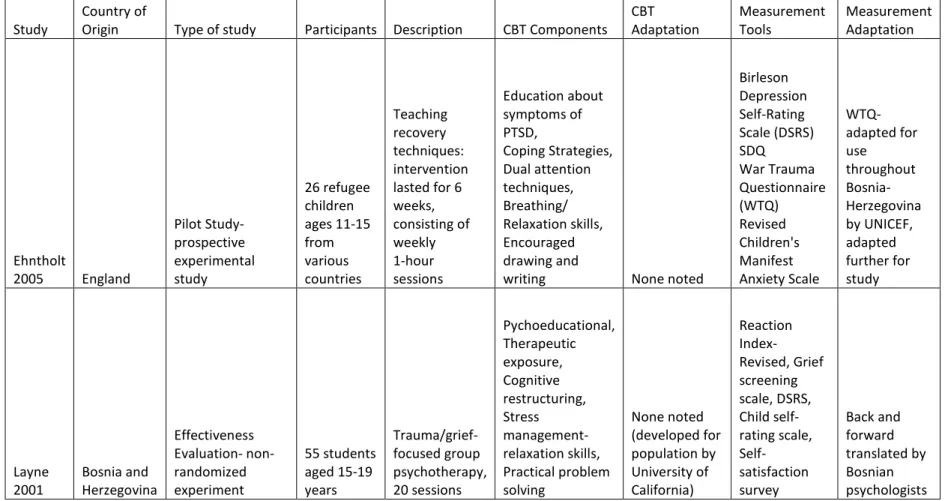
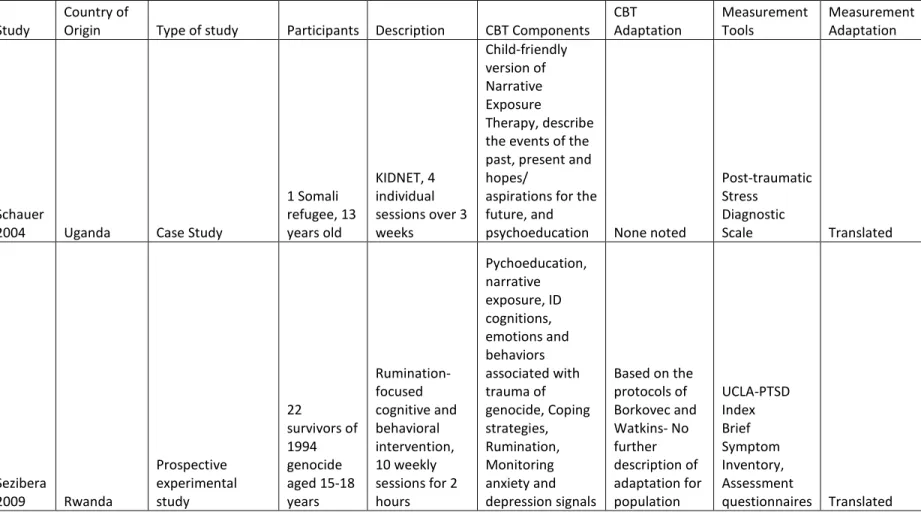
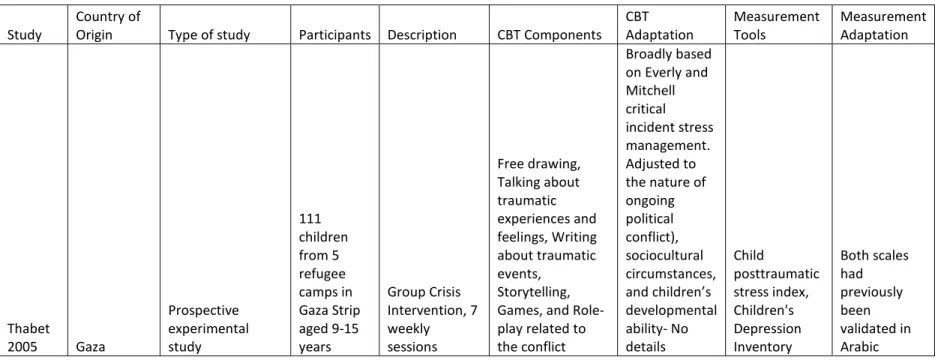
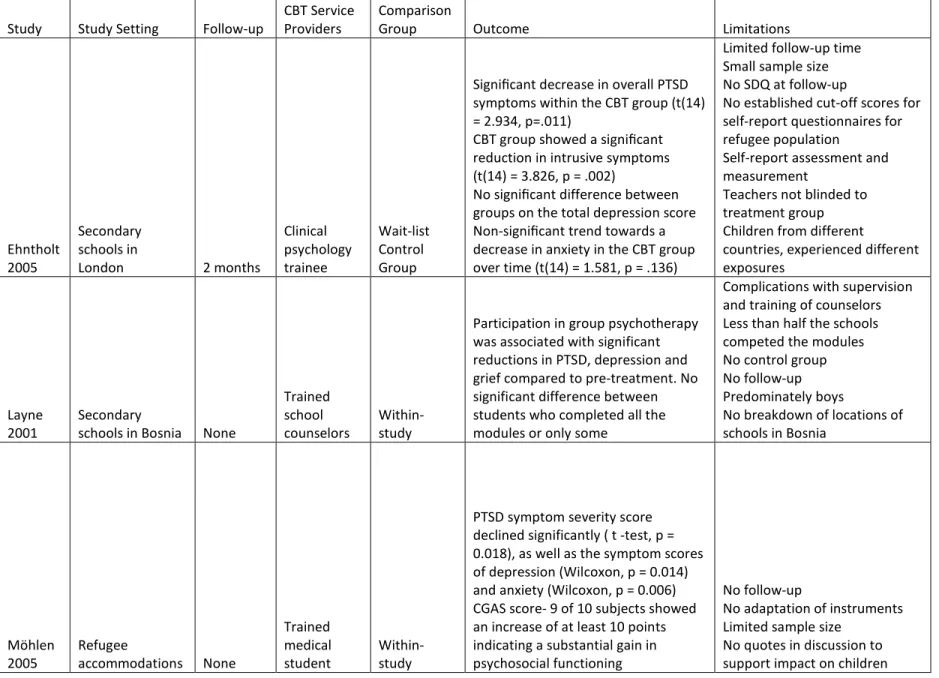
in Table 1 and 2.
Although all interventions were considered a form of cognitive behavioral therapy;
studies used various techniques as well as different manualized programs including: Teaching
Recovery Techniques, trauma and grief-focused psychotherapy, KIDNET, a multimodal therapy
model, a rumination-focused cognitive and behavioral intervention, and Group Crisis
Intervention. Specific information on the individual components of CBT used in each study can
be found in Table 1.
Methodology Results
Six of the seven studies measured more than one outcome, the most common of which
were PTSD and depression. The seventh study by Schauer and colleagues (2004) only measured
PTSD symptoms. Sezibera and colleagues (2005) in addition to examining psychological
symptomology also measured somatization symptoms such as shortness of breath, nausea and
chest pains. Two studies collected additional information on the types and or frequency of
war-related traumas. Ehntholt et al. used the War Trauma Questionnaire (WTQ) which asks children
questions regarding events they may have experienced during war and Mӧhlen and colleagues
used the Harvard Trauma Questionnaire (HTQ) to determine the degree of traumatization.
(Table 1)
Outcomes of interest were monitored using different psychometric instruments. None
of the seven studies provided detailed descriptions of instrument adaptation processes. That
being said, three studies did mention instruments had been translated into local languages
(Layne et al., 2001 & Schauer et al., 2004 & Sezibera et al. 2009) and two studies noted that the
instruments had previously been adapted or validated for the study population (Ehntholt et al.,
2005 & Thabet et al., 2005). (Table 1)
Six of the seven studies had children self-report symptoms and outcomes. In addition to
a self-report assessment, Mӧhlen and colleagues (2005) also utilized semi-structured diagnostic
interviews conducted by a clinical psychologist. The studies using the child-friendly version of
narrative exposure therapy (KIDNET), utilized self-report questionnaires to provide quantitative
data on symptomology changes, but also provided qualitative data including verbatim
descriptions of war-related traumas as well as changes in moods and psychological well-being
post-intervention (Onyut et al., 2005 & Schauer et al., 2004).
Among the seven studies reviewed, only two mentioned cultural adaptation of the
intervention had occurred, but no further details were provided (Sezibera et al., 2009 & Thabet
et al., 2005). Layne and colleagues (2001) had a unique situation in which the intervention was
specifically designed for children in Bosnia-Herzegovina by the University of California. The
intervention had also previously been piloted in several schools across the country. (Table 1)
Table 1: Description of the Intervention and Psychometric Instruments
Study Country of Origin Type of study Participants Description CBT Components CBT Adaptation Measurement Tools Measurement Adaptation
Ehntholt
2005 England
Pilot Study- prospective experimental study 26 refugee children ages 11-15 from various countries Teaching recovery techniques: intervention lasted for 6 weeks, consisting of weekly 1-hour sessions Education about symptoms of PTSD, Coping Strategies, Dual attention techniques, Breathing/ Relaxation skills, Encouraged drawing and
writing None noted
Birleson Depression Self-Rating Scale (DSRS) SDQ War Trauma Questionnaire (WTQ) Revised Children's Manifest Anxiety Scale WTQ- adapted for use throughout Bosnia-Herzegovina by UNICEF, adapted further for study Layne
2001 Bosnia and Herzegovina
Table 1: Description of the Intervention and Psychometric Instruments
Study Country of Origin Type of study Participants Description CBT Components CBT Adaptation Measurement Tools Measurement Adaptation
Mӧhlen
2005 Germany
Prospective experimental study 10 Kosovian refugees ages 10-16 years Multimodal manual based intervention program, 12 weeks, 1 session with parents
Trauma- and grief focusing therapy; Verbalizing; Relaxation techniques; Painting, playing, acting, and guided imagery; Group discussions, and Psychoeducation about trauma and trauma reactions None noted (developed by authors) Structured diagnostic interviews, Harvard Trauma Questionnaire (HTQ), Diagnostic System for System Psychological Disorders, Children's Global Assessment
Scale None Noted
Onyut
2005 Uganda Pilot Study and Case reports
6 Somali refugees ages 13-17 KIDNET, 4-6 individual sessions Child-friendly version of Narrative Exposure Therapy, describe the events of the past, present and hopes/
aspirations for the future None noted (developed by authors) Posttraumatic Diagnostic Scale, Hopkins Symptom Checklist- 25, Composite international diagnostic interview
(CIDI)- K and E None Noted
Table 1: Description of the Intervention and Psychometric Instruments
Study Country of Origin Type of study Participants Description CBT Components CBT Adaptation Measurement Tools Measurement Adaptation
Schauer
2004 Uganda Case Study
1 Somali refugee, 13 years old
KIDNET, 4 individual sessions over 3 weeks Child-friendly version of Narrative Exposure Therapy, describe the events of the past, present and hopes/
aspirations for the future, and
psychoeducation None noted
Post-traumatic Stress
Diagnostic
Scale Translated
Sezibera
2009 Rwanda
Prospective experimental study 22 survivors of 1994 genocide aged 15-18 years Rumination-focused cognitive and behavioral intervention, 10 weekly sessions for 2 hours Pychoeducation, narrative exposure, ID cognitions, emotions and behaviors associated with trauma of genocide, Coping strategies, Rumination, Monitoring anxiety and depression signals
Based on the protocols of Borkovec and Watkins- No further description of adaptation for population UCLA-PTSD Index Brief Symptom Inventory, Assessment
questionnaires Translated
Table 1: Description of the Intervention and Psychometric Instruments
Study Country of Origin Type of study Participants Description CBT Components CBT Adaptation Measurement Tools Measurement Adaptation
Thabet
2005 Gaza
Prospective experimental study 111 children from 5 refugee camps in Gaza Strip aged 9-15 years Group Crisis Intervention, 7 weekly sessions Free drawing, Talking about traumatic experiences and feelings, Writing about traumatic events, Storytelling, Games, and Role-play related to the conflict
Outcome Results
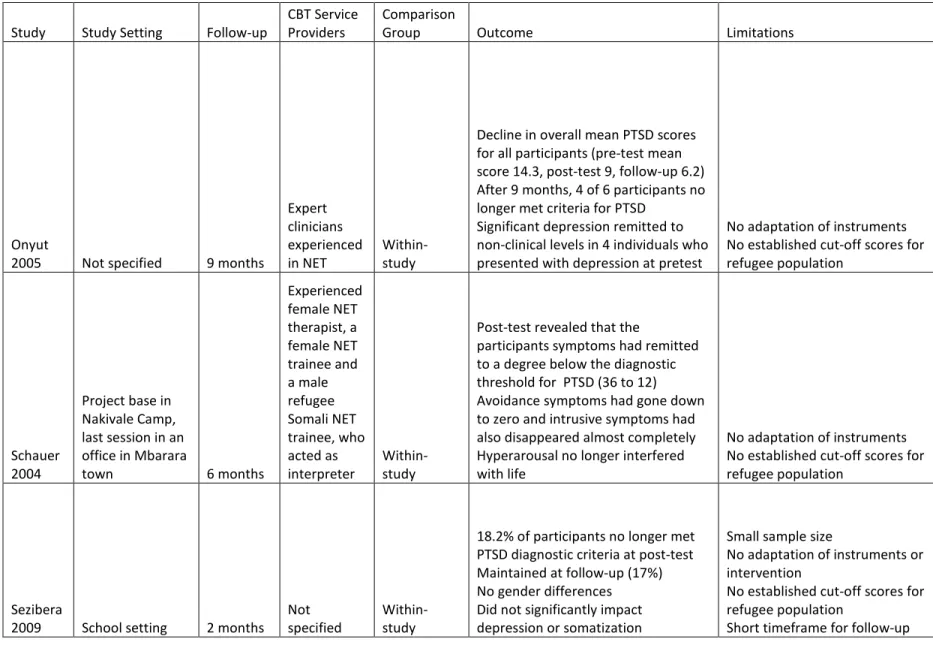
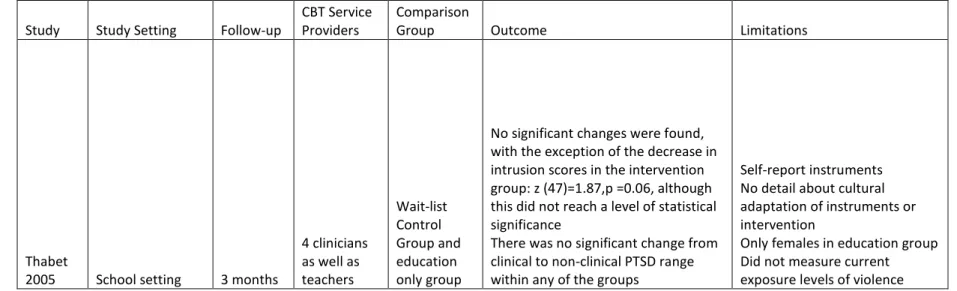
Six of the seven studies indicated a decline in PTSD symptoms post-intervention. The
seventh study by Thabet and colleagues (2005) saw no change in PTSD or depression scores in
the intervention group, but did note a non-significant decrease in intrusion scores: z (47)=1.87,
p =0.06. Three studies specifically noted that PTSD scores had remitted to a degree below the
diagnostic threshold for PTSD, either immediately post-intervention or upon follow-up (Onyut
et al., 2005 & Schauer et al., 2004 & Sezibera et al., 2009). Outcomes for other measures such
as depression and anxiety varied across studies. (Table 2)
In the two studies from Uganda using KIDNET, both indicated significant reductions in
PTSD symptoms (Onyut et al., 2005 & Schauer et al., 2004). Onyut and colleagues (2005) also
noted significant declines in depression to non-clinical levels in four individuals who presented
with depression at pre-test. The effects of the intervention in both studies, either was
maintained or improved after the six or nine month follow-up periods. (Table 2)
Two of the studies were conducted with adolescent refugees who had recently resettled
in England or Germany (Mӧhlen et al., 2005 & Enhtholt et al., 2005). Both interventions
resulted in significant decreases in PTSD symptoms. Mӧhlen and colleagues (2005) also noted a
significant decline in the severity of depression symptoms (Wilcoxon, p = 0.014), which was not
found in the Ehntholt et al. study. Additionally, Mӧhlen and colleagues also measured
psychosocial functioning and found a substantial increase in functioning for nine of the ten
students in the study. (Table 2)
Sezibera and colleagues (2009) and Thabet and colleagues (2005) were the only ones in
their analysis to look at the effect or interaction of gender or age on the intervention outcome,
but found the decline in PTSD occurred irrespective of either covariate. In addition, Sezibera et
al. was the only study that measured the impact of a cognitive behavioral intervention on
somatization, but found no significant impact on somatization symptomology in the study
population: F(1, 21) = 2.97, p> 0.05. (Table 2)
Finally, only one study specifically noted that their intervention was provided in
conjunction with another program. The Layne and colleagues (2001) study was conducted in
conjunction with a larger UNICEF initiative in the country, promoting post-war adaptation in
youth affected by war.
Table 2: Intervention Outcomes and Limitations
Study Study Setting Follow-up CBT Service Providers Comparison Group Outcome Limitations
Ehntholt 2005
Secondary schools in
London 2 months
Clinical psychology trainee Wait-list Control Group
Significant decrease in overall PTSD symptoms within the CBT group (t(14) = 2.934, p=.011)
CBT group showed a significant reduction in intrusive symptoms (t(14) = 3.826, p = .002)
No significant difference between groups on the total depression score Non-significant trend towards a decrease in anxiety in the CBT group over time (t(14) = 1.581, p = .136)
Limited follow-up time Small sample size No SDQ at follow-up
No established cut-off scores for self-report questionnaires for refugee population
Self-report assessment and measurement
Teachers not blinded to treatment group Children from different
countries, experienced different exposures
Layne
2001 Secondary schools in Bosnia None
Trained school
counselors Within-study
Participation in group psychotherapy was associated with significant reductions in PTSD, depression and grief compared to pre-treatment. No significant difference between students who completed all the modules or only some
Complications with supervision and training of counselors Less than half the schools competed the modules No control group No follow-up Predominately boys
No breakdown of locations of schools in Bosnia
Mӧhlen
2005 Refugee accommodations None
Trained medical
student Within-study
PTSD symptom severity score declined significantly ( t -test, p = 0.018), as well as the symptom scores of depression (Wilcoxon, p = 0.014) and anxiety (Wilcoxon, p = 0.006) CGAS score- 9 of 10 subjects showed an increase of at least 10 points indicating a substantial gain in psychosocial functioning
No follow-up
No adaptation of instruments Limited sample size
No quotes in discussion to support impact on children
Table 2: Intervention Outcomes and Limitations
Study Study Setting Follow-up CBT Service Providers Comparison Group Outcome Limitations
Onyut
2005 Not specified 9 months
Expert clinicians experienced
in NET Within-study
Decline in overall mean PTSD scores for all participants (pre-test mean score 14.3, post-test 9, follow-up 6.2) After 9 months, 4 of 6 participants no longer met criteria for PTSD
Significant depression remitted to non-clinical levels in 4 individuals who presented with depression at pretest
No adaptation of instruments No established cut-off scores for refugee population
Schauer 2004
Project base in Nakivale Camp, last session in an office in Mbarara
town 6 months
Experienced female NET therapist, a female NET trainee and a male refugee Somali NET trainee, who acted as
interpreter Within-study
Post-test revealed that the
participants symptoms had remitted to a degree below the diagnostic threshold for PTSD (36 to 12) Avoidance symptoms had gone down to zero and intrusive symptoms had also disappeared almost completely Hyperarousal no longer interfered with life
No adaptation of instruments No established cut-off scores for refugee population
Sezibera
2009 School setting 2 months Not specified Within-study
18.2% of participants no longer met PTSD diagnostic criteria at post-test Maintained at follow-up (17%) No gender differences Did not significantly impact depression or somatization
Small sample size
No adaptation of instruments or intervention
No established cut-off scores for refugee population
Short timeframe for follow-up
Table 2: Intervention Outcomes and Limitations
Study Study Setting Follow-up CBT Service Providers Comparison Group Outcome Limitations
Thabet
2005 School setting 3 months
4 clinicians as well as teachers
Wait-list Control Group and education only group
No significant changes were found, with the exception of the decrease in intrusion scores in the intervention group: z (47)=1.87,p =0.06, although this did not reach a level of statistical significance
There was no significant change from clinical to non-clinical PTSD range within any of the groups
Self-report instruments No detail about cultural adaptation of instruments or intervention
Only females in education group Did not measure current exposure levels of violence
Discussion
This paper summarizes the outcomes from seven studies using a form of cognitive
behavioral therapy with 231 children affected by war or conflict. The studies were
predominately from LAMIC with the exception of two studies from Western Europe with newly
resettled refugees. Participants included Somali refugees, children exposed to shellings in Gaza,
children impacted by war in Bosnia and Kosovo and adolescent survivors of the Rwandan
genocide. The interventions used various forms of cognitive behavioral therapy including:
Teaching Recovery Techniques, trauma and grief-focused psychotherapy, KIDNET, a multimodal
therapy model, a rumination-focused cognitive and behavioral intervention, and Group Crisis
Intervention. There was a significant amount of heterogeneity in the psychometric instruments
utilized, duration since exposure to conflict, provider qualifications, intervention settings and
follow-up periods. This observation is consistent with previous systematic reviews noting the
diversity in interventions and outcomes (Tol et al., 2011, & Tol et al., 2013).
Six of the seven studies (86%) found an intervention effect on psychiatric symptoms.
The seventh study by Thabet and colleagues (2005) saw no change in PTSD or depression scores
in the intervention group, but did note a non-significant decline in intrusion scores. Three
studies (43%) found that PTSD scores had remitted to a degree below the diagnostic threshold
for PTSD, either immediately post-intervention or upon follow-up (Onyut et al., 2005 & Schauer
et al., 2004 & Sezibera et al., 2009). These results are similar to findings from randomized
control trials not included in this review, such as a school-based resilience program
(ERASE-Stress) implemented in Israel. Researchers found a significant decrease in PTSD, functional
impairments and depression among war-affected children (Gelkopf & Berger, 2009). In an
evaluation of a CBT-based intervention (EMPOWER program) for war-affected internally
displaced persons in northern Uganda, researchers found reductions in depression and anxiety
like syndromes as well as a significant increase in pro-social behaviors in the intervention group
(Sonderegger et al., 2011). Finally, an intervention with Bosnian mothers found that there were
small improvements in the mother’s mental health as well as children’s psychological
functioning (Dybdahl, R., 2001).
In regards to sustained effects of interventions, as mentioned earlier, three studies, the
two KIDNET studies from Uganda and the Sezibera et al. study from Rwanda, had sustained
effects. These finding are congruent with other studies conducted in high incomes countries
(Butler et al., 2004, & Bryant et al., 2003). Conversely, Ehntholt and colleagues (2005) found no
significant treatment effects after two months. The authors suggest that findings may have
been influenced by a resurgence of violence in Macedonia during the two month follow-up
period. Many of the Kosovan refugees participating in the intervention had family and friends
living in Macedonia and it was hypothesized that the new images of violence may have stirred
up old memories of past war traumas. To help maintain the initial improvements, Ehntholt and
colleagues (2005) suggest future interventions provide “booster” sessions as well as include
sessions for parents and families.
Two studies examined the effect of gender in their analysis, and found no association
between gender and the intervention outcome (Sezibera et al., 2009 & Thabet et al., 2005). The
absence of gender effects is inconsistent with previous psychosocial interventions in children
and adolescents affected by conflict (Tol et al., 2008, & Bolton et al., 2007, & Wolmer et al.,
2011). In two randomized control trials conducted in Gaza and Israel, researchers found greater
intervention benefits for boys (Quota et al., 2012, & Berger et al., 2007). In addition, in a study
conducted by Bolton and colleagues (2007) in Northern Uganda, researchers reported
intervention effects only among girls. Ehntholt and colleagues (2005) did not conduct any
statistical analysis of gender differences but did make two important observations. The authors
found that mixed-gender groups were effective in increasing participation in boys, because
hearing the girls, who were more likely to share their experiences, encouraged the boys to do
so as well. A challenge noted by Ehntholt et al., was engaging 15-16 year old Kosovan Albanian
boys, who saw participation in discussions about emotions as well as the past as a sign of
weakness. Although not statistically supported, these two important observations may help
inform future program design or community engagement strategies.
In addition to observations regarding gender differences, Ehntholt and colleagues (2005)
share other key implementation challenges faced while instituting the Teaching Recovery
Techniques program in London schools. Researchers found that several of the secondary
schools were significantly understaffed and sometimes violent settings. Also due to the large
size of one of the schools, teachers found filling out the Strengths and Difficulties Questionnaire
(SDQ) challenging as they did not know students well enough. Ehntholt and colleagues explain
that although these schools do not seem like ideal settings for therapeutic groups, these inner
city London schools are often the ones new resettled refugees will attend. The authors
emphasize that as this type of school-based intervention can be incredibly difficult and
time-consuming it is essential to have a dedicated staff member, whom refugee children trust, to
implement this program.
Layne and colleagues (2001), similar to the Ehntholt study, describe the importance of
understanding and considering the social, economic and political context in which one plans to
implement a program. The authors encourage individuals to not only ask, does the intervention
work and how, but is the program right for the population at this time and with the resources
available. A perfect example is the Thabet et al. study, which was the only study in this review
where conflict was ongoing. It was also the only study that reported no significant intervention
effect on PTSD symptoms. The authors hypothesize that the continuous exposure to direct and
indirect trauma led to a sustained state of distress in the children, diminishing the intervention
effects. It may be possible, that at this time, a cognitive behavioral intervention may not be
appropriate for this population. Thabet and colleagues (2005) suggest that intervention
adaptations should occur for locations experiencing ongoing violence.
Although the above studies did discuss the importance of understanding cultural
context none of the studies reviewed provided detailed information on cultural adaptation
processes of the psychometric tools or interventions.
Limitations
The results of this review should be interpreted in light of several limitations. The
inclusion of PTSD in the search terms without including other mental health disorders may have
led to an unintentional exclusion of certain studies. Data extraction from the articles was only
completed by one reviewer, who may have had biases in selection and documentation. In
addition, as the reviewer only spoke English, all other non-English-language studies were
excluded. Original validation papers were not reviewed to assess quality of validation and
finally, the original authors were not contacted for clarification.
Implications
More rigorous studies on CBT are necessary but also more homogenous studies.
Researchers use a wide variety of psychometric measurements as well as cultural adaptation
and validation processes. In addition, there is little consensus on the number of sessions, length
of the intervention, intervention setting, provider qualifications as well as follow-up period.
Studies also do not always measure the extent of traumatic events experienced by children
which has been shown by previous studies to be associated with the level of psychological
distress (Mӧhlen et al., 2005). The significant heterogeneity in intervention designs creates a
challenge when trying to make comparisons between studies. Furthermore, certain
components of CBT may be more effective than others, and the heterogeneity of CBT
techniques utilized may be contributing to the variable findings.
Conclusion
This systematic review supports the findings of an earlier review of randomized control
trials, with both demonstrating that CBT may successfully help children and adolescents
affected by armed conflict in reducing PTSD symptoms. In addition, the two reviews also
demonstrate that CBT can be effective in a variety of contexts and among diverse populations.
Yet there is still a significant amount of heterogeneity among interventions and measurement
tools, making it challenging to truly compare the effectiveness of different CBT programs. As a
result, it is clear that one key direction for future research is to identify the core components of
a successful intervention. As stated by Lisbeth Schorr in her 2012 Boarder Evidence for Bigger
Impact article, "Focusing on spreading the identified components of effective interventions is
often more promising than attempting to replicate entire programs, because even proven
models are seldom so strong that the program will be successful regardless of the
circumstances in which it is replicated." The articles presented in this review are a perfect
example of the various types of conflicts, intervention settings, as well as degrees of trauma
affecting children and adolescents impacted by war. Analyzing successful CBT interventions can
help researchers and providers identify common factors or techniques, which can later be
applied to improve existing CBT programs or to design new interventions. In addition to
examining programmatic components, it is also important to extract critical implementation
strategies, such as level of training of mental health providers. Finally, understanding
contextual conditions is also key, such as the health infrastructure, regulations or funding
sources (Schorr, L., 2012).
Another direction for future research is the identification and subsequent consensus on
measurable outcomes for children and adolescents sought by CBT interventions. As seen in the
current review, studies not only vary in design but also in the expected outcomes, which only
increases the heterogeneity in measurement tools and intervention components. The use of
CBT in reducing PTSD in children and adolescents affected by war and conflict shows promise,
and by establishing a consensus on measureable outcomes and the necessary key components
for a successful program, providers can continue to enhance the effectiveness of CBT
interventions for youth affected by war.
References
Attanayake, V., McKay, R., Joffres, M., Singh, S., Burkle, F.M., Jr, & Mills, E. (2009). Prevalence of mental disorders among children exposed to war: A systematic review of 7,920 children. Medicine, Conflict & Survival, 25,4-19.
Betancourt, T.S., & Khan, K.T. (2008). The mental health of children affected by armed conflict: Protective processes and pathways to resilience. International Review of Psychiatry (Abingdon, England), 20(3), 317–328. doi:10.1080/09540260802090363.
Berger, R., Pat-Horenczyk, R., & Gelkopf, M. (2007). School-based intervention for prevention and treatment of elementary-students' terror-related distress in Israel: A quasi-randomized controlled trial. Journal of Traumatic Stress, 20(4), 541-551. doi:10.1002/jts.20225.
Bolton, P., Bass, J., Betancourt, T., Speelman, L., Ony- ango, G., Clougherty, K.F., Neugebauer, R., Murray, L., & Verdeli, H. (2007). Interventions for depression symptoms among adolescent survivors of war and displacement in northern Uganda. Journal of the American Medical Association, 298, 519–527.
Bryant, R.A., Moulds, M.L., & Nixon, R.V.D. (2003). Cognitive behavior therapy of acute stress disorder: A four-year follow-up. Behavior Research and Therapy, 41(4), 489-494.
doi:http://dx.doi.org/10.1016/S0005-7967(02)00179-1.
Butler, A.C., Chapman, J.E., Forman, E.M., & Beck, A.T. (2006). The empirical status of cognitive-behavioral therapy: A review of meta-analyses. Clinical Psychology Review, 26(1), 17-31. doi:http://dx.doi.org/10.1016/j.cpr.2005.07.003.
Dybdahl, R. (2001). Children and mothers in war: An outcome study of a psychosocial intervention program. Child Development, 71, 1214–1230.
Ehntholt, K., Smith, P., Yule, W. (2005). School-based cognitive-behavioral therapy group intervention for refugee children who have experienced war-related trauma. Clinical Child Psychology and Psychiatry, 10(2): 235–250. DOI: 10.1177/1359104505051214.
Gelkopf, M., & Berger, R. (2009). A school-based, teacher-mediated prevention program (ERASE-Stress) for reducing terror-related traumatic re- actions in Israeli youth: A quasi-randomized controlled trial. Journal of Child Psychology and Psychiatry, 50, 962–971. doi:10.1111/j.1469- 7610.2008.02021.x.
Health & Life Sciences Library- University of Pennsylvania.
http://guides.library.upenn.edu/content.php?pid=286667&sid=2408226.
Inter-Agency Standing Committee (IASC). (2007). IASC guidelines on mental health and psychosocial support in emergency settings. Geneva: IASC.
Layne, C.M., Saltzman, W.R., Popovic, T., Savjak, N., Music, M., Djapo, N., Pynoos, R., Arslanagic, B., Black, M., Durakovic, E., Campara, N., Houston, R. (2011). Group Dynamics: Theory,
Research and Practice, 5(4), 277–290.
Machel study 10-Year strategic review children and conflict in a changing world. UNICEF. (2009).
https://childrenandarmedconflict.un.org/publications/MachelStudy-10YearStrategicReview_en.pdf.
Mӧhlen, H., Parzer, P., Resch, F., Brunner, R. (2005). Psychosocial support for war-traumatized child and adolescent refugees: evaluation of short-term treatment program. Australian and New Zealand Journal of Psychiatry, 39, 81-87.
Patel, V., Araya, R., Chatterjee, S. et al. (2007).Treatment and prevention of mental disorders in low-income and middle-low-income countries. Lancet, 370: 991–1005.
Onyut, L., Neuner, F., Schauer, E., Ertl, V., Odenwald, M., Schauer, M., Elber, T. (2005). Narrative exposure therapy as a treatment for child war survivors with posttraumatic stress disorder: two case reports and a pilot study in an African refugee settlement. BMC Psychiatry. 5:7
Qouta, S. R., Palosaari, E., Diab, M., & Punamäki, R. (2012). Intervention effectiveness among war-affected children: A cluster randomized controlled trial on improving mental health. Journal of Traumatic Stress, 25(3), 288-298. doi:10.1002/jts.21707.
Rahman, A., Malik, A., Sikander, S., Roberts, C., & Creed, F. (2008). Cognitive behavior therapy-based intervention by community health workers for mothers with depression and their infants in rural Pakistan: a cluster-randomized controlled trial. Lancet, 372(9642), 902–909.
doi:10.1016/S0140-6736(08)61400-2.
Rojas, G., Fritsch, R., Solis, J., et al. (2007).Treatment of postnatal depression in low-income mothers in primary-care clinics in Santiago, Chile: a randomized controlled trial. Lancet, 370: 1629–37.
Schauer, E., Neuner, F., Ertl, V., Odenwald, M., Schauer, M., Elber, T. Onyut, L. (2004). Narrative exposure therapy in children: a case study. Intervention. 2(1), 18-32.
Schorr, L. (2012). Broader evidence for bigger impact. Stanford Social Innovation Review. 50-55
Sezibera, V., Van Broeck, N., Philippot, P. (2009). Intervening on persistent posttraumatic stress disorder: rumination- focused cognitive and behavioral therapy in a population of young survivors of the 1994 genocide in Rwanda. Journal of Cognitive Psychotherapy: An International Quarterly. 23(2), 107-113.
Sonderegger, R., Rombouts, S., Ocen, B., McKeever, RS. (2011). Trauma rehabilitation for war-affected persons in northern Uganda: A pilot evaluation of the EMPOWER programme. British Psychology Journal, 50: 234-249.
Thabet, A., Vostanis, P., Karim, K. (2005). Group crisis intervention for children during ongoing war conflict. Eur Child Adolesc Psychiatry. 14:262–269 DOI 10.1007/s00787-005-0466-7
Tol, W.A., Komproe, I.H., Susanty, D., Jordans, M.J.D., & de Jong, J.T.V.M. (2008). School-based mental health intervention for children affected by political violence in Indonesia: A cluster randomized trial. Journal of the American Medical Association, 300, 655–662.
Tol, W. A., Barbui, C., Galappatti, A., Silove, D., Betancourt, T. S., Souza, R., Van Ommeren, M. (2011). Mental health and psychosocial support in humanitarian settings: Linking practice and research. The Lancet, 378(9802), 1581-1591.
doi:http://dx.doi.org/10.1016/S0140-6736(11)61094-5.
Tol, W.A., Komproe, I.H., Jordans, M.J.D., Vallipuram, A., Sipsma, H., Sivayokan, S., De Jong, J.T. (2012). Outcomes and moderators of a preventive school-based mental health intervention for children affected by war in Sri Lanka: a cluster randomized trial. World Psychiatry,11(2), 114– 122.
Tol, W. A., Song, S., & Jordans, M. J. D. (2013). Annual research review: Resilience and mental health in children and adolescents living in areas of armed conflict? A systematic review of findings in low- and middle-income countries. Journal of Child Psychology and Psychiatry, 54(4), 445-460. doi:10.1111/jcpp.12053.
Wolmer, L., Hamiel, D., Barchas, J.D., Slone, M., & Laor, N. (2011). Teacher- delivered resilience-focused intervention in schools with traumatized children following the second Lebanon War. Journal of Traumatic Stress, 24, 309–316. doi:10.1002/jts.20638.