The Role of Race in the Development of Atrial Fibrillation and Risk of
TITLE: The Role of Race in the Development of Atrial Fibrillation and Risk of Embolic Stroke:
A Systematic Review.
INTRODUCTION
Atrial fibrillation [AF], the most common arrhythmia in the United States, affects an
estimated 2.2 million people in this country alone. The prevalence of AF grows incrementally
with increasing age, and the majority of people living with AF are over the age of 65 years. For
people less than 55 years old the prevalence is 0.1%, compared to an approximate 10%
prevalence in people over the age of 80 years. The incidence of AF is also on the rise resulting
in predictions for AF to affect 10 million Americans by the year 2050.1 This increase is likely
due to the ongoing aging of the population and an increase in the prevalence of individuals in the
community with one or more risk factors for developing AF.2 Along these same lines, people are
now living longer with medical conditions such as diabetes mellitus and hypertension, which
predispose individuals to developing AF. The trend of increased AF prevalence in the U.S. in
recent years and the projected continued increase over the next few decades will raise AF to
unprecedented levels. In fact, current projections based on data from the Framingham Heart
Study put the lifetime risk for developing AF in this country at approximately 16% for
individuals around 40 years of age, and up to 25% if there is a prior history of congestive heart
failure or myocardial infarction.2
Several clinical risk factors have been linked to the development of AF, particularly
advancing age which is associated with structural changes such as fibrosis in the heart that
AF include male sex, cardiovascular risk factors such as hypertension and diabetes mellitus, and
other cardiac conditions such as valvular heart disease, prior myocardial infarction, and
congestive heart failure.4-6 Along with these traditional risk factors, more recently recognized
risk factors such as obesity and sleep apnea have also been recognized. Echocardiography has
also allowed detection of various validated cardiac structural risk factors such as left ventricular
hypertrophy and increased left atrial size.7, 8 Although race has never been considered a risk
factor for developing AF, there is evidence to suggest that whites develop AF more than other
racial groups out of proportion to the prevalence of the clinical risk factors mentioned here. As
little is known about the interaction of race and AF, this paper seeks to review all relevant
published data on race and AF.
Many experts have called AF in this country an emerging epidemic.9, 10 The increasing
prevalence of AF is important because AF is not a benign disease. Although once thought to be
clinically unimportant and merely a nuisance to be tolerated by the individual, it is now
recognized as a major risk factor for thromboembolic disease as well as a factor in overall
long-term mortality.The single most feared sequela of AF is an ischemic stroke due to
thromboembolic complications from a left atrial or left atrial appendage thrombus, or possibly an
aortic atheroma. AF is felt to be responsible for about 15% of all ischemic strokes.11, 12Embolic
strokes due to AF tend to be larger and are more likely to be fatal compared to small vessel
strokes. Systemic embolization appears to be less common but can be equally devastating with
resultant ischemic bowel or ischemia and necrosis of distal extremities. Embolization is one of
the reasons why AF carries a 1.5-2-fold increase in mortality risk compared to individuals
significant morbidity and mortality even when controlling for other co-morbidities such as heart
disease and diabetes.
Randomized placebo-controlled trials have estimated the overall risk of stroke in patients
with AF who are not anticoagulated to be approximately 4.5-5% per year.13This is a general risk
assessment when considering all AF patients in aggregate. However, extensive research has been
conducted looking at individual risk factors for stroke in patients with non-valvular AF to
determine which AF patients are low risk and which are high risk for thromboembolic
complications. This has important clinical implications for patients with AF since these clinical
risk factors help stratify the risk of stroke and tailor anticoagulation therapy for individual
patients. Similar to the risk factors for developing AF in the first place, congestive heart failure,
hypertension and advanced age (i.e. greater than 75 years old) are all known risk factors for
ischemic stroke in AF patients. Additionally, known diabetes mellitus and a history of prior
stroke are also known to elevate the risk for thromboembolic complications.2 These are currently
the main risk factors considered when determining the need for anticoagulation in a patient with
AF.
It is not surprising that AF is a burden on the healthcare system as well as the individual
given that it is a chronic disease which can be refractory to treatment. The management of AF
often involves various diagnostic studies, pharmacologic treatments and long term management
with anticoagulation therapy. AF can also have a synergistically negative effect on overall health
when combined with other cardiovascular diseases. For example, in patients with well controlled
heart failure due to systolic or diastolic dysfunction, AF can precipitate an exacerbation that may
require admission to the hospital. Similarly, AF with rapid ventricular rate can contribute to
Although multiple prior studies have closely scrutinized the relationship between the
development of AF and age, gender, and multiple medical conditions, only recently has race or
ethnicity been mentioned as a possible “risk factor” worth investigating. Relatively little is
known about varying susceptibility to AF, or differences in incidence and prevalence among
different ethnic groups. It is unknown if race truly affects AF rates or whether there is a different
pattern of AF expression. It is also unknown if the risk of stroke varies for AF patients of
different ethnic populations. We therefore sought to perform a systematic review of all clinical
studies looking at ethnicity as a risk factor for developing AF, and as a risk factor for ischemic
stroke in patients with non-rheumatic valvular AF.
METHODS
Methods for Systematic Review of the Literature: MEDLINE and The Cochrane Database of Systematic Reviews were searched for abstracts, papers, clinical trials and reviews. Four
primary PubMed searches were performed using the following search terms: (1) MeSH term
atrial fibrillation with subheading ethnology yielded 31 articles written in English. (2) MeSH
terms atrial fibrillation and continental population groups (i.e. race) yielded 69 studies, all of
which were redundant from MeSH search (1) or irrelevant to our focused interest. This search
yielded one additional publication of interest. (3) MeSH terms atrial fibrillation, ethnicity and
epidemiology yielded 3 additional relevant studies out of 44 total publications. (4) MeSH terms
atrial fibrillation and stroke with subheading ethnology yielded another two relevant studies out
of ten total. Although no limits were used for publication date, all the Medline articles included
were published between 1997 and 2008. The Cochrane Database search was done in three ways,
using atrial fibrillation as a keyword, as a review topic, and as a MeSH term. This resulted in no
also used references obtained from bibliographies in articles generated from the MEDLINE
searches.
Due to the general paucity of data on the interaction between ethnicity and atrial
fibrillation and between ethnicity and stroke, we considered all study types and any date of
publication. Although there were no pre-specified criteria for selection of trials in terms of trial
design, trials that tested a surgical procedure, a catheter ablation procedure, a pacemaker, or an
antiarrhythmic drug were excluded. Trials and observational studies that included race/ethnicity
as part of the demographic information studied were emphasized. Studies that did not analyze by
race, either because few non-white patients were included, or because they did not choose to
look at race, were excluded. For example, the Framingham cohort was not included since few
non-white participants were included and no analysis by race was done. Since no intervention
was assessed, data from only one randomized controlled trial were felt to be relevant. Although
no limits for publication dates were pre-specified, all studies were conducted between 1990 to
present with the exception of the Framingham database studies since Framingham data collection
began in 1948. All studies included adult subjects only; no pediatric populations were included
in this review. Searches were restricted to the English language. Studies based in racially
homogenous countries that did not enroll non-Caucasian subjects or subjects of African descent
were excluded. The references of the selected publications were also reviewed for additional
studies and publications.
A total of 18 population-based longitudinal cohort studies, 5 of which were retrospective
studies, 2 cross-sectional studies, and 1 post-hoc analysis of a prospective randomized controlled
trial were included. In addition, 8 articles including reviews and editorials met the search term
the general population including individuals with hypertension and other predisposing
conditions, and (2) occurrence of ischemic thromboembolic stroke in patients with atrial
fibrillation. One reviewer collected the data. Two additional readers reviewed the studies and
their results.
Methodological quality assessment
The method for determining the quality of the trial or cohort study was a combined
assessment of study quality, internal validity, and handling of confounding variables. The
assessment rating was largely based on the 2001 Center for Reviews and Dissemination (CRD)
Report 4 which focuses on the quality assessment of cohort studies.14, 15 The level of evidence
was not specifically rated in this review since none of the studies were randomized controlled
trials, and almost all studies were either cross sectional or observational studies. The checklist of
Table A. Quality Assessment Checklist**
1. Are the groups being compared and the confounding variables adequately described?
a. Are the groups reasonably similar at baseline (comorbidities, age)?
b. Were the groups comparable on confounding variables?
c. Are the groups at a similar point in disease progression?
2. Was there adequate adjustment for the differences and confounding variables?
3. Are the inclusion/exclusion criteria reasonable?
4. Was bias (selection, performance, measurement, attrition) present?
5. Were the drop out rates similar between groups and at an acceptable level? Were all
participants accounted for at the end of the study?
5. Does the study have internal validity?
a. Adequate sample size to detect difference?
b. Was a power calculation done?
c. Prevention of systematic errors or bias?
6. Was the follow up long enough and did the entire cohort have follow-up?
7. Was the determination of race done reliably, consistently, clearly described?
8. Are the enrolled subjects representative of the population at large? Is there sufficiently broad
representation of the population who is at risk for developing atrial fibrillation?
9. Was the cohort followed prospectively?
10. Was the detection and diagnosis of Afib made reliably and equally between groups?
** This is a modified checklist for observational cohort studies based on the Centre for Reviews and Dissemination
RESULTS
Eighteen publications met the primary search term criteria. Of these, eleven looked at
race and atrial fibrillation, and seven looked at race and stroke etiology. Studies that had multiple
publications over time were only counted once. There were no randomized controlled studies
that fit our search criteria; most studies included were prospective observational or retrospective
cross sectional studies. The Framingham Heart study was not included since it consists of a
predominantly white cohort and was never analyzed for ethnic differences in lifetime risk of
AF.2, 16 The landmark randomized controlled studies that compared different anticoagulation
strategies in AF patients were not included in this review because either a breakdown of the
cohort by race was not done, or there were too few African American patients enrolled.17-21
Quality Assessment: The source population in the studies reviewed here which looked at AF incidence and race often were adequate and appropriate in that they were large studies using
a comprehensive database. The biggest problem with some of these observational studies was the
low enrollment of non-white subjects which can make conclusions or even the formulation of
hypotheses difficult. For example, the ATRIA study, whose source population was Kaiser HMO
patients with non-transient AF, blacks made up only 3.6% of the total cohort. The VA study by
Borzecki et al used the 1999 Large Health Survey of Veteran Enrollees post-hoc and had 12%
black enrollment which is reasonably large. However, it was a survey study which makes it
prone to non-respondent bias. Cohort studies that collected the data prospectively were
considered to be of higher quality than studies which collected the data post-hoc. Regardless of
data collection method, the studies in this review which were observational were certainly prone
Furthermore, given that the groups were determined based on race, the groups may vary by
socioeconomic status or access to healthcare. The studies using the Kaiser HMO dataset should
not have some of the concerns with systematic differences between the white and black subjects
in the sense that access to healthcare and detection of Afib should be relatively similar. However,
generalizability of the source population may be of concern, Bias may also result due to
misclassification of race. There was no unifying method for race determination. Some studies
used patient self reporting where other studies relied on the demographic data from the electronic
medical record. The data collection regarding race was also fairly simplified, where persons of
mixed heritage were reported as a single race. This certainly oversimplifies the complicated issue
of genetic heritage and may classify a person as black or white when in fact they may classify
themselves as Indian or of mixed descent.
Description of Studies:
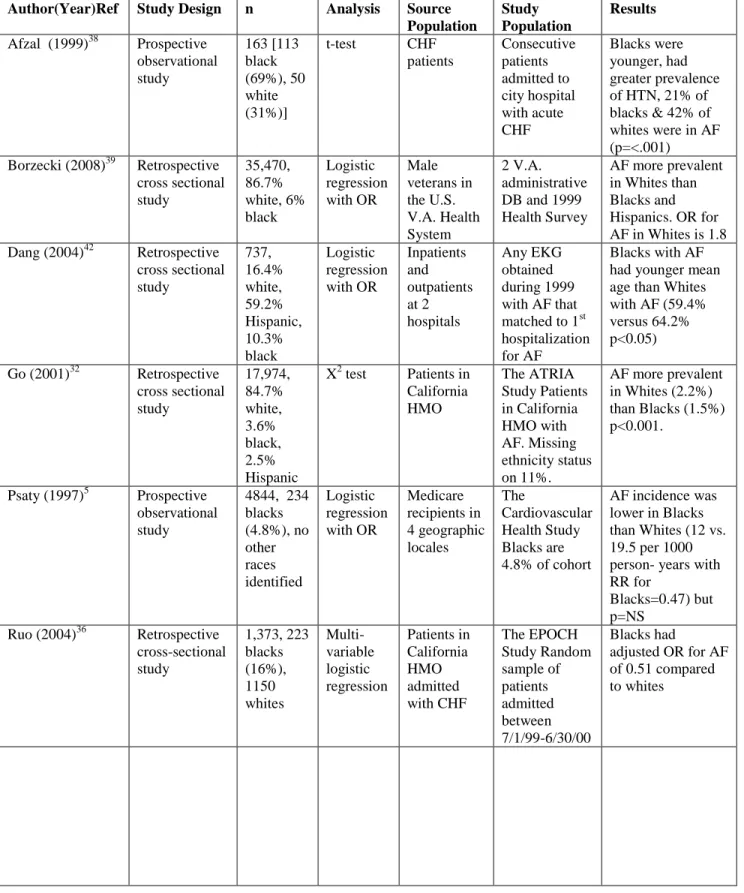
Studies on race and AF: There were 3 prospective observational studies, and one post-hoc analysis of a prospective randomized controlled trial. The Cardiovascular Health Study was
the only multi-center prospective trial that looked at the incidence of AF. The other studies
looking at the role of ethnicity in developing AF were 6 retrospective cross sectional studies and
1 Meta-Analysis of seven randomized controlled trials (Table I). The studies looking at race and
AF were conducted in the U.S. and therefore the patients designated as being Black or African
American in these studies resemble the African American demographics of this country. The
mean age of participants in ten of the eleven studies from Table I (excluding the EKG database
study which ranged from 20 years to 99 years old) ranged from 55 to 80 years old. Women made
up 43% to 58 % of the participants in these trials except for the VA study which was 100% male.
Study which used data from 1990-1993 to determine incidence of AF in that cohort, and the
EKG study which looked at EKGs from 1996-1998 at a single institution.
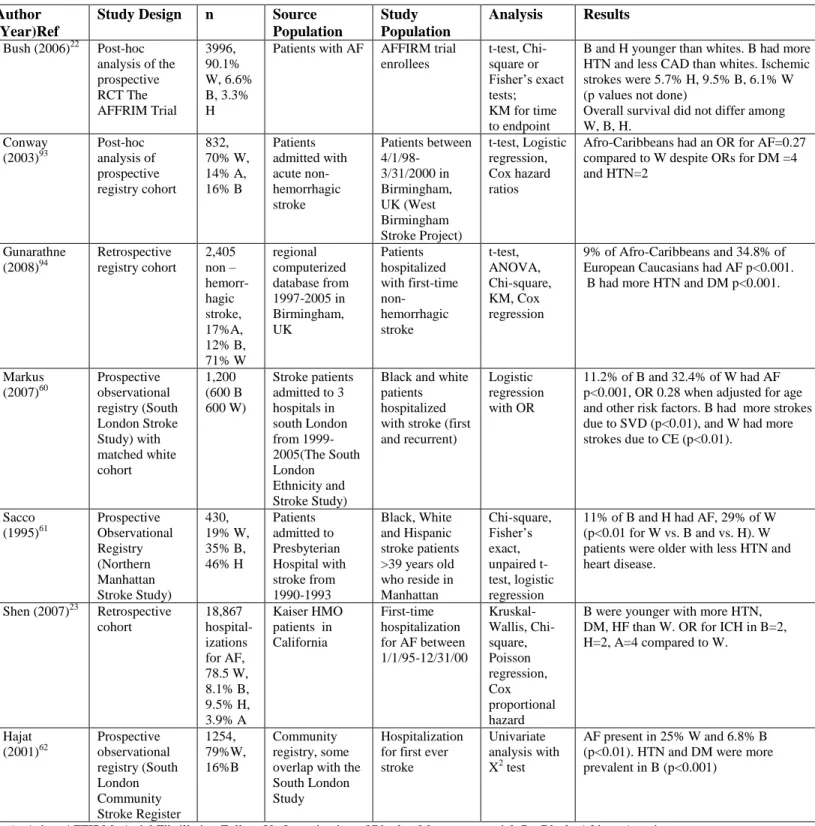
Studies on race and stroke: Of the 7 studies looking at stroke and race, two were prospective observational studies, one was a prospective registry, and two were post hoc
analyses of prospectively collected data. (Table III). These studies looked at racial differences in
risk factors for AF, prevalence of AF at time of stroke, and stroke subtype. Some of these
studies were conducted in England and the non-white patients were typically of African,
Caribbean, or South Asian descent. The mean age of participants in these 6 studies ranged from
67-80 years old. Women made up 39-54% of the enrollees in these studies. Enrollment dates
ranged from 1990-2005. Only two studies examined the risk of ischemic stroke or intracranial
hemorrhage in AF patients over time (The AFFIRM outcomes analysis by Bush et al and the
Kaiser Permanente retrospective analysis by Shen et al, both listed in Table III).22, 23 The other
studies looking at the role of ethnicity were stroke studies that calculated the prevalence of AF in
patients who presented with stroke.
18 studies met inclusion criteria
11 studied race and AF 7 studied race and etiology of stroke
3 prospective observational studies
5 retrospective cross sectional studies
1 retrospective case control study
1 Meta-Analysis of 7 randomized controlled trials
1 post hoc analysis of the RCT LIFE
2 prospective observational studies 1 prospective Registry
African American Race and Risk Factors for developing AF
Since the early 1990’s, many large clinical studies like ARIC (Atherosclerosis Risk in
Communities) sponsored by NHLBI and NHANES (National Health and Nutrition Examination
Survey) have repeatedly demonstrated that African Americans have a greater prevalence than
whites of the comorbidities associated with the development of AF. These include hypertension,
ventricular hypertrophy, and diabetes. The greater prevalence of these risk factors for AF in
black subjects has been shown in various types of studies with various disease states being
investigated from hypertension to heart failure, to stroke. For example, it has been shown that
left ventricular hypertrophy is more prevalent in blacks than whites whether assessed by MRI,
echocardiography or by EKG24 and is quite common in both black men and women. Many
studies have shown that the prevalence of type II Diabetes Mellitus is greater in blacks compared
to whites, but the ARIC Study also showed that the incidence of diabetes is greater as well.25
And a recent systematic review of cardiovascular risk factors reviewing 16 studies found that
blacks had higher rates of hypertension and diabetes.26
In the AFFIRM trial which enrolled patients with known AF and moderate risk factors
for stroke, although African Americans only comprised 6.6% of the cohort, a retrospective
analysis did look for racial differences in risk factors. The AFFIRM data showed that African
Americans with AF were significantly younger (65.7 vs. 70.3) and that they were more likely to
have hypertension (68.3 vs. 49.3%) and heart failure (36.2 vs. 21.9%) compared to the white
subjects with AF.22
Population studies have also shown that medical conditions which elevate risk of AF
than the Caucasian community. A comprehensive review of secular trends of hypertension over
the past four decades shows that African Americans consistently have had a greater prevalence
of high blood pressure compared to whites. Although the gap seems to be narrowing
significantly in the recent past, overall, hypertension is still more prevalent in African
Americans.27 Recent data from NHANES and NHLBI estimate that hypertension affects
approximately 32% of non-Hispanic white adults and 44% of non-Hispanic black adults.28
Estimates of diabetes prevalence broken down by ethnic group are provided by the CDC
sponsored National Health Interview Survey (NHIS) which surveyed individuals from 2004 to
2006. This survey of people which included adults over 20 years old revealed that 6.6% of
whites, 7.5% of Asians, 10.4% of Hispanics, and 11.8% of blacks have known diabetes.29 A
study looking at a sample of Medicare beneficiaries aged 67 or older also showed that although
the prevalence of diabetes is increasing across the board, it is most prevalent in blacks and
Hispanics.30 And probably for a multitude of social, economic and individual factors, the number
of deaths attributed to diabetes per 100,000 population for blacks is twice that compared to
whites (47.0 versus 22.5).31
Smoking, a risk factor for overall cardiovascular health, also has varying prevalence
among the different racial groups. Studies have demonstrated that the rate of new smokers is
greater for blacks than whites, and conversely the rate of smoking cessation is less for blacks. In
the 10 year longitudinal CARDIA study which began in 1985, African American men and
women had higher smoking prevalence rates, higher smoking initiation rates and lower cessation
rates than whites. The cause for this was felt to be largely socioeconomic. The smoking rates for
Blacks and Whites as of 2007 are 21.5% and 19.7% according to the national BRFSS telephone
In summary, the well known risk factors for developing AF such as hypertension and
diabetes mellitus are more common in blacks than whites in this country. The reasons for this are
likely multifactorial, including socioeconomic factors, access to healthcare, as well as genetics. It
seems logical to infer that AF would be more prevalent in blacks than whites, but this is not what
is demonstrated in the studies looking at this.
The Racial Paradox with AF
Given the well reported racial discrepancy in disease states such as diabetes and
hypertension, when researchers at the Kaiser Permanente Health Maintenance Organization
(HMO) recognized that the prevalence of AF among different racial groups was quite variable,
and in particular whites had a much higher prevalence compared to blacks, this seemed
paradoxical. Why would a group of patients with a greater prevalence for many of the AF risk
factors have a lower incidence or prevalence of AF? They used their Kaiser Permanente database
of northern California to look at the prevalence of AF in roughly 1.9 million people. They
specifically looked at AF incidence in patients over 50 years old and compared black patients to
white patients within the HMO. AF appeared to be more common in whites than blacks (2.2%
vs. 1.5% p<0.001).32 They also broke down the cohort by 10-year increments and showed that
the difference between blacks and whites persisted into the 7th and 8th decade of life. For patients
between 80-89 years old, the AF prevalence was 9.9% vs. 7.7% respectively (p=0.001).
Although these are crude rates that are unadjusted for co-morbidities, this helps to dispel the
possibility that the smaller prevalence of AF for African Americans in many trials and
observational studies is in large part due to the younger age of the black cohort compared to the
In terms of correlating risk factors for AF to actually developing AF, The Losartan
Intervention for Endpoint Reduction in Hypertension (LIFE) study is another large dataset of
patients with essential hypertension and LVH that was analyzed post hoc for AF incidence in
8831 black and white patients.33 They hypothesized that a reduction in LVH would translate into
a reduction in AF incidence. Interestingly, a marker of LVH (the Cornell voltage-duration
product) during treatment was found to be a strong predictor of AF only in the non-black
patients. Black patients also had a lower incidence of new-onset AF compared to whites (4.8%
vs. 8.1% p=0.007). The fact that LVH was not a predictor of AF in blacks may have been due to
the much lower prevalence of AF in blacks or less likely due to a higher prevalence of other risk
factors for developing AF in this group.8
It has been shown in large observational studies that patients with AF do have an
increased overall mortality risk when compared to similar patients without AF.16 It has also been
shown in congestive heart failure (CHF) studies that CHF and AF in combination synergistically
confer a high mortality. Studies have shown that blacks with CHF tend to have higher mortality
rates than whites with a similar degree of heart failure.34, 35 Again, the researchers at Kaiser
Permanente asked an important question: Is it possible that the AF paradox reverses in the CHF
population and an increased prevalence of AF is a contributor to the increased mortality seen in
blacks with CHF compared to whites? They looked at all Kaiser patients admitted to any of
sixteen Kaiser hospitals in northern California with a diagnosis of CHF between July 1, 1999 and
June 30, 2000 (the EPOCH study). Among 1,373 patients with CHF, 37% had AF. However,
when broken down by race, the prevalence of AF in the African American cohort was 20%
compared to 38% in the white cohort (p<0.001).36 This is despite a significantly greater
than the white cohort (mean of 67 vs. 74 years respectively) however this was adjusted for in
their multivariate model where race persisted as a significant factor.
These results were corroborated by the Yale CHF study which looked at roughly 400
consecutive CHF admissions to Yale hospital. African Americans comprised 21% of the cohort.
Similar to the EPOCH study, African Americans tended to be younger with a greater prevalence
of hypertension, and a significantly lower prevalence of AF at the time of admission (28% vs.
14% p=0.01).37 In addition, whites were more likely to develop AF prior to discharge from the
hospital (16.6% versus 7.3%, p=0.04). Another smaller prospective observational CHF study
with 163 patients also found that the African American patients were younger (64 vs. 71 years
p=0.003), and more likely to have hypertension and less likely to have AF (42% vs. 21%
p=0.006).38
A Veterans Affairs study retrospectively merged two large databases and picked a
random sample of 1.4 million veteran enrollees who were included in the study by returning a
mailed questionnaire.39 They had over 650,000 respondents and roughly 5% were Black. The
prevalence of AF was 6.1% in Caucasians, 2.6% in African Americans, 2.6% in Hispanics, and
3.4% in Asians. The Odds Ratio for having AF in whites was greater than all other ethnic groups
and the biggest difference was in comparison to the black cohort (OR 1.84).
The paradox between prevalence of AF risk factors and prevalence of AF in the African
American community has also been shown in an electrocardiography (EKG) study where
everyone who had an EKG as part of their evaluation was included. Only gender and age were
known, not medical conditions or duration of the arrhythmia. Still, the cohort was approximately
40% black lending itself to a reasonable comparison. Looking at all ages combined, the
Lending even more evidence that Blacks may truly develop AF less often than Whites do,
a study compared Black and White patients with Alzheimer’s disease. Similar to the stroke
studies that show racial differences in AF prevalence in a group that shares a medical condition
in common i.e. stroke, this study shows the racial differences in medical co-morbidities in an
Alzheimer’s cohort. Again, Blacks had a greater prevalence of hypertension and a significantly
lower prevalence of AF.41
The various studies have looked at a general medicine cohort, a CHF cohort, stroke
patients, and even Alzheimer’s disease and regardless of the underlying medical conditions,
African Americans consistently have a lower burden of AF than their Caucasian counterparts
even after adjustment for potential confounding factors such as age. It does not appear to be
simply a discrepancy in the detection of AF or an increased incidence of mortality in black
subjects with AF. The underlying reason is still unknown.
Asian Race and Risk for developing AF
The risk of developing AF in the Asian community in this country has not been well
studied. There are only a few studies that actually separated the Asian patients from the other
non-white patients for analysis purposes. The large VA outpatient database study mentioned
previously was mostly white, but Asians did comprise 3.6% of the study cohort.39Asians had a
similarly low incidence of AF as Blacks did (3.6% vs. 3.4% respectively compared to 5.7% for
whites). The odds ratio for AF by race was 1.4 for whites compared to Asians.
One EKG database study out of a public hospital in San Diego looked at over 80,000
EKGs and approximately 4,000 had a diagnosis of AF, 737 of which correlated to a first time
patients, the Asian patients were similar in age to the white patients and had similar rates of
diabetes. However, there was a significantly greater prevalence of left ventricular hypertrophy by
EKG criteria in Asians corresponding to an odds ratio of 2.76 for hypertrophy. One possible
explanation is that Asians share the well known risk factors for AF, but in addition, ventricular
hypertrophy plays a more prominent role in terms of risk stratification. A recent meta-analysis of
seven large acute coronary syndrome trials looked at the frequency of AF in patients with acute
coronary syndromes over time also found a lower frequency of AF in Asians compared to
Whites (4.7% vs. 7.6%, p<0.001). This analysis included over 94,000 patients total with 1,735
being of Asian descent.43 Asian patients tended to be younger but with a greater prevalence of
diabetes. Unfortunately, ventricular hypertrophy was not investigated in this analysis. Another
limitation of this analysis is that under the designation “Asian” are pooled together Chinese,
Japanese, Korean and various other Asian nationalities making the Asian group probably quite
heterogeneous and certainly limits the use of ethnicity as a surrogate for possible genetic
differences.
A population based study in China examined the prevalence of AF in their community.44
This was a population screening of almost 2,000 Chinese people and the overall AF incidence
was quite low at 1.5%. Again this was just an observational study, and conducted outside the
U.S. Another observational study out of mainland China demonstrated a prevalence of AF of
0.65%, which is lower than the U.S. prevalence despite a much greater prevalence of rheumatic
heart disease.45 This limited data does suggest that Asians too have a diminished incidence and
prevalence of AF compared to whites.
These data highlight the importance of enrolling various minorities in these observational
Only then can it be further delineated if there is in fact a true difference in susceptibility to AF
among the various racial groups. Although difficult to do in this country due to small sample
size, keeping the many ethnic groups separate rather than lumping them together under “Asian”
would provide further data of potential differences in risk factors for AF and prevalence.
Hispanic Race and Risk for developing AF
The data on AF in the Hispanic community as compared to whites or blacks is also very
limited. Again, the only large cohort to look at the prevalence of AF in Hispanics was the 1999
Large Health Survey of Veteran Enrollees. As in other studies, whites were significantly older
than the other racial groups. The mean age for whites and Hispanics were 65 and 61 years
respectively. When adjusted for age, AF prevalence was only 3.0% in Hispanics, which was
significantly lower than the 5.7% in whites.39 This corresponds to an OR for AF of 1.77 for white
versus Hispanic subjects. While whites had a greater prevalence of conditions considered risk
factors for AF such as coronary disease and valvular disease, Hispanics had the highest
prevalence of diabetes mellitus (27.5%). The authors maintain that there is a racial variation and
that there may be a genetic basis for this difference.
When looking at the AFFIRM Trial which only enrolled subjects with AF, only 3.3%
(132 subjects) were Hispanic making comparisons limited. In terms of baseline characteristics,
Hispanics were younger than whites (65 vs. 70 years, p<0.001). Despite their younger age,
Hispanics were sicker in that they were more likely to have a history of cardiomyopathy with a
depressed ejection fraction or heart failure. It isn’t described whether Hispanics and whites had
comparable rates of hypertension and diabetes. Therefore, it is unclear if any differences exist
based on this dataset, however it suggests that ventricular dysfunction may play a greater role in
difficult to draw definitive conclusions and in fact seems to raise more questions regarding racial
differences of AF since rhythm control reduced mortality in the Hispanic cohort only and not the
other groups.
The Northern Manhattan Stroke Study was the first to look at stroke patients from a
multiracial community and determine racial differences in stroke risk factors.46 This study was
based on an ongoing prospective registry of all acute stroke patients who present to the urban
Presbyterian Hospital of New York City which has a large black and Hispanic patient
population. Hispanics had a significantly lower prevalence of AF compared to whites (4% vs.
8%) despite having a greater prevalence of hypertension and diabetes. The authors also
calculated the population attributable risk for individual risk factors including AF. The
attributable risk of AF as a cause of stroke was very high in whites and essentially zero in blacks
or Hispanics. The majority of strokes in the Hispanic group were attributed mostly to
hypertension, diabetes and physical inactivity. Although whites were older, the comparison
groups were matched by age, so this should not be a factor in the differences.
Both the AF cohort and the stroke cohort studies showed that similar to blacks, Hispanics
tended to be younger than whites, with a greater prevalence of hypertension and diabetes yet a
lower prevalence of AF. Although this is complicated by the heterogeneity of the Hispanic race
in the U.S., the numbers tend to be too small to separate out the differing ancestries among the
subjects grouped as Hispanic. Similarly, although whites comprised the majority, they were not
separated by ancestry either, and there is most likely some heterogeneity among the whites as
well. Nonetheless, the trend seems consistent when looking at patients with AF or at patients
Risk of Stroke in patients with AF
There are over 750,000 new strokes in this country every year.47 The prevalence of stroke in the
Original Cohort from the Framingham Study was 18% over a 51 year follow up period, and the
overwhelming majority of these strokes were ischemic in nature (86%).48 In the ARIC
population study sponsored by NHLBI, the biggest risk factors for having a stroke were
hypertension, smoking and diabetes mellitus.12, 49 AF is also a well known risk factor for stroke
and felt to approximately increase the risk of stroke for an individual by five-fold.50 Although the
pathophysiology of stroke in the setting of AF is still somewhat unclear and likely multifactorial,
it is believed that the majority of strokes are due to cardiac embolism, either from the left atrium
or more likely the left atrial appendage. In the landmark SPAF trial conducted in the late 1980’s,
patients with AF were randomized to either warfarin, aspirin or placebo.18 The combined rate of
stroke and systemic embolism was 7.4% in the placebo arm. When looking at the SPAF III trial
results for patients with AF with no prior stroke and only on aspirin therapy, there were 48
strokes in 1073 patients over 1.8 years, or a rate of 2.5 strokes per 100 person-years.51 The more
recent AFFIRM trial where patients were anticoagulated with warfarin had an overall stroke rate
of 6.3%, of which approximately half were believed to be embolic in nature.52 Although the
medical community tends to extrapolate the stroke risk in these studies to all patients, the
overwhelming majority of enrolled subjects in SPAF I, III and AFFIRM were white and male,
with blacks comprising only 6% and the combined group of Hispanics, Asians and “other”
comprising 10% of the total cohort.
It is worth noting that in aggregate, for patients with AF, approximately one third of
strokes are not cardioembolic. There is more recent data that perhaps some of these are due to
preventing non-cardioembolic strokes. It therefore stands to reason that for patients who have AF
but are at greater risk for a non-embolic stroke, the risk benefit ratio of warfarin therapy may
vary from what is quoted in the AF Guidelines.
Pathophysiology of hypertension and diabetes in ischemic stroke
Looking beyond the risk of stroke in all-comers with AF, the risk of stroke in a given
individual patient with AF is very dependent on their co-morbidities. There are different risk
stratification schemes to assess whether a given individual with AF is at high, intermediate, or
low risk for thromboembolic complications. One of the most widely used scoring systems is the
CHADS2 score which assesses risk of stroke based on the presence of; cardiac failure,
hypertension, age >75 years, diabetes, and history of prior stroke.53 Just as advanced age and any
co-morbidity listed above tend to increase the risk of developing AF, they also increase the risk
for stroke in patients who are living with AF. Although the potentiation of stroke risk by these
individual co-morbidities in AF patients is well documented in the literature, the
pathophysiology behind the increased stroke risk in patients with AF is not as well described.
Hypertension, the most common risk factor for stroke in patients with and without AF,
probably causes an ischemic stroke by aggravating cerebral atherosclerosis and increasing
vascular resistance in arteries and arterioles over time. These structural changes protect the
cerebral circulation in the short term but impair its ability to vasodilate predisposing to ischemia
in the long term. The small caliber vessels seem particularly prone to hypertension-induced
morphological changes such as microaneurysms, which then can rupture or become occluded.54
Diabetes mellitus is also a common comorbidity in patients with stroke. Nearly twenty
diabetes and stroke is the known effects of diabetes on vascular endothelial function and the
accelerated development of atherosclerosis.55Diabetes has also been shown to increase blood
viscosity, platelet aggregation and elevated levels of clotting factors which can predispose to
vessel thrombosis or embolization as well as possibly accelerate the atherosclerotic process.56
One pertinent example of diabetes induced vasculopathy is nephrotic proteinuria. Diabetic
patients with proteinuria have a higher risk of ischemic stroke than diabetic patients without
proteinuria, alluding to the fact that proteinuria is a marker for a systemic derangement of the
vascular system. In addition, albuminuria in of itself has been shown to lead to increased
coagulation factors.57
Risk of Stroke in African Americans
Blacks have a higher stroke rate in this country compared to whites and Hispanics.27 The
Behavioral Risk Factor Surveillance System (BRFSS) is a state-based system of telephone health
surveys that was established in 1984 and sponsored by the Centers for Disease Control (CDC).
The 2005 BRFSS Survey found that whites and Hispanics have a similar overall prevalence of
stroke at 2.3% and 2.6% respectively, while Asians/Pacific Islanders have a lower prevalence at
1.6% and blacks have a higher prevalence at 4.0%.12, 58 Although other studies have shown
Hispanics to have a greater prevalence of strokes compared to whites, the data have consistently
shown blacks to have a significantly greater prevalence of stroke compared to whites.
According to data from ARIC and NHLBI, the risk of a first stroke is almost twice as
great for African Americans than whites. As African Americans tend to have less AF but more
strokes than whites, it is not surprising that the etiology of the stroke was also shown to be
non-embolic ischemic strokes. The South London Community Stroke Registry included 1254 first
strokes between 1995 and 1998. Approximately 80% were white and 16% of participants were
black. Similar to data in the U.S., the black stroke patients had significantly less AF but greater
hypertension and diabetes mellitus. The black patients were also quite younger than their white
counterparts (63 years vs. 74 years p=0.001).59 A subsequent study from London (the South
London Ethnicity and Stroke Study) again demonstrated higher prevalence of hypertension,
diabetes, and obesity but lower prevalence of MI and AF in the African and Caribbean
community (all with p< 0.01).60 Accordingly, the number one etiology of ischemic stroke in
black patients was small vessel disease and in whites it was a cardioembolic source. The
pathophysiology of small vessel disease is not fully understood, but the biggest risk factor for
developing small vessel disease is hypertension.
Although the black patients in this cohort were mostly first generation immigrants from
the Caribbean which may be different than the African Americans in the U.S., similar data has
come from the Northern Manhattan Stroke Study already mentioned. Blacks had a significantly
greater prevalence of hypertension and LVH compared to whites and a significantly lower
prevalence of AF (11% vs. 29% p<0.01). The subsequent case control study showed that AF
correlated to a 2.5 times greater risk of stroke overall (OR 2.5, p=0.0001) when controlled for
age, sex, and ethnicity. Again there were similar discrepancies in AF prevalence with Blacks at
5% and whites at 8%. When broken down by race, ethnic-specific odds ratios for AF as a risk
factor for stroke were seen (OR for whites=4.4 and OR for blacks =1.7). Blacks were younger
than Whites similar to other stroke registries such as the London Registry (70 years vs. 80 years
p<0.01)61 but it is important to note that the lower prevalence of AF in the black cohort cannot
the investigators looked at the etiology and subtype of ischemic stroke among the different ethnic
groups, whites had a significantly greater proportion of cardioembolic stroke than blacks
(p=0.03) although the absolute incidence rate of all ischemic stroke subtypes was higher in
blacks compared to whites.62 This is consistent with prior reports that blacks overall have a
greater stroke incidence than whites but AF as a contributing cause of the stroke is more
problematic for whites than blacks.
Risk of Stroke in Hispanic Americans
The Northern Manhattan Study mentioned previously, which is one of the first stroke
studies to include a large Hispanic cohort, showed that the annual age adjusted incidence of first
ischemic stroke of any type was almost twice as great for Hispanics as for whites. And although
whites had a greater prevalence of AF and greater proportion of cardioembolic strokes than
Hispanics, Hispanics had higher relative rates of all ischemic stroke subtypes, including
cardioembolic (relative rate =1.42).62 This contrasts with the BRFSS findings from the CDC and
a small prospective study looking at racial differences in stroke type, which both found that the
stroke type rates were not different between whites and Hispanics.63
Looking at a Hispanic-only cohort, one study conducted in Chile found that hypertension
was the most common risk factor for stroke, and that the most common stroke type was
small-vessel disease. Although AF was the most common reason for cardioembolic stroke type,
cardioembolic strokes were one third less common than small vessel strokes in this cohort.64
A large Medicare cohort study looked at the risk/benefit ratio of warfarin therapy in
patients with AF. The unadjusted analysis showed that for AF patients taking warfarin, the stroke
incidence of ischemic stroke by 35% compared to no antithrombotic therapy for the total cohort,
this stroke reduction benefit was not apparent for Hispanics and blacks.65 In fact, warfarin did
not appear more protective than either aspirin or no antithrombotic therapy for the black and
Hispanic Medicare recipients. Unfortunately, these data are somewhat difficult to interpret since
no data was provided on INR levels, or percent time that an individual had a therapeutic INR.
Although the authors did control for frequency of INR monitoring, they did not have the actual
INR values. Additionally, only the incidence of ischemic stroke was reported, and this was not
broken down into embolic and non-embolic etiologies. Therefore, it remains unclear if the higher
stroke rate seen in Hispanics was due to inadequate monitoring, or due to an increased incidence
of non-embolic strokes which are less preventable with therapeutic anticoagulation.
A smaller study from Houston, Texas of approximately 400 subjects (the BASIC Project)
compared ischemic stroke subtypes between Mexican Americans to non-Hispanic whites. The
Mexican subjects were younger and with a significantly greater prevalence of diabetes. Although
they found no difference in the distribution of ischemic stroke subtype between the two groups,
cardioembolic stroke was 16% for Mexican Americans versus 26% for Caucasians.66 Although
the authors concluded that this does not represent a difference in stroke subtype between the two
groups, it is worth noting that Mexican Americans had far fewer embolic strokes despite an equal
prevalence of atrial fibrillation (11% versus 16% p=0.14). The difference in AF prevalence and
cardioembolic stroke may have been statistically significant if the study was better powered and
Risk of Stroke in Asian Americans
The first large scale observational study on AF conducted in mainland China on 29,000
participants showed an incidence of 0.65% prevalence of AF in the community. This is
surprisingly low considering that hypertension and diabetes are not rare, and this cohort included
a small number of patients with rheumatic heart disease. Since only 2.7% received warfarin, they
were able to determine the prevalence of stroke in un-anticoagulated AF patients which was 13%
versus 2.3% risk in patients without AF. This 13% incidence includes a one-time visit with a
single EKG, or perhaps going through prior medical records in patients who reported a history of
AF..45 Therefore, although this shows that AF carries a high risk of stroke in Chinese patients,
the incidence may be higher than what is reported in this study.
Conversely, an American study by Kaiser Permanente in California looking at almost
19,000 patients hospitalized for AF, where 3.9% were of Asian descent, found that Asians had
lower rates of ischemic stroke compared to the other ethnicities in both the coumadin group and
the no-coumadin group.67 It is unknown if this difference between stroke risk in Chinese patients
in China and in the U.S. is due to external factors, and need to be further studied with
prospective studies that include Chinese Americans.
.It does appear that Asians are more prone to intracranial hemorrhage or hemorrhagic
stroke than whites, blacks or Hispanics. Hemorrhagic stroke comprises 30% of all strokes in
Asians which is much greater than other ethnic groups.68 When looking at AF patients on
warfarin therapy in the Kaiser database, the Asian sub-group had a 15-fold increase in
intracranial hemorrhage compared to Asians with AF who did not take coumadin.23, 69
While blacks and Hispanics with AF on coumadin had roughly twice the rate of
the rate of hemorrhagic stroke compared to whites. Although there are studies showing that
Asians tend to have genetic polymorphisms that make them more sensitive to warfarin therapy
and require smaller doses, this study did not show that the increased risk of intracranial
hemorrhage in the Asian subgroup was due to a greater incidence of supratherapeutic INR levels.
The level of anticoagulation was similar between the groups so overanticoagulation in the
non-white subjects is not a likely explanation. These data along with the ethnic variation in AF as a
risk factor for stroke suggest that there may be different risk/benefit ratios for different
ethnicities when it comes to using warfarin.
Race vs Ethnicity
What are the implications of studying race or ethnicity with respect to a medical
condition? What is the difference between race and ethnicity and is there an important distinction
between the two when discussing a specific disease process? Ethnicity and race are often used
interchangeably; however, generally speaking they are not the same thing. Ethnicity represents a
social group with a shared history, geography and culture. People with different skin colors can
belong to the same ethnic group. Race is a grouping of people based on physical characteristics
such as skin color. Race is a social construct and not based on genetics or country of origin.
There is, in fact, a lot of genetic diversity within racial groups. Nonetheless, race is typically
what is reported in medical journal articles. It has also been used by investigators as a proxy for
socioeconomic status or access to medical care. It is typically easier to acquire a person’s race
which is now commonly self-reported and widely available in databases as compared to other
Although it is a valid argument that race is not a good proxy for social and environmental
factors which are more difficult to measure, race is an important means to measure health
disparities. Race can serve as a first step when determining whether the relationship between
outcomes and populations is truly related to race or other factors.80
For the medical community, one of the potential great promises of studying race is to
help predict an individual’s medical history and assess risk factors for various disease processes.
As race is now frequently reported, it is often considered a factor in an individual’s health.
However, the notion that different racial groups share health-related genetic traits amongst
themselves that differ from other groups is only theoretical at this point and has not been
determined. In fact, all human beings share 99.9% of their geneticmaterial. Whereas race is not
based on genetics, ancestry does involve genetics more directly. Ancestry and race are only
moderately correlated. However, ancestry can be very complicated with lineages form multiple
regions of the globe and not as easy to report as race. Studies have shown that there is genetic
variation between populations from Asia, Europe and Asia. Therefore, people from one region
may have fewer differences than people form different regions. Although genetic ancestry and
geographic ancestry do correlate, they are not synonymous and genetic similarities are found in
people from neighboring regions.
If genetic differences do exist between populations, it is likely due to either (1) the
presence of genetic variants of susceptibility in one group but not another, (2) genetic variants of
susceptibility vary in frequency between groups, or (3) some genetic variants have different
effects on different populations. To really know whether different racial groups have differing
risk factors based on genetic differences, a variant gene that is known to influence health should
personalized risk assessment based on genetic testing will replace race as the tests become
widely available and understood, and this will provide individual rather than group-based
assessments.
There are well documented disparities in the prevalence and incidence of multiple
medical conditions in the U.S. such as obesity, HIV infection and hypertension. These conditions
disproportionately affect minority groups. It is unknown what degree of influence is accounted
for by genetic differences shared by individual racial groups. Many health disparities in fact are
more strongly influenced by environment than genetics. Racial differences in access to health
care, dietary choices and exposure to health hazards are well documented. In the U.S., minority
groups tend to have less access to healthcare and services than Caucasian residents with
disparities in treatment and outcomes demonstrated in a wide array of medical conditions
including acute coronary syndrome and heart failure. It is very difficult to determine if there is
any genetic causality and to what degree. However, when looking at the incidence and
prevalence of AF, Caucasians are disproportionately affected. Therefore, environmental factors
such as health care disparities seem irrelevant or counter intuitive when talking about AF. This
makes the possibility of an underlying genetic difference more plausible. Only further large
population studies can determine if there are any confounders not yet known such as younger age
of African American subjects in the studies done so far.
AF and Genetics
Traditionally, AF has been thought of as a disease that is caused by environmental factors
such as co-morbidities and underlying cardiac substrate, or caused by “bad luck” in the case of
for AF. Only in the recent past have studies revealed a probable link between genetics and AF.
The offspring cohort of the Framingham Heart Study, which consisted of over 5000 individuals
whose parents were enrolled in the Framingham Heart Study, was analyzed to assess whether
parental AF had an effect on the risk of developing AF in their children. They found that a
history of AF in at least one parent did increase the risk of AF in the next generation with an OR
of 1.85 (p=0.02).70 A genetic predisposition to AF was also shown in a population based genetic
study done in Iceland by Dr. Arnar and colleagues. They used a national genealogical database
and found that first degree relatives of those with AF had a 1.8 higher relative risk for AF
compared to the general population. This relative risk increased to 4.7 when only looking at
individuals younger than 60 years.71
In terms of identifying specific genes, Brugada and colleagues were the first to identify a
genetic locus for AF.72 They reported 3 families with autosomal dominant AF which linked to
the genetic locus 10q22-24. Although they did not determine its exact genetic function, they
hypothesized that it was possibly an ion channel or pore protein gene. Another genetic study
looking at a single family of Chinese descent found a mutation on KCNQ1, which is the
potassium channel IKS. They were able to map a serine to glycine missense mutation on
chromosome 11 in affected family members.73There have been other reports by other
investigators of autosomal dominant familial AF which localized to other loci, but these genetic
mutations identified interestingly all correspond to an increase in potassium channel function
which in turn shortens the atrial action potential duration and the atrial effective refractory period
creating a favorable milieu for reentry and AF.74, 75 While autosomal dominant AF is rare,
When looking at non-autosomal dominant AF, the genetic basis for AF is due to a genetic
variant or polymorphism rather than a mutation. The majority of AF patients with a genetic
predisposition fall into this category. Several investigators have looked at potassium channels in
these patients with conflicting results which likely speaks to the multiple factors influencing the
underlying mechanisms of AF. Dr. Arnar and his research team out of Iceland performed a
genome-wide association scan in subjects of European descent and Chinese subjects living in
Hong Kong. They found a strong association between two sequence variants on chromosome
4q25 and AF in both ethnic groups. The risk of having AF was greater in the subjects with this
variant approximately 1.5 times per copy of the genetic sequence.76 Another Chinese study found
that when studying the slow delayed rectifier potassium channel (Iks), a single nucleotide
polymorphism in the K channel accessory subunit, KCNE4 had differences between the AF
group and the control group.77
Aside from potassium channel subunits, researchers have also started looking at sodium
channel subunits, sarcoplasmic reticulum calcium ATPase regulatory protein, the
renin-angiotensin system, and connexin 40. Although the studies are small in size, they are an
intriguing groundwork for future studies. Clearly, future studies not only need to be larger, but
need to be inclusive of different ethnic groups. A comprehensive review by Tsai and colleagues
on the genetic studies of AF shows that all studies to date have been done in either Caucasians or
Asians (predominantly Chinese).74 A study of patients with diverse ethnic backgrounds with and
without AF who are matched for AF risk factors could potentially shed light on important
genetic markers and their interaction with risk factors for developing AF. A study like this may
also elucidate which genetic changes are induced by environmental factors, and which genetic
that ion channel mutations are uncommon causes of AF, genetic studies with a broad ethnic
population would detect possible genetic differences that correlate to prevalence and incidence
differences among different populations.
Inflammation and AF
Inflammation, as detected as C-reactive protein (CRP), has also been implicated as a risk
factor for developing AF.78It was also shown that CRP levels rise as AF burden increases,
suggesting that persistent AF occurs in the setting of atrial inflammation.79 Unfortunately, there
are no studies looking at whether differences in CRP exist among different races. (For more details on inflammation and AF, please see Addendum.)
Clinical Implications of Studying Race and AF
The studies to date consistently show that whites have a higher prevalence of AF
compared to other racial groups regardless of whether it is a heart failure cohort, stroke cohort, or
a large out-patient database such as an HMO or the VA healthcare system. However, whites are
consistently older than blacks and Hispanics in these same studies. One important question that
needs to be addressed is,” Are non-whites truly less prone to develop AF or do Black patients die
at a younger age than whites making the prevalence appear to be less? Or, are Blacks more likely
to have heart failure and strokes than whites at a young age distorting the AF prevalence when
looking at these groups? In other words, what seems to be an advantage might simply be a
distorted narrow glimpse of a broader picture. These are difficult questions and would require a
large prospective population study that is multi-racial. Large ethnically diverse cohorts such as
If there truly are differences in the prevalence of AF among the different racial groups,
this would have tremendous implications for ongoing research on multiple levels. First, risk
factor management has become an important part of cardiology clinical practice. If risk factor
prevention could be tailored to specific groups of patients, this could greatly enhance prevention
efforts. In addition, patients who are high risk for AF could have more aggressive screening for
AF. For example, white patients over 65 years could need arrhythmia surveillance at more
aggressive intervals than others, whereas black patients may need more aggressive hypertension
screening and treatment algorithms than white patients. Second, the realm of genetics is still in
its early stages. Although the medical community has to use this technology cautiously, it could
potentially lead to medicine tailored not to certain groups, but to individuals. Another benefit of
understanding the genetics behind AF is that it can be an area of promising treatment
development down the road. Third, when different people respond to physiologic stress
differently, this can be an opportunity to better understand the underlying pathophysiology. In
other words, if one group of patients with a high prevalence of diabetes and hypertension has a
low prevalence of AF, whereas another group with less diabetes and hypertension has a higher
prevalence of AF, what is the underlying difference between the groups? Fourth, if we
understood better how the different risk factors for AF actually cause AF, this would lead to a
better understanding of the pathophysiology. While white patients with AF often have coronary
disease, many black patients with AF have hypertension. Is the pathophysiology of
atherosclerosis different from the pathophysiology of hypertension as a cause or predisposing
factor for AF? Or perhaps there are unexplored environmental factors that differentiate the racial
groups? There may also be racial differences for newer identified AF risk factors such as
of AF between races, it raises the question of whether there are differences in stroke risk for
patients with AF. Identifying a group at less risk than can be treated with a less aggressive
treatment than systemic warfarin would be valuable information saving patients from the risks
and inconvenience of warfarin.
Since insufficient data are currently available on non-white patients, the most recent
guidelines for AF, based on mostly white cohorts, should continue to be applied to other ethnic
groups. The ACC/AHA/ESC 2006 Guidelines for the management of patients with AF does
state that based on limited data, “the age-adjusted risk of developing AF in blacks seems less
than half that in whites”. There is no discussion, however, that much of the data presented is
based on largely white cohorts. Although the Guidelines do not explicitly state that the
recommendations apply to all patients, this is appropriate given the paucity of available of data.
Implications for future research
National research establishments such as the NIH and NHLBI have recognized the
importance of enrolling female and minority patients in clinical research studies. The current
focus on disparities in healthcare and outcomes only further underscores the insight that is gained
by enrolling a diverse cohort and the limitations of extrapolating findings in one group to all
patients. Although there have been large hypertension and heart failure clinical studies, they have
yet to be leveraged to look for racial differences for other comorbidities such as AF. Future
prospective population studies need to have a better representation of racial minorities to further
explore differences that may exist in prevalence, treatment and outcome of many diseases such
as AF. Lastly, future genetic studies should look at the genetics of not only whites, but also
differences. Genetics holds the promise for moving beyond skin color to an individual’s genetic
basis for disease susceptibility and prevalence.
A prospective cohort study designed to detect racial differences in the risk of developing
AF and the risk of having a stroke due to AF would be costly and lengthy. It is also difficult for a
single study to capture all age groups, all races and a fair representation of women. However,
there are already large, robust data sets available such as Medicare and the VA that are being
used to prospectively collect data on other medical conditions. In addition, smaller case control
retrospective studies can be done comparing a specific ethnic group to non-Hispanic white
controls. Although a retrospective case control study is more susceptible to bias, it could provide
an additional perspective by controlling for the confounding variables in the observational cohort
studies presented in this review such as age, diabetes and hypertension. Lastly, more post hoc
studies using a hypertension or diabetes randomized controlled trial data set would help confirm
the findings of the few studies presented here.
DISCUSSION
We included 11 studies in this review that examine the interaction of ethnicity and AF
(Table 1). They are for the most part a mixture of prospective and retrospective cohort studies.
Although they do vary in size and scope, they consistently show the incidence of AF to be lower
in blacks compared to whites. In fact, we did not find any study that showed the incidence of AF
to be equal to or greater than in whites. This difference in AF incidence appears to be
irrespective of the prevalence of co-morbidities that increase the risk of developing AF. For
example, most studies did show a greater prevalence of diabetes mellitus and hypertension in
being younger than whites, the difference in AF prevalence was maintained when age was
controlled for in statistical regression models.
We then included seven studies that examine the interaction of ethnicity and embolic
stroke in patients with atrial fibrillation. Again, they were mostly prospective and retrospective
cohort studies looking at the risk factors of patients who present with a documented stroke. The
studies consistently showed that in patients with an acute ischemic stroke, the concomitant
finding of AF was greater in whites compared to blacks. Similar to the AF studies, blacks tended
to be younger with greater rates of hypertension. Some of the stroke cohort studies controlled for
age to assess whether the difference in AF prevalence was simply a matter of the age differential
between white and black, but the increased risk of having AF in whites persisted.
Prior historical population studies which first looked at the prevalence and incidence of
AF in this country typically enrolled mostly white patients. Accordingly, the traditional statistics
that are commonly used as a reference for prevalence and incidence as well as risk factors for
developing AF are based on a white cohort. For example, the initial cohort in the Framingham
Study which began in 1948 consisted of 5209 patients between the ages of 30 and 62, and was
overwhelmingly white.82 The Cardiovascular Health Study looked at a sample of over 5000
patients over 65 years old who were Medicare recipients, however, only 4.7% were Black.83 And
although statistics were done comparing men to women, no a priori analysis was done looking at
race or ethnicity.
Due to the limitations of the studies in terms of a homogeneous population, the 2006
ACC AHA ESC Guidelines on AF are only able to state that, “Based on limited data, the
age-adjusted risk of developing AF in blacks seems less than half than in whites.” This is based on
failure population with Kaiser Permanente Health Insurance; the ATRIA study is also a
retrospective look at AF patients in the same HMO; and the Cardiovascular Health Study is a
prospective study looking at the incidence of AF in Medicare patients. The percent of blacks
enrolled in these three studies were 16.2%, 3.6%, and 4.8% respectively. While ATRIA and
EPOCH showed a significant difference in AF prevalence between black and white, the only
prospective study looking at the incidence of AF, the Cardiovascular Health Study, did not find
the difference to reach statistical significance. Since a large difference was found (Relative Risk
for blacks developing AF was 0.47), the lack of statistical significance is very possibly due to the
small percent of black patients in the study and lack of power.
Heart failure studies that looked at AF similarly enrolled a predominantly Caucasian
cohort. A post-hoc retrospective analysis of the SOLVD study which looked at the benefits of
ACE-inhibitor in heart failure patients with left ventricular dysfunction was 98.4% Caucasian.84
The Consensus Trial, which also looked at the effect of ACE-inhibitor therapy in heart failure
patients, was conducted in Scandinavia.85 Another example is the MERIT HF Trial which
enrolled approximately 4,000 patients and had a prevalence of AF of 16-17%.86 Only 5% were
black and the prevalence of AF was not broken down by race. These studies collectively are used
to demonstrate the prevalence of AF in heart failure patients in the 2006 ACC/AHA/ESC 2006
Guidelines for the Management of AF.53
Although AF has been studied for decades, only recently has it become recognized as one
of the most important cardiac conditions. This is due in part to its escalating prevalence and in
part to the emerging ability to treat AF with catheter-based technology rather than
anti-arrhythmic or rate controlling medications. As we are learning more about the treatment for AF,