ARTIGO ORIGINAL
RESUMO
Introdução: As infeções do trato respiratório são das patologias que mais frequentemente motivam a prescrição antibiótica em idade pediátrica. Os objetivos deste estudo foram identificar a frequência e padrão de prescrição de antibacterianos na patologia respiratória.
Material e Métodos: Durante dois anos (divididos pela apresentação das normas de orientação clínica), os dados foram obtidos através da consulta de processos clínicos de crianças com patologia respiratória. Utilizaram-se os testes qui-quadrado ou teste exato de Fisher para testar associações entre variáveis, assumindo-se significado estatístico quando p < 0,05.
Resultados: Realizaram-se 547 consultas (idade média de seis anos ± 5,3, 55% do género masculino). A pesquisa do antigénio do
Streptococcus do grupo A na orofaringe foi realizada mais frequentemente por internos de Pediatria (p = 0,005). A radiografia de tórax foi mais pedida pelo especialista de Medicina Geral e Familiar (p = 0,033). Prescreveu-se antibiótico em 87% pneumonias, 84% otites médias agudas, 68% amigdalites, 25% laringites, 17% infeções respiratórias superiores e 16% bronquiolites agudas. O especialista de Medicina Geral e Familiar prescreveu mais antibiótico que o interno de Pediatria na amigdalite aguda (p = 0,003) e na otite média aguda (p = 0,013). O antibiótico mais prescrito foi amoxicilina (61%). Não houve diferenças entre os dois períodos estudados quanto ao número de prescrições e escolha de antibiótico das patologias estudadas.
Discussão: A prescrição de antibióticos foi elevada e numa proporção significativa a antibioterapia poderia ser ajustada. Realça-se que não houve diferenças na prescrição após a apresentação das normas de orientação clínica.
Conclusão: Considera-se necessária uma melhoria da prescrição antibiótica pediátrica no ambulatório.
Palavras-chave: Antibacterianos; Assistência Ambulatorial; Criança; Infecções Respiratórias; Prescrição Inadequada; Utilização de Medicamentos
Antibiotic Prescribing in Ambulatory Care of Pediatric
Patients with Respiratory Infections
Prescrição Antibiótica no Ambulatório em Doentes
Pediátricos com Patologia Respiratória
1. Serviço Pediatria. Centro Hospitalar Tondela-Viseu. Viseu. Portugal.
2. Departamento de Medicina Geral e Familiar. Unidade de Saúde Familiar Viseu-Cidade. Agrupamento Centros de Saúde Dão Lafões. Viseu. Portugal.
Autor correspondente: Joana Verdelho Andrade. [email protected]
Recebido: 23 de julho de 2018 - Aceite: 22 de outubro de 2018 | Copyright © Ordem dos Médicos 2019
Joana Verdelho ANDRADE1, Pedro VASCONCELOS2, Joana CAMPOS1, Teresa CAMURÇA2
Acta Med Port 2019 Feb;32(2):101-110 ▪ https://doi.org/10.20344/amp.11111 ABSTRACT
Introduction: Respiratory tract infections represent the most frequent conditions in pediatric clinical practice that motivate antibiotic prescribing. The objective was to identify the frequency and pattern of antibacterial prescribing in respiratory diseases.
Material and Methods: Over a period of two years (divided by the presentation of the clinical guideline standards) data was collected from clinical records of children with respiratory disease. Chi-square tests or Fisher’s exact test were used to test associations between variables, statistical significance p < 0.05.
Results: There were 547 visits (mean age 6 years ± 5.3, 55% male gender). Analysis for Group A Streptococcus of the oropharynx was most frequently requested by pediatric residents (p = 0.005). Chest x-rays were more frequently requested by the Family Physician (p
= 0.033). An antibiotic was prescribed in 87% of pneumonias, 84% acute otitis media, 68% acute tonsillitis, 25% laryngitis, 17% upper respiratory infections, 16% acute bronchiolitis. The Family Physician prescribed antibiotics more often than the Pediatrics resident in acute tonsillitis (p = 0.003) and in acute otitis media (p = 0.013). The most frequently prescribed antibiotic was amoxicillin (61%). There were no significant differences between the two periods studied regarding the number of prescriptions and antibiotic choice of the conditions studied.
Discussion: Antibiotic prescribing in pediatric acute respiratory infections was high and the choice of antibiotic therapy could be adjusted. We found no difference in antibiotic prescribing after the presentation of the clinical guideline standards.
Conclusion: An improvement in the antibiotic prescription in children and adolescents in the outpatient clinic is considered necessary.
Keywords: Ambulatory Care; Anti-Bacterial Agents; Child; Drug Utilization; Inappropriate Prescribing; Respiratory Tract Infections
INTRODUCTION
Respiratory tract infections represent one of the most frequent reasons for antibiotic use in children. Rational use of drugs, mainly regarding antibiotics, is crucial in medical practice. Decreased healthcare quality and increased health expenditure, in addition to increased side effects and bacte-rial resistance are clearly related to inappropriate antibiotic use.1-10 An ongoing evaluation of antibiotic use should be
maintained, in response to the emerging concerns related to antibiotic overuse both in clinical practice and particularly in paediatrics.11-19
High rates of antibiotic prescribing have been found
worldwide, mainly for pre-school children, with a 2.2 annual prescription rate per child and an estimated inappropriate use related to at least one third of these prescriptions.20,21
Respiratory infections stand out as the leading infection in paediatric population, mostly with a viral aetiology and corresponding to an important part of potential misprescribing.22 Inappropriate antibiotic use in respiratory
infections ranging between 14 and 80% has been found by a Spanish study carried out in eleven paediatric emergency departments.23
ARTIGO ORIGINAL health concern which is mainly due to an indiscriminate and inappropriate antibiotic use. Both local and national or international initiatives have been developed in response to this issue, aimed at implementing programs for prescription quality improvement, not only including educational measures aimed at healthcare professionals and at the general population, as also with the introduction of intra and extra-hospital protocols or guidelines.26-31 Rational antibiotic
use is one of the most valuable parameters in healthcare quality assessment and therefore its inappropriate use would correspond to a poorer healthcare quality.
Different guidelines [Normas de Orientação Clínica
(NOC)] have been issued by the Portuguese General Directorate of Health [Direção-Geral da Saúde (DGS)] as well as clinical guidelines and consensus documents acknowledging the scientific evidence underlying the antibiotic use in children.26-31 However, it is unknown whether
a rational use exists or whether these guidelines are acknowledged by paediatricians and general practitioners when prescribing antibiotics. Approximately ten daily doses per thousand people would be prescribed within an outpatient setting, while three doses would be prescribed at the hospital, in an ideal situation.32-36 Globally, a high rate
(21.6 daily doses per 1,000 people) has still been found within the Portuguese primary care setting, still below the European average (21.9) and those within the penicillin group and the macrolide / lincosamide / streptogramin group are the most frequently used.34 Despite the relevance of this
subject, the patterns of antibiotic use both in inpatient and outpatient settings in Portugal are still unknown, particularly its impact on respiratory infections. These data are crucial for resource optimisation as well as healthcare monitoring.22
Outpatient antibiotic prescribing (these are mostly used in this setting) has been successfully reduced in many countries.9 However, an effective reduction in inappropriate
antibiotic use is constrained by different reasons, including patient and physician expectations,37 poor patient awareness
of bacterial resistance38 and the fact that primary care
physicians are aware of only a minimal risk of antimicrobial resistance.39,40 Anyway, antibiotic use in children is not only
related to a medical prescription as treatment is frequently started by caregivers themselves, the more frequent the lower the family’s sociocultural status is.40,41
This study was aimed at assessing the consultation rate due to respiratory infections, the most frequent diagnoses, as well as the rate of antibiotic prescribing for respiratory infections, the pattern of use in primary care and guideline compliance in antibiotic prescribing, in addition to the comparison of these parameters before vs. after the presentation of the DGS NOC guideline on diagnosis and treatment of acute otitis media, acute tonsillitis, acute bronchiolitis and community-acquired pneumonia.
MATERIAL AND METHODS Study population
The study was aimed at the analysis of diagnostic and management approach to respiratory infections presented
by patients aged under 18 and attending a healthcare unit, with the following diagnoses according to the International Classification of Primary Care (ICPC-2) [acute otitis media / myringitis (H71); strep throat (R72); acute upper respiratory infection (R74); acute tonsillitis (R76); acute laryngitis / tracheitis (R77); acute bronchitis / bronchiolitis (R78); influenza (R80); pneumonia (R81); other respiratory infection (R83); asthma (R96); other respiratory disease (R99)], based on patient’s clinical record (SClínico®
database) and, whenever needed, on contact by phone with the patient or caregiver.
All incomplete data regarding any of the variables were excluded from the study.
Study period
This was a two-year study based on (i) the evaluation of clinical records through a one-year period starting from 16 Oct 2014 (initial evaluation – retrospective) and (ii) on a second similar period starting from 16 Oct 2015 (follow-up evaluation – prospective).
Study design
This was an internal, ambispective, peer-reviewed and institutional evaluation study with an educational intervention focused on healthcare professionals. A formal and systematic presentation of the DGS NOC guideline
“Diagnóstico e Tratamento da Otite Média Aguda em Idade Pediátrica, Diagnóstico e Tratamento da Amigdalite Aguda em Idade Pediátrica, Diagnóstico e Tratamento da Pneumonia Adquirida na Comunidade em Idade Pediátrica, Diagnóstico e Tratamento da Bronquiolite Aguda na Idade Pediátrica” (Diagnosis and Treatment of Acute Otitis Media in Children, Diagnosis and Treatment of Acute Tonsillitis in Children, Diagnosis and Treatment of Community-Acquired Pneumonia in Children and Diagnosis and Treatment of Acute Bronchiolitis in Children) took place on the 16 Oct 2015. The study was developed throughout a two-year period (equally divided between the different NOC guideline presentations) and was aimed at the evaluation of clinical episodes of each diagnosis, approach and treatment according to the prescribing pattern and type. Variables included patient’s age, gender, patient history, drug allergies, compliance with the national immunisation schedule and additional immunisation coverage and antibiotic treatment within the past year. The qualifications and specialty of prescribing physicians (family medicine or paediatrics consultant or registrar), in addition to whether or not any diagnostic testing has been requested and any antibiotic has been prescribed (group and length pf treatment). Our group of patients was divided according the specialty of the prescribing physician (family medicine or paediatrics).
Statistical analysis
Data were collected and coded into an Excel®, version
2011 (Microsoft Corporation, USA) data table and its statistical analysis was supplemented with SPSS®, version
ARTIGO ORIGINAL
a descriptive component with a frequency distribution, as well as analytical. Fisher’s exact test and chi-square independence test were used and a statistical significance was considered for a p-value < 0.05.
Ethical considerations
The study was approved by the Ethics Committee of the
Centro Hospitalar Tondela Viseu.
RESULTS
A total of 1,578 patients aged under 18 attended outpatient emergency over the study period (547 presenting with respiratory pathology – 35%). Nonspecific upper respiratory infection (38%), acute tonsillitis (21%) and acute otitis media (17%) were the most frequently found diagnoses and patients most frequently attended family medicine consultants (52%) and paediatrics registrars (32%) (Table 1).
Table 1 – Consultation rate by physician and diagnosis
Reason for medical consultation: FM consultant n (%) Paediatrics registrar n (%) FM registrar n (%) Total n (%)
Nonspecific upper respiratory
infection 88 (43%) 85 (41%) 33 (16%) 206 (38%)
Acute tonsillitis 62 (53%) 36 (31%) 18 (16%) 116 (21%)
Acute otitis media 53 (59%) 23 (26%) 13 (15%) 89 (17%)
Acute bronchiolitis 25 (59%) 11 (25%) 6 (16%) 42 (8%)
Pneumonia 22 (57%) 13 (33%) 3 (10%) 38 (6%)
Asthma 21 (70%) 2 (5%) 7 (25%) 30 (5%)
Influenza 12 (77%) 1 (6%) 3 (17%) 16 (3%)
Laryngitis 4 (40%) 5 (50%) 1 (10%) 10 (2%)
Total 284 (52%) 175 (32%) 88 (16%) 547 (100%)
FM: family medicine
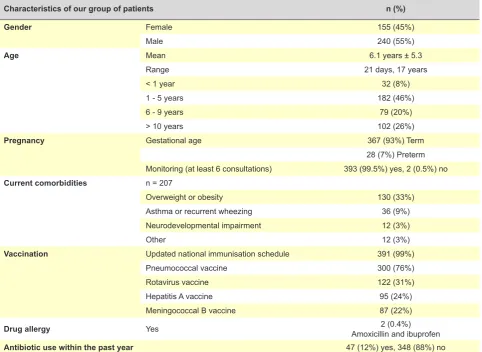
Table 2 – Characteristics of our group of patients (n = 395)
Characteristics of our group of patients n (%)
Gender Female 155 (45%)
Male 240 (55%)
Age Mean 6.1 years ± 5.3
Range 21 days, 17 years
< 1 year 32 (8%)
1 - 5 years 182 (46%)
6 - 9 years 79 (20%)
> 10 years 102 (26%)
Pregnancy Gestational age 367 (93%) Term
28 (7%) Preterm
Monitoring (at least 6 consultations) 393 (99.5%) yes, 2 (0.5%) no
Current comorbidities n = 207
Overweight or obesity 130 (33%)
Asthma or recurrent wheezing 36 (9%)
Neurodevelopmental impairment 12 (3%)
Other 12 (3%)
Vaccination Updated national immunisation schedule 391 (99%)
Pneumococcal vaccine 300 (76%)
Rotavirus vaccine 122 (31%)
Hepatitis A vaccine 95 (24%)
Meningococcal B vaccine 87 (22%)
Drug allergy Yes Amoxicillin and ibuprofen2 (0.4%)
ARTIGO ORIGINAL
A total of 395 paediatric patients were examined throughout the study period, from a total of 6,880 patients aged under 18 (6%), 38% of whom were examined at least once due to a clinical episode other than a respiratory pathology episode. A mild male gender predominance has been found (55%), with patient’s mean age of 6 years ± 5.3 (range 21 days – 17 years). Overweight or obesity was the most frequently found associated pathology (33%). Most patients (99%) were in compliance with the national immunisation schedule and 76% had received the pneumococcal vaccine (Table 2).
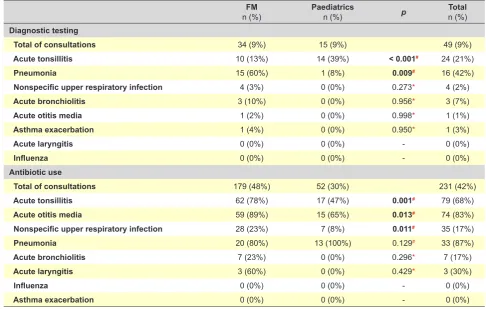
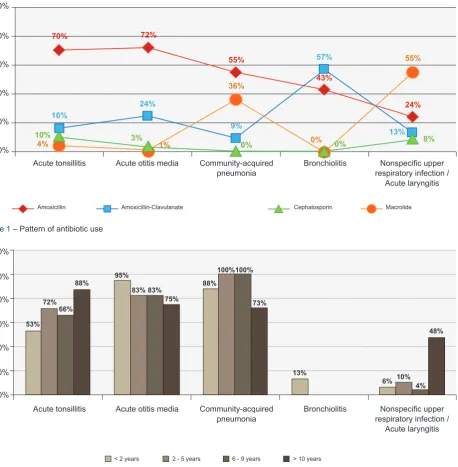
Antibiotics were most frequently prescribed for patients with pneumonia, followed by acute otitis media and acute tonsillitis (Table 3) and amoxicillin was most frequently selected, followed by amoxicillin-clavulanate and macrolides (Table 4, Fig. 1). A lower rate of antibiotic-treated episodes involving children under the age of 2 presenting with all the diagnoses has been found, except regarding acute otitis media, in which 95% of the patients were treated with
antibiotics. A higher rate of antibiotic-treated patients with acute tonsillitis has been found in older children, reaching 88% of adolescents aged over 10 (Fig. 2).
Acute tonsillitis
Group A strep throat culture was obtained in 21% of the patients presenting with acute tonsillitis, which was more frequently requested by paediatricians than by family medicine physicians (p < 0.001) (Table 3).
Antibiotics were prescribed for 79 patients presenting with acute tonsillitis (68%) and amoxicillin was the antimicrobial agent of choice (n = 55; 70%), followed by amoxicillin-clavulanate (n = 13; 16%), second-generation cephalosporin (n = 8; 10%) and macrolides (n = 3; 4%). Antibiotics were most frequently prescribed by family physicians (p = 0.001) (Table 3) and most frequently to patients aged 2 and older by both groups (p = 0.034) (Table 5). Amoxicillin was frequently prescribed by all physicians in compliance with the NOC guidelines (with no statistically
Table 3 – Diagnostic testing and antibiotic-treated cases, by diagnosis and by specialty
FM
n (%) Paediatrics n (%) p Total n (%)
Diagnostic testing
Total of consultations 34 (9%) 15 (9%) 49 (9%)
Acute tonsillitis 10 (13%) 14 (39%) < 0.001# 24 (21%)
Pneumonia 15 (60%) 1 (8%) 0.009# 16 (42%)
Nonspecific upper respiratory infection 4 (3%) 0 (0%) 0.273* 4 (2%)
Acute bronchiolitis 3 (10%) 0 (0%) 0.956* 3 (7%)
Acute otitis media 1 (2%) 0 (0%) 0.998* 1 (1%)
Asthma exacerbation 1 (4%) 0 (0%) 0.950* 1 (3%)
Acute laryngitis 0 (0%) 0 (0%) - 0 (0%)
Influenza 0 (0%) 0 (0%) - 0 (0%)
Antibiotic use
Total of consultations 179 (48%) 52 (30%) 231 (42%)
Acute tonsillitis 62 (78%) 17 (47%) 0.001# 79 (68%)
Acute otitis media 59 (89%) 15 (65%) 0.013# 74 (83%)
Nonspecific upper respiratory infection 28 (23%) 7 (8%) 0.011# 35 (17%)
Pneumonia 20 (80%) 13 (100%) 0.129# 33 (87%)
Acute bronchiolitis 7 (23%) 0 (0%) 0.296* 7 (17%)
Acute laryngitis 3 (60%) 0 (0%) 0.429* 3 (30%)
Influenza 0 (0%) 0 (0%) - 0 (0%)
Asthma exacerbation 0 (0%) 0 (0%) - 0 (0%)
*: Fisher’s exact test; #: Chi-square independence test; FM: family medicine
Table 4 – Antibiotic use (n = 231)
Prescrição antibiótica n (%)FM Paediatrics n (%) p# Total
n (%)
Amoxicillin 102 (57%) 35 (68%) 0.059 137 (59%)
Amoxicillin-clavulanate 39 (22%) 7 (13%) 0.154 46 (20%)
Macrolide 25 (14%) 9 (17%) 0.554 34 (15%)
2nd / 3rd generation cephalosporin 13 (7%) 1 (2%) 0.226 14 (6%)
ARTIGO ORIGINAL
Figure 1 – Pattern of antibiotic use
Acute tonsillitis Acute otitis media Community-acquired Bronchiolitis
pneumonia respiratory infection / Nonspecific upper
Acute laryngitis
4%
55%
0% 0%
1%
10% 9% 8%
57%
3%
16%
13% 36%
0% 24%
70%
24% 55%
43% 72%
Amoxicillin Amoxicillin-Clavulanate Cephalosporin Macrolide
0% 20% 40% 60% 80% 100%
Figure 2 – Antibiotic-treated clinical episodes by diagnosis and age group
Acute tonsillitis Acute otitis media Community-acquired Bronchiolitis
pneumonia respiratory infection / Nonspecific upper
Acute laryngitis
53%
95%
88%
6% 72%
83%
100%
10% 100%
4% 66%
83% 88%
75% 73%
48%
13%
< 2 years 2 - 5 years 6 - 9 years > 10 years
0% 20% 40% 60% 80% 100% 120%
significant differences between both groups), while a 10-day regimen was more frequently selected by paediatrics registrars in compliance with the NOC guideline (p = 0.002) (Table 5).
Acute otitis media
Antibiotics were more frequently prescribed by family physicians than by paediatrics registrars for patients with acute otitis media (p = 0.013) (Table 3), managed with watchful waiting, in compliance with the NOC guideline (p =
0.046) (Table 5).
A total of 74 patients (83%) were prescribed antibiotics. Antibiotics were mostly prescribed in compliance with NOC guidelines: amoxicillin (n = 53; 72%), amoxicillin-clavulanate (n = 18; 24%), second or third-generation cephalosporin (n= 2; 3%) and macrolide (n = 1; 1%). Whenever beta-lactam
antibiotics were chosen (n = 55; 74%), a seven to ten-day regimen has been used in 87% (n = 48) of the cases, even in patients with an indication for a shorter regimen (n = 12; 25%). Among those patients who were treated with antibiotics, 2% (n = 2) were re-examined in 48 - 72 hours due to persistent symptoms and treatment has been replaced by broad-spectrum antibiotics, while 65 patients (73%) from those presenting with this diagnosis had received the pneumococcal vaccine.
Community-acquired pneumonia
Chest X-ray was obtained in 42% of the patients with pneumonia for diagnostic confirmation, which was more frequently requested by family medicine consultants (p
ARTIGO ORIGINAL
patients with pneumonia (Table 3 and 5) and amoxicillin (n = 18; 55%), macrolide (n = 12; 36%) and amoxicillin-clavulanate (n = 3; 9%) were mostly prescribed, while 75% of the patients treated with macrolides were over six years or age, while 27 patients (71%) with this diagnosis had received the pneumococcal vaccine.
Acute bronchiolitis
Chest X-ray was obtained in three patients (7%) with acute bronchiolitis (Table 3). Antibiotics were only prescribed by family physicians for this group of patients and the reason for prescription was the presence of associated acute otitis media in two patients (29%). Amoxicillin- clavulanate (n = 4; 57%) and amoxicillin (n = 3; 43%) were used for this group
Table 5 – Antibiotic use in acute tonsillitis, acute otitis media, community-acquired pneumonia and acute bronchiolitis [1st section]
ACUTE TONSILITIS
Age < 2 years n = 19
n (%)
Age ≥ 2 years
n = 97
n (%) p
Antibiotic use Yes 9 (47%) 70 (72%) 0.034#
No 10 (53%) 27 (28%)
FM n = 62
n (%)
Paediatrics n = 17
n (%) p
Antibiotic guideline compliance Yes 42 (68%) 13 (76%) 0.465#
No 20 (32%) 4 (24%)
Treatment regimen 7 - 8 days 48 (77%) 6 (35%) 0.002#
10 days 14 (23%) 11 (65%)
1st year n = 49
n (%)
2nd year n = 67
n (%) p
Diagnostic testing Yes 1 (2%) 15 (22%) 0.003*
No 48 (98%) 52 (78%)
Antibiotic use Yes 35 (71%) 44 (66%) 0.525#
No 14 (29%) 23 (34%)
Antibiotic guideline compliance Yes 26 (72%) 28 (65%) 0.596#
No 10 (28%) 15 (35%)
ACUTE OTITIS MEDIA
Age < 2 years n = 24
n (%)
Age ≥ 2 years
n = 65
n (%) p
Antibiotic use Yes 23 (96) 51 (78) 0.081
No 1 (4) 14 (22)
FM n = 66
n (%)
Paediatrics n = 23
n (%) p
Watchful waiting Yes 6 (9%) 9 (39%) 0.046#
No 60 (91%) 14 (61%)
Antibiotic guideline compliance Yes 38 (63%) 10 (71%) 0.177#
No 22 (37%) 4 (29%)
1st year n = 41
n (%)
2nd year n = 48
n (%) p
Diagnostic testing Yes 1 (2%) 0 (0%) 0.462*
No 40 (98%) 48 (100%)
Antibiotic use Yes 34 (82) 41 (85) 0.617#
No 7 (18) 7 (15)
Antibiotic guideline compliance Yes 24 (71%) 28 (70%) 0.967#
ARTIGO ORIGINAL
Comparison of prescribing rates according to patient’s characteristics
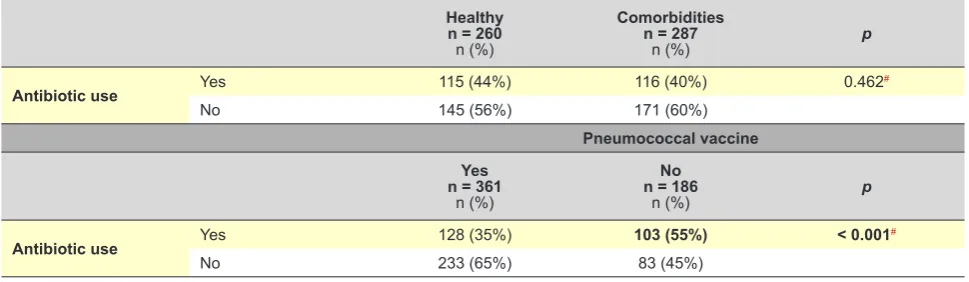
No differences were found as regards the decision on prescribing an antibiotic when comparing patients with and without comorbidities (p = 0.462), while an antibiotic was more frequently used for patients who had not received pneumococcal vaccine (p < 0.001) (Table 6).
DISCUSSION
Respiratory infections represented 35% of the total number of consultations for an acute illness and nonspecific acute respiratory infections and acute tonsillitis were most frequently found. Even though these have represented an important part of the reasons for outpatient consultation, this rate was below what has been described in literature, in which more than 50-60% of the consultations for an acute illness in children are due to respiratory infections.9,36,45
Respiratory infections correspond to the leading cause for antibiotic use in children.36,46 No Portuguese studies on
the frequency of antibiotic use in children are known to the authors, even though different awareness campaigns have of patients.
Other respiratory diseases
Patients with nonspecific upper respiratory infection and acute laryngitis were more frequently treated with symptomatic therapy while antibiotic was prescribed for 17% and 30% of the patients. This was prescribed by family physicians for 80 and 100% of the patients, respectively. Macrolides (n = 21; 55%), amoxicillin (n = 9; 24%), amoxicillin-clavulanate (n = 5; 13%) and second-generation cephalosporin (n = 3; 8%) were prescribed.
Comparison between both study periods
Group A strep throat culture in patients with acute tonsillitis was more frequently used throughout the second study period (p = 0.003), following the presentation of the NOC guideline. No statistically significant differences as regards diagnostic testing and guideline compliance antibiotics were found between both study periods in none of the remaining pathologies (Table 5).
Table 5 – Antibiotic use in acute tonsillitis, acute otitis media, community-acquired pneumonia and acute bronchiolitis [Final section]
COMMUNITY-ACQUIRED PNEUMONIA
FM n = 25
n (%)
Paediatrics n = 13
n (%) p
Antibiotic guideline compliance Yes 22 (88%) 11 (85%) 0.999*
No 3 (22%) 2 (15%)
1st year n = 22
n (%)
2nd year n = 16
n (%) p
Diagnostic testing Yes 9 (41%) 7 (44%) 0.785#
No 13 (59%) 9 (56%)
Antibiotic use Yes 19 (86) 14 (88) 0.773#
No 3 (14) 2 (12)
Antibiotic guideline compliance Yes 15 (83%) 15 (100%) 0.486*
No 3 (17%) 0 (0%)
BRONQUIOLITE AGUDA
FM n = 31
n (%)
Paediatrics n = 11
n (%) p
Diagnostic testing Yes 3 (10) 0 (%) 0.531#
No 28 (90) 11 (100%)
Antibiotic use Yes 7 (23) 0 (0%) 0.296#
No 24 (77) 11 (100%)
1st year n = 21
n (%)
2nd year n = 21
n (%) p
Diagnostic testing Yes 0 (0) 3 (14) 0.503#
No 21 (100) 18 (86)
Antibiotic use Yes 0 (0) 7 (33) 0.130#
No 21 (100) 14 (67)
ARTIGO ORIGINAL
been carried out aimed at reducing the prescription rate in general population. Our findings have shown that the need for these initiatives remains as both the frequency and guideline compliance of antibiotics use could be improved. Antibiotics were used for 42% of the patients having presented with respiratory infections over the study period, in line with what has been found in other studies (34% - 48%).8,36,47 It is well known that paediatric population
represents a good growth medium for the selection of resistant bacteria with the use of antibiotics, as this population is in frequent contact with each other at school, promoting the transmission of these selected pathogenic agents.8
Antibiotic overuse has been suggested by different studies, with the frequent use of antibiotics in children presenting with acute otitis media and acute tonsillitis. A 68% prescription rate has been found in our study for patients with acute tonsillitis (vs. 37% - 93%) and 83% in acute otitis media (vs. 72-98%).1,8,47 It is worth mentioning
that 53% of children under the age of 2 with acute tonsillitis were treated with antibiotics, even though a bacterial origin is unusual in this age group.29,48 Group A strep throat culture
was more frequently requested following the presentation of the NOC guideline and the recommendation for its use. However, no statistically significant differences were found between both study periods, even though a lower antibiotic use has been found after the presentation of the NOC guidelines. In addition, a high antibiotic use, in line with other studies, does not seem appropriate for the following diagnoses, usually underlying self-limited viral infections26:
acute bronchiolitis (17% vs. 11% - 16%),1,47 nonspecific
upper respiratory infection (17% vs. 6% - 50%)1,9 and acute
laryngitis (30% vs. 3%).1 An antibiotic has been used for
87% of the patients (vs. 42%) with community-acquired pneumonia1 while a viral origin has been considered in the
remaining patients. This disparity would probably have been due to a higher use of diagnostic testing in other studies that were carried out in other contexts in which these were more easily available (X-ray and blood tests).
In fact, the reason for antibiotic use and the request for diagnostic testing are regarded as conflicting realities as the volume of tests must be increased in order to minimize and
rationalize antibiotic use, even considering the exposure to adverse effects with uncertain cost-benefit, while leading to increased anxiety in caregivers due to a frequently difficult access to diagnostic testing.
The immunisation coverage had an influence on the decision of antibiotic prescribing, while comorbidities or previous diseases were not associated with any different antibiotic use for respiratory infections.
Poor guideline compliance has been globally found. Amoxicillin is a first-choice antibiotic for patients with acute otitis media, except in newborn babies under six months of
age or presenting with severe symptoms28 and was used
for 72% of antibiotic-treated patients (vs. 41% in a Spanish study)8 while it was used to treat 70% of antibiotic-treated
patients with acute tonsillitis (first choice together with intramuscular penicillin) (vs. 67%),8 significantly below what
is recommended. It is worth mentioning that 16% of the patients were treated with amoxicillin-clavulanate, which is not indicated for this pathology and 10% of the patients were treated with second-generation cephalosporin, in the absence of any allergy history that would explain its use.29 Amoxicillin (55% vs. 70%)1 and macrolides (36% vs 33%) were the most frequently used antibiotics in
patients presenting with community-acquired pneumonia.1
Macrolides were most frequently used in school-age children, corresponding to the age group with the highest incidence of atypical pneumonia.49
Amoxicillin was the most commonly used antibiotic, while macrolides are still significantly used (15%), in line with other studies (in which a 20% rate has been found).36 It
has been suggested by some authors that antibiotics were not necessary for most of the cases in which an antibiotic has been prescribed or the use of a narrow-spectrum alternative would have been appropriate.36
Different reasons underlying antibiotic overuse have been described in literature. The use in children has been related to obtaining the parent’s satisfaction, fear of future complications, communication skills of physicians or to the way parent’s expectations are understood by physicians.42,43
Considering this reality, the implementation of initiatives aimed at reducing antibiotic inappropriate use is therefore crucial. Watchful waiting in respiratory infections or the use
Table 6 – Relationship between antibiotic use and associated comorbidities (prematurity, overweight or obesity, asthma or recurrent wheezing, neurodevelopmental impairment or other) and pneumococcal vaccine
Healthy n = 260
n (%)
Comorbidities n = 287
n (%) p
Antibiotic use Yes 115 (44%) 116 (40%) 0.462#
No 145 (56%) 171 (60%)
Pneumococcal vaccine Yes
n = 361
n (%)
No n = 186
n (%) p
Antibiotic use Yes 128 (35%) 103 (55%) < 0.001#
No 233 (65%) 83 (45%)
ARTIGO ORIGINAL
of a quick-test for diagnosing bacterial tonsillitis whenever appropriate correspond to some good examples.28-31,44 The
promotion of continuous training and raising awareness regarding physician’s responsibility in antibiotic prescribing, as well as the involvement of caregivers in this process, debunking the myths related to respiratory infections and antibiotic use.
In our group of patients, 12% of children and adolescents were prescribed at least one antibiotic regimen within the past year due to a different infection, which was a clearly better rate when compared to other studies (50% - 63%).47,50
The lack of microbiological diagnosis for each episode is the main limitation of the study, making more difficult the definition of the appropriate use of antibiotics. Nevertheless, the prescribing rate that was found does not seem explained by this fact. A further follow-up of the patient’s compliance with treatment and of the clinical course in every case would be necessary in order to complete the study of antibiotic use. This study was aimed at the analysis of the association between variables based on a bivariate analysis and the significance of these tests would not have been ensured in a multivariate analysis.51
Despite these possible limitations, the detailed information is worth mentioning, including the fact of knowing the medical diagnosis and prescribed treatment at the same time.
CONCLUSION
Nonspecific upper respiratory infection was the main cause for attending the outpatient clinic and a relevant profile of the number of infectious disease consultations was provided by this study. Even though outpatient is different from inpatient clinical practice, in which the access
to diagnostic tests with a timely response may have an influence on the therapeutic decision, a high antibiotic prescribing rate in children with acute respiratory infections has been found and antibiotic use could have been adjusted in a significant percentage of patients. Bacterial resistance would be reduced with the design and implementation of programs for the improvement of antibiotic prescribing and educational measures aimed at the general population.
OBSERVATIONS
This study was presented as an oral presentation to the
2º Congresso Internacional da Criança e Adolescente, held from 25 to 27 Jan 2018 in Lisbon.
HUMAN AND ANIMAL PROTECTION
The authors declare that the followed procedures were according to regulations established by the Ethics and Clinical Research Committee and according to the Helsinki Declaration of the World Medical Association.
DATA CONFIDENTIALITY
The authors declare that they have followed the protocols of their work centre on the publication of patient data. Informed consents were obtained.
CONFLICTS OF INTEREST
The authors declare that there were no conflicts of interest in writing this manuscript.
FINANCIAL SUPPORT
The authors declare that there was no financial support in writing this manuscript.
REFERENCES
1. Molina CG, Rodríguez-Belvísc MV, Bonet AC, Combelles OV, García-Algar O. Antibióticos en las infecciones respiratorias en urgencias pediátricas hospitalarias. Arch Bronconeumol. 2014;50:375–8. 2. Baquero F, González J, Martínez D, Olmo V, Orero A, Prieto J.
Importancia de la cobertura antimicrobiana y de las resistencias bacterianas en la elección de antibióticos en pediatría. Rev Esp Quimioter. 2009;22:38–47.
3. Goossens H, Ferech M, Vander R, Elseviers M. Outpatient antibiotic use in Europe and association with resistance: a cross-national database study. Lancet. 2005;365:579–87.
4. Infectious Diseases Society of America and Society for Healthcare Epidemiology of America. Guidelines for developing an institutional program to enhance antimicrobial stewardship. Clin Infect Dis. 2007;44:157–9.
5. Oliva B, Bryant V, Gil M, Timoner J, Álvarez A, Abajo FJ. Prevalencia de uso de antibióticos en la población pediátrica atendida en atención primaria. Estudio en la base de datos BIFAP. Rev Pediatr Aten Primaria. 2009; 11:17.
6. Hernández-Merino A. Uso prudente de antibióticos: propuestas de mejora desde la pediatría comunitaria. Enferm Infecc Microbiol Clin. 2010;28:23–7.
7. Torre M, Pociello N, Rojo P, Saavedra J. Tratamiento antimicrobiano empírico de las infecciones en la infância. [consultado 2018 jun 09]. Disponível em: https://seup.org/pdf_public/pub/tto_antimicrobiano.pdf . 8. Malo S, Bjerrum L, Feja C, Lallana MJ, Poncel A, Rabanaque MJ.
Prescripción antibiótica en infecciones respiratorias agudas en atención primaria. An Pediatr. 2015;82:412-6.
9. Nash DR, Harman J, Wald ER, Kelleher KJ. Antibiotic prescribing
by primary care physicians for children with upper respiratory tract infections. Arch Pediatr Adolesc Med. 2002;156:1114–9.
10. Costelloe C, Metcalfe C, Lovering A, Mant D, Hay AD. Effect of antibiotic prescribing in primary care on antimicrobial resistance in individual patients: systematic review and meta-analysis. BMJ. 2010;340:c2096. 11. Paschke AA, Zaoutis T, Conway PH, Xie D, Keren R. Previous
antimicrobial exposure is associated with drug-resistant urinary tract infections in children. Pediatrics. 2010;125:664–72.
12. Costelloe C, Metcalfe C, Lovering A, Mant D, Hay AD. Effect of antibiotic prescribing in primary care on antimicrobial resistance in individual patients: systematic review and meta-analysis. BMJ. 2010;340:c2096. 13. Butler CC, Hillier S, Roberts Z, Dunstan F, Howard A, Palmer S.
Antibiotic-resistant infections in primary care are symptomatic for longer and increase workload: outcomes for patients with E coli UTIs. Br J Gen Pract. 2006;56:686-92.
14. Gaur AH, Hare ME, Shorr RI. Provider and practice characteristics associated with antibiotic use in children with presumed viral respiratory tract infections. Pediatrics. 2005;115:635– 41.
15. Gonzales R, Malone DC, Maselli JH, Sande MA. Excessive antibiotic use for acute respiratory infections in the United States. Clin Infect Dis. 2001;33:757–62.
16. Grijalva CG, Nuorti JP, Griffin MR. Antibiotic prescription rates for acute respiratory tract infections in US ambulatory settings. JAMA. 2009;302:758–66.
17. Hare ME, Gaur AH, Somes GW, Arnold SR, Shorr RI. Does it really take longer not to prescribe antibiotics for viral respiratory tract infections in children? Ambul Pediatr. 2006;6:152–6.
ARTIGO ORIGINAL
by primary care physicians for children with upper respiratory tract infections. Arch Pediatr Adolesc Med. 2002;156:1114 –9.
19. Nyquist AC, Gonzales R, Steiner JF, Sande MA. Antibiotic prescribing for children with colds, upper respiratory tract infections, and bronchitis. JAMA. 1998;279: 875– 7.
20. Rossignoli A, Clavenna A, Bonati M. Antibiotic prescription and prevalence rate in the outpatient paediatric population: analysis of surveys published during 2000-2005. Eur J Clin Pharmacol. 2007;63:1099–106.
21. Evidence-based medicine working group. A new approach to teaching the practice of medicine. JAMA. 1992;268:2420–5.
22. National Institute for Health and Clinical Excellence. Clinical guidelines. Prescribing of antibiotics for self-limiting respiratory tract infections in adults and children in primary care. CG69 - Issued: July 2008. [consultado 2018 jun 09]. Disponível em: https://www.nice.org.uk/ guidance/cg69/evidence/full-guideline-196853293.
23. Vallano A, Danes I, Ochoa C. Tratamiento antimicrobiano de las infecciones bronquiales en los servicios de urgencias hospitalarios. An Pediatr. 2004;61:143–9.
24. McCaig LF, Besser RE, Hughes JM. Trends in antimicrobial prescribing rates for children and adolescents. JAMA. 2002;287:3096–102. 25. Patel SJ, Larson EL, Kubin CJ, Saiman L. A review of antimicrobial
control strategies in hospitalized and ambulatory pediatric populations. Pediatr Infect Dis J. 2007;26:531–7.
26. Sociedade Portuguesa de Pediatria. Protocolos da Sociedade Portuguesa de Pediatria. [consultado 2018 jun 09]. Disponível em: http://www.spp.pt/conteudos/default.asp?ID=8.
27. Direção Geral de Saúde. Documentos do Dia Europeu dos Antibióticos - Apresentações da sessão científica realizada a 18 de Novembro de 2009. [consultado 2018 jun 09]. Disponível em: https://www.dgs. pt/seguranca-do-doente/documentos/dia-europeu-dos-antibioticos- apresentacoes-da-sessao-cientifica-realizada-a-18-de-novembro-de-2009.aspx.
28. Direção Geral de Saúde. Diagnóstico e tratamento da otite média aguda em idade pediátrica. Norma de Orientação Clínica da DGS. [consultado 2018 jun 09]. Disponível em: https://www.dgs.pt/directrizes-da-dgs/ normas-e-circulares-normativas/norma-n-0072012-de-16122012.aspx. 29. Direção Geral de Saúde. Diagnóstico e tratamento da amigdalite aguda
em idade pediátrica. Norma de Orientação Clínica da DGS. [consultado 2018 jun 09]. Disponível em: https://www.dgs.pt/?cr=23436.
30. Direção Geral de Saúde. Diagnóstico e tratamento da pneumonia adquirida na comunidade em idade pediátrica. Norma de Orientação Clínica da DGS. [consultado 2018 jun 09]. Disponível em: https://www. dgs.pt/directrizes-da-dgs/normas-e-circulares-normativas/norma-n-0192012-de-26122012.aspx.
31. Direção Geral de Saúde. Diagnóstico e tratamento da bronquiolite aguda na idade pediátrica. Norma de Orientação Clínica da DGS. [consultado 2018 jun 09]. Disponível em: https://www.dgs.pt/directrizes-da-dgs/ normas-e-circulares-normativas/norma-n-0162012-de-19122012.aspx. 32. Direccion General de Aseguramiento y Planificacion Sanitaria. Agencia
de Evaluacion de Tecnologıas Sanitarias. Ministerio de Sanidad y Consumo. Informe sobre resistencia microbiana: ¿que ́ hacer? Med Clin. 1995;106:267–79.
33. Palop V, Melchor A. Reflexiones sobre la utilizacion de antibioticos en atencion primaria. Aten Primaria. 2003;32:42–7.
34. Direção Geral de Saúde. Programa de Prevenção e Controlo de Infeções
e de Resistência aos Antimicrobianos - Relatório 2017. [consultado 2018 jun 09]. Disponível em: https://www.dgs.pt/documentos-e-publicacoes/ programa-de-prevencao-e-controlo-de-infecoes-e-de-resistencia-aos-antimicrobianos-relatorio-2017.aspx.
35. Macfarlane J, Holmes W, Macfarlane R, Britten N. Influence of patients’ expectations on antibiotic management of acute lower respiratory tract illness in general practice: questionnaire study. BMJ. 1997;315:1211-4. 36. Hersh AL, Shapiro DJ, Pavia AT, Shah SS. Antibiotic prescribing in
ambulatory pediatrics in the United States. Pediatrics. 2011;128:1053-61.
37. Brooks L, Shaw A, Sharp D, Hay AD. Towards a better understanding of patients’ perspectives of antibiotic resistance and MRSA: a qualitative study. Fam Pract. 2008;25:341-8.
38. Butler CC, Rollnick S, Pill R, Maggs-Rapport F, Stott N. Understanding the culture of prescribing: qualitative study of general practitioners’ and patients’ perceptions of antibiotics for sore throats. BMJ. 1998;317:637-42.
39. Kumar S, Little P, Britten N. Why do general practitioners prescribe antibiotics for sore throat? Grounded theory interview study. BMJ. 2003;326:138.
40. De Jong J, Bos JH, Vries TW, Berg LT. Antibiotic use in children and the use of medicines by parents. Arch Dis Child. 2012;97:578–81. 41. Mangione-Smith R, Elliott MN, Stivers T, McDonald L, Heritage J,
McGlynn EA. Racial/ethnic variation in parent expectations for antibiotics: implications for public health campaigns. Pediatrics. 2004;113:e385–94. 42. Andre M, Hedin K, Hakansson A, Molstad S, Rodhe N, Petersson C.
More physician consultations and antibiotic prescriptions in families with high concern about infectious illness–adequate response to infection-prone child or self-fulfilling prophecy? Fam Pract. 2007;24:302-7. 43. Vazquez-Lago JM, Lopez-Vazquez P, Lopez-Duran A, Taracido-Trunk
M, Figueiras A. Attitudes of primary care physicians to the prescribing of antibiotics and antimicrobial resistance: a qualitative study from Spain. Fam Pract. 2012;29:352-60.
44. Hernandez-Merino A. Uso prudente de antibióticos: propuestas de mejora desde la pediatría comunitaria. Enferm Infec Microbiol Clin. 2010;28:23-7.
45. Gonzalez J, Ochoa C, Alvarez G. Manejo racional de la antibioterapia en infecciones otorrinolaringológicas en la infancia: revisión crítica de las mejores pruebas científicas. Acta Otorrinolaringol Esp. 2006;57:66–81. 46. Raz R, Hassin D, Kitzes-Cohen R, Rottensterich E. Antibiotic prescribing
for adults and children in Israeli emergency rooms. Int J Antimicrob Agents. 2003;22:100–5.
47. Rey CC, Ballesteros RA, Méndez MY, Domínguez AO. Patrones de prescripción de antibióticos en atención primaria. ¿Usamos racionalmente los antibióticos en pediatría? An Esp Pediatr. 2000;52:157-63.
48. Piñeiro R, Hijano F, Álvez F, Fernández A, Silva JC, Pérez C, et al. Documento de consenso sobre el diagnóstico y tratamiento de la faringoamigdalitis aguda. An Pediatr. 2011;75:342. e1–13.
49. McIntosh K. Community-acquired pneumonia in children. N Engl J Med. 2002;346:429–37.
50. Thrane N, Steffensen FH, Mortensen JT, Schonheyder HC, Sci DM, Sorensen HT. A population-based study of antibiotic prescriptions for Danish children. Pediatr Infect Dis J. 1999;18:333-7.
![Table 5 – Antibiotic use in acute tonsillitis, acute otitis media, community-acquired pneumonia and acute bronchiolitis [1st section]](https://thumb-us.123doks.com/thumbv2/123dok_us/1223403.2083319/6.567.59.538.66.641/table-antibiotic-tonsillitis-community-acquired-pneumonia-bronchiolitis-section.webp)
![Table 5 – Antibiotic use in acute tonsillitis, acute otitis media, community-acquired pneumonia and acute bronchiolitis [Final section]](https://thumb-us.123doks.com/thumbv2/123dok_us/1223403.2083319/7.567.31.511.68.458/table-antibiotic-tonsillitis-community-acquired-pneumonia-bronchiolitis-section.webp)