ARTIGO ORIGINAL
RESUMO
Introdução: A obesidade é fator de risco significativo para múltiplas comorbilidades e a sua relação com a disfunção neurocognitiva é de particular importância no declínio cognitivo particularmente na meia-idade. Explorámos o perfil neuropsicológico, a reserva cogniti-va e o desajustamento emocional, em doentes com obesidade grave, devido ao seu impacto na neuro-degeneração.
Material e Métodos: Questionário sociodemográfico e clínico, provas neuropsicológicas e de avaliação de sintomas de desajusta-mento emocional, na avaliação do desempenho cognitivo de 120 doentes, entre os 18 e os 65 anos, em tratadesajusta-mento da sua obesidade grave em Portugal, entre maio de 2012 e dezembro de 2015.
Resultados: O desempenho cognitivo situou-se abaixo do valor médio da população portuguesa, para a memória imediata, visuoper-ceção, resistência à interferência e flexibilidade cognitiva. A reserva cognitiva foi maioritariamente baixa, principalmente nos grupos de pacientes com mais idade e com status profissional mais baixo. A sua elevação associou-se a melhores resultados cognitivos. O de-sajustamento emocional denotou significativa elevação comparativamente com uma amostra normativa. Os fatores de risco avaliados foram importantes no agravamento das funções cognitivas e o desempenho cognitivo decresceu com o aumento da idade.
Discussão: A obesidade grave esteve associada a um pior desempenho cognitivo da amostra. A reserva cognitiva foi superior nos mais jovens. Houve presença expressiva de mal-estar emocional particularmente entre as mulheres.
Conclusão: A obesidade grave está associada a uma diminuição do desempenho cognitivo e emocional que é coadjuvada pelo enve-lhecimento, reserva cognitiva baixa e comorbilidade. Sublinha-se, neste trabalho, a necessidade de ações preventivas entre as quais o screening neuropsicológico na deteção de alterações e conceção de melhores intervenções.
Palavras-chave: Cognição; Emoções; Funções Executivas; Obesidade Mórbida/psicologia; Portugal; Reserva Cognitiva
Neuropsychological Profile, Cognitive Reserve and
Emotional Distress in a Portuguese Sample of Severely
Obese Patients
Perfil Neuropsicológico, Reserva Cognitiva e
Desajustamento Emocional numa Amostra Portuguesa
de Doentes com Obesidade Grave
1. Unidade de Neuropsicologia. Hospital de Egas Moniz. Lisboa. Portugal. 2. ISAMB – Instituto de Saúde Ambiental. Lisboa. Portugal.
3. Departamento de Endocrinologia, Diabetes e Metabolismo. Hospital de Santa Maria. Lisboa. Portugal. 4. CENC – Centro de Medicina do Sono. Lisboa. Portugal.
5. Departamento de Psiquiatria. Hospital de Santa Maria. Lisboa. Portugal. Autor correspondente: Olga Ribeiro. [email protected]
Recebido: 21 de abril de 2019 - Aceite: 24 de julho de 2019 | Copyright © Ordem dos Médicos 2020
Olga RIBEIRO1,2, Isabel do CARMO3, Teresa PAIVA4, Maria Luísa FIGUEIRA5
Acta Med Port 2020 Jan;33(1):38-48 ▪ https://doi.org/10.20344/amp.12233 ABSTRACT
Introduction: Obesity is a significant risk factor for multiple comorbidities, and its relation to neurocognitive disfunction is particularly important in cognitive decline, especially in middle age. Due to their impact on neurodegeneration, we sought to explore neuropsycho-logical profile, cognitive reserve and emotional distress in patients with severe obesity.
Material and Methods: We used a sociodemographic and clinical questionnaire, neuropsychological tests and a symptom self-report-ed scale of emotional distress. We evaluatself-report-ed the cognitive performance of 120 patients, agself-report-ed between 18 and 65 years, in treatment for their severe obesity in Portugal, between May 2012 and December 2015.
Results: Cognitive performance was below the mean for the Portuguese population, for immediate recall, visuoperception, resistance to interference and cognitive flexibility. Cognitive reserve was mostly low, especially in the older groups and groups with low profession-al status and increased associated with better cognitive outcomes. Emotionprofession-al distress was shown to be higher in our sample compared with a normative sample. The risk factors evaluated were important in the worsening of cognitive functions. Cognitive performance decreased with age.
Discussion: Severe obesity was associated with a poorer cognitive performance of the sample. The cognitive reserve was greater in the younger groups. There was a significant presence of emotional distress, especially among women.
Conclusion: Severe obesity is associated with an impairment in cognitive and emotional performance, aggravated by aging, cognitive reserve, and comorbidity. This study emphasizes the need for preventive actions, such as neuropsychological screening, in the detec-tion of changes and the design of better intervendetec-tions.
Keywords: Emotions; Executive Function; Cognition; Cognitive Reserve; Obesity, Morbid/psychology; Portugal
INTRODUCTION
In Portugal, as is true in several regions of the world, obesity is a chronic condition and a risk factor for multiple diseases among various age groups, constituting a strong
concern for public health.1 The increase in the prevalence
of this condition has led researchers to consider genetic, environmental, social, behavioural and individual psycho-logical characteristics as fundamental factors acting both in
ARTIGO ORIGINAL
Obesity is usually associated with diseases with an equally chronic profile such as arterial hypertension (HTN), type 2 diabetes (DM), dyslipidaemia, obstructive sleep ap-noea syndrome (OSAS), and depressive syndrome. Such diseases worsen with extreme obesity [body mass index
(BMI) ≥ 40 kg/m2] and are associated with further
impair-ment in quality of life and prognosis.3
Several epidemiological studies have highlighted the deleterious effect of obesity, impaired fasting glucose, dys-lipidaemia and hypertension on cognition. They suggest that metabolic syndrome may be a prodromal state of
vas-cular cognitive impairment.4 Regarding diabetes, a link to
different stages of cognitive disfunction has been described,
ranging from diabetes-associated decrements to dementia.5
According to authors, these stages are not necessarily part of a continuous process and may show different prognoses. The relationship between obesity and cognitive function-ing, particularly during middle age, is also well-documented. It has been characterized as a significant risk factor for the appearance of cognitive decline and vascular dementia or Alzheimer’s disease (AD), regardless of comorbid
diseas-es.6 Elderly patients with severe obesity displayed higher
concentrations of hippocampal markers associated with AD
(amyloid ß and tau) than those who were not obese.7,8
Neuroimaging studies have identified structural chang-es, morphometric differencchang-es, and changes in regional cer-ebral perfusion, especially in the frontal, temporal, and pari-etal regions and in a manner inversely associated with BMI. These alterations suggest obesity play a role in the
appear-ance of dementia processes at different life stages.9
Cog-nitive neuroscience recognizes the importance of cerebral regions like the prefrontal cortex, especially the dorsolateral and orbitofrontal areas, as critical locations of cognitive con-trol and executive functioning that play an essential role in
the processes of learning and memory.2 This cerebral area
participates in the food self-regulation process together with mesolimbic cortical structures, which are responsible for re-ward centres and for the strong hedonic component of food choice. The decrease in the volume of these areas may, therefore, lead to less cognitive control, with implications for inhibitory control, regulation of affection and motivation, and a greater propensity for opportunistic ingestion with en-hanced pleasure from high palatability foods.
One of the potential moderators of the association be-tween BMI and cognitive performance is cognitive reserve (CR), a dynamic model that relies on a set of protective/ moderating factors that enable the maintenance of effective cognitive performance abilities or delay the manifestation
of their decline in cerebral pathology or normal ageing.10–12
Most researchers consider that CR is influenced by multiple factors such as schooling, professional performance, and
leisure activities.13 A high CR positively influences cognitive
performance in patients with obesity14,15 as well as in those
with traumatic brain injury,16 multiple sclerosis,17,18 or bipolar
disorder.19 Its determination in obesity, in particular, can be
an important measure in predicting better cognitive health, better adaptation to change, and the acquisition of new life
habits.
For cognitive performance, affective states, such as anxiety and depression, can also contribute to ‘executive
dysfunction’.20 Emotional processing in the presence of such
states of being is associated with structural and functional changes in the prefrontal cortex, leading to poor mental performance, particularly with respect to cognitive
flexibil-ity and inhibitory control.21 These are functions that, among
many, promote the rigidity of behaviours equally facilitated by advancing age. Anxiety and depression are also highly prevalent in obesity with recent clinical findings suggesting the possibility of shared pathophysiological pathways be-tween these conditions and their influence on memory
per-formance across a lifespan.22,23
It is recognized that, with ageing-related cardiovascu-lar diseases, the precursors of dementia increase, and it is necessary to identify early risk factors among which
obe-sity has one of the highest prevalence rates in Europe.24
It is therefore urgent to focus on prevention by changing behaviours and promoting healthy living habits in younger populations, ensuring a slower path of age-related cognitive decline and identifying appropriate therapeutic
interven-tions in situainterven-tions where the disease is already present.25 In
the latter case, it is necessary to improve the susceptibility to distraction by food cues and the regulation of food intake and reward, characteristics consistently linked to reduced
attention and memory functions in obese patients.26,27 It is
also critical to promote the adaptation, flexibility, emotional regulation, and regulation of the self-control mechanism of obese patients, which are characteristics inherent to the executive functions. These are functions that need to be activated whenever we emit a behaviour directed towards a given objective that influence stages from planning to
ex-ecution.28 They have been described in the obese
popula-tion as impoverished in the field of decision-making, control of impulsivity, and emotional regulation of depression and
anxiety.20
Our study aimed to describe and explore the neuropsy-chological profile, the CR, and the indicators of emotional distress of a sample of patients with severe obesity seen at a Portuguese referral centre for the treatment of obesity. We focused on attention, memory and executive functions due to their impact on general cognitive functioning and emo-tional control.
This goal is particularly important because (1) it empha-sizes the study of cognitive functions in extreme conditions of disease such as severe obesity, (2) adds new data to the literature on the application of CR analysis in a sample aged not older than 65 years (and therefore considered not
yet elderly)29 and (3) highlights emotional aspects that are
ARTIGO ORIGINAL
Figure 1 – Distribution of the sample by quartiles of the Rey Complex Figures copy and memory reproduction (n = 120)
1st Quartile 2nd Quartile 3rd Quartile 4th Quartile 1st Quartile 2nd Quartile 3rd Quartile 4th Quartile Frequency of the sample Frequency of the sample
Quartiles of the Rey Complex Figure
copy reproduction Quartiles of the Rey Complex Figurememory reproduction
50 50
40 40
30 30
20 20
10 10
0 0
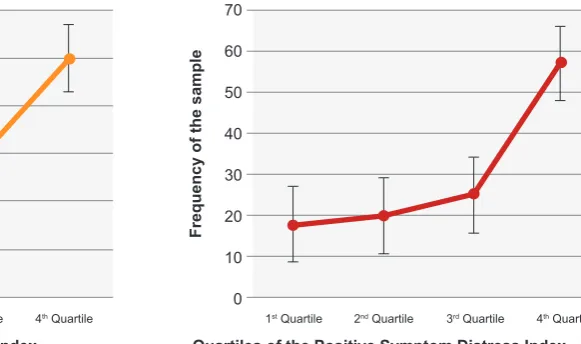
Figure 2 – Distribution of the sample by quartiles of the global severity index and positive symptom distress index of the Symptom Checklist-Revised (n = 120)
1st Quartile 2nd Quartile 3rd Quartile 4th Quartile 1st Quartile 2nd Quartile 3rd Quartile 4th Quartile Frequency of the sample Frequency of the sample
Quartiles of the Global Severy Index Quartiles of the Positive Symptom Distress Index
50
60 70
60
50 40
40 30
30 20
20
10 10
0 0
32
43
4
15 40
49 44
13 MATERIAL AND METHODS
Sample
After obtaining approval from the ethics committee of the Centro Hospitalar de Lisboa Norte, we evaluated 120 patients with severe obesity who sought treatment at the Morbid Obesity Consultation Centre between May 2012 and December 2015.
Patients were eligible for participation in the study, re-gardless of gender, if they were aged between 18 and 65
years, severely obese (BMI ≥ 40 kg/m2), without any known
diagnosis of psychiatric or neurological disorders, had at least four years of schooling, and had noncorrected hearing and vision.
Materials
A sociodemographic and clinical questionnaire to collect personal and social characteristics and relevant clinical data was administered. A paper and pencil neuropsychological
battery of evaluations was given to assess the following: attention and working memory [Wechsler Intelligence Digit
Span for Adults (WAIS)-III]30; fine motor control and
learn-ing speed (digit symbol from the WAIS-III)31; processing
speed (search symbol from the WAIS-III)30; level of
educa-tion, culture and acquired knowledge (vocabulary from the
WAIS-III)30; perceptual/visuospatial ability [Rey–Osterrieth
Complex Rey Figure (RCF)]32 (Fig. 1); retention,
consolida-tion, storage, and retrieval of verbal information and
episod-ic memory [Rey Auditory Verbal Learning Test (RAVLT)]33;
resistance to interference (Stroop Colour Test and Word
Test)34; cognitive flexibility [Trail-making Test (TMT)]35;
cog-nitive flexibility, abstract thinking, the ability to shift cogcog-nitive strategies in response to changing environmental contin-gencies as well as handle problem-solving and changing of
cognitive strategy [Wisconsin Card Sorting Test (WCST)]36;
ARTIGO ORIGINAL
Patients [Hopkins Symptom Checklist-Revised
(SCL-90-R)]37 (Fig. 2).
Procedures
At the end of their required endocrinology consultation, patients were invited to participate in the present study. We adopted a sequential sampling sequence, assuming
a non-attendance rate of the first query near 30%.38
We explained the purpose of the study to each patient, confirmed their voluntary interest, and obtained informed consent information.
We took anthropometric measurements such as weight, height, neck circumference, waist circumference, and hip circumference. Blood arterial pressure was obtained by the interviewing nurse, and was defined as HTN - MR if systolic blood pressure > 140 mmHg and/or diastolic blood pressure
> 90 mmHg.39
We calculated BMI as weight (kg) divided by height (m2).
We obtained data on vascular risk factors such as arterial hypertension, DM, and dyslipidaemia from the clinical re-cords of each patient.
For the CR measurement, we adopted the method of Roldan-Tapia, Garcia, Casanovas and León (2012) applied in a study that used the CR concept in one hundred and sixty healthy subjects and highlighted its relation to cogni-tive functions as relevant as execucogni-tive functions, working
memory, and attention.40
The variable CR resulted from the composite of meas-urements like the level of schooling, occupation, and
vocab-ulary items of WAIS-III,41 summarized as follows: (1)
profes-sional complexity was compared to the Portuguese
classifi-cation of professions42 and transformed into a dichotomous
variable (1: no decision-making, 2: decision-making); (2) schooling defined as the number of years of formal school education considering the minimum mandatory schooling in Portugal at the beginning of the sample collection and stratified into 1 if schooling for less than nine years and 2 if schooling for nine or more years; (3) Vocabulary subtest ful-filling the WAIS-III standards for the Portuguese population and classifying the result for each patient as 1 if vocabulary was less than the average 10 points, and 2 if vocabulary was on par or greater than the average 10 points.
CR values were scored as ‘high’ when the median was five points or greater and ‘low’ when the median was less than five points. The variable was used continuously or
di-chotomized (high versus low).
We evaluated the SCL-90-R global internal consistency and showed it to be high (Cronbach α = 0.913). The items that lowered the internal consistency of the scale in case of exclusion were anxiety (0.894), obsession (0.895) and depression (0.895). The items that increased the internal consistency of the scale in case of exclusion were phobic anxiety (0.907) and paranoid ideation (0.907). Although the exclusion of these items leads to greater fidelity of the in-strument, we used the same items of the original version of the scale used by Batista (1993) in his study about the
genesis of panic disorder.37 We compared the mean results
of the cognitive tests with the means of normalization per-formed for the Portuguese population (μ = 10; δ = 3) and compared the results of each of the SCL-90-R scales with the results of the Portuguese normative sample.
We evaluated the WCST instrument internal consisten-cy and showed it to be globally good (Cronbach α = 0.710) for the eleven items. The items that increased the internal consistency of the scale in case of exclusion were concep-tual level responses (0.786) and learning to learn (0.750). The items that lowered the internal consistency of the scale in case of exclusion were administered trails (0.526) and number of errors (0.579). We compared the results of the WCST items with the results of the Portuguese normative sample used by Almeida (2018) in his study about the psy-chometric characteristics of the WCST in several samples
of the Portuguese population.43
The evaluation battery had an average duration of 45 minutes and was applied by a psychologist with an ad-vanced specialization focus in neuropsychology.
Statistical analysis
Statistical analysis was performed using the Statistical Package for the Social Sciences version 24.0 for Windows software program (IBM Corp., Armonk, NY, USA). The
sig-nificance level was set at p < 0.05. Since the sample did not
follow a normal distribution, we used Spearman’s correla-tion for correlacorrela-tions between quantitative measures, Kend-all’s Tau_b for correlations between quantitative and nomi-nal measures, and nonparametric statistics to verify the homogeneity of distribution and independence of variables by gender, age, qualifications and employment status.
RESULTS
Characterization of the sample
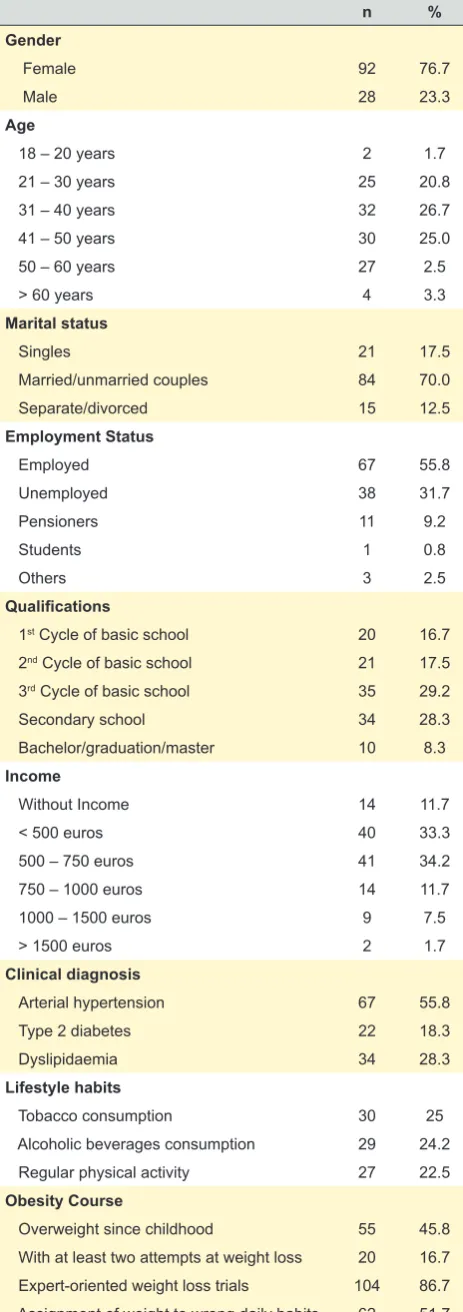
The sample included patients between 18 and 65 years of age. Their sociodemographic characteristics are shown in Table 1.
Table 2 shows that the anthropometric measurements were higher in men, except for the hip circumference. We used the Mann–Whitney U test for the analysis of the homogeneity of distribution of anthropometric, cogni-tive and distress measurements by gender and we found
higher values for males regarding weight (U = -4.641, p =
.000), neck circumference (U = -6.620, p = 0.000), waist
circumference (U = -4.661, p = 0.000), hip circumference
(U = -1.971, p = 0.049), and waist-to-hip ratio (U = -6.335,
p = 0.000). Men also presented better results for the means
distribution on RCF memory (U = -2.149, p = 0.032).
Women presented higher means for distress
measure-ments namely, global severity index (U = 3.602, p = 0.000),
positive distress index (U = 3.509, p =0.000), somatization
(U = 4.282, p = 0.000), obsessive-compulsive (U = 2.812,
p = 0.005), interpersonal sensitivity (U = 3.838, p = 0.000),
depression (U = 4.034, p = 0.000), anxiety (U = 4.474, p =
0.000), hostility (U = 2.406, p = 0.016), phobic anxiety (U =
2.062, p = 0.039) and psychoticism (U = 2.092, p = 0.036).
ARTIGO ORIGINAL anthropometric, cognitive and distress measurements by age groups, schooling and professional status, we used the Kruskal-Wallis test and we obtained differences for means
of neck circumference (K-W = 9.514, p = 0.049),
waist-to-height ratio (K-W = 11.211, p = 0.024) and BMI (K-W =
13.453, p = 0.009) only for professional status, with the
un-employed group of patients showing higher values. Considering age groups we found mean differences for
immediate recall (K-W = 18.034, p = 0.003), digit symbol
(K-W = 27.260, p = 0.000), search symbol (K-W= 36.226,
p = 0.000), TMT A (K-W = 18.000, p = 0.003), TMT B (K-W
= 21.268, p = 0.001), RCF memory (K-W = 28.883, p =
0.000), WCST conceptual level responses (K-W = 12.165,
p = 0.033), WCST number of completed categories (K-W =
12.787, p = 0.025) with the oldest groups (51 - 60 years old
and > 60 years old) presenting worse results.
Our results pointed to a difference in the distribution of cognitive measurements by schooling with the most quali-fied groups presenting the best values for immediate recall
(K-W = 30.454, p = 0.000), digit symbol (K-W = 50.569, p
= 0.000), search symbol (K-W = 42.620, p = 0.000), digit
span (K-W = 24.174, p = 0.000), TMT A (K-W = 35.639, p =
0.000), TMT B (K-W = 44.539, p = 0.000), RCF copy (K-W
= 13.162, p = 0.041), RCF memory (K-W = 13.616, p =
0.034), WCST number of administered trials (K-W=20.100,
p = 0.003), WCST number of errors (K-W = 21.946, p =
0.001), WCST number of perseverative responses (K-W =
21.972, p = 0.001), WCST number of perseverative errors
(K-W = 21.341, p = 0.002), WCST number of conceptual
level responses (K-W=16.656, p = 0.011) and WCST
num-ber of completed categories (K-W = 18.873, p = 0.004).
Regarding professional status, we obtained a difference of means with the employed patients showing better
val-ues for deferred recognition (K-W = 12.010, p = 0.017), digit
symbol (K-W = 11.063, p = 0.026), search symbol (K-W =
15.363, p = 0.004), TMT A (K-W = 10.482, p = 0.033), TMT
B (K-W = 15.256, p = 0.004), RCF memory (K-W = 16.614,
p = 0.002), WCST number of administered trials (K-W =
15.810, p = 0.003), WCST number of errors (K-W = 16.634,
p = 0.002), WCST number of perseverative responses (K-W
= 13.610, p = 0.009), WCST number of perseverative errors
(K-W = 15.812, p = 0.003), WCST number of
non-perse-verative errors (K-W = 27.260, p = 0.000), WCST number
of conceptual level responses (K-W = 14.004, p = 0.007),
WCST number of completed categories (K-W = 21.627, p
= 0.000), and WCST learning to learn (K-W = 12.308, p =
0.015).
The positive distress Index (K-W = 9.748, p = 0.045) and
the depression mean values (K-W = 11.776, p = 0.019) had
the best values in the employed groups.
Weight was the only anthropometric measurement to
correlate negatively with age (r = -0.219, p = 0.016).
Regarding the CR (high versus low), 46.7% of the
pa-tients (n = 56) had a high CR and 53.3% of the sample (n = 64) had a low CR.
The groups aged 41-50 years old (32.8% with low CR vs
16.1% with high CR) and 51 - 60 years old (28.1% with low Table 1 –Sociodemographic and clinical characterization of the
sample (n = 120)
n %
Gender
Female 92 76.7
Male 28 23.3
Age
18 – 20 years 2 1.7
21 – 30 years 25 20.8
31 – 40 years 32 26.7
41 – 50 years 30 25.0
50 – 60 years 27 2.5
> 60 years 4 3.3
Marital status
Singles 21 17.5
Married/unmarried couples 84 70.0
Separate/divorced 15 12.5
Employment Status
Employed 67 55.8
Unemployed 38 31.7
Pensioners 11 9.2
Students 1 0.8
Others 3 2.5
Qualifications
1st Cycle of basic school 20 16.7
2nd Cycle of basic school 21 17.5
3rd Cycle of basic school 35 29.2
Secondary school 34 28.3
Bachelor/graduation/master 10 8.3
Income
Without Income 14 11.7
< 500 euros 40 33.3
500 – 750 euros 41 34.2
750 – 1000 euros 14 11.7
1000 – 1500 euros 9 7.5
> 1500 euros 2 1.7
Clinical diagnosis
Arterial hypertension 67 55.8
Type 2diabetes 22 18.3
Dyslipidaemia 34 28.3
Lifestyle habits
Tobacco consumption 30 25
Alcoholic beverages consumption 29 24.2
Regular physical activity 27 22.5
Obesity Course
Overweight since childhood 55 45.8
With at least two attempts at weight loss 20 16.7
Expert-oriented weight loss trials 104 86.7
ARTIGO ORIGINAL
CR vs 16.1% with high CR) had the most patients with the
lowest CR. Conversely, the highest CR was found among the younger age groups of 21 - 30 years old (14.1% with low
CR vs 28.6% with high CR) and 31 - 40 years old (20.3%
with low CR vs 33.9% with high CR).
We did not find homogeneity in the distribution of CR
by age groups (U = -2.627, p = 0.009) and by professional
status (U = -2.114, p = 0.035). Age was higher in the low CR
group.
The correlation between the CR (continuous variable) sociodemographic variables, and anthropometric and cog-nitive measurements are displayed in Table 3.
Schooling decreased with age (Tau_b Kendall = -0.334,
p = 0.000).
The cognitive performance for learning (μ = 9.94; δ = 2.32), digit symbol (μ = 10.29; δ = 3.20), search symbol (μ = 11.21; δ = 2.68) and TMT A (μ = 9.79 and δ = 2.57) was within the standard deviation, considering the scalar mean values for the Portuguese population (μ = 10.0; δ = 3). Immediate recall (μ = 8.41; δ = 2.33), retention index (μ = 9.69; δ = 2.86), digit span (μ = 10.63; δ = 3.67) and TMT B (μ = 9.42; δ = 2.78) presented results 0.5 below standard deviation regarding the Portuguese population.
The results for the mean percentile of the Stroop inter-ference (μ = 45.86; δ = 8.56) were below the Portuguese norms (μ = 50 and δ = 10), with 71.6% (n = 86) of the pa-tients in the first and second quartile. Stroop interference
was significant and negatively correlated with BMI (r =
-0.161, p = 0.011).
For the RCF, 60% (n = 72) of the patients were in the first and second quartiles for the copy and 76.7% (n = 92) were in the first and second quartiles in the memory repro-duction. Results of the mean values of the reproduced units of the RCF copy and memory were respectively: μ = 44.38; δ = 25.35 and μ = 38.41 and δ = 26.41.
Regarding WCST, from the total of patients, 24.2% (n = 29) had no results in learning to learn which led us to exclude this item from our comparisons. The older groups presented lower percentage of conceptual level responses
(K-W = 12.165, p = 0.033) and completed categories (K-W
= 12.787, p = 0.025). The more educated patients showed
lower percentage of administered trials (K-W = 18.608, p
= 0.005), errors (K-W = 21.946, p = 0.001), perseverative
responses (K-W = 21.972, p = 0.001), perseverative
er-rors (K-W = 21.341, p = 0.002), conceptual level responses
(K-W = 16.656, p = 0.011) and greater completed categories
(K-W = 18.873, p = 0.004). When we compared our mean
results with the mean results of Almeida (2018)43 for an
adult population with normal weight (n = 223), our patients
revealed lower percentage of correct responses (53.09 vs
77.8) and conceptual level responses (43.18 vs 63.8). Our
mean value for the completed categories was 4.14 (± 1,88),
quite below the mean referred in the Brazilian manual36 for
adult populations [5.24 (± 0.54) a 5.81 (± 1.35)]. BMI was
correlated with the WCST administered trails (r = 0.157, p =
0.020), errors (r = 0.131, p = 0.035), perseverative
respons-es (r = 0.123, p = 0.049), perseverative errors (r =0.123, p =
0.049), non-perseverative errors (r = 0.174, p = 0.005) and
completed categories (r=-0.191, p = 0.005).
Immediate recall (r = -0.189 p = 0.039), retention index
(r = -0.222 p = 0.015), deferred recognition (r = -0.218, p =
0.017), somatization (r = -0.226, p = 0.013), and anxiety (r
= -0.215, p = 0.019) were correlated with the waist-to-hip
ratio. Immediate recall (r = -0.189 p = 0.039) and deferred
recognition (r = -0.219, p = 0.016) were correlated with neck
circumference.
Hip circumference was the only anthropometric
meas-urement positively correlated with global severity index (r
= 0.221, p = 0.015), somatization (r = 0.185, p = 0.043),
obsession-compulsion (r = 0.217, p = 0.017), interpersonal
sensitivity (r = 0.269, p = 0.03), depression (r = 0.279, p =
0.002), anxiety (r = 0.277, p = 0.002) and phobic anxiety (r
= 0.265, p = 0.003). Depression (r =-0.223, p = 0.012) was
negatively correlated with memory reproduction in the RCF
as well as anxiety (r= -0.186, p = 0.042).
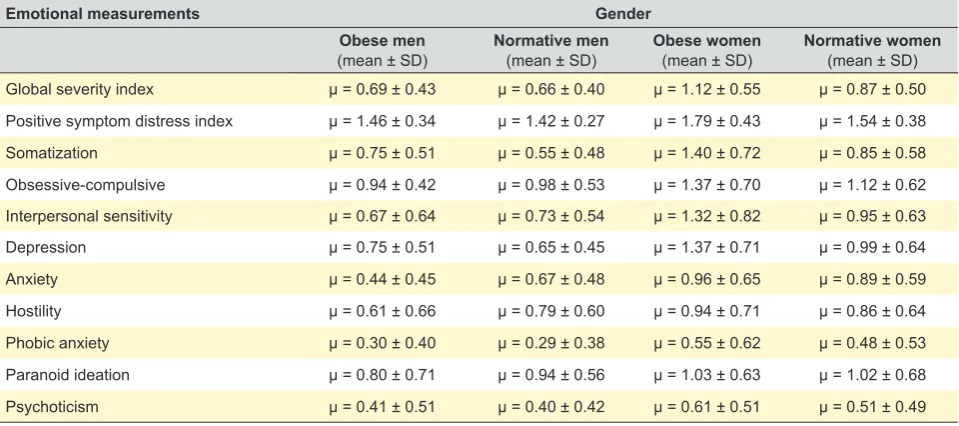
We compared the symptomatologic mean values ob-tained in the different scales of SCL-90-R with the values obtained by Batista (1993) in his adaptation of SCL-90-R applied to a normative population of 302 subjects. This
comparison is expressed in Table 4.37 Of the total group,
41.7% (n = 50) of the patients presented values that were within the fourth quartile for the global severity index and Table 2 – Descriptive statistic of the anthropometric measurements of the sample (n = 120)
Min Max Mean and standard deviation of the total sample
Mean and standard deviation of
of women
Mean and standard deviation
of men
n = 120 n = 92 n = 28
Weight (kg) 90 172.30 127.08 (± 18.72) 122.61 (± 17.03) 141.78 (± 16.55)
Height (cm) 148 194.00 164.81 (± 9.58) 161.61 (± 6.87) 175.32 (± 9.82)
Neck circumference (cm) 35 68.00 43.34 (± 4.72) 41.97 (± 4.37) 47.85 (± 2.46)
Waist circumference (cm) 93 > 150.0 130.35 (± 13.94) 127.14 (± 13.34) 140.92 (± 10.30)
Hip circumference (cm) 114 > 150.0 137.99 (± 10.01) 139.07 (± 9.61) 134.42 (± 10.66)
Hip waist ratio 0.68 1.23 0.94 (± 0.09) 0.91 (± 0.076) 1.05 (± 0.086)
Waist height ratio 0.59 0.99 0.79 (± 0.08) 0.78 (± 0.089) 0.80 (± 0.066)
ARTIGO ORIGINAL
47.5% (n = 75) were in the fourth quartile of the positive symptom distress index. In general, values were higher for women.
Risk factors were positively correlated with ageing, high anthropometric measurements and negatively corre-lated with cognitive performance as we describe in Table 3. Diabetes was negatively correlated only with one cognitive measurement, which was immediate recall.
DISCUSSION
The present study aimed to describe and explore the neuropsychological profile, CR, and indicators of emotional distress of a sample of patients with severe obesity who
visited a Portuguese referral centre for the treatment of obe-sity.
Impaired results obtained for memory and execu-tive functions but not for learning, attention or processing speed, raise the possibility that obesity differentially affects instrumental functions and specific cognitive domains with a negative impact on brain structure.
Notably, CR data emerge as an important result be-cause more than one-half of the patients of the sample has a low CR. The highest CR was found in the younger patients, with better education, better professional status, better income, better cognitive performance, lower anthro-pometric measurements, and lower burden of hypertension Table 3 – Significant non-parametric correlations (Spearmen and Tau_b Kendall) between sociodemographic, anthropometric and cogni-tive measurements, and cognicogni-tive reserve, HTN, diabetes and dyslipidemia (n = 120)
Variables Cognitive Reserve HTN Diabetes Dyslipidemia
Sociodemographic
Age -0.249** 0.395** 0.271** 0.255**
Professional status -0.310**
Income 0.306**
Anthropometric measurements
Neck circumference -0.195* 0.284** 0.232**
Waist circumference 0.158*
Waist height ratio -0.183* 0.180* 0.230**
BMI 0.191*
Cognitive measurements
Immediate recall 0.355** -0.0235**
Deferred recognition 0.239** -0.206*
Digit symbol 0.562**
Search symbol 0.462** -0.235** -0.216**
Digit span 0.413**
Interference -0.179*
TMT A (time) -0.457** 0.175*
TMT B (time) -0.541**
FCR copy 0.263**
RCF memory -0.154* -0.154*
WCST nr. administered trails -0.385**
WCST nr. errors -0.347** 0.154*
WCST nr. perseverative responses -0.381**
WCST nr. perseverative errors -0.371**
WCST nr. non perseverative errors -0.218* 0.194*
WCST nr. conceptual level resp 0.192*
WCST nr. completed categories 0.302** -0.176* -0.165*
WCST nr. trail complete first category 0.163*
WCST learning to learn -0.228* -0.293**
Risk Factors
HTN -0.209*
Diabetes
Dyslipidemia -0.257**
ARTIGO ORIGINAL
and dyslipidaemia. Together with other studies that set out to investigate age, cognitive performance, and BMI, our re-sults reinforce the potential protective role of CR in
cogni-tive functions.10,15,44 CR seems to attenuate the expression
of obesity-related deficits not only on executive functions but also on memory functions.
Risk factors were shown to be highly associated with significant sociodemographic, anthropometric, and cogni-tive variables; a relation much too important to be ignored in these severely obese and admittedly sedentary patients. They are often a cause of reduced life expectancy and in-creased health care needs as particularly important causa-tive factors of cardiovascular events and neurodegeneracausa-tive
diseases.45 Since their prevalence in the adult Portuguese
population is estimated near 45% for HTN,47 9.9% for DM,48
and 16% for dyslipidaemia,49 results stress the need for
ur-gent focused strategies to avoid their onset early in life.50,51
Contrary to HTN and dyslipidaemia, that were strongly associated with CR and with diverse measurements of cog-nitive performance, DM showed a relation only to memory performance. We can only explain this results by the age of the sample, perhaps in agreement with the literature that points out that Mild Cognitive Impairment prodrome is quite
rare in diabetic people younger than 65 years old.5
Surprisingly, we found that weight was higher in the younger than in the oldest patients, which was an expected variation. In fact, younger patients were shown to be more educated and had better memory, attention and cognitive flexibility indicators. It would be reasonable to expect cor-respondent better planning and organization of conducts to-ward better dietary habits and consequent weight reduction. Our hypothesis is that this could be a successful response to systematic health recommendations for weight loss in middle-aged patients.
In line with the regular reduction associated with ageing, the oldest patients demonstrated significantly lower values
versus the younger ones, not only for executive functions
but also for memory performance.52 The evaluated
Epi-sodic Memory is a unique system of memory that allows for the recall and re-experiencing of past events, extends to other memory systems, and is responsible for satiety in
humans.53,54 Our analysis showed a link between its recall
and recognition items and obesity when analysed by waist-to-hip ratio. It represents increased body fat composition, is of high predictive value for the onset of DM and cardiovas-cular disease and is associated with a decrease in cognitive
performance through the reduction of synaptic plasticity.55,56
In the same way, results show that we must consider neck circumference as a predictive factor for memory decline and, according to fat distribution, perhaps a prodrome in the onset of OSAS.
Regarding weight loss behavioural interventions, con-ceptual theory draws attention to the difficulty that obese patients have in inhibiting intrusive thoughts and suppress-ing automatic or dominant behaviour processes. This pro-pensity is confirmed by the low performance in the Stroop
test of our sample.57 Along with a negative relation with BMI
and in the context of meals, it points to a tendency to op-portunistically consume food in response to environmental stimuli playing an important role in the development and
maintenance of obesity.58
Together with the Stroop test, WCST results suggest a dysfunctional executive profile. In this case, inhibitory con-trol, cognitive flexibility and the adjustment of behaviours to the change of rules, are not stabilised and are worsened by increasing age, decreasing schooling and low professional status. This profile has been systematically reported and may represent a barrier to the adherence to new nutritional guidelines and a tendency to continue the previous regime,
perpetuating weight gain and obesity.59
Along the same lines, our sample revealed decreased values for the visuoperceptive function, with women Table 4 – Means and standard deviations of distress measurements of the severe obesity sample (n = 120) and means and standard deviations of the Portuguese normative sample (n = 302) used by Batista (1993) in his study about the genesis of panic disorder
Emotional measurements Gender
Obese men
(mean ± SD) Normative men(mean ± SD) Obese women(mean ± SD) Normative women(mean ± SD)
Global severity index μ = 0.69 ± 0.43 μ = 0.66 ± 0.40 μ = 1.12 ± 0.55 μ = 0.87 ± 0.50
Positive symptom distress index μ = 1.46 ± 0.34 μ = 1.42 ± 0.27 μ = 1.79 ± 0.43 μ = 1.54 ± 0.38
Somatization μ = 0.75 ± 0.51 μ = 0.55 ± 0.48 μ = 1.40 ± 0.72 μ = 0.85 ± 0.58
Obsessive-compulsive μ = 0.94 ± 0.42 μ = 0.98 ± 0.53 μ = 1.37 ± 0.70 μ = 1.12 ± 0.62
Interpersonal sensitivity μ = 0.67 ± 0.64 μ = 0.73 ± 0.54 μ = 1.32 ± 0.82 μ = 0.95 ± 0.63
Depression μ = 0.75 ± 0.51 μ = 0.65 ± 0.45 μ = 1.37 ± 0.71 μ = 0.99 ± 0.64
Anxiety μ = 0.44 ± 0.45 μ = 0.67 ± 0.48 μ = 0.96 ± 0.65 μ = 0.89 ± 0.59
Hostility μ = 0.61 ± 0.66 μ = 0.79 ± 0.60 μ = 0.94 ± 0.71 μ = 0.86 ± 0.64
Phobic anxiety μ = 0.30 ± 0.40 μ = 0.29 ± 0.38 μ = 0.55 ± 0.62 μ = 0.48 ± 0.53
Paranoid ideation μ = 0.80 ± 0.71 μ = 0.94 ± 0.56 μ = 1.03 ± 0.63 μ = 1.02 ± 0.68
Psychoticism μ = 0.41 ± 0.51 μ = 0.40 ± 0.42 μ = 0.61 ± 0.51 μ = 0.51 ± 0.49
ARTIGO ORIGINAL showing significantly poorer performance versus men. This dysfunction may be reflected in the access to the perceptual and sensorial memory of concepts such as portions, meas-ures, magnitude and reading leaflets and labels, particularly
necessary to maintain healthy food habits.57,60
Consequenc-es includConsequenc-es poor understanding of the environment, low body awareness, and increased difficulties with body recog-nition and body confrontation. Inversely correlated with de-pressive and anxious symptoms, visuoperceptive memory impairments point to general emotional difficulties in the management of body image, particularly in obese women. A wide range of distress symptoms correlated with hip circumference, the only anthropometric measurement great-er in women, may reinforce the negative pgreat-erceptions and feelings that these patients have of their bodies. Of interest is that measurements of emotional distress reveal consid-erable emotional discomfort, particularly among women, which may be due to greater competence in the emotional expression of their suffering, to which factors such as the degree of obesity, social class, sedentary lifestyle, or
nega-tive body image contribute.61–64 The appreciable range of
psychological complaints, ranging from somatization to dif-ficulty in interpersonal contact and depressive and anxious symptoms, is quite considerable and certainly has a strong contribution to the impoverishment of quality of life of this population.
Of importance is that our predominantly female sample is similar to the typical candidates for the treatment of
se-vere obesity in Portugal.25,45 It is a patient population
com-monly observed in weight-management centres in industri-alized countries. Its obesity is the result of multiple influ-ences, particularly biological and evolutionary, associated with greater stigma and increased demand for help, very
different from that for men.65,66
The decrease of anthropometric measurements in em-ployed patients is an argument for the possible contribu-tion of having a regular job to weight loss or maintenance and the reduction of cardiometabolic risk. This is a sample where most of the patients mentioned that they did not prac-tice any kind of physical activity and more than half had a clinical diagnosis of hypertension. Besides, moderately active people have a lower risk of developing mental dis-orders than sedentary people and participation in exercise
programs improves cognitive functioning.67
As to the onset of overweightness, a reference to child-hood was reported by 46% of the patients as a determining factor for their appearance, which supports the description of this period as being one of great vulnerability to weight gain and its strong influence on the increase in obesity throughout life. This highlights the need for effective family-based interventions at this stage of development, an impor-tant phase of the systemic intervention, where feeding and physical activity are modelled by parents and mimicked by children. The results also evidence the number of weight loss attempts throughout life and the social impacts that weight fluctuation involves in terms of the investment of time, energy, and expectation, which cannot and should not
be ignored, as they are associated with unfavourable
physi-ological and psychphysi-ological results.68,69
The importance of the present investigation results from the focus placed on an adult population in conditions of se-vere chronic disease with relatively high dimension, risk fac-tors that were not based on self-report, age no more than 65 years, and encompassing fundamental cognitive functions in the diagnosis of neurodegenerative disease.
Its limitations, however, may explain the different re-sults for cognitive measurements and the impossibility of their generalization. As compared with other studies, here we used the normalization values of the tests for the Portu-guese population instead of a control group. We consider, however, that because the values used were the result of a scientific adaptation, validation, and normalization, they are representative and consider the sociodemographic charac-teristics of the Portuguese population. Patients with psychi-atric disease were excluded, which may have biased the results because both depressive and anxious syndromes are factors of psychological morbidity that often present in the population with severe obesity. Finally, the nondiffer-entiation of the results obtained from normative values in attention tests, processing speed, and learning speed was also reported in several investigations. The authors warned that, although tests may be reliable, they may not be specifi-cally designed to detect deficits in samples characterized by the absence of major medical, psychiatric and brain-injured
conditions and, therefore, considered healthy.70,71
Since our study included a sample aged not older than 65 years, further studies are needed to clarify whether this cognitive decline persists in older ages since the prodrome of neurocognitive disease is rare, for instance, in younger diabetic patients.
CONCLUSION
The current study contributes to existing research on the neuropsychological profile of severely obese patients. Strengthening other outcomes, it shows a weakening in cognitive performance particularly in memory and executive functions, which is necessary for self-regulation of eating behaviour, management of body weight and successful of lifestyle interventions.
It provides meaningful evidence that ageing, low CR, and risk factors contribute to cognitive impoverishment in severely obese patient and may play an important role in the adherence to recommendations for diet, lifestyle options and preventing cognitive decline.
Interventions that address adherence and offer enrich-ment of self-control strategies, such as cognitive behaviour-al therapy, psycho-educative groups and cognitive training must focus on older, less educated and low professional status patients.
ARTIGO ORIGINAL
can promote problem eating behaviours and to convene the collaboration of schools, food industry, advertising and fami-lies.
The use of waist-to-hip ratio and neck circumference should be considered in our current practice together with BMI. They help to define fat distribution and are important predictive values of comorbidities and their associated cog-nitive decline.
The expressive presence of emotional distress, not con-fined only to the depressive and anxious symptoms, may contribute to making the acceptance of body image difficult, particularly in women. It may reinforce maladaptive eating behaviours. This is, therefore, a preferred area for indispen-sable psychological intervention and prevention of psychi-atric illness recognizing that obese women and men may have different presentations of psychological and cognitive risk factors.
In a context where clinical practice for assisting weight
loss needs increasing effectiveness, our results reinforce
the need for preventive and interventive tools in which neuropsychological screening, stimulation and rehabilita-tion can be included. They can be used in medical, nutri-tional or surgical programmes, in different ages, in those
without schooling and with or without comorbidities and emotional distress. They can offer better awareness of the risks, mechanisms and cognitive damages linked to obesity among which are neurodegenerative diseases.
PROTECTION OF HUMANS AND ANIMALS
The authors declare that the procedures followed were in accordance with the regulations established by the heads of the Commission for Clinical Research Ethics and in ac-cordance with the Helsinki Declaration of the World Medical Association.
DATA CONFIDENTIALITY
The authors declare that they have followed the proto-cols of their work center on data publication.
COMPETING INTERESTS
The authors have declared that no competing interests exist.
FUNDING SOURCES
The authors have no funding to report.
REFERENCES
1. Direção-Geral de Saúde. A saúde dos Portugueses 2016. Lisboa: DGS. 2017. [accessed 2019 Jun 3]. Available from: https://comum.rcaap. pt/bitstream/10400.26/18278/1/A%20Sa%C3%BAde%20dos%20 Portugueses%202016.pdf.
2. Gluck M, Viswanath P, Stinson E. Obesity, appetite, and the prefrontal cortex. Curr Obes Rep. 2016;6:380-8.
3. Collins J, Meng C, Eng A. Psychological impact of severe obesity. Curr Obes Rep. 2016;5:435-40.
4. Segura B, Ángeles M, Freixenet N, Albuin C, Muniesa J, Junqué C. Mental slowness and executive dysfunctions in patients with metabolic syndrome. Neurosci Lett. 2009;462:49-53.
5. Koekkoek P, Kappelle L, van den Berg E, Rutten G, Biessels G. Cognitive function in patients with diabetes mellitus : guidance for daily care. Lancet Neurol. 2015;14:329-40.
6. Dye L, Boyle N, Champ C, Lawton C. The relationship between obesity and cognitive health and decline. Proc Nutr Soc. 2017;76:443-54. 7. Brien P, Hinder L, Callaghan B, Feldman E. Review neurological
consequences of obesity. Lancet Neurol. 2017;16:465-77.
8. Jones N, Rebeck G. The synergistic effects of APOE genotype and obesity on Alzheimer’s disease risk. Int J Mol Sci. 2019;20.
9. Gunstad J, Paul R, Cohen R, Tate D, Spitznagel M, Griev S., et al. Relathionship between body mass index and brain volume in healthy adults. Int J Neurosci. 2008;118:1582-93.
10. Galioto R, Alosco M, Spitznagel M, Stanek K, Gunstad J. Cognitive reserve preserves cognitive function in obese individuals. Aging Neuropsychol Cogn. 2013;20:684-99.
11. Stern Y. Cognitive reserve in ageing and Alzheimer’s disease. Lancet Neurol. 2012;11:1006-12.
12. Chapko D, McCormack R, Black C, Staff R, Murray A. Life-course determinants of cognitive reserve (CR) in cognitive aging and dementia – a systematic literature review. Aging Ment Health. 2017;22:915-26. 13. Sobral M, Paúl C. Reserva cognitiva e doença de Alzheimer.
Actas Gerontol. 2013;1:1-9. [accessed 2015 Jul 25]. Available from: https://www.academia.edu/27673784/Reserva_Cognitiva_e_ Doen%C3%A7a_de_Alzheimer.
14. De Wit L, Kirton J, O’Shea D, Szymkovicset S, McLaren M, Dotson V. Effects of body mass index and education on verbal and nonverbal memory. Neuropsychology Dev Cogn B Aging Neuropsychol Cogn. 2017;24:256-63.
15. Kirton J, Dotson V. The interactive effects of age, education, and BMI on cognitive functioning. Neuropsychology Dev Cogn B Aging Neuropsychol Cogn. 2016;23:253-62.
16. Avramović P, Kenny B, Power E, McDonald S, Tate R, Hunt L. Exploring the relationship between cognition and functional verbal reasoning in adults with severe traumatic brain injury at six months post injury. Brain Inj. 2017;31:502-16.
17. Modica C, Bergsland N, Dwyer M, Ramasamy D, Carl E, Zivadinov R, et al. Cognitive reserve moderates the impact of subcortical gray matter atrophy on neuropsychological status in multiple sclerosis. Mult Scler. 2016;22:36-42.
18. Altieri M, Enzinger C, Trojano L, Santangelo G, Gallo A. Cognitive reserve and neuropsychological performance in multiple sclerosis: a meta-analysis. Neuropsychology. 2019. Neuropsychology. 2019;33:379-90.
19. Hinrichs K, Easter R, Angers K, Pester B, Lai Z, Marshall D, et al. Influence of cognitive reserve on neuropsychological functioning in bipolar disorder : findings from a 5-year longitudinal study. Bipolar Disord. 2017;19:50-9.
20. Cserjési R, Luminet O, Poncelet A, Lénárd L. Altered executive function in obesity. Exploration of the role of affective states on cognitive abilities. Appetite. 2009;52:535-9.
21. Wanderley M, Hamdan A. Relações entre obesidade e controle inibitório: uma revisão sistemática. Rev Neuropsicol Latinoam. 2015;7:24-33. 22. Huet L, Delgado I, Aouizerate B, Castanon N, Capuron L. Obesity and
depression: shared pathophysiology and translational implications. Neurobiology of Depression. 2019;169-83.
23. Olivo G, Gour S, Schiöth H. Low neuroticism and cognitive performance are differently associated to overweight and obesity: a cross-sectional and longitudinal UK Biobank study. Psychoneuroendocrinology. 2019;101:167-74.
24. Letra L, Santana I, Seiça R. Obesity as a risk factor for Alzheimer’s disease: the role of adipocytokines. Metab Brain Dis. 2014,29:563-8. 25. Gaio V, Antunes L, Barreto M, Gil A, Kislaya I, Namorado S, et
al. Prevalência de excesso de peso e de obesidade em Portugal: resultados do primeiro Inquérito Nacional de Saúde com Exame Físico (INSEF 2015). Obs Bol Epidemiol. 2018;22:29-33.
26. Appelhans B, French S, Pagoto S, Sherwood N. Managing temptation in obesity treatment: a neurobehavioral model of intervention strategies. Appetite. 2016;96:268-79.
27. Higgs S, Williamson A, Attwood A. Recall of recent lunch and its effect on subsequent snack intake. Physiol Behav. 2008;94:454-62. 28. Diamond A. Executive functions. Annu Rev Psychol. 2013;64:135-68. 29. Direcção-Geral de Saúde. Estratégia nacional para o envelhecimento
ARTIGO ORIGINAL
3]. Available from: https://www.sns.gov.pt/wp-content/uploads/2017/07/ ENEAS.pdf.
30. Tulsky D, Saklofske D, Chelune G, Heaton R, Ivnik R, Bornstein R, et al. Clinical Interpretation of the WAIS-III and WMS-III. Amsterdam: Academic Press; 2003.
31. Golden C, Espe-Pfeifer P, Wachsler-Felder J. Neuropsychological interpretation of objective psychological tests. New York: Springer; 2002.
32. Rey A. Teste de cópia de figuras complexas. 2a ed. Lisboa: CEGOC;
1959.
33. Cavaco S, Gonçalves A, Pinto C, Almeida E, Gomes F, Moreira I. et al. Auditory verbal learning test in a large nonclinical portuguese population. Appl Neuropsychol Adult. 2015;22:321-31.
34. Fernandes S. (adapt). Stroop: teste de cores e palavras. Lisboa: CEGOC; 2013.
35. Cavaco S, Pinto C, Gonçalves A, Gomes F, Pereira A, Malaquias C. Trail making test: dados normativos dos 21 aos 65 anos. Psychologica. 2008;49:222-38.
36. Heaton R, Chelune G, Talley J, Kay G, Curtiss G. Teste Wisconsin de classificação de cartas: manual revisado e ampliado. São Paulo: Casa do Psicólogo; 2005.
37. Baptista AG. A génese da perturbação de pânico: a importância dos familiares e ambientais durante a infância e a adolescência. Tese de Doutoramento. Porto: Instituto de Ciências Biomédicas Abel Salazar; 1993.
38. Camolas J, Santos O, Mascarenhas M, Moreira P, Do Carmo I. Indivíduo: intervenção nutricional direcionada aos estilos de vida em indivíduos com obesidade. Acta Port Nutr. 2015;3:14-21.
39. Williams B, Mancia G, Spiering W, Rosei E, Azizi M, Burnier M, et al. 2018 ESC/ESH Guidelines for the management of arterial hypertension. Eur Heart J. 2018;39:3021–104.
40. Roldan-Tapia L, Garcıa J, Canovas R, Leon I. Cognitive reserve, age, and their relation to attentional and executive functions. Appl Neuropsychol. 2012;19:2-8.
41. Lojo-Seoane C, Facal D, Juncos-Rabadán O, Pereiro A. El nivel de vocabulario como indicador de reserva cognitiva en la evaluación del deterioro cognitivo ligero. Anal. Psicol. 2014;30:1115-21.
42. Instituto Nacional de Estatística. Classificação portuguesa das profissões, 2010. Lisboa: INE; 2011.
43. Almeida VB. Características psicométricas do Wisconsin card sorting test em várias amostras da população portuguesa. Dissertação de Mestrado. Lisboa: Universidade Lusófona de Humanidades e Tecnologias; 2018.
44. Ribeiro O, Grencho D, do Carmo I, Paiva T, Figueira L, Góis H. Characterization of executive functioning in a Portuguese sample of candidates for bariatric surgery. Psychol Community Health. 2015;4:99-113.
45. Gunstad J, Paul R, Cohen R. Obesity is associated with memory deficits in young and middle-aged adults. Eat Weight Disord. 2006;11:e15-9. 46. Oliveira A, Santos P. Hypertension: drug adherence and social factors. J
Hypertens Manag. 2018;4.
47. Gaio V, Antunes L, Namorado S, Barreto M, Gil A, Kislaya I, et al. Prevalence of overweight and obesity in Portugal: results from the First Portuguese Health Examination Survey (INSEF 2015). Obes Res Clin Pract. 2017;12:40-50.
48. Mariano C, Antunes M, Rato Q, Bourbon M. e _ LIPID : caraterização do perfil lipídico da população portuguesa. Bol Epidemiológico - Inst Nac Saúde Dr Ricardo Jorge. 2015;4:7-10.
49. Browning L, Hsieh S, Ashwell M. A systematic review of waist-to-height ratio as a screening tool for the prediction of cardiovascular disease and diabetes: 05 could be a suitable global boundary value. Nutr Res Rev. 2010;23:247-69.
50. Ashwell M, Gunn P, Gibson S. Waist-to-height ratio is a better screening tool than waist circumference and BMI for adult cardiometabolic risk factors: systematic review and meta-analysis. Obes Rev. 2012;13:275-86.
51. De Wit L, Kirton J, O’Shea D, Szymkowicz S, McLaren M, Dotson V.
Effects of body mass index and education on verbal and nonverbal memory. Aging, Neuropsychol Cogn. 2017;24:256-63.
52. Chao L, Knight R. Prefrontal deficits in attention and inhibitory control with aging. Cereb Cortex. 1997;7:63-9.
53. Tulving E. Episodic memory: from mind to brain. Annu Rev Psychol. 2002. 53:1-25.
54. Brunstrom J, Burn J, Sell N, Collingwood J, Rogers P, Wilkinson L, et al. Episodic memory and appetite regulation in humans. PLoS One. 2012;7.
55. Cheke LG, Simons JS, Clayton NS. Higher body mass index is associated with episodic memory deficits in young adults. Q J Exp Psychol. 2016;692305-23.
56. Elias M, Elias P, Sullivan L, Wolf P, D’Agostino R. Obesity, diabetes and cognitive deficit: The Framingham Heart Study. Neurobiol Aging. 2005;26:S11-6.
57. Lokken K, Boeka A, Yellumahanthi K, Wesley M, Clements R. Cognitive performance of morbidly obese patients seeking bariatric surgery. Am Surg. 2010;76:55-9.
58. Cohen J, Yates K, Duong M, Convit A. Obesity, orbitofrontal structure and function are associated with food choice: a cross-sectional study. BMJ Open. 2011;1:1-8.
59. Gameiro F, Perea M, Ladera V, Rosa B, García R. Executive functioning in obese individuals waiting for clinical treatment. Psicothema. 2017;29:61-6.
60. Gayle A, Lee K, Boeka A, Lokken K. Neuropsychological performance of a clinical sample of extremely obese individuals. Arch Clin Neuropsychol. 2008;23:467-74.
61. Raselli R, Bonfà F, Uber E, Marcheta L, Avanzi M, Baldini E, et al. Exploratory evaluation of an obese population seeking bariatric surgery in an Italian public service. Eat Weight Disord - Stud Anorexia, Bulim Obes. 2013;15:e119-26.
62. Weinberger N, Kersting A, Riedel-Heller S, Luck-Sikorski C. The relationship between weight status and depressive symptoms in a population sample with obesity: the mediating role of appearance evaluation. Obes Facts. 2018;11:514-23.
63. Ginis K, McEwan D, Josse A, Phillips S. Body image change in obese and overweight women enrolled in a weight-loss intervention. The importance of perceived versus actual physical changes. Body Image. 2012;9:311-7.
64. Dimitriadis D, Mamplekou E, Dimitriadis P, Komessidou V, Dimitriadis G, Papageorgiou C. The association between obesity and symptoms of psychopathology and its relationship with sedentary behavior and mediterranean diet. Isr J Psychiatry Relat Sci. 2016;53:17-25. 65. Goodman DJ. Consumption as a global problem. In: Ritzer G, ed.
Handbook of social problems: a comparative international perspective. California: Sage; 2004. p. 226-45.
66. Social Care Institute for Excelence. Obesity and Mental Health, 2011. [accessed 2019 Jun 3]. Available from: https://www.scie-socialcareonline. org.uk/obesity-and-mental-health/r/a11G00000017trJIAQ.
67. Raman J, Smith E, Hay P, Gutierrez, Garcia E. The clinical obesity maintenance model: an integration of psychological constructs including mood, emotional regulation, disordered overeating, habitual cluster behaviours, health literacy and cognitive function. J Obes. 2013;2013:240128.
68. Santos I, Sniehotta F, Marques M, Carraça E, Teixeira P. Prevalence of personal weight control attempts in adults: a systematic review and meta-analysis. Obes Rev. 2017;18:32-50.
69. Campos J, Souza M, Araujo K, Olmo S, Lima A, Bergamini C. O impacto do peso flutuante sobre fatores de risco cardiovascular em mulheres obesas. HU Rev Juiz Fora. 2015;41:143-8.
70. Gunstad J, Paul R, Cohen R, Tate D, Spitznagel M, Gordon E. Elevated body mass index is associated with executive dysfunction in otherwise healthy adults. Compr Psychiatry. 2007;48:57-61.