FAMILY OCCUPATION: A STUDY IN NEGOTIATED PARTICIPATION
Adrienne Firth Miao
A dissertation submitted to the faculty at the University of North Carolina at Chapel Hill in partial fulfillment of the requirements for the degree of Doctor of Philosophy in the Department
of Allied Health Sciences (Occupational Science) in the School of Medicine.
Chapel Hill 2017
ABSTRACT
Adrienne Firth Miao: Family Occupation: A Study in Negotiated Participation (Under the direction of Ruth Humphry)
ACKNOWLEDGMENTS
To the parent advisors that wanted me to succeed, and the families that wanted me to learn, I am humbled and grateful. Thank you for sharing of yourselves.
To my own parents and family that wanted those outcomes as well, thank you. You are the best “fan club” I could imagine.
To my committee, I have so valued this unparalleled chance to talk though ideas, whims, and wonderings. Your mentorship has been a gift. Thank you for allowing me the space to roam and indulge in extra queries. Thank you for your patience and encouragement. Gratitude for the many professors and advisors that helped shape my understanding of research and occupation.
To the doctoral student community, I have so enjoyed our deep, tangential, sometimes existential, spiral discussions. You have shared the laughter and the tears. You inspire me.
To the granters of monies for student research, thank you for your work to support our work. I am especially appreciative for the Society for the Study of Occupation:USA Student Research Grant; the UNC Graduate School’s Tom and Karen Sox Summer Research Fellowship; and the U.S. Department of Education Translational Research Training Grant.
To the unofficial helpers, you are everywhere. It is an honor to be surrounded by a large community of teachers, learners, and supporters. Thank you for lending your ears, eyes, beliefs, positivity, motivation, and hearts. (And your cars, spare rooms, meals, cups of tea, and hugs.)
“Humankind has not woven the web of life. We are but one thread within it. Whatever we do to the web, we do to ourselves. All things are bound together. All things connect.”
TABLE OF CONTENTS
LIST OF TABLES ... ix
LIST OF FIGURES ... x
LIST OF ABBREVIATIONS ... xi
CHAPTER 1. INTRODUCTION ... 1
Studying Family Life ... 1
Overview of the Research ... 3
Format ... 3
CHAPTER 2. REVIEW OF LITERATURE ... 5
Overview ... 5
Family ... 5
Occupation ... 8
Family Occupation ... 9
A Focus on Barriers to Family Occupation ... 11
Studying Families and Family Occupation ... 14
Additional Considerations ... 18
Problem Statement ... 21
Aims and Objectives ... 22
CHAPTER 3. METHOD ... 23
Paradigm ... 23
Conceptual Frameworks ... 23
Data Collection ... 29
Data Analysis ... 31
Credibility ... 38
CHAPTER 4. PARTICIPANTS ... 40
The Riley Family ... 40
The Oliver Family ... 41
The York Family ... 43
The Goddard Family ... 46
The Barnett Family ... 48
The Irwin Family ... 50
The Vida Family ... 52
The Researcher... 55
CHAPTER 5. MANUSCRIPT 1: ACCESSING FAMILIES IN CONTEXT: PARENT PERSPECTIVES ON STUDY DESIGN ... 58
Introduction ... 58
Method ... 61
Results ... 63
Discussion ... 73
Conclusions and Future Directions ... 77
CHAPTER 6. MANUSCRIPT 2: “WE TRY TO SPEND TIME TOGETHER”: THE NEGOTIATION OF FAMILY OCCUPATION. ... 80
Introduction ... 80
Method ... 82
Participants. ... 83
The Pickup Football Game ... 85
Conclusions and Future Directions ... 98
CHAPTER 7. MANUSCRIPT 3: BOOSTING PARTICIPATION: FAMILY OCCUPATION INCLUSION STRATEGIES ... 100
Introduction ... 100
Method ... 102
Results ... 105
Discussion ... 112
Conclusions and Future Directions ... 117
CHAPTER 8. REFLEXIVITY ... 120
Confessions of a Novice Researcher ... 120
A few things I like about studying families. ... 130
CHAPTER 9. IMPLICATIONS AND FUTURE DIRECTIONS ... 131
Overview ... 131
Methodological Implications ... 131
Occupational Therapy Implications ... 133
Occupational Science Implications ... 135
Retrospect ... 140
Researcher Future Directions ... 140
APPENDIX A. RECRUITMENT MATERIAL SAMPLES ... 146
APPENDIX B. SAMPLE CONSENT, PERMISSION, ASSENT FORMS ... 149
APPENDIX C. PHASE 1 INTERVIEW GUIDE ... 158
LIST OF TABLES
LIST OF FIGURES
LIST OF ABBREVIATIONS ADHD Attention Deficit Hyperactivity Disorder
ASD Autism Spectrum Disorder
CP Cerebral Palsy
PAR Participatory Action Research PTSD Posttraumatic Stress Disorder WHO World Health Organization
TV Television
US United States
CHAPTER 1. INTRODUCTION
I am watching a magic show. It is of the homegrown variety, to be sure. A nine-year-old girl stands before assembled family and waves a wand through the air, intoning “Abracadabra”
as she makes marbles disappear under colorful plastic cups. She takes her job seriously, a
solemn expression on her face and frequent earnest eye contact with her audience. Her father,
the designated assistant, perches carefully next to her on a precariously small stool. He watches
and listens, passing her magically self-repairing tissues and unknotting ropes when requested. I
am part of the audience. We are also taking our role seriously, nodding, and clapping, and
audibly expressing our amazement. There is a sassy critic in our ranks as well. A bright-eyed
six-year-old girl is sitting in her grandmother’s lap and letting loose loud belly laughs. Her laughter
is contagious, tipping us over into collective peals of delight.
To me this brief glimpse captures a taste of the joy, humor, connection, and spontaneity of family life. It is an ordinary scene, a family together at the end of the day. It is an
extraordinary scene too, a privileged glimpse of an intimate, unguarded moment. Studying Family Life
Social scientists study how life is, including investigating how people live in
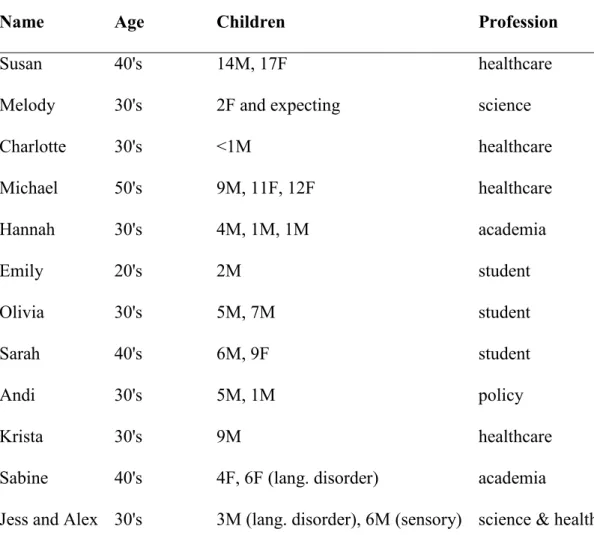
family. For the purposes of this study I used self-described, situationally-specific family groups. Sometimes these families manifested as a parent and child, sometimes as a household, and often as a portion of a household combined with additional friends and relatives.
In order to access family life I chose to look through the lens of daily activities. Family occupations, in short, refer to the everyday things that families do together. These occupations include actions undertaken to get through the day, as well as the sense of connectedness fostered in the process. As Humphry and Corcoran (2004) have suggested, “Perhaps some of the power of occupations in helping families function is not what is being done, but through the shared
activities in which family members are socially occupied with a loved one in a special way” (p. 488). Exploring daily activities enjoyed by the family together, then, serve as a useful lens for understanding human lives as lived in relationship.
This study examined family occupations as manifold; engagement is shared, but not experienced in the same way by all persons. In order to enter into this complexity the study utilized ethnographic methods, with a focus on the coordination processes revealed through observation. As Lawlor and Mattingly (2014) described,
Family life is dynamic, often compelling, complicated, and multifaceted. Although the term family life may imply a unitary construct, understanding family life involves the recognition of its heterogeneity and diversity. Family life is situated in broader
sociocultural contexts as well as intergenerational and historical contexts. Family life is constituted through an array of cultural and social practices and lived through
engagements in occupations (p. 151).
Family life is also distinguished by the nature of its interdependency, a facet too often
perspective is also needed in the research design process to ensure research questions are relevant, and research methods are acceptable.
Overview of the Research
This study aimed to expand the descriptive knowledge about family occupations, with attention to both the methods for studying family life as well as how family groups navigate daily life activities together in relationship. The complexity and intimacy of family relationships help make visible the ongoing negotiation processes involved in enacting successful moments. The research was intentionally undertaken in two phases. The first phase of investigation solicited parent advisors to offer commentary about family research, using personal experiences of family life to reflect on past research participation, as well as offer suggestions for naturalistic research designs (Manuscript One).
The second phase of research explored the coordination of family occupations. Despite the unique array of challenges and characteristics a given family has, every family actively figures out ways to get through the day and make things work. Episodes of family occupation were described and examined to better understand the negotiation processes involved in doing together (Manuscript Two). Inclusion practices to promote the participation of all family members were examined in order to better understand how families successfully enact these occupations (Manuscript Three).
Format
CHAPTER 2. REVIEW OF LITERATURE Overview
The study of family occupation requires the consideration of several key concepts. There is the immediate question of how to conceptualize family and select participants. Similarly, occupation and family occupation have related but differing definitions that impact the unit of analysis. Much of the existing family occupation literature has a particular flavor in terms of focus, population of study, view of disability, and methodological approach, resulting in gaps in the overall knowledge base. Research into family life also presents unique challenges as well as opportunities for innovation. The aims of this study are presented at the conclusion of the review of the current state of the literature.
Family
“[Families] are a cultural universal and a cultural icon” (Fitzgerald, 2004, p. 489), however, the term “family” is not without controversy. Debate persists about whether the term might better be subsumed or replaced by alternatives such as “intimacy,” “personal life,” or “kinship” (Edwards, McCarthy, & Gillies, 2012). Although “family” may be a flawed term it is widespread in the general lexicon, used daily by a vast variety of people, and therefore quite “real” (McCarthy, 2012). The amorphous concept of family has the potential for endlessly fluid boundaries. Questions of how and by whom family is defined continue to challenge theorists, methodologists, and scholars.
noun, adjective, or verb (DeVault, 1991; Edwards, McCarthy, & Gillies, 2012; McCarthy, 2012; Morgan, 1996). Contemporary family scholars are increasingly moving towards examining “family doing,” “family being,” or “family display,” as more productive than examining families as “things” (e.g., DeGrace, 2003; Finch, 2007). These expanded foci allow for diverse self-definitions of “family” and “family-like” groups. Finch (2007) noted “displaying” family, in recognition of the fundamentally social nature of family practices: “The meaning of one’s actions has to be conveyed to and understood by relative others” (p. 66).
When it comes to studying families one of the most significant gaps has been an overreliance on sampling from a subset of family types, namely heterosexual married couples with children (Finch, 2007). There is compelling evidence that the family structural norms typically sampled within family studies are outdated. Data from the 2013 American Community Survey indicated that only about 29% of households were comprised of a married couple with children (U.S. Census Bureau, 2013). Globally changing patterns of household composition have been documented; within the 35 member countries of the Organization for Economic
Cooperation and Development there have been declining household sizes, decreasing marriage rates, growing divorce rates, and increasing childlessness (OECD, 2011). Likewise, in the European Union changes have been noted “in relation to patterns of family formation, with traditional boundaries becoming increasingly blurred and different types of family nuclei
becoming more common” (Eurostat, 2015, p. 1). Researchers must produce scholarship relevant to modern families and able to adapt to changing family types and compositions.
change across time (Finch, 2007). Family configurations evolve, change, and reconfigure over time, in relation to both specific contexts and major life events. “Although for most societies some ideal family configuration has been identified (and these are often the descriptions we find in texts of families), there is, in any society, a great deal of diversity” (Fitzgerald, 2004, p. 491). For example, Finch also argued that “family” may include connectedness beyond households.
Scholars have taken initial steps towards acknowledging this diversity when focusing on the family as the unit of analysis. In their exploration of occupatio-temporality Larson and Zemke (2003) alluded to the multiple configurations of “family groupings”: “Family as used here constitutes many different configurations of members from heterosexual or homosexual couples, to single-parented families or two-parented families” (p. 85). The addition of the word “groupings” served to expand from traditional concepts of family as a concrete arrangement of relationships, although their definition retained a focus on parents and children. Similarly, in her study of family zoo outings, DeVault (2000) observed various “‘family-like’ groups of adults and children together” (p. 490) rather than attempting to determine any specific kinship structures. As she noted,
I have not adopted the standard methodological procedure in family studies, whereby the analyst decides, however thoughtfully, on some definition for a family—based perhaps on biological or legal connections, perhaps on members’ self-definitions—and includes only those groups that fit the selected model: such procedures seem to insure that some of the diversity of family experience will be lost (DeVault, 2000, p. 490).
for ongoing self-definition of the relevant family group out of respect for the dynamic nature of family.
Occupation
The International Society of Occupational Science defines occupations as “the various everyday activities people do as individuals, in families, and with communities [emphasis added] to occupy time and bring meaning and purpose to life. Occupations include things people need to, want to, and are expected to do” (Asaba, Blanche, Jonsson, Laliberte Rudman, & Wicks, 2007, p. 1). The concept of “occupation” is an evolving one that continues to be discussed and adapted by scholars, and definitions of occupation continue to be disproportionately dominated by Western philosophy and theory (Hammell, 2009; Ramugondo & Kronenburg, 2015). Within this body of occupational therapy and science literature, several repeated themes have emerged.
Occupation as largely ordinary and familiar. Occupation has generally been written about as “the ordinary and familiar things that people do everyday” (Clark et al., 1991, p. 300). Everydayness and mundaneness are considered key domains for investigation, although special events and occasions have also been counted as occupation (e.g., Shordike & Pierce, 2005). Ramugondo and Kronenburg (2015) foregrounded that occupation is both ordinary and extraordinary, taking place within the context of the everyday. This emphasis on daily life has allowed for the extension of occupational science scholarship examining habits and routines (see Clark, 2000). It is worth noting the emphasis on familiarity, referring to close or family-like acquaintance, which further highlights the need for an expanded knowledge base about how occupations are enacted in family-like ways.
action has presented possibilities for investigating occupation in and of itself (Dickie, 2010; Hocking, 2009). However, the idea of activity chunks also carries the implication of occupation as neatly bounded. While Pierce (2001) wrote that “An occupation has a shape, a pace, a
beginning and an ending” (p. 139), the continuity of past, present, and future as part of the transactional nature of occupation has also been described by several scholars (Cutchin, 2004; Cutchin & Dickie, 2013; Dickie, Cutchin, & Humphry, 2006; Wright-St. Clair & Smythe, 2013). More work is needed to investigate how occupations meander, overlap, and morph into one another, especially within the context of daily life. This imperative is amplified when considering the occupations of groups rather than individuals.
Occupation as self-directed, subjective, and individually interpreted. Formative works within the discipline have also conceived of occupation as self-initiated, goal-directed, and socially-sanctioned (Yerxa et al., 1990; Yerxa, 1993). Pierce (2001) theorized, “An occupation is a specific individual’s personally constructed, nonrepeatable experience” (p. 139). However, Hammell (2009) critiqued the ableist assumptions underlying the notion of humans as individual agents. Various scholars have challenged the prioritization of the individual within occupational science; Dickie, Cutchin, and Humphry’s (2006) transactional perspective opened new avenues for examination of the integration and co-constitution of individual and context. In addition to the questionability of agentic humans crafting occupation in personalized manners, the issue of how multiple persons enact occupation (in co-constitution with other contextual features) warrants further exploration.
Family Occupation
chunks of activities” (p. 53), occurring when the entire family is engaged together, and often comprising varied aims and happenings for different family members. While her description of the whole family acting together has subsequently been challenged (e.g., Bonsall, 2013), most definitions suggest some degree of distribution as “daily activities and special events are shared among family members” (Jaffe, Humphry, & Case-Smith, 2010, p.109).
Bonsall (2014) theorized family occupations to be “the occupations that build and define families” (p. 305) that are constructed via doing together, exhibit variability of participation, and occur over time with input from family members. Similarly DeGrace, Hoffman, Hutson, and Kolobe (2014) noted that families discussed both doing family things and existing as family, and envisioned these occupations as “the family's capacity to successfully manage everyday tasks and generate opportunities for preservation of family everydayness” (p. 316). By accepting more variation in participants and flexibility in togetherness, occupational scientists will be able to have a larger pool of family occupations from which to draw for study, as well as allow less onerous paths for families to take part in observational research.
and competing demands. Daly (1996) suggested that perceptions of “time famine” are attributed to social changes, particularly changes in family structure, as well as changes to work hours, the scheduling of child activities, and changes in family ideologies. Additionally, the tension
between quantity of time and quality of time appears to be high, with families attempting to trade off credit on each variety. Daly likened the challenge to Gillis’ (1996) notion of the tension between the family you live with and the one you live by, suggesting that cultural ideals are always influencing the interpretations of one’s own experiences.
In their study of quality time among working families, Kremer-Sadlik and Paugh (2007) explored the presentation of quality time in both academic and popular literature. Their analysis of web-based discourses revealed the discrimination between “quantity time” as a desirable norm of full-time caregiving, and “quality time” as chunks of meaningful togetherness focused on child preferences and special activities, used as a compensatory strategy by working parents to improve parent-child relationships. Kremer-Sadlik and Paugh proposed shifting the focus from blocks of time to moments of connectedness within everyday life in order to better understanding family well-being. Larson and Zemke (2003) also noted that occupations themselves contribute to the experience of time and time use. Given the perceived busyness of family life, studying occupation as moments rather than large blocks of dedicated family time offers a more practical and less burdensome option for engaging families in research.
A Focus on Barriers to Family Occupation
(ASDs). DeGrace (2004) found in her study of families with young children with severe ASDs that parents reported fleeting and infrequent moments of feeling like a family. Instead these families reported being overrun by the need to manage the condition and the need to keep children “occupied and pacified.” They reported that their entire family lives revolved around ASD; DeGrace suggested that the family unit’s identity had become “autism.” Similarly, McCann, Bull, and Winzenberg’s (2012) examination of time use of parents of children with complex conditions found that parents overall reported increased burden, which did not decrease as children grew older. Parents spent significant amounts of time engaged in supervision and vigilance duties, as well as care duties extending beyond the “typical” parent role. The increase in burden led to stress as demands exceeded time available during the day. Marquenie et al. (2012) noted that both unpredictable responses and rigid routines of children with ASDs negatively impacted family mealtime and bedtime. Bagby and colleagues (2012) found that parents considered the sensory context of potential family occupations, and made decisions about social participation taking account of negative past experiences as well as the anticipated comfort and potential benefit (or learning opportunity) of the current context. ASD was perceived to impact the degree to which the meaning of the practices was shared. Schaaf et al. (2011) have also noted reduced participation of families outside the home and in unfamiliar spaces including community events, outings, and travel.
increased stress or decreased coping. Koome et al. also noted that the establishment of new routines (in the face of illness) was perceived as meaningful. Crespo et al. (2013) similarly found that family practices are impacted by chronic conditions, but also function as strategic resources for families offering opportunities to express support, hold onto routines in order to re-establish a sense of normalcy, and as reassurance that the disease has not taken over family life.
These more neutral views of disability are also found in studies that have focused on child perspective. In their study of sibling experience (which used multiple methods adapted for various ages), Connors and Stalker (2007) found that siblings did not view the child with disability as intrinsically different from themselves. These siblings presented all of their family members in ordinary ways, often mentioning mundane family routines. This finding aligns with some of the (limited) work that has been done examining the accounts of children with
disabilities themselves. Both Stalker and Connors (2004) and Phelan and Kinsella (2014) found that children with disabilities largely avoided talking about disability and instead presented themselves in terms of similarities or sameness to others. More research is needed that adopts neutral or strengths-based approaches to the presence of disability.
Another gap in existing family occupation literature is the concentration of research on families with children with ASD. Clearly more research is needed exploring disability
with young children. These concerns also characterize much of the family occupation literature. Expanded observational research is required to build detailed descriptions of the processes of family occupation.
Studying Families and Family Occupation
Methodological sameness. Methodological sameness within the field of family studies is increasingly being critiqued; Hendricks and Koro-Ljungberg (2015) interpreted the adoption of family “science” labels and the dominance of grounded theory approaches to be indicative of a continued striving for disciplinary legitimacy via a post-positivistic paradigm. Similarly, Daly (2003) felt the field leaned positivistically:
The preoccupation with measurement has meant that most of our research focuses on individuals, not families. Although we purport to study families when we use terms such
as family theory and family studies, we are in practice studying individual characteristics, attitudes, and behaviors… The result is that family life tends to be viewed in terms of averages around measures of central tendency, rather than in the diversity and complexity of shared meanings and interrelated perceptions (p. 772).
The legacy of individualizing measures appears to have carried over into qualitative methods, resulting in a strong preference for interview approaches. Furthermore, Handel (1997)
“Children are highly fluent in visual, non-verbal, embodied, physical, and tactile modes of communication, and they frequently choose to express aspects of their lives these ways” (Mason & Tipper, 2014, p. 160). Interview methods also obviously exclude or reduce the participation of those with unique communication strategies that may be considered challenging to ask questions to or speak with. In contrast, research in naturalistic settings gets researchers closer to where lives are lived, and thus affords more information about dimensions of physicality, materiality, space and place, sensory environment and other contextual features (Mason & Tipper, 2014). Challenges to observation. Cultural constructions of “home” have served to reify households and dwellings as private spaces and families as private bodies (Fahey, 1995; Whitman, 2004). Moreover, the concept of home is frequently tied to other aspects of identity and relationships deserving of daily safeguarding. Mallet’s (2004) review of social science literature highlighted the frequent conflation of home and notions of self, family, haven, and journeying: “Clearly the term home functions as a repository for complex, inter-related and at times contradictory socio-cultural ideas about people’s relationship with one another, especially family, and with places, spaces, and things” (p. 84). Collectively these expectations of privacy of family and privacy of home have served to limit researcher engagement within these spheres, reducing enthusiasm for the use observational methods in these contexts.
information, capture relational and interactive processes, and allow for the expression of marginalized voices.
Qualitative researchers have responded to the challenges of studying family life by testing out new methodological approaches and attempting to include diverse families. Hess and Handel’s (1959) groundbreaking Family Worlds study involved interviewing each member of two-parented families with children (ages 6 and older). Handel (1997) later reflected, “Obtaining data from each member of each family is the major methodological innovation of our study. That was a departure from prevailing practice, and it remains rare today” (p. 339). Similarly, Stacey’s (1990) ethnography of families in postindustrial America was innovative in the inclusion of non-nuclear family members and acknowledgment of the changeable nature of family membership. As Stacey explained, “Like postmodern culture, contemporary family arrangements are diverse, fluid, and unresolved” (1990, p. 17).
In addition to addressing multiple family members and using expanded notions of family, ethnographers have also explored how gender, race, and class impact both family life and family research. For example, Bonsall’s (2013) occupational science ethnography of fathers of children with disabilities utilized narrative phenomenology in order to explore occupation and gender experience. Bonsall conducted interviews and observations in order to better understand family occupation through the lens of fatherhood.
Primeau’s (1998) grounded theory study of the orchestration of work and play within the daily occupations of families with preschool age children specifically targeted a cultural
they have done to gain access to communities of different sociocultural composition than their own. Mattingly and Lawlor (2000) emphasized the power of narrative interviews and story elicitation to bridge differing sociocultural perspectives. Stack (1974), a white researcher, studied black family life in 1960’s America. She and her young son moved into the target neighborhood to live embedded in the study context. Stack noted that often researchers have accessed men of status as community gatekeepers in order to gain entrance to participants. Stack wrote, “I decided instead to try and find my own means of entrée. I decided to circumvent the obvious centers of influence- the pastors, the politicians- and try to reach families without resorting to middlemen” (1974, p. xi). Stack was able to network with a university colleague that had grown up within the community in order to gain direct introductions to families. She built rapport by participating in family tasks such as helping a family fold newspapers for their son’s newspaper route prior to explaining her study aspirations.
“family-like” groups. DeVault explained her choice to sacrifice a level of certainty about family membership “as one of the costs of looking at family activity naturalistically in a public setting” (2000, p. 490).
The willingness of family ethnographers to build upon, challenge, and experiment with methods is one reason ethnographic approaches are well suited to studying daily life. Equally, deliberation about researcher roles, impacts, issues of credibility, and efforts to foster successful research relationships are necessary for such studies (Lawlor & Mattingly, 2001).
Additional Considerations
Families with children. Family research has also been limited by conceptualizations of childhood that view children as immature objects rather than autonomous occupational beings. Children have historically been under-considered in research and theory, seen as having limited capacities, skills, and knowledge. Only recently has the “new sociology of childhood” emerged that considers children as social actors and childhood as a distinct social world that differs from the social world of adults (Bühler-Niederberger, 2011). The recognition of children as actors that participate in intentional, meaningful ways that make sense to them has important social justice implications. Cavet and Sloper (2004) suggested that while children have been consulted on limited “children’s topics” in the past, they are able to participate in broad conversations about many more social and political topics. Lawlor (2003b) similarly argued that children are social beings constructing social worlds and that there is a need for researchers to stop merely
describing what they do and truly examine them as occupational beings.
the proxy report made by parents (Upton, Lawford, & Eiser, 2008). Davis et al. (2007) undertook a qualitative examination of this gap using a think-aloud method and found that children and adults differed in their manner or strategy of responding to questions, in their actual responses (or perceptions of health), and in their interpretation of the terms and concepts used.
Existing evidence likewise suggests that children do not conceptualize family in the same ways as adults. In their studies of kinship Mason and Tipper (2008) and Tipper (2011) have detailed the creative ways children “reckon” family, often including people and animals both living and deceased, as well as spanning multiple households. Tipper noted that children often include pets in describing their families, and emphasize these relationships as emplaced and embodied. Given that children may conceptualize family in different ways than adults, it becomes even more essential to include children when investigating how families “do” family together. Scott (2008) suggested that given all the creative ways in which adults construct and negotiate their social worlds, it is easy to imagine children as equally creative in these endeavors. Morris (2003) found this imaginative social construction also to be applicable to children with communication impairments. To date, however, children remain largely excluded from both quantitative and qualitative research (Scott, 2008).
Acknowledgingchild agency requires valuing child voices, choices, actions, and how child perspectives and knowledge are expressed. As Handel (1997) stated,
No member of any family is a sufficient source of information for that family. A family constructs its life from the multiple perspectives of its members, and an adequate understanding requires that those perspectives be obtained from their multiple sources. How this principle is implemented in particular projects will depend on the nature of the project (p. 346).
structures may influence the free choice of members to participate. There are concerns about key informants, gatekeepers, and how to ensure the consent of all persons involved (Zartler, 2010). The “negotiation” of research that takes place within families raises concerns about child assent, power, and how information is communicated to multiple family members. Researchers have noted the need for additional ethical consideration to practices surrounding permissions, disclosure, authority, and representation (Phelan and Kinsella, 2013). Ultimately, the
investigation of family experience requires care and attention to the dynamic process of entering and accessing family life, including explicit recognition of children’s experiences as part of family experiences.
Problem Statement
There is a need for the development of knowledge about family life in order to support scientific progress, health promotion, and social policy. Existing scholarship has generally been limited by narrow definitions of family, treatment of the family as a private space (with
reluctance to engage in naturalistic, participant observation driven research), and overreliance on parental accounts to represent family experience. Furthermore, research on families with children with disabilities has often focused on disruption, dysfunction, and negative aspects of disability experience (with disability itself conceptualized in a restrictive, body-bound manner). These problems have impacted both occupational science and occupational therapy by confining the scope of research and thus restricting the development of family-centered knowledge for the provision of family-centered care.
Aims and Objectives
Aim 1: Investigate how qualitative research methods are experienced and perceived by family gatekeepers.
The objective of this aim was to elicit parent advisor accounts and perspectives of the research process with attention to barriers and supports to implementing studies within naturalistic settings.
Aim 2: Explore the coordination and enactment of family time occupations among families with middle childhood age (6-11 year old) children with disabilities.
The objective of this aim was to describe processes of negotiation within varied daily family occupations.
Aim 3: Examine how families with children with disabilities support the participation of members during family time occupations.
CHAPTER 3. METHOD Paradigm
Naturalistic qualitative methods best served my interest in exploring the highly fluid and complex everyday experiences of families. I drew heavily upon the ontological assumptions of social constructionism. The benefit of social constructionist ontology is the recognition of the shared and constructed (negotiated) aspects of social realities (Gergen & Gergen, 2007). The underlying assumption, that socially created experiences are contextually specific, suggests the necessity of naturalistic research. Social constructionism has itself experienced critical,
rhetorical, and social turns, and one of its drawbacks is that social constructionists often hold underlying values about the centrality of language to make social worlds intelligible. However, social constructionism also supports methodological liberation, as it recognizes that no form of knowing is more valid than any other (Gergen & Gergen, 2007). In my approach I attempted to deemphasize verbal language in favor of more holistic communication strategies. Gergen and Gergen (2007) called for experimentation, as qualitative methods should reflect the emergent nature of knowing. As an individual graduate researcher within a specific temporal,
sociocultural, economic, and political context, I was mindful of focusing on pragmatics and considering feasibility and reasonability as essential design elements (Lewis, 2010). Conceptual Frameworks
co-construction of family doing. The historical roots for transactional perspectives of occupations lie in the work of American pragmatist John Dewey (Cutchin & Dickie, 2012). “Dewey asserted that the emergence of problems in life was something people could not avoid. In a world that changes about them all the time, people find relative stabilities, but also find that the emergence of one state of affairs into another is continuous” (Cutchin, 2013, p. 290). The transactional perspective offers a framework for thinking about the continuous fluctuations of daily
experience. It emphasizes the co-constitution of persons and contexts, with neither existing in isolation from the other, but rather continually shaped by one another through occupation (Dickie et al., 2006). A transactional perspective recognizes multiple family members as collectively co-contributing to the experience of family, as well as to family practices. Researchers must elicit the converging, diverging, overlapping, and conflicting “knowledges” of families, recognizing that no singular voice will fully capture a shared experience.
Communities of practice framework. I was also influenced in my thinking about groups by the concept of communities of practice. Wenger (1998) proposed that shared practices build community, which has been echoed in the occupational science literature by Bratun and Asaba (2008). Wenger conceptualized community as centered on mutual engagement, joint enterprise, and shared repertoire. The shared repertoire includes tools such narratives, stories, and artifacts that enable symbolic communication; the repertoire functions as a resource for the negotiation of meaning (Wenger, 1998). Analyzing family occupations offers the opportunity to examine the processes of family as processes of community, and scholars of family occupation are poised to contribute to the development of new methods of community study.
Relational model of disability. In addition, my conceptualization of disability
experience as distributed, shared, and intersecting among family members, was influenced by social relational models of disability. Such models, which emerged in the 1980’s and have largely been adopted within the field of Disability Studies, call for the examination of socially constructed elements of disability experience, rather than operating on the assumption that disability resides within an individual (Lawlor & Mattingly, 2009; Söder, 2009). Social models describe functional limitations tied to chronic conditions, disease, or illness, as “impairments;” in contrast, “disabilities” are the social and physical barriers to doing or being. The experience of being disabled, then, is the experience of exclusion or discrimination based upon having an impairment (Connors & Stalker, 2007; Söder, 2009). Adopting a social relational model of disability within a family context requires examination of family practices as collective experiences that may be impacted by functional impairment, but are also affected by social support and social experiences.
Study Design
“examining,” and active participation allows the researcher’s body to become a means of collecting data. Similarly, Pink (2009) described sensory apprenticeship, as ethnographers “develop an awareness of how different types of research material might facilitate ways of being close to the non-verbal, tacit, emplaced knowledge that a sensory analysis seeks to identify” (p. 130). This type of embodied knowledge has particular applications to situations in which participants may not rely on lengthy verbal explanations to describe an experience. As Spitzer (2003a; 2003b) has demonstrated, highly individualized communication systems can be built upon shared engagement in daily activities.
Ethnography has the capacity to describe complex processes of change over time and identify holistic patterns and themes. The iterative-inductive nature allows for necessary flexibility and the organic evolution of the research design throughout the research process; “Ethnographic analysis is not a stage in a linear process but an iterative phase in a spiral where progress is steadily made from data collection to making some sense of it all for others” (O’Reilly, 2008, p. 13). Bailliard, Aldrich, and Dickie (2013) have argued for the natural compatibility of ethnography and transactional perspectives of human occupation, offering the ability to examine situated relationships.
I employed a multi-sited ethnographic approach to explore everyday family life, as expressed and enacted by multiple family members within dynamic, fluid, and varied family households. Although there is natural overlap between qualitative methods, the use of ethnography enabled me to focus on families as cultural units with their own languages,
engagement that characterized the visits. This approach also allowed me to examine linkages across families (Hannerz, 2003), and consider patterns across multiple cases.
Sandelowski (1995) noted that sample size may refer to the number of people, interviews, observations, or events; in this study each family visit included many different people and
events. Given that one of the primary contributions of the research was the deep examination of family experiences, the sampling design was chosen to accommodate the anticipated high degree of complexity within family context. The study included elements of within-case sampling, in the examination of multiple experiences of a family group, as well as multiple-case sampling, in the investigation of multiple family groups. This was chosen because “Each setting has a few properties it shares with many others, some properties it shares with some others, and some properties it shares with no others” (Miles, Huberman, & Saldaña, 2013, p. 34).
Recruitment. The parent advisors (Phase One) and families (Phase Two) were recruited from communities in a southeastern state in the United States. Opportunity and snowball
“disability,” I followed family leads in using the term “special needs,” which appeared to be preferred terminology for these families.
Informational leaflets, flyers, and email messages (please see Appendix A) were also available to be passed along (snowball method) to additional contacts that may have been interested in participating, or may have known other likely candidates. Potential participants were asked to opt in to research by contacting me via telephone or email and indicating an interest in learning more about the study. I responded using the potential participants’ preferred line of communication (i.e., phone, email) to provide additional details, describe the consent procedures, and answer questions. All of the families that contacted me were eligible for the study; none were excluded. I recruited families on a rolling basis until seven cases were
completed. The choice of seven cases was above the minimal threshold of “five richly researched cases” suggested by Miles, Huberman, and Saldaña (2013). I anticipated that some of the
families might need to discontinue participation mid-way through data collection; fortunately none of the families discontinued after enrolling. The families that enrolled in Phase Two were provided with a small monetary appreciation at the conclusion of the visits.
developing self-expression and high participation in family activities (Maccoby, 1984; McHale, Crouter, & Tucker, 2001).
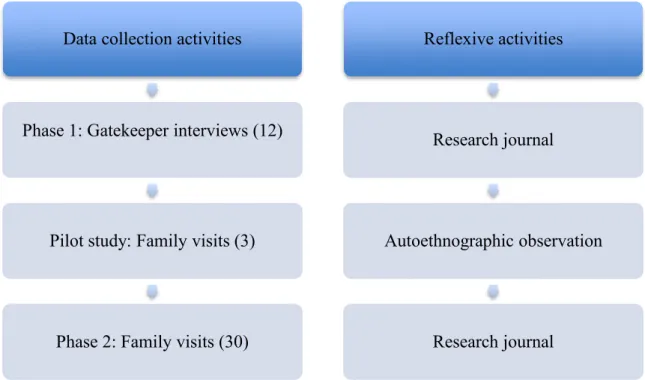
Investigative techniques. The primary data sources for naturalistic research are words and actions; researchers look, listen, and ask to gain understanding about participants’ experiences (Lofland & Lofland, 1995). During Phase One of the study I utilized semi-structured interview techniques. This style of interview allows for conversational foci and questions, as well as
flexibility for participants to speak about what is of interest or importance to them (Hesse-Biber & Leavy, 2011). Based upon the findings from Phase One, during Phase Two of the study I utilized a flexible, situationally responsive combination of observation, participant observation (via shared occupation), casual conversation, and the more targeted asking of questions (within conversation).
Ethics. Each phase of the study was reviewed and approved by the University of North Carolina at Chapel Hill’s Institutional Review Board, and participants completed the appropriate written adult consent, parental permission for minors, and child assent documentation (please see Appendix B). When visiting with families, additional persons frequently took part in activities or were present in community contexts. I let the families take the lead regarding disclosure of the study, and whenever possible, formal consent documentation was also collected for family visitors. When formal documentation was not appropriate or achievable I treated other persons as anonymous collateral participants and monitored for signs of general comfort with my presence. Data Collection
2009), accordingly during this phase I recruited parents to speak to the experience of family gatekeepers. I met with these gatekeepers at a location of their choosing for a single interview, lasting 45-90 minutes; each interview was audio recorded and later transcribed verbatim. The semi-structured prompts were related to how an investigator might best approach families and design research activities. (Please see Appendix C.)
Phase Two. The second phase of research focused on exploring how families
successfully negotiate every day occupations. I asked families to select activities that they liked to do together that I could visit during in order to learn about what they did and how they did it. Data collection activities during this phase of research involved joining in home and community settings, hanging out, and actively participating in what families were doing (whenever
appropriate). (Please see Appendix D.) Data collection took place in the settings of everyday family life including places of residence, local neighborhoods, and community spaces frequented by participants such as schools, playspaces, ice cream shops, athletic venues, swimming pools, and during transit.
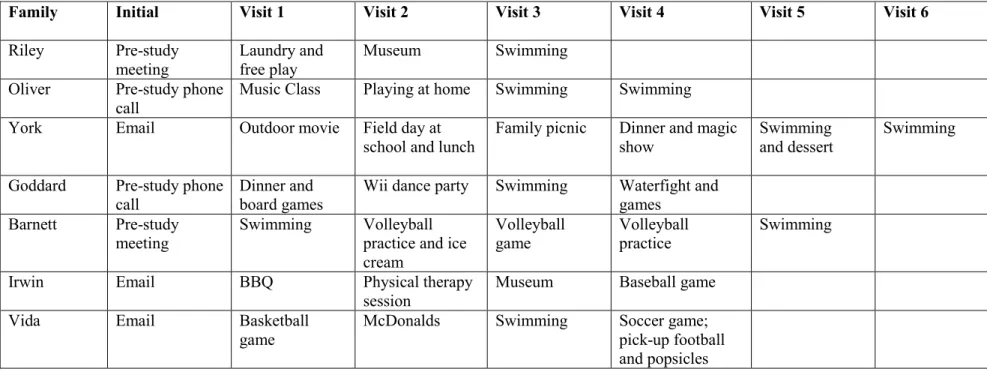
I completed 3-6 visits with each family, lasting between 1.5-8hours per visit. Total time in the field was approximately 95 hours. The question of how many visits to request was
complex. I did not want to hurt my chances of successfully recruiting families by scaring them off with too extensive a time commitment; however, I desired the opportunity to develop depth in my exploration. The range of targeted visits was selected based upon both the feedback of parent advisors during Phase One of the study, as well as based upon the experience of Lareau (2003) in her observational study involving families of third graders. Her research team observed that the first few family visits were inevitably quite awkward, with a noticeable easing of
children benefited as the visits became more routinized. For this reason, a minimum of three visits was requested with each family.
Data Analysis
“Key to data analysis in qualitative family research is the process of deciding what is important and of managing the data” (Rosenblatt & Fischer, 1993, p. 172). My process included: (1) frequent re-immersion in the data via transcribing, re-reading, and re-listening to prior audio fieldnotes enroute to subsequent visits; (2) more intensive analysis of the first three cases to explore alternative motifs present in the data; (3) coding and themeing via segment analysis, memos, and visual mapping and rearrangement of notecards to examine repetition,
evocativeness, and clustering of data; (4) walking, talking, and thinking. Movement across varied environments and contexts was an important element of how I processed the data and shifted perspectives between the local and big picture.
Dickie (2003) wrote about the need for “stepping in and stepping out, seeing things from multiple perspectives” (p. 53), which in her experience often necessitated both immersive and distancing acts when working with data. In addition to many detailed analytical tasks such as marking, labeling, and sorting data segments, Dickie also emphasized the importance of allowing time to reflect and process:
Thinking time is vital. Thinking time might be focused at my desk, but it includes time doing such things as walking, watching the woods outside my window, talking,
commuting, taking showers- in other words, activities that allow my mind to wander and puzzle over what I am finding (2003, p. 53).
In my own experience many ideas and patterns were aided by conversations I held with myself while driving.1 I often talked through various points to clarify my position and understanding
during daily commutes, and then recorded voice memos upon arrival at my destination in order to summarize these ideas.
One of the critiques of coding techniques is that they fragment data, dissociating it from human experience. However personal narratives and contextualized accounts are critiqued for reifying the authenticity and meaning of individual experiences (Lal, Suto, & Ungar, 2012). I ended up in a middle ground. I found minute line-by-line coding to be ineffective, preferring instead to gradually code scenes or units of activity within the larger episode of an observational visit. This coding actually took place after more detailed segment memo-ing, in which I asked myself questions such as: “What is happening here?” or “Why does this moment feel significant, evocative, or telling?” After re-examining the moments, I was able to better categorize scenes with thematic codes, which primarily served as short hand for organizing and then rearranging data. Practices for making things work ended up being only one of many types of stories and actions that I witnessed, but once I had selected this focus, I revisited the episodes to narrow the number of selections and choose exemplars. The chosen exemplars used in the manuscripts represent middle-of-the road momentsthat appeared to be within the typical repertoire for the given family. For the coherence and readability of the manuscripts I did look for examples that highlighted different aspects of the occurrences observed, although in practice the negotiation and inclusion processes were densely overlaid.
Thematic analysis. I employed thematic analysis as part of both Phase One and Phase Two data analysis, using an inductive approach adapted from Braun and Clarke (2006) with additional coding strategies described by Saldaña (2015). I included three distinct rounds of
coding, beginning with action codes. I found that coding actions with “-ing” was helpful to illuminating processes; I also separately coded for moments of emotion (among family members or myself), as well as statements or actions that indicated underlying values, attitudes, or beliefs (Saldaña, 2015). Phase Two data analysis was also influenced by the components of data collection, condensation, display, and concluding described by Miles, Huberman, and Saldaña (2013). The analysis was conducted inductively and across multiple cycles closely following the “Sort & sift: Think and shift” technique described by Maietta and Mihas (2015). A detailed explanation of this strategy is anticipated in upcoming publications, however basic tenets of the method have been elucidated in presentation papers:
The Sort and Sift technique encourages frequent movement between thorough review of data with recording of ideas that emerge during review and stepping back to review and reflect on content and process used during data analysis. The approach is a process that involves two recurrent phases of a cycle of data analysis. The first phase is called “Diving In.” Get into your data as quickly as possible. Read, review, recognize and record. The second phase is called “Stepping Back.” This phase encourages you to stop to review where you are. Reflect and re-strategize. Then dive back into what you have done and recognize what is new (Maietta, 2006, p. 8).
The core activities of using this method included the identification and examination of powerful data excerpts, inventorying and analyzing powerful data segments across each visit, revisiting and monitoring ignored sections, producing episode profiles including diagrams and memos to create a sketch or narrative of each visit, and the use of diagramming to bridge and question across episodes and cases. MAXQDA (Verbi, 2014) software was utilized to assist in management of the data documents and analytic codes and memos, although my initial
Throughout the Phase Two analysis (please see Manuscripts Two and Three) I returned frequently to the questions: “How is the family activity negotiated and coordinated?” “What makes the activity successful?” “What strategies are the families using to promote engagement and participation?” “What forms of participation are included and validated?” I found the technique of segment analysis via segment memo especially productive in allowing myself to engage in reflexive conversation about my own interpretations and responses to moments within each episode, including consideration of the attitudes and emotions being expressed by
participants and myself (partially inspired by my past employment of coding recommendations by Saldaña, 2015). I originally attempted to use thematic coding to also describe the processes of family occupation (Manuscript Two), but found that the themes generated were isolating aspects of person, setting, and action from one another. I next turned to narrative inquiry to examine the data as enacted stories of family life. Narrative analytictechniques better allowed me to examine the arc and progression of episodes of family activity that highlighted the interplay among family members and collective group.
Narrative inquiry. Family narratives are stories of family life. Mattingly and Lawlor (2000) offered a working definition of narratives as “event-centered and historically particular, located in a particular time and place. Stories concern action, more specifically human action, and particularly social interaction” (p. 6). Viewed this way, family narratives relate human social action across nested contexts including specific family moments, broader family life course and identities, as well as larger sociocultural context. Mattingly (1998) noted that one of the function of narrative is to provide meaningful linkages in daily life:
Family narratives have been conceived of as serving multiple functions including helping acculturate children to language use and social norms, as well as promoting connectedness and sociability (Blum-Kulka, 1997).
Narrative as emergent action. Narratives represent constructive and co-produced processes (Blum-Kulka, 1997; Garro & Mattingly, 2000). Mattingly (2000) described emergent narratives as “improvisational and embodied stories” (p. 189), that are “usually invented more or less on the spot, unrehearsed dramas that spring up in the course of everyday activity… It is a cultural act, and its creation depends upon a complex repertoire of cultural resources” (p. 205). These spontaneous and developing lived stories were the foundation of my analysis. I was most interested in what the negotiated actions were telling me about family life.
My conceptual view of narrative is similar to that of Nyman, Josephsson, and Isaksson (2012), who wrote, “We approach narrative as stories that are both told and performed” (p. 411). In the past I think scholars have tended to ascribe a false separation between acting and telling, perhaps due to frequent research preoccupation with words and text. As observed, I found the telling and acting to be contiguous. Many occupational therapy and science scholars have embraced narrative inquiry as appropriate for analysis of observational data (e.g. Alsaker & Josephsson; 2010; Alsaker, Bongaardt, & Josephsson, 2009; Bonsall, 2012; Josephsson, Asaba, Jonsson, & Alsaker, 2006; Mattingly, 2000).
We have been struck by the presence of what we call ‘quality moments’ in family life – spontaneous, unstructured, everyday moments of shared social interaction between family members. Although individual family styles vary, we find that quality moments occur regularly in the course of everyday activities and routines involving parents and children (p. 288).
These moments appear frequently and unexpectedly within daily life, but are also constitutive of family life. In other words, they are both mundane and extraordinary. They are characteristics of family life, while simultaneously integral to creating the family-like quality of the experience. Family life is a collective journey, with different stages, milestones, unexpected turns, plots, subplots, and rotating cast of characters. There is a sense of past history, present moment, and hopes and possibilities for the future. Within the context of this study I examined how the participant families negotiated occupations together, while concurrently enacting larger
narratives about family life, the meaning of family time and togetherness, what constitutes “fun,” the process of growing up, and what it means to be a family. I found that these were largely aspirational narratives about possibilities and benefits of family-ness.
Being part of the story. Narrative inquiry is a relational process (Clandinin, Caine, Lessard, & Huber, 2016). As the solo participant observer my fieldnotes, memos, themes, analyses, and written reinterpretations reflect my own listening, observing, and telling. I was present in the moment, and the data were multiply interpreted through, with, and by me (and my performance of “researcher”) in a spiraling and transactional process. At the same time, when I considered my own presence as a character within the scenes I thought of myself as a somewhat generic “new friend of the family” persona. I attempted to remain a background character as much as possible.
became part of an unfolding enacted narrative” (p. 411). My goal was similar to this notion of joining in stories acted out via daily occupation. Within each unique family there was always a narrative about family life and what it means to be a family that was being constructed and enacted.
Narrative analysis. My narrative analysis included accessing ongoing action within daily context in order to attempt to capture “real-time situatedness” (Alsaker, Bongaardt, & Josephsson , 2009, p. 1157). I should note that I did not explicitly seek out individual family member interpretations, although they were sometimes expressed by individuals during the unfolding action. Rather, I used my position as a guest to observe and interpret the action processes involved in negotiating occupation, which themselves revealed interconnecting but also diverging meanings, preferences, and goals.
Some of the characteristics I examined included sequentiality, temporality, cast of
characters, space frames, symbols, underlying values, plot, subplot, and dramatic turns (Daiute & Lightfoot, 2004; Daly, 2007). I drew from Fraser’s (2004) seven phase analytic process,
recording. The expanded fieldnotes, in contrast, represented a translation and retelling, again primarily for myself as an audience, but this time wearing a different analytic cap. The phased analysis was a mechanism for revisiting the data in hopes of hearing and telling the stories differently to elicit new insights.
Credibility
Davies and Dodd (2002) wrote of the strengths and rigor of qualitative research lying in “terms such as attentiveness, empathy, carefulness, sensitivity, respect, honesty, reflection, conscientiousness, engagement, awareness, openness, context, and so on” (p. 288). They felt that
these terms represented a more useful evaluation of the qualitative research process as
interpretation is woven into all steps of research encounters. Steps to ensure the credibility of the research suggested by Beck (1993) and undertaken during this study included: detailed
fieldnotes, reflections on the role of the researcher, and provision of vivid excerpts to the reader. Efforts to increase auditability of the research included: fieldnotes tape-recorded immediately after each visit to increase accurate recall, verbatim conversation included whenever possible, detailed descriptions of the data analysis process, and rich descriptions of participants.
The term “triangulation” originated in land surveys and was adopted by researchers as a metaphor for strength (based upon the geometric principles of triangles) (Patton, 1999).
Although triangulation most commonly refers to mixing methods such as interviews, observations, and artifact analysis, it may also indicate the range of sample and inclusion of multiple perspectives. When I began the study I had a specific interest in multiple perspective research. I had read about techniques used for analysis multi-perspective data, although it almost exclusively referred to interview data. In practice these strategies were not readily applicable to my data, although I attempted to keep in mind the possible converging, diverging, and
from observation of an individual within a group, and my aim was to consider the experience of all group members without prioritizing certain actors or voices.
I attempted to tell the story of how the study came to be and unfold as clearly and transparently as possible so that readers will feel better informed to assess the strength and relevance of the findings. In preparation for the study I undertook relevant coursework and workshop training focused on ethnographic data collection and analysis. The findings from Phase One of the study were used to help design the observations in order to increase social validity and capitalize on the expertise of a wider pool of parent advisors. I conducted pilot testing home visits with a family similar to my targeted participants, and completed
CHAPTER 4. PARTICIPANTS The Riley Family
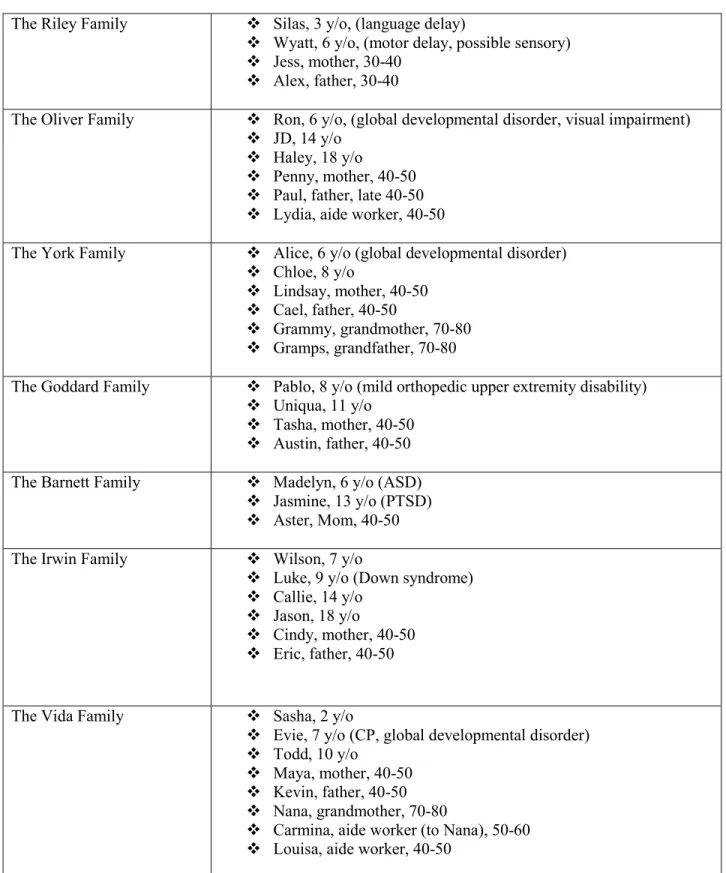
I met the Riley family during Phase One of the study. Another participant had forwarded my recruitment email to a parent listserv at her school and the Riley family reached out. We met at a local coffee shop, with parents Alex and Jess, as well as their youngest son in attendance. I left the interview with the impression that they were highly educated couple, interested in science, and protective of their privacy. For example, during the interview they were careful never to say the names of their children. I admit that I was a bit surprised that they were willing to participate in the second phase of the study; however, I had acted upon their recruitment suggestion to create a brochure about the study that they may have appreciated. The Riley family included parents Alex and Jess, and sons Wyatt (6), and Silas (3), as well as cat Slingshot. During Phase Two they had no reservations about scheduling a visit, although they only texted their home address to me immediately beforehand. They lived in a compact single family home within a development. Alex and Jess worked varied and often alternating schedules; often one parent took the children on outings. The Riley family invited me to join them for laundry folding and playing at home, an outing to a local science museum (Alex and the boys), and a trip to the swimming pool (Jess and the boys).
playing with one another as well as with mom and dad, and were inquisitive about their visitor (me). They were sometimes competitive with one another, particularly in running the fastest. Silas had been diagnosed with a speech delay, and Jess frequently helped to clarify what he was saying. Wyatt had a slight motor delay and Jess also mentioned sensory concerns (as yet
undiagnosed). The boys frequently initiated pretend play schemes involving props, stuffed animals, or creative use of everyday objects. The family appeared down to earth, practical, curious about the world, and serious about education. The boys attended year round schools and the visits tended to be coordinated more fluidly, with the family emailing or texting to see if I was free to join. They were the only family that took me up on the offer of a babysitting night at the end of the study, with Jess joking that by then I had been fully vetted.
The Oliver Family
The Oliver family included parents Penny and Paul, and children Haley (18), JD (14), and Ron (6), as well as dog Ralphy. The family was also very close to aide Lydia. The Oliver family was accustomed to having many therapists, aide workers, and friends of their older children coming into the house, and they were very comfortable with my presence. Penny was enthusiastic about research and the family has had students come into the home before. Penny said, “We like to participate in these kinds of things.”
about. Ron had been diagnosed with a rare genetic disorder resulting in global developmental delay including visual impairment, neurological deficits, and muscle weakness on one side of his body. He did not use verbal language, although he made other vocalizations. Ron had a huge grin; he was quiet, attentive, and polite. He sought eye contact with others and gave high fives. Ron enjoyed watching what was going on before joining in. He liked songs, music, and playing with his toys. At music class he kicked his legs to the music and gently tapped with his hands.
Penny described Ron as the focus of the family. Ron used a stroller for longer distances and walked with a walker or handhold assistance for shorter distances. Penny said there was a time when he hardly moved independently, but he had made great gains. He was able to reach and hold objects, sit and crawl independently, and help feed himself. Penny was very committed to therapies, interventions, specific diet and vitamin supplements to help maximize his gains. She said the family does not know what to expect as far as his capabilities. Penny was both nervous and optimistic to see what changes school would bring. Penny and Paul ultimately decided to place Ron in a classroom for children with severe disabilities, although Penny was keeping an eye on a moderate disability option.
with items that would make him appear younger or less capable than he was. When she experienced stares or impolite questions from strangers she has been very affected.
The family had a very busy summer schedule, and the majority of my visits were focused on Penny and Ron doing things together. I joined the Oliver family for a parent-child music class, play and therapy activities at home, stretching and then a trip to the community pool, and a pool visit and dinner with friends (from the York family).
The York Family
The York family included Alice (6), Chloe (8), parents Lindsay and Cael, dog Spot, and frequently grandparents Grammy and Gramps who live nearby. During the course of the study the family qualified for in-home services but had not yet found an aide. This family was very enthusiastic about the study and was instrumental in putting me in touch with other families. They lived in a spacious home in a beautiful older neighborhood of a large metropolitan area. Lindsay was originally from the area, and Cael came from another southern state to attend a university in the area. They met later while working at the same transportation company, and although they initially lived out of state they returned to be closer to Lindsay’s parents after they had children. Cael’s family was spread out across the country and they felt that their current location offered the best opportunity for family support since Lindsay’s sibling also lived close by. Lindsay’s parents frequently dropped by, hosted meals, and helped watch the kids. Lindsay alluded to jokes about living too close to your parents but said: “Any of my friends that I tell this that have kids, think it is great.”
insurance. Chloe and Alice attended different schools; Chloe was in a private school and Alice was in a public school. They chose these schools specifically because they were close to one another, but Lindsay and Cael shared that in practice it was hard to coordinate the transport given different start times and Alice’s before-school therapy sessions.
Alice had a global developmental delay related to a genetic syndrome. Although
extremely rare, the condition was expected to be progressive and associated with a shortened life expectancy. Alice had moderate motor control; she was able to sit up, lie down, and roll over on her own. She used a wheelchair or stroller for longer distances, and a supported walker or handhold assistance for walking shorter distances. In addition to postural support Cael and Lindsay helped feed Alice by cutting the food and lifting it to her mouth. Alice was beginning to learn to use a pictorial communication book with assistance. She tapped and gestured towards pictures with her hands, and was working on head nods for “yes” and “no.” Communication continued to be a collective and interpretive process. The family appeared very enthusiastic and attentive to using the book; Lindsay frequently initiated conversations as well as asked Cael and Chloe to “find out what Alice wants.” Chloe displayed confidence in her interpretations and definitively announced statements such as: “She has an itch.”