i
CHARACTERIZATION OF NEW MOUSE CIRCADIAN CLOCK GENE: GM129
Yunus Annayev
A dissertation submitted to the faculty of the University of North Carolina at Chapel Hill in partial fulfillment of the requirements for the degree of Doctor of Philosophy in the Department of Biochemistry and Biophysics.
Chapel Hill 2014
iii
ABSTRACT
Yunus Annayev: Characterization of a new circadian clock gene Gm129 (Under the direction of Aziz Sancar)
Circadian clock is a 24hr rhythmicity that controls behavioral, metabolic events in most of the organisms. It has been reported that around 10% of all transcripts in mice show circadian
expression pattern. The circadian clock is regulated by core clock which in most organisms is controlled by a transcription-translation feedback loop (TTFL). Transcriptional activators constitute positive arm of the TTFL and transcriptional repressors constitute the negative arm of the (TTFL).
In a ChIPseq analysis in mice liver we found that core clock genes bind strongly to the promoter of a previously uncharacterized gene called Gene Model 129 (Gm129). Gm129
transcript and the protein show a very high amplitude oscillation in mouse liver. Given these core clock gene like characteristics of Gm129, I analyzed its function in the core clock and found that it interacts with BMAL1 and PER2. Additionally, Gm129 binds to BMAL1/DNA complex both
iv
Overall, I have demonstrated that Gm129 is novel circadian clock repressor. Characterization of Gm129 provides more insight on how the circadian clock machinery functions in mammalian organisms.
v
ACKNOWLEDGEMENTS
I would like to thank Dr. Aziz Sancar for welcoming me to his lab, first as a technician and then as a student. I am thankful for his support and encouragement during my graduate studies.
I would like to thank Dr. Rui Ye for his supervision and help in finishing my project.
I would like to thank Drs. Chris Selby and Nuri Ozturk for teaching and mentoring me when I first joined the lab.
I would like to thank current and former members of the Sancar lab in particular Drs. Laura Lindsey-Boltz, Michael Kemp, Joyce Reardon, Shobhan Gaddameedhi, Jin Hyup Lee, Yi-Ying Chiou, Ozdemirhan Sercin for their inputs during the group meetings and daily experiments.
vi
TABLE OF CONTENTS
ABSTRACT ... iii
Yunus Annayev: Characterization of a new circadian clock gene Gm129 ... iii
ACKNOWLEDGEMENTS ... v
TABLE OF CONTENTS ... vi
LIST OF FIGURES AND TABLES ... viii
LIST OF ABBREVIATIONS ... ix
CHAPTER 1 ... 1
Circadian Clock ... 1
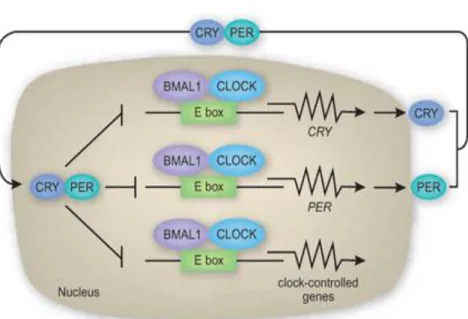
Figure 1.1: Core clock mod ... 2
Table 1.1 Effect of clock gene mutations on period lenght ... 3
Figure 1.2 Core clock model summarizing secondary loops of circadian clock regulation. ... 5
CHAPTER 2 ... 8
Gene Model 129 (Gm129) Encodes a Novel Transcriptional Repressor that Modulates Circadian Gene Expression ... 8
Summary ... 8
vii
Results ... 11
The Gm129 gene is a direct target of CLOCK:BMAL1:CRY1 and oscillates in mouse liver . 11 Figure 2.1: Gm129 is a direct target of the CLOCK: BMAL1: CRY complex. ... 13
GM129 protein localizes in the nucleus and interacts with PER2 and BMAL1 ... 15
Figure 2.2: GM129 is a nuclear protein and oscillates in mouse liver ... 16
GM129 represses CLOCK and BMAL1 induced transcription ... 17
GM129 interacts with the CLOCK/BMAL1 complex on DNA both in vivo and in vitro ... 20
Figure 2.4: GM129 binds to CLOCK/BMAL1 on DNA both in vitro and in vivo. ... 22
Gm129 gene deficiency affects the expression of clock-controlled genes... 24
Figure 2.5: Generation of Gm129 knock-out mice ... 26
Lack of Gm129 in Cry1 knock-out mice delays the phase of Nr1d1 and Dbp expression ... 27
Figure 2.6: Effects of the disruption of Gm129 gene on circadian gene expression in mouse liver... 29
EXPERIMENTAL PROCEDURES ... 30
Table 2.1 ... 35
DISCUSSION ... 36
Figure 2.7: Model for the role of GM129 in modulating CLOCK:BMAL1 activities ... 38
CHAPTER 3 ... 40
CONCLUSIONS AND FUTURE DIRECTIONS ... 40
Figure 3.1: Possible importance of GM129 and PER2 complex. ... 41
viii
LIST OF FIGURES AND TABLES
Figure 1.1: Core clock model………..……….2
Table 1.1 . ... 3
Figure 1.2 Core clock model summarizing secondary loops of circadian clock regulation. ... 5
Figure 2.1: Gm129 is a direct target of the CLOCK: BMAL1: CRY complex……….13
Figure 2.2: GM129 is a nuclear protein and oscillates in mouse liver………..16
Figure 2.3: GM129 interacts with BMAL1 and PER2………..18
Figure 2.4: GM129 binds to CLOCK/BMAL1 on DNA both in vitro and in vivo………22
Figure 2.5: Generation of Gm129 knock-out mice………26
Figure 2.6: Effects of the disruption of Gm129 gene on circadian gene expression in mouse liver……….29
Table 2.1……….35
Figure 2.7: Model for the role of GM129 in modulating CLOCK:BMAL1 activities………..38
ix
LIST OF ABBREVIATIONS
bHLH basic helix-loop-helix bZIP basic leucine zipper
BMAL1 brain and muscle ARNT-like 1 protein C1orf51 chromosome 1 open reading frame 51 CCGs clock controlled genes
ChIP chromatin immunoprecipitation
ChIPseq chromatin immunoprecipitation sequencing CLOCK circadian locomotor output cycles kaput protein
CRY cryptochrome protein
DAPI 4',6-diamidino-2-phenylindole
DBP D site of albumin promoter binding protein
E-box enhancer box
EGFP enhanced green fluorescent protein
FASPS familial advanced sleep-phase syndrome
GAPDH glyceraldehyde 3-phosphate dehydrogenase
GM129 gene model 129
HLF hepatic leukemia factor
x NP40 nonylphenoxypolyethoxylethanol
NPAS2 neuronal PAS domain-containing protein 2
Nr1d1 nuclear receptor subfamily 1, group D, member 1
Nr1d2 nuclear Receptor Subfamily 1, Group D, Member 2
qPCR quantitative real time polymerase chain reaction
PAGE polyacrylamide gel electrophoresis
PCR polymerase chain reaction
PER period protein
RT-PCR reverse transcriptase PCR
RORC RAR-Related Orphan Receptor C
SCN suprachiasmatic nucleus
SDS sodium dodecyl sulfate
TEF thyrotrophic embryonic factor
TTFL transcription-translation feedback loop
μm micrometer
XPB Xeroderma Pigmentosum B
1
CHAPTER 1:
INTRODUCTIONCircadian Clock
The term “circadian” is derived from Latin words circa (about, approximate) and diem (day) and refers to a time period in an approximate length of the day. Circadian clocks are endogenous timekeeping systems that govern the daily cycles of behavior and physiology in a variety of organisms (2,3). The molecular clock that drives circadian expression of clock controlled genes (CCGs) has been well characterized in model organisms such as Neurospora crassa, Arabidopsis thaliana, Drosophila melanogaster, and Mus musculus.
Although core clock mechanisms in most organisms are conserved, the key players and functions of the genes has been diversified and became more complex from primitive organisms to mammals (4). One of the first core clock genes discovered is Period (Per) in Drosophila (5).
Genetic studies in mice lead to discovery of additional genes that function in the regulation of the circadian clock (6,7). Classical model of mammalian core clock involves CLOCK and BMAL1 as transcription activators and Cryptochrome (CRY) and Period (PER) as transcription
2
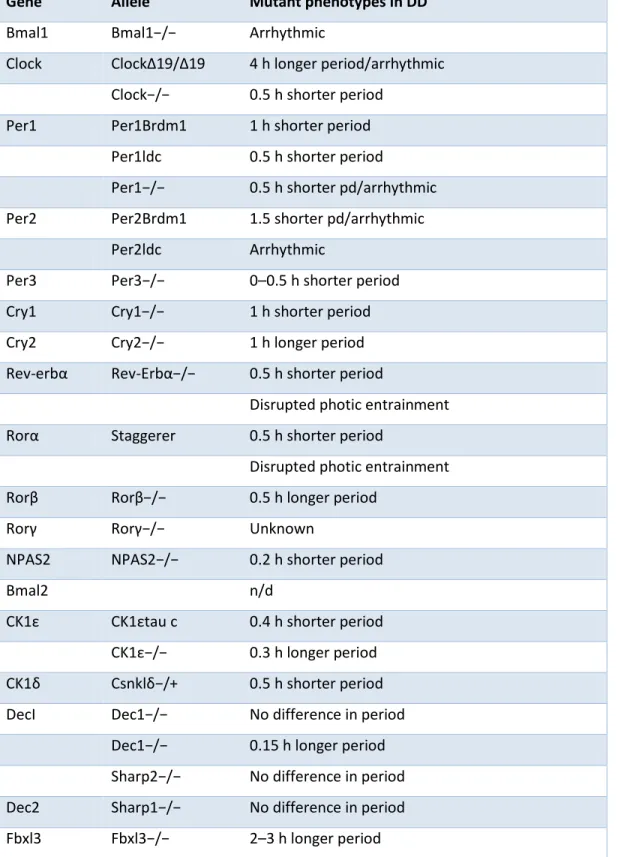
Each of the core clock genes are well characterized in mice. The effects of gene mutations on period length are analyzed by recording the wheel running activities of mice in which mice are kept in light/dark cycle for a certain period of time and then stitched to dark/dark cycle. Period length of wild-type mice in total darkness is about 23.8 hours. Cry1 mutation in mice shortens the period by 1 hour and Cry2 mutation lengthens it by 1 hour. Cry1/Cry2 double knock-out mice are arrhythmic (8). Bmal1 knock-out mice are also arrhythmic (9). Clock knock-out mice show 0.5hr shorter periods (10) and Per2 knock-out mice are arrhythmic after several days in constant darkness (11). Table 1.1 summarizes the period changes in mice mutant to specific clock gene.
3
Table 1.1 Effect of clock gene mutations on period lenght. Summary of period changes in mice deficient of core clock genes or secondary clock regulators. n/d- not determined, DD- dark-dark cycle. (Modified from (12) ).
Gene Allele Mutant phenotypes in DD
Bmal1 Bmal1−/− Arrhythmic
Clock ClockΔ19/Δ19 4 h longer period/arrhythmic Clock−/− 0.5 h shorter period
Per1 Per1Brdm1 1 h shorter period Per1ldc 0.5 h shorter period
Per1−/− 0.5 h shorter pd/arrhythmic Per2 Per2Brdm1 1.5 shorter pd/arrhythmic
Per2ldc Arrhythmic
Per3 Per3−/− 0–0.5 h shorter period Cry1 Cry1−/− 1 h shorter period Cry2 Cry2−/− 1 h longer period Rev-erbα Rev-Erbα−/− 0.5 h shorter period
Disrupted photic entrainment Rorα Staggerer 0.5 h shorter period
Disrupted photic entrainment Rorβ Rorβ−/− 0.5 h longer period
Rorγ Rorγ−/− Unknown
NPAS2 NPAS2−/− 0.2 h shorter period
Bmal2 n/d
CK1ε CK1εtau c 0.4 h shorter period CK1ε−/− 0.3 h longer period CK1δ Csnklδ−/+ 0.5 h shorter period DecI Dec1−/− No difference in period
4
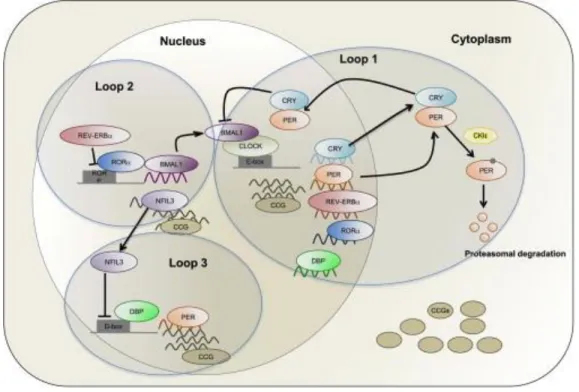
Since the establishment of core clock model, there were discoveries of other genes that play roles in the regulation of the circadian clock. Nuclear receptor proteins (Nr1d1, Nr1d2, and RORs (α, β, γ)) and D-box binding proteins (DBP and NFIL3) have been shown to function in the regulation
of the circadian clock. Clock controlled genes have also been shown to be controlled by other additional response elements such as D-box (DBP response element TTATG(C/T)AA) and RRE (RevErbA response element, or ROR response element (RORE) (A/T)A(A/T)NT (A/G)GGTCA)) (13). Some of the core clock genes are regulated by these two regulatory sites. Per (1, 2, and 3), Cry1, Nr1d1, Nr1d2, Rorα, and Rorβ genes have D-boxes in their promoters. In contrast, Bmal1,
Clock, Npas2, Cry1, NFIL3, and Rorc are regulated by RORE sites. Figure 1.2 shows the most recent clock model in which the regulation of clock controlled genes with E-boxes, D-boxes and RORE sites are summarized. Nuclear receptors Nr1d1 and Nr1d2 (also called Rev-Erb α and β) act as repressors of clock controlled genes that have RORE sites in their promoters and Bmal.
5
6
The master regulator of the circadian clock in mammals is located in suprachiasmatic nucleus (SCN). However, it has been shown that peripheral tissues such as liver (16) have their own circadian clocks indicating presence of cell-autonomous oscillators. Individual tissues and organs rely on signals from the master regulator (SCN) to be entrained with the surrounding
environment. SCN receives photic information from retina and keeps other parts of the body entrained by means of neuronal signals, endocrine signals and body temperature fluctuations. Genome-wide transcriptome analysis found that between %2-%10 of genes in the peripheral tissues show circadian oscillation (17-20).
Most of the oscillating genes in peripheral tissues function in key pathways such as metabolic pathways, signaling pathways etc. (21). Therefore, it is expected that the disruption of circadian rhythm can have serious consequences in the organism. One of the classic papers demonstrating a link between circadian clock disruption and health implications showed that there is increased risk of breast cancer in nurses working on rotating night shifts (22). In addition, circadian clock disruption has also been linked to sleep disorders. Familial advanced sleep-phase syndrome (FASPS) is a sleep disorder in which people have difficulty staying awake until desired time and staying asleep until desired time. S662G mutation in the Per2 gene which increases PER2
turnover and leads to shorter periods was shown to be the primary cause of FASPS (23). Another mutation in core clock gene Clock (CLOCKΔ19)was shown to make mice obese as a results of hypoglycemia and hypoinsulinaemia since key enzymes in the metabolic pathways are controlled by the circadian clock (24). There are some studies linking core clock gene mutation to
7
pathways that Bmal1 is associated with such as the regulation of reactive oxygen species (ROS) homeostasis (27).
8
CHAPTER 2:
Gene Model 129 (Gm129) Encodes a Novel Transcriptional Repressor that Modulates Circadian Gene Expression
Summary
The mammalian circadian clock is a molecular oscillator composed of a feedback loop that
involves transcriptional activators CLOCK and BMAL1, and repressors Cryptochrome (CRY) and Period (PER). Here we show that a direct CLOCK-BMAL1 target gene, Gm129, is a novel regulator of the feedback loop. ChIP analysis revealed that the CLOCK:BMAL1:CRY1 complex strongly occupies the promoter region of Gm129. Both mRNA and protein levels of GM129 exhibit high amplitude circadian oscillations in mouse liver, and Gm129 gene encodes a nuclear-localized protein that directly interacts with BMAL1 and represses CLOCK:BMAL1 activity. In vitro and in vivo protein-DNA interaction results demonstrate that, like CRY1, GM129 functions as a repressor by binding to the CLOCK:BMAL1 complex on DNA. Although Gm129-/- or Cry1 -/- Gm129-/- mice retain a robust circadian rhythm, the peaks of Nr1d1 and Dbp mRNAs in liver
9
INTRODUCTION
Circadian clocks are endogenous timekeeping systems that govern the daily cycles of behavior and physiology in a variety of organisms (2,3). In mammals, the 24-hour circadian oscillator operates as a transcription-translation feedback loop (TTFL) involving both positive (transcriptional activators) and negative (transcriptional repressors) components. The transcriptional activators are CLOCK/NPAS2 and BMAL1, whereas Cryptochrome (CRY1 and CRY2), and Period (PER1 and PER2) act as transcriptional repressors. In the TTFL model, CLOCK:BMAL1 heterodimers bind to the promoter region of Per and Cry genes through E-box DNA regulatory sites and activate transcription. Upon transcriptional activation, gradually accumulated CRY and PER proteins abrogate their own transcription by repressing CLOCK:BMAL1’s activity (28,29). This feedback loop repeats every ~24 hours and results in
rhythmic activities of the CLOCK-BMAL1 complex. Besides the promoters of Cry and Per genes, CLOCK:BMAL1 also binds to E-box elements in the promoter regions of thousands of clock-controlled genes, including transcription factors, such as the nuclear receptor Rev-erb alpha
(Nr1d1), and the PAR domain bZIP transcription factors Dbp (21). These CLOCK:BMAL1 controlled transcription factors also exhibit high amplitude oscillation at the protein level in tissues. Thus, the CLOCK:BMAL1 complex and clock controlled transcription factors drive massive transcriptional oscillation in various tissues in mammals (18).
10
ChIP-Seq analysis (30,31). It was reported that, in liver, BMAL1 rhythmically bound to ~2000 genomic targets (31). Based on these ChIP-Seq results, direct CLOCK:BMAL1 target genes were predicted and were ranked according to binding strength. Interestingly, among the target genes with highest BMAL1 chromatin binding strength, most of them are well-studied circadian genes. The top 10 CLOCK:BMAL1 target genes include three core clock gene Per1, Per2, Cry2 (8,32); three nuclear receptors Rorc, Nr1d1 and Nr1d2 involved in the core clock regulation (33,34), and three PAR domain bZIP transcription factors Dbp, Hlf and Tef which function as key genes in the output pathways (35). Only one gene remains uncharacterized, which is gene model 129 (Gm129) that encodes a novel protein with no predicted functional domains. Gm129 is also implicated as a direct CLOCK:BMAL1 target gene based upon its strong transcriptional oscillation in liver in a additional independent BMAL1 ChIP-seq analysis using NIH3T3 and WI38 cell line (30).
Coincidently, a ChIP-seq and gene expression study in our group also found that Gm129 is a direct target gene of the BMAL1:CLOCK:CRY1 complex, and Gm129 exhibits high amplitude protein oscillation in mouse liver. These properties suggest that Gm129 might be an important factor in the molecular clock. Thus, we have conducted detailed molecular, biochemical and genetic analysis to characterize Gm129’s roles in circadian clock regulation. In this study, we
demonstrate that GM129 can directly interact with core clock proteins BMAL1 and PER2. GM129 also localizes in the nucleus and strongly represses CLOCK:BMAL1 transcriptional activity in a reporter gene assay. Additional in vitro and in vivo assays suggest that GM129 protein directly interacts with the CLOCK-BMAL1 complex on DNA. In mouse liver, the absence of Gm129
extends the peak expression of Nr1d1 and Dbp. More importantly, in the Cry1-/- background, the
11
that Gm129 functions as a novel transcriptional repressor in the mammalian clock transcription-translation feedback loop.
Results
The Gm129 gene is a direct target of CLOCK:BMAL1:CRY1 and oscillates in mouse liver
12
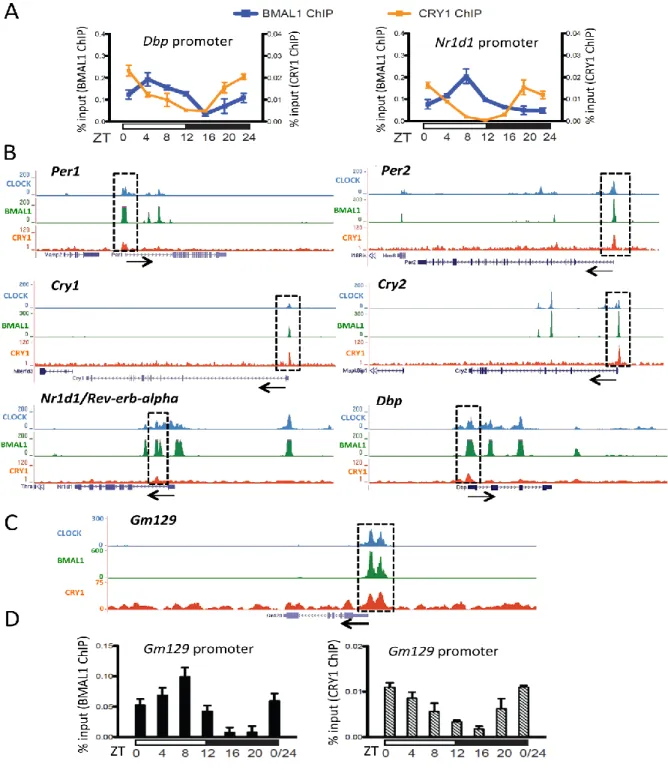
Consistent with other published studies (30,31,38), our ChIP-seq results showed that the Gm129
gene has high affinity binding sites for CLOCK, BMAL1 and CRY1 in its promoter region (Figure 2.1C). To further characterize this binding,we carried out ChIP-PCR assays with livers harvested at different time points to examine circadian rhythmicity of binding of CLOCK:BMAL1:CRY1 complex to the Gm129 promoter. Figure 2.1D shows ChIP-PCR data over the course of a diurnal cycle for the Gm129 gene. Clearly, both BMAL1 and CRY1 rhythmically occupy E-boxes in the
Gm129 promoter with different binding phases.
13
Figure 2.1: Gm129 is a direct target of the CLOCK: BMAL1: CRY complex.
(A) Rhythmic Binding of BMAL1 (blue curve) and CRY1 (orange curve) to the Dbp and Nr1d1
14
were prepared from mouse liver tissues taken at 4-h intervals in a 24- hour cycle. Error bars represent standard deviation of 3 biological repeats.
(B) Highly overlapping CLOCK, BMAL1 and CRY1 binding to the Per1, Per2, Cry1, Nr1d1 and
Dbp gene. Gene tracks represent binding of CLOCK (blue), BMAL1(green), and CRY1(red) to various genes. Gray rectangles highlight co-occupied sites. The scale of the y axis (peak height) is adjusted for individual traces for visual clarity. Beneath each set of gene tracks is a representation of the intron/exon structure. Black arrow indicates the orientation of transcription.
15
GM129 protein localizes in the nucleus and interacts with PER2 and BMAL1
16
Figure 2.2: GM129 is a nuclear protein and oscillates in mouse liver
(A) Circadian oscillation of Gm129 mRNA in mouse liver. Mice were sacrificed at Zeitgeber times (ZT) 4, 8, 12, 16, 20 and 24/0 hours. The abundance of Gm129 mRNA was determined by quantitative RT-PCR and normalized to that of Gapdh. The maximal value was normalized to 1. Error bars represent standard deviation of 2 biological repeats. The 0/24 hour time point is plotted twice to emphasize the trend.
(B) Oscillation of GM129 and core clock protein levels in liver nuclei. Mice were kept in constant dark for 24 hours following 12hrs dark /12hrs light cycles. After 24 hours in the dark, nuclear extracts were prepared from livers collected at 0, 4, 8, 12, 16, and 20 hours in dim red light and GM129 was detected by western blots. The XPB protein was used as a loading control. The GM129 signal is marked by a red asterisk. Note there is a nonspecific antibody cross-reactive band above the GM129 signal. The blot is representative of two experiments.
17
GM129 represses CLOCK and BMAL1 induced transcription
18
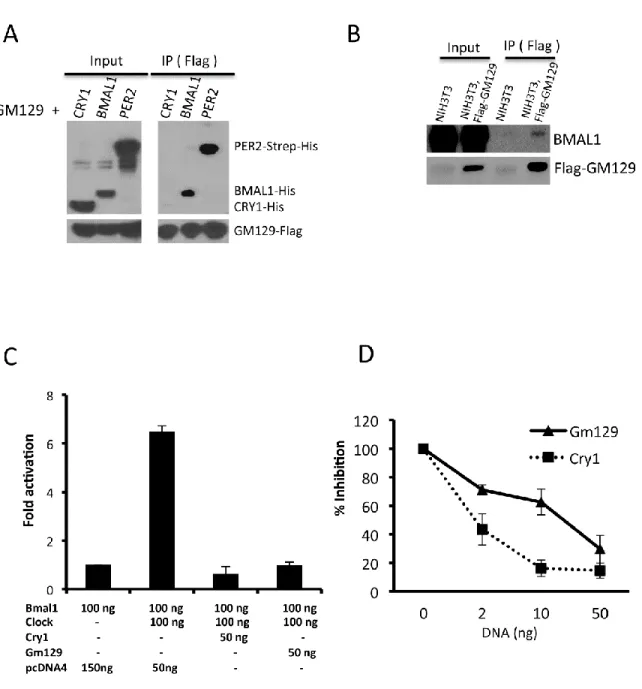
Figure 2.3: GM129 interacts with BMAL1 and PER2, and represses CLOCK/BMAL1 activated transcription.
(A) GM129 interacts with BMAL1 and PER2. Sf21 cells were co-infected with Flag-GM129 baculovirus together with either PER2-Strep-His, BMAL1-His, or CRY1-His baculovirus. Cell extracts were prepared 48 hours after infection and subjected to immunoprecipitation using FLAG resin. Immunoprecipitates were analyzed by western blot.
19
immunoblotting. GM129 and BMAL1 were detected by anti-FLAG anti-BMAL1 antibody, respectively.
(C) HEK293 cells were transiently transfected with 25 ng of Per1 luciferase reporter construct, 2.5 ng of pBind (for normalization of transfection efficiency) and a total 250 ng of the indicated combinations of Clock, Bmal1, Gm129, and Cry1 expressing constructs together with pcDNA4. Cells were collected 48 h after transfection. Error bars represent standard deviation from 3 experimental repeats.
20
GM129 interacts with the CLOCK/BMAL1 complex on DNA both in vivo and in vitro
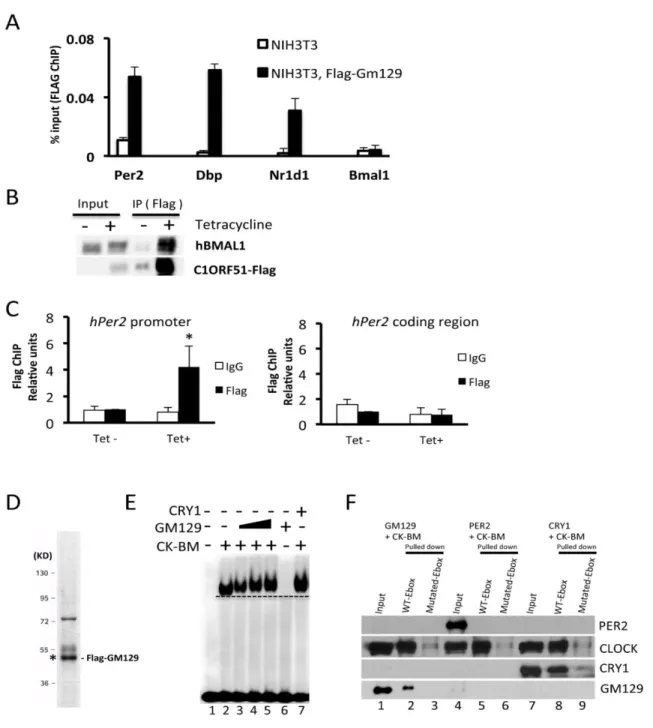
Although GM129 protein represses CLOCK-BMAL1’s activity in the reporter gene assay, the detailed molecular mechanism is unclear. Generally, a protein can function as a repressor by two mechanisms: (a) Repressor can bind to the activator complex on DNA and interfere its interaction with co-activator or with RNA polymerase II complex. (b) Repressor can directly dissociate the activator from DNA. Previously, we have reported that CRY1 binds to the CLOCK-BMAL1 complex on DNA in vitro and in vivo (36). Here, we have conducted parallel experiments to examine how GM129 functions as a repressor of CLOCK:BMAL1. The in vivo system that we used employed an NIH3T3 cell line that stably expresses Flag-tagged GM129. A ChIP assay was conducted with these cells to measure the binding of GM129 to the E-box elements in the Per2,
Dbp, Nr1d1 and Bmal1 promoters. As shown in Figure 2.4A, Flag-GM129 showed significant recruitment to the Per2, Dbp, and Nr1d1 E-box compared to the NIH3T3 controls. No significant recruitment was detected in the Bmal1 promoter that does not contain CLOCK:BMAL1 binding sites, which suggest the recruitment is specific and CLOCK:BMLA1 dependent. Equally important, Flag tagged C1ORF51, a human homolog of Gm129, also interacts with hBMAL1 and binds to the hPer2 promoter in HEK293R cells that stably expresses Flag-C1ORF51 protein, which suggests that the molecular function of GM129 protein is evolutionarily conserved (Figures 2.4B and 2.4C).
The in vivo interactions between GM129 and the Per2 promoter could be achieved either directly through the CLOCK:BMAL1 complex or through other proteins. Here, we used a defined
21
expression system as described previously (36). Purified GM129 is shown in Figure 2.4D. Then, we investigated the effects of GM129 on the CLOCK:BMAL1:E-box ternary complex using electromobility shift assay (EMSA). As shown in Figure 2.4E, CLOCK:BMAL1 binds to the E-box specifically (lane 2), and addition of GM129 protein retards the mobility of the CLOCK:BMAL1:E-box complex indicating the binding of GM129 to the ternary complex (lanes 3,4,5). CRY1 is a positive control that can also shift the CLOCK:BMAL1:E-box complex (lane 7) (36). GM129 on its own does not bind to E-box under the conditions used (lane 6), indicating that its binding to the ternary CLOCK:BMAL1:E-box complex through interaction with CLOCK:BMAL1.
Next, the interactions of GM129 with CLOCK:BMAL1:E-box was tested by an in vitro DNA pull-down assay to further confirm the conclusion from the EMSA experiments. In this assay, we used a 30-bp fragment encompassing a non-canonical E-box (CACGTT, Table 2.1) in the mouse
22
Figure 2.4: GM129 binds to CLOCK/BMAL1 on DNA both in vitro and in vivo.
23
and PCR, respectively. Data are expressed as percentage of input. Error bars represent standard deviation of 3 experiments.
(B) Interaction of human homolog of GM129 (C1ORF51) with endogenous hBMAL1 in extracts made from a 293R cell line stably expressing Flag-C1ORF51 under the control of a tetracycline inducible promoter (Flp-In/FLAG-C1ORF51 cells). FLAG resin was used to pull down Flag-C1ORF51, and immunoprecipitates were analyzed by western blot. Note that Flag-C1ORF51 protein is also enriched by flag resin without tetracycline due to the minor leaky expression. (C) C1ORF51 binding to the E-box DNA sequence in hPer2 promoter was determined by ChIP assays followed by quantitative PCR. Crosslinked nuclear extracts were isolated after 24 hours tetracycline induction and subjected to ChIP assay with FLAG antibodies against Flag-C1ORF51 or IgG. Upon tetracycline treatment, Flag-C1ORF51 showed significant recruitment to the hPer2
E-box compared to the IgG control and non-tetracycline controls (Left panel, black asterisk: p<0.05). No significant recruitment was detected in the hPer2 coding region (Right panel). Data are expressed as percentage of input. Error bars represent standard deviation of 3 experiments. (D) Flag-GM129 protein was expressed using the Sf21/baculovirus system. After affinity chromatography purification, protein was analyzed by SDS-PAGE/Commassie blue staining. GM129 protein is marked with asterisk confirmed by immunoblotting.
(E) Effects of GM129 on the mobility of the CLOCK:BMAL1:E-box complex analyzed by electromobility shift assay (EMSA). A radiolabeled 14mer E-box duplex (1.5nM) (M34, Table 2.1) (44) was incubated with purified BMAL1-CLOCK heterodimer (0.5nM), and then increasing amounts of GM129 proteins (0.1, 0.5, 1nM) were added. Note the addition of GM129 results in slower migration of the protein-DNA complex (lanes 3, 4 and 5). GM129 alone (1 nM) does not bind to DNA (lane 6). CRY1 (1 nM) was used as a positive control to show the shifted CLOCK:BMAL1:CRY1 complex on DNA. A dashed line parallel to the leading edge of the CLOCK:BMAL1:E-box complex is drawn to indicate the change in mobility of the protein-DNA bands upon addition of GM129 and CRY1.
24
Gm129 gene deficiency affects the expression of clock-controlled genes
If GM129’s repressor function is essential and cannot be compensated by other genes, depletion of Gm129 in mice would affect circadian rhythm rhythmicity. To test this, Gm129tm1e(KOMP)Wtsi
heterozygous mice (hereafter Gm129+/-) were obtained from the NIH Knockout Mouse Project (KOMP) Repository. The targeting strategy for the knockout is summarized in Figure 2.5A (45).
Gm129-/-homozygous mice were obtained by mating these heterozygotes. Genotyping was done by PCR as shown in Figure 2.5B. Figures 2.5C and 2.5D show that Gm129 RNA and protein are not expressed in knock-out mice, thus the Gm129-/- is a null allele. Heterozygote intercrosses produced progeny of each genotype in the expected Mendelian frequency, indicating that homozygous animals are viable. Overall, homozygous Gm129-/- mice had no gross developmental
abnormalities.
To determine the effects of GM129 disruption on behavioral rhythmicity, we monitored wheel-running activity under constant darkness (DD) for 1 week, following an initial 14 days in a 12 hr light/ 12 hr dark (LD) cycle. Although the animals appear robustly rhythmic, we were not powered to detect minor period length differences (data not shown). The circadian oscillator controls not only behavior, but also gene transcription in the SCN and peripheral tissue. Hence, it was of interest to determine the effects of Gm129 deficiency on circadian regulation of gene transcription. Thus, we analyzed the expression pattern of canonical clock genes Dbp, Nr1d1,Per1 and Bmal1
25
26 Figure 2.5: Generation of Gm129 knock-out mice
(A) Schematic representation of the WT (Gm129+/+) allele and targeted allele (Gm129-/-). Homologous recombination leads to the insertion of a 7-kb LacZ and Neomycin cassette between exon 1 and exon 2 in the WT Gm129 allele. Black lines represent introns. Black and dashed rectangles represent non-coding and coding exons, respectively. Solid line A and dashed line B locate the products of PCR genotyping. Two small arrows show the location of the primers used for RT-PCR (Table 2.1).
(B) Primers were designed as indicated in Figure5A and Table 2.1 for genotyping. 984bp and 662bp PCR products were amplified using WT, heterozygote or knock-out mouse tail genomic DNA, respectively.
(C) Gm129 gene expression (normalized to Gapdh) in the WT mice and Gm129-/- mice. The value of Gm129 expression in Knock-out mice was set to 1. Error bars represent standard deviation of 3 biological repeats.
(D) GM129 protein deficiency in Gm129-/- mouse liver. Liver nuclear extracts were prepared from wild-type (Gm129+/+) or homozygous Gm129-/- mutant mice at ZT12 and analyzed by SDS-PAGE
27
Lack of Gm129 in Cry1 knock-out mice delays the phase of Nr1d1 and Dbp expression Because Gm129-/- mice do not show any significant alteration in their circadian rhythm, we
suspect that GM129 functions in a redundant manner with another protein in mice. It was previously reported that, except for Bmal1 (9), deficiencies of single core clock regulator genes normally do not abolish circadian rhythms. For example, Cry1-/- and Cry2-/- single knock-out mice have stable circadian rhythms with altered period (8), but Cry-/- double knock-out mice are totally arrhythmic. In addition, Per1 and Per2 genes also have redundant roles in circadian regulation (11,32). Therefore, we decided to combine the Gm129 mutation with another core clock gene mutation that possibly compensates GM129’s function. Although Gm129 does not have analogs
in the mouse genome, our protein-protein interaction assay and reporter gene assay suggest Gm129
gene has a functionally redundant role with Cryptochrome as a transcriptional repressor on CLOCK:BMAL1. Hence, we decided to make Cry1-/- Gm129-/- double knock-out mice to examine
the role of Gm129 in circadian regulation. Dbp, Nr1d1,Per1 and Bmal1 rhythmic gene expression in liver were used as readouts of the circadian rhythm. Results are shown in Figure 2.6C and 2.6D, which is aligned under and may be compared with Figure 2.6A and 2.6B. In agreement with a previous report, the Cry1 mutation alone causes an advanced phase shift (~ 4 hours) of Dbp
(37), Per1 and Nr1d1 (black curve and blue curve). Most importantly, Cry-/-Gm129-/-mice exhibit
28
29
Figure 2.6: Effects of the disruption of Gm129 gene on circadian gene expression in mouse liver.
(A and B) Circadian expression of Dbp, Nr1d1, Per1, and Bmal1 in wild-type (black curve) and
30
(C and D) Circadian expression of Dbp,Nr1d1, Per1 and Bmal1 in Cry-/- (blue curve) and Cry -/-Gm129-/-(red curve) mouse livers analyzed by quantitative RT-PCR.
Liver samples were collected every 2 hours from mice that were housed under 12 hours light:12 hour dark conditions. Dbp and Nr1d1 mRNA levels were first normalized to Gapdh expression. Then, the maximal value of gene expression in the day/night cycle was normalized to 1. Error bars represent standard deviation of two biological repeats. Red asterisk indicates significantly altered
Dbp,Nr1d1,Per1, and Bmal1 transcription in Gm129-/- and Cry-/-Gm129-/-mouse liver compared to control (p<0.05).
EXPERIMENTAL PROCEDURES
Mice
All animal procedures were in accordance with the National Institutes of Health guidelines and were approved by the Institutional Animal Care and Use Committee of the University of North Carolina, Chapel Hill. Gm129 heterozygote mice were purchased from the UC Davis KOMP repository and bred to obtain Gm129-/- mice. Primers were designed as indicated (Figure 2.5A and Table 2.1) for genotyping. Cry1-/-, Gm129-/- double knock-out mice were generated by crossing Cry1-/- (8) and Gm129-/- mice. All mice were maintained on a 12 hour light, 12 hour dark schedule.
Plasmids
To generate pEGFPN1-Gm129, the Gm129 coding sequence was amplified by PCR from mouse fibroblast cDNA and inserted into the pEGFP-N1 vector. The pBABEpuro-Flag-HA-Gm129
31
sequence into the pFastbac1 (Invitrogen) vector with the Flag tag sequence at the forward oligo and Myc tag sequence at the reverse oligo. Constructs for expressing mCLOCK, mBMAL1, mCRY1, and mPER2 were described previously (36).
Cell lines
NIH3T3 cells expressing Flag-GM129 were made by retrovirus infection. Briefly, the
pBABEpuro-Flag-HA-Gm129 construct was co-transfected together with pVSVG and pCIHPZ into HEK293T to produce recombinant retrovirus particles. Then MEF cells were infected with the retrovirus and transfectants were selected in media containing puromycin for 2 weeks. Single colonies were picked and cultured for subsequent analysis. The Flp-In/FLAG-C1ORF51 cell line was generated according to the manufacturer's protocols using the Flp-In T-REx-293 system (Invitrogen).
Immunoblotting and Antibodies
32 Immunoprecipitation
Insect cells or mammalian cells were collected and lysed in lysis buffer (50 mM TrisCl pH 7.5, 150mM NaCl, 10% Glycerol, 1%Tween-20, 0.1 % NP40, protease inhibitor cocktail from Roche). Lysates were incubated with anti-FLAG M2-agarose beads (Sigma) for 4 hours at 4 °C. Beads were washed 4 times with lysis buffer; bound proteins were eluted in 2X SDS-sample buffer and analyzed by immunoblotting.
Fluorescence Microscopy
For GFP fluorescence microscopy, HEK293T cells were cultured on Poly-D-Lysine 12 mm coverslips (BD Biosciences) placed in 6-well plates. Cells were transfected with pEGFP-N1 and
pEGFPN1-Gm129 plasmids using Lipofectamine 2000 reagent (Invitrogen) at around 50 % confluence. 48 hours after transfection, cells were washed twice with PBS, fixed immediately with 3.7% methanol-free formaldehyde in PBS for 15 min, and washed twice with PBS. Coverslips were mounted with SlowFade Gold Antifade Reagent with DAPI (Invitrogen). Images were captures using a LeicaSP2 confocal microscope.
Chromatin Immunoprecipitation (ChIP) and ChIP-Sequencing
33
at 25 °C. Cross-linking reactions were stopped by the addition of 21 ml of ice-cold nuclei buffer (2.2 M sucrose, 125 mM glycine, 10 mM HEPES pH 7.6, 15 mM KCl, 2 mM EDTA, 0.15 mM spermine, 0.5 mM spermidine, 0.5 mM DTT, 0.5 mM PMSF and 10% glycerol). The homogenate was layered on top of 10 ml of cold nuclei buffer and centrifuged for 90 min at 24,000 rpm (100,000g) at 4 °C in a Beckmann SW27 rotor. The nuclei were washed with wash buffer (20 mM Tris, pH 7.5, 150 mM NaCl, 2 mM EDTA) and stored at -80 °C. Cross-linked nuclei were then subjected to ChIP analysis according the procedures described previously (36). For ChIP-seq, ChIP DNA was ligated to single-end sequencing adapters and amplified. DNA fragments of 300-800 bp in size were purified and sequenced (50 base) on an Illumina Hi-seq2000 instrument (Illumina, California, USA). The reads were aligned to the mm9 mouse reference genome using Bowtie accepting up to 4 reportable alignments and two mismatches per read (47). In cases where more than a single alignment was possible, only the one with the highest mapping quality was reported using bowtie’s "--best" option. To generate ChIP-seq signal tracks, reads were extended
in-silico to 150bp, and the number of reads overlapping with each base in the genome was counted and divided by the chromosome-wide average of per-base read coverage. The average signal over 50bp windows was calculated and viewed using the UCSC genome browser (Figure 2.1).
Reporter gene assay
34 Pulldown Assay with Immobilized DNA
Biotin labeled E-box DNA or mutated E-box DNA (Table 2.1) was immobilized on magnetic streptavidin beads. Immobilized DNA was washed twice in reaction buffer (10 mm Tris-HCl, pH 7.9, 50 mm NaCl, 5 mM dithiothreitol, 10% glycerol, 0.01% Nonidet P-40 and 10 μg/ml BSA) before setting up binding reactions. Reactions (200μl) were prepared in reaction buffer with the
indicated combinations of CLOCK:BMAL1 (10 nM), GM129 (10 nM), PER2 (10 nM), and CRY1 (10 nM) and 500 ng of immobilized DNA. After incubation for 1 h at 4°C, DNA-protein complexes were collected on a magnet and washed three times with reaction buffer. The proteins associating with the DNA were analyzed by SDS-PAGE and immunoblotting.
RNA Extraction, Reverse Transcription and Quantitative Real-time RT-PCR
35 Table 2.1
Primer sets used for ChIP assay.
Name Sequence Reference
mPer2E2F GGTTCCGCCCCGCCAGTATGC Yoo SH et al. PNAS(2005)
mPer2E2R CCGTCACTTGGTGCGCTCGGC
mDbp5F TGTGAACACTCGGCTCCTTT This study
mDbp5R ATATTTGGCCAATGGGAGGA
mNr1d1CPF GCTGCTGGAAAAGTGTGTCA This study
mNr1d1CPR ATGGAGAAATGAGGCACCAG
mBmal50F CGGATTGGTCGGAAAGTAGG This study
mBmal50R AGCCATGCCGACACTCAC
hPer2CPF ATTGAGGAACCGACGAGGT This study
hPer2CPR GCCCACAGCTGCACGTAT
Gm129CPF CACGGCTGGAGTGTACAGAG This study
Gm129CPR GAAAGAGTGGGGAGTCACGA
Primer sets used for Genotyping.
Name Sequence Reference
CSD-Gm129-TTR1 CAGAACCTGCAACTGAAAAGCAAAGC
Common-3’F CACACCTCCCCCTGAACCTGAAA This study
Gm129FG5 GCA GTG CTG TCC TAT TTA AGG CTA TGA
Primer sets used for RT-PCR.
Oligo sets used for EMSA and DNA pulldown assay.
Name Sequence Reference
M34TOP GGGACACGTGACCC
Hogenesch et al. PNAS(1998) M34BTM GGGTCACGTGTCCC
E-box AGCGCGCGCGGTCACGTTTTCCACTATGTG Yoo et al.
Mutated E-box AGCGCGCGCGGTGCTAGTTTCCACTATGTG PNAS(2005) Gene Name Forward primer (5’-3’) Reverse Primer (5’-3’)
Gm129 ACTCAAGATGGGTCGCTTTG GGGCAGCTATGTGAGGAAAC
mGapdh AACTTTGGCATTGTGGAAGG ACACATTGGGGGTAGGAACA
mDbp GACACCGTGGAGGTGCTAAT ACCTCCGGCTCCAGTACTTC
mNr1d1 CCTGACTCAAGGTTGTCCCACAT CATGGCCACTTGTAGACTTCCTG
mPer1 TGAGGAGCCAGAGAGGAAAG GGCTGAAGAGGCAGTGTAGG
36 DISCUSSION
In the circadian TTFL model, CRY and PER transcriptional repressors are essential components of the feedback loop. Besides CRY and PER, there are additional non-essential components of the core clock machinery that can repress CLOCK:BMAL1 activity. These proteins include the helix-loop-helix transcription factors, such as Differentially-Expressed in Chondorocytes-1 and -2 (DEC1 and DEC2) and Inhibitor of DNA Binding 2 (ID2). These proteins can inhibit CLOCK:BMAL1 activities possibly by interfering with the formation of the CLOCK:BMAL1 complex (49-51). DEC1 protein was also reported to delay the phases of Per1, Dbp and Nr1d1 in cells after serum synchronization (52). Another non-essential repressor is CLOCK-Interacting Protein, Circadian (CIPC), which can interact with CLOCK and inhibits CLOCK-BMAL1 transcriptional activity presumably by disrupting the binding between CLOCK and its transcriptional coactivators (53). Here, we demonstrated that similar to Cryptochrome, GM129 is a novel transcriptional repressor of CLOCK:BMAL1 protein complex that interacts with CLOCK:BMAL1 on DNA.
37
also suggest that, unlike CRY1, GM129 is an non-essential CLOCK:BMAL1 repressor that is not required for circadian rhythm generation, but functions as a modulator to influence the phase of CLOCK:BMAL1 controlled transcriptional oscillation. We noticed that, in addition to BMAL1, GM129 also interacts with PER2 in our immunoprecipitation assays. Further investigation on these protein-protein interactions might help us to understand the differences between GM129 and Cryptochromes. It is also conceivable that Gm129 might be essential for the function of some peripheral clocks when isolated cells are analyzed.
Our finding of Gm129 was driven by the hypothesis that mining ChIP-seq data for genes with high affinity CLOCK:BMAL1 binding sites in their promoter will identify important factors in the circadian clock regulation. In addition to Gm129, other genes also contains high affinity CLOCK:BMAL1 binding sites in their promoter region with uncharacterized functions in circadian physiology. Investigations on these genes could introduce more new players in molecular clock regulation.
Gm129 may also contribute to non-clock pathways in addition to its function in the core clock machinery. Many circadian transcriptional regulators have roles in multiple pathways. It was previously reported that both PER and CRY can directly interact with nuclear receptors to influence related signaling pathways (54-56). Thus, in order to understand the function of GM129 protein in circadian physiology, it will be important to identify the GM129’s binding partners and map its genome-wide binding sites in future studies.
38
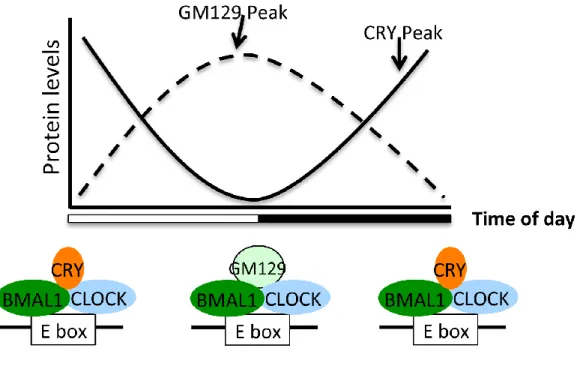
different time window compared to CRY and PER (Figure 2.7). Together with other essential and non-essential CLOCK:BMAL1 repressors, GM129 contributes to the precision of the molecular clock and fine-tunes regulation of rhythmic gene expression.
Figure 2.7: Model for the role of GM129 in modulating CLOCK:BMAL1 activities
39
ENDNOTES
1Chapter 2 was published as: Annayev Y, Adar S, Chiou YY, Lieb JD, Sancar A, Ye R. (2014) Gene model 129 (Gm129) encodes a novel transcriptional repressor that modulates circadian gene expression. J Biol Chem. 289(8):5013-24.
40
CHAPTER 3: CONCLUSIONS AND FUTURE DIRECTIONS
Daily rhythms in organismal behavioral, physiological, and metabolic events are controlled by circadian clock. Key components of the core clock components have been identified and it was shown that mutations in those genes have been implicated in sleep and metabolic disorders (23,24). There are also several non-essential clock genes that can influence circadian transcription but their deficiency does not have a major effect on the daily behavioral rhythms of mice (50-53). Here, I describe a novel gene called Gm129 and show that it also modulates circadian transcription and functions as a repressor.
Biochemical and cellular assays show that GM129 is a nuclear protein, and it interacts with BMAL1 and PER2. Also, in the reporter gene assay it represses CLOCK/BMAL1 induced transcription of luciferase gene. Even though, Gm129 knock-out mice (Gm129-/-) don’t show significant change in the circadian expression of clock genes, Cry1 and Gm129 double knock-out mice show about 4-6 hr phase advance in the circadian oscillation of clock genes analyzed indicating that Gm129 functions in the regulation of the circadian clock. However, there is still a lot of unknowns remain regarding the physiological role of Gm129.
41
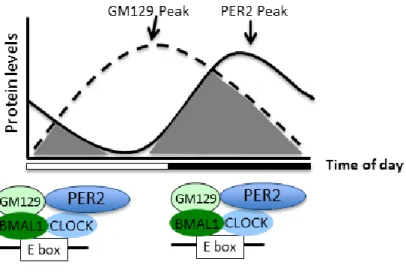
recombinant GM129 is heavily phosphorylated when co-expressed with either BMAL1 or PER2 (data not shown) indicating an effect of PER2 interaction on GM129. Also, PER2 protein levels peak about 10 hours later compared to the peak of the GM129 protein which presents another challenge to understanding the significance of this interaction. Our analysis was mainly done in liver where PER2 and GM129 protein levels peak at the different times. Possible explanation maybe that the interaction of GM129 with PER2 may be important in some tissues where both proteins peak at around same time. Also, it is not necessary to have both proteins to peak at the same time, having enough of each proteins at some point in the circadian cycle so that they can function together maybe sufficient. GM129 and PER2 may function as repressors in small time frame before another repressor replaces either GM129 or PER2 (Figure 3.1). It is also possible that, these two proteins affect each other’s stability and therefore regulate each other.
Figure 3.1: Possible importance of GM129 and PER2 complex.
42
An additional subject of investigation would be to identify other DNA sequences GM129 binds in the genome in addition to E-box enhancer elements. The fact that GM129 does not bind to BMAL1 promoter excludes the possibility of it binding to RORE (ROR response elements). However, it is still possible that GM129 can bind to the D-boxes. It is also possible that GM129 could bind to the promoters of certain group of genes not tested in our study and regulate specific pathways. Understanding of GM129 binding sites on the genome may provide wealth of evidence on its specific function in the regulation of the circadian clock and mammalian physiology. Currently, we know that GM129 interacts with BMAL1 and PER2 but it is also possible that GM129 can interacts with other proteins. Specifically, it is not clear how GM129 represses CLOCK/BMAL1 controlled transcription. There may be other factors that function in transcription repression or another clock gene may be involved in that process.
Finally, Gm129-KO mice were not analyzed for any metabolic or physiological defects in this study. As stated in chapter 1, mutations in core clock genes results in metabolic and sleep disorders (23,24). Gm129-KO mice feed and breed well and did not have a distinct abnormal physical appearance. However, it would be interesting to study Gm129-KO mice for any abnormalities in metabolic, sleep or other physiological pathways. Moreover, Cry1/Gm129 double knock-out mice also could be analyzed to better define the function of Gm129 because we see a more dramatic effect in circadian gene expression in this double knock-out compared to the single knock-out mice.
43
of GM129 is dependent on histone deacetylases (HDACs). Repressor activity of GM129 was reversed when they treated the cells with HDAC inhibitor trichostatin A (TSA), an inhibitor of HDAC activity. In addition to interactions with the core clock proteins they show that GM129 interacts with HDAC1 and they conclude that GM129 mediated repression is HDAC dependent. They also analyzed GM129-KO mice and found that GM129-KO mice show a slight change in the period length. Similar to our study, they crossed GM129-KO mice with Cry1-KO mice to analyze wheel running activities. They were reasoning that Gm129 gene shows Cry2 gene like properties with respect to its interactions and effect on wheel running activities of mice. However, unlike Cry -/- double knockout mice, Cry1-/- Gm129-/- double knock-out mice weren’t arrhythmic and had a 0.1hr difference compared to Cry1 -/- mice (58). The other group used computational tools to discover Gm129. They used machine learning to analyze and identify genes that resemble core clock genes from the genome-scale datasets. They tested the interaction of top candidate genes with the core clock proteins and found that GM129, similar to our finding, interacts with BMAL1 and PER2. They also show that GM129 abrogates BMAL1 interaction with the CBP and represses CLOCK/BMAL1 induced transcription (57). Overall, both studies show that GM129 is core clock gene and repress circadian transcription by several mechanisms.
In conclusion, I show that Gm129 is clock gene with repressor function and it interacts with the core clock genes. Gm129-KO mice show altered expression of clock genes and this effect is more dramatic when the Gm129 mutation is combined with Cry1 mutation. In addition, there are still some unanswered questions on the function of Gm129 regarding its binding sites in the genome, its interacting proteins and the phenotype of Gm129-KO mice.
44
REFERENCES
1. Sancar, A. (2008) The intelligent clock and the Rube Goldberg clock. Nature structural & molecular biology 15, 23-24
2. Bell-Pedersen, D., Cassone, V. M., Earnest, D. J., Golden, S. S., Hardin, P. E., Thomas, T. L., and Zoran, M. J. (2005) Circadian rhythms from multiple oscillators: lessons from diverse organisms. Nature reviews. Genetics 6, 544-556
3. Young, M. W., and Kay, S. A. (2001) Time zones: a comparative genetics of circadian clocks. Nature reviews. Genetics 2, 702-715
4. Young, M. W., and Kay, S. A. (2001) Time zones: a comparative genetics of circadian clocks. Nature reviews. Genetics 2, 702-715
5. Boothroyd, C. E., and Young, M. W. (2008) The in(put)s and out(put)s of the Drosophila circadian clock. Annals of the New York Academy of Sciences 1129, 350-357
6. Antoch, M. P., Song, E. J., Chang, A. M., Vitaterna, M. H., Zhao, Y., Wilsbacher, L. D., Sangoram, A. M., King, D. P., Pinto, L. H., and Takahashi, J. S. (1997) Functional identification of the mouse circadian Clock gene by transgenic BAC rescue. Cell 89, 655-667
7. King, D. P., Zhao, Y., Sangoram, A. M., Wilsbacher, L. D., Tanaka, M., Antoch, M. P., Steeves, T. D., Vitaterna, M. H., Kornhauser, J. M., Lowrey, P. L., Turek, F. W., and Takahashi, J. S. (1997) Positional cloning of the mouse circadian clock gene. Cell 89, 641-653
8. Vitaterna, M. H., Selby, C. P., Todo, T., Niwa, H., Thompson, C., Fruechte, E. M., Hitomi, K., Thresher, R. J., Ishikawa, T., Miyazaki, J., Takahashi, J. S., and Sancar, A. (1999) Differential regulation of mammalian period genes and circadian rhythmicity by cryptochromes 1 and 2. Proc Natl Acad Sci U S A 96, 12114-12119
9. Bunger, M. K., Wilsbacher, L. D., Moran, S. M., Clendenin, C., Radcliffe, L. A.,
Hogenesch, J. B., Simon, M. C., Takahashi, J. S., and Bradfield, C. A. (2000) Mop3 is an essential component of the master circadian pacemaker in mammals. Cell 103, 1009-1017
45
11. Bae, K., Jin, X., Maywood, E. S., Hastings, M. H., Reppert, S. M., and Weaver, D. R. (2001) Differential functions of mPer1, mPer2, and mPer3 in the SCN circadian clock.
Neuron 30, 525-536
12. Ripperger, J. A., Jud, C., and Albrecht, U. (2011) The daily rhythm of mice. FEBS letters
585, 1384-1392
13. Ueda, H. R., Hayashi, S., Chen, W., Sano, M., Machida, M., Shigeyoshi, Y., Iino, M., and Hashimoto, S. (2005) System-level identification of transcriptional circuits underlying mammalian circadian clocks. Nature genetics 37, 187-192
14. Preitner, N., Damiola, F., Molina, L. L., Zakany, J., Duboule, D., Albrecht, U., and Schibler, U. (2002) The orphan nuclear receptor REV-ERB alpha controls circadian transcription within the positive limb of the mammalian circadian oscillator. Cell 110, 251-260
15. Curtis, A. M., Bellet, M. M., Sassone-Corsi, P., and O'Neill, L. A. (2014) Circadian clock proteins and immunity. Immunity 40, 178-186
16. Yamazaki, S., Numano, R., Abe, M., Hida, A., Takahashi, R., Ueda, M., Block, G. D., Sakaki, Y., Menaker, M., and Tei, H. (2000) Resetting central and peripheral circadian oscillators in transgenic rats. Science 288, 682-685
17. Akhtar, R. A., Reddy, A. B., Maywood, E. S., Clayton, J. D., King, V. M., Smith, A. G., Gant, T. W., Hastings, M. H., and Kyriacou, C. P. (2002) Circadian cycling of the mouse liver transcriptome, as revealed by cDNA microarray, is driven by the suprachiasmatic nucleus. Current biology : CB 12, 540-550
18. Hughes, M. E., DiTacchio, L., Hayes, K. R., Vollmers, C., Pulivarthy, S., Baggs, J. E., Panda, S., and Hogenesch, J. B. (2009) Harmonics of circadian gene transcription in mammals. PLoS genetics 5, e1000442
19. McCarthy, J. J., Andrews, J. L., McDearmon, E. L., Campbell, K. S., Barber, B. K., Miller, B. H., Walker, J. R., Hogenesch, J. B., Takahashi, J. S., and Esser, K. A. (2007) Identification of the circadian transcriptome in adult mouse skeletal muscle.
Physiological genomics 31, 86-95
20. Oishi, K., Amagai, N., Shirai, H., Kadota, K., Ohkura, N., and Ishida, N. (2005) Genome-wide expression analysis reveals 100 adrenal gland-dependent circadian genes in the mouse liver. DNA research : an international journal for rapid publication of reports on genes and genomes 12, 191-202
46
22. Schernhammer, E. S., Laden, F., Speizer, F. E., Willett, W. C., Hunter, D. J., Kawachi, I., and Colditz, G. A. (2001) Rotating night shifts and risk of breast cancer in women
participating in the nurses' health study. Journal of the National Cancer Institute 93, 1563-1568
23. Vanselow, K., Vanselow, J. T., Westermark, P. O., Reischl, S., Maier, B., Korte, T., Herrmann, A., Herzel, H., Schlosser, A., and Kramer, A. (2006) Differential effects of PER2 phosphorylation: molecular basis for the human familial advanced sleep phase syndrome (FASPS). Genes & development 20, 2660-2672
24. Scott, E. M., Carter, A. M., and Grant, P. J. (2008) Association between polymorphisms in the Clock gene, obesity and the metabolic syndrome in man. International journal of obesity 32, 658-662
25. Antoch, M. P., Toshkov, I., Kuropatwinski, K. K., and Jackson, M. (2013) Deficiency in PER proteins has no effect on the rate of spontaneous and radiation-induced
carcinogenesis. Cell cycle 12, 3673-3680
26. Fu, L., Pelicano, H., Liu, J., Huang, P., and Lee, C. (2002) The circadian gene Period2 plays an important role in tumor suppression and DNA damage response in vivo. Cell
111, 41-50
27. Kondratov, R. V., Kondratova, A. A., Gorbacheva, V. Y., Vykhovanets, O. V., and Antoch, M. P. (2006) Early aging and age-related pathologies in mice deficient in
BMAL1, the core componentof the circadian clock. Genes & development 20, 1868-1873 28. Takahashi, J. S., Hong, H. K., Ko, C. H., and McDearmon, E. L. (2008) The genetics of
mammalian circadian order and disorder: implications for physiology and disease. Nature reviews 9, 764-775
29. Reppert, S. M., and Weaver, D. R. (2002) Coordination of circadian timing in mammals.
Nature 418, 935-941
30. Hatanaka, F., Matsubara, C., Myung, J., Yoritaka, T., Kamimura, N., Tsutsumi, S., Kanai, A., Suzuki, Y., Sassone-Corsi, P., Aburatani, H., Sugano, S., and Takumi, T. (2010) Genome-wide profiling of the core clock protein BMAL1 targets reveals a strict relationship with metabolism. Mol Cell Biol 30, 5636-5648
31. Rey, G., Cesbron, F., Rougemont, J., Reinke, H., Brunner, M., and Naef, F. (2011) Genome-wide and phase-specific DNA-binding rhythms of BMAL1 control circadian output functions in mouse liver. PLoS Biol 9, e1000595
47
33. Cho, H., Zhao, X., Hatori, M., Yu, R. T., Barish, G. D., Lam, M. T., Chong, L. W., DiTacchio, L., Atkins, A. R., Glass, C. K., Liddle, C., Auwerx, J., Downes, M., Panda, S., and Evans, R. M. (2012) Regulation of circadian behaviour and metabolism by REV-ERB-alpha and REV-ERB-beta. Nature 485, 123-127
34. Takeda, Y., Jothi, R., Birault, V., and Jetten, A. M. (2012) RORgamma directly regulates the circadian expression of clock genes and downstream targets in vivo. Nucleic Acids Res 40, 8519-8535
35. Gachon, F., Olela, F. F., Schaad, O., Descombes, P., and Schibler, U. (2006) The circadian PAR-domain basic leucine zipper transcription factors DBP, TEF, and HLF modulate basal and inducible xenobiotic detoxification. Cell Metab 4, 25-36
36. Ye, R., Selby, C. P., Ozturk, N., Annayev, Y., and Sancar, A. (2011) Biochemical analysis of the canonical model for the mammalian circadian clock. J Biol Chem 286, 25891-25902
37. Stratmann, M., Stadler, F., Tamanini, F., van der Horst, G. T., and Ripperger, J. A.
(2010) Flexible phase adjustment of circadian albumin D site-binding protein (DBP) gene expression by CRYPTOCHROME1. Genes & development 24, 1317-1328
38. Koike, N., Yoo, S. H., Huang, H. C., Kumar, V., Lee, C., Kim, T. K., and Takahashi, J. S. (2012) Transcriptional architecture and chromatin landscape of the core circadian clock in mammals. Science 338, 349-354
39. Reddy, A. B., Karp, N. A., Maywood, E. S., Sage, E. A., Deery, M., O'Neill, J. S., Wong, G. K., Chesham, J., Odell, M., Lilley, K. S., Kyriacou, C. P., and Hastings, M. H. (2006) Circadian orchestration of the hepatic proteome. Curr Biol 16, 1107-1115
40. Griffin, E. A., Jr., Staknis, D., and Weitz, C. J. (1999) Light-independent role of CRY1 and CRY2 in the mammalian circadian clock. Science 286, 768-771
41. Shearman, L. P., Sriram, S., Weaver, D. R., Maywood, E. S., Chaves, I., Zheng, B., Kume, K., Lee, C. C., van der Horst, G. T., Hastings, M. H., and Reppert, S. M. (2000) Interacting molecular loops in the mammalian circadian clock. Science 288, 1013-1019 42. Yoo, S. H., Ko, C. H., Lowrey, P. L., Buhr, E. D., Song, E. J., Chang, S., Yoo, O. J.,
Yamazaki, S., Lee, C., and Takahashi, J. S. (2005) A noncanonical E-box enhancer drives mouse Period2 circadian oscillations in vivo. Proc Natl Acad Sci U S A 102, 2608-2613 43. Asher, G., Reinke, H., Altmeyer, M., Gutierrez-Arcelus, M., Hottiger, M. O., and
48
44. Hogenesch, J. B., Gu, Y. Z., Jain, S., and Bradfield, C. A. (1998) The basic-helix-loop-helix-PAS orphan MOP3 forms transcriptionally active complexes with circadian and hypoxia factors. Proc Natl Acad Sci U S A 95, 5474-5479
45. Skarnes, W. C., Rosen, B., West, A. P., Koutsourakis, M., Bushell, W., Iyer, V., Mujica, A. O., Thomas, M., Harrow, J., Cox, T., Jackson, D., Severin, J., Biggs, P., Fu, J., Nefedov, M., de Jong, P. J., Stewart, A. F., and Bradley, A. (2011) A conditional knockout resource for the genome-wide study of mouse gene function. Nature 474, 337-U361
46. Ripperger, J. A., and Schibler, U. (2006) Rhythmic CLOCK-BMAL1 binding to multiple E-box motifs drives circadian Dbp transcription and chromatin transitions. Nat Genet 38, 369-374
47. Langmead, B., Trapnell, C., Pop, M., and Salzberg, S. L. (2009) Ultrafast and memory-efficient alignment of short DNA sequences to the human genome. Genome Biol 10, R25 48. Gekakis, N., Staknis, D., Nguyen, H. B., Davis, F. C., Wilsbacher, L. D., King, D. P.,
Takahashi, J. S., and Weitz, C. J. (1998) Role of the CLOCK protein in the mammalian circadian mechanism. Science 280, 1564-1569
49. Grechez-Cassiau, A., Panda, S., Lacoche, S., Teboul, M., Azmi, S., Laudet, V., Hogenesch, J. B., Taneja, R., and Delaunay, F. (2004) The transcriptional repressor STRA13 regulates a subset of peripheral circadian outputs. J Biol Chem 279, 1141-1150 50. Honma, S., Kawamoto, T., Takagi, Y., Fujimoto, K., Sato, F., Noshiro, M., Kato, Y., and
Honma, K. (2002) Dec1 and Dec2 are regulators of the mammalian molecular clock.
Nature 419, 841-844
51. Hou, T. Y., Ward, S. M., Murad, J. M., Watson, N. P., Israel, M. A., and Duffield, G. E. (2009) ID2 (Inhibitor of DNA Binding 2) Is a Rhythmically Expressed Transcriptional Repressor Required for Circadian Clock Output in Mouse Liver. Journal of Biological Chemistry 284, 31735-31745
52. Nakashima, A., Kawamoto, T., Honda, K. K., Ueshima, T., Noshiro, M., Iwata, T., Fujimoto, K., Kubo, H., Honma, S., Yorioka, N., Kohno, N., and Kato, Y. (2008) DEC1 modulates the circadian phase of clock gene expression. Mol Cell Biol 28, 4080-4092 53. Zhao, W. N., Malinin, N., Yang, F. C., Staknis, D., Gekakis, N., Maier, B., Reischl, S.,
Kramer, A., and Weitz, C. J. (2007) CIPC is a mammalian circadian clock protein without invertebrate homologues. Nature Cell Biology 9, 268-U253
49
55. Schmutz, I., Ripperger, J. A., Baeriswyl-Aebischer, S., and Albrecht, U. (2010) The mammalian clock component PERIOD2 coordinates circadian output by interaction with nuclear receptors. Genes & development 24, 345-357
56. Grimaldi, B., Bellet, M. M., Katada, S., Astarita, G., Hirayama, J., Amin, R. H., Granneman, J. G., Piomelli, D., Leff, T., and Sassone-Corsi, P. (2010) PER2 controls lipid metabolism by direct regulation of PPARgamma. Cell Metab 12, 509-520 57. Anafi, R. C., Lee, Y., Sato, T. K., Venkataraman, A., Ramanathan, C., Kavakli, I. H.,
Hughes, M. E., Baggs, J. E., Growe, J., Liu, A. C., Kim, J., and Hogenesch, J. B. (2014) Machine Learning Helps Identify CHRONO as a Circadian Clock Component. PLoS biology 12, e1001840
58. Goriki, A., Hatanaka, F., Myung, J., Kim, J. K., Yoritaka, T., Tanoue, S., Abe, T., Kiyonari, H., Fujimoto, K., Kato, Y., Todo, T., Matsubara, A., Forger, D., and Takumi, T. (2014) A Novel Protein, CHRONO, Functions as a Core Component of the