EMPOWERMENT OF FOREIGN-BORN LATINO STUDENTS THROUGH THE USE OF DIGITAL EDUCATIONAL TECHNOLOGIES: A COLLECTIVE-CASE STUDY
Oscar Ignacio Guerra Núñez
A dissertation submitted to the faculty at the University of North Carolina at Chapel Hill in partial fulfillment of the requirements for the degree of Doctor of Philosophy in Mass
Communication in the School of Journalism and Mass Communication.
Chapel Hill 2014
© 2014 Oscar Guerra
ABSTRACT
Oscar Guerra: Empowerment of Foreign-Born Latino Students Through the Use of Digital Educational Technologies: A Collective-Case Study
(Under the direction of Rhonda Gibson)
This dissertation followed four newcomer foreign-born Latino (FBL) at Frank Porter Graham Elementary School in North Carolina and examined how they engaged with critical educational technologies. I designed this collective case study to examine the relationships among the places, spaces, actors, and objects that affect their learning experiences and their engagement with digital educational technologies.
Using qualitative methods of data collection, I observed and interviewed the four FBL students, and also interviewed other actors (i.e., teachers, peers and parents) and observed other spaces (i.e., classroom, afterschool program and home) relevant to their educational experiences. Using a constructivist grounded theory methodology, I examined each FBL student’s (1) dual-socialization experience of acculturation and enculturation; (2) their use of digital educational technology in the classroom; and (3) their family dynamics at home. I developed a conceptual analysis of the participants’ behaviors and responses with the goal of developing a grounded model based on their perspectives and experiences.
I documented two different approaches to digital educational technology in the
pedagogical problem: that academic goals and expectations were largely based on middle-class, Anglo parenting standards. Further research is needed to assess how family dynamics affect students’ engagement with digital educational technologies.
ACKNOWLEDGEMENTS
Primeramente, quiero agradecer a nuestro perfecto y maravilloso Dios por todas la bendiciones que nos da, siendo mi familia, la número uno. Mamá y Lagüi, este éxito se debe a que he tenido a las mejores consejeras que son ustedes dos. Son las columnas de esta familia y su ejemplo, fuerza y generosidad nos impulsa a ser mejores personas cada día. Mamá, gracias por hacerme creer que puedo alcanzar todas las metas que me propongo. Gracias por ser la mejor mamá del mundo y por compartir tu gran sabiduría con todos nosotros. Lagüi, gracias por ser la fuerza que me guía en todo momento. Te respeto y te admiro tanto… Dios nos bendice con tu presencia. María Inés, tu bondad y sencillez instruyen. Te quiero más allá de lo que puedes imaginar. Pedro Pablo tiene una mamá fantástica (That’s my name). Escobedo, gracias por ser mi ejemplo como hombre de familia. Cesarín, a mis 30 años conseguí la perseverancia y
disciplina académica que tienes a tus 17. Eres un triunfador. Regina, eres la niña más auténtica y original que conozco. Tu madurez y aplomo te convierten en ejemplo para todos. Los quiero más allá de las palabras, de la distancia y del tiempo.
the most. To Dr. Joe Bob Hester: Thanks, Joe Bob, for the support given in challenging times. Gracias aDr. Juan Carillo, for being a great friend and for your always-positive advice and feedback. Thank you, Paul Jones, for your technological critical eye. Thanks to Dr. Pat Parker for addressing my need to become a bricoleur. Thank you, Chris Roush, for allowing me to teach classes in the J-School. Thank you, Cindy Anderson, for helping me along the way. You have a great heart.
Thank you Susana Wilson for being a wonderful and understanding girlfriend. For the past months you have lived next to me through very stressful times and never-ending nights of work. Thank you for supporting and believing in me; now that the goal has been accomplished let me share the triumph with you. Petr Slivka, you are a very generous friend: Thanks for the food, the liquor, and your sense of humor. Sandi Mujanovic, thank you for the advice, for the support, and for being such a good friend. Georgie-boy, thanks for being there for me at all times. You have the heart of a Lion. Mi buen Rodrigo Calderón, la distancia no significa nada cuando hay una amistad como la nuestra; gracias por demostrármelo constantemente.
TABLE OF CONTENTS
LIST OF TABLES ... xiv
LIST OF FIGURES ... xv
LIST OF ILLUSTRATIONS ... xvi
CHAPTER 1: INTRODUCTION ... 1
I. Key terms ... 2
II. Rationale for the study ... 4
III. Research questions ... 6
IV. Setting the stage ... 7
V. Setting the national and state stage ... 9
Foreign-born Latinos and native-born Latinos: internet use and computer ownership ... 12
VI. Setting the “new South” stage ... 14
Population ... 15
Economic status ... 16
English proficiency ... 16
Legal status ... 16
Education ... 17
VII. The school system in North Carolina and Chapel Hill-Carrboro ... 18
A disapproving North Carolina ... 24
X. Enculturation of media and physical spaces: symbolic Latino environments in the Chapel Hill-Carrboro and Durham area ... 26
Communal spaces and socialization dynamics in the area: (tiendas, churches, and Latino organizations) ... 26
XI. Outline of dissertation ... 29
CHAPTER 2: LITERATURE REVIEW AND THEORETICAL FRAMEWORK ... 32
I. Diffusion of Innovations Model (DOI) ... 32
Critiques of the DOI model ... 35
Diffusion of innovations in educational research ... 38
II. A participatory approach with a Freirean perspective ... 39
III. Third spaces and empowerment: current research trends ... 43
Educational third spaces ... 44
Educational third spaces and Latino empowerment ... 46
Educational third space research under different names ... 48
Educational third spaces: distractions and challenges ... 53
IV. Challenging power dynamics in the classroom ... 54
V. Acculturation and enculturation ... 57
CHAPTER 3: RESEARCH METHODS ... 60
I. Fieldwork ... 61
Analysis... 69
II. Reflexivity ... 74
III. Ethical considerations ... 77
IV. Limitations of the study ... 78
CHAPTER 4: KNOWING MY FOREIGN-BORN LATINO STUDENTS ... 81
I. Gaby ... 82
Level of English ... 83
Parents’ levels of English and education ... 84
Parents’ occupations ... 85
Technology use at home ... 86
Traditional media at home ... 87
Performance in the classroom ... 88
II. Pedro ... 90
Level of English ... 92
Parents’ levels of English and education ... 93
Parents’ occupations ... 93
Technology use at home ... 95
Traditional media at home ... 96
Performance in the classroom ... 97
III. Pepe ... 98
Level of English ... 99
Parents’ levels of English and education ... 101
Parents’ occupations ... 102
Technology use at home ... 103
Performance in the classroom ... 104
IV. Adi ... 106
Level of language: English and Spanish ... 109
Parents’ levels of English and education ... 110
Parents’ occupations ... 111
Technology use at home ... 111
Traditional media at home ... 112
Performance in the classroom ... 113
CHAPTER 5: UNDERSTANDING ACCULTURATION AND ENCULTURATION ... 117
I. Acculturating to a new reality ... 120
Accepting the other ... 121
Creating cultural competence: the role of teachers during the acculturation process ... 127
II. Enculturating at home ... 131
Language and enculturation ... 131
FBL mothers and their children´s emotions ... 132
Food that enculturates ... 135
A “dis-enculturative” media ... 138
III. Getting to know FBL social spaces ... 144
Acknowledging a systemic racism: racism without racists ... 145
CHAPTER 6: UNDERSTANDING FOREIGN-BORN LATINOS' USE OF DIGITAL EDUCATION TECHNOLOGY ... 156
Technological educational place: the school ... 161
Technological educational place: the classroom ... 166
Technological educational space: classroom actors ... 169
III. Being digital natives ... 175
IV. Classroom approaches of technology for FBL as digital natives ... 178
The one-to-one approach ... 178
The organic approach ... 183
V. Using educational technologies at home: the real challenge ... 191
CHAPTER 7: UNDERSTANDING FOREIGN-BORN LATINO FAMILY DYNAMICS ... 194
I. Acknowledging how FBL families work ... 195
II. Explaining that FBL parents are not adjunct teachers ... 200
III. Empowering critical FBL parents: FPG’s attempts to support Latino parents ... 206
After-school program ... 206
The need for critical FBL parents ... 211
CHAPTER 8: CONCLUSION ... 220
I. The study ... 220
II. Future research ... 224
III. Recommendations for educators ... 225
IV. Concluding remarks ... 227
APPENDIX 1: CLUSTERING AND DIAGRAMMING FOR ACCULTURATION AND ENCULTURATION ... 231
APPENDIX 3: CLUSTERING AND DIAGRAMMING FOR UNDERSTANDING
FBL FAMILY DYNAMICS ... 233
APPENDIX 4: CLUSTERING AND DIAGRAMMING FOR THREE MAIN CATEGORIES ... 234
APPENDIX 5: NEW SETTLEMENT COUNTIES ... 235
APPENDIX 6: DEDOOSE INTERFACE SCREEN CAPTURES ... 236
APPENDIX 7: INTERVIEW GUIDE FOR INITIAL QUESTIONS (1ST INTERVIEW) ... 238
APPENDIX 8: CONSENT FORM ... 239
APPENDIX 9: SPANISH-LANGUAGE CONSENT FORM ... 242
APPENDIX 10: PARENTAL PERMISSION FORM FOR MINORS ... 245
APPENDIX 11: SPANISH-LANGUAGE PARENTAL PERMISSION FORM FOR MINORS ... 248
APPENDIX 12: OBSERVATION PROTOCOL ... 251
LIST OF TABLES
Table 1. Acculturation and Enculturation Matrix ... 57 Table 2. Profile Table for the Four FBL students ... 82 Table 3. Matrix Representing FBL Students' Levels of Acculturation
LIST OF FIGURES
Figure 1. Percentage distribution of U.S. public school students enrolled
in prekindergarten through 12th grade, by race/ethnicity. ... 10
Figure 2. Latino internet use. ... 13
Figure 3. Computer use among Latinos, 2012. ... 14
Figure 4. Participants and site of observation and/or interview. ... 61
Figure 5. Data collection: method and quantity. ... 63
Figure 6. Non-linear analysis diagram. ... 70
Figure 7. Emerging themes from main category “Understanding foreign-born Latino family dynamics.” ... 72
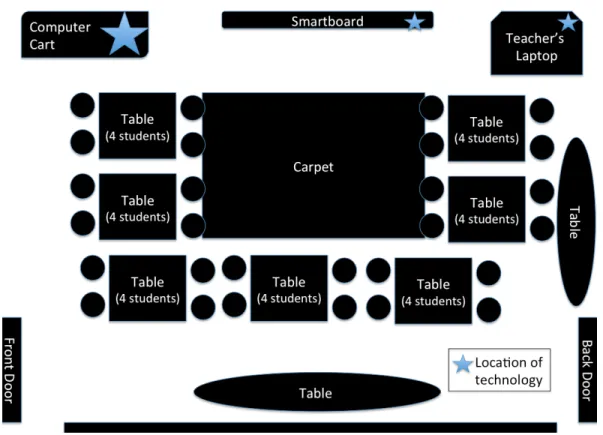
Figure 8. Classroom configuration and technology placement. ... 166
Figure 9. One-to-one technological approach in Mrs. Sandra’s classroom. ... 180
LIST OF ILLUSTRATIONS
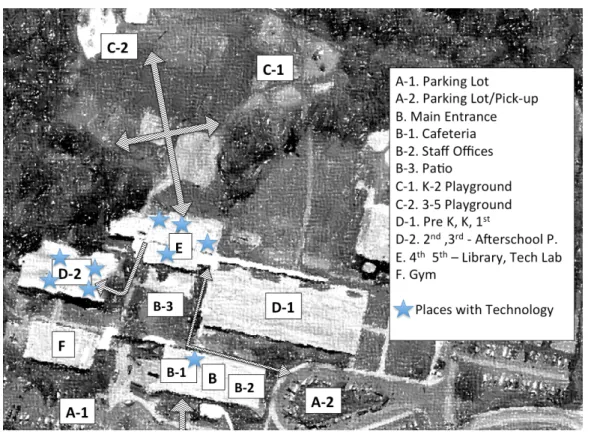
Illustration 1. Map of Frank Porter Graham Elementary School: building and technology
distribution. ... 161
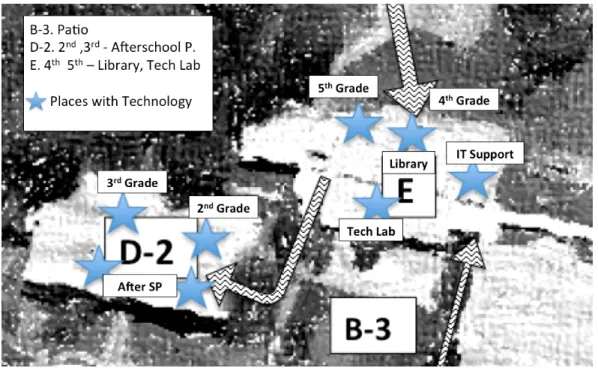
Illustration 2. Map of Frank Porter Graham Elementary School: buildings D-2, E, and
area B-3, with technology distribution. ... 163 Illustration 3. Representation of a “computer cart.” ... 165 Illustration 4. Representation of Jovanna assisting Gaby. ... 172 Illustration 5. Representation of Mrs. Sandra giving assistance during the one-to-one
technology approach. ... 182 Illustration 6. Representation of students using educational technology with an organic
CHAPTER 1: INTRODUCTION
Foreign-born Latino (FBL) students who attend American public schools face critical challenges in matching the performance of their native-born peers, particularly if they arrive after the early years of elementary school (Fitts, 2006). These challenges are even more evident in non-traditional Latino settlement states where the public education system still lacks the
necessary mechanisms for addressing shifting demographics and growing inequality (Wortham, Murillo, & Hamann, 2002).
A principal goal of digital educational technologies should be the legitimization of the lived experience of FBL students and the traditional knowledge (or funds of knowledge) associated with it; the DOI model’s basis in modernization theory causes it to neglect these assets completely. The DOI model fundamentally overlooks the FBL student’s identity and agency, and therefore overlooks his or her potential ownership of the learning process; founded upon a narrow approach to modernization theory, it ignores crucial issues of media ownership and control. In the definition of media ownership and control, I follow the Pew Hispanic Center report (Lopez, Gonzalez-Barrera, & Patten, 2013) that explains it in terms of the proportion of a given population with access to both traditional media (television, radio, and newspaper) and digital media (Internet, cellphone, smartphone, computers, and social networking). The DOI model further reproduces the dissemination of a capitalist ideology of innovation that ultimately propagates the false assumption that all development, progress, and opportunity should be defined in terms of an ability to respond to market trends. Melkote (1991) noted that, according to “Western sociologists,” traditional beliefs and practices always present obstacles to
modernization (p. 112). Within the modernization paradigm, in other words, the role of traditional culture and that of progress are fundamentally opposed. Because the DOI model promotes innovation at the expense of individual students’ ownership of the learning process, educational technological interventions based on such an approach are bound to fail in their attempts to promote empowerment among marginalized student populations.
I. Key terms
acquisition of knowledge and theorized three distinct kinds of learning environment: formal, non-formal, and informal. Formal learning occurs within a program of instruction in a certified institution (i.e., school activity), while non-formal learning takes place within a program that is not certified by an institution (i.e., community-based activity). Informal learning, finally, derives from daily work-related, family, or recreational activities (i.e., home activity). Learning can be understood as a communication process reinforced by the conversations or dialogues occurring within a combination of formal, non-formal, and informal processes (Sharples, 2005).
I use dual socialization experience to describe the two-fold process of social and cultural adaptation that immigrants experience when migrating to a foreign culture. Acculturation is the process by which an individual adopts the beliefs and behaviors of a new culture (Huda, 2012); for my student participants, this process took place primarily in school settings. Enculturation, by contrast, is the process by which an individual grows into her or his native cultural group—a process that, in my students’ case, took place primarily in the home (Knight, Bernal, Garza, Cota, & Ocampo, 1993).
In this paper, a space—dynamic, active, and full of human meaning—differs from the place, the empty set of physical coordinates, in which it exists. Unlike the bare existence of a place, a space’s meaning derives from the relationships among the actors and objects involved in it (Gustavson & Cytrynbaum, 2003, p. 256). A third space refers specifically to a space that challenges power asymmetries: in educational theory, a third space can be understood as an alternative space in which students are able to redistribute the power dynamics and transform their discourse into something meaningful (Fitts, 2009; Gutiérrez, Baquedano-López, & Tejeda, 1999; Gutiérrez, 1999, 2008; Pahl & Kelly, 2005; Skerret, 2010). In this context, empowerment
decisions and implement changes in their own lives and the lives of others in their community (Darder, 2012; Freire, 2000).
Throughout the study, discussions of technology and educational technologies always refer to digital educational technologies unless otherwise noted. The Board of Directors of the Association for Educational Communications and Technology (AECT) define the field of educational technology as “the study and ethical practice of facilitating learning and improving performance by creating, using, and managing appropriate technological processes and
resources” (Richey, 2008, p. 24). I define the term as digital tools—whether hardware (i.e., laptops, iPads, S.M.A.R.T. Boards) or software (i.e., educational websites like KidBiz)—that aid the processes of learning in both school and home settings. A technological educational third space, therefore, is characterized by the intersection of digital educational technologies fostering critical thinking and the redistribution of educational power dynamics.
A variety of acronyms appear throughout the paper. FBL, or foreign-born Latino, refers to a Latino immigrant living in the United States; the FBL families in my study all emigrated from Mexico. I tend to use the term “my FBL families” to distinguish the four foreign-born Latino families in the study from other FBL families or communities. I use NBL, by contrast, to describe native-born Latinos, or those individuals of Latino background who were born in the United States. Lastly, I frequently use FPG to abbreviate Frank Porter Graham Elementary School, the study’s primary research location.
II. Rationale for the study
that must be taken into account prior to the shaping of an educational technology intervention. This growing body of research investigates the roles of Latino students at schools and the strategies designed to empower them (Cummins, Bismilla, Cohen, Giampapa, & Leoni, 2005; Wortham et al., 2002; Urrieta, 2004). Moreover, some of the leading researchers in the field of educational technology (Gutiérrez, 1999, 2008; Gutiérrez et al., 1999; Warschauer, Matuchniak, Pinkard, & Gadsden, 2010; Warschauer, 2000, 2004; Fitts, 2009) share a common theoretical interest in emphasizing an ever-broadening understanding of the complex relationships among Latino education, educational technology, and critical pedagogy. Recently, Granger (2014) has particularly stressed the need for research examining the relationship between understudied demographic groups⎯like FBL students⎯and educational technologies. Even where there has been valuable research on the use of educational third spaces to reconfigure power dynamics at the classroom level (Cummins et al., 2005; Fitts, 2009; Gutiérrez, 1999, 2008), the
implementation of such approaches for the empowerment of FBL students in American public schools remains unexplored.
The Unites States and, more specifically, rapidly growing non-traditional Latino settlement states like North Carolina urgently need to reconfigure their primary and secondary public school systems in order to respond to the challenges of changing demographics and growing inequality (Wortham et al., 2002). The use of educational technology inside and outside of the classroom possesses real potential for bridging the inequality gap through the promotion of student empowerment. This potential cannot be realized, however, without taking into
consideration the particular and varied backgrounds of the target population—in economic as well as social, cultural, and political registers (Gutiérrez, 2008).
Because of its economic opportunities, North Carolina has become an attractive state for Latinos of both native and foreign origin, and local school districts have recently begun
implementing initiatives to help manage the area’s changing demographics. There is still, however, an overall lack of research regarding optimal classroom compositions in the context of dual-language programs serving Latino students (Warschauer, 2004). To maintain an appropriate level of specificity and emphasize a level of qualitative depth in the current study, I have limited the scope of inquiry to one educational space—the dual-language program at Frank Porter Graham Elementary School (FPG)—and its student population.
III. Research questions
open and ongoing nature of the research problematic: the relationship between FBL students and new technology. Instead of the normative approach implied by the original research question, the final research question seeks a fuller descriptive account of how and to what extent newcomer FBL students engage with digital educational technologies. Moreover, in order to properly address this question, I first needed to tackle a series of preliminary questions: for instance, what are the central elements of the acculturation and enculturation processes that FBL students experience? Within the school setting, how frequently and in what ways are existing digital educational technologies incorporated into the classroom space? Finally and most importantly, why is it so difficult to foster successful classroom educational third spaces in the context of the FBL home?
In the next section I set the stage for my research by briefly examining the growing importance of the Latino demographic within the American public education system and introducing the idea of using educational technologies as tools for empowerment. The use of digital educational technologies as tools of empowerment will be addressed at greater length in later chapters, but a short introduction to some key concepts is necessary before proceeding to the body of the paper.
IV. Setting the stage
The importance of Latino youth within the American public education system is
there is little available research bringing together in one place a sensitive qualitative analysis of the FBL socialization experience, an emphasis on the empowerment of FBL students through critical pedagogy, and a discussion on the use of digital educational technologies to create educational third spaces.
Digital educational technologies hold great potential as tools for student empowerment, particularly for members of marginalized groups like immigrant Latino children within the American public school system. Realizing this potential is not merely a matter of providing access to the necessary technological devices, however; rather, only a process that involves a critical understanding of the target population, a carefully targeted development, and a sensitive implementation can result in lasting positive outcomes. The lack of the knowledge required for such an intervention is increasingly and especially obvious in those states where Latino
settlement is a relatively recent phenomenon (Wortham et al., 2002).
conclude the chapter with a discussion of two features of the Chapel Hill-Carrboro area that dramatically impact the FBL social experience: the rapid growth of the Latino community, and the largely fraught public opinion regarding Latino immigrants and immigration.
The statistical information presented below is based on tabulations of the Census
Bureau’s 2012 American Community Survey (ACS). The ACS is the largest household survey in the United States and with a sample of about 3 million addresses it was designed to provide estimates of the size and characteristics of the resident population, which includes persons living in households and group quarters. To supplement this data I used the latest survey reports from the Pew Research Center’s Hispanic Trends Project, an institution that publishes demographic studies, policy analysis, and other social science research on Latino issues. In addition to the data from the Pew Hispanic Center, I also used “DataFerrett,” a U.S. Census Bureau online data analysis and extraction tool designed to customize federal, state, and local data. It is important to note that data from both the Pew Hispanic Center (based on ACS tabulations) and Data Ferret is based on annual and monthly surveys, estimates, and extrapolations. In a study with such a limited geographical area, the reliability of reports tend to decrease as the reports get more recent. Therefore, in order to optimize a balance of updated and reliable information, I used a combination of data from the official 2010 U.S. Census and from several collected estimates and extrapolations from 2011-2014.
V. Setting the national and state stage
In order to properly examine the effect of digital educational technology on the
representing a population of 52.9 million people; of that number, 35.5% or 18.8 million represent Latinos who are foreign-born. Since 2000, the major source of growth has shifted from
immigration to native births, as the U.S.-born Latino population grew faster than the Latino foreign-born population. As a result, the share of foreign-born Latinos in the 2000s decreased from about 40% to 35.5% in 2012. That is, foreign-born Latinos population is a decreasing but still substantial population that should not remain as an understudied group (Lopez, 2014).
Figure 1. Percentage distribution of U.S. public school students enrolled in prekindergarten through 12th grade, by race/ethnicity. Figure shows data from the fall of selected years: 2001, 2011, and 2023. Adapted from The National Center for Education Statistics [NCES], 2013.
Recent data suggest an unprecedented need for addressing the place of Latino students within the American public school system. The National Center for Education Statistics (NCES) is the primary federal entity responsible for collecting, analyzing, and reporting data on
contrast, the number of Latino students enrolled during this period increased from 8.2 million to 11.8 million students, and their share of public school enrollment increased from 17% to 24%. Data also indicates that, for the first time, Latino students constituted the largest share of public school enrollment in four states: Arizona, California, New Mexico, and Texas (NCES, 2013).
In October of 2011, roughly 12.4 million Latino students were enrolled in the nation’s public schools, from pre-Kindergarten to twelfth grade (Fry, 2012, p. 1). For the first time in U.S. history, fully one-quarter (25%) of public elementary school children were Latino. One year later, according to the latest U.S. Census (2010), Latinos aged 10-13 (both native- and foreign-born) accounted for 3,744,000 of public elementary school students. Of that number, 52% were male and 48% were female.
The state of North Carolina reflects a similar pattern in its demographic re-composition and public education enrollment. In the latest ACS update in 2012, the Latino population in North Carolina represented 8.7% of the total state population, a 111.1% increase since 2000 when the Latino population made up only 4.71% of the state total. Latino enrollment in North Carolina public schools has accordingly increased from 8.4% in 2005-2006 to 14.3% in 2012-2013 (North Carolina Public Schools, 2012-2013).
North Carolina Public Schools, 2013). From these numbers we must conclude that there is a distinct need to improve the academic performance of Latino students in North Carolina, and my study investigates the use of critical educational technology in the service of such a goal.
Foreign-born Latinos and native-born Latinos: internet use and computer ownership. To assess the use of critical educational technologies—their role in student
empowerment and therefore their efficacy in improving academic performance—it is necessary to explore the relationship between children and technology. A child’s ability to adopt and adapt to technological innovations does not develop in a vacuum; it is significantly influenced by the technological resources available both in school and home settings. This is particularly relevant in the case of marginalized groups like foreign-born Latinos: FBL children are deeply influenced by their parents’ origin, language dominance, and other factors such as age, socioeconomic status, and education. The interrelationships between such factors and Latinos’ use of
technologies like computers and the Internet are complex, and critical educational technologies must be developed and implemented with such complexity in mind.
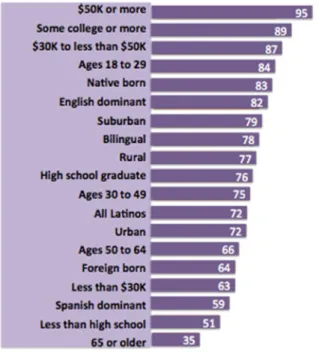
phones, smartphones, mobile devices, and computers) among foreign-born Latinos remains significantly below that of their U.S.-born counterparts.
Figure 2. Latino internet use. Adapted from The Latino Digital Divide: The Native Born versus the Foreign Born, by Livingston, 2010. Pew Internet & American Life Project.
Figure 3. Computer ownership among Latinos, 2012. Adapted from Computer Ownership, by Lopez et al., 2013. Pew Internet & American Life Project.
The implementation of new educational technologies to increase academic performance requires taking into account the accessibility and usage patterns of new technologies, as data plainly shows that foreign-born Latinos have lower levels of access to the devices necessary for distributing critical educational technologies.
VI. Setting the “new South” stage
community surrounding Franklin Porter Graham Elementary School, locate in Chapel Hill, North Carolina, is exemplary of the New Latino Diaspora, and so—in order to better contextualize my FBL students’ situations—in the following section I explore the demographic trends within new settlement areas in the American South, highlighting economic factors that have contributed to the increase of Latino migration into the region. The data is based upon the latest findings of the Pew Hispanic Center, and is further developed by supporting demographic data published by the Western Interstate Commission for Higher Education, The Public Schools of North Carolina, and the ACS U.S. Census Bureau (Whatley & Batalova, 2013; Passel & Cohn, 2009; Howard,
Lindholm, Sugarman, Christian, & Rogers, 2007; Lindholm-Leary, 2005; Genesee, Lindholm, Saunders, & Donna, 2005).
Population. After four decades of rapid growth, the number of Latino immigrants in the U.S. reached a record 18.8 million in 2010, but has since stalled. However, according to Lopez (2013), not a single state experienced a decline in its Latino population. This means that the primary source of growth has changed from foreign born to native births. In the same study, North Carolina figured as the seventh-fastest-growing Latino state from the non-traditional settlement areas (i.e., Alabama, South Carolina, Tennessee, Kentucky, South Dakota, Arkansas and North Carolina) with an increase of 120% from 2000 to 2011. According to the Pew
accounted for 8548 foreign-born Latinos aged 10-13 in North Carolina (53% male and 47% female), all of them from Mexico.
Economic status. With regard to the economic status of Latinos in North Carolina, the Pew Hispanic Center (2011) found an annual median income per person of $17,200 USD
compared to a median African-American income of $22,000 USD and White income of $30,000 USD. Similarly, the rate of Latino homeownership rate was 43%, compared to the 48% and 74% for African-Americans and Whites, respectively. Finally, the study revealed that 43% of Latinos in the state were living without healthcare, and—even more alarmingly—that 71% of foreign-born Latinos lacked health insurance. (Pew Hispanic Center, 2011).
English proficiency. According to the Pew Hispanic Center, in 2011 there were 25.3 million Limited English Proficient (LEP) individuals, both foreign- and native-born, living in the United States. Among those in this group, an estimated 81% were Latino (with 55% of Mexican origin; 4% of Puerto Rican origin; 3% from El Salvador; and 8% from other Latino countries). Although most of the LEP individuals accounted for in this statistic were foreign-born, around 19% (an equivalent of 4.8 million) were native-born. Over the past 20 years, in other words, the share of the total U.S. population with limited English proficiency has grown from roughly 6% in 1990 to nearly 9% in 2011 (Whatley & Batalova, 2013, p. 1).
undocumented (Passel & Cohn, 2009). At the national level, about 80% of the immigrants arriving from Mexico since 1995 have been unauthorized residents. The state of North Carolina, with roughly 300,000 undocumented immigrants, now ranks eighth among states with the largest undocumented populations (Passel & Cohn, 2009). According to the latest Pew report regarding unauthorized immigration, however, since reaching a peak of 12.2 million unauthorized
immigrants in 2007, the nationwide trend in unauthorized immigration has seemingly slowed, resulting in a current population of 11.7 million undocumented immigrants. Further evidence of this trend comes from a report that the number of Mexicans who moved from the U.S. back to Mexico between 2005 and 2010 roughly doubled from the number who had done so in the five-year period a decade earlier (Pew Hispanic Center, 2013).
Education. With regard to education in non-traditional settlement areas, the Center predicts that—driven primarily by the expansion in the Latino population—by 2020, 45% of public high school graduates will be non-white. The Western Interstate Commission for Higher Education’s study, Knocking at the College Door, similarly predicts that by 2020 White high-school graduates will have dropped by 228,000 while the number of Latino graduates will have risen by 197,000. The number of Asian-American graduates is expected to increase as well, while the number of African-American graduates is projected to decrease (Pew Hispanic Center, 2011).
However, even while Latino school enrollment numbers are rising, lower levels of education persist within the non-traditional settlement areas, or the“new South”. The FBL population in this area display lower levels of education than in the rest of the country.
diploma. North Carolina’s Rowan and Alamance counties, where 82% of the FBL population had not completed high school, represent the highest rates in the country (Pew Hispanic Center, 2011).
In the new South a similarly booming population trend became more apparent as many of the initially single foreign-born adults started settling down and starting families. As larger amounts of immigrant women relocate to the region, the number of families is expected to rise exponentially. Consequently, despite the fact that a decade ago the Latino school-age population accounted for only a modest proportion of the total, this number has quickly escalated. In
counties where Latino youth numbered in the dozens, they now number in the hundreds; were they numbered in the hundreds, they now number in the thousands (Pew Hispanic Center, 2011). Compared to the nation’s total student population, the number of school-aged Latinos in the new South is small. However, their impact on local schools is amplified by two factors: (1) children who come from non-English speaking families have special needs in terms of English-language instruction; and (2) most school systems do not have the institutional resources or programs in place to deal with the special needs and particular family circumstances associated with the undocumented Latino community (Warschauer et al., 2010).
VII. The school system in North Carolina and Chapel Hill-Carrboro
schools and supports efforts at the state level to close achievement gaps and improve learning for students.
While North Carolina schools will still be measured against the annual measurable objectives (AMOs) calculated and reported under NCLB, they will no longer be subjected to the "all or nothing” measure of the past. The new AMOs include more specific achievement targets for each student group: guarantees that at least 95% of students participate in testing, high school graduation rate targets for each group, and attendance rate targets for students in grades K-8.
Under the new Elementary and Secondary Education Act, schools are categorized as follows:
• Focus Schools, elementary and middle schools that contribute to the achievement gap in the state, or high schools not already identified as a priority school and with a
graduation rate of less than 60%. There are 130 Focus Schools in North Carolina, of which Frank Porter Graham is one.
• Priority Schools, schools that have been identified as among the lowest-performing schools in the state. There are 77 priority schools in North Carolina.
• Reward Schools, high-performing schools that do not demonstrate significant
achievement gaps across subgroups and that are making the most progress in improving the performance of all students. There are 120 Reward Schools in North Carolina. (Public Schools of North Carolina).
The Chapel Hill-Carrboro District's mission, as stated on their website, is to “enable all students to acquire, through programs of excellence and fairness, the knowledge, skills, and insights necessary to live rewarding, productive lives in an ever-changing society” (Chapel Hill-Carrboro City Schools, 2014)
The district operates 3 high schools, 4 middle schools, 11 elementary schools, a school for young people being treated at UNC Hospital, and an alternative high school. With its close proximity to three major universities and to the Research Triangle Park, one of the most
prominent high-tech research and development centers in the country, the Chapel Hill-Carrboro District serves the children of one of the best-educated populations in the United States. It is the school district associated with most of the town of Chapel Hill—excepting the area of the town located within Durham County—and the entire town of Carrboro. The school district’s funding derives from state property taxes as well as federal funding. Its administrative center at Lincoln Center additionally provides services for gifted, special needs, and limited English proficiency students. Nevertheless, according to the Public Schools of North Carolina and the NC State Board of Education, only 1.02% of the North Carolina’s Public School expenditures go into the Limited English Proficient Students category (North Carolina Public Schools, 2011).
VIII. Frank Porter Graham Elementary School: a dual-language program
Located adjacent to the Frank Porter Graham Child Development Center, FPG’s dual-language program opened in 2009 and became the district’s first magnet school in 2013. Since every student is a second-language learner in either English or Spanish, classroom instruction must include strategies to ensure students are experiencing and using language in meaningful ways by building upon what they already know. The school’s primary goal is to teach both children and adults to value, appreciate, and work with others who may not share the same language or cultural background. As of the 2013-2014 academic year, FPG was one of eleven elementary schools in CHCCS and served 525 students from preschool to the fifth grade, with an overall student-to-teacher ratio of 12:1 in 23 classrooms. The Latino population represents the largest share (237 students, or 49%) of the total school population, compared to the White (198 students, or 40%), African-American (24 students, or 5%), Asian-American (2%), and
multiracial (23 students, or 4%) student populations.
of Spanish/English in kindergarten classes is 90:10. The ratio increases each year: to 80:20 in first grade and to 70:30 in the second grade before finally leveling out to a 50:50 ratio for the third, fourth, and fifth grades. The students who participated in my study were newcomer FBL fifth graders.
The populations represented in the dual-language education model vary considerably by school site. Many times the English-speaking and non-English-language populations are not comparable in terms of nativity, age, education, English-language skills, country of origin, legal status, and gender. These differences must be addressed in the program structure, program planning, curriculum, instruction, assessment, professional development, and home-school collaborations. For instance, there is often more socioeconomic diversity among English language learners from Asian and European backgrounds than among those from Latino backgrounds (U.S. Census Bureau, 2010). The former are more likely to be members of the middle class and to come from homes with educated parents (Lindholm-Leary, 2005). Most of the Spanish-speaking children in dual-language programs in the new South come from a
IX. Public opinion in North Carolina
The Pew Hispanic Center estimates that the undocumented population in the United States during 2011, the last year for which an estimate is available, was of 11.1 million
unauthorized immigrants, with a 52% of Mexican-born majority (Cohn, 2012). According to the Center’s most recent (2013) survey regarding immigration policy, a substantial amount of
Americans (71%) believe that undocumented immigrants currently residing in the U.S. should be granted amnesty if they meet specific criteria. Among these prospective requirements, English proficiency ranks the highest. Public opinion trends are strongly correlated with political
affiliation: 60% of Democrats believe that a comprehensive immigration reform can take place at the same time as border improvements, while 56% of Republicans believe that borders must be effectively controlled before advancing towards immigration reform. The debate is also polarized along ethnic lines: native-born Latinos and Asian-Americans believe that alleviating
undocumented immigrants from the threat of deportation should be prioritized over the creation of a pathway towards citizenship. Altogether, despite the nation’s struggling economic situation, the survey results showed a generally positive attitude regarding immigration. Moreover, three-quarters of respondents believe that granting legal status to undocumented immigrants would improve the economy.
Over the last 40 years, undocumented immigration from Mexico alone accounts for the presence of approximately 12 million people in the U.S. (Cohn, 2012). The increase in the risks associated with immigration and changing work prospects in the face of an economic recession have affected this influx, bringing it almost to a halt. A recent study that sought to explain the rationale behind this shift found that, when surveyed, the majority of Mexicans (61%) reported a lack of interest in moving to the U.S., even if they had the means and opportunity to do so (Goo, 2013).
A disapproving North Carolina. Regardless of the somewhat increasingly favorable attitude nationwide towards immigration reform, North Carolinian voters showed no signs of sympathy for legislative bill S.744, which, if passed, would grant amnesty to more than 12 million illegal aliens. On June 2013, the non-profit Federation for American Immigration
Reform (FAIR), described as non-partisan but with politically conservative leanings, conducted a poll and concluded that North Carolinians (N=500) display a strong opposition to such measures: 52% of North Carolina voters opposed S.744, and 33% of this figure "strongly opposed" the document; 63% opposed granting legal status to “illegal aliens” before a border security plan is fully implemented; and 25% of those surveyed opposed granting amnesty under any
circumstance (Federation for American Immigration Reform [FAIR], 2013). A majority (53%) of the voters believed that, given the chance, state authorities should deport all the undocumented immigrants. Further elaborating on the public opinion of North Carolinians, FAIR presented a 2007 study conducted by Elon University among 476 adults. This study revealed that 63% of the participants disagreed (34% strongly disagreed) with any proposal that would allow the
These findings are in line with those published by a University of North Carolina study (Watson & Riffe, 2013) regarding North Carolinians’ opinions (N=529) on immigration policy. This research found that respondents who viewed immigrants as threats also perceived media coverage as hostile, and believed further that if media coverage were not biased in immigrants’ favor, their fellow North Carolinians would share their point of view. This perception clearly existed despite the lack of any clear relationship between the perceived threat and third-person effect (mass communication as having a greater effect on “others” than on the self). In light of such results, the researchers noted the possibility that the media contributed to the frustration of “the will of the people.” In June of 2013, the president of FAIR Dan Stein admitted that nothing in the current bill would especially benefit North Carolinians. Watson and Riffe (2013)
confirmed that the majority of sampled North Carolina residents perceived immigration as a threat. The perceived threat was negatively related to income, education, race, and age, with poorer, less-educated, and poorer white respondents most worried. In addition, the use of Internet news outlets was influential in the construction of “feeling threatened,” leading the authors to conclude that coverage and increased knowledge can contribute to a sense that immigrants are less threatening.
It is evident that the current public opinion of North Carolinians is not favorable towards illegal immigration, and a latent sense of racism can be perceived in the studies presented above. This unfavorable sentiment impacts the process of acculturation of newcomer foreign-born Latinos. However, the socialization experience of both undocumented and legal Latino
X. Enculturation of media and physical spaces: symbolic Latino environments in the Chapel Hill-Carrboro and Durham area
Adams, Baskerville, Lee, Spruiell, and Wolf (2006) stated that newcomer immigrants’ enculturation process is influenced by the media, the available social space, and social dynamics in the area. According to the Latino Journalism and Media at Carolina (Latijam) website, there are at least 29 Latino media outlets in North Carolina. These include magazines (1), television stations (2), newspapers (8), and radio stations (18). Two weekly newspapers publish in Raleigh:
La Conexion USA and Que Pasa. One radio station, La Grande 1000 AM, and one 24-hour television station, WUVC Channel 40-1, serve the greater Raleigh/Durham area. The cities of Chapel Hill-Carrboro and Durham have two radio stations, WCOM LPFM Carrboro 103.5 FM and Mega 1310 AM, and one television station, WTNC-LD Channel 40. According to Vargas (2006), Latinos—in general but specifically in the Durham/Chapel Hill-Carrboro area—are enculturated not only by these media but also by mainstream English media, transnational media, nationwide Latino media, and black media. Newly arrived undocumented immigrants are
influenced by far more tangible factors than just the media: they are significantly influenced as well by the local community in which they reside.
Mexican and Latin American grocery stores in the area. My fieldwork among Latino parents corroborated that these tiendas [stores] represent extremely important socialization spaces for the community due to their “enculturative” characteristics (i.e., language of interaction, familiarity of brands, etc.).
Another setting that plays a crucial role in the Latino community is that of the church. Nationwide, more than two-thirds of Latinos (68%) identify themselves as Roman Catholics and 15% as Protestants (Pew Hispanic Center, 2007). In the latest “Latino Religion” survey
conducted by the Pew Hispanic Center (2007) most Latinos said that they consider church to be “the most trusted voice in this community.” Roughly 64% of Latinos attend church on a regular basis, compared to a rate of 40% among Americans at large. Respondents of the survey further demonstrated the role of the institution within their everyday life, reporting that church
“influences family life and community affairs, giving spiritual meaning to the Hispanic culture” and explaining that “a person seeks refuge among a culture that is understanding” (Goo, 2013). Taking into account the stress associated with migration, it is reasonable to assume that many distressed religious newcomers looking for solace end up finding it in the context of the church. The Chapel Hill-Carrboro and Durham Yellow Pages list 43 Catholic churches in the area.
and community organizing. Within these focus areas, they offer 38 distinct programs and services to meet expressed community needs, thus assisting in the acculturation process of Latinos in the area. They have also opened a branch in Carrboro to better serve the community in that part of their service area (El Centro Hispano).
Another communal space that has emerged to aid Latino immigrants is the Latino Community Credit Union, a financial institution founded 14 years ago to serve immigrant communities who have difficulty accessing other kinds of financial services. The Latino
Community Credit Union educates individuals in different churches, schools, refugee agencies, and other non-profit organizations about its ethical and affordable financial services and free financial education programs. As it states on its website, this cooperativa began as a measure for preventing crime against Latinos. Because of their lack of financial experience and banking options, immigrants tend to use cash more often than other forms of money, making them more vulnerable to fraud. The Latino Community Credit Union tries to empower and educate
individuals and families through economic opportunities, and has been so successful that today it has 11 branches across the state and over 52,000 members (Latino Community Credit Union).
So far, I have explained the demographics of Latinos⎯with special emphasis on foreign-born Latinos⎯in the United States and in North Carolina. I also described the school system in North Carolina and Chapel Hill-Carrboro and FPG with its dual-language program. Finally I concluded this section with an examination of two aspects that impact the socialization process of FBL in the Chapel Hill-Carrboro and Durham area. The first one was the public opinion on undocumented immigrants and provided examples of the growing Latino community.
symbolic (public opinion, media) and physical (schools, stores, churches) environments. There is a complex web of factors that affect and influence the socialization experience, factors that permeate the socialization dynamics with their family, communities, and even their physical spaces. These factors mutually affect and influence the adoption of new behavior patterns relevant to their new reality. How immigrants experience this socialization process affects the ways in which they engage with different situations. For instance, in the case of the FBL fifth-grade students in this study, how is the socialization process impacting their approach to digital media, and more specifically, to digital educational technologies.
XI. Outline of dissertation
In the next chapter, I examine and discuss theoretical foundation for the current research. It begins by setting the stage for the need of a critical framework for educational technologies by explaining and critiquing the current model under which these interventions are carried on: the Diffusion of Innovation Model. In an additional attempt to situate my research within the
Chapter 3 covers an overall approach to Grounded Theory, which constitutes the methodological foundation of my study. It also includes a description of the research site and population; and the instruments, measures and sources of data. It also includes the data analysis process of the applied grounded theory approach, highlighting the themes that emerge from the interviews and field observations, as well as the ethical considerations respected throughout the research process to conclude with a self-reflection about how I may influence my research.
In Chapter 4, I provide detailed profiles of the four FBL students and their families in order to familiarize the reader with the qualitative data that will be incorporated into the analysis and discussion of subsequent chapters. I describe the individual situations and contexts of each of the four FBL students included in this study. Each description includes the student’s level of English, the levels of English proficiency and education of the parents, the parents’ occupations, the level of technology use in the home, the level of traditional media present in the home, and the student’s performance in the classroom.
Once I have established a detailed account of my participants’ dual-socialization experience, in the next chapter, I offer a discussion and analysis of the five major themes to emerge from my research regarding FBL’s use of digital educational technology. The themes are as follows: (1) Defining digital literacy, access and use: the difference between having the
technology and using it for higher-level thinking; (2) Mapping FPG: relationship between places, spaces, objects, and actors; (3) Being digital natives; (4) Classroom approaches of technology for FBL as digital natives; and (5) Using educational technologies at home: the real challenge. Once I have confirmed that digital educational technology has the capacity to empower FBL students under classroom settings, in the next chapter I discuss why the fostering of such spaces in the home are so challenging.
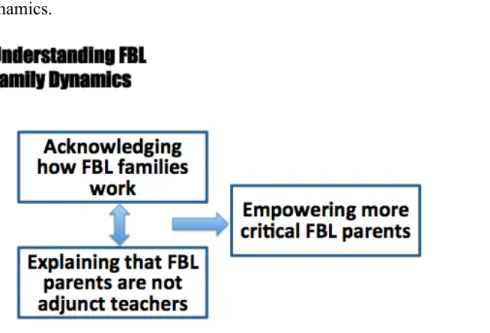
In Chapter 7, I focus more closely on FBL family dynamics in order to better understand their incompatibilities with the American school system. The main argument of this chapter is that if the school expectancies of FBL parents are under Anglo middle-class standards, these expectancies and attempts to empower Latino families will always fall off short. I address the following themes: (1) Acknowledging how FBL families work; (2) Explaining that FBL parents are not adjunct teachers; and (3) Empowering critical FBL parents: FPG’s attempts to support Latino parents.
CHAPTER 2: LITERATURE REVIEW AND THEORETICAL FRAMEWORK
This chapter condenses and articulates the theoretical foundations of the current research. I demonstrate the need for a critical framework for educational technologies by explaining and critiquing the Diffusion of Innovation model according to which most traditional technological interventions are carried out. Following these criticisms and in response to them, I present a more appropriate framework for educational technological interventions that is founded upon Paulo Freire’s critical pedagogy. The proposed model uses the idea of the third space to challenge the hierarchical relations of knowledge inherent in the traditional concept of the
learning space (Gutiérrez, 1999; Gutiérrez, 2008; Fitts, 2009), and so I explore the concept of the third space both in theory and in application. Lastly, these elements are brought together in an examination of the empowering potential of using critical pedagogical educational technologies with foreign-born Latino children in the American public school system.
I. Diffusion of Innovations Model (DOI)
field (Hung et al., 2012). The Diffusion of Innovations (DOI) model is the current and traditional model used in understanding the development and adoption of many educational technologies.
Everett M. Rogers, who originally theorized the model in 1964, argued that DOI should be understood as the process by which an innovation is communicated through certain channels over time among the members of a social system (Rogers, 1983). In the process of adopting a given innovation, each individual passes through five distinct phases: (1) the phase of knowledge or awareness, in which the individual becomes aware of the innovation and has a general idea of its use; (2) the persuasion period, in which that individual develops an attitude toward the new concept; (3) the decision phase, during which the individual chooses to accept or reject the innovation; (4) the phase in which the adopter implements or uses the innovation to his or her advantage; and (5) the evaluation phase, in which the individual reflects upon the results of using the innovation. Although the DOI model is described in terms of an individual undertaking, it is important to recognize that other members of the social system weigh heavily on its application.
accounts for 14% of the distribution and is important for the opinion leaders that arise from within its ranks. Since the remaining population cannot be part of these first two groups, they place their trust on the lived experiences of those members in a higher group. The early majority, which comprises roughly 34% of the population, generally waits to see whether the innovation is successful, and only when its success is proven do they adopt it. Members of the early majority tend to be less educated than those in the first two groups and wait for cues to choose what they think is best for them. The next group, the late majority, also represents roughly 34% of the population, and generally represents a group that is older, less educated, and from a lower socioeconomic status. They sometimes adopt innovations but more often are forced to do so by the larger trend of adoption in the rest of the population. The “laggards,” as Rogers dubbed them, is a group that accounts for 16% of the population and tend to be either very conservative or very isolated within the social system. The social isolation of low-income Latino populations, for example, most often results in their being portrayed as laggards. Examining this fifth category in finer detail, however, one encounters a vast degree of variation based on factors like class, income, or specific ethnic cultural background. In other words, variability within the laggards group requires that particularities be considered at a more granular level. Within this already very specific low-income Latino demographic, for instance, a foreign origin further exacerbates the factors underlying this isolation and makes this sub-group an even clearer expression of the laggard profile.
of modernization theory within the different social disciplines: that development in societies takes place in discrete evolutionary stages; that these stages are based on degrees of social differentiation and reintegration of the structural/cultural components necessary for the maintenance of society; that developing societies remain at a “pre-modern” stage and will eventually take on the socio-political and economic expressions of the Western societies that have reached the highest stage of development; and finally, that this modernization in the developing world will be prompted by the importation of Western technology and the overcoming of traditional structural-cultural features incompatible with development.
Technology in this context represents the motive force behind not only economic growth, but behind structural and cultural transformations that eventually manifest—both in institutional structures and individual activities—the increased socio-political and economic specialization, differentiation, and integration characteristic of Western societies.
Critiques of the DOI model. Modernization theory’s linear and rigid conception of development has been contested on several different fronts, but the alternatives tend to share in common the notion that modern “underdeveloped” countries face a unique set of circumstances and that they therefore cannot and should not follow the same path as developed countries. One such counter-theory that has arisen amongst theorists of the Global South is “dependency theory” (Cardoso, 1979; Casanova, 1983). Whereas modernization theory postulates that
Even today the DOI model and its underlying modernizing logic are often presented in a fairly positive light. I follow Jucker (2002), however, in the belief that society always remains blissfully ignorant of the institutional, political, and social consequences that a given
technological innovation will bring about. Ulrich (1992) detailed how in the aftermath of World War II faith in scientific and technological progress spread across the globe like a universal law. The mighty forces of science and technology, Ulrich pointed out, were thought to hold out hope for the progress of the “underdeveloped,” or so-called Third-World, countries. In the adoption of innovations, however, the resulting transformations have often been overlooked. Ulrich (1992) narrated the story of the introduction of the automobile, and how “underdeveloped” governments were not aware of all the technical, social, and psychological costs that would be introduced along with it—street networks, petrol stations, refineries, insurance, safety, driving lessons, training for children crossing streets, and so on. To describe the effects of innovation researchers have commonly invoked the metaphor of an invasive foreign species colonizing a particular ecosystem (Zhao & Frank, 2003). The timbre of the metaphor makes clear why the development of more sustainable, organic, and ecological innovations is becoming a growing area of
theoretical interest, especially in the field of education.
McAnany (1984) suggested that the DOI process and its consequences are unequal among different social classes. In the third edition of Diffusion of Innovations, Rogers conceded that the uneven consequences of innovation adoption represent a topic of interest. According to McAnany (1984), however, Rogers only brought the weakest of evidence to bear on an
(1983) defined pro-innovation bias as “the implication of most diffusion research that an
innovation should be diffused and adopted by all members in the social system, that it should be diffused more rapidly, and that innovation should be neither re-invented nor rejected” (Rogers, 1983, p. 92).
Rogers (1983) also described multiple causes for the pro-innovation bias in diffusion research. The first is that much innovation research is funded by change agencies who support innovation in itself as part of their own business strategies. Secondly, because a visible trace is easier to document and analyze, “successful” innovations—that can more clearly demonstrate the rate of adoption—are more often selected as objects of study. Furthermore, due to a similar bias resulting from the imperatives of the research process itself, we know more about the adoption of rapid diffusion technologies than slower diffusion technologies. In other words, it is easier to study successes than failures. Rogers (1983) concluded by conceding the importance of
innovation researchers with an anti-innovation bias whose work could balance the overwhelming pro-innovation bias of early studies.
Taking this critique even further, Melkote and Steeves (2001) argued that change agencies decided what innovations were best for their clients and implemented marketing campaigns to convince the users of the potential of the change agency’s choice. The problem, according to the authors, is that the innovation was not created and implemented by local users, resulting in a problem of ownership.
communities to manage their own development. This emphasis on empowerment aligns with the underlying precepts of Paulo Freire’s critical pedagogy, which I review below as a critical complement to the participatory approach and a viable alternative to the DOI model as a tool for the empowerment of Latino students at the classroom level.
Diffusion of innovations in educational research. According to Dooley (1999), the past four decades in the U.S. have been characterized by extreme social, political, economic and technological revolutions. Despite these mainstream ideological transformations, however, the basic organizational structure of public schools remains unchanged. In response to this
institutional rigidity, Dooley (1999) has developed a model to test the adoption of technologies in different American schools. This model seeks to take into account the unique context of each school that could impact the rate of diffusion. Dooley took into account both the DOI stages and contextual factors, and determines that educational innovation research should begin by
determining where school personnel are in the innovation-decision process and what their concerns are with regard to technology in the school. Only with this information can we begin to design appropriate professional development programs and an environment where impediments are minimized. (p. 43)
Dooley concluded that teachers have the greatest impact on the use of technology in the classroom and her findings highlight the crucial role of the teachers in the reception and
demonstrate the need for an alternative and more critical approach to educational innovation than the DOI model permits.
Hung et al. (2012) offered an alternative and more sustainable model to the DOI model. After researching 250 educational projects in Singapore, they propose the notion of Communities of Practice (CoP). These groups of people with shared interests and/or professions were
conceived as a resource for diffusion and a mechanism to encourage dialogue among students, teachers, principals, and policy makers throughout the school system. This alternative model stresses the importance of meaningful dialogue and contextualized activities, and is therefore heavily influenced by critical pedagogy. The authors explained that while in the past innovations have been created in laboratories and then spread to the masses, innovations today either grow or should grow out of a more ecological approach. In other words, innovation should be driven in an organic or natural way by the target community or users rather than being manipulated by a small group of people and then thrust into a broader context. School and education policymakers typically scale up and spread established practices, which results in standardization and
minimizes each learner’s potential to experience a unique learning process. Finally, it is necessary to pay close attention to an innovation’s development and evolution in order to properly assess whether the technology is in fact beneficial to the target community.
To ensure this, Hung et al. (2012) emphasized that researchers working with organic educational technology in the classroom should strengthen the teacher-researcher relationship in order to “walk the journey” together and allow a sustainable interventions (p. 36).
II. A participatory approach with a Freirean perspective
development (Freire, 2000; Kahn & Kellner, 2007; Mazzer Barroso, 2002). This school of theorists and researchers has criticized traditional approaches that develop in large cities without the involvement and guidance of local people. For example, in their book “Communication for another Development: Listening Before Telling,” Quarry and Ramirez (2009) defined
communication as a participatory two-way process between people or groups with an
understanding of the context and the people as the highest priority (p. 14). A sound definition of communication is a condition for a sensitive participatory model of development.
Within the participatory approach, interventions are perceived as useless unless they are modified and tailored by the very community in which they will be implemented (Fraser & Restrepo-Estrada, 1998). In other words, the community must possess ownership over the system that is being introduced. The biggest problem with the top-down approach of modernization theory is the paternalistic position that governmental and developmental agencies take with regard to marginalized communities. They perceive the targeted communities as ignorant and unable to think for themselves, dependent upon help that must proceed from the outside “civilized world.” Without a sense of ownership, these marginalized communities struggle to implement any innovations. Even more problematic are situations in which there is a generalized perception of a forced intervention of foreign experts into the community, when this struggle can become an active resistance. In order to foster a sense of community ownership that feeds into a successful adoption of innovation, people should be encouraged rather than forced.
Paulo Freire was a Brazilian national and considered one of the most influential educators of the twentieth century (Taylor, 1993). His ideas exceeded the scope of the field of education and merge with broader social movements which seek to use participatory modes of
researchers working among a variety of marginalized Latino and African-American communities in the U.S. (Cummins et al., 2005; Darder, 2012; Urrieta, 2004; Warschauer 2004; Wortham et al., 2002). Since the first edition of Pedagogy of the Oppressed in 1970, Freire has criticized the “banking” conception of education, in which the student is seen as an empty vessel ready to be filled with knowledge or formal education (Freire, 2000). He has used the metaphor of a piggy bank to illustrate his point: the educator invests knowledge in the student’s mind, this being entirely a one-way process. The power dynamic is fixed and the teacher or educator plays a very active/authoritarian role in the learning process while the student is a passive actor; education is seen as a donation from those who know to those who do not. Two different levels are
established in this model: superior and inferior. Who, then, has the right to educate? The banking concept does not inspire motivation, creativity, or a critical mind. It is the pedagogy of the oppressor, one based on bourgeois ideals. The only way to achieve freedom is through the liberation of education through critical consciousness and active dialogue.