ALCOHOL SELF-ADMINISTRATION AND RELAPSE-LIKE BEHAVIOR: A FUNCTIONAL ROLE FOR ENHANCED ACTIVITY AT AMPA RECEPTORS
Reginald D. Cannady
A dissertation submitted to the faculty at the University of North Carolina at Chapel Hill in partial fulfillment of the requirements for the degree of Doctor of Philosophy in the
Neurobiology Curriculum in the School of Medicine
Chapel Hill 2013
ii © 2013
iii
ABSTRACT
Reginald D. Cannady: Alcohol Self-administration and Relapse-like Behavior: A Functional Role for Enhanced Activity at AMPA Receptors
“Under the direction of Drs. Clyde Hodge and Joyce Besheer”
Mechanisms underlying excessive alcohol drinking behavior and relapse are not fully understood and are critical for mapping the pathological course of alcohol use disorders (AUD). Long-term ethanol consumption results in strengthened excitatory neurotransmission and increased AMPA receptor signaling in animal models. However, the mechanistic role of enhanced AMPA receptor activity in ethanol-reinforcement and alcohol-seeking behavior remains unclear. Thus, the experiments in this dissertation sought to elucidate the behavioral and molecular mechanisms that underlie AMPA receptor-mediated ethanol reinforcement processes and relapse to ethanol-seeking behavior using a preclinical model of high alcohol preference, the alcohol-preferring (P-) rat. Enhancement of AMPA receptor signaling by systemically administered aniracetam (AMPA receptor positive allosteric modulator) significantly increased ethanol
self-administration in a reinforcer-specific manner. Moreover, aniracetam potentiated cue-induced reinstatement in P-rats, which suggests that enhanced activity at AMPA receptors promotes reinforcement and ethanol-seeking behavior. Experiments further characterized enhanced AMPA receptor signaling in modulating operant
iv
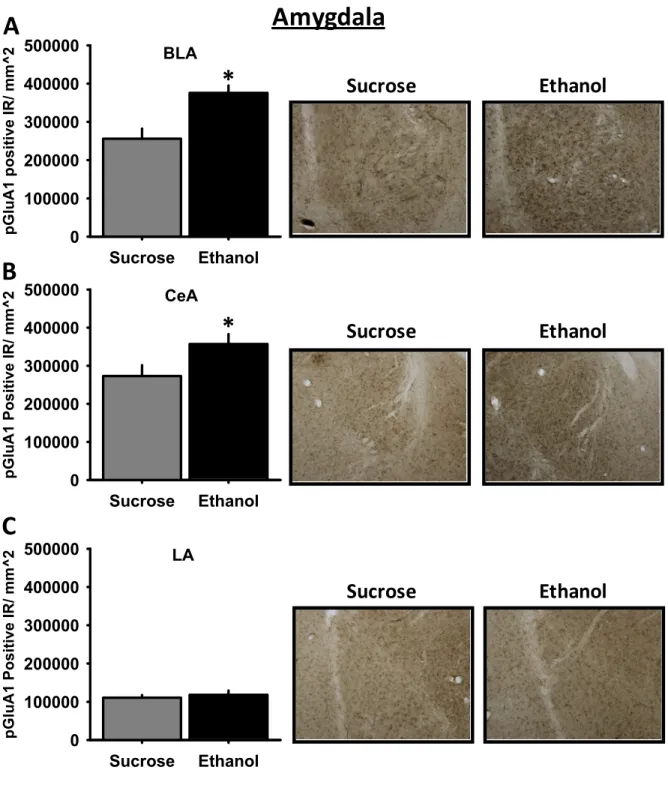
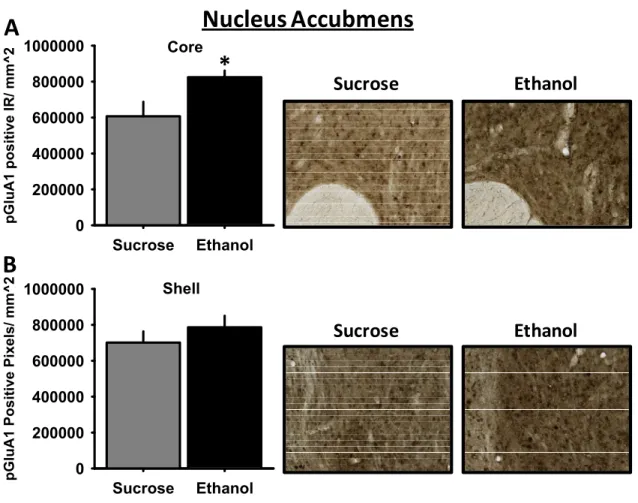
subunits), immunohistochemistry was used to examine neuroadaptive changes in pGluA1 in limbic brain regions after a history of ethanol self-administration. Increased pGluA1 immunoreactivity was observed in sub-nuclei of the amygdala and nucleus accumbens of ethanol self-administering P-rats relative to the sucrose controls. Guided by immunohistochemistry results, the effects of aniracetam on ethanol
self-administration were examined via site-specific microinjections in the amygdala and nucleus accumbens. Intra-amygdala, but not intra-accumbens, aniracetam increased ethanol self-administration in a reinforcer-specific manner. Furthermore,
v
ACKNOWLEDGEMENTS
None of the work presented within this document was possible without amazing support. I first would like to sincerely express my gratitude to my research mentors, Drs. Clyde Hodge and Joyce Besheer. I am extremely grateful to you both for bringing me into your labs and allowing me to grow and gain confidence as an investigator. I am inspired not only by your achievements and passion for science, but your enthusiasm for life and great character outside of the laboratory.
Thank you to my lab colleagues who have contributed greatly to this work. I would be remiss if I did not first thank Kristen Fisher. We have worked closely together, and you have been amazing over the years. None of this is possible without you.
To current and former lab mates, thank you for the encouragement, kindness, and professionalism you have demonstrated over the years. You have made coming to work every day more enjoyable.
To my committee, thank you for your support, sound advice, and encouragement. You have each contributed greatly to my success.
To Dr. Darin Knapp, Dr. David Overstreet, and Ms. Kelli Germany, thanks so much for providing us with P-rats used in most of our experiments.
To my parents, grandparents, siblings, family and friends, thank you for believing in me and providing me with strength to move forward.
vi
TABLE OF CONTENTS
LIST OF FIGURES ... XI LIST OF TABLES ... XIII LIST OF ABBREVIATIONS ... XIV
CHAPTER 1: INTRODUCTION ... 1
An Overview of Alcoholism ... 1
Impact, Prevalence, and Risk Factors Associated with Alcohol Abuse in Humans ... 2
Excessive Drinking in Humans: Neurological and Behavioral Maladaptations ... 4
Value of Preclinical Animal Drinking Models ... 5
Rodent Alcohol Drinking Models ... 6
Alcohol preferring (P-) rats ... 8
Measuring Ethanol Reinforcement ... 9
Modeling Relapse to Ethanol-Seeking ... 10
The Actions of Alcohol in the Central Nervous System ... 11
GABA Receptors ... 11
Serotonin Receptors ... 12
Dopamine Receptors ... 12
Glutamate ... 13
Metabotropic Glutamate Receptors ... 14
Group I Receptors: mGluR1 and mGluR5 ... 14
vii
Group III Receptors: mGluR4 and mGluR6-8 ... 15
Ionotropic Glutamate Receptors ... 15
NMDA Receptors ... 15
Kainate Receptors ... 16
AMPA Receptors ... 17
Rationale ... 18
Specific Aim 1: ... 19
Specific Aim 2: ... 20
Specific Aim 3: ... 20
CHAPTER 2: ENHANCED AMPA RECEPTOR ACTIVITY INCREASES OPERANT ALCOHOL SELF-ADMINISTRATION AND CUE-INDUCED REINSTATEMENT ... 22
Introduction ... 22
Materials and Methods ... 25
Animals ... 25
Apparatus ... 25
Operant Self-administration ... 26
Examination of positive modulation of glutamate activity at AMPA receptors on ethanol self-administration. ... 27
Test for aniracetam-induced alterations in locomotor behavior. ... 28
Confirmation of AMPA receptor involvement in modulating increased alcohol self-administration. ... 29
Test for aniracetam-induced alterations in ethanol pharmacokinetics. .... 29
Test for reinforcer specificity via sucrose-self-administration. ... 29
Examination of positive modulation of glutamate activity at AMPA receptors on regulating response-contingent cue-induced reinstatement. ... 30
viii
Data Analysis ... 31
Results ... 32
Examination of positive modulation of glutamate activity at AMPA receptors on ethanol self-administration. ... 32
Test for aniracetam-induced alterations in locomotor behavior. ... 33
Confirmation of AMPA receptor involvement in modulating increased ethanol self-administration. ... 33
Test for aniracetam-induced alterations in ethanol pharmacokinetics. .... 34
Test for reinforcer specificity via sucrose self-administration. ... 35
Examination of positive modulation of glutamate activity at AMPA receptors on regulating response-contingent cue-induced reinstatement. ... 35
Discussion ... 37
CHAPTER 3: POTENTIATION OF AMYGDALA AMPA RECEPTOR ACTIVITY SELECTIVELY PROMOTES ETHANOL SELF‐ADMINISTRATION IN A CAMKII‐DEPENDENT MANNER ... 51
Introduction ... 51
Materials and Methods ... 54
Animals ... 54
Apparatus ... 54
Operant Self-administration ... 55
Experiment 1: Examination of GluA1 phosphorylation (pGluA1) after chronic ethanol self-administration ... 56
Experiment 2: Examination of site-specific positive modulation of glutamate activity at AMPA receptors on ethanol self-administration. ... 58
Experiment 3: Test for intra-amygdala aniracetam-induced alterations in locomotor behavior. ... 59
ix
Experiment 5: Examination of CaMKII involvement in aniracetam-
induced potentiation of ethanol self-administration ... 60
Drugs. ... 60
Data Analysis ... 61
Results ... 61
Experiment 1: Examination of GluA1 phosphorylation (pGluA1) after chronic ethanol self-administration. ... 61
Experiment 2: Examination of site-specific positive modulation of glutamate activity at AMPA receptors on ethanol self-administration ... 63
Experiment 3: Test for intra-amygdala aniracetam-induced alterations in locomotor behavior. ... 64
Experiment 4: Test for reinforcer specificity via sucrose-self-administration. ... 64
Experiment 5: Examination of CaMKII involvement in aniracetam-induced potentiation of ethanol self-administration ... 65
Discussion ... 66
CHAPTER 4: ROLE OF ENHANCED ACTIVITY AT AMYGDALA AMPA RECEPTORS IN MODUALTING RELAPSE-LIKE BEHAVIOR ... 84
Introduction ... 84
Materials and Methods ... 86
Animals ... 86
Apparatus ... 87
Operant Self-administration ... 87
Examination of ethanol-associated cue exposure on expression of pGluA1 ... 88
Western Blots ... 89
Examination of altered modulation of glutamate activity at amygdala AMPA receptors on regulating response-contingent cue-induced reinstatement. ... 90
x
Data analysis ... 91
Results ... 92
Examination of ethanol-associated cue exposure on expression of pGluA1. ... 92
Examination of altered modulation of glutamate activity at amygdala AMPA receptors on regulating response-contingent cue-induced reinstatement. ... 93
Discussion ... 94
CHAPTER 5: GENERAL DISCUSSION ... 103
xi
LIST OF FIGURES
Figure 1: Positive modulation of AMPA receptors potentiates alcohol
self-administration ... 46 Figure 2: Antagonism of AMPA receptors by DNQX pre-treatment blocks
aniracetam-induced increased alcohol self-administration. ... 47 Figure 3: Alcohol clearance is not altered by aniracetam pre-treatment. ... 48 Figure 4: Positive modulation of AMPA receptors does not alter sucrose self-
administration. ... 49 Figure 5: Positive modulation of glutamate activity at AMPA receptors
potentiates cue-induced reinstatement of alcohol-seeking behavior in P-rats. ... 50 Figure 6: Chronic ethanol and sucrose self-administration prior to
immunohistochemistry.. ... 75 Figure 7: Ethanol self-administration upregulates phosphorylation of the GluA1
AMPA receptor subunit in subregions of the amygdala. ... 76 Figure 8: Ethanol self-administration upregulates phosphorylation of the GluA1
AMPA receptor subunit in subregions of the nucleus accumbens. ... 77 Figure 9: Positive modulation of amygdala AMPA receptors potentiates
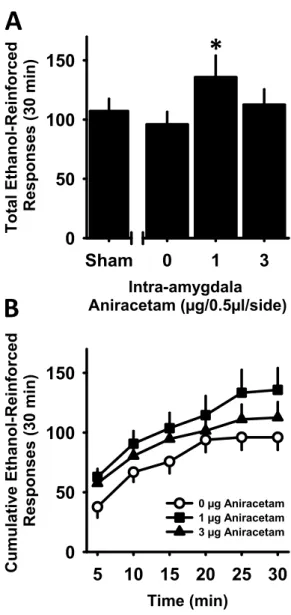
ethanol self-administration.. ... 78 Figure 10: Positive modulation of nucleus accumbens AMPA receptors does
not alter ethanol self-administration. ... 79 Figure 11: Positive modulation of amygdala AMPA receptors does not alter
locomotor activity ... 80 Figure 12: Figure 7. Positive modulation of amygdala AMPA receptors does
not alter sucrose self-administration. ... 81 Figure 13: Inhibition of amygdala CaMKII activity attenuates ethanol
self-administration. ... 82 Figure 14: Intra-amygdala inhibition of CaMKII activity blocks aniracetam-
induced increased ethanol self-administration. ... 83 Figure 15: Cue-induced reinstatement of ethanol-seeking behavior in P-rats
xii
Figure 16: Amygdala and nucleus accumbens pGluA1 expression after
response-contingent reinstatement. ... 99 Figure 17: Amygdala and nucleus accumbens pGluA1 expression in high and
low reinstatement group responders ... 100 Figure 18: Potentiation or inhibition of glutamate activity at amygdala AMPA
receptors does not alter cue-induced reinstatement of
ethanol-seeking behavior. ... 101 Figure 19: Potentiation or inhibition of glutamate activity at amygdala AMPA
receptors does not alter cue-induced reinstatement in high or low
xiii
LIST OF TABLES
Table 1: Baseline self-administration parameters (mean ± SEM) prior to test
sessions ... 44 Table 2: Alcohol clearance parameters (mean ± SEM) after aniracetam
pretreatment ... 45 Table 3: pGluA1 immunoreactivity (mean ± SEM) after ethanol or sucrose
self-administration ... 73 Table 4: Total GluA1 immunoreactivity (mean ± SEM) after ethanol or
xiv
LIST OF ABBREVIATIONS
ACSF Artificial Cerebral Spinal Fluid
AMPA α-amino-3-hydroxyl-5-methyl-4-isoxazole-propionate acid ANOVA Analysis of Variance
AUD Alcohol Use Disorder
CB1 Type 1 cannabinoid receptor
CONC Concurrent
CaMKII Ca2+ /calmodulin-dependent Protein Kinase II DNQX Dinitroquinoxaline-2,3-dione
DSM-V Diagnostic and Statistics Manual of Mental Disorders: Fifth Edition ETOH Ethyl Alcohol or Ethanol
EXT Extinction
FDA Food and Drug Administration
FR Fixed-Ratio
GABA gamma-Aminobutyric acid
GluA1 GluA1 AMPA Receptor Subunit
HR High responders
IR Immunoreactivity
I.P. Intraperitoneal injection
LR Low Responders
xv
NBQX 2,3-Dioxo-6-nitro-1,2,3,4-tetrahydrobenzo[f]quinoxaline-7-sulfonamide
NMDA N-Methyl-D-aspartic Acid
pCaMKII Phosphorylated Ca2+ /Calmodulin-dependent Protein Kinase II pGluA1 Phosphorylated GluA1 AMPA Receptor Subunit
REIN Reinstatement
1 CHAPTER 1: INTRODUCTION
An Overview of Alcoholism
The consumption of alcohol by humans has been, and still is, an integral part of everyday life for many around the world. Throughout the course of recorded history there is substantial evidence of alcohol use for a variety of purposes such as
celebrations, social and sporting events, or religious ceremonies. For most consumers of alcohol, the occasional indulgence is trivial and of little long-term consequence. However, some individuals are susceptible to the deleterious ramifications of long-term alcohol consumption. These individuals often chronically misuse and abuse alcohol and may develop an alcohol use disorder (AUD). Researchers and clinicians have long-recognized the symptomology associated with alcohol use disorders; however, the etiology remains much more elusive. A fundamental understanding of the etiology of alcoholism/AUD is critically important and will provide novel insights into more efficient and effective treatment options for those suffering from this debilitating condition.
2
excessive or uncontrollable alcohol consumption, craving, tolerance, withdrawal, and continued use despite negative consequences (American Psychiatric Association, 2013). New guidelines in the recently released DMS-V merge traditional alcohol abuse- and alcohol dependence diagnosis, while allowing a diagnosis to be classified as mild, moderate, or severe based of the number of criteria met within a 1-year period. The changes in diagnostic criteria reflect acknowledgements by clinicians and researchers that AUD is a complex disorder and that the efficacy of treatments may vary due to severity of the disease. Moreover, the 1-year window of time to meet established criteria cannot be understated because it emphasizes that 1) acute intoxication episodes alone are not the primary cause of AUD and that 2) alcoholism is a chronically relapsing disorder characterized by enduring challenges to control drinking; likely the result of lasting alcohol-induced neurobiological maladaptations (Hansson et al., 2010; Luscher and Malenka, 2011). Thus, it is essential that investigators and clinicians work to identify the neurobiological factors that underlie chronic pathological maladaptations that trigger excessive alcohol drinking that could lead to alcoholism or AUD(s).
Impact, Prevalence, and Risk Factors Associated with Alcohol Abuse in Humans
3
alcohol abuse was $223.5 billion in 2006 alone; which was calculated by factors such as lost productivity, healthcare costs, and criminal justice costs among others (Bouchery et al., 2011).
It is estimated that the 12-month prevalence (identified symptoms in the 12 month period) for alcohol use disorder is 8.5% and 4.7% for adults and teens (ages 12-17), respectively (American Psychiatric Association, 2013; Hasin et al., 2007) Men (12.4%) typically exhibit higher 12-month prevalence of alcoholism than women (4.9%), and younger populations (ages 18-29) make up a majority (16.2%) of diagnosed AUD cases (Hasin et al., 2007) (American Psychiatric Association, 2013). Further, it is well established that individuals with early onset of heavy drinking during adolescence have increased incidence of AUD in adulthood (Dawson et al., 2008). It is no coincidence that younger individuals exhibit higher rates of AUD symptomology, as this is the point in a lifespan where individuals are most likely to experiment and consume excessive amounts of alcohol (Trim et al., 2009). Importantly, chronic excessive alcohol consumption is the leading determinant in developing an alcohol use disorder (American Psychiatric Association, 2013; Saha et al., 2006) Thus, understanding
neurobiological factors contributing to excessive drinking are critical for the development of therapeutic options for alcohol abuse.
4
genetic variability is proposed to account for reduced efficacy (Oroszi et al., 2009). These data emphasize the value of studies that incorporate some component of genetic influence.
Excessive Drinking in Humans: Neurological and Behavioral Maladaptations
Heavy drinking and alcohol abuse lead to profound deficits in neuronal function which regulates behavior, memory, judgment, and various other functions in humans. For example, several studies show brain shrinkage and reductions in both white and grey matter in the frontal lobes of post-mortem alcoholics (Kril et al., 1997; Kubota et al., 2001). This ethanol-induced maladaptations is key, as areas of the frontal lobe
modulate high order cognitive processes such as impulse control, planning, and
decision making in humans (Andersen and Cui, 2009; Fellows and Farah, 2005; Qiu et al., 2013). Indeed, studies indicate that individuals with a history of excessive ethanol consumption self-report increased impulsivity (MacKillop et al., 2007) and exhibit deficits in impulse control using various tasks that measure impulsivity (Ahmadi et al., 2013; Reed et al., 2012). Furthermore, individuals who suffer from alcohol use disorders often report high levels of alcohol craving (Anton et al., 1995); sometimes the result of
exposure to alcohol-associated cues (Field et al., 2004; Lee et al., 2006). Alcohol craving is critically important because it is often associated with increased risk of
5
craving and impulsivity, two possibly related phenomena (Joos et al., 2013). Although there is substantial evidence that excessive drinking can cause neuronal deficits and dysfunctional behavior in humans, the underlying molecular mechanisms are difficult to determine as investigators are limited in the scope of studies that can be conducted in human subjects.
Value of Preclinical Animal Drinking Models
Animal drinking studies are extremely valuable because behavioral pathologies of alcoholism can be modeled while offering in-depth insights into underlying neuronal mechanisms. A vast amount of information has been gained from the use of animal models to study various aspects of alcohol consumption, including the development of pharmacotherapies for the treatment of alcohol use disorders (McKinney, 2001). Animal drinking studies provide investigators with a great deal of control over various
experimental variables that might affect drinking including an animal’s drinking history, genetic background, access to alcohol, and environmental stimuli. It is important to note that in some cases, voluntarily consumed drugs can produce distinct neuroadaptations as compared to investigator-administered drugs (Jacobs et al., 2005). This evidence suggest a divergence of neuroadaptations caused by pharmacological actions of drugs and neuroadaptations related to voluntary drug use (Wise, 2000), and further provides an incentive to study functional implications of ethanol-induced neuroadaptations that modulate drinking behavior.
6
is to identify neuronal substrates that alter drinking. Our efforts are primarily centered on measurements of ethanol reinforcement and relapse-like behavior as both are easily modeled in animals (Cannady et al., 2013; Hodge et al., 1993a; Hodge et al., 2006; Hodge et al., 1992; Schroeder et al., 2008) and implicated in various aspects of alcohol abuse disorders. Several species are used in studies that examine aspects alcohol abuse including rats, mice, hamsters, monkeys, and drosophila, among others
(Cannady et al., 2013; Chen et al., 2010; Ferris, 2003; Grant et al., 2000; Hodge et al., 2006). Each species presents its own set of advantages and challenges when
conducting drinking studies. Given the scope of this dissertation, we will focus primarily on rodent models of alcohol consumption.
Rodent Alcohol Drinking Models
Rodent models are very practical for studying multiple aspects of alcohol drinking. An incredible amount of literature exists on their behaviors, physiological makeup, and genetic backgrounds. Additionally, rodents can be trained to complete complex tasks that mimic behavioral processes observed in humans, such as working for an ethanol solution, or seeking ethanol after stress or exposure to alcohol-related stimuli (Cannady et al., 2013; Hodge et al., 1993b; Sidhpura et al., 2010). One challenge of using rodents in drinking studies is that most rodents do not readily consume pharmacologically relevant amounts of alcohol. In this case, the term “pharmacologically relevant” refers to the ability for a drug, such as alcohol, to travel throughout the body and exert its actions at its target sites; ultimately producing
7
Levy, 1986). Over the years investigators have adopted several methods to surmount the challenge of inducing relevant drinking levels in rodents including: forced exposure, fluid and/or food restriction, ethanol-containing liquid diet, gradually increasing ethanol concentrations, and masking/altering the flavor of alcohol with highly palatable additives (i.e. sucrose, and saccharin) (Falk et al., 1972; Knapp et al., 1998; Lieber and Decarli, 1976; Tolliver et al., 1988). Additionally, multiple rodent lines have been established using selective breeding procedures that result in rodent strains with a high (or low) preference for ethanol. Typically, it takes minimal effort of investigators to induce and maintain pharmacologically relevant drinking levels in selectively bred lines as opposed to outbred strains (McMillen et al., 1998); making selectively bred strains a valuable asset for drinking studies (Bell et al., 2006a; Crabbe et al., 2010). Given that family history is a major factor that influences excessive drinking and alcohol use disorders, selectively bred lines also allow for the opportunity to examine genetic contributions to drinking.
8
(Crabbe, 2008; Crabbe et al., 2010). There are several selectively bred rat and mouse lines; however, this dissertation will focus primarily on alcohol preferring (P-) rats as data was collected using this selectively bred strain in all of the studies included in this dissertation.
Alcohol preferring (P-) rats
Alcohol-preferring rats (P-rats) were selectively bred at the University of Indiana in the 1970s from a heterogeneous stock of Wistar rats using bidirectional selection procedures. Male and female rats with a high preference for a 10% ethanol solution in a two-bottle choice procedure were mated producing high preference offspring; while mating pairs with a low preference produced low alcohol-preferring offspring, later called alcohol non-preferring rats (NP-rats) (Li et al., 1979; Penn et al., 1978). P-rats are
prominently used in the alcohol field and provide an excellent model that closely fits proposed criteria for a rodent model of alcoholism (Bell et al., 2006a).
P-rats frequently consume pharmacologically relevant doses of ethanol and can voluntarily obtain blood ethanol concentrations up to 200mg% under 24 hour limited access conditions (Bell et al., 2006b; Rodd-Henricks et al., 2001). They consistently consume more than 5mg/kg of ethanol per day; five times more than NP rats (Li et al., 1987). P-rats are also able to develop rapid tolerance (Lumeng and Li, 1986) and exhibit signs of physical dependence and withdrawal after prolonged free choice drinking (Kampov-Polevoy et al., 2000).
9
solutions (Besheer et al., 2008a; Besheer et al., 2008b; Cannady et al., 2013; Samson, 1986); even in the presence of other palatable solutions such as sucrose (Samson et al., 1998). Moreover, P-rats can model aspects of relapse as evidenced by potentiated alcohol responding after alcohol deprivation or extinction of operant responding
(Cannady et al., 2013; Rodd-Henricks et al., 2001; Schroeder et al., 2008).
Measuring Ethanol Reinforcement
The concept of reinforcement is fundamental to understanding addictive
processes as it has been suggested that all drugs of abuse serve as positive reinforcers that maintain drug-seeking and taking (Stolerman, 1992). Reinforcement is
conceptualized as a consequence that follows an operant response that increases the likelihood of that response occurring in the future (Skinner, 1965). Indeed, alcohol consumption induces pleasurable states in humans and animals that promote or
“reinforce” subsequent drinking episodes. Operant conditioning procedures are ideal for measuring complex behavioral processes such as alcohol reinforcement and provide investigators with quantitative indices of the reinforcing properties of alcohol (an appetitive measurement) while also offering the ability to measure consumatory behavior (Samson, 1996). These procedures are often preferred over traditional drinking studies, such as two-bottle choice procedures which lack precise behavioral-temporal resolution and provide limited information about alcohol reinforcement and motivational properties.
10
or schedule of reinforcement for an animal may be manipulated to examine various aspects of behavior. For instance, animals responding on a fixed-ratio schedule of reinforcement provide an index of the reinforcing properties of ethanol. In efforts to examine motivation to work for alcohol, an animal may be tested on a progressive ratio schedule of reinforcement where response contingency increases after successfully obtaining each alcohol reinforcer (Besheer et al., 2008b).
Modeling Relapse to Ethanol-Seeking
Alcoholism is characterized by cycles of heavy drinking periods interspersed with attempts to remain abstinent and the subsequent relapse episodes (McLellan et al., 2000). Relapse remains one of the major obstacles for clinicians seeking to treat
alcoholic patients. Despite lengthy periods of abstinence, individuals that abuse alcohol remain vulnerable to relapse for the duration of their lives (Vaillant, 1996). Animal models are valuable in that multiple facets of relapse can be replicated in a relatively short amount of time (Martin-Fardon and Weiss, 2013).
11
Animals typically exhibit significantly increased alcohol-seeking (e.g. lever responding) relative to extinction conditions (Cannady et al., 2013; Schroeder et al., 2008); which mimics compulsive alcohol-seeking often observed in humans (Koob, 2000). Stress- induced reinstatement sessions differ slightly in that alcohol relapse episodes are
triggered by stressful events as alcohol-seeking behavior is elicited by exposing animals to various stressors (i.e. restraint or footshock) (Zhao et al., 2006). Priming-induced reinstatement sessions model alcohol relapse episodes as alcohol-seeking behavior is triggered by exposure to alcohol (Le and Shaham, 2002). In all three reinstatement procedures, alcohol-seeking behavior is tightly controlled by the three respective factors that contribute to relapse in humans and thus engenders considerable face validity for these procedures.
The Actions of Alcohol in the Central Nervous System
Alcohol or (Ethanol; C2H5OH) is small lipid and water soluble molecule that can easily enter the bloodstream and penetrate the blood brain barrier; acting as a central nervous system (CNS) depressant. Alcohol has actions at multiple neuronal targets which allows for a wide array of effects and has been shown to directly interact with several neurotransmitter receptors (Squire, 2008).
GABA Receptors
12
(Boehm et al., 2006) and altered sensitivity to the subjective effects of alcohol (Hodge and Aiken, 1996; Hodge and Cox, 1998). It has been suggested that prolonged
exposure to alcohol downregulates GABA-mediated signaling to promote a
hyperexcited state which has been linked to dependence and withdrawal in humans (Golovko et al., 2002).
Serotonin Receptors
Alcohol also has actions to potentiate 5-hydroxytryptamine 3 (serotonin) receptors (Lovinger, 1999). Many alcohol-preferring rodent lines show deficits in serotonin receptor expression which suggest that alcohol interactions at this receptor could contribute to behavioral phenotypes observed in these models (Bell et al., 2006a). Further, blocking activity at serotonin receptors reduces voluntary consumption (Hodge et al., 1993b; Zhou et al., 1998) and relapse like behavior (Rodd-Henricks et al., 2000) in rodents, which suggests that this signaling pathway is important in alcohol pathology.
Dopamine Receptors
13
1993), but see (Rassnick et al., 1993). While alcohol can have effects on these and other neurotransmitters/ neuromodualtors, the focus of this dissertation is on
glutamatergic neurotransmission and the effects of alcohol to modulate signaling and glutamate-mediated behavior.
Glutamate
Glutamate is the most abundant excitatory neurotransmitter in the CNS. It has been suggested that over half of all brain synapses release glutamate (Purves, 2001); which makes glutamate an intriguing neuronal substrate for the study of pathological function. Indeed, concerted efforts to examine the role of glutamate in alcoholism have been employed by many investigators in recent years as dysfunction of glutamate signaling has been proposed to be a major contributing factor in addictive disorders (Kalivas, 2009). Accordingly, this dissertation focuses on glutamate signaling in modulating alcohol drinking behaviors.
Glutamate is synthesized within neurons from precursor molecules such as glutamamine (from glial cells) via conversion by the enzyme, glutaminase, in
presynaptic terminals. Once glutamate is packaged and released, it binds to glutamate receptors and then reuptake occurs which is modulated by high-affinity vesicular
glutamate transporters (vGluTs) and sodium-dependent excitatory amino acid transporters (EAATs) located in glial cells and presynaptic terminals (Purves, 2001; Squire, 2008). Upon release, glutamate binds to a diverse set of glutamate receptor subtypes. These glutamate receptors are classified into two major classes:
14
coupled receptors and modulate neuronal activity via slower intracellular signaling cascades, whereas ionotropic glutamate receptors are ligand-gated ion channels that mediate rapid glutamate neurotransmission (Purves, 2001; Squire, 2008).
Metabotropic Glutamate Receptors
mGluRs are comprised of three subgroups, Groups I-III. Each group consists of multiple mGluR receptor subtypes that are grouped based on pharmacological
properties, molecular structure, and similar sequence homology (Squire, 2008).
Group I Receptors: mGluR1 and mGluR5
Evidence implicates multiple mGluR subtypes in modulating various responses to alcohol. The group 1 mGluRs are comprised of mGluR1 and mGluR5. Group I
15
Group II Receptors: mGluR2 and mGluR3
Group Group II mGluRs are comprised of mGluR2 and mGluR3. These Gi-coupled receptors function as autoreceptors and regulate presynaptic neurotransmitter release (Baskys and Malenka, 1991; Farazifard and Wu, 2010; Liu et al., 1993; Macek et al., 1996; Molinaro et al., 2009). As such, activation of mGlu2/3 receptors decreases the synaptic availability of glutamate, which allows for ‘refinement' of glutamatergic neurotransmission (Pinheiro and Mulle, 2008; Schoepp, 2001). Group II receptors have been shown to modulate relapse-like to alcohol-seeking behavior (Sidhpura et al., 2010; Zhao et al., 2006) and the subjective or discriminative stimulus effects of alcohol
(Cannady et al., 2012).
Group III Receptors: mGluR4 and mGluR6-8
Group III receptors include mGluR4 and mGluR6-8 subtypes, and similar to Group II recptors, are Gi-coupled and function to regulate glutamate release (Conn and Pin, 1997; Purves, 2001; Squire, 2008). These receptors have been studied the least or the mGluR family, but evidence suggest a role for mGluR7 and mGluR8 in modulating alcohol reinforcement (Backstrom and Hyytia, 2005; Salling et al., 2008).
Ionotropic Glutamate Receptors
NMDA Receptors
16
(Na+) and potasium (K+) ions (Squire, 2008). These receptors are well known for their role in modulating plasticity related events, including LTP, a cellular correlate of learning and memory (Malinow et al., 1989; Purves, 2001; Squire, 2008). Interestingly, acute alcohol has a high affinity for NMDA receptors and inhibits activity at these receptors (with increased sensitivity at GluN2 containing receptors) (Lovinger et al., 1989). Studies show that chronic ethanol upregulates the expression of these receptors
(Trevisan et al., 1994); likely as a compensatory mechanism for reduced activity through inhibition by ethanol. Moreover NMDA antagonists reduce ethanol self-administration (Rassnick et al., 1992), as well as produce ethanol-like subjective effects (Grant and Colombo, 1993; Hodge and Cox, 1998).
Kainate Receptors
Considerably less is known about Kainate receptors due to a shortage of selective biochemical and pharmacological tools. These receptors are ion
17
may play a role in actions of lower concentrations of ethanol (Moykkynen and Korpi, 2012).
AMPA Receptors
Unlike NMDA receptors, α-amino-3-hydroxy-5-methyl-4-isoxazolepropionic acid (AMPA) receptors have received considerably less attention in the alcohol addiction field. AMPA receptors are comprised of four subunits (GluA 1-4) and are
heterotetrameric ligand-gated ion channels that mediate rapid glutamatergic
neurotransmission. When activated by glutamate, ions such as Na2+ (and Ca2+) are allowed to pass through the channel pore and mediate rapid excitatory signaling (Squire, 2008). AMPA receptors are important as they play a major role neuronal excitation and synaptic plasticity. Specifically, trafficking and incorporation of AMPA receptors into synapses is associated with potentiation of synaptic strength; while removal results in weakening of synaptic strength (Bredt and Nicoll, 2003; Kessels and Malinow, 2009). Indeed potentiation of synaptic strength via AMPA receptor trafficking facilitates various processes including learning and memory (Lee et al., 2003). The process by which AMPA receptors are incorporated in the synapse is regulated by subunit composition (Shi et al., 2001). Several studies indicate that the GluA1 subunit is important in facilitating trafficking of AMPA receptors to synaptic sites in an activity-dependent manner (Larsson and Broman, 2008; Zhu et al., 2000). Furthermore,
18 Rationale
The actions of ethanol to influence AMPA receptor signaling have not been fully determined. At high concentrations, acute ethanol attenuates AMPA receptor signaling (Dildy-Mayfield and Harris, 1992; Moykkynen et al., 2003). However, several studies show that AMPA receptor subunits are upregulated after long-term ethanol exposure; possibly due to a compensatory mechanism. Indeed, GluA1 subunit expression is upregulated in the nucleus accumbens (Ary et al., 2012; Neasta et al., 2010); a limbic-motor interface that mediates goal-directed and the reinforcing properties of abused drugs (Salamone et al., 2007). Furthermore, studies show that chronic ethanol
potentiates synaptic strength as evidenced by increases in AMPA/NMDA ratio in brain regions that mediate reinforcement (Heikkinen et al., 2009; Stuber et al., 2008); which indicates that ethanol could be altering reinforcement processes by strengthening synaptic activity through an AMPA receptor-dependent mechanism. Indeed, administration of AMPA receptor antagonists reduce ethanol self-administration
(Stephens and Brown, 1999; Wang et al., 2012), but it is not known if drinking behavior can be augmented by enhancing activity at AMPA receptors. GluA1 is also upregulated in the amygdala after chronic ethanol (Christian et al., 2012); a region
Sanchis-19
Segura et al., 2006). It is not clear, however, as to how enhancedAMPA receptor activity could modulate ethanol reinforcement or seeking behavior.
Therefore, the overall goal of this project is to determine how enhanced AMPA receptor activity might exacerbate ethanol reinforcement and relapse-like behavior using a preclinical model of high ethanol intake; the alcohol-preferring (P-)rat. The following three Specific Aims tested the hypothesis that enhanced activity at AMPA receptors in specific limbic brain regions facilitates ethanol reinforcement and promotes relapse to alcohol-seeking.
Specific Aim 1:
Examination of pharmacological enhancement of AMPA receptor activity to modulate
alcohol self-administration and relapse-like behavior. The mechanistic role of enhanced
AMPA receptor activity in alcohol-reinforcement and alcohol-seeking had not been previously determined. Therefore, we examined the role of enhanced AMPA receptor function using the selective positive allosteric modulator, aniracetam, in modulating operant alcohol self-administration and cue-induced reinstatement. Male
20
aniracetam in modulating relapse of alcohol-seeking was assessed using a response contingent cue-induced reinstatement procedure in alcohol self-administering P-rats.
Specific Aim 2:
Investigation of brain regional involvement of enhanced AMPA receptor activity to
modulate excessive alcohol self-administration. Aim 1 data showed that enhanced
activity at AMPA receptor receptor by systemic aniracetam increased alcohol self-administration in a rodent model of high alcohol intake, the alcohol-preferring (P-) rat. Experiments in this Aim extended findings in Aim 1 by examining neuroanatomical substrates and the behavioral and molecular mechanisms underlying enhanced AMPA receptor-mediated increases in alcohol self-administration. First, using
immunohistochemistry (IHC) we examined pGluR1831 immunoreactivity in limbic brain regions of P-rats trained to self-administer alcohol or sucrose. We focused on the amygdala and nucleus accumbens given their roles in modulating alcohol drinking behaviors. Next, guided by the IHC results, we conducted functional studies to
determine neuroanatomical control of enhanced AMPA receptor activity in modulating increased alcohol self-administration. Control experiments assessed anatomical and reinforcer specificity and evaluated non-specific changes in locomotor behavior. Finally, we determined if aniracetam-induced increases in alcohol self-administration are
dependent on CaMKII activity using a CaMKII peptide inhibitor (myristolated AIP).
Specific Aim 3:
Investigation of brain regional involvement of enhanced glutamate signaling at
AMPA receptors in modulating relapse-like behavior. Data from Aim 1 showed that
21
to previously-paired alcohol-associated cues. Therefore, experiments in this Aim examined the role of enhanced AMPA receptor-mediated relapse-like behavior in P-rats. First, using western blot analysis, we evaluated changes in pGluA1 in limbic brain regions in response to exposure to alcohol-paired cues during a cue-induced
reinstatement test in alcohol self-administering P-rats. We predicted changes in the amygdala given its role in modulating cue-reward associations. Next, we tested the functionality of AMPA receptor in the amygdala by site-specific pharmacological enhancement of AMPA receptor activity prior to reinstatement sessions.
22
CHAPTER 2: ENHANCED AMPA RECEPTOR ACTIVITY INCREASES OPERANT
ALCOHOL SELF-ADMINISTRATION AND CUE-INDUCED REINSTATEMENT1
Introduction
Glutamate signaling has been widely implicated in modulating addiction to alcohol (ethanol) and other drugs of abuse (Gass and Olive, 2008; Kalivas, 2009). The role of N-Methyl-D-aspartic acid (NMDA) receptors and metabotropic glutamate
receptors in ethanol reinforcement processes and relapse have been studied
extensively (Backstrom and Hyytia, 2004; Besheer et al., 2010; Bienkowski et al., 1999; Schroeder et al., 2008); however, the functional role of α-amino-3-hydroxyl-5-methyl-4-isoxazole-propionate (AMPA) receptors in these behaviors has received less attention. AMPA receptors are a subclass of ionotropic glutamate receptors that are ubiquitously expressed throughout the brain (Petralia and Wenthold, 1992). These receptors
mediate fast excitatory glutamate neurotransmission and play a key modulatory role in major neural functions and processes, including synaptic plasticity (Kessels and
Malinow, 2009). This is significant given that chronic exposure to drugs of abuse is associated with molecular maladaptations that influence synaptic plasticity events within brain reward circuitry (Kalivas, 2009; Nestler and Aghajanian, 1997). Interestingly, AMPA receptors have been implicated in modulating the addictive properties of a
1 Previously published chapter: Cannady, R., Fisher, K.R., Durant, B.A., Besheer, J.,
23
variety of drugs of abuse (Bowers et al., 2010; Choi et al., 2011; Van den Oever et al., 2008). Thus, a better understanding of how activity at AMPA receptors might influence drug-taking and seeking behaviors may provide novel insights into the etiology of the multiple phases of drug addiction.
Emerging evidence suggests that investigator-administered ethanol and chronic ethanol consumption influences AMPA receptor trafficking to excitatory synapses. Studies show that a history of ethanol exposure upregulates AMPA receptor subunit proteins in rodents (Ary et al., 2012; Chandler et al., 1999; Neasta et al., 2010) and in post-mortem brain preparations of human alcoholics (Breese et al., 1995). Moreover, these ethanol -induced neuroadaptations have been implicated in the strengthening of synapses within limbic brain regions that mediate reward, as evidenced by increases in the ratio of AMPA receptor- to NMDA receptor-mediated currents (AMPA/NMDA ratio); suggesting a role for AMPA receptor-dependent enhanced synaptic function in ethanol drinking behavior (Ary et al., 2012). For example, both investigator-administered ethanol (Heikkinen et al., 2009; Saal et al., 2003) as well as voluntary ethanol consumption (Stuber et al., 2008) have been shown to increase AMPA/NMDA ratio in the ventral tegmental area, a region well characterized for it’s role in mediating the reinforcing properties of drugs of abuse and relapse-like behavior (Hodge et al., 1993a). Indeed, administration of AMPA receptor antagonists have been shown to reduce alcohol self-administration (Stephens and Brown, 1999), and block reinstatement of alcohol-seeking in rats (Backstrom and Hyytia, 2004) and mice (Sanchis-Segura et al., 2006).
relapse-24
like behavior. However, it remains unclear how enhanced activity at AMPA receptors can influence ethanol -reinforcement processes and ethanol -seeking behavior.
Thus, the goal of the present study was to determine the effect of acute potentiation of glutamate activity at AMPA receptors on operant ethanol
self-administration and cue-induced reinstatement of alcohol-seeking behavior using the positive allosteric modulator, aniracetam (Isaacson and Nicoll, 1991). To address this question, we used a genetic inbred model of high ethanol intake; the alcohol-preferring (P-) rat (Lankford et al., 1991; Murphy et al., 1989). Accordingly, P-rats were trained to self-administer ethanol (15%, v/v) vs. water using a well-characterized 2-lever operant self-administration procedure. The effects of aniracetam were evaluated on the
maintenance of ethanol self-administration. Locomotor assessments were conducted following aniracetam treatment to assess if changes in ethanol self-administration were associated with nonspecific motor effects. The effects of aniracetam on ethanol
25 Materials and Methods
Animals
Adult male inbred alcohol-preferring (P-) rats (400 - 500 g prior to testing) were bred in-house. P-rats were derived from a line provided by Indiana University. This stock of inbred P-rats (5B substrain) was derived from breeders of the selected line of P-rats originally provided in 1999 by Indiana University (courtesy of Dr. T.K. Li) and has been bred on-site at the University of North Carolina at Chapel Hill. Animals were pair-housed in Plexiglas cages and handled daily prior to any training procedures. All rats had access to food and water ad libitum in the homecage between test sessions (unless mentioned otherwise). The colony room was maintained on a 12 hour light/dark cycle (lights on at 7am) and experiments were conducted approximately 3 hrs into the light portion of the cycle. All procedures used were conducted in accordance with the
National Institute of Health guidelines, and approved by the University of North Carolina Institutional Animal Care and Use Committee.
Apparatus
Self-administration Chambers. Operantconditioning chambers measuring 30.5 x
26
response lever was simultaneously illuminated during pump activation. Lever responses during reinforcer delivery were recorded, but did not produce programmed
consequences. The chambers were interfaced (Med Associates) to a computer programmed to control sessions and record data.
Locomotor Chambers. Clear Plexiglas chambers (43.2 cm x 43.2 cm; Med
Associates) were used to assess locomotor activity. Horizontal distance traveled (cm) was determined from the number of photobeam breaks and collected via computer interface in 2 min time intervals using Activity Monitor locomotor activity software (Med Associates).
Operant Self-administration
Training. One day prior to training, rats were fluid-restricted for approximately 24
hrs. Immediately afterwards, rats were placed in the operant conditioning chambers for an initial 16-hr lever-press training session in which presentation of a 0.1 ml solution of concurrently available sucrose (10 %, w/v) and water was contingent on lever
27
Sucrose Fading and Baseline Sessions. Next, rats commenced daily (Monday–
Friday) 30-min sessions (CONC FR4 FR4) where the sucrose concentration was gradually decreased and the ethanol concentration was increased using a modified sucrose-fading procedure (Samson, 1986) as previously described (Besheer et al., 2010; Hodge et al., 1993b). Briefly, ethanol was gradually added to the 10% (w/v) sucrose solution and sucrose was gradually faded out so that ethanol (15%, v/v) alone maintained lever pressing. The exact order of mixed ethanol exposure was as follows: 10% sucrose/2% alcohol (10S/2E), 10S/5E, 10S/10E, 5S/10E, 5S/15E, 2S/15E, 0S/15E. There were 2 sessions at each concentration (i.e., 12 total sucrose fading sessions). Sucrose-trained P-rats did not receive ethanol and were faded to 0.8% (w/v) sucrose. The exact order of sucrose fading was as follows: 10S, 5S, 2S, 1S, 0.8S, 0.4S. The final sucrose concentration was readjusted to 0.8% (w/v) sucrose because this concentration produced similar lever responding as compared to the 15% alcohol-trained animals. After the sucrose fading procedure, rats had a minimum of 28 baseline operant self-administration sessions with 15% ethanol vs. water (alcohol-trained P-rats) or 0.8% sucrose vs. water (sucrose-trained P-rats).
Examination of positive modulation of glutamate activity at AMPA receptors on
ethanol self-administration.
28
altering behavior in previous studies (Knapp et al., 2002; Lebrun et al., 2000). Testing was conducted using a within-subjects design in which each aniracetam dose was administered in a randomized order. As such, BEC measurements were not conducted after each drug test session as blood sampling has the potential to disrupt ongoing self-administration behavior. There were at least 2 self-self-administration sessions between injections and test sessions occurred no more than two times per week. Additionally, each liquid receptacle in the operant chambers was monitored for residual fluid after every session.
Test for aniracetam-induced alterations in locomotor behavior.
Two weeks following aniracetam testing, the P-rats were tested to examine if potentiated aniracetam-induced alcohol self-administration was the result of changes in locomotor activity. Animals received aniracetam pretreatment (0 and 5 mg/kg, i.p.) 30 minutes prior to placement in locomotor chambers where distance traveled was measured and recorded via photo beam breaks. Each rat experienced two 30-minute locomotor sessions in which aniracetam dose order (0 and 5 mg/kg) was randomized. Locomotor sessions were interspersed with self-administration sessions where
29
Confirmation of AMPA receptor involvement in modulating increased alcohol
self-administration.
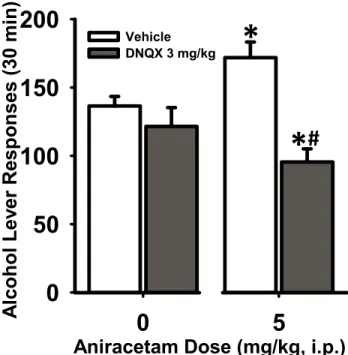
The AMPA receptor antagonist, DNQX (0 and 3 mg/kg, i.p) was administered immediately before aniracetam (0 and 5 mg/kg) to confirm the role of AMPA receptors in potentiating ethanol self-administration induced by aniracetam. This dose of DNQX (3 mg/kg) was chosen because it was the highest dose that did not alter operant ethanol self-administration when administered alone in a separate preliminary study (data not shown). On test days, each subject received each possible combination of both DNQX (0 and 3 mg/kg, i.p) immediately followed by aniracetam (0 and 5 mg/kg, i.p.) in
randomized order 30 minutes before testing, such that the entire dose-response curve was generated over the course of 4 test sessions.
Test for aniracetam-induced alterations in ethanol pharmacokinetics.
To determine whether aniracetam pretreatment altered ethanol clearance, another cohort of P-rats (n=6/ treatment group) with a history of ethanol
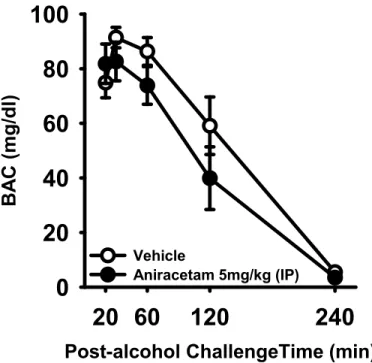
self-administration were pretreated with aniracetam (0; or 5 mg/kg; i.p.) 30 minutes prior to orally administered ethanol (1 g/kg, IG) and tail blood was collected 20, 30, 60, 120 and 240 min later. Plasma supernatant (5 µl) was analyzed for ethanol content using an Analox Alcohol Analyser (Model AM1, Analox Instruments USA Inc.,Lunenburg,MA).
Test for reinforcer specificity via sucrose-self-administration.
30
aniracetam (0, 1, 5, 10, 30 mg/kg, i.p.) 30 minutes prior to operant sucrose (0.8%, w/v) self-administration sessions (30-min). Aniracetam testing was conducted as described for the ethanol self-administration tests sessions.
Examination of positive modulation of glutamate activity at AMPA receptors on
regulating response-contingent cue-induced reinstatement.
To test the effects of aniracetam on ethanol seeking behaviorafter exposure to an ethanol-associated cue, self-administration-trained P-rats (15% ethanol vs. water; CONC FR4 FR4) had a minimum of 28 days of baseline self-administration sessions (see above for training procedures). After stable baseline responding, rats underwent extinction sessions (30 min) in which previously reinforced responses were extinguished over 13 consecutive days by removing response contingencies (i.e. no light cue or pump sound; no reinforcers delivered). Treatment groups were matched based on baseline response totals and extinction performance. On day 14, ethanol-trained P-rats were injected with vehicle (n=8) or aniracetam (5 mg/kg, i.p.; n=7) 30 minutes prior to a reinstatement session. During this session (30 min), lever responses (FR4) resulted in the presentation of the light cue and pump activation; however, no reinforcers (ethanol or water) were delivered. Note: 0.1 ml of the 15% ethanol (v/v) solution was added to the ethanol well prior to the reinstatement session. This amount of ethanol (0.1ml) is not pharmacologically relevant and functioned to provide additional olfactory/taste cues to maximize lever responses during reinstatement (Backstrom et al., 2004).
31
Rats then underwent 12 daily extinction sessions (30 min; see above) and on the 13th extinction session, animals were pretreated with vehicle (n=7) or aniracetam (n=7). Because aniracetam did not alter sucrose self-administration (see below), the role of aniracetam in sucrose reinstatement was not tested in this study.
Drugs.
Alcohol (95% (w/v); Pharmco-AAPER, Shelbyville, KY) was diluted in distilled water to 15% (v/v). Aniracetam (Tocris, Ellisville, Missouri) was suspended in 0.5% Carboxymethyl cellulose (vehicle; Sigma Aldrich, St. Louis, Missouri) and sonicated for approximately 15-20 minutes prior to injections. Aniracetam was injected at a volume of 2 ml/kg (i.p.). DNQX (Tocris, Ellisville, Missouri) was diluted in filtered water and
injected at a volume of 1 ml/kg (i.p.).
Data Analysis
Alcohol- (or sucrose-) and water-reinforced responses, cumulative responses, and cumulative distance traveled (cm) were analyzed by two-way repeated measures analysis of variance (RM ANOVA). Intake (g/kg) were analyzed by one-way RM ANOVA and calculated based on rat body weight and number of reinforcers delivered.
Responding was “extinguished” when ethanol-lever responses were not statistically different than water-lever responses for at least two consecutive days (two-way
32
(mean ± S.E.M.) for the day preceding initial testing of aniracetam is reported in Table 1.
Results
Examination of positive modulation of glutamate activity at AMPA receptors on
ethanol self-administration.
P-rats trained to self-administer ethanol or water (CONC FR4 FR4) were
pretreated with aniracetam (0, 1, 5, 10, 30 mg/kg) 30 minutes prior to self-administration sessions. Statistical analysis by two-way repeated measures analysis of variance (RM-ANOVA) indicated significant main effects of reinforcer (F(1,8)=291.82, p<0.001), aniracetam dose (F(4,32)=6.77, p<0.001), and a significant interaction of reinforcer x aniracetam dose (F(4,32)=6.49, p<0.001). Tukey post-hoc comparisons showed that pretreatment with aniracetam (1 and 5 mg/kg) resulted in a significant increase in
ethanol-reinforced responses vs. vehicle pretreatment (p<0.001), while water-reinforced responses were not altered by aniracetam pretreatment (Figure 1A). The mean values (± SEM) for ethanol intake (g/kg) during self-administration after pretreatment with each aniracetam dose were as follows: 0.71 ± 0.08 (vehicle), 0.90 ± 0.1 (1 mg/kg), 1.14 ± 0.07 (5 mg/kg), 0.84 ± 0.09 (10 mg/kg), and 0.86 ± 0.06 (30 mg/kg). One-way RM ANOVA showed a significant increase in ethanol intake (F(4,32)=5.64, p=0.001) after aniracetam pretreatment, with over a 60% increase in consumption (5 mg/kg
aniracetam vs. vehicle treatment, P<0.05). Furthermore, statistical analysis of the rate of ethanol lever responding over time (cumulative lever responses) by two-way RM
33
(F(4,32)=4.72, p=0.004), and a significant interaction of time x dose (F(20,160)=4.04, p<0.001). Post-hoc analysis indicated that the aniracetam-induced increase in ethanol-reinforced responses emerged early (by 10 min) and persisted throughout the duration of the 30-minute test session (5 mg/kg aniracetam; Figure 1B). Together these data suggest that enhanced glutamate activity at AMPA receptors enhances the reinforcing effects of ethanol.
Test for aniracetam-induced alterations in locomotor behavior.
To test for non-specific changes in locomotor behavior that may have influenced lever responding during operant ethanol self-administration tests, P-rats were pretreated with aniracetam (0 or 5 mg/kg) prior to locomotor assessments in an open field. Two-way RM ANOVA showed that cumulative distance traveled (cm) increased over time (F(14,112)=151.68, p<0.001), and aniracetam pretreatment did not alter this pattern of behavior (F(1,8)=0.45, p=0.84; Figure 1C), suggesting that increased ethanol lever responses after aniracetam pretreatment were likely not due to non-specific aniracetam-induced changes in locomotor behavior.
Confirmation of AMPA receptor involvement in modulating increased ethanol
self-administration.
34
(F(1,8)=0.15, p=0.71). There was a significant interaction of aniracetam dose x DNQX dose (F(1,8)=,18.28, p=0.003). Post-hoc analysis indicated that DNQX (3 mg/kg) was ineffective at altering ethanol self-administration when administered in combination with vehicle (Aniracetam 0 mg/kg; Figure 2 left panel). Importantly, pretreatment with DNQX (3 mg/kg) significantly blocked aniracetam-induced increased ethanol
self-administration (aniracetam 5 mg/kg; Figure 2). Water lever responding was not altered by DNQX and aniracetam pretreatment. Two-way ANOVA showed no main effects of DNQX dose(F(1,8)=1.82, p=0.21), aniracetam dose(F(1,8)=1.74, p=0.22) and no
significant interaction of DNQX x aniracetam (F(1,8)=0.03, p=0.86). These data confirm the role of AMPA receptors in mediating the aniracetam-induced increases in ethanol-reinforced responding.
Test for aniracetam-induced alterations in ethanol pharmacokinetics.
To test if increased ethanol self-administration was the result of
treatment-induced alterations in ethanol clearance, P-rats were challenged with a 1 g/kg (IG) dose of ethanol following aniracetam (0 vs. 5 mg/kg; i.p) pretreatment (n=6 per treatment group). Pretreatment with aniracetam did not alter blood-ethanol clearance over a 4-hr period relative to vehicle-treated P-rats (Figure 3). Analysis by two-way ANOVA showed a main effect of time (F(5,48)=38.76, p<0.001), but no effect of dose
(F(1,48)=2.992, p<0.09) or interaction of time x dose (F(5,48)=0.891, p=0.49). These data suggest that increased ethanol self-administration following aniracetam
35
Test for reinforcer specificity via sucrose self-administration.
To evaluate reinforcer specificity, aniracetam (0, 1, 5, 10, 30 mg/kg) was tested prior to self-administration sessions in sucrose-trained P-rats. Aniracetam did not alter operant sucrose or water self-administration in 30-minute test sessions (Figure 4A). Analysis by two-way RM ANOVA showed a significant main effect of lever
(F(1,10)=31.49, p=0.001), but no aniracetam-induced changes in sucrose self-administration were observed (F(4,40)=1.02, p=0.41). Moreover, examination of the cumulative sucrose responses over time (response rate) did not show any statistical differences across treatment doses (Figure 4B). Two-way RM ANOVA showed a main effect of time (F(5,50)=20.14, p<0.001), however, there was no main effect of dose (F(4,40)=0.88, p=0.49) or significant interaction of time x dose (F(20,200)=0.93, p=0.55). These data suggest that enhanced glutamate activity at AMPA receptors induced by aniracetam pretreatment selectively potentiates ethanol reinforcement processes, but not sucrose reinforcement (e.g. a non-drug reward).
Examination of positive modulation of glutamate activity at AMPA receptors on
regulating response-contingent cue-induced reinstatement.
36
lever x extinction session (F(12,364)=25.87, p<0.001). Post-hoc comparisons showed significant differences in lever responses on the ethanol and water levers, with the exception of the last three extinction sessions (p>0.05), which confirms extinction. During reinstatement, both treatment groups (vehicle and aniracetam) displayed response-contingent cue-induced reinstatement of ethanol-seeking behavior, as evidenced by increased responding on the ethanol-associated lever compared to their last extinction session (Figure 5B). Two-way RM ANOVA (with test condition as a repeating factor) showed significant main effects of aniracetam dose (F(1,13)=10.74, p=0.006) and test condition (F(1,13)=89.74, p<0.001) and a significant interaction of aniracetam dose x test condition (F(1,13)=11.16, p=0.005). Interestingly, responding on the ethanol-associated lever was potentiated in P-rats after pretreatment with
aniracetam (5 mg/kg vs. vehicle group) during reinstatement (p≤0.05, Tukey post-hoc). Responses on the water lever during reinstatement were not altered by
aniracetam pretreatment (Figure 5C) as no main effect of dose (F(1,13)=0.12, p=0.74), test condition (F(1,13)=1.90, p=0.19), or interaction (F(1,13)=0.02, p=0.88) was evident. Moreover, an examination of operant responses during extinction did not reveal any differences between the aniracetam-treated and vehicle-treated groups. The mean values (± SEM) for lever responding during extinction after pretreatment with
37
potentiated glutamate activity at AMPA receptors exacerbates cue-induced ethanol-seeking behavior.
Discussion
The results of this study demonstrate for the first time that enhanced glutamate activity at AMPA receptors exacerbates ethanol self-administration and promotes reinstatement of ethanol-seeking behavior. First, systemic AMPA receptor activation by aniracetam increased ethanol-reinforced responding in P-rats; an inbred rodent strain that is considered to fit many of the criteria for an animal model of alcoholism (Bell et al., 2006a; Kampov-Polevoy et al., 2000). Additionally, the aniracetam-induced increase in ethanol-reinforced responding was absent of effects on spontaneous locomotor
behavior and was not the result of alterations in ethanol clearance. Moreover, the role of AMPA receptors was confirmed because the aniracetam-induced increase in ethanol self-administration was blocked by administering the AMPA receptor antagonist, DNQX. Selective modulation of the reinforcing effects of ethanol was confirmed as aniracetam pretreatment did not alter self-administration of an alternative reinforcer (i.e. sucrose). Finally, aniracetam pretreatment potentiated responding on the ethanol-associated lever during a cue-induced reinstatement procedure.Taken together, these data suggest that enhanced AMPA receptor signaling selectively contributes to facilitate ethanol self-administration by potentiating both the reinforcing effects of ethanol and the capacity of ethanol-related cues to promote relapse of ethanol-seeking behavior.
38
1996). Here, a novel neuronal mechanism is provided that could contribute, in part, to increased ethanol drinking. That is, enhanced glutamate activity at AMPA receptors alters ethanol reinforcement processes in a manner that facilitates self-administration. These data are highly relevant given that excessive ethanol consumption has been shown to increase the likelihood for the development of alcoholism and/or alcohol dependence in humans (Saha et al., 2006). Interestingly, previous work by Stephens and Brown (1999) showed that administration of NBQX (AMPA receptor antagonist) not only reduced operant ethanol self-administration on a progressive ratio schedule of reinforcement, but sucrose and saccharin self-administration as well as locomotor activity; suggesting that AMPA receptors were either not selective in modulating ethanol reinforcement or results could not be determined due to non-specific motor-impairing effects of NBQX (Stephens and Brown, 1999). In contrast, the present work
demonstrates a selective role for enhanced AMPA receptor activity in modulating ethanol reinforcement since AMPA receptor activation resulted in increased ethanol self-administration on a fixed ratio schedule of reinforcement. Further, reinforcer specificity was confirmed because aniracetam pretreatment was void of effects on sucrose self-administration.
39
levels and promoted ethanol self-administration, while higher aniracetam doses may have exceeded the necessary threshold to alter ethanol reinforcement or engaged other receptor signaling systems (e.g. loss of receptor specificity). Several studies show that chronic ethanol exposure increases extracellular glutamate levels as measured by in vivo microdialysis (Lallemand et al., 2011; Melendez et al., 2005; Roberto et al., 2004) in brain regions that have been shown to regulate ethanol reinforcement (Besheer et al., 2010). Future investigations measuring glutamate levels/signaling after aniracetam pretreatment might assist in elucidating the underlying mechanism of this biphasic dose-response effect.
It could be argued that positive modulation of AMPA receptors induced changes in locomotor behavior that could have augmented operant responses. However,
aniracetam pretreatment did not alter water or sucrose lever responding, and did not alter locomotor behavior in an open field, suggesting that increased ethanol
self-administration was not due to a treatment-induced hyperactive state. These findings are consistent with others showing that aniracetam does not alter locomotor behavior in rats (Ventra et al., 1994). Operant self-administration procedures have a critical learning and memory element (White, 1996) that could possibly have been influenced by aniracetam. Indeed, aniracetam is a nootropic compound that has cognitive-enhancing effects in rodents (Lebrun et al., 2000; Ventra et al., 1994). However, increased operant
40
highly unlikely due to evidence suggesting that the actions of AMPA receptor positive modulators counteract those of ethanol. Specifically, ethanol has been shown to stabilize rapid sensitization of AMPA receptors after activation by glutamate
(Moykkynen et al., 2003; Moykkynen et al., 2009), whereas AMPA receptor positive modulators act as desensitization inhibitors (Tang et al., 1991); allowing for increased AMPA receptor current decay time and essentially opposing the actions of ethanol (Jones et al., 2008). Interestingly, the possibility of the opposition of the effects of ethanol by aniracetam may explain the increased ethanol self-administration. That is, aniracetam may blunt the subjective or interoceptive effects of consumed alcohol which may lead to greater ethanol self-administration (Besheer et al., 2012b; Hodge et al., 2001). Future investigation assessing the role of AMPA receptor positive modulation on the discriminative stimulus effects of ethanol could provide insight into whether AMPA receptor positive modulators alter how ethanol is perceived. Regardless of the
underlying mechanism, our findings demonstrate a novel role for enhanced activity at AMPA receptors in promoting ethanol self-administration.
ethanol-41
seeking behavior. Due to a lack of effect of aniracetam on sucrose self-administration, the role of aniracetam in sucrose reinstatement was not tested. Examining the
contributions of AMPA receptor activity in modulating non-drug seeking behavior might provide insights for a specified role of these receptors in modulating relapse to alcohol. Several studies have shown that reducing glutamate signaling at AMPA receptors attenuates relapse to ethanol-seeking behavior after exposure to ethanol cues
(Backstrom and Hyytia, 2004; Sanchis-Segura et al., 2006). We extend those findings by offering a novel role for enhanced AMPA receptor signaling in modulating
cue-induced ethanol-seeking. That is, enhanced AMPA receptor activity may have bolstered the ability of ethanol cues to promote ethanol-seeking behavior. Interestingly, previous studies show that a history of excessive ethanol consumption increases purported conditioned responses to ethanol cues in humans (Drummond, 2000; Papachristou et al., 2012). Accordingly, the aniracetam-induced potentiation of ethanol cue salience to promote ethanol-seeking could have been a major contributing factor in driving the observed increase in ethanol self-administration. These data are of particular
importance given that the present results suggest a role for enhanced AMPA receptor activity in modulating both heightened ethanol self-administration and relapse to
ethanol-seeking. The findings suggest that enhanced AMPA receptor signaling could be involved in promoting vulnerability to relapse episodes.
42
intriguing and suggest that aniracetam may have potentiated an already-heightened glutamatergic state during reinstatement; a possibility that will be interesting for future work to address. To date, it is not known if P-rats differentially express basal levels of AMPA receptors as compared to other strains, which could influence pharmacological response to aniracetam and affect behavioral outcomes. An assessment of AMPA receptor expression across strains could provide additional understanding of AMPA receptor sensitivity to aniracetam treatment. Future experiments using AMPA receptor positive modulators and antagonists targeting AMPA receptors in specific limbic regions that regulate reward and drug-seeking could provide critical information about the neuronal circuitry involved in modulating increased ethanol self-administration and potentiated reinstatement. Interestingly, the present data parallel other studies investigating the role of AMPA receptor neurotransmission in modulating relapse to other drugs of abuse, particularly cocaine. Indeed, microinjections of AMPA agonists in the nucleus accumbens have been shown to reinstate cocaine-seeking behavior
(Cornish and Kalivas, 2000); which strongly suggest that AMPA receptor signaling may regulate drug-seeking across a variety of drugs of abuse.
In conclusion, the present work provides strong evidence for the involvement of enhanced AMPA receptor activity in modulating both increased ethanol
self-administration and potentiated relapse-like behavior. These data suggest that enhanced synaptic strength (particularly enhanced AMPA receptor signaling) may be one of the key pathophysiological changes that produce a behavioral phenotype similar to that of an alcoholic (i.e, increased drinking and susceptibility to relapse). A better
43