The effect of facility characteristics on patient
safety, patient experience, and service
availability for procedures in
non-hospital-affiliated outpatient settings: A systematic
review
Nancy F. Berglas1*, Molly F. Battistelli1, Wanda K. Nicholson2, Mindy Sobota3, Richard D. Urman4, Sarah C. M. Roberts1
1 Advancing New Standards in Reproductive Health, University of California, San Francisco (UCSF),
Oakland, California, United States of America, 2 University of North Carolina, Chapel Hill, North Carolina, United States of America, 3 Rhode Island Hospital, Alpert Medical School at Brown University, Providence, Rhode Island, United States of America, 4 Brigham and Women’s Hospital, Harvard Medical School, Boston, Massachusetts, United States of America
Abstract
Background
Over recent decades, numerous medical procedures have migrated out of hospitals and into freestanding ambulatory surgery centers (ASCs) and physician offices, with possible implications for patient outcomes. In response, states have passed regulations for office-based surgeries, private organizations have established standards for facility accreditation, and professional associations have developed clinical guidelines. While abortions have been performed in office setting for decades, states have also enacted laws requiring that facilities that perform abortions meet specific requirements. The extent to which facility requirements have an impact on patient outcomes—for any procedure—is unclear.
Methods and findings
We conducted a systematic review to examine the effect of outpatient facility type (ASC vs. office) and specific facility characteristics (e.g., facility accreditation, emergency response protocols, clinician qualifications, physical plant characteristics, other policies) on patient safety, patient experience and service availability in non-hospital-affiliated outpatient set-tings. To identify relevant research, we searched databases of the published academic literature (PubMed, EMBASE, Web of Science) and websites of governmental and non-gov-ernmental organizations. Two investigators reviewed 3049 abstracts and full-text articles against inclusion/exclusion criteria and assessed the quality of 22 identified articles. Most studies were hampered by methodological challenges, with 12 of 22 not meeting minimum quality criteria. Of 10 studies included in the review, most (6) examined the effect of facility type on patient safety. Existing research appears to indicate no difference in patient safety
a1111111111 a1111111111 a1111111111 a1111111111 a1111111111
OPEN ACCESS
Citation: Berglas NF, Battistelli MF, Nicholson WK,
Sobota M, Urman RD, Roberts SCM (2018) The effect of facility characteristics on patient safety, patient experience, and service availability for procedures in non-hospital-affiliated outpatient settings: A systematic review. PLoS ONE 13(1): e0190975.https://doi.org/10.1371/journal. pone.0190975
Editor: Chiara Lazzeri, Azienda Ospedaliero
Universitaria Careggi, ITALY
Received: September 1, 2017 Accepted: December 23, 2017 Published: January 5, 2018
Copyright:©2018 Berglas et al. This is an open access article distributed under the terms of the
Creative Commons Attribution License, which permits unrestricted use, distribution, and reproduction in any medium, provided the original author and source are credited.
Data Availability Statement: All relevant data are
within the paper and its Supporting Information files.
Funding: This study was supported by a research
for outpatient procedures performed in ASCs vs. physician offices. Research about specific facility characteristics is insufficient to draw conclusions.
Conclusions
More and higher quality research is needed to determine if there is a public health problem to be addressed through facility regulation and, if so, which facility characteristics may result in consistent improvements to patient safety while not adversely affecting patient experience or service availability.
Introduction
The Institute of Medicine’s seminal reports,To Err is Human(1999) andCrossing the Quality
Chasm(2002) brought national attention to concerns about patient safety in the health care
system and led to efforts to study and improve safety across health care facility settings, pri-marily in hospitals [1,2]. Around the same time, surgeries and procedures that had historically been performed solely in licensed hospitals transitioned to less resource intensive settings, including freestanding ambulatory surgery centers (ASCs), physician offices and clinics [3]. As of 2006, an estimated 53 million surgical and nonsurgical procedures were performed annually on an outpatient basis [3]. This migration of care raised important questions about patient safety and has led to efforts to study and improve patient experience in non-hospital health care settings as well. There has been increased attention to patient experience and outcomes in outpatient settings by academic researchers, professional associations, state legislatures, payors and private accrediting organizations.
Nonetheless, research on the effect of undergoing a procedure in a particular type of outpa-tient facility—ASC or physician office—has been limited. The question of differential risk by outpatient setting has primarily been raised within the field of cosmetic/plastic surgery, follow-ing public concerns about patient safety in offices in the 1990s and subsequent efforts to address concerns through state office-based surgery laws, facility accreditation, mandated reporting of adverse events, and quality improvement activities. The State of Florida’s adverse event registry, in particular, has been used by researchers to understand risk in physician offices [4–12]. Other researchers have used claims data to study differences in offices and ASCs, with particular attention to patient risk factors in each setting [13–15].
Since 2011, states have enacted an increasing number of laws that mandate specific require-ments for the facilities in which abortions are performed [16]. Supporters of these laws main-tain that facility regulations make abortion safer, despite the fact that abortion has a well-documented patient safety record over 40 years that meets or exceeds those of other outpatient procedures [17–19]. Research indicates that the challenges of complying with these laws have resulted in facility closures, dramatically reducing the availability of safe abortion services [20].
In 2016, the U.S. Supreme Court ruled against a Texas law mandating that abortion be per-formed in facilities licensed as ASCs and by physicians with local hospital admitting privileges. In its decision, the Court held that laws regulating the provision of abortion are unconstitu-tional if the burdens they impose are not balanced by proporunconstitu-tional benefits. It also instructed future courts considering challenges to such laws to carefully assess whether the law is based on credible evidence, rather than relying on speculation or the judgement of a state agency or legislature [21]. This raises the critical question of what quality scientific evidence exists regarding the impact of facility requirements, both for abortion and other common outpatient not relevant to the editors’ or reviewers’
assessment of the validity of this work. The authors are not aware of any competing interests of the funder in relation to this work. None of the research costs or authors’ salaries were funded, in whole or in part, by a tobacco company.
Competing interests: Richard D. Urman serves as
procedures. To date, the methodological quality of the literature and the consistency of results across these studies have not been systematically assessed.
Purpose of the study
In this study, we conduct a systematic review to examine the effect of facility type (ASC vs. office/clinic) and specific facility characteristics (e.g., facility accreditation, emergency response protocols, clinician qualifications, physical plant characteristics, other facility poli-cies) on patient outcomes for procedures commonly performed in non-hospital-affiliated outpatient settings. We examine patient safety outcomes, as well as those related to patient experience and availability of services. We aim to identify and consolidate the existing body of research across medical procedures, and then assess the quality of the research and the consis-tency of findings across studies.
Materials and methods
Scope of review
The aim of the systematic review is to examine the impact of facility type and specific facility characteristics on patient safety, patient experience and service availability. We sought to answer the following two research questions:
Q1. What is the effect of facility type (ASC vs. office/clinic) on patient safety, patient experi-ence and service availability for procedures in non-hospital-affiliated outpatient settings?
Q2. What is the effect of specific facility characteristics on patient safety, patient experience and service availability for procedures in non-hospital-affiliated outpatient settings?
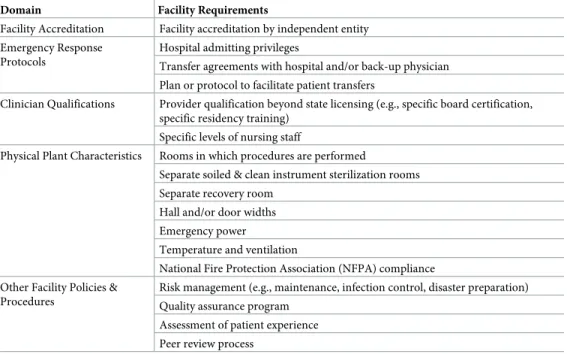
For the second research question, we identified various types of requirements governing facility operations that appear in many accreditation standards and state laws, including those generally applicable to office-based surgeries and those specifically intended to regulate abor-tion providers [22]. We categorized these requirements according to their focus on facility accreditation, emergency response protocols, clinician qualifications, physical plant character-istics, and other facility policies and procedures (Table 1).
We conducted the review according to the Preferred Reporting Items for Systematic Reviews and Meta-Analyses (PRISMA) guidelines (S1 Table). We registered the study prospec-tively with the international registry for systematic reviews, PROSPERO (#CRD42016046872).
Data sources and search strategy
We developed the search strategy in collaboration with a university reference librarian, who assisted with the selection of databases, development of search terms, and reference manage-ment. We searched the electronic databases EMBASE, PubMed (including MEDLINE) and Web of Science for relevant publications. The search strategy involved using each database’s controlled vocabulary (e.g., Medical Subject Heading (MeSH) terms for PubMed, Emtree for EMBASE) as well as a range of relevant keywords identified through the literature. We con-ducted separate searches for each of the research questions. We limited all searches to articles published in the English language and the period from the earliest records up to the search date (August 2016 for Q1, December 2016 for Q2). In July 2017, we conducted a supplemen-tary bridge search to ensure that any newly published research was identified. The specific search strategies are available as Supporting Information (S2 Table).
research (including the Cochrane Database of Systematic Reviews and the Joanna Briggs Insti-tute) to identify other relevant studies, including conference proceedings and white papers. Using Web of Science, we reviewed references in and citations of our included articles to iden-tify other potential relevant studies that were not identified in our electronic search.
Study selection
Two investigators independently reviewed titles and abstracts, using a blinded process in the online program Covidence. We resolved discrepancies through consensus, erring on the side of inclusion for full-text review in cases of disagreement. We accepted all articles that did not include an abstract so that the full text of the article could be assessed for eligibility.
The same investigators independently reviewed the full text of articles for eligibility against pre-specified inclusion and exclusion criteria, using a blinded process in Covidence. We resolved discrepancies through consensus and consultation with a third investigator. The inclusion criteria for the full-text review was as follows: We included research studies that compared the impact of outpatient facility type (ASC vs. office/clinic) or specific facility char-acteristics on our designated outcomes (patient safety, patient experience and service availabil-ity) for procedures in non-hospital-affiliated outpatient settings. We excluded articles that summarized non-original research including commentaries and editorials, did not use a com-parison group (e.g., studies of patient safety in a single setting), or measured only clinical out-comes (e.g., effectiveness of a procedure). We excluded studies conducted in hospital-affiliated outpatient settings, as these may be organized under the facility characteristics of the hospital.
Quality assessment
Two investigators critically appraised the included studies using the ROBINS-I tool, which was developed by the Cochrane Collaboration to assess risk of bias in non-randomized studies [23]. The tool appraises the strengths and weaknesses of research across seven domains of bias—confounding, selection of participants into the study, classification of interventions,
Table 1. Common facility requirements in non-hospital-affiliated outpatient settings, used to guide Q2 review.
Domain Facility Requirements
Facility Accreditation Facility accreditation by independent entity Emergency Response
Protocols
Hospital admitting privileges
Transfer agreements with hospital and/or back-up physician Plan or protocol to facilitate patient transfers
Clinician Qualifications Provider qualification beyond state licensing (e.g., specific board certification, specific residency training)
Specific levels of nursing staff
Physical Plant Characteristics Rooms in which procedures are performed
Separate soiled & clean instrument sterilization rooms Separate recovery room
Hall and/or door widths Emergency power
Temperature and ventilation
National Fire Protection Association (NFPA) compliance Other Facility Policies &
Procedures
Risk management (e.g., maintenance, infection control, disaster preparation) Quality assurance program
Assessment of patient experience Peer review process
deviation from intended interventions, missing data, measurement of outcomes, selection of reported results—and offers signaling questions to guide the researcher in judging risk of bias within each domain. Risk of bias is categorized as low, moderate, serious or critical within each domain, and then assessed overall based on the most critical within-domain risk (e.g., a study is judged to be at serious risk of bias overall if it has been assessed at serious risk in at least one domain, but not at critical risk of bias in any domain).
Data extraction and synthesis
We extracted data from the final sample of studies, including the data source, sample popula-tion, classification of exposure (i.e., outpatient facility type or specific facility factor), outcomes, analytic methods and relevant findings. One researcher extracted study-level data into evi-dence tables, and a second checked the data for accuracy. The ROBINS-I documentation notes that studies with critical risk of bias are “too problematic to provide any useful evidence and should not be included in any synthesis” [23] (p.4). Thus, we excluded studies judged to have critical risk of bias from our data extraction and synthesis. For studies that included multiple procedures in analyses, we extracted overall results rather than results by procedure. If overall results were not reported, we extracted results associated with the individual procedures. If multiple types of results were reported, we reported the most methodologically sound findings (e.g., results from regression models that controlled for confounding, rather than raw rates). We contacted authors for further information when statistical significance of key comparisons was not reported; however, authors often reported that information was unavailable years after publication.
Because of the great variation in study aims and outcomes, we did not quantitatively pool results across studies. Rather, we present results narratively by research question, noting study findings and highlighting any important limitations that might affect interpretation of results.
Results
Study selection process
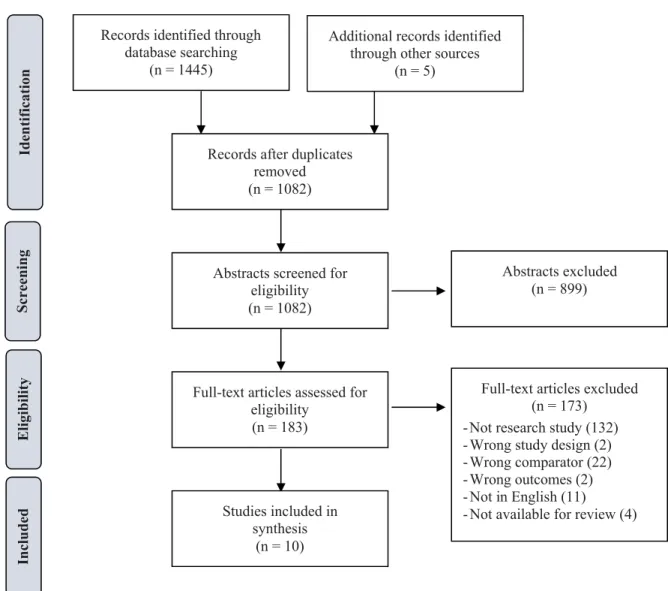
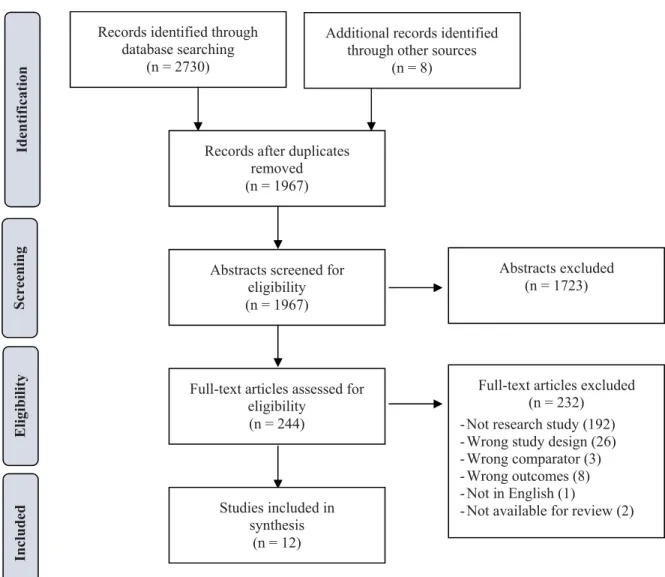
PRISMA flow diagrams, indicating the study selection process for each research question, are presented in Figs1and2. For Q1 (Effect of Facility Type), the search strategy identified 1082 unduplicated articles for screening. We considered 183 eligible for full-text review and deter-mined that 10 met criteria for inclusion in the review. For Q2 (Effect of Specific Facility Characteristics), the search strategy identified 1967 unduplicated articles for screening. We considered 244 eligible for full-text review and determined that 12 met criteria for inclusion in the review. In total, we identified 22 papers that met criteria for inclusion in the review.
Study characteristics
Most studies (19 of 22) involved retrospective analyses of existing data. Data sources varied across the 22 studies, including adverse event data collected through registries (11 studies), as well as administrative claims and discharge data (4 studies), prospective patient survey data (3 studies), and other sources. Nearly all articles (17 of 22) measured outcomes of patient safety (such as death, hospitalization, or emergency department visits). Few studies measured out-comes related to patient experience (3 studies) or service availability (3 studies).
Study quality
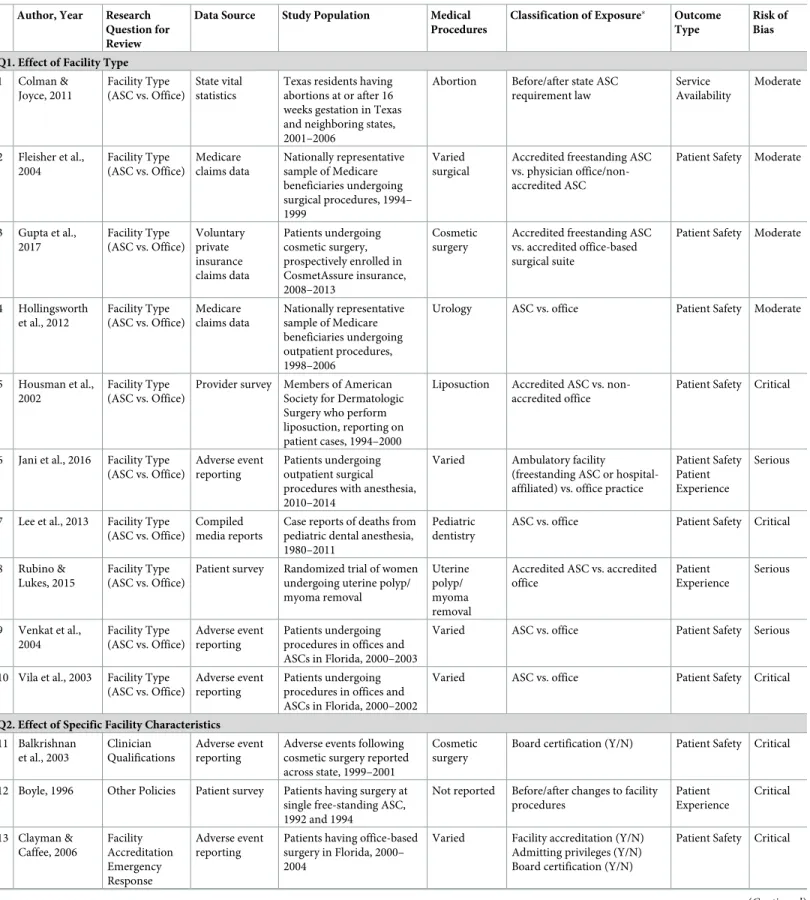
For each study, risk of bias was assessed for each of the seven domains, and the overall risk of bias was based on the lowest domain assessment. Overall, zero studies had “low risk,” five had “moderate risk,” five had “serious risk,” and 12 had “critical risk” of bias. Overall results are presented inTable 2. Results by domain are included as Supporting Information (S3 Table).
Notable methodological challenges were found within the state of the literature. Eight of the 22 studies reported on the number and types of adverse events, often as a descriptive case series. These calculations lacked a denominator to estimate the proportion of procedures,
Fig 1. Study selection flow diagram, Q1 (effect of facility type).
patients or physicians experiencing adverse events in different facility settings or by specific facility requirement [4–9,27,29]. Other studies relied on combinations of datasets, where numerators and denominators were accessed from different sources, with conflicting results [11,12]. Most studies did not control for potential confounders—such as patient demographic factors, patient health status, procedural invasiveness, or level of sedation—in statistical analy-ses [10–12,24–26,30,31]. A few studies were hampered by poor response rates, unclear sam-pling strategies, the use of voluntary registries, which could have resulted in selection bias [25–
27,30]. A few studies, otherwise sound in design, included a large number of statistical tests without correcting for multiple comparisons, increasing the likelihood that statistically signifi-cant results are due to chance [26,32].
Based on ROBINS-I guidelines, we excluded the 12 studies judged to have critical risk of bias from our data extraction. Among the remaining ten studies that met minimum quality criteria, seven examined effects of facility type (Q1) and three examined effects of specific facil-ity characteristics (Q2).
Fig 2. Study selection flow diagram, Q2 (effect of specific facility characteristics).
Table 2. Studies of effect of facility type and specific facility characteristics on patient safety, patient experience and service availability for procedures in non-hospi-tal-affiliated outpatient settings (N = 22).
Author, Year Research Question for Review
Data Source Study Population Medical Procedures
Classification of Exposure Outcome
Type
Risk of Bias
Q1. Effect of Facility Type
1 Colman & Joyce, 2011
Facility Type (ASC vs. Office)
State vital statistics
Texas residents having abortions at or after 16 weeks gestation in Texas and neighboring states, 2001–2006
Abortion Before/after state ASC requirement law
Service Availability
Moderate
2 Fleisher et al., 2004
Facility Type (ASC vs. Office)
Medicare claims data
Nationally representative sample of Medicare beneficiaries undergoing surgical procedures, 1994– 1999
Varied surgical
Accredited freestanding ASC vs. physician office/non-accredited ASC
Patient Safety Moderate
3 Gupta et al., 2017
Facility Type (ASC vs. Office)
Voluntary private insurance claims data Patients undergoing cosmetic surgery, prospectively enrolled in CosmetAssure insurance, 2008–2013
Cosmetic surgery
Accredited freestanding ASC vs. accredited office-based surgical suite
Patient Safety Moderate
4 Hollingsworth et al., 2012
Facility Type (ASC vs. Office)
Medicare claims data
Nationally representative sample of Medicare beneficiaries undergoing outpatient procedures, 1998–2006
Urology ASC vs. office Patient Safety Moderate
5 Housman et al., 2002
Facility Type (ASC vs. Office)
Provider survey Members of American Society for Dermatologic Surgery who perform liposuction, reporting on patient cases, 1994–2000
Liposuction Accredited ASC vs. non-accredited office
Patient Safety Critical
6 Jani et al., 2016 Facility Type (ASC vs. Office)
Adverse event reporting
Patients undergoing outpatient surgical procedures with anesthesia, 2010–2014
Varied Ambulatory facility
(freestanding ASC or hospital-affiliated) vs. office practice
Patient Safety Patient Experience
Serious
7 Lee et al., 2013 Facility Type (ASC vs. Office)
Compiled media reports
Case reports of deaths from pediatric dental anesthesia, 1980–2011
Pediatric dentistry
ASC vs. office Patient Safety Critical
8 Rubino & Lukes, 2015
Facility Type (ASC vs. Office)
Patient survey Randomized trial of women undergoing uterine polyp/ myoma removal
Uterine polyp/ myoma removal
Accredited ASC vs. accredited office
Patient Experience
Serious
9 Venkat et al., 2004
Facility Type (ASC vs. Office)
Adverse event reporting
Patients undergoing procedures in offices and ASCs in Florida, 2000–2003
Varied ASC vs. office Patient Safety Serious
10 Vila et al., 2003 Facility Type (ASC vs. Office)
Adverse event reporting
Patients undergoing procedures in offices and ASCs in Florida, 2000–2002
Varied ASC vs. office Patient Safety Critical
Q2. Effect of Specific Facility Characteristics
11 Balkrishnan et al., 2003
Clinician Qualifications
Adverse event reporting
Adverse events following cosmetic surgery reported across state, 1999–2001
Cosmetic surgery
Board certification (Y/N) Patient Safety Critical
12 Boyle, 1996 Other Policies Patient survey Patients having surgery at single free-standing ASC, 1992 and 1994
Not reported Before/after changes to facility procedures
Patient Experience
Critical
13 Clayman & Caffee, 2006 Facility Accreditation Emergency Response Adverse event reporting
Patients having office-based surgery in Florida, 2000– 2004
Varied Facility accreditation (Y/N) Admitting privileges (Y/N) Board certification (Y/N)
Patient Safety Critical
Effect of facility type
Seven studies met minimum quality criteria for Q1 (Table 3). Of these, five compared patient safety outcomes in the ASC and office setting. Across the five studies, one study reported mixed findings, three reported greater risk in the ASC, and one did not assess statistical signifi-cance. Across all 18 patient safety outcomes reported in the five studies, seven outcomes indi-cated greater risk in the ASC, one indiindi-cated lower risk in the ASC, six indiindi-cated no difference in risk by setting, and four did not assess the difference using statistical tests. Two of the seven studies reported on patient experience outcomes. One reported mixed findings, and the other found no statistical difference by ASC vs. office setting. One study examined the impact of a
Table 2. (Continued)
Author, Year Research Question for Review
Data Source Study Population Medical Procedures
Classification of Exposure Outcome
Type
Risk of Bias
14 Clayman & Seagle, 2006 Facility Accreditation Emergency Response Adverse event reporting
Patients having office-based surgery in Florida, 2000– 2006
Varied Facility accreditation (Y/N) Admitting privileges (Y/N) Board certification (Y/N)
Patient Safety Critical
15 Coldiron, 2002 Facility Accreditation Clinician Qualifications
Adverse event reporting
Patients having office-based surgery in Florida, 2000– 2002
Varied Facility accreditation (Y/N) Admitting privileges (Y/N) Board certification (Y/N)
Patient Safety Critical
16 Coldiron et al., 2004 Facility Accreditation Emergency Response Clinician Qualifications Adverse event reporting
Patients having office-based surgery in Florida, 2000– 2003
Varied Facility accreditation (Y/N) Admitting privileges (Y/N) Board certification (Y/N)
Patient Safety Critical
17 Coldiron et al., 2005 Facility Accreditation Emergency Response Clinician Qualifications Adverse event reporting
Patients having office-based surgery in Florida, 2000– 2004
Varied Facility accreditation (Y/N) Admitting privileges (Y/N) Board certification (Y/N)
Patient Safety Critical
18 Coldiron et al., 2008 Facility Accreditation Emergency Response Clinician Qualifications Adverse event reporting
Patients having office-based surgery in Florida, 2000– 2007
Varied Facility accreditation (Y/N) Admitting privileges (Y/N) Board certification (Y/N)
Patient Safety Critical
19 Gerdts et al., 2016
Emergency Response
Patient survey Patients seeking abortion at clinics in 5 cities in Texas, 2014
Abortion Nearest clinic closed or remained open after state admitting privileges law
Service Availability
Serious
20 Grossman et al., 2014
Emergency Response
Facility procedure data
Clinics providing abortion in Texas, 2012–2014
Abortion Before/after state admitting privileges law
Service Availability
Serious
21 Menechemi et al., 2008
Facility Accreditation
Ambulatory surgery claims data
Ambulatory surgery and hospital discharge data on 5 procedures in Florida, 2004
Varied Facility accreditation (Y/N) Patient Safety Moderate
22 Starling et al., 2012 Facility Accreditation Emergency Response Clinician Qualifications Adverse event reporting
Patients having office-based surgery in Florida, 2000– 2010, and Alabama, 2003– 2009
Varied Facility accreditation (Y/N) Admitting privileges (Y/N) Board certification (Y/N)
Patient Safety Critical
Classification of exposure, as defined by study authors
Table 3. Outcomes and results of research studies that met minimum quality criteria for Q1 (effect of facility type).
Author, Year Outcomes Procedures Direction of Effect Reported Results
Colman & Joyce, 2011
Number of in-state abortions at or after 16 weeks gestation among Texas residents
Abortion Difference not assessed Decrease in number of abortions one year after ASC law (3642 in 2003 vs. 446 in 2004). Not assessed for statistical significance.
Number of out-of-state abortions at or after 16 weeks gestation among Texas residents
Abortion Difference not assessed Increase in number of abortions one year after ASC law (187 in 2003 vs. 736 in 2004). Not assessed for statistical significance.
Abortion rate (abortions per 1000 women) at or after 16 weeks gestation
Abortion Difference not assessed Decrease in abortion rate three years after ASC law (0.78 in 2003 vs. 0.35 in 2006). Not assessed for statistical significance.
Change in abortion rate (abortions per 1000 women) at or after 16 weeks gestation in Texas relative to Arkansas, Kansas, Oklahoma
Abortion Greater decline in service availability in Texas compared to other states
Greater decrease in abortion rate in Texas relative to 3 comparator states among teens (β= -0.80, p<
.05), adult women (β= -0.50, p<.01), and all women (β= -0.57, p<.01).
Change in abortion rate (abortions per 1000 women) at or after 16 weeks gestation in Texas relative to 32 states
Abortion Greater decline in service availability in Texas compared to other states
Greater decrease in abortion rate in Texas relative to 32 comparator states among all women (β= -0.55, p<.01).
Fleisher et al., 2004
Death Varied No difference in risk Difference was not statistically significant. Numbers not reported.
Emergency department visit within 7 days Varied Greater risk in ASC Lower risk at office vs. ASC, controlling for other factors (OR = 0.71, CI: 0.61–0.84).
Hospitalization within 7 days Varied Lowe risk in ASC Greater risk at office vs. ASC, controlling for other factors (OR = 1.59, CI: 1.40–1.81).
Gupta et al., 2016 Major complication (defined as requiring hospital admission, emergency department visit, or reoperation within 30 days
Cosmetic surgery
Greater risk in ASC Lower risk at office vs. ASC, controlling for other factors (OR = 0.67, CI: 0.59–0.77).
Hematoma within 30 days Cosmetic surgery
Greater risk in ASC Lower risk at office vs. ASC, controlling for other factors (OR = 0.57, CI: 0.47–0.70).
Infection within 30 days Cosmetic surgery
Greater risk in ASC Lower risk at office vs. ASC, controlling for other factors (OR = 0.71, CI: 0.55–0.92).
Confirmed venous thromboembolism within 30 days
Cosmetic surgery
No difference in risk Difference was not statistically significant. Numbers not reported.
Suspected venous thromboembolism within 30 days
Cosmetic surgery
No difference in risk Difference was not statistically significant. Numbers not reported.
Pulmonary dysfunction within 30 days Cosmetic surgery
No difference in risk Difference was not statistically significant. Numbers not reported.
Hollingsworth et al., 2012
Death within 30 days Urology Difference in risk not assessed
No difference in risk at ASC or office, compared to hospital outpatient department. No statistical test comparing ASC to office.
Same day hospitalization Urology Difference in risk not assessed
Greater risk at ASC vs. hospital outpatient department, controlling for other factors
(OR = 6.96, CI: 4.44–10.90). Greater risk at office vs. hospital outpatient department, controlling for other factors (OR = 3.64, CI: 2.48–5.36). No statistical test comparing ASC to office. Hospitalization within 30 days Urology Difference in risk not
assessed
No difference in risk at ASC or office, compared to hospital outpatient department. No statistical test comparing ASC to office.
Postoperative complications within 30 days (identified using ICD-9 CM codes)
Urology Difference in risk not assessed
Lower risk at ASC vs. hospital outpatient department, controlling for other factors
(OR = 0.69, CI: 0.57–0.83). No significant difference in risk a t office vs. hospital outpatient department. No statistical test comparing ASC to office.
state-mandated ASC requirement, finding a decrease in service availability. Across all these studies, there is no consistent pattern to the results. The direction and statistical significance are typically consistent within studies, but are not consistent for outcomes across studies.
Summary of studies that met minimum quality criteria. Colman & Joyce (2011) used
vital statistics data to assess the impact of a Texas state law requiring that abortions at or after 16 weeks gestation be performed in ASCs. Prior to the law, 95% of abortions at that phase of pregnancy were performed in physician offices or clinics; at the time, none met the require-ments of ASCs. In the law’s first year, the number of abortions at or after 16 weeks gestation in Texas decreased by 88%, and the number in neighboring states among Texas residents increased fourfold. By three years later, the rate of abortions at or after 16 weeks gestation had decreased more than 50% (0.78 to 0.35 per 1000 women, in 2003 to 2006). In statistical models, the authors found greater declines in the rate of abortions at or after 16 weeks gestation in Texas than in comparable states (all p<.05). They conducted analyses to test alternative expla-nations, none of which conflicted with their conclusions. Minor methodological weaknesses of the study include not fully accounting for possible demographic changes over time and the selection of out-of-state data not including Georgia and Florida, which provide the bulk of later abortion procedures in the South.
Using a nationally representative sample of Medicare beneficiaries undergoing 16 varied outpatient surgical procedures, Fleisher et al. (2004) compared patient safety outcomes at accredited freestanding ASCs to physician offices and non-accredited ASCs. In regression models controlling for patient factors and type of surgical procedure, the authors found lower risk of emergency department visits (OR = 0.71) but higher risk of hospitalization (OR = 1.59) following surgery at offices compared to accredited ASCs. There was no statisti-cally significant difference in risk of death. Separate analyses were reported for eight of 16 indi-vidual procedures, and risk of death or hospitalization was found to be greater at ASCs in seven of eight of these analyses. As noted by the authors, the interpretation of these results is confused by the combining of physician offices and non-accredited ASCs under the category
Table 3. (Continued)
Author, Year Outcomes Procedures Direction of Effect Reported Results
Jani et al., 2016 Inadequate postoperative pain control Varied Greater risk in ASC Greater risk at ASC vs. office, not controlling for other factors (OR = 2.10, CI: 1.84–2.41). Postoperative nausea and vomiting (PONV) Varied Lower risk in ASC Lower risk at ASC vs. office, not controlling for
other factors (OR = 0.74, CI: 0.63–0.87). Eye injury Varied Greater risk in ASC Greater risk at ASC vs. office, not controlling for
other factors (OR = 9.05, CI: 1.27–64.42). Difficult airway Varied No difference in risk No difference by facility type.
Unexpected hospital admission (unspecified timeframe)
Varied No difference in risk No difference by facility type.
Rubino & Lukes, 2015
Patient “satisfied” or “very satisfied” at 12 months
Uterine polyp/ myoma removal
No difference in patient experience
No difference by facility type.
Patient would undergo treatment again if experienced similar symptoms
Uterine polyp/ myoma removal
No difference in patient experience
No difference by facility type.
Patient would recommend treatment to others with similar symptoms
Uterine polyp/ myoma removal
No difference in patient experience
No difference by facility type.
Venkat et al., 2004
Mortality Varied Greater risk in ASC Lower risk in office vs. ASC (RR: 0.45; CI: 0.24–0.85 or RR: 0.11; CI: 0.05–0.24, depending on data source for denominator).
Adverse event Varied Greater risk in ASC Lower risk in office vs. ASC (RR: 0.47; CI: 0.36–0.62 or RR: 0.05; CI: 0.03–0.09, depending on data source for denominator).
“office” in Medicare claims data. The analysis was unable to control for type or duration of anesthesia use, and did not adjust statistical significance for the large number of statistical tests.
Gupta et al. (2016) relied on claims data from CosmetAssure, a voluntary private insurance for patients undergoing varied cosmetic surgery procedures at accredited ASCs and accredited office-based surgical suites (as well as hospital sites). CosmetAssure mandates that procedures be performed in accredited facilities, thus non-accredited offices or ASCs are not included. Risk of major complications (defined by the authors as those as requiring hospital admission, emergency department visit or reoperation) was significantly lower for patients in offices than in ASCs (RR = 0.67) after controlling for patient factors, procedure type and combined proce-dures. Similar results were found for some specific outcomes, including risk of hematoma or infection, but there was no difference in risk of VTE or pulmonary dysfunction by facility type. While analyses controlled for a number of potential confounders, the dataset did not include data on type or duration of anesthesia.
Hollingsworth et al. (2012) used a national sample of Medicare claims data to assess out-comes following 22 common urological procedures in freestanding ASCs, offices, and hospital outpatient departments (HOPD). The study found that the risk of same-day hospital admis-sions was significantly higher at ASCs and offices relative to HOPDs (OR = 6.96 and
OR = 3.64, respectively), and that the risk of postoperative complications (as identified through ICD-9 CM diagnosis codes) was significantly lower at ASCs relative to HOPDs (OR = 0.69) but was not different at offices relative to HOPDs. However, the statistical models relied on the HOPD at the reference group and made no direct comparisons between the ASC and office. Thus, it is unclear if there were statistically significant differences in outcomes between the non-hospital-affiliated settings. Additionally, the analyses did not control for anesthesia use or specific procedure.
Using a voluntary quality improvement database of non-hospital-affiliated outpatient cases in which anesthesia was used, Jani et al. (2016) examined the impact of facility type on measures of patient safety and patient experience. Multiple procedure types were included, with outcomes reported overall and separately for each procedure. Overall, the study found no statistically significant differences in patients’ odds of difficult airway or hospital admission based on outpatient facility type. Rates of inadequate pain control was greater (OR = 2.10) and rates of post-operative nausea and vomiting were lower (OR = 0.74) for patients in the ASC relative to the office, which may reflect greater levels of sedation at the office. There were no statistically significant differences in difficult airway or hospitaliza-tion by facility type. These results are hampered by analyses that did not control for any potential confounders and the use of many statistical tests for each individual procedure and multiple outcomes for each procedure without correcting the statistical significance thresh-old to account for findings due to chance.
The study by Venkat et al. (2004) is presented as a direct response to Vila et al. (2013), which did not meet minimum quality criteria. Both rely on the mandatory reporting of adverse events in Florida and aim to determine the risk of mortality in physician offices compared with ASCs. The studies use different means to estimate the denominator—that is, the number of procedures in each setting in the state—to estimate risk. The findings of Vila et al., which indicated greater risk in offices, have been widely disputed for these calculations [8,11]. In the updated analysis, Venkat et al. estimate higher adverse event rates and mortality rates in ASCs. The study estimates adverse event and mortality rates using two different data sources for the denominator, and the risk ratios vary considerably by data source. These calculations are also not adjusted for potential confounders, and therefore may still be at serious risk of bias.
Effect of specific facility characteristics
Three studies met minimum quality criteria for Q2 (Table 4). One study addressed the effect of facility accreditation on patient safety outcomes, and two addressed the effect of emergency response protocols on service availability outcomes. No studies meeting minimum quality cri-teria addressed the impact of clinician qualifications, physical plant characteristics, or other facility policies. There is not enough research on each of the specific types of facility character-istics to draw conclusions across studies, although there is a suggestion that requiring abortion providers to have hospital admitting privileges may result in decreases in service availability for women seeking abortion.
Summary of studies meeting minimum quality criteria. Menachemi et al. (2008)
merged ambulatory surgery and hospital discharge data to compare hospital admissions for patients having procedures in accredited vs. non-accredited ASCs. Separate analyses were conducted for five common ambulatory surgical procedures, and compared results for ASCs accredited by the Accreditation Association for Ambulatory Health Care (AAAHC) or the Joint Commission, to those not independently accredited but overseen by the state regulatory agency. The authors found statistically greater risk of hospital admission for patients undergo-ing colonoscopy at non-accredited facilities compared to facilities accredited by the Joint Commission, controlling for patient and facility factors. No statistically significant differences were found for the other procedures or for those accredited by AAAHC. Given the high num-ber of statistical tests conducted and lack of pattern in the results, the significant colonoscopy findings may be due to chance.
Table 4. Outcomes and results of research studies that met minimum quality criteria for Q2 (effect of specific facility characteristics).
Data Source Outcomes Procedures Direction of effect Results
Menachemi et al., 2008
Hospitalization within 7 days Arthroscopy No difference in risk No difference by for accredited vs. non-accredited ASCs. Hospitalization within 30 days Arthroscopy No difference in risk No difference by for accredited vs. non-accredited ASCs. Hospitalization within 7 days Cataract removal No difference in risk No difference by for accredited vs. non-accredited ASCs. Hospitalization within 30 days Cataract removal No difference in risk No difference by for accredited vs. non-accredited ASCs. Hospitalization within 7 days Colonoscopy Lower risk for JC accredited
vs. non-accredited. No difference in risk for AAAHC accredited vs. non-accredited.
Lower risk at JC accredited vs. non-accredited ASCs, controlling for other factors (OR = 0.891, CI: 0.799–0.993). No significant difference for AAAHC accredited vs. non-accredited ASCs.
Hospitalization within 30 days Colonoscopy Lower risk for JC accredited vs. non-accredited. No difference in risk for AAAHC accredited vs. non-accredited.
Lower risk at JC accredited vs. non-accredited, controlling for other factors (OR = 0.906, CI: 0.850–0.966). No significant difference for AAAHC accredited vs. non-accredited ASCs.
Hospitalization within 7 days Upper Gastroendoscopy
No difference in risk No difference by for accredited vs. non-accredited ASCs.
Hospitalization within 30 days Upper Gastroendoscopy
No difference in risk No difference by for accredited vs. non-accredited ASCs.
Hospitalization within 7 days Prostate biopsy No difference in risk No difference by for accredited vs. non-accredited ASCs. Hospitalization within 30 days Prostate biopsy No difference in risk No difference by for accredited vs. non-accredited ASCs. Gerdts et al.,
2016
Traveled more than 50 miles for care Abortion Decreased service availability if nearest clinic closed
Greater likelihood of traveling more than 50 miles if nearest clinic closed vs. remained open, controlling for other factors (43.8% vs. 9.6%, p<.001).
Out-of-pocket expenses more than $100 Abortion Decreased service availability if nearest clinic closed
Greater likelihood of out-of-pocket expenses more than $100 if nearest clinic closed vs. remained open, controlling for other factors (31.9% vs. 19.7%, p = .04).
Overnight stay Abortion No difference in service availability
No difference in overnight stay if nearest clinic closed vs. remained open, controlling for other factors (16.0% vs. 5.1%, p = .07).
Frustrated demand for medication abortion (preferred medication, but received aspiration)
Abortion Decreased service availability if nearest clinic closed
Greater likelihood of frustrated demand for medication abortion if nearest clinic closed vs. remained open, controlling for other factors (36.8% vs. 21.8%, p = .003).
Scheduled appointment later than preferred
Abortion No difference in service availability
No difference in appointment delay if nearest clinic closed vs. remained open, controlling for other factors (45.7% vs. 45.4%, p = .94).
Mean number of hardships experienced seeking care (scale 0–5)
Abortion Decreased service availability if nearest clinic closed
Greater mean number of hardships if nearest clinic closed vs. remained open, controlling for other factors (1.67 vs. 0.90, p<
.001). Patient reported “somewhat hard” or
“very hard” to get to clinic
Abortion Decreased service availability if nearest clinic closed
Greater likelihood of reporting “somewhat hard” or “very hard” to get to clinic nearest clinic closed vs. remained open, controlling for other factors (35.9% vs. 18.0%, p<.001). Gestational age10 weeks at time of
clinic visit
Abortion No difference in service availability
No difference in gestational age if nearest clinic closed vs. remained open, controlling for other factors (30.2% vs. 26.4%, p = .83).
Grossman et al., 2014
Number of facilities providing abortion Abortion Difference not assessed Decrease in number of abortion facilities from before to after the law (41 vs. 22). Not assessed for statistical significance. Annualized abortion rate, per 1000
women age 15–44
Abortion Difference not assessed Decrease in abortion rate from before to after the law (12.9 vs. 11.2 abortions per 1000 women age 15–44).
Percent of all abortions using early medication abortion
Abortion Decreased service availability after law
Decrease in percent of abortions using medication from before to after the law (28.1% vs. 9.7%, p<.001).
Percent of all abortions using 1st trimester surgical abortions
Abortion Difference not assessed Increase in percent of abortions as 1sttrimester from before to after the law (58.4% vs. 76.4%). Not assessed for statistical significance.
Percent of all abortions using 2nd
trimester surgical abortions
Abortion Decreased service availability after law
Increase in percent of abortions done in the second trimester from before to after the law (13.5% vs. 13.9%, p<.001).
JC = Joint Commission, AAAHC = Accreditation Association for Ambulatory Health Care
to follow an older medication abortion protocol) at the same time. It is therefore not possible to separate the specific effect of the admitting privileges requirement from other requirements.
Discussion
In this systematic review, we examined the question of whether the type of outpatient facility or specific facility characteristics have an impact on patient safety, patient experience and availability of services. We found that the existing research literature is limited by methodolog-ical challenges, with many studies prone to biases that inhibit their utility in determining pol-icy and practice. Across the studies of higher methodological quality, we found inconsistent results. Despite the methodological weaknesses and heterogeneity of study designs, it does appear that: 1) the existing evidence does not indicate a difference in patient safety for proce-dures performed in ASCs vs. physician offices; 2) requiring that abortions be performed in ASCs or that abortion providers have hospital admitting privileges appears to be associated with a decrease in service availability; and 3) there is insufficient research to draw conclusions from the existing body of research about the effect of specific facility characteristics on patient safety.
To some extent, these findings reflect an exploratory stage of research on this topic. The question of whether procedures should migrate out of the hospital has motivated research and practice considerations over the recent years [33,34]. This focus is appropriate, as the potential harms of moving procedures that pose a risk of serious morbidity or adverse events such as hemorrhage, analgesic/anesthesia toxicity or over-sedation, or perforation from the inpatient to outpatient setting could be result in poor patient outcomes (e.g., hospitalization, additional surgical procedures, disability). In contrast, questions of which outpatient setting (i.e., ASC vs. office) is most appropriate for a given procedure already performed in outpatient settings or how those facility settings should be structured have been less pressing. As a result, it makes sense that most research has been exploratory, relying on case studies of adverse events from state registries [4–10,29] or bringing together compilations of data sources [11,12]. The limi-tations of these studies have been noted in more recent research (e.g., [14]. But such studies are important first steps in determining if there is a patient safety problem that may be due to facility type or facility characteristics and, if so, what intervention research might be needed to develop evidence-based solutions. We note that the research on patient safety in non-hospital-affiliated outpatient settings appears to be focused elsewhere, for example, on medication errors [35,36], electronic health records [37–39] and office-based anesthesia [40,41], rather than on questions of specific facility characteristics related to clinician qualifications, physical plant or other procedures. The notable exception is for facilities that provide abortion—a com-mon outpatient procedure with a strong safety record in office/clinic settings [17–19]–which state legislatures have singled out, requiring them to comply with specific facility requirements [16,22]. There is a body of research that has sought to predict or evaluate the impact of these requirements on abortion service availability. These studies indicate that the difficulty of com-pliance with Texas’ law resulted in the closure of about half of the state’s abortion facilities, increased burden on women seeking abortion, and delayed or prevented some women from having desired abortions [20,24,31,42].
future research, as they provide samples less affected by selection bias and include patient and procedure variables that can be controlled for in statistical analyses. In this review, the claims data analyses [13–15,32] were least at risk of bias. However, there are other types of research evidence that did not meet the strict criteria of this systematic review that should be applied to questions of patient safety. This includes quality improvement databases developed by accredi-tation organizations [43–45] and professional associations (e.g., [46]), analyses of closed anes-thesia malpractice claims analyses [47,48], state-run registries [49], as well as best practices in office-based anesthesia [40,41].
Research on procedures in outpatient settings needs to bring attention not just to concerns about safety, but also to outcomes of patient-centered care. This review makes clear that there is very little research on the impact of outpatient facility characteristics on patient experience and service availability. With the increasing recognition of the importance of care that is responsive to and respectful of patients’ preferences, needs and values [1], new studies would make strong contributions to the health care knowledge base by more thoroughly assessing patients’ experience with services. Validated measures of patient experience with health care provision, most notably the Consumer Assessment of Healthcare Providers and Systems (CAHPS) surveys [50,51], are available for use in varied outpatient settings and encompass a broad view of patient experience across multiple domains. Qualitative methods have been used to understand patients’ perspective of health care services, including procedural care. For example, quantitative data has been combined with patient stories to create compelling evi-dence to evoke reflection and improvements within clinical teams [52]. Understanding the patient experience using qualitative methods has been shown to highlight potential solutions and opportunities to improve care [53].
In addition, new thinking is needed to study the impact of facility requirements on service availability, as facility requirements could limit access to care, as has been documented in rela-tion to aborrela-tion [20,24,31,42]. From a public health perspective, it is important to balance any possible improvements in patient safety with possible adverse health impacts of decreased service availability.
Strengths and limitations
This study has important strengths, most notably its use of established systematic review meth-odology to identify relevant research, its formal risk of bias assessment to ensure that conclu-sions are drawn from the best available research, and its use of multidisciplinary experts to review the literature. Nonetheless, we may have missed relevant work in our search. Because the controlled vocabulary of our primary research databases do not include many facility-related terms, we relied on informal keywords that may have missed research that used other terminology. Other limitations result from variations in the identified studies. Because there is no standard definition of facility type that could be applied by authors, studies varied in their definitions and classifications of outpatient settings. Additionally, studies utilized datasets that varied in their populations, procedures and outcomes, which limited comparability across studies. As a result, we were not able to synthesize results or conduct meta-analyses across studies.
Conclusions
research on laws that have singled out abortion facilities with specific facility requirements appear to be associated with decreased availability of services. More and higher quality research is needed to determine if there is a public health problem to be addressed through facility regulation and, if so, which specific facility characteristics may result in consistent posi-tive improvements to patient safety while not adversely affecting patient experience or service availability.
Supporting information
S1 Table. PRISMA checklist.
(DOCX)
S2 Table. Search strategy for systematic review.
(DOCX)
S3 Table. Risk of bias assessment for identified studies using ROBINS-I tool, by domain (N = 22).
(DOCX)
Acknowledgments
The authors are grateful to Evans Whitaker for search strategy consultation and support, Bon-nie Scott Jones for consultation on study conceptualization, Jillian Henderson for methodolog-ical consultation, and to Rebecca Kriz, Finley Baba, Heather Lipkovich, and Nicole Nguyen for project support.
Author Contributions
Conceptualization: Nancy F. Berglas, Molly F. Battistelli, Wanda K. Nicholson, Mindy Sobota,
Richard D. Urman, Sarah C. M. Roberts.
Data curation: Nancy F. Berglas, Molly F. Battistelli, Sarah C. M. Roberts.
Formal analysis: Nancy F. Berglas, Molly F. Battistelli, Sarah C. M. Roberts.
Funding acquisition: Sarah C. M. Roberts.
Methodology: Nancy F. Berglas, Sarah C. M. Roberts.
Validation: Wanda K. Nicholson, Mindy Sobota, Richard D. Urman.
Writing – original draft: Nancy F. Berglas.
Writing – review & editing: Nancy F. Berglas, Molly F. Battistelli, Wanda K. Nicholson,
Mindy Sobota, Richard D. Urman, Sarah C. M. Roberts.
References
1. Institute of Medicine. Crossing the quality chasm: a new health system for the 21st century. Washing-ton, D.C.: National Academy Press; 2001.
2. Kohn LT, Corrigan J, Donaldson MS. To err is human: building a safer health system. Washington, D. C.: National Academy Press; 2000.
3. Cullen KA, Hall MJ, Golosinskiy A. Ambulatory surgery in the United States, 2006. Natl Health Stat Report. 2009; (11):1–25. PMID:19294964
5. Clayman MA, Seagle BM. Office surgery safety: the myths and truths behind the Florida moratoria—six years of Florida data. Plast Reconstr Surg. 2006; 118(3):777–85; discussion 86–7.https://doi.org/10. 1097/01.prs.0000233131.85942.b9PMID:16932189
6. Coldiron B. Office surgical incidents: 19 months of Florida data. Dermatol Surg. 2002; 28(8):710–2. PMID:12174063
7. Coldiron B, Fisher AH, Adelman E, Yelverton CB, Balkrishnan R, Feldman MA, et al. Adverse event reporting: lessons learned from 4 years of Florida office data. Dermatol Surg. 2005; 31(9 Pt 1):1079–92. PMID:16162309
8. Coldiron B, Shreve E, Balkrishnan R. Patient injuries from surgical procedures performed in medical offices: three years of Florida data. Dermatol Surg. 2004; 30(12 Pt 1):1435–43.https://doi.org/10.1111/ j.1524-4725.2004.30500.xPMID:15606728
9. Coldiron BM, Healy C, Bene NI. Office surgery incidents: what seven years of Florida data show us. Dermatol Surg. 2008; 34(3):285–91.https://doi.org/10.1111/j.1524-4725.2007.34060.xPMID: 18177404
10. Starling J 3rd, Thosani MK, Coldiron BM. Determining the safety of office-based surgery: what 10 years of Florida data and 6 years of Alabama data reveal. Dermatol Surg. 2012; 38(2):171–7.https://doi.org/ 10.1111/j.1524-4725.2011.02206.xPMID:22093178
11. Venkat AP, Coldiron B, Balkrishnan R, Camacho F, Hancox JG, Fleischer AB Jr., et al. Lower adverse event and mortality rates in physician offices compared with ambulatory surgery centers: a reappraisal of Florida adverse event data. Dermatol Surg. 2004; 30(12 Pt 1):1444–51.https://doi.org/10.1111/j. 1524-4725.2004.30501.xPMID:15606730
12. Vila H Jr., Soto R, Cantor AB, Mackey D. Comparative outcomes analysis of procedures performed in physician offices and ambulatory surgery centers. Arch Surg. 2003; 138(9):991–5.https://doi.org/10. 1001/archsurg.138.9.991PMID:12963657
13. Fleisher LA, Pasternak LR, Herbert R, Anderson GF. Inpatient hospital admission and death after out-patient surgery in elderly out-patients: importance of out-patient and system characteristics and location of care. Arch Surg. 2004; 139(1):67–72.https://doi.org/10.1001/archsurg.139.1.67PMID:14718279
14. Gupta V, Parikh R, Nguyen L, Afshari A, Shack RB, Grotting JC, et al. Is Office-Based Surgery Safe? Comparing Outcomes of 183,914 Aesthetic Surgical Procedures Across Different Types of Accredited Facilities. Aesthet Surg J. 2017; 37(2):226–35.https://doi.org/10.1093/asj/sjw138PMID:27553613
15. Hollingsworth JM, Saigal CS, Lai JC, Dunn RL, Strope SA, Hollenbeck BK, et al. Surgical quality among Medicare beneficiaries undergoing outpatient urological surgery. J Urol. 2012; 188(4):1274–8.https:// doi.org/10.1016/j.juro.2012.06.031PMID:22902012
16. Guttmacher Institute. Targeted Regulation of Abortion Providers. New York: Guttmacher Institute, 2017.
17. Raymond EG, Grossman D, Weaver MA, Toti S, Winikoff B. Mortality of induced abortion, other outpa-tient surgical procedures and common activities in the United States. Contraception. 2014; 90(5):476– 9.https://doi.org/10.1016/j.contraception.2014.07.012PMID:25152259
18. Upadhyay UD, Desai S, Zlidar V, Weitz TA, Grossman D, Anderson P, et al. Incidence of emergency department visits and complications after abortion. Obstet Gynecol. 2015; 125(1):175–83.https://doi. org/10.1097/AOG.0000000000000603PMID:25560122
19. White K, Carroll E, Grossman D. Complications from first-trimester aspiration abortion: a systematic review of the literature. Contraception. 2015; 92(5):422–38.https://doi.org/10.1016/j.contraception. 2015.07.013PMID:26238336
20. Grossman D, Baum S, Fuentes L, White K, Hopkins K, Stevenson A, et al. Change in abortion services after implementation of a restrictive law in Texas. Contraception. 2014; 90(5):496–501.https://doi.org/ 10.1016/j.contraception.2014.07.006PMID:25128413
21. Whole Woman’s Health v. Hellerstedt, 579 U.S. ___ (2016).
22. Jones BS. Facility standards for abortions and other outpatient procedures. National Academies of Medicine; Washington, DC, 2017.
23. Sterne JA, Hernan MA, Reeves BC, Savovic J, Berkman ND, Viswanathan M, et al. ROBINS-I: a tool for assessing risk of bias in non-randomised studies of interventions. BMJ. 2016; 355:i4919.https://doi. org/10.1136/bmj.i4919PMID:27733354
24. Colman S, Joyce T. Regulating abortion: Impact on patients and providers in Texas. J Policy Anal Manag. 2011; 30(4):775–97.
25. Housman TS, Lawrence N, Mellen BG, George MN, San Filippo J, Cerveny KA, et al. The safety of lipo-suction: Results of a national survey. Dermatologic Surgery. 2002; 28(11):971–8. PMID:12460288
27. Lee HH, Milgrom P, Starks H, Burke W. Trends in death associated with pediatric dental sedation and general anesthesia. Pediatric Anesthesia. 2013; 23(8):741–6.https://doi.org/10.1111/pan.12210PMID: 23763673
28. Rubino RJ, Lukes AS. Twelve-month outcomes for patients undergoing hysteroscopic morcellation of uterine polyps and myomas in an office or ambulatory surgical center. J Minim Invasive Gynecol. 2015; 22(2):285–90.https://doi.org/10.1016/j.jmig.2014.10.015PMID:25446547
29. Balkrishnan R, Gill IK, Vallee JA, Feldman SR. No Smoking Gun: Findings From a National Survey of Office-Based Cosmetic Surgery Adverse Event Reporting. Dermatologic Surgery. 2003; 29(11):1093– 9. PMID:14641332
30. Boyle CA. Using a time-flow study to identify ambulatory surgical delays. Journal of post anesthesia nursing. 1996; 11(2):71–7. PMID:8709047
31. Gerdts C, Fuentes L, Grossman D, White K, Keefe-Oates B, Baum SE, et al. Impact of Clinic Closures on Women Obtaining Abortion Services After Implementation of a Restrictive Law in Texas. Am J Public Health. 2016; 106(5):857–64.https://doi.org/10.2105/AJPH.2016.303134PMID:26985603
32. Menachemi N, Chukmaitov A, Brown LS, Saunders C, Brooks RG. Quality of care in accredited and nonaccredited ambulatory surgical centers. Joint Commission journal on quality and patient safety. 2008; 34(9):546–51. PMID:18792659
33. Gandhi TK, Lee TH. Patient safety beyond the hospital. N Engl J Med. 2010; 363(11):1001–3.https:// doi.org/10.1056/NEJMp1003294PMID:20825311
34. Wachter RM. Is ambulatory patient safety just like hospital safety, only without the "stat"? Ann Intern Med. 2006; 145(7):547–9. PMID:17015874
35. Gandhi TK, Weingart SN, Borus J, Seger AC, Peterson J, Burdick E, et al. Adverse drug events in ambulatory care. N Engl J Med. 2003; 348(16):1556–64.https://doi.org/10.1056/NEJMsa020703 PMID:12700376
36. Sarkar U, Lopez A, Maselli JH, Gonzales R. Adverse drug events in U.S. adult ambulatory medical care. Health Serv Res. 2011; 46(5):1517–33.https://doi.org/10.1111/j.1475-6773.2011.01269.xPMID: 21554271
37. Chaudhry B, Wang J, Wu S, Maglione M, Mojica W, Roth E, et al. Systematic review: impact of health information technology on quality, efficiency, and costs of medical care. Ann Intern Med. 2006; 144 (10):742–52. PMID:16702590
38. DesRoches CM, Campbell EG, Rao SR, Donelan K, Ferris TG, Jha A, et al. Electronic health records in ambulatory care—a national survey of physicians. N Engl J Med. 2008; 359(1):50–60.https://doi.org/ 10.1056/NEJMsa0802005PMID:18565855
39. Hillestad R, Bigelow J, Bower A, Girosi F, Meili R, Scoville R, et al. Can electronic medical record sys-tems transform health care? Potential health benefits, savings, and costs. Health Aff (Millwood). 2005; 24(5):1103–17.
40. Shapiro FE, Punwani N, Rosenberg NM, Valedon A, Twersky R, Urman RD. Office-based anesthesia: safety and outcomes. Anesth Analg. 2014; 119(2):276–85.https://doi.org/10.1213/ANE.
0000000000000313PMID:25046785
41. Urman RD, Punwani N, Shapiro FE. Patient safety and office-based anesthesia. Curr Opin Anaesthe-siol. 2012; 25(6):648–53. PMID:23026805
42. Fuentes L, Lebenkoff S, White K, Gerdts C, Hopkins K, Potter JE, et al. Women’s experiences seeking abortion care shortly after the closure of clinics due to a restrictive law in Texas. Contraception. 2016; 93(4):292–7.https://doi.org/10.1016/j.contraception.2015.12.017PMID:26768858
43. Keyes GR, Singer R, Iverson RE, McGuire M, Yates J, Gold A, et al. Mortality in outpatient surgery. Plastic and Reconstructive Surgery. 2008; 122(1):245–50.https://doi.org/10.1097/PRS.
0b013e31817747fdPMID:18594412
44. Keyes GR, Singer R, Iverson RE, McGuire M, Yates J, Gold A, et al. Analysis of outpatient surgery cen-ter safety using an Incen-ternet-based quality improvement and peer review program. Plastic and Recon-structive Surgery. 2004; 113(6):1760–70. PMID:15114143
45. Soltani AM, Keyes GR, Singer R, Reed L, Fodor PB. Outpatient Surgery and Sequelae An Analysis of the AAAASF Internet-based Quality Assurance and Peer Review Database. Clin Plast Surg. 2013; 40 (3):465.https://doi.org/10.1016/j.cps.2013.04.010PMID:23830755
46. Liau A, Havidich JE, Onega T, Dutton RP. The National Anesthesia Clinical Outcomes Registry. Anesth Analg. 2015; 121(6):1604–10.https://doi.org/10.1213/ANE.0000000000000895PMID:26579661
47. Metzner J, Posner KL, Lam MS, Domino KB. Closed claims’ analysis. Best Pract Res Clin Anaesthesiol. 2011; 25(2):263–76.https://doi.org/10.1016/j.bpa.2011.02.007PMID:21550550
49. Gliklich RE, Dreyer NA, Leavy NB. Registries for Evaluating Patient Outcomes: A User’s Guide: 3rd Edition. Rockville, MD: Agency for Healthcare Research and Quality, 2014.
50. Agency for Healthcare Research and Quality (AHRQ). Patient Experience Measures from the CAHPS clinician & Group Surveys Rockville, MD: Author; 2014. p. 1–21.
51. Browne K, Roseman D, Shaller D, Edgman-Levitan S. Analysis & commentary. Measuring patient experience as a strategy for improving primary care. Health Aff (Millwood). 2010; 29(5):921–5.
52. Locock L, Robert G, Boaz A, Vougioukalou S, Shuldham C, Fielden J, et al. Using a national archive of patient experience narratives to promote local patient-centered quality improvement: an ethnographic process evaluation of ‘accelerated’ experience-based co-design. J Health Serv Res Policy. 2014; 19 (4):200–7.https://doi.org/10.1177/1355819614531565PMID:24840387