Introduction . . . .1
1 Training for community health workers . . . 2
2 Training for clinicians . . . .6
3 Training for patients and the community . . . .16
4 Launching a training program . . . .19
5 Building a training team . . . .23
6 Delivering training sessions . . . .26
7 Developing training materials . . . .31
Conclusion . . . . 35
“
Training is like a light. Without it, we can’t do our work
”
– Participants at a community health worker training session at Zanmi Lasante, PIH’s sister organization in Haiti
INTRODUCTION
O
rganizations can use training to initiate services, expand their technical andgeographical scope, and improve the quality of service delivery . When integrated into programs, training activities help to support a larger programmatic vision and improve outcomes . Training can cut across organizational structures to build a common standard and understanding of goals and principles . By training physicians, nurses, pharmacists, lab technicians, social workers, community health workers, and administrators in settings of poverty, your organization can help to build a new generation of healthcare providers and program staff equipped to deliver comprehensive, community-based care in the most underserved areas .
Healthcare training imparts knowledge and skills to less specialized staff who are called upon to undertake more complex tasks in settings of chronic shortage . In such settings, training is a strategy for building local capacity . It can equip communities to meet the challenges of weak public health systems and shortages of healthcare workers . However, successful training is more than a one-time introduction to a new skill set; it requires a planned and sustained effort that reflects specific objectives of programs, with minimal disruption to patient care .
There are many challenges to equipping healthcare providers with the skills they need . Resource-poor countries often have few (or no) medical schools, teaching hospitals, or facilities for allied health professionals, and those that do exist have limited staff and capacity . The key to successful skill development in such settings is to use different
opportunities as they arise to build capacity . Training in this context can encompass a wide variety of activities . These may include broad collaborations with ministries of health
(MOHs), other government bodies, and nongovernmental organizations, as well as medical education and training programs on site that engage a range of different healthcare
providers . Building on available opportunities also helps to retain staff, giving them access to skills and knowledge that will enable them to do their jobs well . Moreover, investing in educational activities for patients, their families, and for the wider community equips them with tools for improving their own health . Both staff and the community benefit when training becomes everyone’s responsibility .
This unit outlines how PIH provides training for three broad groups who serve and are served by our healthcare programs: 1) community health workers, 2) clinicians, and 3) patients and the community . Specific guidelines—relevant to all three of these groups—are offered for developing healthcare-focused training programs in a resource-poor setting .
1.
TRAINING FOR COMMUNITY HEALTH WORKERS
The community health workers (CHWs) program is at the heart of PIH’s delivery of care and treatment . CHWs are the eyes and ears of PIH-supported clinics and hospitals, the fundamental link between the healthcare system and the community . CHWs provide basic clinical care and disease management as they accompany patients, deliver disease prevention and health education, actively seek out patients who might need services,
provide psychosocial support, and make referrals for conditions that require further medical attention . CHWs also help healthcare staff achieve greater reach into particularly poor communities and marginalized populations such as orphans and vulnerable children . (See
Unit 7: Improving outcomes with community health workers for more details on the CHW
program .) With so many critical roles to perform, CHWs require training that equips them with all the tools necessary to carry out their duties .
1.1
Planning a training program
As you develop a training plan for CHWs in your specific context, consider all the factors that will affect their work . Be sure you understand MOH priorities, so that your program is aligned with the MOH health strategy . Learn what other types of CHW programs exist in the country (for instance, women’s health, midwifery, environmental); what, if any, training they have received; and what gaps remain . Consider carefully the educational and socioeconomic background of the CHWs, since this will affect the type of training materials and activities that will be most helpful and effective . Such factors can also have an impact on how you might best organize training sessions . For example, training staff at
PIH-supported sites need to take into account that many CHWs also work as farmers and family caregivers, and may live great distances from the health facilities .
The CHW training plan should aim to supply an adequate number of appropriately trained CHWs to cover the population in a given service area . Training sessions and schedules must be both rigorous and flexible enough to meet new demands: if MOH priorities and organizational structures change; if new health protocols or interventions are introduced;
if CHWs take on new tasks; or if they need to review skills and knowledge from previous training sessions . A training program that will meet all of these requirements needs to be systematically planned, with careful consideration of the infrastructure needed to run the training program, including training staff, trainers, and materials, described later in this unit .
The PIH CHW training program has two components: an initial training, followed by regular, ongoing training sessions . Typically, the initial training has covered HIV/AIDS, tuberculosis (TB), and sexually transmitted infections (STIs)—three prevalent disease-based conditions that affect the communities we serve—while ongoing training sessions address topics in basic primary care as they relate to the many other aspects of our patients’ health . These two training components are outlined briefly below .
1.2
Initial training
At PIH, most initial training for CHWs is based on our Accompagnateur curriculum .1
Accompagnateur, or “one who accompanies,” is the title that PIH used for its community health workers as their role developed during the early PIH work in Haiti . At other sites and in other countries, they may also be called village health workers, treatment
supporters, promotores, ajan santé, and binômes . The philosophy of accompaniment is at the root of the PIH mission, instilling a sense of solidarity and social justice in supporting patients, households, and the community .
The Accompagnateur curriculum was developed in response to detailed discussions with the program staff at the sites and with MOHs . This collaboration was to ensure consistent training for CHWs in specific content that reflected the services CHWs were expected to deliver, while also supporting MOH priorities . It also serves to standardize training across PIH-supported sites by ensuring a basic level of competency . The sessions are facilitated by trainers who are themselves trained using high-quality materials based on principles appropriate for adults with limited literacy .
T I P :
Adult learners with low literacy remember more when training activities are rooted in their experience, enable them to practice the skills presented, and are supported with visual aids as well as verbal or written words.1 Partners In Health. (2008). Accompagnateur curriculum. Version 1. Boston, MA: Partners In Health. Retrieved online at:
http://model.pih.org/accompagnateurs_curriculum.
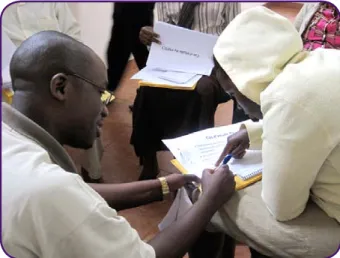
Figure 1: Village health workers in Malawi learn about antiretroviral drugs at a training session
The initial training program stresses the roles and responsibilities of CHWs and their vital importance within the healthcare system . The program aims to train them in active case-finding, communication, psychosocial support skills, and addressing stigma and
discrimination, and encourages them to become community advocates for health and human rights . This perspective is critical for CHWs working at PIH-supported sites and is covered at all initial training sessions .
While the Accompagnateur curriculum contains material intended for training over seven consecutive or near-consecutive days, this is not always possible . While each site must determine how much time it is feasible to dedicate to the initial training, given their particular constraints, a minimum of three to four days for the initial training is advised . At one of the sites, for example, the initial training covers only the responsibilities and roles of a CHW, and the technical content is covered in the ongoing training . Training is most effective when the number of participants is kept deliberately small to provide opportunities for the optimal participatory-based learning best facilitated in small groups . Participatory learning principles are the basis of all PIH training activities . (See Section 7, Developing
training materials for more details .) In both the initial training and ongoing training
sessions, training activities make use of a curriculum toolbox . This consists of a facilitator’s manual, a participant’s manual, flipcharts, posters, and slides, all directed toward low-literate adult learners .
Each unit in the Accompagnateur curriculum is a comprehensive set of training activities and materials . These cover three basic categories, with certain themes woven throughout the curriculum:
• Basic clinical content
– Providing CHWs with information about HIV, TB, and STIs, and the drug regimens that they will monitor in their work
– Developing CHWs’ competence in active case-finding for diseases and social needs
• CHWs’ roles and responsibilities
– Helping CHWs improve their skills related to effective communication and psychosocial support
– Directing CHWs to additional resources or people at the health facilities and in the community who can guide or assist their work • Social and cultural issues
– Helping CHWs recognize and reduce stigma and discrimination in their communities
– Encouraging CHWs to be advocates in their communities for health and human rights
PARTNERS IN HEALTHAccompagnateur Training Guide: Pilot Testing Version
440 440
Unit Overview
Activity Content Method Time Necessary Materials
1
Participants learn about what they have in common, thus creating asupport system. Large Group Activity
Large Group Discussion
30 minutes
List of characteristics (following
•
this activity)
Flipchart or PowerPoint presentation
•
AV equipment (if using PowerPoint)
•
2
Experienced accompagnateurs answer questions and solve commonproblems. DiscussionPanel minutes60
Scenarios (following this activity)
•
Prop that can be used as a
•
microphone (marker, stick) Cell phone (optional)
•
Music (optional)
•
3
Participants discuss problems introduced during the paneldiscussion. Small Group Discussion minutes70
Chart paper
•
Marker
•
Flipchart or PowerPoint presentation
•
AV equipment (if using PowerPoint)
•
Key Points Accompagnateurs
• face many challenges, but they are not responsible for dealing with all of these challenges by themselves.
There are key people and resources to help
• accompagnateurs, such as nurses, doctors, social workers, psychologists, and other accompagnateurs. Accompagnateurs
• are part of a support system with other accompagnateurs, and they should act as a resource for each other.
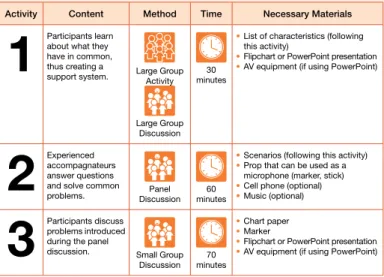
Figure 2: A page from PIH’s Accompagnateur curriculum illustrates activities in a typical training session
1.3
Ongoing training
Ongoing training sessions are an important part of the PIH training strategy, recognizing that training is a process and must be comprehensive to ensure that participants are equipped with the tools and knowledge they need to do their jobs . Such training should also be flexible, respond to the specific site demands on the CHWs, and must ensure that their skills meet requirements for MOH priorities . It can be challenging to cover all the necessary topics in a single year, so it helps to think beyond one year when planning the program . Ongoing PIH training sessions are either a half or full
Figure 3: Community health workers in Haiti practice preparing patients for vaccinations
P I H N O T E
Community health workers are often men and women with limited literacy, and all our training materials for CHWs are developed with this in mind. Training is built around their experiences, with particular care taken so that word choice, illustrations, stories, and examples are all culturally appropriate. Sessions include participatory activities such as role-playing exercises, brainstorming sessions, scenarios to act out, and small-group discussions that encourage communication between the trainers and the participants. Figure 2, an overview of one unit from the curriculum, shows how group activities introduce community health workers to the challenges they may face and ways they can support each other.
day in length and can take place monthly, bimonthly, or quarterly . The training schedule varies and may be disrupted if, for example, CHWs need to learn about a new treatment protocol or are required to assist in a vaccination campaign .
Ongoing training sessions can cover topics pertaining to primary health care, such as nutrition and malnutrition, family planning, reproductive health, malaria, hygiene and sanitation, mental health, gender-based violence, vaccinations, diarrheal disease, and respiratory illness . The sessions also address additional duties CHWs are expected to perform as they become tasked with delivering more primary care interventions, such as checking babies’ weight and measuring mid-upper arm circumference (MUAC), indicators of nutritional status . CHWs at PIH-supported sites in Malawi and Rwanda have recently been trained to collect baseline information about the demographic make-up and health status of the households in their communities . Health centers will use these profiles to track how their programs and services are meeting household needs and delivering care and treatment . (See Section 7.2, Pilot testing for how this training was pilot tested at Abwenzi Pa Za Umoyo (APZU) in Malawi .)
P I H N O T E
At Inshuti Mu Buzima, the PIH-supported site in Rwanda, CHWs take pre- and post-tests during the initial seven-day training. Before beginning subsequent review sessions, all the participants take the same post-test that they took after the seven-day training. Trainers use these test results to identify what aspects of the content participants have retained and what aspects need to be reinforced in a review. Facilitators design review sessions around the same content that was taught during original training sessions, but present the material somewhat differently. Activities are designed to review what participants learned about the material during the initial training, and build on this knowledge to reinforce concepts that may not have been mastered the first time. These sessions also give CHWs time to ask questions, express challenges they face in their work, and learn from each other.
1.4
CHW supervisor training
Those who supervise CHWs also require training in how to best assess the CHWs’ work as well as to develop their own skills and knowledge . The initial training for CHW supervisors occurs over three days and covers the roles and responsibilities of a supervisor, how to provide supportive supervision, and the tools and forms they are expected to complete as part of their duties . The supervisors also attend the ongoing training sessions for CHWs to keep abreast of and up-to-date with the skills and knowledge CHWs are expected to have, and to learn more about the challenges that the CHWs face in their work .
2.
TRAINING FOR CLINICIANS
Just as in planning training programs for CHWs, those planning training programs for clinicians need to closely collaborate with program staff to identify the competencies
clinicians must develop . They must also collaborate with the MOH, wherever possible, to identify national strategies and protocols and those materials and training programs that already exist . (See Section 2.5.1, Planning a mentoring program for more details .) A variety of different learning formats and settings can increase the effectiveness of training activities for clinicians (and for CHWs) . These include: group meetings for discussion, formal didactic training, online education and training, clinical mentoring, and training clinical trainers . Examples of the range of formats used at PIH-supported sites are highlighted in the following sections .
2.1
Training programs for junior clinicians
While teaching hospitals in developed countries provide extensive and closely supervised training opportunities for both medical and nursing or nurse practitioner students to learn on the job, this is often not the case in many countries with limited resources . If teaching hospitals exist at all, they are often few in number, understaffed, and poorly equipped, with few tools for treating patients . In this context, alternative education and training options for medical and nursing students in under-resourced areas can include clinical education and training programs that are:
• Offered in and/or sponsored by institutions outside their home countries • Established by NGOs in the developed world that operate in their home
countries
• Provided by MOHs and other government bodies • Conducted through electronic distance learning
PIH-supported sites provide junior clinicians with medical education designed to increase their medical knowledge and skills and to demonstrate best clinical practices . The
overarching goal of the training is to strengthen the healthcare system and build local capacity proficient in community-based care . Local medical residents train in programs on site . By providing access to a broad array of clinical training activities, PIH has been able to attract and retain newly-qualified medical personnel in the more remote rural areas where we work . For example, social service residents in Haiti, who are doctors from public universities, spend a year working in Ministry of Health clinics, including those run by Zanmi Lasante, PIH’s sister organization in Haiti . With partners from the National University of Rwanda and the University of Colorado in the United States, PIH is supporting a new residency program in Family and Community Medicine to train district hospital-based physicians in Rwanda . This four-year program uses the resources of Rwinkwavu District Hospital and PIH’s academic links with Harvard Medical School . If your organization is small, the clinicians in your programs may also have a great deal of managerial responsibility for developing and running the service . You may want to introduce management training sessions tailored for clinicians and incorporate it into their training program . At some PIH-supported sites, we provide sessions on leadership training, evaluating performance, time management, project management, and advanced computer skills, available to clinicians as well as administrators and coordinators .
2.2
Clinical teaching meetings
Clinical conferences occur weekly at PIH-supported sites . These meetings provide informal teaching opportunities as clinical staff discuss specific cases or focus on particular
challenges arising from patient care . Clinicians also meet regularly to review clinical training needs and set topics for training activities, some of which are introduced at the all-sites meeting, also held weekly . All-site meetings draw together staff from the health facilities in one district or area where we work to discuss clinical and program-related issues . Participants at the all-site meetings can include physicians, nurses, pharmacists, laboratory technicians, and social workers, in addition to administrators and guest speakers . These meetings highlight a wide range of topics (see Figure 4), and allow everyone to share ideas, gain support from one another, and increase their knowledge .
Topic Presenter
Management of sexually transmitted diseases Physician Management of post-traumatic stress disorders Nurse
Medical ethics: Our rights and responsibilities Clinical Director
Implementing new salary scales Human Resource Director
Entering program data Monitoring and Evaluation team
Rational use of antibiotics Pharmacist
Management of acute dehydration Nurse
Social justice PIH Chief Medical Officer
Management of asthma attacks Doctor
Figure 4: A sample schedule of topics covered at one year’s all-site meetings
2.3
Formal didactic training
Clinical training also includes formal sessions, often within a classroom setting, to introduce new topics or review others . This training is planned in response to specific clinical training needs identified by program staff and is usually part of the annual training work plan . At Inshuti Mi Buzima (IMB) in Rwanda, for example, clinicians who encountered an increasing number of people suffering from
hypertension and diabetes requested more advanced training on how to diagnose, treat, and care for people with chronic medical conditions . Other formal training
sessions can respond on an ad hoc basis to unexpected crises . When clinicians at Zanmi Lasante in Haiti urgently needed training in treating people left traumatized after the earthquake in 2010, the training staff organized sessions on treating mental health issues . The MOH and other government bodies often host mandatory formal training programs for clinicians practicing in their countries . These can be used to review medical knowledge and processes, or introduce new practices and treatment guidelines . For instance, all clinical staff at APZU in Malawi must attend a Ministry training program on HIV treatment before they provide HIV care in the country; in Rwanda, clinicians follow a 10-day training based on the national curriculum for HIV treatment and care . Mandatory clinical training facilitated by the Ministry of Health is also required in Rwanda as it rolls out its adapted treatment guidelines for the Integrated Management of Childhood Illness (IMCI) .
It is important that program managers plan ahead to ensure that clinicians will meet these requirements before they begin their duties . They must also know in advance when such trainings occur, since attendance at MOH sessions can reduce the number of available clinical staff on site during this time . Frequent contact with MOH officials at the district and health center level can help to anticipate and integrate training plans . It is important for your training program to avoid duplication and focus on addressing training gaps, complementing and strengthening the MOH system .
2.4
Online training and education
If the local telecommunications system is robust and reliable, online collaborations can be particularly useful for clinicians working in underserved areas where it can be difficult to get information and advice on patient care . In Rwanda, PIH is collaborating with the Ministry of Health to develop and site-test an online training program for nurses; PIH is also a partner of GHDonline, an Internet-based platform for specialized online communities of healthcare providers who share an interest in certain global health issues (TB, adherence and retention, malaria, general surgery, and general nursing and midwifery) . Healthcare implementers use the GHDonline forum to share proven practices and find resources to improve health outcomes in resource-limited settings .
P I H N O T E
PIH has developed its HIV curriculum for doctors and nurses to complement the Rwandan national curriculum for HIV care and treatment. The clinical content matches the Ministry’s core priorities and algorithms for HIV treatment, and focuses on delivering community-based care working with CHWs as partners and advocates for human rights. The curriculum—still in the pilot test stage—is case-based and uses participatory learning principles aimed at developing critical clinical decision-making skills. While each unit is structured to be given over one to three days, the pilot test results will help us determine how to use it as an ongoing educational tool to strengthen the national HIV strategy and training. Options include introducing it in the orientation program for new staff at the PIH-supported sites, adapting it for use in other Rwanda district-based hospitals, or adapting it for clinical mentors at health centers.
Other online information sources include UpToDate, a subscription-based service providing evidence-based answers to questions on diagnosing conditions and many other aspects of patient care; and HOPE-HIV Online Provider Education, which offers collaborative learning and advice to clinicians treating HIV/AIDS and is designed for those working with poor and underserved populations . I-TECH’s Distance Learning Initiative provides interactive case-based presentations on HIV/AIDS care and treatment for healthcare professionals in resource-limited settings within Africa, Asia, and the Caribbean . (See Resources at the end of the unit for more details .)
In addition to strengthening your clinical training resources through use of online materials, you can also encourage clinical staff in their professional development by building and maintaining a collection of printed clinical references, often lacking in resource-limited areas . Your training staff may benefit from access to a variety of training materials on the clinical areas your program covers and from creative opportunities to apply new training methods in the local context . These materials will only prove useful, however, if they are relevant to the specific clinical services provided at the facility and (as far as possible) in the language(s) used at the site .
T I P :
Encourage donations of up-to-date, relevant publications in appropriate languages to build up your library of clinical and training materials.2.5
Clinical mentoring
On-site mentoring and on-the-job training are particularly important where health facilities are sparse, spread over large areas, and have limited staff, common conditions in
underserved areas . When training programs occur off site, transportation and
accommodation increase their costs, and patient care can be disrupted when clinicians are scarce . On-site training and clinical mentoring can build on what has been learned in more formal, didactic sessions and bring that knowledge and those skills into a clinical setting that promotes ongoing best practices by drawing on real-life examples .
At clinics and hospitals supported by PIH, more experienced clinicians engage in formal and informal one-to-one mentoring and supervision of their junior colleagues on a daily basis during patient consultations and ward rounds . This is a particularly important part of a clinician’s job at the sites, where teaching and mentoring is part of his or her responsibility . The focus is on helping clinical staff improve their diagnostic and problem-solving skills, putting them into practice in real-time . (See Section 2.5.2,
Staffing a clinical mentoring program for
more on the role of mentors .)
Figure 6: Clinicians at Rwinkwavu Hospital, Rwanda review the management of a patient
2.5.1 Planning a mentoring program
Developing and implementing a clinical mentoring program can require significant planning time and effort . This is true whether you plan to train a group of mentors to cover a range of clinical services at several health facilities or whether your program will be more limited in scope . The first step in planning is to identify and prioritize those clinical training needs that the mentoring program will address . As a program manager in a small organization, you are likely to be aware of any major problems with services at the site . However, it is advisable to engage a clinician who can identify possible reasons for any problematic clinical results you want to address, from the start . Other planning group staff can include those responsible for training or for monitoring and evaluation (M and E) . This diversity in expertise within your planning group will help you design a program that addresses the broad range of gaps that may play a role in poor clinical outcomes; gaps can include the health facility’s managerial and organizational structures as well as the staff’s clinical skills and knowledge .
Planning a mentoring program also requires engagement with the MOH, whenever possible, to see how the priority areas for improving clinical skills that your organization has identified match those of the Ministry and to avoid duplication of efforts . Working with Ministry officials can help to determine, among other things:
• Priority clinical areas for training
• Organization of your mentoring program • Selection and recruitment of the mentors
• Level of staff to be mentored (physician, nurse, pharmacist, auxiliary) • Type of facility where mentoring will occur (district hospital, health center,
specific clinic)
• Supervisory structure of the MOH program in place at the facility • Harmonization of your mentoring program with existing MOH programs • Resources and budget required to sustain the program
P I H N O T E
The Mentoring and Enhanced Supervision at Health Centers Program (MESH) was developed to support generalist nurses at health centers in three districts, as part of a partnership between PIH and the Rwanda MOH to address the MOH priority of improving healthcare delivery at the health center level throughout the country. The new program was integrated into the MOH district supervisory structures already in place, rather than creating a parallel system, and the result broadens the resource base available to nurses through additional supervisors or mentors. The MESH program supports an initial team of 12 clinical mentors, all Rwandan specialist nurses, who work together with MOH supervisors to focus on six key areas of clinical care that have been identified by PIH clinical assessments in the district health centers, in conjunction with MOH priorities. The six key areas of clinical care are: women’s health, adult and adolescent acute care, child health, infectious diseases, including HIV and TB, non-communicable diseases, and surgery.
2.5.2 Staffing a clinical mentoring program
One or two people may be able to perform all the required functions in a small program, but a larger mentoring program will need several staff members dedicated to these tasks . These can include:
• Coordinating the program
(including managing the work plan and budget)
• Monitoring and evaluation of the program
• Collaborating with MOH • Carrying out mentoring on site • Training mentors in mentoring
skills
• Training mentors in technical skills and knowledge
• Providing ongoing advice and support to mentors
Staff members in a clinical mentoring program typically include a coordinator, mentors, and technical advisors . These roles are summarized below, with examples from the MESH program in Rwanda .
Coordinator
A small organization should have at least one person who is responsible for coordinating the program, meeting logistical requirements to implement the activities, and monitoring and evaluation . If your organization is larger, you may want to create a management team to undertake these tasks . When organizing mentor site visits and mentoring time, the coordinator must consider a variety of factors, including the number of mentors available,
Figure 7: Psychosocial staff in Haiti discuss a case scenario during a training session
their preparation time, the services and hours of operation at the health facility, travel distances to the sites (if applicable), and the staff and capacity available to supervise the mentors . Frequent reporting and communication with the MOH staff is also important to ensure that the mentoring content is consistent with MOH policies and that the facility’s administrative capacity is supporting the program . Specific tasks of a coordinator may include:
• Organizing mentors for initial training sessions (in both clinical content and mentoring skills)
• Organizing mentors’ schedule in coordination with health facility directors, if activities are carried out at external facilities
• Arranging travel and payment for mentors, if appropriate • Accompanying mentors on mentoring activities
• Meeting with mentors about managerial and organizational issues • Meeting with health facility directors to report on mentoring progress, if
appropriate
• Reporting to MOH and clinical programs on the mentoring program
Mentors
The clinical mentors themselves are typically selected by the clinicians who are responsible for the particular program areas that will be covered by the mentoring activities . The number of mentors required will depend on the size of your organization, resources available, the clinical areas to be covered, and the number and location of the mentees . Good mentors are those best able to both train and inspire their trainees in formal and informal settings, with particular strengths in providing one-on-one support . In choosing mentors, you may also want to consider their knowledge and skills in the clinical areas you will be covering, work experience in the healthcare system, training/teaching experience, communication skills and other personal qualities .
In the MESH program in Rwanda, the clinical team looked for nurses who had good clinical and technical skills, experience and knowledge in one of the six priority areas mentioned earlier (see PIH Note), previous training experience, and good interpersonal and communication skills . As the nurse mentors worked in the same healthcare system as the nurses they would be mentoring, the clinical team thought they would be able to relate well to the work and challenges the nurses faced at the health centers .
Technical Advisors
Advisors “mentor the mentors,” supervising and advising them during all stages of the mentoring program . Advisors are usually clinicians with experience and knowledge in
Figure 8: The infectious disease coordinator explains a new treatment protocol to a nurse in Rwanda
both a specific technical field and in mentoring skills and techniques . They also should be familiar with the specific structure and organization of the healthcare system . A large part of advisors’ work is thinking through what materials and tools need to developed and/or adapted . As with other roles, the number of advisors you select will depend on the size and resources of your organization and the clinical gaps you wish your mentors to fill .
In the MESH program, two technical advisors support the nurse mentors in each of the six priority areas . For example, for mentors working with nurses responsible for treating children under five years of age, the technical advisors adapt and review with the mentors the MOH-adapted protocol and treatment checklist . They work with the mentors on how to apply specific case-based tools including: a case observation checklist of decision-making skills that these nurses should acquire; a case recording form for all under-five children the nurses see at the health centers; and case scenarios to evaluate the nurses’ knowledge of management of severely ill children . The advisors visit mentors regularly to observe how the tools are used in their on-the-job mentoring with the nurses . Advisors assess and record the mentors’ skills and competencies in relationship building, and help them advocate for a health facility environment that is conducive to good patient care and to record keeping .2
Advisors also hold monthly meetings with mentors to discuss technical issues that arise and provide feedback .
T I P :
Schedule regular meetings for mentors to provide them with opportunities to review mentoring sessions and tools, share experiences, and identify common challenges and solutions that can strengthen programs and healthcare infrastructure.2.6
Engaging clinical trainers
Whether focusing on practice skills in direct care and one-on-one settings, or building a specific knowledge base in larger, formal group settings, both mentoring and training are essential aspects of clinical education . The clinical trainers, the experts who provide such training and mentoring, are often in short supply in resource-poor areas where health facilities already face a shortage of local clinicians to deliver services . As a result, many clinical training programs rely on expatriate (non-national) clinicians . Using clinicians from other countries to train and mentor staff needs to be carefully considered .
When planning training activities, find out what expatriate trainers can realistically contribute to enhance the local site’s clinical efficacy, quality, independence, and sense of optimism or empowerment . Also consider what methods of training would be likely to result in locally sustainable change . If you decide to engage expatriate clinicians to act as trainers, mentors, and technical advisors, it is critical to ensure that they have clear terms of reference (job descriptions) and that they are fully knowledgeable about national health systems and follow government health strategies and policies .
Expatriates should learn about the local clinical pre- and post-graduate education and training, clinical practice environment, and country-based/MOH clinical guidelines before 2 In assessing the mentors at work, the technical trainer-advisors adapted The International Training and Education Center for Health (I-TECH) Mentor of Mentors Assessment Tool, part of I-TECH’s Clinical Mentoring Toolkit. Retrieved online at: http://www.go2itech.org/HTML/CM08/toolkit/contents.html.
teaching within such a system . From a material perspective, it is critical that the expatriate clinician understands what medications, tools, and equipment are routinely available in the locations where they will teach . Likewise, trainers should find out from each trainee his or her specific skill set, what procedures he or she has learned, and what types of tools and technologies the trainee is familiar with .
Expatriates should work alongside local clinicians, embracing the opportunity to explore different perspectives and resolve misunderstandings . (See Unit 1: Learning about the local
context for more information .) It is helpful if expatriates approach their work with humility
and the understanding that they will likely learn much from local clinicians about context of care and innovations for diagnosis and treatment of conditions in low-technology/resource poor settings . Any mentoring and on-the-job training should be conducted in a spirit of mutual respect between trainer and trainee, with the long-term goal of building local capacity so that fewer expatriate clinicians will be needed in the future .
Partnering with academic institutions and medical schools that share your organization’s goals and whose clinicians have had experience working in resource-poor settings can help you provide clinical trainers who avoid these misunderstandings . For example, PIH partners with the Global Health Equity (GHE) residency program at the Brigham and Women’s Hospital in Boston . In this three-year training program, residents gain skills in internal medicine, research methods, public health policy, and global health advocacy . GHE residents spend significant time at the PIH-supported sites, learning from experienced clinical staff . They also help to mentor local junior staff and expand care at these sites . One of the GHE residents’ mentoring tools is an online clinical consultation service that enables the clinicians on site to discuss actual cases, including laboratory results, x-rays, and other diagnostic information with specialists from Brigham and Women’s Hospital, as an integrated part of delivering patient care at the site .
Another way to supply needed clinical trainers and mentors is to partner with clinicians and staff working in resource-poor settings—or to team up with institutions in similar environments . When PIH began work in Africa, it drew upon the highly skilled Haitian clinicians who had extensive experience implementing clinical programs at our sister organization in Haiti . At the onset of work at IMB in Rwanda, staff from Zanmi Lasante in Haiti spent significant time conducting training for HIV care and treatment, for planning and expanding other clinical services, and in training for social workers . These cross-site training missions continue . The current clinical director of APZU, the PIH-supported site in Malawi, is a clinician who worked at Zanmi Lasante and then at the PIH-supported site in Lesotho before joining the team in Malawi .
P I H N O T E
Close partnerships and mentoring were key in creating a locally owned and operated model of care in Haiti. Our challenge was to train a cadre of Haitian health workers to implement HIV care while also improving primary health care within the public sector. We organized not only classroom training in the use of HIV therapy and in the treatment of opportunistic infections, but also the shoulder-to-shoulder mentoring that is typically available only in medical residency and fellowship programs. Thanks to the extensive relationships we had established with hospital and university partners in Boston and with the MOH, we were able to create a Fellowship in Global Health Delivery in order to train local health professionals in the management of fully functional public health systems. Program mentors were drawn from Brigham and Women’s Hospital in Boston, Partners In Health, and the Haitian and Peruvian MOHs. Criteria for successful completion of the fellowship include a valid medical degree, the completion of a social service residency, a minimum number of years of direct clinical experience at an affiliated health facility, and experience partnering in the public health sector. The first twenty physicians completed the three-year joint fellowship in 2010, one of the first programs of its kind anywhere in the world.
3.
TRAINING FOR PATIENTS AND THE COMMUNITY
Training patients to be full participants in their care is an important goal in promoting community health . Such training is most effective when it is integrated into your clinical service provision and reflects program objectives . Training patients can be as simple as education on adherence to a particular treatment regimen, or as broad as promoting knowledge and skills to improve overall health and prevent disease . Patient education can be skills-based, such as demonstrating how to carry out a process or follow a set of procedures . At PIH-supported sites, sessions are organized around adult learning principles for low-literate audiences, with an emphasis on training through participation . Sessions also encourage people to recognize that the right to health is a key component of their rights as human beings, and that the causes of ill-health are often rooted in social and economic barriers they face in their daily lives .
T I P :
When training patients and families, include visual aids, such as posters, slides, and videos and use simulations, activities that demonstrate real situations or processes.3.1
Organizing training for patients and families
As you organize sessions to train patients and their families, look for opportunities when a large group of patients may be able to meet and identify sufficient space to conduct the training . Waiting areas at health facilities, particularly those with seating and shade, are good locations for training sessions . Training can also be conducted when specific patient groups, such as HIV or TB patients, come together at a specific time to receive treatment . The effective trainer must know both the patients’ treatment schedules as well as what
training this particular cohort has already received . For example, when a new patient first starts antiretroviral therapy (ART) at many PIH-supported sites, he or she attends a series of sessions about HIV . Patients learn about clinical treatment issues, such as the
importance of adhering to a drug regimen, identifying opportunistic infections, and dealing with the social and psychological effects of the discrimination and stigma that often
accompany the illness .
Also at many PIH-supported sites, nurses who run prenatal clinics for expectant mothers often use these regular check-ups as opportunities for other informal training sessions, such as demonstrating how to set up bed-nets to protect against malaria-carrying mosquitoes . Community health workers play an important role in reinforcing such training at home . On one occasion, it was only during a home visit that a CHW discovered the bed-nets were ineffective because they were not set up properly . The CHW demonstrated again how to arrange them correctly and the bed-nets became an important tool in preventing malaria .
T I P :
Following up training with patients and their families after they leave the health facility helps to reinforce the skills and knowledge presented in clinic and hospital sessions.Community members can become successful trainers . At Rwinkwavu Hospital in Rwanda, it is a mother of a formerly malnourished child who provides the nutrition training for caregivers of children on the pediatric ward . In this program, structured over four days, she explains to caregivers the signs and symptoms of malnutrition, how to provide nutritious meals using local produce, and how to apply good hygiene practices . The caregivers
participate by preparing and cooking meals together during the sessions, which the children enjoy . CHWs follow up with home visits to the family and some agricultural support is offered to the caregivers .
3.2
Training for the community
In delivering healthcare services to communities, staff can take advantage of opportunities that arise for education and training . For instance, when CHWs make home visits to individual households in the community, they discuss different health conditions and help to raise awareness of psychosocial issues that can affect health . They also provide education sessions on specific issues to the wider community .
Figure 9: A clinician demonstrates a family planning method to women in Rwanda
One particular challenge for training programs is the need to respond quickly to unforeseen events . For example, when Haiti experienced a cholera epidemic in 2010, the CHWs were called upon to help communities contain its spread . Because the training program at Zanmi Lasante had a system in place with trainers and materials, the CHWs were trained quickly and carried out this important role .
P I H N O T E
As part of Zanmi Lasante’s effort to slow the spread of the recent cholera epidemic in Haiti, hundreds of CHWs were trained in techniques to promote health and to relay cholera prevention messages to their communities. They were trained in how to demonstrate preventive measures such as hand washing and water purification as well as how to identify cholera cases and to refer the sufferers to cholera treatment centers. As many people with cholera live in remote areas, the CHWs also learned how to prepare oral rehydration solution (ORS) to keep them hydrated while seeking medical care within their communities.
Community health training opportunities often occur outside of health facilities . Local schools, for example, can be impor-tant venues for talking to students and providing them with health information and disease prevention . Sports can also be a means for mobilizing the community to talk about health .Community training activities can also help to address some of the root causes of disease and health inequalities . You may work with your partners in the community to improve access to education, food, shelter, clean water, sanitation, and economic opportuni-ties . Your nonclinical staff may have skills
in areas that link directly to community needs . The information technology staff at IMB in Rwanda, for example, offered a mentor-driven training course
Figure 10: Community health workers in Haiti distribute bottled water, oral rehydration salts, soap, and educational messages to rural communities during a cholera outbreak
P I H N O T E
APZU, the PIH-supported site in Malawi, sponsored a soccer tournament to celebrate World AIDS Day and used it as an opportunity for community education. Sixteen teams from communities within Neno district were invited to compete in the tournament, and the final match was held on World AIDS Day. During play in the final, the commentator took the opportunity to insert messages about HIV—how it is transmitted and the need for testing and treatment. At halftime, local people participated in quizzes about HIV and winners took home prizes. Over 5,000 spectators attended the game.
for Rwanda computer programming graduates that focused on practical skills in health informatics . At the PIH-supported site in Lesotho, an NGO partner introduced a new small-scale farming method known as keyhole farming to local residents, and at APZU in Malawi, staff from the Program on Social and Economic Rights (POSER) work with partners to provide training in microfinance to community members starting small businesses . (See Unit 11: Addressing the
social determinants of health through a program on social and economic rights (POSER) for more information about
vocational training programs in carpentry, sewing, and knitting, among other skills .)
4.
LAUNCHING A TRAINING PROGRAM
Whether you are training CHWs, clinicians, or patients and the community, how should you begin? Developing a work plan for training follows the same planning process as that for any other program . To get started, you will need to:
• Assess needs (burden of disease, gaps, and opportunities for training) • Propose activities in a work plan that respond to those needs
• Match the activities to available budget and resources (trainers, materials) • Plan for program monitoring and evaluation (M and E)
At PIH-supported sites, we develop training work plans at the same time as those related to other programs and services . Each program plans for its training needs and links them to budgets for the year ahead . In their deliberations, program staff consider which areas have the greatest training needs . The training coordinator then consolidates all the programs’ training needs into one central training work plan to reflect the site’s training activities for the year .
A central training plan helps to ensure that training activities support each program’s objectives . However, training needs captured in the work plan can exceed the budget available, so the person(s) responsible for training may need to consult with program staff and the site’s leadership to decide which needs will take priority . It is important to remember that training needs must always be considered in the context of your
organization’s strategic plan and priorities . During the planning stages, also consider how you will monitor and evaluate training activities within the context of your organization’s overall M and E plan . (See Unit 12: Using monitoring and evaluation for action.)
Figure 11:Agronomists from Zanmi Agrikol, PIH’s agricultural partner program in Haiti, lead a training session for local farming families
4.1
Assessing needs
Program staff are best able to identify training needs, but wherever possible, the person(s) responsible for training can help facilitate this work . There are a variety of methods available to assess training needs, depending on the organization’s size, the timeframe for the training, number of staff to be trained,
and the trainers and other resources available . Often formal assessments are conducted in the early stages of an organization’s formation and/or when developing annual budgets; however, as programs and services evolve, assessing training needs is likely to be an ongoing process, part of regular activities such as program reviews, updates, and dialogue that takes place at all-staff and clinical meetings . Regardless of when training needs are assessed, it is important that they are addressed in the training work plan and linked to a budget .
The person(s) responsible for training can use a variety of methods to assess training needs, all of which require collaboration with program staff . The methods may include:
• Individual interviews with program managers and supervisors
For example, when discussing the annual work plan and budget with the training person(s), program staff can identify training needed in specific patient conditions their staff will encounter, specific staff competencies to focus on in training activities, and details such as who will be trained, length of training, and materials needed .
• Focus groups organized by program, department, or service
For example, in Haiti, one newly arrived training coordinator held moderated discussions with specific staff focus groups including CHWs, laboratory technicians, physicians, and nurses to find out about their previous training experiences, their training needs, and how to improve future training . • Observation
For example, the training person(s) can sit with a nurse to see how she uses a particular protocol or go on a home visit with a community health worker to see how he checks on a patient’s adherence to medicines .
• Written questionnaires distributed to all staff
These are often used as follow-up or in addition to individual interviews or focus groups .
• Surveys at the workplace
For example, in setting up the MESH program in partnership with the Rwanda MOH, clinical staff at IMB conducted a baseline survey of programmatic areas that health center nurses were responsible for and what training they had received, in order to identify the knowledge gaps in the six priority areas that the mentoring program would need to address .
Figure 12: A clinician examines a child in the pediatric ward of Rwinkwavu Hospital, Rwanda
P I H N O T E
Unexpected crises can provide opportunities to identify training gaps. When a severely injured man came to the health facility at Zanmi Lasante in Haiti, one of PIH’s physicians—who was also a clinical trainer—entered the waiting room to observe how the nurse assistant responded to this situation. Seeing a crowd forming around a man who appeared to be wearing a red t-shirt, the physician got closer and realized that the man was bleeding from a gunshot wound to the neck. When the physician asked what was going on, the nurse assistant replied, “This man is waiting to see the doctor.” The physician immediately rushed the man into a room for treatment. The trainer realized from this crisis that many of the nurse assistants did not know the appropriate response to this type of injury, and so waited for instructions from more highly trained and experienced nurses or physicians. Fortunately, the physician/clinical trainer was able to save the bleeding man’s life, but this crisis helped him understand what should have been done differently, and plan training sessions on how to recognize emergency situations.
4.2
Training work plan and budget
The work plan is the roadmap for training activities, usually covering a one-year period . It should clearly identify:
• What the training is about (topic/type of training) • Who will be trained (type, number of participants) • When and where (date, duration, venue)
• Other attendees (external trainers, other partners) • Budget (funding stream/donor)
• Additional information (caveats, materials/curriculum to be used or developed)
The accompanying budget should include some flexibility to allow for changes and unanticipated events . Wherever possible, each listed activity should indicate its funding stream as well as specific budgets for individual line items, including:
• Human resources (sometimes includes per diems for MOH and external trainers and/or participants)
• Training venue
• Accommodation (if training takes place over more than one day) • Transport payments for participants
• Fuel for transporting trainers and other staff • Food
• Training materials/curriculum • Communications (telephone, fax) • Office supplies and equipment
• Audiovisual equipment
• Other items (for example, electrical adapters, generator for back-up electricity)
T I P :
Ensure that a training work plan and its budget include the training needs of all programs and services. The integration of training into programs can increase communication and feedback from staff and heighten the value of training as a key ingredient in improving programoutcomes.
4.3
Training calendar
A training calendar is a useful snapshot of the work plan with more details to help with the planning and logistics of the training sessions . Like the work plan, it can include the type of training, the number of participants, and date and duration for each activity . Whenever possible, it should also include the materials to be used and the specific trainers who will facilitate the session . When a training calendar is drawn up on a quarterly basis, it helps the person(s) responsible for training keep track of expenses, review the status of training activities as indicated in the work plan, and decide whether demands for new training activities can be met . The calendar also helps the training staff coordinate the timing of training activities to avoid conflicts with other activities, and signals the need for advanced preparation of materials, supplies, and selection of trainers for upcoming training sessions . Using your training calendar, work plan, and budget as interrelated tools helps to increase the quality of the training activities by ensuring that they are well-planned and prepared, and that they are well integrated into larger program and MOH plans .
4.4
Monitoring and evaluation of the training program
Monitoring and evaluation (M and E) are techniques that you can use to assess the quality and effectiveness of a program . M and E of your training program is particularly important because it can allow your organization to identify gaps in service delivery or poor performance as revealed through training . If gaps or poor performance are addressed in a timely manner, these actions can have a positive impact on patient outcomes . For example, case observation checklists for the past month may show that nurses at the clinic are not consistently completing evaluations for dehydration in children, resulting in some missed cases of dehydration over the past month . A gap in service delivery—in this case incomplete evaluations—has resulted in poor health outcomes for several patients . When a designated member of the clinical team reviews data collected on these forms on a regular basis, he or she can identify what the problem is, how it might be occurring, and then take appropriate steps, including training sessions, to correct it .
You can also use M and E to improve the quality of the training sessions themselves . The training staff may notice, for example, that CHWs are consistently not improving their scores on questions relating to malnutrition on the post-test after the training sessions . CHWs may not understand the question the way it was intended to be understood, or the trainer may be using a particular technique to impart knowledge and skills in this subject
that does not result in effective learning . By using training data that you collect on a regular basis, the training staff can identify the problem and then take the necessary steps to correct it . (To learn more about M and E and developing a system that builds M and E into any program, including your training program, see Unit 13: Using monitoring and
evaluation for action .)
T I P :
Make sure that M and E for training fits into your organization’s overall M and E plan. This will help to streamline data collection efforts and ensure that the data you are collecting are useful internally.5.
BUILDING A TRAINING TEAM
Whether you are starting a training program, enlarging or reinvigorating one that already exists, or working with the Ministry of Health’s training program, you will need to consider how you can carry out the many tasks required to deliver high-quality training . A training team can help establish long-term continuity to meet these goals . While a small
organization may designate a single person to take responsibility for training tasks, a large organization may employ several people . Program and clinical staff can sometimes take on certain of these tasks, but many resource-poor countries have a serious shortage of
healthcare providers, and you may want to avoid taking clinical staff away from patient care . It is critical, therefore, to have at least one person who will be dedicated full-time to training and who will serve as your training coordinator . Even if your organization is small with limited resources, bear in mind that the training coordinator will need additional help to deal with logistical arrangements for each training session, and help to secure available trainers . If the programs in your organization expand, so will the need for training and for training staff .
P I H N O T E
When we first began work at the site in Rwanda, there were two people on the training team—a training coordinator and a program assistant. Over the next five years, the training program increased at the site, as we scaled up the training to three districts. During this time, in partnership with the Rwandan government, the training team also became responsible for running a newly built training center. As a result, the training team grew as well. It now consists of seven core people: an associate director of training (training manager) who is also responsible for monitoring and evaluation of the training program, a training coordinator, a training facilitator, a program assistant, a logistical and administrative assistant, a translator/interpreter, and a facility and hospitality coordinator for the training center. Training support staff now include cleaners, cooks, and drivers. Some of the training positions are hired to work at sites across the district (these include the training manager and training facilitator); others focus their training efforts within specific districts (these include the training coordinator and the program assistant). This structure of a central training team that supports a decentralized training system is a model that might be adapted to any program that is scaling up a training program across multiple sites.
Common tasks carried out by a training team are listed below . You may not have the resources to cover all of them, but keep them in mind as you develop your training activities . All of these tasks include the need to communicate with program staff and provide them with ongoing feedback on issues that can affect service delivery and performance .
Tasks for a training team include:
Figure 13: Newly trained Maternal Mortality Reduction Program Assistants in Lesotho with the nurse-midwife who coordinates and supervises their work
• Developing a training work plan and budget . Staff respond to training needs identified by program staff and reflect these in the training work plan, budget, and calendar. (For more, see Section
4.1, Assessing needs; 4.2, Training work plan and budget; and 4.3, Training calendar.)
• Monitoring and evaluating training activities . Staff find out whether training is doing what had been planned, based on an M and E plan for the training program . (For
more, see Section 4.4, Monitoring and evaluation of the training program.) • Developing curricula and other materials . Staff survey existing materials,
then adapt and develop new ones based on participatory learning . (For more, see Section 7, Developing training materials.)
• Coordinating training activities, including logistics, administration, and program management .
• Developing operational procedures and guidelines .
• Facilitating and supporting training sessions, and mentoring trainers . • Working with partners .
5.1
Coordinating training activities
The training staff must ensure that each set of training activities related to the different services and programs has the budget, participants, trainers, supplies, and space required, and that everyone involved is aware of what trainings will occur, when they will take place, and how they will be organized . Because different training activities can take place at the same time, sessions need to be scheduled so that participants and trainers do not overlap— not only at the site, but also with external training sessions, often required by the MOH . A training calendar is particularly useful for coordinating training activities .
P I H N O T E
Training activities take place at a number of sites in Kayonza district: at health centers as well as the Rwinkwavu District Hospital. We wanted to coordinate and harmonize the training needs at the different sites and make sure that all the training activities were consistent and of high quality. We also wanted to create a single reporting mechanism for the training in the district. The result was the formation of The Training Operations Committee. It comprises the training team based at the district hospital site at Rwinkwavu and the social worker and head of the infectious disease clinic from the health center sites in the district. The group meets monthly to report on past training, plan future training sessions, collect and develop training materials linked to MOH priorities, and share challenges and problems. Since the committee members are trainers themselves, they also facilitate training sessions and work with new trainers to develop their skills. Because its members work together regularly, the committee acts as a team builder, developing a single training team across sites in the district.
5.2
Developing operational procedures and guidelines
Establishing policies and guidelines helps to clarify the many procedures and processes for all those involved in planning, delivering, and participating in training activities . Policies and guidelines can specify conditions for certain events such as providing transport, identifying specific roles and responsibilities, and setting out logistical details . Whether or not your guidelines are written down in one place, they should be communicated to all staff . Formalizing these procedures will help to avoid misunderstandings and unrealistic expectations, and ultimately increase the professionalism with which training activities are carried out . Some examples of issues that can require policies or guidelines include:
• Selection of participants and trainers
• Procedure for booking of physical space/training venue
• Role of trainers (preparation of materials, role during and after training sessions)
• Transport policy (eligibility, availability)
• Per diem payments (eligibility, documentation, timing) • Organization of training venue, accommodation, meals
• Materials and supplies (purchasing, maintenance, and care of stock) • Audiovisual materials (purchasing, maintenance, and care of stock)
T I P :
Be flexible in your training arrangements and plan for last-minute changes in trainers and participants because of clinical emergencies and other extenuating circumstances.5.3
Facilitating and supporting training sessions
Ideally, the training coordinator and/ or other training staff are trainers themselves who can deliver training sessions, and mentor new and inexperienced trainers . Having a
dedicated trainer who is also a clinician is an additional asset to the team, as this person can help other trainers and trainees with medical issues . When resources permit, the training staff can develop a Training of Trainers (TOT) program to develop a cadre of trainers experienced in these skills . (See Section
6.2, Training the trainers in this unit for
more details on TOTs .)
5.4
Working with partners
Training staff need to find out about the content and organization of MOH training activities and how these will impact their own training program . Depending on how the MOH is organized in your country, the officials may wish to know about your new training initiatives, training session schedules, and training materials . Training staff can also increase the number of training partners by identifying other government bodies and
nongovernmental organizations (NGOs) who can share training sessions or provide training in specific areas that the organization lacks .
6.
DELIVERING TRAINING SESSIONS
Skilled trainers are one of your key assets for delivering effective training sessions . Trainers should be competent in communicating with adults and facilitating activities that draw upon the backgrounds and experience of those being trained . (See Section 7, Developing
training materials for more details on how adults learn .) Effective training sessions
also depend on good organization, with the many logistical details arranged efficiently beforehand so that participants can concentrate on the training activities .
6.1
The trainers
The trainers required will vary depending on who will be trained and how the training will be delivered to best fulfill program needs . For example, nurses at remote, rural health centers may need training on how to treat malnourished children . A mentoring program may be most suitable, so you will need skilled mentors working with the nurses on site to improve their diagnostic skills and build relationships with the children and their
Figure 14: Ongoing training sessions for community health workers in Rwanda cover a wide variety of primary care topics