270
RESEARCHES CONCERNING THE USE OF ALPHA-ALPHA AS
COVERCROP FOR SUNFLOWER CULTIVATED AFTER NO TILL
TECHNOLOGY
SALCEANU CALIN, EMILIA CONSTANTINESCU Faculty of Agronomy, Craiova, Romania
Keywords: alpha-alpha, sunflower, no tillage
ABSTRACT
Lot of research effort is devoted nowadays for reduced tillage. The new no-till technology brings about changings and challenges. Agronomists became aware of the benefits of this system and try to make it suitable for different soil-clime conditions. Soil organic matter, mineralization, erosion, compaction and last but not least, the high energy requirements are the main disadvantages of the plow-based agriculture. The no till system has disadvantages, too: soil temperature decreasing, higher leaching, difficult low soluble fertilizer incorporation but its advantages strongly overpass them. They can be summarized as follows: increasing soil organic matter content, reducing the fuel and labor consumption as well as machinery requirements, almost stopping the soil water erosion, increasing the yield by approx. 20%, increasing the surface that can be worked by a farmer and enhancing the benefit. The present paper presents the results of an experiment carried out during 4 years. The first three years the experimental plots were planted with alpha-alpha. In the spring of the fourth year the alpha-alpha vegetation was destroyed by glyphosate and there was sown sunflower. The results were very good (2,400 kg/ha) as compared with the plowed treatment.
INTRODUCTION
No tillage technology has caused a real revolution in the way we grow plants. If, until now, intensive tillage has been considered indispensable for growing plants, it has been observed that this leads to a decrease in soil fertility after several years.
The main tillage terms from most to least cultivation are:
• Multiple tillage (previously known as conventional tillage),
• Reduced tillage which is one pass prior to seeding with a full cut-out, • Direct drilling which is one pass
seeding with a full-cut,
• No-till which is narrow/knife point seeding with less than full cut-out, • Zero-till, which is disc seeding.
The main benefits of no-till, with appropriate agronomic management include:
- Reduced susceptibility to land degradation through stubble retention and proper grazing management (especially in sandy soils),
- Greater flexibility and timeliness of farm operations through less time used at seeding and other operations,
- More manageable soils and improved soil structure, especially in control traffic situations due to less trafficability,
- Higher levels of organic matter and biological activity,
- More precise seed placement with more even crop emergence, if seeded at correct moisture content,
-Greater amounts of water harvested to grow the crop in dry areas,
-Often less in-crop weed emergence and safer use of pre-emergent herbicide for weed control,
- Less labour, fuel and machinery costs per hectare; and
- Improved whole farm profitability and sustainability [5,6].
271
subject to the phenomenon of rapid water evaporation. In order to create this layer, so-called cover crops or special intermediate crops have been experimented and introduced into production to create the appropriate mulch layer. The purpose of growing these plants is to provide a layer of mulch as thick as possible above the soil. This layer protects the soil against erosion, maintains soil moisture, determines soil life diversification, improves soil structure, slows the decomposition of organic matter and increases soil moisture content [2,3,4].
The choice of intermediate crop must take into account the crop rotation in which it is included, the vegetation period, the resistance to frost, the value as fodder, the herbicides applied and the costs of setting up. Sulphonylureic herbicides and imidazolinones usually affect legumes. The specific pedo-climatic characteristics of the area are decisive in this choice. Leguminous plants can accumulate in the soil quantities between
50-200 kg N / ha, depending on the species and the climate. Nitrogen applied to the main crop, which has remained in the soil, can be used by such crops, preventing its deep flow. In soils where this layer is created, the earthworms have a much more intense activity, reaching to the surface of the soil, improving the soil structure. The earthen channels are not destroyed; they manage to bring organic material down into the soil depth. Other soil dwellers diversify and multiply. As a result, the first 3-5 cm of soil are rich in organic matter, this soil is very well structured and allows access to air and water under optimal conditions. A thick layer of mulch prevents the emergence of most weeds. Chemical control can be carried out more easily under these conditions. The mulch layer increases the permeability of the soil for water by improving the structure and creating wider channels where the water flows much more easily into the depths [1,2].
MATERIAL AND METHOD
The research was carried out at the Botanical Garden of the University of Craiova, in 2019. The main idea of the experiment was the cultivation of the alfalfa in order to create a vegetal layer of mulch on the soil surface. Because alfalfa forms a large amount of plant mass, we considered that it can form a layer of mulch that is suitable for both thickness, soil cover, and high nitrogen content (carbon / nitrogen ratio = 15: 1). To achieve this objective, in 2017, we sowed a plot of 100 square meters (10 m x 10 m) with alfalfa seed purchased from the trade. In the first year we mowed the lucerne 3 times and the vegetal mass was used as hay. After the emergence of the alfalfa plants, around May 15th, we carried out a work of mobilizing the soil on the width of 8-10 cm and on the depth of about 10 cm in the direction of future rows that will be sown with the sunflower over 2 years. In 2018, alfalfa was also mowed 3 times and the vegetal mass was
272
For comparison, 3 plots of 100 square meters were sown with sunflower,
where the soil was worked
conventionally, by deep tillage and the reversion of the furrow, during the autumn, in November. The seedbed was prepared in the spring, by loosening the soil on the depth of sowing, about 10 cm. The sowing was carried out on the same day as the plot where the lucerne was used as an intermediate crop to create the mulch layer. All these works were performed manually. Dual Gold 960 EC (960 g / liter metholachlor) was used
against weeds at 1 liter per hectare rate, immediately after sowing the sunflower (pre) and Pulsar herbicide (imazamox) at 1.2 liters per hectare rate, applied when the sunflower plants formed 3 pairs of true leaves. Also post-emergent, when the grass weeds reached about 15 cm, the Killer Super 5 EC herbicide (50 g / liter quizalofop) was applied. The applied herbicides controlled all the weed species in the sunflower experiment.
RESULTS AND DISCUSSIONS
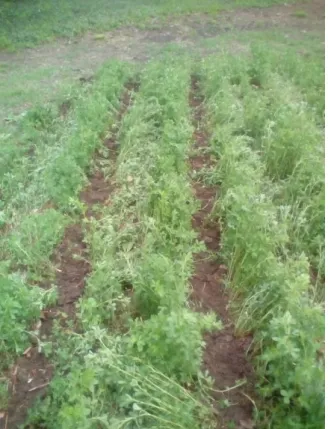
Figure 1. Alpha-alpha plot after seedbed preparation and Roundup herbicide applying.
The sunflower plot was harvested at the end of August yet, before harvesting, the diameter of the sunflower heads was measured. These data, along with the plants heights, are presented in the table 1.
From these data we can notice that the plant height, the sunflower head as well as the seed yield were quite similar between the two researched treatments. It means that the tillage become obsolete in the situation when thick and nitrogen rich mulch layer was used. Two years of
continous alpha-alpha crop has created even better soil condition in respect of nitrogen content, water retention and, as a result, plant height, head diameter and seed yield. For this reason, we soundly recommend the alpha-alpha crop as cover crop for sunflower due to beneficial influence in terms of soil health, water retention, nitrogen content and the yield.
273
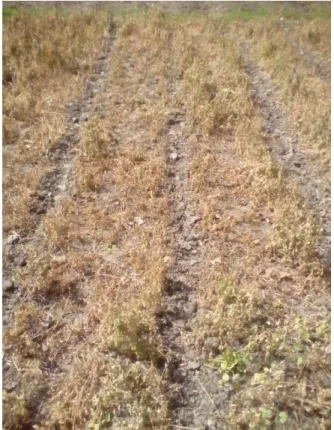
Figure 2. Alpha-alpha mulch layer created by herbicide action.
Sunflower plants before harvesting.
Table 1.
The sunflower yield, the plants height and the head diameter in function of tillage and cover crop type at Botanic Garden of University of Craiova in 2019
Treatment Yield, kg/ha % Difference, kg/ha Signification Plant
height, cm
Head diameter,
cm
V1 2.350 100 Ctrl. - 175 18,5
V3 2.400 102 50 178 18,8
274 CONCLUSIONS
Cropping field plants using no tillage technology requires a layer of mulch as thick as much and rich in nitrogen. This layer is meant to minimize water loss by simply evaporating from the soil surface. In the absence of this layer of mulch, at the surface of the soil a very thin layer, of only 3-5 cm, is formed, which is formed due to the precipitations during late autumn, winter and early spring. This layer extracts the water from the depth of the ground due to the smaller capillary than the soil below. The rate of water loss through this phenomenon is influenced by air temperature. Thus, after the middle of May, evaporation of soil water occurs very quickly, in hours. Without water, under these conditions, the soil strengthens, the root does not grow
enough, the plant remains
underdeveloped and production is almost non-existent. For this reason, the presence of the mulch layer is mandatory for no tillage technology.
Sunflower is a culture that, for 3 years when exploited as hay, determines the improvement of soil structure, increase of nitrogen content and water retention in the soil. In the spring of the year when another plant will be cultivated, alfalfa is destroyed with a total herbicide based on glyphosate, in very high concentration, of at least 5 liters per hectare in 200 liters of water. It is necessary to prepare the seedbed in each of the previous years by tilling the soil on the future rows. The results
obtained by us showed that, with the sunflower crop, the obtained results were even better than in conventional technology in terms of plant height, calatidium diameter and production.
BIBLIOGRAPHY
1. Bonea D., 2019 - Response of Zea mays L. to cogermination and aqueous extracts of Datura inoxia Mill. Analele Universităţii din Oradea, Fascicula Biologie, Tom. XXVI, Issue: 2, pp. 105-109.
2.Dobre, M., 2019 – Agrotehnică, Editura Universitaria, Craiova.
3. Dobre M. – 2015. The Role of the Mulch Layer in the Success of No-Till Technology. ProEnvironment 8 (2015) 216 – 221.
4. Urechean V., Bonea D., 2018 - The comparative study of Bt corn and conventional corn regarding the Ostrinia nubilalis attack and the Fusarium spp. infestation in the central part of Oltenia. Romanian Biotechnological Letters, Vol. 23, No. 4: 13728-13735.
5.
http://precisionagricultu.re/no-tillage-farming-basics/ 6.