R E V I E W A R T I C L E
Pharmacological agents for periodontal regeneration:
A review
T. K. Nandini, S. Mahantesha, R. Mani, K. Kranti
Department of Periodontics, Faculty of Dental Sciences, MS Ramaiah University of Applied Sciences, Bengaluru, Karnataka, India
Abstract
The diseases of the periodontium are common, aff ecting up to 90% of the global
inhabitants. The mildest form of periodontal disease presents itself as gingivitis, which is reversible and mainly caused by the bacterial biofi lm on teeth and adjacent gingiva. Whereas, periodontitis is the moderate to severe form of periodontal disease and results in loss of connective tissue and bone support and is one of the major causes of adult tooth loss. The ultimate goal of periodontal treatment is to prevent further attachment loss and regenerate periodontal supporting tissues. To achieve successful periodontal regeneration, various therapeutic strategies are available. Over the past two decades, a variety of pharmacological agents have also been studied for regeneration of lost periodontal structures. This informational review paper describes the various pharmacological agents which are considered important for promoting periodontal regeneration.
Keywords: Bisphosphonates, host modulation therapy, periodontal regeneration, pharmacological agents
Correspondence:
Dr. T. K. Nandini, Department of Periodontics, Faculty of Dental Sciences, MS Ramaiah University of Applied Sciences, Bengaluru, Karnataka, India.
E-mail: [email protected]
Received 12 January 2015; Accepted 14 February 2015
doi: 10.15713/ins.ijcdmr.35
How to cite the article:
T. K. Nandini, S. Mahantesha, R. Mani, K. Kranti, “Pharmacological agents for periodontal regeneration: A review,” Int J Contemp Dent Med Rev, vol. 2015, Article ID: 120115, 2015 doi: 10.15713/ins.ijcdmr.35
Introduction
The structures comprising the periodontium include the gingiva, periodontal ligament, cementum and alveolar bone. Several
diseases aff ect the composition and integrity of periodontal
structures causing the destruction of the connective tissue (CT) matrix and cells, the loss of fi brous attachment and the resorption of alveolar bone. These changes often lead to tooth loss.[1]
Therapeutic modalities should aim not only in arresting and preventing the progress of periodontal tissue destruction but also at reestablishing and regenerating the periodontal tissues previously lost to disease. Agents that modulate the host response for periodontal repair and regeneration include, exogenous growth and diff erentiation factors, attachment factors which enhance the normal wound healing response that may be
of insuffi cient magnitude to promote complete regeneration of
all attachment structures.[2] Over the past two decades, a variety
of pharmacological agents have been studied for their possible roles in the management of periodontal disease and regeneration of its structures.[3]
Host modulation therapy is a treatment approach aiming to stabilize or even regenerate the periodontium and reduce the destruction of tissues by down-regulating or modifying the destructive components of host response and up-regulating the protective or regenerative aspects. Restoring a balance between
the pro-infl ammatory mediators and destructive enzymes with
that of the anti-infl ammatory mediators and enzyme inhibitors is the ultimate purpose of host modulatory therapy [Figure 1]. Host modulating agents can be used as adjuncts to scaling and root planning (SRP) and can be either systemically administered or delivered locally at the intended site. Host modulation with chemotherapeutics or drugs is an exciting new adjunctive therapeutic option for the management of periodontal diseases [4 ]
Non-steroidal Anti-infl ammatory Drugs (NSAID’s)
NSAID’s are a class of drugs that provide analgesic, antipyretic and anti-infl ammatory eff ects.
The basis of anti-infl ammatory drugs in periodontal disease treatment is related to the control of prostaglandin E2 (PGE2) through the inhibition of cyclooxygenase-2 (COX-2) enzyme. Higher levels of PGE2 are associated with increased gingival
infl ammation and alveolar bone loss (Noguchi and Ishikava,
2007, Reynolds et al., 2007, Tripton et al., 2003).[5]
Arachidonic acid metabolites are pro-infl ammatory
NSAIDs inhibit the enzyme COX, thereby preventing the production of arachidonic acid metabolites. Use of NSAIDs results in decreased levels of pro-infl ammatory mediators that may limit the host-mediated alveolar bone destruction observed in periodontitis and peri-implant disease [Figure 2].[6]
Off enbacher et al. (1984) found increasing levels of PGs in crevicular fl uid in patients with periodontitis and PGE2 levels were 3-fold higher in patients with juvenile periodontitis as compared to patients to patients with adult periodontitis.[2]
A double-masked randomized controlled clinical trial was conducted in a total of 29 patients with mandibular dental implants. Evaluation of healing after dental implant placement was done for a period of 3 months following administration of 100 mg fl urbiprofen, 50 mg fl urbiprofen, or placebo. All the patients were evaluated using digital subtraction radiography,
and they found that, in the high-dose fl urbiprofen group a
decrease in bone loss was noted after 6 months in implants (P < 0.001).[6]
Bisphosphonates (BP’s)
BPs were introduced in 1990 for treatment of osteoporosis and osteolytic tumors. They are second group of drugs under investigation for their ability to modulate the bone loss and prevent bone resorption. They are primarily used to treat hypercalcemia, Paget’s disease and osteoporosis. They are non-biodegradable analogs of pyrophosphate that have a high affi nity for calcium phosphate crystals and that inhibit osteoclast activity.[4]
BPs are drugs that suppress bone turnover, primarily through eff ects on osteoclasts, and are commonly prescribed to prevent skeletal-related events in malignancy and for benign bone diseases such as osteoporosis.[7]
Structure of BP’s
BPs are synthetic molecules with a structure similar to inorganic pyrophosphates (Rogers et al., 2000) [Figure 3]. Pyrophosphates are endogenous regulators of bone mineralization, which can be found naturally in the blood serum, and they have the capacity to chelate calcium and to regulate the bone mineralization process (Lin, 1996; Rodan, 1998). The biological inhibitory eff ects of
Figure 1: Th e potential application of host modulation as a therapeutic intervention in the pathogenesis of periodontitis. PMNs: Polymorphonuclear leukocytes, CT: Connective tissue; LPS: Lipopolysaccharide[6]
Figure 2: Mechanism of action of non-steroidal anti-infl ammatory drugs – they inhibit the synthesis and release the synthesis of prostaglandins
BPs on osteoclast-mediated bone resorption were discovered in 1968 (Fleisch, 2002). BPs are resistant to enzymatic and chemical breakdown, and they present an affi nity to the mineral phase of the bone due to their chelating properties for calcium (Rogers
et al., 1999). They present a P–C–P molecular structure.[8]
Generations of BP’s
There are three generations of BPs known to exist. The fi rst
generation has alkyl side chains (etidronate), the second generation includes amino-BPs with an amino-terminal side chain (alendronate) and the third generation (zoledronate) has a cyclic side chain.
Mechanism of action
Several modes of action have been investigated including BP mediated inhibition of the development of osteoclasts, induction of osteoclastic apoptosis, reduction of activity, prevention of the development of osteoclasts from hematopoietic precursors, and stimulation of production of an osteoclast inhibitory factor. It has also been shown that the BP alendronate caused a rise in intracellular calcium levels in an osteoclast-like cell line. This
fi nding is of great interest since it could suggest the presence of a receptor for BPs on osteoclasts.[9]
The proven effi cacy of BPs to inhibit the osteoclastic bone resorption has led to their use in the management of periodontal diseases as a host modulating factor in the perspective of preventing the alveolar bone loss (Parfi tt, 1994).[8] BPs could
be used in conjunction with regenerative therapies, and even for stimulation of bone growth into and around endosseous implants.[9]
Existing literature demonstrate a further benefi t of the systemic administration of BPs in addition to mechanical debridement
compared with mechanical debridement alone. This benefi t is
mainly the reduction of alveolar bone loss and the preservation of the alveolar bone height. On the subject of the clinical parameters, some trials failed to show a signifi cant improvement (El-Shinnawi and El-Tantawy, 2003), whereas other studies reported that BPs supported (in addition to inhibiting alveolar bone loss) the periodontal healing, in particular, the reduction of probing pocket depth and tooth mobility (Rocha et al., 2001; Takaishi et al., 2001, 2003; Lane et al., 2005).[8]
Various studies using topically administered BPs have been carried out in the recent past due to the serious side-eff ects of systemically administered BPs leading to osteonecrosis of the jaws and these studies have reported a signifi cant improvement in the post-operative percentage of bone defect fi ll, prevention of bone resorption as well as the elevated eff ects of locally delivered BPs on the osteoconductive and regenerative potential of various bone grafts used in the treatment of periodontal diseases.[10]
Statins
Statins are also called as HMG-CoA reductase inhibitors. They are a class of drugs which is used to lower the cholesterol levels.
They mainly act by inhibiting the enzyme HMG-CoA reductase, which plays a central role in the production of cholesterol in the liver, and contributes to produce about 70% of total body cholesterol.
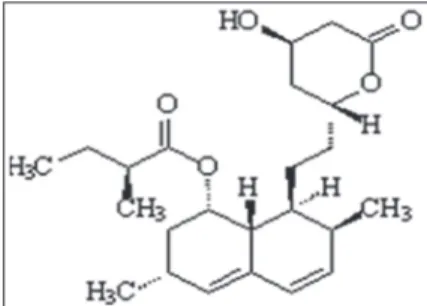
Molecular structure of statins[11]
Statin contains a hexahydronaphthalene ring with two major side chains, viz. dimethylbutyrate ester and a second one, which contains a hydroxyacid [Figure 4]. The hydroxyacid of the second chain forms a six-membered analog of the intermediate compound in the HMG-CoA reductase reaction, which is the rate-limiting step in the mevalonate pathway. As a result of its similarity to the compound HMG-CoA, statin is a reversible competitive inhibitor of the enzyme HMG-CoA reductase. The reaction catalyzed by HMG-CoA reductase and inhibited by simvastatin is the conversion of HMG-CoA to a compound called mevalonate via an intermediate. Simvastatin like the other statins is thus an inhibitor of the mevalonate pathway and consequently cholesterol synthesis.
Statins have potential anti-infl ammatory eff ect. Statins in systemic and local application enhance osteoblastic
diff erentiation and bone formation by upregulating bone
morphogenic proteins and by blocking the intermediate metabolites of the mevalonate pathway. Because of these eff ects, statins can be used in treating periodontal disease and promoting periodontal regeneration.[12]
Additionally, it has been observed that statins like simvastatin, atorvastatin, and cerivastatin markedly enhance gene expression for vascular endothelial growth factor, which is involved in the process of endochondral bone formation and stimulates osteoblastic diff erentiation leading to new bone formation. It has also been suggested that statin use was associated with decreased tooth loss in chronic periodontitis patients.[11]
An in vitro study was conducted by Yazawa et al., using periodontal ligament cells obtained from human teeth and it was seen that simvastatin signifi cantly enhanced cell proliferation and metabolism dose-dependently after 24 h. Simvastatin
concentrations of 10-8 and 10-7 M showed the maximum eff ect
and after 7 days, alkaline phosphatase activity was boosted dose-dependently and at a concentration of 10-8 M showed the maximum eff ect.[13]
Pradeep et al., recently in a clinical study reported a greater reduction in the gingival index and probing depth (PD) at
sites treated with SRP and locally delivered simvastatin as compared to SRP plus placebo in human subjects with chronic periodontitis. In addition, more clinical attachment level gain as well as signifi cant intrabony defect fi ll was seen in the simvastatin-treated individuals.[14]
Antimicrobial Agents
Antiproteinases used in the treatment of periodontitis are tetracyclines. Along with antimicrobial activity, tetracycline agents have the ability to inhibit neutrophils, osteoclasts, and matrix metalloproteinases (MMPs) that appear to be involved in the destruction of the periodontium. Tetracyclines have an
anti-infl ammatory action and may be bone-sparing through
inhibition of osteoclasts. Doxycycline is the most studied and strongest collagenase inhibitor of the used tetracyclines.[6]
MMP is considered to be the key initiators of collagen degradation thus contributing to bone resorption in infl ammatory diseases. Subantimicrobial doses of doxycycline are a known
MMP inhibitors and hence inhibits bone resorption.[15]
Recently, a formulation containing a sub antimicrobial dose of doxycycline (Doxycycline hyclate 20 mg; Periostat, CollaGenex, Pharmaceuticals Newton PA) is FDA approved and ADA accepted. It is indicated as an adjunct to SRP in the treatment of chronic periodontitis. It has been evaluated as 20 mg taken twice daily for up to 9 months of continuous dosing in clinical trials. The 20 mg twice per day dose exerts its therapeutic eff ect by enzyme, cytokine, and osteoclast inhibition, rather than by any antibiotic eff ect.[4]
Golub et al. (1990) studied the eff ects of low dose
doxycycline therapy on the gingival crevicular fl uid in human
subjects. A 2 weeks regimen of these capsules (each containing 20 or 30 mg of the drug) signifi cantly reduced the excess host collagenase activity in extracts of infl amed gingival tissues. This eff ect was not reduced in placebo, treated patients who had adult periodontitis.[2]
Chemically modifi ed tetracyclines tackle periodontitis by
prevention of breakdown of CT. They mainly act by inhibition of metal-dependent MMPs, scavenging the reactive oxygen
species, enhancing the attachment of fi broblasts and CTs to
the tooth surface, suppression of neutrophils, inhibition of generation of metabolites of arachidionic acid by blocking the PGE2 synthesis and phospholipase A2, and hence regenerating lost periodontium.[16]
Azithromycin is an azalide, a subclass of macrolide antibiotic used extensively in medicine for the treatment of a wide range of bacterial infections. It inhibits some Gram-positive bacteria, some Gram-negative bacteria, and many atypical including few common periodontopathogens. Apart from their antibiotic properties they also have well-documented immune-modulating/anti-infl ammatory eff ects. Azithromycin
is signifi cantly concentrated in macrophages, neutrophils and
particularly in the fi broblasts; all of these cells play a major role in the pathogenesis of most periodontal diseases. Use of azithromycin in the treatment of advanced periodontal diseases
has shown signifi cant results. Azithromycin could also have
a triple role in the resolution and treatment of periodontal
diseases such as anti-inflammatory activity, suppressing
periodontopathogens and healing through persistence at low levels fi broblasts and macrophages in periodontal tissues, even after a single course of three tablets.[17]
Hormonal Therapy
Parathyroid hormone (PTH)
The mechanism of the PTHs action is complex and involves
pathways linked to common signaling peptides that aff ect
osteoblast gene transcription. In vitro studies, in vivo experiments, and clinical trials demonstrated that intermittent PTH 1-34
administration induced anabolic eff ects on cancellous and
cortical bone, enhanced bone mass, and increased mechanical bone strength.[18]
Estrogen
The relationship between estrogens and periodontal tissues was studied mainly for its possible implication in the infl ammatory process, with a clear demonstration that estrogens do not
increase inflammation. Most cells in the periodontium
(fi broblasts, endothelial cells, epithelial gingival cells, osteoclasts, and osteoblasts) express estrogen receptors α and β. It is well known that estrogens decrease bone resorption and have a positive eff ect on bone formation.[19] Treatment with estrogens
clearly inhibits bone loss as well as bone turnover and increases bone mineral density. There is substantial evidence that estrogen inhibits both osteoclast activity and diff erentiation by regulating the production of stimulatory and inhibitory cytokines by osteoblasts and monocytes. Various reports also have linked
estrogen defi ciency and osteoporosis to increased oral bone
resorption, attachment loss, and tooth loss.[20]
Selective estrogen receptor modulators (SERMs)
The discovery of the agents able to exert full or partial estrogen eff ects on various tissues led to the development of a new class of drugs known as SERMs. The mechanism by which SERMs inhibit bone resorption is likely to be the same as estrogen’s mechanism, by blocking production of cytokines that promote osteoclast diff erentiation and by promoting osteoclast apoptosis.[20]
Teriparatide
It is a recombinant form of PTH consisting of the fi rst 34 amino acids of PTH. Since it is identical to a portion of human PTH, it is known as biosynthetic human PTH. It is a highly potent anabolic (i.e. bone growing) agent and most commonly used in the treatment of osteoporosis.
demonstrated that ligand binding promotes a cascade that energize protein kinase-1, protein kinase C, cyclic adenosine monophosphate (cAMP) and phospholipase C. The activation of these pathways results in an up-regulation of the number of active osteoblasts, a down-regulation in osteoblast apoptosis and probably, increase of bone lining cells as newly formed osteoblasts, thereby enhancing bone strength, structural integrity, mass and diameter, as well as increasing serum and urinary levels of markers of bone resorption and formation. Individuals treated with teriparatide have shown up-regulation
of basic fi broblast growth factor 2 (bFGF-2). Since bFGF-2
enhances the proliferation and diff erentiation of osteoblast
progenitor cells, this cytokine could play a major role in the bone formative response to teriparatide therapy.[3]
Miscellaneous Drugs
Anti-arthritic medications
Anti-arthritic medications have also been suggested to be of potential benefi t, but their mechanism of action is unclear at this time. However, gold salts like aurofi n, aurothioglucose, aurothiomalate, sometimes used to treat arthritis have been shown to accumulate in gingiva and gingival crevicular fl uid, and may produce an antibacterial and anti-infl ammatory at the site of periodontal infections (Freeman et al. 1984, Polson et al. 1984).[21]
Cimetidine
Cimetidine is a powerful H2 (Histamine) receptor antagonist,
and hence eliminates histamine’s inhibitory eff ects on immune
response, thereby acting as a modulator of infl ammation and
immunity by inhibiting neutrophil chemotaxis and superoxide production, increasing cAMP levels and down-regulating cytokines. Topically active cimetidine is a potent inhibitor of
periodontal infl ammation caused mainly by P. gingivalis, this
morphologic and histologic evidence was provided by Hasturk
et al. (2006) and they also showed that it can arrest and/or prevent tissue destruction and infl uence cell populations present in the infl ammatory cell infi ltrate.[10]
Hyaluronic acid (HA)
HA is a polysaccharide (glycosaminoglycan), also known as hyaluronan or hyaluronate, it has a high molecular weight and has a major role in the activity of extracellular matrices, including those of non-mineralized and mineralized periodontal tissues.
It contributes signifi cantly to cell migration, proliferation
and tissue hydrodynamics and is a vital component of the extracellular matrix. Hyaluronan is also produced in the presence of endotoxins by fi broblasts, and it plays a crucial anti-infl ammatory role by facilitating healing and inhibition of tissue destruction.[22]
Ballini et al. in a study found that there were good capabilities in accelerating new bone formation in the infra-bony defects
when autologous bone was combined with an esterifi ed
low-molecular HA preparation.[23]
HA shares bone induction characteristics with bone morphogenetic protein-2 and osteopontin which are majorly
osteogenic in nature.[24] It accelerates the bone regeneration
via proliferation, successive diff erentiation and chemotaxis of mesenchymal cells.
Another study was conducted by Engström et al. to
investigate the anti-infl ammatory eff ect and the eff ect on bone regeneration of Hyaluronan in surgical and non-surgical groups. On radiographic examination, in the non surgical group there was no statistical diff erence, whereas the reduction in the bone height was seen for both groups after scaling. PD signifi cantly reduced after the surgical treatment as well as after SRP.[25]
Conclusion
Periodontopathic microorganisms and destructive host response are involved in the initiation and progression of periodontal disease, and there are situations in which conventional therapy does not always achieve the desired clinical outcome.
The improved understanding of the host bacterial interactions
and the host immune-infl ammatory response leading to
periodontal tissue destruction has led to the development of
Host modulation therapy. The risk/benefi t ratio concerned to
the use of host modulating agents are yet to be established even
though the usefulness and effi cacy of these agents have been
demonstrated by many clinical trials and have been approved by FDA for the management of periodontitis. Furthermore, continuous research in this fi eld and Multicenter clinical trials are necessary to completely evaluate the benefi ts, usefulness and the risks associated with the long-term administration of these agents and also to enable planning of customized treatment
approach for periodontal diseases by targeting infl ammatory
host response.
References
1. Benatti BB, Silvério KG, Casati MZ, Sallum EA, Nociti FH Jr. Physiological features of periodontal regeneration and approaches for periodontal tissue engineering utilizing periodontal ligament cells. J Biosci Bioeng 2007;103:1-6.
2. Paddmanabhan P. Antimicrobials in treatment of periodontal disease -A review. IOSR J Dent Med Sci 2013;4:19-23.
3. Grover HS, Luthra S, Maroo S. Teriparatide: A novel means to ultimately achieve true regeneration!!! J Clin Diagn Res 2013;7:1820-3.
4. Deshmukh J, Jawali MH, Kulkarni VK. Host modulation therapy – A promising new concept in treating periodontal diseases. Int J Dent Clin 2011;3:48-53.
5. Vlad C, Vlad DC, Bucur A, Popescu R, Dumitraşcu V. Benefi cial eff ects of selective cyclooxigenase-2 inhibitor etoricoxib in periodontitis. Ann RSCB 2012;22:211-6.
6. Reddy MS, Geurs NC, Gunsolley JC. Periodontal host modulation with antiproteinase, anti-infl ammatory, and bone-sparing agents. A systematic review. Ann Periodontol 2003;8:12-37.
clinical implications of bisphosphonates in dentistry. Aust Dent J 2011;56:2-9.
8. Badran Z, Kraehenmann MA, Guicheux J, Soueidan A. Bisphosphonates in periodontal treatment: A review. Oral Health Prev Dent 2009;7:3-12.
9. Tenenbaum HC, Shelemay A, Girard B, Zohar R, Fritz PC. Bisphosphonates and periodontics: Potential applications for regulation of bone mass in the periodontium and other therapeutic/diagnostic uses. J Periodontol 2002;73:813-22. 10. Gulati M, Anand V, Govila V, Jain N. Host modulation therapy:
An indispensable part of perioceutics. J Indian Soc Periodontol 2014;18:282-8.
11. Kataria P, Kaur J, Parvez E, Maurya RP. Statins: Th e paradigm shift in periodontal regeneration. SRM J Res Dent Sci 2014;5:26-30.
12. Suresh S, Jayakumar R. Statins in periodontal regeneration- Th e current scenario. Indian J Dent Adv 2012;4:808-13.
13. Yazawa H, Zimmermann B, Asami Y, Bernimoulin JP. Simvastatin promotes cell metabolism, proliferation, and osteoblastic diff erentiation in human periodontal ligament cells. J Periodontol 2005;76:295-302.
14. Pradeep AR, Th orat MS. Clinical eff ect of subgingivally delivered simvastatin in the treatment of patients with chronic periodontitis: A randomized clinical trial. J Periodontol 2010;81:214-22.
15. Bezerra MM, Brito GA, Ribeiro RA, Rocha FA. Low-dose doxycycline prevents infl ammatory bone resorption in rats. Braz J Med Biol Res 2002;35:613-6.
16. Agarwal A. Pleiotropy of chemically modifi ed tetracycline in
periodontitis. J Pharm Bioallied Sci 2013;5:242-3.
17. Hirsch R, Deng H, Laohachai MN. Azithromycin in periodontal treatment: More than an antibiotic. J Periodontal Res 2012;47:137-48.
18. Valderrama P, Jung RE, Th oma DS, Jones AA, Cochran DL. Evaluation of parathyroid hormone bound to a synthetic matrix for guided bone regeneration around dental implants: A histomorphometric study in dogs. J Periodontol 2010;81:737-47. 19. Nuñez J, Sanz-Blasco S, Vignoletti F, Muñoz F, Caff esse RG,
Sanz M, et al. 17 beta-estradiol promotes cementoblast proliferation and cementum formation in experimental periodontitis. J Periodontol 2010;81:1064-74.
20. McCauley LK, Nohutcu RM. Mediators of periodontal osseous destruction and remodeling: Principles and implications for diagnosis and therapy. J Periodontol 2002;73:1377-91.
21. Ciancio SG. Systemic medications: Clinical signifi cance in periodontics. J Clin Periodontol 2002;29 Suppl 2:17-21. 22. Bansal J, Kedige SD, Anand S. Hyaluronic acid: A promising
mediator for periodontal regeneration. Indian J Dent Res 2010;21:575-8.
23. Ballini A, Cantore S, Capodiferro S, Grassi FR. Esterifi ed hyaluronic acid and autologous bone in the surgical correction of the infra-bone defects. Int J Med Sci 2009;6:65-71.
24. Dahiya P, Kamal R. Hyaluronic Acid: A boon in periodontal therapy. N Am J Med Sci 2013;5:309-15.