ii ABSTRACT
GUNTER, ANN MARIE GLASSBURN. Institutional Decision-Making: An Exploratory Case Study of Three Districts in North Carolina that Decided to Add Dual
Language/Immersion (DL/I) Programs. (Under the direction of Dr. Bonnie C. Fusarelli). This exploratory case study of three sites in North Carolina examined the reasons why each district decided to add a dual language/immersion (DL/I) program during the economic recession from 2007 – 2010 when other variations were also occurring, such as changes in student enrollment, fluctuations in funding, and increases in school choice pressures. Weiss’ (1995) 4 I’s decision-making framework was used as a conceptual lens to scrutinize how the individual decision-making components of ideology, information and interests combined to create the institutional decision-making approach used.
Qualitative data was collected using a statewide survey of districts with existing DL/I programs, semi-structured interviews of educational administrators who were identified in the surveys as leading the work to start the DL/I program in their districts, and a document analysis. The examination of this data revealed that the main reason districts decided to add a DL/I program was to better meet students’ needs in a variety of ways: best practices for
English learners, better cross-cultural understanding, equitable access to DL/I programs, higher academic achievement, preparation of students with marketable skills for a globalized economy, redistribution of student enrollment across school sites, and transformation of instruction.
iii more important than the issues brought about by funding cuts from the recession.
The findings indicate that DL/I programs could be a viable option for all districts to reap benefits like closing the achievement gap and providing school choice options, as well as addressing equity and social justice issues. Further research could examine the
relationship between local school boards and their educational administrators, the
iv © Copyright 2019 Ann Marie Glassburn Gunter
v Institutional Decision-Making: An Exploratory Case Study of Three Districts in North
Carolina that Decided to Add Dual Language/Immersion (DL/I) Programs
by
Ann Marie Glassburn Gunter
A dissertation submitted to the Graduate Faculty of North Carolina State University
in partial fulfillment of the requirements for the degree of
Doctor of Philosophy
Educational Research & Policy Analysis
Raleigh, North Carolina 2019
APPROVED BY:
_______________________________ _______________________________ Dr. Bonnie C. Fusarelli Dr. Lisa Bass Freeman
Chair of Advisory Committee
DEDICATION
BIOGRAPHY
Ann Marie Glassburn Gunter was born and raised in Indiana and has always attended public schools. Inspired by her paternal grandmother and a love of learning languages, she knew from an early age that she wanted to be an educator. She earned a BA in English and French Education, along with a Gifted and Talented Endorsement, from Purdue University in 1995, and began her career in Wisconsin, first serving as a district coordinator for a K-12 gifted and talented program and then as an English and French teacher in a rural high school. During this time, she was also working part-time on her English as a Second Language (ESL) certificate and an MS in Educational Administration at the University of Wisconsin –
Madison. In order to finish her degree program at the same time as her husband concluded his doctoral work in horticulture, she left the classroom to be a full-time graduate student and worked as a graduate assistant in various roles at the postsecondary level. She graduated with her MS in 2000 and then moved to a small town in southern Indiana.
Ann Marie served as a middle and high school teacher of French and English at Loogootee Community School Corporation, as well as an academic club sponsor and basketball coach. Because she had the MS degree, she could offer several courses as dual credit through Vincennes University’s Project Excel program, including French IV and Public Speaking. She also taught evening and summer courses as an adjunct instructor with Vincennes University, and served in leadership roles with online teaching initiatives and career academy projects at her school.
ACKNOWLEDGEMENTS
I would like to acknowledge several people for their unwavering support of me during my doctoral program. My friends from across the country, especially those I know through our work together as educators in Wisconsin, Indiana and North Carolina or on the executive board of the National Council of State Supervisors for Languages (NCSSFL), are much appreciated for their unflagging support and kind words of encouragement throughout this process. My family has always pushed me to take on new challenges, and I am
TABLE OF CONTENTS
LIST OF TABLES ... viii
LIST OF FIGURES ... ix
CHAPTER 1: INTRODUCTION ... 1
Introduction ... 1
Background ... 3
Statement of the Problem ... 9
Purpose of the Study ... 10
Definition of Terms... 11
Significance of the Study ... 12
Overview of Approach ... 13
Chapter Summary and Organization of the Study ... 14
CHAPTER 2: LITERATURE REVIEW ... 16
Introduction ... 16
Traditional Educational Leadership for School Districts... 17
21st Century Educational Leadership for School Districts ... 20
Knowledgeable Decision-Making ... 23
Data-Driven & Research-Based Decision-Making ... 25
Collaborative Decision-Making ... 27
Making Decisions about Facilities as Demographics Shift ... 28
Changing Decisions based on Access and Equity ... 31
Sustaining Decisions about Curricular Programs: To Keep or To Cut? ... 32
School Choice: A New Dimension to School District Decisions ... 34
Supporting and Expanding School Choice ... 39
Dual Language/Immersion as a School Choice Option ... 43
Chapter Summary ... 47
CHAPTER 3: METHODOLOGY ... 50
Introduction ... 50
Research Question ... 50
Selection of Qualitative Research Methodology ... 50
Rationale for Exploratory Case Study ... 52
Research Design... 55
Data Collection Procedures ... 58
Research Validity and Reliability ... 61
Limitations of the Study... 63
Ethical Issues ... 63
Chapter Summary ... 64
CHAPTER 4: FINDINGS ... 65
Introduction ... 65
Enrollment Shifts ... 65
Statewide Survey ... 68
Selecting Case Studies ... 74
Case Study #1 – Dane County Schools ... 77
Case Study #2 – Howard County Schools ... 85
Case Study #3 – Shoals County Schools ... 92
Cross-Case Analyses ... 98
Chapter Summary ... 106
CHAPTER 5: DISCUSSION ... 108
Introduction ... 108
Institutional Decision-Making ... 108
Connections to Previous Research ... 110
Limitations ... 113
Implications for Policy & Practice ... 114
Directions for Future Research ... 117
Conclusion ... 119
REFERENCES ... 121
APPENDICES ... 127
Appendix A - Survey Announcements ... 128
Appendix B – Survey Consent Form ... 130
Appendix C – Survey Questions ... 132
Appendix D – Interview Invitation ... 135
Appendix E – Interview Consent Form ... 136
LIST OF TABLES
Table 1. Demographic Changes from 2003-04 to 2013-14 ... 3
Table 2. Interview Participants... 57
Table 3. Research Design ... 58
Table 4. Tests for Case Studies ... 61
Table 5. Enrollment Changes for LEAs with a DL/I Program ... 67
Table 6. Reasons for Starting a DL/I Program as Listed in the Survey ... 70
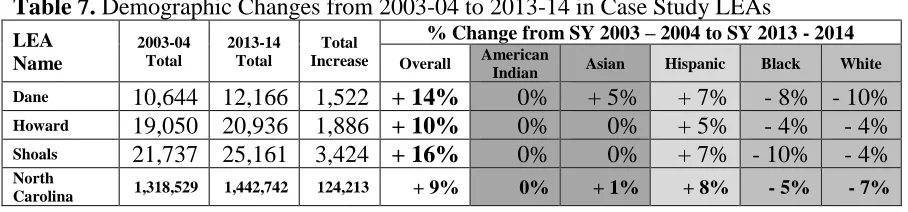
Table 7. Demographic Changes from 2003-04 to 2013-14 in Case Study LEAs ... 76
LIST OF FIGURES
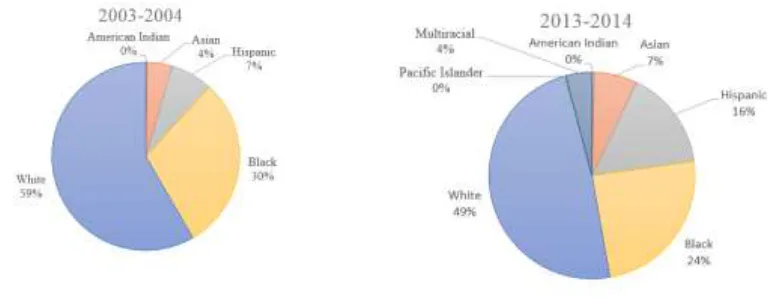
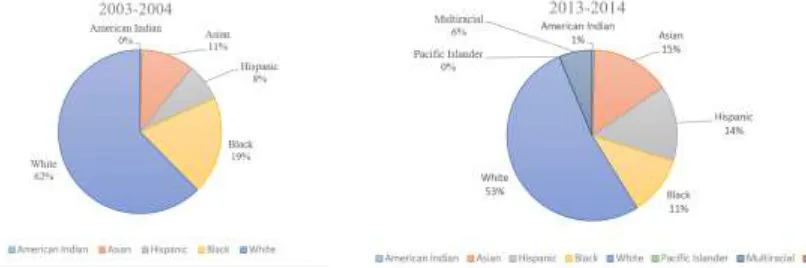
Figure 1. WCPSS Student Body Composition in 2003-04 and in 2013-14 ... 4
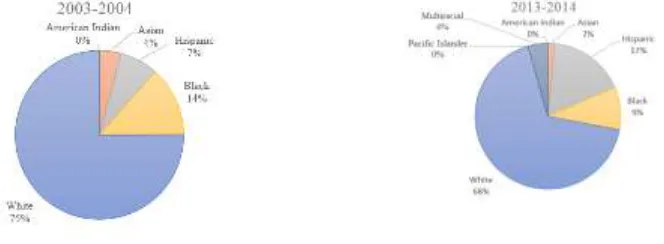
Figure 2. MACS Student Body Composition in 2003-04 and in 2013-14 ... 5
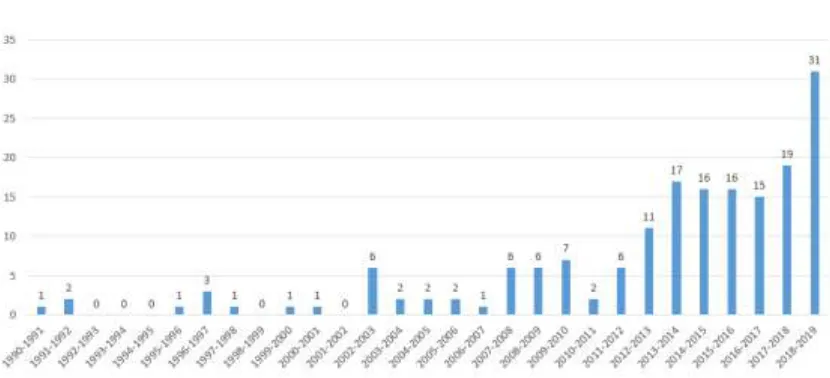
Figure 3. Number of New DL/I Programs Each School Year ... 8
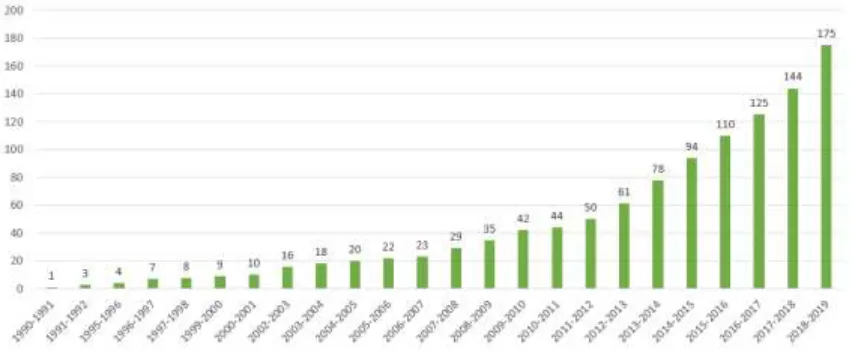
Figure 4. Number of DL/I Total Programs by School Year ... 9
Figure 5. The Key Work of School Boards ... 22
Figure 6. Dane County Schools Student Body Composition in 2003-04 and in 2013-14 ... 78
Figure 7. Howard County Schools Student Body Composition in 2003-04 and in 2013-14 . 86 Figure 8. Shoals County Schools Student Body Composition in 2003-04 and in 2013-14 ... 93
Figure 9. Interaction of Ideology, Interests, Information, and Institution ... 99
CHAPTER 1: INTRODUCTION Introduction
Education in the United States is administered by each state and its local entities. When the Constitution for this country was ratified, it made no mention of a federal role for education. The only link to education in this document is the 10th Amendment, which states, “The powers not delegated to the United States by the Constitution, nor prohibited by it to the States, are reserved to the States respectively, or to the people” (U.S. Const. amend. X). Though the federal government has been increasing its influence on public education over the past 50 years through the passage, implementation, and reauthorizations of legislation like the Elementary and Secondary Education Act (ESEA), those initiatives have focused on accountability measures aimed at ensuring access and opportunity for all children, which leans towards education as a civil right with the onus still on states to govern education (Cross, 2014).
The funding of public education reflects how involved federal, state, and local governments are in educating children from the elementary to the secondary level. Federal funding has increased over the past decade, but it is limited to 10% - 15% of a school district’s total budget. The rest of the funding comes from the state and local level, though the percentage varies by state and depends on the state constitution and the governance structures in place at each level (Ladd & Fiske, 2008; Public School Forum of North Carolina, 2014).
Const. art. I, § 15). Laws about education are enacted by the elected members of the General Assembly and made into policy by the governor-appointed members of the State Board of Education (SBE). Legislation and SBE policies are implemented by the Department of Public Instruction and pertain to accountability, curriculum, instruction, licensing, personnel and testing. The majority of funding comes from the state level, specifically the legislature, with just a small amount originating at the local level. The state of North Carolina provides approximately 60% - 70% of the funding for schools, including almost all of the teaching positions, which leaves 15% - 30% from the local level (Ladd & Fiske, 2008; Public School Forum of North Carolina, 2014). North Carolina is a local control state so each district’s local board of education (BOE) is responsible for managing the schools in its jurisdiction, enforcing the laws, and sending a budget to the county commissioners (Public School Forum of North Carolina, 2014).
Background
The state of North Carolina has seen demographic changes over the past several decades that impact local decisions. According to James Johnson at the University of North Carolina – Chapel Hill Kenan-Flagler Business School, the southeastern part of the United States and North Carolina in particular have seen an influx of people from other states and from abroad (J. Johnson, presentation to 2014-2015 Educational Policy Fellowship Fall Retreat presentation, September 22, 2014). Table 1 shows this demographic shift for North Carolina’s public school system in a recent decade. By the 2013-2014 school year, the state had seen an increase of over 124,000 K-12 students, which was 9% more than were enrolled in 2003-2004. The mix of students was also different. While there had been little change in the percentage of American Indian or Asian students, there had been an increase in Hispanic students, and a decrease in the percentage of Black and White students that constitute the student body of North Carolina (Public Schools of North Carolina, 2015).
Table 1. Demographic Changes from 2003-04 to 2013-14 North Carolina 2003-04 Total 2013-14 Total Total Increase
% Change from SY 2003 – 2004 to SY 2013 - 2014
Overall American
Indian Asian Hispanic Black White K-12 Public
School Enrollment
1,318,529 1,442,742 124,213 + 9% 0% + 1% + 8% - 5% - 7%
population explosion with an increase of over 44,000 students or 41% between the 2003-2004 school year and the 2013-2014 school year, as it grew from 109,000 to over 153,000 students.
To put this in perspective, Figure 1 shows the composition of the WCPSS student body in 2003-2004 on the left and the same information ten years later on the right for 2013-2014, with adjustments made to the size of the chart to reflect the population increase as well as the percentage growth. Two categories were also added to the data analysis in 2013-2014. Pacific Islander, which is separate from American Indian, has its own category, but, with less than 200 students classifying themselves in this group, they represent a very small percentage of the total population with just 0.11% or, when rounded, 0%. Two or More Races or
Multiracial is, perhaps, a more accurate way for students to identify themselves.
The percentage of American Indian students remained the same, but the number of Asian and Multiracial students increased 3% and 4%, respectively. At the same time, the proportion of Hispanic students jumped from 7% to 16%, and Black and White student populations shrunk as a portion of the total student body. These shifts in sub-populations are similar to the statewide data but the magnitude of this growth puts a wide range of demands on the
infrastructure of the district, both physically and academically. The resulting local BOE discussions and decisions revolved around building and opening new facilities, assigning and re-assigning students to schools, and creating programs that are attractive educational and school choice options to different populations (Parcel & Taylor, 2015; Public Schools of North Carolina, 2015).
Many small communities and rural areas of the state have seen a decrease in
population numbers but are experiencing a similar change in the mixture of cultures within the county and school district (J. Johnson, presentation to 2014-2015 Educational Policy Fellowship Fall Retreat presentation, September 22, 2014). In Mount Airy City Schools (MACS), 25% of the student population in 2003-2004 included American Indian, Asian, Hispanic, and Black students, but, 10 years later, that percentage was 32% as shown in Figure 2. The largest shift was a 10% increase in the Hispanic student population. Again, there are similarities to the statewide data, but the impact is quite different when a district has decreased its overall enrollment by approximately 10%, downsizing from almost 1,900 students to just under 1,700 (Public Schools of North Carolina, 2015).
Figure 2. MACS Student Body Composition in 2003-04 and in 2013-14
fluctuations in student enrollment numbers. Local Boards of Education (BOEs) must work closely with educators and their communities as they think about how to educate a changing student population and equip children for a 21st century society where they interact globally (Public School Forum of North Carolina, 2014). In the examples above, both districts decided to add dual language/immersion (DL/I) programs to their academic offerings (NC Dual Language/Immersion Programs Directory).
DL/I is a program in which students learn academic content, specifically the North
Carolina Standard Course of Study, in two languages: English and another language, which
is referred to as the target language. North Carolina districts choose from four models of DL/I programs depending on the native or first languages of the student population being served. The DL/I program typically launches with a kindergarten cohort and grows by adding a new grade level to the program each year as the first cohort advances. DL/I programs determine how instructional time is scheduled for the two languages, which often means having some subjects (ex. math and social studies) in the target language and others in English (ex. science, physical education, and music) or pairing teachers so that one teaches in the target language and the other in English. The goal is for all students to become bilingual, biliterate, and bicultural (Curtain & Dahlberg, 2008; NC Dual Language/Immersion
Programs).
Research shows that students in DL/I programs develop high levels of proficiency in both languages, score at or above grade level on academic achievement tests like North Carolina’s End of Grade (EOG) exams, and exhibit positive cross-cultural attitudes. Students in a DL/I program who are English language learners (ELLs) exit English as a Second
within a traditional monolingual academic program, and students in DL/I programs who have been identified for special education services also achieve at higher levels than their
monolingual peers. Even students from historically underperforming sub-populations such as lower socioeconomic backgrounds do better academically as measured by statewide exams like EOGs, so DL/I programs are sometimes seen as a reform effort that can close the achievement gap (NC Dual Language/Immersion Programs; Thomas & Collier, 2012).
DL/I programs in North Carolina have been growing for almost 30 years, but they have been substantially increasing since the 2007 – 2008 school year, which coincides with the start of the last economic recession. The first DL/I program was established in the 1990-1991 school year in Guilford County Schools at Jones Elementary School. The next year two programs were initiated within Charlotte-Mecklenburg Schools, and that LEA continued to launch new DL/I programs in a staggered fashion through the 2002 – 2003 school year. Chapel Hill-Carrboro City Schools and Durham Public Schools also started DL/I programs in 2002 – 2003, followed by Greene County Schools the next year. By the end of 2003 – 2004, there were 18 DL/I programs and a decade later, in 2013 – 2014, the number of DL/I
programs had reached 78. There are now over 170 DL/I programs across the state and the number is still increasing every year, either as new programs starting with a kindergarten cohort or programs expanding into secondary level schools when an elementary or middle school cohort advances into the next grade span.
Figure 3 below shows the growth of these programs as they were launched in different academic years from 1990 – 1991 until the present, and Figure 4 displays the
more DL/I programs are sometimes being combined so that a single DL/I program can be offered in one location, albeit with a larger concentration of students. There are 115 LEAs, and, at the time of this study’s data collection, 30 of them had at least 1 DL/I program, as did several charter schools and a few independent schools. Currently, those numbers have reached 42 LEAs, five charter schools and six independent or private schools (NC Dual Language/Immersion Programs Directory).
Figure 4. Number of DL/I Total Programs by School Year Statement of the Problem
The decision to launch a DL/I program rests with the local BOE and the educators who will be involved in establishing the new program. Before concerns about hiring teachers or adjusting curriculum for two languages are a topic of discussion, the local leadership must convince their decision-makers or policymakers that there are good reasons for starting a DL/I program. Since a district and its schools are focused on learning, academic reasons might be cited, such as the Thomas and Collier research (2012) showing the positive impact of DL/I programs on overall academic achievement or the progress made towards closing achievement gaps. Logistical issues might also come into play. A DL/I program could attract students to a school that’s being reconfigured because of district demographic and facility changes. Starting a DL/I program might be based on financial gain if it was seen as a school choice option that would draw students from charter or independent school
new arrivals to the community find a welcoming environment (Thomas & Collier, 2012). Finally, a district might have societal reasons for starting a DL/I program like providing an education that ensures their students can compete with their peers in the workforce and interact effectively in a globalized world (Global Education Initiative in NC).
There may be one essential reason or a list of reasons that a district decided to launch a DL/I program, but the other consideration when it comes to decision-making is timing. DL/I programs have been growing steadily over the last 25 years in North Carolina (NCDL/I Programs wiki) but a local BOE may or may not be aware of that trend. Education funding has risen and fallen, but it has never been abundant (Ladd & Fiske, 2008; Public School Forum of North Carolina). During the last economic recession or school years from 2007 – 2010, state level educational funding was reduced by the legislature and sometimes resulted in districts returning dollars they had been allotted when the monies were recalled because of cuts. In a constricting financial environment, it is interesting that local BOEs voted to add a DL/I program, either as a new endeavor or a continuation of an elementary or middle school program already in progress. Table 2 shows that, during this time period, there was actually a dramatic increase in DL/I programs, with over five programs being added each year. Purpose of the Study
did to persuade others, such as parents and local officials, to embrace and support the decision to start a DL/I program.
The study was framed with the following research question:
Why did the districts decide to add a DL/I program to one (or more) of their schools? Launching a DL/I program is a somewhat unique way to change education for students. It is likely that the decision-makers involved in this shift only studied a foreign or second language as a separate subject, not as a vehicle for learning academic content. Most of them are not bilingual or biliterate to a level of proficiency that would allow them to use another language besides their first language in their personal or professional lives. And yet, they made a decision to put the children in their districts on the path to having two languages, which results in a very different public school academic experience. This decision’s immediate, short-term and long-term outcomes need to be investigated.
Definition of Terms
This study will use the definition of the terms below throughout the research collection, data analysis, and reporting phases:
• 4 I’s Framework – A decision-making framework described by Weiss (1995) that
assesses outcomes based on the influence that individuals’ ideologies, information, and interests have on the decision within the institution
• Board of Education (BOE) – A local group of individuals from within a school
• Dual Language/Immersion (DL/I) Program – An umbrella term for an educational
approach in which students learn the state standards or academic content in English and another language, which is referred to as the target language
• English Learners (ELs) – A group of students who speak a language other than
English at home and, as part of their educational experience, are receiving support services from English as a Second Language (ESL) programs to build their
proficiency in English
• North Carolina Standard Course of Study (NCSCoS) – The collection of state
standards comprised of the K – 12 English Language Arts Standards, the K-12
Mathematics Standard Course of Study and the North Carolina Essential Standards
in arts education, career and technical education, English as a second language, guidance, healthful living, information and technology skills, science, social studies, and world languages that are approved and implemented in all K-12 public schools in North Carolina
• State Board of Education (SBE) - A group of individuals from across the state who
are appointed by the governor or serve based on their elected position to represent the various regions of the state and have the responsibility to make educational policy based on legislation, oversee the K-12 public school system, and make decisions concerning the governance and operations of the districts and schools
Significance of the Study
specific programs in a piecemeal fashion. The federal Title I programs support literacy development in schools serving large groups of students from lower socioeconomic
backgrounds. The various reauthorizations of the Elementary and Secondary Education Act
(ESEA) have led to accountability measures that must be enforced at the state and local level.
The technological interconnectedness of our world has been the basis for a surge in programs touting STEM (Science, Technology, Engineering and Mathematics) learning and career fields. However, little research has been done about how local decision-makers learn about and implement programs that focus on the needs of all students from a holistic perspective.
This study is significant because it explores the reasons behind a local decision to make a curricular change and how that change was proposed, considered and implemented. This study is somewhat unique in that it seeks to explain the local decision-making process as it relates to curriculum policy and local leadership, rather than some of the other topics such as board and superintendent relations or ethics policies that are more routinely analyzed. This study could benefit the local BOEs and their districts across North Carolina that are dedicated to local control and the autonomy necessary to assess the educational needs of the children in their district and act as a group to make decisions and implement changes that address fluctuations in student enrollment, funding, and future goals for all learners. Overview of Approach
identified from the survey results submitted by the districts that began a DL/I program during the specified period. The interviews were conducted using the protocol shown in Appendix F, and all interviews were recorded, transcribed and analyzed using open coding. The document analysis encompassed materials made available to the public, such as local BOE agendas and minutes, as well as work sessions, studies and other information published in the LEA about the DL/I program. These three sources helped to triangulate the data and the findings.
The conceptual lens of the study was Weiss’ (1995) 4 I’s Framework so that the decision-making process could be analyzed. The 4 I’s Framework relies on the interplay of each individual’s decision-making processes and how the three components of individual
decision-making or “3 I’s” of ideologies, information, and interests, impact the position the person takes overall and in relation to the structure or pressures of the fourth “I” at the group level, the institution (pp. 573 – 574). The codes and themes that emerged from the
interviews and document analysis were linked back to the 4 I’s Framework in order to determine the primary and secondary drivers or “I’s” that guided the local decision to launch a DL/I program.
Chapter Summary and Organization of the Study
like BOEs must manage as they adjust to shifting parameters and stretched resources. Chapter 3 outlines the methodology for the study and the data collection and analysis that took place in completing the study. Chapter 4 contains the analysis of the data, including an overview of the survey, the selection process for the case studies and the findings from the interviews and document analyses. Chapter 5 has a discussion of the findings and
CHAPTER 2: LITERATURE REVIEW Introduction
The purpose of this study was to explore the reasons districts used to convince decision-makers to add a dual language/immersion (DL/I) program during an economic recession. The literature review aims to examine the situation of local BOEs and lead to an analysis of the decision-making processes and priorities that they used to fulfill their mission of serving the best interests of K-12 students in the public schools in their communities.
The first section of the literature review will begin with an overview of district-level leadership history, policies, and practices, which will be followed by an analysis of
contemporary BOE roles, principles and challenges. Decision-making as a concept will be analyzed with an examination of how district leaders build a knowledge base for decisions, use data and research, and interact with the community, especially in the current environment of school choice initiatives.
2016). The implementation of a universal prekindergarten program via statewide grant funding (Casto & Sipple, 2011) and the impact of the Thomas and Collier research (2012, 2017) on the proliferation of DL/I programs will be summarized, and Weiss’ (1995) 4 I’s Framework will be discussed in relation to BOE decision-making that leads to adding a curricular program.
Traditional Educational Leadership for School Districts
School boards across America sit at the crossroads between compliance with federal and state education laws and policies, and the application of those mandates at the local level. Hanging in the balance is the education of each child in the communities the boards serve, along with Lasswell’s (1950) inescapable political reality that their decisions come down to the question of ‘who gets what, when and how’ with every deliberation and vote cast by individual board members. All of this is premised on a local school governance structure from the 19th century that champions the idea of “citizen-policy makers” who, in contrast to their peers elected to state and national positions, remain in the cities and towns where they live with their constituents as they craft educational policy (Asen, Gurke, Conners, Solomon, & Gumm, 2012; Tyack, 1974).
At one time in the educational history of this country, there were literally hundreds of thousands of one-room schools located throughout rural areas, along with many more slightly larger collections of classrooms in urban areas that had evolved from village schools.
BOEs generally have five to nine members, though the number can vary from three to thirteen depending on the size of the population, the geographic area being represented, or the compromises made during consolidation. The majority of BOEs consist of five or seven members. BOE members are elected to serve either a defined region or in an “at-large” capacity, and terms are usually staggered so that only a minority of positions are on the ballot during any given election cycle. Historically, BOE positions have been non-partisan or unaffiliated with any political party, though that has been changing. In North Carolina, where the majority of LEAs elect BOE members, over 80% reported that their candidates run as unaffiliated but just under 20% did run for election by political party (Kolb & Strauss, 1999; North Carolina School Boards Association, Election Information).
State laws for BOE candidates are minimal. Contenders must be registered voters and residents of the geographic area they seek to represent. This makes the de facto age requirement 18 years old. Most states also have a few other stipulations that apply to candidates for election, particularly having to do with disclosures related to campaign and personal finances. Only three states have educational requirements for BOE candidates, which can be summarized as basic literacy skills, and roughly the same number restrict candidates from running for office based on felony convictions or, in the case of North Carolina, those guilty of “immoral or disreputable conduct” (Kolb & Strauss, 1999, p. 11).
elective training for freshman BOE members (Kolb & Strauss, 1999). Our state has the North Carolina School Boards Association, which offers a variety of resources related to training of BOE members on their role and responsibilities linked to legislation, budgeting, advocacy or lobbying, legal issues, risk management, and policy crafting or concerns (North Carolina School Boards Association).
No other requirements must be met, including any formal education or training, and little compensation is available, though many districts do offer a token stipend or include BOE members in benefits like health insurance. In North Carolina, almost all districts provide payments to BOE members, usually in the form of monthly or per meeting stipends, that are part of the annual budget approved locally by the county commissioners. The average is around $250 for members and a slightly higher amount for the chair of the BOE, though the range is quite broad from a low of $35 per meeting to over $1,700 monthly (North Carolina School Boards Association, 2014). Several scholars have remarked upon the fact that education is the only field led by board members who do not receive substantial
monetary recompense or have recognized expertise or experience in the field. This is a stark contrast to the business world where the chair and board members must have academic preparation, and often skill sets in leadership or management, to be credible to stockholders or other stakeholders (Kolb & Strauss, 1999).
well as legal statutes linked to access and equity. This loosely structured control customarily flows from the legislature through a state level board and education agency, with the ultimate goal of local control in the form of district and school interpretation and implementation. Since voters still subscribe to the ideal of locally-based decision-making, and most BOEs are theoretically non-partisan, this arrangement is held up even in modern times as the nearly perfect model of participatory democracy (Kolb & Strauss, 1999).
21st Century Educational Leadership for School Districts
BOE members are obliged to deliberate and act in the best interests of the public, though they are tasked with tremendous responsibilities that encompass the work of being representatives, policymakers, and micromanagers – a situation that has led to much confusion about what school board members can and cannot do in their governance roles. On the surface, they represent the voters who elected them, but, according to an analysis done by the Institute for Educational Leadership, BOE members tend to be demographically uniform. The majority of BOE members are white males who come from middle and upper-middle class backgrounds. Only on large urban BOEs is there more balanced representation that includes female and non-white members (Cooper, Cibulka, & Fusarelli, 2008, p. 77).
They believe their decisions need to reflect what constituents want, regardless of what their personal stance on the issue is when the votes are cast in the BOE meeting room (Cooper, Cibulka, & Fusarelli, 2008, p. 128).
Dichotomies like this can also be the two ends of a continuum as a BOE tackles different issues that require them to glide between their roles as representatives and
policymakers. At times, BOE members have been accused of using their district service as a stepping stone to other elected positions at the state or federal level. This would call into question who their constituents truly are, and it invites speculation as to how well BOE members represent various perspectives from within the community. Given the expanding influence from the state and national levels, especially seen in increased percentages of funding, some BOEs come under suspicion of being more interested in implementing others’ policies rather than creating their own to fit local needs. This is curious in light of
Hochschild’s 2005 assessment, as quoted in Cooper, Cibulka, and Fusarelli (2008), “…that boards spend less than one-tenth of their time developing and overseeing policy” (p. 77).
This leaves the micromanaging role of BOEs. A considerable amount of literature has been produced about BOEs that infringe on or even interfere with the day-to-day work of the superintendent and other administrators. This body of research spotlights the supposedly contentious relationships of BOEs with the superintendents and other staff members, but does little else (Cooper, Cibulka, & Fusarelli, 2008; Kolb & Strauss, 1999; Tyack, 1974).
84) that, more and more, utilize a leadership model predicated on a 1994 publication from Iowa’s school board association and state board that has been further developed and expanded from its outline of accountability, advocacy, structure, and vision as the main functions for a BOE (p. 132).
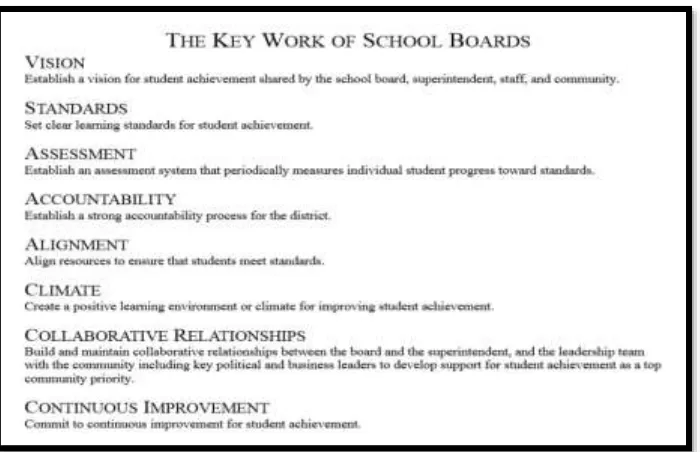
At the dawn of the 21st century, the National School Boards Association (NSBA) extended the Iowa work by outlining two essentials for every BOE agenda and crafting a framework to support them. The Key Work of School Boards, pictured below in Figure 5, delineates eight areas that help a BOE keep their focus on the two essentials: student achievement and community engagement to promote student achievement (North Carolina School Boards Association, pp. 2 – 3).
Figure 5. The Key Work of School Boards
In 2007, the North Carolina School Boards Association (NCSBA) moved forward with utilizing The Key Work of School Boards as a foundation for the NC Professional
leadership (noted below) for BOEs and each one includes bulleted lists that link back to all eight areas of The Key Work of School Boards.
1. Strategic Leadership 2. Instructional Leadership 3. Cultural Leadership
4. Human Resources Leadership 5. Community Leadership 6. Political Leadership 7. Ethical Leadership
The goal is to strengthen the role of the local BOEs throughout the state and focus their decision-making on students and their learning and achievement as they work collaboratively with their communities (North Carolina School Boards Association, pp. 5 – 15).
Knowledgeable Decision-Making
learning so that they can make good decisions for their district’s students (Newton & Sackney, 2005).
Newton and Hackney (2005) combined research from governance, educational psychology, and organizational learning to conceptualize two elements and three dimensions of learning for BOEs and other small groups. The first element is labeled political/structural and involves the integration of five political areas or roles that sometimes overlap on a BOE: member, administrator, information, teamwork, and evaluation. The second element is social and mainly centers on the quality of communication between and amongst BOE members (p. 436). The affective dimension highlights that emotion gives weight to certain aspects of knowledge during decision-making, and the axiological dimension does the same thing for values and beliefs of BOE members (p. 437). The cognitive dimension was split into two types of knowledge. Tacit knowledge was described as “intuitive, interpretive, and
ambiguous” while explicit knowledge was defined as “formal, systematic, and scientific” (p. 438). Knowledge transformation or organizational learning was then delineated into four types for the purposes of the study being organized:
• Articulation (tacit to explicit knowledge transformation), • Combination (explicit to explicit knowledge transformation), • Internalization (explicit to tacit knowledge transformation), and • Socialization (tacit to tacit knowledge transformation).
elements and dimensions identified, followed by an analysis of taped board meetings and a focus group interview with each board about a critical issue (p. 440-441).
The findings from this study spoke to the individual and group learning that takes place for BOEs. The survey found that BOE members did not have to have roles in the political/structural element distinguished or separated from one another to be effective decision-makers. The survey, along with the meeting analyses, also revealed that the group members relied on “an interdependence with, rather than independence from, each other’s knowledge” (Newton & Sackney, 2005, p. 445). The two types of knowledge, tacit and explicit, were embedded throughout their decision-making work, and organizational learning was happening in their environments in a way that brought together the “cultural, cognitive, social, affective, axiological, and political” (p. 454) components of learning to impact decision-making.
Data-Driven & Research-Based Decision-Making
Data and research are two kinds of knowledge that BOEs have to learn about as they prepare to make decisions and later evaluate the consequences of those decisions. Not only are data and research vital to every field, their use has become required in education as part of federal funding through the No Child Left Behind (NCLB) reauthorization of the
Elementary and Secondary Education Act, as well as other initiatives at the national and state
Murray (2014) cautions that data used in educational decisions should be broader in scope than student achievement data. While such data is readily available and fairly easily accessed by many stakeholders, it is just one measure of student achievement. Standardized test results are often the data the public sees posted on school websites or summarized to compare schools across a district or districts throughout a state. Bernhardt’s (2004) data intersection approach to pooling three other types of data (demographic, perception, and school process) with student achievement data is championed. Decision-makers are urged to study each type of data separately and then appraise what different combinations reveal about the culture, instruction, and learning that is happening within the district.
The use of educational research in decision-making also needs to be more wide-ranging than it often is in current practice. There are several barriers to BOEs using research in their work, starting with a disconnect between the academic realm of empirical studies published in journals and the practical realities of governing a district and finding the time to access and understand research. Research studies seldom have actionable conclusions, unless a snippet of the findings have been co-opted by vendors as part of a marketing strategy to present their products as research-based. Explicit knowledge from research is often
undermined by tacit knowledge, anecdotes, or the pre-existing beliefs of policymakers. The key to getting research to BOE members for use in decision-making is to present it in short, synthesized chunks that are straightforward in nature, like an executive summary or 1-page synopsis so that it’s user-friendly (Asen, Gurke, Conners, Solomon, & Gumm, 2012;
Farley-Ripple, 2012; Fusarelli, 2008).
research, professional development and other types of learning opportunities, such as BOE work sessions, need to be part of the overall strategy. Organizational learning can only happen if time is allotted to groups or district-level teams involving BOE members so that they can process, comprehend, and apply knowledge gleaned from research and data to their decisions (Farley-Ripple, 2012; Fusarelli, 2008; Murray, 2014).
Collaborative Decision-Making
Collaborative relationships are one of the eight areas noted for BOEs to focus on in the Key Work of School Boards framework discussed above. Collaboration for decision-making is typically carried out in committees with community members, educators,
representatives of local governments, and BOE members. These groups take many structural forms and their composition and management can impact the quality of recommendations they bring forth to the decisions that are being made (Brazer, Rich, & Ross, 2010).
In a study involving districts in California and Virginia, researchers examined three different types of committees formed by superintendents under the auspices of the local BOEs. Each group was responding to an accountability pressure that was linked to an achievement gap and was initiated by a particular event, either within the district or with outside partners. The committees were formed with a specific focus that would lead to a strategic decision such as a district mandate, common assessment materials, or policy recommendation adopted by the BOE (Brazer, Rich, & Ross, 2010, p. 203).
members specified by role and could be extended up to a certain number by local decision. The superintendent heading the committee decided to add his central office administrators, which was detrimental in the end as the committee was viewed as too educationally elite with little input from parents or other community members. The committee that created the common assessment materials for writing was a grassroots effort spearheaded by the superintendent, but it fell victim to too little structure when the call for volunteers yielded a group that was not balanced. No principals participated, several facilitators rotated through during the months of the committee’s work, and the representation of schools via teachers and parents was not consistent across the district, which set up implementation issues with the resulting materials. The committee that brought forth the recommendation on the retention policy struck the right chord with guidelines for participation, a timeline, and a set of tools to use in action research (Brazer, Rich, & Ross, 2010, p. 203 - 211).
Decision-making authority rests with the BOE, but it extends outward through
superintendents and the community with the use of committees for collaboration. Leadership styles, facilitation skills, and engagement practices all influence the success of committee work. Such outreach efforts can garner more support for the district educational achievement goals for students if handled well (Brazer, Rich, & Ross, 2010, p. 212 - 215).
Making Decisions about Facilities as Demographics Shift
analysis looked at decision-making in general and then delved into the outreach process BOEs used to engage the educational community as well as the larger community surrounding them geographically and governmentally in the decision-making process.
In the Norton (2007) study, two sets of surveys were disseminated. The first set of surveys were sent to superintendents to find out if a facilities decision had recently been undertaken by their BOEs, and, if so, they responded to additional questions on the survey about that decision and the components of it. The more detailed questions included queries about sources of funding, alternatives to renovating or new construction, factors that were discussed by the BOE and impacted their decision, elicitation of input from community members and the local government, and so on (pp. 480 – 481). The second set of surveys was similar, but they were sent to public officials in the cities and towns serving LEAs and then matched to responses from the first set of surveys. This second set of surveys was intended to gauge the perceptions of community involvement in the BOE decision to make a facilities improvement (p. 480).
The study also noted some findings relevant to the facilities decision being made. Superintendents reported that BOEs looked most closely at the community’s preference for renovating an existing school or building a new school at a different site. A few logistical concerns also played into their decision-making about facilities, such as land availability and cost, building and construction codes, space available for non-academic use like athletic fields, and the need to consolidate services (Norton, 2007, p. 486).
The second survey yielded some interesting results. The local officials indicated that they were very aware of renovation and construction projects that their local BOEs were involved in making decisions about, but they were less familiar with projects like technology upgrades. Their results supported the first survey’s information that they, along with the community as a whole, had been asked for input on facilities projects. The local officials felt that they had more influence on the decision than superintendents perceived them to have (Norton, 2007, pp. 490 – 491).
Changing Decisions based on Access and Equity
Heinze and Zdroik (2018) did a case study in the Midwest that looked at how a district, and specifically the BOE of the district, decided to reverse a previous decision about a pay-to-play or pay-to-participate athletics policy and the process that was involved in that action. The researchers conducted a series of interviews with the BOE members and various district administrators, as well as neighboring districts’ athletic directors, to discover how the decision was made to eliminate the policy even though it had just recently been implemented for financial reasons at the beginning of the recession in 2008.
The findings showed that community culture and educator leadership with the BOE were the strongest factors in changing the decision to have pay-to-play. Though the BOE had gathered feedback from the community in a number of ways, including public forums and working groups, when they made the original decision, they remained open to changing the policy by labeling it a pilot program. At the time of the decision in 2008, districts across this state were facing budget issues due to the recession and drops in state funding. Several nearby districts were also adding student fees to participate in sports programs as a way to offset costs and bring in funds. The case study district had followed suit, albeit with some caveats based on the community’s concerns. For example, payment plans could be put into place at request and there were scholarships from the athletic booster club available for students who were receiving free and reduced lunch (Heinze & Zdroik, 2018, pp. 61 – 62).
The coding and analyses of the study focused on the beliefs, identity and values that the BOE and the community as a whole embraced. There was a strong commitment to education and a common belief that extracurricular activities are a vital component of
to all students (Heinze & Zdroik, 2018, p. 60). This community culture was paired with guidance from the superintendent, who, at the time of the decision reversal, was retiring. He indicated in his exit interviews that he regretted the pay-to-play policy and, by doing so, reinstated it as an issue for the BOE to address. Though there had not been a decrease in athletics participation or any other particularly negative impacts, the BOE voted to end the pilot program and the pay-to-play policy. The study noted that the BOE members
“experienced a sense of redemption in the resulting cultural realignment” because they saw their role as one of serving families in a way that was consistent with their unique community culture (Heinze & Zdroik, 2018, p. 63).
There were several limitations to this study, including the fact that it is a single case study; however, Heinze and Zdroik (2018) noted that sometimes smaller or rural districts are more open to such an analysis compared to larger organizations. This study also highlights the influence that education leaders can have on BOE decision-making. Even though administrators like the superintendent do not vote in BOE decisions, they can help to guide the BOE members in thinking critically about what’s best for the students and the
community, whether that’s seen through the lens of information and data, or from the perspective of community ideals and beliefs, or both (pp. 64 – 65).
Sustaining Decisions about Curricular Programs: To Keep or To Cut?
and observations, to draw conclusions about the decision-making processes and strategies employed to sustain the district’s music programs across its schools.
The first finding of the study centered on the philosophy or vision of the district regarding curriculum. The main goal, as reflected in the LEA’s mission statement, was to help students reach their full potential and be ‘well-rounded’ individuals (Major, 2013, p. 10). There was a shared belief that music was valued as part of that goal. This belief was buoyed by the strong music programs that teachers had built, the student enrollment numbers in music classes, and the support afforded the music programs by building and central office administrators. The community backing of the music programs had a significant impact on decision-making, and one BOE member commented during his interview that eliminating the music programs was “off the table when it came to discussing cuts” (p. 12).
The second finding was focused on the delicate equilibrium of funding and politics. The district considered the music program to be part of the image or reputation it was building that would make it stand out in comparison to other LEAs. Distinctive aspects of the music program, such as the elementary strings or orchestras, were seen as attractors to families who would move into the district and increase enrollment. The well-articulated K-12 music program also prevented students from leaving because parents could rely on a sustained program. More students mean more funding, so the music program was always part of the BOE budget (Major, 2013, pp. 12 – 13).
media. They also partnered with independent schools so that district teachers from the music program and other areas (ex. art, physical education, world languages) could provide
instruction to private school students in subjects that were not covered by their tuition. The private school students were included in district enrollment numbers, which brought in more per-pupil funding. In very tight financial situations, the strategy was to revamp or trim a program rather than cut it. For example, when it became difficult to fund a K – 5 school and its programs, the BOE worked with administrators to offer a “new” K – 8 program with an international theme that consolidated students into one building and made more efficient use of human and facility resources (Major, 2013, pp. 13 – 16).
The overarching lesson about BOE decision-making was that the BOE members worked collaboratively with administrators, teachers, parents, and the community to provide the best education possible for students in a fiscally sound and future-oriented way. The maintenance of the music program was possible because of their shared values, balanced approach, and clever solutions to funding issues. Part of this comprehensive approach involved the training that new BOE members received, which was designed to help them focus on the goals and mission of the district that had been established and were important to the community’s stakeholders (Major, 2013, p. 19).
School Choice: A New Dimension to School District Decisions
the best education possible for students so that parents had more educational options. He cited several political and ideological reasons for the rise in popularity of school choice, along with financial drivers. These organizational changes have been couched as school reforms, especially in the era of accountability and the reauthorization of the Elementary and
Secondary Education Act using No Child Left Behind and, in 2015, the Every Student
Succeeds Act, and they have had bipartisan political support even in a time when faith in government was declining. These interventions in the traditional public school enterprise were cast as local innovations that would be based on community and stakeholder needs, and that wouldn’t require much funding to implement since physical spaces could be reallocated and human capital could be reassigned or retrained (pp. 85 – 88).
Some would argue, as Smrekar and Honey (2015) did in their article about magnet schools, that the most important decisions in the school choice movement are made by parents. As the customers, parents or guardians are selecting from amongst choices made available through the decisions of BOEs and their districts’ educators. This study examined parents’ choices as patterns and considered the reasons parents choose magnet schools, or not, in addition to the impact that locations and themes of magnet schools had on the
decisions. The authors conducted a number of telephone interviews with educational leaders from four school districts across the country that varied in size and student population but were representative of urban magnet schools, including the Wake County Public School System in North Carolina. They also analyzed the districts’ magnet school policies related to goals and siting, and they used geographic information system (GIS) tools to do a
comparison of choice patterns, student diversity, and magnet school sites (pp. 128 – 129). The research literature on parent choice priorities for magnet schools held true in the Smrekar and Honey (2015) study. The top priority for parents was academics, which was often determined by publicly posted achievement test scores, followed by safety that was linked to the neighborhood where the magnet school had been located by the district. Family values and then transportation issues were also noted as reasons, though they were distant runners-up and were sometimes part of a complex combination with academics and safety that extended to school environment and discipline (p. 131).
the parent in order to avoid racial isolation of their children, which was consistent across all races. Family income and parents’ level of education were factors in choosing magnet schools, but usually in relation to the networks of information that parents were able to access to learn about magnet school options. The more income a family has, the more resources they have financially and socially, which correlated with choosing magnet schools (Smrekar & Honey, 2015, pp. 133 – 135).
The location of and themes in magnet schools also played a role in parents’ choices and were presented in the Smrekar and Honey (2015) study findings as lessons learned as revealed by the district leaders who were interviewed. The first lesson was that performance and perception are critical. If a magnet school is going to fulfill its goal of drawing in a diverse student population, the parents choosing the program have to see ample evidence that there is sustained academic success and the reputation of the program is solidly positive. The second lesson focused on committed school leaders at the building level, particularly in the principal role, so that a dynamic set of teachers and other staff members could be recruited and maintained in the magnet program. The third lesson was that the magnet school theme is important, but there are many popular options that are appealing, including, in this order, STEM (science, technology, engineering, and math), the arts, the Montessori method or philosophy, and International Baccalaureate (IB) programs. The fourth lesson for successful magnet school options was dedication to sustainability where the need for a K – 12
articulated sequence was noted so that students could continue in magnet schools at the secondary level with a similar or complementary theme (pp. 138 – 140).
school buildings or underutilized space in a school that had suffered from a student exodus due to unemployment, poverty, or criminal activity in the neighborhood in the attendance zone of the site. While this might be a financially advantageous decision by the BOE or the district leadership, it did not support the goal of integration or the parent choice focus on safety. The researchers summarized this finding by saying, “magnet school racial and socioeconomic composition (diversity) most often reflects the racial imbalance and
socioeconomic segregation of neighborhoods in which these schools are located” (Smrekar & Honey, 2015, p. 141).
The Smrekar and Honey study (2015) was limited to a few urban districts and focused mostly on native English-speaking groups of parents, but a study done by Haynes, Phillips, and Goldring (2010) looked closely at traditionally underrepresented groups making magnet school choices. The United States continues to see an influx of people from all over the world, and the population of Latino families is growing at a much faster rate than other sub-groups, especially across the southeastern part of the United States. This is reflected in changes in North Carolina’s student enrollment discussed earlier and impacts services like English as a Second Language (ESL) services in schools. It also brings in another parent group to district school choice decisions (Public School Forum of North Carolina, 2014).
attainment levels ranging from less than a high school education to post-graduate study. Parents’ English language skills were the mitigating factor, and the telephone interviews revealed that parents with post-secondary training or college degrees were not usually employed in their field due to a lower level of English proficiency than their peers. This linguistic gap also showed up in the social networking aspect of parental school choice. If a Latino family had at least one parent who was a second-generation immigrant that had better English language skills and, perhaps, had been educated in American schools, then it was more likely that they would access information about school choices in a magnet program and select that for their children (Haynes, Phillips, and Goldring, 2010, pp. 770 – 776). Supporting and Expanding School Choice
School choice decisions by parents seem tied to how well information is
communicated by the educational organization, whether that’s districts with a magnet school or interdistrict transfer options, charter schools, or private schools if a voucher system is available. Since funding is linked to student enrollment, the competition can become intense (Feinburg & Lubienski, 2008; Fleming, 2012, pp. 16 – 17; Lewis, 2013).
A meta-analysis shared in 2016 looked at 21 MSAP grant awardees to assess how well these magnet schools had realized greater student diversity for schools and improved academic achievement for students, two of the main goals for magnet schools. Slight
changes in diversity were revealed for the magnet schools in the study, but they were limited to either better racial or better socioeconomic integration, though not both at the same site. Academic achievement was mostly unchanged compared to the overall district results where the magnet schools were located, with somewhat higher performance on English language arts measures for students in magnet schools. The authors admitted that more study is needed on a larger number of magnet schools across time and within some of the specific community contexts where magnet schools are popular with parents as a school choice option (Kitmitto, Levin, Betts, Bos, & Eaton, 2016, pp. 1 – 4).
CBO, as a subcontractor for a minimum of 10% of the state grant funds, and there were a lot of decisions to be made about the location, instructional time, and CBO involvement for these UPK programs (Casto & Sipple, 2011, pp. 136 – 137).
Casto and Sipple (2011) did a case study on the decisions made by local educators in five rural districts that launched new UPK programs with the state funding. They were interested in the partnering arrangements made with CBOs in their communities, as well as who made the decisions and what their motivations were. In their coding of the data, which encompassed interviews with district and building administrators, they marked which actors, local community members or professional colleagues, influenced decisions, as well as three different elements or pillars related to decision-making for organizations like schools:
• Regulative – laws, rules, or policies that are part of the regulatory nature of
external funding;
• Normative – expectations, hierarchy, protocols and values that constitute the
formal way an organization functions; and
• Cultural-cognitive – perceptions, understandings, and shared realities of an
organization and its stakeholders.
The districts in the study done in 2008 and 2009 all had approximately the same amount of experience with prekindergarten programming and were typically categorized as high need or low-wealth. They were also very small, rural LEAs, usually with a single school for each grade span. From a data collection standpoint, this meant that the administrators interviewed were knowledgeable about the whole UPK implementation journey (pp. 139 – 142).
responsibilities. The BOEs relied on the district administrators, primarily the
superintendents, to explain the benefits and challenges of UPK grants and how the funding structure would impact the local community and the students. Once the state funding was accepted and made part of the budget, each BOE depended on principals and others, like the CBO partners and the parents in the school community, to create a UPK program that worked for stakeholders. The BOEs usually requested periodic updates on the UPK program and were supportive of the decisions made by district administrators before, during and after implementation (Casto & Sipple, 2011, p. 147).
The findings also pointed to the strong influence that local community members had on UPK decisions made by educational administrators, whether they were driven by
regulative, normative or cultural-cognitive elements. Parents figured heavily into the decision-making, especially with questions about the program’s instructional time: full-day, half-day, or some combination of those options. These decisions were informed by the regulative aspects of the grant, since the number of students and the funding associated with them would vary based on the instructional time offerings. The normative element also was important because parents and educators alike saw prekindergarten programming as a best practice that would benefit children. The cultural-cognitive aspect was less prominent in the interviews about the UPK decisions, but several of the districts shared that there was trust that had been built up over time in how the school, its teachers, and the CBO partners were dedicated to serving the children in the community (Casto & Sipple, 2011, pp. 145 - 146).
compiling research on early childhood education that they felt was most applicable to their district and communities and calling on their professional peers in other districts and schools for input. They were also careful with the regulations of the grant and how well the CBO partners could fulfill the requirements, such as having credentialed teachers on staff. From a cultural-cognitive perspective, the community and the BOE appeared to have faith in what the educational administrators presented to them about UPK programming (Casto & Sipple, 2011, pp. 149 - 150).
Dual Language/Immersion as a School Choice Option
While preschool programs and school choice curricular themes like the arts and STEM are somewhat familiar to everyone, dual language/immersion (DL/I) programs are often not. In DL/I programs, the decision has been made to teach academic content in two languages, usually starting with a cohort of kindergarten students the first year and adding a grade level per year as the first cohort advances through the elementary grades and
eventually matriculates into the secondary level. The state standards are taught in two languages, English and a target language, which is often Spanish or Mandarin Chinese in North Carolina and many other states, though it can be any language that a district or school chooses based on community needs or preferences. A model is determined based on the first languages of the students being served in the DL/I program. A dual language or two-way model means there is an almost equal number of native English-speaking students and native speakers of the target language, and an immersion or one-way model refers to a DL/I
program where the majority of students, if not all, are native English speakers. Thus, the term dual language/immersion encompasses all DL/I models. In the early grades,
80/20 are used to describe the amount of instruction in the target language and in English. English language arts instruction typically begins in 2nd or 3rd grade and the instructional time continues to shift until it reaches 50/50 in most DL/I programs. Students become bilingual, biliterate and bicultural, and research has shown that they demonstrate positive cross-cultural attitudes and behaviors (Curtain & Dahlberg, 2008, pp. 309 – 312; Thomas & Collier, 2017, pp. 15 – 16).
For decision-makers like BOE members and district administrators, it is highly unlikely that any of them were ever students in a DL/I program, whereas they probably do have educational experience with arts disciplines, particularly music and visual arts, and individual classes from STEM fields. Their language learning has likely been at the high school or college level and limited to the target language being taught as a separate subject, rather than through academic content. Their ability to use a second language in their adult lives, either in the workplace or in the community, is usually non-existent or limited to cursory greetings, and yet they select a very different linguistic outcome for students when they choose to launch a DL/I program in a school. Reasons such as preparing students for a globalized marketplace or creating global citizens are sometimes cited, as are cognitive advantages to being bilingual. But, as the research shows, parents make school choice decisions based on academic performance of a program, and that is where DL/I is a proven success (Smrekar & Honey, 2015; Thomas & Collier, 2012; Thomas & Collier, 2017).