ISSN (Online): 2319-8753 ISSN (Print) : 2347-6710
I
nternational
J
ournal of
I
nnovative
R
esearch in
S
cience,
E
ngineering and
T
echnology
(A High Impact Factor, Monthly, Peer Reviewed Journal) Visit: www.ijirset.com
Vol. 8, Issue 4, April 2019
IoT Based Overall Equipment Effectiveness
Vaibhav B. Pattebahadur1, Varsha K. Jadhav1, Samson L. Nirmal2, Prof. Rohit Paithane3,
Prof. Rajesh D. Wagh4, Prof. Ashok B.Hajgude5
U.G. Student, Department of Computer Science and Engineering, ICEEM Engineering College, Aurangabad (MS), India1
U.G. Student, Department of Mechanical Engineering, ICEEM Engineering College, Aurangabad (MS), India2 Asst. Professor, Electronics and Telecommunication, ICEEM Engineering College, Aurangabad (MS), India3
Asst. Professor, Department of Computer Science and Engineering, ICEEM Engineering College, Aurangabad (MS), India4
HoD, Department of Computer Science and Engineering, ICEEM Engineering College, Aurangabad (MS), India5
ABSTRACT: Overall Equipment Effectiveness or Efficiency (OEE) is simple, clear and standards, also it has been accepted in the semiconductor industry. OEE evaluate how effectively a manufacturing operation is utilized or we can say that it measure of how well the asset works compared to its full potential. Internet of things (IoT) provides internet
connectivity to communicate the physical devices, like Embedded with electronics, different sensors, with each other
over the Internet. This paper presents the IOT Based Overall Equipment Effectiveness system (OEE).
KEYWORDS:Overall Equipment Effectiveness or Efficiency (OEE), Internet of things (IoT), Embedded.
I. INTRODUCTION
The Overall Equipment Effectiveness or Efficiency (OEE) was first introduced by Nakajima in 1988. In the industrial sector improving performance of production lines and equipment is very important. Overall equipment effectiveness (OEE) is used to measure the effectiveness and performance of production lines and equipment. The measurement of productivity in manufacturing is measure on the basis of availability, productivity and quality [1, 2].
ISSN (Online): 2319-8753 ISSN (Print) : 2347-6710
I
nternational
J
ournal of
I
nnovative
R
esearch in
S
cience,
E
ngineering and
T
echnology
(A High Impact Factor, Monthly, Peer Reviewed Journal) Visit: www.ijirset.com
Vol. 8, Issue 4, April 2019
II. CALCULATION OF OEE [1,2]
Availability, Performance, and Quality are the three key factors, which are used to calculate OEE. OEE = Availability x Performance x Quality
Where,
Availability = Run time/Planned production time Performance = (Total production/ Run time) Ideal run rate Quality = Good count/ Total Count
III. LITERATURE SURVEY
S. R. Vijayakumar and S. Gajendran in [4] present the OEE in the injection molding process. It was found that production was increased from 61% to 81% through the implementation of availability, better utilization of resources, high quality products. Sajib Saha et al [5] proposed TPM approach to increase the overall equipment effectiveness for garment industry; which will extracts the OEE level 76.51% for one of the leading garment factory of Bangladesh. In this proposed system TPM technique was used, which may be skilled to decrease equipment breakdown that result in more overall equipment effectiveness (OEE) level
Dashrath kumar et al [6] presents Methodology used for improving overall equipment effectiveness by Implementing Total Productive Maintenance in plastic pipe manufacturing industries. This methodology reduces 60% problems, when compare before implementing TPM and after implementing and also only increases the effectiveness of the manufacturing system but also increase the effectiveness of the entire organization. Pradeep Kumar et al [12] presents Overall Equipment Efficiency and Productivity are evaluated on a paper printing machine of a Daily News Paper Company and total Productivity Maintenance is practical technique aimed at maximizing the effectiveness of facility in any manufacturing industry.
IV. SYSTEM DEVELOPMENT
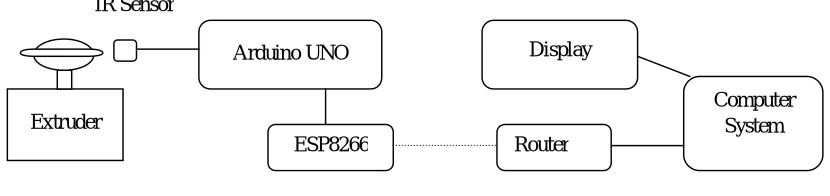
Figure 1 shows the block diagram of the proposed system.
Figure 1 Block diagram of system a. Arduino UNO
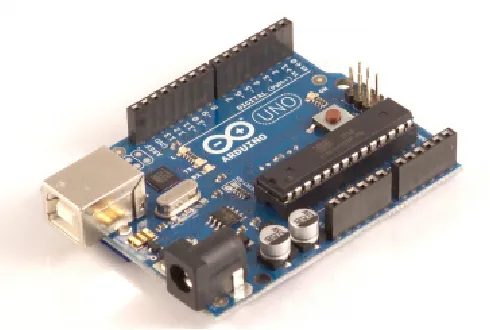
It is a microcontroller board based on the ATmega328 and 14 digital input/output pins 6 analog inputs, a 16 MHz crystal oscillator, a USB connection etc. figure 2 shows the Arduino UNO board. It provides different facilities like
Extruder
Arduino UNO
ESP8266 Router
Computer System Display
ISSN (Online): 2319-8753 ISSN (Print) : 2347-6710
I
nternational
J
ournal of
I
nnovative
R
esearch in
S
cience,
E
ngineering and
T
echnology
(A High Impact Factor, Monthly, Peer Reviewed Journal) Visit: www.ijirset.com
Vol. 8, Issue 4, April 2019
communicating with a computer, another Arduino, or other microcontrollers and it will programmed with the Arduino software [7].
Figure 2 the Arduino UNO board. b. ESP8266
In the Internet of Things industry, ESP8266 provides highly integrated Wi-Fi SoC solution and it integrates antenna switches, RF balun, power amplifier, low noise receive amplifier, filters and power management modules. It can be used in Home appliances, Smart plugs and lights, Sensor networks, Home automation, Wi-Fi position system etc. [8]. Figure 3 shows the ESP8266 hardware.
Figure 3 ESP8266 hardware. c. IR Sensor
Figure 4 shows the IR sensor, which is an electronic device. It not only measures the heat of an object but also it can
detect the motion, which emits and detects IR radiation in order to find out certain objects/obstacles in its range. R
ISSN (Online): 2319-8753 ISSN (Print) : 2347-6710
I
nternational
J
ournal of
I
nnovative
R
esearch in
S
cience,
E
ngineering and
T
echnology
(A High Impact Factor, Monthly, Peer Reviewed Journal) Visit: www.ijirset.com
Vol. 8, Issue 4, April 2019
Figure 4 IR Sensor [9]
V. RESULT
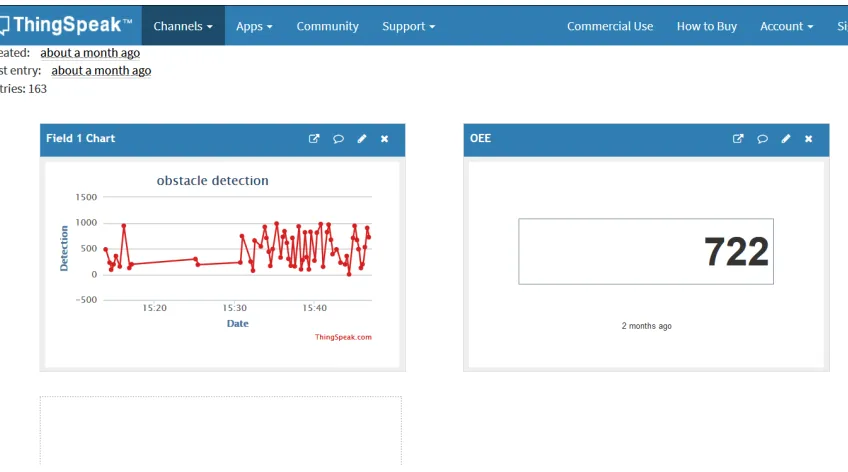
This paper provides the IOT Based Overall Equipment Effectiveness system. Figure 5 shows the traditional way of calculation and automatic counting calculation. IR sensor counts the rotation of Extruder and continuously sends data to the computer system, system executes the data and display on the screen and also sends the data to the Thinkspeak site, and hence the owner can check the current status from anywhere, as shown in the figure 5
ISSN (Online): 2319-8753 ISSN (Print) : 2347-6710
I
nternational
J
ournal of
I
nnovative
R
esearch in
S
cience,
E
ngineering and
T
echnology
(A High Impact Factor, Monthly, Peer Reviewed Journal) Visit: www.ijirset.com
Vol. 8, Issue 4, April 2019
Figure 5 Output result on web browser
VI. CONCLUSION
The main objective of this paper understand OEE concept and to generate awareness among the budding technologies about OEE. During research in Vijay Co-Polymer Pvt. Limited we have compare before implementing OEE and after implementing OEE and system reduce 60% problems. This IoT based system increase the effectiveness of the manufacturing Productivity, quality, cost, Delivery, safety etc.
REFERENCES
[1] Aswin Joseph and M S Jayamohan, “Evaluation of Overall Equipment Effectiveness and Total Effective Equipment Performance: A case study”, International Journal of Advance Engineering and Research Development (IJAERD) Volume 4, Issue 5, May-2017,pp. 343-346.
[2] https://en.wikipedia.org/wiki/Overall_equipment_effectiveness
[3] Keyur K Patel and Sunil M Patel, “Internet of Things-IOT: Definition, Characteristics, Architecture, Enabling Technologies, and Application & Future Challenges”, International Journal of Engineering Science and Computing, Volume 6, Issue No. 5, May 2016, pp.6122-6131.
[4] S.R.Vijayakumar and S.Gajendran, “Improvement of Overall Equipment Effectiveness (OEE) in Injection Molding Process Industry”, IOSR Journal of Mechanical and Civil Engineering (IOSR-JMCE), National Conference on Contemporary Approaches in Mechanical, Automobile and Building sciences, 2014, PP 47-60.
[5] Sajib Saha, Sadi Mohammad Akash and Tarun Kumer Biswas, “Improving OEE of a Garment Factory by Implementing TPM Approach”, International Conference on Mechanical, Industrial and Materials Engineering 2017 (ICMIME2017), December, 2017, pp. 28-30.
[6] Dashrath kumar, Er. Dinesh Kumar and Er. Rohit Rawat, “Methodology used for improving overall equipment effectiveness by Implementing Total Productive Maintenance in plastic pipe manufacturing industries”, International Journal of Modern Engineering Research (IJMER), Vol. 4, Iss.9, Sept. 2014, pp. 6-12.
[7] https://datasheet.octopart.com/A000066-Arduino-datasheet-38879526.pdf
[8] https://www.espressif.com/sites/default/files/documentation/0a-esp8266ex_datasheet_en.pdf [9] https://www.elprocus.com/infrared-ir-sensor-circuit-and-working/
[10] https://electricalfundablog.com/infrared-sensor/#What_is_Infrared_Sensor
[11] Ashok B. Hajgude, “Advance Security Framework in Cloud Computing using Blowfish”, International journal of Management, IT and Engineering, Vol5, issue4, 2015.
![Figure 4 IR Sensor [9]](https://thumb-us.123doks.com/thumbv2/123dok_us/1553612.1190721/4.595.64.527.461.697/figure-ir-sensor.webp)