Problem-based learning: a catalyst for enabling and disabling disjunction prompting transitions in learner stances?
by
Margaret Savin-Baden
Thesis submitted for the degree of Doctor of Philosophy University of London Institute of Education
May 1996
Abstract
This study demonstrates that while problem-based learning (PBL) may promote many of the abilities currently high on the agenda in British higher education in the 1990s, the wider implications of the implementation of PBL are more complex and far reaching.
This multi site study was qualitative and post-positivist in its design and process. The focus was to: examine the expectations and experiences of staff and students in
different professional and educational environments who are involved in using PBL in some way. What emerged was a new model for understanding the nature of learner
experience on PBL programmes, charactensed by significant diversity between
espoused aims and values, what happened in practice and in relationships between staff and students.
Disjunction is a concept seen by many as a starting point for learning. (Jarvis, 1987; Weil, 1989). Students are often offered through PBL the opportunity to own their learning experiences and develop independence in inquiry. It is these very
opportunities which seemed to prompt different forms of disjunction. This research extends earlier work around the concept of disjunction in learning, and the notion of enabling and disabling forms in relation to three different understandings of "learner stance". These three stances present a multifaceted view of learner experience. The emergent model suggests ways in which students are prompted to reflect upon and reconstruct their learner identity. This in turn may result in transitions within their personal, pedagogical and interactional stances as learners within particular environments.
The study concludes by suggesting that the notion of learner stances and transitions which occur in relation to them, offer a framework for broadening current
understandings of learner experience on diverse PBL programmes, whilst arguing that PBL may prompt new forms of transformation in relation to students' past, present and future constructions of learning and of themselves as learners.
Acknowledgements
Many people have not only been part of this thesis but have also enabled me to learn and recognise and develop my own learner identity. Firstly I am indebted to the staff and students at all the research sites without whom this study would have been impossible. My thanks are due to them for their patience and their honesty.
Numerous people have read, commented and corrected various drafts. These include Pam Davies, Auldeen Alsop, Della Bloomfield, Beckie Davies, Sarah Harris, Ruth Grant, Biddy Collyer and specifically Ron Barnett who was co-supervisor and offered perceptive insights, humour and enthusiasm at various points. Thank you.
Particular thanks are due to Susan Weil who primarily supervised this project. She has offered an unending supply of encouragement and enthusiasm, invariably with a certain elan. She has also been a critical friend, always there with a new challenge, idea, ambiguity, or reflection.
Finally my thanks to John Savin-Baden without whom the completion of this thesis would not have been possible. Humour, criticism, laughter, steadfastness and prayer have been true marks of commitment, not only to this project, but to ourselves as reflexive projects.
14 15 17 18 21 22 23 24 26 Table of Contents
2 3 4 9 10 11 12 Abstract Acknowledgements Table of contents Figures and tables List of Appendices
Introductory note on stylistic conventions Overview of the thesis
Part 1 Chapter one: Introduction
The context of the study
The United Kingdom context for Problem-based learning Problem-based learning, an innovation whose time has come? The remit of this study
Summary
Chapter two: Literature review. A web of belief?
Section 1: The emergence of Problem-based learning as a specific concept and approach
Section 2: Emergence of competing understandings of Problem-based learning
Differing ways in which Problem-based learning is understood Debates concerning the nature of Problem-based learning since 1990
Section 3: Applications
Arguments for the implementation of Problem-based learning Curriculum design and implementation
Section 4: Research into Problem-based learning
Chapter three: Methodology. The quest for certainty 50 Section 1: Issues about qualitative research which influenced the study 51 Core values underpinning the research
Section 2: The research design 55
Choice of sites
A multi site study - some methodological challenges Negotiating consent
Sampling Interviewing
Trustworthiness and validity
Section 3: The conduct of the study 61
Making initial contact
First site: Gimmer University
Challenges to design and implementation whilst in the field The beginnings of data analysis
Second site: Lembert University Data analysis
Third site: Baslow University Data interpretation
Site four: Stanage University
Revisiting certainty: the process of writing up Break-through
Turning experience into meaning and knowledge The certainty of multiple realities
Chapter four: Four faces of PBL 76
Section 1: Gimmer University 77
Mechanical engineering education in context The introduction of PBL at Gimmer
Issues in course design
PBL at Gimmen the course in practice Analysis of the espoused theories of staff
Site two: Lembert University 83
Automotive design in context The introduction of PBL at Lembert Issues in course design
PBL at Lembert: the course in practice Analysis of the espoused theories of staff
Site three: Baslow University 89
Nursing in context
The introduction of PBL at Baslow Issues in course design
PBL at Baslow: the course in practice Analysis of the espoused theories of staff
Site four: Stanage University 94
Social work education in context The introduction of PBL at Stanage Issues in course design
PBL at Stanage: the course in practice Analysis of the espoused theories of staff
Part 2
Chapter five: Dimensions of Learner Experience 100
Dimensions of Learner Experience 102
Personal stance 104
Pedagogical stance 108
Interactional stance 111
Transitions in learning 114
Summary 116
Chapter six: Dimension 1 Personal stance 118
Fragmentation 119
Discovering my self 123
Defining my future self 127
Placing myself in relation to my 'life-world' 130 Re-placing myself: knowing the world differently 136
Summary 138
Chapter seven: Dimension 2 Pedagogical stance 139
Reproductive pedagogy 140
Strategic pedagogy 145
Pedagogical autonomy 152
Reflective pedagogy 156
Summary 159
Chapter eight: Dimension 3 Interactional stance 160
The ethic of individualism 161
Validated knowing through 'real talk' 166
Connecting experience through interaction 170
Transactional dialogue: mediating different worlds 174
Part 3
Chapter nine: Discussion. From rooks, pawns and bishops 179
Section 1: Research as Personal Process 180
Revisiting values and assumptions
A game of chess: the emergence of concepts
Section 2: Dimensions of Learner Experience 188
Learner identity as dimensions of difference and unity
Jack's paradox(s): the story of PBL as a challenge to learner identity(s)
Section 3: Locating and managing paradox 200
The notion of paradox
Problem-based learning, a catalyst which activates multiple paradoxes? Locating paradox
Disjunction as a means of locating paradox Dominant domains and issues of context The adoption of strategic pedagogy
The adoption of 'connecting experience through interaction'
Summary 206
Chapter ten: Reviewing our fictions 207
Problem-based learning and the scope for promoting particular kinds of learning experiences
Specific curricular priorities Areas for further research
Retrospect and prospect: the knight's move 215
Bibliography 217
Figures and tables
Figure 1. The Research cycle 61
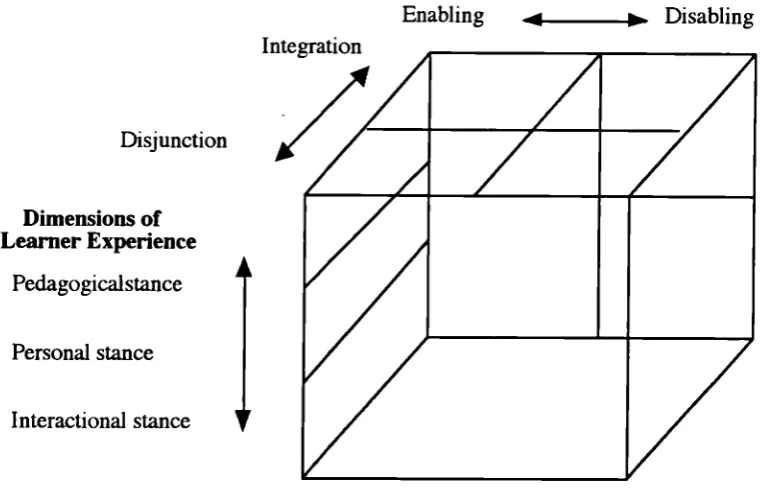
Figure 2. Dimensions of Learner Experience 117 Figure 3. A framework for making sense of Dimensions of
Learner Experience
Figure 4. Diagrammatic representation of
Dimensions of Learner Experience 191
Figure 5. Diagrammatic illustration of students' positions
Appendices
Chapter three: Methodology. The quest/or certainty
APPENDIX 1
Overview of the purposes of the study 263
APPENDIX 2
Consent form 265
APPENDIX 3
Biographical accounts 266
APPENrxx 4
Maps of emerging themes 274
APPENEsx 5
Problem-based learning and people's lives 277
Chapter nine: Discussion. From rooks, pawns and bishops
APPENDIx 6
Dimensions of Learner Experience:
Introductory note on stylistic conventions
Throughout the thesis there are a number of stylistic conventions which it is pertinent to highlight at the outset. They are as follows:
Use offirst person
In this study I sought to explore the expectations and experiences of staff and students involved in programmes in which PBL had been implemented. Through the post positivist methodology I adopted I sought to explore people's experience in the context of their lives. As a researcher there were values which I felt were key to this type of research methodology and which influenced the way in which the inquiry was
conducted, one of which was the centrality of my own voice (the others are presented in the methodology chapter). This study was not to be one in which I as researcher stood outside the project itself. As the human data collecting instrument, I was central to data collection and interpretation, my voice was as pivotal to the thesis as those with whom I worked and learned. Thus the use of the first person throughout the text was critical to the upholding of this stance.
Tutors' names
The range of sites, names and status necessitated that I distinguished between staff and students. Wherever possible site names and profession are included next to a staff or student's name in order to promote clarity. Throughout the text tutors' names, at what ever site, are distinguished by the use of italics.
Confidentiality
All names (forenames and family names) used throughout the thesis are fictitious and do not relate in any way to staff or students actual names.
Citation offleld records
Overview of the thesis
Part I of the thesis comprises an introduction to the study, the relevant literature and an explanation of the methodology adopted. It concludes with an overview of the research sites used in the study in order to set the scene for the second section of the thesis. Part 2 begins with a chapter which frames the three data analysis chapters and introduces the model which emerged from the study. The data around three key concepts; personal stance, pedagogical stance and interactional stance are then presented. Part 3 begins with the discussion which presents and explores the model in depth and concludes with a consideration of the implications of this model and recommendations for further research.
Part 1
Chapter one: Introduction
This chapter introduces the study, describes how it came about, and discusses the relevance of the study in the context of current trends in higher education.
Chapter two: Literature review. A web of belief?
This chapter offers an overview of PBL as a specific concept and approach and reviews the competing understandings of PBL. It then explores the way in which PBL has been applied in various disciplines and educational environments. The research undertaken in this field is presented. The chapter concludes by reviewing the ways in which this study addresses some of the gaps in the existing research.
Chapter three: Methodology. The quest for certainty
This chapter describes and discusses the methodology chosen, the conduct of the study and explains the way in which the data were analysed and interpreted. A critical
reflection on the process of carrying out the study is included. Chapter four: Four faces of Problem-based Learning
Part 2
Chapter five: Dimensions of learner experience
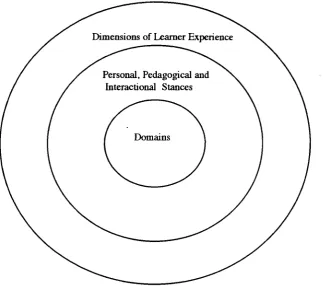
This chapter explores three interrelated sets of concepts which seemed to arise from this cross site investigation into PBL and through which transitions in learning may occur. It begins with a definition and exploration of three different dimensions of student experience as revealed by this study. These 'Dimensions of Learner Experience' comprise the notions of Personal stance, Pedagogical stance and Interactional stance. The second part of this chapter introduces the notions of enabling and disabling elements which affect the learner experience. It also introduces the notion of transitions in learning and the means by which transitions may occur.
Chapter six: Dimension 1 Personal stance
This chapter explores the different domains within this stance. It demonstrates, by exemplification with quotations from students, the concept of personal stance. Chapter seven: Dimension 2 Pedagogical stance
This chapter explores the notion of pedagogical stance and the different domains within this stance. The specificity of pedagogical stance in relation to the other two stances is drawn out.
Chapter eight: Dimension 3 Interactional stance
This chapter explains both the notion of intemctional stance and the way in which the different domains of interactional stance were at issue for students.
Part 3
Chapter nine: Discussion. From rooks, pawns and bishops
This chapter discusses issues arising from this study, relevant to both those directly involved in PBL and also those concerned with the broader issues of educational innovation and professional development in the context of a changing higher education system. It explores the model which emerged from this study and examines the
application of this model in the light of adult learning theory and higher education today.
Chapter ten: Reviewing our fictions
Part 1.
Chapter 1. Introduction
Introduction
This chapter introduces the study and explains the context from which it evolved. It then explores the influences which prompted and enabled PBL to emerge at a period of worldwide transition in higher education. Finally the remit of the study, its aims and its purposes are defined.
The context of this study
In recent years there has been a growing interest in the field of PBL, but few studies have considered PBL from a learner-centred or qualitative perspective. PBL emerged from the work of Barrows in 1963, who realised that although medical students were able to find out a patient's history and carry out an examination, they had a paucity of knowledge that they could apply to the problems with which clients presented.
Barrows set out to design a medical school curriculum based solely on small group, student-centred learning which they called problem-based learning - defined by B arrows and Tamblyn as:
". . . the learning which results from the process of working towards the
understanding of, or resolution of, a problem" (Barrows and Tamblyn, 1980: 1)
PBL was also a response to the need to train more medical students at a faster rate, but it was seen as a promising solution to many of the difficulties in professional curricula generally. These included curricula overload due to a steady increase in basic scientific knowledge, over emphasis on the memonsation and recall of facts at the expense of scientific reasoning and a failure to integrate basic scientific concepts into clinical practice (Barrows and Tamblyn, 1980). The majority of studies undertaken to date in the field of PBL have been in the United States, the Netherlands and Australia, while in the United Kingdom (UK) little of note has been conducted despite PBL's growing popularity in a number of fields.
In 19861 began teaching on a course which used PBL to develop the treatment planning and problem-solving skills of occupational therapy (OT) students. Being a tutor on this course challenged me to question the effectiveness of PBL as a method of learning. The advantages seemed to be that it facilitated students' critical thinking and aided the development of aspects of treatment planning skills. It also provided a means by which students learned to research and evaluate knowledge which had meaning for them as learners. Despite these benefits, students battled in the quest to learn how to
- The variety of guidance given to the students by the tutors - some tutors were considerably more dogmatic and directive than others.
The length of the seminars often seemed inadequate (90 minutes) - they were slotted into the rest of the timetable. Students complained of being pressured by having too little time to complete the work required.
- The students worked in groups of ten, but the issues about how the group worked together were rarely addressed by staff or students.
- I felt that most of the staff teaching in the seminars failed to understand why PBL was being used (myself included) - except that it was thought by staff to be 'a good thing'.
- Some students appeared to be frustrated in using PBL as a method of learning, and others appeared to be very negative about PBL seminars.
- PBL seminars were being used not only to acquire a body of knowledge, but also to learn treatment planning skills. This seemed to complicate further the use of this method of learning. Students seemed to be able to solve the problem and plan a treatment programme almost instinctively and invariably failed to apply the body of knowledge they had spent hours acquiring.
- There seemed to be very little relationship between PBL and the rest of the curriculum:
- it seemed to be at odds with the lectures and taught seminars
- the case studies used in the PBL seminars did not correspond with the subject areas being studied in the curriculum as a whole. For example, the students might be participating in a PBL seminar about hip replacements during a block of the curriculum where the lectures and other seminars related to psychiatry
- The role of the tutor in PBL
- The tutor's influence on the quality of the learning experience
- The complexities students experienced through working and learning in groups - Staff and students' understanding about the motives for using PBL
- The factors which needed to be considered when introducing PBL in terms of students' prior experiences and learning styles
- The interrelationship between PBL and the underlying assumptions of the curriculum and of the institution
- The nature of the problem scenarios used in PBL and assumptions implicit within the construction of these scenarios
- The relationship between the learning and the assessment methods
As a tutor on a course which used PBL at a time when the UK higher education was being restructured (1987 onwards), I felt that PBL offered staff and students a number of new and exciting opportunities. It seemed to me that PBL was a method of learning which could accommodate new political, economic, educational and professional concerns, while also being a means of managing scarce resources, coping with a larger and more diverse student group, making education vocationally more relevant and putting learning rather than teaching on centre stage.
The United Kingdom context for Problem-based learning
Over the last decade there has been increasing pressure on higher education to
reexamine and make explicit its aims and outcomes. The move towards a market model of higher education has paralleled increasing demand for accountability to the public and State and for greater vocational relevance. The 1987 White Paper insisted that:
"Higher education should:
-serve the nation more effectively
-pursue basic scientific research and scholarship in the arts and humanities -have close links with industry and commerce and promote enterprise"
Closer links between higher education and industry have promoted changes in curricula generally and supported an emphasis on the development of personal qualities and skills for life and work.
The pressures to reform and expand higher education have not all been legislative: the decrease in student numbers in the seventies meant an increase in the number of mature students in higher education. The so called 'semi-professions' (those professions with no firm theoretical base or monopoly of exclusive skills who adopted a service ethic (Jarvis, 1975) such as professions allied to medicine), took the opportunity to claim professional status for themselves by recruiting large numbers of new graduates (Fulton, 1984). Expansion has also occurred through the widening of access and the continuing attempts to broaden the social mix in higher education. Initiatives such as National Vocational Qualifications (NVQ), Access courses and the Accreditation of Prior Experiential Learning (APEL) have meant that the clientele within the system has changed, albeit slowly, resulting in new challenges and complexities.
Boud (1988a) speaking from an Australian perspective, argued that the 1980s post cutback period was not a time ripe for innovation, but rather a time of adjustment worldwide, a time to recover from the cuts in higher education of 1981. In the UK, however, this seemed to be the time for many institutions when innovation did occur, possibly due to adversity stimulating creative thinking, and PBL began to have a presence.
Problem-based learning: an innovation whose time has come?
PBL, as it emerged in the sixties and seventies, appeared to be a method which was sensitive and responsive to the educational philosophy of its time. Theoretical
influences were many. For example Popper (1959) suggested that learning takes place through the formulation of problems and through trial and error in solving these problems. Rogers (1969) promoted a person-centred approach to learning. Bruner (1961), the originator of the term 'discovery learning' viewed learning as
Knowles in the 1970s was arguing that the needs of adults, as learners, were different from those of children. He suggested that teacher centred subject-based learning assumes that the learner's experience is of less value than the teacher's, whereas student-centred learning focusses on the process of learning to learn (Knowles, 1975). Incremental data about what students do and do not know were increasingly being seen as important. The innovative work of Perry in the 1970s, was one of the first explorations of student learning through the world of the learner (Perry, 1970). His qualitative study provided a detailed account of nine stages through which students pass. Perry suggested a student progressed from a position of perceiving the world in terms of 'good-bad, right-wrong' (position 1) to a view of seeing 'everything is relative but not equally valid' (position 5), and reaching a stage of needing to make a commitment in some area and explore his/her values through this commitment (position 9). Perry's scheme implies that students' conceptions of learning tasks axe influenced by their position on the scale, and also that their learning is influenced by their view of the nature of knowledge. This work has prompted a host of further studies, including those on women's conceptions of knowledge (for example Belenky eta!, 1986).
The incremental body of knowledge about how students learn has created a move within the higher education system itself to create educational environments which are more conducive to learning. For example Peny's work has been used by many (Entwistle and Ramsden, 1983; Hounsell, 1987; Gardiner, 1989) to support, explore and foster learning methods which are more active, and which help students to interact with both the material to be learned and their world. Curriculum design has also been an area of growing interest. The pioneering work of Stenhouse (1975) challenged the use of behavioural methods in the design of curricula. Stenhouse's fundamental objections to the universal application of objectives are that it both mistakes the nature of knowledge and the nature of improving practice. He distinguishes between four different educational processes: training, instruction, initiation and induction, and argues that although the objectives model offers a reasonably good fit between training and instruction, this is not so with initiation and induction. Stenhouse's main focus is that of induction into knowledge since the most important characteristic of this mode is that one can 'think with it': knowledge he argues is a structure to sustain creative thought and provide frameworks for judgment, and is largely concerned with synthesis.
Meanwhile new debates about professional education have also been influential in putting PBL high on the agenda within higher education. Professional education is an area which has grown and developed through a number of changes since the sixties.
Barnett (1992a) suggests that the growth of professional education is possibly the most significant feature of development of higher education in the UK over the last thirty years.
Experimentation around the use of PBL was therefore shaped by new questions being raised about professional education in the context of unprecedented world expansion in higher education in the 1960s. In the 1970s, as interest grew in how and what students learned rather than how much, the then polytechnics had been created to form a more socially responsive sector of higher education with issues of public accountability to the fore. During the 1980s learning became increasingly a public matter, and concern mounted that professional groups allowed their own interests to predominate in the management of their affairs (Haskell, 1984).
Changes appeared to have emerged as a result of the Government's growing demand for greater accountability within education and employers' preferences for graduate entrants with problem solving skills. It was also as a result of influences elsewhere in the world. The innovative work of Schein (1972) and Argyris and Schön (1974) provides an example. Schein (1972) proposed four directions of change for professional education:
- more flexible professional schools which promote a variety of paths leading to a variety of careers
- more flexible early career paths
- more transdisciplinary curricula that integrate several disciplines into new professions that would be more responsive to the new social problems - complete integration of the behavioural and social sciences into professional
curricula at the basic science and applied skill level.
The work of Argyris and Schon (1974) at Harvard and Massachusetts Institute of Technology also helped to raise a number of important issues relating to the way in which professionals think and act, and suggested that professional learning and practice required 'a kind of knowing' which reached beyond that of positivist science. They argued that situations with which professionals dealt were generally unstructured. This influential work also highlighted the contradictions between espoused theories and theories-in-use. Such work helped to prompt change in professional education through an exploration of the nature of knowledge and the relationship between theory and practice in professional courses.
For example Eraut (1985) discussed the nature of knowledge in terms of the way in which it was both created and used within professional education. He argued that higher education needed to develop a role beyond that of creating and transmitting knowledge by enhancing the knowledge creation capacity of individual and
professional communities. This would therefore require a greater exchange between higher education and professions. Ellis (1992) explored the nature of different types of professional curricula. He argued that the integration of theory and practice within professional curricula was vital, and this integration should be seen in terms of the worth of, and consequent assessment of, practice within the curriculum. Such research and literature have prompted the incorporation of ways of helping students to understand how practitioners think and reflect in action into both curricula and
professional practice. One such way was seen to be the inclusion of PBL within professional curricula.
The remit of this study
As I commenced this study I was aware, through the literature I had already explored in my previous study (Savin, 1989), of an array of problems that had already become apparent to those using PBL worldwide. I realised that I could not tackle all of these, and probably not even those with which I was already familiar (above). One of my concerns was to explore the UK context as there were at that time few studies which had been undertaken.
Thus the purpose of my study was to examine the expectations and experiences of
staff and students in dWerent professions and education environments who were involved in using PBL in some way. In other words I sought to examine the ways in
which staff, students and course designers made sense of PBL; its purposes, processes and desired outcomes. Implicit within this would be an exploration of the issues and complexities associated with the introduction and developments of PBL in various environments within higher education, as well as contradictions that may arise between intentions and practice.
A central concern of my research was to illuminate people and their lives as three dimensional, not as subjects without a history or a future. Thus the methodology adopted was post-positivist (Lincoln and Guba, 1985) and was both emergent and collaborative in its design and process.
- innovative methodology - multi-site approach
- consideration of both staff and students' perspectives
- exploration of PBL across four differing subject areas, distinct professional groups and different higher education institutions (including pre and post 1992 universities)
- analysis of areas of congruence and contradiction between the espoused intentions of using PBL, and the actual practice and experience
- location at a time of radical change within the higher education sector in the UK
This is elaborated in Chapter 3.
Summary
PBL seemed, at first glance, to be an innovation whose time had come. It emerged at a time of unprecedented world expansion in higher education, and evolved amidst new debates about professional education when student learning was a growing concern. For some, the potentiality of PBL appeared overwhelming but for others it presented a challenge too great and brought with it a host of problems. My own experience was that PBL was an exciting and innovative, though problematic, way of learning for both staff and students. Thus I sought to undertake a study which began to unpack some of the intricacies of PBL in Britain. Initially I began a search through the literature to uncover studies which might inform me further. The body of literature available when I began this study (1990) was disappointing. It lacked rigour, was predominantly descriptive and offered little consideration of the philosophical underpinnings of PBL. However, it is this which I explore in Chapter 2.
Chapter 2. Literature Review
A web of belief?'
'Quine(1963)
Introduction
Quine's (1963) notion of a web of belief encapsulates his perspective of the conception of knowledge. He argues that the totality of our so-called knowledge or beliefs is a man-made fabric which impinges upon our experience only along the edges. Thus conflict with experience at the periphery requires readjustment in the interior. The concept of a web of belief is used here to capture the idea that there are a number of competing conceptions about the nature of PBL. PBL currently refers to a wide variety of practices underpinned by different ideologies and purposes. This has led to different meanings and interpretations of PBL. The literature reflects this diversity which brings with it both confusions and concerns about how PBL might be understood.
This chapter is divided into four sections, the first of which offers an overview of PBL as a specific concept and approach. The next section reviews the competing understandings of PBL and the third explores the way in which PBL has been applied in various disciplines and educational environments. The final section presents the research which has been undertaken in this field and reviews the ways in which this study addresses some of the gaps in the existing research.
Section 1: The emergence of Problem-based learning as a specific concept and approach
PBL emerged from the work of Barrows (1963) who discovered through his research into medical education that:
"... medical students and residents for the most part did not seem to think at all. Some gathered data ritualistically and then tried to add it up afterwards, while others came up with a diagnosis based on some symptom or sign, never considering possible alternatives."
(Barrows and Tamblyn, 1980: xi). Despite, or possibly as a result of, the complexity of issues being identified around problem-solving skills in medical education in the sixties and early seventies, and the research undertaken by Barrows, PBL was developed at McMaster University in Canada. Barrows set out to design a medical school curriculum based solely on small group, student-centred learning. The rationale for PBL was based on years of observing experts engaged in clinical reasoning. Barrows and Tamblyn (1980) identified five characteristics of the clinical reasoning process:
- information perception and interpretation - hypothesis generation
- inquiry strategy and clinical skills - problem formulation
- diagnostic and/or therapeutic decisions
Barrows and Tamblyn (1980) claim that PBL is based on two assumptions. The first is that learning through problem-solving is much more effective than memory based learning for creating a usable body of knowledge. The second is that the medical skills which are most important for treating patients are problem-solving skills, not memory skills. This model of PBL was based on what Barrows and Tamblyn (1980) termed 'discovery learning' - although they failed to explain what was meant by this locution.
As Barrows and Tamblyn's model was being developed in the early 1970s there also was increasing interest in the medical world in students' ability to develop solving skills. McGuire (1972) found medical students were lacking in problem-solving skills. In her later work McGuire (1985) suggests that the literature regarding problem-solving skills identifies three categories:
- those related to the nature of the process of medical problem-solving
- those related to the generalizability of medical problem-solving skills and abilities - those derived from a prescriptive, decision-analysis approach
In parallel there was increasing interest in understanding students' approaches to problem-solving activities (for example Launllard, 1979), and with it came criticism of the unnaturalness of much laboratory research in cognitive psychology (Neisser,
1982). This resulted in exploration into wide ranging studies of students' problem-solving abilities with a growing emphasis on the use of qualitative methods (Launllard,
1984). Due to the increasing body of research in this field and the substantial body of literature relating to problem-solving it was decided not to explore the complexities of forms and notions of problem-solving used by students in this study.
This early research into problem-solving and clinical decision-making prompted interest and research within professions allied to medicine in the 1980s (Higgs 1990; Terry and Higgs, 1993). There was however a shift away from focussing on the generation and testing of hypotheses as being a means of arnving at a major clinical decision, towards a greater emphasis on clinical reasoning as a process occurring throughout clinical practice. Thus clinical reasoning began to be seen more as a cyclical process which incorporated reflection and acknowledged the clinicians' knowledge base, ability to collect data and interpersonal skills.
PBL emerged at McMaster in Canada and was adopted soon after in other medical faculties in Israel, Australia, the Netherlands and then later in the United States (Abrahamson, 1987). PBL has also developed in other spheres of professional education, but there are fewer studies in these areas. These fields include: nursing, physiotherapy, public administration, social work, environmental health, management education, engineering, architecture and law (Boud, 1985).
Section 2: The emergence of competing understandings of Problem-based learning
Since the emergence of PBL many have sought to define it in some way. It would seem at first glance that it is only by unpacking characteristics that any comparison about what makes PBL different from other ways of learning is possible. Yet merely to list characteristics does not in fact untangle the philosophical conundrums of PBL. This section offers an overview of some of the differing ways in which PBL is understood. It is argued here that the more recent debates (Margetson 1991a; 1991b; 1993a; 1993b; 1994) are what should be under consideration rather than particular characteristics of PBL.
Differin g ways in which Problem-based learning is understood
Boud (1985) and Barrows (1986) are two authors who list characteristics of PBL. Both argue that PBL is not to be seen as a particular way or method of learning, rather it is to be seen as learning which has a number of differing forms. Boud (1985) suggests that PBL differs according to the nature of the field and the particular goals of the programme. He notes that recent developments in PBL have drawn on a number of ideas in addition to problem-centredness, the most important of which he sees as student-centredness. He outlines eight other characteristics of many PBL courses:
- An acknowledgement of the base of experience of learners
- An emphasis on students taking responsibility for their own learning - A crossing of boundaries between disciplines
- An intertwining of theory and practice
- A focus on the processes of knowledge acquisition rather than the products of such processes
- A change in staff role from that of instructor to that of facilitator
- A change in focus from staff assessment of outcomes of learning to student self and peer assessment
- A focus on communications and human relations even in highly technical areas
Barrows (1986) proposes a taxonomy of PBL methods which explains differing meanings and uses of PBL. He begins by highlighting the educational objectives which it is possible to address through PBL, and then defines six variables in PBL methods:
- complete case or vignette - partial problem simulation
- full problem simulation (free inquiry) - teacher-directed learning
- student-directed learning
- partially student and teacher directed learning
Barrows suggests that the combination of design variables for PBL, when linked to the educational objectives, is endless. He concludes that the term PBL must be considered a genus from which there are many species and subspecies. As such all types of PBL must be evaluated in terms of issues such as the type of problems used, assessment methods, learners' autonomy and the way in which teaching and learning occurs.
Similarly Walton and Matthews (1989) and Engel (1991) argue that PBL is to be understood as a general educational strategy rather than merely a teaching method. Walton and Matthews (1989) note that there is no fixed agreement as to what does and does not constitute PBL. Yet they argue that three components of PBL have to be differentiated. Firstly essential characteristics which comprise curricular organisation around problems rather than disciplines, an integrated curriculum and an emphasis on cognitive skills. Secondly conditions which facilitate PBL such as small groups, tutorial instruction and active learning. Finally outcomes which are facilitated by PBL such as the development of skill and motivation, together with the development of the ability to be life long learners. Engel (1991) suggests that PBL needs to be adopted beyond subjects and disciplines, so that curricula are structured around principles and concepts and so that students not only acquire knowledge but also generalizable competencies. Although he considers some of the underlying philosophical issues, such as learning for what he terms 'capability' rather than just acquiring knowledge, and the relationship between PBL and adult learning theory, he does not offer a well developed argument about the difference between a way and a method of learning.
A number of authors have moved away from considering PBL in terms of the nature of its constituent parts to viewing PBL in relation to other educational issues. (Benor,
Benor (1984) questions whether PBL is a method of learning which can be adapted to either a wide range of educational approaches or whether it is an educational philosophy which closely corresponds to Brunerian discovery learning. He sees the latter as being incompatible with traditional methods of learning. Benor argues that medical schools have not widely adopted PBL because it has been perceived as a philosophy rather than a method of learning.
Benor maintains that since schools of medicine require the achievement of
predetermined objectives by a given date, attempts to have a PBL curriculum based on discovery learning will result in a core curriculum which is a 'hidden curriculum'. Therefore the discovery learning for the students becomes the unveiling of this core curriculum. To detach PBL from 'discovery learning' for Benor means that PBL may then be perceived as a method rather than an educational philosophy. This
consequently offers a wider range of uses for PBL within medical education.
Although Benor is concerned about this confusion few others consider it to be a barrier to the way in which PBL is seen or understood.
Birch (1986) relates the value inherent in PBL to the work of Dewey (1916) suggesting that it combines pragmatism and idealism:
"In the sense that problem-based learning provides a focused and structured approach to learning its source is in the spirit and method of enquiry which
charactense research and which support the notion that in higher education teaching is most effectively carried on in an atmosphere of research. So regarded, PBL is central to the purpose and value of higher education."
(Birch, 1986: 73) Birch argues for the relevance of PBL to mass higher education and then proposes a model of PBL, which seems to differ little from the model devised by Barrows and Tamblyn (1980).
Norman (1988) reviews the empirical evidence regarding problem-solving skills and PBL and suggests they are not the same, although the two are often used
interchangeably. Norman argues:
"Problem-based learning as an instructional strategy is unrelated to the learning of problem-solving skills"
(Norman, 1988: 279)
Norman discusses the assumptions underlying the teaching and acquisition of solving skills and suggests that there is little evidence to support problem-solving as a general skill. He suggests problem-problem-solving skills may exist, but even if they do, they do not explain the acquisition of expertise. This poses numerous
questions for those who suggest that PBL facilitates problem-solving. Yet he does see two advantages in PBL. He suggests students enjoy PBL more than traditional
methods of learning and argues it is well established that knowledge is much better remembered or recalled in the context in which it was originally learned.
Debates concernin g the nature of Problem-based learnin g since 1990
Literature has emerged over the last six years which considers both the nature of PBL, its underlying theoretical tenets and its political implications. Margetson (1991a;
1991b; 1993a; 1993b; 1994) discusses the complexity of the issues surrounding PBL in relation to institutions, political systems, different cultures and economic climates and considers the challenge of implementing PBL. For Margetson PBL is:
• . a conception of knowledge, understanding, and education profoundly different from the more usual conception underlying subject-based learning"
(Margetson, 1991b: 43-44) Over the course of the five articles Margetson discusses a number of concerns which relate to PBL. In the first article he argues that there is a threat to PBL which may partly be due to an assumption about certainty in knowledge (Margetson, 1991a). He suggests the assumption that 'knowledge is certain' persists and that the assumed link between certainty and knowledge is used to justify didactic teaching. Consequently problems may be limited in two ways. Firstly knowledge may be generated through the solving of problems, but if they are real problems, (those to which solutions are not
known), then this type of activity should be a matter for research rather than teaching
and learning. Secondly problems used in teaching and learning are of a special sort. The purpose of these problems is to test students' understanding of what has been taught, which means essentially that they are not real problems since the solutions are already known.
Margetson believes that this is rather an atomistic conception of knowledge which results in teaching becoming an act of putting students right. Having compared this conception of knowledge with that of Popper (1970) and Quine (1963) he argues that the conception of knowledge associated with the assumption of atomistic certainty results in a predisposition towards a technicist view of reality which stands in opposition to problem-based education. Thus higher education becomes, through
Margetson concludes by noting that this mistaken assumption of certainty in, or conception of, knowledge is little noticed or examined. Yet this assumption has a distorting influence which may result in a "technicist-inspired problem-based pedagogy" rather than problem-based education.
His thought provoking argument is a challenge to many implementing PBL,
particularly in the areas of science and medicine where there may be a greater emphasis on acquiring certain knowledge than in arts subjects. However Margetson, in this article, offers little suggestion of how to counter this view of certainty or how to avoid the pitfalls of promoting technicist-inspired PBL.
In his subsequent article (Margetson, 1991b) suggests that one of the underlying reasons for the resistance to PBL is due to the belief about the nature of expertise, which arises partly from a conception of the nature of discovery. Margetson suggests that education has inherited a mistaken understanding of discovery, which has resulted in an impoverished notion of expertise and in turn is associated with a questionable conception of knowledge.
The key issue which Margetson raises is the relationship between the nature of discovery and PBL. He unpacks some of the philosophical controversies which surround PBL. Margetson asserts that education has inherited the 'separation view': the separation of the context of discovery and the context ofjustification. He argues with this separation view of scientific discovery, that there can be no taught process of educational discovery, since discovery is seen as a process in which no normative guidance can be given. Thus PBL stands in contrast to this and suggests discovery is possible without it being an uncontrollable process, so for him, PBL does not deny 'content', or 'expertise'. It is a way of gaining a vitally important form of expertise and also the means of placing content in "an active perspective which renders it important".
Margetson's third article (Margetson, 1993a) considers the relationship between teaching and facilitation. He feels that extreme interpretations of facilitation, which he terms "Content Free" (CF-facilitation) cast the facilitator in the role of midwife. They assist in the birth of feelings and thoughts students may have, and are prohibited from influencing the content of what is produced. This he sees as reducing facilitation to a technical function which focusses purely on process and ignores content, which for him minors the distortion embodied in technicism. Thus the facilitator is reduced to a "technical functionary".
Having explored the nature of pedagogy, which Margetson also sees as technicist, he suggests that 'educative teaching' avoids the extremes of content-only and process-only practice:
'Educative teaching practices (sic) a process-content whole which cannot be exclusively separated out into a component of process and a component of content. It is facilitative in encouraging the learner's active, co-operative participation in extending, enriching, and transforming what is most valuable in existing meaningfulness - that is, it facilitates the learners's extension of his or her own understanding and knowledge in relation to the knowledge and understanding of others both current and past"
(Margetson, 1993a: 168) He concludes that problem-focussed learning (a term he prefers to problem-based learning, as he sees the latter as implying foundationalism in its notion of learning being based upon problems), is a method which commences by acknowledging and utilising students' existing knowledge and understanding. He believes that problem-focussed learning facilitates a wider knowledge and understanding in a way which is meaningful to students.
Thus facilitation which occurs in problem-focussed learning is a form of teaching which is highly educative. Despite this sound argument, Margetson does not explore the complexities of differing facilitator roles and styles within groups at differing stages of group development. Differing facilitator roles and styles may affect the extent to which facilitation in problem-focussed learning is educative.
Margetson later explores a number of philosophical issues relating to PBL and also some of the political complexities (Margetson, 1993b). He begins with an exploration of a point he raised in the conclusion of his previous manuscript, which suggested that the term 'problem-based' learning reflects a foundationalist conception of learning. Margetson sees this as problematic. He argues for a non-foundationalist term: problem-focussed learning. He also moves away from the idea of problem-focussed learning as just being a different approach to learning which is more relevant and improves students' motivation. Instead he explores the philosophical differences between problem-focussed learning and subject-based learning through a discussion of the nature of epistemology, the nature of questions and problems and also a
Schmidt (1993) offers a different perspective, arguing that PBL stands finnly in the rationalist tradition and is strongly influenced by cognitive psychology. He suggests that the roots of PBL may be traced to Dewey's (1929) pleas for the fostering of independent learning and also to Bruner's (1959) notion of intnnsic motivation as a force which drives people to discover their world.
Schmidt presents six fundamental principles of learning from "the science of the mind". From these he argues that PBL promotes two of these premises in particular: firstly the activation of prior knowledge, and its elaboration through small group discussion, and secondly something he terms 'epistemic curiosity', a form of intrinsic interest or motivation. Yet he notes the need to study "what exactly goes on in a group tackling a problem" and posits a number of philosophical and pedagogical questions relating to these which require further exploration and research.
Although Margetson (1993b) raises some of the difficulties of the foundationalist studies in the political climate of the 1980s and 1990s it is his later article (Margetson,
1994) which reviews the significance of PBL in relation to current educational reform. Here Margetson maintains that confusion appears endemic in government approaches to educational expertise: they ignore it when it suits them but simultaneously reform it in ways they feel will exploit its value. He asserts:
'The resulting reforms seem likely to destroy rather than produce the qualities governments desire, and thus appear to be self defeating. . . we appear to be caught in a triple bind: self-defeating government educational reform policy, unconvincing grounds for resistance to reform in higher education, and a mainly hostile relation between the two parties inhibiting serious dialogue and effective cooperation."
(Margetson, 1994: 9) Problem-focussed learning (PFL) for Margetson is a way out of this 'triple-bind' because it puts the question of educational reform in a different light. Margetson suggests that qualities of openness, self-directed learning, group work, cooperative peer learning, reflective and constrnctive critical evaluation and assessment, which are all integral to PFL, may open the way to constructive realistic reform of higher
education from within. He argues PFL offers an opportunity for alleviating the current dualistic opposition between government and higher education.
The importance of this more recent literature is that it demonstrates the shifts that have taken place since the emergence of PBL in the 1960s. At that time there was little discussion about the underlying assumption of PBL, and the conceptions of language, knowledge, expertise and facilitation which were seen to be implicit within it as a method of learning.
Current debate about PBL centres on concerns which relate not only to the nature of PBL per se but also to the pressures, reforms and readjustment of ideologies which have emerged from the world-wide changes in the nature of higher education. What is more, in the UK at least, PBL is obtaining increasing support from the State because of the way in which PBL is seen to address issues on the State's agenda (Barnett,
1994: 5).
Yet the nature of PBL is an area which is still under discussion and arguments continue to rage in this field. The underlying theoretical tenets and political
Section 3: Applications
This section documents the underlying reasons for the implementation of PBL and the way in which this has been undertaken in practice. The literature relating to the design and administration of courses using PBL is disappointing. Documentation largely focusses on descriptions of courses which offer little critical consideration of other issues involved, such as the institutional setting, students' prior learning experiences or the difficulties of implementing innovation. Research into PBL courses predominantly focuses on course evaluation or discrete aspects of PBL. The literature concerning studies undertaken in the field of PBL will be presented in section four of this chapter. Arguments for the implementation of Problem-based leamin
The majority of the literature in the late 1970s and 1980s argued for the use of PBL (including, and beyond, the original reasons suggested by Barrows and Tamblyn
1980) for three key reasons.
The first reason was that of developing 'skills', and in particular reasoning skills. Little and Ryan (1988); Loewenthal (1986); Prosser (1985), and Van Langenberghe (1988) all include within their problem-based programmes the development of skills particular to the profession, or in the case of Titchen (1987a) the continuing
development of 'professional skills' in post registration education. Furthermore Olson (1987) and Shahabudin (1987) suggest that clinical reasoning skills are obtained through PBL, and that through PBL the development of these skills is made more explicit to the students.
The second reason was that learning should take place within a context which is relevant to the students and is attuned to the world of work. Little and Ryan (1988) suggest PBL is used to provide a learning environment which "reflects the action-based nature of the profession". Shahabudin (1987) introduced PBL to help students understand medical sciences in the context of a problem scenario. Loewenthal (1986) used it to enable students to explore and define problems in the context of their own experience and that of their organisation, and then to consider how concepts from academic disciplines related to these.
The final reason was the promotion of self-directed learning, that is, learning which fosters independent inquiry. PBL is said to enable students to become self-directed learners, so that they know how and what to learn, and are thus equipped as life-long learners, and are better able to cope with the rapidly changing world. (Hurley and Dare, 1985; Maitland, 1985; Loewenthal, 1986; Titchen, 1987b; Van Langenberghe,
A number of articles cite lists of advantages of PBL over more traditional ways of learning (Loewenthal, 1985; Neame, 1982; Coles, 1985) and others suggest that PBL is found to be more enjoyable and stimulating by staff and students involved in programmes which use PBL (Olson, 1987; Neame, 1982). However, few seemed to tackle many of the underlying assumptions of PBL or relate them to current trends in the broader context of changes within professional education.
There has been a shift in recent years from literature which describes PBL, and how it is working in particular courses, towards critical analyses of PBL which are more sensitive to the complexities of this approach to learning and teaching. This demonstrates the increasing move away from what Boud and Feletti (1991) term a 'decade of evangelism' in the 1980s towards a deeper consideration of the emerging themes and issues. PBL is still seen to promote self-directed learning, and learning which takes place within a relevant context.
PBL is a model which requires students to use skills and life experience in order to utilise the knowledge they have gained. Many suggest that PBL has implicit within it the idea of reflection. This is because it appears to be a model which requires students to use skills and life experience in order to utilise the knowledge they have gained, and to reflect upon these processes. Andersen (1990) includes this as a specific component of the nursing programme as do Heycox and Bolzan (1991). Yet little is discussed in the literature about the quality of students' experiences (for example Coles, 1991; Bawden, 1991; Engel, 1991) or about how reflection occurs in reality within problem-based programmes.
The development of reasoning skills is still said to be furthered through PBL.
Andersen (1990), Yang (1991) and VanLeit(1995) suggest that clinical reasoning skills are gained through PBL and that through this method of learning the development of these skills is made more explicit to the students. In terms of research there still appears to be little evidence to demonstrate that this is so.
The development of skills has become increasingly important as higher education in the 1990s is being encouraged to move towards developing students' knowledge and abilities which are both flexible and market related. (Bridges, 1993; Barnett, 1994). A number of authors (Van Berkel, 1990; Blosser and Jones, 1991; Des Marchais eta!,
This is occurring at a time when students are being asked not only to make choices intellectually but also pursue these choices practically by acting in and upon a competitive social world (Bridges, 1993).
Curriculum' design and implementation
Issues relating to design and administration of problem-based courses are perhaps best summed up by Feletti and Wallis who suggest:
'The construction of a problem-based learning programme is no different from any other in requiring careful planning and definition of the educational process... This form of education may, however, be more labour intensive initially, in designing the experiences and materials, and in implementing it using small group tutorial sessions."
(Feletti and Wallis, 1985: 99) Approaches to designing problem-based courses described in the early literature are widely different, in terms of the number of hours given to PBL, the position of PBL within the curriculum, the relationship between PBL and the rest of the curriculum and the extent to which 'content' can be covered in a PBL curriculum. For example Neame (1981) outlines the preparation of an integrated problem-based course at the Faculty of Medicine, University of Newcastle, New South Wales. This includes a comprehensive description of planning objectives, problems, the preparation of trigger materials and learning materials, assessment and evaluation. West and West (1987) describe the integration of a problem-based block of seven days of psychotherapy into a traditional curriculum. The description includes course design and implementation and raises the issue of the complexity of measuring the information bases with which students arrive. The article is also one of the few which tackles the issue of group interaction and suggests that the dynamics of the group may influence the acceptance of this method of learning.
Many courses seem to use a case study as the focus for learning, with some form of problem package or simulated case. Another common feature is the use of group work, but the size of the group varies across curricula from four to ten people. Some courses use PBL for most or all of the curriculum (Barrows and Tamblyn, 1976; Neufeld and Chong, 1984; Little and Ryan, 1988; Van Langenberghe, 1988), others use it as a module within a traditional curriculum (West and West, 1987; Shahabudin, 1987).
'Curriculum may be used in a relatively restricted sense to denote little more than the subject content of a teaching programme. However, it is used here, in a more generous way, to signify not only the subject content but also the intentions behind the transmission of that conteni Furthermore the word 'traditional' is not meant to be derogatory in any way, rather is is used to indicate curncula which predominantly use didactic methods of teaching.
A more critical approach to PBL course design also appears to be emerging. This has arisen through the increasing evaluation of PBL courses, the incremental body of research into PBL and a greater awareness of the complexity involved in designing materials required for PBL (Hafler, 1991). For example MacDonald (1991) discusses the issues of "what is important enough to be included in a medical curriculum ?" He suggests that the problems used should not be based on content, but on priorities which have been clearly defined, and argues that the problems chosen define the basis of the curriculum and the way that they are studied define the curricular emphasis.
Ryan and Little (1991) describe the origins of the decision to implement PBL in a nursing course. Decisions were grounded in work in the field of nursing, which examined the basis of clinical judgement exercised by graduating nurses and found deficiencies in their inquiry processes. Ryan and Little offer a critical review of how they implemented PBL, including a description of how students felt about the
innovation and the way in which staff roles had changed. Woods (1991) describes a transitional process in which PBL was introduced into an otherwise conventional engineering programme. Unlike much of the earlier literature it offers a critical analysis of the difficulties. One of the issues which emerged unexpectedly was students' attendance at, and attitudes to, PBL seminars. Students reported that they learned more, studied harder and enjoyed learning more than on traditional programmes, however there was also intermittent attendance by students in some PBL groups. He suggests one of the main complications of PBL is that of getting students to take responsibility for their own learning.
There are to date few areas where PBL has been adopted over a whole curriculum. As a result it is almost impossible to make any comparison across professions or subject areas. There are only two issues which could be said to be similar across curricula regarding the current use of PBL. Firstly the tutor is seen as a facilitator of learning rather than someone who transmits a body of knowledge. Secondly the use of problems is seen as the initial focus of the learning. There continue to be differences in the way PBL is interpreted, in the size of groups used, in how it is used within a course, and as to whether a facilitator is present all the time, some of the time or not at all. There are also differences in the type of assessment used.
Section 4: Research into Problem-based learning
Research into PBL since its emergence in the sixties has been relatively limited and much of the literature has been anecdotal in nature. Studies which have been carried out have been predominantly in the field of evaluation due probably to the increasing demand by institutions and State to evaluate courses in higher education. Research has largely stemmed from the desire of those who have implemented PBL into courses to ascertain the effectiveness of this implementation. Other research documented includes comparative studies, either between traditional and PBL programmes, or between staffs' and students' differing perspectives of particular issues within PBL curricula. Research has also been carried out into concerns which have emerged through
implementation of PBL programmes, namely assessment, staff and student experiences of PBL.
Evaluation studies
Early evaluation studies considered issues such as differences between conventional and problem-based curricula based on work by Entwistle (1981). For example Coles (1985) and Newbie and Clarke (1986) considered the way in which PBL enabled students to become deep rather than surface learners. Other early studies were undertaken at McMaster University where PBL was first developed. For example Barrows and Tamblyn (1976) measured students' problem formulation and study skills. The conclusions in this study tended to support some of the educational
advantages of PBL reported in their earlier literature, for instance that PBL stresses the development of essential skills in effective problem analysis and self-directed study. Woodward and Ferrier (1982) found that McMaster graduates felt more competent in areas such as independent study, gathering data and problem-solving, but found that they felt badly prepared in the basic medical sciences.
More recently there has been an increase in both the number of evaluation studies and in the evaluation of PBL which is taking place within courses.
Vernon and Blake showed that the variations in the way in which PBL was evaluated made it difficult to find a standardised way of evaluating the course with the result that the findings of the study were patchy. The authors themselves remark:
"Conducting a high-quality evaluative research on problem-based learning has been difficult for a variety of reasons. The more independent variable, problem-based learning, is more than a simple teaching method. It is better described as a complex mixture of a general teaching philosophy, learning objectives and goals, and faculty attitudes and values, all of which are difficult to regulate and are often not very well defined in research reports. The outcome variables that are often most highly valued, and best exemplify the special features of problem-based learning are often complex, multidimensional and difficult to measure."
(Vernon and Blake, 1993: 660) Three evaluation studies exemplify the way in which such research into PBL has become more extensive and thorough in the last five years. Andersen and McMillan (1991) offer a comprehensive overview of the evaluation of the course at Macarthur University, which incorporates a consideration of the context, input, process and product of the course - but do not include the results and consequences of this
evaluation. They also carried out a longitudinal study of graduates of the course, which is discussed in the course of this article. This showed that they were autonomous in their practice, responsible and accountable, self-reflective and assertive, showed evidence of ongoing learning, were less self conscious than hospital-based peers, and used a problem-solving strategy to identify people's needs. However, the authors do not offer a critique of the weaknesses of the programme in relation to graduates' experiences, or suggest what changes might or might not be made to the programme as a result of this evaluation.
Hengstberger-Sims and McMillan (1991) used the model of stakeholder evaluation and data collection by document review, questionnaire/inventory construction or modification and dialogue with the stakeholders. The evaluation revealed a
comprehensive view of the advantages and disadvantages within the programme and proposed a set of pragmatic recommendations. The value of this study was its use of multiple methods to address the concerns of all of those in the programme. This study is probably the most extensive evaluation of a PBL programme published to date.
Although these three studies address a number of the difficulties involved in
evaluating PBL programmes, evaluating such courses remains a complex task. Course evaluation involves a consideration of more than outcomes - it is also about who and what is to be evaluated. Boud and Feletti (1991) suggest that evaluation studies are usually carried out to improve the programme and justify current practices, but rarely do they compare programmes with others pursuing similar objectives. Boud and Feletti see the latter as a principal issue in evaluation. They also note that qualitative or
quantitative studies in this field leave:
' . . proponents and consultants of PBL in the awkward position of advocating a philosophy devoid of the comparative research which skeptics most desire"
(Boud and Feletti, 1991: 245) Comparative studies
Most of the comparative studies are those which compare traditional and problem-based curricula. However there are also a number of studies which compare other issues which will be discussed in the latter portion of this section. Many who discuss the comparisons between PBL programmes and traditional ones are converts to PBL and as such tend to write about it with a religious zeal. The lack of inquiry into the failure of courses which used PBL somewhat biases the literature in the area of comparative studies.
Coles (1985) found that the learning processes of students at the conventional medical school were substantially inferior to those of students at the problem-based medical school. Coles used Entwistle's Short Inventory of Approaches to Studying (Entwistle,