Fairness Driven Secure Routing in Overlapped
WSN Using Bait Detection
Rasika R. Vibhute, Sanjay Pingat
Department of Computer Engineering, Smt.Kashibai Navle College of Engineering, Vadgaon (BK), Savitribai Phule University, Pune, Maharashtra, India
Department of Computer Engineering, Smt.Kashibai Navle College of Engineering, Vadgaon (BK), Savitribai Phule University Pune, Maharashtra India
ABSTRACT: Wireless sensor network gain enormous attention because of multiple overlapping WSN. Deploying wireless networks on the same area get advantage. WSN lifetime is expected to be extended by cooperative packet sending across huge wireless sensor network. But WSN designer do not consider the heterogeneity in the characteristics of each WSN such as battery capacity, operation start time, and the number of sensor nodes, nodes locations, energy power consumption, packet size and/or data transmission timing, and route discovery. In a heterogeneous type of wireless network, naive lifetime enhancement with cooperation may not be fair. So in proposed fair cooperative routing method for heterogeneous overlapped WSN this system implement an energy pool to manage the large amount of battery power reduction by cooperative packet forwarding. The energy pool is used as broker for fair cooperation. In order to make packet transmission easy this system present systematic and novel way of fairness driven queue management scheme. Fairness driven scheme helps to congestion control by monitoring UDP data packet among overlapping wireless communication with a stochastic nearest node. By using the address of nearest sensor node as a bait destination address to bait compromised nodes to transfer a reply message (RREP) and malicious nodes are detected by a reverse tracing technique thereby prevents and ensures security.
KEYWORDS: Routing, wireless network, UDP, shared Node, Hop to Hop to communication etc
I. INTRODUCTION
sensors in the network to stop any packet transfer with them. As a result, my proposed scheme can reduce packets loss.
II. REVIEW OF LITERATURE
This paper present huge coverage and connectivity to create a single requirement called connected coverage. Proposed work show that connected coverage is different from needed non-combined covered area and connection. At last, Propose definition also supports the concept of graceful reduction by providing approach of estimating the degree of compliance with the application requirements. This work demonstrate the applicability of our definition based on the analyzed lifetime definitions and using some sort of example as scenarios to explain the various aspects affecting sensor network lifetime [1]. Proposed system refer the important aspect of more energy consumption rates as the energy hole problem, which may result in disaster such as premature death of the entire wireless network. So to represent proposed an analytical modeling for this problem, which can help understand the relevance of different factors on energy consumption rate. Using this model, this study the effectiveness of multiple existing techniques towards reducing the .energy hole problem, including deployment support, traffic compression and aggregation. This work had used simulation results to validate our analysis [2]. We consider multi-domain sensor networks, by which we mean a set of sensor networks that co-exist at the same physical location but run by different network owner. In this network setting, the lifetime of all networks can be improved, if the nodes cooperate and also send packets originating from another domain. There is a risk, however, that single purpose network is beneficial of the cooperativeness of the other networks and explore them [3].We deal with scoping as a general concept for the creation and maintaining wireless communication network where, node subsets and describe a flexible and modular architecture that meets the requirements of multi-purpose WSNs. The energy consumption and thus the unattended network lifetime of wireless sensor nodes may not be the dominating cost, but only one facets contributing to the total cost of a wireless network. Another energy cost factors include the development of WSN systems, maintenance and the return-of-investment [4]. From this paper we consider cooperation strategies for developing sensor network lifetime in overlapped wireless sensor networks through a linear programming paradigm. While in this model is detailed enough to capture the essence of the multi-domain cooperation we dramatically avoid implementation particular details. Hence, we use our framework to determine almost achievable performance benchmarks in idealized yet practical settings [5].This framework presents linear programming towards cooperation of neighbor sensor network in comparison on cooperating network, Where neighbor sensor network cooperate with each other for packet transmission. It result in network lifetime is increased significantly and cooperation reduces the probability of disjoint partitions created because of limited transmission ranges of sensor nodes. Removing disjoint partition is possible because of having shorter transmission range in sensor network [6].This survey enhancement a routing method for cooperative forwarding in such multiple WSNs that will extends network lifetime. In multiple WSNs, every sink node location differs from the each other, and few nodes around a sink node in single WSN may be long from a sink in another WSN. Proposed work focus on this problem in the proposed method, with a node that is far from a sink in its own network and near to a sink in another network being able to send packets from a node in another WSN to the relevant sink [7].This Paper focuses on the many sink node problems in long area wireless sensor networks. Various problems depends on design condition are presented. This network finds location sink nodes to the sensor network, where we are given a time constraint that states the minimum required operational time for the sensor network. It will manage battery resource of wireless sensor nodes to extend network life time in WSN [8]. This paper presents novel way which is based on the decoupling of WSN network and application ownership. The main function of this technique is to create a framework that allows sensor network infrastructures to be shared among multiple applications that is belongs to different authorities [9]. Multiple WSNs are deployed in the same location and their sensor network cooperate with the other WSN, Which may be improve their operability, by improving its lifetime by commercial routing for increasing the data entropy by a common data collection[10].
III. SYSTEM ANALYSIS
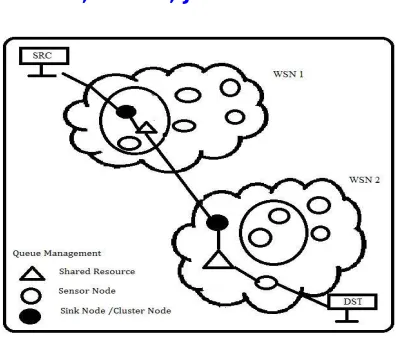
Fig.1. Proposed System Overview 3. Increase lifetime of WSN:-
The original idea behind using multipath routing approach in WSN was to provide path resilience and reliable data transmission. In the fault tolerance domain, whenever a sensor node does not send its data packets towards the sink, it can benefit from the availability of alternative paths to transfer its data packets from node or link failures.
4. Maximize the success ratio:-
Active routing scheme need to design for maximizing success ratio.
Fig. 2. System Overview –Block Diagram
1. Reduce Delay:-
The delay need to reduce in multipath routing because backup routes are identified during route discovery. 2. Load Balancing:-
An s traffic distribution is not equal in all links in the network, spreading the traffic along multiple routes can alleviate congestion in some links and bottlenecks.
Fairness driven management in WSN
In this paper proposed work presents novel approach for secure and efficient overlapped wireless network communication. In Sensor nodes consume their energy only by communication, which is a reasonable assumption in sensor networks with simple sensors. Sinks and shared nodes have sufficiently large batteries or power supply. We define the
WSNs’ lifetime as the time when a first sensor node depletes it’s all battery energy. For heterogeneity, the battery capacity of a sensor node, the number of nodes, nodes’ locations, energy consumption by communication, packet size, data transmission timing and operation start time are different by each WSN.
Mathematical Model
T Proposed work design the overlapped WSNs model for fair cooperation routing. In a sensing field, m different WSNs N1,
・・・, Nm are constructed, and each network Ni, 1 ≤ i ≤ m, has a set of unique sensor nodes Ni = {ni1, ni2. . . ni|Ni |} and the sink BSi. q Shared nodes s1. . . Sq also exists in the area. All WSNs are able to use these shared nodes as relay node for packet forwarding. For guaranteeing the lifetime improvement by the cooperation, we define network lifetime Li , the estimated lifetime of Ni , is obtained by
Route Discovery Delay:
Let the route discovery be the case where the sender does not have or lost the routes to the next hop and the corresponding destination, and it needs to (re)discover the latter
DelayRD(D, I *)[s] = CostComm(D,I *)[s]+ CostComp(D)[s]
Shortest Path Problem:
Input: a weighted graph G= (V, E)
– The edges can be directed or not
– Sometimes, we allow negative edge weights Note: use BFS for un weighted graphs
IV. RESULT ANALYSIS
Following figures shows the fairness driven approach for network lifetime increase in overlapped heterogeneous and homogeneous wireless sensor communication.
The proposed system mainly focuses on improvement of throughput of wireless communication in overlapped network for heterogeneous and homogeneous WSN. Using Fairness driven queue management the results are improved .It gives extended lifetime for the network and gives better transmission rate for network. Proposed approach is based on cooperative bait detection technique to identify and prevent abnormal nodes attack in network. Proposed network adds the benefit of pool based detection that can overcome just using proposed algorithm. Proposed result can be an efficient for unfairness detection on well-mannered responsive network however affected a congestion collapse. It gives rise to the need for router-based fairness-driven queue management schemes to shield responsive flows and to regulate unresponsive and misbehaving flows.
RESULT TABLE:-
In this section performance metrics are use d to evaluate performance of routing protocols and data dissemination protocols scheme when no in networking processing is performed and no caching is used.
Parameter Value
Comparison with similar System
Goals Existing System Proposed System Throughput 80 90
Network Overlapped WSN Overlapped Clustered Heterogeneous & Homogeneous
Controller KGC Hop to Hop Security Secret Key Bait detection Protocol AODV DSR
Performance Measure Used:
1. Throughput Maximization:-
Throughput maximization by reduce delay ratio and improving packet delivery ratio in WSN. In overlapped WSN sensor nodes are heavy loaded so that there is the problem of more energy consumption.
2. Packet Delivery Ratio
Average End to End Delay (ms)
Average end to end delay ratio reduced by queue management for efficient network communication.
Outcome and success
Definition:-Heterogeneous wireless sensor network structure is deployed in same area so it may be overlapped because of same bandwidth criteria. So proposed work focus on different type of overlapped sensor networks, It is expected that the sensor nodes lifetime is networks required cooperated on wireless network. However, the sensor network the existing methods do not cover the heterogeneity in every wireless network, fairness in order to lifetime enhancement is required. In proposed a fair cooperative routing method which has share nodes, with the goal of achieving fair lifetime improvement in heterogeneous overlapped sensor networks. Simulation results showed that the proposed method extended the network lifetime. In wireless sensor network, Pool-based cooperation achieved quite small variety of lifetime improvement, that is, it provided quite fair cooperation. To enhance lifetime of overlapped WSN proposes a technique of fairness driven queue management. This work also support for attack detection overlapped WSN.
2. Cluster sensor node type
3. Route discovery and Routing table 4. Bait detection
5. Shared Node Assignment and Routing 6. Throughput Maximization
1. Network Formation:
In this module implements wireless sensor network by simulation.
Here simulation shows that source and destination node communication with clustered network. Proposed simulation shows that heavy loaded nodes are type of homogeneous and heterogeneous wireless network.
V. CONCLUSON
ACKNOWLEDGMENT
I would like to take this opportunity to express my honor, respect, deep gratitude and genuine regard to my guide Prof. S. P. Pingat for giving me all guidance required for my survey apart from being a constant source of inspiration and motivation .I am also thankful for his suggestion and guidance. I would like to place on records my sincere thanks to all the staff members from the Computer Engineering Department of Smt. Kashibai Navale College of Engineering affiliated to the Savitribai Phule, Pune University for their constant encouragement and kind help during my survey. I would like to thank my Head of Department Dr. Parikshit Mahalle and the teachers in the Department of Computer Engineering for their valuable inputs, help and for providing me an encouraging work environment. I also thank the staff at the library for their assistance in producing many of the references, which would have not been accessible otherwise. Finally I would also like to thank my Principal Dr. Prof. A.V Deshpande for providing me necessary facilities to carry out the work.
REFERENCES
[1] I. Dietrich and F. Dressler, ―On the lifetime of wireless sensor networks,‖ ACM Trans. Sensor Netw., vol. 5, no. 1, Feb. 2009, Art. No 5.
[2] J. Li and P. Mohapatra, ―Analytical modeling and mitigation techniques for the energy hole problem in sensor networks,‖
Pervasive Mobile.
[3]L. Buttyán, T. Holczer, and P. Schaffer, ―Spontaneous cooperation in multi-domain sensor networks,‖ in Proc. 2nd Eur. Workshop Secur. Privacy Ad-Hoc SensorNetw., Jul. 2005, pp. 42–53.
[4] J. Steffan, L. Fiege, M. Cilia, and A. Buchmann, ―Towards multipurpose wireless sensor networks,‖ in Proc. Int. Conf. Sensor Netw. (IEEE SENET), Aug. 2005, pp. 336–341.
[5] K. Bicakci and B. Tavli,―Prolonging network lifetime with multi-domain cooperation strategies in wireless sensor networks,‖ Ad Hoc Netw., vol. 8, no. 6, pp. 582–596, Aug. 2010.
[6] K. Bicakci, I. E. Bagci, B. Tavli, and Z. Pala, ―Neighbor sensor networks: Increasing lifetime and eliminating partitioning through cooperation,‖ Computer. Standards Interfaces, vol. 35, no. 4, pp. 396–402, Jun. 2013.
[7] J. Nagata, Y. Tanigawa, K. Kinoshita, H. Tode, and K.
Murakami, ―A routing method for cooperative forwarding in multiple wireless sensor networks,‖ in Proc. 8th Int. Conf. Netw. Services (ICNS), Mar. 2012, pp. 43–46.
[8] E. I. Oyman and C. Ersoy, ―Multiple sink network design problem in large scale wireless sensor networks,‖ in Proc. IEEE Int. Conf. Commun. (ICC), vol. 6, Jun. 2004, pp. 3663– 3667.
[9] C. Efstratiou, I. Leontiadis, C. Mascolo, and J. Crowcroft, ―Demo abstract: A shared sensor network infrastructure,‖ in Proc. 8th ACM Conf. EmbeddedNetw. Sensor Syst. (SenSys), 2010, pp. 367–368.
[10] P. O. S. Vaz de Melo, F. D. Cunha, and A. A. F. Loureiro, ―A distributed protocol for cooperation among different