University of South Carolina
Scholar Commons
Theses and Dissertations
2017
The Effects of a Summer Reading Program on
Reading Achievement and Reading Motivation
Marcia SeawrightUniversity of South Carolina
Follow this and additional works at:https://scholarcommons.sc.edu/etd
Part of theCurriculum and Instruction Commons
This Open Access Dissertation is brought to you by Scholar Commons. It has been accepted for inclusion in Theses and Dissertations by an authorized administrator of Scholar Commons. For more information, please [email protected].
Recommended Citation
T
HEE
FFECTS OF AS
UMMERR
EADINGP
ROGRAM ONR
EADINGA
CHIEVEMENT ANDR
EADINGM
OTIVATIONby
Marcia Seawright
Bachelor of Science
University of South Carolina, 2000
Master of Business Administration Webster University, 2002
Education Specialist Webster University, 2009
Education Specialist
University of South Carolina, 2009
Submitted in Partial Fulfillment of the Requirements
For the Degree of Doctor of Education in
Curriculum and Instruction
College of Education
University of South Carolina
2017
Accepted by:
Rhonda Jeffries, Major Professor
Lemuel Watson, Committee Member
Erik Drasgow, Committee Member
Peter Duffy, Committee Member
ii
iii
A
CKNOWLEDGEMENTSFirst, I give thanks to my Lord and Savior Jesus Christ whose perfect love, grace,
and mercy are the sources of strength behind my journey and all of my accomplishments.
Second, I am eternally grateful to my dedicated mother and father, not only for
their love, constant source of encouragement and support throughout this journey, but for
instilling in my brothers and me the importance of education and to never, never give up
on our dreams. I thank them for the countless sacrifices they made to ensure that the four
of us earned our college degrees and beyond. I also thank my three brothers for their love,
support and being my biggest fans. My extended family members’ love and support is
also deeply appreciated. Next, I would like to thank my super, amazing friends for their
endless encouragement, inspiration, and immeasurable support during all of the
challenges I faced while completing this study. I will never forget them for all that they
have done for me during this process.
As for my committee members, I would like to express the deepest appreciation to
my committee chair, Dr. Rhonda Jeffries for her time, guidance, support, and mentorship.
Her unwavering commitment made the experience one to remember. In addition, I would
like to express a sincere thanks to my committee member, Dr. Lamuel Watson, for his
time, listening, understanding, and commitment to see me through to the end of this
process. I thank my other committee members, Dr. Drasgow and Dr. Peters, for willing to
serve on my committee, devoting their time to guide my research. I am very thankful for
iv
I sincerely thank my editor, Dr. Caryn Austen, who mentored, educated, guided,
and supported me in countless ways. The time, guidance, patience, expertise, and
excellent support she provided me was priceless. She was instrumental in this process.
I would like to acknowledge and express genuine thanks to the school district and
school that allowed me to conduct my research. I am forever grateful for the
extraordinary support they provided me throughout the process. Heartfelt thanks goes to
the teachers, literacy coach, and principal of the school who assisted me with this study.
Their time and willingness to support me made this journey successful. Finally, I would
like to express a special thanks to the district administrator of the district in which I
conducted my study. Words cannot adequately express my appreciation for his time,
resources, support, encouragement, mentoring, guidance, and being a source of
v
A
BSTRACTResearch shows that children who read books often, both in and out of school, are
likely to develop better reading skills than children who have fewer opportunities to read.
(Allington, 2012). While many school districts are successfully implementing various
opportunities to support students’ reading development during the academic year,
problems arise when students are away from school during the summer months. Studies
also show that students who read below grade level at the end of third grade are six times
more likely to eventually leave school without a high school diploma (National Research
Council, 1998). The purpose of this combined methods study was to determine the
impact of the summer reading program, Hot Summer, Cool Books (HSCB) implemented
over the summer of 2015 on third grade children in a rural, high-poverty school district in
South Carolina. For this study, the impact on students’ reading achievement and their
motivation to read were the focus.
The survey portion of the Motivation to Read Profile Survey (Gambrell et al.,
1996) examined the impact of the HSCB Program on students’ reading motivation. The
Northwest Evaluation Association (NWEA) Measures of Academic Progress (MAP)
reading scores were used to examine the impact of the HSCB’s impact on these students’
reading achievement. Purposeful sampling was used to select the sample for the study.
Results of the study show how the HSCB affected students’ motivation to read and their
vi
T
ABLE OFC
ONTENTSACKNOWLEDGEMENTS ... iii
ABSTRACT ...v
LIST OF TABLES ... ix
LIST OF FIGURES ...x
CHAPTER ONE:READING ACHIEVEMENT:INTRODUCTION TO THE STUDY ...1
SOUTH CAROLINA READ TO SUCCEED ACT ...2
SUMMER READING LOSS RESEARCH ...2
ACCESS TO BOOKS AND VARIED READING MATERIALS ...4
MOTIVATION AND READING ACHIEVEMENT ...8
STATEMENT OF THE PROBLEM ...11
PURPOSE OF THE STUDY ...12
SIGNIFICANCE OF THE STUDY ...13
RESEARCH QUESTIONS ...15
THEORETICAL FRAMEWORKS ...16
DEFINITION OF TERMS ...18
vii
DELIMITATIONS ...21
SUMMARY ...22
CHAPTER TWO:REVIEW OF THE LITERATURE ...23
THE FAUCET THEORY ...23
SELF-EFFICACY THEORY ...24
SELF-EFFICACY IMPACT READERS CONFIDENCE ...26
MOTIVATION AFFECTS READING ACHIEVEMENT ...28
INTRINSIC AND EXTRINSIC MOTIVATION IMPACTS READING ACHIEVEMENT ...29
SUMMER LEARNING LOSS ...33
RESEARCH STUDIES ON SUMMER LEARNING LOSS ...35
THE IMPACT OF SOCIO-ECONOMIC STATUS ON SUMMER READING LOSS ...38
SUMMER READING PROGRAMS PROVIDING ACCESS TO BOOKS ...39
SUMMARY ...48
CHAPTER THREE:METHODOLOGY ...50
METHODOLOGY AND RESEARCH DESIGN ...50
PARTICIPANTS ...51
RESEARCH CONTEXT ...53
SUMMARY ...64
CHAPTER FOUR:FINDINGS ...66
FINDINGS RELATED TO RESEARCH QUESTION 1 ...68
FINDINGS RELATED TO RESEARCH QUESTION 2 ...70
viii
FINDINGS RELATED TO RESEARCH QUESTION 4 ...74
FINDINGS RELATED TO RESEARCH QUESTION 5 ...76
OVERVIEW OF TEACHER AND INSTRUCTIONAL LEADERS ...76
SUMMARY OF THEMES ...78
SUMMARY ...84
CHAPTER FIVE:DISCUSSION ...86
INTERPRETATION OF THE DATA ...88
IMPLICATIONS OF THE FINDINGS ...89
CONNECTIONS TO OTHER RESEARCH ...90
RECOMMENDATIONS FOR FUTURE STUDIES ...90
CONCLUSION ...93
ix
L
IST OFT
ABLESTable 4.1 Differences in Change of Scores on Spring 2015 and
Fall 2015 Reading Achievement ...70 Table 4.2 Paired Samples t-test Statistics for Table 1 ...70 Table 4.3 Paired Sample Correlations ...70 Table 4.4 Differences in Change of Scores on Spring 2015 and
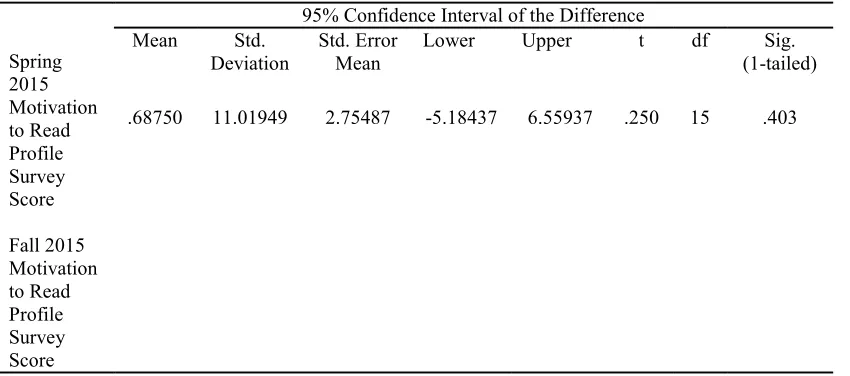
Fall 2015 Reading Motivation ...71 Table 4.5 Paired Sample t-test Statistics for Table 4 ...72 Table 4.6 Paired Sample Correlations ...72 Table 4.7 Difference in Change of Scores on Spring 2015 and
Fall 2015 Reading Achievement ...73 Table 4.8 Paired Sample t-test Statistics for Table 7 ...74 Table 4.9 Paired Sample Correlations ...74 Table 4.10 Difference in Change of Scores on Spring 2015 and
x
L
IST OFF
IGURESFigure 1.1 Model of Achievement Behavior Highlighting
the Role of Self-Efficacy ...18
Figure 4.1 Research Question 1 ...69
Figure 4.2 Research Question 2 ...71
Figure 4.3 Research Question 3 ...72
Figure 4.4 Research Question 4 ...75
1
C
HAPTERO
NER
EADINGA
CHIEVEMENT:
I
NTRODUCTION TO THE STUDYThe ability to read English is highly valued and critically essential to educational
and economic success in today’s society in the United States. School districts throughout
the country are integrating programs to improve reading achievement for students,
especially for students who demonstrate low reading achievement. Some of the
approaches to address students’ reading achievement include after-school reading
programs in addition to interventions during the school day. Studies show that students
who read below grade level at the end of third grade are six times more likely to
eventually leave school without a high school diploma (National Research Council,
1998).
Chapter 1 provides the background of reading achievement and the impact of the
Hot Summer, Cool Books summer reading program hosted by a high poverty rural school
district in South Carolina. The topics of summer reading loss, access to books, and
motivation to read and their impact on reading achievement is discussed relevant to the
combined methods study. This chapter presents the problem, the basis for the study, the
statement of purpose, the significance of the study, guiding research questions, and an
overview of the theoretical framework for the study. The chapter concludes with a
2
South Carolina Read to Succeed Act
To combat the trend of poor reading achievement, the South Carolina House
signed into law Bill Act 284, also known as Read to Succeed, which focuses on
improving literacy achievement for all students (SC Department of Education Read to
Succeed, 2015). According to Read to Succeed (2015), a student must be retained in the
third grade if s/he does not demonstrate reading proficiency as measured by the State’s
reading assessment at the end of the school year ( SC Department of Education Read to
Succeed Act, 2015). The reading proficiency level is determined by scoring at the lowest
achievement on the State’s summative reading assessment known as the Palmetto
Assessment of State Standards (PASS) (SC Department of Education Read to Succeed,
2015). If third grade students score at the lowest proficiency level on the state
assessment, which equates to “Not Met,” they must be offered appropriate interventions
and an opportunity to attend a summer reading camp to address their deficiencies (Read
to Succeed, 2015). According the Read to Succeed Act (2015) the summer reading camp
must be offered four days per week for at least six weeks. Each day, the student must
receive four hours of instruction or “the equivalent minimum hours of instruction in the
summer” (SC Department of Education Read to Succeed, 2015).
Summer Reading Loss Research
Research shows that children who read often, both in and out of school are likely
to develop better reading skills than children who have fewer opportunities to read
(Allington, 2012). While many school districts are successfully implementing various
opportunities to support students’ reading development during the normal school year,
3
Alexander, Entwisle, and Olson (2001) found that while students are in school, all
children gain skills at the same rate, and each school year, children make gains in
classrooms. However, the decline in children’s reading skills that can occur during
summer vacation is known as summer reading loss (Allington & McGill-Franzen, 2003).
Consequentially, students impacted by summer reading loss continue to lose ground each
summer. The further behind the student is in the fall, the less likely they will be to
succeed throughout the regular school year. Researchers sought to determine whether
summer achievement loss is more pronounced among some groups of students
(Allington & McGill-Franzen, 2013). Research indicates that achievement disparities
may have a stronger relationship with students’ socioeconomic status (SES) putting some
children at greater risk of decline in reading skills than others (Alexander, Entwisle, &
Olson, 2001). Economically disadvantaged students in this study are rural students who
experience the greatest loss in reading achievement during the summer months. When
school is out, low SES students do not have the resources of their wealthier urban and
suburban peers who increase their reading level over the summer (Allington &
McGill-Franzen, 2003).
Entwisle and Alexander (1992) hypothesized that the differential impact of the
summer period on students from different socioeconomic backgrounds is the result of
“fewer learning opportunities, and/or less support” for lower income students (p. 72).
More specifically, Burkham, Ready, Lee, and LoGerfro (2004) found that high-SES
students participated in more summer activities including: books read to them by their
parents/guardians, more visits to bookstores and libraries story hours, less television,
4
lessons, and scouting. In addition, higher SES students were also more likely to have a
computer at home. Condron’s (2009) research found that students, from poor working
class backgrounds, were disadvantaged when compared with upper and middle class
students on almost all non-school related environmental factors that were measured in the
study. Those factors included: lower birth weight, higher disabilities, higher food
insecurity, poorer health, greater absence from school, fewer students living with
biological parents, more students living in a single-parent home, fewer extracurricular
activities, fewer books in the home, and less parental involvement at school.
Access to Books and Varied Reading Materials
Not only does research point to a lack of summer reading activity as one source of
summer reading setback, another problem that impacts students’ reading development is
students’ lack of access to books (Allington & McGill-Franzen, 2010). The more access
children have to books, the better readers they become; without access to books, a child is
less likely to read and become a proficient reader. Anderson, Wilson, and Fielding (1988)
found that “reading books was the out–of–school activity that proved to have the
strongest association to reading proficiency” (p. 297). Additionally, evidence suggests
that the only behavior measure that correlates significantly with reading scores is the
number of books in the home (Evans, Kelley, Sikorac, & Tremand, 2010). When children
have access to books in their homes, they are led to read more often and for longer
periods of time (McGill Franzen & Allington, 2009). Similarly, access to a wide variety
of reading material communicates the message that reading is a valued activity and
spending time reading varied material such as, newspapers, magazines, or books at home
5
reading material is frequently used, the practice becomes a natural part of the home and
everyday lives.
According to McQuillan (1998), sixty-one percent of low-income families have
no children’s books at all in their homes, while children of middle class families have
access to an abundance of books. Often, the only book in low SES homes is a Bible.
Furthermore, in some low-income neighborhoods, there is only one book available for
every 300 children (McQuillian, 1998). Another issue facing children of low SES
families is the lack of transportation to visit and check out books from a local library for
reading at home.
Not only is it a hindrance for low-income families to access books at home, but
children living in some low-income, rural areas are at an even greater disadvantage
(Evans et al., 2010). Unlimited access to electronic books are available online (Evans et
al., 2010). However, in some low income and rural areas, internet access is sometimes
unavailable (Horrigan, 2015). The Pew Research Center found that while many homes in
the U.S. with school-age children do have broadband internet access, of approximately 29
million households with children between the ages of 6 and 17, almost 5 million live in
homes that do not have high-speed internet service (Horrigan, 2015). Low-income
households are included in that 5 million. A Pew Research report also suggested that the
lowest-income households have the lowest rates of home broadband subscriptions
(Horrigan, 2015). Therefore, children living in low-income homes are four times more
likely to be without internet access than their middle or upper-income peers are. Without
6
Neuman and Celano (2012) found that when the same library resources were
available in both a high socio-economic and low socio-economic area, the support the
children received from their caregivers differed and significantly affected the children’s
access to print. Early literacy research conducted by Durkin (1966), Bus, van
Ijezendoorn, and Pellegrini (1995), and Neuman and Celano (2006), provides evidence
that younger children’s experiences with their caregivers such as being read aloud to and
engaging in conversations about reading have a significant impact on the children’s
academic success as well as other areas of their lives. They also found that children who
are read aloud to at home develop a stronger vocabulary, more background knowledge,
better expressive and receptive language abilities, stronger phonological awareness and
early literacy skills. Research shows that oftentimes, low-income children do not
experience the stimulating adult-child interactions with books and stories, in particular,
the read-aloud experience (Neuman & Celano, 2006). Without reading experiences such
as the read-aloud, children will not be exposed to the opportunity of acquiring higher
levels of vocabulary beyond their everyday language (Neuman & Celano, 2006).
Likewise, they will not have an opportunity to understand how to decontextualize
language, which is the beginning of abstracting information from print. Low SES
children are more likely to be reading below their grade level, while students in a high
SES neighborhood are more likely to be reading at or above their third -grade level.
Similarly, students from low-income households are less likely to have a range of books
at their reading level in their home, and were therefore more likely to suffer even greater
loss of ability during the summer break. Not only do poor children have fewer books in
7
school, and public library. If their neighborhood even has a public library, they are likely
to encounter reduced hours and limited funding for replenishing and updating the
collection (Krashen, 2012; Neuman & Celano, 2001). With school budget cuts and more
rigorous academic standards, schools must find even more effective, inexpensive ways to
address the problem of summer reading loss which is exacerbated by a lack of access to
print, that influences the widening achievement gap.
This relationship between books at home and proficient reading holds true for the
lives of children living in middle-class, and upper-class suburban and urban homes.
Middle class families usually have access to a variety of resources, which supports their
well-being. These children have access to quality childcare, stimulating toys, and a
variety of books in their homes. Likewise, they have necessary resources for learning,
participate in summer activities that enhance their learning, and have various experiences
that allow them to gain new learning. As a result of being exposed to ongoing learning
opportunities and having access to resources such books at home, middle-class and
upper-class children are usually proficient readers; evidence shows that their home
environments support and value reading (McQuillan, 1998). For example, bookshelves
with numerous books, newspapers, magazines, encyclopedias, and a variety of other
reading materials are present in their home. Likewise, other evidence that shows the
value of reading in many middle-class and upper-class families include: areas in the
home designated for family reading, reserved times in the daily schedule for reading,
shared reading opportunities among the family members, and activities that demonstrates
8
successfully obtain a college degree than a comparable child growing up without a home
library (Evans et al., 2010).
Motivation and Reading Achievement
The presence of books in a home is an indicator of a scholarly culture, which is
described as a “way of life in homes where books are numerous, esteemed, read and
enjoyed” (Evans et al., 2010, p. 171). However, just the presence of books in a home is
not the only factor that makes the difference in a child’s reading achievement. Along with
having access to books at home, other important factors that foster good reading habits
include: motivating students to be interested in reading, providing them with materials of
interest to them, creating opportunities for them to read, and having role models who are
readers (Evans et al., 2010).
There is a significant research base supporting the connection between
motivations and reading achievement. For example, children are motivated to read when
they see other people reading and talking about what they have read (Cambria & Guthrie,
2010). Furthermore, parents serve as teachers and role models for their children and
children are motivated to read if they witness their parents reading (National Research
Council, 1998). Along with limited access to books, having role models at home who
avoid reading leads to missed interactions with books. Rasinski and Fredericks (1991)
emphasize that it is crucial that children see their parents/guardians use reading for a
variety of purposes, from entertainment to maintaining a job or building a career. When
children witness their family members taking time to read different types of reading
material for various reasons, they perceive reading as being an important activity other
9
reading to them at least three times a week are almost twice as likely to score in the top
twenty-five percent in reading as to children who were read to less than three times a
week (Denton, Kristen, & West, 2002).
Although having reading role models at home is important to a child’s reading
success, some children do not have them. Many children of low SES homes do not see
parents/guardians or other family members and friends spending time reading, purchasing
books, subscribing to magazines, or visiting libraries to check out books. Thus, they often
do not have role models of good reading practices that lead to success in school.
Scholars have identified lack of motivation as being the greatest challenge of
many reading and learning difficulties that children experience (Asher, Hymel, &
Wigfield, 1978; Coley & Hoffman, 1990; Covington, 1984; Csikszentmihalyi, 1990;
Zimmerman, Bandura, & Martinez-Pons, 1992). Evidence from theory and research
support the idea that high motivation to read is associated with positive self-concept and
high value assignment, while low motivation to read is associated with poor self-concept
as a reader and low value assignment (Eccles, 1983; Henk & Melnick, 1995). Therefore,
the link between motivational constructs and achievement indicates a need to increase our
understanding of how children acquire motivation in order to help them develop into
more active readers (Gambrell, Palmer, Codling, & Mazzoni, 1996).
Research has shown that motivation for reading predicts reading achievement on
standardized tests (Gottfried, 1985) and academic performance (Sweet, Guthrie, & Ng,
1998). Generally, when children have positive attitudes towards reading they enjoy
reading thus, they are motivated to read. Motivation to read is described as “the
10
and Guthrie (1997) argue that motivation is the link between reading and reading
achievement. Motivation to read or developing positive attitudes towards reading play a
significant role in teaching young children to read. Increasing motivation leads to
motivated readers who will engage more in reading (Oldfather & Wigfield, 1996). In the
same way, increasing motivation will help students develop positive attitudes toward
reading (Greaney & Hegarty, 1987; Mathewson, 1994; McKenna, Kear, & Ellsworth,
1995). Wang (2000) posited that children’s literacy development determines how
successful they will be in the future with reading and whether or not their attitudes
toward reading determine if they will read. In the same vein, it is argued that reading
attitudes are established early in the life of an individual (McKenna et al., 1995).
Research suggests that attitudes are a ‘stable construct’ among children, emphasizing the
importance of developing positive reading attitudes early in the life of a child (Smith,
1990).
It is further argued that reading attitudes are more positive for students in lower
grades than in the higher grades (McKenna et al., 1995). Helping a reader develop a
positive attitude towards reading is important for increasing reading habits thus
improving reading development. A child who has low motivation for reading spends less
time reading, exerts lower cognitive effort, and is less dedicated to full comprehension
than a reader who has higher motivation for reading. Additionally, children who like to
read and believe they are good readers read more often and have higher reading
achievement than their peers who are less positive (Guthrie et al., 2006; Wang & Guthrie,
2004; Wigfield & Guthrie, 1997). Wigfield and Guthrie (1997) posited that children who
11
children who are intrinsically motivated spend more time reading than students who are
not as intrinsically motivated to read (Wigfield & Guthrie, 1997). Likewise, they found
that intrinsic motivation for reading was most highly associated with whether or not
students read extensively and frequently for their own purposes (Wigfield & Guthrie,
1997). Guthrie et al. (1997) concluded that reading motivation is strong predictor for
reading volume and reading comprehension. Findings further suggested that reading
attitudes are affected by factors such as SES, home environment, amount of time not
engaged in educational activities, amount of time spent watching television, quality of
kindergarten instruction, quality of library facilities, and availability of reading material
at home (Walberg & Tsai, 1985). The validity of this relationship is supported by
research studies that documented the link between motivation and achievement (Elley,
1992; Gambrell & Morrow, 1996; Guthrie, Schafer, Wang, & Afflerbach, 1993; Walberg
& Tsai, 1985; Wixson & Lipson, 1991). Students’ value of reading is an important
predictor of their engagement in reading activities. A longitudinal study (Healy, 1965) on
the effects of changing children’s attitudes toward reading revealed that favorable
attitudes produce significant achievement and more reading.
Statement of the Problem
Summer reading loss is well documented and negatively influences the success of
low SES students (Cooper et al., 1996; Entwisle & Alexander, 1992; Heyns, 1978).
Based on reading achievement data, elementary students in rural high-poverty school
districts continuously demonstrate low levels of reading proficiency on reading
achievement assessments. Students in grades one through four in a rural high-poverty
school district in South Carolina experience reading regression due to a lack of academic
12
reading, especially during the extended summer months. Because they live in poverty,
they are vulnerable to circumstances such as lack of exposure to structured educational
activities, lack of access to books in their homes, lack of transportation to access books
and educational resources, and other factors that hinder their reading development over
the summer. The long-term impact of low reading achievement in early grades is often
associated with low middle-school and high-school achievement (Mraz & Rasinski,
2007).
Purpose of the Study
The purpose of the study was to examine the effects of a summer reading program
on third grade students’ reading achievement and reading motivation after one year of
participation. Third grade students over the summer of 2015 were specifically targeted
due to efforts made to ensure that those students were able to read on grade level by the
end of third grade.
This combined methods study was designed to combine quantitative and
qualitative research in order to determine the impact of a voluntary summer reading
intervention program on students’ reading achievement and reading motivation.
Furthermore, the study adds to the body of evidence that providing students’ with access
to books matched to their independent reading level and reading interest combats summer
reading loss, especially those children living in lower socio-economic conditions.
In an effort to mitigate summer reading loss and increase summer voluntary
reading and reading motivation over the summer, students self-selected eight new books
that were matched to their independent reading level and reading interest for the
13
reading program was designed to randomly assign students to three different groups.
Students selected for this study were randomly assigned to one of three groups. The
following describes the two groups: one group received eight self-selected books on their
independent reading level and interest while the other group received eight books on
independent their reading level and interest and periodic encouragement phone calls.
Data were collected from three third grade teachers, a literacy coach, and a district
administrator/instructional leader in the school district who were willing to be
interviewed for the study. Interviews requesting information about the impact of the
summer reading program were conducted for this combined methods study. Through
interviews with teachers, literacy coach, and district administrator, analysis of pre- and
post-reading achievement scores and post- motivation to read profile survey scores, this
study aimed to determine the impact of the summer reading program, Hot Summer, Cool
Books (HSCB) implemented over the summer of 2015 on third grade students in a rural,
high-poverty school district. The goal of the study was to examine how students’ reading
achievement and reading motivation were impacted by participating in the summer
reading intervention program as well as how teachers and instructional leaders viewed the
summer reading program’s impact on students’ reading achievement and reading
motivation.
Significance of the Study
Alexander, Entwisle, and Olson (2007) showed that the declines in academic
achievement during summer vacation is more prevalent and consistent for students from
low socioeconomic backgrounds compared to students from middle and higher
14
at about the same rate. However, students from low SES homes tend to fall further behind
their peers each summer. Over time, the gap widens and leads to an achievement gap
among students from different socioeconomic backgrounds. As a result, low SES
students will have difficulty with gaining the same opportunities as their peers who are
from middle and higher socioeconomic backgrounds.
Furthermore, investigating the predictors of success in reading can lead to
improving academic achievement in schools. Research shows that reading motivation has
a significant impact on reading achievement (Cunningham & Stanovich, 1997; Gottfried,
1990; Guthrie, Schafer, & Huang, 2001). These findings suggest that if a child is not
motivated to read, his or her reading achievement is negatively affected. Results from a
national survey (Gambrell, 1996) revealed that teachers would benefit from additional
research on reading motivation in order to effectively support students. Applegate and
Applegate (2010) contended motivation is a key factor in the overall success that a
student experiences in reading. Similarly, the value placed on literacy in the home, time
spent reading with children, and the availability and use of reading materials have been
identified as key elements in children’s reading success (Snow, Burns, & Griffin, 1998).
A desired outcome for the study was to understand the impact that the HSCB
summer reading intervention program had on students’ reading achievement and reading
motivation. Increased awareness of the significance that summer reading intervention
programs had on reading motivation and reading achievement provided the impetus for
implementation of other summer reading programs in the high poverty rural school
15
addressing reading achievement and summer reading loss with rural, southern students
who are from low SES backgrounds.
Research Questions
According to Merriam (2009), research questions reflect the researcher’s thinking
about the most significant factors to study. They guide the inquiry and determine the
methodology for data collection and analysis. The research questions that follow, guided
this study. The first four questions provided the overall foundation for the research; the
additional question further refines the focus.
RQ1. What is the impact of the HSCB summer reading intervention program
consisting of eight books on the reading achievement of third grade students in a
rural school district?
RQ2. What is the impact of HSCB summer reading intervention program
consisting of eight books on the reading motivation of third grade students in a
rural school district?
RQ3. What is the impact of the HSCB summer reading intervention program
consisting of eight books and phone calls on the reading achievement of third
grade students in a rural school district?
RQ4. What is the impact of the HSCB summer reading intervention program
consisting of eight books and phone calls on the reading motivation of third grade
16
Theoretical Frameworks
In order to better understand third grade students’ reading motivation and reading
achievement after participating in a summer reading intervention program, the faucet
theory and self-efficacy theory were used as a framework for the research.
The Faucet Theory
Entwisle, Alexander, and Olson (2001) developed the “faucet theory” to explain
the phenomenon of summer learning loss. The “faucet theory” (Entwisle, Alexander, &
Olson, 2001) suggest that opportunities to learn and access educational resources are
“turned on” during the school year for all students. As a result, learning gains are made
for students (Kim, 2004). However, when school is not in session, during the extended
summer recess, the school resource faucet is “turned off,” which creates inequalities in
educational opportunities and outcomes (Kim, 2004).
Furthermore, from the point of view of Entwisle, Alexander, and Olson (2001),
when the school faucet is turned on, which is the time when school is in session, students
of every economic background benefit almost equally. On the other hand, when the
school faucet is considered to be “turned off” during summer vacations, reading
proficiency among children from more economically advantaged families, continues to
develop, while similar growth is not observed in economically disadvantaged children
(Entwisle, Alexander, & Olson, 2001). This framework is more thoroughly articulated in
Chapter 2, the review of the literature
Self-Efficacy Theory
Self-efficacy affects learners’ beliefs about their capabilities to participate in and
17
abilities influence their behaviors, thought patterns, and emotional reactions to difficult
situations (Bandura, 1984). In the same way, students’ self-efficacy influences their
choice of activities and shapes their learning experiences. When students have a strong
sense of self-efficacy, they are more likely to work toward completing a task or goal,
regardless of the level of difficulty. When students have low self-efficacy, they do not
believe they can be successful and put forth little to no effort towards the task.
The theoretical standpoint of Albert Bandura (1986) provides a way to examine
students’ motivation to read. Self-efficacy is described as one of the most significant
parts of the social cognitive model (Bandura, 1986, 1997). Bandura (1997) posited that
self-efficacy is a construct that varies in strength, generality, and level of difficulty.
Pajares (1997) noted that self-efficacy could influence choices made, efforts expended,
and perseverance executed when confronted with obstacles, stress, and anxiety.
Because self-efficacy is a construct that affects motivation, it promotes or inhibits
learning (Evans, 1989). Bandura’s (1982) self-efficacy theory states that efficacy is the
major determinant of effort, persistence, and goal setting. In addition, research supports
this idea, suggesting that individuals with higher self-efficacy are likely to be more
motivated and successful when given task (Pintrich & DeGroot, 1990). Bandura (1993)
argued, “Hence, a person with the same knowledge and skills may perform poorly,
adequately, or extraordinarily depending on fluctuations in self-efficacy thinking” (p.
119). Bandura (1997) continuously demonstrated the impact of how, when students have
high self-efficacy for a certain learning task, they will put forth more effort to accomplish
18
and positive beliefs about their ability to complete a task, they usually perform in a
successful way on the task.
When a student believes he or she can control success in school, performance is
improved (Skinner, Wellborn, & Connell, 1990). As students experience success,
self-efficacy increases and students feel empowered. While motivation continues to increase,
students repeat the cycle again, each time feeling even more in control of their learning.
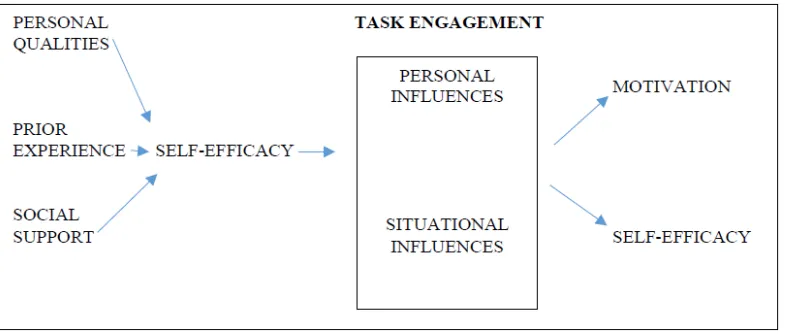
Bandura’s (2000) Self-Efficacy Model is commonly used to demonstrate how an
individual’s achievement related choices and performance is determined by two sets of
beliefs: the individual’s expectations for success and the value they place on that choice
(see Figure 1.1). This framework is thoroughly articulated in Chapter 2, the review of the
literature.
Figure 1.1.Model of Achievement Behavior Highlighting the Role of Self-Efficacy.
Definition of Terms
This section lists and defines key terms used in the study.
Faucet theory. The faucet theory explains the summer slide phenomenon and is
the premise that when the school faucet is “turned on,” that is when schools are in session
19
economic backgrounds benefit equally (Entwisle et al., 1997, 2001). However, when
school is not in session, the school faucet is “tuned off” as during summer vacation
(Entwisle et al., 1997, 2001).
Summer learning loss. Summer learning loss refers to the decline in student
performance levels in identified subject areas that occur over the summer break that is
part of the traditional school calendar. Students experience summer learning loss when
they do not engage in educational activities while they are away from school during the
summer vacation (Cooper, 1996; Downey et al., 2004; Entwisle & Alexander 1992;
Heyns, 1978; White, 1906).
Summer reading loss. Summer reading loss is the decline in students’ reading
achievement that typically occurs throughout the summer when children are away from
their organized educational environment and are not participating in literacy based
activities (Allington & McGill-Franzen, 2003).
Summer learning programs. Summer learning programs refer to a set of
organized activities designed to provide enrichment, remediation, or other learning
opportunities for students during the summer vacation between regular school years or
meet a specific need (Terzian & Moore, 2009).
Socio-economic status (SES). SES is measured as a combination of education,
income, and occupation. It is referred to as the social standing or class of an individual or
group (American Psychological Association, Retrieved from
http://www.apa.org/pi/ses/resources/publications/factsheet-education.aspx). SES is also
described as the combination of social and economic factors including: family income,
20
and resources are available and to what extent. SES is defined within the educational
organization, as well as for this study, by students’ eligibility for programs providing free
or reduced-price lunches based upon state and federal regulations and guidelines
(American Psychological Association, Retrieved from
http://www.apa.org/pi/ses/resources/publications/factsheet-education.aspx).
Limitations
This study had limitations. First, the sample limited the ability to generalize the
results of this study. This study relied on a limited purposeful population sample (third
grade) within a single school district in a rural area. Due to the small population sample,
this study may not be generalizable to a larger student population or one with different
demographics and socioeconomic make up. Similarly, the summer reading intervention
program that was implemented included the following three groups: 1) received books
only, 2) received books and periodic encouragement postcards mailed home, or 3) books,
periodic encouragement postcards mailed home, and lessons. There was a relatively small
sample of participants from the summer reading involved in the study. Although there
were participants from three groups involved in the summer reading intervention
program, two of the three groups for the summer reading intervention program are
represented in this study.
Second, the interview data for this study was not gained from multiple sources
such as interviews with students and parents. Therefore, insight into students and parents
perceptions of the impact of the program was not included. Future studies that include
participants from multiple locations and sources of data would reveal whether or not
21
on how teachers prepared students for reading over the summer and participation in the
summer reading intervention program. Finally, the study did not attempt to gather data
that measured the quality and effectiveness the summer reading program’s components
that were implemented as well as how they were monitored and evaluated. This study
relied on data collected on the growth of reading skills and reading motivation from a
single group of students where the assessments were administered during specific time
periods (spring and fall of the year), the instrumentation used in the study. Utilizing a
single instrument to measure student reading achievement limited the ability to gather a
comprehensive measure of students reading skills and abilities. Another limitation of this
study was the reliability of the student self-reported responses due to the age of the
students whose understanding of the questions about their motivation to read may have
been less than that of older students. A threat to the internal validity of the study included
the instrumentation. The pre- and post- surveys were administered using different
procedures. The pre Motivation to Read survey was administered using paper and pencil
while the post Motivation to Read survey was administered electronically using
Chromebooks.
Delimitations
The scope of the study fall within delimitations determined largely by the
curricular and programming model that had been established by the district. The
delimitations that characterize this study include the following: (a) exclusive focus on
students between their third and fourth grade years of school, (b) timeframe of the
summer reading intervention program, (c) reliance on a single measure of reading
22
single summer reading intervention program makes on reading achievement and reading
motivation.
Summary
Chapter One presented information on the implementation of summer reading
intervention programs to supporting students’ reading achievement and reading
motivation. In addition, descriptive information pertaining to the study was provided.
Included in this information were the statement of the problem, purpose of the study,
significance of the study, and definitions of pertinent terms. Chapter Two will provide a
review of literature related to the support of reading skills and literacy, as well as the
application of relevant theories supporting learning outcomes in this area. The
relationship between reading achievement and reading motivation is explored, and
strategies that support students’ reading achievement and reading motivation in
elementary grades are discussed. Chapter Three details the methods used to examine the
impact of a summer reading intervention program on third grade students’ reading
achievement and reading motivation in a high poverty rural school district. The Measures
of Academic Progress (MAP) Assessment and Motivation to Read Profile Survey, which
will provide the instrumentation for the study, will be also discussed. A detailed overview
of the procedures for both data collection and analysis will be provided. Chapter Four
discusses the results of the study focusing on the research questions. Chapter Five
presents an analysis and discussion of the findings and implications of the study.
Conclusions and recommendations for future studies and for practical improvements are
23
C
HAPTERT
WOR
EVIEW OF THEL
ITERATUREChapter Two reviews existing research on motivation to read, summer reading
loss, reasons for summer reading programs, access to books, and the effects each have on
mitigating summer reading loss, and improving students’ reading achievement. The
literature selected for review deals with reasons for a summer reading programs such
mitigating summer reading loss and improving students’ reading achievement. Studies in
Chapter Two regarding motivation to read, summer reading loss, summer reading
programs, and access to books will reveal the impact that each have on students’ reading
achievement and attitudes towards reading.
The Faucet Theory
Entwisle, Alexander, and Olson (2001) developed the “faucet theory” to explain
the phenomenon of summer learning loss. The “faucet theory” suggests that opportunities
to learn and access educational resources are “turned on” during the school year for all
students (Entwisle, Alexander, & Olson, 2000). As a result, students make learning gains
(Kim, 2004). However, when school is not in session, during the extended June to August
summer recess, the school resource faucet is turned off, creating inequalities in
educational opportunity and outcomes (Kim, 2004).
Furthermore, according to Entwisle, Alexander, and Olson (2001) when school is
in session and the faucet is turned on, students of every economic background usually
24
considered to be turned off, reading proficiency among children from more economically
advantaged families continues to develop, but similar growth is not observed in
economically disadvantaged children.
Self -Efficacy Theory
Bandura (1995, 1997) suggests that an individuals’ perceived self-efficacy is a
crucial component in human functioning. Perceived self-efficacy is determined by four
sources: previous performance, vicarious learning, verbal persuasion, and one’s
physiological reactions. Likewise, Schunk (2003) believed that perceived self-efficacy or
students’ personal beliefs about their capabilities to learn or perform behaviors at
designated levels, plays an important role in their motivation and learning. Zimmerman
(1997) suggested that how students’ perceive self-efficacy directly and indirectly
influences their ability to gain skills and learn. Such impact lie in Bandura’s (1993)
argument that perceived self-efficacy plays a key role in self-regulation of motivation.
Self-efficacy influences self-regulation in learners (Bong & Skaalvik, 2003; Pintrich &
Schunk, 2002). Students with high efficacy are more likely to engage in
self-regulatory processes including: goal setting, self-monitoring, self-evaluation, and
effective strategy use (Zimmerman, 2000). Bandura et al., (1996) concluded that
students’ belief in their self-efficacy is a great predictor for engagement and
accomplishment in school tasks. Through self-reflection, the way individuals perceive
their performance changes their self-beliefs. As a result, their future performance is
affected. Through self-efficacy perceptions, one chooses what to do, how much effort to
25
A child’s self- perceptions of efficacy are critical because it determines how a
student will approach opportunities, how they will engage, the effort they invest, their
degree of perseverance, and the level of anxiety or confidence with which they approach
the task (Bandura, 1986 ). Students who have high self-efficacy beliefs are persistent
when faced with challenges and are more successful in academic achievement (Schunk,
1990; Wang Pape, 2007). They work hard and persist longer with any learning task.
Students with positive self-efficacies feel in control of their learning and believe they
have the ability to succeed. As a result, these students are more likely to be successful
than students with lower self-efficacy. Students with low efficacy and outcome
expectations are easily discouraged by failure or setbacks and therefore are not motivated
to learn (Bandura & Schunk, 1981; Bouffard-Bouchard et al., 1991). They do not believe
in their capabilities and often refuse to put forth any effort towards difficult tasks. These
students demonstrate low aspirations and little commitment towards their goals. When
exposed to difficult or challenging tasks, rather than concentrating on how to perform
successfully, they concentrate on their personal weaknesses, possible obstacles, and any
possible adverse outcomes. In addition, they put forth little effort and give up easily as
they face difficult situations. In the same way, it is more difficult for them to recover their
sense of efficacy after they experience failure or setbacks. They fear failure and view
inadequate performance as lacking ability. Therefore, any experience of failure causes
them to lose hope in their capabilities. Equally, they also tend to give up when faced with
such tasks. Such experiences indicate that the higher the sense of efficacy, the greater the
26
Self-Efficacy Impacts Readers’ Confidence
Students who have high self-efficacy respond to reading differently than students
with low self-efficacy. Students who possess high self-efficacy are confident in their
reading skills and anticipate successful experiences with reading. Students who have low
self-efficacy, lack confidence in their reading skills and see lack of success even before
they begin to read. Struggling readers have or will develop low self-efficacy. As a result,
they usually end up having poor reading skills. Through personal experiences with
students, teachers find that students, who believe they will not be successful with reading,
will avoid reading in general (Baker & Wigfield, 1999).
With regard to reading achievement, self-efficacy is described as “confidence in
one’s own capacity as a reader” (Bokhorst-Heng & Pereira, 2008). A reader’s view of
self-efficacy directly affects their desire to read and the way they perceive themselves as
a reader. Students’ perceptions about themselves as readers effects the motivation
students have to participate in literacy activities (Baker & Wigfield, 1999; Sweet &
Guthrie, 1994). When students possess positive attitudes towards reading, they are more
motivated to read, while students with negative attitudes are less likely to read (Baker &
Wigfield, 1999). Readers who have positive beliefs about their capabilities approach
difficult reading material with confidence that they will succeed and will not avoid
reading it. As a result, they develop intrinsic interest.
Self-efficacy informs students’ goal aspirations. Bandura (1993) argued
individuals with high self-efficacy set challenging goals and remain committed to them.
When they are confronted with failure or setbacks in working toward their goals, they
27
insufficient knowledge and skills. These individuals approach challenging situations with
confidence that they have the ability to master them. This perception leads to personal
fulfillment.
Baker and Wigfield (1999) defined reading efficacy as the belief or expectation
that one can be successful at reading. A reader’s self-efficacy beliefs help foster the
outcome he or she expects as a reader. A reader with high self-efficacy will always be
ready to read, put forth great effort towards improving reading skills, spend great
amounts of time engaged in reading, and rarely experience adverse emotional reactions
when encountering difficulties while reading. In contrast, a reader who has poor
self-efficacy, escapes reading activities, puts forth little to no efforts to read and have doubts
his or her reading capabilities. Guthrie, McRae, and Kluada (2007) and Zimmerman
(2000) examined the influence exerted by students’ confidence in their own reading
abilities. They found that students who have low self-efficacy try to avoid challenging
reading activities and have a tendency to withdraw from tasks they perceive as too
difficult. Schunk and Rice (1993) found that providing clear goals for reading tasks, in
addition to providing feedback on progress toward success helped to increase
self-efficacy and strategies for text comprehension. Schunk and Rice (1993) also found that
students who had self-efficacy and strategy-use training improved their reading
achievement. Schunk and Zimmerman (1997) reviewed research showing students with
high self-efficacy see difficult reading tasks as challenging and work diligently to master
them, using their cognitive strategies productively. Research studies show that children’s
reading efficacy is closely associated with reading skill (Chapman & Tunmer, 1995,
28
research shows that children’s reading efficacy is a predictor for variance in their reading
comprehension when controlling for word reading and verbal abilities (Katzir et al.,
2009). In addition, studies show that there is a correlation to children’s reading efficacy
and their reading skills when controlling for intrinsic motivation (Bouffard et al., 2003).
Given the relationship between reading efficacy and reading attainment, there are
differences between good and poor readers’ reading efficacy (Butkowsky & Willows,
1980; Lau & Chan, 2003).
Motivation Affects Reading Achievement
Motivation and self-efficacy are critical to reading achievement. Motivation
theorists suggest that individuals’ competence and efficacy beliefs, intrinsic and extrinsic
motivation, and desire for achievement play a vital role in their choice of activities, how
long they will do an activity, and the amount of effort they will use towards an activity
(Bandura, 1997; Eccles, Wigfield, & Schiefele, 1998; Pintrich & Schunk, 1996; Wigfield,
Eccles, & Rodriguez, 1998). As a result, readers who are motivated will engage in more
reading (Guthrie, van Mater, et al., 1996; Oldfather & Wigfield, 1996) and have more
positive attitudes towards reading (Athey, 1982; Greaney & Hegarty, 1987; Matthewson,
1994; McKenna et al., 1995).
Students’ lack of motivation, leads to decreased efforts to read frequently, which
results in low reading development and achievement. Likewise, students who lack
motivation to read have low self-efficacy due to their constant patterns of low reading
achievement. According to Alexander and Filler (1976), children’s attitudes toward
reading are generally defined as their feelings about reading. These feelings about
29
about reading should relate to children’s motivation to read (Alexander & Filler, 1976).
Instilling positive attitudes towards reading is just as fundamental as teaching decoding
skills and comprehension strategies (Cosgrove, 2003).
Intrinsic and Extrinsic Motivation Impacts Reading Achievement
Motivation is considered a multi-dimensional construct and within the field of
reading research, a popular distinction used is that of intrinsic and extrinsic reading
motivation (Wang & Guthrie, 2004; Wigfield & Guthrie, 1997). These dimensions of
motivation provide insight as to why a child would choose to read, or persevere through a
difficult reading task. In addition, these dimensions would suggest how to improve a
child’s reading motivation.
Intrinsic Motivation
Intrinsic motivation refers to engaging in an activity for its own enjoyment or
inherent satisfaction, and reflects “the inherent tendency to seek out novelty and
challenges” (Ryan & Deci, 2000, p. 70). Deci & Ryan (2000) described intrinsic
motivation as the act of engaging in an activity for its own sake, for the pleasure and
satisfaction derived from participating in it. Intrinsically motivated individuals engage in
activities that interest them. They put forth efforts in a free manner, with a full sense of
volition and without the necessity of material rewards or constraints (Deci & Ryan,
1985). Intrinsic motivation is reading purely for the positive enjoyment obtained from
reading the material (Becker, McElvany, & Kortenbruck, 2010).
Extrinsic motivation occurs when the motivating factor is found not from within
the child, but from an outside reward, meaning that the child completes the task to obtain
30
Intrinsic motivation has been associated with developing proficient readers.
Children who choose to read books for pleasure are intrinsically motivated to read
(Wigfield & Guthrie, 1997). Students who are intrinsically motivated are more persistent
and cognitively involved in their tasks, experience more positive emotions and have
better grades (Guay et al., 2008). An intrinsically motivated student will spend more time
on cognitive tasks that are slightly above their skill level, showing high levels of intrinsic
motivation, and exhibiting joy and pride when they master the tasks (Harter, 1978;
McMullin & Steffen, 1982).
When a student is intrinsically motivated, he or she will choose to engage in an
activity such as reading because it is interesting or enjoyable to them. Such intrinsically
motivated behavior is an example of self-determination because it develops from within
the student. Earning a good grade on a reading assignment will lead a student to be
intrinsically motivated, particularly if they believe that their actions were by choice. In
contrast, if a student studies and prepares for a reading assignment as a result of his or her
parents’ expectations of him or her doing well on it, or a reward will be given, he or she
will be extrinsically motivated. Characteristics of highly autonomous students include
being more engaged in school, achieving higher academic performance, and attending
school until graduation (Grolnick et al., 2002; Hardre & Reeve, 2003).
Intrinsic motivation is considered the desired type of motivation in students (Ryan
& Deci, 2000) and it has been shown to be associated with deep learning, better
performance, and well-being (Deci & Ryan, 2000) in comparison to extrinsic motivation.
Furthermore, intrinsic motivation also is more likely to flourish when students feel
31
environment and are connected to others, they tend to seek out mastery experiences,
which helps them develop a sense of competence. Likewise, they are likely to develop
intrinsic motivation for academic tasks and other activities if such behaviors are modeled
or valued by others with whom they feel or want to feel connected to (Ryan & Deci,
2000). For example, students may become intrinsically motivated to read if they have
made a connection with a teacher who shows them the value of reading.
Intrinsic motivation, the most self-determined form of motivation, has been found
to produce better reading outcomes (Gottfried, 1990; Guthrie et al., 2007; Lau & Chan,
2003; Wang & Guthrie, 2004; Wigfield & Guthrie, 1997). Fostering intrinsic motivation
should be a goal of teachers in order to help students find enjoyment and fulfillment
through reading (Cambria & Guthrie, 2010). Providing students with ongoing
opportunities to be successful with reading in addition to allowing students to choose
what they read, when, and where they read are possible ways to foster intrinsic
motivation. Such types of experiences positively reinforce students’ beliefs about
themselves as readers and increase the likelihood that they will be intrinsically motivated
to engage in subsequent reading opportunities. Additionally, self-determination theory
suggests that the more self-determined students’ motivations are, the more likely they are
to develop and sustain their learning ability (Deci & Ryan, 2000). Students, who are
intrinsically motivated, will continue to read long after they are out of school when there
are no more grades or rewards (Bokelman, 2005). Likewise, students who are highly
intrinsically motivated to read, read frequently and the breadth of their reading is high
32
Extrinsic Motivation
In contrast to intrinsic motivation, extrinsic motivation is demonstrated when one
engages in an activity to gain a particular benefit or because of pressure from others
(Ryan & Deci, 2000). Students, who are extrinsically motivated, carry out a learning task
to achieve some instrumental end, such as earning a reward or avoiding a punishment.
Extrinsically motivated students read to gain something whether it is good grades, to
satisfy the teacher or their parents, or to get an incentive.
Various reading incentive programs are designed to get students motivated to
engage in reading (Pavonetti et al., 2002). Participating in reading incentive programs
encourages students to read frequently, read more, and engage in reading thus help
students improve his or her reading skills. Intrinsically motivated students will participate
because they enjoy reading. On the other hand, extrinsically motivated readers will
participate in a reading program with the expectation of receiving some type of tangible
reward or a program incentive. The students are not motivated enough to engage in
reading because they find reading interesting or enjoyable. The value of the act of reading
for enjoyment is diminished when extrinsic rewards are provided thus leading to
decreased motivation to read (Carter, 1996).
According to the self-determination theory, there are different types of extrinsic
motivation that vary in terms of self-determination. The self-determination theory’s ideas
explain people’s inherent and innate tendencies and psychological needs. Ryan and
Deci’s (1985) theory of self-determination suggested that some types of extrinsic
33
Summer Learning Loss
Each school year when students return to school from summer break, many
educators continuously recognize that some students’ learning from the previous school
year declined over the summer months. As the new school year progresses, patterns
emerge, indicating that time away from school for summer vacation has impacted
students’ academic performance in a negative way. Researchers argue that the summer
vacation, time away from school, causes students to forget the material taught to them
during the previous school year (Cooper, 2003). Studies have proven that if students are
not engaged in educational activities while they are away from school for summer
vacation, they experience summer learning loss (Cooper et al., 1996; Downey et al.,
2004; Entwisle & Alexander 1992; Heyns, 1978; White, 1906). Research spanning over
100 years has shown that students’ scores typically declined on standardized tests at the
end of summer vacation from those on the same tests at the beginning of the summer
(Cooper et al., 1996; Downey et al., 2004; Entwisle & Alexander 1992; Heyns, 1978;
White, 1906). As a result, teachers have to spend a significant amount of time at the
beginning of the school year re-teaching the previously taught curriculum. Such
unanticipated needs prevent teachers from moving forward with new expectations and
teaching new curriculum for the new school year. At the same time, some students never
catch back up to where they left off in the previous school year. Furthermore, these
students continue to fall behind academically.
The reality of summer reading loss is severely harmful to students’ academic
achievement. Summer reading loss refers to the decline in children’s reading skills that
34
not participating in formal literacy programs or lack adequate reading practice (Allington
& McGill-Franzen, 2003). Researchers find evidence to suggest that the impact of
summer reading loss on students in general and on at-risk students in particular, is
significant (Mraz & Rasinski, 2007). In the same way, summer reading loss is known to
be more persistent among students from lower socioeconomic backgrounds. Factors
contributing to summer setback can be largely explained by the lack of summer reading
activity (Allington & McGill-Franzen, 2008).
Student reading achievements during the school year are somewhat similar for
students from different social and economic backgrounds (Kim, 2007). On the other
hand, research on summer learning loss provides reliable evidence that the reading
achievement of socioeconomically disadvantaged students slide back a few months each
summer (Kim, 2007). Evidence suggests that summer vacation has larger negative effects
on reading achievement for low-income children and children from minority families,
which explains a large portion of the gap in reading skills between low-income and
middle-income children by the end of elementary school (Alexander, Entwisle, & Olson,
2001; Cooper et al., 1996). According to a study, data consistently depict summer reading
setback as the reason for the widening of the reading achievement gap between rich
children and poor children across the span of the elementary years (Allington &
McGill-Franzen, 2003). The reading achievement gap between children from more and less
economically advantaged families is substantial and has been persistent (Allington,
2007). While children from higher socioeconomic families holds steady or increases in
their academic skills modestly over the summer (Allington & McGill-Franzen, 2003),