ABSTRACT
BULLA, BRIAN REID. Exploring Vulnerability to Climate Change: Lessons Learned through Multiple Methodologies and Local Knowledge. (Under the direction of Dr. Toddi A. Steelman.)
A majority of the climate change literature suggests the issue is best understood in scientific and technical terms, meaning that only experts with appropriate technical knowledge are suitably informed to understand the data and determine appropriate responses. Academics and experts who characterize climate change as a problem largely impacting roads, infrastructure, the economy, and other inanimate objects reify climate change as a technical problem. This reification can marginalize the vulnerabilities of people, livelihoods, and communities.
Therefore, finding new pathways that expand our understanding of social vulnerability in the context of climate change is critical to improving policies and research practices. To do so requires using an extended community of knowledge beyond that of the technical experts. The additional knowledge would include concerned citizens with vested interests that might otherwise go un-discussed. By including participants external to the scientific community, a more well-rounded and inclusive discussion of climate change could be had, and decisions regarding what to address and how to address it would be created thereby addressing social
vulnerability.
This dissertation is comprised of three case studies that use multiple
the willingness of North Carolina coastal officials to take adaptive action. The study also investigated what official’s feel are the top threats from climate change to their communities. The second study utilized photovoice to qualitatively explore how small family farmers in Chatham County, NC are experiencing climate change. The third study used a rapid assessment and the Trinity of Voice (ToV) model of public participation to explore participatory processes from the point of view of water committee members in Hamakuya, South Africa to better understand water resource management practices in the context of climate change.
Results from the first study indicated that coastal officials were willing to take adaptive action based on a perceived threat from climate change, more so than solely based on their personal knowledge about climate change or their political ideology. Potential flooding, erosion, and sea level rise were frequently cited concerns of coastal officials. Findings from the second study suggested that small family farmers in Chatham County were experiencing changes in precipitation patterns, detecting invasive species, and implementing adaptive behaviors such as agrivoltism and polyculture to bolster the resilience of their farms and strengthen their connections with the local community. Findings from the third study signaled a well-functioning and deferential system of traditional governance. Additional analysis indicated that headmen played an integral role in water resource management by acting as
members, and an ability of villagers to influence local rules in the participatory process.
Exploring Vulnerability to Climate Change: Lessons Learned through Multiple Methodologies and Local Knowledge
by
Brian Reid Bulla
A dissertation submitted to the Graduate Faculty of North Carolina State University
in partial fulfillment of the requirements for the Degree of
Doctor of Philosophy
Forestry and Environmental Resources
Raleigh, North Carolina 2015
APPROVED BY:
_______________________ _______________________
Elizabeth A. Craig, Ph.D. William J. Kinsella, Ph.D.
_______________________ _______________________
Susan E. Moore, Ph.D. Toddi A. Steelman, Ph.D.
DEDICATION
BIOGRAPHY
ACKNOWLEDGMENTS
I wish to acknowledge the support, encouragement, inspiration, and
assistance of the following. First and foremost to my family, for your years of love, support, and encouragement that helped to make the continuation of my education possible. To Carol, for believing in me, for your endless encouragement, support, assistance, and for sharing your experience and understanding of the murky ecology of academia, which made my navigation through this process a bit more
understandable. To my parents, Kendra and Keith Bulla, for your endless love and support. To Jefferson Philpot, for his editorial acumen, boundless enthusiasm, and support before, during, and after my graduate studies, thank you.
To my fellow graduate students who offered for their friendship,
encouragement and support. To Jodi Swicegood for your friendship and for agreeing to work with me early on during my studies. To Bill Slocumb, for your friendship and expertise that made a few of my experiences much more tolerable. To Christopher Serenari, Scott Beck, Shawn Dayson Shifflett, Sarah Wiener, Almarie Lambert, and Jonathan Hodiak for being terrific travel and research partners while in South Africa and at NCSU.
To Drs. Lada Kochtcheeva and Mark Nance for their support and
encouragement, and for inspiring me to pursue my interests beyond a Master degree, while assuring me that I was up to the task.
great distance and plenty of expedient reasons that made that mentorship less than practical. Dr. Steelman offered consistent support and endless encouragement; it has been a privilege to learn from you. To Dr. Elizabeth Craig, for her enthusiastic
encouragement of my interests that began at in the classroom at the conceptual stage and extended to the execution stages of data analysis and consultation-your
expertise and enthusiastic support were integral to my success. I would also like to acknowledge the thoughtful assistance and support of Dr. Susan Moore as well as Dr. Bill Kinsella for his acumen as an editor and in keeping me from running too far out on a limb.
TABLE OF CONTENTS
LIST OF TABLES ... viii
LIST OF FIGURES ... ix
ORIENTING VULNERABILITY TO CLIMATE CHANGE THROUGH THE POLICY SCIENCES ... 1
Introduction ... 2
Researcher Rationality - Two Dominant Viewpoints ... 6
Situating Researchers as Participants ... 9
Vulnerability – Three Conceptualizations ... 10
Risk-hazard ... 12
Political economy ... 17
Resilience ... 20
Three Case Studies and Research Methods ... 24
Coastal North Carolina ... 28
Chatham County, North Carolina ... 30
Hamakuya, South Africa ... 32
Concluding Remarks and Disciplinary Fit ... 34
CLIMATE CHANGE AND ADAPTIVE DECISION MAKING: RESPONSES FROM NORTH CAROLINA COASTAL OFFICIALS ... 37
Identification of the Problem and Institutional Setting ... 38
Knowledge, Perception, Ideology and Adaptive Action ... 43
Study Area ... 50
Methods ... 51
Results ... 56
Hypothesis testing ... 59
Skeptical comments ... 69
Amenable comments ... 70
Discussion ... 71
Conclusion ... 76
FARMING THROUGH CHANGE: HOW SMALL FAMILY FARMERS BUILD RESILIENCE TO CLIMATE CHANGE THROUGH ADAPTIVE BEHAVIORS ... 83
Background ... 85
Farming, Climate Change, and Photovoice ... 88
Methods ... 95
Recruitment ... 96
Summary of the process and field work ... 98
Study area ... 101
Data processing and analysis ... 103
Findings from the Farmers ... 104
Observed changes ... 105
Rainfall and temperature ... 105
Pests and invasive species ... 107
New adaptive behaviors ... 111
Diversity in the field ... 111
Traditional strategies ... 113
Collective strategies ... 114
Sequence strategies ... 115
Recognition strategies ... 117
Resilience behaviors ... 119
Valuing biotic resilience ... 119
Intrapersonal resilience ... 122
Interpersonal resilience ... 124
Reflections and Study Limitations ... 126
Discussion and Conclusion ... 128
WATER RESOURCE MANAGEMENT IN RURAL SOUTH AFRICA: ASSESSING PUBLIC PARTICIPATION THROUGH TRINITY OF VOICE ... 134
Water Resource Management in South Africa ... 136
Review of Participatory Literature ... 140
Participatory practices in South Africa ... 140
Trinity of Voice as a framework for evaluating participation .... ... 143
Access ... 144
Standing ... 146
Influence ... 148
Study Context ... 150
Methods ... 153
Data collection ... 153
Rapid assessment ... 157
Findings ... 163
Elements and responses related to access ... 163
Elements and responses related to standing ... 167
Elements and responses related to influence ... 172
Role and responsibility of the water committee ... 173
Discussion ... 176
Conclusion ... 182
REVALUING VULNERABILITY: THROUGH REFLECTIVE RESEARCH AGENDAS AND EXPLICIT ORIENTATIONS ... 184
Revisiting Technical and Cultural Rationality ... 190
Reflections on the Studies ... 192
Concluding Thoughts ... 200
REFERENCES ... 203
APPENDICES ... 224
Appendix A. Coastal Study Survey Instrument ... 225
Appendix B. Codebook for Coastal North Carolina ... 230
LIST OF TABLES
Table 1.1 Overview of the three case studies ... 26
Table 2.1 Professional title of respondents ... 56
Table 2.2 Education of respondents ... 57
Table 2.3 Self-reported political ideology of respondents ... 58
Table 2.4 Mean and standard deviation for test variables ... 60
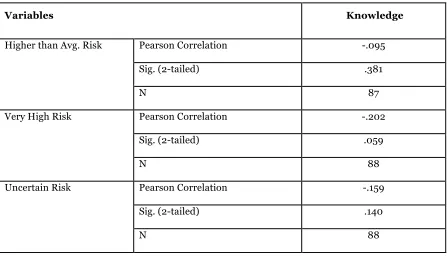
Table 2.5 Correlations for personal knowledge ... 60
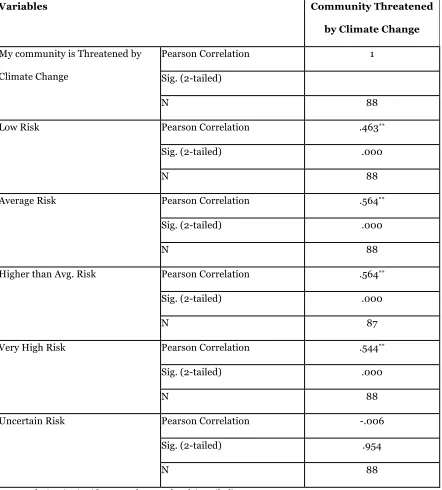
Table 2.6 Correlations for perceived threat ... 62
Table 2.7 Regression analysis for perceived threat ... 63
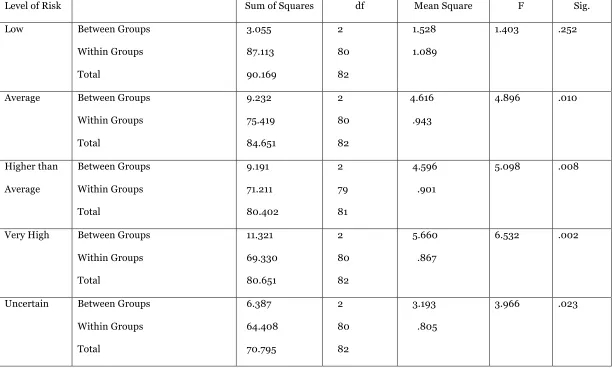
Table 2.8 ANOVA results for ideology ... 65
Table 2.9 Perceived threats from climate change ... 68
Table 3.1 Characteristics of the participating farmers ... 97
Table 3.2 Chatham County demographics ... 103
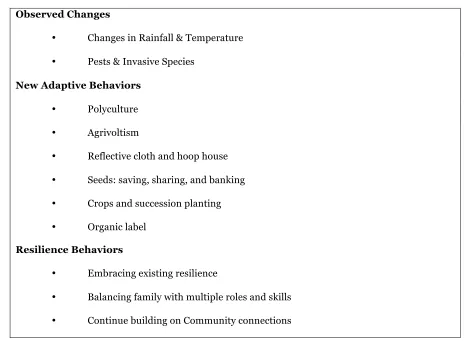
Table 3.3 Summary of observed changes, adaptive behavior and resilience behavior ... 105
Table 4.1 Comparative census data from 2001 and 2011 for the Hamakuya region ... 151
Table 4.2 Sample of questions asked during focus groups ... 156
Table 4.3 Elements of a rapid assessment and its operationalization in this study ... 160
Table 4.4 Elements related to access ... 167
Table 4.5 Elements related to standing ... 171
Table 4.6 Elements related to influence ... 174
LIST OF FIGURES
Figure 2.1 Coastal counties of NC ... 51
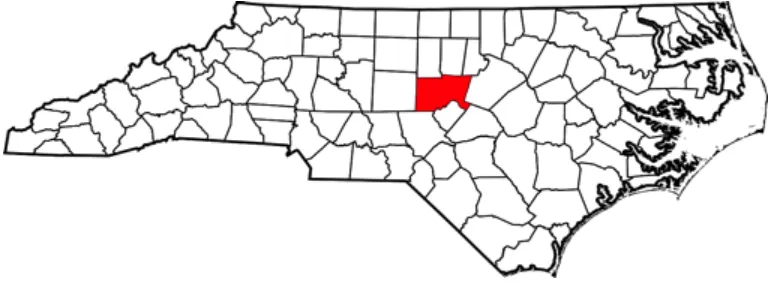
Figure 3.1 Map of NC with Chatham County highlighted ... 102
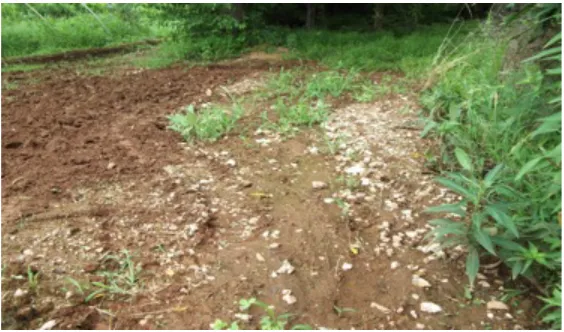
Figure 3.2 Damage from heavy precipitation ... 106
Figure 3.3 Fire ants ... 108
Figure 3.4 Microstegium vimineum ... 109
Figure 3.5 Cow eating microsteguim ... 110
Figure 3.6 Polyculture ... 112
Figure 3.7 Agrivoltism ... 113
Figure 3.8 Rice field ... 117
Figure 3.9 Tomato plant ... 120
Figure 3.10 Young Amaranth ... 121
Figure 3.11 Amaranth three weeks later ... 122
Figure 4.1 Water governance structure in South Africa ... 137
ORIENTING VULNERABILITY TO CLIMATE CHANGE THROUGH THE POLICY SCIENCES
A substantial portion of the policies and research into vulnerability to climate change seems to overwhelmingly favor a technical, impact-related orientation
(Ionescu, Klein, Hinkel, Kumar & Klein, 2009; O’Brien, Eriksen, Nygaard & Schjolden, 2007; Eakin & Luers, 2006; Luers, Lobell, Sklar, Addams & Matson, 2003). Vulnerability to and from climate change is much more than damage to buildings or sectors of the economy as portrayed in the majority of the literature (Brooks, Adger, & Kelly, 2005). Understanding and addressing personal and social vulnerabilities such as: diminished health outcomes (through an increase in
morbidity and mortality, stress or depression, vector borne illness, malnutrition or contamination); deprivation of a preferred livelihood; loss of social or communal connections; damage to or destruction of culturally important landmarks or practices will all require a more culturally sensitive orientation to the problem of climate change. If policy-makers and researchers are not mindful, and without an approach that includes cultural orientation of the problem, climate change
vulnerability is in danger of becoming reified primarily as an impact to infrastructure and sectors of the economy. Furthermore, if vulnerability to climate change
Introduction
Pick up nearly any peer-reviewed journal reporting research about climate change and you are almost certain to find near complete consensus among scientists that anthropogenic climate change is occurring (IPCC, 2014; Anderegg, Prall,
Harold, & Schneider, 2010). If unanimity within the scientific community is not enough to influence policy makers to take adaptive action to address climate change, then perhaps mounting public awareness and pressure emanating from focusing events (Birkland, 2005) like flooding from Hurricane Irene in 2011, dramatic changes in precipitation and temperature patterns, devastating wildfires, or heat-related illnesses might begin to sway officials to take comprehensive adaptive actions.
Critically important and embedded within the changing climate and resulting impacts are the vulnerabilities of people and their livelihoods. Unlike assessing the damage to buildings, roads or the operational capacity of economic sectors such as energy, unraveling the vulnerability of people and livelihoods is more imprecise with no clearly defined estimates like those found in a cost benefit analysis. Yet
investigating the multitude of ways that people are vulnerable to climate change has important environmental justice implications (Adger, Paavola, Huq & Mace, 2006). This dissertation encompasses three case studies, each situated in the context of climate change and each takes a different methodological approach thereby
North Carolina (NC) are farming through a changing climate. The third case study used rapid assessment to examine participatory processes in rural South Africa regarding water resource management.
Finding new pathways that expand our understanding of social vulnerability in the context of climate change is critical to improving government policies and clarifying research practices. I suggest there is a relationship between a researchers’ rationale and their conceptualization of vulnerability that influences their
methodological orientation for exploring vulnerability to climate change. This insight, and its implication for research, will be clarified throughout the chapter.
Finding those new pathways to address grand challenges like climate change requires thinking about how we think. In 2010, Lakoff cautioned researchers that when communicating with public audiences it is important to be aware of how we frame our understanding of environmental issues. By extension, I suggest it is also important how we think of, discuss, and frame vulnerability to climate change. Complex issues like the environment and vulnerability require a complex and integrated understanding because “the environment is not just about the
environment. It is intimately tied up with other issue areas” (Lakoff, 2010 p76). Without an appropriately rigorous frame of understanding, we fail to properly situate a complex issue resulting in the inability to “capture the reality of the
Navigating the analytical turn required to address this hypocognition calls for a sufficiently powerful heuristic. The Policy Sciences framework is both a practical theory and flexible heuristic for policy practitioners. In 1971, Harold D. Lasswell, one of the seminal figures in the development of the policy sciences, stated “that the policy sciences are concerned with knowledge of and in the decision processes of the public and civic order” (p1) (italics in the original). Lasswell (1971) went on to state one of the significant strengths of the policy sciences approach is in distinguishing the functionally important issues and attributes from what might otherwise just be customarily included considerations thereby avoiding the often “fragmented worm’s eye view of policy matters” (pxiii). Thus, the policy sciences are one way to assist in taking a more comprehensive look at vulnerability to climate change, especially as it relates to the vulnerability of people and their livelihoods.
Beyond the technical considerations traditionally incorporated into most policy discussions this comprehensive and flexible framework is intentionally structured to integrate institutional, social and political factors in “an effort to systematize the major variables with which social scientists grapple in all political and policy inquiry” (Clark, 2002 p10). Each of the three dimensions (social process, decision process and problem orientation) of this heuristic have been used by a variety of researchers to contextualize their understanding of different natural resource and policy issues.
taking place that may not be evident otherwise” (Clark & Wallace, 2002 p91).
Steelman and Kunkel (2004) used another dimension, decision process, to examine divergences in the social and structural responses of two communities to wildfires in New Mexico. The decision process of the policy sciences framework is a heuristic or “theory of process that facilitates understanding a given decision, rather than a theory of prediction about what will happen with a decision” (Steelman & Kunkel, 2004 p681). Here again, a dimension of the policy sciences is used to gain critical and traditionally untapped insight into policy decision making. Furthermore, Barrett (2013) used the third dimension, problem orientation, to argue that alternative sources of knowledge should be included along with traditional Western knowledge in an effort to improve socio-ecological decision-making. In this research the
heuristic was instrumental in pointing out the conditioning factors and relevant trends along with “understanding some of the challenges and opportunities related to the inclusion of transrational knowing in socio-ecological decision-making” (Barrett, 2013 p187). Each of these studies showcases the analytic power of the framework.
The policy sciences are thoroughly comprehensive and appropriate for the analytical task of researching social vulnerability to climate change. For instance, social process could be used as an analytic framework allowing researchers to
address vulnerability to climate change in a more holistic manner, thereby enlarging the policy discussions and responses addressing social vulnerability in a way that enhances human dignity for all participants.
examining the underlying suppositions involving research into vulnerability to climate change. However, in the next section I set the stage for understanding the three dominant research perspectives driving vulnerability assessments by
discussing how they are shaped by two very different rationales-- a technical rationality and a cultural rationality. It is important to recognize that these rationales inform how we as researchers come to identify and comprehend vulnerability. From that recognition research is conducted, data and information shared, conclusions are drawn and policies are designed which have social
consequences.
Researcher Rationality - Two Dominant Viewpoints
A primary point of intervention in addressing social vulnerability revolves around knowledge and whether or not researchers value various forms of knowledge. The decision about whose knowledge and what types of knowledge are incorporated into vulnerability research and policy discussions becomes a crucial consideration because both the knowledge included and excluded jointly construct the formulation of the problem and how it is addressed. Plough and Krimsky (1987) note how two dominant viewpoints, technical rationality and cultural rationality, often mediate the construction of policy discussions especially those involving risk communication; which is especially relevant for climate change.
viewpoint might, by design, value certain types of information and sources of knowledge from ‘experts’ while downplaying the contribution of those participants not in the scientific community. In terms of communicating risk, Plough and Krimsky (1987) state how under a conventional or technical rationale “some
researchers view the exchange of risk information as flowing from technical elites to the polity as a form of scientific noblesse oblige” (p7). This technical framing of issues necessarily dictates that there are appropriately informed experts and others. The expert is someone who knows the sources and types of information needed to address the issue with the proper intention (Plough & Krimsky, 1987). A researcher operating under technical rationality assumptions would resist the inclusion of non-experts, or those not properly qualified in the process and see “the involvement of more people as merely clogging up the process” (Fischer, 2000 p142).
Cultural rationality is more inclusionary in that it represents a “different way of thinking about risks, one related more to a cultural logic” (Fischer, 2000 p123). A research perspective grounded in cultural rationality would approach vulnerability quite differently by valuing social groups, peer information and knowledge
alternative to the “depersonalized technical calculations” of technical rationality (Fischer, 2000 p132). Further illustrating the differences between these two
rationalities, Fischer (2000) notes how cultural rationality would be concerned with the “standing or place of the individual in his or her community, and the social values of the community as a whole” (p133).
“technical rationality, on the other hand, believes that risk can be studied
independently of context” (Plough & Krimsky, 1987 p8). Plough and Krimsky (1987) suggest that cultural rationality sees value in incorporating scientific rationality though the inverse is not true. “Cultural reason does not deny the role of technical reason; it simply extends it” (Plough & Krimsky, 1987 p8).
There are many long term societal consequences in taking a technical rationality approach to understanding vulnerability. For instance, using solely a rational-technical approach inhibits the ability of officials from gaining a dynamic understanding of vulnerability as a social construct (Adger and Kelly, 1999) has the potential of alienating people from participating in the governing process because they feel that their perspectives are not being valued (Toker, 2004); and in doing so creates a path dependent process that necessarily excludes broader considerations of vulnerability. Subsequently the consequences from each of the rationales enable certain values to flourish while neglecting other values. In practice technical
rationality lends itself to values of power and wealth where authority and expertise are prized and when there is “controversy in science, resolution follows status” (Plough & Krimsky 1987 p9). Ascher, Steelman, & Healy (2010) see similar issues with how some forms of knowledge are more privileged than others noting “A far-reaching side effect of the deference accorded to formal science is that policymakers inherently privilege quantitative data over qualitative information in how problems are defined and addressed” (p85). This deference or bias could marginalize local or contextualized sources of knowledge, thereby limiting potentially relevant
respect and rectitude whereby emphasis is placed on family and community, and is “less concerned about consistency of approach” (Plough & Krimsky, 1987 p9).
When a researcher adopts a technical rationality or cultural rationality standpoint they are creating an epistemology that shapes how they come to
understand and approach the study of vulnerability to climate change. Presumably, in practice researchers might adopt some hybrid of the two rationalities, but for the sake of this discussion it seems helpful to present the rationales as dichotomous to illustrate their potential influence. Being cognizant of that selection and its
implications are important factors to consider and central considerations of my research.
The next section will briefly discuss the importance of research participants in the process. The following section will begin unpacking the three dominant
perspectives surrounding vulnerability to climate change and how the technical and cultural rationales mentioned above fit with each.
Situating Researchers as Participants
Central to social process are participants and their perspectives (Clark, 2002). Accounting for the inclusion and exclusion of particular individuals, groups or
organizations that are allowed to participate in a policy process can create lasting solutions that are embraced by a community and participants or foster resentment and the perceived deprivation of values held by the participants (Clark, 2002). The values and perspectives of researchers shape their actions and findings, so an
inclusive analytic environment can potentially lead to more sustainable solutions. As simple and sensible as this sounds, it does not occur all of the time. By applying elements of social process it becomes evident how participants with a particular orientation towards vulnerability would pursue different strategies through the use of their base values, which would ideally bolster both their short term outcomes and their longer range value preferences for the future (Clark, 2002; Lasswell, 1971). This will be a recurring theme throughout this chapter and my three case studies.
The next section explores three dominant conceptualizations of vulnerability in the literature, but for now it is important to understand that the rationales are linked to the community of university researcher-participants which are linked to the conceptualization of vulnerability. Understanding the community of university
researchers as participant is critical because studies conducted under a particular conceptualization of vulnerability (technical or cultural rationality) leads to particular outcomes with linked effects.
Vulnerability – Three Conceptualizations
terms: exposure, sensitivity and adaptive capacity (Death, 2014; Adger et al., 2006; Eakin & Luers, 2006) but beyond that point researcher perspectives diverge. Though there might be some variation in the precise measurement of exposure, sensitivity and adaptive capacity researchers in much of the climate change and natural disaster management literature generally make the ontological commitment that vulnerability encompasses some combination of these three elements.
Given the array of climate change-vulnerability research projects being conducted by a variety of researchers from very different disciplines it is easy to see how vastly divergent research perspectives emerge. It is important to understand that at its core, vulnerability is a construct (Death, 2014; Ionescu et al., 2009; Eakin & Luers, 2006; Adger & Kelly, 1999) where measurement and quantification are at best approximations. Vulnerability is therefore understood in a number of different ways that can lead to ambiguity and confusion within policy and research. Because there are multiple interpretations of vulnerability policy makers, researchers and non-governmental organizations (NGOs) must rely on proxies to gauge vulnerability (Luers, 2005; Luers et al., 2003; Adger, 1999).
Understanding how vulnerability is framed, or the ontological perspective of the researcher and policy community matters, to the eventual formulation of
Eakin and Luers (2006) note three primary conceptualizations of
vulnerability within the contemporary literature: vulnerability as understood from a risk-hazard perspective, a political economy perspective, or a perspective focused on resilience. Within these conceptualizations some researchers choose to frame
vulnerability as an outcome, or end point, resulting from external events thereby constituting a risk-hazard outlook. Others frame vulnerability as a starting point which necessarily predisposes certain groups or populations to significantly more harm than other populations in line with a political economy point of view. Still others work towards an integrated ecosystems approach, which looks at the
interaction of human and environmental systems, taking on a resilience perspective. Given the ambiguity and multitude of ways of categorization vulnerability it becomes even more important to heed Clark’s (2002) call to carefully examine the social process of a policy issue.
Risk-hazard
Technical rationality informs a risk-hazard conceptualization of vulnerability and focuses the attention of researchers on specific aspects of the problem to the exclusion of other aspects. This conceptualization of vulnerability prioritizes research efforts that value authority, expertise, and power including the power to define, categorize, and evaluate risks.
This framework presents vulnerability as an outcome or end point of a materialized risk. In this context vulnerability involves a hazard, an exposed sector and an impact. “Vulnerability here summarizes the net impact of the climate
yield or flow, human mortality, ecosystem damage, or qualitatively as a description of relative or comparative change” (O’Brien et al., 2007 p75). In addition to being a popularly used framework in climate science, the risk-hazard framework is also used in the disaster management literature where vulnerability is seen as a
“dose-response relationship between an exogenous hazard to a system and its adverse effects” (Fussel & Klein, 2006 p305). Here, elements of sensitivity are used as metrics of vulnerability. This framework takes a rationalist approach to
understanding vulnerability where it is not uncommon to see influences of cost-benefit analysis and complex mathematical computations to convey vulnerability (IPCC, 2012; Wisner, Blaikie, Cannon & Davis, 2010; Ionescu et al., 2009). At its most basic level the risk-hazard framework understands vulnerability from a technical orientation as an explicit and clear-cut relationship where the potential negative effects and outcomes from a stressor “serve as a rough equivalent to vulnerability” (Eakin & Luers, 2006 p369).
tends to ignore other equally fundamental dimensions and
determinants; to produce a set of explanatory variables that are tightly constrained by the availability of data, … and omits any attempt to gain ethnographic knowledge of behavioral norms, social networks and risk perceptions that are equally relevant to understanding (urban)
vulnerability (Romero-Lankao et al., 2011 p8)
Technical Bulletin no.1935, 2012; Tol, Fankhauser & Smith, 1998) and forestry (Gunn, Hagan & Whitman, 2009) to name just a few topics.
Analysis based on a particular sector can serve as a common sense starting point to understanding vulnerability to climate change. Through industry-specific analysis, the sector approach can provide researchers and decision makers with a certain depth of knowledge and sense of certainty they may seek in what is otherwise an uncertain policy domain. An advantage of this type of analysis lies in tapping the specialized and institutional knowledge of trained professionals who, for instance, might have worked as a transportation engineer and understands the intricacies regarding temperature and moisture tolerances of different building materials, design limits of various structures or the stress points systems. However, this
tranche examination of sectors might also necessarily limit their breadth of analysis, potentially hinder future planning or policy options, or perhaps generate questions about the validity of their conclusions as an autopoietic system in line with
Luhmann’s functional systems theory (Baxter, 2013), if other important or functional influences are overlooked (Lasswell, 1971). Ultimately, such a self-referential system could prove to be a critical limitation and have significant
implications for people and communities, if this sector-based approach remains the dominant unit of analysis for many researchers and policy makers. For instance, an overly narrow focus on protecting the transportation sector could negatively impact less civically engaged communities.
initiatives into vulnerability and climate change are primarily expressed through official climate change mitigation or adaptation plans, if those governing bodies take the additional steps to draft plans. Where such plans do exist they are often replete with sector-based analysis that leans heavily on a risk-hazard orientation to
vulnerability. For example, Michigan (Chester, 2009), Iowa (Schnoor, 2008), Arkansas (Webb and Smith, 2008), Connecticut (McCarthy, 2005), Hawaii (Alber, Tantlinger and Kaya, 1998), Maryland (Maryland Department of the Environment, 2010), Seattle (Hayes & Koo, 2012) and Madison, Wisconsin (Somers, 2002) all have some combination of separate sector-based analysis for Residential, Commercial and Industrial; Energy; Agriculture; Forestry, and Waste Management; Transportation and Land Use issues. These plans tend to see vulnerability as a result of negative impacts to infrastructure investments, so they place considerable emphasis on protecting those capital investments within their jurisdictional authority.
Importantly, social process provides a calculus allowing analysts to clearly see how policy issues are in many ways battles over values.
Political economy
Cultural rationality informs a political economy conceptualization of vulnerability, and similar to other conceptualizations, focuses the attention of
researchers on specific aspects of the problem to the exclusion of other aspects. This conceptualization of vulnerability prioritizes research efforts that value well-being, respect, and rectitude of individuals and communities through a process of
discursive negotiation. This conceptualization is important because vulnerability is no longer understood as a negative outcome or end point from an isolated event but instead begins to be understood as a starting point created by a constellation of factors (Eakin & Luers, 2006).
Social process serves as a powerful heuristic under the political economy orientation to improve the collective understanding of vulnerability to climate change. Features inherent within the pillar of political economy include modifying forces over the control of resources and production of goods and services;
constraints on relations between members of society whether between classes, families, or employers; and still larger institutional forces such as “issues of law and order and how these are exercised” (Wisner et al., 2010 p94). This focus on
Researchers operating under this second framework take significant steps toward including social systems along with natural systems into consideration when framing vulnerability. The political economy framework presents a contextualized understanding of vulnerability where a variety of political, social, economic, institutional, and biophysical forces combine to create a vulnerable starting point (Wisner et al., 2010; O’Brien et al., 2007; Adger et al., 2006; Eakin & Luers, 2006; Fussel & Klein, 2006; Kelly & Adger, 2000; Adger, 1999; Adger & Kelly, 1999). By applying social process here it becomes evident how researchers emphasizing a political economy orientation towards vulnerability use different strategies to highlight different concerns.
Participants framing vulnerability under this orientation see vulnerability as “a characteristic of social and ecological systems that is generated by multiple factors and processes” (O’Brien et al., 2007 p75) including poverty, inequality and
financial or physical resources of the participants in a risk-hazard orientation, much less the power to leverage economic strategies. When vulnerability is framed through a political economy conceptualization, researchers factor different strategies,
situations and outcomes into their analysis. As mentioned above, when researchers consider impacts to livelihoods along with local or cultural insights into their
analysis a deeper understanding of the contributing factors to vulnerability is gained. By including human and social elements into the calculation of vulnerability, researchers and policy makers begin to capture some of the non-market values in nature and in their community that a strict risk-hazard framework would fail to include in its focus on impact assessments (O’Brien et al., 2007). Vulnerability viewed through a political economy lens is seen as a condition “moderated by existing inequities in resource distribution and access, the control individuals can exert over choices and opportunities, and historical patterns of social domination and marginalization” (Eakin & Luers, 2006, p370).
unlike the risk-hazard framework. The risk-hazard framework focuses on impacts to specific sectors and infrastructure, views vulnerability as a natural, inevitable and evolutionary (NIE) occurrence, and tends to focus on a larger scale than the PAR framework. The same collection of researchers unpacks the static nature of the PAR model a bit more to reveal another model, the access model. The access model focuses on “the process by which the natural event impacts upon people and their responses. It is a much more magnified analysis of how vulnerability is initially generated by economic, social and political processes, and what then happens as a disaster unfolds” (Wisner et al., 2010 p50).
This section has shown how the political economy conceptualization of
vulnerability is different from the risk-hazard viewpoint by focusing on conditioning factors that enable vulnerability. The next section will discuss the resilience
framework, which is also different from the other two because it focuses on dynamic systems and the capacity of eco-regions to respond over a longer temporal
dimension.
Resilience
A synthesis of cultural and technical rationality informs the resilience
conceptualization of vulnerability and focuses the attention of researchers on specific aspects of the problem to the exclusion of other aspects. This conceptualization of vulnerability prioritizes research efforts that value knowledge about larger ecosystem processes while also being mindful of balancing human well-being and ecosystem dynamics when exercising power to make decisions affecting a much larger
of integrating human and social attributes with biophysical elements and events into the vulnerability calculus.
Researchers operating within this resilience paradigm suggest vulnerability is “a dynamic property of a system in which humans are constantly interacting with the biophysical environment” (Eakin & Luers, 2006 p371). Fussel and Klein (2006) note the causal interplay of biophysical and social elements in determining vulnerability. O’Brien et al., (2007) examine the framing of global environmental change to
discover how different interpretations of vulnerability are presented, and how each of the different representations of vulnerability frames the issue of climate change differently. The resilience framework stresses adaptive management and resilience among systems and societies while situating the natural environment as acting in concert with human activities (O’Brien et al., 2007). In contrast to the risk-hazard framework which sees the natural system acting upon human settlements causing negative impacts, and the anthropogenic causes of vulnerability (Eakin & Luers, 2006) from the political economy perspective, the resilience framework stresses a different point. “Resilience approaches have tended to give predominant weight to the implications of social and environmental change across the broader geographic space, reducing human activity to just one of the driving forces and humans
factors perhaps more responsible for change than human activity, whereas the political economy framework makes the political implications much more explicit and central. The same potential for disassociation of responsibility lies in the risk-hazard framework as well.
Here again, as in the previous discussion about the two other
conceptualizations of vulnerability, use of social process illuminates how research participants and practitioners in the field with a resilience orientation towards vulnerability have different value preferences and therefore pursue different outcomes and effects. Researchers endorsing the resilience conceptualization of vulnerability tend to view the effects of climate change on landscapes, communities and livelihoods as part of a natural rhythm or cycle where there will always be winners and losers in the short term, but in the longer term net analysis-the ecosystem as a whole establishes a new level of stability. This conceptualization tends to shy away from placing any emotional or anthropomorphic sentiments to what are considered natural processes. Seeing vulnerability through this framework could work against considerations of environmental justice, equity, and differential vulnerability (Adger, 2006).
Importantly, this third framework takes the longest temporal view on vulnerability of the three frameworks (O’Brien et al., 2007). The resilience
between the short-term view of the risk-hazard framework and the longer view of the resilience framework. The political economy framework focuses a good deal of
attention to past events and makes projections based on historical circumstances. The resilience framework looks at the trajectory of the interaction between humans and the natural world to make projections about vulnerability from a regional perspective (Eakin & Luers, 2006), something the other frameworks do not do. Given the macro scale of this conceptualization, officials and researchers are often less prone to addressing questions, concerns, and values regarding social
vulnerability at the individual or micro level (Eakin & Luers, 2006). Here, tradeoffs are made between focusing directly on the impacts to humans with positioning vulnerability to climate change as a process best understood by focusing on longer term trends.
Across the three frameworks, we see different research assumptions emerging from very different points of view and rationales. However, as Lasswell (1971) points out, our perspectives are quite subjective and not necessarily accurate or valid. Lasswell’s observation remains relevant today, and could be expanded to include more current subtleties including considerations regarding standpoint and
positionality. Therefore, it becomes important that practitioners practice and insist on reflexivity when it comes to studying vulnerability, and my three case studies are intended to do so.
Three Case Studies and Research Methods
Looking at vulnerability from different perspectives is central to my analytical and methodological approach. Studying complex and dynamic issues such as
vulnerability to climate change from various perspectives and through multiple research methods fosters a deeper understanding than is gained by having a methodology anchored to a particular viewpoint or position from which, as a researcher, you do not deviate substantially.
One of the key challenges facing vulnerability research according to Eakin and Luers (2006) is that of incorporating issues of equity and social justice into future assessments. My research strives to emphasize citizen participation in the
co-creation of knowledge and policy, and does not presuppose the primacy of ‘scientific knowledge’ or technical rationality. Increasingly the participation of existing or potentially vulnerable populations in the evaluation of their vulnerability is recognized as being essential if assessments are to be useful for policy makers (UNDP 2004). Fisher (2000) notes three important contributions of citizen
participation to the policy process. First, it provides a meaningful vehicle for citizens to exercise their democratic rights; second, it can help legitimize the creation and execution of policy; third, it can bring “to the fore new knowledge – in particular local knowledge” – to inform science (p244).
(p252). This inclusive tendency towards alternative sources of knowledge informs my line of inquiry, aligns with cultural rationality, and is important from a practical and theoretical perspective.
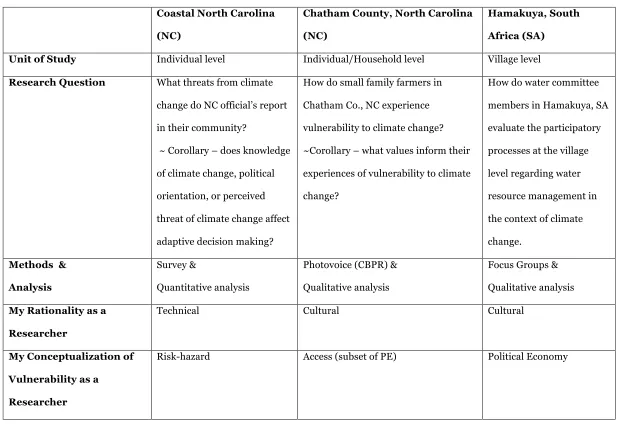
During the research design phase, I strove to identify three case studies that examine issues of practical importance to communities. Through the course of several revisions, I settled on examining the willingness of North Carolina coastal officials to take climate change related adaptive action, the perspective of small-scale farmers in central North Carolina regarding climate change, and issues of public participation in water security issues in rural South Africa in the context of climate change. I include a line in Table 1.1 below clarifying my rationality and
Table 1.1 Overview of the three case studies
Coastal North Carolina (NC)
Chatham County, North Carolina (NC)
Hamakuya, South Africa (SA)
Unit of Study Individual level Individual/Household level Village level
Research Question What threats from climate change do NC official’s report in their community?
~ Corollary – does knowledge of climate change, political orientation, or perceived threat of climate change affect adaptive decision making?
How do small family farmers in Chatham Co., NC experience vulnerability to climate change? ~Corollary – what values inform their experiences of vulnerability to climate change?
How do water committee members in Hamakuya, SA evaluate the participatory processes at the village level regarding water resource management in the context of climate change.
Methods & Analysis
Survey &
Quantitative analysis
Photovoice (CBPR) & Qualitative analysis
Focus Groups & Qualitative analysis
My Rationality as a Researcher
Technical Cultural Cultural
My Conceptualization of Vulnerability as a
Researcher
Table 1.1 presents the research questions for each of the case studies, the
different levels of analysis and the research methods used to contextualize my
understanding of vulnerability to climate change. For instance, the coastal study
utilizes a survey and quantitative analysis to explore adaptive action of officials. The
Chatham County study uses photovoice, a qualitative and participatory-based
research method to study vulnerability, while the Hamakuya study looks at
vulnerability at the village level through an assessment of participatory processes.
The variety of methods and levels of analysis represents an intentional decision to
examine vulnerability from a number of perspectives, and to be explicit about my
orientation.
According to Brunner (2006) much of the policy research being conducted is
often uncoordinated and lacks practical application. What is needed according to
Brunner (2006) is a new paradigm for practice, one that makes the practitioners’
paradigm more explicit, fosters new knowledge and practical solutions, and utilizes
context-appropriate methods. Tryhorn and Lynch’s (2010) research into the decision
making process of local governments in the Alpine Shire of Australia regarding flood
management follows through on Brunner’s call and serves as an example of “an
emerging paradigm of scholarship that requires an epistemology of reflective
practice and action research at a local scale” (124). This reflective intention, seen in
the work of these researchers and other policy scientists, rings true for me and
informs my approach to conducting research. In doing so I am afforded a more
comprehensive understanding of vulnerability to climate change by pursuing
multiple levels of analysis, using mixed methods and approaching the issue from
vulnerability from one perspective. Where a researcher who chooses to explore
vulnerability from a single angle or perspective and therefore is able to speak to just
one or two audiences, I choose to create a multi-faceted understanding of
vulnerability that will allow me to speak to several audiences instead of just one or
two.
On their own, each of the studies offers a new perspective enhancing our
collective understanding about vulnerability to climate change. One strength of this
approach exploring vulnerability to climate change is how the studies offer an
opportunity to integrate important commonalities between the various studies yet
still contrast meaningful differences across them. The strengths and limitations of
this approach are discussed in a concluding chapter.
Each of the following three mini-sections includes information illustrating
areas where social process will be used either directly in the case studies or indirectly
applied to participants who were not part of the data collection process. This will
help to point out areas where the policy sciences can help address the hypocognition
of current climate policy and gaps in vulnerability research.
Coastal North Carolina
This case study examines the understandings of risk of North Carolina coastal
officials. I approached this project from a technical rationality standpoint and with a
risk-hazard orientation towards vulnerability. The communities of coastal North
Carolina are susceptible to multiple risks because of climate change, just like many
other coastal communities in the United States. According to Riggs, Culver, Ames,
rise including: coastal erosion; increased flooding and salt-water intrusion; loss of
infrastructure and barrier islands; along with reduced coastal tourism and
recreational fishing activity, affecting two industries critical to the economic vitality
of many of the coastal counties. The understandings of risk by coastal officials factors
directly into their decisions regarding vulnerability to climate change and their
willingness or reticence to initiate adaptive action in their communities. Therefore
the adaptive decision making of coastal officials is an important factor worthy of
exploration.
Researchers operating under technical rationality related to communicating
risk tend to trust authoritative experts and methodological consistency, while
emphasizing a narrow, reductionist analysis where risk is depersonalized (Plough &
Krimsky, 1987); this may or may not hold true for coastal officials in NC. As stated in
an earlier section of this chapter, risk-hazard orientation usually conceptualizes
vulnerability as an isolated, external event impacting a system. As O’Brien et al.
(2007) note an outcome (risk-hazard) orientation towards vulnerability may
necessarily favor policy prescriptions designed around technological adaptations,
strategies to reduce greenhouse gases (GHG), or some other sector-specific remedy.
However, according to O’Brien et al., (2007) researchers with a contextual
orientation (political economy, access, or ecological resilience) towards vulnerability
would tend to highlight policy prescriptions addressing power structures, local
barriers constraining adaptive responses, or other social inequalities hindering
collective improvements as relevant adaptive strategies. By examining how coastal
officials differentiate between various risk scenarios related to climate change, this
The various understandings of risk of coastal officials are assessed through an
online survey. Surveys have been used in multiple locations to assess the climate
change related attitudes, understandings, and perceptions of officials across the US
(Safi, Smith, & Lui, 2012; Mozumder, Flugman, & Randhir, 2011; Brody, Grover,
Lindquist, & Vedlitz, 2010). The survey instrument also asked whether officials
believed that climate change is creating a crisis situation. Clark (2002) notes how
“people behave differently in crises, whether they are ecological (Chernobyl or
Bhopal), social (race riots), political (coup d’ etat), international (war), or otherwise”
(p40). Determining the sense of urgency of climate change in the minds of the
various county officials is important because there is not universal consensus among
coastal officials regarding the threat of climate change to coastal N.C. (Riggs et al.,
2008). Technical rationality might suggest that by generating an improved
understanding of how coastal officials discriminate between potential risk scenarios,
researchers and communication officials can tailor climate change information and
messages more appropriately to maximize comprehension between real and
imagined risks and offer improved adaptation strategies.
Chatham County, North Carolina
I approached this study thinking about cultural rationality and the access
model, which is a subset of the Pressure and Release model (PAR) (Wisner et al.,
2010) within the general political economy conceptualization of vulnerability. Access
in this context is not the same as political access as used in the Trinity of Voice ToV
model of public participation, but instead speaks to the social and economic assets
study aligns with cultural rationality by valuing a broad understanding of
appropriate sources of knowledge, is inclusive towards socio-cultural experiences,
and favors a democratic process open to tradition and peer groups (Plough &
Krimsky, 1987).
By utilizing photovoice, a participatory research method, this study actively
includes alternative sources of knowledge to understanding the vulnerability of
small-scale farmers to climate change. Through the study, the voice of small family
farmer in central North Carolina are given a platform for leveraging their
experiences to a broader audience than may have otherwise been available to them
as individual farmers. Though the primary unit of analysis in this study is the
individual farmer or farmer family, their individual experiences are intimately
wedded to the local community, therefore their perspectives are understood to be
representative of the community of local organic farmers in Chatham County.
The access model explores how vulnerability affects individual or household
livelihoods (Wisner et al., 2010). This study with small-scale farmers does just that;
it examines how the farmers and their livelihood strategies are being impacted by a
changing climate. Practically speaking, this project seeks to privilege the local
knowledge of small-scale farmers, continues the ongoing process of building and
sharing knowledge in Chatham County about climate change and is supportive of
advocacy initiatives at the local level. Furthermore the project involves working with
a key partner and gatekeeper in the Chatham County sustainable agriculture
movement and in assisting her in her efforts at moving the climate change agenda
Hamakuya, South Africa
Hamakuya is a region within the Limpopo Province of northeastern South
Africa. The way I have designed the Hamakuya study orients to cultural rationality
and the political economy conceptualization of vulnerability. This study examined
the perceptions of water committee members regarding public participation as
derived from Senecah’s model (2004), Trinity of Voice (ToV). The three key
components of this public participation model are access, standing and influence
(Senecah, 2004). ToV is a process-oriented model of public participation, which is an
important consideration in my exploration of the decision space regarding water
resource management in this particular setting. A discussion of the selection of this
process-oriented model and how well it fits, or not, in this particular context is taken
up in a subsequent chapter.
To make an initial and exploratory assessment of public participation in
Hamakuya, I utilized a rapid assessment as the research method. Beebe (1995) notes
how rapid assessments provide academic researchers and practitioners with “a
preliminary, qualitative understanding of a situation” (p42). Conducting a rapid
assessment allowed the project team to begin the process of understanding public
participation in Hamakuya, and from the limited insights and lessons learned be in a
better position to make informed decisions for a more exhaustive study of public
participation in Hamakuya. We began by asking residents of Hamakuya about their
experience regarding water. Focus groups were used to elicit the preferences and
understanding of villagers who are water committee members about participatory
practices related to water management and community decision-making. Questions
water as well as the local rules, norms, and practices controlling water management
in the villages. This study specifically positions the perceptions of villagers and water
committee members regarding public participation as an integral and important
source of knowledge. By including knowledge beyond that of the technical experts or
government officials, and by broadly incorporating the value of peer groups as well
as the social values of the community, this study adopts a cultural rationality.
This study fits within the political economy conceptualization of vulnerability
because water governance in South Africa is very much a medley of legislative
decisions at the national level operating alongside traditional rule at the village level
that does not always work as well as it was intended (Redfern, Grant, Biggs, & Getz,
2003). The national government has limited resources to effectively manage all of
the country’s water resources especially those in the rural areas, while the rural
communities often lack capacity in the form of information or authority
(Malzebender, Goldin, Turton, & Earle, 2005) to make better decisions. Evaluating
the effectiveness of the participatory processes through the villager’s access,
standing, and influence in terms of water resource management and aligns with my
desire to explore social vulnerability to climate change by way of public participation.
By coupling the known lack of resources and limited institutional capacities
with research exploring the participatory nature of the decision making processes,
preliminary appraisals can be made about the effectiveness of water governance at
the village level in the context of climate change. This study and the work of many
others in Hamakuya represents an important and ongoing effort to understand the
needs of the villagers, and determine whether the current practices and policies are
Finding new and meaningful differences in regards to social vulnerability to
climate is possible through the application of social process across these three case
studies. By examining the perspectives, situations, strategies, outcomes and effects
from different research orientations new insights are likely to emerge based largely
on value preferences (Clark, 2002).
Concluding Remarks and Disciplinary Fit
The long term arc of my research revolves around an effort to unpack how
academic researchers and policy makers understand and communicate vulnerability
to climate change. My research seeks to understand how risk is framed in studies
regarding vulnerability to climate change through research design, construction, and
problem orientation as well as exploring the environmental justice implications of
this framing. Part of that process will include an examination of whether and how
different forms of knowledge were either included or excluded from the policy
process. Ascher et al. (2010) cogently state the power of knowledge biases in that
“who decides on what knowledge is of crucial importance” (p11).
Academic researchers and policy makers studying vulnerability to climate
change who examine how they approach the subject by critically questioning their
assumptions and their framing of the issue and who use a variety of research
methods are demonstrating a more robust methodology. Studying vulnerability from
a diversity of perspectives can be a source of theoretical and practical strength, if
researchers are willing and able to move beyond disciplinary gridlock in terms of
Vulnerability studies are often conducted from a number of different, yet
independent, perspectives including social, cultural, disciplinary, and economic
perspectives. Carried along in the process of conducting such studies are the
individual perspectives of the researchers, which are tightly wedded to their interests
and frames of understanding. Frames are commonly understood as “cognitive maps
or patterns of interpretation that people use to organize their understanding” (Cox,
2010 p181). Transcending these constructs and dichotomies is a key step to
improving the study of vulnerability to climate change and something I intend to
practice in my research.
In their discussion of intractable policy controversies, Schön and Rein (1994)
note how “interests are shaped by frames, and frames may be used to promote
interests” (29). Therefore, recognizing the frames used and their influence in shaping
research and informing policy is key to improving the study of vulnerability to
climate change. This would align with Brunner’s (2006) call for “policy scientists and
other practitioners to make explicit and compare the paradigms underlying their
own work” (p136), and my efforts in Table 1.1 of detailing my paradigm of practice.
This is significant in terms of my exploration of vulnerability to climate change
because the methodological choices we make and the assumptions we hold are
driven by our individual framing of vulnerability and interests that eventually ripple
throughout our studies and conclusions. My research moves the perspectives,
rationales and conceptual frameworks regarding vulnerability to climate change to
center stage as key decision points in understanding how vulnerability is gauged.
This nexus of perspectives, frames and interests matters in terms of how and
informs their theoretical and operational conceptualization of vulnerability that in
turn affects how and what research is conducted. This nested relationship between
the researchers’ rationale and their conceptualization of vulnerability creates their
CLIMATE CHANGE AND ADAPTIVE DECISION MAKING:
RESPONSES FROM NORTH CAROLINA COASTAL OFFICIALS
Climate change is projected to increase the severity and frequency of sea-level
rise, coastal erosion, flooding, salt-water intrusion, and loss of infrastructure and
barrier islands, as well as reduce tourism expenditures, compromise ecosystems, and
create multiple adverse public health issues in North Carolina (NC) (Riggs, Culver,
Ames, Mallison, Corbett, and Walsh, 2008; Strauss, Tebaldi, Kulp, Cutter, Emrich,
Rizza, & Yawitz, 2014). While the coast of NC has long been affected by tropical
storms, hurricanes, tornados and other weather-related events, the long range future
for coastal communities is of particular concern when coupled with climate change
projections. The Intergovernmental Panel on Climate Change (2014) anticipates
climate change will influence this recurring pattern among coastal communities, like
those in NC. Though the scale and extent of the effects are uncertain, the likelihood
of their occurrence is quite high (Wootten, Smith, Boyles, Terando, Stefanova, Misra,
Smith, Blodgett, & Semazzi, 2014). Ultimately climate change will magnify the effects
of naturally occurring events while simultaneously amplifying the complexity and
importance of the adaptive decision making required by coastal officials.
However, consensus surrounding existence, causes, and effects of climate
change is far from certain, and the potential impacts vary from location to location.
Political and community will to act wavers as does ability, while those who are
predisposed to take adaptive action are in many cases unsure of what to do or the
coastal officials are many, including legal, regulatory, information, financial, political
and institutional factors (Spanger-Siegfried, Fitzpatrick, & Dahl, 2014).
Identification of the Problem and Institutional Setting
Operating in a contested political environment can make it challenging for
those inclined to take adaptive action and coordinate programs across agencies and
levels of government. A report from the Nicholas Institute for Environmental Policy
Solutions at Duke University (2010) found that many elected officials and public
managers in eastern NC dispute the concept of climate change and are not convinced
that climate change-induced sea level rise threatens their community. This
resistance to believing the data supporting climate change and sea level rise along
the NC coast stands to hinder these same officials and their communities from
preparing for the challenges that lie ahead of them. These challenges include
assessing infrastructure readiness, protecting drinking water supplies, securing
wastewater treatment operations, managing flooding and water management issues,
protecting estuarine and ecosystem health, planning for future economic
development, as well as protecting public health (Nicholas Institute, 2010).
Climate change is a politically contentious issue in NC. Over the past four
years, a battle has been brewing in the state over whether and how to study, plan for,
or even acknowledge the anticipated impacts from climate change. A report by the
NC Coastal Resources Commission’s Science Panel on Coastal Hazards (2010)
suggested that NC officials adopt 1 meter (39 inches) of sea level rise as the official
projection for the coast of NC. That government report generated considerable
formed in 2009 to fight storm water management regulations in the 20 coastal
counties of NC, quickly stepped in to oppose those findings and began working to
convince the NC Legislature to dismiss its own report. Two years later, in 2012, with
a newly elected Republican governor and a Republican-led legislature in place, the
state passed a moratorium on any new sea level rise policies. The Science Panel from
2010 was disbanded and a new Science Panel was formed including of members of,
or those sympathetic to, NC-20 on that new panel. This new panel is to look no more
than 30 years into the future when making sea level rise projections. A preliminary
draft report from this Science Panel was released for public comment in December
2014 (Dewitt, 2014) and then in early 2015 the Science Panel released their final
report (NC Coastal Resources Commission, 2015). Even with the reduced time
horizon that the Science Panel is instructed to use, the new report reiterates that NC
can expect at least 2 inches of sea level rise along the southern coastline and 6 inches
of sea level rise along northern stretches of the coast (Shutak, 2014; NC Coastal
Resources Commission, 2015).
The contention surrounding climate change as seen in NC is not limited to
NC. According to the Georgetown Climate Center (2014) seven coastal states
including Texas, Louisiana, Mississippi, Alabama, Georgia, South Carolina, and
North Carolina have failed to pass state-level climate adaptation plans. Moreover,
the existence of locally or regionally-based adaptation plans in those seven states is
marginal at best (Georgetown Climate Center, 2014). In fact, climate change
pressures are exacerbating existing political tension in south Florida (FL) to such an
extent that the Mayor and City Commission of the City of South Miami recently