Measuring Parameters for Modified TIMIP
with Enhanced Handover Latency
Sunil Kumar Sharma1, Dr. Savita Shiwani2
M.Tech Student, Department of Information Technology, Suresh Gyan Vihar University, Jaipur, India1
Associate Professor, Department of Information Technology, Suresh Gyan Vihar University, Jaipur, India2
ABSTRACT: The global market of Internet has introduced as a successful wireless LAN market and yield the need for new Internet framework. Mobility protocols as MIP, hierarchical MIP, and cellular IP, HAWAII have been planned for these types of communications and featuring different type of mobility properties and issues. Modified TIMIP protocol is proposed with improvements in the base protocol TIMIP. The both missing paging and routing cache mapping features have been applied to the idle terminal for supporting. The Security visions and issues are introduced by embedding the HMAC-MD5 algorithm. A number of features from various earlier protocols have been merged and to form this protocol, which provides better efficiency and better transparency than another solution, by adding the feature of both seamless handovers and optimal routing. The various multimedia support, paging and security visions are provided. Simulation comparing MTIMIP with the various micro mobility protocols are performed. In these simulations, the average results from continuous measurements are presented and featuring varying MN speeds, multiple metrics (loss ratio, throughput and delay), UDP traffic sources for intra and inter domain, the stationary results showed that MTIMIP has the suitable resource optimization performance for intra-domain. HAWAII would be able to share such good performance with intra-domain traffic, but suffers from greater distance routing path due to its operations of the incremental handover. It was deduced the CIP and HMIP and have the worst characteristics, as all specified packets are forced to be passed through the GW. The protocol has been also evaluated the various traffic natures as video traffic, VoIP traffic, and CBR sources are to be found and capable to handle the various multimedia applications and with user’s specified requirements. The former solution is specified with state machine. Modified TIMIP will be measured and compared to alternative solutions via simulation studies in the NS-2.31 simulator.
KEYWORDS: Mobile IP, Micro mobility protocols, Seamless handoff, Integration, Protocol performance
I. INTRODUCTION
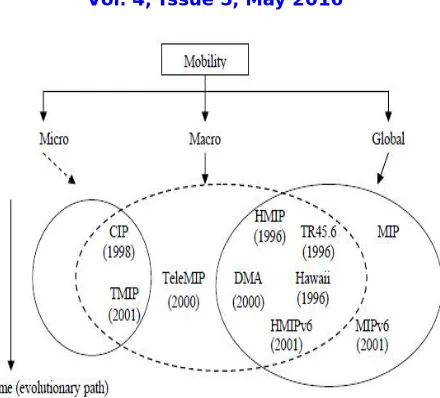
Fig 1 Classification of Mobility Protocol
The deployment of International Mobile Telephony (IMT)-2000 norms for 3G wireless networks will give the existence of 1G, 2G, and 2.5G operators also and the flexibility to develop their corresponding networks to support as the skeleton of the multimedia transmissions with a small bit rate of 384 kb/s (fast movers) to 2 Mb/s [2]. Significantly less than what 4G commits for the global roaming across though the multiple networks (e.g., from the cellular networks to the satellite-based networks or to be a high bandwidth wirelesses LAN [4]) with bit rates up to 100 Mb/s. Therefore, to realize this as commercial viable for IP mobility support over the existing wireless infrastructure remains as a challenging research area [3]. For real-time multimedia communications, user mobility poses multiple recent dimensions to this challenge [4]. The link layer handles mobility management in 2.5& 3G cellular networks. While the link-layer-independent solution for 4G require for the mobility management and to be defined at the network layer [2]. Mobile IP (MIP) [5] was the proposed standard for MIPv6 [6] is the draft standard by the Internet Engineering Task Force (IETF). The MIP was initially designed to serve the needs of global mobile users who wish to connect with their MNs to the Internet and mentioned the connectivity as to move from one place to another establishes a new links that moves away from the previous established links also. Many IP micro-macro mobility protocols [7] are proposed since past several years within the IET, complement of the MIP in the better handling for local movement within a subnet without much interaction with the MIP-enabled Internet.
II. RELATED WORK
2.1 IP Micro-mobility comparisons
By one key factor which is used to differentiate and classify the mobility protocols is their efficiency relatively, which shows from their internal mobility processes, algorithms and architectures also. IP mobility protocols are produced the efficiency metric which is mostly influenced by the supporting of seamless handovers and mobility overhead. The resources utilizations are improved by routing the data packets by the shortest paths inside the network and with the simplest encapsulation by using the MN’s own data packets to minimize the state maintenance overhead.
Fig.2 Integration of Mobile IP with HMIP, Cellular IP and HAWAII
When a mobile terminal moves in the TIMIP domain dissimilar from its present location, the terminal is authenticated locally and a routing path is established between the terminal and the ANG and Packets are then received /sent from/to the inside by the ANG. If the mobile terminal’s home network is a dissimilar MIP domain, it’s HA must be signified so that packets can be routed correctly through an IP tunnel established from the HA to the FA located at the ANG. After assuring the registration information of the mobile terminal (Basically the MIP capability and the IP address of the HA), the ANG realizes that it is a foreign mobile terminal, employ MIP. Therefore, on behalf of the mobile terminal the ANG must act as a MIP proxy, generating all MIP signalling as the mobile terminal would. Previously it has to signify that the HA about the mobile terminals is new location and CoAddr by means of a MIP RegistrationRequest message, which requires authentication and using the authentication key between the mobile terminal and the HA(Home Address). As the ANG does not know about this specific key, it is the mobile terminal that has to sign the message. The ANG sends the mobile terminal an AuthenticationRequest message consisting <IP address of the ANG, MIP Registration Request, IP address of the HA, timestamp> authenticated by the ANG using MD5 (K1, AuthenticationRequest), where K1 is the authentication key between the ANG and the mobile terminal for its TIMIP domain. Based on the IP address of the ANG, the mobile terminal finds K1 value in the key database and secures the authentication key of its home network (K2) in the key database, the IP address of the HA(Home Address). The HA (Home Address) replies with an authenticated MIP Registration Reply message, which contains a message digest MD5 (K2, MIP Registration) extended as a Mobile-Home Authentication Extension field in the specific order for verification of the identity of the HA, the ANG has to again rely on the mobile terminal. It sends an Authentication Request message to the mobile terminal, containing <IP address of the ANG, IP address of the HA, MIP Registration Reply (except the Mobile-Home Authentication Extension), timestamp>, authenticated with MD5 (K1, Authentication Req.). After the communication with the HA, is established, the tunnelled IP packets are de-encapsulates by the ANG which came from the HA.
establishing the mobile terminals with a well- defined ANG IP address published by all access points of all TIMIP domains.
III.PROPOSED ALGORITHM
Step1: Add two types of MIP packets in the MIPRegType enumeration: MIPT_ BU, MIPT _BW MIPT_BU is the type indicator of Binding Update message; MIPT_ BW is the type indicator of BindingWarning message.
Step 2: Add two function headers in the header file
Step 3: Modify the MIPEncapsulator::recv(Packet* p, Handler *h) function.
Step 4:Modify the MIPBSAgent::recv(Packet* p, Handler *) function.Modify this function; enable the MIPBSAgent to handle Binding Update message and BindingWarning message.When the MIPBSAgent receives the Binding Update message, it stores the care-of address and then enables a MIPEncapsulator to tunnel the packets directly to the care-of address bypassing the home agent.When the MIPBS Agent receives the Binding Warning message, if it is the Home Agent of the Mobile node, then it retrieves the address of the correspondent node and sends a Binding Update message to it. If it is not the Home Agent, it just forwards the BindingWarning message to the Home Agent of the mobile node.
Step 5: Modify the MIPBSAgent::command (int argc, const char*const* argv) function. Provide the interface to OTcl modules, to send out the Binding Update message
Step 6: Add the MIPBSAgent::send _bu (int daddr, int haddr, int ha, int coa) function to send the Binding Update message.
Step 7: Modify the MIPMHAgent::recv (Packet* p, Handler *) function.
Step 8: Modify this function to send out the Binding Warning message when the mobile node receives the registration reply message from FA/HA.
Step 9: Add the MIPMHAgent::send BW (int daddr, int haddr, int coa) function. Function to send the BindingWarning message.
Step 10: Add the MIPEncapsulator instproc setCH (mhaddr, chaddr) function.
This OTcl function is to store the address of the correspondent host in a hash table, indexed by the home address of the mobile node.
Step 11: Add the MIPEncapsulator instproc setCOA (mhaddr, coa) function.
This OTcl function is to store the care-of address of the mobile node in a hash table, indexed by the home address of the mobile node.
Step 12: Add the MIPEncapsulator instproc send_bu (daddr, haddr, coa) function. This OTcl function is to send out the Binding Update message by calling the MIPBSAgent::send_bu function.
Before sending out the Binding Update message, it should check whether the same Binding Update message has already been sent out or not.
Step 13: Add the MIPEncapsulator instproc nodeptr () function. This OTcl function is to return the hierarchical address of the node where the MIPEncapsulator locates.
Step 14: Add the Agent/MIPBS instproc getCOA (mhaddr);
This OTcl function is to return the care-of address, indexed by the home address of the mobile node.
Step 15: Add the Agent/MIPBS instproc getCH (mhaddr) function.
This OTcl function is to return the address of the correspondent node, indexed by the home address of the mobile node.
Step 16: Modify the Agent/MIPBS instproc encap-route (mhaddr, coa, lifetime) .This is the main OTcl function to enable the MIPEncapsulator to encapsulate the packets.When adding the encapsulation route, it should first check whether the same route has been added or not, so to avoid redundant route.
IV.PSEUDO CODE
MIP.H
a. void MIPBSAgent::send_bu(int dest, int haddr, int ha, int coa);
This function is used in MIPBSAgent to send out Binding Update message. b. void MIPMHAgent::send_bw(int dest, int haddr, int ha, int coa);
This function is used in MIPMHAgent to send out BindingWarning message.
a. Enable the MIPEncapsulator to send out Binding Update message when the home Agent receives packets destined to the mobile node away from home.
b. Save the address of the correspondent node and the current care-of address of the mobile node for later usage.
c. Send out the Binding Update message in MIPEncapsulator is to call a TCL function, which eventually invokes the send bu method of MIPBSAgent.
MIP-REG.CC
a. Handling Binding Update message
MIPBSAgent::command (int argc, const char*const* argv) MIPBSAgent::send _bu (int daddr, int haddr, int ha, int coa) MIPMHAgent::recv (Packet* p, Handler *) function. MIPMHAgent::send BW (int daddr, int haddr, int coa)
NS-MIP.TCL
MIPEncapsulator instproc setCH (mhaddr, chaddr) MIPEncapsulator instproc setCOA (mhaddr, coa) MIPEncapsulator instproc send_bu (daddr, haddr, coa) MIPBSAgent::send_bu function.
MIPEncapsulator instproc nodeptr () MIPEncapsulator locates.
Agent/MIPBS instproc getCOA (mhaddr); Agent/MIPBS instproc getCH (mhaddr) function.
Modify the Agent/MIPBS instproc encap-route (mhaddr, coa, lifetime)
V. SIMULATION RESULTS
The various simulations have been simulated by Network Simulator-2.31 on Linux platform which inputs the various tcl files and produces the framework as a combination of Nam and tr files, which respectively provides the graphical representation and statistical outputs for the various operations .tr files have been handled with the help of trace converter and trace graph.To relate back to Section 3, and the design of the Modified TIMIP model, the primary objectives of this model are to determine if:
This improves efficiency and transparency gains.
To investigates whether it provides the best alternative solution, by featuring fast and smooth handover, removes detriangulation and route optimization problems
To enhance the security and quality of services in Modified TIMIP.
UDP Simulation Results
UDP Throughput Ratio = ((Number of accepted ordered bytes passed to the application*100)/ measurement time)/ Theoretical maximum
Fig.3. The Various Traffic Comparisons: UDP Throughput Ratio
0 100 200 300 400 500 600 700 800 900
MTIMIP TIMIP MIP HMIP CIP HAWAII
UDP-Throughput …
Protocol
P
a
c
k
e
ts
P
e
r
S
e
c
o
n
Handover Latency
Handover Latency =∑ (reception of timestamp of first packet received via the new AR reception timestamp last packet received via the old AR) / number of handovers.
Fig.6. Discrete value comparison of various protocols
TCP Simulation Results
In case of TCP traffic the MIP provides the maximum throughput as compared to the other protocols while MTIMIP is the protocols that is providing the smooth and faster handovers, transparency and efficiency
Fig.5. TCP throughput ratio comparison
Data Drop Ratio
The protocols have much higher drop ratios even with the queuing buffers. This happens because, even though the routers have very large queue sizes to try to prevent packet losses, such queuing greatly delays the handover update, resulting in more packets being forwarded to the previous location where they will be dropped and by having simpler handover mechanisms, both MTIMIP and CIP show the lowest degradation in the highest load scenarios.
Fig.4. Comparison of the Data Drop Ratio for various protocols
0 50 100 150 200 250 300
MTIMIP TIMIP MIP HMIP CIP HAWAII
Handover Latency Protocol H a n d o v e r La te n c y 0 20 40 60 80 100 120
MTIMIP TIMIP MIP HMIP CIP HAWAII
TCP Throughput Ratio
Protocol N o . o f P a c k e ts R e c e iv e d 0 10 20 30 40 50 60 70 80
MTIMIP TIMIP MIP HMIP CIP HAWAII
VI.CONCLUSION AND FUTURE WORK
After the continuous evaluation of the results this showed that all protocols which are mentioned except the HMIP have good localized handover support and they are minimizing the handover latency in most handovers. By sending the update message to the previous AP directly, MTIMIP would have the lowest handover latency rather than all protocols. However, such benefit is cancelled in HAWAII by incrementing of out of- order in UDP packets in each handover, a specified problem particularly the evident in tree topology also. Having a case of inter domain traffic HMIP is having the worst results as compared to all handovers require an update to the GW. The results reflect that for low speed movement utilization, the micro-mobility protocols only feature with small performance differences between themselves also. While, in high speed progress scenarios, such differences are seriously amplified and can distinguish the protocols issues.
REFERENCES
[1] K. El-Malki and H. Soliman, “Low Latency Handoffs in Mobile IPv4”, draft-ietf- mobile ip low latency- handoffs-v4-03.txt, November 2001. [2] E. Gustafsson, ed., “Requirements on Mobile IP from a Cellular Perspective”, Internet draft, draft-ietf-mobileip-cellular-requirements-02,
work in progress, June 1999.
[3] Arunesh Mishra, Minho Shin, William A. Arbugh, “An empirical analysis of the IEEE 802.11 MAC layer handoff process”, 2004. [4] ACM SIGCOMM Computer Communication Review, Vol 33, issue 2, April 2003.
[5] Charles Perkins, David B. Johnson, “Route Optimization in Mobile IP”. IETF Draft. Draft-ietfmobileip-optim-09, 15 February 2000. [6] Chee Lau, “Improving Mobile IP Handover latency on end to end TCP in UMTS/WCDMA Networks.”,2002.
[7] Svetoslav Yankov, Sven Wiethoelter, “Handover Blackout Duration of Layer 3 Mobility Management Schemes”,2005. [8] Taehwan Choi, “A New Approach to Seamless Mobility between Cellular Networks and WLAN”,2004.
[9] K. Daniel Wong, A. Dutta, H. Schulzrinne, K. Young, “Simultaneous mobility: analytical framework, theorems and solutions”, Wireless Communications and Mobile Computational, Sep. 2006.
[10] P. Estrela, T. Vazão, M. Nunes, “De-Triangulation Optimal solutions for mobility scenarios with asymmetric links”, International Conference on Information Networking (ICOIN 2007), January 2007.