University of Windsor University of Windsor
Scholarship at UWindsor
Scholarship at UWindsor
Electronic Theses and Dissertations Theses, Dissertations, and Major Papers
2011
CHANGE-READY MPC SYSTEMS AND PROGRESSIVE MODELING:
CHANGE-READY MPC SYSTEMS AND PROGRESSIVE MODELING:
VISION, PRINCIPLES, AND APPLICATIONS
VISION, PRINCIPLES, AND APPLICATIONS
Mohamed Ismail
University of Windsor
Follow this and additional works at: https://scholar.uwindsor.ca/etd
Recommended Citation Recommended Citation
Ismail, Mohamed, "CHANGE-READY MPC SYSTEMS AND PROGRESSIVE MODELING: VISION, PRINCIPLES, AND APPLICATIONS" (2011). Electronic Theses and Dissertations. 453.
https://scholar.uwindsor.ca/etd/453
This online database contains the full-text of PhD dissertations and Masters’ theses of University of Windsor students from 1954 forward. These documents are made available for personal study and research purposes only, in accordance with the Canadian Copyright Act and the Creative Commons license—CC BY-NC-ND (Attribution, Non-Commercial, No Derivative Works). Under this license, works must always be attributed to the copyright holder (original author), cannot be used for any commercial purposes, and may not be altered. Any other use would require the permission of the copyright holder. Students may inquire about withdrawing their dissertation and/or thesis from this database. For additional inquiries, please contact the repository administrator via email
CHANGE-READY MPC SYSTEMS AND PROGRESSIVE
MODELING: VISION, PRINCIPLES, AND APPLICATIONS
by
Mohamed Abdel-Wahab Mangoud M. Ismail
A Dissertation
Submitted to the Faculty of Graduate Studies
through Industrial and Manufacturing Systems Engineering
in Partial Fulfillment of the Requirements for
the Degree of Doctor of Philosophy at the
University of Windsor
Windsor, Ontario, Canada
2011
iii
Declaration of Previous Publications
This dissertation includes one original paper that has been previously published in a
peer-reviewed journal. In addition, a book chapter that was a very early framework of
change ready MPC systems is also reported here.
Thesis Chapter Publication Title/Full Citation Publication Status
Chapter 4
Ismail, M. A. and H. ElMaraghy (2009). "Progressive modeling-An enabler of dynamic changes in production planning." CIRP Annals - Manufacturing Technology 58(1): 407-412.
Published
--
Ismail, M. A. and H. A. ElMaraghy (2009). Component Oriented Design of Change-Ready MPC Systems. Changeable and Reconfigurable Manufacturing Systems. H. A. ElMaraghy, Springer-Verlag 213-226.
Published
I certify that the above material describes the work completed during my registration as
graduate student at the University of Windsor.
I declare that, to the best of my knowledge, my thesis does not infringe upon anyone’s
copyright nor violate any proprietary rights and that any ideas, techniques, quotations,
or any other material from the work of other people included in my thesis, published or
otherwise, are fully acknowledged in accordance with the standard referencing
practices. Furthermore, to the extent that I have included copyrighted material that
surpasses the bounds of fair dealing within the meaning of the Canada Copyright Act, I
certify that I do not need to obtain a written permission from the copyright owner(s) to
include such material(s) in my thesis.
I declare that this is a true copy of my dissertation, including any final revisions, as
approved by my dissertation committee and the Graduate Studies office, and that this
dissertation has not been submitted for a higher degree to any other University or
iv
Abstract
The last couple of decades have witnessed a level of fast-paced development of new
ideas, products, manufacturing technologies, manufacturing practices, customer
expectations, knowledge transition, and civilization movements, as it has never before.
In today’s manufacturing world, change became an intrinsic characteristic that is
addressed everywhere. How to deal with change, how to manage it, how to bind to it,
how to steer it, and how to create a value out of it, were the key drivers that brought
this research to existence. Change-Ready Manufacturing Planning and Control (CMPC)
systems are presented as the first answer. CMPC characteristics, change drivers, and
some principles of Component-Based Software Engineering (CBSE) are interwoven to
present a blueprint of a new framework and mind-set in the manufacturing planning
and control field, CMPC systems.
In order to step further and make the internals of CMPC systems/components
change-ready, an enabling modeling approach was needed. Progressive Modeling (PM), a
forward-looking multi-disciplinary modeling approach, is developed in order to
modernize the modeling process of today's complex industrial problems and create
pragmatic solutions for them. It is designed to be pragmatic, highly sophisticated, and
revolves around many seminal principles that either innovated or imported from many
disciplines: Systems Analysis and Design, Software Engineering, Advanced Optimization
Algorisms, Business Concepts, Manufacturing Strategies, Operations Management, and
others. Problems are systemized, analyzed, componentized; their logic and their
solution approaches are redefined to make them progressive (ready to change, adapt,
and develop further). Many innovations have been developed in order to enrich the
modeling process and make it a well-assorted toolkit able to address today's tougher,
v
toolbox: function templates, advanced notation, cascaded mathematical models,
mathematical statements, society of decision structures, couplers—just to name a few.
In this research, PM has been applied to three different applications: a couple of
variants of Aggregate Production Planning (APP) Problem and the novel Reconfiguration
and Operations Planning (ROP) problem. The latest is pioneering in both the
Reconfigurable Manufacturing and the Operations Management fields. All the
developed models, algorithms, and results reveal that the new analytical and
computational power gained by PM development and demonstrate its ability to create a
new generation of unmatched large scale and scope system problems and their
integrated solutions. PM has the potential to be instrumental toolkit in the development
of Reconfigurable Manufacturing Systems. In terms of other potential applications
domain, PM is about to spark a new paradigm in addressing large-scale system problems
of many engineering and scientific fields in a highly pragmatic way without losing the
vi
Dedication
TO THE MARTYRS OF THE JAN 25THEGYPTIAN REVOLUTION AND EVERYONE PARTICIPATED: TO THOSE WHO LET US SMELL FREEDOM, TRUST IN JUSTICE, AND HOPE
FOR A BETTER TOMORROW.
vii
Acknowledgements
First, foremost, and throughout my life, I would like to thank Almighty Allah as all words should fail to express my eternal gratitude for all the blessings that I couldn’t count, for energy, and for guidance without which that research couldn’t exist.
I would like to thank Dr. Hoda ElMaraghy for her support, guidance, and feedback
throughout my PhD program. I would like to express my gratitude to Dr. Firtz Rieger, Dr.
Mike Wang, and Dr. Gouqing Zhang for their suggestions, comments, and overall
involvement. I would like to thank also Dr. Waguih ElMaraghy for his involvement and
suggestions. I am also grateful for Dr. Abdul-Fattah Asfour for his support during my PhD
program.
I would like to express my sincere gratitude to Dr. Ashraf Nassef who simply had an
instrumental role in many endeavours of my life. Special recognition goes to my
preparatory and secondary school teachers Nabil Abdul-Elmohsen, Dr. Abdel Wahed
Yossef and Ra’oof.
My utmost gratitude, love, and appreciation go to my father and my mother, may God
blesses her soul, for their sacrifices and care throughout my life. Lest to forget all my
brothers and sisters who overwhelmed me with their love and unflagging support. I
would like to extend my gratitude to my father in law, may God bless his soul too, and
my mother in law for their continuous support and best wishes. I would like to express
my very sincere appreciation and gratitude to my wife Ola who has shared with me
every moment in this tough and hard experience and to my little smiles Judi and Yahya.
Many thanks go to all my friends for their help and support throughout my life
viii
Table of Contents
Declaration of Previous Publications ... iii
Abstract ... iv
Dedication ... vi
Acknowledgements ... vii
List of Figures ... xvi
List of Tables ... xx
List of Abbreviations ... xxiii
Nomenclature ... xxiv
Chapter 1 Introduction ... 1
1.1 Introduction ... 1
1.1.1 Manufacturing Paradigms ... 1
1.1.2 Manufacturing Technology ... 2
1.1.3 Manufacturing Planning and Control Systems ... 4
1.1.4 MPC in Practice: From Reorder Point Systems to Enterprise Resource Planning (ERP) ... 6
1.2 Motivation ... 8
1.3 Research Projects ... 8
1.4 Research Approach ... 10
1.4.1 Change-Ready MPC Systems ... 10
1.4.2 Progressive Modeling I and APP ... 10
1.4.3 Progressive Modeling II and MMAPP ... 10
ix
1.5 Dissertation Outline ... 11
Chapter 2 Literature Review ... 14
2.1 Introduction ... 14
2.2 Integrated MPC frameworks ... 14
2.3 Object Oriented MPC Models ... 16
2.4 MPC and RMS ... 19
2.5 Aggregate Production Planning ... 21
2.5.1 APP Modeling and Solution Approaches ... 22
2.5.2 APP shortfalls ... 28
2.6 Evolutionary Multi-objective Optimization Algorithms ... 29
2.7 Summary ... 30
Chapter 3 Change-Ready MPC Systems ... 31
3.1 Introduction ... 31
3.2 Change Drivers of MPC systems ... 33
3.2.1 Market ... 33
3.2.2 Product ... 34
3.2.3 Manufacturing Technology ... 34
3.2.4 Information Technology... 35
3.2.5 Industry ... 35
3.3 The New MPC System Characteristics ... 35
3.3.1 Modularity ... 35
3.3.2 Evolvability ... 36
x
3.3.4 Socio-Technicality ... 37
3.3.5 Universality ... 37
3.4 Component Based Software Engineering (CBSE)... 38
3.5 Component-Oriented Versus Object-Oriented Programming ... 39
3.6 Change-Ready MPC Frameworks and CBSE ... 39
3.7 CMPC core components: Some Examples ... 42
3.7.1 Demand Management ... 42
3.7.2 Resources Management ... 43
3.7.3 Other Components ... 44
3.8 Summary ... 44
Chapter 4 Progressive Modeling I: and the First Application ... 46
4.1 Introduction ... 46
4.2 Propagating the Balance: a PM Governing philosophy ... 47
4.3 Aggregate Production Planning: a brief Introduction ... 49
4.4 Progressive Modeling: The Process I ... 50
4.4.1 Analyze the problem ... 51
4.4.2 Build the Mathematical Model ... 53
4.4.3 Develop the Solution Approach ... 57
4.5 Numerical example ... 59
4.6 Summary ... 66
Chapter 5 Progressive Modeling II and the MMAPP Problem ... 67
5.1 Introduction: PMII and the Industrial-Academic Gap ... 67
xi
5.2.1 Systemize, Analyze, and Componentize ... 68
5.2.2 Define the Logic That Governs ... 69
5.2.3 Optimize and Control the Logic: Finding Best Alternatives ... 71
5.3 Application: Multi-Objective Multi-Product Aggregate Production Planning (MMAPP) Problem ... 71
5.4 Model Components ... 72
5.5 Mathematical Model ... 72
5.6 Solution Approach ... 78
5.6.1 The Algorithm—Brief Introduction ... 78
5.6.2 Problem Coding and Incomplete Chromosomes ... 78
5.6.3 Constraints: Coupling Mechanisms and Searching Guards ... 79
5.6.4 The Initialization Algorithm ... 80
5.6.5 Decoding ... 81
5.6.6 Exploring the Search Space ... 86
5.6.7 Objective Space and Selection Algorithm ... 92
5.6.8 Adding Pieces Together: The Algorithm and the Inner Workings of Components ... 93
5.7 Numerical Example ... 94
5.8 Problem Data ... 94
5.9 Results ... 96
5.10 Summary ... 100
xii
6.1 Introduction ... 101
6.2 Related Literature ... 103
6.2.1 Product Configuration Linkage ... 103
6.2.2 Reconfiguration Planning and RMS System Design ... 104
6.2.3 RMS Operations Management ... 106
6.2.4 Progressive Modeling and the Gap in the RMS Science ... 107
6.3 RMS: The New Amorphous Process ... 108
6.4 Manufacturing Process in an RMS Environment ... 109
6.4.1 RMS: Data Model Perspective ... 109
6.5 RMS Important Issues ... 115
6.5.1 Man Power: Reconfiguration impact ... 115
6.5.2 Scalability Options ... 115
6.5.3 Demand ... 116
6.5.4 Capital Equipment Investment ... 117
6.6 ROP—Problem Statement ... 117
6.7 Planning Foundations: Buckets, Slots, and Life Cycles ... 118
6.7.1 Demand Buckets ... 118
6.7.2 Operations Bucket ... 119
6.7.3 The Planning Horizon ... 120
6.7.4 Product Make Life Cycles ... 124
6.7.5 A Reconfiguration Cycle or Configuration Bucket ... 125
6.7.6 P-Bucket or R-Bucket ... 125
xiii
6.9 ROP: The Component Model ... 127
6.10 Summary ... 128
Chapter 7 Reconfiguration and Operations Planning Problem: The Mathematical Statement ... 129
7.1 Introduction ... 129
7.2 Nomenclature ... 130
7.2.1 Advanced Notation ... 130
7.2.2 Nomenclature Tuples ... 132
7.3 ROP Sub-Models ... 137
7.3.1 Reconfiguration Modeling ... 137
7.3.2 Product Make Modeling ... 141
7.3.3 Product Supply and Product Balance Equations ... 148
7.3.4 Workforce Modeling ... 149
7.3.5 System level Cost Estimation ... 150
7.4 The ROP Mathematical Statement ... 151
7.5 Summary ... 157
Chapter 8 Reconfiguration and Operations Planning Problem: The Solution Algorithm 158 8.1 Introduction ... 158
8.2 Setting Up the Search Space ... 159
8.3 The Structured Decision Space, the Society of Decision Plans, and the Solution Algorithm ... 160
8.3.1 Configuration Maps Development ... 161
xiv
8.3.3 Product Make Plans: Part I ... 166
8.3.4 Workforce Plans ... 167
8.3.5 Product Supply Decisions and Plans ... 169
8.3.6 Product Make Plans: Part II ... 171
8.3.7 Inventory and Back/orders ... 171
8.4 Objectives Evaluation: ... 172
8.4.1 Max Operations Profitability ... 172
8.4.2 Minimize capital investment in inventory ... 173
8.4.3 Minimize backorders ... 173
8.5 Initialization Algorithm ... 173
8.6 Recombination Operators ... 174
8.6.1 Cross Over Operators ... 175
8.6.2 Mutation Operators ... 178
8.7 ROP: The ROP Master Algorithm ... 180
8.8 Summary ... 181
Chapter 9 Reconfiguration and Operations Planning Problem: Case Study, Results, and Post Analysis ... 182
9.1 Introduction ... 182
9.2 Case Study ... 182
9.2.1 Demand and Product Data ... 183
9.2.2 System domains, Configuration Domain, Product Domains ... 184
9.2.3 System Initial State ... 189
xv
9.2.5 Optimization Data ... 190
9.3 Results ... 191
9.3.1 Configuration Maps ... 192
9.3.2 Product Make Plans ... 193
9.3.3 Product Plans ... 196
9.3.4 Work force Plans ... 197
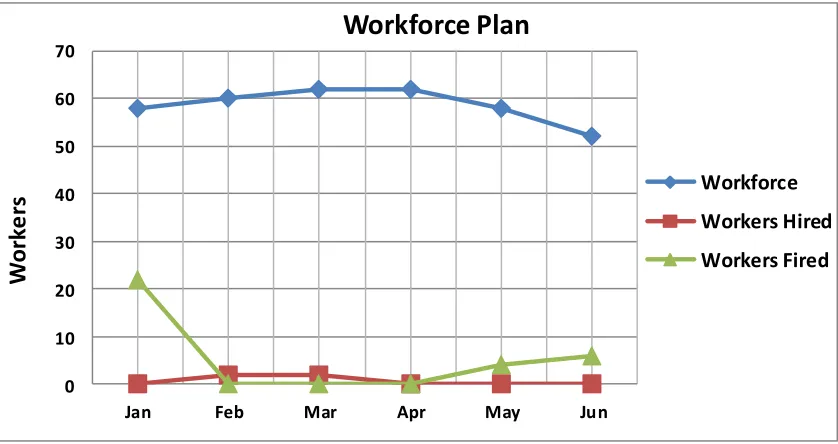
9.3.5 Planning Charts: Demand and Supply, Inventory and Back Orders, and Workforce Adjustments ... 198
9.3.6 Objectives Evaluation in Details ... 202
9.4 Conclusions ... 206
9.5 Summary ... 206
Chapter 10 Summary, Insights, and Contributions ... 207
10.1 Introduction ... 207
10.2 Research insights ... 209
10.3 Research Contributions and Achievements ... 210
10.3.1 Change Ready MPC systems ... 210
10.3.2 Progressive Modeling ... 211
10.3.3 Applications... 214
10.4 Implementation ... 217
10.5 The Future of Progressive Modeling ... 218
References ... 219
Appendix A: SPEA 2 Algorithm ... 227
Appendix B: Component Models and Component Diagrams ... 230
xvi
List of Figures
Figure 1-1: Manufacturing planning and control (Vollman, Berry et al. 2005) ... 5
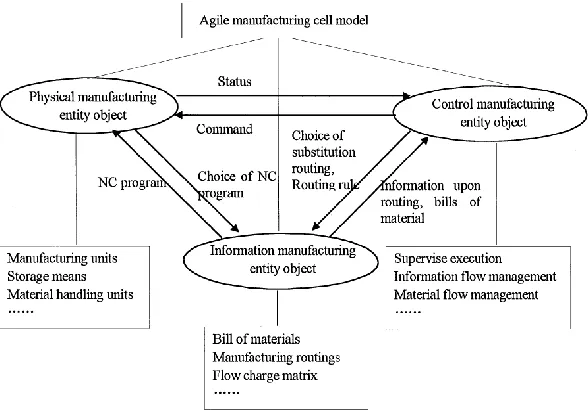
Figure 2-1: Manufacturing entity objects of an agile manufacturing cell (Zhang and Zhang 1999) ... 17
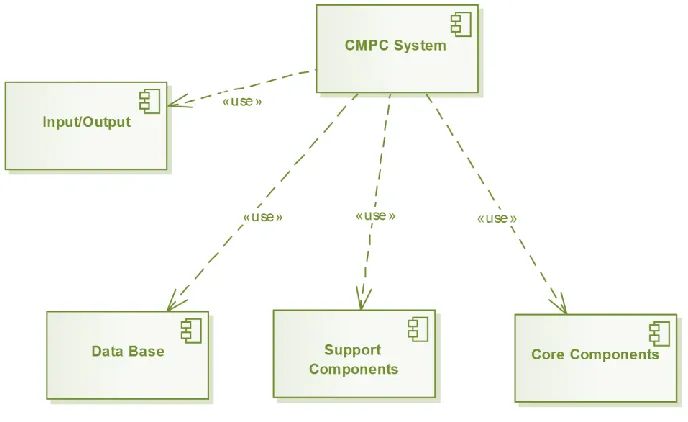
Figure 3-1: CMPC components ... 41
Figure 4-1: Maintaining the balance at all levels ... 48
Figure 4-2 APP simplified component diagram ... 51
Figure 4-3: Products module/component interfaces ... 52
Figure 4-4: APP Chromosomes, Plans, and Objectives ... 59
Figure 4-5: Best Customer Service Plan (Agile plan) ... 61
Figure 4-6: Best Inventory Plan (Lean Practice & financial posture) ... 62
Figure 4-7: Best financials plan (production costs) ... 63
Figure 4-8: Best workforce profile plan (System stability & employee morale) ... 64
Figure 5-1: MMAPP Component diagram ... 72
Figure 5-2: Multi product APP chromosome ... 79
Figure 5-3: Genomes, Plans, and Objectives ... 81
Figure 5-4: Updating Overtime buckets ... 84
Figure 5-5: Updating sub-contracting ... 85
Figure 5-6: Product Plan Possible States ... 86
Figure 5-7: Single Point Cross Over ... 87
Figure 5-8: Product production time proportionates cross over ... 88
xvii
Figure 5-10: Swap workforce power across products ... 89
Figure 5-11: Products Workforce Power Cannibalization ... 89
Figure 5-12: Consume/Release Resources ... 89
Figure 5-13: Tuple Insert Operator ... 90
Figure 5-14: Tuple Invert Operator ... 90
Figure 5-15: Swap Operator ... 91
Figure 5-16: Swap Ot Operator [Place holder only] ... 91
Figure 5-17: Swap St Operator ... 92
Figure 5-18: Solution Point charts: a-d Product plans, e: Workforce plans, f: Objective radar charts ... 99
Figure 6-1: The New Amorphous Process Capability Spectrum ... 109
Figure 6-2: ROP Configuration Data Model ... 112
Figure 6-3: an ROP Module Data Model ... 112
Figure 6-4: ROP Product Data—Configuration Independent data ... 114
Figure 6-5: an ROP System Data Model ... 114
Figure 6-6: Demand Buckets: mix and volumes ... 119
Figure 6-7: an ROP Operations Bucket ... 121
Figure 6-8: Configuration Paths/Maps ... 121
Figure 6-9: Module 1000 configuration path... 122
Figure 6-10: RMS configuration map of a 3-module system ... 122
Figure 6-11: Product make plans ... 123
Figure 6-12: Product Supply and Inventory and back orders plans ... 123
xviii
Figure 6-14: R & P Buckets ... 126
Figure 6-15: ROP Component Model ... 127
Figure 7-1: Tuplized Nomenclature ... 131
Figure 7-2: Advanced Notation Legend ... 131
Figure 7-3: Reconfiguration Cost Structure Model Presented by Spicer and Carlo (2007) ... 139
Figure 8-1: Configuration Maps Step# 1: Configuration and Product Sequences ... 161
Figure 8-2: Configuration Map Setp#2: Updating Reconfiguration Flags and Times ... 164
Figure 8-3: Configuration Map Step#3: Update the Setup and Unloading Flags ... 164
Figure 8-4: Configuration Map Step#4: Regular time production operation time allocation ... 166
Figure 8-5: Product Make Plan ... 167
Figure 8-6: Sample RMS Module and System Workforce Plans ... 168
Figure 8-7: an Updated Product Supply Plan ... 170
Figure 8-8: an Updated Product Make Plan ... 171
Figure 8-9: A Complete Product Plan ... 171
Figure 8-10: Map Cross Over—Module 3000 path has been selected for cross over. ... 176
Figure 8-11: A Double Point Path Cross Over: M3000 path is chosen, and buckets 3-6 are the subject of the cross over operation. ... 177
Figure 8-12: Configuration Flip Mutator: Module 1000, Bucket 8 configuration flipped from C1101 to C1102 ... 178
Figure 9-1: Configuration Maps of the first Pareto front member (Profit =806048.9) ... 195
xix
Figure A-1: SPEA2 Raw Fitness Evaluations (Zitzler, Laummans et al. 2002) ... 229
Figure B-1: Component Diagram Basic elements UML notation (Booch, Rumbaugh et al.
xx
List of Tables
Table 4-1: Forecasted Demand (Chopra and Meindl 2007) ... 59
Table 4-2: Cost related data and initial conditions (Chopra and Meindl 2007) ... 60
Table 4-3: Pareto front members ... 64
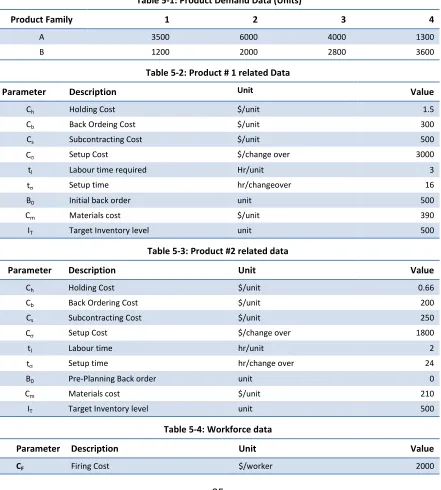
Table 5-1: Product Demand Data (Units) ... 95
Table 5-2: Product # 1 related Data ... 95
Table 5-3: Product #2 related data ... 95
Table 5-4: Workforce data ... 95
Table 5-5: Parto Front 5 short ... 97
Table 5-6: Pareto 10 Short ... 97
Table 9-1: Products Demand ... 183
Table 9-2: Products other Information ... 183
Table 9-3: C1101 Workforce ... 185
Table 9-4: C1101 Reconfiguration Data ... 185
Table 9-5: C1101 Product List ... 185
Table 9-6: C1102 Configuration Workforce ... 186
Table 9-7: C1102 Reconfiguration Data ... 186
Table 9-8: C1102 Product List ... 186
Table 9-9: C1103 Workforce ... 186
Table 9-10: C1103 Reconfiguration Data ... 186
xxi
Table 9-12: C2201 Workforce ... 187
Table 9-13: C2201 Reconfiguration Data ... 187
Table 9-14: C2201 Product List ... 187
Table 9-15: Configuration Workforce ... 187
Table 9-16: Reconfiguration Data ... 187
Table 9-17: Product List ... 187
Table 9-18: Configuration Workforce ... 188
Table 9-19: Reconfiguration Data ... 188
Table 9-20: Product List ... 188
Table 9-21: Configuration Workforce ... 188
Table 9-22: Reconfiguration Data ... 188
Table 9-23: Product List ... 188
Table 9-24: C3302 Workforce ... 189
Table 9-25: Reconfiguration Data ... 189
Table 9-26: C3302 Product List ... 189
Table 9-27: RMS Initial State ... 189
Table 9-28: Workforce Financial Info ... 190
Table 9-29: Work Regulations: Simple Info ... 190
Table 9-30: Work Regulations: Bucket Based Info ... 190
Table 9-31: Genetic Parameters ... 190
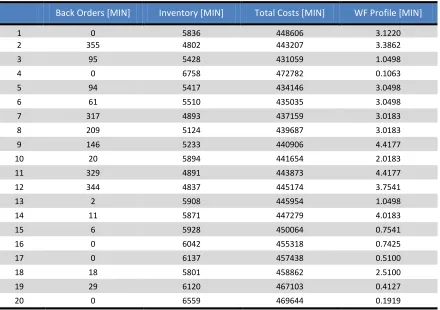
Table 9-32: Pareto Font Short (5 members) ... 192
Table 9-33: Pareto Font Short (10 members) ... 192
xxii
Table 9-35: Product::103 [Module::2000] Product Make Plan... 193
Table 9-36: Product::106 [Module::2000] Product Make Plan... 193
Table 9-37: Product::108 [Module::3000] Product Make Plan... 193
Table 9-38: Product 101 Plan ... 196
Table 9-39: Product 103 Plan ... 196
Table 9-40: Product 106 Plan ... 196
Table 9-41: Product 108 Plan ... 197
Table 9-42: Module 1000 Workforce Plan ... 197
Table 9-43: Module 2000 Workforce Plan ... 197
Table 9-44: Module 3000 Workforce Plan ... 197
Table 9-45: System Workforce Plan ... 197
Table 9-46: Path 1000 Product Make Costs ... 203
Table 9-47: Path 3000 Product Make Cost ... 203
Table 9-48: Path 2000 Product Make Cost ... 204
Table 9-49: Product::101 Objective Evaluation ... 205
Table 9-50: Product::103 Objective Evaluation ... 205
Table 9-51: Product::106 Objective Evaluation ... 205
xxiii
List of Abbreviations
MPC Manufacturing Planning and Control
CBSE Component Based Software Engineering
CMPC Change-Ready Manufacturing Planning and Control
PM Progressive Modeling
APP Aggregate Production Planning
MMAPP Multi-Objective Multi-Product Aggregate Production Planning
Production
LDR Linear Decision Rule
SDR Search Decision Rule
ROP Reconfiguration and Operations Planning
EMO Evolutionary Multi-objective Optimization
SPEA Strength Pareto Optimization Algorithm
MOGA Multi-Objective Genetic Algorithm
NSGA Non-dominated Sorting Genetic Algorithm
ERP Enterprise Resource Planning
SE Software Engineering
OOAD Object-Oriented Analysis and Design
LP Linear Programming
NLP Non Linear Programming
OR Operations Research
GP Goal Programming
IP Integer Programming
MIP Mixed Integer Programming
RMS Reconfigurable Manufacturing Systems
DML Dedicated Manufacturing Lines
xxiv
Nomenclature
number ofplanning periods
regular time production cost per unit in period $ / unit overtime production cost per unit in period $ / unit subcontracting cost per unit in period $ / unit
inventory r o s h T C t C t C t
C
holding cost perunit in period $ / unit backorder cost per unit in period $ / unit
firing cost per worker in period $ / worker hiring cost per worker in period $ / worker
b F H t C t C t C t
maxregular time production volume in period units
overtime production volume in period units subcontracted volume in period units
maximum subcontracted volume in period units
t t t R t O t S t S
max 0maximum allowed workforce level worker work force level in period man-day preferedIncrementalworkforcechange initial workforce level worker
t W W t w W
max maximum inventory level in period t units maximum backorder level in period units initialinventory (units) intialbackorders(units) max o o I B t I B
worker's productivity (unit/hr)
number of regular hours per worker in a planning period (hrs) number of overtime hours per worker in a planning period (hrs)
xxv
total product supply in period units workforce level in period workers t t P t W t
number ofproducts, product families, or product groups demand of product in period units
regular time production volume of product in period units overtime production volume of product in
it
it
it
N
D i t
R i t
O i
period units subcontracted volume of product in period units
inventory level of product at the end of period units backorder level of product at the end of period units
workers hi it it it t t
S i t
I i t
B i t
H
red in period man-day workers fired in period man-day
work force proportion allocated to product in period man-day
labor timetoproduceoneunitofproduct ( ) setup time of product (
t it li i t F t
W i t
t i hours
t i hours)
cost per unit of product $ / uint holding cost per unit of product $/uint
mi
hi
C material i
C i
siC set-up cost for product in period $/uint C subcontracting cost of product $/uint
backorder cost of product $ / unit
i bi i t i C i
iprice per unit of product $/unit Set-updecisionvariableofproduct
i
p i
i
max maximum work force available in period man-day
t
xxvi
ROP Tuplized Nomenclature
1Numbers and IDS
p Product ID, P101, P102, P103 etc.
m Module ID, M1000, 2000, 3000 etc.
m k
c Configuration k loaded to module m ID, C1101,C2101, C3101 etc.
b
N Number of planning buckets
Product Demand: Mix and Volumes
[ ]
p
D t Product p demand during a planning bucket t
p
N Number of demanded products
P a set of all product IDs that a manufacturing firm can make or supply to its markets i.e. product mix, p P
Prp Price of product p
Product Supply: Parameters
p
PS Product Supply Tuple
C mtr p
PS Material cost of product p ($/unit)
C hld p
PS Holding cost of product p ($/unit)
C sbcntrc p
PS Subcontracting cost of product p ($/unit)
1
xxvii
C bkord p
PS Backorder cost of product p ($/unit)
Product Make Parameters
mk
p c
PM Configuration dependent products make tuple. It encompasses all
product manufacturing dependent data.
m k
t srp p c
PM
Set up/Ramp-up time of product p loaded to configuration ckm
km
t unld p c
PM
Unloading time of product p unloaded from configuration ckm
km
C srp p c
PM
Setup cost of product p loaded to configuration ckm
km
C unld p c
PM Unloading cost of product p unloaded from configuration m k
c
km
t cycle p c
PM
Cycle time of product p loaded to configuration ckm
km
thrpt p c
PM
Throughput of product p loaded to configuration ckm
km
VC p c
PM
Variable cost of product p loaded to configuration ckm (Fixed costs are
already included in set/ramp ups and unloading costs)
Product Make Plan Variables
[ ]
p
PM t Product Make Tuple
() [ ] m ck P t
Product ordered set that should be made by configuration ckm during
time bucket t
[ ]
m k
t srp
p c t
Product psetup/ramp up binary variable: equals 1 when a product
is loaded to a configuration ckm during time bucket t
[ ]
m k
unld
p c t
Product punloading binary variable: equals 1 when a product is
unloaded from a configuration ckmduring time bucket t
[ ]
m k
prd
p c t
xxviii
manufactured by configuration ckmduring time bucket t
[ ]
m k
t srp p c
PMB t
Set/ramp up time of product p made by configuration cmk during
time bucket t
[ ]
m k
t unld p c
PMB t
Unloading time of product p if it has been made by configuration ckm
during time bucket t
[ ]
m k
R p c
PMB t
Regular quantity of product p made by configuration ckmduring time
bucket t
[ ]
m k
O p c
PMB t
Overtime quantity of product pmade by configuration ckm during
time bucket t
max[ ]
m k
O p c
PMB t
Maximum overtime quantity of product pmade by configuration ckm
during time bucket t
[ ]
m k
t R p c
PMB t
Regular time allocated to produce product p during a planning bucket
t when it is loaded to configuration m k c [ ] m k t O p c
PMB t
Over time allocated to produce product p during a planning bucket t
when it is loaded to configuration ckm
Product Supply: Mix and Volumes
[ ]
p
PSB t Product supply bucket: a tuple of product supply mix and volumes
during a certain bucket t
[ ]
R p
PSB t Total regular time supply (volume) of product p during time bucket t
[ ]
O p
PSB t Total overtime supply (volume) of product p during time bucket t
[ ]
S p
PSB t Total subcontracted quantity (if subcontracting is available) of
product p during time bucket t
[ ]
I p
xxix [ ]
B p
PSB t Total backordering quantity of product p during time bucket t
[0]
I p
PSB Initial Inventory quantity of product p prior to the current planning
session
[0]
B p
PSB Initial backordering quantity of product p prior to the current
planning session
Module Workforce Plan
[ ]
m
W t Module Workforce bucket: a tuple of (Workforce level and their
dependent hiring and firing values)
[ ]
m
W t Workforce level at module m during period t
[ ] m
H t Workers hired at module m during period t
[ ]
m
F t Workforce fired at module m during period t
Configuration Parameters
m k
c
G
Configuration tuple that represents all the data related to a certain
configuration k loaded to a certain module m
m k
W c
G
Work force level attached to configuration
m k c m m q k t Rcn c c
G
Reconfiguration time from configuration q to configuration k
m m
q k
VC Rcn
c c
G
Reconfiguration variable cost from configuration q to configuration k
m m
q k
FC Rcn
c c
G
Reconfiguration fixed cost from configuration q to configuration k
m q
c
P
Configuration product set that can be made while configuration
m k
c is
xxx
Module related Data
m
W Module work force tuple
m F
C Work force firing cost of a worker has a skill-set standard needed by
module m
m H
C Work force Hiring cost of a worker has a skill-set standard needed by
module m
m W
C Regular work force hourly rate ($/hr)
m o
C Overtime hourly rate ($/hr)
m
CP Configuration path of module m: Nb-tuple of configurations m k
c
indexed by bucket order(1,2,3,..., )Nb
[ ]
m
rcnfg
CP t
Reconfiguration binary variable of configuration CP tm[ ]
[ ]
m
rcnfg
CP t
Reconfiguration time consumed to load configuration CP tm[ ]during time bucket t
[ ]
m
rcnfg CP
C t Reconfiguration cost of module m during time bucket t
m
srp CP
C Setup and ramp costs of configuration path m
m
unld CP
C Unloading costs of configuration path m
m
prd CP
C Operation costs of configuration path m
Reconfiguration cost of module m during time bucket t
CMap Configuration Map: Nm-tuple of configuration paths (CPms)
System Work Regulations
SWR System Working Regulation Tuple (working days/month, hrs/shift, [ ]
m
rcnfg CP
xxxi shift/day etc. )
[ ]
WD
SWR t Working Nb-Tuple: a sequence of period-work days, indexed by
bucket number or order (1,2,..)
[ ]
WH
SWR t Working Nb-Tuple: a sequence of period-work days, indexed by
bucket number or order (1,2,..)
[ ]
OT
SWR t Maximum overtime hours allowed per day: Nb-tuple indexed by bucket number or order
/
h s
SWR Number of working hours per shift
/
s d
SWR Number shifts per day
System Initial and Final States
0
p
B Outstanding back orders of product p at start of planning horizon
(units)
0
I Inventory of product p at start of planning horizon (units)
0
W Workforce at the at the start of the planning horizon (man-day)
kp
A Pre-planning system state constants, k=1,2,… of products p
kp
M End-of-Planning System desired constants, k=1,2,.. state of product p
[mCk][0]
Initial Configuration k loaded to module m (i.e. bucket 0
configuration)
[mCk]p[0]
last product p loaded to configuration k loaded to module m (i.e.
1
Chapter 1
Introduction
1.1
Introduction
1.1.1
Manufacturing Paradigms
Over the years, the manufacturing environment has been changing relentlessly with
market conditions and customer requirements. Manufacturers have kept inventing,
developing, and modernizing products, manufacturing process, manufacturing
technology, and business process. They have been striving very hard to promote their
competitive edge and trying to hit excellence in every aspect in order to prosper and
sometimes in order to just survive. Early manufacturing paradigms were both very
primitive in technology and very lethargic to market needs. Multitudes of one-of-a-kind
products were available and the craftsmanship was the key enabler of those old
paradigms. At the beginning of the twentieth century, mass markets started to triumph
and the economics of scale was the chief driving force. Productivity and large volumes
were needed to feed the starving mass markets. Product cost was the main customer
key driver. Stocking huge amounts of products at manufacturing facilities and
wholesalers was the key solution to stay responsive. Dedicated production lines were
the manufacturing technology at that time. This manufacturing paradigm was referred
to as the mass production era. After the World War II, The manufacturing process was
re-innovated by the advent of Just in Time Manufacturing (JIT). The philosophy behind is
the elimination of waste. JIT, founded at Toyota manufacturing plants, represents one of
the most famous contributions of the Japanese manufacturers to the industrial world.
The goal is to make equipment, resources, and labour available in the right amounts and
at the right time. Several enablers are needed a priori to establish a successful JIT
system such as integrating and optimizing every step of manufacturing process,
2
developing manufacturing flexibility, and keeping commitments and links between
customers and suppliers. Failing to have any of these enablers undermines severely JIT
success (Hutchins 1999). In the late eighties, the term “Lean Manufacturing” was
coined. According to Roose (cited in Groover (2000)) there are four principles underlie
lean production: 1) minimize waste 2) perfect first time quality 3) flexible production
lines 4) continuous improvement. Extended on the lean manufacturing principles, agile
manufacturing was founded in the early nineties. Agility can be simply defined as the
ability of a firm to thrive in a competitive environment characterized by continuous
change and, sometimes, unanticipated change. Similar to lean manufacturing, agile
manufacturing is based on four principles: 1) organize to master change 2) leverage the
impact of people and information 3) cooperate to enhance competitiveness 4) enrich
the customer (Groover 2000).
Manufacturing paradigms define the overall direction of manufacturing enterprises and
how they formulate their core competencies. Manufacturing technology and
manufacturing planning and control systems play critical roles in shifting the direction of
manufacturing firms towards one or more of these paradigms. Change-Ready
Manufacturing Planning and Control (CMPC) systems and Progressive Modeling (PM)
presented by this research embrace the best practices of these paradigms and capitalize
on mixing and matching some of them in order to define many distinguished
competitive formula that should bring many manufacturing activities to an optimized
tandem.
1.1.2
Manufacturing Technology
Manufacturing technology has developed over the years from general-purpose
machines and equipment to more specific ones with built-in or pre-set characteristics.
Product volume/variety spectrum plays a key role in describing the appropriate
technology. General-purpose machines are used in job-shop manufacturing where
products are of high variety and very low volumes. Driven by economics of scale,
3
massive volumes and very low variety. In order to address the volume and
mid-variety production zones, Flexible Manufacturing Systems (FMS) were developed.
Flexible Manufacturing Systems (FMSs) are designed with anticipated product variations
and built-in flexibility a priori to achieve what is known as economics of scope
(ElMaraghy 2005). FMS suffer from being capital intensive and sometimes possesses
underutilized flexibility. In an initiative to overcome these shortcomings and to
introduce a better agile manufacturing technology, the Reconfigurable Manufacturing
Systems concept was introduced in the late nineties (Koren, Heisel et al. 1999; Mehrabi,
Ulsoy et al. 2000; Koren 2003). Instead of built-in flexibility provided by FMS, RMS
promises a customized flexibility on demand. RMS aims to achieve either convertible or
scalable capacity or both. In an RMS, machines, machine modules, equipment, etc. can
be added, interchanged, upgraded, and removed as needed and when needed.
Proponents of RMS believe that the emerging technology can offer a cheaper solution,
at least in the long run, compared to FMSs as it can increase the life and utility of
manufacturing systems (ElMaraghy 2005). In order to be readily reconfigurable,
manufacturing systems must possess certain key characteristics: i) Modularity of
component design, ii) Integrability for both ready integration and future introduction of
new technology, iii) Convertibility to allow quick changeovers between products and
quick system adaptability for future products, iv) Diagnosability to identify quickly the
sources of quality and reliability problems, v) Customization to match designed system
capability and flexibility to applications, and vi) Scalability to incrementally change
capacity rapidly and economically.
Reconfigurable Manufacturing Systems (RMS) and their intrinsic nature of being in a
continuous state of change was the first catalyst that spurred the CMPC systems project.
The early objective was to develop an MPC system that is able to catch the pace of the
underlying changeable manufacturing system and the manufacturing process. RMS,
which suffer from the lack of existence in a full-fledged format, make thinking in terms
4
need to develop a new modeling approach that is able to build flexible yet robust
models that can master the activities of the next generation manufacturing technology
that made change propagates to almost everything surrounding: system, product,
process, workforce, and even the value offered in terms of competitive products and
market postures.
1.1.3
Manufacturing Planning and Control Systems
Whatever the manufacturing paradigm embraced and the manufacturing technology
utilized, the eternal challenges for all manufactures stay the same: manufacturers need
to control the types and quantities of the materials they purchase. They need to plan
which products to produce and in what quantities. They need to ensure that they are
able to meet current and future customer expectations whether they are low cost, well
differentiated, or customized products. Making inappropriate decisions under certain
circumstances or related to a certain strategic area not only make the company lose
money but also undermine its core competency. The competency built in these systems
represents a corner stone in defining excellence and competitiveness in any modern
manufacturing enterprise. Change-Ready Manufacturing Planning and Control (CMPC)
systems aim to accomplish manufacturing practice excellence by capitalizing on
orchestrating system levers, embracing a balanced set of best industrial practices, and
developing highly esoteric models using the novel Progressive Modeling approach.
Figure 1-1 shows the widely accepted model of MPC system presented by Berry and Hall
(1992) and reported in Vollman et al (2005). The model divides the MPC activities into
three stages that are differentiated by their hierarchy: front end, engine, and back end
or time frames: long, medium, and short terms. The front end establishes the overall
company direction. Demand management coordinates all the activities of the business
and lay some restrictions and requirements on system resources. Sales and operations
planning balance the marketing plans with the available production resources. The
Master Production Schedule (MPS) is the disaggregated version of sales and operations
5
products now and in the future. It provides the basis necessary for matching
manufacturing plans and capacity. The engine encompasses detailed material and
capacity planning. The Material Requirement Planning (MRP) explodes the
period-by-period plans for all component parts and raw materials required to produce all the
products in the MPS. This material plan is utilized in the detailed capacity planning
systems to compute labour or machine capacity required to manufacture parts. The
back end depicts the MPC execution system. The system configuration depends on the
products manufactured and production process employed.
Figure 1-1: Manufacturing planning and control (Vollman, Berry et al. 2005)
An important activity that is not shown in the previous figure is the measurement,
follow-up, and control of actual results. If the actual results differ from original plans,
appropriate actions must be made to bring results back to plan. These measurements
and control are part of all three phases of MPC system. MPC systems as an area of
research are beyond the scope of any individual work. This research focuses on just
6
systems and the new modeling approach, Progressive Modeling. All the work presented
by this research can be applied to the MPC frameworks as a whole and many of its
individual components or problems. The area of operations planning and control is
chosen as a source of applications to test the new foundations and innovations
developed by both CMPC systems and PM. The classical Aggregate Production Planning
problem will be presented in two variants. In addition, the Reconfiguration and
Operations Planning problem that is defined for the first in the RMS literature will be
presented.
1.1.4
MPC in Practice: From Reorder Point Systems to Enterprise
Resource Planning (ERP)
In their early days, MPC systems consisted of a group of plant foremen who were
responsible for scheduling production, ordering materials, and shipping products to
their surrounding markets (Rondeau and Litteral 2001). The simplicity of manufacturing
process allowed relatively low-skilled workers to manage the whole process.
As the manufacturing technology evolved towards a highly specialized one, reorder
point system of production and inventory control gradually prevailed and replaced the
older foremen-based systems. Early reorder point systems were manual but they turned
to be automated with the advent of commercial mainframe computers in the late 1950s
and early 1960s. Later in the mid-1960s, material requirement planning systems started
to evolve and replace reorder point systems. MRP systems offered a forward-looking
demand based approach for planning the manufacturing of products and the ordering of
inventory. They overcame the high variability of inventory levels experienced by reorder
point systems through smoothness and effective management. They provided, also, a
basic set of computerized production reporting tools used to evaluate the viability of
master production schedule against projected materials demand. In the mid of 1970s,
Manufacturing Resource Planning (MRPII) started to replace gradually MRP systems as a
7
planning (CRP) capability to MRP to create an integrated or closed loop MPC system
(Sock Hwa and Snyder 2000). The overall production capabilities were calculated
accurately for the first time taking into consideration both materials and capacity
requirements constraints. Utilizing the new shop floor control production capabilities
production scheduling and monitoring the execution of production plans were much
easier. By the 1990s and with the increasing level of global competition, changing
markets, and developing technologies, manufacturers all over the world were forced to
reinvent their products, services, their organizational structure, and operational control
(Sock Hwa and Snyder 2000). ERP system enabled these firms to meet the global
directive of continuous improvement of the supply chain process through flexible,
customer-driven information management. Most of already existing ERP systems still
uses the basic model of MRPII systems and encompasses human resources, decision
support applications, and some other specialized configurations. ERP packages
encapsulate best business practices (Hiebeler, Kelly et al. 1998) which can guide a
manufacturing firm from early stages of product engineering to the last stages of
product implementations. ERP adoption takes from few months for firms accepting all
settings to sometimes several years for firms need major modifications. Although most
ERP systems have many business practice processes embedded in their repositories, not
all of them are necessarily best in a certain class of applications or for a specific firm.
ERP systems and their MPC components suffer from being very generic solutions and
count a lot on heuristics rather than pragmatic models in executing manufacturing
planning and control activities. Industry reports many failure stories about large-scale
business solutions implementations in many enterprises. When the Aggregate
Production Planning problem was chosen to be the application of the new foundations
presented by CMPC and PM, unfortunately, many models of the literature studied failed
to have a real application. That was identified as an academic-industrial gap that was
addressed by Progressive Modeling. It is now part of PM mission is to create logical
ready-8
made packages, allows manufacturer to embed their core competency in their models,
which should be a novel competitive edge by itself.
1.2
Motivation
As already reported earlier, developing an MPC system for Reconfigurable
Manufacturing Systems was the first catalyst that spurred this research. The new
technology counts a lot on building a new modular manufacturing system that should be
highly responsive to its market changes. RMS posed a new challenge for maintaining
changing and evolving environment over time. In this new environment, the system,
associated manufacturing processes, products, workforce could change in order to meet
market demand. The Change-Ready manufacturing planning and control systems are
proposed to define the new MPC systems that could serve such changeable
environment. Change drivers, CMPC characteristics, and Component Based Software
Engineering (CBSE) are presented. Now that a new framework of coarse-grained
components has been presented, the next step is to select one of its components, study
its internals, and show how the ingrained logic can be made change ready. Progressive
Modeling, a novel multidisciplinary forward-looking modeling approach, is presented so
order to address the MPC problems in changeable environments. Another objective of
PM is to create the logic that lessens the gap between the idealistics of some MPC
academic literature and the pragmatics of the industrial world. The last orientation was
catalyzed by the lack of applicability of many models presented in the MPC literature.
1.3
Research Projects
Throughout this research, three major projects are conducted. The second and the third
are interwoven. Except for PM process and some early innovations related to it, most of
the advancements came into the way while working on the applications under study
9
piece of logic presented is developed to be both generic and applicable to many
problems not only those developed in this research.
1. Change Ready MPC Systems: a new vision of how to make manufacturing planning
and control systems ready for change that may be created via development or mitigated
as a threat originated either from within or from the surrounding environment.
2. Progressive Modeling: PM is an innovative multidisciplinary modeling approach that
has been developed to better model industrial problems in a practical and modern way
without losing the scientific rigor.
3. MPC Applications: in order to illustrate the principles presented by PM and to
illustrate its new potential three applications are presented:
I. Aggregate Production Planning problem (APP): PM brings a new system
perspective to many industrial problems; the APP problem is redefined from that
perspective. A new mathematical model that represents the new PM concept of
PM function templates is presented. The objectives are tied to best
manufacturing practices.
II. Multi-objective Multi-Product Aggregate Production Planning Problem with
Setup Decisions (MMAPP): MMAPP is supposed to be a tougher problem than
its ancestor APP. While demonstrating MMAPP, system envelop constraints,
constraint satisfaction algorithm, couplers, and turning product plans into state
machines are presented as some novel PM gadgets. In addition, a new MMAPP
formulation, mathematical model, and novel solution algorithm are also
demonstrated.
III. Reconfiguration and Operations Planning Problem (ROP): The Reconfiguration
and operation planning problem define many related principles and foundations
10
for the first time in the RMS literature. Advanced nomenclature, mathematical
statements, and structured search space are some PM large-scale problem
modeling gadgets presented to serve ROP modeling and solution algorithm.
1.4
Research Approach
1.4.1
Change-Ready MPC Systems
A new set of system characteristics are proposed to envision how a change-ready MPC
system should behave and interact to its environment. The suggested system consists of
a different set of loosely coupled interacting components. Change Drivers are identified
to guide some foundations upon which CMPC system model can be identified. Based on
the advances of Component-Based Software Engineering (CBSE), and Object-Oriented
Analysis and Design (OOAD), a conceptual framework of Change-Ready Manufacturing
Planning and Control (CMPC) system is presented. Some components of MPC system
functions are discussed form CMPC perspective.
1.4.2
Progressive Modeling I and APP
Progressive Modeling started as a process to formalize the problem analysis, modeling,
and solution in a much modernized and synergistic way. To date, PM has passed by
three main phases of development. In the first phase, the process is presented and a
progressive mathematical model of the APP problem is developed; in addition, a new
solution approach is presented. Progressive models are ready to change, adapt, and
develop further. The aggregate production problem itself works as an illustrating
application. In this phase, innovations are limited to the analytics and math models.
1.4.3
Progressive Modeling II and MMAPP
In this phase, a better-revised and more generic version of PM process is presented.
11
related to the solution algorithms are presented. The Multi-Objective Multi-Product
aggregate production planning with setup decisions is utilized as a case problem.
1.4.4
Reconfiguration and Operations Planning Problem
The Reconfiguration and Operation Planning problem is presented as an
RMS-application of CMPC and PM principles in an RMS environment. The problem definition,
scope, size, and implications are unprecedented in the RMS literature. A great body of
this dissertation is dedicated for this problem alone. Advanced notations, cascaded
mathematical models, mathematical statements, structured search space, and society
of decision structures are some innovations brought by PM to address such large-scale
problems.
1.5
Dissertation Outline
The dissertation that documents this research is divided into three major parts. In part
1, introduction and literature review are discussed. This part shows the research
framework and gaps to be addressed. In part 2, the main concepts developed,
Change-Ready MPC systems and Progressive Modeling are introduced. In part 3, the focus is
shifted towards the Reconfiguration and Operations Planning (ROP) problem of
reconfigurable manufacturing systems. The following is an outline of the dissertation
chapters:
Chapter 1 introduces the whole dissertation and describes the main motivation behind
this research, objectives, research projects, and dissertation outline.
Chapter 2 discusses the most related literature that serves the common purpose of this
research. MPC frameworks, Object Oriented MPC systems, Reconfigurable
Manufacturing Systems, Aggregate Production Planning problem, and Evolutionary
Multi-Objective Optimization (EMO) are considered some areas of research that are
directly related to this research. Additional and more specific literature may be added
12
Chapter 3 discusses and introduces the Change-Ready MPC systems, Change drivers,
CMPC characteristics, CMPC frameworks, and some samples of how CMPC components
should interact and behave in a change ready fashion.
Chapter 4 introduces Progressive Modeling and its first governing philosophy
“Propagation of balance.” The new modeling approach is illustrated using the Aggregate
Production Planning as a case problem. This chapter ends by showing the implications of
the new methodology as dynamic, flexible, forward-looking modeling approach.
Chapter 5 introduces the academic-industrial gap from MPC perspective. An updated
version of PM process is presented. The focus is shifted towards modernizing solution
algorithms to make them progressive. The Multi-Objective Multi-Product Aggregate
Production Planning (MAAPP) with set up decisions is the case problem of this chapter.
Chapter 6 introduces the reconfiguration and operations planning problem. The new
manufacturing amorphous process presentenced by RMS is introduced first; a data
model is developed to serve the ROP problem definition. This chapter lays the
foundations needed by the next three chapters. This chapter coins a new problem
definition in the RMS literature, the Reconfiguration and Operations Planning Problem.
Chapter 7 presents the mathematical statement of the ROP problem. The ROP problem
unleashes the analytical, logical, and computational power brought by PM. Advanced
notation, deployed nomenclature, hierarchical binaries, and cascaded mathematical
models are some innovations that increased the capabilities of PM to define a problem
like the ROP. The chapter concludes by consolidating all the mathematical models
presented in one mathematical statement.
Chapter 8 presents the solution approach of the ROP problem. A society of decision
structures is presented first to define the ROP entities defined in the search space.
Configuration maps represent a condensed capsule of many operations decisions in an
RMS environment. Accordingly, dependent/semi-independent decisions are identified:
13
Couplers, a PM concept presented earlier in chapter 5, are used to define independent
decisions. Many operators are presented to tweak the search space in order to find
better alternatives. This chapter ends by the master algorithm that wires everything
together and manages the system optimization process.
Chapter 9 presents a case study of the ROP problem to test its logic and principles
developed in the earlier three chapters. The case study shows to what extent PM could
be an enabler in embodying an almost real reconfigurable environment that can be
analyzed and developed. The results demonstrate that all the planning activates can be
done in tandem. The ROP defines a new potential for PM in developing a pragmatic logic
that governs systems not just problems.
Chapter 10 summarizes the dissertation, illuminates major contributions, and sets the
14
Chapter 2
Literature Review
2.1
Introduction
In this chapter, a review of the literature that generally related to this research is
presented. MPC frameworks and Object Oriented MPC systems have direct relations to
software aspects and technologies recommended. Since the aggregate
production-planning problem is the case problem utilized to demonstrate many principles brought
by Progressive Modeling (PM), the literature related is reviewed in brief and some
shortcomings are highlighted. All the PM applications presented in this research have an
embedded Evolutionary Multi-objective Optimization (EMO) algorithm as a part of their
solution algorithms. Some popular EMO algorithms are also presented. Remarks and
comments conclude every section (sub-section) to clarify some directions developed by
this research.
2.2
Integrated MPC frameworks
Since the late eighties, the development of MPC frameworks and architectures has
attracted the attention of many researchers. Monfared and Yang (2007) affirmed that
the global competition and the need for improved responsiveness, particularly in
low-volume, high-variety manufacturing industries, necessitate further integration and
automation in planning, scheduling and control functions. They argued that in order to
achieve automation, some concepts and techniques from operations research, control
theory, and computer science should be integrated, enriched, and unified to provide a
platform for automation. They proposed a new framework for the automation and
integration of planning, scheduling, and control functions. A fully automated flow shop