A NEW FEATURE EXTRACTION ALGORITHM FOR OVERLAPPING LEAVES OF RUBBER TREE
SULE ANJOMSHOAE
A thesis submitted in fulfilment of the requirements for the award of the degree of
Master of Science (Computer Science)
Faculty of Computing Universiti Teknologi Malaysia
I declare that this thesis entitled “A New Feature Extraction Algorithm for Overlapping Leaves of Rubber Tree” is the result of my own research except as cited in the references. The thesis has not been accepted for any degree and is not concurrently submitted in candite of any other degree.
Signuture :
ACKNOWLEDGEMENTS
ABSTRACT
ABSTRAK
TABLE OF CONTENTS
CHAPTER TITLE PAGE
DECLARATION iii
ACKNOWLEDGEMENTS iv
ABSTRACT v
ABSTRAK vi
TABLE OF CONTENTS vii
LIST OF TABLES xii
LIST OF FIGURES xiii
LIST OF ALGORITHMS xvi
LIST OF ABBREVIATION xvii
1 INTRODUCTION
1.1 Introduction 1
1.2 Problem Background 2
1.3 Problem Statement 6
1.4 Hypothesis 6
1.5 Aim 7
1.6 Objectives of the Study 7
1.7 Scopes of the Study 7
1.8 Significance of the Research 8
2 LITERATURE REVIEW
2.1 Introduction 11
2.2 Plant Classification 12
2.3 An Overview of Rubber Industry in Malaysia 13 2.4 Primary Rubber Clones and Clone Development 15 2.5 Features of Rubber Tree Leaves 18 2.5.1 General Form of Rubber Tree Leaf 22
2.5.2 Colour of the Leaf 22
2.5.3 Leaf Surface 23
2.5.4 Shape of the Leaf Tip 23
2.5.5 Leaflet Base 24
2.5.6 Leaf Margin 24
2.5.7 Transverse Section 25
2.5.8 The Position of the Leaflets 26 2.6 Features Extraction Methods 27
2.6.1 Texture Based Feature Extraction
Methods 27
2.6.1.1 Grey Level Co-occurrence Matrices 28
2.6.1.2 Gabor Filters 29
2.6.1.3 Wavelets Transform 30 2.6.2 Shape Based Feature Extraction Methods 30
2.6.2.1 Region Based Feature Extraction
Methods 31
2.6.2.2 Contour based Feature Extraction
Methods 32
2.7.3.2 Key Point Localization 40 2.7.3.3 Orientation Assignment 41 2.7.3.4 Key Point Descriptor 42 2.8 Geometrical Object Detection Methods 42
2.8.1 Hough Transformation 42
2.8.2 Boundary Tracing Algorithm 45
2.9 Template Matching Algorithm 47
2.10 Discussion 49
3 RESEARCH METHODOLOGY
3.1 Introduction 53
3.2 Research Framework 54
3.3 Data Collection 56
3.4 Pre-processing 57
3.5 Feature Development and Feature Extraction 58
3.6 Classification 60
3.7 Testing and Validation 62
3.8 Summary 63
4 FEATURE EXTRACTION OF RUBBER TREE LEAF
4.1 Introduction 64
4.2 Feature Development 65
4.2.1 Shape of the Leaf 65
4.2.2 Angle between Petioles 67
4.3 Feature Extraction 70
4.3.1 Shape Feature Extraction 71 4.3.2 Angle Feature Extraction 73 4.4 Evaluation of Key Point Methods 74
Extraction Methods 76 4.5 Evaluation of Angle Extraction Methods 78
4.5.1 Comparative Analysis of Angle Extraction
Methods 79
4.6 Discussion of the Evaluation Result 84
4.7 Summary 85
5 CLASSIFICATION OF OVERLAPPING AND
NON-OVERLAPPING LEAVES
5.1 Introduction 86
5.2 Template Matching Classification 87 5.2.1 Classification Algorithm and Development 90 5.2.1.1 SIFT Key Point Extraction Algorithm 92 5.2.1.2 Matching Algorithm 93 5.2.1.3 Iteration Process 95 5.2.1.4 Elimination Process 97 5.3 Angle Based Classification 99
5.4 Classification System 100
5.5 Summary 102
6 TESTING AND VALIDATION
6.1 Introduction 103
6.2 Data for Testing 104
6.3 Template Matching Results 105 6.4 Validation by Ground Truth Dataset 109 6.5 Comparison with Previous Work 112
7 CONCLUSION
7.1 Introduction 116
7.2 Research Findings 117
7.2.1 New Rubber Leaves Images Dataset 117
7.2.2 New Features 118
7.2.3 Improvement of Feature Extraction Method 118 7.2.4 Identification of the Leaf Positions 119 7.3 Limitations of the Research 120
7.4 Future Work 120
7.5 Conclusion 121
REFERENCES 122
APPENDIX A1 132
LIST OF TABLES
TABLE NO. TITLE PAGE
2.1 Clone Development Timeline in Malaysian Rubber Board 16 2.2 Clones with Different Features 19 2.3 Nine (9) Basic Features Shown on Different Clones 21 2.4 Common feature detectors and their classification 35 2.5 Feature Extraction and Plant Classification in Recent Years 50 2.6 Overlapping Leaf Identification 51 4.1 Number Key points Detected by Three Methods 76 4.2 Comparison of Hough Transform and Ground Truth 81 4.3 Comparison of Boundary Tracing and Ground Truth 83 6.1 Dataset for Non-Overlapping Leaves 104 6.2 Dataset for Overlapping Leaves 105 6.3 Matching Results of Non-Overlapping Leaves 107 6.4 Matching Results of Overlapping Leaves 108 6.5 Experimental Result of Template Matching 110 6.6 Angle Results of Hough Transform (HT) and
Ground Truth (GT) 111
LIST OF FIGURES
FIGURE NO. TITLE PAGE
1.1 Finding and Matching Key points in Two Different Images 5 2.1 Plan Leaf Classification Diagram 12 2.2 Development of outstanding clones 16 2.3 External Features of Rubber Tree Leaf 19 2.4 Distributions of Positions According to Clone Type 20
2.5 Rubber Tree Leaf Forms 22
2.6 Rubber Tree Leaf Surface 23
2.7 Rubber Tree Shapes of Leaf Tips 23 2.8 Rubber Tree Shapes of Leaf Bases 24 2.9 Rubber Tree Shapes of Leaf Margins 25
2.10 Rubber Tree Leaf Veins 26
2.11 Rubber Tree Leaf Positions 26
2.12 Texture Classification by GLMC 29
2.13 Marques O.’s Examples of Region of Interest Extraction 32 2.14 Example of Leaf Contour Extraction Preprocessing 33 2.15 Segmented patch demonstrates Harris corner detection 36 2.16 The 16 values surrounding pixel p stored in vector form 38 2.17 Input image and Edge detected image 43 2.18 Rho (ρ) and theta (θ) representation of a straight line 44 2.19 Hough Transformation through the Edge 45 2.20 Initial Search Direction for the Next Object Pixel 46 2.21 Boundary Tracing in Region of Interest 47 2.22 Belongie’s Shape Context Matching 48
3.1 Research Framework 55
3.3 Data Sampling Process 57
3.4 Key Point Feature Extraction 59
3.5 Angle Detection between Petioles 60 3.6 Example of Template Matching Process 61 4.1 Possibility of Rubber Tree Leaf Positions 66 4.2 Grey scale image using, Binary image, and Extracted
Leaf contours 67
4.3 Clone RRIM 2001, Clone RRIM2025, Clone PB 350 and
Clone PB350 68
4.4 Axil Degrees for Ground Truth Data Set 69
4.5 Axil Computation 70
4.6 Concept of Shape Retrieval by Key Point Detection 71
4.7 Feature Extraction 72
4.8 Line Detection and Angle 73
4.9 Harris Key Points 74
4.10 FAST Key Points 75
4.11 SIFT Key Points 76
4.12 Comparison of Overlapping Leaf Key Points 77 4.13 Comparison of Non-Overlapping Leaf Key Points 77 4.14 Presentation of Angle Line, Angle Calculated 78 4.15 Boundary Tracing in ROI, Angle computation using
Dot Product 79
4.16 Angle Degree Result of Hough Transform 80 4.17 Angle Degree Result of Boundary-Tracing 82
5.1 Template Matching Process 87
5.2 Template Matching Flowchart 88
5.3 Comparisons and Transformation of Key Points 89
5.4 Comparison and Transformation of Key Points on
Rubber Leaves 90
5.6 Key Points for Input Image and Database Image
for Overlapping Leaves 95
5.7 Matched Key Point Lines for Overlapping Leaves 97
5.8 Angle Extraction Result 100
5.9 Classification System 101
5.10 Classification System Interface a) Template Matching
LIST OF ALGORITHMS
ALG. NO. TITLE PAGE
5.1 Template Matching Algorithm 91
5.2 SIFT Key Point Extraction Algorithm 92 5.3 Matching Process Algorithm 94
5.4 Iteration Algorithm 96
LIST OF ABBREVIATIONS
SIFT - Scale Invariant Feature Transform FAST - Features from Accelerated Segment Test MRB - Malaysia Rubber Board
LGM Lembaga Getah Malaysia
RRIM - Rubber Research Institute Malaysia
HT - Hough Transform
ROI - Region of Interest
GLCM - Grey Level Co-Occurence Matrices IDSC - Inner Distance Shape Context CF - Contour Flexibility
HPM - Hierarchical Procrustes Matching
DP - Dynamic Programming
DOG - Difference of Gaussian 3D - Three Dimensional
SC - Shape Context
CHAPTER 1
INTRODUCTION
1.1 Introduction
As Asia’s third biggest natural rubber producer and exporter, Malaysia has a vast rubber plantation area (Shigematsu et al., 2011). Maintaining the quality and quantity of the rubber tree is one of the major concerns. Therefore, numerous investigations have been conducted for the sustainability of rubber tree plantations (Ratnasingam et al., 2011; Abdullah et al., 2007). However, image processing based researchers are required to have an extensive amount of rubber leaf images from current clones and primary clones. Therefore, there is a need to establish an image database of rubber clone leaves and classification of them. By establishing a database, the automation of this process for clone classification can be carried out.
leaf margin are among the attributes that might be subject to a different feature extraction method to generate a clone classification method (Benong et al., 2007). Another unique feature is that three compound leaflets radiate from one mutual leaf base (palmate leaflets) (Chan et al., 2005). These leaflets exist in three possible positions: overlapping, touching, or separated. If the position of leaflets is identified using an automation system, this feature can be involved in the clone classification process. However, in current research, overlapping leaf identification is still an open issue because of the foreground leaf and occluded leaf has similar intensity levels. Therefore, this research attempts to develop a framework for identification of leaflet positions by feature extraction of overlapping and non-overlapping rubber tree leaves.
1.2 Problem Background
Current researches on plant classification use a database which is built up from leaf images of different species. Most of the researches employ the features that can identify the plant classes straightforward (Hang et al., 2012; Lee et al., 2013). However, these approaches are not suitable for rubber clone identification because the similarity between rubber clones is significantly high. The reason for that is some of the rubber tree leaves inherited the same genetic features from primary clones. It can be observed that rubber leaves received the similar characteristics.
MRB has been monitoring the breeding and selection of the rubber clones in order to improve the productivity for more than nine decades (MREC 2010). MRB has categorized the rubber tree clones into two groups; Group 1 consists of high yielding clones based on at least five years yield data. It comprises ten latex timber clones and four latex clones. Group 2 clones are divided into latex-timber clones (2A) and only latex clones (2B). The Group 2A contains all the original clones that are growing well in different ecological conditions (Benong et al., 2007).
The process of clone inspection and verification is very critical because it must guarantee that recommended rubber clones produce the maximum yield in the future. Clones are being examined according to their physical characteristics of leaves in the MRB. However, this clone verification method requires experts with adequate experience. Therefore, this process is initiated into being subject of the current clone classification researches (Abang, 2007).
With an estimated more than 200 Hevea nurseries in the market are inspected and verified by MRB. This is an immense job for limited personnel to handle (Ong et al., 2012). Therefore, the automation of clone recognition is anticipated to make a huge impact on the clone identification in terms of time and efficiency. In addition, this research is the first attempt to extract features of the rubber leaf in the way of clone recognition.
In general, feature extraction is one of the most difficult tasks in image processing. The rest of the following process, such as object recognition and classification all depends on the quality of the feature extraction process (Bala, 2010; Mahmood, 2012). Feature extraction of the overlapping leaf must address several demanding problems. One of the challenges is that overlapping objects might have similar intensity levels. It is demanding to infer the contour of the occluded part. Therefore, in recent studies, there is a noticeable concentration in the contour based retrieval methods (Kumar et al., 2012; Zhang, 2012). Caballero et al. (2012) used the contour-based descriptors on their web application for plant species identification. The other plant identification method was done by Bhardwaj et al. (2013). Four features are extracted which are area convexity, volume fraction, moment invariant, and inverse difference moment. These features enhance the result of classifying complex images; however it does not consider different leaflet positions.
Although many feature extraction methods have been presented for plant classification, these methods have not considered different clone features to classify within a particular plant (Wu, 2007; Wang et al., 2008). According to studies that have been done on Rubber tree leaves (Md Zain et al., 1997), two features which are shape and angle found out to differentiate overlapping and non-overlapping leaves. However, some are the issues required to be addressed while setting up these new features.
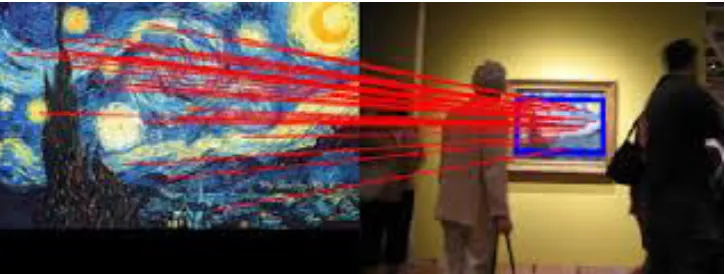
Figure 1.1: Finding and Matching Key Points in Two different Images
The problem that needs to be addressed with the key point based feature matching method is to increase the accuracy of the matching result (Liu et al., 2013). Wrong matches can be reduced by setting up larger database. But, the long iteration throughout the matching process is another consideration for key feature based identification. However, in this study, a comparative study is presented for key point extraction to obtain a convincing result in the shape of the leaf positions.
1.3 Problem Statement
In general, the clone of the rubber tree can be differentiated through deliberate use of specific features by experts. Current researches have not been considered to develop features of rubber tree leaves yet. However, there are available methods to develop these features. This study addressed the issue of overlapping leaf identification. The research question is:
How to develop a suitable feature extraction method for the positions of the leaves in order to identify the overlapping and non-overlapping leaves?
In order to answer the main issue raised here, the following issues need to be addressed and discussed first:
i. The features of rubber tree leaves that can be used to identify overlapping and non-overlapping leaves.
ii. The extraction methods to identify the features overlapping and non-overlapping leaves.
iii. The development of the identification technique based on the suggested feature extraction method.
1.4 Hypothesis
1.5 Aim
This research aims to develop a framework to extract shape and angle features of rubber tree leaf based on their positions and the classification of overlapping and non-overlapping leaves.
1.6 Objectives of the Study
The objectives of this research are:
i. To identify suitable features of overlapping leaves for rubber tree clone recognition.
ii. To develop a feature extraction method for overlapping features of rubber tree leaves.
iii. To develop an identification method for classifying rubber tree leaves that are either overlapping or non-overlapping.
1.7 Scopes of the Study
The scopes of this study are defined as follows:
i. Data collection has been done at Rubber Research Institute of Malaysia (RRIM), Kuala Lumpur. Data samples are obtained from five different rubber tree clones named RRIM 3001, RRIM 2025, RRIM 2001, RRIM 2002, and PB 350.
iii. The samples of leaves were chosen considering good health condition and undamaged.
iv. The sample leaves were mature enough which is average two (2) years old.
v. Samples were collected considering one petiole is included 3 leaves because the rubber tree leaves originate form of 3 leaflets in one petiole. vi. The scope of this research is to study the particular features for
overlapping rubber tree leaf clone. Therefore, related data regarding to features of rubber tree leaves is obtained from clone inspectors in RRIM, Kuala Lumpur.
vii. This research focuses on specific features that can be transferred to a computer in order to identify the overlapping leaves. The next stage is the classification of overlapping and non-overlapping rubber tree leaves using MATLAB programming language.
viii. Noise removal and resampling techniques are applied to enhance the performance of classification results.
ix. This research considered robustness of the performance on feature extraction and classification.
x. This research uses rubber tree leaf images that all leaves are in same rotation and direction. Dataset consists of all sample images with leaf tips of middle leaflet are placed to upward direction.
1.8 Significance of the Research
exist in overlapping object identification that more researches must concentrate for further investigation.
One of the more significant findings to emerge from this study is that it demonstrates the result of the most suitable identification method for rubber tree leaflets positions whether they are overlapping or non-overlapping. Issues arise in feature identification and extraction of overlapping object identification has been assessed and a new framework has been introduced for its improvement. The integration of shape and angle feature is proposed to resolve this constraint as a new contribution idea in this study. Template based matching process further supported by the angle feature which provides enhancement toward overlapping leaf identification.
1.9 Thesis Structure
The thesis structure comprises of seven chapters. Chapter 1 is the introduction to the enhancement of feature extraction algorithm to identify overlapping leaves of rubber tree which includes the research objectives, scopes, and significance of the research. The statement of the problem background provides sufficient information in order to make readers clear about the goals of this research.
Chapter 3 presents the account of the research methods that have been applied in this research and includes a coherent structure that flows logically and smoothly throughout the research. This chapter discusses how the images were sampled and image pre-processing has been carried out. Then, feature extraction, classification and evaluation steps that involved in the methodology were discussed respectively.
Chapter 4 gives extensive descriptions of the feature development stage, feature extraction and evaluation of the feature extraction methods. The result of comparative analysis is discussed under two subsections as key point extraction methods and angle detection methods. SIFT, Harris and Fast methods for shape feature extraction and Hough Transform and boundary tracing methods for angle computation were assessed in this section.
Chapter 5 introduced the enhancement towards robust and accurate rubber tree leaf position identification based on template based and angle based classification framework. It discusses the programming stage, modules, and development of the algorithms.
Chapter 6 presents all of these results of the experiment and the illustrations by the output results and tables. The validation process is conducted initially compared with ground truth dataset, and then comparison of this proposed framework with the result of previous work.
REFERENCES
Abang, M. and Muhammad A. (2007), Advances in latex harvest technologies for modern clones. Rubber Planters' Conference 2007, PWTC, Kuala Lumpur (Malaysia), 5-6 Jul 2007. Malaysian Rubber Board.
Abdi, H., and Williams, L. J. (2010), Principal component analysis. Wiley Interdisciplinary Reviews: Computational Statistics, 2(4), 433-459.
Abdullah, N. E., Rahim, A. A., Hashim, H., & Kamal, M. M. (2007). Classification of rubber tree leaf diseases using multilayer perceptron neural network. In Research and Development, 2007. SCOReD 2007. 5th Student Conference on (pp. 1-6). IEEE.
Abu Bakar Haji Ahmad, Othman Hashim, D., & Lembaga Getah Malaysia. (2009). Rubber Plantation And Processing Technologies (Rev. Ed.). Kuala Lumpur: Lembaga Getah Malaysia.
Ahmed, M. M., & Mohamad, D. B. (2008). Segmentation of brain MR images for tumor extraction by combining kmeans clustering and perona-malik anisotropic diffusion model. International Journal of Image Processing, 2(1), 27-34.
Baker, S., & Nayar, S. K. (1999). Global measures of coherence for edge detector evaluation. In Computer Vision and Pattern Recognition, 1999. IEEE Computer Society Conference on. (Vol. 2). IEEE.
Bala, A. (2010). An Improved Watershed Image Segmentation Technique using MATLAB. International Journal of Scientific & Engineering Research, 3(6). Beis, J. S., & Lowe, D. G. (1997). Shape indexing using approximate
nearest-neighbour search in high-dimensional spaces. In Computer Vision and Pattern Recognition, 1997. Proceedings., 1997 IEEE Computer Society Conference on (pp. 1000-1006). IEEE.
Benong, M., Othman, R., Ong, C. W., & Board, M. R. (2007). LGM planting recommendations 2006. In Rubber Planters' Conference 2007, PWTC, Kuala Lumpur (Malaysia), 5-6 Jul 2007. Malaysian Rubber Board.
Bhardwaj, A., Kaur, M., & Kumar, A. (2013). Recognition of plants by Leaf Image using Moment Invariant and Texture Analysis. International Journal of Innovation and Applied Studies, 3(1), 237-248.
Brunelli, R. (2009). Template matching techniques in computer vision: theory and practice. John Wiley & Sons.
Caballero, C., & Aranda, M. C. (2012). WAPSI: Web Application for Plant Species Identification Using Fuzzy Image Retrieval. In Advances on Computational Intelligence (pp. 250-259). Springer Berlin Heidelberg.
Casanova, D., de Mesquita Sa Junior, J. J., & Bruno, O. M. (2009). Plant leaf identification using Gabor wavelets. International Journal of Imaging Systems and Technology, 19(3), 236-243.
Cerutti, G., Tougne, L., Mille, J., Vacavant, A., & Coquin, D. (2013, September). A model-based approach for compound leaves understanding and identification. In Proceedings of the IEEE International Conference on Image Processing (pp. 1471-1475).
Cerutti, G., Tougne, L., Vacavant, A., & Coquin, D. (2011). A parametric active polygon for leaf segmentation and shape estimation. In Advances in Visual Computing (pp. 202-213). Springer Berlin Heidelberg.
Chakraborty, B., Gonzàlez, J., & Xavier Roca, F. (2013). Large scale continuous visual event recognition using max-margin Hough transformation framework. Computer Vision and Image Understanding, 117(10), 1356-1368.
Chan Lai Har et al., (2005). The Evolution of the Rubber industry in Malaysia. Trans-Edu Publishing Sdn Bhd, ISSN 983-2088-25-9, 2005.
Chang-yanab, C., Ji-xiana, Z., & Zheng-juna, L. (2008). Study on methods of noise reduction in a stripped image. The International Archives of the Photogrammetry, Remote Sensing and Spatial Information Sciences, pp-213-216.
Cl´Ement-Demange A. Legnate H. Seguin M. Carron M.P. Le Guen V. Chapuset T. And Nicolas D. (2000). Rubber Tree. In: Tropical Plant Breeding. Collection Rep`Eres, Pp 455–480. (Charrier A. Jacquot M. Hamon S. Nicolas D. Eds.) Cirad-Orstom, Montpellier, France.
Coelho, C., Heller, A., Mundy, J. L., Forsyth, D. A., & Zisserman, A. (1992). An experimental evaluation of projective invariants. In Geometric invariance in computer vision (pp. 87-104). MIT Press.
Cope, J. S., Corney, D., Clark, J. Y., Remagnino, P., & Wilkin, P. (2012). Plant species identification using digital morphometrics: A review. Expert Systems with Applications, 39(8), 7562-7573.
Danlag, E., E. (1987). Biologi And Control Of White Root Disease Of Hevea Rubber Caused By Rigidoporus Lignosus (Klotzsch) Imazeki. Universiti Putra Malaysia
Dawood, M., Cappelle, C., El Najjar, M. E., Khalil, M., & Pomorski, D. (2012, October). Harris, SIFT and SURF features comparison for vehicle localization based on virtual 3D model and camera. In Image Processing Theory, Tools and Applications (IPTA), 2012 3rd International Conference on (pp. 307-312). IEEE.
Deng, M. H., Zeng, Q. S., & Zhang, L. Y. (2013). An Information Fusion Algorithm Based on Dopplerlet-Hough Transformation. Advanced Materials Research, 605, 2211-2216.
Dijkman M.J. (1951). Hevea- Thirty Years Of Research In The Far East. Univ Miami Press, Coral Gables, Florida, Usa.
Duda, R. O., & Hart, P. E. (1972). Use of the Hough transformation to detect lines and curves in pictures. Communications of the ACM, 15(1), 11-15.
Ehsanirad, A. (2010). Plant classification based on leaf recognition. International Journal of Computer Science and Information Security, 8(4), 78-81.
Gonzalez, R. C., R. E. Woods, and S. L. Eddins, (2004). Digital Image Processing Using MATLAB, New Jersey, Pearson Prentice Hall.
Goswami, J. C., & Chan, A. K. (2011). Fundamentals of wavelets: theory, algorithms, and applications (Vol. 233). John Wiley & Sons..
Haikou, C. H. I. N. A. (2008). Promotion of Rubberwood Processing Technology in the Asia-Pacific Region.
Hong K. S., Li, X. H., Lee, H. H., Chung, K. W., (2013). Performance Improvement of Wild Flower Boundary Extraction in Complex Background. Applied Mechanics and Materials, 284, 2407-2410.
Hu, R., Jia, W., Ling, H., & Huang, D. (2012). Multiscale distance matrix for fast plant leaf recognition. Image Processing, IEEE Transactions on, 21(11), 4667-4672.
Ismail, Muhammad Khairi (2012), An active contour segmentation using the perspective box concept for figure-ground object detection. Master thesis, Universiti Teknologi Malaysia, Faculty of Computer Science and Information Systems.
Jing Tou, J. Y., Tay, Y. H., & Lau, P. Y. (2009). Recent trends in texture classification: a review. In Symposium on Progress in Information & Communication Technology, December (pp. 7-8).
Jing, Z., Zhuo, L., Zhixing, L., & Lei, S. (2010, July). A fast region of interest extraction approach based on stentiford model of visual attention. In Signal Processing Systems (ICSPS), 2010 2nd International Conference on (Vol. 3, pp. V3-780). IEEE.
Kadir, A., Nugroho, L. E., Susanto, A., & Santosa, P. I. (2013). Leaf classification using shape, color, and texture features. arXiv preprint arXiv:1401.4447. Khalid, M., Lee, E. L. Y., Yusof, R., & Nadaraj, M. (2008). Design of an intelligent
wood species recognition system. International Journal of Simulation System, Science and Technology, 9(3), 9-19.
Kumar Mishra, P., Kumar Maurya, S., Kumar Singh, R., & Kumar Misra, A. (2012, March). A semi automatic plant identification based on digital leaf and flower images. In Advances in Engineering, Science and Management (ICAESM), 2012 International Conference on (pp. 68-73). IEEE.
Kumar, N., Belhumeur, P. N., Biswas, A., Jacobs, D. W., Kress, W. J., Lopez, I. C., & Soares, J. V. (2012). Leafsnap: A computer vision system for automatic plant species identification. In Computer Vision–ECCV 2012 (pp. 502-516). Springer Berlin Heidelberg.
Lee, K. B., Chung, K. W., & Hong, K. S. (2013). An implementation of leaf recognition system based on leaf contour and centroid for plant classification. In Ubiquitous Information Technologies and Applications (pp. 109-116). Springer Netherlands.
Ling, H., & Jacobs, D. W. (2007). Shape classification using the inner-distance. Pattern Analysis and Machine Intelligence, IEEE Transactions on, 29(2), 286-299.
Liu, J., Jakas, A., Al-Obaidi, A., & Liu, Y. (2009, December). A comparative study of different corner detection methods. In Computational Intelligence in Robotics and Automation (CIRA), 2009 IEEE International Symposium on (pp. 509-514). IEEE.
Liu, Q., & Hironori, Y. A. N. O. (2013). U.S. Patent No. 8,363,973. Washington, DC: U.S. Patent and Trademark Office..
Lowe, D. G. (1999). Object recognition from local scale-invariant features. In Computer vision, 1999. The proceedings of the seventh IEEE international conference on (Vol. 2, pp. 1150-1157). Ieee.
Mahmood, N. H. (2012). Ultrasound liver image enhancement using watershed segmentation method. International Journal of Engineering Research and Applications (IJERA), 2(3), 691-694.
Marceau, D. J., Howarth, P. J., Dubois, J. M. M., & Gratton, D. J. (1990). Evaluation of the grey-level co-occurrence matrix method for land-cover classification using SPOT imagery. IEEE Transactions on Geoscience and Remote Sensing, 28(4), 513-519.
Marín, D., Aquino, A., Gegúndez-Arias, M. E., & Bravo, J. M. (2011). A new supervised method for blood vessel segmentation in retinal images by using gray-level and moment invariants-based features. Medical Imaging, IEEE Transactions on, 30(1), 146-158.
Marques, O., Mayron, L. M., Borba, G. B., & Gamba, H. R. (2006, March). Using visual attention to extract regions of interest in the context of image retrieval. In Proceedings of the 44th annual Southeast regional conference (pp. 638-643). ACM.
McNeill, G., & Vijayakumar, S. (2006, June). Hierarchical procrustes matching for shape retrieval. In Computer Vision and Pattern Recognition, 2006 IEEE Computer Society Conference on (Vol. 1, pp. 885-894). IEEE.
Md. Zain Abd. Aziz, Masahuling Benong, Ong, S.H., Ramli Othman, (1997). RRIM 2000 series clones: characteristics and description, Monographs, Rubber Research Institute of Malaysia.
Metre, V., & Ghorpade, J. (2013). An overview of the research on texture based plant leaf classification. arXiv preprint arXiv:1306.4345.
Moghadam, F. M., Ahmadi, A., & Keynia, F. (2013). A New Iris Detection Method based on Cascaded Neural Network. Journal of Computer Sciences and Applications, 1(5), 80-84.
Mohd Nasaruddin Mohd Aris, M. R. B., & Ahmad, D. (2007). Implementation of rubber forest plantations in Malaysia. In Rubber Planters' Conference 2007, PWTC, Kuala Lumpur (Malaysia), 5-6 Jul 2007. Malaysian Rubber Board. Mouine, S., Yahiaoui, I., & Verroust-Blondet, A. (2013, April). A shape-based
approach for leaf classification using multiscaletriangular representation. In Proceedings of the 3rd ACM conference on International conference on multimedia retrieval (pp. 127-134). ACM.
Mythili, C., & Kavitha, V. (2011). Efficient Technique for Color Image Noise Reduction. The research bulletin of Jordan, ACM, 1(11), 41-44.
Ngoc-Hai, Le, T. L., Grard, P., & Nguyen, V. N. (2013, January). Computer aided plant identification system. In Computing, Management and Telecommunications (ComManTel), 2013 International Conference on (pp. 134-139). IEEE.
Noble, S. D., & Brown, R. B. (2008). Spectral band selection and testing of edge-subtraction leaf segmentation. Canadian Biosystems Engineering, 50.
Omokhafe, K.O. And Nasiru, I. (2005). Genetic Improvement of Hevea Brasiliensis In Nigeria. International Natural Rubber Conference, Cochin, India, Pp.13–17. Ong Chin Wei, Et Al.(2012). Digital Image Recognition System for Rubber Clones
Produced In Malaysia. Irc 2012 International Rubber Conference.
Otsu, N. (1975). A threshold selection method from gray-level histograms. Automatica, 11(285-296), 23-27.
Petrakis, E. G. M., Diplaros, A., & Milios, E. (2002). Matching and retrieval of distorted and occluded shapes using dynamic programming. Pattern Analysis and Machine Intelligence, IEEE Transactions on, 24(11), 1501-1516.
Piciarelli, C., Micheloni, C., & Foresti, G. L. (2013). Kernel-based clustering. Electronics Letters, 49(2), 113-114.
Polesel, A., Ramponi, G., & Mathews, V. J. (2000). Image enhancement via adaptive unsharp masking. Image Processing, IEEE Transactions on, 9(3), 505-510.
Priyadarshan P.M. (2003a). Breeding Hevea Brasiliensis For Environmental Constraints. Adv. Agron. 79, 351–400.
Priyadarshan P.M. Hoa T.T.T. Huasun H. Gonc¸Alves P. De S. (2005). Yielding Potential Of Rubber (Hevea Brasiliensis) In Sub-Optimal Environments. J. Crop Improv. 14, 221–247.
Rahim, M., Shafry, M., Rehman, A., Sholihah, N. M., Kurniawan, F., & Saba, T. (2012). Region-based features extraction in ear biometrics. International Journal of Academic Research, 4(1).
Ratnasingam, J., & Ioras, F. (2003). The sustainability of the Asian wooden furniture industry. Holz als Roh-und Werkstoff, 61(3), 233-237.
Ren, M., Yang, J., & Sun, H. (2002). Tracing boundary contours in a binary image. Image and vision computing, 20(2), 125-131.
Rosten, E., & Drummond, T. (2005, October). Fusing points and lines for high performance tracking. In Computer Vision, 2005. ICCV 2005. Tenth IEEE International Conference on (Vol. 2, pp. 1508-1515). IEEE.
Rosten, E., Porter, R., & Drummond, T. (2010). Faster and better: A machine learning approach to corner detection. Pattern Analysis and Machine Intelligence, IEEE Transactions on, 32(1), 105-119.
Sachs, J. (2001). Image Resampling. Copyright © 2001 Digital Light & Color. Selvarajah, S., & Kodituwakku, S. R. (2011). Analysis and comparison of texture
features for content based image retrieval. International Journal of Latest Trends in Computing, 2(1).
Shigematsu, A., Mizoue, N., Kajisa, T., & Yoshida, S. (2011). Importance of rubberwood in wood export of Malaysia and Thailand. New forests, 41(2), 179-189.
Simmonds N.W. (1989). Rubber Breeding. Pp 85–124. In: Rubber. (Webster C.C. Baulkwill W.J. Eds.) Longman Scientific And Technical, Essex, England. Singh, K., Gupta, I., & Gupta, S. (2010). SVM-BDT PNN and Fourier Moment
Technique for Classification of Leaf Shape. International Journal of Signal Processing, Image Processing & Pattern Recognition, 3(4).
Smeulders, A. W., Worring, M., Santini, S., Gupta, A., & Jain, R. (2000). Content-based image retrieval at the end of the early years. Pattern Analysis and Machine Intelligence, IEEE Transactions on, 22(12), 1349-1380.
Song, F., & Lu, B. (2013, January). An Automatic Video Image Mosaic Algorithm Based on SIFT Feature Matching. In Proceedings of the 2012 International Conference on Communication, Electronics and Automation Engineering (pp. 879-886). Springer Berlin Heidelberg.
Stylianidis, P. Patias (2000). Using hough transform in line extraction, International Archives of Photogrammetry and Remote Sensing. Vol. XXXIII, Supplement B5. Amsterdam.
Tahmasebi, P., Hezarkhani, A., & Sahimi, M. (2012). Multiple-point geostatistical modeling based on the cross-correlation functions. Computational Geosciences, 16(3), 779-797.
Tan H. (1987). Strategies In Rubber Tree Breeding. Pp 28–54. In:Improving Vegetatively Propagated Crops. Abbott Aj, Atkin Rk (Eds) Academic Press, London.
Tan H. Khoo S.K. Ong S.H. (1996). Selection of Advanced Polycross Progenies in Hevea Improvement. J. Nat. Rubb. Res. 11, 215–225.
Tan, J. L., Abu-Bakar, S. A., & Mokji, M. M. (2013). License plate localization based on edge-geometrical features using morphological approach.
Thibaut Beghin, Cope, J. S., Remagnino, P., & Barman, S. (2010, January). Shape and texture based plant leaf classification. In Advanced Concepts for Intelligent Vision Systems (pp. 345-353). Springer Berlin Heidelberg.
Tombari, F., Salti, S., & Di Stefano, L. (2013). Performance evaluation of 3D keypoint detectors. International Journal of Computer Vision, 102(1-3), 198-220.
Tzionas, P., Papadakis, S., & Manolakis, D. (2005, October). Plant leaves classification based on morphological features and a fuzzy surface selection technique. In Fifth International Conference on Technology and Automation, Thessaloniki, Greece (pp. 365-370).
Valliammal, N., & Geethalakshmi, S. N. (2012). An optimal feature subset selection for leaf analysis. International Journal of Computer and Communication Engineering, 6.
Valliammal, N., & Geethalakshmi, S. N. (2012). Plant Leaf Segmentation Using Non Linear K means Clustering. International Journal of Computer Science Issues (IJCSI), 9(3).
Wang, X. F., Huang, D. S., Du, J. X., Xu, H., & Heutte, L. (2008). Classification of plant leaf images with complicated background. Applied mathematics and computation, 205(2), 916-926.
Wang, Y. W., Zhang, S. Q., Lin, B., Liang, H., & Pan, Y. M. (2013). Feature Point Extraction Method of X-Ray Image Based on Scale Invariant. Applied Mechanics and Materials, 274, 667-670.
Weiss J.M, (2008). Real-time feature detection using the hough transform, In: CAINE (pp. 168-173).
Win, Z. M., & Aye, N. (2013). Identification of Image Spam by Using Histogram and Hough Transform. International Journal.
Wu, F. S. Bao, E. Y. Xu, Y. Wang, Y.-F. Chang, and Q.-L. Xiang (2007). A Leaf Recognition Algorithm For Plant Classification Using Probabilistic Neural Network. Corr, Vol. Abs/0707.4289.
Wu, S. G., Bao, F. S., Xu, E. Y., Wang, Y. X., Chang, Y. F., & Xiang, Q. L. (2007, December). A leaf recognition algorithm for plant classification using probabilistic neural network. In Signal Processing and Information Technology, 2007 IEEE International Symposium on (pp. 11-16). IEEE. Xiao, Y., Shen, Y., Niu, L., Ling, T., Wang, C., & Zheng, H. (2013). Strain
Xu, C., Liu, J., & Tang, X. (2009). 2D shape matching by contour flexibility. Pattern Analysis and Machine Intelligence, IEEE Transactions on, 31(1), 180-186.
Zhang, H., Yanne, P., & Liang, S. (2012, August). Plant Species Classification Using Leaf Shape and Texture. In Industrial Control and Electronics Engineering (ICICEE), 2012 International Conference on (pp. 2025-2028). IEEE.