Electronic Theses and Dissertations Theses, Dissertations, and Major Papers
2019
Interpersonal rejection and self-affirmation: The moderating effect
Interpersonal rejection and self-affirmation: The moderating effect
of body weight contingent self-worth on women’s body image
of body weight contingent self-worth on women’s body image
evaluation
evaluation
Lauren M. O'Driscoll University of Windsor
Follow this and additional works at: https://scholar.uwindsor.ca/etd
Recommended Citation Recommended Citation
O'Driscoll, Lauren M., "Interpersonal rejection and self-affirmation: The moderating effect of body weight contingent self-worth on women’s body image evaluation" (2019). Electronic Theses and Dissertations. 7726.
https://scholar.uwindsor.ca/etd/7726
This online database contains the full-text of PhD dissertations and Masters’ theses of University of Windsor students from 1954 forward. These documents are made available for personal study and research purposes only, in accordance with the Canadian Copyright Act and the Creative Commons license—CC BY-NC-ND (Attribution, Non-Commercial, No Derivative Works). Under this license, works must always be attributed to the copyright holder (original author), cannot be used for any commercial purposes, and may not be altered. Any other use would require the permission of the copyright holder. Students may inquire about withdrawing their dissertation and/or thesis from this database. For additional inquiries, please contact the repository administrator via email
INTERPERSONAL REJECTION AND SELF-AFFIRMATION: THE MODERATING EFFECT OF BODY WEIGHT CONTINGENT SELF-WORTH ON WOMEN’S BODY
IMAGE EVALUATION
by
Lauren M. O’Driscoll, M.A.
A Dissertation
Submitted to the Faculty of Graduate Studies through the Department of Psychology in Partial Fulfillment of the Requirements for the
Degree of Doctor of Philosophy at the University of Windsor
Windsor, Ontario, Canada
Interpersonal Rejection and Self-Affirmation: The Moderating Effect of Body Weight Contingent Self-Worth on Women’s Body Image Evaluation
by
Lauren M. O’Driscoll, M.A.
APPROVED BY:
______________________________________________ A. Karpinski, External Examiner
Temple University
______________________________________________ K. Gorey
School of Social Work
______________________________________________ P. Timmons Fritz
Department of Psychology
______________________________________________ A. Scoboria
Department of Psychology
______________________________________________ J. L. Jarry, Advisor
Department of Psychology
AUTHOR’S DECLARATION OF ORIGINALITY
I hereby certify that I am the sole author of this thesis and that no part of this thesis has been published or submitted for publication.
I certify that, to the best of my knowledge, my thesis does not infringe upon anyone’s copyright nor violate any proprietary rights and that any ideas, techniques, quotations, or any other material from the work of other people included in my thesis, published or otherwise, are fully acknowledged in accordance with the standard referencing practices. Furthermore, to the extent that I have included copyrighted material that surpasses the bounds of fair dealing within the meaning of the Canada Copyright Act, I certify that I have obtained a written permission from the copyright owner(s) to include such material(s) in my thesis and have included copies of such copyright clearances to my appendix.
ABSTRACT
Drawing upon the contingencies of self-worth and sociometer theories of self-esteem, these studies were devised to extend existing literature on the moderating effect of body weight contingent self-worth on the impact of interpersonal rejection on women’s body image evaluations. Two experimental studies were conducted. Study 1 was designed to assess the prediction that women with elevated body weight contingent self-worth would defensively self-enhance within the domain of body image in response to rejection. After completing an online survey comprised of covariate and moderator measures, female undergraduates (N = 159) attended the laboratory and were assigned to either a peer rejection or a neutral control
condition, after which they completed explicit and indirect measures of body image evaluation. In line with expectations, women with higher body weight contingent self-worth reported significantly lower state body satisfaction and appearance self-esteem than did those lower in body weight contingent self-worth. Contrary to predictions, women higher in body weight contingent self-worth did not differ in their explicit reports of state body satisfaction or
appearance self-esteem depending on experimental condition. Unexpectedly, virtue contingent self-worth was the only self-worth contingent domain to moderate the impact of rejection on women’s body image evaluations. Women with higher virtue contingent self-worth who experienced rejection reported significantly greater state appearance self-esteem relative to those who were not rejected. The lack of interactive effects between body weight contingent self-worth and rejection on body image evaluation was attributed to the possibility of an additional threat to body image posed by the presentation of candy. The unexpected
an intrinsic and relational domain would ameliorate defensive self-enhancement following rejection. Following completion of an online survey comprised of covariate and moderator measures, female undergraduates (N = 105) attended the laboratory where they all were exposed to rejection, assigned to either a kindness self-affirmation or a neutral control
ACKNOWLEDGEMENTS
My sincerest gratitude goes to my research advisor Dr. Josée Jarry. Your expertise in the field of body image inspired this programme of study, and your knowledge and diligence were invaluable to the completion of this work. I feel extremely fortunate to have had you as my supervisor. I am certain that I would not be where I am today without your consistent guidance, enthusiasm, and mentorship.
I would like to extend my appreciation to members of my dissertation committee, Drs. Alan Scoboria, Patti Timmons Fritz, and Kevin Gorey. Your supportive and thoughtful feedback challenged me to think critically and greatly improved the quality of this dissertation. I am also grateful to my external examiner, Dr. Andrew Karpinski for his willingness to contribute both his time and expertise to the final stages of this project.
I wish to express my immense gratitude to my amazing research assistants, Tiffany Verbancic, Chelsea Reaume, Jessica Herfst, Jordynn Amerlinck, Jenessa Shaw, and Brittney Kovacevich. Without your conscientiousness, hard work, and positivity this dissertation would not have been possible. In addition, I am appreciative of the attentive feedback that I received from members of the SPA lab, and particularly with regard to the interpretation of my results. I also am thankful to Dr. Kendall Soucie for providing helpful advice on aspects of my statistical procedures.
TABLE OF CONTENTS
AUTHOR’S DECLARATION OF ORIGINALITY ... iii
ABSTRACT ... iv
ACKNOWLEDGEMENTS ... vi
LIST OF TABLES ... xi
LIST OF FIGURES ... xiii
LIST OF ABBREVIATIONS ... xv
I. INTRODUCTION ... 1
Contingencies of Self-Worth ... 2
The Body Weight Contingency of Self-Worth ... 4
The Sociometer Theory ... 4
Interpersonal Rejection and Self-Esteem ... 7
Contingencies of Self-Worth and Sociometer Theory ... 8
The Body Weight Contingency of Self-Worth and Sociometer Theory ... 11
Self-Affirmation Theory ... 13
Means for Affirming Self-Integrity ... 15
Self-Enhancement and Behavioural Consistency ... 17
Limitations of O’Driscoll and Jarry (2015) ... 18
Overview of the Present Studies ... 19
II. STUDY 1 ... 20
Implicit Attitudes ... 20
Implicit Body Image Evaluation ... 21
Eating Behaviour ... 26
Environmental Influences on Eating Behaviour ... 26
Eating Behaviour as a Measure of Defensiveness ... 29
The Present Research ... 29
Research Questions ... 30
Research Aims and Hypotheses ... 30
Method ... 35
Design ... 35
Materials ... 38
Measures ... 38
Procedure ... 50
Results ... 58
Approach to Data Analysis ... 58
Data Inspection ... 59
Descriptive Analysis ... 60
Methodology Checks ... 62
Assumptions of Multiple Regression ... 68
Main Analyses ... 74
State Body Satisfaction and Appearance Self-Esteem ... 76
Effects of BWCSW and Rejection on Performance and Social Self-Esteem ... 82
Effects of CSW and Rejection on Body Satisfaction and Appearance Self-Esteem ... 87
Implicit Weight Identity ... 93
Eating Behaviour ... 96
Supplementary Analyses ... 100
Exploratory Analyses ... 103
Discussion ... 110
Interpersonal Rejection and Body Weight Contingent Self-Worth ... 112
Interpersonal Rejection and Virtue Contingent Self-Worth ... 117
Strengths and Limitations ... 122
III. STUDY 2 ... 125
Sources of Self-Affirmation ... 125
Interpersonal Rejection and Relational Affirmations ... 126
Extrinsic versus Intrinsic Self-Affirmations ... 128
Self-Affirmation and Reliance on Body Shape and Weight for Self-Esteem ... 131
The Present Research ... 133
Research Questions ... 134
Research Aims and Hypotheses ... 134
Method ... 138
Design ... 138
Participants ... 139
Measures ... 141
Procedure ... 143
Results ... 151
Approach to Data Analysis ... 151
Data Inspection ... 152
Descriptive Analysis ... 154
Methodology Checks ... 155
Assumptions of Multiple Regression ... 159
Main Analyses ... 164
State Body Satisfaction and Appearance Self-Esteem ... 165
Implicit Weight Identity ... 171
Eating Behaviour ... 174
State Social Self-Esteem ... 176
Shape- and Weight-Based Self-Esteem ... 179
Content Analysis ... 182
Exploratory Analyses ... 183
Discussion ... 188
Self-Affirmation and Body Weight Contingency of Self-Worth ... 190
Self-Affirmation and Virtue Contingency of Self-Worth ... 194
Strengths and Limitations ... 195
IV. GENERAL DISCUSSION ... 199
Strengths and Limitations ... 208
Practical Implications ... 210
Directions for Future Research ... 211
Conclusion ... 213
REFERENCES ... 215
APPENDICES ... 245
Appendix A: Participant Pool Recruitment Advertisement – Study 1 ... 245
Appendix B: Demographics Questionnaire ... 246
Appendix C: Body Weight contingency of Self-Worth Scale ... 247
Appendix D: Contingencies of Self-Worth Scale ... 248
Appendix E: Positive and Negative Affect Schedule and Manipulation Check ... 251
Appendix G: State Self-Esteem Scale ... 254
Appendix H: Implicit Weight Identity IAT Target Words ... 255
Appendix I: Implicit Weight Identity IAT Instructions ... 256
Appendix J: Rosenberg Self-Esteem Scale ... 259
Appendix K: Beck Depression Inventory-II ... 260
Appendix L: Revised Restraint Scale ... 262
Appendix M: Online Survey Informed Consent Form – Study 1 ... 263
Appendix N: Laboratory Session Informed Consent Form – Study 1 ... 266
Appendix O: Conversation Task Topics ... 268
Appendix P: Group Member Selection Form ... 269
Appendix Q: Marlowe-Crowne Social Desirability Scale (Form C) ... 270
Appendix R: Self-Consciousness Scale ... 271
Appendix S: Revised Self-Monitoring Scale ... 272
Appendix T: Information and Debriefing Form – Study 1 ... 273
Appendix U: Weight and Height Measurement Informed Consent Form ... 276
Appendix V: Regression Tables with Suspicious Cases Removed – Study 1 ... 277
Appendix W: Regression Tables with Experimenter 4 Removed – Study 1 ... 285
Appendix X: Summary of Hypotheses, Statistical Procedures, and Results ... 288
Appendix Y: Participant Pool Recruitment Advertisement – Study 2 ... 293
Appendix Z: Sample Recruitment E-mail – Study 2 ... 294
Appendix AA: Self-Affirmation Manipulation Check Questionnaire ... 295
Appendix BB: Positive and Negative Affect Schedule ... 296
Appendix CC: Shape and Weight Based Self-Esteem Inventory – Adult ... 297
Appendix DD: Online Survey Informed Consent Form – Study 2 ... 298
Appendix EE: Laboratory Session Informed Consent Form – Study 2 ... 301
Appendix FF: Self-Affirmation Condition Survey ... 303
Appendix GG: No Affirmation Control Condition Survey ... 304
Appendix HH: Information and Debriefing Form – Study 2 ... 305
Appendix II: Regression Tables with Suspicious Cases Removed – Study 2 ... 308
LIST OF TABLES
Table 1. Implicit Association Test Procedure – Version One ... 45
Table 2. Implicit Association Test Procedure – Version Two ... 45
Table 3. Summary of the Research Procedure – Study 1 ... 51
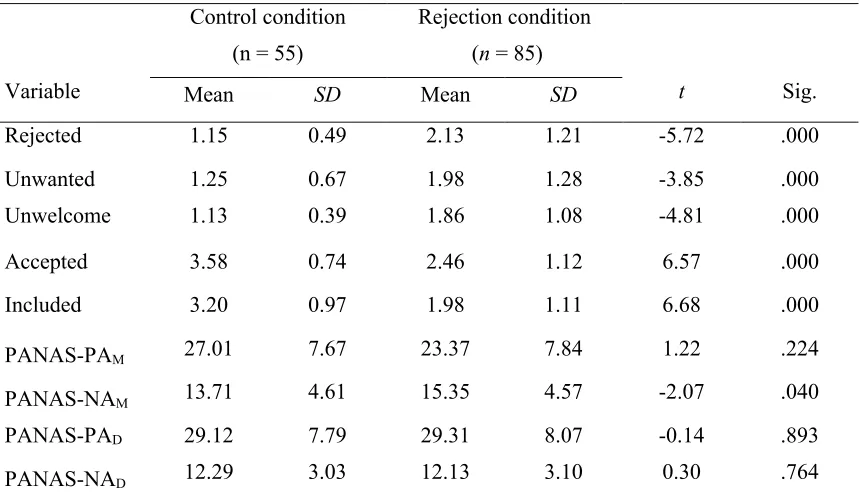
Table 4. Descriptive and t-test Statistics for Measures by Condition ... 61
Table 5. Effects of Experimenters and Confederates on Dependent Variables ... 63
Table 6. Descriptive Statistics for Manipulation and Debriefing Variables ... 67
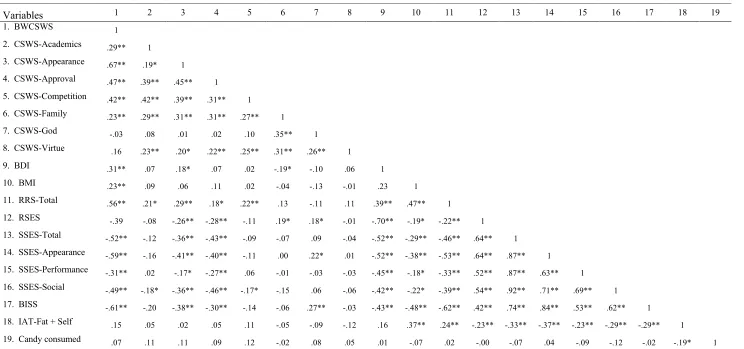
Table 7. Zero-Order Correlations (Pearson) Between Variables ... 73
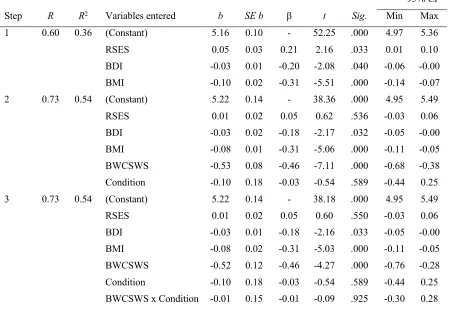
Table 8. Final Regression Model for State Body Satisfaction ... 77
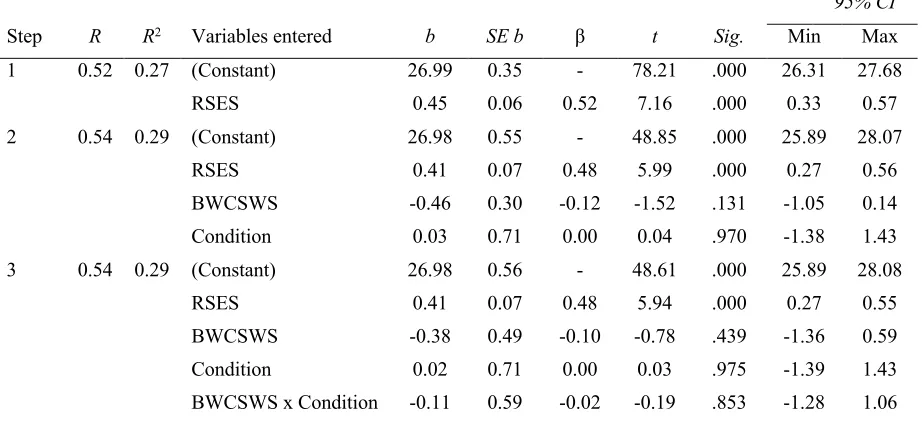
Table 9. Final Regression Model for State Appearance Self-Esteem ... 80
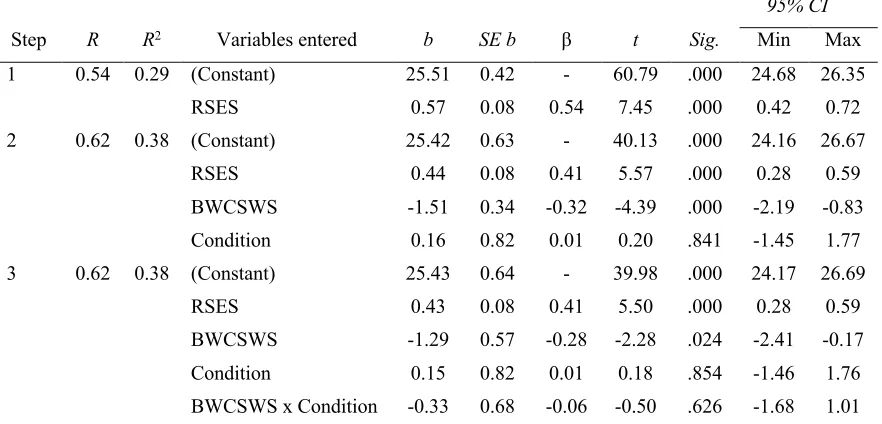
Table 10. Final Regression Model for State Performance Self-Esteem Removed ... 83
Table 11. Final Regression Model for State Social Self-Esteem ... 86
Table 12. CSW x Condition as Predictors of State Body Satisfaction ... 90
Table 13. CSW x Condition as Predictors of State Appearance Self-Esteem ... 91
Table 14. Final Regression Model for Implicit Weight Identity ... 94
Table 15. Final Regression Model for Candy Consumed ... 97
Table 16. BWCSW x Condition x Candy Consumed as Predictors of Body Evaluation Variables ... 103
Table 17. CSW x Condition as Predictors of State Performance Self-Esteem ... 105
Table 18. CSW x Condition as Predictors of State Social Self-Esteem ... 106
Table 19. CSW x Condition as Predictors of Implicit Weight Identity ... 108
Table 20. CSW x Condition as Predictors of Candy Consumed ... 109
Table 21. Summary of Research Procedure – Study 2 ... 144
Table 22. Descriptive and t-test Statistics for Measures by Condition ... 154
Table 23. Effects of Experimenters and Confederates on Dependent Variables ... 156
Table 24. Descriptive and t-test Statistics for Manipulation and Debriefing Variables ... 158
Table 26. Final Regression Model for State Body Satisfaction ... 166
Table 27. Final Regression Model for State Appearance Self-Esteem ... 169
Table 28. Final Regression Model for Implicit Weight Identity ... 172
Table 29. Final Regression Model for Candy Consumed ... 175
Table 30. Final Regression Model for State Social Self-Esteem ... 178
Table 31. Final Regression Model for Shape- and Weight-Based Self-Esteem ... 180
Table 32. Virtue CSW x Condition as Predictors of Body Image Evaluation Variables ... 186
Table 33. Final Regression Model for State Body Satisfaction Excluding Suspicious Cases ... 277
Table 34. Final Regression Model for State Appearance Self-Esteem Excluding Suspicious Cases ... 278
Table 35. Final Regression Model for State Performance Self-Esteem Excluding Suspicious Cases .... 279
Table 36. Final Regression Model for State Social Self-Esteem Excluding Suspicious Cases ... 280
Table 37. CSW x Condition as Predictors of State Body Satisfaction Excluding Suspicious Cases ... 281
Table 38. CSW x Condition as Predictors of State Appearance Self-Esteem Excluding Suspicious Cases ... 282
Table 39. Final Regression Model for Implicit Weight Identity Excluding Suspicious Cases ... 283
Table 40. Final Regression Model for Candy Consumed Excluding Suspicious Cases ... 284
Table 41. Final Regression Model for State Body Satisfaction Excluding Experimenter 4 Data ... 285
Table 42. Final Regression Model for State Social Self-Esteem Excluding Experimenter 4 Data ... 286
Table 43. Final Regression Model for Implicit Weight Identity Excluding Confederate 4 Data ... 287
Table 44. Summary of Hypotheses, Statistical Procedures, and Results ... 288
Table 45. Final Regression Model for State Body Satisfaction Excluding Suspicious Cases ... 308
Table 46. Final Regression Model for State Appearance Self-Esteem Excluding Suspicious Cases ... 309
Table 47. Final Regression Model for Implicit Weight Identity Excluding Suspicious Cases ... 310
Table 48. Final Regression Model for Candy Consumed Excluding Suspicious Cases ... 311
Table 49. Final Regression Model for State Social Self-Esteem Excluding Suspicious Cases ... 312
LIST OF FIGURES
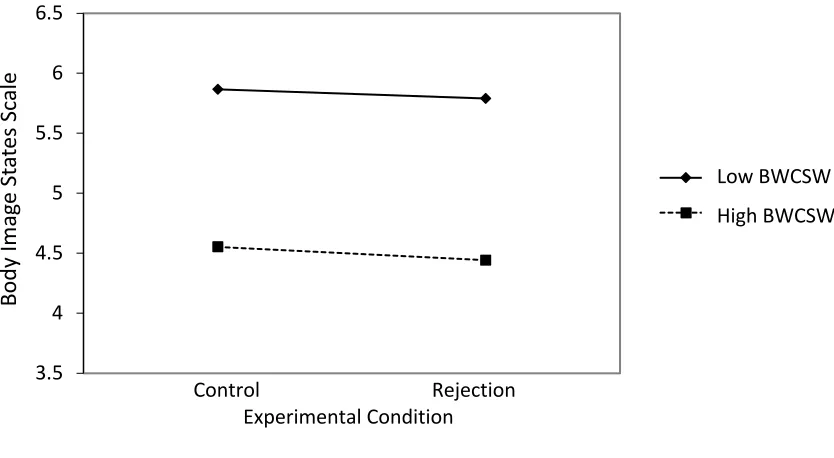
Figure 1. Effect of experimental condition on state body satisfaction at low and high levels of body weight contingent self-worth. ... 79
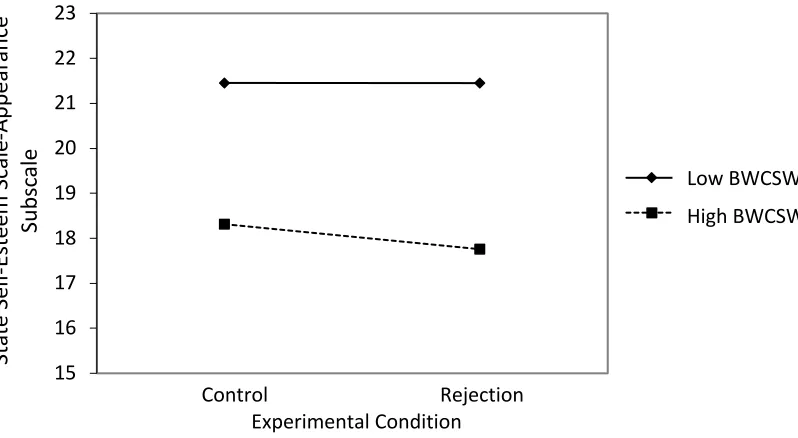
Figure 2. Effect of experimental condition on state appearance self-esteem at low and high levels of body weight contingent self-worth. ... 82
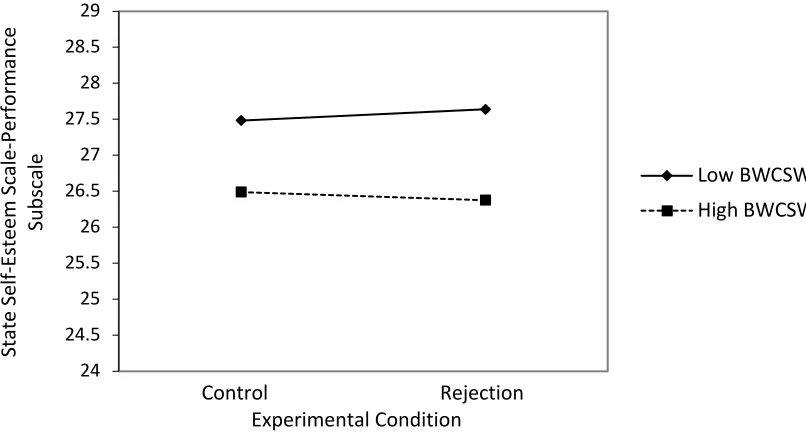
Figure 3. Effect of experimental condition on state performance self-esteem at low and high levels of body weight contingent self-worth. ... 85
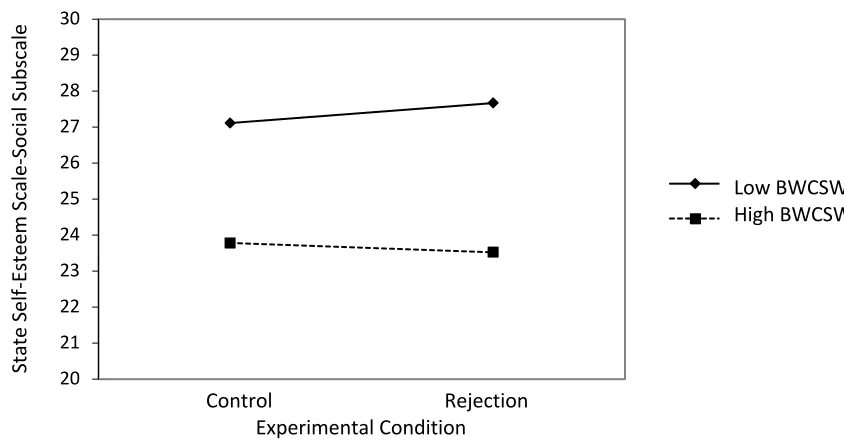
Figure 4. Effect of experimental condition on state social self-esteem at low and high levels of body weight contingent self-worth. ... 87
Figure 5. Effect of experimental condition on state appearance self-esteem at low and high levels of virtue contingent self-worth. ... 92
Figure 6. Effect of experimental condition on implicit weight identity at low and high levels of body weight contingent self-worth. ... 96
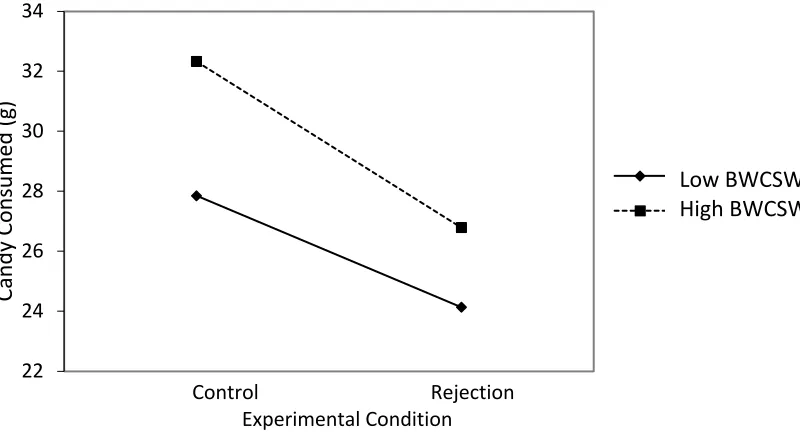
Figure 7. Effect of experimental condition on candy consumed at low and high levels of body weight contingent self-worth. ... 98
Figure 8. Effect of experimental condition on candy consumed at low and high levels of virtue
contingent self-worth. ... 110
Figure 9. Effect of experimental condition on state body satisfaction at low and high levels of body weight contingent self-worth. ... 168
Figure 10. Effect of experimental condition on state appearance self-esteem at low and high levels of body weight contingent self-worth. ... 171
Figure 11. Effect of experimental condition on state appearance self-esteem at low and high levels of body weight contingent self-worth. ... 174
Figure 12. Effect of experimental condition on candy consumed at low and high levels of body
weight contingent self-worth. ... 176
Figure 14. Effect of experimental condition on shape- and weight-based self-esteem at low and high levels of body weight contingent self-worth. ... 182
Figure 15. Effect of experimental condition on state appearance self-esteem at low and high levels of virtue contingent self-worth. ... 187
LIST OF ABBREVIATIONS
BDI-II Beck Depression Inventory-II
BISS Body Image States Scale
BMI Body Mass Index
BWCSWS Body Weight Contingency of Self-Worth Scale
CSW Contingency of self-worth
CSWS Contingencies of Self-Worth Scale
DQ Demographics questionnaire
IAT Implicit Association Test
MCSDS Marlowe-Crown Social Desirability Scale
MI Multiple Imputation
MMRA Moderated multiple regression analysis
MVA Missing values analysis
PANAS Positive and Negative Affect Schedule
PANAS-PA Positive and Negative Affect Schedule – Positive Affect PANAS-NA Positive and Negative Affect Schedule – Negative Affect
REB Research Ethics Board
RRS Revised Restraint Scale
RSES Rosenberg Self-Esteem Scale
RSMS Revised Self-Monitoring Scale
SAWBS Shape and Weight Based Self-Esteem Inventory
SCR Suspicious Cases Removed
SCS Self-Consciousness Scale
SSES State Self-Esteem Scale
SSES-Total State Self-Esteem Scale, Global scale
I. INTRODUCTION
Body satisfaction is an important facet of body image attitudes that refers to evaluative beliefs about one’s appearance (Cash, 2012). Body dissatisfaction is so common among girls and women that is widely considered as “normative” (Rodin, Silberstein, & Striegel-Moore, 1984, p. 267). Among adults, the prevalence of physical appearance concerns is highest among women between the ages of 18 and 60 (Harris & Carr, 2001), such that up to 91% of women report being dissatisfied with their current body size (Runfola et al., 2013). Understanding the factors contributing to body dissatisfaction in women is important, as it is associated with a lower quality of life (Mond et al., 2013), and because it is one of the most consistent and robust predictors of disordered eating behaviour (Stice, 2001) and the development of clinical eating
disorders (Cooley & Toray, 2001; Johnson & Wardle, 2005).
Self-esteem, which refers to one’s subjective evaluation of the self as intrinsically positive or negative (James, 1890; Sedikides & Gregg, 2003), is strongly linked to body satisfaction. Indeed, body satisfaction and appearance-related self-esteem are so closely associated with global self-esteem that they are considered integral to how one feels about the self in general (Tiggemann, 2011). Low self-esteem is strongly related to body dissatisfaction among female adolescents of various ethnic and socioeconomic
weight and shape is a vital component of their overall self-esteem (Cooper & Fairburn, 1993; Goldfein, Walsh, & Midlarsky, 2000). Given the close association between self-esteem and body image, the overall objective of the present research was to investigate body image evaluations of women within the context of two theoretical perspectives on self-esteem: the contingencies of self-worth theory and the sociometer theory.
Contingencies of Self-Worth
A major determinant of self-esteem is one’s perceived performance in self-important domains. According to Crocker and Wolfe’s (2001) contingencies of self-worth theory, contingencies of self-worth are the specific domains of life from which people derive their self-esteem. Crocker and colleagues describe seven contingencies of self-worth that are common in university students: other’s approval, academic achievement, God’s love, family support, virtue, competition, and physical appearance (Crocker, Karpinski, Quinn, & Chase, 2003; Crocker, Luhtanen, Cooper, & Bouvrette, 2003). Individuals vary in their contingencies of self-worth, and self-worth can be based on one or more domains. For example, whereas one person’s self-worth may be highly contingent on virtue,
another’s may be strongly based on physical appearance. Contingencies of self-worth are theorised to form over the course of development, where certain domains become
important in relation to an individual’s specific competencies (Harter, 1999), through meaningful experience, and in response to social influences (Ruble, 1987). For instance, people who are socially rewarded primarily for their academic success will tend toward basing their self-worth in the academic achievement domain, whereas those who receive social reinforcement primarily for their physical attractiveness are more likely to derive their self-worth from the domain of appearance.
maintain and protect their self-esteem by pursuing success and avoiding failure in the domains on which their self-worth is based (Crocker & Park, 2003; Crocker & Wolfe, 2001). According to this perspective, efforts to sustain one’s self-esteem are
concentrated on self-important domains, such that individuals exert more energy to maintain self-esteem in contingent relative to noncontingent domains (Crocker et al., 2003b). For instance, women with elevated physical appearance contingent self-worth are more likely to spend time on behaviours related to appearance, such as grooming, dieting, and exercising, and less likely to spend time on behaviours associated with areas of life on which their self-worth is less contingent (Crocker et al., 2003b).
The contingencies of self-worth theory theorises that state self-esteem fluctuates according an individual’s accomplishments in contingent domains, and that trait self-esteem develops as a result of average success and failure in contingent domains over the course of life experience (Crocker, 2002a; Crocker & Park, 2003). Furthermore, success and failure in contingent domains affects individuals’ overall sense of self-worth
(Crocker & Wolfe, 2001). For example, the more students base their self-worth on academic success, the more their global self-esteem decreases on days when they receive worse-than-expected grades (Crocker et al., 2003a) and following rejection during the
graduate admission process (Crocker, Sommers, & Luthanen, 2002). Similarly, negative
social feedback regarding one’s interpersonal qualities results in lower global self-esteem
for those who base their worth on others’ approval than it does for those whose
self-worth is less contingent on this domain (Park & Crocker, 2008). Because contingencies of self-worth influence how people feel about themselves in general, individuals remain highly vigilant for information and events that are relevant to their self-worth
The Body Weight Contingency of Self-Worth
Among the domains on which self-esteem can be contingent, physical appearance is particularly important for both men and women (Harter, 1999), and of the various components of physical appearance, body weight is a demonstrated facet of central importance for women (Fan, Liu, Wu, & Dai, 2004; Puhl & Boland, 2001; Swami, Greven, & Furnham, 2007; Tovée & Cornelissen, 2001; Tovée, Maisey, Emery, & Cornelissen, 1998). In Western culture, slimness is regularly promoted and rewarded in
women through various media platforms (Fouts & Burggraf, 1999; 2000). The media’s
portrayal of the thin ideal, an idealised norm for female bodies that emphasises
slenderness, leads women to view this ideal as expected, achievable, normative, and
central to their physical attractiveness (Grabe, Ward, & Hyde, 2008). Indeed, the
sociocultural norms that idealise the thin ideal are so prevalent that body weight is
considered a primary aspect of the female identity (Grover, Keel, & Mitchell, 2003).
Given this importance of body weight for women’s sense of self, Clabaugh, Karpinski,
and Griffin (2008) contend that the emphasis on slimness in Western culture contributes
to the development of body weight as a specific contingency of self-worth in many
women.
The body weight contingency of self-worth, which refers to the tendency to base one’s
self-worth on body weight, is considered an external contingency of self-worth. Whereas
internal contingencies of self-worth are based on core, unique, or abstract features of the
self, external contingencies of self-worth are based on superficial self-aspects. According
to Crocker (2002b), whereas virtue and God’s love are considered relatively internal and
stable contingencies of self-worth, the contingencies that are regarded to be particularly
External contingencies of self-worth are associated with greater sensitivity to socially
evaluative information (Crocker, 2002b), as self-worth in these domains is highly
dependent on validation from others (Crocker & Wolfe, 2001). Because external
domains are more vulnerable to external threat than are internal contingencies,
threatening information within external domains results in greater damage to an
individual’s overall sense of self-worth (Crocker & Wolfe, 2001). As a result,
individuals who base their self-worth on external domains also tend to have unstable and
low global self-esteem (Crocker et al., 2002). This is particularly the case for women who base their self-worth on body weight (Clabaugh et al., 2008). As such, women with
higher body weight contingent self-worth are vulnerable to negative body image-related
consequences, such as low appearance esteem and body dissatisfaction (O’Driscoll &
Jarry, 2015), as well as greater subjective weight, body shape anxiety, and disordered
eating behaviours (Clabaugh et al., 2008). Perhaps unsurprisingly, they also are highly
susceptible to depression, generalised anxiety, and reduced life satisfaction (Clabaugh et
al., 2008). Due to the unhealthy psychological outcomes associated with body weight
contingency of self-worth, the proposed research is focused on this specific domain in
particular.
The Sociometer Theory
Another demonstrated major determinant of self-esteem is interpersonal
self-esteem provide feedback on one’s relational value, and subjective feelings of low or declining self-esteem motivate people to engage in behaviours to preserve their perceived inclusionary social status (MacDonald & Leary, 2012). Therefore, it is posited that people seek to engage in behaviours that enhance and maintain their self-esteem, not due to drive for higher self-esteem in and of itself, but instead because effective efforts
increase one’s perceived relational value, which in turn improves the probability of social inclusion and decreases the likelihood of exclusion (Leary & Baumeister, 2000).
Therefore, from the sociometer perspective, state self-esteem is a reflection of one’s perceived inclusionary social status at a given point in time, whereas trait self-esteem represents an overall appraisal of one’s relational value across situations and over time (Leary, 1999; MacDonald & Leary, 2012).
The sociometer theory was derived from the belongingness hypothesis, which posits that humans have evolved an inborn ‘need to belong,’ a universal drive to form
the individual is alerted by means of decreased or increased self-esteem.
Interpersonal Rejection and Self-Esteem
Interpersonal rejection is conceptualised within the sociometer theory as a subjective experience in which an individual perceives that his or her relational value is insufficient (Leary, 2005b). As this theory posits that self-esteem itself is a reflection of perceived relational value, interpersonal rejection should represent a significant threat to an individual’s sense of self-worth. In support of this proposition, individuals who are socially accepted feel relationally valued and tend to report higher self-esteem
(Baumeister & Leary, 1995), whereas those who are rejected consistently demonstrate a lower overall sense of self-worth (see Leary, 2005a for a review). Indeed, rejection by anonymous strangers can lead individuals to experience damaged self-esteem and hurt feelings (e.g., Leary, Springer, Negel, Ansel, & Evens, 1998; Leary et al., 1995). Leary and colleagues (1998) demonstrated that even the self-esteem of people who report that they are unaffected by the evaluations of others are influenced by accepting and rejecting feedback. Overall, evidence suggests that people’s overall sense of self-worth is closely and strongly associated with the extent to which they perceive themselves to be
relationally valued.
propose that sociometer systems have evolved to scan the social environment for any indications and one’s relational value is low or declining (Leary, 2005a). Rejection is considered particularly threatening to an individual’s overall sense of self-worth because it not only denotes a threat to one’s relationships with others, it also is interpreted as an indication that one does not possess qualities that are desirable in social relationships (Sommers, 2001). From an evolutionary standpoint, indications that one’s relational value may be threatened are particularly salient because they alert to the possibility of social exclusion, and therefore motivate behaviour to restore perceived inclusionary social status. Conversely, cues indicating that one is socially accepted are less salient because they represent an expected and desired situation, and therefore require little or no behavioural adjustment (Leary, 2005a). For these reasons, the present research is
focussed on the effects of interpersonal rejection rather than acceptance.
Contingencies of Self-Worth and Sociometer Theory
MacDonald, Saltzman, and Leary (2003) propose that the effects of contingencies of self-worth on global self-esteem are likely driven by the implications of success and
failure in contingent domains for one’s perceived relational value. Due to the significance of relational value for the maintenance of self-esteem, they posit that
individuals pursue self-esteem in domains that they perceive to be particularly important for gaining social approval and avoiding disapproval. As previously noted, people develop contingencies of self-worth in response to salient and important life experiences
and within the context of socialisation (Harter, 1999). Therefore, the domains that become most central to an individual’s sense of self-worth are those that are perceived to
(MacDonald et al., 2003, p. 36).
There is some evidence to support the link between contingencies of self-worth and perceived relational value. Specifically, research shows that people’s self-esteem is affected by their self-evaluations in domains that they perceive to be important to others.
Individuals with elevated virtue and appearance contingent self-worth report perceiving these domains to be more important to social evaluations than other domains (vanDellen, Hoy, & Hoyle, 2009). In addition, adolescent girls and boys show greater feelings of global self-worth when they believe that they are competent in domains that they believe
to be important to their parents (Harter & Marold, 1991). Similarly, self-ratings of
attractiveness are more strongly related to global trait self-esteem in university men and
women who regard attractiveness as important for obtaining others’ approval, compared
to those who believe that attractiveness is of lesser social importance (MacDonald et al.,
2003). This research suggests that the domains regarded as most important to self-worth are those considered most relevant for one’s relational value.
Furthermore, Crocker (2002a) proposes that contingencies of self-worth not only
represent domains in which individuals are most likely to seek self-esteem, but they also
represent the domains in which people are most vulnerable to failure or rejection.
Accordingly, research has shown that that the effects of others’ domain-specific
evaluations on an individual’s esteem depend on the extent to which his or her
self-worth is based on this domain. Crocker and colleagues (2002) demonstrated that during
the graduate admission process, students who base their self-worth on academic success
reported greater state self-esteem on days they were admitted to a graduate program and
lower state self-esteem on the days they were rejected by these programs. Similarly, Park
others’ approval and who received negative interpersonal feedback in turn exhibited
lower state self-esteem, compared to those who did not base their self-worth on others’
approval. This research suggests that the effect of others’ evaluations and relational
devaluation on esteem depends on an individual’s particular contingencies of
self-worth.
Furthermore, vanDellen and colleagues (2009) examined individuals with domain-contingent self-worth to determine whether domain-specific outcomes are cognitively associated with social outcomes. They demonstrated that, after viewing a negative appearance prime, in contrast to a positive appearance prime or a nonword prime, people with higher appearance contingent self-worth were quicker to recognise exclusion-related target words on a lexical decision task relative to those with lower appearance contingent self-worth. In an additional study, these authors had participants write about an incident of social exclusion or a time when they were lost, after which they completed a word stem completion task. Results showed that those who based their self-worth highly on virtue demonstrated greater cognitive accessibility for negative compared to positive virtue-related words after reflecting on a time that they were excluded, but not after writing about a time when they were lost. There was no effect of experimental
manipulation on cognitive accessibility of virtue-related words for those who based their self-worth on virtue to a lesser extent. These findings demonstrate that people with domain-contingent self-worth cognitively associate negative domain-specific outcomes with social exclusion and vice versa.
Together, the literature indicates that people’s esteem is affected by their
self-evaluations in domains that they perceive to be important to others, that evaluative social
one’s overall sense of worth, and that people with domain contingent self-worth
cognitively associate negative domain-specific outcomes with social exclusion.
However, although previous research has examined the effects of domain-specific feedback on global self-esteem and the association between social exclusion-related cues and domain-specific outcomes, the question of the effects of direct exposure to more general interpersonal rejection on domain specific self-worth remained unexplored until recently.
The Body Weight Contingency of Self-Worth and Sociometer Theory
The first study to examine the impact of interpersonal rejection on a contingent self-worth domain was conducted by O’Driscoll and Jarry (2015), who investigated the potential moderating effect of body weight contingent self-worth on the impact of interpersonal rejection on women’s body image evaluations. Because contingencies of self-worth are posited to reflect the domains in which people are most vulnerable to
failure or rejection (Crocker, 2002a), it was expected that interpersonal rejection would most strongly and negatively affect the body satisfaction and appearance self-esteem of women whose sense of self-worth was highly contingent on body weight. Therefore, it was hypothesised that women with higher body weight contingent self-worth who were exposed to rejection would report lower body satisfaction and appearance self-esteem than would their counterparts unexposed to rejection. Further, because contingencies of self-worth are posited to reflect contingencies of relational value (e.g., Leary & Downs,
1995), O’Driscoll and Jarry (2015) predicted that the effect of interpersonal rejection on
body image evaluation would be moderated specifically by body weight contingent
self-worth, and that other domains of contingent self-worth would not moderate this effect.
weight, the effect of interpersonal rejection would be unique to the domain of body
image, and that other domains of self-esteem, such as social and performance, would be
relatively unaffected.
To test these predictions, O’Driscoll and Jarry (2015) exposed women varying in
levels of body weight contingent self-worth to either interpersonal rejection from peers or
to a neutral condition involving no relational feedback. In line with previous research demonstrating that body weight contingent self-worth is associated with negative body image-related outcomes (Clabaugh, 2008; Clabaugh et al., 2008) and consistent with predictions, the results showed that women with higher body weight contingent self-worth reported lower state body satisfaction and appearance self-esteem than did those who based their self-worth in this domain to a lesser extent, regardless of experimental condition. Furthermore, as predicted, no other contingencies of self-worth had an interactive effect with rejection on state body satisfaction or appearance self-esteem. Similarly, the effect of interpersonal rejection on women with higher body weight
contingent self-worth was specific to the body image domain and did not generalise to the social and performance dimensions of self-esteem. Additionally, when asked to report on why they believed that the other group members did not choose to work with them, more women with high body weight contingent self-worth attributed the rejection to their appearance than did women with low body weight contingent self-worth. Taken together, these results confirm that, for women who rely on their body weight for self-worth, interpersonal rejection impacted a consistent self-appraisal domain: body image evaluation.
with higher body weight contingent self-worth reported greater body satisfaction and
appearance self-esteem following rejection than did their counterparts not exposed to
rejection. In other words, women whose self-worth was highly contingent on body
weight responded to rejection bydeclaring themselves more satisfied with their body.
To make sense of these unexpected findings, O’Driscoll and Jarry (2015) speculated that this body image self-enhancement could be understood as a self-protective response. Evidence suggests that fragile self-esteem is associated with a propensity to feel
threatened and with higher engagement in ego-protective processes (Kernis, 2003; Kernis, Cornell, Sun, Berry, & Harlow, 1993; Kernis, Grannemann, & Barclay, 1992). As body weight contingent self-worth in particular is associated with unstable self-esteem (Clabaugh et al., 2008), and because self-worth that is contingent on external domains such as body weight confers greater sensitivity to socially evaluative information (Crocker, 2002b), it was likely that this domain also is associated with a tendency to engage in compensatory defensive strategies in reaction to interpersonal rejection.
Self-Affirmation Theory
integrity varies by individual, but threats typically involve actual or perceived failures to meet important social or cultural standards (Leary & Baumeister, 2000). From this perspective, exposure to threatening information within a self-important domain has negative implications for an individual’s global sense of self-worth. Viewed from the lens of sociometer theory, the drive to maintain one’s integrity that underlies self-affirmation theory also may be considered as a motivation to protect one’s perceived inclusionary social status (Sherman & Cohen, 2006).
When exposed to threats to self-integrity, people are motivated to diminish the threat and to attempt to repair their sense of self-worth (Sherman & Cohen, 2006).
Self-affirmation theory posits that, to maintain an overall positive sense of self-integrity, threats can be managed by affirming alternative self-resources that are unrelated to the original threat itself (McQueen & Klein, 2006; Steele, 1988; Tesser, Martin, & Cornell, 1996). Steele’s (1988) principle of fluid compensation suggests that domains of self-worth essentially are interchangeable, such that individuals can compensate for threats to one domain by self-affirming within any alternative domain. Self-affirmations can take different forms, but they typically entail reflecting upon, or engaging in an activity that makes salient aspects of life that are unconnected to the initial threat (Sherman & Cohen, 2006; Steele, 1988). For example, this theory posits that an individual can effectively compensate for threat to their overall self-integrity posed by failure on an exam by emphasising qualities in a different domain, such as their social connections or physical appearance.
that comprises an individual’s important roles, values, social identities, and belief
systems. From this perspective, any of the important domains that comprise the self-system can be threatened or affirmed, such that each represents a potential avenue to an individual’s overall sense of self-worth. Importantly, this self-system is suggested to be flexible, such that affirmations in one self-important domain can help to protect or
maintain one’s global self-integrity when an alternative domain is threatened (Sherman & Hartson, 2011). By drawing attention to an individual’s overall integrity,
self-affirmation potentially boosts an individual’s self-resources and broaden an individual’s perspective regarding the threat (Wakslak & Trope, 2009). In this manner,
self-affirmation allows an individual to acknowledge threats without necessarily experiencing associated negative effects on well-being (Cook, Purdie-Vaughns, Garcia, & Cohen, 2012), therefore making optional the need to address the threat directly (Sherman & Cohen, 2006; Steele, 1988).
Means for Affirming Self-Integrity
Steele (1988) suggests that, in general, people tend to use the most salient and readily available means to restore their self-integrity following threats to their self-concept. This was demonstrated in research by Jarry and Kossert (2007), who showed that individuals use salient environmental cues to compensate for self-esteem threat. They demonstrated that after viewing thin models, women who had received a threat in the form of
self-enhancing within this domain.
Just as cues from the environment can increase the accessibility of alternative sources of self-integrity, self-worth contingencies constitute salient self-resources that can be drawn upon to bolster one’s integrity following threat. As previously discussed,
contingencies of self-worth represent the domains of life from which people derive their self-esteem, and therefore, people seek to maintain and protect their global sense of self by pursuing success and avoiding failure in personally relevant domains (Crocker & Park, 2003; Crocker & Wolfe, 2001). Because contingent domains are central to the concept, it is reasonable to posit that these domains represent available sources of self-worth for individuals who are confronted with information that is threatening to their self-esteem. Indeed, considerable evidence suggests that self-enhancement efforts occur mainly in domains that matter most to an individual relative to those that do not
(Sedikides, Gaertner, & Toguchi, 2003).
Therefore, in O’Driscoll and Jarry (2015), self-esteem threat in the form interpersonal rejection may have triggered an ego-protective response, prompting women higher in body weight contingent self-worth to compensate for threat to their perceived relational value, and protect their overall self-worth, by self-affirming within the valued domain of body image. In other words, the claimed elevated levels of body satisfaction and
appearances self-esteem of these women may have represented a defensive and
Self-Enhancement and Behavioural Consistency
Though defensive responses serve the function of protecting global self-worth, there are potential negative implications associated with using self-enhancement to compensate for threat. Because individuals’ actual performance in a domain may not be aligned with their explicit declared positive evaluations, responding to threat with
self-enhancement is likely to induce cognitive dissonance for individuals who are uncertain as to whether they indeed possess the self-enhanced attributes. Because of the
uncomfortable feelings associated with holding contradictory beliefs, people are strongly motivated to reduce feelings of dissonance (Festinger & Carlsmith, 1959). As a result, defensive self-enhancement in a particular domain may carry with it the perceived obligation to behave in a manner that is consistent with one’s claimed positive self-evaluations.
Research confirms that individuals who self-enhance following threat tend to behave in a manner that is aligned with their declared self-evaluations. For example, Baumeister (1982) showed that following exposure to threat in the form of bogus feedback on a personality assessment, those who responded with self-enhancement by rating themselves positively on attributes associated with cooperativeness in turn behaved in a more
of body image as a source of self-enhancement may prove problematic. In Western culture, an exaggerated and narrowly defined standard of thinness is strongly emphasised as the female ideal, to the extent that current ideals have become virtually unattainable for most women (e.g., Richins, 1991; Silverstein, Perdue, Peterson, & Kelly, 1986). Because women whose self-worth is contingent on the domain of body weight tend to demonstrate high levels of body dissatisfaction (O’Driscoll & Jarry, 2015), responding to interpersonal rejection by claiming to be satisfied with one’s body is likely to induce substantial cognitive dissonance for those who may feel that they are unable to achieve or possess the thin body that they perceive to be worthy of their claimed satisfaction (Jarry & Kossert, 2007). Due to the fact that people are motivated to reduce feelings of
dissonance (Festinger & Carlsmith, 1959), and because self-esteem that is contingent on external domains such as body weight is heavily reliant on validation from others, the claimed satisfaction in this domain may imply a felt obligation to align one’s appearance and body weight with one’s claims and, thereby, with appearance-related social standards and expectations. Therefore, if the defensive interpretation put forth by O’Driscoll and Jarry (2015) is correct for women who rely highly on body weight for self-worth, this artificial bolstering of body image satisfaction may carry with it the need to engage in appearance modification strategies, such as restricted eating, as means to approach social standards of thinness.
Limitations of O’Driscoll and Jarry (2015)
Although O’Driscoll and Jarry’s (2015) research provides an initial investigation into the moderating effects of body weight contingent self-worth in the impact of
image evaluation. This makes it impossible to determine whether the claimed body image satisfaction reported by women with higher body weight contingent self-worth was ego-protective, or whether it in fact was a reflection of their genuine appraisal of their appearance. In the absence of less explicit supporting data regarding their body image evaluations, the interpretation that this reported greater body image satisfaction reflects defensive compensatory self-enhancement remains an empirical question.
Overview of the Present Studies
II. STUDY 1
Defensive responses typically occur in a subconscious and automatic fashion (Sherman & Cohen, 2006). Therefore, whether the post-rejection claimed body
satisfaction of women who rely highly on body weight of self-worth is defensive may be elucidated by examining these women’s implicit attitudes and automatic behaviour in response to interpersonal rejection, in addition to explicit self-reports of their body image evaluation. It has been contended that explicit reports do not directly reflect self-evaluations, but instead are more reflective of self-enhancing presentational motivations and styles (Baumeister, Tice, & Hutton, 1989; Farnham, Greenwald, & Banaji, 1999). In contrast, implicit attitudes can be conceptualised as favourable or unfavourable
evaluations toward an object or the self that may occur without conscious awareness (Fazio & Olson, 2003;Greenwald & Banaji, 1995), with automatic behaviour referring to the spontaneous production of behaviour operating without conscious direction or control (Bargh & Chartrand, 1999). If the claimed body satisfaction of women whose self-worth is highly contingent on body weight truly is a defensive response to rejection and thus, not genuine, implicit measures of body image evaluation should not show
self-enhancement, and these women’s automatic behaviour should be at odds with their stated satisfaction with their body. Therefore, in addition to self-report measures of explicit body image evaluation, Study 1 employed a measure of implicit weight identity, as well as an assessment of automatic eating behaviour.
Implicit Attitudes
implicit measures refer to methods that assess attitudes and beliefs that may not be directly accessible by conscious introspection. These measures have several advantages over explicit measures. Implicit measures can uncover attitudes that may not be available to conscious recall (Greenwald & Banaji, 1995; Greenwald, McGhee, & Schwartz, 1998), they are less susceptible to self-presentation biases (Greenwald & Banaji, 1995), and they can allow for the prediction of behaviours that may not be predicted accurately by
explicit measures (Dovidio, Kawakami, Johnson, Johnson, & Howard, 1997). As such, implicit measures represent a potentially effective means to assess defensive processes.
Implicit Body Image Evaluation
If the claimed body satisfaction of women whose self-worth is highly contingent on body weight serves a self-protective function against interpersonal rejection, as
Due to the pervasive idealisation of thinness and derogation of heavy weight in Western culture (Levitt, 2003), lower self-esteem and higher body dissatisfaction tend to be associated with subjective overestimations of body weight. For instance, a meta-analysis by Miller and Downey (1999) demonstrated that the correlation between low self-esteem and self-perceived heavy weight is stronger than the association between low self-esteem and actual weight in men and women. Similarly, Cash and Hicks (1990) showed that normal weight men and women who evaluated their physical appearance more negatively and reported feeling more dissatisfied with their body also reported perceiving themselves to be overweight.
Furthermore, people’s explicit and subjective perception of their own weight can be influenced by environmental factors. Evidence suggests that threatening information within the body image domain can lead people to subjectively perceive their body weight as heavier. For example, research by Hamilton and Waller (1993) showed that anorexic and bulimic women who viewed media portrayals of idealised female bodies in women’s fashion magazines in turn overestimated their body size to a greater extent did those who viewed photographs of neutral objects. Similarly, Martin and Xavier (2010)
demonstrated that following exposure to images of slim models, male and female participants perceived their weight to be heavier and reported more pressure toward thinness, than did those who viewed heavier models.
relational value (Leary & Downs, 1995) and also represent the domains in which people are most vulnerable to failure or rejection (Crocker, 2002a), it was predicted that cues indicating relational devaluation from others should increase the salience of body weight for women whose self-worth is highly contingent on this domain. Furthermore, because perceptions of one’s own body weight are often and subjective (Cash & Hicks, 1990) and susceptible to influence from the environment (e.g., Hamilton & Waller, 1993; Martin & Xavier, 2010), it was expected that the increased focus on weight activated by rejection would instigate an intensification of body dissatisfaction and self-perceived heavy weight for women whose self-worth is highly contingent on their body weight. In this research, subjective body weight was assessed using the implicit weigh identity Implicit
Association Test (IAT).
The Implicit Association Test. The Implicit Association Test (IAT; Greenwald et al., 1998) is an implicit measure designed to assess the relative strength of association between various constructs. The logic underlying measurement using the IAT is that pairing of semantic concepts should be easier, and response times should be faster, when two concepts share stronger implicit cognitive associations, compared to concepts that share weaker associations (Nosek, Greenwald, & Banaji, 2007).
classifications: good, bad, flower, and insect. Participants are instructed to press one response key (e.g., left key) for any word denoting good or flower (e.g., triumph, happy, daisy, carnation), and a different key (e.g., right key) for any word denoting bad or insect (e.g., cancer, rotten, cockroach, mosquito). The response key pairings then are reversed, such that participants press one response key (e.g., left key) in response to words
denoting good or insect, and the other key (e.g., right key) for words denoting bad or flower. Easier pairings, as indicated by faster response times, are interpreted as more strongly implicitly associated than more difficult pairings, as indicated by slower response times. In the above example, a positive implicit attitude toward flowers, as opposed to insects, is indicated when participants categorise items more quickly when they are required to make the same response to flowers and positive words, and a different response to insects and negative words, compared to when these pairings are reversed.
The IAT is considered a general-purpose test of implicit attitudes and associations. It successfully has been used to measure implicit associations in the areas of memory, personality, knowledge, attitudes, stereotypes, self-concept, and self-esteem (refer to Nosek et al., 2007 for a review). Though the IAT is most commonly administered with the goal of measuring relatively stable implicit associations, it shows evidence of both trait- and occasion-specific variation (Schmukle & Egloff, 2004). Further, the IAT has been used as a sensitive state measure of group differences in acute stress following self-esteem threat (Sato & Kawahara, 2012).
date, there exists only one known measure of implicit weight identity. To measure this construct, Grover and colleagues (2003) designed a modified version of the IAT, to assess the extent to which people implicitly identify themselves as thin versus fat. By asking participants to pair thin versus fat attributes with self versus other categories (Grover et al., 2003), the logic of the implicit weight identity IAT is that faster reaction times when pairing fat and self, as compared to thin and self, can be interpreted as an indication that the individual more strongly implicitly identifies the self as fat as opposed to thin.
Eating Behaviour
In this research, eating behaviour was used as an additional means to assess
defensiveness. Cohen and Farley (2008) argue that eating is an automatic behaviour that often operates without conscious awareness or direction (Bargh, 1994; Bargh &
Chartrand, 1999). Research has demonstrated that the environment exerts powerful influences on the amount and types of food that people consume (Cohen & Farley, 2008), and that eating behaviour is influenced by environmental stimuli, even when the
perception of these stimuli is outside of conscious awareness (Cohen & Farley, 2008).
Environmental Influences on Eating Behaviour
It is generally accepted that emotional distress can result in either increases or decreases in eating, depending on the type of individual involved and the nature of the threat. Dietary restraint, which refers to self-initiated attempts to restrict dietary intake for the purpose of controlling one’s body weight (Polivy & Herman, 1993), is a
that is required to maintain a restricted diet, therefore resulting in behavioural
disinhibition and increased food consumption (Heatherton et al., 1991). On the other hand, they theorised that unrestrained eaters, who are not under the added pressure of maintaining cognitive restraint, remain more strongly affected by the physiological and appetite-suppressing cues released during stress, and therefore are more inclined to eat less (Polivy, Herman, & McFarlane, 1994). This research suggests that, in the absence of cognitive load associated with efforts to restrict food consumption, people tend to eat less when under stress.
Additional evidence suggests that women who are induced to feel dissatisfied with their body restrict their dietary intake. Strahan, Spencer, and Zanna (2007) showed that, after controlling for restrained eating, women who viewed thin models ate less relative to those who viewed neutral commercials. Similarly, Krahé and Krause (2010)
demonstrated that, when given the option of a diet or nondiet snacks, women who were exposed to thin models were more likely to choose diet variants, relative to women who viewed normal sized models, regardless of body mass index (BMI) or restrained eating status. This suggests that, in general, women compensate for threats to their body image by limiting the amount of food they consume and avoiding what are perceived to be higher calorie options.
Eating behaviour and contingencies of self-worth. Along similar lines, some
evidence suggests that contingencies of self-worth may moderate the effect of body
self-esteem by living up to socially defined expectations and gaining social approval. These authors demonstrated that, relative to those who viewed advertisements that pictured products alone, for women who were exposed to idealised body images, higher levels of extrinsic-contingent self-worth was related to lower levels of snack food consumption, as well as stronger reported preferences for healthy foods. The researchers argued that, for highly extrinsically focussed women, viewing idealised body images activated the self-esteem goal of aligning body weight with normative standards to fit in and to feel accepted.
Eating behaviour and interpersonal rejection. Interestingly, research on the effects of interpersonal rejection on eating has demonstrated findings in the opposite direction. Baumeister, DeWall, Ciarocco, and Twenge (2005) showed that men and women exposed to rejection from peers ate twice as many cookies than did those exposed to acceptance, regardless of their BMI. This effect is supported further by studies using the Cyberball paradigm, a computer-based game in which players are induced to feel
included by receiving the ball as often as other players, or are excluded from the game after the first few ball tosses. Oaten, Williams, Jones, and Zadro (2008) showed that, men and women who were excluded during a Cyberball game ate more than did those who were included, even after controlling for BMI. Similarly, Salvy and colleagues (2011) found that Cyberball exclusion resulted in increased food consumption for overweight, but not normal weight, men and women. Sproesser, Schupp, and Renner (2014) furthermore demonstrated that the impact of social feedback on eating was moderated by participants’ more general tendencies to eat under stress, such that
stress (stress hypophagics). It therefore is suggested that social exclusion represents a unique kind of threat that disrupts self-regulation, or the capability to control one’s responses, by directing attention away from other effortful processes, which in turn increases food consumption (Baumester et al., 2005; Oaten et al., 2008).
Eating Behaviour as a Measure of Defensiveness
The foregoing research on eating behaviour indicates that exposure to body image threats can lead to dietary restriction and preference for foods that are perceived to be healthier (Krahé & Krause, 2010; Strahan, Spencer, & Zanna, 2007), and that such effects are more pronounced for women with higher extrinsic contingent self-worth (Williams et al., 2014). Although social threat typically results in increased food consumption
(Baumester et al., 2005; Oaten et al., 2008; Salvy et al., 2011; Sproesser et al., 2014), because interpersonal rejection is posited to negatively affect the body image evaluation of women who rely on body weight for self-worth, social threat is predicted to have a negative impact on eating behaviour for this group of women. As discussed previously, people are highly motivated to reduce the experience of cognitive dissonance associated with defensive responses (Festinger & Carlsmith, 1959). Because body weight
contingent self-worth is associated with body dissatisfaction (O’Driscoll & Jarry, 2015) and greater subjective weight appraisals (Clabaugh et al., 2008), it was expected that the defensive and artificial bolstering of explicit body satisfaction for women with higher body weight contingent self-worth would also entail engagement in appearance
modification strategies, such as restricted eating, to align their physical appearance with their stated satisfaction with their body.
The Present Research
(2015) by examining the proposition that the claimed body image satisfaction of women whose self-worth is reliant on body weight represents a defensive response to
interpersonal rejection. In Study 1, women of varying levels of body weight contingent self-worth were exposed to either rejection from peers or to a neutral condition involving
no relational feedback. All women then completed measures of explicit body image
evaluation (state body satisfaction and appearance self-esteem) and state social and
performance self-esteem, an implicit measure of weight identity, and a behavioural
measure of appearance management in the form of eating behaviour. Additionally, global trait self-esteem, depressive symptoms, restrained eating status, and BMI were examined as potential covariates because of their prior demonstrated associations with the dependent variables.
Research Questions
Study 1 was designed to address several research questions: First, do individual differences in the tendency to base self-worth on body weight influence the effect of interpersonal rejection on body image evaluation? Second, does rejection result in greater body satisfaction and appearance esteem for women who base their self-worth on body weight relative to their counterparts not exposed to rejection? Third, can the reported greater body satisfaction and appearance self-esteem demonstrated by women who base their self-worth highly on body weight be explained as a defensive response to rejection?
Research Aims and Hypotheses
As previously discussed, basing self-worth on body weight is generally associated with negative body image-related outcomes (Clabaugh et al., 2008; O’Driscoll & Jarry, 2015). Therefore, it was expected that women with higher body weight contingent self-worth would report lower levels of state body satisfaction and appearance self-esteem relative to those who base their self-worth to a lesser extent on this domain.
Further, because contingencies of self-worth are theorised to represent contingencies of relational value (e.g., Leary & Downs, 1995) and also represent the domains in which people are most vulnerable to failure or rejection (Crocker, 2002a), it was expected that interpersonal rejection would influence women whose self-worth is highly contingent on their body weight most strongly within the domain of body image evaluation. Further, evidence suggests that self-worth that is contingent on external domains such as body weight tends to be superficial, unstable, and sensitive to threat (Clabaugh et al., 2008), and that fragile self-worth is associated with engagement in ego-protective processes in response to threatening information (e.g., Kernis, 2003). Therefore, it was expected that women whose self-worth is highly contingent on body weight would respond to rejection in a defensive and self-enhancing fashion, by self-reporting greater satisfaction with their body in comparison to their nonrejected counterparts. In contrast, it was anticipated that the body image evaluation of women who base their self-worth to a lesser extent on their body weight would remain unaffected by rejection. Specific hypotheses are outlined below:
Hypothesis 1.1.1. Women whose self-worth is highly contingent on body weight
Hypothesis 1.1.2. Body weight contingent self-worth would moderate the impact of
rejection on reported body image evaluation. Following exposure to interpersonal rejection, women higher in body weight contingent self-worth would self-report
significantly greater state body satisfaction and appearance self-esteem than would their nonrejected counterparts. Among women lower in body weight contingent self-worth, self-reports of state body satisfaction and appearance self-esteem would not differ significantly across experimental conditions.
Hypothesis 1.1.3. The self-enhancement effect of women with higher body weight
contingent self-worth in response to interpersonal rejection would be unique to the domain of body image, such that other domains of state self-esteem (i.e., social and performance) would not significantly be affected by this combination of predictors. Hypothesis 1.1.4. The effect of interpersonal rejection on body image evaluation
would be moderated specifically by body weight contingent self-worth, such that other domains of contingent self-worth (i.e., other’s approval, academic achievement, God’s love, family support, virtue, and competition) would not moderate the effect of rejection on reported state body satisfaction and appearance self-esteem.
Aim 2. The second aim of Study 1 was to expand upon O’Driscoll and Jarry’s (2015) findings by examining the prediction that the body image self-enhancement exhibited by women with higher body weight contingent self-worth represents a defensive response to interpersonal rejection. Because higher body weight contingent self-worth is associated with body dissatisfaction (O’Driscoll & Jarry, 2015) and greater subjective body weight (Clabaugh et al., 2008), it was expected that women whose self-worth is highly