Scholarship at UWindsor
Scholarship at UWindsor
Electronic Theses and Dissertations Theses, Dissertations, and Major Papers
11-7-2015
#SocialMedia: Exploring the Associations of Social Networking
#SocialMedia: Exploring the Associations of Social Networking
Sites and Body Image, Self-Esteem, Disordered Eating and/or
Sites and Body Image, Self-Esteem, Disordered Eating and/or
Eating Disorders and the Impact of a Media Literacy Intervention
Eating Disorders and the Impact of a Media Literacy Intervention
Sara Santarossa
University of Windsor
Follow this and additional works at: https://scholar.uwindsor.ca/etd
Recommended Citation Recommended Citation
Santarossa, Sara, "#SocialMedia: Exploring the Associations of Social Networking Sites and Body Image, Self-Esteem, Disordered Eating and/or Eating Disorders and the Impact of a Media Literacy Intervention" (2015). Electronic Theses and Dissertations. 5508.
https://scholar.uwindsor.ca/etd/5508
This online database contains the full-text of PhD dissertations and Masters’ theses of University of Windsor students from 1954 forward. These documents are made available for personal study and research purposes only, in accordance with the Canadian Copyright Act and the Creative Commons license—CC BY-NC-ND (Attribution, Non-Commercial, No Derivative Works). Under this license, works must always be attributed to the copyright holder (original author), cannot be used for any commercial purposes, and may not be altered. Any other use would require the permission of the copyright holder. Students may inquire about withdrawing their dissertation and/or thesis from this database. For additional inquiries, please contact the repository administrator via email
#SOCIALMEDIA: EXPLORING THE ASSOCIATIONS OF SOCIAL NETWORKING SITES AND BODY IMAGE, SELF-ESTEEM, DISORDERED
EATING AND/OR EATING DISORDERS AND THE IMPACT OF A MEDIA LITERACY INTERVENTION
By
Sara Santarossa
A Thesis
Submitted to the Faculty of Graduate Studies through the Department of Kinesiology in Partial Fulfillment of the Requirements for
the Degree of Master of Human Kinetics at the University of Windsor
Windsor, Ontario, Canada
2015
#SOCIALMEDIA: EXPLORING THE ASSOCIATIONS OF SOCIAL NETWORKING SITES AND BODY IMAGE, SELF-ESTEEM, DISORDERED
EATING AND/OR EATING DISORDERS AND THE IMPACT OF A MEDIA LITERACY INTERVENTION
by
Sara Santarossa
APPROVED BY:
______________________________________________ J. Jarry
Department of Psychology
______________________________________________ R. Snelgrove
Department of Kinesiology
______________________________________________ S. Woodruff, Advisor
Department of Kinesiology
DECLARATION OF ORIGINALITY
I hereby certify that I am the sole author of this thesis and that no part of this thesis has been published or submitted for publication.
I certify that, to the best of my knowledge, my thesis does not infringe upon anyone’s copyright nor violate any proprietary rights and that any ideas, techniques, quotations, or any other material from the work of other people included in my thesis, published or otherwise, are fully acknowledged in accordance with the standard referencing practices. Furthermore, to the extent that I have included copyrighted material that surpasses the bounds of fair dealing within the meaning of the Canada Copyright Act, I certify that I have obtained a written permission from the copyright owner(s) to include such material(s) in my thesis and have included copies of such copyright clearances to my appendix.
ABSTRACT
The aim of the present study was to investigate associations between SNSs and
body image (BI), self-esteem (SE), and eating behaviours (EBs)/eating disorders (EDs)
(Study A) and to evaluate the impact of a media literacy intervention (Study B). A sample
of young adults (N = 160) completed Study A and then were randomly assigned to a
control or intervention group (Study B). A follow-up survey was completed (n = 78) one
month after the intervention. Study A revealed that females and males spent 4.1±5.3 and
2.9±2.8 hours on SNS, respectively; with the majority of time spent lurking (i.e., looking
at another users’ profile but not actually communicating with them). Furthermore, SNSs
may impact internalization of beauty standards, SE, and EBs/EDs. The media literacy
intervention was successful in decreasing ED symptoms/concerns. Therefore, educational
tools, should be created to teach of the possible negative implications SNS usage can
ACKNOWLEDGEMENTS
First and foremost, I would like to thank my thesis supervisor Dr. Sarah
Woodruff, for her support and guidance throughout this project. I would like to thank my
committee members, Dr. Ryan Snelgrove and Dr. Josée Jarry, for contributing their time
and ideas to this work. I would like to thank Mia Tannous, The Bulimia Anorexia
Nervous Association (BANA), and Tiffany Martindale, for contributing their time to this
study. I would also like to thank my fellow graduate and undergraduate students who
assisted with data collection. This research was supported by the countless reference
letters from Dr. Kevin Milne and Dr. Marge Holman and funding from the Canadian
Institutes of Health Research, MITACS Accelerate, and the Ontario Graduate
Scholarship. Finally, I would like to thank my family and friends for all of their
TABLE OF CONTENTS
DECLARATION OF ORIGINALITY ... iii
ABSTRACT ... iv
ACKNOWLEDGEMENTS ...v
LIST OF TABLES ... xii
LIST OF APPENDICES ... xiii
LIST OF ABBREVIATIONS/SYMBOLS ... xiv
CHAPTER 1 ...1
RESEARCH ARTICLE ...1
INTRODUCTION ...1
METHODS ...6
Participants and Recruitment ...6
Materials ...7
Overall survey design. ...7
Measures: Dependent Variables ...7
Body Image ...7
Body Image States Scale (BISS). ...7
Sociocultural Attitudes Towards Appearance Questionnaire (SATAQ-3; female
version, SATAQ-M; male version). ...9
Fear of Negative Appearance Evaluation Scale (FNAES). ...10
Self-Esteem ...11
State Self-Esteem Scale (SSES). ...11
Eating Behaviours ...11
Project Eat III – Eating Behaviour Questions. ...11
The Eating Attitudes Test (EAT-26). ...12
Measures: Independent Variables ...12
Problematic SNS use. ...12
Social networking site daily usage. ...13
Number of followers and number following. ...13
Social networking site activity (SNSa). ...13
Social networking site photographs (SNSp). ...14
Measures: Covariates ...14
Demographic questionnaire. ...14
Rosenberg Self-Esteem Scale (RSES). ...14
Study Procedures ...15
Study A ...15
Intervention. ...15
Control. ...16
Post-test. ...16
Data Analysis ...17
Approach to data analysis. ...17
Missing data and reliability analyses. ...18
Descriptive analyses. ...18
Covariates. ...18
Study A ...19
Assumptions of multiple linear regression. ...19
Objective 1. ...20
Objective 2. ...20
Study B ...20
RESULTS ...21
Participants ...21
Validity of sample size. ...22
Study A ...22
Objective 1. ...22
Objective 2. ...24
DISCUSSION ...25
Study A ...25
Objective 1. ...25
Objective 2. ...30
Study B ...31
Limitations ...33
Study A. ...33
Study B. ...34
Conclusions ...35
Study A ...35
Study B. ...36
REFERENCES ...37
CHAPTER 2 ...53
REVIEW OF LITERATURE ...53
BODY IMAGE ...53
Body weight as a predictor of body dissatisfaction...56
EATING BEHAVIOURS ...57
Common Predictors for Disordered Eating Attitudes and Behaviours ...62
SELF-ESTEEM ...63
Eating Behaviours and Self-Esteem ...64
BMI and Self-Esteem ...64
IMPACT OF MASS MEDIA ON BODY IMAGE, EATING BEHAVIOURS, AND SELF-ESTEEM ...65
Magazines...67
Television ...69
Internet and Social Networking Sites ...70
INTERNET ...73
SOCIAL NETWORKING SITES ...74
Facebook ...75
Twitter ...76
Instagram ...77
Pinterest ...77
Usage and Social Networking Site Addiction ...78
SOCIOCULTURAL THEORY AND THE NEGATIVE IMPACT OF SOCIAL NETWORKING SITES ON BODY IMAGE, EATING BEAHVIOURS, AND SELF-ESTEEM ...80
Sociocultural Theory and Social Networking Sites ...81
MEDIA LITERACY ...84
Inclusive of Social Networking Sites ...87
REFERENCES ...89
APPENDICES ...116
APPENDIX A ...116
APPENDIX B ...138
APPENDIX C ...157
APPENDIX D ...169
APPENDIX E ...179
LIST OF TABLES
Table 1: Social Networking Site, Body Image, Self-Esteem, and Eating Behaviour/Eating Disorder Variables among Males and Females....………..…….49
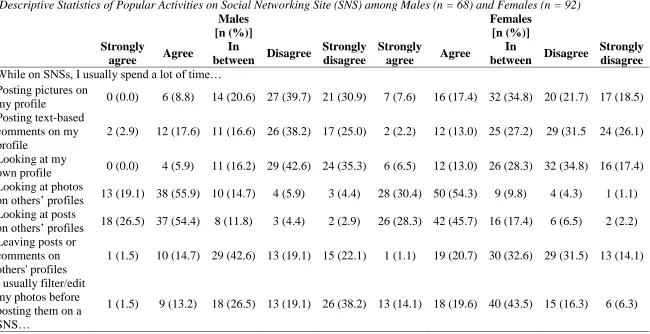
Table 2: Descriptive Statistics of Popular Activities on Social Networking Site (SNS) among Males and Females……...………..………..51
LIST OF APPENDICES
APPENDIX A #SocialMedia Study A Survey……….116
APPENDIX B #SocialMedia Study B Survey……….138
APPENDIX C Results of the Multiple Regression Analyses with Females for Study A, Objective 1.………...157
Results of the Multiple Regression Analyses with Males for Study A, Objective 1……...………...163
APPENDIX D Results of the Multiple Regression Analyses with Females for Study A, Objective 2.………...169
Results of the Multiple Regression Analyses with Males for Study A, Objective 2……...………...174
LIST OF ABBREVIATIONS/SYMBOLS
BANA Bulimia Anorexia Nervosa Association
BESAA Body Esteem Scale for Adolescents and Adults
BI Body Image
BISS Body Image States Scale
BMI Body Mass Index
CI Confidence Intervals
EAT-26 Eating Attitudes Test
EB/EBs Eating Behaviour/Eating Behaviours
ED/EDs Eating Disorder/Eating Disorders
FNAES Fear of Negative Appearance Evaluation Scale
GPIUS Generalized Problematic Internet Use Scale
PIU Problematic Internet Use
RSES Rosenberg Self-Esteem Scale
SE Self-Esteem
SATAQ Sociocultural Attitudes Towards Appearance Questionnaire
SNS/SNSs Social Networking Site/ Social Networking Sites
SNSa Social Networking Site Activity
SNSp Social Networking Site Photographs
CHAPTER 1
RESEARCH ARTICLE
INTRODUCTION
Body dissatisfaction (Eisenberg, Neumark-Sztainer, Story, & Perry, 2005) and
disordered eating (Neumark-Sztainer, Wall, Larson, Eisenberg, & Loth, 2011) are
common problems among young adults. Low self-esteem (SE) has been found to be
reciprocally predictive of body dissatisfaction (Etcoff, Orbach, Scott, & D’Agostino,
2004; Paxton, Neumark-Sztainer, Hannan, & Eisenberg, 2006a; Tiggemann, 2005; van
den Berg et al., 2007; Webster & Tiggemann, 2003) and an important predictor of the
development of eating pathology (Button, Sonuga-Barke, Davies, & Thompson, 1996;
French, Story, Neumark-Sztainer, Fulkerson, & Hannan, 2001). The literature suggests
that exposure to media cultivating beauty ideals impacts body image (BI), eating
behaviours (EBs), and SE in males (Harrison & Cantor, 1997; Lavine, Sweeney, &
Wagner, 1999; Muris, Meesters, van de Blom, & Mayer, 2005) and females (Harrison,
1997, 2000; Irving, 1990; Stice, Schupak-Neuberg, Shaw, & Stein, 1994). Although, few
studies on media exposure in men have been performed, the literature suggests that for
females, mass media is the most powerful conveyor of sociocultural ideas of beauty
(Dohnt & Tiggemann, 2006; Smolak & Levine, 1996; Tiggemann, 2003). However, the
majority of research on mass media and its impact on BI, EBs, and SE have focused on
ideal images presented in print and television media. Yet media use is rapidly evolving,
and the Internet, including social networking sites (SNSs) in particular, are quickly
becoming the primary media sources used by young adults (Bair, Kelly, Serdar, &
The number of Canadian households with access to the Internet has increased
from 79% in 2010 to 83% in 2012 (Statistics Canada, 2013). Moreover, social networking
site (SNS) usage in young adults is very high (i.e., 85% - 100%; Ellison, Steinfield, &
Lampe, 2007; Ross, Orr, Sisic, Arseneault, Simmering, & Orr, 2009; Sponcil & Gitimu,
2012; Spraggins, 2009). SNSs differ from traditional forms of media by their immediacy,
interactive, active participation, and circle of connectedness (Pempek, Yermolayeva, &
Calvert, 2009). Many SNSs exist, easily accessed on computers, tablets, or mobile
phones, with the most popular in today’s young adults being Facebook, Twitter,
Instagram, and Pinterest (Duggan & Smith, 2014). Given the rapid growth of the Internet
and SNSs, and the potential associations between media consumption and BI, EBs, and
SE, further research into these online media sources is needed, in both females and males.
Recently, positive correlations have been observed with SNSs usage and BI concern
(Fardouly & Vartanian, 2015; Meier & Gray 2013; Tiggemann & Slater, 2013), dieting
(Tiggemann & Slater, 2014), disordered eating level (Hummel & Smith, 2014; Mabe,
Forney, & Keel, 2014), and low SE (Mehdizadeh, 2010). However, these studies have
only looked at limited (i.e., Facebook), and somewhat outdated (i.e., MySpace,
Friendster) types of SNSs, and males were not used in the samples, making
generalizability of results difficult for today’s ever changing online world.
According to the Sociocultural Model, the media, peers, and family are important
vehicles through which messages about weight and appearance are transmitted to
members of society. For females, the Sociocultural Model suggests that BI disturbances
are the result of pervasive societal pressure to be thin (Halliwell & Harvey, 2006; Stice,
1994; Vandereycken, 1993) and lose weight (McCabe & Ricciardelli, 2005), whereas, for
2005; McCreary & Sasse, 2000; McKinley, 1998). According to the constructs of the
Sociocultural Model (i.e., media, peers, and family), SNSs are particularly powerful
transmitters of messages about weight and appearance. This is because SNSs merge
media, peers, and family influence to convey societal standards and virtually support the
beauty ideals and, in turn, encourage body dissatisfaction.
Young adults are mainly using SNSs to facilitate pre-existing relationships,
meaning they are interacting with people they know and trust (Ellison et al., 2007;
Pempek et al., 2009; Spraggins, 2009; Stefanone, Lackaff, & Rosen, 2011). On certain
SNSs users are able to like a post/picture or leave a comment. This like represents
acceptance and further can be seen as an indicator of popularity and, thereby, assists in
the transmission of ideals about beauty and body shapes (Jong & Drummond, 2013).
With the use of comments and likes users gain an understanding of the type of pictures
that are expected and respected by the social networking community, in turn, reproducing
and maintaining the culturally endorsed norms with their own pictures and posts (Jong &
Drummond, 2013).
For females, the speed and ease at which they can make social comparisons with
their friends and celebrities while using SNSs may be a contributing factor to body
dissatisfaction and internalization of the thin ideal (Jong & Drummond, 2013; Tiggemann
& Slater, 2014). For example, a recent Australian study by Fardouly and Vartanian (2015)
reported that the relationship between Facebook usage and BI concerns is specifically
mediated by appearance comparisons in general (i.e., their tendency to compare their own
appearance to others on Facebook). The online environment is filled with pictures of
peers and opportunities for social comparisons. SNSs, such as Instagram, have
Negative comparisons can (theoretically) be particularly likely when young women
compare their online pictures with peers, not knowing their peers have digitally altered
the photographs (Perloff, 2014). On the other hand, research has found that celebrities and
their lifestyles play a dominant and inspirational role for the majority of young females,
where many know every minute detail about the celebrities; including their diet and
exercise habits (Mooney, Farley & Strugnell, 2009). SNSs are an outlet where users can
specifically follow their favourite celebrities, reading personal and detailed posts about
not only their lives but their diets, exercise habits, and/or beauty beliefs. SNSs appear to
be a place where comparisons to peers and celebrities are made with ease, and research
needs to further address SNSs ability to act as channels for body comparison and pressure
of societal beauty standards.
Users’ SE has been suggested to be directly related to the tone of responses
received about information posted on their personal page/profile (i.e., positive feedback
lead to positive SE and negative feedback lead to negative SE; Valkenburg, Peter, &
Schouten, 2006). However, these studies (Jong & Drummond, 2013; Valkenburg et al.,
2006) were not done in North America, which questions the generalizability to the
Canadian culture. Recently, in a study mostly consisting of females (78%), comments
received on Facebook were found to be associated with disordered eating attitudes and
with weight and shape concerns (Hummel & Smith, 2014). Replication of these findings
(i.e., associations between SNSs use and eating pathology) is necessary before
establishing any strong conclusions. Furthermore, future research needs to explore the
other relevant/current forms of SNSs (i.e., Twitter, Instagram, and Pinterest) as well as
include a more gender-balanced sample to gather more meaningful and reliable results.
using SNSs on how to be critical of the messaging they see online or while following
their favourite celebrities.
A media literacy intervention is a type of combative (Levine & Murnen, 2009)
and preventative health campaign, as it is thought, if one becomes media literate the
credibility and pervasive influence of the media message may be reduced (Irving & Berel,
2001). Research on the efficiency of media literacy interventions as a combative approach
to the ideals of the unrealistic society standards of beauty and eating disorder (ED)
prevention is limited. Of the few studies that have assessed these effects, the majority
focuses on women (Coughlin & Kalodner, 2006; Irving & Berel, 2001; Yamamiya, Cash,
Melnyk, Posavac, & Posavac, 2005). Importantly, recent recommendations from the
Standing Committee on the Status of Women (Government of Canada, 2014) urge the
Government of Canada to consider supporting research on the impact of media messaging
and marketing of society’s narrow definition of beauty as well as encourage the
promotion of media literacy to help individuals view media content critically.
Furthermore, the Standing Committee on the Status of Women (Government of Canada,
2014) recommends that the Government of Canada collaborate with the provinces and
territories to consider developing a health and well-being education and awareness
campaign, including both in-school and social media content, to foster a positive sense of
self to protect against eating disorders (EDs), and to include media literacy components to
counteract images portrayed in mainstream media.
The Bulimia Anorexia Nervosa Association (BANA) is an organization based out
of Windsor, Ontario, Canada, that offers media literacy interventions to elementary,
secondary, and post-secondary students (all age appropriate). BANA’s 60 min
popular advertisements and images of models, BANA shows participants how the media
tirelessly portrays societal beauty standards. After showing an image, the group discusses
how these photos were edited and altered, suggesting that what the media conveys is a
façade and a pressure to obtain an unattainable standard of beauty.
Therefore, the aim of the present study was to investigate the associations that
exist between SNSs and BI, SE, and EBs/EDs (Study A). Furthermore, the impact of
BANA’s Media Literacy Intervention on BI, SE, and EBs/EDs was examined (Study B).
Specific objectives included for Study A:
(1) To determine the associations of SNSs (i.e., problematic SNS use, total time/day, and
total friends) with BI, SE, and EBs/EDs. As well as, to determine the different
associations specific SNS time (i.e., Facebook, Twitter, Instagram, and Pinterest) can
have with BI, SE, EBs/EDs
(2) To determine the associations of specific SNS activities (i.e., looking at or posting
pictures or comments on their personal, or others’ profile, and filtering/editing photos)
with BI, SE, and EBs/EDs.
Specific objective included for Study B:
(1) To determine if a media literacy intervention can influence changes in BI, SE, and
EBs/EDs, from time 1 (Study A) to time 2 (Study B).
METHODS
Participants and Recruitment
As defined by Duggan & Smith (2013) of the PewResearch Internet Project,
young adulthood includes individuals 18-29 years of age. Therefore, for the purpose of
Young adults were recruited from a first year mandatory undergraduate course (N
= 212) offered Winter Semester 2015 at the University of Windsor. Within this sample,
the survey program randomly assigned participants to the control group or the
intervention group (equally controlling for gender). Participation in this study was on a
completely voluntary basis. All participants were entered into a draw to win one of four
prize packages, upon completion of the pre-test (Study A) (i.e., FluidSurveys directed
participants to a separate page where they chose to leave their name and email address for
a chance to win). The prize packages contained a University of Windsor I participated in
Kinesiology Research T-shirt and a Sandi Richard Cookbook. Finally, upon completion
of the post-test (Study B), participants were again directed to a separate page where they
chose to leave their name and email, this time to be entered in a chance to win a FitBit.
Materials
Overall survey design. An online survey development program, FluidSurveys,
was used for this study. The survey included questions regarding the awareness and
acceptance of cultural ideals of attractiveness, level of SE, symptoms and concern
characteristics of disordered eating/EDs as well as SNS usage and dependent/problematic
relationships with their use of SNSs. The use of gender specific survey tools were used
where applicable, therefore, a male and female version of the online survey was available
for this study. All participants provided informed consent at the onset of the survey.
Measures: Dependent Variables
Body Image
Body Image States Scale (BISS). The BISS is a 6-item self-report measure that
assesses the evaluative/affective experience of one’s physical appearance (Cash, Fleming,
scale that it is bipolar (i.e., both positive and negative experiences), statements range from
1 (extremely dissatisfied) to 9 (extremely satisfied), with reverse scoring for appropriate
items. Higher scores indicate greater body satisfaction. The instructions state: “For each
of the items below, check the box beside the one statement that best describes how you
feel RIGHT NOW, AT THIS VERY MOMENT. Read the items carefully to be sure the
statement you choose accurately and honestly describes how you feel right now”. BISS’s
internal consistency has been shown to be α = .77 for women and α = .72 for men (Cash,
et al., 2002). Internal consistency was found to be unacceptable (i.e., < .65; Tavakol &
Dennick, 2011), with Cronbach’s alpha .45 and .54 among females and males,
respectively, in the current study’s sample.
Body Esteem Scale for Adolescents and Adults (BESAA); Attribution
Subscale. The BESAA is a 23-item measure designed to assess level of body satisfaction
on 3 subscales. Responses to each item are on 5-point Likert scale, statements range from
0 (never) to 4 (always), with reverse scoring for appropriate items. The total score places
the participant on a continuum of body esteem scores (ranging from 0 to 92), with higher
scores indicating higher body esteem. The 3 subscales may be used together or
individually, and have been shown to be valid and reliable in participants 12 years and
older with test-retest correlations for each subscale between .83 and .92, p < 0.001
(Mendelson, Mendelson, & White, 2001). The question numbers for each subscale are as
follows: BE-Appearance (1, 6, 7*, 9*, 11*, 13*, 15, 17*, 21*, 23); BE-Weight (3, 4*, 8,
10, 16, 18*, 19*, 22); and BE-Attribution (2, 5, 12, 14, 20). The asterisk (*) denotes
negative items, which must be recoded for scoring by reversing the scale (i.e., 0 = 4, 1 =
The attribution aspect of body esteem may be critical in BI research (Mendelson,
et al., 2001). In this study, only the attribution scale was used, which consists of 5 items.
The attribution scale specifically measures positive evaluations attributed to others about
one’s body and appearance (Mendelson et al., 2001). A sample question is “Other people
consider me good looking”. Internal consistency was found to be acceptable (i.e., >.65),
with Cronbach’s alpha .87 among females and .91 among males in the current study’s
sample.
Sociocultural Attitudes Towards Appearance Questionnaire (SATAQ-3;
female version, SATAQ-M; male version). The SATAQ-3 is a 30-item measure
designed to assess the internalization of beauty ideals (i.e., thin and/or toned) in females.
Items are scored on a 5-point Likert scale ranging from 1 (definitely disagree) to 5
(definitely agree). Items are then summed to obtain a total score out of 150. High scores
indicate a higher internalization of beauty ideals. A sample question is “I compare my
body to the bodies of people who appear in magazines”. The SATAQ-3 contains 4
subscales with previous research reporting high Cronbach’s alphas on these subscales:
Information (α = .96), Pressures (α = .92), Internalization-Athlete (α = .95),
Internalization-General (α = .96), with overall reliability also high (α = .96; Thompson,
van den Berg, Roehrig, Guarda & Heinberg, 2004). Furthermore, the SATAQ-3 subscales
had excellent convergent validity with measures of BI and eating disturbance (Thompson
et al., 2003). Internal consistency was found to be acceptable (i.e., >.65), with Cronbach’s
alpha .94 among the current study’s female participants.
The SATAQ-M is a 29-item measure, modified version of the SATAQ-3, to
assess the internalization of beauty ideals (i.e., athletic and/or muscular) in males. Like
disagree) to 5 (definitely agree). However, wording of some items has been modified and
item #15 has been removed to suit males (Karazsia & Crowther, 2008). For example Item
#6 was changed from ‘‘I’ve felt pressure from TV or magazines to look pretty’’ to ‘‘I’ve
felt pressure from TV or magazines to look muscular”. The SATAQ-M contains 4
subscales with relatively high Cronbach’s alphas on these subscales: Information (α =
.95), Pressures (α = .92), Internalization-Athlete (α = .94), and Internalization-General
(α = .85) (Karazsia & Crowther, 2008). Lastly, the SATAQ-M subscales had convergent
validity with measures of BI and body size disturbance (Karazsia & Crowther, 2007).
Internal consistency was found to be acceptable (i.e., >.65), with Cronbach’s alpha .95
among the current study’s male participants.
Fear of Negative Appearance Evaluation Scale (FNAES). The FNAES is a
6-item measure designed to assess fears about being negatively evaluated on the basis of
one’s physical appearance (Lundgren, Anderson, & Thompson, 2004). Items are scored
on a 5-point Likert scale ranging from 1 (not at all) to 5 (extremely). Items are then
summed to obtain a total score out of 30, with a high score indicating a greater fear of
being negatively evaluated based on physical appearance. A sample item is “I am afraid
other people will notice my physical flaws”. This scale has demonstrated good internal
consistency, with a sample of female undergraduates (α = .94; Lundgren et al., 2004).
Furthermore FNAES has good convergence with measures of BI, eating disturbance,
anxiety, and mood (Lundgren et al., 2004; Maïano, Morin, Monthuy-Blanc, Garbarino,
2010). Internal consistency was found to be acceptable, with Cronbach’s alpha .94 among
Self-Esteem
State Self-Esteem Scale (SSES). The SSES is a 20-item measure designed to
measure short-lived (i.e., state) changes in SE. Items are scored on a 5-point Likert scale
ranging from 1 (not at all) to 5 (extremely), with reverse scoring for appropriate items;
higher scores indicating higher state SE. The SSES contains the subscales: Social,
Performance, and Appearance. An example item from the Appearance subscale is “I feel
satisfied with the way my body looks right now”. Past research has shown the SSES to
have a high degree of internal consistency (α = .92; Heatherton & Polivy, 1991). Internal
consistency was found to be acceptable (i.e., >.65), with Cronbach’s alpha .94 among
females and .91 among males in the current study’s sample.
Eating Behaviours
Project Eat III – Eating Behaviour Questions. Questions #13, 16, 18, 20, 21
and 22 were taken from Project Eat-III survey (participants aged 20-31 years), to assess
various aspects of eating behaviour (EB) (Larson, Neumark-Sztainer, Story, van den Berg
&, Hannan, 2011; Neumark-Sztainer et al., 2011; Neumark-Sztainer, Wall, Story, &
Standish, 2012). Specifically, questions ask about both frequency and type of
dieting/weight control behaviours. For example, “How often have you gone on a diet
during the last year?” with response options ranging from “Never” to “I am always
dieting”. Furthermore, questions involving the frequency of specific types of weight
control behaviours (i.e., exercise, ate more fruits and vegetables, ate less high-fat foods,
ate less sweets, drank less soda pop (not including diet pop), and watched portion sizes),
and muscle gaining behaviour (i.e., changed eating, exercised more, used protein powder
Response options for such behaviour questions range from “Never” to “On a regular
basis”.
The Eating Attitudes Test (EAT-26). The EAT-26 is a 26-item measure and is
one of the most widely used standardized self-report measures of symptoms and concerns
characteristics of EDs (Garner, Olmsted, Bohr & Garfinkel, 1982). Items are scored on a
6-point Likert scale ranging from 0 (never, rarely, sometimes; 25), to 3 (always;
#1-25), with reverse coding in question #26. Items are then summed to obtain a total score
(out of 78), with any score of 20, or higher, considered at risk. The EAT-26 has shown a
high degree of internal consistency α = .90 on college females (Garner et al., 1982). The
EAT-26 also asks several questions to assess the behavioural symptoms representative of
an ED, an example statement is “In the past 6 months have you: Exercised more than 60
minutes a day to lose or to control your weight”. Internal consistency was found to be
acceptable (i.e., >.65), with Cronbach’s alpha .88 among females and .93 among males in
the current study’s sample.
Measures: Independent Variables
Problematic SNS use. The Generalized Problematic Internet Use Scale (GPIUS;
Caplan, 2002) was modified to examine levels of problematic SNS use among study
participants. This measure is a 29-item self-report questionnaire based on Davis’s (2001)
cognitive-behavioural model of Problematic Internet Use (PIU). Items are scored on a
5-point Likert scale ranging from 1 (strongly disagree) to 5 (strongly agree). There are
seven subscales: Mood Alteration, Perceived Social Benefit, Perceived Social Control,
Compulsivity, Excessive SNS Use, and Negative Outcomes. Items are then scored and
can range from 29-145, however, there is no definite cut off points exist and a higher
of this questionnaire was used by Spraggins’ (2009), whereby the word “Internet” or
“online” was replaced with the words “social networking sites” to determine the degree to
which respondents have a problematic or dependent relationship with SNSs, and was used
for the purpose of this study. Spraggins’ (2009) reliability analysis of the modified
GPIUS revealed an internal consistency of .92. Internal consistency was found to be
acceptable (i.e., >.65), with Cronbach’s alpha .93 among females and .95 among males in
the current study’s sample.
Social networking site daily usage. Participants were asked to physically type
the number of hours and minutes they spend daily, on each of the listed SNSs (i.e.,
Facebook, Twitter, Instagram, and Pinterest) they use. This question was modified from
Tiggemann and Slater (2013), where participants were asked to report on average how
long they spent on the Internet each day. These SNSs daily use data were then
manipulated to be expressed in total hours for each SNS (i.e., Facebook, Twitter,
Instagram, and Pinterest) as well as SNS total time (i.e., total hours spent on each
individual SNS was summed).
Number of followers and number following. Participants were asked to
physically type the number of users that follow them and that they follow for each of the
listed (i.e., Facebook, Twitter, Instagram, and Pinterest) SNSs they use. This question was
modified from Tiggemann and Slater (2013), where participants were asked how many
friends they had on both MySpace and Facebook. Due to the nature of Facebook (i.e., all
user friendships are mutual), only the number of users that they follow was used for
analysis. These data were then summed to create the variable SNS total friends.
Social networking site activity (SNSa). To determine specific SNS activity,
response item is “Posting pictures on your profile”. This question was modified from
Meier and Gray (2013), where participants were asked to indicate their use of each
Facebook feature on a 5-point scale. Additionally, the responses selected for this
question were based on common SNS activities that were applicable to Facebook,
Twitter, Instagram and Pinterest (i.e., lurking; Pempek et al., 2009). Responses were
recorded on a 5-point Likert scale and were scored 1 (strongly disagree) to 5 (strongly
agree).
Social networking site photographs (SNSp). To determine the level at which
participants modify their photographs before posting them on a SNS, participants were
asked “I usually filter/edit my photos before posting them…”. This question was also
modified from Meier and Gray (2013), as well as Perloff’s (2014) idea that SNS users
unknowingly compare themselves to digitally altered photographs. Responses were
recorded using a 5-point Likert scale and were scored 1 (strongly disagree) to 5 (strongly
agree).
Measures: Covariates
Demographic questionnaire. Gender, age, and ethnicity were obtained.
Rosenberg Self-Esteem Scale (RSES). The RSES is a widely used, 10-item
self-report measure, used to measure global trait SE (Rosenberg, 1965, 1979). Items are
measured on a 4-point scale ranging from 1 (strongly agree) to 4 (strongly disagree), with
reverse scoring for appropriate items. Items are then summed to give a total score out of
40, with higher scores indicating higher global trait SE. A sample item is “I take a
positive attitude toward myself”. Internal consistency was found to be acceptable (i.e.,
>.65), with Cronbach’s alpha 0.89 among females and 0.89 among males in the current
Study Procedures
All procedures were approved by the University of Windsor Research Ethics
Board. Data was collected from February to April, 2015.
Study A
Study A (see Appendix A for a copy of the survey) took approximately 30
minutes, and was administered via FluidSurveys. Study A was administered electronically
to all participants in their classroom during class time and an email link to the survey was
sent via the course website (i.e., CLEW) which remained active for 48 hours. Study A
survey acted as a pre-test for Study B. Following Study A survey completion, participants
were randomly assigned to either the intervention or control group. Random sampling
was accomplished through FluidSurveys. Upon completion of the survey, FluidSurveys
randomly chose which page to display (controlling for gender) that indicated their room
location for the day of the intervention. Lastly, upon completion of the Study A survey,
participants were directed to a separate survey where they could leave their name and
e-mail for a chance to win one of four Study A prize packages.
Study B
Intervention. Participation in the intervention was completely voluntary. A staff
member from BANA came to the class lecture after participants completed Study A (i.e.,
on a separate day from the pre-test). The staff member personally presented a 60 minute
Media Literacy Intervention to the intervention group of participants. Through visual aids
and group discussion, participants were encouraged to re-evaluate images presented by
the advertising industry. The goal of the presentation was to encourage the participants to
think critically about the media and become conscious consumers, which may, in turn,
Control. On the same day, and during the same time as the BANA Media
Literacy Intervention, the control group was asked to meet in a different room.
Attendance to this event was completely voluntary. Here, the Undergraduate Coordinator
talked to the participants about careers they may wish pursue after the completion of their
degree. This interaction lasted approximately 30 minutes.
Post-test. Approximately one month after the intervention, researchers returned
to the classroom to administer the post-test. The purpose of this survey was to measure
changes in SNS usage (time and friends/followers/following), SNSa, SNSp, problematic
SNS use, BI, SE, and EBs/EDs among participants as a result of the BANA’s Media
Literacy Intervention. All questions were identical to the ones used in Study A (although
some were removed to shorten the survey, including the RSES; see Appendix B for a
copy of the Study B survey) which took approximately 30 minutes to complete. An
additional question was added to the post-test, asking which room they attended (i.e.,
Classroom X, Classroom Y, Neither, or Forget/don’t know) on the date of the
intervention day. Both the control and intervention group completed the survey
electronically via FluidSurveys, during class time. Moreover, an email link to the survey
was sent via the course website (i.e., CLEW) and remained active for 48 hours; available
for those who missed class or chose to not fill out the survey during the class time
provided (e.g., did not feel comfortable taking the survey among peers), but still wished
to participate in the study. Lastly, upon completion of the post-test survey, participants
were directed to another page where they could leave their name and e-mail for a chance
Data Analysis
Approach to data analysis. Data collected from both the Study A and Study B
surveys were analyzed using SPSS version 21.0 for Windows (IBM Corp., 2012) and
Minitab 15 Statistical Software (Minitab Inc., 2007). Reliability and descriptive analyses
were performed on all variables included in this study. Although four different scales for
BI were originally measured, only the SATAQ was analyzed in the present data analyses.
Due to the small sample size and to reduce the number of degrees of freedom within the
statistical analyses, the SATAQ was the only BI measure with gender specific versions
and gender specific questions assessing the internalization of beauty. Similarly, although
several EBs were measured only 10 were chosen for data analysis: (1) use binge eating to
lose/control weight (EAT-26), (2) use vomiting to lose or control weight (EAT-26), (3)
exercise more than 60 min/day to lose or control weight (EAT-26), (4) currently trying to
change weight (Project Eat), (5) use protein powder or shakes to increase muscle
size/tone (Project Eat), (6) use laxatives, diet pills or diuretics to lose or control weight
(Project Eat), (7) skip meals because concerned about weight (Project Eat), (8) weight
self often, (9) how often have you gone on a diet in the last year, and (10) watch my
portion sizes. These behaviours were selected based on previous research findings and
had applicable relevance to the current study. All 10 EBs were used for Study A analyses,
however, only three EBs were used in Study B. The seven questions were removed from
Study B because the other EB questions ask “within the last 6 months…” or “within the
last year…”, and with the post-test only being one month later these questions were not
appropriate.
All Study A objectives were tested using a series of multiple linear regressions in
randomization had been successful and that participants in the experimental condition did
not differ significantly from participants in the control condition on any of the covariates.
Lastly, Study B objectives were tested using a series of generalized linear model
ANOVAs in Minitab.
Missing data and reliability analyses. Prior to analysis, data were checked for
accuracy of entry and missing values. Little’s MCAR test was used to determine that the
data missing occurred at random (p = 1.000). Missing values were identified and replaced
with the participant’s mean score on the respective subscale (Allison, 2002). After the
missing values were filled-in, the internal consistency reliability Cronbach alpha
coefficients were calculated for the appropriate measures, for both males and females.
The reliability analyses yielded coefficients ranging .54 to .95 in males and .42 to .94 in
females (as per what was indicated in the Methods section above).
Descriptive analyses. Next, descriptive analyses were performed on each variable
to check for univariate normality and the presence of outliers. Univariate outliers were
assessed by converting residuals into standardized residuals with a mean of 0 and a
standard deviation of 1. Standardized residuals with absolute values greater than 3.29
were identified as outliers. Histograms, Q-Q plots, the Shapiro-Wilk (SW) statistic, and
standardized scores of skewness and kurtosis were evaluated to determine whether each
variable was normally distributed (Ghasemi & Zahediasl, 2012).
Covariates. Among the planned covariates, age did not correlate with BI
(SATAQ-M α = -.03, p = .824; SATAQ-3 α = -.01, p = .942), SE (α = .15, p = .054), or
any EBs/EDs (α = -.11, p = .161) variables and, therefore, was not entered as a covariate
in the regressions for these dependent variables. Options for gender consisted of male or
linear regression analyses (Study A) and acted as a covariate in all generalized linear
model ANOVAs (Study B). Participants’ ethnicity was coded as white or non-white due
to the small number of non-Caucasian participants. The pattern of results did not vary for
participants with reported white or non-white ethnicity; therefore, all analyses were
conducted on the group as a whole, and it was not used as a covariate. Lastly, the RSES
did not correlate with BI (SATAQ-M α = -.04, p = 0.755; SATAQ-3 α = -.02, p = .964),
or EBs/EDs (α = -.14; p = .068), however was correlated with SE (α = .82; p < .001),
and, therefore, was entered as a covariate in the appropriate analyses in Study A. As the
RSES was removed from the post-test, it was not included as a covariate in Study B data
analyses.
Study A
Assumptions of multiple linear regression. Multiple linear regressions were
used to examine associations among the independent and dependent variables for both
objectives in Study A. The assumption of no perfect multicollinearity was assessed by
examining intercorrelations between variables, and checking the variance inflation factors
(VIF). Multicollinearity was not identified as a concern as all of the variables had a
correlation below 0.65, except for Instagram vs. Twitter that had a correlation of 0.85.
However, none of the VIFs had values that approached the cutoff of 10 (Field, 2009) and,
therefore, were all included in analyses. Data also were checked for the assumptions of
normally distributed errors and homoscedasticity. For each regression, the scatterplots of
standardized residual versus predicted residuals appeared to be approximately rectangular
with a concentration of scores around the centre. Additionally, the histograms of
standardized residuals approximated the normal curve. Thus, it was concluded that the
to be independent, as assessed by the Durbin-Watson statistic. While no univariate
outliers were identified through the earlier descriptive analyses, the assumption of
absence of outliers among the independent and dependent variables also requires the
absence of multivariate outliers. Multivariate outliers were assessed through examining
Mahalanobis and Cook’s distances. Cut-off values for multivariate outliers were
determined using the Chi squared distribution (Tabachnick & Fidell, 2007), and no
multivariate outliers were identified.
Objective 1. Controlling for gender, the dependent variables (BI; SATAQ score,
SE; SSES score, EAT-26 score and the 10 selected EBs) were examined in 13 separate
multiple linear regression equations that included (1) problematic SNS use, (2) SNS total
time, (3) SNS total friends (as the independent variables). In order to investigate whether
specific SNS time (e.g., Facebook time, Twitter time, Instagram time, and Pinterest time),
rather than total time spent on SNSs, a second round of 13 separate multiple linear
regressions were completed replacing SNS total time for the four individual site times.
Objective 2. Controlling for gender, the dependent variables (BI; SATAQ score,
SE; SSES score, EBs/EDs; EAT-26 score and the selected 10 EBs) were examined
separately in 13 multiple linear regression equations that included (1-6) SNSa and (7)
SNSp (as the independent variables).
Study B
Separate generalized linear model ANOVAs were used to examine the changes in
the dependent variables (BI; SATAQ score, SE; SSES score, EBs/EDs; EAT-26 score and
the selected 3 EBs), from time 1 (Study A) to time 2 (Study B), in both the intervention
and control groups (independent variables). The differences between time 1 and time 2
from T1 to T2, positive values resulted from an increase in scores from T1 to T2, and
scores of zero suggested no change in values from T1 to T2. Due to the small sample size,
especially among males, gender was entered into the models as a covariate and the
analyses were run on both males and females combined.
RESULTS
Participants
Out of a possible 212 total students enrolled in the class, 191 started the Study A
survey and 160 completed the pre-test it in its entirety (representing a 76% response rate).
A total of 115 participants started the post-test (Study B), of which 105 completed it in its
entirety; yet only 78 of those participants indicated that they attended and participated in
the BANA presentation (n = 50) or the control presentation (n = 28), which represents a
response rate of 37% for Study B.
Of the 160 participants from Study A, 57% were female (n = 92), 43% were male
(n = 68), and participants ranged from 18 to 27 years, with 85% being 18 and 19 years
old. The majority of the participants were white (81%), compared to non-white (19%;
Black, Aboriginal, Chinese/Korean/Japanese, Arabic, South Asian, or otherwise not
noted). Importantly for Study B, there were no differences in age, gender, or ethnicity
between the intervention and the control group. Females and males reported spending ~4
and ~3 hours/day on SNSs, respectively, and they had approximately the same number of
SNS total friends (~1380 vs. ~1360). The most popular SNS (measured by number of
hours) for females and males was Instagram and Twitter, respectively. Furthermore, the
most popular SNS activity for females and males was looking at photos on others’ profile
Validity of sample size. The sample size of 160 in Study A provided ample data
to achieve statistical power. Maxwell (2000) suggests that historically, the most common
rule of thumb for power to detect the multiple linear regression coefficient at 80% power
and a type one error of 0.05 is given by the ratio of N to p (total number sample size to
number of predictors) at least 10:1. The current study had 16 predictors, suggesting the
minimum number of participants to get a medium-small effect size would be 160.
The sample size of 78 in Study B provided ample data to achieve statistical power.
Using a priori sample size calculation (Faul, 2009), with settings to conduct an ANOVA
(i.e., large effect, with α = .05 and power = .80), the minimum total number of cases
needed to achieve sufficient power in each group (i.e., control and intervention) was 26.
Since 50 participants reported attending the BANA presentation and 28 reported
attending the control presentation, the sample was valid for a large effect size.
Study A
Table 1 describes participant demographics by time spent on SNSs, popular SNS
activity as well as BI, SE, and EBs/EDs variables. Although the variables were not
compared statistically by gender, females reported a higher GPIUS score and SATAQ
score (although slightly difference scales were used) compared to males, whereas males
reported a higher state SE than females. Furthermore, when asked if trying to change their
weight males responded to wanting to “Gain weight”, whereas, females wanted “Stay the
same weight”.
Objective 1. For the following analyses, refer to Appendix C for a copy of the
multiple linear regression tables.
Problematic social networking site use.Females who had a higher (vs. lower)
(SATAQ) (p < .001), lower state SE (SSES) (p = 0.032), and higher ED symptoms and
concerns (EAT-26) (p = .003). Furthermore females who had a higher (vs. lower) GPUIS
score were associated with weighing themselves often (p = .016), and with using binge
eating (p = .001), vomiting (p < .001), daily exercise (p = .007), using laxatives/diet
pills/diuretics (p = .050), meal skipping (p = .021) and dieting (p = .008) to lose/control
weight. Males who had a higher GPUIS score, compared to a lower GPUIS score, were
associated with having internalization of beauty standards (SATAQ) (p < .001), lower
state SE (SSES) (p = 0.011), and higher ED symptoms and concerns (EAT-26) (p = .020).
Social networking site total time. No significant findings existed for females or
males with total SNS time and BI or SE. However, females who spent more time (vs.
less) on SNSs were associated with using binge eating (p = .041) to lose/control weight.
Furthermore, males who spent more time on SNSs (vs. less) were associated with trying
to change their weight (p = .017) and using laxatives/diet pills/diuretics (p = .038), and
dieting (p < .001) to lose control weight.
Social networking site total friends. Among females, those who have more SNS
friends (vs. less) were associated with using laxatives/diet pills/diuretics (p = .008) to
lose/control weight. Among males, those who have more SNS friends (vs. less), were
associated with weighing themselves often (p = .037), using laxatives/diet pills/diuretics
(p = .005) to lose/control weight, and using protein powder or shakes (p = .002) to
increase their muscle size or tone.
Facebook time.No associations were observed for females. Males who spent
more time on Facebook (vs. less) were associated with having higher ED concerns and
laxatives/diet pills/diuretics (p = .001) and meal skipping (p = .044) to lose/control their
weight.
Instagram time. Females who spent more time on Instagram (vs. less) were
associated with using vomiting (p = .002) and meal skipping (p = .022) to lose/control
their weight. No associations were observed for males.
Twitter time. Females who spent more time on Twitter (vs. less) were associated
with using vomiting (p = .018) and dieting (p = .026) to lose/control their weight. No
associations were observed for males.
Pinterest time. No associations were found among females or males.
Objective 2. For the following analyses, refer to Appendix D for a copy of the
multiple linear regression tables. Table 2 displays the descriptive statistics for SNSa,
SNSp among females and males. Females, who frequently leave posts or comment on
others, were associated with having a higher internalization of beauty standards (SATAQ)
(p = .028). Furthermore, females who frequently look at post on others’ profiles were
associated with using laxatives/diet pills/diuretics (p = .050). Males who frequently look
at posts on other users profiles were associated with wanting to change their weight (p =
.017). Furthermore, males who frequently look at photos on other users’ profiles were
associated with meal skipping (p = 0.044) to lose/control weight, and weighing
themselves often (p = .020). Lastly, males who frequently filter/edit their photos before
posting them online were associated with skipping meals (p = .047) and watching portion
sizes (p = .002) to lose/control weight.
Study B
For the following analyses, refer to Appendix E for a copy of the generalized
among males and females for the intervention and control groups. The intervention group
(compared to the control group) had a significant decrease in EAT-26 scores (p = .051).
Males, compared to females, had a significant decrease in wanting to weight themselves
often (p = .005).
DISCUSSION
The present study extends previous literature in a number of different ways. First,
it contributes to the dearth of literature on SNS exposure/usage and BI, SE, and EBs/EDs
in young adults. This study has demonstrated, the possible dangerous associations that
SNSs may have with the internalization of beauty standards (i.e., thin/toned), SE, some
unhealthy EBs, and symptoms and concern characteristics of EDs in both males and
females. Lastly, it suggests that media literacy interventions should incorporate Internet
media (in addition to print and televised media) as such interventions may decrease ED
symptoms and concerns in females.
Study A
This study further extends previous research by including males, as much of the
previous research in the area of SNS impact on BI, SE, and EBs/EDs have specifically
focused on females (Fardouly & Vartanian, 2015; Meier & Gray, 2013; Tiggemann &
Slater, 2013; Tiggemann &Salter, 2014). Moreover, to our knowledge, this represents the
first attempt to examine the SNSs Twitter, Instagram, and Pinterest (in addition to
Facebook) and their associations with BI, SE, and EBs/EDs. Lastly, this is one of the first
Canadian studies to examine the associations of SNSs with BI, SE, and EBs/EDs in this
particular age group.
Objective 1. The first objective of this study aimed to determine the associations
friends) with BI, SE, and EBs/EDs. Overall, the prevalence of problematic SNS use of
14% is slightly higher than previous research (5-10%; Spraggins, 2009). Results of the
current study suggest that increased symptoms of problematic SNS use is concerning, as
it was associated with having higher internalization of beauty standards, lower SE, higher
ED symptoms and concerns, and numerous unhealthy EBs in both females and males.
The current results are similar to those of Spraggins (2009) who reported that increased
symptoms of problematic use were associated with decreased SE, happiness, satisfaction
with life, and increased depression and loneliness. The findings of our study, then,
encourage further investigation of problematic SNS use and its possible associations with
BI, SE and EBs/EDs.
These findings could perhaps be explained in that SNSs provide an environment
in which a person can socially interact in a less-threatening atmosphere that cannot be
gained offline (Morahan-Martin & Schumacher, 2000). Therefore, problematic SNS use
may be associated with BI, SE and unhealthy EBs/EDs because individuals are in a
less-threatening environment where they can gain support for dangerous behaviours in online
communities. For example, “pro-anorexia” groups on SNSs are focused on social
interactions (Juarascia, Shoaib, and Timko, 2010) where members support and encourage
each other’s’ ED symptoms and concerns, thus, further perpetuating dangerous and
unhealthy behaviours and beliefs.
The current study also made a contribution toward the measurement of the
problematic use of SNSs, as the modified GPIUS measure was found to have high
internal consistency in both males and females. The current study’s findings could also be
considered supportive of the literature that suggests the classification of “Internet
Internet addiction, although it is being considered for inclusion in the Diagnostic and
Statistical Manual of Mental Disorders, Fifth Edition (Block, 2008). Future studies should
continue to explore problematic SNS use with the modified GPIUS measure.
On average, females spent more time, than males, on SNSs (4.1±5.3 hours vs.
2.9±2.8 hours). Overall SNS time (i.e., summation of Facebook, Twitter, Instagram, and
Pinterest time) was not associated with BI or SE. However, the present study observed
that spending a lot of time on SNSs may have negative implications for both males and
females, specifically, with EBs. Similarly, in a previous study (Tiggemann & Slater,
2014), time spent on the SNSs (i.e., MySpace and Facebook) was associated with higher
levels of dieting. SNSs create an environment with multiple social comparisons, often
made to somewhat idealized images, as users are likely to post only photographs showing
themselves looking good or doing something cool (Tiggemann & Slater, 2014). Although
the specific attributes of SNSs responsible for EBs (i.e., dieting) cannot be identified, it is
perhaps the multiple appearance messages (i.e., blogs, comments/posts, digitally altered
or filtered photographs) across the sites that reinforce or create these behaviours.
Similarly, having more friends/followers was associated with participating in
dieting behaviours, which, in the current study was true for both males and females
(similar to Tiggemann & Slater, 2014). Having more friends/followers/following was
associated with laxatives/diet pills/diuretics use for females, and weighing often,
laxatives/diet pills/diuretics use, and having used protein powder or shakes to increase
muscle size/tone for males. Previous research has found SNS use and BI concerns to be
mediated by appearance comparisons in general (Fardouly & Vartanian, 2015).
Moreover, BI concerns have lead individuals to want to change how they look by using
the current study’s findings could be attributed to with having more friends/followers,
there is a greater ease to connect with peers and/or a greater chance for social comparison.
With a greater number of possible social comparison SNS users may feel more concerned
about their body and, therefore, participate in unhealthy EBs because they compare their
appearance to others more frequently (Fardouly & Vartanian, 2015). However, future
studies should investigate the ratio of friends, celebrities, and family members that make
up the users friends/followers list, as the different groups of people may have different
influences. Past research has found the frequency of comparisons to peers to be the
mediator between SNS usage and BI concerns (Fardouly & Vartanian, 2015), however,
other studies have observed users adopting behaviours traditionally associated with
celebrities (Stephanone et al., 2011). Therefore, it is suggested that future research
investigate not only what ratio of groups (friends, family, celebrities) make up a user’s
friend/followers list but also to what extent user’s compare themselves to these groups,
and how these comparison then manifest into their own habits/beliefs.
The most popular SNS (in terms of time spent/usage) differ between genders, with
females spending the most time on Instagram (1.5±2.1 hours) and males spending the
most time on Twitter (1.2±1.4 hours). Previous studies have found relationships in
females with Facebook usage and BI variables (Fardouly & Vartanian, 2015; Meier &
Gray, 2013; Tiggemann & Slater, 2013; Tiggemann & Slater, 2014) and SE (Mehdizadeh,
2010); however, to the best of our knowledge, other types of SNSs have yet to be
explored. Findings from the current study suggest that the type of SNS being used, may
impact associations with BI, SE, and EBs/EDs. Unlike previous studies (Fardouly &
Vartanian, 2015; Meier & Gray, 2013; Tiggemann & Slater, 2013; Tiggemann & Slater,
in fact no associations were observed for females. The differences in findings between
studies may be attributed to the fact that the online world (i.e., SNSs) is constantly
changing and evolving. As user popularity shifts from one SNS to another (i.e., existing
sites evolve and change and/or new sites are developed), it makes SNS difficult to study,
as individuals may not be using (i.e., Facebook) in the same manner as they did only a
few years ago. However, in the current study, high Facebook exposure was associated
with higher ED concerns and symptoms, trying to change weight, using laxatives/diet
pills/diuretics, and meal skipping to control/maintain their weight among males. These
findings suggest that Facebook exposure may impact EBs/EDs in males, and future
research is warranted. For example, experimental designs that manipulate exposure and
prospective designs that track SNS use and BI, SE, and EBs/EDs over time are required
to further explore the possible negative consequences of SNS use.
The nature of Instagram is to take a picture with your mobile camera and then use
the filter feature to turn your average picture into a professional looking one (Instagram,
2014). The present study demonstrated that Instagram usage was associated with a few
unhealthy EBs, for females (i.e., vomiting, and meal skipping); suggesting weight
concerns may be perpetuated through social comparison of Instagram images of peers,
family, and celebrities.
Results of this study also indicated that high Twitter usage in females was
associated with using vomiting and dieting to lose/control weight. This finding may be
explained, due to the fact that the aim of Twitter is to create a conversational structure. In
such a case, that peers, family, and celebrities can create a Twitter conversation about
diet, exercise and weight loss habits/regime, in which, users can reply, follow, and tweet
a dominant and inspirational role for young females (Mooney, Farley, Strugnell, 2009). In
turn, these conversations create a community or clout around the subject, impacting the
beliefs of other users.
An important step in future research would be to further analyze how SNS
members are using each individual SNS. For example, this current study found no
associations with Pinterest and BI, SE, EBs/EDs, which is most likely due to the fact that
majority of Pinterest members use the site for hobbies (i.e., recipes cooking, instructions
for crafts, hair style tutorials, workout routines). Conducting research into specific
activities and behaviours on SNSs would give a deep understanding in how each SNS
impacts BI, SE, and EBs/EDs, and perhaps what behaviours/activities should be avoided.
Objective 2.The second objective aimed to determine the associations of specific
SNS activities (i.e., looking at or posting pictures or comments on their personal, or
others’ profile, and filtering/editing photos) with BI, SE, and EBs/EDs. Similar to
previous research (Pempek et al., 2009; Sponcil & Gitimu, 2012), lurking was found to be
a popular activity for young adults on SNSs. Among females, spending time lurking was
associated with using laxatives/diet pills/diuretics to lose/control weight, and in males,
lurkingwas associated with weighing themselves often, wanting to change their weight,
and using meal skipping to lose/control weight. Lurking creates multiple opportunities for
social comparison, an idea proposed by other researchers (Jong & Drummond, 2013;
Tiggemann & Salter, 2014). Interestingly, females who frequently posted on others’
profiles (leave posts or comments) were associated with higher internalization of beauty
standards. Lastly, males who frequently filtered their pictures before posting them on
SNSs were associated with using meal skipping and watching portion sizes to lose/control
Future studies, as suggested by Valkenburg et al. (2006), should investigate how
other users have responded (i.e., liked, disliked, specific comments) to a participant’s
posts and pictures, as this may provide greater insight into what is causing this
internalization of beauty standards. This could be accomplished by using a hashtag
associated with the study, allowing researchers the ability to directly track pictures/posts
and analyze the tone of comments and view the number of likes a user has received.
Another possible idea would be to add survey questions, similar to those of Valkenburg et
al. (2006), that specifically ask about the frequency and tone of reactions (i.e., “The
reactions that I receive on my profile are . . .” and “The reactions that I receive on what I
tell about my friends are . . .”).
Study B
Albeit limited, past research has shown media literacy interventions to be effective
at increasing skepticism about media images that depict a thin ideal of beauty (Irving &
Berel, 2001), decrease engagement in social comparison (Posavac et al., 2001), and
decrease body dissatisfaction (Coughlin & Kalodner, 2006; Posavac et al., 2001;
Yamamiya et al., 2005). Results from BANA’s Media Literacy Intervention suggest that
educating young adults on thinking critically about the media and the images it presents
may decrease ED symptoms and concerns in participants. In the current study no
significant changes were observed in BI or SE. The lack of findings in the current study
may be a result of the small sample size (i.e., females = 37 and males = 16), especially
among males. The difficulty of implementing health interventions targeted at males was
evident as noted in previous (Cameron & Bernardes, 1998; White, 2001) research. For
example, successful health intervention design for men may perhaps depend on when and