Article
1
Chemical and Biochemical Onslaught of
2
Anthropogenic Airborne Species on the Heritage
3
Monument, the Taj Mahal
4
Deepankar Banerjee1 and Sabyasachi Sarkar2*
5
1 Archaeological Survey of India (ASI), C.G.O. Complex, Salt Lake Sector1, Kolkata, West Bengal, India 700064
6
2 Nano Science and Synthetic Leaf Cell, Department of Chemistry , Industrial and Applied Chemistry ,
7
Ramakrishna Mission Vidyamandira Belurmath Howrah, West Bengal, India 711022; e-mail: [email protected]
8
Abstract: The science on the anthropogenic airborne aerosols impacting upon the World Heritage
9
marble monument, the Taj Mahal, at Agra has been studied in the light of modern physico-chemical
10
approaches. The study is an effort to understand yet unrecognized airborne species which were
11
found on the surface of the Taj Mahal monument. These species have been analyzed in the light of
12
current analytical methods to impart characterization features and their possible impacts on the
13
surface of the marble. Chemical constituents of these substrates which were incorporated over the
14
top surface of the monument have been identified. Interestingly, the carbon particulates which were
15
thought in the micro level, popularly called “particulate matters” has now been identified even in the
16
nano domain entity, which are chemically more reactive, have been found on the surface of the
17
monument. Because of their high chemical activity these nano carbons do play newer chemistry in
18
the presence of air and sunlight generating several reactive oxygen species (ROS).These ROS are
19
capable to respond to complicated chemical reactions on the surface of the marble in association with
20
deposited cyanophyceae and other deposits of plant origin causing rapid degradation. This study
21
provides the nature of onslaught borne out by such monument exposed under the prevalent smoggy
22
environmental scenario.
23
Keywords:Marble black crust; carbon nano particles; soluble dust; blue-green algae (cyanophyceae);
24
humic substances.
25
1. Introduction:
26
The world heritage monument, the Taj Mahal at Agra, in the Indian state of Uttar Pradesh has
27
always remained favorite among tourists due to its grandeur and significance. The monument was
28
built in the seventeenth century using Makrana marble, a type of marble found in Makrana marble
29
mines in the adjoining state of Rajasthan. Although Agra has few other notable monuments like the
30
Akbar’s tomb at Sikandra (Agra), Fatehpur Sikri-some 36 km away from Agra, Agra Fort and
Itmad-31
ud-Daula, the Taj Mahal due to its immaculate beauty and charm attracts a wider area of aesthetic
32
concern. The environmental concerns with respect to the Taj Mahal came into being in 1974 by setting
33
up of an oil refinery at Mathura some 50 odd km from Agra. The Government of India notified area
34
between Agra and Mathura as an air pollution protected area. Thus a notified area called the Taj
35
Trapezium Zone (TTZ) came into being. In 1999, the Ministry of Environment and Forests,
36
Government of India, notified this area the Taj Trapezium Zone an authority for protection and
37
improvement of the environment of this zone. Many countries have experienced a progressive
38
degradation in air quality as a consequence of rapid development over the last three decades1. In the
39
cities of developing countries, the environmental problems are much greater because of the
40
overwhelming scale and speed of unplanned urbanization2.
41
Agra is connected with Delhi and Jaipur by National Highways, viz. NH-2, 3 and11. It is also
42
well connected with other major cities by rail, road networks and by air. Recently Yamuna
43
Expressway linked to Agra Inner Ring Road Expressway to directly reach Taj Mahal has been
44
introduced resulting direct heavy traffic flow near to this monument.
45
There is a pressing concern on the yellowing and soiling of the monument, the Taj Mahal, voiced
46
by many national and international forums where have respective views conserved on the
47
sustainability of the monument and its environment. A detailed study has pointed on the air quality
48
issues3. Studies are made on the possible impact of sulfur oxides and associated atmospheric
49
depositions4, along with the possible impact of dust pollution5.
50
Apart from these, studies on the effect of dry deposition on foliage surfaces at Agra6, on the rates
51
of dry deposition of sulfur on natural surfaces(marble), and dry deposition velocity of particulate
52
sulfate on marble were calculated7, the nature of water soluble fraction of the aerosols at Agra , the
53
associations of the aerosols, the ionic balances were also studied.8 In a recent work it was highlighted
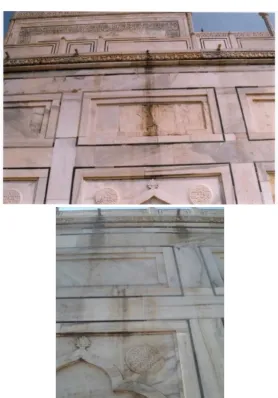
54
that black carbon ,brown carbon and airborne dust which were from biomass combustion,
55
trash/refuse burning, mobile sources were responsible for the discoloration of the Taj Mahal
56
monument (Figure 1).9
57
Perhaps the first concrete literature on the scientific concerns and conservation issues of the Taj
58
-Mahal was provided in 1997 by the ICCROM-UNESCO Report10 of the mission to Agra, Satdhara
59
and Sanchi by M.L.Tabasso. This report provided a precise but thorough study on the
60
interdisciplinary approach to the aspects of conservation of the Taj Mahal monument. The report
61
pointed on the presence of pigeons, bees with hives which cause conservation problems. The major
62
conservation problem of the Taj marble, it stated was the frequent presence of fractures and sporadic
63
exfoliation layers. The study also stated that the color of the monument is a concern for specialists
64
and the general public, and noted that newspapers occasionally raised the alarm that the monument
65
was turning grey or yellow due to air pollution or lack of maintenance. In this regard it also
66
mentioned that the human eye though sensitive had a very poor memory of colors, slight variations
67
could hardly be demonstrated unless objective data were available. Last but not the least the report
68
said, a major conservation issue has been the presence of blue green algae which grow on different
69
parts of the monument.
70
The literature in the international scenario is well equipped with researches on air quality data,
71
air quality trends, findings on the acidic gases, monitoring on the concentrations of daily, monthly,
72
yearly study trends on the concepts of acidic gas inputs and their possible effects on the stone
73
surfaces. In India such air trend reports, yearly data can be witnessed by the national air quality
74
studies done through the Central Pollution Control Board, the main nodal agency under the Ministry
75
of Environment and Forests, Government of India. Although no reports of the study of aerosols on
76
the monument surfaces in India from such agencies can be seen.
77
To have a concise, research data based, pragmatic yet sighting an overall impact of atmospheric
78
species on the Taj Mahal monument, a study was recently reported11. This study pointed out that the
79
pollution load on the Taj monument could be from natural as well as anthropogenic inputs.
80
In aerosol science it is generally believed that particles with aerodynamic diameter > 50µ m do
81
not usually remain air borne very long as they have a terminal velocity > 7cm/second. Dust particles
82
are mostly found with dimensions around < 1µ m and for these settling due to gravity is negligible
83
for practical purposes. In this regard, it can be considered that dusts are made up of solid particles
84
with size range from below 1µ m to nearly 100µ m. These can become airborne depending upon their
85
physical characteristics, ambient conditions and origin. Mineral dust has free crystalline silica as
86
quartz, coal, metallic dusts like lead, cadmium, nickel etc. other chemical dusts such as bulk
87
chemicals, pesticides, bio hazards like potential viable particles such as moulds and spores. Airborne
88
dusts are particles based airborne species, they are also considered as Particulate Matter (PM),
89
composed of solid particles and liquid droplets that can float in the air. Dust phenomena occur due
90
to construction, mining, changes in agricultural patterns, industrial activities, dust storms due to
91
wind erosions. Dust particles can be composed of different mineral profiles. Mineral profiles affect
their physical and chemical properties. An understanding of the chemical nature of the dust requires
93
the determination of the soil mineral profile since soils become airborne by the action of wind.
94
Dust fall is a measure of all air pollutants containing smoke, soot or other potentially active
95
particles that settle along with or without the rain due to their own weight. It can be considered as a
96
total depositional profile in a particular study area. Dust fall, though a simple non-specific test
97
method, can be very useful in study of long term trends as actual input of organic, inorganic and
98
biological inputs. Dust fall can be scientifically studied by way of its soluble and insoluble fractions.
99
Water soluble organic compounds can be determined from the soluble dust fall.
100
Buildings have been subject to the impact of micro flora like cyanobacteria (blue green algae)
101
and chlorophyta (green algae) which can be considered as basic inhabitants in the colonization of
102
stones. Due to their photoautotrophic nature of cellular metabolism these microorganisms grow on
103
stone surfaces and form colored patinas and incrustations. These organisms form a body in which
104
airborne pollutants, particulates, organisms get entrapped in the form of a potentially live area which
105
can be referred as a bio film. Such bio films are found in areas protected from rainfall.The main
106
inhabitants found in the bio films are the blue green algae (cyanophyceae).
107
The external surface of any building in urban polluted environment is inevitably destined to be
108
covered with gray or black layers generally called, black crusts.12 (Figure 2)Sulfur dioxide and
109
nitrogen oxides are the most harmful air pollutants for stone materials and they are also the major
110
source of soluble salts, sulfates and nitrates13.
111
Other deteriorating agents like solar input, relative humidity and wind conditions also affect the
112
dispersion and dilution of pollutants within a given area. The intensity and rate of weathering
113
depends upon the stone, the surface area, and the levels of atmospheric pollutants, the orientation of
114
the building, acid rain and rainfall14.
115
The Agra Environment Management Plan3 stated that actions taken for protection of Taj
116
Trapezium Zone (TTZ) were targeted for protecting the structure of Taj Mahal and not Agra city or
117
the TTZ. The actions taken for protection were mainly for repairing or maintaining the Taj structure
118
and control of pollution through closing down of industries, it said. The report also emphasized that
119
there was a need for a scientific study and innovative approach to achieve the desired results. Earlier
120
the ICCROM-UNESCO Report of 199,710 had pointed on the conservation cum environmental
121
concerns on the Taj Mahal monument. Thus there is a need to study, quantify and assess the actual
122
environmental cum chemical species interacting in this complex scenario. This study has attempted
123
to endeavor qualitatively the atmospheric and associated environmental inputs acting upon the area
124
of the monument.
125
In line with this thought it was projected to analyze some significant environmental inputs from
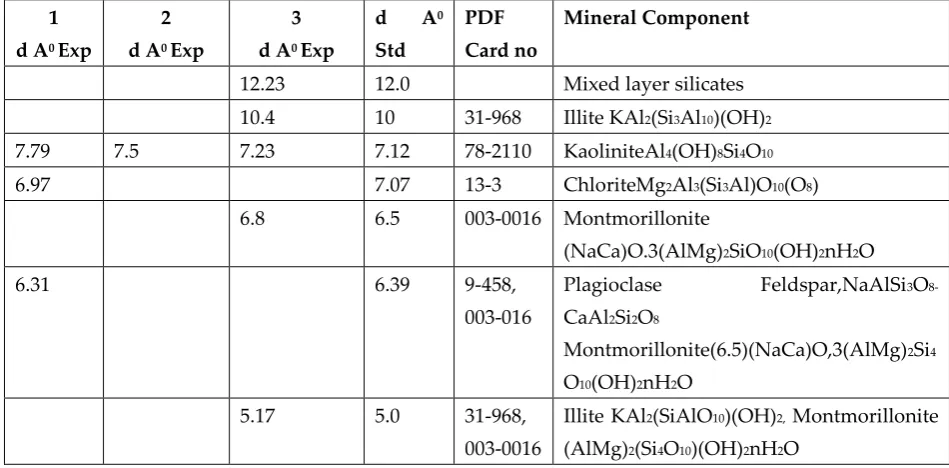
126
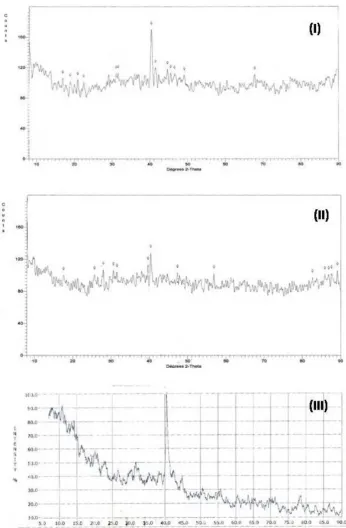
samples from the vicinity of the monument to visualize the possible chemical imprints acting upon
127
the area.
128
1.1. Climate of Agra
129
Agra has a continental type of climate. It has three distinct seasons: summer, monsoon and
130
winter. The monsoon season is from July to September, winter season from November to February
131
and summer months are from April to June. The temperature ranges from 260C to 390 C during
132
monsoon, the temperature ranges from 270 C to 470 C during summers, during winters the
133
temperature ranges between 20 C to 150 C. The relative humidity ranges from 60 %to 90 %during
134
winters, it ranges between 60% to 95 % during monsoon and it ranges between 30 %to 60 % during
135
summers. The summers are characterized by high daytime temperatures ranging between 230 C to
136
440 C and low humidity 25-40%. The wind direction witnessed in the city is from North-West
137
(prevailing wind) and South and Southeast (monsoon wind)15
138
1.2. Demographic and social profile
139
Agra has about 1400, 000 total populations and the population density is about 19.593 per sq.
140
km13.The population density is 897 persons per sq. km as compared to the national Indian average of
141
324.This data shows an immensely overcrowded city. The average literacy rate at Agra is 70%. The
population has 55% males and 45% females, while the work population rate is 27%. The vulnerability
143
assessment of the city conducted by various agencies like OXFAM, State Urban Development
144
Authority, Agra Municipal Corporation have estimated that around 50% residents live in slums16,
145
while another study accounts the slums to be around 40%3. The urban area of Agra is divided into
146
Nagar Mahapalika (local administrative civic body for city), Agra Cantonment Area, the Dayalbagh
147
and Swamibagh Panchayats (Panchayats are local civic administrative bodies). The Municipal area
148
has been divided into three main divisions, viz. the main city, Tajganj and the Trans Yamuna Area.
149
The municipal area has 90 wards. The jurisdiction of the Agra urban area is under the Agra
150
Development Authority (ADA).
151
1.3. Economic Base
152
The economy of Agra is based on industry, trade, commerce and tourism. Domestic, medium
153
and small industries exist as a tradition. On a daily basis, the Taj Mahal is visited by 8-10 thousand
154
tourists of whom 54% are foreign nationals. There are 12 major and medium scale industries and 7200
155
small scale units at Agra in various goods like pipes, cast iron fittings and allied fabrication goods,
156
electrical items, leatherwear and shoes. The city has150 foundry units that produce cast iron pipe
157
fittings, motor and tractor parts, weights and measures, diesel engines, pumping sets, generators,
158
agricultural equipment’s etc. The small scale industries comprise of textiles, cotton, wood paper
159
products, leather goods, metal products, electroplating units, auto and engine parts etc. The
160
handicraft industry is composed of zari, zardozi,(zari and zardozi are traditional medieval handicraft
161
clothing in which some precious metal is embroidered on the clothes)marble and stone carving inlay
162
works, carpet units. About 116 of these are exporting units. Agra is also famous for Petha (a type of
163
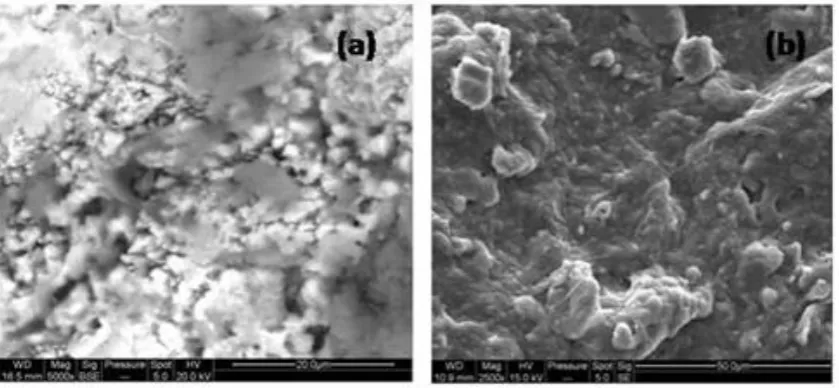
local and traditional sweet) which is produced locally and consumes thermal energy.
164
1.4. Environmental issues
165
The solid waste management in the city is poor. Unmeasured solid waste is perhaps in the
166
magnitude of 450 t/day. The total air pollution in the city from domestic, industrial, Petha units
167
(sweets industry), vehicular source inputs, diesel generators (D.G. sets) is about 51 t/day3,17. Along
168
with these Mathura refinery, Firozabad glass industries and brick kiln factories are also situated
169
within 40km from Agra.18According to the report as stated in the following lines, at least 40% of the
170
populace live in slums. People in slums use firewood, coal, cow-dung and its average consumption
171
is 200-300kg/capita/year. Daily use of cow dung is around 4 hours/day. There has now been a new
172
practice introduced by civic body to burn accumulated city garbage as the rapid measure to clear it
173
contributing un-burn solid particulates in the local environment.
174
Agra has 292 notified industries, the majority of these are foundries in which the principal source
175
of emission is cupola. The volume of the effluent gases discharged depends upon the cupola, melting
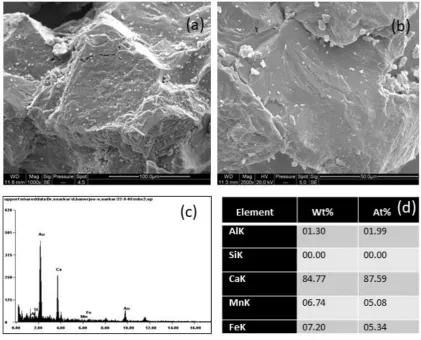
176
temperature regimes, operation durations, nature of the charged material and finally the coke used.
177
Gases are released during hot metal drawing and during casting. Agra is also famous for Petha. There
178
are about 117 Petha units, which are small scale using wood and coal. The average wood
179
consumption in these Petha units is around 5kg/day.
180
The fuels used in these industries are coal, coke, HSD, LPG and furnace oil. The most commonly
181
used are hard coke, steam coal, wood and fuel oil.
182
Vehicles contribute a major source of air pollution. The total number of vehicles has grown at a
183
tremendous rate of 57.7%during 1994 to 2000 and the numbers have increased. The vehicular
184
pollution load in Agra city is around 15.6t/day.
185
Diesel Generator (DG) sets also contribute to the pollution input, as the diesel used for running
186
the DG sets emit a considerable amount of airborne effluents. Much of these diesel powered engines
187
are also used in lighting shops during power cut and for short transport in three wheelers use
188
adulterated diesel with kerosene emitting voluminous un-burnt fuel as smoke.
189
Natural sources also contribute to the pollution scenario as the soil of Agra consists of loose
190
alluvium, which thus becomes airborne easily. Considerable amount of windblown dust covers the
191
city during summer months. Dust is the major contributor of particulates in the summers from April
to June during which dust storms with high crustal loads and high wind speeds occur. Such dusty
193
masses also remain suspended during summers in the atmosphere as hazes. The Suspended
194
Particulate Matter (SPM) shows very high values and more so on days which witness dust storm
195
episodes. Additional air pollution that has not been recognized till now is the contribution from the
196
black particulate matters under nano dimension trapped in floating aerosol originated from the
197
neighboring states through burning of the bio-waste from the crop fields and clearing garbage by
198
burning at the city dump sites.
199
1.5. Air Pollution and monument conservation issues
200
Interest in the study of aerosol phenomena worldwide is justified by high particle emissions
201
from natural and anthropogenic sources, high concentrations of gaseous precursors, relative
202
humidity, weather conditions that favor stagnation of pollutants, low precipitation rates and water
203
vapor in the atmosphere. Aerosols also have an impact on the weathering of historical buildings. The
204
pollutants are transferred by two mechanisms-dry deposition and wet deposition. The external
205
surfaces of a building with atmospheric effect of pollution evidences black brown or grey crusts and
206
black scab like areas depending upon the deposition of the particles, rainfall, transformation within
207
the crusts.
208
1.6. Sampling
209
The geographical area situated in a continental type of climate witnesses a temperature regime
210
which radiates between 10 C in winters to around 470 C in intense summers within a year at Agra.
211
Thus the monument falls in a temperature range in which a yearly thermal difference pattern
212
influences geological processes conducive to surface weathering. Micro crust pieces’ peel and fall off
213
from places such as water spouts or areas of water passage naturally due to natural weathering
214
phenomena. Dust is a natural phenomenon and is measured on a monthly basis as a 1- a standard
215
measurement procedure called dust fall, 2- as a dust collected on a daily fixed cycled monitoring
216
operation systems to measure Suspended Particulate Matter (SPM) from High Volume Samplers. The
217
particle mode for dust characterization was on the coarse mode. The algal (cyano- bacterial) input
218
into the dust fall, soluble inorganic and organic components of the aerosols have been determined.
219
Marble crust samples, fresh marble used in conservation have been examined along with marble
220
samples with algal growth. Dust has also been characterized based on seasonal conditions. The
221
composite dust represents the airborne input on the annual dust profile.
222
2. Materials and methods:
223
To study the effect of weathering, chemical nature of the following- blue-green algae, airborne
224
dust, soluble dust from dust fall, seasonal dust, water soluble portions of aerosols, samples were
225
analyzed. There are zones near the water spouts, places protected from direct rainfall, niches, areas
226
where water accumulation had taken place due to weak, weathered geological surfaces, from these
227
zones crust pieces give away due to various geological and atmospheric impact factors.
228
Algal samples have taken from monthly dust fall, airborne dust from High Volume Samplers,
229
natural peeled off pieces from the monument as crust pieces, water soluble fractions from dust fall,
230
water soluble fractions of seasonal organic aerosols have been extracted from the glass fiber filter
231
papers. Dust samples have been taken from High Volume Samplers representing major seasons as
232
well as a composite dust profile has also been taken which contains the features of the annual dust
233
load.
234
2.1. Sample preparation
235
A part of the black crust was washed with warm nitric acid, the residue was then leached with
236
dilute sodium hydroxide and the filtrate was acidified with hydrochloric acid and vacuum
237
evaporated to dryness. The black residue was washed with cold water thrice to remove any sodium
238
chloride and subjected to TEM analysis.
For mineralogical analysis the samples have been analyzed by a Seifert model Debye flex X-ray
240
Diffractometer, with CrKα radiation and running conditions of 30mA, 40kV, scan speed 3.0◦/min.
241
Samples were analyzed within a range of 0-900.XRD plots were further refined by a Bruker AXS
242
Software.IR analysis have been done by a FTIR Bruker Spectrophotometer (Vector 22 Model) working
243
between 4000-400cm−1. For elemental coupled with morphological and topographical analysis
244
samples were subjected to a FEI Quanta 200 model computer controlled Scanning Electron
245
Microscopy cum Energy Dispersive Spectroscopy (SEM-EDS) system. Transmission electron
246
microscopy (TEM) images were taken using FEI TECHNAI-T-20 machine operated at the voltage of
247
200kV.
248
3. Results
249
X-ray data of summer, winter and composite mixture with PDF card no and mineral component
250
is shown in a Table 1.
251
The XRD data revealed the soil oriented profile of the composite, summer and winter dusts.
252
Composite dust represents the annual dust (Figure 3). Quartz is the main mineral followed by illite,
253
chlorite, montmorillonite, kaolinite, calcite, magnetite, hematite, mixed layer silicates.
254
Feldspars are represented by plagioclase, microcline and albite. The profiles of X-ray reflections
255
are as per the standard Joint Committee on Powder Diffraction Standards (JCPDS)19.
256
According to the JCPDS19, XRD patterns one can observe the major and lesser reflections of the
257
minerals. Among the major XRD reflections according to the JCPDS standard patterns, quartz gives
258
reflections at 3.34, 4.23, 1.8, 1.54 and 2.45A0. Subsequently mixed layer clay minerals give reflections
259
at 12A0illite gives reflections at 10, 4.48, 3.33, 2.61, 1.53A0 kaolinite gives reflections at 7.17, 3.57, 1.62,
260
1.48 and 4.36A0, chlorite gives reflections at 7.07, 14.1, 3.54, 4.72, 2.84A0, orthoclase (alkali
261
feldspar)gives reflections at3.31, 3.77, 4.22,3.24, 3.29A0,albite (plagioclase feldspar) gives reflections
262
at 3.19, 3.78, 6.39, 3.68 and 4.03A0, calcite gives reflections at 3.03, 2.28, 2.09, 1.01 and 1.87A0, hematite
263
gives reflections at 2.69, 1.69, 2.51, 1.83 and 1.48A0, magnetite gives reflections at 2.53 and
264
2.42A0,montmorillonite gives reflections at 15, 4.0, 5.01, 3.02 and 1.5A0.(Figure 3).The mineralogical
265
results are based on major and lesser reflections.
266
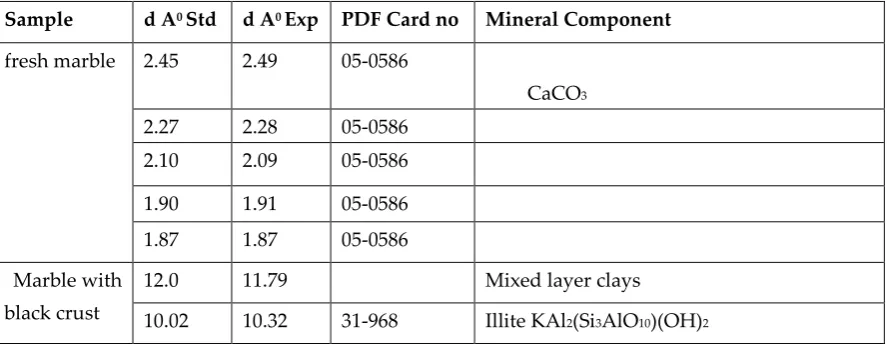
3.1. Marble characterization: (Figure 4, Table 2)
267
3.1.1 Fresh marble: The fresh marble used in conservation showed all reflections of the calcite
268
mineral. Calcite mineral showed a typical marble texture with distinct mineral patterns. The matrix
269
showed an area with high crystalline features characteristic of perfect crystallographic lattices. The
270
interfaces within the marble matrix were coherent.
271
3.1.2 Marble with black crust: The weathered marble with black crust showed weathering
272
profiles and input of the soil oriented matter within its structure. The weathered mass depicted the
273
impact of hydration combined with allied physical and chemical aspects. Hydration is a process
274
resulting in the weathering of mineral matrices. Low crystalline zones were visible in the images. The
275
zones gave impact of hydration along with presence of amorphous layers. Amorphous layers within
276
the marble naturally have lower crystallinity. Loss of coherence between the interfaces could be
277
assessed. The weathering products present in the black crust was soil inputs from dust like quartz,
278
illite and magnetite. Marble weathering profiles were represented by calcium oxalate hydrate,
279
ankerite, calcium carbonate hydrate.
280
3.1.3 FTIR of Marble Black Crust:(Figure 5,a)The IR spectra of marble black crust revealed
281
carbonate bands at 2517cm−1, 1799cm−1, 1428cm−1, 876cm−1 and 711cm−1. The other mineral
282
components are montmorillonite35 at 606cm−1, hematite23 at 585cm−1 corresponding to the IR band
283
range of 584-588cm−1, quartz37 at 457cm−1 corresponding to the IR band range of 455-450cm−1,
284
kaolinite38 at 430cm−1and organic carbons (as C-H vibration) at 2924cm−1 and 2873cm−1.
285
3.1.4 FTIR of Organic content of the marble black crust (Figure 5,b):The organic content of the
286
marble black crust showed CH2 symmetric at 2924 cm−1 and CH2 asymmetric at 2852 cm−1, presence
287
of esters at 1748 cm−1, substituted aromatics at 1561 cm−1, deformation of CH3 and CH224 at 1477 cm−1
and 1377 cm−1, asymmetric or symmetric stretching of esters and carbohydrates at 1146 cm−1, aliphatic
289
ethers25 at 1085 cm−1 and aryl mono-substituted features at 739 cm−1 respectively.
290
3.2. Algal characterization (Figure 6)
291
The FTIR spectra of the blue green algae showed water absorption band at 3418 cm−1 conjugated
292
with a protein structure, lipid bands20 at 2923 cm−1and 2852 cm−1, protein amide 21 at 1637 cm−1, C-H
293
deformations of CH2 or CH3 groups in aliphatics21 at 1463 cm−1 , carbohydrates22 at 1026 cm−1,mixed
294
Si-O deformations and octahedral sheet vibrations at 583 cm−1 and 518 cm−1 , while 467 cm−1
295
represents quartz23 respectively .
296
3.3. FTIR of water soluble fractions of aerosols (Figure 7)
297
3.3.1 Summer season water soluble fraction of aerosols (Figure 7a):The summer season water
298
soluble fractions of aerosols revealed asymmetric stretch24 of CH2, symmetric stretch27 of C-H, stretch
299
of CH227, C=O of carboxylic , ketone or ester 28 at 1729 cm−1corresponding to the IR band at 1725
300
cm−1,stretching of aromatic C=C 29 at 1600 cm−1 corresponding to the IR band range of 1595-1630
301
cm−1,C-H deformation of CH2 and CH328groups at 1462 cm−1,O-H deformation of C-O stretching of
302
phenolic O-H group or COO- stretching and C-H deformation of CH3 groups30 at 1380cm−1, C-O
303
stretch and O-H deformation27 of COOH and phenolics at 1274 cm−1 corresponding to the IR band
304
range of 1260-1280 cm−1, aryl sulfonic acid31 at 1123 cm−1 corresponding to the IR band of 1121 cm−1,
305
C-O stretch and O-H deformation of COOH and phenolics27 at 1072 cm−1, aliphatic C-O-C or
306
polysaccharides27 at 1039 cm−1, tri substituted aromatic rings31 at 743 cm−1 corresponding to the IR
307
band at 745 cm−1 respectively.
308
3.3.2 Rainy season water soluble fraction of aerosols (Figure 7b):The rainy season water soluble
309
fraction of aerosols showed symmetric stretch of C-H at 2924 cm−1, stretch of CH2 group at 2853 cm−1,
310
stretching of aromatic C=C29 at 1597 cm−1 corresponding to the IR band range of 1595-1630 cm−1,C-H
311
bending of CH2 and CH3 groups, COO antisymmetric stretching30 at 1380 cm−1, C-O stretching and
312
secondary skeletal vibrations of aliphatic groups32 at 1019 cm−1 corresponding to the IR band range
313
of 1150-1000 cm−1 respectively.
314
3.3.3 Winter season water soluble fraction of aerosols (Figure 7c):The winter season water
315
soluble fraction of aerosols showed symmetric stretch of C-H at 2924 cm−1 , stretch of CH2 at 2854 cm−1
316
, ester aldehyde or ketone31 at 1749 cm−1 corresponding to the IR band range of 1750-1700 cm−1 , CH2,
317
CH3 asymmetric bending of aliphatics21 at 1455 cm−1, alkyl sulfonic acid31 at 1376 cm−1 corresponding
318
to the IR band at 1379 cm−1, C-O stretch and O-H deformation COOH and phenolics27 at 1268 cm−1
319
corresponding to the IR band range of 1260-1280 cm−1 , C-O stretching and secondary skeletal
320
vibrations of aliphatic groups32 at 1145cm−1 corresponding the IR band range of 1150-1000 cm−1,
321
stretching vibrations of S=O group in sulfoxides31 at 1086 cm−1 corresponding to the IR band at 1087
322
cm−1,tri substituted aromatic rings31 at 740 cm−1 corresponding to the IR band at 745cm−1,aryl
323
monosubstituted26 or C-H at 696cm−1 respectively.
324
3.4 SEM algal growth on marble (Figure 8a): To supplement the effect of the impact of algal
325
attack on marble, weathered marble with algal inclusion was subjected to analysis under SEM. The
326
algal growth and its impact on the weathered marble showed a structure similar to an organo-mineral
327
complex11. The fibrillary nature of the cyanobacterial cell wall had penetrated into the marble matrix.
328
The calcite grains showed invasion by small agglomerations of cyanobacterial cells closely attached
329
to each other. Close associations of the algal cell formations showed that the weathered zones which
330
had become more degraded had been inhabited by the blue green algae. Invasion by the
331
cyanobacteria in the calcite mass was evidenced by cyanobacterial inclusions in the pores, pits and
332
cleavages. The morphology indicated a major role of the algal invasion and subsequent colonization
333
on the marble.
334
3.4.1 SEM EDS Analysis of algae (Figure 8b):The blue green algae were subjected to qualitative
335
elemental and morphological analysis by a SEM EDS system which revealed the following:
336
3.4.2 Algal chemical analysis by SEM-EDS (Figure 8c):The blue green algae (cyanobacteria)
337
which grow on the calcitic mass of the monument showed a chlorophyllous matrix cell structure
based on natural organic polymers like proteins, sugars and phosphates. Some evidences of other
339
microbialmass like fungal strains could also be ascertained.
340
Evidences of metal particulates embedded on the algal mass could be seen in the SEM images.
341
The essentially plant based morphological structure also showed traces of metal particle inclusions
342
on the chlorophyllous base. The elemental analysis by EDS gave imprints of phosphates, carbon and
343
traces of Si, K, Fe adsorbed on the surface of the algae.
344
The SEM image of fresh marble shows (Figure 9a) marble specimen with a closed knit structure
345
wherein the grains were close to each other; the grain boundaries were well defined. The structure
346
was a compact one. The matrix showed perfect crystalline features, the interfaces in the structure
347
were coherent. The calcium percentage in the EDS (Figure 9b, c) was around 97% with some silica
348
around 3%.
349
The SEM image (Figure 10a,b) of a black crust sample showed a topography where the grain
350
boundaries in the calcitic mass were loose and scattered, an amorphous like coating was visible, the
351
weathering pattern was visible in the form of pits, pores, cracks and crevices. Amorphous layers
352
indicated a lower crystalline nature of the specimen. The structure had imprints of weathered marble
353
mass. Impact of hydration could be assessed which naturally indicated a lower crystalline structure.
354
The EDS spectra (Figure 10c, d) gave the presence of Mn, Fe, Al, Si apart from the calcite. The presence
355
of Si was from the calcite structure, whereas Al, Mn, Fe could be from the crustal input or from
356
anthropogenic sources.
357
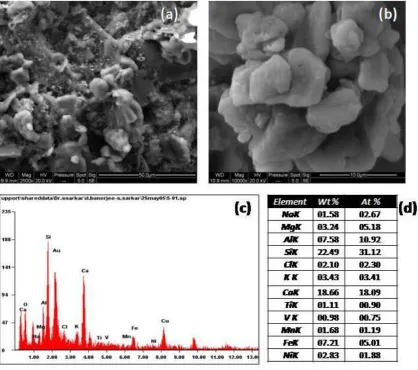
3.5. SEM-EDS spectra of airborne dust (Figure 11)
358
The EDS spectra of airborne dust represented an annual pattern of composite airborne dust. The
359
elemental composition depicted a profile dominated by soil oriented elements (crustal elements) like
360
Na, Mg, Al, Si, K and Ca. Some impressions of anthropogenic elements could be assessed by the
361
presence of Ti, V, Mn, Fe and Ni. Fe could be from soil sources as well as from anthropogenic inputs.
362
The SEM images of the airborne dust in lesser magnifications showed a soil mineral matrix.
363
The particles demonstrated a major aluminosilicate matrix with certain additions. The additions were
364
presence of micro metal particles embedded within the dust. The soil mineral particles were
365
characterized by irregular shaped, rectangular or rhomboidal particles. The aluminosilicate particles
366
were associated with agglomerate formations in which the particles were closely attached to each
367
other.
368
4. Discussion
369
The airborne dust profiles-composite, summer and winter showed the input of crustal minerals
370
into the dust. The airborne dust incorporated coarse and fine aerosols. Composite dust or the annual
371
profile of the dust showed a wide range of minerals. Under soil mineralogical considerations the dust
372
represented the minerals of the local soil. The airborne dust gave a soil oriented profile which
373
becomes airborne with the action of wind and meteorological phenomena. Among the minerals
374
calcite, quartz and feldspars can be considered in the coarse particle mode34.
375
Other minerals like kaolinite, montmorillonite and illite can be considered in the intermediate
376
particle mode while magnetite and hematite can be considered in the fine particulate mode. The
377
composite dust representing the annual dust gave a broad signature of the airborne minerals. The
378
magnetic mineral Magnetite was present in the composite (annual) dust profile. Apart from these the
379
other minerals were similar in the summer and winter seasons depicting that identical minerals were
380
present within the area. Since the nature of the dust represents the parent material which is the soil,
381
the dust showed that the dust was illitic as the soil material was illitic corresponding to an earlier
382
study on the soils of the geographical region of Agra35.
383
The elemental composition of the dust by EDS gave soil oriented elemental profile. Some
384
elements like Na, Mg, Al, Si, K, Ca had crustal origin while Fe, Mn could be from soils or could be
385
from anthropogenic source, while Ni, Cu, V and Ti indicated towards anthropogenic origin. In the
386
overall elemental characterization, the base of the dust had crustal origin while inputs of
387
industrial,signatures were visible. The airborne dust composition showed features of a typical
crustal aerosol. The EDS spectrum showed that the ratio of Si/Al was 2.96 and ratio of Fe/Al was 0.95.
389
These were in agreement with ratio of Si/Al of 2.7 and ratio of Fe/Al of 1-3 for crustal aerosols as
390
reported by Rahn36. The elements represented showed a lithophillic nature of the dust. The elemental
391
K/Fe ratio by EDS analysis was 0.47 which was in good agreement with a value of 0.4 for airborne
392
coarse crustal material37.
393
The wt % of Fe as analyzed by EDS in the airborne dust analyzed by EDS was 7.2% which was
394
near the average weight % value of 6.7% of Asian dust. Thus the airborne dust represented a
395
characteristic feature which resembled the nature of Asian dust38.
396
The SEM images showed dust particles with irregular habits- octagonal and rhomboidal.
397
Morphological nature showed that small particles were attached to large particles. The dust particles
398
were attached in close proximity; this could be due to the strong cohesive forces within the particles.
399
Presence of a dry environment like Agra which falls under a semi –arid zone of India could be a factor
400
for such a particle habit. Some voids and minute gaps could be seen due to the presence of these odd
401
shaped particles. Iron oxides in the dust get deposited on the monument surfaces by wind action.
402
Iron aids in crust formation. Iron rich particle scan act as catalysts in various mechanisms leading to
403
stone decay. Such a phenomena had been studied by Schiavon39 et.al.
404
The microorganisms present in the weak zones of the monument can utilize the Iron oxides and
405
related elements for their metabolic activity. SEM images of the dust particles gave a soil oriented
406
profile and also indicated towards particles that could be from anthropogenic activity. The SEM
407
images were dominated by irregular shaped particles which indicated crustal material but to some
408
extent some metal input like Iron oxides, could also be assessed.
409
Airborne dusts tend to accumulate on the sensitive and weak weathered zones of the monument
410
and can aid in crust formation. Such a study was given by Torok et.al which opined that dust and
411
black crust samples from limestone buildings could be used as environmental indicators since both
412
dust and crust accumulate air pollutants and act as memories of past pollution level40.
413
The IR spectra of blue-green algae gave the presence of proteins, amide, lipids, aliphatic carbon,
414
amides, carbohydrates and adsorption of clay minerals on the algal surface. The exterior surfaces
415
have a composition of proteins and carbohydrates with which metallic species react. This view was
416
given by Crist et.al41.
417
Associated silicates were also visible which get attached to the algae by algal cell wall
418
interactions with silicates within their proximity. According to Dodson et.al in the interaction of the
419
metallic ions with the algae, crystalline Al2O3 and SiO2 give their presence in the heterogeneous
420
matrix of the algal cell wall42.
421
The EDS spectra of the blue-green algae showed presence of Phosphates and Carbohydrates.
422
Apart from these the spectra showed the presence of Fe, Si and K associated with the cell structure.
423
Algae take these elements from the airborne dust and utilize them in their metabolic cycle. The
424
presence of soil oriented elements like Fe, Si, Kin the EDS spectra of the algae address the same. The
425
SEM images of the algae showed that the algal cell walls had a chlorophyllous structure testifying
426
the organic nature. Within this structure presence of micro particles showed the possible adsorption
427
of metal particles on the algal cell walls. According to Crist et.al in this scenario Si, Fe and Al elements
428
concentrate at the cell wall surface by adsorbing onto the surface functional groups41.
429
The SEM images of the algal growth on marble gave imprints of invasion by algal unicellular
430
masses into the marble substrate showing colonization. An organo-mineral assemblage showed that
431
the algal invasion was prominent within the system. The weathered marble mass was impregnated
432
with cyanobacterial colonies scattered within the area. Such algal invasions could naturally result in
433
the secretion of metabolic organic acids by which calcium oxalate hydrate salts were formed on the
434
surface.
435
The XRD results of the marble black crust gave the effect of water percolation on the marble
436
matrix, impact of cyanobacteria, as well as the impact of soil oriented minerals. With the joint action
437
of water, cyanobacteria and soil minerals on the marble the weathering effects could be assessed.
438
Calcium oxalate hydrate could be the action of oxalic acid secreted by the cyanobacteria. Ankerite
439
formation may be due to action of iron oxides on the marble while calcium carbonate hydrate may
have been formed by the action of water. The impact of airborne dust on the marble black crust could
441
be seen by the presence of illite, kaolinite and hematite. Hematite may be from the soil or from
442
anthropogenic sources. The IR spectra of marble black crust gave similar results. The spectral features
443
showed presence of calcite, soil minerals on the marble viz. montmorillonite, kaolinite, hematite,
444
quartz and organic carbon. The SEM images showed the weathering features of the marble, as
445
compared with the fresh marble sample. Pits, pores, cracks were visible in the crust. Presence of an
446
amorphous layer may have been formed by the action of water and further transformations in the
447
physical and chemical profile. The fractures were uneven which showed the impact of water
448
percolation. Since the amorphous layer of the crust had less crystallinity as compared to the fresh
449
marble, the interfaces showed that the existing matrix had less coherence in the calcite grains and
450
boundaries as compared with the fresh marble. The EDS spectra showed less weight % of Ca as
451
compared with the fresh marble and also presence of Fe and Mn as transition metals on the crust.
452
The IR spectra of the water soluble fractions of the seasonal dust fall samples showed functional
453
groups of a wide range of organic compounds. Within these carboxylic acids, ketones, esters,
454
aromatics, phenolics, aryl sulfonic acids, polysaccharides, sulfoxides could be assessed. It was
455
interesting to note that the water soluble portion of the rainy season profile gave few signatures of
456
organic compounds due to obvious atmospheric scavenging of the aerosols during the rainy season.
457
The summer season water soluble had the most organic compound signatures. Input of substituted
458
benzene ring compounds could be assessed from the IR spectra of summer and winter season water
459
soluble. The water soluble compounds in all the seasons were dominated by humic like substances
460
(HULIS). HULIS have characteristics of natural organic matter. Natural organic matter is generally
461
dominated by humic and fulvic substances. Some aspects of the IR spectra showed the presence of
462
soot in the water soluble samples43. Bands at 1729, (summer and winter seasons) 1600 (summer and
463
rainy season) and 1039 cm−1 (summer season) were in good agreement with bands of soot at 1720,
464
1620 and 1040cm−1 43. Presence of humic acids could also be assessed from a similar study44. The water
465
soluble fraction of summer season aerosols showed signatures of C-H at 2958, 2928 and CH2 at 2859
466
cm−1. Humic like substances were represented at 1729, 1600, 1462, 1274 and 1039 cm−1. Aryl sulfonic
467
acids showed their presence by a band at 1123 cm−1. Thus organo-sulfur particulate input was
468
observed during summers. Phenolics and organic acids gave signature at 1072 cm−1,
469
carbohydrates/aliphatic could be assessed at 1039 cm−1 while band at 745 cm−1 could be assigned to
470
aromatic structures. The water soluble winter season aerosols showed C-H asymmetric stretch at 2924
471
and stretch of CH2 at 2854 cm−1. Bands at 1749, 1455 and 1268 cm−1 could be attributed to humic like
472
substances (HULIS). Sulfur compounds showed their presence with alkyl sulfonic acid at 1379 cm−1
473
and subsequently S=O group in sulfoxides was represented by band at 1086 cm−1 showing
474
considerable amount of organo-sulfur compounds in the winter season. Presence of stretching and
475
secondary vibrations of aliphatic groups could be assigned to a band at 1145 cm−1. The winter season
476
soluble aerosol also showed interesting features of aromatic structures –tri-substituted aromatic rings
477
at 740 cm−1 and C-H deformation modes of Mono-substituted benzene ring at 696 cm−1. The winter
478
season in North India is characterized by unstable atmospheric conditions along with stagnation of
479
aerosols. Thus the presence of aromatic structures in such an environment could be ascertained. The
480
rainy season water soluble fraction showed asymmetric stretch of C-H at 2924 cm−1 and stretch of CH2
481
at 2853 cm−1. C-O stretching of aliphatic groups was represented at 1019 cm−1 while humic like
482
substances gave their presence at 1463 and 1378 cm−1. Study had shown humic acids were enriched
483
in hydroxyl, carbonyl, carboxyl and aliphatic groups and relatively lacking in aromatic groups44.
484
Calcium can be leached from limestone surfaces or chelated, once solubilized from the matrix,
485
by hexauronic acids, carboxyl and hydroxyl groups45.Organic acids like oxalic, citric, gluconic, malic,
486
succinic, amino acids, uronic acids may react with the stone via salt formation and complexation46.
487
The impact of water soluble compounds present in the water soluble fractions remain to be assessed
488
in the real sense. According to Saiz Jiminez and Hermosin, the black crust coatings on the structures
489
of building materials located in urban environments have all kinds of organic compounds present in
490
aerosols and particulate matter, which are transferred by dry or wet deposition. The composition of
491
each crust is governed by the composition of the vehicular emissions, diesel engines have a strong
influence47.However the direct impact of humic like matter on the marble substrate was difficult to
493
assess. Finally, the careful examination of the black crust on marble by EMS imaging clearly showed
494
the presence of airborne carbon particulate matters. Latest search on such particulates reveal that
495
these in appreciable quantity contain carbon under nano domain as carbon nano tube, graphene
496
oxide and nano carbon spheres. Such nano carbons are known to produce reactive oxygen species
497
(ROS) under air and sunlight 48−51. The readily available gaseous nitrogenous pollutant produced by
498
auto exhaust and refineries on reaction with ROS readily produce reactive nitrogen species (RNS).
499
These are capable to destroy marble surface inflicting permanent damage to such monument like Taj
500
Mahal. The presence of nano carbons in the black crust can be clearly visualized in the TM images
501
(Figure 12).
502
5. Conclusion
503
The characterization of the airborne species and the substrates upon which these atmospheric
504
species interact have been studied for the Taj Mahal monument at Agra, India. The atmospheric
505
aerosol inputs, their impact, transformation and results are not simple and straightforward but are
506
an amalgamation of different processes. Atmospheric inputs get added to a process of complex
507
biochemical involving free radical weathering mechanisms. In this process inorganic crustal minerals
508
like airborne dust, air borne carbon dust with nano carbons, organic aerosols, natural organic matter
509
like Hulis, cyanobacterial cellular mechanisms and allied metabolic processes act upon the stone
510
matrix and make the weathering phenomenon a complex one. A recent report of erosion of Aravalli
511
mountain range extending the Thar desert may enhance dust storm drifted by the wind current
512
toward the site of the discussion.52
513
We could not quantify on the specific data of aerosols, their residence time, deposition
514
mechanisms and further transformations which act upon the effective impact area. A clear strategy
515
of such a type would be helpful for a long term study on the monument vis- a- vis its environment.
516
However, it is true that we have to keep globally clean environment. It will not help much to clean
517
only the nearby zone as drifting of aerosol particles is global that is not confined to the place of its
518
origin but drifted all over to the globe.
519
520
Figure 1. The Taj Mahal
522
523
524
Figure 2. Areas near water spouts having black crust zones
526
Figure 3. Dust characterization: summer (I), winter (II) and composite (III) dust profiles
528
Figure 4. XRD spectra of Fresh Marble (a) used in Conservation and Marble with black crust (b)
529
530
Figure 5. FTIR Spectra of Marble with black crust (a), organic content of the marble black crust (b)
532
Figure 6. FTIR Spectra of Blue Green Algae
533
534
Figure 7. FTIR Spectra of a) Summer, b) Rainy season, c) Winter season water soluble fraction of aerosols
536
Figure 8. SEM image of a) algal growth on marble, b) algae and c) EDS spectrum of algae
538
Figure 9. EDS spectra of fresh marble (marble used in conservation)
539
540
Figure 10. SEM images of Taj Mahal marble black crust
542
Figure 11. SEM and EDS spectra of composite airborne dust
544
545
Figure 12. TEM images: Left side: low resolution showing the presence of assorted nano carbon particles of
546
different shapes and sizes. Right side: a focused zoomed resolution image showing the nano carbon particles in
547
less than 5 nm size.
548
549
Table 1. Dust characterization: summer (I), winter (II) and composite (III) dust profiles
550
1 d A0 Exp
2 d A0 Exp
3 d A0 Exp
d A0 Std
PDF Card no
Mineral Component
12.23 12.0 Mixed layer silicates
10.4 10 31-968 Illite KAl2(Si3Al10)(OH)2
7.79 7.5 7.23 7.12 78-2110 KaoliniteAl4(OH)8Si4O10
6.97 7.07 13-3 ChloriteMg2Al3(Si3Al)O10(O8)
6.8 6.5 003-0016 Montmorillonite
(NaCa)O.3(AlMg)2SiO10(OH)2nH2O
6.31 6.39 9-458,
003-016
Plagioclase Feldspar,NaAlSi3O 8-CaAl2Si2O8
Montmorillonite(6.5)(NaCa)O,3(AlMg)2Si4 O10(OH)2nH2O
5.17 5.0 31-968,
003-0016
Illite KAl2(SiAlO10)(OH)2, Montmorillonite
5.16 5.16 003-0016 Montmorillonite(NaCa)O,3(AlMg)2Si4O10(
OH)2nH2O
4.75 4.72 13-3 ChloriteMg2Al3(Si3Al)O10(O8)
4.7 4.7 13-3 ChloriteMg2Al3(SIAl)O10(O8)
4.34 4.48 31-968 IlliteKAl2(Si3AlO10)(OH)2
4.28 4.26 19-926 MicroclineKAlSi3O8 ( Potassium
Aluminium Silicate)
4.22 4.20 4.22 19-926 MicroclineKAlSi3O8(Potassium
Aluminium Silicate)
4.36 4.2
19-
926/46-1045
Microcline KAlSi3O8/Quartz SiO2(4.42)
3.66 3.66 20-554 Albite NaAlSi3O8
3.32 3.32 3.31 3.34 46-1045 QuartzSiO2
3.23 3.24 19-931 Orthoclase FeldsparKAlSi3O8
Montmorillonite (3.25)
(NaCa)O,3(AlMg)2Si4O10(OH)2nH2O
3.01 3.32 3.00 3.03 05-0586 Calcite CaCO3
2.95 2.95 19-926 Microcline KAlSi3O8
2.75 2.85 2.68 2.7 33-0664 HematiteFe2O3
2.4 2.53 2.53 76-1849 Magnetite Fe3O4
2.50 2.51 33-0664 Hematite Fe2O3
2.47 2.49 05-0586 Calcite CaCO3
2.29 2.28 05-0586 Calcite CaCO3
1.66 1.69 33-0664 HematiteFe2O3
551
552
553
554
555
Table 2: XRD of fresh marble and marble with black crust
556
Sample d A0 Std d A0 Exp PDF Card no Mineral Component
fresh marble 2.45 2.49 05-0586
CaCO3
2.27 2.28 05-0586
2.10 2.09 05-0586
1.90 1.91 05-0586
1.87 1.87 05-0586
Marble with black crust
12.0 11.79 Mixed layer clays
5.93 5.93 75-1313 Calcium oxalate hydrate
(Whewellite)CaC2O4H2O
5.02 5.08 31-968 Illite KAl2(Si3AlO10)(OH)2
4.91 4.98 31-968 Illite KAl2(Si3AlO10)(OH)2
4.33 4.33 15-20 Calcium carbonate hydrate CaCO3H2O
3.57 3.58 78-2110 Kaolinite Al4(OH)8Si4O10
3.03 3.01 05-0586 Calcite CaCO3
2.9 2.86 33-282 Ankerite Ca(FeMg)(CO3)
2.63 2.66 15-20 Calcium carbonate hydrate CaCO3H2O
2.53 2.56 19-629 Magnetite Fe3O4
2.45 2.45 46-1045 Quartz SiO2
2.08 2.08 05-0586 Calcite CaCO3
1.91 1.91 05-0586 Calcite CaCO3
1.87 1.86
05-0586,33-0664
Calcite CaCO3,Fe2O3,(1.83)
557
Author Contributions: DB has collected samples through field work from the building site and other sources
558
and the raw images and the relevant data were extracted from the samples in the laboratory and
559
analyzed under the supervision of SS. The first draft manuscript has been written by DB and then both
560
the authors worked on this draft which was finally checked by SS. Both the authors have given approval to the
561
final version of the manuscript.
562
563
Funding: Initial funding for this research was provided by a UNESCO nominated PhD grant to DB. The
564
sustained financial support from SERB-DST, Government of India , New Delhi to SS is gratefully
565
acknowledged.
566
567
Acknowledgment: DB thanks Dr. Christian Manhart of the UNESCO for nominating the author for a PhD
568
grant. Thanks are also due for Dr. D. V. Sharma, Dr. N. K. Samadhiya, Dr. K. P. Poonhacha, Mrs. Kasturi
569
Gupta Menon, DGASI for their keen interest in the work. SS thanks DST-SERB, Government of India , N. Delhi
570
for sustained research funding.
571
572
Abbreviations
573
Reactive Oxygen Species (ROS), Taj Trapezium Zone (TTZ), Particulate Matter (PM), Agra
574
Development Authority (ADA), Diesel Generator (DG), Suspended Particulate Matter(SPM),
575
Scanning Electron Microscopy cum Energy Dispersive Spectroscopy (SEM-EDS), Transmission
576
Electron Microscopy (TEM), humic like substances (HULIS), reactive nitrogen species (RNS).
577
References
1. Agarwal, M., Singh, B., Rajput, M., Marshall, F., Bell J.N.B., Effect of air pollution on peri-urban
579
agriculture: a case study, Environ. Pollut., 2003. 126(3), 323-329.
580
2. Atash, F., The Deterioration of urban environments in developing countries Mitigating the air pollution
581
crisis in Tehran, Iran, Cities, 2007, 24(6) 399-409.
582
3. Comprehensive Environmental Management Plan (CEMP) for Taj Trapezium Zone (TTZ) Area,
CSIR-583
National Environmental Engineering Research Institute (NEERI),Nagpur, India, December, 2013,
15-584
22.
585
4. Hicks, B. B., Kumari M., Marble discoloration at the Taj Mahal: A proposed explanation. Paper
586
presented at the ICOMOS 8th General Assembly and International Symposium, Oct. 7-15, 1987
587
Washington DC, pp-325-332.
588
5. Sharma R.K., Gupta, H.O., Dust Pollution at the Taj Mahal –A case study, In Proceedings of
589
RILEM/UNESCO Congress, Thiel, M.J., Ed; E & F. N. Spon, London, United Kingdom, 1993, pp11-18.
590
6. Kumar R., Rani A., Kumari K.M. and Srivastava S.S., 2003, Direct measurement of atmospheric dry
591
deposition to material surfaces in a semi arid region of north central India, J. Geophys. Res., 2003, 108,
592
D20, 4625 doi 10.1029/2002 JD003194.
593
7. Kumar R., Rani A.,SinghS.P., Kumari K.M. and Srivastava S.S., Measurements of dry deposition of
594
gaseous and particulate sulphur on marble at a suburban site, Ind. J. Radio & Space. Phys., 2002, 31,
88-595
92.
596
8. Kulshreshtha U.C., Saxena A., Kumar N., Kumari K. M. and Srivastava S.S., Mass size distribution of
597
aerosols at a suburban site of Agra, Ind.J.Radio Space Phys., 1995, 24, 178-183.
598
9. Bergin M.H., Tripathi S.N., Jaidevi J., GuptaT., Mckenzie M., Rana K.S., Shafer M.M., Villalobos A. M.
599
and Schauer J. J., The discolouration of the Taj Mahal due to particulate Carbon and dust deposition,
600
Env. Sci. Technol., 2015, 49, 808-812.
601
10. Tabasso M.L., ICCROM Report of the Mission to Agra, Satdhara and Sanchi UNESCO Contract no
602
3970367, March 1997, 16-24.
603
11. Banerjee D., Sarkar S., Chemistry and Deposition of Airborne Particulates on the Taj Mahal at Agra
604
India, Natursteinsanierung Stuttgart March 2016, pp119-129 (Conference on Natural and Building
605
Stones, Stuttgart, March 11-12, 2016).
606
12. Toniolo L., Zerbi C.M., Bugini R., Black layers on historical architecture, Environ. Sci. Pollut. Res., 2009,
607
16, 218-226.
608
13. Del Monte M., Ausset P., Lefevre R.A., Evidence of pre-industrial air pollution from the Heads of the
609
kings of Juda statues from NotreDame Cathedral in Paris, Sci Total Environ, 2001, 273, 101-109.
610
14. Genestar C., Pons C., Cerro J. C., Cerda V., Different decay patterns observed in a nineteenth-century
611
building (Palma, Spain), Environ. Sci. Pollut. Res., 2014, doi10.1007/s11356-014-2761-7.