Article
Exploring challenges to implementation of IT service
management system ISO 20000: Implications in
managing big data in emerging economy
Nafis Ahmad, Md. Golam Rabbany and Syed Mithun Ali *
Department of Industrial and Production Engineering, Bangladesh University of Engineering and Technology, Dhaka-1000, Bangladesh; [email protected] (N.A.); [email protected] (G.R.)
Correspondence: [email protected]; Mobile no. +8801916034096; Fax : +88028613046
Abstract: This study contributes to the literature by exploring challenges to implementing ISO 20000-1 in an emerging economy context, and suggests ways to overcome these challenges. A survey-based methodology was adopted. The data were analyzed using principal component analysis. The results indicated that senior management support was the most significant challenge for the successful implementation of IT Service Management (ITSM) systems. Other significant challenges were the justification of significant investment, premium customer support, co-operation and co-ordination among IT support teams, proper documentation, and effective process design The findings help managers introduce IT service management system (ISO 20000-1:2011) as well as improving IT service delivery system in IT support organizations for managing big data in an emerging economy. In the future, cross-firm and cross-country studies on challenges to ISO 20000 can be conducted. Also, interpretive structural model (ISM) can be formulated to examine the interrelationships among the identified challenges to ISO 20000.
Keywords: Business excellence; information technology; implementation challenge; ISO 20000; big data management.
1. Introduction
Information and communication technology (ICT) is the unified
communications through the combination of telecommunications, computers and
other enterprise software, storage, and audio-visual systems. ICT help users and
stakeholders to access, store, transfer, retrieve, and handle necessary information
[1-3], and has a significant effect on increasing the productivity of firms and boosting
the national economy of a country [4]. ICT helps in handling a large volume of data.
The volume of data is exploding - in part because they are increasingly gathered by
cheap and numerous information- sensing Internet of things (IoT) devices such as
mobile devices, aerial (remote sensing), software logs, cameras, microphones,
radio-frequency identification (RFID) readers and wireless sensor networks. In 2020, the
global information capacity can be estimated as four zettabytes (four billion
terabytes), with this number doubling every 3 years [5]. In a recent study, Haseeb
et. al. [6] shows that elements of Industry 4.0 such as big data, IoTs and smart factory
will promote information technology (IT) implementation for sustainable business
performance. The money spent on IT worldwide has been most recently estimated
as the US $3.5 trillion and is currently growing at 5% per year, doubling every 15
years [7].
A few recent studies on ISO 20000 management system appear in the
literature. Cots et al. [8], based on some ISO 20000 certified organizations in Spain,
mentioned several benefits of ISO 20000 IT service management certification. Leite
et al. [9] registered ISO 20000 certification process and presented a framework to
implement ISO 20000. Disterer [10] documented the objectives and instruments of
ISO 20000 for IT. The instruments contain customer focus, standardization, process
orientation, certification of organization and people, continuous improvement
initiatives, and in line to best practices.
Apart from ISO 20000, some researchers explored challenges to implement other
international standard certification processes, for example, challenges to implement
environment management system ISO 14001 in emerging countries [11], challenges
to establish quality and safety standard in the food industry [12] , among others.
However, exploring challenges for implementing ISO 20000 is a rarely studied topic
in the academic literature. This study is grounded on filling in this research void by
taking a real-life example of an IT firm operating in an emerging economy.
Bangladesha developing country-has placed the ICT sector on the top of its
development agenda to achieve the status of being a middle-income country by 2021
[13] . The ICT sector can be a great means to create employment in this country
without creating much pressure on its environment and energy resources. In 2015,
the Government of Bangladesh has enacted an appropriate guideline for the ICT and
declared it as an important sector. It is projected that within five years the ICT sector
generate employment for 150,000 ICT professionals [14]. The ICT can reduce
unemployment to a great extent and have a multiplier effect on a country’s economy. For instance, The ICT industry of Bangladesh has advanced to a significant extent
over the past decade and generated around $300 million revenue yearly [15].
Bangladesh has an enormous potential in this sector, but it is a long way to reap the
harvest of global ICT revolution. Therefore, the need to invest in ICT infrastructure
and build up skilled ICT human resources is crucial.
The influence of big data analytics on information systems, IT enabled services,
and information technology is huge and requires lots of attention [16] . Thus, several
authors have emphasized the importance of information/information technology for
managing big data for enterprises. Kang et al. [17] proposed a framework for
deriving real-time information from big sensor data through edge computing
technique. Kaufmann [5] Presented a model for big data management is for
operationalizing value creation from big data by associating business goals with
information technology (IT) aspects. Fung [18] examined how big data management
can improve the IT service delivery of an IT organization. Zhang et al. [19] discussed
how big data impacts the IT industry now-a-days. They presented some challenges,
opportunities and bottlenecks faced by the IT industry in a big data environment.
This study fills the identified research gap by addressing the following research
questions.
(i) What are the challenges that IT firms face to the implementation of ISO
20000 in an emerging economy?
(ii) What are the theoretical and practical implications of the challenges to ISO
20000 for an emerging economy?
To achieve the above research questions, this research fulfills the following research
(a) Identifying the challenges to IT service management standard ISO 20000 from
a review of extant literature and managers’ feedback.
(b)Investigating the challenges to ISO 20000 using statistical analysis.
(c) Proposing a framework for implementing ISO 20000 in IT management firms.
(d)Suggesting some implications of identified challenges to ISO 20000 for local
and multinational IT firms.
To gain the mentioned objectives, an empirical study was conducted. The
required data for the study, based on a 1-7 Likert scale, were collected through
surveys, interviews, telephonic conversations, and meetings with IT firm managers
and staff. The reliability or internal validity of the questionnaires was tested using
Cronbach’s α [20] . A Student t-test [21] was performed to check whether the perception by process managers and service owners as well as other different
groups was similar or not. The ranking of challenges were obtained basing on
the mean and standard deviation calculated from the survey responses.
Following the survey responses, a reference model to implement ISO 20000 is
proposed in this study.
The remainder of this paper is organized as follows: Section 2 reviews the
literature. Section 3 presents an overview of the case company. Research
methodology is illustrated in Section 4. A framework for implementing ISO 20000 is
given in Section 5. Section 6 offers discussions on findings. Section 7 concludes this
paper.
2. Literature review
ISO 20000 is a service management system standard. It defines and
characterizes the requirements for the service provider to plan, organize, implement,
operate, monitor, review, and improve a short message service (SMS) [22]. The
requirements for implementing ISO 20000 include the functions such as design,
requirements. This standard are utilized by an organization searching for or taking
services from other organizations of service providers. A service provider can
employ it for monitoring, measuring and reviewing its service management
processes through the implementation and operation of ISO 20000-1:2011.
2.1 ISO 20000 certifications worldwide
As of December 2015, 2778 organizations have received ISO 20000
certifications to manage their IT services. Figure 1 illustrates the information of IT
service management system (ITSMS) certifications of different regions around the
world. Europe has the 1120 organizations which are 40.3% of the total number of
organization with ISO 20000 certifications globally. Africa has the least number of
certifications with only 1% of the total. East Asia and Pacific region received 758
certifications which are 27.3%, Central and South Asia received 434 certifications
(15.6%), North America received 254 certifications (9.1%), Middle East received 99
certifications (3.6%), and Central and South America received 88 certifications (3.2%)
respectively. India has 425 organizations that received ISO 20000 certification, and it
is the highest number of ISO 20000 certifications in the world for a single country.
Figure 2 displays the top ten countries that obtained the most ISO 20000
certifications. The remaining top ten countries that have received ISO 20000
certifications are Japan (299), Spain (231), USA (223), UK(197), China (138), Germany
Figure 1 Region wise ISO 20000 certifications [23]
Figure 2 Top ten countries in the world for ISO 20000 Certifications [23] IT-based organizations received a total of 735 ISO 20000 certifications. Figure
3 shows the top five industries that received the highest number of ISO 20000
certifications. The remaining top five industries are food products, beverages and
tobacco (74), electrical and optical equipment (55), other Services (29) and financial
intermediation, real estate, rental (17), respectively.
1,120, 40%
758, 27% 434, 16%
254, 9%
99, 4% 88,
3% 25, 1% Europe
East Asia and Pacific
Central and South Asia
North America
Middle East
Central / South America
Africa
425 299
231 223 197 138 108 97 90 86
0 100 200 300 400 500
India Japan Spain United States of… United Kingdom
Figure 3 Major industrial sectors for ISO 20000 Certifications [23] 2.2 Challenging areas for implementation of ISO 20000
Implementation of ISO 20000 requires investigating organizational
requirements, policies and priorities. Jäntti [24] presented a case study on
implementing IT service management systems based on three different
organizations in Finland, namely Tieto Finland, the Finnish Tax Authority and
Istekki. In Tieto Finland, lack of service level agreements, information sharing on
incident resolutions, an increased number of open incidents, and a lack of
transparency on support activities were the major challenges for implementing IT
service management system. The lack of appropriate database management system,
the interface between incident management and problem management,
identification of repeating incidents from the service desk system were the
challenges for implementing ISO 20000 in the Finnish Tax Authority, whereas lack
735
74 55
29 17
0 100 200 300 400 500 600 700 800
Information technology
Food products, beverages and
tobacco
Electrical and optical equipment
Other Services Financial
intermediation, real estate,
of reporting and visibility of changes made, and a lack of skilled manpower are the
challenges found in Istekki during implementing ISO 20000.
To overcome the challenges identified in his study, Jäntti [24] recommended
a number of solutions including priority coding system, implementation of service
level agreement interface between incident management and problem management,
identification of repeating incidents, implementing change management reports and
introducing IT service management tools.
According to Cater-Steel et al. [25], relationships with vendors, senior
management support, project champion, changes in corporate culture are some
challenges for implementing ISO 20000 in ITSM organizations. Senior management
must appropriately resource to implement ISO 20000 in any organization.
Developing close relationships with vendors, effective change management process,
and placing a benefits realization plan to track and communicate tangible and
intangible benefits were some suggestions to overcome the challenges of
implementing ISO 20000 in ITSM organizations [25].
Resistance to accepting new processes and a lack of knowledge for managing
such changes are the main challenges to implementing ISO 20000 or IT service
management standard in any ITSM organizations [26]. Another study [27] found
that the main challenge of ITSMS implementation is that chief information officers
have to face IT budgets deficiency of their organizations. Iden and Eikebrokk [28] (
reviewed the extant literature related to the implementation issues of IT Service
Management (ITSM) and the Information Technology Infrastructure Library (ITIL).
They found that key success factors, motives, implementation and readiness status,
and benefits are some popular research areas on ITSM and ITIL.
3. Overview of the case company
This research was conducted in ACIS Ltd., a leading organization providing
293,000 employees. It operates in more than 200 cities in 56 countries. It has been
recognized as the number one global outsourcing company and is ranked as the
number 10 on FORTUNE’s Blue Ribbon Companies list in 2015.
In Bangladesh, it has 430 employees including regular and temporary staffs
working in four divisions namely: technology division, commercial division, finance
division, and human resources division. The technology division is the largest one
consisting of 289 staffs (67%). They are grouped into IT infrastructure management
(155, 36%), customer application and systems (76, 18%), project management (20,
5%), telecom product and billing (28, 7%) and revenue assurance and ERP (10, 3%).
The commercial division has 108 staffs (25%) working in three groups which are
marketing and brand communication (15, 3%), sales (25, 6%) and customer services
(68, 16%). The finance division consists of 20 staffs (5%) with two departments which
are payments and asset management (9, 2%) and accounts management (11, 3%).
Human resources division consists of 13 staffs (3%) with two departments which are
payroll (6, 2%) and employee affairs (7, 2%).
4. Research Methodology
In this research, information was collected from the literature and a case
study-based empirical investigations. The empirical investigation was conducted in
in ACIS Ltd., which is one of the world’s leading organizations in the domain of management consulting, technology and outsourcing services. The details of the
company is found in Section 3. An empirical study is an investigation based on data,
which were collected through surveys, interviews, telephonic conversations, and
meetings. During the interview process, participants’ responses were recorded verbatim to ensure the optimum accuracy in reflecting the participants’ understanding of the topic [29]. All answers were summarized in each category and
duplicate items were removed. Thus, a list of challenges were identified. For each
challenge identified, the interviewer kept a record of how many participants had
study, several challenges were identified. Then survey questions were prepared and
presented to 99 employees of ACIS who were working in different departments and
involved in the implementation of ISO 20000.
During the survey, participants were asked to put their opinion according to
their importance. Important questions were asked first and a 7-point Likert scale was
employed to collect the opinion where 1 = Strongly Disagree, 2 = Quite Disagree, 3 =
Slightly Disagree, 4 = Neutral, 5 = Slightly Agree, 6 = Quite Agree and 7 = Strongly
Agree. Demographic questions were asked to identify the participant uniquely. This
step allowed us to rank the challenges. Challenges with higher mean or lower
standard deviation were given a higher ranking. If more than one challenge got the
same average rating, the item with smaller standard deviation was ranked higher.
Factor analysis [30] was performed to find out the relationship among different
challenges and to categorize them. Here, rotated component matrix is used to
perform factor analysis. Cronbach’s α was quantified to test the reliability of questionnaires, and an independent t-Test was performed to test whether a group
of people is thinking differently or not. After factor analysis, relevant challenges
were grouped together. Thus, we finalized all challenges to implement ISO 20000.
4.1 Participant selection for the case study
During data collection, 430 employees were working in ACIS Ltd. From 430
employees, 99(23.2%) employees, directly involved in implementation of ISO 20000,
were selected for the survey.. 2 out of the 99 employees were missed out as they
were out of the country or left the organization. 45 out of 99 staffs were interviewed
including service owners (25), process managers (11), high officials (4), ISO core
team members (3) and consultant (1) to get the specific challenges in different
sections. All staff (99) were included in the survey. Out of 99 participants, 92
participants completed the survey and sent back their opinion i.e., response rate
was 92.93%. Three responses were excluded due to some discrepancies or mistakes
4.2 Views of IT professionals in ACIS
Before the survey, interviews and meetings with IT professionals of ACIS
Ltd. were arranged to know their views on the implementation of ISO 20000 in ACIS.
During the interviews and meetings, the following questions were asked to settle
the platform of this research.
• What is your experience working with ISO 20000 implementations in ACIS Ltd.?
• What is your point of view towards ISO 20000 implementation in ACIS Ltd.?
Throughout the interviews and meetings, the researchers found that the
views towards ISO 20000 as an ITSM framework were positive. Most of the
participants thought employees were more united than before and it happened due
to the implementation of ISO 20000. Many participants also believed that ISO 20000
aligns with IT services to international IT market and it standardizes the services.
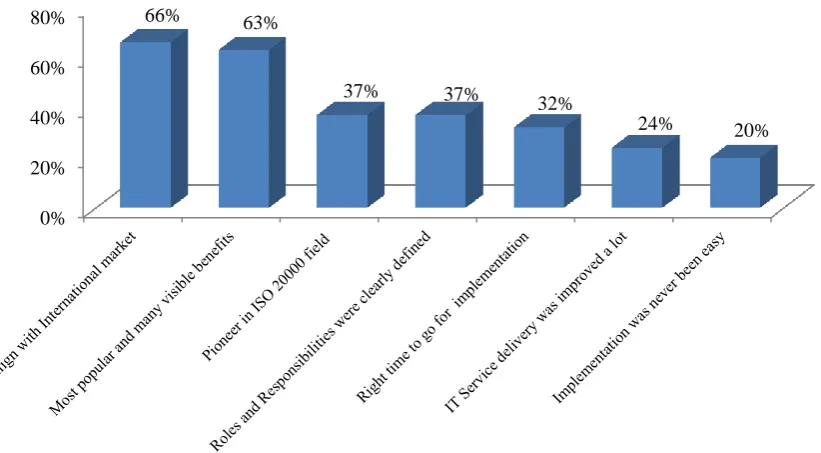
Figure 4 shows the summaries of views of IT professionals of ACIS. 66% of the
interviewees expressed that ISO 20000 had been implemented to standardize IT
Services and align with the international IT market.
Figure 4 Summaries of Views of IT Professionals of ACIS.
0% 20% 40% 60%
80% 66% 63%
37% 37%
32%
As observed, 63% participants believed that ISO 20000 was the most popular
IT service standard in the world and many visible benefits could be achieved. 37%
participants said that ISO 20000 was really beneficial for ACIS and ACIS became the
pioneer in this field. 37% participants believed that roles and responsibilities were
clearly defined and it was the key factor of implementation. 32% participants said
that ACIS were in perfect position to go for implementation of ISO 20000. 24%
participant opined that IT service delivery was improved a lot after implementation
of ISO 20000. 24% participants believed that ISO 20000 was different from other
standard and difficult to implement.
4.3 Survey data analysis
As mentioned earlier, out of 430 employees, 99 were selected which is 23.02%
of the total employees. We deliberately selected the employees who handled IT
related issues or involved in the process of implementing ISO 20000 in the company.
The employees were not selected randomly rather purposively, known as purposive
sampling [31]). Among the selected employees, more than 98% participants were
directly engaged in putting ISO 20000 in practice. During interviews, each of the
participants was asked the following questions to get their insights on the challenges
associated with the implementation of ISO 20000 in ACIS Ltd.
• What are the challenges you identify for ACIS Ltd. to implement ISO 20000?
Several challenges were identified after analyzing interviewee's responses
that reflected the participants' understanding of the challenges. According to process
managers, understanding processes and its benefits by the IT support team (11 out
of 11, 100%), justification on short term and long term benefits (9 out of 11, 82%) and
investing a large amount of money in ITSM tools (8 out of 11, 73%) were the
challenging areas during implementation of ISO 20000 in ACIS Ltd. Appropriate
process managers selection (25 out 25, 100%), restructuring organization and
forming central ISO monitoring team (23 out 25, 92%), implementing all processes
25, 80%), continuing premium customer support (19 out 25, 76%) and readiness and
alignment with changes (17 out 25, 68) were the challenging areas mentioned by
service owners. ISO core team members mentioned maturity of all standards (3 out
of 3, 100) and process understanding by senior managers (2 out 3, 67%) were the
challenging areas during implementation. Commitment and budget (4 out 4, 100),
understanding benefit by lead customer (4 out 4, 100%), justification on cost-benefit
analysis (4 out 4, 100%), technical knowledge of IT support people (2 out 4, 50%) and
relationship among standards (2 out of 4, 50%) were the challenging areas
mentioned by high officials. During interviews, all interviewees mentioned that
collaboration and balanced workload distribution (32 out of 41, 84.5%), cooperative
attitude from premium customers (27 out of 41, 65.85%), continuing premium
customer support (24 out of 41, 58.53%) and maintaining quality documentation (16
out of 41, 39.01%) were the challenging areas during implementation project.
Based on the interviews/meetings and literature study, several challenging
areas were identified. Then survey questionnaires were prepared covering all of
them and sent to 99 employees of Accenture Communications Infrastructure
Solutions Ltd (ACIS). In this case, structured questions (closed-ended questions)
were given the priority over open-ended questions. A 7 point Likert scale was used
to collect the opinion where 1 = Strongly Disagree, 2 = Quite Disagree, 3 = Slightly
Disagree, 4 = Neutral, 5 = Slightly Agree, 6 = Quite Agree, and 7 = Strongly Agree.
Demographic questions were asked to identify the unique participant. Several
challenging areas were identified and uniquely defined by code name after
analyzing responses. After that, a ranking of the identified challenges was done
based on mean, standard deviation and variance.
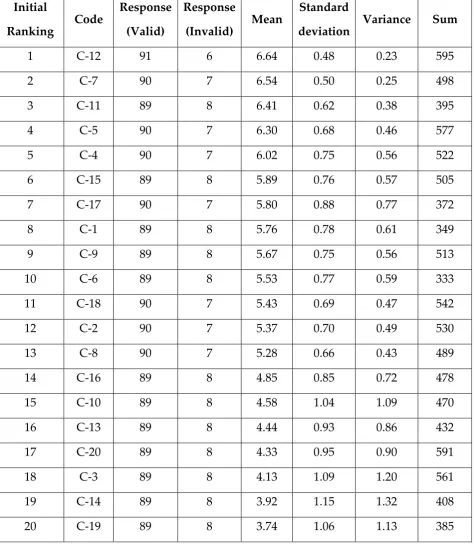
Table 1 illustrates the initial ranking of the challenges based on mean,
standard deviation and variance. Here, the highest mean or lower standard
deviation is given the highest rank and so on. Each challenging area is assigned by
a code such as understanding processes and its benefits by IT support teams (C-1),
money in ITSM tools (C-3), appropriate process managers selection (C-4),
restructuring organization and forming central ISO monitoring team (C-5),
implementing all processes in service (C-6), commitment and governance (C-7),
continuing premium customer support (C-8), readiness and alignment with changes
(C-9), designing and customization (C-10), believe in benefit and processes
understanding by high officials (C-11), budget and financial planning (C-12),
understanding benefit by lead customer (C-13), justification on cost-benefit analysis
(C-14), technical knowledge of IT support people (C-15), relationship among
standards (C-16), collaboration and well distribution of workload (C-17),
cooperative attitude from premium customers (C-18), continuing premium
customer support (C-19), and maintaining quality documentation (C-20).
Cronbach’s α was used to quantify the reliability of the questionnaires. Cronbach’s α value 0.814 indicates a good reliability. It was also observed that Cronbach’s α score decreased if some items were removed. Thus, it can be concluded that those questions were reliable enough to find out the desired
value. Student t-test was done to check whether the perception by process
managers and service owners as well as other different groups was similar or not. It
can be seen that there was no significance difference among participants perception.
Table 2 presents the results of factor analysis using a principal component analysis
(PCA) and the Varimax with Kaiser Normalization rotation method until the
eigenvalue of the each factor was greater than 1. As observed, the rotation was
converged in 5 iterations. PCA are statistical techniques used to find out variables
that are correlated with one another but largely independent of other subsets of
variables [32].
Initial
Ranking Code
Response (Valid)
Response
(Invalid) Mean
Standard
deviation Variance Sum
1 C-12 91 6 6.64 0.48 0.23 595
2 C-7 90 7 6.54 0.50 0.25 498
3 C-11 89 8 6.41 0.62 0.38 395
4 C-5 90 7 6.30 0.68 0.46 577
5 C-4 90 7 6.02 0.75 0.56 522
6 C-15 89 8 5.89 0.76 0.57 505
7 C-17 90 7 5.80 0.88 0.77 372
8 C-1 89 8 5.76 0.78 0.61 349
9 C-9 89 8 5.67 0.75 0.56 513
10 C-6 89 8 5.53 0.77 0.59 333
11 C-18 90 7 5.43 0.69 0.47 542
12 C-2 90 7 5.37 0.70 0.49 530
13 C-8 90 7 5.28 0.66 0.43 489
14 C-16 89 8 4.85 0.85 0.72 478
15 C-10 89 8 4.58 1.04 1.09 470
16 C-13 89 8 4.44 0.93 0.86 432
17 C-20 89 8 4.33 0.95 0.90 591
18 C-3 89 8 4.13 1.09 1.20 561
19 C-14 89 8 3.92 1.15 1.32 408
20 C-19 89 8 3.74 1.06 1.13 385
Table 2 - Factor analysis
Rotated component matrix
Code Name Component
1 2 3 4 5
C-7 0.911 0.110 -0.119 0.117 0.028
C-11 0.891 0.090 0.007 0.262 -0.063
C-5 0.863 0.032 0.0862 0.045 0.203
C-4 0.474 -0.067 -0.091 0.215 0.321
C-15 -0.056 0.854 0.063 -0.127 0.071
C-17 -0.005 0.857 0.093 0.375 -0.056
C-1 -0.092 0.834 0.077 0.278 0.092
C-9 -0.081 0.782 0.177 -0.127 0.286
C-6 -0.022 0.123 0.076 0.853 0.105
C-18 0.213 0.152 0.310 -0.057 0.670
C-2 -0.047 0.008 0.721 -0.019 0.004
C-8 -0.093 0.141 -0.203 0.027 0.892
C-16 -0.105 0.202 -0.175 0.863 -0.133
C-10 -0.022 0.286 -0.192 0.780 -0.009
C-13 0.187 0.219 -0.077 0.016 0.825
C-20 -0.274 -0.180 0.067 0.744 -0.199
C-3 -0.031 0.238 0.767 0.056 0.343
C-14 0.150 -0.702 0.908 0.263 0.020
C-19 0.057 -0.095 0.059 0.365 0.854
After factor analysis, C-7,C-11,C-5,C-4, and C-12 were grouped together
which represents senior management support; C-15,C-17,C-1, and C-9 were
grouped together which represents co-operation and co-ordination among IT
support teams; C-2, C-3 and C-14 were grouped together which represents
justification of large investment; C-16, C-6, C-10, and C-20 were grouped together
which represents proper documentation and effective process design; and finally,
4.4 Recommendations to overcome challenges
Each participant was asked the following question during the interview to get the
participant's insights as for how the challenging areas were managed to overcome
by ACIS Ltd.
• How did ACIS Ltd. manage to overcome the top challenges in implementing ISO
20000?
The interviewees gave suggestions for overcoming challenges of different
categories. Most of their answers and responses to this question were concerning
the effective process design, setting organizational priority and top management
support. The majority of the respondents also agreed that if the above challenges are
managed to overcome, challenges in other areas such as justification of significant
investment, co-operation and co-ordination among IT support teams, proper
documentation and premium customer support should be addressed. Figure 5
shows the summaries of the suggestions after relevant analysis.
5% 7% 10% 10% 10% 12% 12% 12% 17% 34% 68% 71% 85%
0% 20% 40% 60% 80% 100%
Quick Issue mitigation and continuous gap analysis
Simple Process Design Allignment of Goal and objective with
ISO Process Design Recognized ITIL tool usages and Proper
documentation
Strong Knowledge base and easy information source Focused on Business priorities Limit the buddget and Cost effective
approach
Restrict Multiple duties to single person Consultant Hiring Right People in the right place Training, Self learning, Case Study and
Professional forum
Strong Teamwork, Collaboration, Ownership and Helping attitude Strong Monitoring, Status Checking and
Figure 5 Summaries of the suggestions of IT Professionals of ACIS.
Recommendations of the 45 key interviewees were grouped together based
on data analysis. 85% of the participants suggested that many challenges could be
avoided by strong monitoring, regular status checking and communication within
the IT support teams. 71% of the participants believed that strong teamwork,
collaboration, ownership and cooperative attitude could address many challenging
areas. 68% of the participants suggested that majority of the challenges could be
overcome with the training and self-learning. 34% of the participants recommended
to go through previous case studies related to ISO 20000 implementation and
suggested to connect professional forum to address the challenging areas. 17% of the
participants saw consultant hiring was one of the ways to overcome challenges. 12%
of the participants suggested to focus on business priorities to avoid challenging
areas. 12% of the participants suggested to limit the budget and take cost-effective
approach to mitigating challenging areas. 12% of the participants believed in the
restriction of multiple duties to avoid some challenges. Others suggestions were
alignment of goals and objectives with ISO process design (10%), recognized ITIL
tool usages and proper documentation (10%), strong knowledge base and easy
information source (10%), simple process design (7%), and quick issue mitigation
and continuous gap analysis (5%).
5. Proposed framework for ISO 20000 implementation
Many challenges to the implementation of ISO 20000 were identified in this
study. A number of suggestions were also suggested by the respondents to
overcome the challenges. Based on those suggestions, a reference model of ISO 20000
implementation was developed. Figure 6 illustrates the reference implementation
model where challenging areas are represented by the 5 of the 6 boxes. This model
shows how each challenging area could influence one another and increase or
Communication is at the center of each of the challenging areas in this model
and should be regarded as the most crucial element to formulate any strategies to
implement the ISO 20000 to meet the challenges identified by this study.
Communication within organization is vital to promote the understanding of the
standard and its processes, increase maturity and build relationships. An
organization's readiness t for ISO certification is critical, and it is also suggested that
new organizations follow the best possible standard under its domain before going
for certification. ITIL should roll out first in the organizations, and after some years
if organizations are matured enough, they can go for certification.
Many organizations spend a lot of money on record keeping, but ITSM tools
are the recommended tools for keeping various records. Resource planning needs to
be done very carefully. People who are currently working with another standard can
be involved initially, but for a long duration there should be a permanent position
for each of the process area. A single person should not be given multiple
responsibilities. There should be dedicated process managers for each process and
strong central monitoring team headed up and supported by top management
Figure 6 Reference Model for Implementation of ISO 20000
Support to premium customers should not be reduced during
implementation of ISO 20000. Reducing support to customers may create a negative
impression to the executive management. Besides status check, rewarding and
monitoring top managers should declare the project priority for successful
implementation. Organizations should not depend on external auditors rather they
should formulate a well set of internal auditors for successful implementation and
successful running of the standard within the organizations. Sometimes process
managers design the process so poorly that it cannot be implemented or even if it is
implemented, it would not bring benefit for the organizations and eventually it may
create a long hole for the whole process. Process designers must be familiar with
organizations' goal, and capacity or capabilities of IT support people of the
organizations.
6. Discussions on findings
In this study, several challenges for implementation of ISO 20000 in ACSI Ltd.
were identified. The following five are the main challenges that must be addressed
for a successful implementation of ISO 20000.
a) Senior management support. Top management support was the major challenge
during implementation of ISO 20000 in ACIS. Budgeting, restructuring, role
assignment and convincing customers and selecting good process managers are
the prime duty during this period. Every investment needs senior manager's
direct support and if it is a significant amount of money, their support becomes
most crucial part of the project. Commitment from managers and a status check
is vital for project completion.
b) Justification of significant investment. Purchasing ITSM tools and development
of infrastructure require huge investment initially. Return on investment should
biggest challenges for the management to show people visible benefits at the
initial stage
c) Premium customer support. During implementation, premium customer support
was the important factor. ACIS continued the high level of assistance to premium
customers besides other jobs. Maintaining the focus on client's need in ISO 20000
implementation period was a challenging task for IT support people.
d) Co-operation and co-ordination among IT support teams. Co-operation and
co-ordination is also an important challenging area during implementation.
Synchronization is required to achieve the goal. Consistency is also necessary in
this case. A ITSM project is much more complex compared to any project because
it is related to a process which crosses departments, and it requires more
collaboration and communication.
e) Proper documentation and effective process design. Proper documentation is the
key for audit purpose and ignoring this issue will bring negative impact to
achieve certification. Process managers are the key person for implementation.
Ineffective and inefficient process design may destroy the whole process.
Ownership is the key factor in this case. All process managers have to take full
ownership of his/her processes. Rolling out the processes, customizations, facing
audits, preparing organizations for audits completely depend on process
managers. There are many processes in a company, and good process managers
are the key to design a new process by knowing all the process. One process
should not overlap other processes.
The challenges found in this study (senior management support, justification of
significant investment, premium customer support, co-operation and co-ordination
among IT support teams, proper documentation and effective process design)
contrast, to a significant extent, with other studies where challenges to other ISO
standard and certification processes were investigated. For example, Sfakianaki and
Kakouris [33] analyzed obstacles to ISO 9001 certification for small and
observed that bureaucracy, demands on time and resources, a lack of proper
guidance from top management, and employee reactions were the important
challenges to ISO 9001 for SMEs in the FBI. Challenges to ISO 14001 environment
management systems in the private and public organizations of the United Arab
Emirates were explored by Waxin et al. [34]. They reported that a lack of competent
employees, practical challenges to implement ISO 14001, inadequate government
regulations, high cost and a lack of management support were the most significant
challenges to ISO 14001 implementation in the United Arab Emirates. In a study to
identify challenges to implementing International Information Security Standard
ISO 27001, Abusaad et al. [35] found that identifying the organization’s assets was the most significant obstacles to ISO 27001 certification in Saudi Arabian
organizations.
6. Conclusion, implications and Limitations to the study
This research focused on the challenges faced by the largest IT company in
Bangladesh that took initiative for ISO 20000 certification and recommended some
ways to overcome the challenges. ISO 20000 certified organizations are located
mostly in developed countries. IT infrastructure is not up to the mark for developing
countries like Bangladesh where organizations must be able to manage big data.
Besides, elements of Industry 4.0 such as Big data, IoT and smart factory concepts
are shaping the future of manufacturing industries. Moktadir et al. [36] found that
technology-related barriers are significant barriers to big data analytics in
manufacturing supply chains. In [37], it was reported that a lack of technological
infrastructure is the most significant challenge to implement Industry 4.0 in the
leather industries of Bangladesh. Huge investment are required for developing
infrastructure that leads to the negative impression initially to implement this
standard especially in developing countries. There are some legal requirements that
cannot be neglected, and it can be country specific. The identified challenges can
20000 can help organizations achieve competitive advantage and business
excellence.
6.1 Theoretical and managerial implications
ISO 20000 ensures IT service management processes aligned with the needs
of the business interests and international best practices [8, 10] for dealing with data
for making critical business decisions. It helps organizations benchmark the delivery
of IT services, measure service levels, and assesses their performance [38]. A
knowledge gap on challenges to implementation of ISO 20000 exists in the ICT
literature in the context of emerging economies. Thus, this research contributes to
the theory by expanding the knowledge of ICT literature by identifying significant
challenges that IT firms may face during implementing ISO 20000. This research also
contributes to the existing ICT knowledge-base by providing a framework to
implement ISO 20000, which academics can use for further updating the ICT
literature in the future.
Identification of challenges to ISO 20000 can be beneficial to local and
multinational IT-based companies interested in managing big data and starting IT
related business in emerging economies like Bangladesh, India, China, Thailand and
so on. Organizations planning to implement ISO 20000 should carefully consider all
challenges that were identified in this study and can take measures to resolve those
challenges. Some challenges can be addressed by education, awareness, and proper
training. Challenges that are related to extra investment can be treated by identifying
organizations' priorities and allocating the necessary budget. Communication
within the IT service management organization is vital to promote the
understanding of the standard, increase maturity and build relationships. Senior
management support is the most challenging factor identified in this study for
successful implementation of ISO 20000. Justification of significant investment,
proper documentation and effective process design, co-operation among IT support
expected value of implementation can be fully achieved only when these challenges
are adequately identified, and necessary actions are taken proactively.
6.2 Limitations to the study
There are some limitations to this study. This work is based on data collected
from managers and staff having working experience in IT firms. To gain a better
understanding and generalization of the challenges, a cross-organizational and
cross-country study can be conducted in the future. Another promising research
direction would be to formulate an interpretive structural model (ISM) of the
challenges to find the interrelationships among them.
Conflict of interest: No conflict of interest was reported by the authors.
Acknowledgement: The authors acknowledge the supports of staff from ACIS Ltd. for carrying out the research work successfully. The authors would like to thank the
editor and anonymous reviewers for their insightful comments and suggestions,
which helped us enrich the quality of this manuscript.
9. References
[1] Bugyei, K. A.; Obiri-Yeboah, K.; Kavi, R. K. Assessing the Impact of ICT on Research Activities in Ghana: A Case Study of Selected Council for Scientific and Industrial Research (CSIR) Institutes. J. Inf. Knowl. Manag. 2017, 16(01), 1750007. [2] Yu, X.; Chen, Y.; Nguyen, B.; Zhang, W. Ties with government, strategic capability, and organizational ambidexterity: evidence from China’s information communication technology industry. Inf. Technol. Manag. 2014, 15(2), 81-98.
[3] Mohamed, M. S.; Mohamed, M. A.; O'Sullivan, K. J. (2010). Information and Communication Technology (ICT) Policy: A Quantitative Assessment for Sustainable Development. J. Inf. Knowl. Manag. 2010, 9(03), 227-239.
[5] Kaufmann, M. Big Data Management Canvas: A Reference Model for Value Creation from Data. Big Data Cogn. Comput. 2019, 3, 19.
[6] Haseeb, M.; Hussain, H. I.; Ślusarczyk, B., & Jermsittiparsert, K. Industry 4.0: A Solution towards Technology Challenges of Sustainable Business Performance. Soc. Sci. 2019, 8(5), 154.
[7] ICT review report, Katniss Inc. Available online:
http://www.tjyh2003.com/jianqiao/G12_Katniss_website/index.html. Accessed on 29 March 2018.
[8] Cots, S.; Casadesús, M.; Marimon, F. Benefits of ISO 20000 IT service management certification. Inf. Syst. E-bus. Manag. 2016, 14(1), 1-18.
[9] Leite, C. D.S.; Rodrigues, J. G. P.; Da Silva Sousa, T.; da Hora, H. R. M. . IT services management and ISO 20000: A case study in an IT remote support company. Manag.
2014, 4(2), 38-49.
[10] Disterer, G. (2009). ISO 20000 for IT. Bus. Inf. Syst. Eng. 2009, 1(6), 463-467. [11] Massoud, M. A.; Fayad, R.; Kamleh, R.; El-Fadel, M. (2010). Environmental management system (ISO 14001) certification in developing countries: challenges and implementation strategies. Environ. Sci. Technol. 2010, 44(6), 1884-1887.
[12] Trienekens, J.; Zuurbier, P. Quality and safety standards in the food industry, developments and challenges. Int. J. Prod. Econ. 2008, 113(1), 107-122.
[13] Gimenez, L.; Joliffe, D.; and Sharif, I. Bangladesh, a Middle Income Country by
2021: What Will it Take in Terms of Poverty Reduction? Available on:
https://openknowledge.worldbank.org/handle/10986/18668 (accessed on March 21
2016).
[14] Chowdhury, M.I. Prospects of ICT in Bangladesh. Available on
http://www.theindependentbd.com/arcprint/details/38046/2016-03-22 (accessed on
March 21 2018).
[15] Bangladesh's ICT Industry: A Boon for Women’s Employment. Available on:
[16] Ghosh, J Big Data Analytics: A Field of Opportunities for Information Systems
and Technology Researchers, J. Glob. Inf. Tech. Manag. 2016, 19(4), 217-222.
[17] Kang, K.-D.; Chen, L.; Yi, H.; Wang, B.; Sha, M. Real-Time Information
Derivation from Big Sensor Data via Edge Computing. Big Data Cogn. Comput.
2017, 1, 5.
[18] Fung, H. Using Big Data Analytics in Information Technology (IT) Service
Delivery. Int. Tech. and Appl. Res. 2013, 1(1), 6-10.
[19] Zhang, J., Li, J., Jiang, Y., Zhao, B. The Overview of the Information
Technology Industry Chain in Big Data Era. Future Information Technology. 2014, 309, 429-432. Springer, Berlin, Heidelberg. https://doi.org/10.1007/978-3-642-55038-6_66.
[20] Zaidi, S. A. H.; Mirza, F. M.; Hou, F.; Ashraf, R. U. Addressing the sustainable
development through sustainable procurement: What factors resist the
implementation of sustainable procurement in Pakistan? Soc.-Econ. Plan. Sci. 2018. https://doi.org/10.1016/j.seps.2018.11.008.
[21] Feng, Y. C.; Huang, Y. C.; Ma, X. M. The application of Student’s t-test in internal quality control of clinical laboratory. Front. Lab. Med.. 2017, 1(3), 125-128. [22] Cots, S., Casadesús, M. Exploring the service management standard ISO 20000.
Total Qual. Manag. Bus. Excell. 2015, 1-19. .
[23] ISO Survey of certifications to management system standards. Available on
http://isotc.iso.org/livelink/livelink?func=ll&objId=18808772&objAction=browse&vi
ewType=1 (accessed on January 15 2016).
[24] Jäntti, M. Challenges in Implementing IT Service Management Systems, ICONS
Conference, University of Eastern Finland, Finland, 2012.
[25] Tan, W. G.; Cater-Steel, A.;; Toleman, M. Implementing IT Service Management:
A case study focusing on critical success factor. J. Comput. Inf. Syst. 2009, 50(2), 1-12. [26] Hochstein, A.; Tamm, G.; Brenner, W. Service-oriented IT management: Benefit,
Information Systems, IBM IT Facilities Consolidation and Relocation Services – data Centre consolidation, Regensburg, Germany, 2005.
[27] Szabó, Z- Fehér, P. Current Challenges of IT Service Management in Hungary.
Conference Proceedings of CONFENIS, Corvinus University of Budapest, Hungary.
2009.
[28] Iden, J.; Eikebrokk, T. R. Implementing IT Service Management: A systematic
literature review. Int. J. Inf. Manag. 2013, 33, 512-523.
[29] lshenqeeti, H. Interviewing as a Data Collection Method: A Critical Review.
English Linguist. Res. 2014, 3(1), 38-45.
[30] Belvedere, V.; Grando, A.; Legenvre, H. Testing the EFQM model as a
framework to measure a company’s procurement performance, Total Qual. Manag. Bus.
Excell. 2018, 29(5-6), 633-651.
[31] Maalouf, M. & Gammelgaard, B. Managing paradoxical tensions during the
implementation of lean capabilities for improvement. Int. J. Oper. Prod. Manag. 2016, 36(6),
687-709.
[32] Camilleri, M. A. Measuring the corporate managers’ attitudes towards ISO’s social responsibility standard. Total Qual. Manag. Bus. Excell. 2017, 1-13.
[33] Sfakianaki, E.; Kakouris, A. Obstacles to ISO 9001 certification in SMEs. Total
Qual. Manag. Bus. Excell. 2018. https://doi.org/10.1080/14783363.2018.1490640.
[34] Waxin, M. F.; Knuteson, S. L.; Bartholomew, A. Drivers and challenges for implementing ISO 14001 environmental management systems in an emerging Gulf
Arab country. Env. manag. 2017, 1-12.
http://link.springer.com/article/10.1007/s00267-017-0958-5.
[36] Moktadir, M. A.; Ali, S. M.; Paul, S. K.; Shukla, N. Barriers to big data analytics
in manufacturing supply chains: A case study from Bangladesh. Comput. Ind. Eng.
2019, 128, 1063-1075.
[37] Moktadir, M. A.; Ali, S. M.; Kusi-Sarpong, S.; Shaikh, M. A. A. Assessing
challenges for implementing Industry 4.0: Implications for process safety and
environmental protection. Process Saf. Environ. Prot. 2018, 117, 730-741.
[38] Aleksandrova, D. Why your organisation needs to be ISO20000 certified.
Available on: https://www.itgovernance.co.uk/blog/tag/iso20000/ (accessed on 15
![Figure 1 Region wise ISO 20000 certifications [23]](https://thumb-us.123doks.com/thumbv2/123dok_us/7968371.1321513/6.595.125.384.371.527/figure-region-wise-iso-certifications.webp)
![Figure 3 Major industrial sectors for ISO 20000 Certifications [23]](https://thumb-us.123doks.com/thumbv2/123dok_us/7968371.1321513/7.595.76.477.80.422/figure-major-industrial-sectors-for-iso-certifications.webp)