MENTAL TOUGHNESS AND COPING ABILITIES AMONG
TEHRANHIGH SCHOOL STUDENT ATHLETES
MOHAMMAD ALI RASTI
EFFECT OF MENTAL TRAINING PROGRAMME IN IMPROVING MENTAL TOUGHNESS AND COPING ABILITIES AMONG TEHRAN
HIGH SCHOOL STUDENT ATHLETES
MOHAMMAD ALI RASTI
A thesis submitted in fulfilment of the Requirements for the award of the degree of Doctor of Philosophy (Educational Psychology)
Faculty of Education Universiti Teknologi Malaysia
ACKNOWLEDGEMENT
I am heartily expressing my greater gratefulness to Allah s.w.t for His blessing and strength that He blessed to me during the completion of this research.
My sincere thanks goes to my supervisor Dr. Zainudin bin Abu Bakar for his continuous motivation, advices, encouragement and support from the start to the end of my studies. Furthermore, I would like to thank my co-supervisors Associate Professor Dr. Zainal Abidin bin Zainuddin and Associate Professor Valiolla Farzad for their support on completion my thesis.
I am very grateful to my family, especially my wife and my daughter, for their unremitting support, encouragement and understanding.
ABSTRACT
ABSTRAK
TABLE OF CONTENTS
CHAPTER TITLE PAGE
DECLARATION ii
DEDICATION iii
ACKNOWLEDGEMENT iv
ABSTRACT v
ABSTRAK vi
TABLE OF CONTENTS vii
LIST OF TABLES xii
LIST OF FIGURES xiii
LIST OF APPENDICES xiv
1 INTRODUCTION 1
1.1 Introduction 1
1.2 The Background of the Study 3
1.3 Statement of the Problem 10
1.4 Objectives of the Study 14
1.5 Research Questions 14
1.6 Research Hypotheses 15
1.7 Scope of the Study 16
1.8 Significance of the Study 16
1.9 Definitions of Key Terms 18
1.9.1 Student Athlete 18
1.9.2 Mental Training 19
1.9.3 Mental Toughness 19
1.9.4 Coping Ability 20
1.11.2 Coping Theory 23 1.12 Conceptual Framework 26
1.13 Conclusion 28
2 LITERATURE REVIEW 29
2.1 Introduction 29
2.2 Mental Training Program 29 2.3 Mental Skills Measurement 33
2.4 Goal Setting 36
2.4.1 Stress 41
2.4.2 Anxiety 42
2.5 Inner Dialogue 43
2.6 Confidence 44
2.7 Imagery 49
2.8 Mental Skills in Specific Sports 53
2.9 Mental Toughness 59
2.10 Sport Coping Strategies 66
2.11 Conclusion 72
3 METHODOLOGY 74
3.1 Introduction 74
3.2 Research Design 74
3.3 Validity of the Experimental Study 76 3.4 Sampling Method and Participants 79 3.5 Instrument of the Study 81
3.5.1 Coping Inventory for Competitive Sport Questionnaire (CICS)
82
3.7 Pilot Study 84
3.8 Data Collection 85
3.9 Data Analysis 87
3.10 Conclusion 90
4 MENTAL TRAINING PROGRAM 91
4.1 Introduction 91
4.2 Session 1 – Goal Setting 93 4.2.1 Mental Toughness and Goal Setting 94 4.2.2 Goal Setting: Purpose in Life and Work 94 4.3 Session 2 - Introspection 99 4.3.1 Positive Self-Talk 100 4.4 Session 3 – Personal Control 101
4.4.1 Self-Control 101
4.4.2 Excessive Outcome Orientation 102 4.4.3 Limiting Subconscious Beliefs 102 4.5 Session 4 – Energy Management 103 4.5.1 Energy Management 103 4.6 Session 5 – Relaxation 108
4.6.1 Relaxation 109
4.6.2 Managing Complexity of Anxiety 111 4.7 Session 6 – Imagery 111 4.7.1 Visual Imagery 112 4.8 Session 7 – Coping 114 4.8.1 Burnout and Coping Ability 115
4.8.2 Fun 116
4.9 Session 8 – Self-Confidence 118 4.9.1 Confidence Building and Maintenance 118
4.10 Instructional Activities Timetable 120
5 DATA ANALYSIS AND RESULTS 129
5.1 Introduction 129
5.2 Descriptive Analysis 129 5.3 Inferential Statistics 131
5.3.1 The Effect of Mental Training on the Mental Toughness Based on Gender
133
5.3.2 The Effect of Mental Training on the Coping Ability Based on Gender
134
5.3.3 The Effect of Mental Training on the Mental Toughness Based on Type of Sports
134
5.3.4 The Effect of Mental Training on the Coping Based on Gender
135
5.3.5 The Relationship Between Mental Training and the Mental Toughness
136
5.3.6 The Relationship Between Mental Training and Coping Ability
137
5.3.7 The Effect of Mental Training on the Mental Toughness
137
5.3.8 The Effect of Mental Training on the Coping Ability
138
5.3.9 The Appraisal Effect of Mental Training 139
5.4 Conclusion 141
6 SUMMARY, DISCUSSIONS, CONCLUSIONS,
IMPLICATIONS AND RECOMMENDATIONS
142
6.1 Introduction 142
6.2 Summary of the Results 142
6.3 Discussion 144
6.3.5 Type of Sports and Mental Toughness 148 6.3.6 Type of Sports and Coping Ability 149 6.3.7 Mental Training Program 150
6.4 Suggestions 151
6.4.1 Benefits of this Research 151 6.4.2 Suggestions for Education 152
6.4.3 Suggestion for Coaches, Training Teachers and Sports Managers
152
6.4.4 Suggestion for Families 153 6.4.5 Suggestion for Media 153 6.4.6 Suggestions for Future Researchers 154 6.4.7 Suggestions for Iranian Sports Council 154
6.5 Conclusion 155
REFERENCES 156
LIST OF TABLES
TABLE NO TITLE PAGE
3.1 Internal Validity and Steps Taken to control them 77
3.2 Summary of the instruments and data analysis 90
4.1 Instructional activities timetable 121
4.2 Workout summary of MTP Items 123
5.1 Mean and standard deviation of the subscales of SMTQ questionnaire in pretest and posttest
130
5.2 Mean and standard deviation of three main axes of consistency questionnaire (CICS ) in pretest and posttest
131
5.3 The number of participants in each group along with the research schematic design
132
5.4 Results of multivariate analysis for SMTQ questionnaire 133
5.5 Multivariate analysis results for the CICS questionnaire 134
5.6 Results of multivariate analysis for SMTQ questionnaire 135
5.7 Results of multivariate analysis for CICS questionnaire 136
5.8 Results of multivariate analysis for SMTQ questionnaire 136
5.9 Multivariate analysis results for the CICS questionnaire 137
5.10 Results of multivariate analysis for SMTQ questionnaire 138
5.11 Multivariate analysis results for the CICS questionnaire. 139
5.12 Multivariate analysis (MANCOVA) results for the SMTQ questionnaire
139
5.13 Multivariate analysis (MANCOVA) results for the SMTQ questionnaire
LIST OF FIGURES
FIGURE NO TITLE PAGE
1.1 Mental Toughness Theory 23
1.2 Coping Theory 26
1.3 Conceptual framework 27
LIST OF APPENDICES
APPENDIX NO TITLE PAGE
A Sport Mental Toughness Questionnaire (SMTQ) 178
B Coping Inventory for competitive Sport (CICS) by Gaudreau and Blondin (2002)
181
C Introduce letter and encourage letter 188
D Back translation of CICS & SMTQ 192
E Intervention time table 200
F Translation approval of questionnaires 203
G Coping ability and mental toughness categories 221
H Covariance analysis assumptions 224
CHAPTER 1
1 INTRODUCTION
1.1 Introduction
The current research developed a type of Mental Training Program (MTP) in the domain of psychology. There are a variety of mental training in different branches. For instance, Etnier (2009) proposed an MTP for young athletes in the process of attaining peak performance which is in sharp contrast with that of adolescents suffering from behavioral problems (Weist et al., 2014).
achieving success. Classifying mental abilities according to their importance, effect on mental development, and function on young and adolescent athletes seems to be of pivotal value on the grounds that MTP is more useful for young athletes than for adult ones (Etnier, 2009).
Classifying important features of personality according to Sheard (2010) was that two factors are necessary for success and optimal performance among athletes: mental toughness and coping strategy. Clough and Strycharczyk (2012) considered the importance of various features of mental toughness such as considering challenges as an opportunity, and self-confidence as a high level of self-esteem. According to Weinberg and Gould (2003), mental skills including confidence, power of challenge, self-control, commitment to tasks and desires, and self-control especially in difficulties need regular exercise which is the physical form. These skills should be developed from adolescence and should be part of continuous training.
Kristiansen and Robert (2010) proposed that the role of MTP in the development of coping skills among young athletes still requires further investigation. They noted that these young competitors are subject to high stress in the face of difficult Olympic and world competitions. Accordingly, they suggest that having an MTP seems necessary for this group of athletes to achieve national and international success.
The present research was an attempt to plan and implement an MTP useful for adolescents and young athletes in developing mental skills such as mental toughness and coping abilities in Iran.
1.2 The Background of the Study
Iran has achieved much success in the Olympics and world championships, especially in the last decade. The attention to sport development has increased the number of champions and the championship pattern has been increasing. Champions have endured great hardships to reach the highest level. Observing their characteristics has assisted in shaping the sport psychologist’s experience in MTP (Etnier, 2009). There are several good models for developing champions for teenagers and young athletes. Finding a practical model for young athletes is critical in the course of further development. A combination of mental and physical training will lead to better results. That is why Etnier (2009) believes that MTP has a greater effect on adolescents rather than adults since they are more prepared for positive mental changes. However, adults have a more established mental state with either positive or negative mental patterns. It is similar to classical training in which the adolescents and young adults have higher educability that makes mental changes easier. Tenacity and persistence have been observed among the Olympic champions of Iran (Mousavi-Vaez, 2010). Assuming that mental matters are as important as physical and tactical ones, two important mental factors, mental toughness and coping ability should be further investigated (Crust & Azadi, 2008).
Similarly, Christensen and Robert (2010) contend that the role of mental training in developing coping skills among young athletes facing the stress of competing in Olympic Games require further research. Despite the significance of MTP in the development of mental toughness and coping abilities, adequate research has not been conducted in this area.
In terms of learning activities, Sheard and Golby (2006) provided support for the effective role of MTP in the development of mental toughness for athletes. Their study involved a seven week program for MTP (including goal-setting, imagery, relaxation, concentration, and thought stopping skills) which brought about significant improvements in mental toughness and performance of high-performance adolescent swimmers. They suggested that mental training could increase the level of self-reported mental toughness among athletes.
Practicing mental skills in the development of mental toughness supports Sheard and Golby’s (2006) research. Their study found that MTP led to a significant increase in the performance and self-regulatory function in young swimmers. In regards to gender, Kashani’s (2010) study in Iran that compared mental toughness of male and female athletes in contact sports such as taekwondo, wushu, kick-boxing, and non-contact sports such as badminton, tennis, and squash, for three levels of participants ranging from beginner, non-elite, to elite. They found that mental toughness was significantly higher for males than females and for elite athletes.
The MTP was given to the experimental group. The finding indicated that MTP can increase mental toughness and sport performance. Moreover, the effect of the intervention was reported to be permanent in the follow-up stage as well.
In Dolat-Abadi and Bahram (2012) report, they conducted a study to determine confidence-related factors for Iranian female gymnasts at the early stages of their athletic career and found that social support served as a reliable factor in determining confidence at the level of elementary school. Social support is defined as the admiration the gymnast receives from others. They found that as confidence levels rose, their performance was less affected by social support and admiration as their confidence was internalized. Likewise, Clough et al. (2002) considered confidence to be a special feature of mental toughness. Sports confidence, is defined by Navabinezhad (2000) as an athlete's belief in his or her ability to achieve success.
Another study on the effects of mental training techniques such as relaxation, imagery, and re-concentration on athletes competing in the 2006 Asia games was conducted in the Iranian context by Sanati-Monfared (2006). The results indicated that there was an improvement in the concentration and self-confidence of the athletes.
what gives him a competitive edge is not physical or technical superiority but mental toughness (Sadogh and Hamidi, 2011).
The effects of MTP on a set of mental skills and the performance of adolescent female taekwondo athletes from the Iranian National Team were studied by Khanjari (2012) using an MTP. Khanjari’s program took the form of an exercise package that included goal setting, relaxation, and imagery. The results were based on answers from questionnaires in the pre-test stage and the athlete’s reactions to stress, fear, concentration, and re-concentration. The results of this study showed a significant difference between the control group and the experiment group in terms of their skills, reactions to stress, and concentration after taking part in the MTP.
In Iran, the presence of female athletes in taekwondo is more obvious than it is in other sports. Taekwondo is a sport in which Iranian women are allowed to participate in international competitions. Male Iranian taekwondo competitors have won more medals than female Iranian counterparts. It is, then, argued that improving the mental preparedness of female taekwondo athletes may improve their competitiveness (Khanjari, 2012).
Zandi and Mennati (2012) studied the effect of MTP on the mental skills and performance of male adolescent football athletes in Iran. They found that participating in a course in MTP significantly influenced their reaction to stress. They concluded that negative reactions to stress weakened performance while positive reactions to stress improved performance.
psychologists consider it the most important factor (see Khanjari, 2012). In an interview after his loss in the 2012 London Olympic Games, Yusef Karami, an Iranian former Olympic taekwondo champion, stated that “I felt alone throughout the competition and I wished someone would help boost my morale. My opponents had many people around them while I was suffering from being alone and my self-confidence had deteriorated. I could not think of the competition. As an athlete, I was thinking of things I should not while I had a competition the following day. I felt a lot of psychological pressure on me. I had lost the ability to fight. My coach did not know about my morale” (Karimi & Jeddi, 2013).
Behdad Salimi, world weight-lifting champion in the 2012 London Olympic Games from Iran, admitted that "The coach behaves harshly. I have lost my interest in practicing and feel no interest in competing competitively any more, and I have lost my commitment" (Karimi & Jeddi, 2013). In a similar notion, Ali Karimi, a national squad football athlete in Iran stated that "All the internal and external factors pressured us towards losing our team unity. Psychological unity and harmony of the team has declined and we are more prepared to lose than win. We are rapidly losing the team control" (Karimi & Jeddi, 2013).
It is evident from these quotations that signify qualities such as confidence, commitment, team control, and the ability to fight, are all parts of mental toughness, and they have declined among these athletes. This point needs to be taken into serious consideration on the grounds that, as Connaughton (2008) asserts, improvements in an athlete’s mental toughness would be positively correlated with their achievements, on the other hand, decline in mental toughness would hinder athletic achievements.
significance of MTP in the development of mental toughness and coping abilities. In order to create a link between theory and practice, it is suggested that further experimental research be conducted (see Crust, 2008).
In a study on the impact of MTP on the mental toughness of woman volleyball athletes in Tehran, Dehghani (2013) conducted a training course on mental skills. She collected information on mental toughness using Sheard and Golby’s (2009) Sports Mental Toughness Questionnaire, which is the questionnaire used in the present study. The participants were randomly assigned to a control and experimental group consisting of eleven participants each. The participants in the experimental group took part in an 8 week MTP, comprising a training package of self–talk, goal setting, imagination, and relaxation. There were 15 sessions every 8 weeks and each session lasted 30 minutes. The control group did not receive any training. The results of the study revealed that the volleyball athletes who participated in the MTP obtained significantly higher scores in all the categories of mental toughness compared to the control group. The categories included confidence, constancy, and control.
In recent years, Iran is experienicng the emerging significance of mental factors that have been accentuated (Mousavi Vaez, 2011). The role of mental factors, however, has rarely been referred to when discussing these failures (Musavi vaez, 2011). Nasim et al. (2012), for example, concluded that paying heed to mental methods such as lowering stress levels, keeping calm during games, and enhancing mental toughness yielded better results in volleyball leagues. In a related study, , Sheard and Golby (2006) asserted that mental toughness can be enhanced through MTP. Similar claims have also been made by other scholars in the field (Holt, et al., 2012; Nicholls, 2007; Nicholls et al., 2008).
toughness was a factor that significantly affected athletic success. He considered this factor when looking at the obstacles facing national athletes who lost in the competitions. He did not, however, provide any explanation regarding the components of mental toughness.
Other researchers confirmed that mental toughness is a determining factor for wrestlers and decreased when coping ability was lower due to either competition or communication. Consequently, wrestlers facing these obstacles failed to achieve the expected success (Shamshiri, 2011). Nicholls and Polman (2007) stated that the relationship between coping ability and mental toughness is obvious. It is widely accepted that mentally tough athletes are able to cope with stress and undesirable situations more effectively (Bull et al., 2005; Jones et al., 2002; Nicholls et al., 2006; Nicholls & Polman, 2007; Thelwell et al., 2005). The Iranian Ministry of Youth and Sports was established in 2010 the Fourth Development Program to improve sports at schools (Sadough &Hamidi, 2011). A plan was suggested based on the needs of the students and a sport schedule was developed to prepare them for national and international competition. On this basis, the Ministry of Education in Iran has been obliged to increase sports training in schools to train and prepare students for national teams.
Statistics, however, show that sports programs alone have not been successful enough to enhance the athletic ability of students. According to Sadough & Hamidi (2011), the annual report from the Iran Ministry of Youth and Sports indicated that even though the students had the acceptable level of athletic ability during the training period, they were not successful in competitions.
1.3 Statement of the Problem
Young athletes are subject to high stress levels in the face of difficult competitions and in hard practices. Weinberg and Gold (2003) asserted that athletes do not understand how to practice mental skills. However, in actual situation, the skills may not be instinctive for all student athletes which requires them to have strategies to deal with stress (Gould et al., 1993).
Loher (1983) worked with athletes for the first time in the mid-1980s to increase athletic performance. As a sports psychologist, he tried to prepare athletes for optimal function of stress tolerance. Therefore, it can be argued that dealing with stress is a fundamental debate in the development of sport performance which is possible through mental training. Through mental training, the athlete is enabled to overcome stress, take it under her/his control and show best performance in stressful and unfavorable situations. The ways to overcome stress and be compatible with the environment are referred to as coping ability (Lazarus, 1993).
argued to have an important effect on the preparation of athletes to help them perform effectively in competitive events (Zandi and Menati, 2013).
According to Wann (1997, p.128), mental training is a "comprehensive intervention package designed to educate and train athletes in mental preparation." In another study, Vealey (2002) defined the term mental skills training as "describing techniques and strategies designed to teach or enhance mental skills that facilitate performance and a positive approach to sport competition." Conducting mental training programs is argued to be effective in helping athletes perform better. According to Sheard and Golby (2006), a mental training program that is well-planned provides opportunities to foster individual growth in young athletes that would facilitate their growth in other areas of their lives.
Furthermore, any training is expected to improve performance on the grounds that every athlete must be able to deal with an array of challenges in order to excel. Mental training proves to be effective in this regard as it uses targets and plans, mental training attempts to influence the mental process and personality of an athlete, and adjust and control his/her behavior by adopting ways to promote certain psychological states (Crust, 2010). Useful training techniques include psychological skills that improve performance.
more consistent and better than your opponents in remaining determined, focused, confident, and in control under pressure" (p. 209). Gucciardi, Gordon and Dimmock (2008), on the other hand, defined mental toughness as, "a collection of values, attitudes, behaviors, and emotions that enable you to persevere and overcome any obstacle, adversity, or pressure experienced, but also to maintain concentration and motivation when things are going well to consistently achieve your goals" (p. 278). Crust (2008) states that although mental toughness seems to be unchangeable, it is a cognitive skill subject to manipulation via training. This is a topic of concern for psychologists working with athletes (Crust and Azadi, 2010).
In Iran, there is a lack of studies on barriers to sport achievement of young athletes. They cannot learn these mental skills basically. Young athletes. particularly in important competitions lose their self-confidence. The necessity of teaching coping strategies and mental toughness in high pressure training and important competition is evident. Young athletes need to have these skills. According to Yoo (2000), programs on mental training and coping strategies are, by definition, context specific. Therefore, in the specific context of Iran, the first step is deciding which mental skills are more important. Crust (2008) stated that, there has been little experimental research in mental toughness and mental training. Thus, a study to investigate whether mental training improves coping abilities, mental toughness, and athletic performance appears to be required.
1.4 Objectives of the Study
The objectives of this study are as follows:
i. To determine the difference of the effect of the mental training program on the mental toughness and coping abilities among Tehran high school student athletes based on gender and type of sports
ii. To measure the relationship between mental training and the mental toughness and coping abilities of the Tehran high school student athletes
iii. To measure the effect of mental training program on mental toughness and coping abilities of the Tehran high school student athletes
iv. To measure the appraisal effect of the mental training program in coping abilities among Tehran high school student athletes
1.5 Research Questions
The research questions of the study are as follows:
i. Is there any significance different on the effect of the mental training program on the mental toughness and coping abilities among Tehran high school student athletes based on gender and type of sports
ii. Is there any relationship between mental training and the mental toughness and coping abilities of the Tehran high school student athletes
iv. What are the appraisal effect of the mental training program in coping abilities among Tehran high school student athletes
1.6 Research Hypotheses
The null hypotheses for this study are listed as follows:
i. H01 : The is no significance difference between the mental toughness of
Tehran high school student-athletes based on gender
ii. H02 : The is no significance difference between the mental toughness of
Tehran high school student-athletes based on type of sports
iii. H03 : The is no significance difference between the coping abilities of
Tehran high school student-athletes based on gender
iv. H04 : The is no significance difference between the coping abilities of
Tehran high school student-athletes based on type of sports
v. H05 : The is no significance correlation between mental training program
and the mental toughness of the Tehran high school student-athletes
vi. H06 : The is no significance correlation between mental training program
and the coping abilities of the Tehran high school student-athletes
vii. H07 : The is no significance effect of the mental training program on the
mental toughness of the Tehran high school student-athletes
viii. H08 : The is no significance effect of the mental training program on the
1.7 Scope of the Study
The aim of the research project is to examine effect of mental training program, gender and type of sport as independent variables in mental toughness as a personality trait and coping ability as a mental skill, two dependent variables, among Tehran high school student athletes as a target population of this research. The research used two questionnaires to evaluate these variables.
A list of the student-athletes including both male and female students from high schools in Tehran was provided by the Physical Education office of the Iranian Ministry of Education. The student-athletes who participated in the experimental and control groups were chosen from that list. Participants included 80 male and 80 female student athletes ranging from 15 to 18 years participated in the experimental and in control groups. Types of sport were team and individual. Duration of the MTP was eight weeks. Each session lasted 2 hours and the meetings took place from 10:00 am to 12:00 am. Further explanation is done in the methodology chapter.
1.8 Significance of the Study
abilities to succeed in sports. MTP can help young athletes develop a positive attitude towards themselves and improve their skills to control their negative thinking and feelings (Orlik & McCaffery 2007) besides giving young athletes time to develop successful strategies for dealing with competitive situations (Orlick & Zitzelsberger, 1991) and finally improving the level of performance (Weinberg & Gould, 2003).There is a lack of research, involving the execution of a systematic MTP with student-athletes (young athletes) in Iran. Thus, helping young athletes develop their positive attitude and mental skills is another aspect to be studied in this research.
In Iran, sports and physical education are at the basic level (particularly in schools). However, in recent years, there have been remarkable improvements in the performance of Iranian athletes in international competitions. In terms of student health and well-being, sports education in Iran is intended to improve the health of the young generation (Sadough & Hamidi, 2011). To this end, talent detection and identification committees have been established in sports federations to identify talented students in sports such as volleyball and basketball based on their height, and for wrestling and weightlifting, it is based on their body and muscle size. The responsibility of these committees is to determine if talented student athletes can improve their abilities and win Olympic medals.
The reasons behind an athlete’s success or failure lie only in athletes’ mental world. Accordingly, improving all aspects of athletic performance can be done through the practice of mental skills (Mousavi Vaez, 2011). However, despite the vivid importance of the issue, there is little research on MTP during an athlete’s preparation period (Khanjari, 2012). Iranian athletes seem to require programs in mental toughness on an ongoing basis so that they can learn and internalize these skills to better improve their mental endurance and sports performance (Dehghani, 2013). An important characteristic of mental skills lies in the fact that they are teachable. In other words, athletes can learn to be more confident and have more control over stressful situations (Mousavi Vaez, 2011).
Overall, the results of this study can be employed by the Iranian Ministry of Education to pave the way for student athletes to become high-performance athletes. It can also be useful for researchers and authorities in the field of sports to help improve young athletes mental skills especially aimed at improving student athlete’s performance.
1.9 Definition of Key Terms
1.9.1 Student Athlete
In this study, the student athletes included all the high school student athletes, males and females, whose names were on a list provided by the Physical Education office of the Iranian Ministry of Education in Tehran. They have participated at least once in student sport competitions at national or provincial level.
1.9.2 Mental Training
Mental training program according to Vealy (2002) is the techniques and strategies designed to teach or enhance mental skills that facilitate performance and positive approach during sport competition. MTP is the mental or psychological practices developed to improve performance and increase contentedness related to sports and physical activities (Weinberg & Gould, 2003).
Mental training program in the present study included eight weeks of training, two hours a week, goal-setting, self-talking, controlling the things within your control, energy management, relaxation, visual imagery, burn out and coping ability, confidence building and maintenance to improve performance.
1.9.3 Mental Toughness
Mental toughness according to Guccciardi (2008) is a collection of values, attitudes, behaviors and emotions that enable individuals to persevere and overcome any obstacle, adversity and pressure but also maintain concentration and motivation. Mental toughness includes three components: confidence, constancy and control.
mental difficulty so that they can maintain their concentration under stressful sport circumstances, which is measured by the score acquired by the participants on the Iranian standardized version of the Mental Toughness Questionnaire (Sheard, Golby, & Van Wersch,2009).
1.9.4 Coping Ability
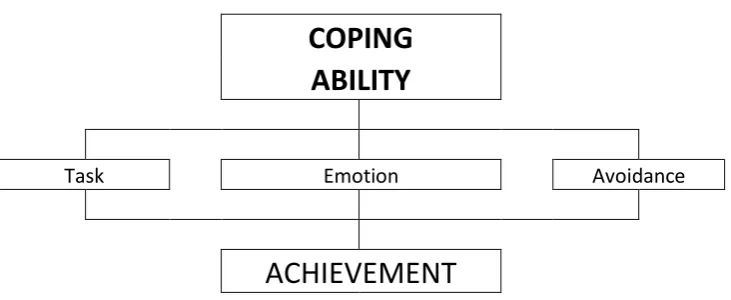
Coping ability according to Lazarus (1993) comprises of the ways to overcome stress and to be compatible with the environment. Coping ability includes three approaches: task-focused, emotional focused and avoidance-focused.
In the present study, coping ability is a skill used to deal with sport-related unpleasant situations, which is measured by the score acquired by the participants (male and female Iranian high school student athletes) on the Iranian standardized version of The Coping Inventory for Competitive Sports (CICS) (Gaudreau & Blondin, 2002).
1.10 Limitations and Delimitations
in completing the questionnaire can affect the findings of the current research as these were beyond the control of the researcher. A complete description of internal factors affecting the research finding is illustrated in the methodology chapter.
Delimitations were within the researcher’s control. Delimitation, generally, is to present the boundaries established in the development of the study such as population (Tehran high school student athlete), sample, objectives, research questions and statistical analysis.
1.11 Theoretical Framework of the Study
1.11.1 Mental Toughness Theory
Lazarus (2000a) stated that stressful situations create physiological and psychological states indicating the presence of stress. The first noteworthy issue among the theoretical concepts of mental toughness and coping ability is stress. Inability to cope with stress in sports has been associated with sports withdrawal (Anshel et al., 2001a) and decreased performance (Lazarus, 2000a). It is therefore crucial to researchers and practitioners working with athletes to have a greater understanding of coping in sports in order to design effective interventions and to make the sport a more satisfying experience (Nicholls & Polman,2007).
In sports, a personal resource is considered as important to overcoming adversity and at the same time maintaining high levels of performance or functioning (Gucciardi, Hanton, Gordon, Mallet and Temby, 2007). The mental toughness is now represents a contemporary application of the science of positive psychology (Rusk and Waters, 2013).
The importance of mental toughness was also considered as an important focus in other areas such as surgery (Colbert, Scott, Dale and Brennan, 2012), business (Jones and Moorhouse, 2007) and law enforcement (Miller, 2008) for attaining and sustaining performance excellence.
MENTAL
TOUGHNESS
CONFIDENCE CONTROL CONSTANCY
ACHIEVEMENT
Figure 1.1: Mental Toughness Theory
1.11.2 Coping Theory
Coping is considered as the ability to confront unpleasant circumstances that are not agreeable in terms of our mindset or beliefs. Mental toughness according to Guccciardi (2008) enables individuals to persevere and overcome any obstacle, adversity and pressure. All these concepts and definitions are about stress and ways to overcome stress. In more recent development, coping is viewed as adaptive processes which associated with a long-term series of interactions with a challenging environment.
Those student athletes have taken part in some of eight identified types of individual and team sports .The goal of the study was to determine the effect of a type of mental training program that takes into consideration gender, and the eight types of sports played by members in the experimental group. The researcher investigated if teaching could change the mental toughness and coping ability of the experimental group.
Loehr (1983) worked with athletes for the first time in the mid-1980s, where he targeted to increase athletic performance. As a sport psychologist, he tried to prepare athletes to achieve optimal function of stress tolerance. Therefore, it can be argued that dealing with stress is a fundamental debate in the development of sport performance which is possible through mental training. Through mental training, the athlete is enabled to overcome stress, takes it under her/his control and gives t best performance in stressful and unfavourable situations. The ways to overcome stress and to be compatible with the environment are referred to as coping ability (Lazarus, 1993).
Gender differences were first studied by Nicholls et al. (2009). They concluded that male athletes have higher mental toughness than female athletes. This theory was based on Vealey’s findings (1988) which stated that male athletes are more self-confident than female athletes. The current research also studied effect of mental training program in mental toughness and coping ability, considering the gender factor.
higher mental toughness than the athletes of individual sports. This is consistent with the findings of Vealey (1988), who believes that the athletes of team sports enjoy higher self-confidence than the athletes of individual sports. In this research, the researcher investigated further the issue by extending it acording to specific type of sports to evaluate student athletes mental toughness and coping ability.
COPING
ABILITY
Task Emotion Avoidance
ACHIEVEMENT
Figure 1.2: Coping Theory
Finally, this question arises as to whether there is any difference between control and experimental groups after the mental training program was employed in the experimental group, which was measured through comparing pre and post test scores. The role of MTP in the development of mental toughness and coping abilities has received some support through the work of Sheard and Golby (2006). It is concluded that MTP will develop mental toughness and coping abilities.
1.12 Conceptual Framework
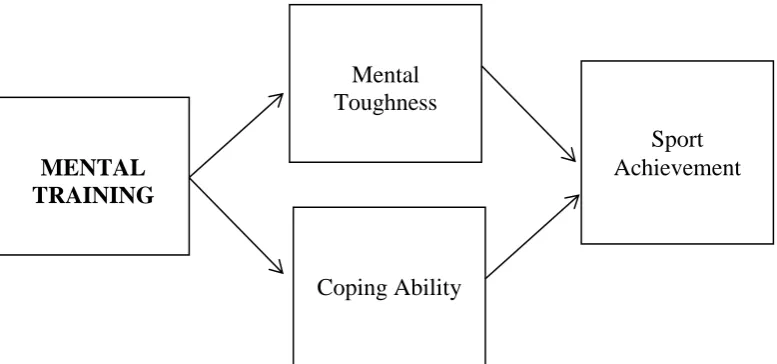
The MTP is an independent variable (IV) in the current study playa a major role in improving the mental toughness as it is an dependent variable (DV). In other words, the student athletes in the experimental group were trained on how to deal with stressful situations and to control and reduce the stress in such stressful situations. The output was statistically studied and analyzed using a pre-post test method, which was applied before and after the MTP. The current research proved the MTP is the dependent variable (DV) in the improvement of coping ability. Accordingly, the researcher observed that the MTP which was applied led to the improvement of mental coping abilities. This has been proven based on the statistical analysis. The diagram of the conceptual of the study are as follow:
Figure 1.3: Conceptual Framework
MENTAL TRAINING
Mental Toughness
Coping Ability
1.13 Conclusion
This chapter highlighted the fundamental and conceptual ideas explored in this study. Important information was provided regarding the establishment of mental skills training as a way to improve the probability of achieving the desired mental outcome. Therefore, the effect of MTP on two important variables of mental toughness and coping ability isa possible result of the study.
REFERENCES
Acharya, J., Amina, S., & Mohan, S. (2009). Gender-based analysis of sport goal-orientation, coping skills and participation motivation of athletes in Kerala. The 12th ISSP world congress of sport psychology. Marrakesh, June 17-21, 2009.
Aldwin, C.M. (2007). Stress, coping, and development: An integrative perspective (2nded.). New York: Guildford Press.
Allen, M. S., Greenlees, I., & Jones, M. V. (2011). An investigation of the five-factor model of personality and coping behavior in sport. Journal of Sports Sciences, 29(8), 841-850.
Anshel, M. H. (1991). Toward validation of the COPE model: Strategies for acute stress inoculation in sport. International Journal of Sport Psychology, 21, 24-39.
Anshel, M. H. (1995). Examination of self-regulatory characteristics and behavioral tendencies of elite and non-elite male Australian Swimmers. Australian Psychologist, 25, 78-83.
Anshel, M. H. (2003). Sport psychology: From Theory to practice (4th Ed.). San Francisco, CA: Benjamin Cummings.
Anshel, M.H., Jamieson, J. & Raviv,S.(2001a). Cognitive appraisal and coping strategies following acute stress among skilled competitive male and female athletes. Journal of Sport behavior, 24,75-97.
Anshel, M.H., Jamieson ,J.,& Raviv,S.(2001b) . Coping with acute stress among male and female Israeli athletes. International Journal of Sport Psychology ,32,271-289.
Anshel, M.H., & Anderson, D.I. (2002). Coping style, Coping strategies, affect, and motor performance. Anxiety, stress and coping: An International Journal, 15,193-209. Anshel, M. H., & Gangyan. S. (2008). Coping styles following acute stress in sport among
Anshel, M. H., & Kaissidis, A. N. (1997). Coping style and situational appraisals as predictors of coping strategies following stressful events in sport as a function of gender and skill level. British Journal of Psychology, 88, 263-276.
Anshel, M. H., Kim, K. W., Kim, B. H., Chang, K. J., & Eom, H. J. (2001). A model for coping with stressful events in sport: Theory, application, and future directions. International Journal of Sport Psychology, 32, 43-75.
Anshel, M. H. & Payne, J. M. (2008). Application of Sport Psychology for Optimal Performance in Martial Arts. In J. Dosil (Ed.). The Sport Psychologist’s Handbook: A Guide for Sport-Specific Performance Enhancement (pp. 139-148). UK: John Wiely and Sons (Ltd), Chichester.
Bandura, A. (1997). Self-efficacy: The exercise of control .Worth publishers.
Bannister, D., & Fransella, F. (1986). Inquiring man: The psychology of personal constructs (3rd Ed.). London: Croom Helm.
Bar-Eli, M., Dreshman, R., Blumenstein, B., & Weinstein, Y. (2002). The effect of mental training with biofeedback on the performance of young swimmers. Applied Psychology. 51(4), 567-581.
Bebetsos, E.,& Antoniou,P.(2003). Psychological skills of Greek badminton athletes. Perceptual and motor skills, 97,1289-1296.
Beck, A. T. (1967). Depression: Causes and treatment. Philadelphia: University of Pennsylvania Press.
Berk, L. E. (2007). Development through the lifespan (4th Ed.). New York: Pearson Education.
Besharat, M. A. (2007). Psychometric examination of coping strategies. Olympic Journal. 3(39), 95-105.
Besharat, M., & Bahramizade, H. (2011).The impact of styles of coping with stress on sport achievement. 2nd world conference on psychology Counseling & Guidance, Antalya, Turkey.
Bloor, M. B., Frankland, J. L., Thomas, M. T., & Robson, K. (2001). Focus groups in social research: Introducing qualitative methods. London: Sage.
Brewer, B. W., Cornelius, A. E., Van Raalte, J. L., Petitpas, A. J., Sklar, J. H., Pohlman, M. H., Krushell, R. J., & Ditmar, T. D. (2003). Protection motivation theory and adherence to sport injury rehabilitation revisited. The Sport Psychologist, 17, 95-103. Brustad, R. J., & Weiss, M. R. (1987). Competence perceptions and Sources of worry in high, medium and low competitive trait-anxious young athletes. Journal of Sport Psychology, 9, 97-105.
Bryman, A. (2012). Social research methods. Oxford: Oxford University Press.
Bull, S. J., Albinson, J. G., & Shambrook, C. J. (1996). The mental game plan: Getting psyched for sport. Eastbourne, England: Sports Dynamics.
Bull, S. J., Shambrook, C. J., James, W., & Brooks, J. E. (2005). Towards an understanding of mental toughness in elite English cricketers. Journal of Applied Sport Psychology, 17, 209-227.
Burton, D. (1988). Do anxious swimmers swim slower? Re-examining the elusive anxiety-performance relationship. Journal of Sport and Exercise Psychology, 10, 45-61. Burton, D., Naylor, S., & Holliday, B. (2001). Goal setting in sport: Investigating the goal
effectiveness paradigm. In R. Singer, H. Hallsenblas & C. Janelle (Eds.). Handbook of Sport Psychology (2nd Ed.). New York: Wiley & Sons.
Campbell, D.T., & Stanley, J.C. (1966). Experimental and Quasi-Experimental Designs for
Research. Rand McNally, Chicago, Illinois.
Carver, C. S., & Connor-Smith, J. (2010). Personality and coping. Annual Review of Psychology, 61(1), 679–704.
Cattell, R. B. (1957). Personality and motivation: Structure and measurement. New York: Harcourt, Brace and World.
Chafouleas,S.,Riley-Tillman,C., &Sugai,G.(2007). School-based behavioral assessment informing intervention and instruction. New York:Guilford press.
Chung, K. H., & Lee, K. M. (1994). Taekwondo Kyorugi: Olympic Style Sparring. Hartford, CT: Turtle Press.
Clough, P., & Strycharczyk, D. (2012). Developing mental toughness: Improving performance, wellbeing and positive behavior in others. London: Kogan Page.
Clough, P., Earle, K., & Sewell, D. (2002). Mental toughness: The concept and its measurement. In I. Cockerill (Ed). Solutions in sport psychology (pp. 32-46). London: Thomson Learning.
Cohen.P. (2009).The fearless athlete. Digital download version. Peak performance sport center. U.S.A
Cohen.P. (2013). 10 costly mental game mistakes athletes make before competition. Peak performance sport center E book. U.S.A
Compas, B.E., Connor-Smith, J.K., Saltzman, H., Harding Thomsen, A., & Wadsworth,M.E. (2001). Coping with stress during childhood and adolescence: Problems, progress, and potential in theory and research. Psychological Bulletin, 12, 87–127.
Connaughton, D., Hanton, S., & Jones, G. (2010). The development and maintenance of mental toughness in the world’s best performers. The Sport Psychologist, 24, 168-193.
Connaughton, D., Hanton, S., Jones, G., & Wadey, R. (2008). Mental toughness research: Key issues in this area. International Journal of Sport Psychology, 39, 192–204. Connaughton, D., Wadey, R., Hanton, S., & Jones, G. (2008). The development and
maintenance of mental toughness: Perceptions of elite performers. Journal of Sports Sciences, 26, 83–95.
Cook, T.D., & Campbell, D.T. (1979). Quasi-Experimentation: Design and Analysis for Field
Settings. Rand McNally, Chicago, Illinois.
Corsini, R. (2002). Dictionary of psychology. New York: Burner/Rutledge.
Cox, R. H. (2002). Sport psychology: Concepts and applications (5th Ed.). New York: WCB/ McGraw –Hill.
Creswell. J. W. (2004). Quantitative inquiry and research design: Choosing among five traditions (5th Edition). London: Sage publication.
Crust, L. (2007). Mental toughness in sport: A review. International Journal of Sport and Exercise Psychology, 5(3), 270–290.
Crust, L. (2008). A review and conceptual re-examination of mental toughness: Implications for future researchers. Personality and Individual Differences, 45, 576–583.
Crust, L. (2009). The relationship between mental toughness and affect intensity. Personality and Individual Differences, 47(8), 959-963.
Crust, L. (2010). Mental toughness and coping in ultra-endurance event. Athletic Insight Journal, 2(1), 35-54.
Crust, L., & Azadi, K. (2010). Mental toughness and athletes’ use of psychological strategies. European Journal of Sport Science, 10(1), 43-51.
Crust, L., & Clough, P. J. (2005). Relationship between mental toughness and physical endurance. Perceptual and Motor Skills, 100, 192-194.
Crust, L., & Keegan, R. (2010). Mental toughness and attitudes to risk-taking. Personality and Individual Differences, 49, 164–168.
Daly, J. M., Brewer, B. W., &Van Raalte, J. L. (1995). Cognitive appraisal, emotional adjustment, and adherence to rehabilitation following knee surgery. Journal of Sport Rehabilitation, 4, 23-30.
Deaner, H., & Silva, J. M. (2002). Personality and sport performance. In J. M. Silva & D. E. Stevens (Eds.). Psychological Foundation of Sport (pp. 48-65). San Francisco, CA: Benjamin Cummings.
Deater-Deckard, K., Petrill, S. A., Thompson, L. A., & DeThorne, L. S. (2006). A longitudinal behavioral genetic analysis of task persistence. Developmental Science, 9(5), 498-504.
Dewhurst, S. A., Anderson, R. J., Cotter, G., Crust, L., & Clough, P. J. (2012). Identifying the cognitive basis of mental toughness: Evidence from the directed forgetting paradigm. Personality and Individual Differences, 53, 587-590.
Dosil,J (2006).The sport psychologist’s handbook: A Guide for sport-specific performance enhancement. John wiley & sons ltd.
Dolat-Abadi, M., & Bahram, S. (2012). The determining Factors of sport confidence among Iranian Female gymnasts. The Journal of Sport Science, 27(1), 69-78.
Durand-Bush, N., & Salmela, J. (2002). The development and maintenance of expert athletic performance: Perceptions of world and Olympic champions. Journal of Applied Sport Psychology, 14(3), 154–171.
Eccles, J. S., & Harold, R. D. (1991). Gender differences in sport involvement: Applying the Eccles’ expectancy- value model. Journal of Applied Sport Psychology, 3, 7-35. Eklund, R. C. (1996). Preparing to compete: A season-long investigation with collegiate
wrestlers. The Sport Psychologist, 10, 111–131.
Etnier, J.L. (2009). Bring you a Game: A Young Athlete’s Guide to mental toughness. The University of North Carolina Press.
Fazey, J. & Hardy, L. (1988). The Inverted –U Hypothesis: Catastrophe for Sport Psychology. British Association of Sports Sciences Monograph No. 1. Leeds: The National Coaching Foundation.
Fauzee,M.S.O,Daud wan R.B, Abdullah,R. Rashid,S.R.(2009).The effectiveness of imagery and coping strategies in sport performance. Journal of Social Sciences, 9(1).pp.97-108.ISSN 1450-2267.
Feltz, D. L., & Landers, D. M. (1983). The effects of mental practice on motor skill learning and performance: A meta-analysis. Journal of Sport Psychology, 5, 25-57.
Feltz, D. L., & Lirgg, C. D. (2001). Self-efficacy beliefs of athletes, teams and coaches. In R. N. Singer, H. Hallsenblas, & C. Janelle (Eds.). Handbook of sport Psychology (2nd Ed.) (pp. 340-361). New York: Wiley & Sons.
Fletcher,D. & Hanton, S. (2003). Sources of organizational stress in elite sports performers,17,175-195.
Folkman, S., & Lazarus, R. S. (1985). If it changes, it must be a process: Study of Emotion and coping during three stages of a college examination. Journal of Personality and Social Psychology, 48, 150–170.
Fontani, G., Migliorini, S., Benocci, R., Facchini, A., Casini, M., & Corradeschi, F. (2007). The effect of mental imagery on the development of skilled motor actions. Perceptual and Motor Skills, 105, 803-826.
Fourie, S., & Potgieter, J. R. (2001). The nature of mental toughness in sport. South African Journal for Research in Sport, Physical Education and Recreation, 23, 63-72.
Fraenkel, J, R., & Wallen, N. E. (2010). How to Design and Evaluate Research in Education (7th Ed.). New York: McGraw-Hill.
Franken, R., Gibson, K., & Rowland, G. (1992). Sensation seeking and the tendency to view the world as threatening. Personality and Individual Differences, 13(1): 31–38. Freigang, D.W. (2002).The effect of psychological skills training on self-efficacy in varsity
swimmers. (Doctoral dissertation). Retrieved from ProQuest (order No 305483721). Garson, G. D. (2012). General linear models: Multivariate GLM & MANOVA/MANCOVA.
Asheboro, NC: Statistical Associates Publishers.
Gaudreau, P., Ali, M., & Marivain, T. (2005). Factor structure of the coping inventory for competitive sport with a sample of participants at the 2001 New York marathon. Psychology of Sport and Exercise, 6, 271-288.
Gaudreau, P., & Blondin, J. P. (2002). Development of a questionnaire for the assessment of coping strategies employed by athletes in competitive sport settings. Psychology of Sport and Exercise, 3, 1-34.
Gaudreau, P., Blondin, J. P., & Lapierre, A. M. (2002). Athletes’ coping during a competition: Relationship of coping strategies with positive affect, negative affect, and performance- goal discrepancy. Psychology of Sport and Exercise, 3, 125-150. Gaudreau, P., Lapierre, A. M., & Blondin, J. P. (2001). Coping at three phases of a
utilization of the same strategy. International Journal of Sport Psychology, 32(4), 369-385.
Gay, L. R., Mills, G. E., & Airasian, P. W. (2012). Educational Research: Competences for Analysis and Applications. Boston: Pearson.
Gaylord-Harden, N. K., Cunningham, J. A., Holmbeck, G. N., & Grant, K. E. (2010). Suppressor effects in coping research with African American adolescents from low-income communities. Journal of Consulting and Clinical Psychology, 78(6), 843-855. Gee, C. J. (2010). How does sport psychology actually improve athletic performance? A
framework to facilitate athletes’ and coaches’ understanding. Behavior Modification, 34(5), 386-402.
Gill, D. L. (2000). Psychological Dynamics of Sport and Exercise. Champaign, IL: Human Kinetics.
Golby, J., & Sheard, M. (2006). The relationship between genotype and positive psychological development in national-level swimmers. European Psychologist, 11(2), 143-148.
Golby, J., Sheard, M., & Lavallee, D. (2003). A cognitive-behavioral analysis of mental toughness in national rugby league teams. Perceptual and Motor Skills, 96, 455-462. Golby, J., Sheard, M., & van Wersch, A. (2007). Evaluating the factor structure of the
psychological performance inventory. Perceptual and Motor Skills, 105, 309–325. Gordon, S. (2005). Identification and development of mental toughness. In T. Morris, P.
Terry, S. Gordon, S. Hanrahan, L. Ievleva, G. Kolt, & P. Tremayne (Eds.). Psychology promoting health and performance for life: Proceedings of the ISSP 11th
World Congress of Sport [CDROM]. Sydney: International Society of Sport Psychology (ISSP).
Gould, D. (2001). Goal setting for peak performance. In J. Williams (Ed.). Applied Sport Psychology: personal growth to peak performance (pp. 190-205). Mountain View, CA: Mayfield
Gould, D., & Carson, S. (2011). Young athletes’ perceptions of the relationship between coaching
behaviors and developmental experiences. International Journal of Coaching Science, 5(2),
3-29.
Gould, D., Dieffenbach, K., & Moffett, A. (2002). Psychological characteristics and their development in Olympic Champions. Journal of Applied Sport Psychology, 14, 172-204.
Gould, D., Eklund, R. C., & Jackson, S. A. (1993). Coping strategies used by US Olympic wrestlers. Research Quarterly for Exercise and Sport, 64, 83-93.
Gould, D., Finch, L. M., & Jackson, S. A. (1993). Coping strategies used by national champion figure skaters. Research Quarterly for Exercise and Sport, 64, 453-468. Gould, D., Hodge, K., Peterson, K., & Petlichkoff, L. (1987). Psychological foundations of
coaching: Similarities and differences among intercollegiate wrestling coaches. The Sport Psychologist, 1, 293-308.
Gould, D., Petlichkoff, L. M., Prentice, B., & Tedeschi, F. (2000). Psychology of sports injuries.
Sports Science Exchange Roundtable, 11(2), 1-4.
Grady,R.J.(2000). Sports in school the future of an Institution. Teachers college press.
Greenleaf, C., Gould, D., & Dieffenbach, K. (2001). Factors influencing performance: interviews with Atlanta and Nagano US Olympians. Journal of Applied Sport Psychology, 13, 179-209.
Gucciardi, D. F., Gordon, S., & Dimmock, J. A. (2008). Towards an understanding of mental toughness in Australian football. Journal of Applied Sport Psychology, 20. 261-281. Gucciardi, D.F., Gordon, S., & Dimmock, J.A.(2009). Evaluation of a mental toughness
training program for youth-aged Australian Footballers: I.A quantitative analysis. Journal of Applied Sport Psychology, 21, 307-323.
Hadd, V., & Crocker, P. R. E. (2007). The effect of stress-related factors on post-performance affects in competitive adolescent swimmers. International Journal of Sport and Exercise Psychology, 5, 142-157.
Hall, C.R.,Munroe –Chandler, K.J, Cumming, J,Law,B.,Ramsey,R.,& Murphy, L.(2009) Imagery and observational learning use and their relationship to sport confidence. Journal of
sport sciences, 27(4), 327-337
Hammermeister,J,& Burton, D.(2004).Gender differences in coping with endurance sports: Are men from mars and women from venues? Journal of Sport Behavior ,27,148-164. Hanin, Y. L. (2000) Successful and poor performance and emotions. In Y. L. Hanin (Ed.).
Emotions in sport (pp. 157-188). Champaign, IL: Human Kinetics.
Hanin, Y. L. (2003) Performance related emotional states in sport: A qualitative analysis. Forum Qualitative Sozial forschung/ Forum: Qualitative Social Research, 4(1). Retrieved on 21 June 2012 from http://www. qualitative research. net/fqs-texte/1-03/1-03hanin-e. htm
Hanin, Y. L. (2007). Emotions in sport: Current issues and perspectives. In G. Tenenbaum & R. C. Eklund (Eds.). Handbook of Sport Psychology (3rd Ed.) (pp. 31-58). John Wiley and Sons, Inc.
Hanton, S., & Jones, G. (2000). The effects of a multimodal intervention program on performances. II: Training the butterflies to fly in formation. The Sport Psychologist, 13, 22-41.
Hanin, Y. L., & Syrja P. (1996). Predicted, actual and recalled affect in Olympic level soccer athletes: Idiographic assessments on individualized scales. Journal of Sport and Exercise Psychology, 18(3), 325-335.
Hanton, S., Cropley, B., & Lee, S. (2009). Reflective practice, experience, and the interpretation of anxiety symptoms. Journal of Sports Sciences, 27(5), 517-533. Hardy, L., Jones, G., & Gould, D. (1996). Understanding Psychological Preparation for
Sport: Theory and Practice of Elite Performance. New York: Wiley.
Hatzigeorgiadis, A., Zourbanos, N., & Galanis, E.(2011). Self-talk and sports performance A meta –analysis. Perspectives on psychological science, July 2011 6:348-356.
Hofmann,S.G.,Smits J.A.,(2008).Cognitive-Behavioral therapy for adult anxiety disorders:A meta-analysis of randomized placebo-controlled trials. Journal clinical psychiatry. 2008 Apr; 69 (4): 621-32.
Holt, N. L., Ball, G. D. C., Sehn, Z. L., Spence, J. C., & Newton, A. (2012). Physical education and sport programs at an inner city school: Exploring possibilities for positive youth development. Physical Education and Sport pedagogy, 17(1), 97-113. Horsburgh,V.A.,Schermer,J.A.,Veselka,L.,&Vernon,P.A.(2009).A behavioral genetic study
of mental toughness and personality. Personality and Individual Differences, 46,100-105.
Howland, J. M. (2010). Youth swimmers coping with pressures of competition: Understanding psychological characteristics and mental skills use. Boston: Boston University
Jalili, F., Hosseini, A., & Salehian, H. (2011). Comparison of personality dimensions, mental toughness, and social skills of female students athletes (team-individual) and non-athletes. Annals of Biological Research, 2(6), 554-560.
Jang, K. L., Livesley, W. J., Angleitner, A., Riemann, R., & Vernon, P. A. (2002). Genetic and environmental influences on the covariance of facets defining the domains of the five-factor model of personality. Personality and Individual Differences, 33(1), 83-101.
Jin, W. (2004). Understanding "the lost following by winning": A choking process theory. Acta Psychologica Sinica, 36(5), 621-629.
Jones, G., & Swain, A. (1995). Predispositions to experience debilitative and facilitative anxiety in elite and non-elite performers. The Sport Psychologist, 9, 201-211.
Jones, G., Hanton, S., & Connaughton, D. (2007). A framework of mental toughness in the world's best performers. The Sport Psychologist, 21, 243-264.
Jones, M. I., & Lavallee, D. (2009). Exploring the life skills needs of British adolescent athletes. British adolescent athletes, Psychology of Sport and Exercise, 10(1), 159-167
Jowdy, D. P., & Harris, D. V. (1990). Muscular responses during mental imagery as a function of motor skill level. Journal of Sport and Exercise Psychology, 12, 191-201. Junge, A., Dvorak, J., Rosch, D., Graf-Baumann, T., Chomiak, J. & Peterson, L. (2000).
Psychological and sport-specific characteristics of football athletes. The American Journal of Sports Medicine, 28(5), 22-28.
Kaiseler M.H.(2010).Gender and personality differences in coping in sport. PhD thesis. Hull University.
Karimi, M., & Jeddi, S. (2013). The elite athlete psychological report: Dreams and Realities. The Journal of Sport and Youth, 9(2), 112-121.
Karp, G. G. (1989). Participant observation. In P. W. Darst, D. B. Zakrajsekand, & V. H. Mancini (Eds.). Analyzing physical education and sport instruction (pp. 411-422). Champaign, IL: Human Kinetic.
Kashani, V. (2010). The comparison of mental toughness in athlete men and women in individual contact and non-contact sports, at different levels of skills. Tehran: Tehran University Press.
Kashani, V. (2013). Standardization: Validation of the Sports Mental Toughness Questionnaire (SMTQ) in Iran. Tehran: Tehran University press.
Kauss, D. (2001). Mastering your inner game: A self –guided approach to finding your unique sports performance keys. Champaign, IL: Human Kinetics.
Kelly, G. (1955). The psychology of personal constructs. New York: Norton.
Khanjari, Y. (2012). The Effect of a Course of Psychological skills training (PST) program on chosen mental skills and the performance of Teenager Female taekwondo Athletes
of Iranian National Team. Tehran: Tehran University Press.
Khoshaba, D. M., & Maddi, S. R. (1999). Early experience in hardiness development. Consulting Psychology Journal: Practice and Research, 51(2), 106-116.
Kim-Cohen, J., Moffitt, T. E., Caspi, A., & Taylor, A. (2004). Genetic and Environmental processes in young children’s resilience and vulnerability to socioeconomic deprivation. Child Development, 75(3), 651-668.
Kobasa, S. C. (1979). Stressful life events, personality, and health: An inquiry into hardiness. Journal of Personality and Social Psychology, 37(1), 1-11
Kobasa, S. C., Maddi, S. R., & Kahn, S. (1982). Hardiness and health: A prospective study. Journal of Personality and Social Psychology, 42(1), 168-177.
Kornspan.A.S. (2009). Fundamentals of sport and exercise psychology. Champaign, IL: Human Kinetics.
Kowalski, K.C., Crocker, P.R.E., Hoar, S.D., & Niefer, C.B.(2005). Adolescent’s control beliefs and coping with stress in sport. Internatioal Journal of Sport Psychology, 36,257-272.
Kowalski, K. C., & Crocker, P. R. E. (2001). Development and validation of the coping function questionnaire for adolescents in sport. Journal of Sport & Exercise Psychology, 23, 136-155
Kristiansen. E., & Roberts G. C. (2010). Young elite athletes and social support: Coping with competitive and organizational stress in “Olympic Competition”. Scandinavian Journal of Medicine and Science in Sports, 20(4), 680-695.
Kroll, W. (1967). Sixteen personality factor profiles of collegiate wrestlers. Research Quarterly, 38(1), 49-57.
Kuehl, K., Kuehl, J., & C.Tefertiller (2005).Mental toughness: A champion’s state of mind.Chicago,IL:I.R.Dee.