Information Technology Organization. (Under the direction of Dr. Michelle E. Bartlett.)
This thesis is a case study of Information Technology project manager learning in a
large financial services organization. The purpose of this study is to understand how project managers learn to manage projects. The reasons for doing this study are that (a) project managers have a significant impact on the success of projects, and projects are the primary
means used by many organizations to execute their strategies, (b) the project management literature identifies a need to develop project managers with new ways of thinking about
project management, and (c) the project management literature identifies experience as the primary means by which project managers learn to manage projects, yet it gives little insight
into how this learning occurs. This study found evidence of project managers learning on the job and creating knowledge that project managers themselves valued. It describes the
situations associated with the learning experiences analyzed in this study and develops a
by
Mark Curtis Rohrbough
A thesis submitted to the Graduate Faculty of North Carolina State University
in partial fulfillment of the requirements for the degree of
Master of Science
Human Resource Development
Raleigh, North Carolina 2016
APPROVED BY:
Dr. Michelle E. Bartlett Committee Chair
Dr. James Bartlett
Dr. Dianne D. Chapman
BIOGRAPHY
Mark Rohrbough is an Information Technology practitioner with three decades of experience in a varied set of management and individual contributor roles that include
Industrial Engineer, programmer, trainer, systems analyst, organizational leader, consultant, coach, and advisor. His goal in pursuing a Master’s in Human Resource Development is to build on his experience by developing new skills to move into other roles as trainer, advisor,
TABLE OF CONTENTS
LIST OF TABLES ... vi
LIST OF FIGURES ... viii
CHAPTER 1: INTRODUCTION ... 1
Background and Context ... 2
The emergence of project management ... 2
Project success ... 7
The project manager... 9
Statement of Problem and Purpose ... 13
The need for adaptive project managers ... 13
Limitations of “know what” knowledge ... 15
Developing “know how” and “know why” knowledge ... 16
Study Context ... 18
Research Questions ... 21
Significance ... 23
Theoretical Framework ... 25
Conceptual Framework ... 26
The project manager’s characteristics ... 26
The project management environment ... 27
The learning process ... 28
Method Overview ... 30
Chapter Summary ... 30
Definition of Key Terms ... 31
Abstract Conceptualization... 31
Active Experimentation ... 31
Apprehension... 32
Case Study ... 32
Comprehension ... 33
Concrete Experience ... 33
Consciousness ... 33
Development ... 33
Extension ... 33
Experiential Learning Theory (ELT)... 33
KELT ... 34
Intention ... 34
Learning ... 34
Project Management ... 34
Project Manager... 34
Reflective Observation... 35
CHAPTER 2: LITERATURE REVIEW ... 36
Rethinking Project Manager Development ... 38
The Role of Experience in Learning to Manage Projects ... 40
Unexpected Events as a Source of Learning... 44
Experiential Learning ... 47
Kolb’s Experiential Learning Theory ... 49
Creating knowledge ... 53
Learning styles ... 56
Human development and learning ... 58
Learning and consciousness ... 60
Criticisms of experiential learning ... 61
Chapter Summary ... 64
CHAPTER 3: METHODS ... 67
Research Design ... 67
Research Questions ... 71
Participants ... 73
Role of the Researcher ... 73
Data Collection ... 74
Data Analysis ... 76
Learning experience: How learning happens ... 76
Knowledge creation and concepts learned from experience ... 78
The impact of prior knowledge on learning from experience... 81
Learning preferences: The impact of learning style ... 81
Learning environment: The social-technical forces that shape learning. 82 Criteria for interpreting the findings ... 83
Ethical Considerations... 83
Chapter Summary ... 83
CHAPTER 4: FINDINGS ... 85
Participants ... 86
Learning from Experience (Proposition 1) ... 89
Grasping processes... 89
Transforming processes... 92
Knowledge creation ... 95
Situations that Lead to Learning (Proposition 2 and Proposition 3) ... 99
Project Manager World View (Proposition 4 and Proposition 6) ... 101
The Project Environment (Proposition 7) ... 104
The organizational landscape at FSC ... 105
The project manager professional environment ... 109
The business environment ... 111
Implications for the Conceptual Model ... 112
CHAPTER 5: DISCUSSION ... 117
Implications for Practice ... 117
Seeing the project as an organization... 118
Seeing the project as a change initiative ... 120
Implications for HRD ... 121
Limitations of this Study ... 122
Concluding Remarks ... 122
REFERENCES ... 123
APPENDICES ... 134
Appendix A: Analysis of Data Needed to Answer Research Questions ... 135
Appendix B: Participant Interview Guide ... 140
Appendix C: Data Security ... 146
Appendix D: Data Collection Worksheets ... 149
Appendix E: Transcription Procedures ... 152
Appendix F: Learning Experiences ... 155
Appendix G: Knowledge Statements ... 161
Appendix H: Learning Themes Revealed through Concept Mapping ... 182
LIST OF TABLES
Table 1 A Summary of Some Learning Methods Mentioned in the Project Management
Literature ... 36
Table 2 Summary of Kolb’s Experiential Learning Theory Propositions with Implications for Project Manager Learning ... 50
Table 3 The Relationship between Learning and Development in KELT Showing How Learning Can Lead to Development ... 58
Table 4 Adaptive Processes Discussed in Project Manager Interviews ... 82
Table 5 Project Manager Experience Summary ... 88
Table 6 Project Manager Learning Themes and Importance Project Managers Placed on Each Theme ... 98
Table 7 Project Manager Learning Situations and Recurring Learning Patterns ... 100
Table 8 Impact of Pre-existing Knowledge on Knowledge Creation ... 102
Table 9 Analysis to Determine Data Needed to Answer Research Questions ... 135
Table 10 Prototype Portfolio Summary Sheet for Collecting Data from Project Managers Prior to the Interview: Part 1 of 2 (Columns 1 through 8) ... 149
Table 12 Participant Key for Tracking Participant Progress through the Interview and Card Sorting Process ... 151
Table 13 Learning Experiences Described by Project Managers ... 155 Table 14 Knowledge Statements Summarizing Knowledge Created While Working as a
Project Manager ... 161
Table 15 Summary of Knowledge Statements Organized by Theme, Method, and Situation
LIST OF FIGURES
Figure 1. Information Technology Project Manager Learning Logic Model Illustrating the
Key Concepts from the Research Propositions (Designated as P1 through P7) ...29
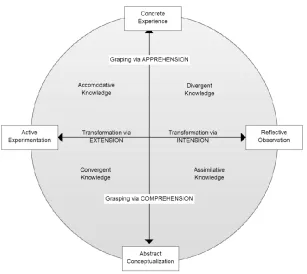
Figure 2. Knowledge Creation in KELT Resulting from the Interaction of the Four Adaptive Processes Leading to Different Kinds of Knowledge ...55
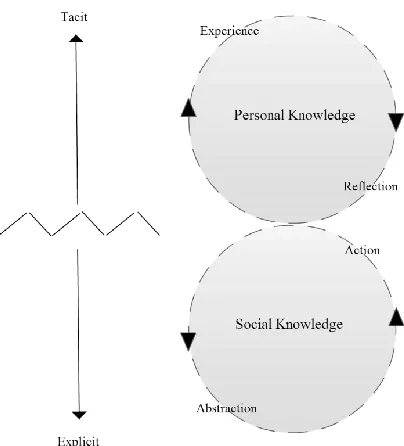
Figure 3. K Schema Illustrating the Relationship Between Personal and Social Knowledge and the Adaptive Processes Defined in KELT ...63 Figure 4. Summary of PM Learning Styles Based on How Much They Spoke About Each
Adaptive Process ...104
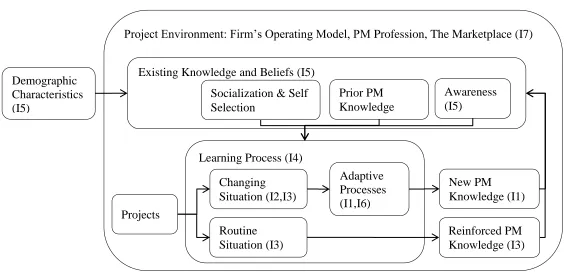
Figure 5. Original Logic Model Illustrating Key Concepts Used at the Start of This
Study ...115
Figure 6. Revised Information Technology Project Manager Learning Logic Model
Illustrating the Key Learning Concepts Discussed in Implications ...116
Figure 7. Concept Map Showing Proximity of Knowledge Statements as Seen by Project Managers ...182
CHAPTER 1: INTRODUCTION
Information Technology (IT) project managers manage projects to bring ideas from
concept to reality to achieve business results valued by their project sponsors. Because these project managers (PM) play a key role in determining the success of the project,
organizations are interested in developing their project managers’ project management
knowledge, skills, and abilities to improve project success. Researchers studying projects and project management have pointed out weaknesses in the most common development
approach, training, and argue that both the content and the delivery of the training are
insufficient to develop project managers that can manage complex projects (Carbone, 2006, p. 354; Crawford & Gaynor, 1999, p. 3; Crawford, Morris, Thomas, & Winter, 2006, pp.
723–724; Egginton, 2012, pp. 520–521; Hans Jurgen Thamhain, 1991, p. 41; Winter, Smith, Morris, & Cicmil, 2006, p. 642). In addition, even though some researchers argue that experience is the primary way that project managers learn to manage projects (Crawford &
Gaynor, 1999, p. 5; Hans Jurgen Thamhain, 1991, p. 41), little is said in the literature about how project managers learn from their experience or even what those experiences are. This
learning phenomenon of how project managers learn to manage projects from experience is the subject of this paper. The purpose of this chapter is to introduce key concepts needed to
methods used to study this phenomenon, and Chapter 4 will present the findings. Finally, Chapter 5 will discuss the implications of these findings for practice and the field of HRD.
Background and Context
Long before academics and practitioners spoke of project managers and project management and long before any recognized principles and practices were defined that
would today be recognized as project management, people were executing projects to bring ideas to reality. Examples of projects before there was project management include the
construction of the Giza Pyramids, Stonehenge, cooking, and hunting (Morris, 2013, pp. 12– 13; Packendorff, 1995). In fact, it was not until 1953-1954 that the position of project manager was formally recognized when it was coined by the Martin (Marietta) and
McDonnell Aircraft companies. Later that same decade, The Harvard Business Review
published “The Project Manager” by Paul Gaddis (1959), indicating that the project manager
role was now receiving general management attention (Morris, 2013, p. 36).
The emergence of project management. As this growing awareness of project management continued in the 1960s, demand for project managers grew, and groups of
project managers began meeting to share practices and discuss their experiences. Out of these meetings the Project Management Institute (PMI) was created in 1969 (Project
Management Institute, Inc, 2014). In the 1970s, PMI began to discuss the idea of project manager certification as part of their goal to develop the project management profession; however, to certify project managers, a body of project management knowledge was needed
project management that is now called the Project Management Body of Knowledge
(PMBOK). As a result, PMI published a pilot body of knowledge in 1983, and then in 1987
formally published A Guide to the Project Management Body of Knowledge (also called the
PMBOK Guide). Since that time, there have been several updates with the most recent being published in 2013 (Morris, 2013, pp. 52–55; Project Management Institute, 2013). In parallel
with this codification of project management practice in PMBOK, many of these practices were studied in the growing body of project management research literature that began to
emerge in published peer-reviewed journal articles, conference papers, and books. These publications more than doubled each year since 1960. Moreover, in the decade beginning in 2000, over 5,500 publications were made, a substantial increase from the 24 publications in
the decade beginning in 1960.
Though there was rapid adoption of project management in industries such as
construction and defense, the move toward project management took longer to develop in IT. One of the challenges of managing projects in technology settings is eliciting and managing requirements that define the system being developed. As a result of these challenges,
waterfall methods were applied to software development in the late 1980s and early 1990s, to manage large projects. Waterfall methods are built around a project lifecycle where work
moves from idea, to business case that justifies the idea, to chartering a team to develop and implement the idea, to gathering requirements to explicitly state what the system ought to do, to designing a solution to meet the requirements, to building the solution, to testing the
typical waterfall development method is the instructional design framework ADDIE (analysis, design, development, implementation, evaluation) which is a model frequently
used in training and development organizations for developing courses (Allen, 2006). The steps in the waterfall software development cycle are similar to ADDIE, and the term waterfall comes from the stair-step appearance of waterfall plans when they are represented
by a Gantt chart. This approach makes is possible for different teams in different locations and working at different points in time to work on each phase of the project because most
information sharing takes place at the start and stop of each phase in the lifecycle. (This information sharing is often referred to as a handoff or “throwing it over the wall” in practice because often communication is limited to these transition points.) Therefore, it was not until
the 1990s with these methods in place that software project management began to develop effective capabilities because with the emergence of these methods IT project managers in the 1990s could now draw on PMI’s Body of Knowledge and recognized development
methods to inform their project management practices.
Even with these improvements, challenges in managing changing requirements remained
because, with waterfall methods, the system users were often not shown a working system until late in the project when changes would trigger extensive rework. Therefore, new
practices and ways of thinking about software development began to emerge. These new ways of thinking and working were called Agile practices in 2000-2001 because of how they help teams respond to changes in requirements by giving system users a chance to view and
Manifesto in 2001 (“Manifesto for Agile Software Development,” 2015) is a statement of these Agile beliefs by a group of prominent leaders in software development and marks a
turning point in codifying agile practices. Agile is a way of thinking about change such as delivering software and has much in common with action research (Baskerville, 1997; David A Kolb, 1984). Agile operates as a series of learning cycles where a single cycle is referred
to as an iteration or sprint and consists of planning the work, doing the work, evaluating the work, and finding ways to improve how to work before the next cycle begins. The project
team captures the work to be done in a list called a backlog, and much of the planning work involves prioritizing and structuring the backlog to determine the next most important thing to be done. One advantage of this approach over traditional waterfall planning is that the
project team can change direction at the start of each sprint (Sutherland, 2014). Despite helping teams to be more adaptable, Agile does have some challenges that teams must learn to overcome. For instance, the team’s focus on short-term tasks during the sprints can limit the team’s ability to see the larger project needs. Also, Agile practices for coordinating work
across multiple development teams can be a challenge for teams to learn. Given that Agile
teams typically have ten or fewer members, medium to large efforts involving multiple Agile teams will need to solve the problem of coordinating work across these teams. Before agile,
the coordination of this work across teams had become known as program management, and this paper includes program management when referring to project management. And while the focus that Agile practices place on task and work stream management may not be
include activities that are considered part of project management such as structuring teams, structuring work, planning work, capacity planning, and tracking work completed. But the
way in which Agile teams do these things is different than how waterfall teams carry out these activities.
Though project management in IT has matured and projects have become ubiquitous,
there are divergent viewpoints on how projects and project management are defined; therefore, more should be said about the nature of projects and project management. In addition to being “undertakings to realize an idea”, projects can be viewed as organizational
entities(Morris, 2013, p. 13). They are also viewed as “a temporary endeavor undertaken to create a unique product, service, or result” (Project Management Institute, 2013, p. 3).
Consistent with these views Packendorff (1995) suggested that projects are temporary organizations with
an organized (collective) course of action aimed at evoking a non-routine process and/or completing a non-routine product...a predetermined point in time or time-related conditional state when the organization and/or its mission
is collectively expected to cease to exist…has some kind of performance evaluation criteria…is so complex in terms of roles and number of roles that it
Based on these ideas this paper will view projects as temporary organizations created for a specific purpose that a firm cannot realize through existing routine organizational structures
and processes.
Though there seems to be wide agreement that projects need project managers to manage and lead the project team, there is disagreement about how project managers should perform
this role. According to PMI (2013), “project management is the application of knowledge, skills, tools, and techniques to project activities to meet the project requirements” (p 5).
According to Morris (2013), PMI’s view of project management emphasizes monitoring and control with a focus on outputs and contrasts this with a view Morris calls the management of projects that considers both the setup and structuring of the project, the execution of the
project, and is focused on outcomes (Morris, 2013, Chapter 7). Based on these ideas, this paper will view project management as the application of knowledge, skills, tools, and
techniques to realize the purpose of the project. In short, projects are undertakings to realize some purpose, and project managers apply their knowledge and skills to ensure that the undertaking is successful. But understanding whether a project has been successful is not as
simple as it might appear, and so it is discussed next.
Project success. Because projects exist to realize some purpose, and project managers exist to assist the project in realizing its purpose, understanding whether or not a project realizes its purpose and is successful is important to project stakeholders. However, this can be a challenge because project success means different things to different project
scope, and schedule performance to be determinants of success. Other stakeholders would consider the benefit to the customer, the benefit to the organization, or preparing for the
future to be the key success measures. Still other stakeholders would take an approach similar to the Balanced Scorecard (a reporting approach that uses a combination of business measures such as customer satisfaction, employee engagement, operating effectiveness, and
financial performance to describe the health of the organization (Kaplan, 1996)) and consider the combination of these four factors to be the success measure. The Balanced Scorecard
approach conceptualizes success as a multi-dimensional concept, and which measures are most applicable depends on the stakeholder’s role, the level of technology risk in the project,
and the point in time when stakeholders evaluate success (Shenhar, Dvir, Levy, & Maltz,
2001).
Nevertheless, even though project success is a multi-dimensional concept, many research
articles assert that IT projects fail at an unacceptable rate, usually around 30%, based solely on the efficiency measures of schedule, cost, and scope (The Standish Group, 2001). Researchers and organizations use this approach to measuring success because they can
calculate efficiency measures in near real time as projects progress, but other measures such as customer benefit are not available until after project launch (Shenhar et al., 2001). Another
reason researchers use this approach is that project managers typically see themselves as directly accountable for schedule, cost, and scope, and they are often the source of data used in research when assessing project success. In a sense, efficiency measures are leading
project success, though other measures are often acknowledged. With this description of project success, it is important to consider how the project manager influences project
success because the relationship between the project manager and project success is what gives this study much of its significance.
The project manager. In discussing the role of the project manager when project management was just beginning, Goodman (1967, p. 396) argues,“When the nature of the task is one of complex interdependency, there must be a person designated who can
supervise the trade-off between each of the work units involved in the task accomplishment” (p.396). Later, Thamhain and Wileman (1977) elaborate on the role of the project manager, stating that
…the project manager must be able to integrate various supporting disciplines
in a continuously changing work environment. In his search for
multidisciplinary problem resolution, he must often cross functional lines to deal with personnel over whom he has limited direct formal authority. Moreover, he has to build teams at various levels of the project organization.
This requires an understanding of interpersonal dynamics to make sure that various specialists contribute to the end objective of the project. Thus, the
challenge is for the project manager to provide an environment conducive to the motivational needs of his team members. Equally important to successful project performance is the project manager's ability to deal effectively with
manager is a difficult one. His project success often depends significantly on his ability to deal effectively with human behavior in a multidisciplinary
environment. (p. 102)
Thirty-four years after Goodman’s comments, Schmidt, Lyytinen, Keil, and Cule (2001) studied project risks and reported that “lack of project management skills” is cited as a key
risk to project success by many project managers in Finland and the United States but is not cited by project managers in China. (They do not elaborate on the reasons for this
difference.) Examples of the management tasks discussed by Schmidt et al. include:
Managing end user expectations about what the project can accomplish,
Identifying and including those with an interest in the project (stakeholder
management),
Establishing and following project management procedures such as
communicating the impact of changes to the project team and stakeholders
(change management),
Identifying and managing project risks (risk management),
Determining the cost and time required for the project (estimating),
Planning and scheduling the work, and
Managing dependencies that exist at the technical and organizational boundaries
Therefore, according to project managers themselves, a project manager’s management skills influence project success. In addition to using their management skills to influence
project success, project managers’ leadership skills also play a part. Thamhain and Wilemon (1977) provide evidence from a survey of 68 project managers and 33 of their supervisors that the work climate and project manager’s leadership style together influence the success of
the project manager. Examples of leadership tasks discussed include:
Crossing functional lines to influence others over whom the project manager has
little or no formal authority,
Creating an environment that is motivating to project team members,
Managing and resolving conflict, and
Adapting leadership style to fit the situational needs of the project.
Presumably, project manager success is linked to project success, but this connection is not
made explicit in the article. Thirteen years later, Thite (2000) makes this connection and argues that the leadership style of the project manager has an impact on project outcomes according to both project managers and their followers. One example of leadership tasks
reported by Thite is that IT followers expect their leaders to act as an organizational catalyst that can encourage creativity by providing challenging stretch assignments and autonomy to
can be disruptive to a project team to a point that the change impacts project success. Moreover, Kappelman, McKeeman, and Zhang (2006) report that the project manager’s inability to “lead the team and communicate with clients” (p. 33) is the third most important
early warning sign reported by project managers. Sumner, Bock, and Giamartino (2006) present evidence from those who observe project leaders that there is a relationship between the project leader’s characteristics and project success. Therefore, in addition to influencing
project success by their management skills, project managers’ leadership of the project also
has an impact.
This idea that both a project manager’s management and leadership skills influence
project success is supported by Fortune and White (2006) who used a Formal Systems Model
to integrate critical success factors from 63 studies to create a model of projects that could be used to compare the results of different projects to identify what caused the differences. By
comparing the projects in their study, they found that project manager competence (the ability to apply project management practices) and project manager leadership both emerge as necessary to a successful project. In addition, Kaulio (2008) looked at the impact of
project managers on project success, but through the Critical Incident Technique lens, and identified the need for both project manager management and leadership skills to resolve
unexpected incidents that would otherwise impact project success. In Kaulio’s discussion, the distinction between management and leadership hinges on whether or not the project
manager is responding to a routine or new situation. If the situation is routine, then it is
management task, but if the situation is unexpected, the project manager would need to adapt to respond to the unexpected situation, and it would be called a leadership task. In short,
multiple researchers argue that there is evidence that project manager leadership and project manager management skills influence the success of projects; therefore, one way that firms can improve their project outcomes is to develop their project managers’ management and
leadership skills.
Statement of Problem and Purpose
As previously discussed, a project manager’s management and leadership skills influence
the success of their projects; therefore, many IT organizations and project managers alike seek ways to develop the project manager’s management and leadership skills, hoping to
improve project success rates. How they go about developing these skills and what skills they emphasize often depends on how they see project management knowledge and how they
think about the role of the project manager. This section discusses these ideas and suggests how these ideas relate to what project managers need to learn to be more effective.
The need for adaptive project managers. Project managers need adaptive skills because projects are more complex than can be managed solely through planning and monitoring (“Manifesto for Agile Software Development,” 2015; Morris, 2013; Sutherland,
2014). For instance, project managers will experience unexpected events during the life of the project that were not anticipated in the plans, even when the project manager refines the plans during the life of the project through a process of progressive elaboration (Project
management, their plans still contain risks because risk management itself is limited to using the past to predict the future, making it impossible to de-risk a project fully. So no matter
how thorough the planning effort is, unexpected events will happen during most projects, and responding to these unexpected events is a core part of project management (Geraldi, Lee-Kelley, & Kutsch, 2010). However, often when facing the unexpected, project managers
struggle to adapt because they are limited to a set of prescribed models and practices that are insufficient when facing unexpected situations. Therefore, in addition to having prescribed
models, they need the ability to operate as a “creative facilitator of change” that can create new practices or adapt existing practices, and this is a critical skill that is needed when working in complex environments that present unexpected situations (J. Thomas & Mengel,
2008, p. 312). This need to adapt is so significant that some project managers consider the ability to take this kind of innovative action to be the most important characteristic of a
successful project manager (Söderholm, 2008).
Though unexpected events are a trigger for taking innovative action, another factor creating this need to innovate is the idea that the same leadership job can be accomplished in
different ways by people with different skills because there are many paths that can be taken to achieve the same objective (Hollenbeck & McCall, 2003). Therefore, not only must
project managers innovate to find an approach that fits the unexpected event, project managers must innovate to find an approach that fits their abilities and style. Another consideration is that project managers will need to adapt their approach to fit the project
& Turner, 2007; Napier, Keil, & Tan, 2009; H.J. Thamhain & Wilemon, 1977). A final consideration is that the objectives of the project can change or emerge during the life of the
project, triggering a need to adapt to changes in direction that are central to the success of the project (Winter et al., 2006, p. 644). In short, to manage complex projects, project managers need the ability to adapt to respond when unexpected events emerge, to find ways to use their
skills effectively, to adjust their approach to fit the project setting, and to respond to changing objectives.
Limitations of “know what” knowledge. Thomas and Mengel (2008) suggest that new ways of developing these adaptive project managers are needed because most project management training is PMBOK based and transfers “know what” information which does
not prepare project managers to deal with complex environments. This view that a new development approach is needed is consistent with Crawford’s (2005) findings that there is
no relationship between project manager effectiveness as seen by senior management and project management certifications such as PMI’s Project Management Professional (PMP). Because the PMP is based on knowledge of PMBOK, these findings bring into question
whether PMBOK based training and education is insufficient to develop these adaptive skills. Moreover, because more than 90% of all project management education and training is
PMBOK based (J. Thomas & Mengel, 2008), options for training and education to develop adaptive skills are limited.
reviews to transfer knowledge from one project team to another. Yet this approach has challenges that hinder project-to-project learning. For instance, project teams often lack a
shared mental model for how projects behave, and this lack of a shared model limits their ability to share what they learn from project to project (Cooper, Lyneis, & Bryant, 2002). Another factor is that the social setting and politics of the project can hinder the kind of
information sharing that leads to learning within and across project teams (DeRue, Ashford, & Myers, 2012; Sense, 2008). These findings indicate that transferring “know what”
knowledge has limited effectiveness to improve project manager performance and, therefore, something more is needed (Crawford, 2005, p. 15; Crawford et al., 2006, p. 727; Turner, Keegan, & Crawford, 2000, p. 13,20).
Developing “know how” and “know why” knowledge. Even with the limited capacity of formal course offerings and project reviews to develop project managers, high performing
project managers exist and lead successful projects in complex environments. Turner, Keegan, and Crawford (2000) comment on how these high performing project managers learn and argue that “experiential learning is the only source of competence development of
the majority of project management personnel” (2000, p. 5). Building on this idea that experience is the key to project manager development, some organizations create project
management development programs (Carbone, 2006, p. 355), and the most effective of these programs seem to rely heavily on the project manager learning from his or her experiences on the job (Iverson, Lau, & Dietz, 2002; Turner et al., 2000). Even in firms that accept this
about what those experiences should be. For instance, Clark and Colling (2005) describe the organizational tension between project managers and Human Resources when the two groups
have different views of which project management experiences are needed to develop project managers. However, even when the right experiences are made available to project
managers, learning from experience is not always effective, and in some cases, it can even
lead to learning the wrong lessons. Fortunately, learning from experience can be influenced by practices such as coaching, training, action learning, action research, and communities of
practice (Buganza, Kalchschmidt, Bartezzaghi, & Amabile, 2013; Day, 2000; McCall, 2010; R. J. Thomas, 2008; Turesky & Gallagher, 2011). This research suggests that for managers to develop project managers, managers need insight into which experiences can be effective
for developing their project managers and how to influence those experiences so that project managers are learning the right lessons. Therefore, while both practitioners and scholars
seem to agree that project management experience is the key to developing project managers, how project managers learn from their experiences and which experiences lead to what kind of learning has not received much attention in the project management literature.
The purpose of this case study is to understand how IT project managers learn from their project management experiences to manage projects. Project manager learning will generally
study, and though some project managers may learn about project management by
participating in the present study, improving participants’ project management knowledge is
not the purpose of this study.
Study Context
To inquire into how project managers learn from their project management experiences, I
conducted a case study set in a large multi-site IT organization. The IT organization in this study is a part of a large (over 40,000 employees) well-established financial services
organization with headquarters in the Eastern United States. In this study, the firm will be referred to as Financial Services Firm (FSF). FSF serves a wide range of customers through its many operating divisions, and it is possible that a single customer interacts with more than
one division. In general, each division has a president who is responsible for the division’s profit and loss, and most divisions have a dedicated IT organization managed by a CIO who
reports directly to the division president. In addition to the division level IT organizations, a corporate IT organization provides support for the entire firm and manages the firm’s wide area network, data centers, video conferencing, software and hardware procurement services,
and other aspects of the IT infrastructure shared across the enterprise. In this particular firm (as in most if not all financial services firms), IT plays a key role in enabling and supporting
business processes and is often visible to customers through internet sites, account
realizing business strategy, and the significance of IT is apparent in the presence of CIOs reporting directly to the business line presidents.
FSF has campuses in numerous cities in the United States and abroad that support business operations. FSC provides services to customers through call centers, branch offices around the United States, and web sites on the internet. Because customers may conduct
business by phone, in person, or on the web with multiple divisions, integration of services and systems to create an integrated experience for the customers is needed. This need for
integration of customer services creates a need for the IT organizations to integrate their services and systems; however, integrating across these divisional and technological
boundaries is a complex undertaking because diverse agendas must be aligned and managed
to create the level of integration needed. This need for integration has a profound impact on the demands placed on senior managers who must find ways to manage the complexity of
integrating so many business lines, and these demands placed on senior managers cascade to the project management community when projects are commissioned to implement senior management initiatives.
In addition to operating within a complex organization, project managers at FSF face a complex technology infrastructure that has developed organically for more than 20 years.
wide range of technologies that include 20 year-old mainframe COBOL/VSAM/DB21 implementations, a wide range of desktop technologies (.NET and Java are prominent2),
customer facing technologies for web development, workflow technologies, mobile device technologies used for smart phones and tablets, distributed databases such as Oracle
relational databases and more recently NOSQL databases, and big data technologies such as
Hadoop. Not only is there a broad range of technologies in use at FSF, but new technologies are also frequently introduced.
Still another dimension of complexity faced by the FSF project manager is the multiple development methods in use at FSF consisting of waterfall methods, Agile methods, and hybrid methods. Typically, Agile methods are the most recent and the stated direction for
many of the IT organizations. However, because Agile is focused primarily on how small teams of about ten people operate, there is a need to define a method for managing work that
spans multiple Agile teams. Historically, this has been the role of program management, but this challenge is large enough that approaches such as the Scaled Agile Framework(“Scaled Agile Framework,” 2015) have been created to codify methods for managing dependencies
across multiple Agile teams.
1 COBOL is a programming language that prominent in mainframe applications. VSAM is a mainframe
file system and DB2 is relational database that is common in mainframe applications.
2 .NET and Java are distributed development tools that dominate much of the application development
This combination of organizational, technological, and development methods complexity places demands on project managers operating in this setting because they must navigate
each dimension of complexity to integrate action along these dimensions to deliver a project. This challenge is so pervasive in this environment that senior and middle managers
frequently talk about finding project managers “that know how to get things done.”
Research Questions
This study investigated the following questions:
1. How do project managers in a large financial services IT organization learn
from experience to manage projects?
2. How do different kinds of project management experiences lead to different
kinds of learning?
3. Why do some project management experiences have more impact on project
manager learning than other experiences?
One of the major tasks in conducting a case study is to determine which aspects of the phenomenon being investigated to observe and study. Yin (2014, Chapter 2) recommends
developing research propositions to narrow the focus of the study. Lee (1989) provides a second reason to state propositions, explaining that it is often impossible to directly test a
theory; therefore, researchers deduce testable propositions from the theory. In this study, the following propositions about project manager learning have been deduced from Kolb’s
1. Project Managers use the grasping and transforming processes described in
KELT to learn to manage projects from their experiences as project managers. 2. Unexpected events during the life of a project are the primary source of
experiences that lead to project manager learning.
3. Expected events are not a source of learning because they do not create the
kind of dialectic conflict that KELT predicts is necessary for learning to occur.
4. What the project manager learns from unexpected events will be shaped by
how they see project management. Those who see the purpose of project management as planning and controlling project events will often see
unexpected events as failures of planning and control; therefore, they will learn that better planning and control is needed when unexpected events
occur. Those who see project management as responsible for facilitating change will often learn new ways of adapting and facilitating change when unexpected events occur.
5. The project manager’s ability to learn from unexpected events will be shaped
by their learning style as defined by Kolb. Those with accommodating and
divergent styles will report more learning from unexpected events than those with convergent or assimilating learning styles. Project managers with more integrated learning abilities will report more learning from unexpected events
operate in multiple learning styles will learn more from unexpected events than those who do not.
6. The project manager’s ability to learn from unexpected events will be shaped
by their awareness of the ways in which they can influence project outcomes. Those with a greater awareness of their ability to influence project outcomes
will report more learning from unexpected events than those with less awareness.
7. The project manager’s learning will be influenced by the project environment.
Significance
This study is significant to the field of Human Resource Development (HRD) because it
investigates workplace learning to find ways to improve individual capabilities that can improve organizational performance. This goal aligns well with the description of HRD that
Harrison and Kessels give (2003):
HRD as an organizational process comprises the skillful planning and facilitation of a variety of formal and informal learning and knowledge
processes [emphasis added] and experiences, primarily but not exclusively in the workplace [emphasis added], in order that organizational progress and
This study is also of interest to IT practitioners. As has already been argued, IT practitioners have an interest in understanding how project managers learn to manage
projects because they see project manager development as a way to improve project delivery. This study is relevant to helping these practitioners because it has the potential to improve our understanding of which experiences contribute to a project manager’s learning to manage
projects and provides insight into ways practitioners can support these experiences. Like IT practitioners, IT and project management scholars have an interest in both experiential
learning and project manager learning, and this study could contribute to existing research by identifying the types of experiences that are helpful to project managers’ learning and by
describing how project managers learn from these experiences. Investigating how project
managers learn from experience will contribute to the existing research on project manager learning and development by suggesting how specific experiences are related to project
management lessons learned.
Several scholars mention this need for further research. To start, the experiential learning literature discusses the need to learn more about experiential learning. Fenwick (2001)
suggests that we need to know more about experiential learning viewpoints, practices, and the role of educators in experiential learning. Moreover, the project management literature
calls for more research into project manager learning and development. Crawford (2006) suggests that research showing what practitioners can get from training compared to other development practices is long overdue because there is no empirical evidence showing that
more about how tacit project management knowledge is best developed and how that knowledge can be transferred. Similar to Crawford, Taylor and Woelfer (2009) argue for
more research on the relationship between training and learning. Winter et al. (2006, p. 641) report on the Rethinking Project Management initiative and state, “In essence, the principal finding of the Network is the need for new thinking in the areas of project complexity, social
process, value creation, project conceptualization and practitioner development. [emphasis added]” (p. 641). Sauer and Reich (2009) recommend research into project management
knowledge and learning processes including which experiences create the new project management mindset they describe. Yet even while there is a need to learn more about project manager learning and development, much is known about learning and development
that can support this study; therefore, this study will draw on what is known about experiential learning to guide the study design.
Theoretical Framework
I use Kolb’s Experiential Learning Theory (KELT) in this case study because it provides a holistic, integrative perspective on learning that combines experience, perception,
cognition, and behavior into the learning process (Kayes, 2002). It is called Experiential Learning Theory because of its roots in the work of Dewey, Lewin, and Piaget, and because
relationship between a project manager’s experiences, learning, development, consciousness,
and what they know about project management.
Conceptual Framework
The seven research propositions previously discussed suggest an IT project manager learning process that is taking place in FSF. To test these research propositions, observations
about the learning process will be made. To identify the observations needed, Yin (2014) suggests illustrating the relationship between the concepts in the propositions with a logic
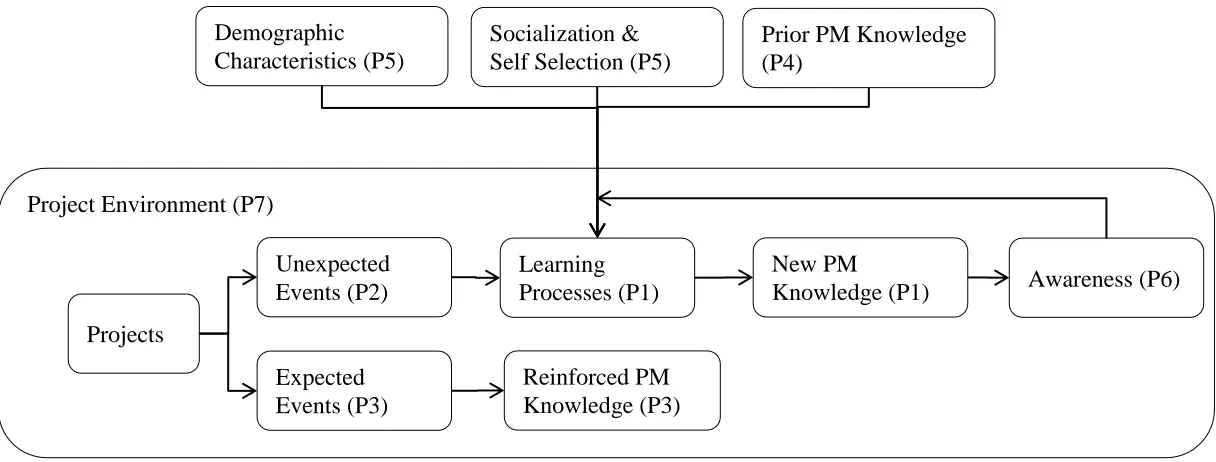
model that makes the learning process suggested by the research propositions explicit. Figure 1 illustrates the logic model used in this study and three major concepts: (1) The project manager’s characteristics mentioned in propositions four and five may influence the project manager’s learning, (2) The project management environment at FSF mentioned in
proposition seven may also influence project manager learning, and (3) The learning process
itself mentioned in propositions one, two, three, and six may determine what, if anything, is learned.
The project manager’s characteristics. The logic model illustrates the following characteristics of the project manager that can influence the project manager’s learning:
Demographic Characteristics: Both what the project manager learns and how the
Socialization and Self Selection: The combination of socialization processes and
the project manager’s choices (self-selection) have created experiences that have shaped the project manager’s learning skills and knowledge. Two prominent
examples of socialization and self-selection are the project manager’s education
and career experiences and their choice of education and career. These
experiences shape the project manager’s approach to learning, including (a) how they learn, (b) what they know about project management, and (c) how they
conceptualize project management, e.g., monitoring and controlling or facilitating and adapting.
Prior Project Management Knowledge: The project manager’s prior knowledge
about project management will instill in them beliefs and mental models that
shape what they attend to in a project setting and the type of action they take in a given situation that will influence their learning.
The project management environment. In large IT organizations, the project management environment typically consists of (a) a Project Management Office that oversees the portfolio of projects and standardizes project management practices, (b) the
organizational and reporting structure(s) project managers work within, (c) the methods used to manage projects, (d) the project portfolio, (e) the existing technology infrastructure, and (f)
source of unexpected project management events and is a force in shaping what is considered valid project management knowledge that, in turn, will influence project manager learning.
The learning process. Both the research propositions and logic model suggest that experience is the primary way that project managers learn to manage projects, and
unexpected events are the experience that leads to the majority of learning. The logic model
uses the grasping and transforming processes described in KELT to predict how this learning takes place. Therefore, when the project manager encounters an unexpected event, it will
likely create tension because the event is inconsistent with what the project manager knows about managing projects. In resolving this conflict, the project manager may transform the conflict through reflection on what the event means or taking action to try and resolve the
unexpected event (or both), and this can lead to new knowledge about project management. This knowledge could manifest in several ways. For instance, the project manager may
develop improved perceptual skills to watch for the type of leading indicators that can predict unexpected events. Alternatively, the project manager may develop an improved mental model of project management, making it easier to prevent this type of unexpected event.
Alternatively, the project manager may develop improved behavioral skills to take new kinds of action that were previously untried by the project manager. Another possibility is that the
Figure 1. Information Technology Project Manager Learning Logic Model Illustrating the Key Concepts from the Research Propositions. Propositions are designated as P1 through P7.
Project Environment (P7)
Demographic Characteristics (P5)
Socialization & Self Selection (P5)
Prior PM Knowledge (P4)
Unexpected Events (P2)
Expected Events (P3)
Learning Processes (P1)
New PM
Knowledge (P1) Awareness (P6)
Method Overview
Because case studies are well suited to answer how and why questions (Yin, 2014,
Chapter 1), this research follows a case study design to answer the question, “How do project managers in large financial services IT organization learn from experience to manage
projects?”. This study gathered data about project manager experiences and learning from
project managers using semi-structured interviews, which were analyzed using concept mapping and pattern matching to identify the major themes from the perspective of the
participants. In addition to the interviews, project manager histories were collected, the organization structure was reviewed, numerous observations were made about how FSF operates, and other artifacts such as previous in-house surveys and reports from consulting
engagements were reviewed. In this study, the case is project manager learning in a large IT organization. This focus is consistent with Yin’s (2014) recommendation that “the desired
case should be some real-life phenomenon that has some concrete manifestation” (p. 34). In this study, project manager learning manifested as new project management knowledge that is observable by project managers, managers of project managers, and other members of the
project team. This is the study of a single case of how project managers at FSC are learning to manage projects.
Chapter Summary
This chapter explained why understanding how project managers learn from experience matters to practitioners and scholars. For practitioners, it is a way to improve project
community. This chapter also described how the phenomenon of project manager learning could be studied. This study can be conducted by inquiring into the experiences of project
managers themselves to discover what it is that happens to transform these experiences into project manager knowledge using Kolb’s Experiential Learning Theory (KELT) to guide the
study. Chapter 2 will describe the research literature relevant to this study.
Definition of Key Terms
Abstract Conceptualization: Abstract conceptualization is one of four learning abilities suggested by KELT, and it is the ability “to create concepts that integrate their observations
into logically sound theories” (David A Kolb, 1984, p. 30). Abstract conceptualization is one
of two modes of grasping experience also known as comprehension in KELT. The mode of
grasping through abstract conceptualization influences and is influenced by the mode of grasping
experience through concrete experience. The interaction between abstract conceptualization and
concrete experience creates a dialectic as the two grasping modes interact, and differences are
resolved (David A Kolb, 1984, p. 41). Abstract conceptualization involves translating
experiences into symbols such as words, mathematical symbols, or models to explain what has
been experienced (David A Kolb, 1984, p. 45).
Active Experimentation: Active experimentation is one of four learning abilities suggested by KELT, and it is the ability “to use these theories [from abstract conceptualization] to make
decisions and solve problems”(David A Kolb, 1984, p. 30). Active experimentation is one of
involves behavior – taking action and observing the results(David A Kolb, 1984, p. 51). See also
“extension”.
Apprehension: The process “of grasping or taking hold of experience in the world… through reliance on the ·tangible, felt qualities of immediate experience” (David A Kolb,
1984, p. 41).
Case Study: Yin (2014) proposes that case studies can be defined by their scope and features as follows:
1. A case study is an empirical inquiry that investigates a contemporary
phenomenon (the "case") in depth and within its real-world context, especially when the boundaries between phenomenon and context may not be clearly evident.
2. A case study inquiry copes with the technically distinctive situation in which there will be many more variables of interest than data points. One
result relies on multiple sources of evidence with data needing to converge in a triangulating fashion, and another result benefits from the prior
development of theoretical propositions to guide data collection and analysis.
Comprehension: The process of “grasping or taking hold of experience in the world… through reliance on conceptual interpretation and symbolic representation” (David A Kolb,
1984, p. 41). See also “apprehension” and “abstract conceptualization”.
Concrete Experience: Concrete experience is one of four learning abilities suggested by KELT, and it is the ability of people “to involve themselves fully, openly, and without bias in new experiences” (David A Kolb, 1984, p. 30).
Consciousness: “The quality or state of being aware especially of something within oneself”, “awareness” (“Consciousness - Definition and More from the Free Merriam-Webster
Dictionary,” 2015).
Development: In KELT, development is growth that occurs through a “dialectic process of adaptation to the world” (David A Kolb, 1984, p. 213).
Extension: The process “of transforming that grasp or ‘figurative representation’ of experience…through… active external manipulation of the external world” (David A Kolb,
1984, p. 41). See also “Intention” and “active experimentation”.
Experiential Learning Theory (ELT): In Adult Education, Experiential Learning Theory is usually associated with theories and practices of learning based on reflection on concrete
experience (Fenwick, 2001, p. 9). Kolb’s Experiential Learning Theory is an example of one of
these theories and is referred to as KELT in this paper to distinguish it from other theories of
KELT: Kolb’s Experiential Learning Theory. I Adopted the use of KELT from Bergsteiner, Avery, and Neumann (2010, p. 29).
Intention: The process “of transforming that grasp or ‘figurative representation’ of experience…through internal reflection” (David A Kolb, 1984, p. 41). See also “extension”
and “reflective observation”.
Learning: “Learning is the process whereby knowledge is created through the transformation of experience” (David A Kolb, 1984, p. 38).
Project: A temporary organization created by the firm’s management for a specific purpose that cannot be realized through the firm’s existing routine organizational structures
and processes (Packendorff, 1995, p. 327).
Project Management: The application of knowledge, skills, tools, and techniques to realize the purpose of the project (Project Management Institute, 2013, p. 5). Typically, this
means integrating the effort of multiple disciplines or organizational functions towards the purpose of the project.
Project Manager: The term project manager typically refers to the person leading a project team. In practice a distinction between project manager, program manager, and project portfolio
manager may be made, but in this paper the term project manager includes all three roles.
Examples of how project manager is defined in the project management literature over the past
A project manager is the “person designated who can supervise the trade-off
between each of the work units involved in the task accomplishment” (Goodman,
1967, p. 396).
A project manager is a person that “integrate[s] various supporting disciplines in a
continuously changing work environment… [and] he must often cross functional
lines to deal with personnel over whom he has limited direct formal authority.
Moreover, he has to build teams at various levels of the project organization”
(H.J. Thamhain & Wilemon, 1977, p. 102).
“The person assigned by the performing organization to lead the team that is
responsible for achieving the project objectives” (Project Management Institute,
2013, p. 555).
Reflective Observation: Reflective observation is one of four learning abilities suggested by KELT, and it is the ability “to reflect on and observe their experiences from many
CHAPTER 2: LITERATURE REVIEW
Chapter 1 discussed the idea that project manager learning can improve the project manager’s performance and how this improvement can boost project outcomes. This chapter
discusses the research literature relevant to project manager learning to summarize what is known about this topic. To start, over the past twenty years, the project management
literature has discussed at least seven ways that project managers learn to manage projects as summarized in Table 1. (These references are indicative of learning methods discussed in the literature, but they do not represent how often these topics appear in the literature.)
Table 1
A Summary of Some Learning Methods Mentioned in the Project Management Literature
Learning Method Reference(s)
1. Learning from personal experience by managing projects
(Crawford & Gaynor, 1999, p. 5; Egginton, 2012, p. 523; Swan, Scarbrough, & Newell, 2010; Hans Jurgen Thamhain, 1991, p. 41; Tukiainen,
Aaltonen, & Murtonen, 2010; Turner et al., 2000; Vanessa Darrell, David Baccarini, & Peter E. D. Love, 2010)
2. Learning from experiences of other project managers by observing them at work
(Taylor & Woelfer, 2009; Hans Jurgen Thamhain, 1991, p. 41)
3. Learning from simulated experience
(Iverson et al., 2002, p. 3; Wee-Leong Lee, 2011) 4. Learning from what others know
through coaching, mentoring, and consulting
Table 1 (Continued)
Learning Method Reference(s)
5. Learning from participation in social networks such as
communities of practice, pairing, and special workgroups such as Quality Circles or project teams
(Hans Jurgen Thamhain, 1991; Turner et al., 2000)
6. Learning from formal instruction through training, education (including degree programs), workshops, or conferences
(Carbone, 2006, p. 355; Egginton, 2012, p. 523; Iverson et al., 2002; Taylor & Woelfer, 2009; Hans Jurgen Thamhain, 1991, p. 42; Turner et al., 2000) 7. Independent learning (self-study)
such as reading project management literature
(Taylor & Woelfer, 2009; Hans Jurgen Thamhain, 1991, p. 42)
Also discussed in the literature are learning practices such as how to manage project manager experiences to improve learning (on-the-job training, job rotation, and career pathing), how to manage the learning environment to improve learning (blended learning),
and how to get the most out of project management experiences (reflective practices); however,they are not listed separately because they are included in the methods listed in
Table 1. It could also be argued that each of these ways that project managers learn are themselves experiences, e.g., the experience of reading a book, and that all of these ways of learning are forms of learning from experience. However, the learning experience involved
in reading a book is a reading experience and not a project management experience, so this paper will define learning from personal experience to mean learning from project
Rethinking Project Manager Development
Though many methods for developing project managers are available, many researchers
express a need to improve how we develop project managers. To start, some argue that we need to rethink project management, and as a consequence of this, to rethink project manager development, as well. A notable example is the UK’s Engineering and Physical Sciences
Research Council (EPSRC) Rethinking Project Management: Developing a New Research Agenda program that was funded in 2003 and operated between 2004 and 2006. This
program was a response to the widening gap between project management practice and the dominant project management theories to “enrich and extend the field beyond its current
intellectual foundations, and connect it more closely to the challenges of contemporary project management practice” (Winter et al., 2006, p. 639). The principal finding of this research is that there is a “need for new thinking in the areas of project complexity, social
process, value creation, project conceptualization and practitioner development [emphasis added].” (2006, p. 641) One illustration of this need for research on practitioner
development comes from a study by Crawford (2005) who studied 208 project managers and
their supervisors from Australia, the United Kingdom, and the United States to understand the relationship between the project manager’s knowledge of the Project Management Body
project manager performance. Therefore, based on Crawford’s findings, knowing the project management standards is not a predictor of performance on the job. It also indicates that
successful project managers know something about managing projects that is not in the standards. In subsequent research, Crawford et al. (2006) argue that project manager
development and education practices have not kept pace with changes in project management
over the past 30 years:
Organizations interested in training and developing their project management
staff look for help from professional and academic authorities in the field. Prima facie, it would seem sensible to look for international standards that training and development might help practitioners to achieve – in the hope
that this would signify, to some degree at least, a certain level of competence.
In fact, we contend, what they would find would not be adequate to address
many of their needs [emphasis added], certainly the needs of those managing in the more challenging project, or program, environments (2006, p. 723).
Building on the Rethinking Project Management work, Sauer and Reich (2009)
investigated the mindset needed by project managers to operate in a changing environment that requires new ways of thinking to succeed. To do this, they interviewed 57 highly
effective project managers from Canada, the U.S., the UK, and New Zealand to understand how they think about project management. They identified an emerging mindset for project managers comprised of clear sighted realism, personal responsibility, long term perspective,
Our description of a new mindset that is reshaping the practice of IT project management has implications for practice and further implications for
research. Organizations will need to recruit and develop individuals with the appropriate mindset [emphasis added]. While our articulation of relevant principles and qualities can help recruiters recognize the ‘‘right stuff”,
researchers can assist by investigating what psychology, what intellectual caliber, what experience [emphasis added] disposes an individual to the
appropriate mindset. Further, we need to understand what human resource and management interventions can accelerate development of the appropriate
mindset [emphasis added]. (p. 192)
In short, this research indicates that learning project management standards is not sufficient to teach project managers what they need to know to be successful, nor are current
development practices adequate to fill this gap; therefore, more research is needed to understand more effective ways to develop project managers.
The Role of Experience in Learning to Manage Projects
One possibility for filling this gap between the knowledge needed to succeed as a project manager and the knowledge available from the project management standards is to make more effective use of the project manager’s experiences as a source of learning. Numerous
examples in the literature point to this idea. To start, Thamhain (1991) interviewed 220 project managers from 18 organizations across five industries and reported that “85 percent
skill development derived from experience, 75% is from experiential learning and 25% is from observations, formal on-the-job training, coaching, and job rotation. Crawford and
Gaynor (1999) explored this idea of project managers learning from their work experience and surveyed 390 project personnel from four countries to develop a project manager profile, and they reported that “project personnel are largely well educated” (73% have at least a first degree though not in project management), “have higher levels of abstract reasoning than the general population”, few have formal project management qualifications, and yet over 80%
have more than six years of project management experience (p. 5). Also, just over 50% participated in professional education during the previous six years, 23% have some
involvement in project management professional associations, and 24.7% spend at least five
hours at project management conferences each year. This data describes these project managers as a group that has successfully managed projects, yet to a large degree has had
little formal training in project management. These findings suggest that their professional development is informal and takes place in the workplace.
Sharing this view with researchers that experience is a primary teacher of project
management, many organizations rely on project management experience combined with supportive practices to develop their project managers. For instance, Turner, Keegan, and
Crawford (2000, pp. 8–20) interviewed 44 members of 19 historically profitable project based companies from 8 countries and 3 continents to understand the practices these firms use to develop their project management capabilities. (They define a project based firm as