
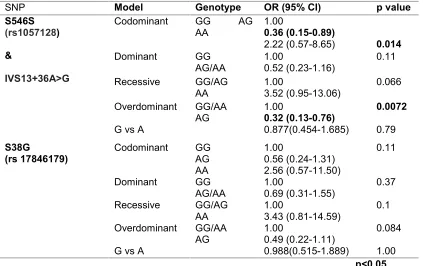
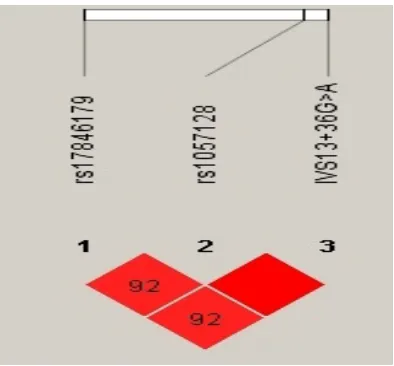
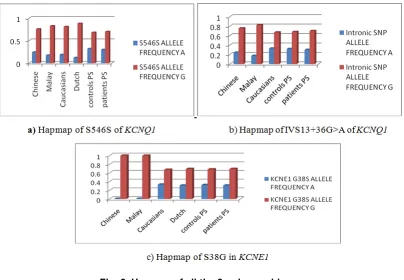
KvLQT1 and KCNE1 K+ Channel Gene Polymorphisms in Long QT Syndrome
Full text
Figure

Related documents
A meta-analysis of 27 studies showed that inhaled glucocorticoids (triamci- nolone, budesonide, beclomethasone) in doses over 1.5 mg per day (0.75 mg per day for fluticasone
From historical perspective we anticipated that this filed it is regulated by the first international treaties protecting intellectual property rights - the Paris Convention for
unknown masses of unstable isotopes of neutron-rich nuclei approaching the r-process region using the ESR in the electron-cooler or time-of-flight mode; studies of properties
Such optimisation is performed using the mean- variance optimisation approach, which considers the profit of a portfolio of different products with correlated numbers of
The impact of tinnitus on quality of life of the patients was scored using VAS, which evaluated the following: severity of tinnitus (VAS-1), frequency and duration of tinnitus
The loads from the event simulations are on average lower for all considered load components, with one exception: ramp-like events at wind speeds between 8 and 16 m s − 1 , at which
Two-dimensional scour holes were studied under both uni-directional and reversing flow conditions for varying sediment transport rates and pipeline diameter..
emotional support and nurturance from their children. 5) More effective interventions for substance abusing women should include mechanisms by which mothers can be referred for
