MP-10.01
Neuromuscular stimulation leads to improved lower limb edema and blood flow compared to standard compression devices fol-lowing kidney and pancreatic transplantation
Alharbi, Bijad1; Ali, Omar1; Luke, Patrick P.1; Sener, Alp1 1Surgery, Western University, London, ON, Canada
Introduction and Objectives: Kidney and pancreas transplant recipients
undergo significant fluid shifts in the postoperative period, leading to signifi-cant lower limb edema. Intermittent compression (IPC) devices are used to reverse the edema, however, many factors may limit the use of IPC units. The Geko Plus device is an internally powered calf neuromuscular stimulator, which has previously been shown to have beneficial effects in improving blood flow. Its role in transplantation has not previously been assessed. Our objective was to prospectively evaluate the effects of IPC and Geko Plus devices on lower limb edema in renal and pancreatic transplant patients.
Methods: We performed a prospective, randomized, controlled,
single-cen-tre, study where 30 patients were randomly assigned to wear IPC (Group1, n= 16) or the Geko Plus device (Group 2, n=14) postoperatively until Day 6 after surgery. We measured patient weight and lower leg and thigh circumferences daily. Ultrasound Doppler of the allograft and of the lower limbs was carried out on postoperative Days 1 and 5 to assess venous flow and velocity in the femoral vein. Also, we monitored total urine output, serum creatinine levels.
Results: Median age of the recipients was 50 (24-72) years and 66% were
male. 27 patients underwent kidney transplantation and three underwent kidney and pancreas transplantation. There were no differences in the body mass index (BMI) of the recipients in either group. Donor types were as follows: Group 1: 4 DCD, 7 NDD, 5 LD; and Group 2: 4 DCD, 7 NDD, 3 LD. We observed a significant increase in calf circumference following transplantation in Group 1 by 7.2% (2.3 +/- 2 cm) compared to Group 2, which showed no change from baseline (0.13%, 0.05 +/- 0.95 cm; p<0.0001). Thigh circumference also followed a similar trend, with only Group 1 showing a significant increase (5.5%, 2.4 +/- 2 cm) from baseline compared to Group 2 (p<0.001). Doppler ultrasound showed a remark-able increase in mean flow velocity in the Geko Plus patients of 19 cm/s, whereas the IPC patients showed lower velocities 11cm/s (p<0.0005). There was no significant difference between groups in serum creatinine, weight change, urine output, and resistive index of the allograft. There were no complications in either group.
Conclusions: We report, for the first time, that the use of the Geko Plus
device in the immediate postoperative period leads to an improvement in lower limb edema and in venous flow in kidney and pancreas transplant recipients compared to standard IPC.
MP-10.02
National renal transplant outcomes in paediatric and young adult patients in the Republic of Ireland
O’Kelly, Fardod1; Kennedy, Claire1; O’Kelly, Patrick1; Power, Richard1; de
Freitas, Declan1
1Urology and Renal Transplantation, Beaumont Hospital, Dublin, Ireland
Introduction and Objectives: Pediatric and young adult kidney transplant
recipients have complex and dynamic medical and psychosocial care needs. This national review aimed to describe the epidemiology of trans-plantation in the two groups over time and to compare post-transtrans-plantation outcomes and issues between the two groups.
Methods: The Irish national kidney transplant database was accessed to
identify all pediatric (recipients aged 0-17 years; Group 1) and young adult (recipients aged 18-26 years; Group 2) kidney-only transplants performed between January 1, 1990 and December 31, 2014. Medical records, labo-ratory results, and histology reports were reviewed. Statistical analysis was performed using STATA version 13.1.
Results: 485 patients received 561 kidney-only transplants. No patients
were lost to followup. In Group 1 (n=261 transplants), the most common cause of end-stage kidney disease (ESKD) was congenital abnormality of the genitourinary tract. 56 (21%) of the transplants were biopsied and 21 (8%) had biopsy-proven acute rejection (BPAR). 300 transplants were performed in Group 2. Glomerulonephritis and reflux nephropathy were the most frequently encountered causes of ESKD. 133 (44%) were biop-sied and 50 (16.6%) had BPAR. Both patient groups had an identical graft half-life of 13.6 years. There were five cases of malignancy in Group 1; three cases of post-transplant lymphoproliferative disease and two cases of squamous cell bladder cancer. Two patients in Group 2 developed malig-nancy during the period of followup, both in their native kidneys. Nine (3.4%) pediatric patients and 13 (4.3%) young adult patients died during the period of followup.
Conclusions: The journey to transplantation and the approach to
post-trans-plant care differed between pediatric and young adult transpost-trans-plant recipients; despite this, graft survival was remarkably similar. Meticulous attention to detail, including appropriate malignancy screening, is required when caring for these patient cohorts.
1. Bobanga ID, Vogt BA, Woodside KJ, et al. Outcome differences between young children and adolescents undergoing kidney trans-plantation. J Pediatr Surg 2015;50:996-9. http://dx.doi.org/10.1016/j. jpedsurg.2015.03.021
2. Yamada A, Tashiro A, Hiraiwa T, et al. Long-term outcome of pediatric renal transplantation: A single-centre study in Japan. Pediatr Transplant
2014;18:453-62. http://dx.doi.org/10.1111/petr.12299
3. Van Arendonk KJ, Boyarsky BJ, Orandi BJ, et al.National trends over 25 years in pediatric kidney transplant outcomes. Pediatrics
2014;133:594-601. http://dx.doi.org/10.1542/peds.2013-2775
MP-10.03
Comparison of open and laparoscopic living donor nephrectomies: A Canadian single-centre experience
Rampersad, Christie1; Gardiner, Clare E.1; Koulack, Joshua2; McGregor,
Thomas B.1
1Department of Surgery, Section of Urology, University of Manitoba,
Winnipeg, MB, Canada; 2Department of Surgery, Section of Vascular
Surgery, University of Manitoba, Winnipeg, MB, Canada
Introduction and Objectives: Laparoscopic donor nephrectomy is the
standard for living kidney donation. Benefits of the laparoscopic over open approach include shorter length of stay, decreased postoperative pain, and shorter return to work. We performed a retrospective analysis of our single-centre donor nephrectomy series with regard to operative approach and donor and recipient outcomes.
Methods: Following ethics approval, we retrospectively reviewed 89
con-secutive open donor nephrectomies (ODN) and 83 concon-secutive laparo-scopic donor nephrectomies (LDN) from 2007-2015. In total, 344 patients were reviewed, including donor and recipient pairs. Donor and recipient demographics, outcomes, complications, and financial cost were assessed and compared between the two approaches.
Results: 172 donor nephrectomies were reviewed. Estimated blood
loss (EBL) was higher for ODN, with a mean loss of 285.7 mL compared to 66.9 mL for LDN. The rate of intraoperative complications was higher for ODN. Transfusion requirements and warm ischemia time (WIT) were com-parable. Operative time was longer for LDN, with a mean operative time of 165.9 minutes compared to 108.4 minutes for ODN. Postoperatively, length of stay was longer for ODN by one day. Postoperative complica-tions confined to Clavien-Dindo Grades 1-2 and overall rate was com-parable between surgical approaches. Donor creatinine at discharge was higher for ODN, but unlikely clinically significant. Overall cost of LDN was $684 higher for an uncomplicated admission. With regard to recipient allograft outcomes, rate of delayed graft function and recipient 12-month creatinine were comparable for ODN and LDN.
Conclusions: This single-centre analysis demonstrates advantages of LDN,
including lower blood loss, fewer intraoperative complications, and shorter hospital stay. Introducing the LDN locally has improved impor-tant donor parameters while maintaining comparable allograft outcomes.
MP-10.04
Transplanting the high-risk pediatric end-stage renal disease population: An anticoagulation protocol to reduce renal graft loss secondary to thrombosis
Dubow, Byron1; Shaw, Marshall1; Tinker, Daniel1; Palmer, Blake1;
Sindhwani, Puneet1
1Urology, University of Oklahoma, Oklahoma City, OK, United States
Introduction and Objectives: Thrombosis is an early cause of allograft
failure in the pediatric transplant population. This study examines the efficacy of a risk -stratified anticoagulation protocol (AP) in allogenic renal
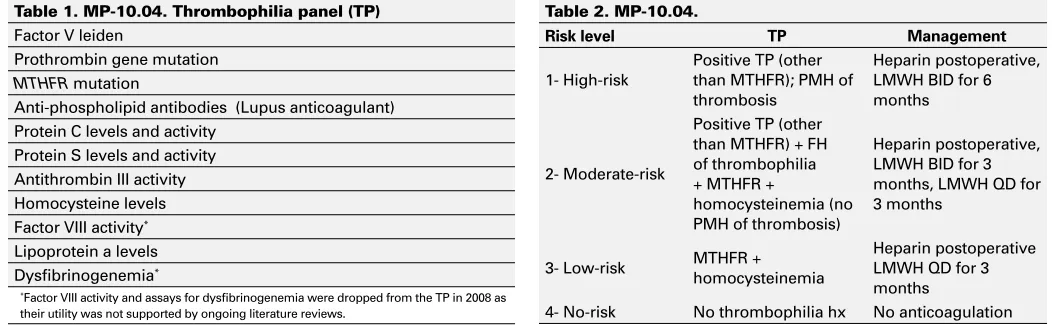
transplantation in a pediatric end- stage renal disease (ESRD) population. The protocol consists of a thrombophilia laboratory panel (TP), past medi-cal history, and family history. Fig. 1 details the TP. Risk stratification for post operative anticoagulation was done at the time of listing per Fig. 2.
Methods: Patients who underwent renal allograft transplantation between
January 2005 and August 2015 were selected from The Children’s Hospital of Oklahoma transplant database. 15 allografts preceded the AP and 75 cases followed. Allograft failure and bleeding- related complication data were collected during a minimum follow up period of 3- 6 months, the latter in patients on extended anticoagulation. A root cause analysis categorized the etiology of allograft failures. One of four staff surgeons performed all surgeries; each used standard renal transplant technique. Chi- square tests, Fisher’s exact tests, and Student’s t- tests were used, as appropriate, to analyze the data.
Results: Graft failure secondary to thrombosis occurred in three of 15
cases (20%) in the pre- protocol group compared to 0 of 75 cases in the post- protocol group; this difference was statistically significant (p=0.004). There were no bleeding complications necessitating transfusion or explo-ration (p=1.000).
Conclusions: The risk category-based AP was associated with decreased
incidence of renal allograft losses secondary to thrombosis. Targeted use of anticoagulation therapy did not significantly increase the risk of bleeding- related complications following renal transplant in an ESRD pediatric population.
MP-10.05
Age effect in donation after cardiac death donor renal allografts: Prediction and comparison of outcomes
Mikhail, David M.1,2; Chen, Jingwen2; Sharma, Hemant3; Luke, Patrick
P.1,2; Sener, Alp1,2
1Department of Surgery, Division of Urology, Western University, London,
ON, Canada; 2Schulich School of Medicine and Dentistry, Western
University, London, ON, Canada; 3Department of Surgery, Division of
General Surgery, Western University, London, ON, Canada
Introduction and Objectives: Since its acceptance in North America,
donation after cardiac death (DCD) donors have become an increasingly common source for organ transplantation. The most commonly used tool to predict graft function is the complicated Kidney Donor Risk Index/ Kidney Donor Profile Index (KDRI/KDPI), which uses 10 variables to predict outcomes. We assessed the United Network for Organ Sharing (UNOS) database to determine if age < or > 50 is sufficient to predict functional graft outcomes.
Methods: Donor and recipient data for transplants carried out between
2005 and 2010 was obtained from the UNOS database, which was complete to March 2013. Patients with incomplete KDRI-required vari-ables were excluded. For KDRI and KDPI analysis, the scaling factor of 1.22 for 2010 was used. Univariate and multivariate analysis was performed.
Table 1. MP-10.04. Thrombophilia panel (TP)
Factor V leiden
Prothrombin gene mutation MTHFR mutation
Anti-phospholipid antibodies (Lupus anticoagulant) Protein C levels and activity
Protein S levels and activity Antithrombin III activity Homocysteine levels Factor VIII activity*
Lipoprotein a levels Dysfibrinogenemia*
*Factor VIII activity and assays for dysfibrinogenemia were dropped from the TP in 2008 as their utility was not supported by ongoing literature reviews.
Table 2. MP-10.04.
Risk level TP Management
1- High-risk
Positive TP (other than MTHFR); PMH of thrombosis
Heparin postoperative, LMWH BID for 6 months
2- Moderate-risk
Positive TP (other than MTHFR) + FH of thrombophilia + MTHFR +
homocysteinemia (no PMH of thrombosis)
Heparin postoperative, LMWH BID for 3 months, LMWH QD for 3 months
3- Low-risk MTHFR + homocysteinemia
Heparin postoperative LMWH QD for 3 months
Results: Overall, 1832 DCD >50 and 4968 DCD <50 donors were
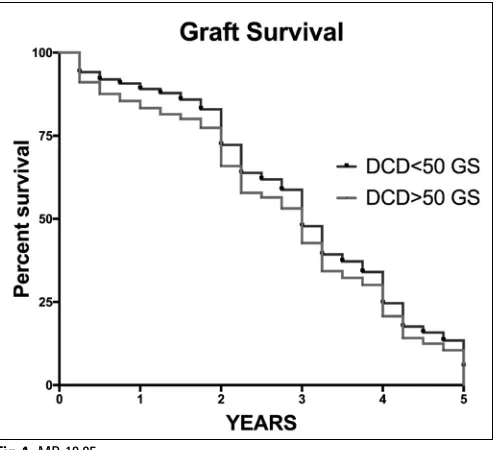
ana-lyzed. Recipient age was 56 vs. 50 (p<0.05) for these groups. Mean donor ages were 55 ± 4 and 31 ± 12, respectively. Calculated median KDPI were 37% and 74% for <50 and >50 groups, respectively. These predicted one-, three-, and five-year graft survival of 91%, 82%, and 71% compared to 86%, 73%, and 60% in the two groups, respectively. Delayed graft function was significantly higher in the DCD >50 group (49% vs. 37%; p<0.05). In both groups, DGF correlates with inferior graft survival (p<0.05). There was a significant difference in graft survival between the two groups (p<0.05). Multivariate analysis showed recipi-ent age to be the most significant factor correlated with graft survival in both groups (p<0.05).
Conclusions: Age >50 years in DCD renal allograft donors leads to
signifi-cantly increased DGF rates and decreased graft survival. Further compari-son needs to be performed for neurologic brain death and living donors to better assess the age effect on renal allograft survival in those groups. 1. Rosengard BR, Feng S, Alfrey EJ, et al. Report of the Crystal City meeting to maximize the use of organs recovered from the cadaver donor. Am J Transplant 2002;2:701-11. http://dx.doi.org/10.1034/ j.1600-6143.2002.20804.x
2. Matas AJ, Smith JM, Skeans MA, et al. 2015. OPTN/SRTR 2013 Annual data report: Kidney. Am J Transplant 2015; 15:1-34. http:// dx.doi.org/10.1111/ajt.13195
3. Akkina SK, Asrani SK, Peng Y, et al. Development of organ-specific donor risk indices. Liver Transpl 2012;18:395-404. http://dx.doi. org/10.1002/lt.23398
4. Rao PS, Schaubel DE, Guidinger MK, et al. A comprehensive risk quantification score for deceased donor kidneys: The kidney donor risk index. Transplantation 2009;88:231-6. http://dx.doi. org/10.1097/TP.0b013e3181ac620b
MP-10.06
The fate of postoperative perinephric fluid collections within one month of pediatric renal transplantation: Etiology and and therapeutic interventions
Penna, Frank J.1; Lorenzo, Armando J.1; Farhat, Walid A.1; Bagli, Darius
J.1; Koyle, Martin A.1; Odeh, Rakan1
1Division of Pediatric Urology, The Hospital for Sick Children, Toronto,
ON, Canada
Introduction and Objectives: Postoperative perinephric fluid collections
after pediatric renal transplantation (RT) are common and may include clinical entities such as urinoma, hematoma, and lymphocele. Such col-lections are usually monitored with serial ultrasounds. Size, etiology, and/or the presence of symptoms dictate the need for intervention. We hypothesized that these fluid collections rarely require intervention and gain little benefit from close followup with imaging in the presence of stable clinical status (asymptomatic with stable renal function) with no hydronephrosis.
Methods: All children undergoing pediatric RT at our institution within
the last five years (2010-2014) were retrospectively reviewed within one month postoperatively. Perinephric fluid collections on postoperative renal ultrasounds were measured by total volume and correlated with clinical parameters and symptomatology. Indicated interventions including image-guided drainage and surgery were captured.
Results: 103 children underwent RT (59 deceased and 44 living-related
donor) over this period, with mean age of 10.6 ± 5.4 years. Only 37 patients (36%) had no perinephric collections on ultrasound at two weeks postoperatively. 66 patients (64%) had fluid collections, 14 of whom underwent intervention: nine lymphoceles (8.7%), three infected hematomas (2.9%), and two urinomas (1.9%). Four patients with lym-phoceles underwent laparoscopic marsupialization after failed drainage and/or sclerotherapy. The average fluid collection volume was 169 cm3;
618 cm3 in the intervention group compared to 46 cm3 in those observed.
Conclusions: Perinephric fluid collections are common after pediatric
renal transplantation, the majority of which do not require intervention. Larger volume fluid collections were associated with intervention and usually are secondary to lymphoceles.
MP-10.07
Keeping renal transplant within urology: The success of a hybrid practice model in Canada
Kokorovic, Andrea1; Rowe, Neal E.2
1Urology, Dalhousie University, Halifax, NS, Canada; 2Surgery, Division
of Urology, University of Ottawa, Ottawa, ON, Canada
Introduction and Objectives: Canadian renal transplant urologists have
practice patterns that range across various urological disciplines. There remains a dichotomy with regards to who should perform renal transplants in Canada, as both urologists and general surgeons are involved in renal transplantation surgery. This study aims to elucidate the practice patterns of Canadian transplant urologists, their training backgrounds, and opin-ions regarding the future of renal transplantation within Canadian urology.
Methods: We performed a 39-item online survey directed to transplant
urologists currently practicing in Canada. Participants were contacted via e-mail and given 88 days to complete the survey. The response rate was, on average, 52% per question. Descriptive statistics were used.
Results: Survey responses were obtained from transplant urologists across
Canada. Most respondents completed their fellowship in Canada or the United States within the last 10 years. 63% of respondents considered transplantation their primary fellowship subspecialty, and the most com-mon secondary subspecialty was minimally invasive surgery (MIS)/robot-ics. Likewise, the majority of respondents cited MIS/robotics as being their non-transplant practice focus. Most Canadian transplant urologists are involved in research, however, less than half cite transplantation as their primary research focus. 81% believe that urologists should be performing renal transplantation in Canada.
Conclusions: Canadian transplant urologists run a hybrid practice, into
which they incorporate both transplantation and various other urologi-cal disciplines, the most common being MIS/robotics. This provides a
framework for implementing fellowships for transplantation combined with other subspecialty skills. This approach broadens trainee recruitment and increases the marketability of fellowship trainees. This may further promote the conservation of renal transplantation at urology departments in both Canada and abroad.
MP-10.08
The importance of resident exposure to renal transplant: A comparative analysis of surgical trainees
Bjazevic, Jennifer1; Launcelott, Sebastian2; Stogryn, Shannon3; Nayak,
Jasmir (Jay) G.4; McGregor, Thomas B.1
1Section of Urology, Department of Surgery, University of Manitoba,
Winnipeg, MB, Canada; 2Section of Vascular Surgery, Department of
Surgery, University of Manitoba, Winnipeg, MB, Canada; 3Section of
General Surgery, Department of Surgery, University of Manitoba, Winnipeg, MB, Canada; 4Department of Urology, University of Washington, Seattle,
WA, United States
Introduction and Objectives: In Canada, urologists and general and
vas-cular surgeons preform renal transplantation. However, recent studies have shown a declining role of urology in transplant. We examined the current exposure of surgical trainees to transplant and how this may impact the future composition of transplant surgeons, and comparatively the role of urology in transplant.
Methods: An anonymous questionnaire was devised to assess resident
exposure and opinions relating to renal transplantation and was admin-istered to Canadian general and vascular surgery trainees. All responses were graded on a validated five-point Likert scale. Descriptive statistics and Pearson’s Chi-squared test were used to analyze the responses.
Results: 67 surgical trainees completed the survey. Non-urology
train-ees had limited exposure to both renal transplant and laparoscopic donor nephrectomy, with only 35.6% and 26.4% of general surgery, and 15.4% and 0% of vascular surgery residents, respectively, having experience. A minority of general (3.8%) and vascular surgery (0%) trainees had plans for a transplant fellowship. The intent to pursue further training in transplant was correlated to the amount of exposure that residents received during their training (r=0.42; p<0.0001).
Conclusions: Vascular and general surgery trainees have limited exposure
to transplant and consequently minimal interest in pursuing careers in transplant. Comparatively, urology residents have a much greater expo-sure to transplant, with 77.4% of residents having experience with both transplant and laparoscopic donor nephrectomie.1 This corresponded with
urology trainees expressing a greater interest in pursuing fellowship train-ing in transplant (9.7%).1 Consequently, a continued strong exposure to
transplant during residency is essential to ensure that urology continues to be highly involved with renal transplant.
1. Bjazevic J, McGregor T. Current perspectives of urology involvement in renal transplantation: A survey of Canadian senior residents. Urol Pract 2015; 2:275-80. http://dx.doi.org/10.1016/j.urpr.2015.03.001
MP-10.09
Early radiographic and histologic findings in delayed graft function
Bishay, Mena1; Levine, Max1; Schuler, Trevor D.1 1Urology, University of Alberta, Edmonton, AB, Canada
Introduction and Objectives: Thorough monitoring of the renal transplant
patient is key in reducing adverse outcomes. Routine imaging in the postoperative period may detect allograft abnormalities, which can be an early sign of complication. Delayed graft function (DGF) is a complication of renal transplant that is associated with increased graft loss and mortal-ity.1 This study seeks to investigate the possible role of routine diagnostic
imaging and intraoperative biopsy in predicting DGF.
Methods: A retrospective analysis was performed on 213 renal
trans-plants done at the University of Alberta Hospital. Clinical data, including creatinine (Cr) values, postoperative dialysis, renal ultrasound and (99 m) Tc-mercaptoacetyltriglycine ((99m)Tc-MAG3) renal scan reports, and renal biopsy reports were recorded from the first postoperative week. Patients with DGF were identified and matched by age, gender, and donor type. Statistical comparisons between DGF and normal graft function
were made using McNemar’s test.
Results: 74 patients were included in this study. Patients with DGF
were more likely to have acute tubular necrosis (ATN) in (99 m) Tc-MAG3 (100% vs. 58%; p<0.001), evidence of ATN on intraopera-tive renal biopsy (52% vs. 27%; p<0.05), and elevated resisintraopera-tive indices on renal ultrasound (83% vs. 42%; p<0.05) compared to those with normal graft function. Of those transplants from donations after brain death (n=57), patients with DGF were more likely to have ATN in nuclear medicine studies (100% vs. 66%; p<0.005) when compared to normal graft function.
Conclusions: There are higher rates of radiologic and histologic
find-ings in renal transplant patients with DGF when compared to those with normal graft function. This may potentially offer a useful parameter for assessment in the diagnosis of DGF. However, future studies should be performed to more thoroughly investigate the relevance of these findings in the setting of DGF.
1. Butala NM, Reese PP, Doshi MD, et al. Is delayed graft function caus-ally associated with long-term outcomes after kidney transplanta-tion? Instrumental variable analysis. Transplantation 2013;95:1008-14. http://dx.doi.org/10.1097/TP.0b013e3182855544
MP-10.10
A novel technique to preserve an accessory lower pole artery in renal transplantation
Reynolds, Luke F.1; Blouin, Annie-Claude1; Warren, Jeffrey1; Odell,
Michael2; Blew, Brian D.1
1Urology, University of Ottawa, Ottawa, ON, Canada; 2
Otolaryngology-Head and Neck Surgery, University of Ottawa, Ottawa, ON, Canada
Introduction and Objectives: One-third of donor kidneys have anatomic
anomalies, such as a lower pole artery (LPA). Revascularization of LPA is important to avoid complications, such as graft failure, ureteric necrosis, postoperative hypertension, calyceal fistula formation, and segmental renal infarction. End-to-side anastomosis to the main renal artery (MRA) is a commonly used technique, however, this may compromise the graft function. The use of the inferior epigastric artery (IEGA) is a viable option with good outcomes.1 In this paper, we present a novel technique for
anastomosing the LPA to the IEGA.
Methods: A 54-year-old male underwent transplantation of a left
kid-ney into the right iliac fossa. The vascular anastomoses were performed in the standard end-to-side fashion onto the external iliac artery (EIA), with the exception that the ipsilateral IEGA was dissected and preserved to a length of 12 cm from its origin. After unclamping, the lower pole remained devascularized. The caliber of the LPA was measured at 2.5 mm and was slightly smaller than the IEGA. Both vessels were prepared using the operating microscope. A coupling system (Synovis Canada) was employed, using 2.5 mm coupler rings, for the arterial anastomosis. Two 8-0 nylon interrupted sutures were placed around the coupling device ring for added tensile strength.
Results: Once the clamps were removed from the LPA, the lower pole
was immediately well-perfused. Also, peristalsis of the allograft ureter, intraoperative urine output, and peri-ureteric bleeding improved.
Conclusions: Anastomotic microvascular devices are commonly used in
MP-10.11
Elevated C-peptide levels are associated with acute rejection in patient undergoing simultaneous kidney pancreas transplantation
Xie, Wen Y.1,2; McAlister, Vivian2,3; Fiorini, Kyle1; Sener, Alp1,2; Luke, Patrick
P.1,2
1Department of Urology, London Heatlh Sciences Centre, London,
ON, Canada; 2University of Western Ontario, London, ON, Canada; 3Department of General Surgery, London Heatlh Sciences Centre, London,
ON, Canada
Introduction and Objectives: There are few biomarkers that can predict
rejection or organ failure in simultaneous kidney pancreas (SPK) trans-plant recipients. We hypothesized that stability of insulin or C-peptide production from the transplanted pancreas could predict impending graft rejection or failure.
Methods: Patients who had undergone SPK transplantation with a
mini-mum of five years of followup were identified. C-peptide levels were routinely obtained during clinic visits. Return to dependence on insulin therapy or return to dialysis was used to define pancreas and kidney graft failure, respectively. Protocol biopsies of the kidneys were performed at 3-6 and 12 months as a routine. For cause biopsies were also performed. Renal allograft biopsy results were categorized as no rejection/ borderline changes, or acute rejection.
Results: Between January 2004 and December 2010, 38 SPK transplants
were performed. Eight patients were excluded due to early graft failures (thrombosis, leaks), death, and inadequate data. 11 patients had acute rejections detected on biopsy. C-peptide levels drawn prior to docu-mented rejections were significantly higher in patients with acute rejection than in patients with borderline/no rejection (p=0.007). Mean time period between C-peptide level and biopsy was 49 days for acute rejections and 55 days for borderline/ no rejections. In addition, patients who has had at least one episode of acute rejection continued to have higher C-peptide levels at one and five years post-transplant (p<0.001, p<0.001) vs. bor-derline/ no rejection. C-peptide instability as measured by high delta C-peptide levels was also predictive of rejection (p<0.001). In total, four patients had graft losses over the followup period. Four patients suffered five graft losses (one kidney, two pancreas, and one combined). No dif-ference in C-peptide level or difdif-ferences in C-peptide variability were noted in patients with functional grafts vs. those suffering graft losses.
Conclusions: SPK patients with acute rejection had higher C-peptide
lev-els prior to biopsy vs. non-rejectors. Patients demonstrating C-peptide variability were associated with a higher risk of rejection. Further study is required to determine whether C-peptide levels can be used as a bio-marker to predict rejection.
MP-10.12
Assessment of eGFR and one-hour biopsy using in-situ cooling double-balloon catheters in deceased kidney transplants
Mizutani, Kazuo1,2; Hattori, Ryohei2; Kinukawa, Tsuneo3; Kamihira,
Osamu4; Gotoh, Momokazu2
1Urology, Tokyo Women’s Medical University, Medical Center East,
TokyoJapan; 2Urology, Nagoya University School of Medicine, Nagoya,
Japan; 3Urology, Chukyo Hospital, Nagoya, Japan; 4Urology, Komaki
Shimin Hospital, Komaki, Japan
Introduction and Objectives: The shortage of deceased donor kidneys
for transplantation has become a worldwide issue in the past decades. However, both availability and feasibility of marginal deceased donor kidneys are still problematic. To increase donor pool, we created a spe-cially designed in-situ cooling system. The purpose of this study was to estimate availability of deceased donor kidneys, analyze donor one-hour biopsy, and better evaluate methods to estimate donor/recipient kidney function other than using donor creatinine (Cr), comparing with living related transplants.
Methods: We studied 129 deceased renal transplant recipients (DD)
who received kidneys from non-heart-beating donors beginning in 1984. Donors were in Maastricht Donor Categories III and IV and to minimize
warm ischemic kidney damage we performed in-situ cooling with spe-cially designed double-balloon catheters. 29 living-related transplants (LD) were a control group.
Results: In the DD group, average donor Cr and estimated
glomeru-lar filtration rate (eGFR) levels at admission were 0.3-2.1mg/dl (average 1.0) and 24-138 ml/min/1.73 (average 67) and levels before death were 0.3-15.9 (2.7) and 4-164 (34). Average recipient Cr and eGFR levels at discharge were 0.3-5.3 (1.8) and 0.10-133 (39). To define kidney function after transplant, the DD were classified according to recipient eGFR at dis-charge: <25 for the poor function group (PF: n=32) and >25 for the good function group (GF: n=95). GF had higher eGFR levels at donor hospital admission than the PF (p=0.005). There was no statistically significant difference in Cr levels of donor (at admission and before death) between those groups. Pathologically, the DD with less glomerular sclerosis of one-hour biopsies had better graft survival than damaged subjects (p=0.015). Other histological scores were not associated with kidney survival.
Conclusions: Deceased kidney transplants had excellent renal function
with our double-balloon catheter system. Compared with donor Cr levels, eGFR and one-hour biopsy could be useful for donor evaluation and transplant renal function.
MP-10.13
A randomized, prospective comparison of pure laparoscopic and laparoendoscopic single-site plus one-port donor nephrectomy
Choi, SaeWoong1; Ha, U-Syn1; Hong, Sung-Hoo1; Lee, Ji Youl1; Kim,
SaeWoong SW; Cho, Hyuk Jin1
1Urology, Seoul St. Mary’s Hospital, Seoul, Korea
Introduction and Objectives: The purpose of this study was to present a
comparison between pure laparoscopic and laparoendoscopic single-site plus one-port donor nephrectomy (LESSOP-DN) with respect to clinical outcomes, cosmetic results, and short-term recovery results.
Methods: This is a prospective, randomized, and comparative study.
Our centre initiated LESSOP-DN in October 2010 and this trial were prospectively randomized for 56 consecutive living donors underwent LESSOP-DN (22 left DN and 4 right DN) and pure laparoscopic donor nephrectomy (PLDN) (23 left DN and 7 right DN) from December 2014 to July 2015. The primary endpoint of this study was cosmetic result from patient-reported questionnaire. We evaluated demographics, clini-cal outcomes, pain scores using visual analogue sclini-cale (VAS), and results of questionnaire, including the RAND 36-item short-form health survey (SF-36) and patient-reported overall convalescence.
Results: There were no demographic differences between both groups,
including donors and recipients. The median time to renal extraction (61 (45-105) vs. 66 (25-95) minutes; p=0.275), warm ischemia time (164.5 (103-337) vs. 157.5 (84-359) seconds; p=0.902), estimated blood loss (10 (5-240) vs. 10 (5-300) minutes; p=0.833), transfusion (0 vs. 1 case), length of hospital stay (3 (3-9) vs. 3 (3-13) days; p=0.336), and complica-tion rate (15.4 vs. 20.0 %; p=0.737) were similar in both LESSOP-DN and PLDN groups. There was no conversion to open or hand-assisted surgery during study period. The postoperative pain scores using VAS and analgesic requirements converted to morphine-equivalent dosage (90.33 ± 38.94 vs. 94.23 ± 41.33 mg; p=0.718) were similar until discharge day after surgery. The LESSOP-DN group had a smaller incision length (4.5 (3.7-10.0) vs. 7.0 (4.5-10.0) cm; p<0.001) and higher cosmetic scores (16.2 ± 4.9 vs. 21.4 ± 3.0; p<0.001). Two graft losses in each group were occurred. Two recipients died from septic shock and pneumonia. The donor’s quality of life (SF-36), body image scores, and recovery data were comparable for both groups.
Conclusions: Intraoperative and postoperative results show that