MP-02.01
The Use of Hexylaminolaevulinic Acid (Hexvix) during the Initial Resection in Non Muscle Invasive Bladder Cancer
Autrán Gómez Ana Maria1, Dubosq Francis2, Molinie Vincent2, Baumert Hervé2
1Department of Urology, University of Western Ontario, London Health Sciences Centre, London, ON, Canada; 2 Department of Urology, Groupe Hospitalier Paris Saint-Joseph, Paris, France
Introduction and Objective: 80%of urothelial tumours are non muscule− invasive bladder cancer (NMIBC). The complete endoscopic resection (TUR) is fundamental to prognostic, progresion and managment. Several reports have showed the utility of photodynamic diagnosis (PDD) with Hexylaminolaevulinic acid (HAL) compared with white light cystoscopy (WL) in the recurrences and presence of residual tumors at initial resection. The aim of this study was reported the risk of residual tumor after second resction using PDD with HAL.TAL.
Methods: 93 patients were recorded retrospectively, from January 2005 to January 2010 with suspected NMIBC. The population divided in 2 groups with WL and Group B:1er resection with HAL. The secondary and subsequent resections were performed with HAL. The HAL solution was used and WL cystoscopy performed followed of fluorescence light. Mann− Whitney test was calculated (p<0.05 statistical significance). Kaplan−Meier method (RFS) was used.
Results: 28 (29%) females 65 (71%) males. Group A: WL 38 (41%), Group B HAL 55(50%). Age 69.50±11.22 and 71.55±8.82 yrs; 15 and are shown in the results. No statistical differences in tumour size were observed (p=0.687) in both groups. The residual tumour rate at secondary TUR was 24% with median time at recurrence of 8 months in WL and 5% at 15 months in HAL group, statistical significant differences (p≤0.001) were observed in both groups. The mean follow-up 60 months. The RFS with HAL vs WL (p≤0.001) were 66% and 39% respectively (Table 1, Table 2).
Conclusions: Our results showed an increased and efficiency in HAL−TUR during the second resection with a significant reduction of disease recur-rence. HAL resection provides improvement of clinical outcomes in patients with NMIBC. Furthermore prospective multicentric studies will be necessary to evaluate the use of HAL−TUR as standard resection.
MP-02.02
Extended Lymphadenectomy and Chemotherapy Offer Survival Advantage in Muscle-Invasive Bladder Cancer
Bostrom Peter J1, Mirtti Tuomas2, Nurmi Martti3, Laato Matti3, van Rhijn Bas WG1, Fleshner Neil E1, Finelli Antonio1, Jewett Michael A1, Zlotta Alexandre R1,4
1Department of Surgical Oncology, Division of Urology, University Health Network, Toronto, ON, Canada; 2Department of Pathology, Helsinki University Hospital, Helsinki, Finland; 3Department of Surgery, Division of Urology, University of Turku, Turku, Finland; 4Department of Surgical Oncology, Division of Urology, Mount Sinai Hospital, Toronto, ON, Canada
Introduction and Objectives: The benefit of extended pelvic lymph node dissection (ePLND) and adjuvant chemotherapy (AC) in muscle-invasive bladder cancer (MUIBC) remains unclear. We have used a database from 2 centers with different institutional practice policies to study these factors. In Turku (Finland), ePLND was not common practice and AC was nearly never offered whereas standard of care in Toronto included ePLND and AC when indicated.
Methods: BC patients undergoing radical cystectomy in UHN, Toronto, Canada (1992-2008) and University of Turku, Turku, Finland (1986-2005) were studied. After exclusion of non-urothelial cases and neoadjuvant treatment, 563 patients were available for analysis. Clinicopathological variables, rate and extent of PLND and rate of adjuvant cisplatin-based chemotherapy were analyzed using the c2-test. Kaplan-Meier method and multivariate Cox regression analysis were used to analyze survival.
Results: In the Toronto cohort, patients were older (mean age 68 vs 63y,
p<0.001), had more extensive PLNDs (>10 nodes removed, 58% vs 8%,
p<0.001), had more nodal metastasis (26% vs 7%, p<0.001), and AC was administered more often (21% vs 1%, p<0.001). Positive margin rate was similar (4% in both centers). No BC specific survival differences could be demonstrated in ≤pT2a tumors or in pT4a/b tumors. In contrast, there was a trend for improved survival in pT2b tumors (10y BC specific survival 65% vs 42%, p=0.23) and a significant difference favouring the Toronto cohort in pT3a and pT3b tumors (55% vs 31%, p=0.025; 43% vs 28% p=0.06, respectively). In multivariate analysis, pT-stage (HR 1.8, 95% CI 1.2-2.8;
p<0.005), N-stage (HR 2.5, 95% CI 1.5-4.1; p<0001), and ePLND (HR 0.53, 95% CI 0.31-0.93, p=0.026) significantly affected disease specific survival. AC offered borderline significant benefit (HR 0.61, 95% CI 0.36-1.05,
Moderated Posters 2: Oncology – General 1
June 20, 2011, 1440-1640
Table 1. Hexvix Resection. MP-02.01
Parameters (1st Resection)Hexvix® (2nd Resection)Hexvix® P. Value
No. Patients (%) 55(100) 3(5)
Tumor size (mm) 27 24 P=0.687 Number lesions (%)
Multifocality 51(93) 1(2) Focality 4(7) 2 (4) Time recidive (months) 15 months
No. Recidive after 1st TUR (%)
3(5)
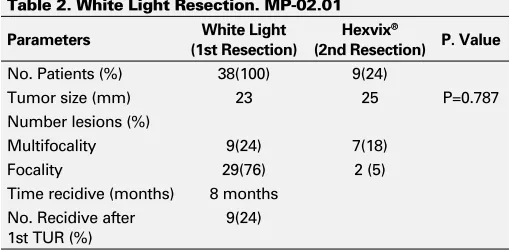
Table 2. White Light Resection. MP-02.01
Parameters White Light
(1st Resection)
Hexvix®
(2nd Resection) P. Value
No. Patients (%) 38(100) 9(24)
Tumor size (mm) 23 25 P=0.787 Number lesions (%)
Multifocality 9(24) 7(18) Focality 29(76) 2 (5) Time recidive (months) 8 months
No. Recidive after 1st TUR (%)
p=0.072). An interaction model combining ePLND and chemotherapy was significant when ePLND with more than 10 nodes removed and AC were combined (HR 0.49, 95% CI 0.26-0.92, p=0.026).
Conclusions: With the limitation of not being a randomized study but with an unique setting as our study centers had opposite management in terms of ePLND and AC, our results show that the combination of ePLND and AC offers a survival advantage in MUIBCs treated with RC.
MP-02.03
Multicenter Validation of the Prognostic Value of Patient Age in Patients Treated with Radical Cystectomy
Mauermann Julian1, Fradet Vincent1, Shariat Shahrokh F2, Karakiewicz Pierre I3, Skinner Eila4, Lotan Yair5, Capitano Umberto3,6, Bastian Patrick7, Volkmer Bjoern G8, Montorsi Francesco6, Kassouf Wassim9, Novara Giacomo10, Fritsche Hans-Martin11, Müller Stefan C12, Izawa Jonathan13, Isbarn Hendrik3, Stief Christian G7, Ficarra Vincenzo11, Dinney Colin P2, Kamat Ashish2, Fradet Yves1
1Department of Urology, Université Laval, CHUQ-Hôtel-Dieu de Québec, Quebec, QC, Canada; 2Department of Urology, University of Texas MD Anderson Cancer Center, Houston, TX, USA; 3Department of Urology, Université de Montréal, Montreal, QC, Canada; 4Department of Urology, University of Southern California, Los Angeles, CA, USA; 5Department of Urology, University of Texas Southwestern Medical Center, Dallas, TX, USA; 6Department of Urology, Vita Salute San Raffaele University, Milano, Itavly; 7Department of Urology, Ludwig-Maximilians-Universität München, Klinikum Grosshadern, Munich, Germany; 8Department of Urology, University of Ulm, Ulm, Germany; 9Department of Urology, McGill University Health Centre, Montreal, QC, Canada; 10Department of Urology, University of Padua, Padua, Italy; 11Department of Urology, Universität Regensburg, Regensburg, Germany; 12Department of Urology, Universität Bonn, Bonn, Germany; 13Department of Urology, University of Western Ontario, London, ON, Canada
Introduction and Objective: The outcomes of radical cystectomy (RC) in patients of advanced chronological age remain poorly understood. We and others have shown that advanced patient age at the time of RC for urothelial carcinoma of the bladder (UCB) is independently associated with adverse outcomes. The aim of our study was to confirm these findings by assessing the impact of patient age on pathologic characteristics as well as recurrence-free, all-cause, and cancer-specific survival following RC.
Methods: We collected data from 4429 patients treated with radical cys-tectomy and pelvic lymphadenectomy for UCB without neo-adjuvant chemotherapy at 12 academic centers located either in the USA or in Europe. Age at RC was analyzed both as a continuous and categori-cal (<50yr, n=321; 50–59.9yr, n=815; 60–69.9yr, n=1595; 70-79.9yr, n=1423; ≥80yr, n=275) variable.
Results: Higher age at RC, analyzed as a continuous or a categorical variable, was associated with advanced pathologic stage (p<0.001 all) and positive surgical margin status (p<0.001 and p=0.004). Older patients were less likely to receive post-operative chemotherapy (<50yr: 27.4% vs ≥80yr: 7.7 %, p<0.001). In multivariate analysis, higher age, coded as a continuous or a categorical variable, was associated with disease recurrence after adjusting for the effects of standard pathologic features (p=0.028 and p=0.035; ≥80yr vs <50yr). In multivariate analysis, higher age coded as continuous oriable was associated with decreased cancer-specific and all-cause survival after adjusting for the effects of standard pathologic features (p<0.001 all). Patients ≥80yr old had a significantly greater risk of cancer-specific death than patients aged <50yr (HR 1.841, 95%CI 1.346-2.519, p<0.001).
Conclusions: In this large external validation study, we confirm that greater patient age at the time of RC is associated with decreased survival. Further work is needed to improve our understanding of UCB outcomes in this growing segment of the population and to develop strategies to improve cancer control in the elderly.
MP-02.05
Risk Factors for Upper Urinary Tract and Urethral Recurrences after Radical Cystectomy
Turker Polat1, Bostrom Peter J1, Wroclawski Marcelo L1, Mirtti Tuomas2, Nurmi Martti3, Fleshner Neil E1, Finelli Antonio1, Jewett Michael A1, Zlotta Alexandre R1,4
1Department of Surgical Oncology, Division of Urology, University Health Network, Toronto, ON, Canada; 2Department of Pathology, Helsinki University Hospital, Helsinki, Finland; 3Department of Surgery, Division of Urology, University of Turku, Turku, Finland; 4Department of Surgical Oncology, Division of Urology, Mount Sinai Hospital, Toronto, ON, Canada
Introduction: Recurrences in the upper urinary tract (UUTrec) and urethra (urethrec) following radical cystectomy (RC) for transitional cell carci-noma of the bladder are often recognized after symptomatic presentation and impact patient’s survival Accurate predictive risk factors would aid in designing individually tailored follow-up (FU) protocols.
Patients and Methods: 635 consecutive patients undergoing RC for urothelial BC without neoadjuvant chemotherapy at University Health Network, Toronto, Canada (1992-2008) and University of Turku, Turku, Finland (1986-2005) were studied. The rates of UUT and urethral recur-rences were analyzed. Patients with urethrectomy were excluded from urethral recurrences analysis. Clinicopathological variables associated with recurrence were evaluated using the c2-test. The Kaplan-Meier method was used to analyze survival.
Results: Mean FU was 45 months (0-264). Among the 635 RC patients, 22(3%) had an UUT recurrence and among the 559 patients without ure-threctomy during RC 17(3%) suffered from a urethral recurrence. Median time to UUT recurrence was 20 months (3-84 mo) and to urethrec was 30 months (10-96 mo). Male gender (p=0.035), T2 or higher primary stage (0.014), concomitant CIS (p=0.014) and prostatic urethra involvement (p=0.021) were significant risk factors for UUTrec. T2 or higher primary stage (p=0.001), pathological stage higher than T2 (p=0.03) and prostatic urethra involvement (p=0.05) were significant risk factors for urethral recurrence. Disease specific and overall survival of UUT recurrence were poorer than urethrec (43 vs 74% at 10 years, p=0.047).
Conclusion: The risk of UUT or urethral recurrence is relatively low after RC when selection of patients has been performed prior to surgery. Efforts should be made to recognise prostatic urethra involvement and presence of CIS prior to RC. We found that patients with urethral recurrence had lower mortality rates than described in some previous series and may be often salvaged but both UTCC and urethral recurrences remain chal-lenging to manage.
MP-02.06
Re-TUR, Re-Imaging and Pathology Review are Essential for Improving Bladder Cancer Staging
Bostrom Peter J1, Athanasopoulos Paul1, Fleshner Neil E1, Jewett Michael A1, Chung Peter2, Bristow Robert2, Milosevic Michael2, Zlotta Alexandre R1,3
1Department of Surgical Oncology, Division of Urology, University Health Network, Toronto, ON, Canada; 2Department of Radiation Oncology, University Health Network, Toronto, ON, Canada; 3Department of Surgical Oncology, Division of Urology, Mount Sinai Hospital, Toronto, ON, Canada
Introduction and Objectives: Bladder cancer (BC) staging is often sub-optimal and inaccurate although of utmost importance in decision-mak-ing. We studied the impact of re-staging TUR, re-imaging and pathol-ogy review in the setting of a multidisciplinary bladder cancer clinic (MDBCC). The MCBCC was introduced in 2008 at the University Hospital Network, Toronto, to meet the needs of complex BC cases and patients considered for bladder preservation. In the MCBCC patients are seen both by uro-oncologists and radiation oncologists. We studied the impact of BC re-staging before treatment recommendations are made.
data. After exclusion of non-BC and palliative cases, data for 140 patients were available for analysis
Results: Of the 140 patients, 112 (80%) were male. Median age was 71 years. Initial stage was T2 or higher in 71 (51%) patients. Non-muscle invasive BC (NMIBC) was found in 69 (49%) patients. Re-staging TUR was performed for 48 of 69 (70%) NMIBC patients and for 12 of 71 (17%) muscle-invasive BC patients. When performed, re-staging TUR changed the stage in 41 of 60 (68%) cases (upstaging in 69%, downstaging in 31%). Additional imaging modalities or re-imaging were performed in 27 of 69 (39%) NMIBC patients and in 46 of 71 (63%) of muscle-invasive cases. When performed, re-imaging upstaged patients in 31 of 73 (42%) cases. Pathology review was done in 22 of 69 (32%) NMIBC cases and 36 of 71 (51%) muscle-invasive cases. When performed, pathology review modified staging in 9 of 58 (16% patients, 5/9 upstaged, 4/9 downstaged) and histology in 1 of 58 cases (2%). When all re-staging processes were gathered, 67 of the total 140 patients (48%) had their stage modified by at least one of the re-staging procedures.
Conclusions: Our results demonstrate that re-staging impact as much as 50% of complex BC cases. All these re-staging modalities, includ-ing re-TUR, re-imaginclud-ing and pathology review should be considered for re-staging BC patients. Among pre-selected clinically challenging BC patients, meticulous re-staging affects staging in every other patient. All three modalities of re-staging, including re-TUR, further imaging and pathology review should be considered when BC patients undergo re-staging.
MP-02.07
Investigating Bladder Cancer Risk in Hereditary Non-Polyposis Colorectal Cancer Patients with Mismatch Repair Gene Mutations
Skeldon Sean C1, Aronson Melyssa2, Semotiuk Kara2, Pollett Aaron3, van Rhijn Bas WG1, Bostrom Peter J1, Gallinger Steven2, Cohen Zane2, Fleshner Neil E1, Jewett Michael A1, Hanna Sally1, Kuk Cynthia1, van der Kwast Theodorus H3,4, Evans Andrew3, Bapat Bharati5, Zlotta Alexandre R1,6
1Department of Surgical Oncology, Division of Urology, University Health Network, Toronto, ON, Canada; 2Familial Gastrointestinal Cancer Registry, Mount Sinai Hospital, Toronto, ON, Canada; 3Department of Surgical Pathology, University Health Network, Toronto, ON, Canada; 4Department of Pathology, Erasmus MC, Rotterdam, The Netherlands; 5Samuel Lunenfeld Research Institute, Mount Sinai Hospital, Toronto, ON, Canada; 6Department of Surgical Oncology, Division of Urology, Mount Sinai Hospital, Toronto, ON, Canada
Introduction and Objective: Hereditary non-polyposis colorectal can-cer (HNPCC) is caused by mutations in mismatch repair (MMR) genes. Increased risk for urothelial cell carcinoma (UCC) of the ureter has been described, specifically in those with MSH2 gene mutation. We have previously shown a link between MSH2 mutation and an increased risk of bladder cancer (BC). Here, we aim to confirm previous reports and identify a link between MSH2, upper urinary tract (UUT)-UCC and BC at the tissue level.
Methods: BC and UUT-UCC risk was analyzed in MMR gene mutation carriers within the Familial Gastrointestinal Cancer Registry (FGICR) in Toronto, Canada. Data between 1970 to 2007 was obtained from the FGICR of 321 persons with known mutations (MLH1, MSH2, MSH6, PMS2). 177 patients had germline MSH2 mutations and 129 patients carried MLH1 mutations. Standardized incidence ratios in Canada were used to compare cancer risk in patients with confirmed germline MMR mutations to the general population. Microsatellite instability (MSI) analy-sis and immunohistochemistry (IHC) of the MMR proteins were performed and compared to gender, stage and grade matched sporadic bladder tumours to provide a histological correlation.
Results: Among 177 MSH2 mutation patients, BC was found in 11 (6.21%) patients but only in 3 of 129 patients (2.32%) with MLH1 mutations. No patients with germline MSH6 or PMS2 mutations had a diagnosis of BC. Of the 11 patients with MSH2 mutations, there were 5 men and 6 women, which is in contrast to the expected male to female ratio for BC of 3:1 in Canada. This 6.21% incidence of BC among MSH2 carriers is
significantly increased compared to the lifetime risk seen in the Canadian general population. 9 of 11 tumours (81.8%) were MSH2 deficient on IHC and 6 of these were MSI-H, 0% lacked expression of MLH1 while all matched sporadic cases displayed normal expression of MSH2 and MLH1. Among MSH2 carriers, UUT-UCC was found in 7 (3.95%) patients. All 7 tumours were found to be deficient in MSH2 expression and 5 of the 7 (71.4%) tumors were MSI-H.
Conclusions: HNPCC patients with germline MSH2 mutations are at an increased risk not only for UUT-UCC but also for BC. Family members of germline MSH2 mutation carriers should be screened for urinary UCC. In addition, sporadic UUT-UCC diagnosed in patients under 60 years old or with a family history of HNPCC-related cancers should be screened for HNPCC by IHC analysis of MMR proteins. Our study suggests that mutations of MMR genes may have an important contribution in the development of a subset of UCC.
MP-02.08
Prospective Analysis of Sensitivity and Specificity of Urinary Cytology and Other Urinary Biomarkers for Bladder Cancer
Yafi Faysal A, Steinberg Jordan, Aprikian Armen G, Tanguay Simon, Kassouf Wassim
Division of Urology, Department of Surgery, McGill University Health Centre, Montreal, QC, Canada
Introduction and Objectives: While urinary cytology is the most widely used non-invasive test for the detection and surveillance of bladder cancer (BC), it has poor sensitivity especially for low-grade tumors. As such, a number of new urinary biomarkers are being investigated for potential benefit. We sought to prospectively test the urine of BC patients using urinary cytology and four commercially available urinary marker tests: Hemoglobin Dipstick, BTA Stat, NMP22 BladderChek and ImmunoCyt.
Methods: Urinary samples from 109 consecutive patients with BC were prospectively collected. All samples were tested using conventional uri-nary cytology and available biomarkers. Prior and subsequent surgical specimen reports were examined and sensitivity, specificity, positive and negative predictive values were calculated for each. Collected variables included patient demographics, date of urinary collection, type of speci-men (voided, washing or catherized) and surgical pathology.
Results: Sensitivity values for each marker were as follows: cytology, 48% (15% for low-grade tumors and 84% for high-grade tumors); BTA Stat, 61% (38% and 91%); hematuria dipstick, 50% (38% and 66%); NMP22 Bladder Cancer Test, 54% (25% and 91%) and ImmunoCyt, 62% (47% and 83%). Specificity results for each marker were as follows: cytology, 85%; BTA Stat, 78%; hematuria dipstick, 56%; NMP22 Bladder Cancer Test, 85% and ImmunoCyt, 78%.
MP-02.09
Is Hospital Volume a Determinant of Type of Surgery, Complications, Length of Stay, and In-Hospital Mortality in Nonmetastatic Renal Cell Carcinoma?
Jeldres Claudio, Sun Maxine, Liberman Daniel, Abdo Al’a, Ismail Salima, Johal Rupinder, Perrotte Paul, Karakiewicz Pierre I
Department of Urology, University of Montreal, Montreal, QC, Canada
Introduction and Objectives: Hospital volume (HV) represents an estab-lished quality of care determinant. We examined the effect of HV in surgi-cally managed patients treated for non-metastatic renal cell carcinoma (RCC) on the rate of postoperative outcomes and type of surgery.
Methods: Overall, 48 321 patients treated with a partial nephrectomy (PN) or radical nephrectomy (RN) for nonmetastatic RCC were identified within 2084 hospitals originating from the Nationwide Inpatient Sample, between years 1998 and 2007. We examined the effect of HV on four endpoints, namely: (1) utilization of PN (2) complication + or = 1 (3) length of stay >4 days (median) (4) and in-hospital mortality. HV was defined according to three strata: low (1–4 nephrectomies/year), interme-diate (5–14 nephrectomies/year), and high (+ or = 15 nephrectomies/year).
Results: At high HV centers, the following characteristics were recorded relative to low HV centers: patients were younger (+ or = 80 years: 9% vs 7%, p<0.001), Charlson Comorbidity Index (CCI) was lower (CCI=0: 64% vs 61%, p<0.001), more frequently teaching institutions (66 vs 18%,
p<0.001) and laparoscopic procedure was more often performed (12 vs 5%, p<0.001). Moreover, PN use was more frequent (24 vs 13%,
p<0.001), in-hospital mortality was lower (0.6 vs 0.8%, P=0.03), less patients stayed >4 days (43 vs 54%, p<0.001), and a lower rate of any postoperative complication (14 vs 17%, p<0.001) was reported for high HV relative to low HV centers. Multivariable analyses revealed that high HV was associated with a higher rate of PN (odds ratio [OR]: 1.6,
p<0.001) and a shorter length of stay (OR: 0.8, p<0.001) relative to low HV centers (referent). However, HV failed to achieve statistical signifi-cance when the rate of any complication and in-hospital mortality were examined as endpoints.
Conclusions: Our results indicate that nephrectomy at high HV hospitals is more likely to be performed in the nephron-sparing fashion and that shorter length of stay may be expected. These findings are important when treatment decisions are needed and the importance of HV should be communicated to patients.
MP-02.10
Do we Continue to Unnecessarily Perform Ipsilateral Adrenalectomy at the Time of Radical Nephrectomy? – A Population-Based Study
Yap Stanley1, Alibhai Shabbir2, Abouassaly Robert3, Cheung Helen1, Timilshina Narhari2, Finelli Antonio1
1Division of Urologic Oncology, Princess Margaret Hospital, Toronto, ON, Canada; 2Department of Health Policy, Management, and Evaluation, University of Toronto, Toronto, ON, Canada; 3Department of Urology, University Hospitals Case Medical Center, Cleveland, OH, USA
Introduction: Since the mid-1990’s evidence supports ipsilateral adrenal gland-sparing radical nephrectomy unless the gland appears involved on imaging or the primary tumor is large and located in the upper pole. It is unclear whether this shift in surgical practice has been adopted at the population level. We analyzed practice patterns and variables associated with adrenalectomy as well as predictors of adrenal involvement.
Methods: Using the Ontario Cancer Registry (OCR), we identified 5,043 patients in the province of Ontario, Canada undergoing radical nephrec-tomy between 1995 and 2004. We linked individual patient information with pathologic information from abstracted pathology reports. Ipsilateral adrenalectomy was determined, as well as tumor involvement of the adrenal gland. Further variables analyzed include age, gender, pathol-ogy, surgeon year of graduation, academic status of hospital and surgeon, hospital and surgeon volume, and year of surgery. We utilized univariate and multivariable logistic regression models to assess outcome predictors.
Results: The overall rate of adrenal gland involvement with cancer was 1.4%. The adrenal was involved in 3.2% of tumors > 7cm compared to only 0.89% of tumors 4-7 cm and 0.63% of tumors < 4cm. Upper pole tumors had adrenal involvement in 2.1% of cases compared to 1.0% of lower pole tumors. Factors predictive of adrenal involvement on multivariate analysis were tumor size > 7cm, high-grade tumors, and fat invasion. Adrenal involvement was associated with worse survival, with 1-year mortality of 39.4%, compared to 8.5% for those without adrenal involvement. The overall adrenalectomy rate was 38.6% and remained stable over time (40.2% in 1995 vs 42.2% in 2004). Variables predictive of adrenal removal on multivariate analysis included higher hospital volume, open nephrectomy, fat invasion, and tumor size > 7cm. Adrenalectomy was performed in 50.8% of cases with tumors > 7cm compared to 30.1% in those with tumors less than 4cm.
Discussion: Despite evidence to support preservation of the ipsilateral adrenal gland during radical nephrectomy, the rate of adrenalectomy did not appreciably change over 10 years. Furthermore, 30% of patients undergoing RN for tumors <4 cm underwent concomitant adrenalectomy. Adrenalectomy remains overused in populations who are unlikely to benefit from the procedure.
MP-02.11
Predictors of Early Mortality after Radical Nephrectomy with Renal Vein or IVC Thrombectomy – A Population Based Study
Horovitz David1, Yap Stanley1, Alibhai Shabbir2, Abouassaly Robert3, Timilshina Narhari2, Finelli Antonio1
1Division of Urologic Oncology, Princess Margaret Hospital, Toronto, ON, Canada; 2Department of Health Policy, Management, and Evaluation, University of Toronto, Toronto, ON, Canada; 3Department of Urology, University Hospitals Case Medical Center, Cleveland, OH, USA
Introduction: Radical nephrectomy with renal vein (RV) or IVC throm-bectomy is a complex procedure with potential for significant short-term mortality. We sought to study the short–term mortality rates on a popula-tion level and the variables associated with this adverse outcome.
Methods: Using the Ontario Cancer Registry, we identified 434 patients in the province of Ontario, Canada undergoing radical nephrectomy with either RV or IVC thrombectomy between 1995 and 2004. We linked individual patient information with pathology reports and abstracted specific pathologic data. Variables analyzed include pathologic tumor characteristics, surgeon year of graduation, academic status of hospital, year of surgery, surgeon volume, and hospital volume. We determined variables significantly associated with mortality at 30, 90, and 180 days using univariate and multivariable logistic regression models.
Results: Overall mortality was 2.8%, 5.8%, and 11.3% at 30, 90, and 180 days respectively. Mean age of patients was 61 years and mean tumor size was 8.3 cm. The procedures were performed at academic centers in 51% of cases. Surgeons performing only a single complex procedure performed 33% of the cases and had the highest 30 day (6.7%), 90 day (10%), and 180 day (18%) mortality rates. In contrast, mortality rates for surgeons performing >1 case were 2.1% (30-day), 5.1% (90-day), and 10.2% (180-day). In recent years, there has been a trend towards radical nephrectomy with venous thrombectomy being more commonly performed by the highest tertile volume surgeons, representing 67% of the cases in 2004 versus 40% in 1995. Significant predictors of mortality on both univariate and multivariate analysis included procedure year and low surgeon volume.
MP-02.12
Perioperative Outcomes of Laparoscopic Partial Nephrectomy using Self-Retaining Sutures (SRS) and Early Clamp Removal versus Conventional Kidney and Collecting System Repair
El-Ghazaly Tarek H, Rendon Ricardo A
Department of Urology, Dalhousie University, Halifax, NS, Canada
Introduction and Objective: With the expanding spectrum of indications for partial nephrectomy to include larger and more complex renal masses, a parallel surge in technical improvements is imperative in order to meet the increased technical challenges resulting in prolonged warm ischemia time (WIT) and complications. Touting a time-saving knotless technique for laparoscopic partial nephrectomy (LPN), we have previously reported on the safety of the use of a polydioxanone barbed self-retaining suture (SRS) “Quill” (Angiotech Pharmaceuticals). We compare and report the perioperative outcomes of LPN procedures performed using the Quill SRS and early clamp release versus those that employed conventional techniques.
Materials and Methods: A retrospective review of prospectively main-tained data collected from 159 consecutive patients who had undergone LPN procedures including 48 procedures that employed the Quills SRS was carried out. All LPN procedures were performed by the same surgeon (RAR). Parameters examined included the tumor size, location (central vs peripheral), degree of endophytic component; WIT and estimated blood loss (EBL), as well as the incidence of delayed post-operative bleeding and urine leaks.
Results: There were no significant differences in baseline characteristics between the two groups including tumor size (3.4 and 3.3 cm respec-tively; p=0.225), central location (66.7% and 78.7%; p=0.124 and degree of endophytic component (53.5% and 48.7%; p 0.301). Mann-Whitney U tests showed a statistically significant reduction of WIT (p<0.0001) in the Quills SRS/early clamp release LPN group (14.8 min) compared to the conventional LPN group (26.9 min). There were no statistically significant differences observed in EBL (243.7 cc vs 239.5 cc; p=0.414), incidence of post-operative delayed bleeding (8% and 11.3%; p=0.37), or urine leaks (8.2% and 3.1%; p=0.31) between the two groups.
Conclusion: Using Quills self-retaining suture (SRS) for tissue approxima-tion and early clamp release has led to a statistically significant reduc-tion (mean of 12 min) in WIT in LPN procedures, without an increase in intraoperative blood loss. We observed a non-statistically significant decrease in delayed bleeding and an increase in urine leaks.
MP-02.13
Experience with Biopsy of Stage T1a Renal Tumours: Does It Change Management?
Stakhovskyi Oleksandr, Chung Hannah, Fernandes Kimberly A, Finelli Antonio, Zlotta Alexandre, Fleshner Neil, Robinette Michael, Trachtenberg John, Leveridge Michael, Jewett Michael AS
Division of Urology, Department of Surgery, Toronto General and Princess Margaret Hospitals, University Health Network, Toronto, ON, Canada
Introduction and Objectives: The majority of new renal cell carcinomas (RCC) are diagnosed as stage T1a (<4cm) and by imaging as incidental small renal masses (SRMs). However,1) some SRMs are benign,2) most T1a RCCs are low grade,3) non-clear cell variants with less aggressive behaviour are more common,4) growth patterns are unpredictable,5) metastases are rare, and 6) many patients are elderly and/or have co-morbidities. Management options are many but urologists often recom-mend surgery without a histological diagnosis. Biopsy rates are increasing but the role of biopsy remains controversial. Our experience has been reviewed from the perspective of biopsy impact on treatment decision and outcome.
Methods: At the Princess Margaret Hospital (University of Toronto) Kidney Tumour Clinic 417 T1a tumours were biopsied between 2000-2010. Success rate, incidence of complications, pathological results, correlation with subsequent surgical pathology where available, and the impact of the biopsy result on subsequent treatment were determined.
Results: Out of 417 needle core biopsies, 333 (80%) were diagnostic: 261(78%) malignant and 65(22%) benign. No significant complications
or tumour seeding occurred. Our final diagnostic cohort included 282 cases that were biopsied prior to treatment decision. The balance were biopsied at RFA. Concordance between biopsy results and final surgical pathology in 80(28.3%) cases was 100%. 175 (62%) patients were man-aged by active surveillance (AS). The histology with treatment decisions are indicated in Table 1. Patients with benign tumours with one excep-tion, were managed by AS. Younger patients, those with high grade clear cell RCC underwent treatment. Those who were managed by AS did not metastasize in the short term but showed variable growth patterns.
Conclusions: Biopsy of T1a renal tumours has high diagnostic rate and can direct management in a large proportion of patients. Routine biopsy of SRMs appears to benefit clinical decision making.
MP-02.14
Most Renal Oncocytomas Appear to Grow: Observations of Tumor Kinetics with Active Surveillance
Kawaguchi Sarah, Fernandes Kimberly A, Finelli Antonio, Zlotta Alexandre, Fleshner Neil, Robinette Michael, TrachtenbergJohn, Jewett Michael AS
Departments of Surgery and Surgical Oncology, Princess Margaret Hospital and the University Health Network, University of Toronto, ON, Canada
Introduction and Objectives: Renal oncocytomas have traditionally been managed as suspected renal cell carcinoma (RCC) with the diagnosis after nephrectomy. Imaging is not an accurate diagnostic method. They virtually never recur, but little is known of their natural history without treatment. Percutaneous needle core biopsy is being used more frequently to avoid surgery for benign small renal masses (SRMs). However, the management of a SRM biopsy “oncocytic neoplasm most consistent with oncocytoma based on sampled material” remains controversial and could represent chromophobe RCC (chRCC). There is a need to better charac-terize the growth patterns of oncocytoma in order to potentially reduce the need for treatment. We retrospectively reviewed the recent cases of tissue-proven oncocytoma within our institution to address these issues.
Methods: The charts of 69 patients with oncocytoma diagnosed by biopsy or at time of surgery between 2004 and 2010 were reviewed. Twenty-nine (29) were managed by active surveillance for at least 12 months and had
≥3 imaging events. Tumor sizes were documented and average tumor growth rate was calculated using a random coefficient model. Interaction terms were used to investigate correlations between variables of interest, including age at diagnosis, gender, symptom status, laterality, initial tumor size, duration of surveillance, and number of imaging events.
Results: After a mean surveillance duration of 40 months, 80% of oncocy-tomas increased in size. The estimated average growth rate was 0.16 mm/ month (95% CI 0.097 – 0.228, p<0.0001). We were unable to identify any variables that correlated with growth. No patient developed meta-static disease.
Conclusions: Renal oncocytoma, despite its low metastatic potential, appears to progress locally with growth rates similar to those of RCC. The absence of tumour growth on serial imaging is therefore not a robust prognostic factor for benign histology. Biopsy remains the mainstay of diagnosis and in centers where it can be performed safely and accurately,
Table 1. MP-02.13
Treatment
Bx result AS Surgery RFA Total
Malignant:
active surveillance of tissue-proven oncocytoma appears to be safe in the short term. Alternative management includes partial nephrectomy and minimally invasive approaches. To our knowledge, this is the largest study of oncocytoma natural history.
MP-02.15
Outcomes and Tumour Growth Rate of Renal Masses are Dependent on Size at Presentation in a Watchful Waiting Cohort
Touma Naji J, McGarry Patrick, Kawakami Jun, Richard Sowery, Michael Leveridge, Siemens, D Robert
Department of Urology, Queen’s University, Kingston, ON, Canada
Intoduction: Conservative management of small renal masses (SRM) is an emerging concept and has been advocated as an alternative form of management to extirpative and ablative techniques. The natural history of SRM and the role of watchful waiting is currently an active area of research with an important focus on indicators of progression. Herein we report our long-term results of a prospectively followed cohort of patients managed on a watchful waiting protocol.
Methods: A previously reported watchful waiting protocol at Queen’s University was established for patients with any renal mass <7 cm. Patients enrolled were highly selected: either too infirm to undergo sur-gery or declined any intervention/clinical trial involvement. The program was established in November 1997 and 53 patients have enrolled up to May 2009. Parameters reported here include tumour growth rate, metas-tases-free and overall survival dichotomized by mass size at presentation.
Results: Median age of the cohort was 75 years old and median follow-up was 40.2 months. At the time of initial presentation, 11 and 42 patients had renal masses >4 cm or <4 cm (SRM) respectively with a median size of 3.0 cm for the entire cohort. The growth rate of masses >4cm was 1.06 cm per year [95% confidence interval: 0.89 to 1.22 cm] versus 0.288 cm per year [95% confidence interval: 0.257 to 0.367 cm] for SRM (<4 cm). Metastasis free survival was 81.8% (9/11) and 97.6% (41/42) in the >4 cm and <4cm cohort respectively (OR: 9.1, p=0.11). Overall survival in patients with masses >4 cm was 54.5% versus 83.3% in those with SRM (<4 cm) (OR: 4.2, p=0.06) underscoring the selectivity of this cohort, especially those with larger masses.
Conclusions: This longitudinal cohort study demonstrates tumour growth rates consistent with other reports on SRM (< 4cm); however, there are significant differences in growth rate depending on size at presentation, particularly if greater than 4 cm. Ongoing prospective investigations to validate predictive tools are critical. Conservative management of renal masses should be reserved for highly selected patients with limited life expectancy, particularly masses larger than 4 cm.
MP-02.16
Adult Comorbidity Evaluation 27 Score is an Independent Predictor of Postoperative Renal Dysfunction and Overall Survival
Maciejewski Conrad1, Moore Sarah1, Diedrichs Brendan1, Cartledge Paul2, Todd Gerald1, Moore Ronald1
1Division of Urology, Department of Surgery, University of Alberta, Edmonton, AB, Canada; 2Department of Mathematical and Statistical Sciences, University of Alberta, Edmonton, AB, Canada
Introduction and Objectives: The Adult Comorbidity Evaluation 27 (ACE-27) is a validated comorbidity analysis questionnaire. The aim of our study was to evaluate the role of ACE-27 comorbidity score in predicting postoperative renal function outcomes as well as overall survival.
Methods: The Alberta Urology Institute Nephrectomy Database is a comprehensive multicenter retrospective database encompassing all demographic, clinical, and pathologic outcomes of patients undergoing radical and partial nephrectomy for renal cell carcinoma in the last 5 years. A total of 690 patient charts have been abstracted. Preoperative demographic data was used to calculate ACE-27 comorbidity score. The Modification of Diet in Renal Disease equation was used to calculate GFR using preoperative and postoperative data within 3 months of surgery. Univariate and multivariate linear and logistic regression models were designed using age, tumor stage, GFR, surgical approach, ACE-27 score,
and overall survival as covariates.
Results: A total of 690 patients were evaluated, with a mean age of 59. Stage distribution showed 46% T1a, 17% T1b, 19% T2, 15% T3, and 2% T4. Mean preoperative GFR was 85 +/- 30 mL/min. ACE-27 score distribution showed 34% scoring 0, 42% scoring 1, 16% scoring 2, and 7% scoring 3. Median follow up was 3.2 years. Univariate linear regres-sion identified age, ACE-27 score, and surgical approach as predictors of postoperative GFR <60 mL/min (p<0.0001). Multivariate linear regression analysis confirmed these results, with age, ACE-27 score, and surgical approach being independent predictors of postoperative GFR < 60 mL/ min (p<0.0001). Survival data was available for 219 patients, with an overall 19.6% 5 year mortality. In multivariate logistic regression, age was the only statistically significant factor predicting mortality (p=0.009) with a trend for ACE-27 (p=0.08). Subgroup analysis of individual ACE-27 scores identified high comorbidity (ACE-ACE-27=3) to be an independent predictor of mortality (p=0.005).
Conclusions: Our data support the use of ACE-27 comorbidity score as a prognostic tool in clinical decision making for surgical management of renal cell carcinoma, in regards to postoperative renal function outcomes and overall survival.
MP-02.17
Solitary Solid Renal Tumors: Can We Predict Malignancy?
Violette Philippe, Abourbih Samuel, Szymanski Konrad, Tanguay Simon, Aprikian Armen, Kassouf Wasim
Department of Surgery, Division of Urology, McGill University, Montreal, QC, Canada
Introduction and Objective: With increased use of abdominal imaging many more solid renal masses are found incidentally. Current practice standards mandate that these masses be removed surgically, without tissue diagnosis. This may lead to increased number of unnecessary surgeries, and associated complications. The goal of our study is to determine
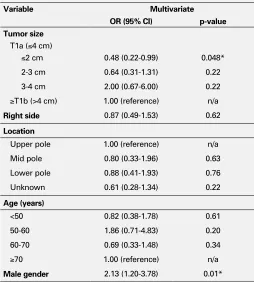
Table 1. Variables associated with malignant renal mass. MP-02.17
Variable Multivariate
OR (95% CI) p-value
Tumor size
T1a (≤4 cm)
≤2 cm 0.48 (0.22-0.99) 0.048* 2-3 cm 0.64 (0.31-1.31) 0.22 3-4 cm 2.00 (0.67-6.00) 0.22 ≥T1b (>4 cm) 1.00 (reference) n/a
Right side 0.87 (0.49-1.53) 0.62
Location
Upper pole 1.00 (reference) n/a Mid pole 0.80 (0.33-1.96) 0.63 Lower pole 0.88 (0.41-1.93) 0.76 Unknown 0.61 (0.28-1.34) 0.22
Age (years)
<50 0.82 (0.38-1.78) 0.61 50-60 1.86 (0.71-4.83) 0.20 60-70 0.69 (0.33-1.48) 0.34 ≥70 1.00 (reference) n/a
clinical predictors of benign disease based on sex, age, tumor size, and location.
Methods: We collected all available pathology reports for patients who underwent radical or partial nephrectomy at 3 McGill teaching hospitals from 1995-2008. Only patients with solitary solid unilateral renal masses were included. Renal masses that radiologically appeared as AML were excluded from the study. Predictors of malignancy risk were assessed with univariate and multivariate logistic regression. A critical p-value of 0.05 was used. Statistical analyses were performed using Stata v.10.1 (StataCorp, College Station, TX).
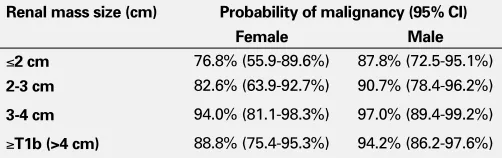
Results: Total of 651 patients with a median age of 60 years were included. Of those, 38% of patients were female. Most of the popula-tion underwent radical nephrectomy (66%) versus partial nephrectomy (34%). Renal masses were equally distributed on right and left sides (49% vs 51%). Tumor location was in the upper, mid, and lower poles in 42%, 20%, and 38% respectively. Mean tumor size in patients who underwent radical compared to partial nephrectomy was 6.8cm vs 2.9cm (p<0.05), respectively. The rate of benign disease in our overall population was 9.9%. The rate of renal call cancer was 90.1%, of which 64% were clear cell histology, 12% papillary, 7% chromophobe, 2% unclassified, 2% unknown and <1% other. On univariate and multivariate analysis renal mass size less than 2cm and female gender were predictive of benign disease (Table 1). On further analysis the magnitude of this effect was found to be additive (Table 2).
MP-02.18
The Effect of Age on the Morbidity of Kidney Surgery in General Clinical Practice
Abouassaly Robert1, Alibhai Shabbir2,3, Tomlinson George3, Urbach David3,4, Finelli Antonio4
1Urological Institute, University Hospitals Case Medical Center, Case Western Reserve University, Cleveland, OH, USA; 2Department of Health Policy, Management & Evaluation, University of Toronto, Toronto, ON, Canada; 3Department of Medicine, University of Toronto, ON, Canada; 4Department of Surgical Oncology, Princess Margaret Hospital, University of Toronto, ON, Canada
Introduction and Objective: Previous reports on the morbidity of renal surgery have primarily been from academic tertiary referral centers, and thus may not reflect general clinical practice. The aim of our study was to determine the effect of age and comorbidity on in-hospital surgical morbidity for radical nephrectomy (RN) and partial nephrectomy (PN) on a population level.
Methods: We conducted a national, population-based, retrospective, observational study using the Canadian Institute for Health Information Discharge Abstract Database. From April 1998 to March 2008, infor-mation was available on 20,286 RNs (82.5%) and 4,292 PNs (17.5%). Complications were identified using specific ICD-9 and 10 diagnosis and procedure codes, and comorbidity was determined using the Charlson-Deyo Index. Complication rates were estimated by surgical procedure type, as well as by various explanatory variables, including age and Charlson comorbidity score. Multivariable logistic regressions were con-structed for RN and PN determining associations between explanatory variables and complications.
Results: Overall, complications occurred in 34.1% of RN and 34.3% of PN. Patients were more likely to have cardiac, respiratory, vascular, and surgical complications after RN, whereas they were more likely to have genitourinary and nephrectomy-specific complications after PN. On multivariable logistic regression, after both RN and PN, complications were found to increase with age and Charlson score. After adjusting for other covariates, patients ≥80 years old have a significantly higher risk of complications compared with patients <50 years old (RN: OR 1.74, 95% CI 1.52-1.98; PN: OR 2.36, 95% CI 1.59-3.50). Patients with a Charlson score >2 were 6 times more likely to experience a complication than patients with a Charlson score of 0 (RN: OR 6.22, 95% CI 5.18-7.48; PN: OR 5.68, 95% CI 3.72-8.66).
Conclusions: In our population-based study, using our inclusive defini-tion, both RN and PN were associated with a higher morbidity than pre-viously reported in the literature, particularly in the elderly and patients with comorbidity.
MP-02.19
Comparison of Oncologic Outcomes for Open and Laparoscopic Radical Nephroureterectomy: Results from the Canadian Upper Tract Collaboration
Fairey Adrian1, Kassouf Wassim2, Estey Eric1, Tanguay Simon2, Rendon Ricardo3, Bell David3, Izawa Jonathon4, Chin Joseph4, Kapoor Anil5, Matsumoto Edward5, Black Peter6, So Alan6, Lattouf Jean-Baptisite7, Saad Fred7, Drachenberg Darryl8, Cagiannos Ilias9, Lacombe Louis10, Fradet Yves10, Jacobsen Niels-Erik1
1University of Alberta, Edmonton, AB, Canada; 2McGill University, Montreal, QC, Canada; 3Dalhousie University, Halifax, NS, Canada; 4University of Western Ontario, London, ON, Canada; 5McMaster University, Hamilton, ON, Canada; 6University of British Columbia, Vancouver, BC, Canada; 7University of Montreal, Montreal, QC, Canada; 8University of Winnipeg, Winnipeg, MN, Canada; 9University of Ottawa, Ottawa, ON, Canada; 10Laval University, Quebec, QC, Canada
Introduction and Objective: Limited data are available comparing the onco-logic efficacy of open radical nephroureterectomy (ORNU) and laparoscopic radical nephroureterectomy for upper tract urothelial cancer (UTUC). We constructed a Canadian UTUC database consisting of patients treated with radical nephroureterectomy. The objective of the current study was to examine the association between surgical approach and clinical outcomes.
Methods: Institutional radical nephroureterectomy databases containing detailed information on UTUC patients treated between 1994 and 2009 were obtained from 10 academic centres in Canada. Data were collected on 1029 patients and combined into a relational database formatted with patient characteristics, pathologic characteristics, recurrence status, and survival status. Surgical approach was classified as ORNU (n=403) or LRNU (n=446). The clinical outcomes were overall survival (OS), disease-specific survival (DSS), and recurrence-free survival (RFS). Cox proportional regression analysis was used to determine the association between surgical approach and clinical outcomes.
Results: Data were evaluable for 849 out of 1029 (82.5%) patients. The median follow-up duration was 2.1 years. Baseline characteristics were similar between the groups except that LRNU patients were older (70.4 years vs 68.6 years, p=.018), more likely to be female (40% vs 32%,
p=.016), less likely to undergo regional lymphadenectomy (24.8% vs 33.8%, p=.004), and had fewer positive lymph nodes removed (0.9 lymph nodes vs 0.3 lymph nodes, p=.002). Multivariable Cox proportional regression analysis showed that surgical approach was not significantly associated with OS (HR 0.90, 95% CI 0.65 to 1.26, p=.553) or DSS (HR 0.95, 95% CI 0.64 to 1.40, p=.794); however, there was a trend toward a significant association between surgical approach and RFS (HR 1.25, 95% CI 1.00 to 1.56, p=.053).
Conclusions: Surgical approach was not independently associated with OS or DSS but ORNU may be independently associated with improved RFS. Further prospective study of surgical approach in the setting of UTUC is warranted.
Table 2. Predicted probabilities of malignancy by gender and renal mass size. MP-02.17
Renal mass size (cm) Probability of malignancy (95% CI)
Female Male
≤2 cm 76.8% (55.9-89.6%) 87.8% (72.5-95.1%)
2-3 cm 82.6% (63.9-92.7%) 90.7% (78.4-96.2%)
3-4 cm 94.0% (81.1-98.3%) 97.0% (89.4-99.2%)
MP-02.20
A Comprehensive Review of the Clinical Presentation, Pathologic Findings, and Outcomes in Regressed Testicular Germ Cell Tumors
Gotto Geoffrey, Przybycin Christopher, Gupta Amit, Feifer Andrew, Bernstein Melanie, Sjoberg Daniel, Reuter Victor, Al-Ahmadie Hikmat, Sheinfeld Joel
Urology Service, Department of Surgery, Memorial Sloan-Kettering Cancer Center, New York, NY, USA
Introduction and Objective: Regressed testicular tumors (RTTs) account for a significant proportion of what were once considered to be extrago-nadal germ cell tumors (GCTs). The clinical presentation and outcomes of patients with “burned-out” primary tumors are poorly understood as are their pathologic characteristics. We describe our experience with this unique subset of testicular GCTs.
Methods: We reviewed our prospectively-maintained testicular can-cer database for radical orchiectomies performed from 1977-2009. Specimens without viable tumor were reviewed by dedicated genitouri-nary pathologists blinded as to whether or not the patient had received prior chemotherapy. Kaplan-Meier curves were generated to describe recurrence-free and overall survival.
Results: We identified 80 patients with testicular or extragonadal GCTs but with no viable tumor in the radical orchiectomy specimen. A total of 28 patients had not received prior chemotherapy. Pathologic find-ings at the time of retroperitoneal lymph node dissection or biopsy of a metastatic site included non-seminomatous GCT (NSGCT) in 11 (39%), seminoma in 6 (21%), unspecified GCT in 3 (11%), and sarcoma in 1 (4%). Benign disease was identified in the remaining 7 patients (25%). The 11 patients with NSGCT included 4 with embryonal carcinoma (14%), 2 with choriocarcinoma (7%), 2 with teratoma (7%), 2 with mixed NSGCT (7%), and 1 with yolk sac (4%). At presentation, the clinical stage was I in 3 patients (14%), II in 10 patients (45%), and III in 9 patients (41%). Based on the IGCCCG classification system, 10 were good risk (56%), 3 were intermediate risk (17%), and 5 were poor risk (28%). Intratubular germ cell neoplasia was identified in 8 patients (29%). Additional findings included hyalinization in 24 (86%), nodular scar in 22 (79%), Sertoli cell-only pattern in 21 (75%), interstitial fibrosis in 22 (79%), inflammation in 13 (46%), tubular calcification in 11 (39%), coarse calcification in 10 (36%), psammomatous calcification in 7 (25%), and necrosis in 1 (4%). Five-year recurrence-free, cancer-specific, and overall survival rates were 83% (95% CI: 61%, 93%), 96% (95% CI: 75%, 99%), and 96% (95% CI: 75%, 99%), respectively.
Conclusions: To our knowledge, this is the largest published review of patients with RTT. We describe in detail the pathologic findings in this unique subset of testicular GCTs as well as their clinical presentation and outcomes.
MP-02.21
Validation of a Novel Tumor Stage Classification for Prediction of Cancer-Specific Mortality in Patients with Squamous Cell Carcinoma of the Penis
Jeldres Claudio, Sun Maxine, Ismail Salima, Morgan Monica, Liberman Daniel, Johal Rupinder, Abdo Al’a, PerrottePaul, Karakiewicz Pierre I Department of Urology, University of Montreal, Montreal, QC, Canada
Introduction and Objectives: The new 2009 TNM classification for SCCP defines T2 as tumor that invades corpus spongiosum or corpora caver-nosa. A modification of the current definition of the T2 category was previously suggested as it was demonstrated that the prognosis for corpus spongiosum invasion is much better than for corpora cavernosa invasion (doi: 10.1016/j.juro.2008.05.011). We tested the prognostic ability of a modified tumor stage classification relative to the existing TNM 2009.
Methods: We analyzed a consecutive series of 323 patients who under-went sentinel node biopsy and/or inguinal lymphadenectomy for squa-mous cell carcinoma of the penis (SCCP) at a single institution. The proposed modified T category includes a change in the T2 and T3 groups (Table 1). The prognostic ability of tumor stage (2009) for prediction of cancer-specific mortality (CSM) was compared to that of the proposed modified T definitions (Harrell’s concordance index).
Results: Average age was 65 years (median 66). Overall, 38% of patients had positive lymph nodes. According to the TNM 2009, 26.6, 65.0, and 8.3% of patients were T1, T2 and T3, respectively. The proportions were 26.6, 50.2, and 23.2% when the proposed T staging classification was applied. The two-year CSM-free survival rates were 90.4, 84.0, and 77.8% for T1, T2, and T3–4 (TNM 2009). The log-rank p-value comparison of T2 vs T3–4 was 0.8. The two-year CSM-free survival rates were 90.4, 89.9, and 69.0% for T1, T2, and T3–4 (modified T). Log-rank p-value comparison of T2 vs T3–4 was <0.001. The prognostic ability for predic-tion of CSM of tumor stage (TNM 2009) was 55.3% vs 62.9% for the proposed T classification.
Conclusions: The prognostic ability of the proposed modified TNM stag-ing system that discriminates between corpus spongiosum and corpus cavernosa invasion is superior to the current T classification (TNM 2009). Patients with cavernous body involvement have a substantially worse prognosis than patients with only spongious body involvement, or patients with a small distal tumor growing in the urethra. Consequently, it is impor-tant that the staging system reflects this difference. The current classifica-tion of the current T category in the TNM 2009 requires a further update.
Table 1. Current and proposed T category definitions. MP-02.21
Current T category (TNM 2009) Proposed modified T category
Tx Primary tumor cannot be assessed Primary tumor cannot be assessed TO No evidence of primary tumor No evidence of primary tumor Tis Carcinoma in situ Carcinoma in situ
Tl Tumor Invades subepithelial connective tissue Tumor Invades subepithelial connective tissue
Tla • without lymphovascular Invasion or is poorly differentiated or undifferentiated (T1Gl-2) Tlb • with Iymphovascular Invasion or Is poorly differentiated or undifferentiated (T1G3-4)
T2 Tumor invades corpus spongiosum/corpora cavernosa Tumor invades corpus spongiosum T3 Tumor Invades urethra Tumor invades corpus cavernosa T4 Tumor invades other adjacent structures Tumor Invades adjacent structures
MP-02.22
Cost-Utility of Radical Nephrectomy versus Partial Nephrectomy in the Management of Small Renal Masses: Adjusting for the Burden of Chronic Kidney Disease
Klinghoffer Zachary1, Kapoor Anil1, Novara Giacomo2, Ficarra Vincenzo2, Braga Luis1
1McMaster Institute of Urology, McMaster University, Hamilton, ON, Canada; 2Department of Oncological and Surgical Sciences, Urologic Clinic, University of Padua, Padua, Italy
Introduction and Objective: Increasing evidence suggests that radical nephrectomy (RN) is associated with an increased incidence of chronic kidney disease (CKD) compared to partial nephrectomy (PN) following the treatment of small renal masses. The purpose of this study was to compare the cost-utility of laparoscopic radical nephrectomy (LRN), laparoscopic partial nephrectomy (LPN) and open partial nephrectomy (OPN) in the management of small renal masses when the impact of ensuing chronic renal failure is considered using a Markov decision analysis model.
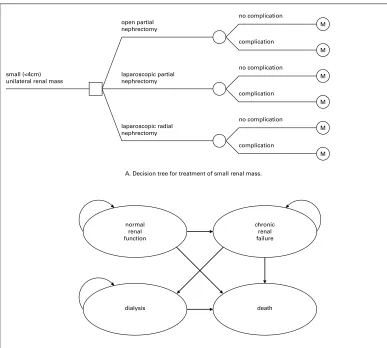
Methods: A Markov decision analysis model was developed to estimate the cost and quality-adjusted life years (QALYs) gained by a 65 year old male over a 10 year period following treatment for a small renal mass with either LRN, LPN or OPN. Estimates of costs, utilities, complication rates and probabilities of developing CKD were derived from the pub-lished literature. Sensitivity analyses were performed to determine which parameters affected the outcome of our model (Figure 1).
Results: OPN was the least costly strategy at $46 605 USD and 6.380 QALYs gained over 10 years. LPN yielded 0.140 additional QALYs at an additional cost of $22 for an incremental cost-effectiveness ratio of $161 per QALY, well below the commonly accepted societal willingness-to-pay threshold of $75 000 per QALY. LRN was more costly and yielded fewer QALYs than OPN and LPN. Sensitivity analyses demonstrated our model to be robust to changes to key parameters. LRN became preferred to OPN only when the annual probability of developing CKD following RN was less than 0.7% more than following PN. LRN was never preferred to LPN. Age had no effect on preferred treatment strategy, though the net monetary benefits of PN over RN diminished with increasing age.
Conclusions: LPN is the preferred treatment strategy for small renal masses, providing additional QALYs at a cost well below the commonly accepted willingness-to-pay threshold. In centers where LPN is not avail-able, OPN remains considerably more cost-effective than LRN. Our study provides additional evidence for urologists and healthcare resource man-agers to advocate PN for the management of all amenable small renal masses. Furthermore, our study demonstrates that there is no absolute age at which PN is not the preferred treatment strategy.
MP-02.23
Adjuvant Chemotherapy for Upper Tract Urothelial Carcinoma Treated with Nephroureterectomy: Assessment of Adequate Renal Function and Impact on Outcome
Yafi Faysal A1, Tanguay Simon1, Rendon Ricardo2, Jacobsen Niels3, Fairey Adrian3, Izawa Jonathan4, Kapoor Anil5, Black Peter6, Lacombe Louis7, Chin Joe4, So Alan6, Lattouf Jean-Baptiste8, Bell David2, Fradet Yves7, Saad Fred8, Matsumoto Ed5, Drachenberg Darrel9, Cagiannos Ilias10, Kassouf Wassim1
1Division of Urology, Department of Surgery, McGill University, Montreal, QC, Canada; 2Division of Urology, Department of Surgery, Dalhousie University, Halifax, NS, Canada; 3Division of Urology, Department of Surgery, University of Alberta, Edmonton, A B , C a n a d a ; 4D i v i s i o n o f Urology, Department of Surgery, University of Western Ontario, London, ON, Canada; 5Division of Urology, Department of Surgery, McMaster University, H a m i l t o n , O N , C a n a d a ; 6D e p a r t m e n t o f U r o l o g y , University of British Columbia, V a n c o u v e r , B C , C a n a d a ; 7Division of Urology, Department of Surgery, Laval University, Quebec, QC, Canada; 8Division of Urology, Department of Surgery, University of Montreal, Montreal, QC, Canada; 9Division o f U r o l o g y , D e p a r t m e n t o f S u r g e r y , U n i v e r s i t y o f Manitoba, Winnipeg, MB, Canada; 10Division of Urology, D e p a r t m e n t o f S u r g e r y , University of Ottawa, Ottawa, ON, Canada
Introduction and Objectives:
Upper tract urothelial carcinoma A. Decision tree for treatment of small renal mass.
B. Health states calculated at each Markov node. Probability of transition to each health state is dependent upon the underlying procedure. laparoscopic partial
nephrectomy small (<4cm)
unilateral renal mass
open partial nephrectomy
laparoscopic radial nephrectomy
no complication
complication
no complication
complication
no complication
complication
M M M M M M
normal renal function
chronic renal failure
dialysis death
(UTUC) is a rare and aggressive disease associated with poor outcomes following nephroureterectomy. We sought to evaluate the role of adju-vant chemotherapy (AC) in a multi-institutional, contemporary Canadian series of patients with invasive UTUC in a universal health care system.
Materials and Methods: We collected and pooled a database of 1,029 patients treated with nephroureterectomy in 10 Canadian academic cent-ers. Collected variables included various clinico-pathological parameters, the use of perioperative chemotherapy and pre- and three months post-operative creatinine values as well as the pre- and post-post-operative esti-mated glomerular filtration rates (eGFR). Outcomes were then stratified according to the use or non-use of adjuvant chemotherapy.
Results: Median age of the population was 70 years with a median follow-up of patients alive of 26 months. The median pre- and post-operative eGFR rates were 59 mL/min/1.73 m2 and 47 mL/min/1.73 m2, respectively. Using a cutoff eGFR of 60, 49% of all patients and 48% of patients with >pT2 and/or pTxN+ disease would have been eligible for cisplatin-based chemotherapy pre-operatively and only 18% and 21% of patients, respectively remained eligible post-operatively. Finally, of patients who received adjuvant chemotherapy, 75% had an eGFR <60. Of the 312 patients with >pT2 and/or pTxN+ disease 19% received adjuvant chemotherapy. On multivariate analysis, adjuvant chemotherapy was not an independent prognostic factor for improved overall, disease-specific or recurrence-free survival.
Conclusions: Chronic kidney disease is common in patients with UTUC. Following nephroureterectomy, 50% of high-risk patients who had good preoperative renal function became ineligible for cisplatin-based chemo-therapy. Use of adjuvant chemotherapy was not associated with improved survival in this cohort; whether this is due to the lack of efficacy of adju-vant chemotherapy in patients with UTUC or use of suboptimal regimen/ dose because of poor post-op renal function requires further evaluation.
MP-02.24
Management of the Distal Ureter during Radical Nephroureterectomy: Open vs Endoscopic Outcomes from the Canadian Upper Tract Collaboration
Kapoor Anil1, Kassouf Wes2, Rendon Ricardo3, Bell Dave3, Izawa Jonathan4, Black Peter5, Matsumoto Ed1, So Alan5, Lattouf Jean-Baptiste6, Chin Joe4, Saad Fred6
1Division of Urology, McMaster University, Hamilton, ON, Canada; 2McGill University, Montreal, QC, Canada; 3Dalhousie University, Halifax, NS, Canada; 4University of Western Ontario, London, ON, Canada; 5University of Britrish Columbia, Vancouver, BC, Canada; 6University of Montreal, Montreal, QC, Canada
Introduction and Objective: Management of the Distal Ureter during laparoscopic or open radical nephrouretectomy for upper tract urothe-lial carcinoma (UTUC) remains controversial. A collaborative Canadian UTUC database consisting of patients treated with radical nephroure-terectomy was created. The objective of the current study was to exam-ine the oncologic outcomes of open versus endoscopic distal ureteric management.
Methods: Institutional radical nephroureterectomy databases containing detailed information on UTUC patients treated between 1994 and 2009 were obtained from 10 academic centres in Canada. Data were collected on 1029 patients and combined into a relational database formatted with patient characteristics, pathologic characteristics, recurrence sta-tus, and survival status. Surgical approach was divided into Extravesical Ureter only (EU) (bladder never opened, ureter taken as distal as pos-sible), Extravesical and Open Intravesical (EOI) (bladder opened for com-plete removal of intramural ureter), and Extravesical and Endoscopic Intravesical (ENDO) (ureter taken as distal as possible with transurethral resection of intramural ureter). The clinical outcomes were overall survival (OS), disease-specific survival (DSS), and recurrence-free survival (RFS). Cox proportional regression analysis was used to determine the associa-tion between surgical approach and clinical outcomes.
Results: Data were evaluable for 819 out of 1029 (79.6%) patients. 39% (316) patients underwent EU, 50% (406) patients underwent EOI, and only 11% (97) patients underwent ENDO management of distal ureter. Most UTUC surgically treated were in the renal pelvis (51-59%), with 22-26% in the proximal or distal ureter. Two-thirds of tumors were high grade, with no significant difference between techniques. Death from disease was comparable between techniques, DSS evenly distributed. With regards to recurrent disease, although not significant, there was a trend towards higher recurrence rate in the ENDO group. DSS, RFS, and OS were comparable for all three distal ureter management techniques.