R E S E A R C H
Open Access
Variance-constrained filtering for nonlinear
systems with randomly occurring quantized
measurements: recursive scheme and
boundedness analysis
Chaoqing Jia
1,2and Jun Hu
1,2,3**Correspondence:
1Heilongjiang Provincial Key Laboratory of Optimization Control and Intelligent Analysis for Complex Systems, Harbin University of Science and Technology, Harbin, China
2School of Science, Harbin University of Science and Technology, Harbin, China Full list of author information is available at the end of the article
Abstract
In this paper, the robust optimal filtering problem is discussed for time-varying networked systems with randomly occurring quantized measurements via the variance-constrained method. The stochastic nonlinearity is considered by statistical form. The randomly occurring quantized measurements are expressed by a set of Bernoulli distributed random variables, where the quantized measurements are described by the logarithmic quantizer. The objective of this paper is to design a recursive optimal filter such that, for all randomly occurring uncertainties, randomly occurring quantized measurements and stochastic nonlinearity, an optimized upper bound of the estimation error covariance is given and the desired filter gain is proposed. In addition, the boundedness analysis problem is studied, where a sufficient condition is given to ensure the exponential boundedness of the filtering error in the mean-square sense. Finally, simulations with comparisons are proposed to demonstrate the validity of the presented robust variance-constrained filtering strategy.
Keywords: Time-varying nonlinear systems; Variance-constrained filtering; Randomly occurring quantized measurements; Boundedness analysis
1 Introduction
Over the past few years, the state estimation or filtering problems have been widely dis-cussed owing to its practical applications in various fields, such as in navigation system, dynamic positioning, tracking of objects in computer vision, and so on [1–7]. In partic-ular, based on a series of observed measurements over time, the Kalman filtering known as a linear optimal estimation algorithm can provide the globally optimal estimation for linear stochastic systems [8]. Regarding the complex dynamics systems with higher per-formance requirements, the traditional Kalman filtering method might not achieve sat-isfactory accuracy especially when the systems are contaminated with the nonlinear dis-turbances. Thus, a large number of filtering approaches under different performance con-straints have been given, such as Kalman filtering [9], extended Kalman filtering [10–12], variance-constrained filtering [13–15], unscented Kalman filtering [16],H∞filtering [17,
filtering methods have been presented in [4,5] for complex systems under different perfor-mance indices. In [17], a robustH∞filtering algorithm has been designed to cope with the effects of the randomly occurring nonlinearities, parameter uncertainties and signal quan-tization. In [10,11], the robust extended Kalman filtering methods have been proposed for time-varying nonlinear systems, and the related performance analyses concerning the boundedness of the filtering errors have been provided. In recent years, the variance-constrained method has been presented in [13,14] to handle the filtering problems for
time-varying nonlinearnetworked systems with missing measurements under
determin-istic/uncertain occurrence probabilities, where the authors have obtained the optimized upper bounds of estimation error covariance and proposed the expression forms of the time-varying filter gains via the stochastic analysis technique. Subsequently, the variance-constrained state estimation problem has been discussed in [15] for time-varying complex networks and a new time-varying estimation algorithm has been given based on the re-sults in [13,14].
As it is well known, the existence of the uncertainties would deteriorate the whole per-formance of addressed systems [19–22]. Accordingly, it is necessary to propose appropri-ate means to reduce the influence from uncertainties onto the filtering algorithm perfor-mance [23,24]. Up to now, a variety of results have been reported concerning the filtering problems for uncertain time-varying systems [25–27]. To mention a few, a robust recur-sive filter has been designed in [25] for uncertain systems with missing measurements, where a sufficient criterion has been given such that the exponential mean-square stabil-ity of filtering error has been ensured. In the networked environment, the uncertainties might emerge in a random way with certain probability [28]. For example, the state esti-mation scheme has been proposed in [28] for discrete time-invariant networked systems subject to distributed sensor delays and randomly occurring uncertainties, under which the sufficient criterion has been given such that the stability of the resulted estimation er-ror dynamics has been guaranteed. It is worthwhile to point out that it is necessary to com-pensate the negative effects caused by randomly occurring uncertainties for time-varying systems and propose more efficient filtering scheme with improved algorithm accuracy.
In a networked setting, the signals before transmission might be quantized due to the limited data-processing capacity of the transmission channels [29], hence the quantiza-tion errors should be properly addressed in order to reduce the resulted effects on the fil-tering algorithm performance [13]. Generally, the logarithmic quantization and uniform quantization are commonly discussed [29,30]. So far, a large amount of efforts have been made to discuss the filtering/control problems subject to signal quantization; see e.g. [13,
filtering scheme has been illustrated by means of a mobile robot localization scenario. So far, most of available filtering methods can be applied to tackle the deterministic quanti-zation effects only. However, there is a need to take the randomly occurring quantiquanti-zation effects into account in order to further reflect the unreliable networked environments with communication constraints. Hence, new filtering approach is desirable for addressing the filtering problem oftime-varyingsystems in the simultaneous presence of randomly oc-curring uncertainties and quantized measurements under variance constraint. Accord-ingly, it is very necessary to provide efficient analysis criterion to evaluate the proposed filtering algorithm. As such, the objective of this paper is to shorten the gap by proposing a robust variance-constrained filtering method under certain optimization criterion and conducting the desired algorithm performance analysis issue.
In this paper, we aim to design the robust variance-constrained optimal filtering algo-rithm for time-varying networked systems with randomly occurring uncertainties and quantized measurements. Both the randomly occurring uncertainties and the quantized measurements are modeled by Bernoulli distributed random variables. Owing to the exis-tence of the randomly occurring uncertainties, signal quantization and stochastic nonlin-earity, it is difficult to obtain the accurate value of the estimation error covariance. There-fore, we aim to propose a new robust variance-constrained filtering method under cer-tain optimization criterion. In particular, we need to find a locally optimal upper bound of estimation error covariance and design proper filter gain at each sampling step. The main contributions of this paper lie in: (1) a new variance-constrained filtering algorithm is given for addressed networked systems with stochastic nonlinearity, randomly occur-ring uncertainties and signal quantization; (2) the obtained upper bound of resulting fil-tering error covariance can be minimized by properly designing the filfil-tering gain, under which the stochastic analysis techniques are used; and (3) the detailed boundedness anal-ysis of filtering error is discussed and a sufficient condition is given. Finally, we utilize the simulations to illustrate the validity of main results.
Notations The notations in this paper are standard. Rn and Rn×m, denote the n
-dimensional Euclidean space and the set ofn×mmatrices, respectively.E{x}represents the expectation of the random variablex.PTandP–1stand for the transpose and inverse of matrixP. We useP≥0 (P> 0) to depict thatPis symmetric positive semi-definite (sym-metric positive definite). Thediag{Y1,Y2, . . . ,Ym}represents a block-diagonal matrix with Y1,Y2, . . . ,Ymin the diagonal.Irepresents an identity matrix with appropriate dimension.
◦is the Hadamard product.
2 Problem formulation and preliminaries
In this paper, we consider the following class of discrete time-varying systems with ran-domly occurring uncertainties and stochastic nonlinearity:
xk+1= (Ak+αkAk)xk+f(xk,ξk) +Bkωk, (1)
yk=Ckxk+νk, (2)
wherexk∈Rnis the system state vector to be estimated and its initial valuex0has mean
¯
x0 and covarianceP0|0> 0,yk∈Rm denotes the measurement output,ξk∈Ris a
The uncertain matrixAkhas the following form:
Ak=HkFkMk, (3)
whereHkandMkare known matrices, and uncertain matrixFksatisfiesFkTFk≤I.
The Bernoulli distributed random variableαk∈R, which is used to model the
phe-nomenon of the randomly occurring uncertainties, takes the values of 0 or 1 with
Prob{αk= 1}=E{αk}=α¯k, Prob{αk= 0}= 1 –α¯k, (4)
whereα¯k∈[0, 1] is a known scalar. The functionf(x,ξk) represents the stochastic
nonlin-earity withf(0,ξk) = 0 and has the following statistical properties for allxk:
Ef(xk,ξk)|xk
= 0, (5)
Ef(xk,ξk)fT(xj,ξj)|xk
= 0,k=j, (6)
Ef(xk,ξk)fT(xk,ξk)|xk
=
s
i=1
ΠixTkΓixk, (7)
wheres> 0 is a known integer,ΠiandΓi(i= 1, 2, . . . ,s) are known matrices with suitable
dimensions.
Remark1 In fact, it is not always possible to obtain the accurate system model during
the system modeling, hence there is a need to address the modeling errors and discuss their effects on the desired performance. On the other hand, it could be the case that the modeling errors undergo the random changes, thus the randomly occurring uncertainties are characterized by introducing the random variableαk with known occurrence
prob-ability as in (4), which is used to cater the practical feature especially in the networked environment.
Remark2 The stochastic nonlinearityf(·) satisfying the statistical features (5)–(7) could
cover many known nonlinearities addressed in the literature. For example, it could de-scribe the functions in some linear systems with the state-multiplicative noisesxkξk, where
ξk is a zero-mean noise with bounded second moment; and the nonlinearities in some
nonlinear systems with random disturbances (e.g.sgn(ψ(xk))xkξkwithsgnrepresenting
the signum function). In this paper, the effects induced by the stochastic nonlinearity will be examined later and the available information (e.g.ΠiandΓi) will be reflected in the
main results.
Owing to the limited bandwidth and the unreliable link of the network communication, the signal quantizations maybe occur in a random way. Firstly, the map of the quantization process is expressed by
q(yk) =
q1(y1k) q2(y2k) · · · qm(ymk) T
For eachqj(·) (j= 1, 2, . . . ,m), the following set of quantization levels are considered:
The following model is introduced to describe therealmeasurement signals received by the remoter filter side:
In this paper, the following time-varying filter is designed:
ˆ
The purpose of this paper mainly has three aspects. Firstly, we seek the upper bound of the filtering error covariance by using inequality technique. Secondly, we design the filter gainKk+1 so as to minimize the upper bound. In addition, we will propose a sufficient
condition to guarantee the exponential boundedness of the filtering error in the mean-square sense.
For later derivations, the following lemmas are introduced.
Lemma 1 For p,q∈Rnand scalarε> 0,the inequality
pqT+qpT≤εppT+ε–1qqT (12)
Lemma 2([36]) For matrices A,B,C,D(CCT≤I),if the matrix X> 0and scalarμ> 0
with◦being the Hadamard product.
3 Design of optimal filtering algorithm
In this section, an optimized upper bound of the filtering error covariance is obtained based on the matrix theory and stochastic analysis technique. Moreover, we derive the desired filter gain based on the solutions to recursive matrix equations.
Firstly, let us calculate the one-step prediction error and filtering error. Definex˜k+1|k= xk+1–xˆk+1|kandx˜k+1|k+1=xk+1–xˆk+1|k+1, respectively. Subtracting (10) from (1) yields
Now, the following theorems provide the desired recursions of the one-step prediction error covariance and filtering error covariance via the above definitions.
Theorem 1 The covariance Pk+1|kof the one-step prediction error satisfies
Pk+1|k=AkPk|kATk +α¯kAkE
Proof According to (14) and the independent properties of random variables, we can get
N10= –E
Remark3 Generally, it could be better if a global optimal filtering method can be given.
Unfortunately, it is impossible to attain this objective due to the existence of the parame-ter uncertainties, nonlinearity and randomly occurring quantized measurements. In view of these obstacles, we decide to derive an upper bound of filtering error covariance and minimize this upper bound by designing proper filtering gain matrix at each time step, which is acceptable with certain admissible estimation accuracy.
So far, we have provided the recursions of the one-step prediction error covariance and the filtering error covariance. Next, we are ready to obtain the desired upper bound of filtering error covariance and choose the filter gain properly.
form of the filter gain matrix Kk+1:
Proof To prove this theorem, we resort to the mathematical induction method. By
con-sidering (16) and Lemma1, we can deduce that
whereε1is a positive scalar. So, we can get
Pk+1|k≤(1 +α¯kε1)AkPk|kATk +
whereε2is a positive scalar. Noticing the norm-bounded parameter uncertainties defined
Secondly, it is easy to see that
Exk+1xTk+1
≤(1 +ε3)Pk+1|k+
1 +ε–13 xˆk+1|kxˆTk+1|k:=Πk+1, (27)
whereε3> 0 is a scalar. Next, we tackle the uncertain terms in (17). According to Lemma1
and (27), we can arrive at
M1+MT1 ≤ε4Kk+1Rk+1KkT+1+ε–14 Kk+1Λk+1k+1Rk+1Tk+1Λk+1KkT+1,
M2+MT2 ≤ε5(I–Kk+1Λ¯k+1Ck+1)Pk+1|k(I–Kk+1Λ¯k+1Ck+1)T+ε5–1
×Kk+1Λk+1(I+k+1)Ck+1Πk+1CTk+1(I+k+1)TΛk+1KkT+1, (28)
M3+MT3 ≤ε6Ck+1Πk+1CkT+1+ε6–1(I+k+1)Ck+1Πk+1CkT+1
×(I+k+1)T,
whereεi> 0 (i= 4, 5, 6) are scalars. Based on (28), one has
Pk+1|k+1≤(1 +ε5)(I–Kk+1Λ¯k+1Ck+1)Pk+1|k(I–Kk+1Λ¯k+1Ck+1)T
+ (1 +ε4)Kk+1Rk+1KkT+1+
1 +ε–15 Kk+1Λk+1(I+k+1)Ck+1
×Πk+1CkT+1(I+k+1)TΛk+1KkT+1+
1 +ε4–1Kk+1Λk+1k+1
×Rk+1Tk+1Λk+1KkT+1+Kk+1
ˇ
Ξk+1◦
(1 +ε6)Ck+1Πk+1CTk+1
+1 +ε–16 (I+k+1)Ck+1Πk+1CkT+1(I+k+1)T
+k+1Rk+1Tk+1
KkT+1. (29)
Notingk+1=Fk+1Υ (Fk+1FkT+1≤I), together with Lemma2and the property of trace,
we have
(I+k+1)Ck+1Πk+1CTk+1(I+k+1)T
≤trCk+1Πk+1CTk+1
(I–γk+1,1Υ Υ)–1+γk–1+1,1I
, (30)
k+1Rk+1Tk+1≤tr(ΥRk+1Υ)I, (31)
whereγk+1,1is a positive scalar. Taking (30)–(31) into account, we arrive at
Pk+1|k+1≤(1 +ε5)(I–Kk+1Λ¯k+1Ck+1)Pk+1|k(I–Kk+1Λ¯k+1Ck+1)T
+ (1 +ε4)Kk+1Rk+1KkT+1+
1 +ε–15 trCk+1Πk+1CkT+1
Kk+1
×Λk+1
(I–γk+1,1Υ Υ)–1+γk–1+1,1I
Λk+1KkT+1+Kk+1
ˇ
Ξk+1
◦1 +ε6–1trCk+1Πk+1CTk+1
(I–γk+1,1Υ Υ)–1+γk–1+1,1I
+tr(ΥRk+1Υ)I+ (1 +ε6)Ck+1Πk+1CTk+1
KkT+1+1 +ε–14
×tr(ΥRk+1Υ)Kk+1Λ2k+1KkT+1. (32)
Finally, we aim to minimize the trace of the upper boundΣk+1|k+1 and determine the
corresponding filter gain. Firstly, calculating the partial derivative of the trace of (19) with respect toKk+1leads to
∂tr(Σk+1|k+1)
∂Kk+1
= –2(1 +ε5)(I–Kk+1Λ¯k+1Ck+1)Σk+1|kCkT+1Λ¯k+1+ 2(1 +ε4)Kk+1Rk+1
+ 21 +ε5–1trCk+1Π¯k+1CTk+1
Kk+1Λk+1
(I–γk+1,1Υ Υ)–1+γk–1+1,1I
×Λk+1+ 2
1 +ε–14 tr(ΥRk+1Υ)Kk+1Λ2k+1+ 2Kk+1Ψk+1, (33)
whereΠ¯k+1andΨk+1are defined in (21). Let the derivative in (33) be zero, we can obtain
the following optimal filter gainKk+1:
Kk+1= (1 +ε5)Σk+1|kCkT+1Λ¯k+1
(1 +ε4)Rk+1+
1 +ε–15 trCk+1Π¯k+1
×CkT+1Λk+1
(I–γk+1,1Υ Υ)–1+γk–1+1,1I
Λk+1+ (1 +ε5)Λ¯k+1Ck+1
×Σk+1|kCkT+1Λ¯k+1+
1 +ε–14 tr(ΥRk+1Υ)Λ2k+1+Ψk+1
–1
, (34)
which is the same as in (20). Therefore, the proof is complete.
Remark4 As shown in Theorem3, the obtained upper bound of filtering error
covari-ance can be minimized by the filter gainKk+1in (34) at each sampling instant. It is worth
pointing out that the value ofγk+1,1can be chosen firstly according to the constraint
con-ditionγ–1
k+1,1I–Υ Υ > 0. Then we can adjust the value ofγk+1,1to improve the solvability
of the new filtering scheme under certain estimation accuracy requirement. Besides, the randomly occurring uncertainties, quantized measurements as well as the stochastic non-linearity are all examined, and the corresponding information is reflected in main results. In particular, the scalarα¯k and the matricesHk,Mk correspond to the randomly
occur-ring uncertainties, the matricesΠiandΓireflect the variance information of the stochastic
nonlinearityf(xk,ξk) in (1), and the scalarλ¯k,ias well as matrixΥ refer to the randomly
occurring quantized measurements addressed in the paper. Moreover, it is worthwhile to note that the newly proposed robust variance-constrained filtering scheme has the recur-sive feature, which is suitable for online applications particularly in the networked envi-ronments.
Summarizing the result in Theorem3, the robust variance-constrained filtering (RVCF) algorithm can be provided as follows:
Algorithm RVCF
Step1: Setk= 0and select the initial values.
Step2: Compute the one-step predictionxˆk+1|kbased on (10).
Step3: Calculate the value ofΣk+1|kby (18).
Step4: Solve the estimator gain matrixKk+1by (20).
Step5: Compute the filtering update equationxˆk+1|k+1by (11).
Step6: ObtainΣk+1|k+1by (19).
4 Boundedness analysis
In this section, the desired boundedness analysis concerning the filtering error is con-ducted. Before proceeding, the concept of exponential boundedness of stochastic process is firstly given.
Definition 1([38]) If there exist real numbersρ> 0,ν> 0, and 0 <ϑ< 1 such that E ζk 2
≤ρ ζ0 2ϑk+ν, (35)
holds for everyk≥0, then the stochastic processζk is said to be exponentially
mean-square bounded.
In order to conduct the boundedness analysis about the filtering error, we need the fol-lowing assumption.
Assumption 1 For every 1≤i≤mandk≥0, there exist positive numbersa,c,c,h,m,
l1,l2f,b1,b1,ω,ω,ν,λ,λsuch that
Ak ≤a, Hk ≤h, Mk ≤m, c≤ Ck ≤c, λ≤ ¯λk,i≤λ,
tr(L¯k)≤l1, tr(Ωk)≤f, tr(Π¯k+1)≤l2, b1I≤BkBTk ≤b1I,
ωI≤Qk≤ωI, Rk≤νI.
Furthermore, the inequality
a
1 +c
2
c2
< 1 (36)
holds.
Theorem 4 Consider the time-varying systems(1)–(2)and the filter(10)–(11).Under the
Assumption1,the filtering errorx˜k|kis exponentially mean-square bounded.
Proof Substituting (14) into (15) leads to
˜
xk+1|k+1=Aˇk+1x˜k|k+rk+1+zk+1, (37)
where
ˇ
Ak+1=Ξk+1Ak,
Ξk+1=I–Kk+1Λ¯k+1Ck+1,
rk+1=α¯kΞk+1Akxk–Kk+1Λk+1(I+k+1)Ck+1xk+1,
zk+1=α˜kΞk+1Akxk+Ξk+1f(xk,ξk) +Ξk+1Bkωk–Kk+1Λ˜k+1Ck+1xk+1
–Kk+1νk+1+Kk+1Λ˜k+1(I+k+1)Ck+1xk+1–Kk+1Λk+1k+1
Based on (20) and Assumption1, it is not difficult to obtain
Kk+1 <(1 +ε5)Σk+1|kCkT+1Λ¯k+1
(1 +ε5)Λ¯k+1Ck+1Σk+1|kCkT+1Λ¯k+1
–1
≤ c
c2λ:=k
and
Ξk+1 <I– (1 +ε5)Σk+1|kCkT+1Λ¯k+1
(1 +ε5)Λ¯k+1Ck+1Σk+1|kCkT+1
× ¯Λk+1
–1 ¯
Λk+1Ck+1≤1 +
c2 c2:=ς1.
Then we have
ˇAk+1 = Ξk+1Ak ≤ Ξk+1 Ak ≤ς1a:=a1.
According to Lemma1and Assumption1, the following inequality holds: ErTk+1rk+1
≤E(1 +σ1)α¯2kxTkATkΞkT+1Ξk+1Akxk+
1 +σ1–1xTk+1CTk+1
×(I+k+1)TΛk+1KkT+1Kk+1Λk+1(I+k+1)Ck+1xk+1
≤(1 +σ1)α¯k2ς21h 2
m2l1+
1 +σ1–1(1 –λ)2(1 +δ)2c2k2l2
:=r2,
whereσ1is a positive scalar andδ=max{δ1,δ2, . . . ,δm}. Similarly, we can show
EzTk+1zk+1
≤Eα˜k2xTkATkΞkT+1Ξk+1Akxk+fT(xk,ξk)ΞkT+1Ξk+1
×f(xk,ξk) +ωTkBTkΞkT+1Ξk+1Bkωk+ (1 +σ2)xkT+1CkT+1Λ˜k+1
×KkT+1Kk+1Λ˜k+1Ck+1xk+1+ (1 +σ3)νkT+1KkT+1Kk+1νk+1
+1 +σ3–1νkT+1Tk+1Λk+1KkT+1Kk+1Λk+1k+1νk+1
+1 +σ2–1xkT+1CTk+1(I+k+1)TΛ˜k+1KkT+1Kk+1Λ˜k+1
×(I+k+1)Ck+1xk+1+νkT+1Tk+1Λ˜k+1KkT+1Kk+1Λ˜k+1
×k+1νk+1
≤α¯k–α¯k2
h2ς21m2l1+ς21f+ς21lb1ω+ (1 +σ2)k 2ˆ
λ2c2l2
+ (1 +σ3)k 2
mν+1 +σ3–1k2(1 –λ)2δ2mν+1 +σ2–1
×(1 +δ)2k2λˆ2c2l2+mk 2ˆ
λ2δ2ν
:=z2,
whereσ2as well asσ3are positive scalars andλˆ=max{1 –λ,λ}.
Next, we consider the following iterative matrix equation with respect toΘk:
with the initial conditionΘ0=B0Q0BT0. It is not difficult to find that
Due to the positive definite property ofΘk, it is obvious that
Θk+1≥BkQkBTk ≥b1ωI. (40)
In view of (39) and (40), it follows that there existθ> 0 andθ> 0 satisfyingθI≤Θk≤θI
for everyk≥0.
+1 +β–1ErTk+1Θk–1+1rk+1|˜xk|k
under 0 <η< 1. Then it follows from Definition1that the stochastic processx˜k|kis
expo-nentially mean-square bounded.
Remark5 By utilizing the stochastic analysis technique, a new sufficient condition under
certain assumption has been given in Theorem4to testify the exponentially mean-square boundedness of the filtering error, which provides a helpful method to evaluate the per-formance of the proposed optimal variance-constrained filtering scheme.
Remark6 Note that some effective filtering methods have been presented in [39,40] for
networked systems with energy bounded noises, where the envelope-constrainedH∞ fil-tering and distributed event-triggered set-membership filfil-tering schemes have been given. Compared with the results in [39,40], we have developed a new RVCF algorithm with performance evaluation under variance-constrained index for addressed uncertain time-varying nonlinear systems subject to randomly occurring quantized measurements and stochastic noises with known statistical properties. In particular, it should be noted that the advantages of the proposed filtering lie in its local optimality in the minimum vari-ance sense and the online implementations. Moreover, it could be possible to extend the proposed method to handle the mean-square consensus problem for time-varying multi-agent systems as in [41], which could be expected in a near future.
5 An illustrative example
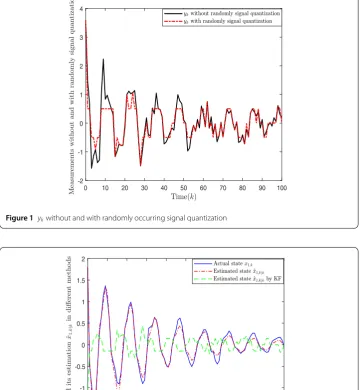
Figure 1 ykwithout and with randomly occurring signal quantization
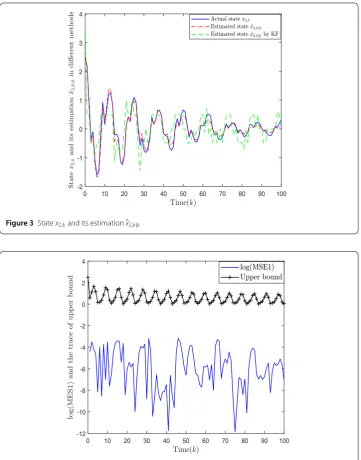
Figure 2Statex1,kand its estimationxˆ1,k|k
The stochastic nonlinearityf(xk,ξk) is given as follows:
f(xk,ξk) =
0.3 0.2
0.2sign(x1,k)x1,kξ1,k+ 0.3sign(x2,k)x2,kξ2,k
,
whereξi,k(i= 1, 2) are zero-mean noises with unity covariances. It is easy to check that f(xk,ξk) satisfies (5)–(7) with
Π1=
0.09 0.06 0.06 0.04
, Γ1=
0.04 0 0 0.09
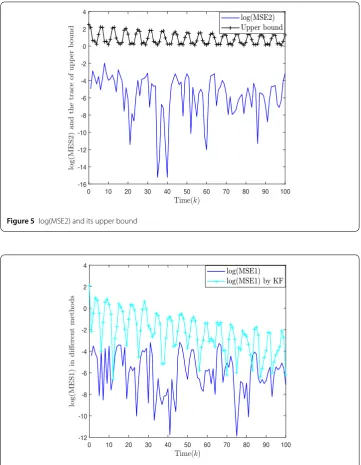
Figure 3Statex2,kand its estimationxˆ2,k|k
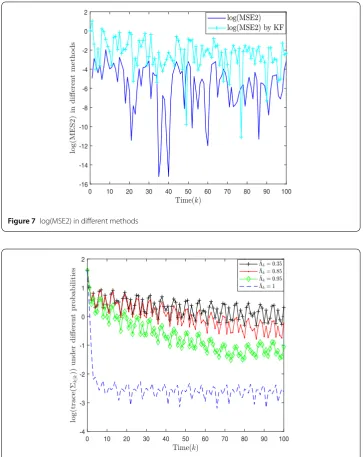
Figure 4 log(MSE1) and its upper bound
The parameters of the logarithmic quantizer are chosenu1
0= 0.5 andχ(1)= 0.01. Other
parameters are given byε1= 0.01,ε2= 1,ε3= 0.1,ε4= 0.01,ε5= 0.01,ε6= 1,γk+1,1= 0.68,
¯
αk= 0.59 andΛ¯k= 0.35. From (18)–(19), we can obtain the filter gain at each sampling
step and plot the relevant simulation results in Figs.1–5with the initial conditionsx0=
ˆ
x0|0= [1.8 2.5]TandΣ0|0= 2.5I2, where MSEi(i= 1, 2) denote the mean-square errors for
the estimations of the statesxi,k(i= 1, 2).
Figure 5 log(MSE2) and its upper bound
Figure 6 log(MSE1) in different methods
confirm that the upper bound is indeed above the mean-square errors. The log(MSEi) (i= 1, 2) caused by the robust variance-constrained filtering algorithm in this paper and the KF strategy are shown in Figs.6–7, in which we can see that the filtering algorithm presented in this paper possesses smaller error than the conventional KF method.
In addition, for the purpose of illustration of the effects from the randomly occurring quantization effects, the traces of the upper bounds are depicted in Fig.8under different occurrence probabilitiesΛ¯k= 0.35,Λ¯k= 0.85,Λ¯k= 0.95 andΛ¯k= 1. From the simulations,
Figure 7 log(MSE2) in different methods
Figure 8 log(trace(Σk|k)) under different occurrence probabilities
6 Conclusions
examined in the conducted topic. When the other types of nonlinearities (e.g. continu-ous differentiable nonlinearities or Lipschitz nonlinearities) exist in the system model, the proposed filtering method can also be applicable as long as the Taylor expansion or ma-trix inequality technique are utilized. Accordingly, the desirable filtering algorithm can be given along the same lines as provided in this paper.
Funding
This work was supported in part by the Outstanding Youth Science Foundation of Heilongjiang Province of China under grant JC2018001, the National Natural Science Foundation of China under Grants 61673141, the Fok Ying Tung Education Foundation of China under Grant 151004, the University Nursing Program for Young Scholars with Creative Talents in Heilongjiang Province of China under grant UNPYSCT-2016029, and the Alexander von Humboldt Foundation of Germany.
Availability of data and materials
Not applicable.
Competing interests
The two authors declared that they have no competing interests.
Authors’ contributions
The two authors contributed equally to this paper. The two authors read and approved the final version of the paper.
Author details
1Heilongjiang Provincial Key Laboratory of Optimization Control and Intelligent Analysis for Complex Systems, Harbin University of Science and Technology, Harbin, China.2School of Science, Harbin University of Science and Technology, Harbin, China. 3School of Engineering, University of South Wales, Pontypridd, UK.
Publisher’s Note
Springer Nature remains neutral with regard to jurisdictional claims in published maps and institutional affiliations.
Received: 26 November 2018 Accepted: 30 January 2019
References
1. Caballero-Águila, R., Hermoso-Carazo, A., Linares-Pérez, J.: Distributed fusion filters from uncertain measured outputs in sensor networks with random packet losses. Inf. Fusion34, 70–79 (2017)
2. Hu, L., Wang, Z., Han, Q.-L., Liu, X.: State estimation under false data injection attacks: security analysis and system protection. Automatica87, 176–183 (2018)
3. Guo, R., Zhang, Z., Gao, M.: State estimation for complex-valued memristive neural networks with time-varying delays. Adv. Differ. Equ.2018, Article ID 118 (2018)
4. Duan, H., Peng, T.: Finite-time reliable filtering for T–S fuzzy stochastic jumping neural networks under unreliable communication links. Adv. Differ. Equ.2017, Article ID 54 (2017)
5. Wang, B., Zou, F., Cheng, J., Zhong, S.: Fault detection filter design for continuous-time nonlinear Markovian jump systems with mode-dependent delay and time-varying transition probabilities. Adv. Differ. Equ.2017, Article ID 262 (2017)
6. Tuan, N.H., Tran, B.T., Long, L.D.: On a general filter regularization method for the 2D and 3D Poisson equation in physical geodesy. Adv. Differ. Equ.2014, Article ID 258 (2014)
7. Park, J.H., Mathiyalagan, K., Sakthivel, R.: Fault estimation for discrete-time switched nonlinear systems with discrete and distributed delays. Int. J. Robust Nonlinear Control26(17), 3755–3771 (2016)
8. Chen, D., Xu, L., Du, J.: Optimal filtering for systems with finite-step autocorrelated process noises, random one-step sensor delay and missing measurements. Commun. Nonlinear Sci. Numer. Simul.32, 211–224 (2016)
9. Al-Gahtani, O., Al-Mutawa, J., El-Gebeily, M.: The interval versions of the Kalman filter and the EM algorithm. Adv. Differ. Equ.2012, Article ID 172 (2012)
10. Xiong, K., Zhang, H., Liu, L.: Adaptive robust extended Kalman filter for nonlinear stochastic systems. IET Control Theory Appl.2(3), 239–250 (2008)
11. Xiong, K., Liu, L., Liu, Y.: Robust extended Kalman filtering for nonlinear systems with multiplicative noises. Optim. Control Appl. Methods32(1), 47–63 (2011)
12. Liu, S., Wei, G., Song, Y., Liu, Y.: Extended Kalman filtering for stochastic nonlinear systems with randomly occurring cyber attacks. Neurocomputing207, 708–716 (2016)
13. Hu, J., Wang, Z., Shen, B., Gao, H.: Quantised recursive filtering for a class of nonlinear systems with multiplicative noises and missing measurements. Int. J. Control86(4), 650–663 (2013)
14. Hu, J., Wang, Z., Alsaadi, F.E., Hayat, T.: Event-based filtering for time-varying nonlinear systems subject to multiple missing measurements with uncertain missing probabilities. Inf. Fusion38, 74–83 (2017)
15. Hu, J., Wang, Z., Liu, S., Gao, H.: A variance-constrained approach to recursive state estimation for time-varying complex networks with missing measurements. Automatica64, 155–162 (2016)
17. Shen, B., Wang, Z., Shu, H., Wei, G.: RobustH∞finite-horizon filtering with randomly occurred nonlinearities and quantization effects. Automatica46(11), 1743–1751 (2010)
18. Dong, H., Wang, Z., Ding, S.X., Gao, H.: Event-basedH∞filter design for a class of nonlinear time-varying systems with fading channels and multiplicative noises. IEEE Trans. Signal Process.63(13), 3387–3395 (2015)
19. Liu, G., Xu, S., Wei, Y., Qi, Z., Zhang, Z.: New insight into reachable set estimation for uncertain singular time-delay systems. Appl. Math. Comput.320, 769–780 (2018)
20. Min, H., Xu, S., Li, Y., Chu, Y., Wei, Y., Zhang, Z.: Adaptive finite-time control for stochastic nonlinear systems subject to unknown covariance noise. J. Franklin Inst.355, 2645–2661 (2018)
21. Hu, J., Wang, Z., Gao, H.: Joint state and fault estimation for uncertain time-varying nonlinear systems with randomly occurring faults and sensor saturations. Automatica97, 150–160 (2018)
22. Kao, Y., Xie, J., Wang, C., Karimi, H.R.: A sliding mode approach toH∞non-fragile observer-based control design for uncertain Markovian neutral-type stochastic systems. Automatica52, 218–226 (2015)
23. Ding, D., Han, Q.L., Xiang, Y., Ge, X., Zhang, X.M.: A survey on security control and attack detection for industrial cyber-physical systems. Neurocomputing275, 1674–1683 (2018)
24. Chen, W., Hu, J., Yu, X., Chen, D.: Protocol-based fault detection for discrete delayed systems with missing measurements: the uncertain missing probability case. IEEE Access6, 76616–76626 (2018)
25. Ma, L., Wang, Z., Hu, J., Bo, Y., Guo, Z.: Robust variance-constrained filtering for a class of nonlinear stochastic systems with missing measurements. Signal Process.90(6), 2060–2071 (2010)
26. Hu, J., Wang, Z., Chen, D., Alsaadi, F.E.: Estimation, filtering and fusion for networked systems with network-induced phenomena: new progress and prospects. Inf. Fusion31, 65–75 (2016)
27. Dong, H., Wang, Z., Gao, H.: DistributedH∞filtering for a class of Markovian jump nonlinear time-delay systems over lossy sensor networks. IEEE Trans. Ind. Electron.60(10), 4665–4672 (2013)
28. Hu, J., Chen, D., Du, J.: State estimation for a class of discrete nonlinear systems with randomly occurring uncertainties and distributed sensor delays. Int. J. Gen. Syst.43(3–4), 387–401 (2014)
29. Wei, L., Yang, Y.: A new approach to quantized stabilization of a stochastic system with multiplicative noise. Adv. Differ. Equ.2013, Article ID 30 (2013)
30. Zou, L., Wang, Z., Han, Q.L., Zhou, D.: Ultimate boundedness control for networked systems with try-once-discard protocol and uniform quantization effects. IEEE Trans. Autom. Control62(12), 6582–6588 (2017)
31. Lyu, M., Bo, Y.: Variance-constrained resilientH∞filtering for time-varying nonlinear networked systems subject to quantization effects. Neurocomputing267, 283–294 (2017)
32. Liu, S., Wei, G., Song, Y., Ding, D.: Set-membership state estimation subject to uniform quantization effects and communication constraints. J. Franklin Inst.354(15), 7012–7027 (2017)
33. Fu, M., Xie, L.: The sector bound approach to quantized feedback control. IEEE Trans. Autom. Control50(11), 1698–1711 (2005)
34. Wang, Z., Dong, H., Shen, B., Gao, H.: Finite-horizonH∞filtering with missing measurements and quantization effects. IEEE Trans. Autom. Control58(7), 1707–1718 (2013)
35. Elia, N., Mitter, S.K.: Stabilization of linear systems with limited information. IEEE Trans. Autom. Control46(9), 1384–1400 (2001)
36. Wang, Y., Xie, L., de Souza, C.E.: Robust control of a class of uncertain nonlinear systems. Syst. Control Lett.19(2), 139–149 (1992)
37. Horn, R.A., Johnson, C.R.: Topics in Matrix Analysis. Cambridge University Press, New York (1991)
38. Reif, K., Günther, S., Yaz, E., Unbehauen, R.: Stochastic stability of the discrete-time extended Kalman filter. IEEE Trans. Autom. Control44(4), 714–728 (1999)
39. Ma, L., Wang, Z., Lam, H.K., Kyriakoulis, N.: Distributed event-based set-membership filtering for a class of nonlinear systems with sensor saturations over sensor networks. IEEE Trans. Cybern.47(11), 3772–3783 (2017)
40. Ma, L., Wang, Z., Han, Q.-L., Lam, H.K.: Envelope-constrainedH∞filtering for nonlinear systems with quantization effects: the finite horizon case. Automatica93, 527–534 (2018)