University of South Carolina
Scholar Commons
Theses and Dissertations
2015
Principals’ Preparedness For, And Experiences of,
Crisis Events At School
Patricia Daughtry
University of South Carolina
Follow this and additional works at:https://scholarcommons.sc.edu/etd Part of theEducational Administration and Supervision Commons
This Open Access Dissertation is brought to you by Scholar Commons. It has been accepted for inclusion in Theses and Dissertations by an authorized administrator of Scholar Commons. For more information, please [email protected].
Recommended Citation
Daughtry, P.(2015).Principals’ Preparedness For, And Experiences of, Crisis Events At School.(Doctoral dissertation). Retrieved from
PRINCIPALS’ PREPAREDNESS FOR, AND EXPERIENCES OF, CRISIS EVENTS AT SCHOOL
by
Patricia Daughtry
Bachelor of Science Florida State University, 1987
Master of Education Georgia State University, 1993
Specialist in Education Georgia State University, 1994
Submitted in Partial Fulfillment of the Requirements
For the Degree of Doctor of Philosophy in
Educational Administration
College of Education
University of South Carolina
2015
Accepted by:
Zach Kelehear, Major Professor
Mitchell Yell, Committee Member
Edward Cox, Committee Member
Susan Bon, Committee Member
DEDICATION
"Knowing how to respond quickly and efficiently in a crisis is critical to ensuring
the safety of our schools and students. The midst of a crisis is not the time to start figuring out who ought to do what. At that moment, everyone involved – from top
to bottom – should know the drill and know each other.” Margaret Spellings
ACKNOWLEDGEMENTS
How lucky I am to have the most supportive, caring, and, wonderful people in my
life, who have cheered me on in the pursuit of my dreams. I am so very grateful for my
children, Cooper Davis Daughtry and Hayden Burns Daughtry, who have been my
inspiration throughout this journey and who patiently awaited its completion, and, to my
parents, Alice and Fred Mariani, who so generously funded this project and supported me
till the end. To Mary Stahl, Rhonda Jur, and Mary Frances Hanckel, who accepted the
responsibility of routinely asking me where I was in the process so I would be required to
respond with an update, you are the best! To all of my friends and family who
encouraged me ever onward, mainly John Warchol, Debbie Davis, Nancy Dye, Kathy
Fletcher Giner, Rebecca Bracy, Lori Mose, Leah Krider, Matthew Ernst, and, many
more, I could have never done this without you. Finally, to Jim Spencer, who was my
perpetual sounding board and research assistant, I am most appreciative.
This paper would have never been completed had it not been for the flexibility
and willingness of my dissertation chair, Dr. Zach Kellehear. For that I am forever
indebted. To my dissertation committee, Dr. Edward Cox, Dr. Mitch Yell, and Dr. Susan
Bon for stepping in at the last minute to help me finish, I am most grateful. Thank you
ABSTRACT
In this study, principals in the low country region of South Carolina were
surveyed to assess their perceived preparedness for, and experiences of, crisis events in
their schools. This study replicated a study, conducted by Adamson and Peacock (2007),
which was presented in an article entitled Crisis Response in the Public Schools: A
Survey of School Psychologists’ Experiences and Perceptions. Although their research
was important, the population was limited to school psychologists. A literature review
revealed no research on lessons learned from school principals. Since principals are
responsible for managing the school from the moments following a crisis through the
aftermath, information obtained from them is critical in understanding the most effective
crisis response practices.
The population of this study consisted of acting principals in the South Carolina
low country. A final sample size of 35 participants completed an on-line survey
comprised of the same questions (with the addition of three) that Adamson and Peacock
asked of school psychologists. Results of the study were analyzed using descriptive
statistics to determine the frequency and response rate for each item. The findings of this
study suggested that although more than 70% of the principals who participated in the
study had experienced a significant crisis event, only half of the participants believed
they were sufficiently prepared for such an event. Although nearly all of the principals
had received training on crisis intervention, nearly half believed they needed additional
The study also assessed the principals’ perceptions of the most effective crisis
prevention, intervention, and postvention strategies. The results indicated that they
recognized the importance of having pre-existing crisis teams, pre-existing crisis plans,
and practicing drills for potential threats. However, it appeared that the participants in
this study were more likely to endorse those activities they considered an innate function
of their role as the school leader such as notifying parents, contacting emergency
services, and conducting group meetings. They were less likely to endorse activities
implemented by other members of the crisis team, such as psychological first aid,
TABLE OF CONTENTS
DEDICATION ... iii
ACKNOWLEDGEMENTS ... iv
ABSTRACT ...v
LIST OF TABLES ... ix
LIST OF FIGURES ...x
CHAPTER 1INTRODUCTION TO THE STUDY ...1
STATEMENT OF THE PROBLEM ...1
A PERSONAL PERSPECTIVE ...3
PURPOSE OF THE RESEARCH ...4
RESEARCH QUESTIONS ...5
DELIMITATIONS AND ASSUMPTIONS OF RESEARCH ...5
DEFINITION OF TERMS ...6
ORGANIZATION OF REMAINING CHAPTERS ...9
CHAPTER 2LITERATURE REVIEW ...10
BEFORE A CRISIS EVENT ...11
CRISIS PREVENTION AND INTERVENTION MODELS ...17
AFTER A CRISIS ...25
LEADERSHIP IN A TIME OF CRISIS ...33
CONCLUSIONS ...35
RESEARCH DESIGN ...38
POPULATION ...38
INSTRUMENTATION ...39
DATA COLLECTION PROCEDURES ...41
DATA ANALYSIS ...42
LIMITATIONS...44
SUMMARY ...45
CHAPTER 4 RESULTS ...47
DESCRIPTIVE DATA ...48
QUANTITATIVE FINDINGS ...48
SUMMARY ...66
CHAPTER 5 CONCLUSIONS AND DISCUSSION ...68
PURPOSE OF THE STUDY ...68
METHODOLOGY ...71
SUMMARY OF THE FINDINGS ...73
IMPLICATIONS ...80
RECOMMENDATIONS FOR FURTHER RESEARCH ...81
CONCLUDING REMARKS ...83
REFERENCES ...85
APPENDIX A–INSTITUTIONAL REVIEW BOARD APPROVAL LETTER ...89
APPENDIX B – E-MAIL REQUESTING PARTICIPATION IN THE STUDY ...90
LIST OF TABLES
Table 4.1 Have experienced a crisis event which broadly impacted the
school environment ...49
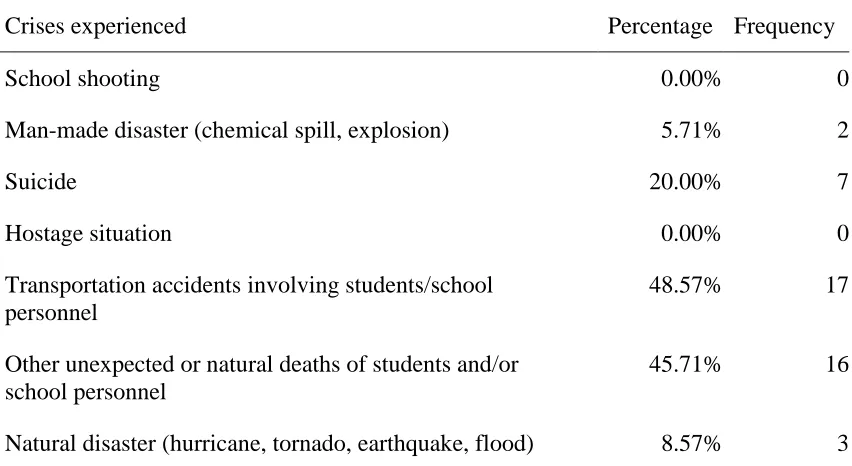
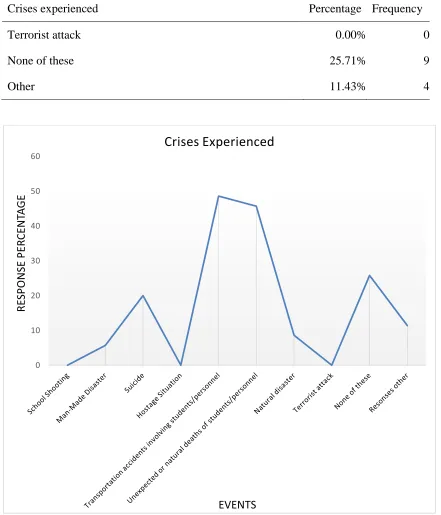
Table 4.2 Crises experienced that broadly impacted the school environment ...50
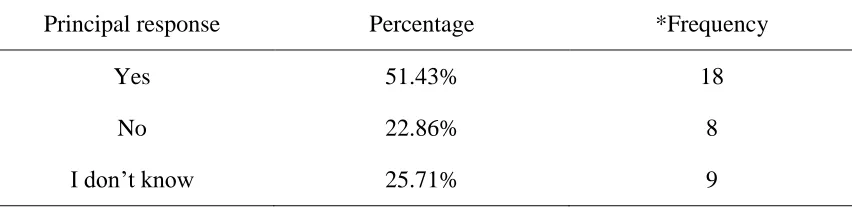
Table 4.3 Is the training sufficient? ...52
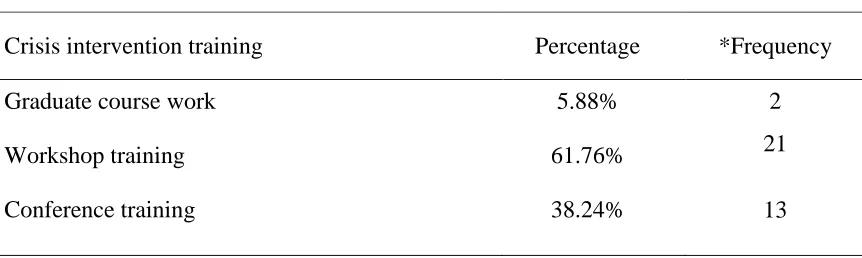
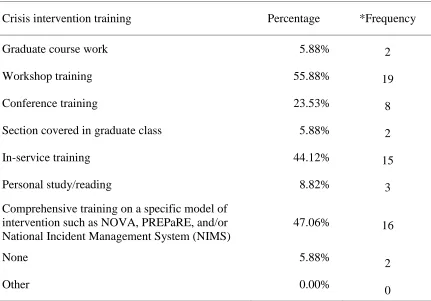
Table 4.4 Crisis intervention training received ...53
Table 4.5 Crisis intervention training needed to be sufficiently prepared ...55
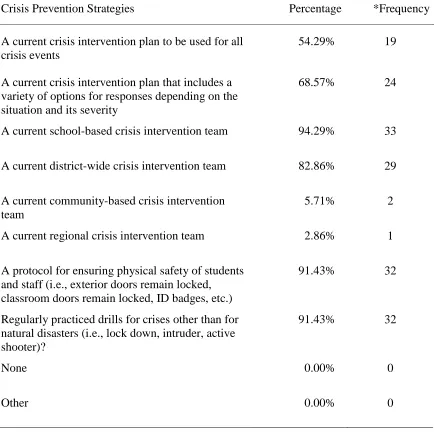
Table 4.6 Crisis prevention strategies currently established ...58
Table 4.7 Crisis intervention responses to the most severe cases ...60
Table 4.8 Most effective crisis prevention, intervention, and postvention strategies ...62
Table 4.9 Evaluation of crisis team response ...65
LIST OF FIGURES
Figure 4.1 Crises experienced that broadly impacted the school environment ...51
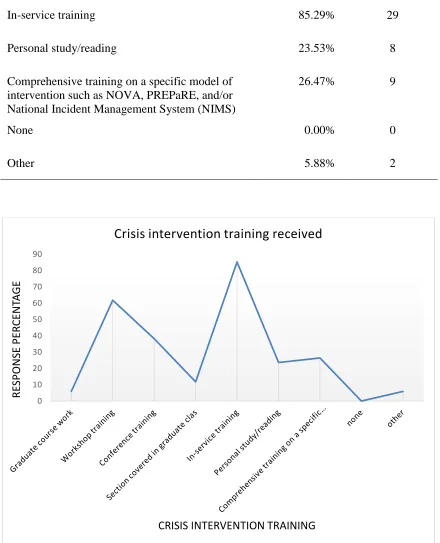
Figure 4.2 Crisis intervention training received ...54
Figure 4.3 Crisis intervention training needed to be sufficiently prepared ...56
Figure 4.4 Crisis prevention strategies currently established ...59
Figure 4.5 Crisis intervention responses to the most severe cases ...61
Figure 4.6 Most effective crisis prevention, intervention, and postvention strategies ....63
CHAPTER 1
INTRODUCTION TO THE STUDY
Statement of the Problem
It won’t happen to me is not a plan. It is not a matter of whether a crisis will
occur in a school it is a matter of when a crisis will occur in a school. Dramatic and heart
wrenching events such as the shooting deaths of defenseless students at Sandy Hook and
Columbine have brought national attention to the fact that school tragedies happen, even
in the safest neighborhoods. Despite the extensive media coverage of these events, the
National Center for Education Statistics reported from the most recent data collected on
this subject that between July 1, 2010, and June 30, 2011, there were only 31
school-associated violent deaths in all of the elementary and secondary schools in the United
States (Retrieved from http://nces.ed.gov/programs/crimeindicators/ crimeindicators2013/
ind_01.asp, June 19, 2014). Of these, 25 were homicides and 6 were suicides. When
“instances of homicide and suicide of school-age youth at school were combined, there
was approximately 1 homicide or suicide for each 3.5 million students enrolled,” making
this type of crisis event quite rare(Retrieved from https://nces.ed.gov/ programs
/crimeindicators/crimeindicators2013/ind_01.asp, June 29, 2015).
However, crisis events are not just school shootings or suicides. They include
weather events and sudden deaths of those who work in or attend a school. It is
important to note that research indicates unintentional injuries are the leading cause of
injuries are fairly common and include car accidents, sports injuries, and drownings. In
addition, schools may be affected by violent acts in the community, terrorist attacks,
hurricanes or tornadoes. When considering all the possible types of events, the likelihood
of a crisis occurring in any school greatly increases. In fact, in a study of 228 School
Psychologists across the country, 93% reported that they had experienced a serious crisis
event in their schools (Adamson & Peacock, 2007, p. 749). Crisis events are unexpected
and the impact they have on staff, students, and the rest of the population is
unpredictable. School leaders need to be prepared for such events so they can respond
appropriately to the physical safety and emotional well-being of those affected since
“responding to crises and improving school safety are critical to the overall mission of
learning at school” (Cowan & Rossen, 2013, p. 8).
What are the most effective practices for school administrators to use when
preparing for and responding to a crisis? The answer to this question is unknown.
Although Adamson and Peacock (2007) conducted a survey of School Psychologists
regarding this issue, no studies have been found on the lessons learned from those who
are responsible for leading the response in the minutes, hours, days, weeks and months
following a crisis: the school principals. Information obtained from school principals is a
void in the literature but is essential to understanding the most effective crisis response
practices since school principals are the first to be notified of a crisis, they are responsible
for implementing and following a crisis plan, they are responsible for managing the
school throughout the crisis, they are responsible for ensuring that the school returns to
its regular routine, and they are responsible for maintaining a safe and productive
This study will adapt the Adamson and Peacock study to school principals to
determine whether they have experienced a crisis event, what they learned from the
experience, and how prepared they were for the crisis event. The findings of this study
will provide data on effective crisis response practices to guide in the establishment of
research-based crisis management training, procedures, and protocols for schools.
A Personal Perspective
As a member of the school district crisis team, I arrive at a school the day after a
tragedy to provide support for the students and staff. In the past, I have responded to
numerous incidents in which a student or faculty member died, either on campus or in the
community. I have helped schools move forward in the aftermath of tragedies such as the
sudden death of a student in a bathroom in the middle of the school day, the drowning of
a student while crabbing on the weekend, the shooting death of a student only steps away
from the district discipline school, and the suicide of a high school student who set
himself on fire while walking toward the school’s main entrance, just after the first bell
had rung. None of these events was expected but all required a swift and well executed
response so that students and staff could return to a sense of normalcy as quickly as
possible.
Having a well thought out plan has been proven necessary in reducing the impact
and chaos in the days following a crisis event and allows those affected to focus their
energy on the recovery process. The school administrator is the first person to be
informed of a tragedy and is responsible for calling 911, contacting the district’s security
and emergency response department, notifying the superintendent, and following the
followed, the principal is left to manage the incident to the best of his capabilities, until
assistance arrives. Since coordinating a district level crisis response may take hours and
possibly may not be fully implemented until the following school day, it is critical that
the one person responsible for maintaining order and safety in the moments immediately
following a crisis event be sufficiently prepared and trained.
In responding to these events, I am always struck by the variability in the
principal’s skill level and methods used. For example, when the student died in the
school bathroom, the principal was forced to address and attempt to squelch the onslaught
of rumors regarding the cause of death, such as murder or a drug overdose, which divided
the student body. Immediately following the shooting death of the student just off
campus, the principal made the glaring mistake of permitting buses to leave down the
very street where the victim’s body still laid. When students were dismissed from the
school where the student had set himself on fire, they were inadvertently exposed to a
smell of burning fuel and the melted remains of his shoes, still present on the sidewalk.
Unfortunately, the principals in these situations were solely responsible for implementing
a seamless crisis response but did not possess the knowledge or training to effectively
reduce the trauma their students experienced. In all of these instances, appropriate
training of district principals may have resulted in a better executed response.
Purpose of Research
The purpose of this study is to determine the level of crisis preparedness for, and
Research Questions
The level of preparedness and experiences of school principals in crisis response
will be determined by answering the following questions:
1. To what degree have school principals in the low country region of South
Carolina experienced a crisis event in their school?
2. Do principals in the low country region of South Carolina believe they are
sufficiently trained to respond to a crisis event?
3. What training have principals in the low country region of South Carolina
received in crisis response?
4. What additional training do principals in the low country region of South Carolina
believe should be provided?
5. What postvention strategies and recovery practices were implemented
immediately following a crisis event?
6. What prevention, postvention, and recovery practices did school principals in the
low country region of South Carolina believe to be the most effective?
Delimitations and Assumptions of Research
Delimitations to this study include the narrowing of those for whom data is
collected to only the self reports of principals in the low country region of South
Carolina. Since the low country region is mostly rural and suburban, the ability to
generalize the findings to districts that are more urban may be limited. In addition, the
data were collected during a brief time frame, from April 24th of 2015 through May 14th
to the on-line survey link that was sent to them electronically via email. As a result the
sample size of 35 is relatively small, which is another limit of the research.
Definition of Terms
For the purposes of this study, the following terms were used as defined below:
1. Caplan Crisis Intervention Theory – Caplan Crisis Intervention Theory was
developed by Gerald Caplan in 1964 as the first documented model of crisis
intervention. It is based on the belief that a crisis state is characterized by a
sense of disequilibrium and an inability to cope, which progresses through a
series of well defined stages. With appropriate assistance, the crisis will
typically be resolved in approximately 4-6 weeks when the individual is able
to return to a steady state of being.
2. Crisis Event – A school-based crisis event can be any natural disaster, trauma,
tragedy, or unexpected death that results in a severe emotional response from
students, staff, and/or the community.
3. Crisis Intervention – A school-based crisis intervention refers to a range of
interventions and processes that schools implement in response to a crisis
event.
4. Crisis Response Team – A Crisis Response Team is a pre-established group of
trained individuals who provide a coordinated response effort following a
school-based crisis event.
5. Crisis Plan – A Crisis Plan is a pre-established set of procedures and practices
6. Grief Counseling – Grief Counseling is a form of long-term psychotherapy to
assist individuals in overcoming the death of someone close to them or in
overcoming a traumatic event.
7. Incident Command System (ICS) – ICS was developed in the early 1970s as a “standardized on-scene incident management concept designed specifically to
allow responders to adopt an integrated organizational structure equal to the
complexity and demands of any single incident or multiple incidents without
being hindered by jurisdictional boundaries” (Retrieved from
https://www.osha.gov/SLTC/etools/ics/what_is_ics.html, September 9, 2014).
8. National Incident Management System (NIMS) – ICS changed into NIMS in
the 1980s. It is a “systematic, proactive approach to guide departments and
agencies at all levels of government, nongovernmental organizations, and the private sector to work together seamlessly and manage incidents involving all threats and hazards—regardless of cause, size, location, or complexity—in order to reduce loss of life, property and harm to the environment” (retrieved
from http://www.fema.gov/national-incident-management-system, September 9, 2014).
9. NOVA model – The NOVA model crisis response training model provides
specific techniques and protocols to traumatized people, and was originally
developed in 1987 by the National Organization for Victim Assistance .
10. Postvention – Postvention is a set of intervention strategies, processes, and
techniques implemented by the Crisis Response Teams, following a crisis
11. PREPaRE model – PREPaRE model is a comprehensive crisis prevention and
intervention model, adopted by the National Association of School
Psychologists (NASP) in 2006, to align with the National Incident
Management System (NIMS)
12. Psychological Debriefings – Psychological debriefings are large group, single
sessions of therapy, which occur shortly after a crisis event. They are
designed to mitigate the effects of the event by promoting some form of
emotional processing of the event and by encouraging recollection and/or
reworking of the event.
13. Psychological First Aid – Psychological First Aid is a therapeutic technique
used immediately following a crisis event to reduce the initial stress of the
event and provide coping skills to deal with the event.
14. Psychological Triage – Psychological Triage is the the process of immediately
identifying those individuals who need psychological first aid or more
intensive supports following a crisis event.
15. Reunification Site – Reunification Site is an off-site location designated to
reunite family members and provide psychological first aid in order to begin
the process of returning to a sense of normalcy.
16. Safe Havens – Safe Havens are established after a crisis event, typically in an
off-site location, to provide psychological triage, to identify those individuals
requiring psychological first aid or more intensive treatment, and to provide
information to students, staff, family, and the community about the event and
Organization of the Remaining Chapters
This study is organized in a traditional fashion. Chapter Two is an examination of
the literature which already has been conducted on crisis prevention and postvention in
schools. Topics within the literature review include the historical context of crisis
response, prevention and planning for a crisis event, reacting and responding to a crisis
event, and the recovery process following a crisis event. Chapter Three outlines and
explains the design and methodology of the research. This section includes the study
design, rationale, participation explanations, data gathering methods, and data-analysis
procedures. The positionality of the research, the subjectivity, and the limitations of the
study are also addressed in Chapter Three. The data, the associated analysis, and the
study findings are found in Chapter Four. Finally, Chapter Five provides a discussion of
the findings which includes the implications of the study and thoughts about the
CHAPTER 2
LITERATURE REVIEW
School crisis events are not rare. Although the likelihood of a shooting death
occurring in a school is quite low, other tragic events, which may require a crisis
response, such as sudden deaths, are fairly common. In fact, according to the national
Centers for Disease Control and Prevention (CDC), unintentional injuries are the leading
cause of death in school aged children, with over 9,000 per year. Unintentional injury
deaths include those resulting from motor vehicle accidents, drowning, suffocation,
poisoning, fires, burns, falls, and participation in sports and recreation activities
(Retrieved from http://www.cdc.gov/safechild/NAP/background.html, January 2, 2015).
School administration may also need to respond to severe weather events, terrorist
attacks, and the death of students or staff by suicide, homicide, or illness.
When these events occur, it is the school principal who must respond immediately
and effectively with best practices in order to reduce the impact of the tragedy on the
school community. Unfortunately, although many peer reviewed articles can be found on
crisis prevention and response, there is little empirical research on specific strategies that
have been proven effective. A review of the literature on this topic reveals that “few
accounts of responses to school-based crises have been published to date and most that
have provided very general information” (Crepeau-Hobson, et al., 2012, p. 208). As a
result, this review will attempt to offer an overview of the data available to inform best
unexpected crisis event in their school and to identify where additional research should
be conducted.
This chapter begins with a discussion of the preventative measures that are now
commonly used to avert violent school acts, followed by a discussion of the standard
processes used in crisis preparedness, then an explanation of why schools should develop
a crisis response plan prior to an event, and concludes with a presentation of the crisis
response intervention strategies frequently cited in the literature. In reviewing the
literature, it is clear that little research is available on the training and preparedness of
school staff or the practices schools have found to be most effective in reducing the
impact of a crisis event.
Before a Crisis Event
Despite the fact that information regarding how to prepare for and respond to
crisis events in schools has been available for a number of years, administrators continue
to neglect their responsibilities when pre-planning for these tragedies. For example,
following the shooting death of a middle school principal by one of his students in a
small, Midwestern school, the school-based team then developed a crisis response plan
for the days that followed. Unfortunately, their plan dictated that only one member of the
team would be available at the school at a time, which was woefully inadequate in
meeting the needs of all of those affected. Furthermore, the impact on students appeared
to be the primary consideration, with little thought given to the impact on other school
staff. For instance, the only assistance provided to teachers was information on how to
talk to students, not information on how they could manage their own grief issues
noted that adequate staffing and intervention materials are important points to consider
when formulating a crisis intervention plan.
Another example of poor crisis response came from an article by Fibkins (1998,
p. 91) which described his principal’s planned response to the death of a terminally ill,
beloved teacher, and coach. Despite the thoughtful plan that had been previously
developed, on the actual day the teacher died, the school was universally informed by
way of an announcement made over the public address system, something that several
articles deemed far too impersonal for such sensitive notifications. Finally, in Lessons
Learned from School Crises and Emergencies, Vol. 1, Issue 2, Fall 2006, the U.S.
Department of Education provided a synopsis of how one middle school responded,
without any prior planning, to the death of seven of its students in a single car accident.
Although the school Principal reacted quickly in coordinating with the Director of
Counseling Services to notify staff of the accident, establishing counseling procedures,
developing a protocol for working with the media, and creating a crisis team and
assigning roles to its members, nothing was in place prior to the incident. By
“developing a step-by-step plan that clarifies tasks to be performed before, during and
after a crisis, schools and school districts can capitalize on the strengths of both
professionals and volunteers, rather than spending time directly after an incident creating
protocols and procedures from scratch” (p. 8).
Physical Safety
Ever since a series of school shootings captured national attention in the 1990s,
efforts have been made to prevent more of these events from occurring by making
these horrific events could be repeated. The focus has been primarily on physical safety
and security and has resulted in extreme measures such as metal detectors and
surveillance cameras. Today, when entering an American school, one must first be
deemed to be of no threat before being buzzed through the front door, identification
badges are donned by everyone in the building, classroom and exterior doors remain
locked at all times, a color coded system is implemented for any possible intrusion, and
evacuation and other safety drills are routinely practiced. As Cindy Stevenson, who was
the Deputy Superintendent of the Jefferson County School District at the time of the
Columbine shootings, said, “We are a completely different district than we were ten years
ago…we are far more attentive to safety and security. We are more alert; we are looking
at safety and security plans. Who was looking at safety and security 10 years ago?”
(Vail, 2009, p. 23). The implementation of these universally adopted physical safety
protocols may make schools feel safer but they are just a small part of an effective crisis
prevention and intervention plan.
Crisis ResponseTeams (CRTs)
Preventing intruders from entering the building may reduce the chance of a
hostage situation or a school shooting but would not make a school any more prepared
for one of the more likely crisis events. In these situations, physical safety would not be
a factor. There is substantial empirical evidence to support that the most important step
in developing an effective response would be creating a Crisis Response Team (CRT),
before it is ever needed. Streufert suggested that the first three steps in creating a CRT
should be recruiting members, writing a mission statement and identifying
on the personnel available, the training of the staff, and what the members felt was most
important in their mission. Crepeau-Hobson, Seivering, et al. (2012) stated that in public
schools, there should actually be two types of CRTs: building level teams and district level teams. Building level teams are “typically comprised of the school psychologist, school nurse, school counselor, administrator, teachers, and/or support staff. District level teams are usually comprised of personnel with mental health backgrounds
exclusively (i.e., school psychologists, school social workers), as well as administrators who serve in a supportive role to the on-site administrator” (p. 210).
In preparing for more catastrophic and far-reaching events, community agencies should also be included in the district level response. When establishing any CRT, it is critical that “members of all crisis teams should have adequate training in crisis response and recovery” (Crepeau-Hobson, Seivering, et al., 2012, p. 210). If teams are
continuously trained, they are ready to “move into a situation where emotions run high”
(Callahan & Fox, 2008, p. 92) and are immediately available to provide psychological
first aid, which “includes helping individuals with physical safety, practical needs,
connecting with social supports, education regarding typical trauma symptoms, and
support for making necessary decisions” (Epstein, 2004, p. 309).
Crisis Plans
Once the building level and district level teams have been established, theyneed to
begin planning for any impending crisis events. Virtually all of the scholarly articles the
researcher located, on the topic of how a school should or did respond to crises, asserted
the importance of pre-planning for a tragedy with the establishment of a crisis
& Roberts, 2005; Collison, et al. 1987; Meilman & Hall, 2006). The need for crisis
planning was reiterated by one of the mental health professionals who participated in the
recovery process at Sandy Hook when she stated, “You can’t really fully prepare for the
truly unthinkable like this, but you can be prepared enough to take appropriate action and
then recognize how you have to adjust your plan to reality going forward. In our case,
this will be a long-term, ongoing process” (Cowan & Rossen, 2013, p. 11). Furthermore,
after the sudden death of one of her students by natural causes, Carey reported that “my
school made it through my most difficult day as a principal because I had a crisis
management plan” (2008, p. 37). In addition, following the death of four of their
students in a car crash, Grant and Schakner reported:
We got through the crisis because we had a plan, because we improvised
appropriately, because outside support people knew what they were doing,
because we communicated with one another and with the community, but perhaps
mainly because people rose above themselves to selflessly help one another.
(1993, p. 9)
After enduring the shooting death of a principal, without a crisis plan in place, Collison,
et al. stated that, “a specific tragedy cannot be prepared for, but plans can be made for
different kinds of events (e.g.: shootings, violent storms, suicides, teacher or student
deaths)” (1987, p. 390). Finally, Meilman & Hall (2006, p. 383) stated that, prior to
1998, their university had provided postvention in a non-systematic manner, with varying
departments who possessed varying philosophies, which made developing a single
process problematic. In order to approach crises more consistently, a team was
work well and developed intuitively and organically based on what worked, what felt
right, what made sense, and what was reproducible” (2006, p. 383).
Crisis Protocols
Several of the articles reviewed provided specific steps schools should follow or
did follow in a crisis event. Two of the best examples, which were specifically designed
for when a student dies on a college campus, as opposed to a K-12 school, were provided
by Halberg (1986, p. 411) in the form of a “crisis intervention flow sheet” and by
Callahan and Fox (2008, p. 90) in the form of a “checklist of activities” to be completed
by a campus coordinator within the first three days following the event. These simple
and easy to comprehend examples provide important information on assigning roles,
identifying possible candidates for counseling, notifications, communications, legal
issues, financial matters, funeral procedures, and memorials. Protocols such as these are
crucial, because, as Callahan & Fox stated, “it is in times of crisis that (administrators)
often forget to do that one thing that would have made the response better and stronger
because they, too, can get caught up in the emotion of the moment” (2008, p. 93).
One general example of a K-12 crisis intervention model was provided by Carey
in her 2008 article Gone but not Forgotten: Grief at School, which describes in detail “six
key components that must be adapted depending on the particular incident and available
personnel” (p. 37). Those components are: designated roles, effective and targeted
communication, schedule for the day, security plan, basic counseling strategies and
follow-up activities (Carey, 2008). Carey elaborates on all of these components so as to
Grant & Schakner (1993), indicated that a thoughtful plan was in place prior to
the death of four students from the same school in a car accident, yet the article only
relays limited information on the eight steps followed in response to the event. Those
steps included: immediately identifying and assigning support staff, designating a center
of operations, determining who would address the media, developing a process for
disseminating information to students and staff, assessing which students needed more
intensive care and providing that level of support, contacting and communicating with the
families of the deceased, and briefing the school board members.
Crisis Prevention and Intervention Models
Recently, educators have begun to recognize the need for more comprehensive
crisis response models in schools. As Knox and Roberts noted in their literature review
of Crisis Intervention and Crisis Team models, “there is limited empirical evidence
documenting the effectiveness of school crisis intervention programs,” yet,
“establishment of evidence-based procedures is critical, and evaluation procedures should
be included in a school crisis response model to improve planning and intervention at the
macro and micro levels” (2005, p. 94). Although there are no evidence-based crisis
response models, there are several models that have been commonly used for a number of
years.
Caplan Model
The first documented model of crisis intervention, which has been practiced for
decades after events requiring a community-wide response, is the Crisis Intervention
Model. The Crisis Intervention Model was developed in 1964 by Gerald Caplan, who is
reviewing the literature, Caplan’s method would be more accurately described as a
conceptual framework for understanding crisis prevention, development, and intervention
within the community at large, as opposed to an actual model of crisis response (Hoff,
Hillisey & Hoff, 2011, p. 11-12). As Caplan states, he focused on two issues:
(1) developing a list of biopsychosocial stressful events and processes that were
thought to increase the risk of future mental disorder in an exposed population;
and (2) studying so-called life crises, namely, limited time periods of upset in the
psychosocial functioning of individuals, precipitated by current exposure to
environmental stressors, which appeared to be turning points in the development
of mental disorder. (1989, p.3)
Caplan hoped to inform community leaders of effective preventive and intervention
techniques to be used with individuals in crisis and to help make health, education, and
welfare services more preventative. Although Caplan’s model is valuable when working
with individuals who have experienced a stressful event, it is not comprehensive enough
to address all of the other issues that arise when a crisis occurs in a school.
NOVA Model
For more than 26 years, the National Organization for Victim Assistance (NOVA)
has been providing national crisis team training, consultation, and response services in
the aftermath of a critical incident as part of its mission “to champion dignity and
compassion for those harmed by crime and crisis” (Retrieved from
http://www.trynova.org/help-crisis-victims/overview, January 2, 2015). Like the Caplan
model, the NOVA training model is designed for responding to any large scale event
in schools. Nevertheless, since NOVA’s belief is that, regardless of the nature of the
traumatic event, the typical human reactions to trauma are common, this model has been
universally adopted and is frequently used as a school-based crisis response method. It
should be noted that NOVA conducts its own trainings or trains trainers in its model of
crisis response. Those trained include any member of the community who may be called
upon after a critical event, such as members of law enforcement, mental health
professionals, victim advocates, school counselors, and first responders (Retrieved from
http://www.trynova.org/help-crisis-victims/overview, January 2, 2015).
The NOVA model of trauma mitigation is based upon the belief that there are
“three tasks essential to reestablish precrisis levels of functioning: safety and security,
ventilation and validation, and prediction and preparation” (Crepeau-Hobson, et al., p.
214). The first task involves reconnecting victims with their loved ones and ensuring that
they feel secure. The second involves sharing their stories and validating their feelings.
The third task involves victims preparing for what is next (Crepeau-Hobson, et al., p.
214). When schools adopt the NOVA crisis intervention model, it ensures that there is
consistency in practices when including community members in school-based crisis
response. However, since the model is implemented only after the crisis team has been
informed of a critical event and asked to be deployed, it does not include any prevention
measures, nor does it include long-term follow-up or after care, which appear to be
critical components of an effective school based crisis plan.
U.S. Department of Education Model
In August of 1998,one year prior to the Columbine High School Shootings, , the
intervention of violence entitled Early Warning, Timely Response: A Guide to Safe
Schools. In this guide, readers are provided information on what makes schools safe, the
early warning signs of school violence, what schools and communities can do to prevent
violence, how to obtain help for troubled youth, and how to respond in the event of a
violent act at school. Although some information is given on crisis response, this guide is
unique in that its focus is on preventing violence from occurring in a school.
At the end of the guide, some specific information is offered on the importance of
developing a crisis response team and a crisis response plan. Two key components of the
plan should be “intervening during a crisis to ensure safety,” and, “responding in the
aftermath of tragedy” (p.27). When the crisis team meets, it should establish plans for
teacher and staff training, it should determine how it will follow district and state
procedures, it should involve relevant community agencies such as emergency
responders, and it should identify students and situations that have the potential for
violence.
Finally, the guide provides direction on how to intervene in the event of a crisis.
Specifically, it states that “immediate, planned action, and long-term, post-crisis
intervention” will “reduce chaos and trauma” (p. 28). In order to be most effective, plans
should be made for evacuation procedures and the identification of safe areas, an
effective communication system, and securing immediate assistance from law
enforcement. Continuous monitoring and review of the plan through inservice training,
written manuals, and practice of the early warning signs was also recommended. One
could give principals a list of steps to take during and after a critical incident at school (p.
29).
PREPaRE Model
In 2006, the National Association of School Psychologists (NASP) released their
first crisis response curricula specifically designed for K-12 schools to align with the
National Incident Management System (NIMS). The NASP PREPaRE: School Crisis
Prevention and Intervention Training Curriculum “reflects the components of school
crisis response that occur during the four phases of crisis management: prevent and
prepare for psychological trauma, reaffirm physical health and perceptions of security
and safety, evaluate psychological trauma risk, provide interventions, respond to
psychological needs, and examine the effectiveness of crisis prevention and intervention”
(Reeves, Brock, et al., 2008, p. 11). It is designed to train school-based professionals
prior to a crisis so that they will know what specific steps to take in the event of a crisis.
The adoption and implementation of this model is important because it takes
school-based crisis teams through every step involved in a tragedy, from the beginning moments
of learning of the event all the way through to the long term grief counseling of those
affected.
Federal Model
In March of 2011, in the aftermath of several school-based tragedies, it became
clear that universal crisis response practices should be developed. As a result,
Presidential Policy Directive (PPD) 8 was signed by President Obama, to inform national
preparedness efforts. Subsequently, The US Department of Education developed its
the Practical Information on Crisis Planning: A Guide for Schools and Communities
which was produced in January of 2007. Unlike the Caplan and NOVA models, this
guide is designed specifically for schools, and, like the PREPaRE model, involves
community agencies. The five mission areas for school preparedness referenced in the
PPD are prevention, protection, mitigation, response, and recovery (U.S. Department of
Education, Office of Elementary and Secondary Education, Office of Safe and Healthy
Students, Guide for Developing High-Quality Emergency, Operations Plans for
Institutions of Higher Education, 2013, p. 2). These terms are more easily understood when associated with the commonly used terms of before, during, and after.
Prevention, Preparedness, and Mitigation typically occur before an event.
Prevention means the “capabilities necessary to avoid, deter, or stop an imminent crime
or threatened or actual mass casualty incident” (U.S. Department of Education, 2013, p.
2). Protection means the “capabilities to secure schools against acts of violence and
manmade or natural disasters” and “focuses on ongoing actions that protect students,
teachers, staff, visitors, networks, and property from a threat or hazard” (U.S. Department
of Education, 2013, p. 2). Mitigation means the “capabilities necessary to eliminate or
reduce the loss of life and property damage by lessening the impact of an event or
emergency” and “reducing the likelihood that threats and hazards will happen” (U.S.
Department of Education, 2013, p. 2). Before an incident, schools should form a
collaborative planning team, understand the situation, determine goals and objectives,
develop, review and approve the plan, and, finally, train on and maintain the plan.
The fourth mission, Response, occurs during the event and refers to the
“capabilities necessary to stabilize an emergency once it has already happened or is
certain to happen in an unpreventable way; establish a safe and secure environment; save
lives and property; and facilitate the transition to recovery” (U.S. Department of
Education, 2013, p. 2). In the guide, it is suggested that teams pre-determine the
locations and procedures for evacuation, lockdown, shelter-in-place, accounting for all
persons, communication systems, family reunification, recovery, and public health. In
addition, the guide includes a comprehensive section on Active Shooter situations.
Recovery means “the capabilities necessary to assist schools affected by an event
or emergency in restoring the learning environment.” Recovery includes the steps
schools take in returning to normalcy as well as identifying and responding to negative
mental health outcomes (Cowan & Rosen, 2013, p. 11). It is notable that the guide has
very limited information is on recommendations for best recovery practices.
In addition to the consistency in terminology, the guide urges schools and districts
to follow the National Incident Management System (NIMS), which includes the Incident
Command System (ICS) structure used by the U.S. Department of Homeland Security so
that a standardized model will then be followed and aligned with other practices
implemented across the nation (U.S. Department of Education, 2013, p. 3). The ICS provides a systematic structure for school districts, describes key roles and
responsibilities of crisis team members, and facilitates communication with community responders (Reeves, Kanan, & Plog, 2010). In their article Managing School
and more efficient than those crisis responses that did not follow such a conceptual framework.
While the Guide for Developing High-Quality School Emergency Operations Plans is comprehensive, the vast majority of the document provides advice on what to do before an event. Some direction is provided on what to do during an event, particularly as it relates to Active Shooter procedures. However, very little information is offered on the psychological first aid or therapeutic practices to be offered in the aftermath of a crisis. This is a noticeable omission in a document that is proposed to be universally adopted.
Integrated Model
Although systematic crisis response training such as NOVA and PREPaRE is
available, there are those who believe that a “‘one size fits all’ model is not efficacious”
(Crepeau-Hobson et al., p. 209). Since every crisis event is different, the responders must be flexible and adjust to the unique needs of any school tragedy. The nature of the
supports and services provided in each instance will be different. Initial or “core” mental health responders must consider the need for additional or alternative team members and the types, location, intensity, and duration of services and supports that will be offered (Crepeau-Hobson, et al., 2012, p. 209).
After responding to three separate school shootings in Colorado,
Crepeau-Hobson, along with several other state crisis responders, presented their own
recommendations in an article entitled A Coordinated Mental Health Crisis Response:
Lessons Learned From Three Colorado School Shootings. The article provides guidance,
a school tragedy. When planning for a potential crisis, the authors recommended training
in the NOVA or PREPaRE model for all crisis responders, the formulation of a Crisis
Response Team (CRT) that follows the basic Incident Command System (ICS) structure,
the identification of Mental Health Incident Commander (MHIC) who is responsible for
assessing the mental health needs in each situation, and an awareness of community
resources. In the event of a crisis, the team will need to identify a “reunification”
location and process to link students and families, as well as, a “safe haven” to triage the
psychological needs of those affected and to provide mental health supports. At the safe
haven, food and handouts of information and resources should be available. Scheduling
of staff, having sufficient supplies, and the ability to effectively communicate are also
critical to an efficient response. Following the crisis, provision of long-term follow-up
and intervention, ongoing evaluation, and self care of those affected, as well as the crisis
responders, should all be addressed. The overarching purpose of this article was to
provide direction to schools and districts on crisis response training and the development
of comprehensive but flexible crisis response plans to provide the most effective response
to any crisis event. This article is unique in that it specifically includes the mental health
resources that may be required in a well coordinated crisis response.
After a Crisis Postvention Strategies
staff, or has needed to be evacuated, is the use of a designated “reunification site.” The reunification site is the predetermined location where students will be reunited with their families (U.S. Department of Education, 2013, p. 31). Best practice is to rehearse evacuation drills to the reunification site prior to ever needing it. In addition,
consideration should be made for how families will be informed of the process, how to verify who is authorized to take custody of a student, and how the process of
reunification will be carried out (U.S. Department of Education, 2013, p. 31). Finally, the reunification site should provide mental health professionals who are able to meet the immediate needs of those affected, a roster of students who have come to the site, a log of students released, information on typical crisis reactions, and community agencies to contact if needed (Crepeau-Hobson, et al., 2012, p. 212). The reunification site is important because it re-establishes the natural social support systems necessary for a successful recovery (Crepeau-Hobson, et al., 2012, p. 212).
Similarly, current literature also recommends the creation of “safe havens”after a school based crisis event. Safe havens were implemented following the Columbine shootings, as a place where those impacted by the tragedy could gather and grieve. It is a location “open to students, parents, and staff as a forum for congregating, as well as to address immediate mental health concerns/issues” (Crepeau-Hobson, et al., 2012, p. 213).
Safe havens can be used to begin the therapeutic process in the aftermath of a crisis event
or to share information with students, staff and community members. It is suggested that
Mental Health
Although many procedures have been universally implemented to improve
physical safety, few were found in the literature to address the emotional well-being and
mental health of those impacted by crisis events. One could argue that the psychological
safety of those impacted by a crisis is just as important as physical safety, yet little has
been done to promote best practices in this area. The effect of crisis exposure can be
far-reaching and long-standing, particularly with high profile events such as hurricane
Katrina and the Sandy Hook school shootings. However, the impact the events have on
those exposed to crises is essentially unknown if not addressed. As Cowan and Rosen
stated (2013, p. 9), “While some students and staff may experience more apparent and
sudden mental health problems such as difficulties concentrating, aggression, or isolation
and withdrawal, others may experience more covert difficulties such as anxiety, fear,
guilt, or depression.” These psychological challenges are critical to school success since
they are likely to have a significant impact on both academic and job performance.
Research needs to be conducted on administrator implementation of effective crisis
response efforts that focus not only on physical safety, but also on the mental health,
emotional well-being, and psychological safety of the school community members.
Debriefings
There are innumerable social and psychological theories associated with the grief
process. A few are commonly noted in the literature as the primary methods in
counseling individuals as part of crisis intervention. The method that is most frequently
referenced in the literature is the use of debriefings. Meilman & Hall (2006) describe the
which are essentially large group sessions at which those affected are allowed to share
their stories about the deceased and to be informed of the grieving process. Although
Meilman & Hall stated that “the program has been successful in providing a valuable
service to students” (2006, p. 384), the CSMs appear to provide only one intervention
model for all individuals, without recognizing that some people may need more support
or more intensive treatment.
These concerns were also raised by Crepeau-Hobson, Sievering, et. al., who stated that “Critical Incident Stress Debriefings are intended only for those individuals who have been directly exposed to a traumatic event and research findings related to its effectiveness have been inconsistent” (2012, p. 211). Epstein (2004) concurred, when he argued the pros and cons of group debriefing models or intervention following a crisis
and made suggestions for changes such as breaking large groups into smaller groups,
based on the level of traumatic impact (p. 305), creating different types of debriefings,
developing social supports, and providing individual therapy (p. 311). In How Schools
Respond to Traumatic Events: Debriefing Interventions and Beyond, Williams (2006) provided several alternatives to the traditional debriefing process, as well as extensive
information and advice on how communities, parents, and schools could best address the
needs of children in the aftermath of terrorist attacks, such as the events of September
11th, and other traumatic events.
Psychological Triage
Psychological triage is the process of determining who is most affected by a
critical event and the amount of support those individuals will require following a critical
to an event are the most affected, individuals who witnessed the event or knew the
victims should be identified and assessed for the types of services and supports deemed
necessary (Crepeau-Hobson, et al., 2012, p. 215). This process can occur as individuals arrive in the safe haven.
After the individuals who are most affected are identified, “psychological first
aid” can be administered. Psychological first aid is an evidence-informed intervention
model used immediately following a crisis event. It “is designed to reduce the initial
distress caused by emergencies, allows for the expression of difficult feelings and assists
students in developing coping strategies and constructive actions to deal with fear and
anxiety” (U.S. Department of Education, 2013, p. 52). This reportedly effective strategy
is a brief intervention that “helps students make meaning of the event, recognize the
permanence of loss, or learn coping skills” (Streufert, 2004, p. 161). Although
psychological triage and psychological first aid may begin during the event, or in the safe
haven, these interventions may potentially continue through the response and recovery
processes (Crepeau-Hobson, et al., 2012, p. 215).
Short Term Counseling
In conducting a review of the literature, several articles were located indicating
that once the appropriate students have been identified, counseling and other recovery
methods can begin. Considine & Steck (1994) offered 16 strategies that student support
staff could use when discussing death with children, as well as, nine strategies for helping
students deal with death in general. These strategies included listening to the child and
hearing what he is saying, meeting individual needs, having the child share a picture of
about fear. They also offered a list of books and other resources the school may access
for assistance when someone dies. In contrast, Wall & Viers (1985) reported that one
school combined two therapeutic models, following the suicide of a high school teacher,
that “emphasize a naturalistic understanding to bolster coping” (p. 103). They used
Cutter’s Suicide Prevention Model, which consists of group educational techniques to
disseminate factual information about suicide, and, Welch’s Model of death and dying
which is a “classroom format in teaching the grief process as a healthy response of the
organism to emotional injury” and “facilitates ventilation of affect to illustrate the actual
grief process” (Wall & Viers, 1985, p. 103). It should be noted that although this
information appears useful in addressing the counseling needs of students in the
aftermath of a crisis, the articles did not provide data to support the effectiveness of these
methods.
Long Term Crisis Intervention/Grief Counseling
Researchers know that long after a crisis event in a school, some children will be
continuing to work through the grieving process. Research shows that students who are
grieving the loss of a loved one are “more likely to face emotional challenges, are prone
to anxiety and loneliness, often need more support in school, and lack a sufficient support
network to deal with their grief. They also tend to have more difficulty concentrating in
class, have a higher absentee rate, and, experience a decrease in the quality of their
schoolwork and frequency of completing homework (Niederberger, 2013, p. 2). As a
result, developing an organized system for identifying individuals who have not returned
to school or who have not responded to the initial, short-term, supports put into place is
up with identified staff, students, and families and providing a list of experienced mental
health professionals is also suggested (Crepeau-Hobson, Sievering, et. al., 2012, p. 221). If communities lack these resources, then the school staff may need to provide
interventions such as Cognitive Behavioral Intervention for Trauma in Schools (CBITS)
or Support for Students in Trauma (SSET). These programs are intended to be used by
staff with varying levels of skill and training to reduce the distress caused by exposure to
a traumatic event (Crepeau-Hobson & Summers, 2011, p. 295). Aside from this
reference, no information could be found on the long term effects of a crisis event on
students and staff and the concomitant counseling needs. As Crepeau-Hobson &
Summers stated, “despite increased public, professional, and legislative interest in school
crisis prevention and intervention during the past two decades, little attention has been
paid to the mental health response following incidents of school violence” (2011, p. 282).
This is an obvious void in the literature since when the crisis responders leave, the
administration will be required to continue with the recovery process and will need to
know what strategies have been found to be the most effective.
Recovery
In the US Department of Education’s emergency plan, “Recovery” is the final
stage. Effective recovery methods are critical in the aftermath of a school crisis event since “we have come to understand that the potential psychological reactions associated with experiencing a crisis can be more widespread and complex for schools than physical
harm because of the many types of and interactions between risk factors for each
years, depending on the nature and magnitude of the event and the varying trajectory of
the individuals affected (Cowan & Rossen, 2013, p. 12).
In her article entitled Columbine: 10 Years Later, Vail interviewed the
administrators who responded to, and were responsible for, the recovery efforts following
the shootings in April of 1999. Those interviewed, included the Principal, the Deputy
Superintendent, the Superintendent, and a School Counselor. They each relayed the
details of what they had experienced that day and the toll it has taken on them personally
and professionally. Despite the passage of time, these professionals, and the community
in which they reside, are still living with the scars of that traumatic event. One of the
district administrators reported “we’ve had huge turnover in 10 years. Many teachers
have retired and there’s been lots of turnover in leadership staff” (Vail, 2009, p. 23).
Cowen and Rossen reported similarly that after the school shootings at Red Lake
High School in 2005, some of the most severe affects, such as resignations, emotional
stress, physical ailments, depression, and suicide, occurred long after the tragedy (2013,
p. 9). They went on to say that “a school’s capacity to meet the confluence of needs and
mitigate trauma reactions in the event of a crisis will almost always reflect the
functionality of the safety, crisis, and mental health resources that were in place before
the crisis” (Cowan & Rossen, 2013, p. 12). Cowan & Rossen stated that best practices in
crisis response should include an integration of emergency management and
psychological safety prevention, intervention, response and recovery (2013, p. 11).
Unfortunately, it is not clear what these best practices would be since there are no studies
on the evaluation of a crisis response. In fact, Crepeau-Hobson & Summers concluded
developing emergency preparedness and crisis response plans for school shootings as
well as a paucity of literature related to the specifics of actual crisis responses and how
crisis teams coordinate with other emergency personnel” (2011, p. 282).
Leadership in a Time of Crisis
In searching for articles on lessons learned by principals following a crisis event,
few can be found. In his article Principals’ Decision-Making as Correlates of Crisis
Management in South-West Nigerian Secondary Schools, Oredein stated that “various
suggestions have been made by scholars on how to manage crisis in secondary schools
but not much work has been done on principals’ decision-making in managing such
crisis” (2010, p. 64). Through his research, Oredein determined that principals who are
good leaders and are good at making decisions are able to manage crises well. Although
this is useful information, the study did not assess the specific skills that leaders should
possess in order to be considered good decision makers.
In another article entitled Common Errors in School Crisis Response: Learning
from our Mistakes (Cornell & Sheras, 1998), five scenarios are presented in which principals’ actions had a direct impact on the outcome of the crisis response. This study
is relevant since school crisis plans “typically highlight the importance of leaders taking
charge by assessing the situation, making decisions, giving directions to others, and
supervising activities” (Cornell & Sheras, 1998, p. 297). In instances where the principal
implemented a skillful and competent response to the dangers of the immediate situation,
utilizing the essential skills of leadership, team work, and responsibility, the result was a
more rapid recovery and return to normalcy (Cornell & Sheras, 1998, p. 305). However,
leadership, did not initiate a thoughtful team response, or neglected to take responsibility,
the event actually became worse (Cornell & Sheras, 1998, p. 297). The authors noted
“while we agree wholeheartedly that plans are integral to successful crisis response,
equally important is the process by which school professionals implement their plan”
(Cornell & Sheras, 1998, p. 297). As can be seen, school leaders must possess the skills
and training necessary to respond appropriately and mitigate the effects of a crisis event
in their schools.
To assist principals in planning for and preventing violence in their schools,
researchers at The University of Oregon Institute on Violence and Destructive Behavior
conducted a survey of school principals to assess the safety status and needs of schools
across that state. This survey specifically inquired about the principals’ perceptions of
risk and protective factors affecting school safety, as well as, school safety concerns and
intervention programs. The principals surveyed indicated that bullying, harassment,
poverty, and, transiency were the highest rated risk factors affecting school safety. On
the other hand, response to conflict, suicide prevention, and staff training were the
highest rated protective factors affecting school safety. Principals reported that their
highest priority for change was improvement of the academic program. This was
followed by improvements in school safety and discipline.
Implications of the study included the recognition that “changing the culture of
harassment and bullying in schools would likely move us closer to the goal of violence
free schools” (Sprague, Smith & Stieber, 2002, p. 60). Furthermore, recommendations
were made for schools to utilize the survey results to develop safe schools plans including
prevention, and a self-assessment of relevant risk and protective factors. Gathering this
assessment data would enable the principal to reduce the risk of violence and improve the
overall safety of the school.
Conclusions
As this survey of the literature suggests, little research exists on proven methods
of crisis management K-12 administrators should follow before and after a crisis event.
Although many articles exist on crisis planning and response methods, few are empirical
research articles. Adamson and Peacock purported that, “part of the reason for the lack of research is that the unpredictable nature of crises makes it difficult to utilize many important components of the traditional scientific approach” (2007, p.749). As a result, several researchers noted the need for empirical studies regarding these issues. For
example, Knox and Roberts stated that “because school crisis management has increased in attention and need over the past decade, we hope the research needed to validate the
knowledge base and interventions will be forthcoming” (1998, p. 297). Furthermore,
despite the fact that crisis intervention models have been in existence for decades, their
adoption in schools and school districts remains inconsistent. School crisis plans
“typically highlight the importance of leaders taking charge by assessing the situation,
making decisions, giving direction to others, and supervising activities” (Cornell &
Sheras, 1998, p. 297). As Adamson and Peacock found in their study of 228 School
Psychologists across the nation, the vast majority, 93%, reported that their schools had
experienced and responded to a major crisis event. With such a high likelihood of a crisis
event occurring, the question remains: Do school leaders feel prepared to respond to a
ensure the overall well being of their students and staff? In this study, this researcher
seeks to answer these questions, so that administrators may learn how to effectively