By Robbie Burch
CenTACat, School of Chemistry and Chemical Engineering, Queen’s University Belfast, Belfast BT9 5AG, UK
Lynn Gladden
Department of Chemical Engineering and Biotechnology, University of Cambridge, New Museums Site,
Pembroke Street, Cambridge CB2 3RA, UK
and Stan Golunski§*
Johnson Matthey Technology Centre, Blounts Court, Sonning Common, Reading RG4 9NH, UK; §Present address: Cardiff Catalysis Institute,
School of Chemistry, Cardiff University, Main Building, Park Place, Cardiff CF10 3AT, UK;
*E-mmail: [email protected]
One of the recurrent challenges in catalysis is how to ensure that the right reactions take place.In a recent collaborative programme between academic and industrial partners,some of the key issues relating to reactant specificity and product selectivity in liquid and gas media have been tackled using a combination of computational modelling,catalyst chemistry and chem-ical engineering. As well as providing solutions to several real-life problems from the chemical manufac-turing industry,essential skills required for in situ stud-ies have been established within the academic centres during the course of the programme. These develop-ing skills are intended to have an ongodevelop-ing impact on the understanding and application of complex multi-phase processes,in which platinum group metals and other precious metals are often present as catalysts.
The Scope of the CARMAC Programme
The programme known as Controlling Access of Reactive Molecules to Active Centres (CARMAC) was set up to study and promote catalytic specificity and selectivity. The intended applications include manu-facturing processes in which either a specific reactant needs to be consumed from a mixture, or one target product has to be formed selectively from a reactant feed that can undergo several parallel or consecutive reactions. It was planned as a series of complemen-tary projects addressing clearly defined problems, which were grouped under three main themes: (a) Hydrogenation of difficult molecules in liquid
media (where hydrogen can attack different parts of the molecules, but reaction of only one functional group is required);
(b) Overcoming equilibrium limitations to allow one product to predominate;
(c) Enrichment and clean-up of multicomponent gas streams.
In addition to the technical targets, the stated aim of the programme was to improve the catalysis skills base in the UK. This specific aim was endorsed and
the CARMAC Programme
Improved catalyst specificity and selectivity through a combination of chemical
engineering and greater understanding of reaction mechanisms
supported by one of the UK’s major academic fund-ing bodies, the Engineerfund-ing and Physical Sciences Research Council (EPSRC), as part of its commitment to building capability in key areas of science, engi-neering and technology.
From its start in late 2003, CARMAC brought togeth-er chemists and chemical enginetogeth-ers from the Univtogeth-er- Univer-sities of Cambridge and Reading and Queen’s Uni-versity Belfast in the UK and the UniUni-versity of Virginia, USA, along with their counterparts from industry. The industrial partners represented the full range of relevant catalyst application skills, namely catalyst support manufacture (Grace Davison), catalyst pro-duction and catalytic process engineering (Johnson Matthey PLC), and catalyst use in chemical manufac-ture (Robinson Brothers Ltd).
The five-year lifetime of the programme was inten-tionally longer than the usual duration of a PhD studentship or typical postdoctoral fellowship. This allowed greater continuity, and also encouraged more flexibility in starting, interrupting or even stopping the various experimental and modelling activities within the programme. A loose matrix of overlapping teams, led jointly by academic and industrial project lead-ers, enabled effective input from all partners into the component projects, and allowed the emergent tech-niques to be used as transferable resources between the programme themes. Two technical experts, Brian Harrison and Colin Gent, monitored progress throughout and provided feedback to the project partners and to the EPSRC.
Reflecting the broad range of target applications, a diverse range of catalytic materials was studied dur-ing the programme. This included base metals for the isomerisation of alkanes (1, 2) and modified zeolites for the methylation of toluene to p-xylene (3, 4). However, pgms and other precious metals featured in many of the projects, and it is from this body of work that we have selected the examples that are high-lighted below.
Hydrogenation of Difficult Molecules
Organo-sulfur compounds, such as mercaptans, are key intermediates in the production of bulk and spe-ciality chemicals. Although aliphatic mercaptans can be produced by the direct reaction of alcohols with hydrogen sulfide over alkali metal catalysts, the same route cannot be used for the manufacture of aromatic mercaptans. Instead, aromatic sulfonic acids or sul-fonyl chlorides are reduced either with phosphorus,
or with nascent hydrogen formed by reacting a metal with a mineral acid. These reactions are highly selec-tive, but have the drawback of generating phosphoric acid and metal compounds as byproducts. A poten-tial alternative route is by reductive breaking of the sulfur–sulfur bond in the corresponding bis-disulfide, as in Equation (i):
C6H5–S–S–C6H5+H2→2C6H5–SH (i)
However, the reducing agent is usually a stoichio-metric reagent, such as sodium borohydride, triph-enylphosphine or semicarbazide. In attempting to develop an equivalent catalytic reaction, the chal-lenges lay in identifying selective catalysts that would not break the carbon–sulfur bonds, and would not themselves be deactivated by the sulfur compounds. In CARMAC, we showed that, contrary to expecta-tion, palladium-based heterogeneous catalysts are both active and resistant to sulfur poisoning in the hydrogenation/hydrogenolysis of aromatic disulfides. This conclusion came as a result of a fundamental study that was targeted at identifying and understand-ing the underlyunderstand-ing scientific barriers, and not through an empirical trial-and-error approach. In this case, a combination of density functional theory (DFT) cal-culations and systematic experiments (5), in which the aromatic substituent was varied, provided us with a mechanistic model which allows the disulfide to adsorb in parallel or perpendicular to the palladium surface (Figure 1). The perpendicular conformation allows a high surface concentration of adsorbed hydrogen, which in turn enables a high rate of reac-tion, and encourages cleavage of the S–S bond by hydrogenation in preference to reduction of the aro-matic substituent.
Overcoming Equilibrium Limitations
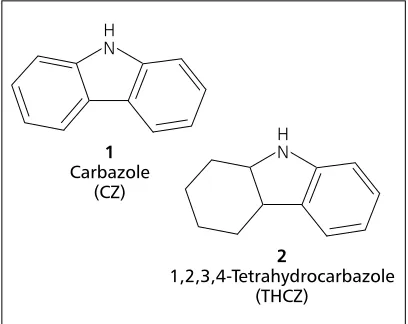
Carbazole (CZ), 11, and its derivatives are valuable chemical intermediates in the production of pharma-ceuticals, dyes, pigments and agrochemicals. A key step in the synthesis of CZ is the endothermic liquid-phase dehydrogenation of 1,2,3,4-tetrahydrocar-bazole (THCZ), 22, which is carried out catalytically, preferably in a batch reactor. However, the yield is limited by the chemical equilibrium between the forward and reverse reactions. Using Le Chatelier’s principle (6), the simplest means of increasing the yield is by either raising the temperature or continu-ously removing the H2coproduct. Raising the
process, while the physical removal of H2 requires
fundamental changes to the process design, such as operating the reactor in semi-batch mode. Having recognised these inherent limitations in the dehydro-genation reaction, the contribution from CARMAC was to think ‘outside the box’ and recognise that chemical removal of hydrogen using cheap, readily available hydrogen scavengers could also be used to manipulate the equilibrium and improve the yield of the desired product. In the past the most effective additives identified for related reactions have been relatively high-value organic chemicals (7).
Once again, through a combination of experiments and computational studies, we were able to propose a solution based on a mechanistic understanding of the catalytic process (8).Our experiments showed that simple gas-phase hydrogen acceptors, such as ethene, propene and but-1-ene, produce a fivefold increase in the rate of THCZ dehydrogenation at a fixed
tempera-ture (135°C) over a supported palladium catalyst. DFT calculations revealed that alkene hydrogenation competes effectively with the back-hydrogenation of the intermediates formed on the catalyst surface, causing the equilibrium to shift in favour of CZ forma-tion. As well as being more cost effective than liquid-phase H2-acceptors, such as nitrotoluene or diethyl
maleate, the alkenes and their product alkanes can be readily separated from the reaction medium.
Enrichment and Clean-Up of Gas Streams
Preferential Combustion of Carbon Monoxide
Maleic anhydride, 33, is used mainly in the production of unsaturated polyester resins, but it is also an inter-mediate in the production of pesticides, reactive plasticisers and lubricating oil additives. In the manu-facture of maleic anhydride, the catalytic partial oxidation of butane is usually performed under single-pass conditions of high conversion, but relatively low product selectivity (9). In principle, the process could be operated under less wasteful conditions, where the per-pass conversion would be lower but the selectivity much higher. However, before recycling the uncon-verted butane back to the catalytic reactor,any carbon monoxide contaminant would have to be removed (or converted to carbon dioxide) to avoid poisoning the vanadium-based partial oxidation catalyst.
H N
1 Carbazole
(CZ)
H N
2
1,2,3,4-Tetrahydrocarbazole (THCZ)
(a) (b)
Fig. 1. Predicted surface species formed by adsorption of 2,2′-dinitrodiphenyldisulfide on a palladium surface. (a) Flat-lying monomer species formed by parallel adsorption; (b) Upright dimer species formed by perpendicular adsorption (5). Colour coding for the ball-and-stick atoms is: grey = C, white = H, blue = N, red = O, yellow = S
O
3 Maleic anhydride
Prior to CARMAC, collaborative work between Queen’s University Belfast and Johnson Matthey had shown that a continuous NaA zeolite membrane, grown over the active sites of a platinum-iron catalyst supported on silica, would allow CO to be preferen-tially combusted in the presence of butane (10). The growth of the crystalline membrane (estimated to be 50 nm to 70 nm thick) required pretreatment of the 3 mm-diameter Pt-Fe/SiO2particles with a
polyelec-trolyte to reverse the surface charge, before the zeo-lite was hydrothermally synthesised in situover the particles at high pressure. The coherence of the mem-brane was attributed to the fact that it was crystallised from a precursor gel that,following the charge-reversal step, perfectly wetted the catalyst surface. The speci-ficity of the membrane could be simply related to the pore size of the NaA zeolite (0.4 nm), which allowed entry and egress to molecules with a small enough kinetic diameter (CO: 0.376 nm; O2: 0.346 nm; CO2:
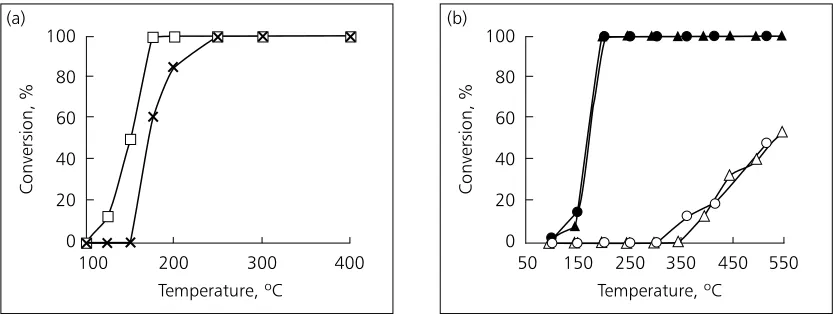
0.33 nm) while excluding butane (0.43 nm). In CARMAC, a similar degree of discrimination between CO and butane was achieved by forming a largely amorphous aluminium–silicon–oxygen layer (about 500 nm thick) over the catalyst particles (Figure 2), using a much simpler preparative route (11). Following pretreatment to reverse the surface charge, the particles were immersed in the NaA zeo-lite precursor gel, before simply being heated in open air. The increase in path length from the gas phase to the active sites, which results from applying the amor-phous layer, seemed to explain why the molecule with the higher diffusivity (CO) was preferentially
oxidised. However, it became clear that the presence of this physical barrier is not the sole reason for the molecular discrimination. We demonstrated that chemical modification of the Pt-Fe catalyst by the Na+ ions present in the precursor gel also plays a part, by altering the specificity of the active sites (Figure 2).
Reactive Removal of Oxygen
Dehydrogenation reactions are widely used for con-verting low value feedstocks (e.g. alkanes) to higher value intermediates (e.g. alkenes). One of the most promising means of promoting dehydrogenation of hydrocarbons over a pgm catalyst is by the inclusion of oxygen, which can shift the equilibrium, cause an adiabatic temperature rise and prevent soot forma-tion on the catalyst surface. Combusforma-tion is sup-pressed either by limiting the proportion of O2in the
feed (12) or by using very high space velocities (13). However, traces of unreacted O2can remain in the
product stream, which may interfere with or inhibit any subsequent reaction. For example, even parts per million (ppm) concentrations of residual O2will have
a detrimental impact on ethene polymerisation. Prior to CARMAC, the only reported study of the selective removal of O2by reaction with excess H2in
the presence of light alkenes was described in a patent that disclosed the use of a partially-poisoned Pd catalyst at relatively high temperatures (>350°C) (14). In CARMAC, a range of potential precious and base metal catalysts was screened for low-temperature activity, with silver emerging as the best candidate for
Temperature, ºC
100 200 300 400
Conversion, %
100
80
60
40
20
0
Temperature, ºC
50 150 250 350 450 550
Conversion, %
100
80
60
40
20
0
Fig. 2. (a) Poor reactant-specificity of Pt-Fe/SiO2catalyst for the oxidation of carbon monoxide (±) in the presence of butane ( ); (b) Improved reactant-specificity (CO: closed symbols; butane: open symbols)
after the catalyst has been coated with an aluminium–silicon–oxygen layer. Both methods of applying the coating (represented by the triangles and circles) are equally effective (11)
further development and scale-up (15). Silver had been included in the screening on the basis that it is known to: (a) activate oxygen (16); (b) be a poorer hydrogenation catalyst than platinum and palladium (17); and (c) inhibit ethene hydrogenation when added to palladium-based acetylene hydrogenation catalysts (18). In our tests, a catalyst containing 7.6% (by weight) silver dispersed on alumina gave full con-version of O2 at 50°C, with negligible loss of the
alkene, when either ethene or propene was used in the gas stream.
Increasing the Hydrogen Concentration in Reformate
When mainstream hydrocarbon fuels or biofuels are reformed to produce hydrogen, the product stream (reformate) invariably contains CO, CO2and water in
addition to H2(19). If the reformer is to be coupled
with a low-temperature fuel cell as part of an integrat-ed power source, the CO concentration has to be reduced from per cent levels to below 50 ppm to prevent the fuel cell anode being poisoned (20). The most efficient way to do this is by converting as much CO as possible to CO2using the water-gas shift (WGS)
reaction, which increases the hydrogen concentra-tion at the same time (Equaconcentra-tion (ii)):
CO +H2O→←CO2+H2 (ii)
Although thermodynamically favoured at low tem-peratures (21), the reaction requires a highly active WGS catalyst to reduce the CO concentration to 0.5%. The remainder can then be removed by preferential
oxidation or methanation, either of which will con-sume some of the H2.
Commercial low-temperature WGS catalysts are generally copper-based, but these need to be care-fully activated by reduction, kept in their reduced state, and protected from contact with air, with which they can react pyrophorically. Therefore, for fuel cell applications, a new generation of WGS catalysts has to be developed. Initial screening of potential cata-lysts identified a number of promising candidate cat-alysts in which either platinum or gold was the pre-ferred metal, and oxides with redox character (such as cerium oxide) were the preferred supports (Figure 3).
The development of improved catalysts was based on fundamental investigations of the nature of the active catalyst, the mechanism of deactivation, and the mechanism of the WGS reaction itself. Supported by DFT calculations (22) the experimental work in CARMAC provided a complete mechanistic model for the WGS reaction over the most active catalysts (gold supported on cerium zirconium oxide (Au/CeZrO4) in which it was proposed that a key
intermediate was a surface carboxylate species (23, 24). Although such a species could not be detected experimentally, it provides a feasible route from COads
to CO2(ads)by reaction with OHads, and with hindsight
seems much more plausible than the widely favoured ‘formate model’ (25). In the latter, a C–H bond is formed through the (energetically very difficult) step of insertion into an O–H bond but then, in order to generate CO2, this C–H bond has to be broken again.
Temperature, ºC
100 150 200 250 300 350 400 450
Conversion, %
100 90 80 70 60 50 40 30 20 10 0
Fig. 3. Water-gas shift activity of gold catalysts compared to platinum (S= 2%Pt/CeO2). The results show that the performance of the gold catalysts is very sensitive to the metal loading and the support material used (= 2%Au/TiO2;
Detailed experimental work, using fast transient kinet-ic isotope techniques coupled with infrared spec-troscopy and mass spectrometry (26), showed that the formate species seen by infrared are not relevant to the main reaction pathway, on any of the very active low-temperature catalysts developed in this programme (27, 28).
Although the Au/CeZrO4 catalysts are extremely
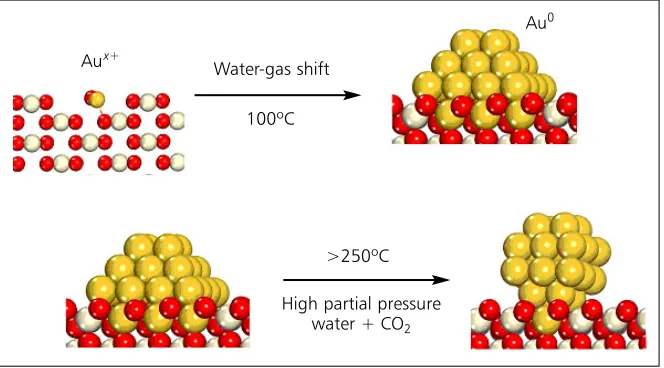
active they have a tendency to deactivate under reac-tion condireac-tions. By undertaking a detailed investiga-tion of their structure, primarily using extended X-ray absorption fine structure (EXAFS), X-ray absorption near edge structure (XANES) and high-pressure X-ray photoelectron spectroscopy (XPS), again supple-mented by DFT calculations (29), we began to realise that the high activity of gold supported on redox oxides requires a strong interaction with the support. The loss in activity of the catalyst appears to be caused by a change in morphology of the gold parti-cles, leading to the breakdown of this strong interac-tion (Figure 4), rather than a loss of exposed gold surface area (30). Armed with this knowledge, further experimentation was focused on developing precious metal catalysts that would enhance the formation of such strong interactions, and on maintaining these interactions by optimising the process conditions.
A further important outcome of the multidiscipli-nary research in CARMAC has been the recognition that the definition of an ‘active site’ in heterogeneous catalysis is non-trivial. Frequently, we think of an
active site as a single entity, such as a few atoms on a metal crystal (possibly differentiating between planar, edge or corner atoms), a cation or an anion, or a Lewis or Brønsted acid or base site. In fact, for almost all heterogeneously catalysed reactions the active ‘site’ is much more complex. For example, for the low-temperature WGS reaction on supported gold cata-lysts, it now seems that the active site requires metal-lic gold atoms in a specific arrangement, probably with cationic gold to connect the metallic gold atoms to the support with sufficient strength of interaction to activate the gold/oxide interface, and oxygen vacancies adjacent to this interface. As each compo-nent may be involved in one or several reaction steps, the absence of any one component can completely eradicate the low-temperature activity. By compari-son, the structurally simpler platinum analogues are easier to stabilise, but have yet to match the perform-ance of gold at temperatures below 200°C (31).
New Preparative and Investigative Techniques
In tackling the technical challenges posed in the individual projects, CARMAC also had the key objec-tives of: (a) advancing catalyst design, (b) developing state-of-the-art techniques for studying catalysts under reaction conditions, and (c) improving collaboration between chemists and engineers.
Using a new preparative technique, in which a sur-factant was used to pre-form a platinum-containing
Water-gas shift
100ºC
>250ºC
High partial pressure water + CO2 Aux+
Au0
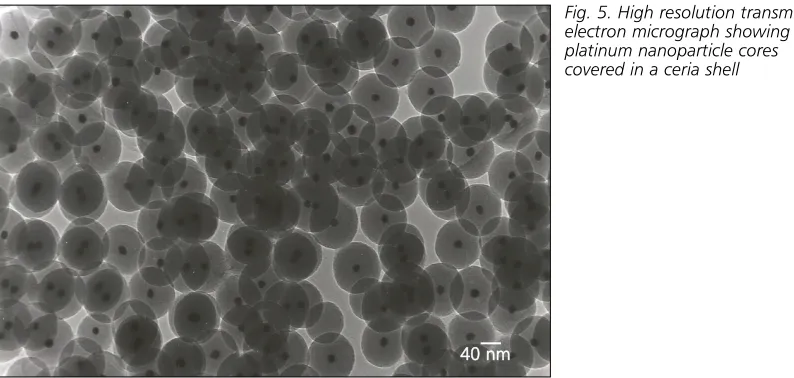
microemulsion (32), chemists at the University of Reading were able to encapsulate platinum nanopar-ticles in ceria (Figure 5), rather than disperse them over the surface. The resulting catalyst was more active than conventionally prepared Pt/CeO2for the
WGS reaction, and had the added advantage of not forming any methane when tested in a gas stream rich in H2(i.e. representative of a reformate). Detailed
characterisation at the University of Reading and Queen’s University Belfast, showed that encapsulating the platinum inhibited the strong CO adsorption that can lead to the non-selective methanation reaction taking place, and indicated that the WGS reaction was taking place exclusively on the ceria shell. As ceria on its own has low WGS activity, the results imply that the platinum nanoparticle core exerts (electronic) control over the metal oxide shell (33).
Mechanistic studies of heterogeneously catalysed gas-phase processes, such as those described above for the WGS reaction, require measurements that are made on a relevant timescale. In the study of the WGS reaction, Queen’s University Belfast developed
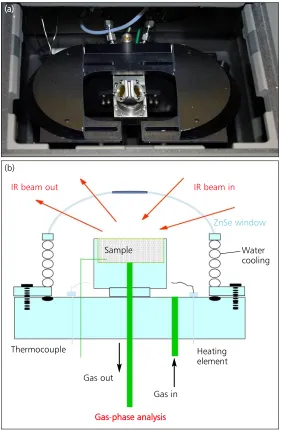
in situinfrared spectroscopy (Figure 6) to study cata-lyst surfaces under real reaction conditions with a time resolution of around 10 s (34). When combined with kinetic experiments on a similar timescale, the spectroscopic measurements provided us with unequivocal information (27), where previously several plausible but often conflicting mechanisms had been proposed.
Throughout the programme, chemical engineers at the University of Cambridge used and, in some cases, developed new, in situ magnetic resonance
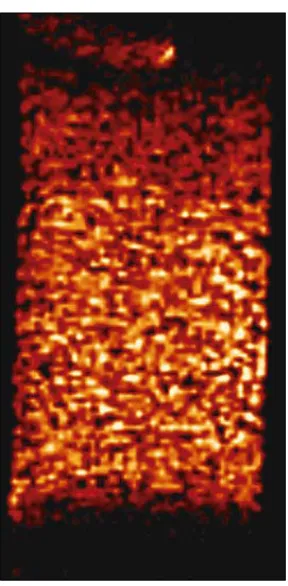
techniques to measure the characteristics of cata-lysts. Novel measurements included spatial mapping of both chemical composition (35) and fluid trans-port within a working catalytic reactor (36). We were able to monitor the distribution of liquid throughout the inter-particle space (Figure 7), and calculate the average concentration gradient between the outside and the inside (i.e. within the pores) of the catalyst particles. We believe these are the first direct meas-urements of concentration gradients across the inter-and intra-particle space of a reactor resulting from mass transfer limitations. This knowledge can be used to guide the selection of the porosity and shape characteristics of catalyst particles, and the operation of the reactor. The results were correlated with molec-ular models from the University of Virginia together with kinetic measurements and characterisation stud-ies from Queen’s University Belfast creating a cross-scale representation of the events taking place in a packed bed of catalyst particles within a liquid medi-um (37) and providing insights into catalyst deactiva-tion and regeneradeactiva-tion (38).
Pulsed-field gradient nuclear magnetic resonance (PFG-NMR) was also used to demonstrate the first spatially-resolved, chemically-specific measurements of the diffusion coefficients of reactants and products during reaction. The reaction considered was the esterification of ethanol with acetic acid over an ion-exchange resin. It was even possible to discriminate between diffusion inside and outside the ion-exchange resin catalyst particles.
Other developments included the application of PFG-NMR techniques to directly measure two distinct
40 nm
molecular diffusion coefficients within the pore space of a catalyst. In collaboration with Queen’s University Belfast, it was possible to compare these experimental data directly with the results of molecular simulations. Remarkably good agreement was obtained between the two approaches.The simulation showed evidence of a strongly-influenced surface layer of molecules which was characterised by diffusion processes at least an order of magnitude slower than the molecu-lar diffusion in the bulk of the internal pore space of the catalyst. Related to this work was the develop-ment of NMR relaxometry (the determination of spin-lattice relaxation time,T1, and spin-spin relaxation
time,T2). It was demonstrated that the attenuation of
the T1and T2values, characteristic of a liquid when it
is contained within the catalyst, can be used as a direct indicator of the strength of the surface interac-tion between the catalyst and the particular liquid molecule under consideration.This method opens up the possibility of probing competitive adsorption processes inside the pore space of catalysts (39).
Achievements of the CARMAC Programme
One of the major achievements of CARMAC was the creation, within the academic centres, of a suite of ‘state of the art’ scientific and engineering
IR beam out IR beam in
Water cooling Sample
Thermocouple Heating
element Gas out
Gas in
Gas-pphase analysis
(a)
(b)
Fig. 6. Diffuse reflectance Fourier transform infrared (FTIR) cell for in situ catalyst studies: (a) viewed from above; (b) cross-sectional schematic
competencies, which were designed to address spe-cific technical problems in collaboration with indus-try. These competencies allowed us to investigate and understand the heterogeneously-catalysed target reactions in the liquid and gas phases. It is significant that many of the catalysts identified, designed or developed in this programme were pgm or other pre-cious metal formulations. With their low loadings of highly dispersed metal, often interacting with the sup-port, these catalysts were the most difficult to study. However, they challenged us to develop cutting-edge methodologies that will allow us to understand catalytic function across the length scales, from molecular rearrangements on the surface of metal nanoparticles to mass transfer in a catalytic reactor.
The programme also enhanced the transfer of knowledge and technology between academia and industry, and provided trained and highly skilled researchers for both sectors. In terms of direct technology transfer it is worth remarking that at the end of the ‘normal’ three-year PhD or two-year
post-doctoral project there would have been few results that could have been transferred to industry. During the CARMAC programme much more time was avail-able, and as a result it achieved practical outputs for industry, by first identifying the key questions and then providing the knowledge required to address those questions. This process typically took four years.
Beyond CARMAC: The CASTech Programme
So, what happens next? A new five-year programme, Catalytic Advances through Sustainable Technologies (CASTech), is already underway, having started as CARMAC finished. Most of the partners from CARMAC (including the University of Cambridge, Queen’s Uni-versity Belfast, Johnson Matthey PLC and Robinson Brothers Ltd) have been joined by several new members: the University of Birmingham, Borregaard, Forestry Commission Research Agency, Questor Centre and Sasol Technology Research Laboratory. Again, the academic centres are largely funded by the EPSRC, with industry contributing substantial in-kind support. In CASTech, the individual projects relate to renewable energy, protecting our environ-ment, and developing truly benign chemical manu-facturing processes. Led by industry, and building on the core competencies created in the CARMAC pro-gramme, we believe that CASTech has the capability and momentum to take on some of the current ‘grand challenges’ in science and technology.
Precious metal catalysts are likely to feature strongly once again, particularly in the challenges associated with processing complex bio-feedstocks, and with the generation and storage of renewable energy. A key aim throughout will be designing or re-engineering the catalyst manufacturing processes to ensure that they too are pollution-free.
Dedication
This article is dedicated to the memory of Colin Gent (former Head of Catalysts at ICI and Technical Director of the Institute of Applied Catalysis (iAc), London) who, as an advisor to the programme, con-tributed greatly to the successes of CARMAC.
References
1 F. C.Meunier, F. Cavallaro, T.Le Goaziou, A. Goguet and C.Rioche,Catal.Today,2006,112,(1–4),64 2 A.Goguet,S.Shekhtman,F.Cavallaro,C.Hardacre and
F.C.Meunier,Appl.Catal.A: Gen.,2008,344,(1–2),30 Fig. 7. Two-dimensional magnetic
resonance image of the spatial distri-bution of liquid in a trickle bed reactor containing Pd/Al2O3catalyst, during
3 J. Breen, R. Burch, M. Kulkarni, P. Collier and S.
Golunski,J.Am.Chem.Soc.,2005,127,(14),5020 4 J.P.Breen,R.Burch,M.Kulkarni,D.McLaughlin,P.J.
Collier and S.E. Golunski,Appl.Catal.A: Gen.,2006,
316,(1),53
5 E.K.Novakova,L.McLaughlin,R. Burch, P.Crawford,
K. Griffin, C. Hardacre, P. Hu and D. W. Rooney, J. Catal.,2007,249,(1),93
6 L.J.Malone and T.Dolter,“Basic Concepts of Chemistry”,
8th Edn.,John Wiley & Sons,Inc,New Jersey,USA,2008,
pp.479–482
7 I.Kóhegyi and V.Galamb,Heterocycles,1995,40,(1),109 8 K.T.Hindle,R.Burch,P.Crawford,C.Hardacre,P.Hu,
B.Kalirai and D.W.Rooney,J.Catal.,2007,251,(2),338 9 N. Ballarini, F. Cavani, C. Cortelli, S. Ligi, F. Pierelli, F.
Trifirò,C.Fumagalli,G.Mazzoni and T.Monti,Top.Catal.,
2006,38,(1–3),147
10 P.Collier,S.Golunski,C.Malde,J.Breen and R.Burch,
J.Am.Chem.Soc.,2003,125,(41),12414
11 R. N.Devi,F.C. Meunier, T. Le Goaziou,C. Hardacre,
P. J. Collier, S. E. Golunski, L. F. Gladden and M. D.
Mantle,J.Phys.Chem.C,2008,112,(29),10968 12 S.Golunski,JOM,2001,53,(10),22
13 D.A.Goetsch and L. D. Schmidt, Science,1996, 271,
(5255),1560
14 L. C. Hardison, Universal Oil Products Co, ‘Selective Removal of Oxygen from a Hydrogen-Ethylene Stream’,
US Patent3,480,384; 1969
15 B.Inceesungvorn,F.C.Meunier,C.Hardacre,R.Burch and K.Griffin,Chem.Commun.,2008,(46),6212 16 K.Tamaru,Surf.Sci.,1997,383,(2–3),261
17 H.Yoshitake and Y.Iwasawa,J.Phys.Chem.,1991,95,
(19),7368
18 N. A.Khan, S. Shaikhutdinov and H.-J. Freund,Catal. Lett.,2006,108,(3–4),159
19 C. Rioche, S. Kulkarni, F. C. Meunier, J. P. Breen and R.Burch,Appl.Catal.B: Environ.,2005,61,(1–2),130 20 T. R. Ralph and M. P. Hogarth, Platinum Metals Rev.,
2002,46,(3),117
21 C.N.Satterfield,“Heterogeneous Catalysis in Industrial Practice”,2nd Edn.,McGraw-Hill,Inc,New York, USA,
1991,p.442
22 Y.Chen,J.Cheng,P.Hu and H.Wang,Surf.Sci.,2008,
602,(17),2828
23 D.Tibiletti,A.Amieiro-Fonseca,R.Burch,Y.Chen.J.M.
Fisher, A. Goguet., C. Hardacre, P. Hu and D.
Thompsett,J.Phys.Chem.B,2005,109,(47),22553 24 R.Burch,Phys.Chem.Chem.Phys.,2006,8,(47),5483 25 G.Jacobs,E.Chenu,P.M.Patterson,L.Williams,D.Sparks,
G.Thomas and B.H.Davis,Appl.Catal.A: Gen.,2004,
258,(2),203
26 D. Tibiletti, A. Goguet, D. Reid, F. C. Meunier and R.Burch,Catal.Today,2006,113,(1–2),94
27 F. C. Meunier, D. Reid, A. Goguet, S. Shekhtman,
C. Hardacre, R. Burch, W. Deng and M. Flytzani-Stephanopoulos,J.Catal.,2007,247,(2),277
28 F. C. Meunier, A. Goguet, C. Hardacre, R. Burch and D.Thompsett,J.Catal.,2007,252,(1),18
29 Y. Chen, P. Hu, M.-H. Lee and H. Wang, Surf. Sci.,
2008,602,(10),1736
30 A.Goguet,R.Burch,Y.Chen,C.Hardacre,P.Hu,R.W.
Joyner, F. C. Meunier, B. S. Mun, D. Thompsett and D.Tibiletti,J.Phys.Chem.C,2007,111,(45),16927 31 A. Gayen, M. Boaro, C. de Leitenburg, J. Llorca and
A.Trovarelli,J.Catal.,2010,270,(2),285
32 C.M.Y.Yeung,F.Meunier,R.Burch,D.Thompsett and S.C.Tsang,J.Phys.Chem.B,2006,110,(17),8540 33 N.Acerbi,S.C.Tsang,S.Golunski and P.Collier,Chem.
Commun.,2008,(13),1578
34 F.C.Meunier,A.Goguet,S.Shekhtman,D.Rooney and H.Daly,Appl.Catal.A: Gen.,2008,340,(2),196 35 A.J.Sederman,M.D.Mantle,C.P.Dunckley,Z.Huang
and L.F.Gladden,Catal.Lett.,2005,103,(1–2),1 36 L. F. Gladden, F. J. R. Abegão, C. P. Dunckley, D. J.
Holland, M. H. Sankey and A. J. Sederman, Catal. Today,in press
37 K. Hindle, D. W. Rooney, B. S. Akpa, L. F. Gladden,
D.Weber,M.Neurock,N.Sinha and E.H.Stitt,‘Solvent effects in the hydrogenation of MEK: an experimental and theoretical study’,at: 19th International Symposium on Chemical Reaction Engineering (ISCRE 19),Potsdam,
Germany,3rd–6th September,2006
38 H. G. Manyar, D. Weber, H. Daly, J. M. Thompson,
D.W.Rooney,L.F.Gladden,E.H.Stitt,J.J.Delgado,
S.Bernal and C.Hardacre,J.Catal.,2009,265,(1),80 39 D. Weber, J.Mitchell, J.McGregor and L. F. Gladden,
J.Phys.Chem.C.,2009,113,(16),6610
The Authors
Professor Robbie Burch OBE was the Programme Manager of CARMAC,based at Queen's University Belfast,UK,where he is now Emeritus Professor of Physical Chemistry.
His research is concerned with developing a fundamental understanding of catalytic processes of industrial importance,including automotive emissions control,hydrocarbon processing for fuel cell applications and clean organic synthesis.
Professor Lynn Gladden CBE was the Principal Investigator for CARMAC at the University of Cambridge,UK,where she is Head of the Department of Chemical Engineering and Biotechnology.Her group’s primary research interest is in the development of magnetic res-onance techniques to study research problems in chemical engineering.
Professor Stan Golunski,who was at the Johnson Matthey Technology Centre at Sonning Common in the UK at the time,
was the Programme Director of CARMAC.