Maternal Characteristics
and the Deveiopment of
Chiidren who Faiied to Thrive
Janet M. Boddy
Thesis submitted for the degree of Doctor of Philosophy in the University of London.
ProQuest Number: 10106632
All rights reserved
INFORMATION TO ALL USERS
The quality of this reproduction is dependent upon the quality of the copy submitted.
In the unlikely event that the author did not send a complete manuscript and there are missing pages, these will be noted. Also, if material had to be removed,
a note will indicate the deletion.
uest.
ProQuest 10106632
Published by ProQuest LLC(2016). Copyright of the Dissertation is held by the Author.
All rights reserved.
This work is protected against unauthorized copying under Title 17, United States Code. Microform Edition © ProQuest LLC.
ProQuest LLC
789 East Eisenhower Parkway P.O. Box 1346
abstract
The long-term prognosis for infants who fail to thrive is relatively little understood, although early growth faltering has been associated with limitations in subsequent
development. Definition of failure to thrive as a feeding disorder implies a need to consider maternal characteristics associated with the syndrome, but research has been limited by theoretical and methodological difficulties. The present investigation explores the long term correlates o f infant growth retardation for the mother and child. Skuse, Wolke and Reilly (1992) studied 47 growth retarded infants and their pairwise matched controls; the author carried out an interview study with this sample when the children were six years old.
The thesis questions whether the occurrence of growth faltering was related to child development at six years, and examines links between mother and child functioning. Maternal characteristics associated with having a child who failed to thrive are investigated by exploring case-control differences in mothers’ current psychosocial functioning, caregiving cognitions, and childhood care experiences. Finally, the study considers whether mother or child characteristics at age six distinguish any subgroup of previously growth retarded children, in terms of the timing or physical outcome of growth faltering.
Case group children were physically smaller than comparisons; they showed some limitations in cognitive functioning, but no social-cognitive deficits. Mothers’
contents
page
abstract ...2
list of figures ... 4
list of tables ... 5
ackn o w ledgem en ts... 11
chapter one
Maternal Characteristics and Failure to Thrive...12chapter two
Methodological Is s u e s ...46
chapter three
Child C haracteristics... 75chapter four
Mothers’ Psychological and Social Functioning...118chapter five
Maternal C o g n ition s... 1 6 7chapter six
Mothers’ Early Care Experiences...2 2 0chapter seven
Maternal Characteristics and the Development of Children Who Failed to Thrive... 251chapter eight
Conclusions... 2 9 3re feren ce s...332
list of figures
page
Figure 3 .1 ...98
distribution of height for age centile: faiiure to thrive group
Figure 3 .2 ...98
distribution of weight for age centile: failure to thrive group
Figure 3.3 ... 98
“smaii” and larger for age chiidren at foilow-up: faiiure to thrive and control group
Figure 3.4...100
child quantitative performance: comparison group
Figure 3 .5 ...103
relevance of problem solving: failure to thrive group
Figure 4 .1 ...135
distribution of BDi scores: faiiure to thrive group mothers
Figure 4 .2 ... 135
distribution of BDi scores: control group mothers
Figure 5 .1 ... 185
distribution of percentage of personal, controiiabie and global attributions to child: faiiure to thrive group mothers
Figure 5 .2 ... 186
distribution of percentage of high power strategies: control group mothers
Figure 7 .1 ... 271
scattergram of percentage of high power strategies and report of early adversity: faiiure to thrive
list of tables
page
Table 3 .1 ... 92
social problem solving test - revised: response categories
Table 3.2 ...94
social problem solving test: inter-rater reliability
Table 3.3 ...95
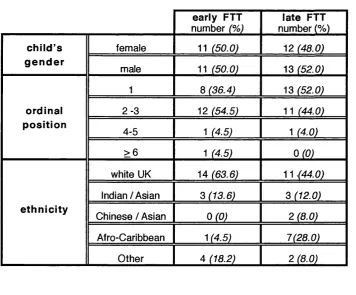
sample characteristics: early (N=22) and late (N=25) failure to thrive group children
Table 3.4 ...96
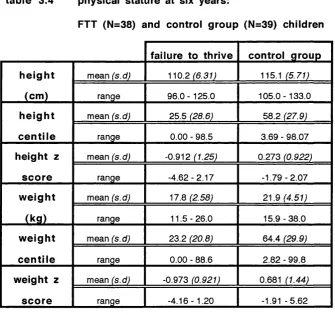
physical stature at six years: failure to thrive (N = 38) and control group (N = 39) children
Table 3.5 ...97
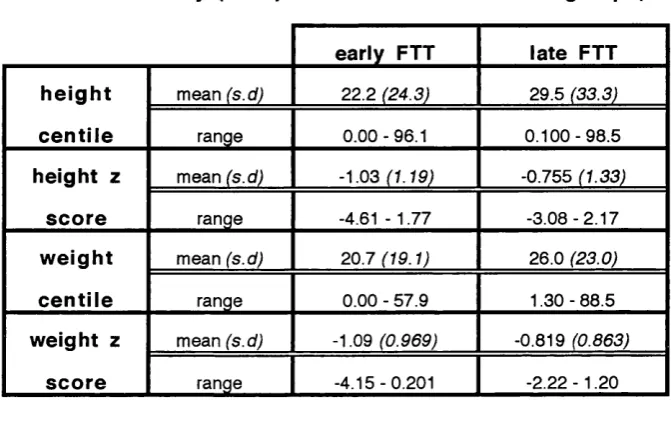
physical stature at six years: early (N = 21) and late failure to thrive group (N = 17) children
Table 3.6 ... 99
physical stature at six years: small (N = 17) and larger (N = 21) failure to thrive group children
Table 3.7... 100
sample characteristics: smaller (N=17) and larger (N=21) failure to thrive group children
Table 3 .8 ...101
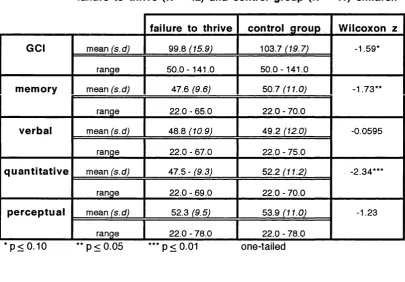
cognitive abilities at six years: failure to thrive (N = 42) and control group (N = 41) children
Table 3 .9 ...102
cognitive abilities at six years: early (N = 21) and late failure to thrive group (N = 21) children
Table 3 .1 0 ...103
cognitive abilities at six years: small (N = 17) and larger (N = 21) failure to thrive group children
Table 3 .1 1 ...104
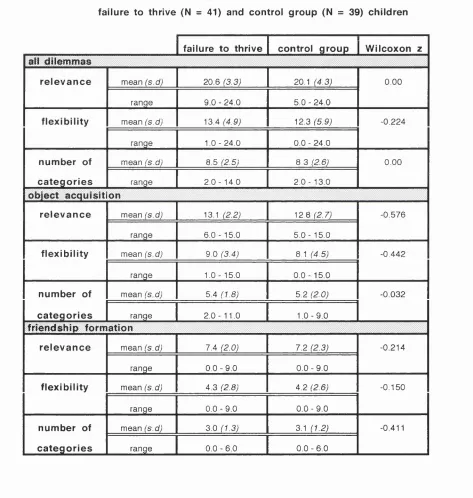
social problem solving: failure to thrive (N = 41) and control group (N = 39) children
Table 3 .1 2 ...105
social problem solving: early (N = 20) and late (N = 21) failure to thrive group children
Table 3 .1 3 ...106
social problem solving: small(N = 20) and larger (N = 21) failure to thrive group children
Table 4 .1 ... 134
maternal psychosocial functioning at six years: sample response rates
Table 4 .2 ... 136
cohabitation among FTT (N = 42) and control group (N = 40) mothers: Chi-square tests with Yates Correction for Continuity
Table 4 .3 ... 137
Table 4 .4 ...138
psychosocial functioning among failure to thrive and control group mothers: Wilcoxon matched pairs tests
Table 4 .5 ...139
cohabitation among early (N = 20) and late (N = 22) failure to thrive group mothers: Fisher’s Exact Tests
Table 4 .6 ...139
Body Mass Index and IQ scores among early and late failure to thrive group mothers: t-tests for independent samples
Table 4.7... 140
psychosocial functioning among early and late failure to thrive group mothers: Mann-Whitney tests for independent samples
Table 4 .8 ...141
cohabitation among mothers of small (N = 16) and larger (N = 22) FTT group children: Fisher’s Exact Tests
Table 4 .9 ...141
Body Mass Index and 10 scores among mothers of small and larger FTT group children: t-tests for independent samples
Table 4 .1 0 ... 142
psychosocial functioning among mothers of small and larger FTT group children: Mann-Whitney tests for independent samples
Table 4 .1 1 ... 143
Spearman’s rank correlations of maternal psychosocial functioning and child physical stature: failure to thrive and control group mothers
Table 4 .1 2 ...144
regression of maternal psychosocial functioning on height for age z score: faiiure to thrive (N = 35) and controi group (N = 33)
Table 4 .1 3 ... 145
Spearman’s rank correiations of maternai psychosocial functioning and child cognitive development: failure to thrive and controi group mothers
Table 4 .1 4 ... 146
regression of maternal psychosocial functioning on general cognitive index: faiiure to thrive (N = 41) and control group (N = 39)
Table 4 .1 5 ... 147
regression of maternai psychosocial functioning on memory performance: failure to thrive (N = 41) and controi group (N = 39)
Table 4 .1 6 ... 147
Table 4 .1 7 ... 148
regression of maternal psychosocial functioning on quantitative performance: faiiure to thrive (N = 39) and control group (N = 36)
Table 4 .1 8 ... 149
Spearman’s rank correlations of maternal psychosocial functioning and child social cognition: failure to thrive and control group mothers
Table 5 .1 ...182
coding scheme for maternal problem solving strategies
Table 5 .2 ...184
means end problem solving: inter-rater reliability
Table 5 .3 ...184
LACS: inter-rater reiiability
Table 5.4 ... 185
maternal cognitions at six years: sample response rates
Table 5 .5 ...187
maternal problem solving: faiiure to thrive and control group mothers
Table 5 .6 ...188
maternal attributions: faiiure to thrive and controi group mothers
Table 5 .7 ...189
maternai problem solving: early and late failure to thrive group mothers
Table 5.8 ... 190
maternal attributions: early and late failure to thrive group mothers
Table 5 .9 ...191
maternal problem solving: mothers of smaii and larger FTT group children
Table 5 .1 0 ... 192
maternal attributions: mothers of small and larger FTT group children
Table 5.11 ... 193
Spearman’s rank correlations of maternal problem solving relevance and child physical stature: failure to thrive and controi group mothers
Table 5.12 ... 193
Spearman’s rank correlations of maternal problem solving strategies and child physical stature: failure to thrive and control group mothers
Table 5 .1 3 ... 193
Spearman’s rank correlations of maternal attributions and chiid physical stature: failure to thrive and control group mothers
Table 5.14 ... 195
Table 5.15 ... 195
regression of maternal cognitions on weight for age z score: faiiure to thrive (N = 34) and control
group (N = 30)
Table 5.16 ... 196
Spearman’s rank correlations of maternal problem solving relevance and child cognitive ability: failure to thrive and control group mothers
Table 5.17...197
Spearman’s rank correlations of maternal problem solving strategies and child cognitive ability: failure to thrive and control group mothers
Table 5 .1 8 ...197
Spearman’s rank correlations of maternal attributions and child cognitive ability: failure to thrive and control group mothers
Table 5 .1 9 ...199
regression of maternal cognitions on general cognitive index: faiiure to thrive (N = 38) and control group (N = 32)
Table 5.20 ... 199
regression of maternal cognitions on child memory performance: failure to thrive (N = 38) and control group (N = 32)
Table 5.21 ... 200
regression of maternal cognitions on child verbal performance: failure to thrive (N = 38) and controi group (N = 32)
Table 5 .2 2 ... 201
Spearman’s rank correlations of maternal problem solving relevance and child social cognition: failure to thrive and control group mothers
Table 5.23 ... 202
Spearman’s rank correlations of maternal problem solving strategies and chiid social cognition: failure to thrive and controi group mothers
Table 5 .2 4 ... 202
Spearman’s rank correlations of maternal attributions and child social cognition: failure to thrive and controi group mothers
Table 6 .1 ...232
classification of mothers’ early adverse care and abuse
Table 6.2 ... 233
maternal childhood care: inter-rater reliability
Table 6.3 ... 234
maternal care experiences: sample response rates
Table 6.4 ... 234
Table 6.5 ... 235
early adverse family experiences among failure to thrive and control group mothers: Wilcoxon matched pairs tests
Table 6.6 ... 236
early adverse family experiences among early and late FTT group mothers: Chi-Square tests
Table 6.7 ... 236
eariy adverse family experiences among early and late FTT group mothers: Mann-Whitney tests for independent samples
Table 6.8 ... 236
early adverse family experiences among mothers of small and larger FTT group children: Chi- Square tests
Table 6.9 ... 237
eariy adverse family experiences among mothers of small and larger FTT group children: Mann- Whitney tests for independent samples
Table 6 .1 0 ... 238
Spearman’s rank correlations of maternal care experiences and child physical stature: failure to thrive and control group mothers
Table 6 .1 1 ... 239
Spearman’s rank correlations of maternal care experiences and child cognitive functioning: failure to thrive and control group mothers
Table 6 .1 2 ... 241
Spearman’s rank correlations of maternal care experiences and chiid social cognition: failure to thrive and control group mothers
Table 7.1 ... 261
assessment of mother and child characteristics
Table 7.2 ... 263
Spearman’s Rank Correlations among maternal variables: failure to thrive and control group
Table 7.3 ... 265
logistic analysis of maternal characteristics on early and late failure to thrive (N = 39)
Table 7.4 ... 265
Spearman’s Rank Correlations among maternal variables: early and late failure to thrive
Table 7.5 266
logistic analysis of maternal characteristics on sm all/larger failure to thrive group children (N = 34)
Table 7.6 ... 267
Spearman’s Rank Correlations among maternal variables: small and larger failure to thrive group children
Table 7.7 ... 268
Table 7.8
Spearman’s Rank Correlati
Table 7.9 ...
Spearman’s Rank Correlati
Table 7 .1 0 ...
.268
ions among maternal variables: failure to thrive group
...269
ions among matemal variables: control group
...270
Spearman’s Rank Correlations among maternal variables: failure to thrive group
Table 7 .1 1 ... 272
regression of maternal characteristics on general cognitive index: control group (N = 39)
Table 7 .1 2 ... 273
regression of maternal characteristics on quantitative performance: failure to thrive group (N = 41)
Table 7 .1 3 ... 274
Spearman’s Rank Correlations among maternal variables: control group
Table 7 .1 4 ... 275
regression o f maternal characteristics on problem solving flexibility: failure to thrive (N = 39) and control group (N = 36)
Table 7.15...276
acknowledgements
The work reported in this dissertation was funded by the Institute o f Child Health Special Trustees, to whom 1 offer my thanks.
1 am indebted to many people for their assistance with my research. Foremost, it was a pleasure and a great learning experience to have worked with my supervisors. Dr. Bernice Andrews and Professor David Skuse. 1 express my sincere gratitude for their support and guidance and, particularly, for swift and invaluable feedback on earlier drafts of the thesis. 1 also benefited considerably from the wisdom of Professor Chris Brewin, Professor Rosemary Mills, and Professor Mark Williams, to whom 1 extend my thanks.
My research would not have been possible without the careful and committed work of the original research team, and so 1 thank Sheena Reilly and Dieter Wolke. 1 am also grateful to Jennifer Smith and Dorothy Gill for their work in liaising with the families.
Additionally, 1 thank the school nurses and teachers of the schools attended by the study children, for their interest and efforts on my behalf.
1 owe a debt of gratitude to my family and friends for their unfailing practical and emotional support; 1 am particularly grateful to Patrick Kennedy for his patience and good advice. 1 thank my colleagues in the Department of Psychology at the University of Leeds, for all their help and encouragement. 1 am also grateful to Barbara Wyllie for her sharp-eyed proof-reading, and to Joy Patel and Minera Ulla for their translating skills.
chapter one
maternal characteristics and faiiure to thrive
page
1.1 aims of thesis ... 13
1.2 the definition of failure to thrive... 17
1.3 maternal characteristics ... 19
1 .3 .a
parental behaviour... 21
1.3.b
maternal psychological characteristics... 24
1 .S.b.i psychosocial functioning... 24
1.3.b. i. a
socio-economic factors and social su p p o rt
...
24
1.3.b. i. b
maternal mental health
...
2 7
1.3.b.ii maternal cognitions...281.3.b.iii maternal childhood experiences...30
1.4 the application of theories from mainstream psychology ....33
1 .4 .a
the study of parenting... ...33
1.4.b
chiid characteristics... ...37
1.4.C
family characteristics... ...39
1.4.C.I the role of the fa th e r... ... 40
1.4.C.Ü the role of siblings... ...41
maternal characteristics
and failure to thrive
“there is nothing simple or straightforward about mothering”. Schaffer (1977, p 7)
1.1 aims of thesis
This dissertation explores associations between the development of children who failed to thrive in infancy and social and psychological characteristics of the primary caregiver^. When no organic cause can be identified, infant growth retardation has traditionally been ascribed to “matemal deprivation syndrome” (e.g., Patton and Gardner, 1962), as a form of caregiving failure, but this assumption is questionable, given the methodological constraints of previous research (e.g., Drotar, 1990), and emerging evidence that non- organic growth failure is related to a variety of aetiological factors (see Mayes and Volkmar, 1993), including child characteristics such as feeding skills disorder (e.g., Ramsay, Gisel and Boutry, 1993). In addition, the long term prognosis for children who fail to thrive is relatively little understood (Kristiansson and Falstrom, 1987), although several authors have highlighted the adverse effects of early malnutrition for child development (e.g., Skuse, Pickles, Wolke, and Reilly, 1994).
This dissertation attempts to overcome some of the methodological limitations of previous research, in order to examine matemal characteristics associated with a history of failure to thrive and with the developmental consequences of non-organic failure to thrive. The thesis reports the findings of a follow-up study of a sample of six year old children who failed to thrive during the first 15 months of life, and their matched comparisons who grew normally in infancy. By examining mother and child characteristics at the age of six, the present investigation offers a descriptive account of the long term correlates of early non- organic growth retardation, with regard to the following general objectives:
• To compare the developmental functioning of previously growth retarded and thriving children, and to explore links between mother and child functioning at six years.
• To identify matemal characteristics associated with a history of infant growth faltering through case-control comparisons.
• To consider whether mother or child characteristics at age six can distinguish a subgroup of previously growth retarded children.
First, the argument that infant growth retardation is associated with long term
developmental disadvantage will be explored through comparisons of children who failed to thrive with those who grew normally during infancy. Examination of relationships between current matemal characteristics and child functioning should serve to illuminate the development of children who may be at risk because of earlier growth retardation. An accurate description of mother and child functioning is necessary to identify characteristics that indicate differential pattems of development among children who have failed to thrive.
Failure to thrive has traditionally been ascribed to maltreatment (e.g., Taitz and King, 1988), although more recently it has been recognised that the causes of growth failure may be diverse (Mayes and Volkmar, 1993), and the syndrome has been redefined as a disorder of feeding (DSM-IV, American Psychiatric Association, 1996). Feeding is an interactive process, which forms the basis of the first relationship between infant and mother (Stem, 1977), and so the DSM-IV re-conceptualisation still indicates consideration of the primary caregiver. Accordingly, there is a need to include the mother in the present follow-up study of children who failed to thrive, in order to identify current matemal characteristics associated with a history of non-organic infant growth retardation.
because children who failed to thrive in infancy may be growing normally at the time of follow up. Some measures of mother or child functioning reported here might reflect stable attributes or experiences that preceded growth faltering, but others could be an outcome of failure to thrive, or could describe unrelated characteristics that emerged between the initial and follow-up investigations.
With regard to these concerns, the research reported here does not seek to develop or evaluate a causal model for failure to thrive. However, current definitions of the syndrome include the mother, by virtue of her role in the feeding relationship, and so a descriptive study of the long term correlates of infant growth faltering should consider mother and child functioning. It should be informative to identify those matemal characteristics associated with having parented a child who failed to thrive, through comparisons of mothers of children who failed to thrive with those whose children grew normally in infancy: this comprises the second general aim of the thesis.
Before these issues can be explored, the current state of knowledge in the failure to thrive literature must be assessed. In light of the dissertation’s concern with identifying matemal characteristics associated with a history of failure to thrive, this introductory chapter will review a body of research concerned with mothers whose children have failed to thrive^. It has traditionally been argued that non-organic growth faltering reflects inadequate
caregiving (e.g., Taitz and King, 1988), but before evidence for that assumption can be evaluated, it is important to consider the way in which failure to thrive is defined.
Accordingly, the present chapter will begin with an overview of definitional issues, before going on to examine studies of matemal characteristics associated with infant growth retardation, in order to identify pertinent areas for research in the present study.
Investigations of mothers of children with non-organic growth faltering have generally focused on assessment of caregiving behaviour and matemal psychological and social functioning, and so this introductory chapter will review that literature.
Studies of caregiving have increasingly moved beyond observation of matemal behaviour, to try and account for factors that could influence the mother’s actions. For example, mothers’ current social and psychological functioning and matemal history of childhood care are associated with quality of parenting (e.g., Belsky, 1984; Hillson and Kuiper,
1994), and parental cognitions have also been linked with caregiving behaviour (e.g., Bugental, 1993; Miller, 1995). With regard to that literature, this introductory chapter will evaluate the extent to which investigations of matemal characteristics associated with failure to thrive have been informed by theoretical and methodological developments in the parenting literature, by reviewing studies of parenting behaviour, psychosocial functioning, caregiving cognitions, and childhood care experiences among mothers of growth retarded children.
Consideration of matemal characteristics associated with infant growth retardation could potentially lead to a failure to account for child effects; the literature may be criticised for
focusing on parental characteristics in isolation, without acknowledging the infant’s contribution to the interaction or the processes by which a parent responds to her child. The present thesis is concerned with mothers whose children failed to thrive, and so it may be similarly flawed. Studies of child characteristics associated with the syndrome will not be extensively reviewed in this introduction; such a review is arguably beyond the scope of this dissertation, and might restrict a comprehensive examination of the literature on
matemal functioning. Despite that justification, it is important to recognise that several investigators have highlighted child characteristics associated with failure to thrive, and so this introductory chapter will include a short discussion of that literature.
In summary, with respect to the objectives of the dissertation, this introduction is
specifically concerned with aspects of the failure to thrive literature that relate to matemal functioning, and so cannot offer a comprehensive review of research on infant growth retardation. Along with consideration of definitional issues, an assessment of
investigations of matemal behaviour and social and psychological characteristics is necessary to evaluate the common conceptualisation of failure to thrive as a form of maltreatment, and identify pertinent areas of interest for the present study. Nevertheless, this focus inevitably offers a partial understanding of the current state of knowledge in the failure to thrive literature, and the following review must take account of that restriction.
1.2 the definition of failure to thrive
Non-organic failure to thrive (FTT) is the diagnostic classification assigned to an infant who fails to achieve a satisfactory rate of growth (commonly, weight below the third per centile according to population norms), where no organic cause can be identified. The inadequacy of this definition has been recognised; the term defines a symptom rather than a disorder. Skuse (1985, p 174) commented that it does not fulfil the criteria for a
this is reflected in their observation that the reported incidence of the syndrome varied from 1.3 to 20.9%.
Lachenmeyer and Davidovicz ( 1987) raised further questions about definition, noting that the distinction between organic and non-organic failure to thrive is not as clear as many researchers assume. Their contention is supported by Goldson (1989) and Mathisen, Skuse, Wolke and Reilly (1989), who described neurological abnormalities in, for example, oral-motor or gastro-intestinal functioning among infants who had been diagnosed as failing to thrive without organic cause. In addition, Ramsay, Gisel, and Boutry ( 1993) reported that their sample of infants with non-organic growth failure showed feeding difficulties similar to those found in studies of children with cerebral palsy.
Without prospective research, it is impossible to determine whether characteristics such as “feeding skills disorder” (Ramsay et al.) are a cause or consequence of early malnutrition, but these authors clearly highlight the difficulty in distinguishing between organic and non- organic influences on child growth.
The definition of non-organic failure to thrive has clear implications for understanding mother and child characteristics associated with the syndrome. Even though diagnosis of failure to thrive is based on infant growth trajectories, its aetiology has often been ascribed to inadequate caregiving; the role of matemal characteristics in definition will be considered below. Chapter Three will include a fuller discussion of definitional issues, prior to
1.3
maternal characteristics
Diagnosis of failure to thrive - whether organic or non-organic - is based on the description of a pattem of growth, but the syndrome has often been described as a form of child abuse or neglect (e.g., Taitz and King, 1988). Traditionally, the child’s growth failure has been attributed to inadequate parenting, in the form of a “matemal deprivation syndrome” (Patton and Gardner, 1962; Fischhoff, Whitten and Pettit, 1971). This notion was derived from research by Spitz and others (e.g.. Spitz, 1945, 1946), which was concemed with the impact of separation from the mother early in life.
Spitz studied institutionalised infants, and concluded that prolonged mother-child separation tended to result in psychogenic disorders, notably “anaclitic depression” and “hospitalism”. The symptoms of anaclitic depression bear a great deal of similarity to the diagnostic criteria for non-organic failure to thrive (including delayed physical growth and psychosocial development), leading researchers such as Patton and Gardner ( 1962) to the conclusion that infants who fail to grow experience a similar lack of mothering to
institutionalised infants. Although the mothers of these infants were physically present, psychopathology was thought to have prevented them from caring adequately for their children, so the children became depressed and exhibited the symptoms of hospitalism. Despite the widespread acceptance of this perspective, there were important problems with the research on which it was based (see Pinneau, 1955), which raise questions about the validity of a link between maternal separation and physical development.
emotional life of the parents and because of problems of interaction between mother and child” (Hanks, Hobbs, Seymour and Stratton, 1988, p 101), and from matemal
psychopathologies such as narcissistic personality disorder (Chatoor, Dickson, Schaeffer and Egan, 1985) and substance abuse (Polan, Kaplan, Kessler, Schindeldecker,
Newmark, Stem, et al., 1991).
Despite a common emphasis on the role of parenting, non-organic failure to thrive is usually identified when an adequate organic explanation cannot be found for the child’s growth failure; it is “a diagnosis of exclusion” (Mayes and Volkmar, 1993, p 22). Recent reviews have repeatedly drawn attention to the inconsonance among investigators in defining the syndrome (Skuse, 1985; Wilcox et al., 1989; Mayes and Volkmar, 1993), and, for the majority of infants, a definition in terms of the absence of organic aetiology lends little to understanding (Lachenmeyer and Davidovicz, 1987); Skuse, Wolke and Reilly (1992) reported that organic factors were responsible for failure to thrive in just 5% of the growth retarded infants they studied. If research and intervention are to proceed usefully, a clear positive definition is necessary. The DSM-IV (American Psychiatric Association, 1996) classification of failure to thrive as a feeding disorder enables a focus on malnourishment, directing investigators to become more specific in identifying and describing each of the multiple contributing factors leading to a child’s inadequate caloric intake (Lieberman and Birch, 1985; Drotar, 1991; Mayes and Volkmar, 1993).
Recognition of the multifarious aetiologies o f failure to thrive has lessened the burden of responsibility that was traditionally placed on the mother. Nevertheless, if failure to thrive is a feeding disorder, there is a need to recognise the interactive nature of feeding, and so to consider the primary caregiver, who feeds the child; intervention tends to focus on this individual. That attention may also be justified in light of consistent evidence from
methodologically adequate evaluation of the traditional notion of “matemal deprivation syndrome” derived from early investigations.
1 .3 .a
parental behaviour
Social development in infancy depends on the interaction between parent and child; the feeding interaction is of critical importance in establishing their relationship (Stem, 1977). The feeding interaction in failure to thrive appears to be unsuccessful, because the child does not achieve an adequate nutritional intake. Drotar ( 1991) suggested that maladaptive feeding interactions arise because dysfunctional relationship pattems lead to such problems as inconsistency in feeding and conflict at mealtimes, implying that observations of
interaction would foster an understanding of the nature of problems within the parent-child relationship.
Early studies (e.g., Patton and Gardner, 1962; Evans, Reinhart, and Succop, 1972; Fischhoff et al., 1971) often drew conclusions about matemal behaviour associated with failure to thrive, but they contained serious methodological problems, and so it is not possible to accept their findings with any confidence. Lachenmeyer and Davidovicz ( 1987) commented that an “overwhelming number” of theorists adopt a psychoanalytic
perspective; the methodology of many researchers also follows the psychoanalytic
tradition, with an emphasis on case studies and impressionistic analyses that precludes any firm conclusions. For example, Fischhoff and his colleagues carried out unstructured and apparently highly subjective observations of 13 mother-infant dyads; one mother is criticised for wearing “an excessive amount of makeup”. Shapiro, Fraiberg, and Adelson (1976, p 461) argued that “it is the mother who is the key” in failure to thrive, on the basis of the clinical evaluation of a single family.
observations on clinically referred samples, which may be untypical, given evidence that most cases of infant growth retardation are not identified or referred (Skuse et al., 1992). In addition, Chatoor and her colleagues’ causal model of failure to thrive was comprised of subgroups such as “infantile anorexia nervosa”. It may be unwise to draw a parallel between food refusal in infancy and in later life; the criteria used to make a diagnosis of anorexia nervosa, such as distortions of body image, which are necessary in DSM-IV (American Psychiatric Association, 1996) and I CD-10 (World Health Organisation, 1990), could not be applied to infants.
Other researchers have used improved methodology, while maintaining a psychoanalytic perspective, to argue that distortions in the mother-child interaction can be understood in terms of attachment (Bowlby, 1969). Gordon & Jameson (1979) carried out a controlled study of mother-infant attachment, reporting that 6/12 failure to thrive and 2/12 comparison infants were insecurely attached. These numbers are too small to allow statistical
significance, and since half the infants who failed to thrive were not insecurely attached, the results provide very limited evidence that distorted mother-infant attachment is associated with growth retardation. Drotar and his colleagues (Drotar, Malone, Devost, Brickell, Mantz-Clumpner, Negray, et al., 1985; Pinion, Drotar, Satola, Pallotta, Wyatt, and El- Amin, 1985) also studied attachment in infants who were failing to grow; they found roughly equal proportions of securely and insecurely attached infants, and reported no differences in matemal behaviour between the securely attached and avoidant groups. While this implies that growth failure is not synonymous with attachment disturbance, these findings are limited because no comparison group was studied.
matemal behaviour between cases and matched controls, including lower ratings of sensitivity, emotional expression, responsiveness, acceptance and co-operation.
Observations in both studies were made blind to experimental hypotheses and group status, allowing greater confidence in the results, but reliance on hospital referred samples again limits generalisability. Heptinstall, Puckering, Skuse, Start et al. (1987) carried out one of the few studies using a community sample; standardised home observations of mealtimes were made blind to case/control status, using a time sampling technique which coded the occurrence of food-related behaviours in the parent and the child. A number of differences in parenting behaviour were observed; case mothers were rated as more indifferent or anxious than mothers of thriving children, they showed more negative affect, and they were less likely to give instructions, communicate or socialise at mealtimes.
Through improvements in methodology and objective assessment procedures, recent research has provided some insight into parenting characteristics associated with failure to thrive; this understanding would be enhanced by further community based research. Moreover, the majority of research has been carried out subsequent to the identification of poor growth, and so it precludes the drawing of any causal inferences. Pollitt, Gilmore, and Valcarcel (1978) addressed that issue in a prospective study, which considered whether mother and infant behaviour during feeding would predict infant growth during the first month of life. They carried out standardised ratings of matemal and infant behaviour during a feeding interaction when the child was 20-36 hours old, and noted that children whose mothers switched to a non-feeding activity during the feed (e.g., cleaning the infant) gained less weight. This observation has valuable implications, and points to the need for prospective longitudinal research to inform about the role of parental behaviour in the aetiology of failure to thrive.
such research serves a descriptive, rather than an explanatory function, because it fails to account for factors that might influence the mother’s actions. Several studies have aimed to address this criticism, by examining the psychological characteristics of mothers whose children do not thrive.
1.3.b
maternal psychological characteristics
1.s.b.i psychosocial functioning
Roberts and Maddux ( 1982) and Drotar ( 1991) reviewed the literature concemed with family influences in failure to thrive, and proposed a psychosocial conceptualisation; both reviews commented on the neglect of family factors consequent to a traditional emphasis on the mother. Drotar suggested that family influences should form a theoretical framework for research, based on Belsky’s model of parenting (e.g., 1984; Belsky and Vondra, 1989) in which multiple psychosocial risk factors make a parent more vulnerable to experiencing difficulty. Gordon and Vazquez ( 1985) reported that an increase in the incidence of failure to thrive corresponded with increased unemployment in an industrial town, and
Lachenmeyer and Davidovicz (1987) pointed to a variety of risk factors, including
psychosocial stressors and child characteristics such as minor congenital anomalies, which may be linked with growth failure. An examination of the literature is necessary to
determine the extent to which psychosocial stressors are associated with failure to thrive, and to consider the evidence for an aetiological model.
1 .S .b .i.a socio-economic factors and social support
and developmental problems - for example, parental conflict (Hetherington, 1979), adverse physical environment (Quinton, 1988), and social support (Oakley, 1988).
Dubowitz, Zuckerman, Bithoney, and Newberger (1989) looked at psychosocial stress in families of growth retarded and physically abused children. The groups shared many characteristics, but families of infants who were failing to thrive reported fewer
psychosocial stressors; they lived in larger homes, and were more likely to report having enough social support. Without a comparison group of families who do not have parenting problems one cannot determine whether these psychosocial stressors characterise “pediatric social illness”, as the authors suggested, or whether they simply describe low socio
economic status.
Newberger and his colleagues (Kotelchuk and Newberger, 1983; Newberger, Hampton, Marx, and White, 1986) provided some evidence that families of children who are failing to thrive tend to be isolated. They reported that mothers of growth retarded infants saw their relatives less often, and liked their neighbourhood less than mothers of thriving children. In addition, parental arguments in case families were more likely to result in violence from their partner. The authors noted that these associations do not imply a causal relationship; they studied a referred sample, and mothers may have become isolated because they felt that the “failure” in the child’s failure to thrive was their own. In concordance with Newberger et al., Drotar and Eckerle (1989) conducted a controlled study of families of hospital referred infants who were failing to thrive. These families reported more problematic relationships than controls, although there were no intergroup differences in conflict and expression of anger. These results are limited by substantial sample attrition among cases (45%) and comparisons (43%) ; there were no demographic differences between those who did and did not complete the study, but the sample offers a highly selective picture of failure to thrive.
of hospital referred growth retarded infants and thriving comparisons, in observer ratings of potentially stressful factors such as numbers present and noise levels. Mitchell, Gorrell, and Greenberg ( 1980) used a community sample and Casey et al. ( 1984) studied hospital referred infants; neither reported intergroup variation in maternal reports of stressful life events. Pollitt et al. (1975) observed no case-comparison differences in marital status or adaptation, and Singer, Song, Hill, and Jaffe (1990) found no intergroup differences in overall stress, although mothers of growth retarded infants described their child as more stressful than controls. Singer et al. attempted to address methodological problems in earlier research by using a standardised psychometric test, the Parenting Stress Index, but their conclusions should be interpreted with caution because they studied a highly selective referred sample; a number of mothers were excluded because they were intellectually impaired, unstable, or psychotic.
Altemeier, O’Connor, Sherrod, and Vietze (1985) considered the aetiology of failure to thrive with a prospective study in a primary care setting, and noted significant relationships between subsequent failure to thrive and a number of psychosocial stressors, including mother’s and father’s life stress. For example, mothers whose children subsequently failed to thrive had experienced more parental arguments and separations, and their partners were more likely to have been arrested. Altemeier et al. provided convincing evidence of the role of psychosocial stress in failure to thrive, but their results should be viewed with regard to the small sample size; only 15 children in this study were classed as failing to thrive without organic cause. More importantly, the analysis used by Altemeier and colleagues’ appears to have been inappropriate, because it is based on Pearson product moment correlations between maternal responses and the dichotomous variable o f presence or absence of non-organic failure to thrive.
while growth failure is influenced by psychosocial stress, it is not necessarily caused by it (Woolston, 1985).
The experience of stress is emotional and highly personal. Cox (1978) noted that this subjectivity leads to methodological problems in the assessment of stress, and that misidentification and misnaming of the stressful experience frequently occur. An individual’s experience of stress depends on her perception of her ability to cope with environmental demands; her perception is in turn determined by a number of individual characteristics, such as age, social learning, and personality. Oakley’s (1988) observations lend support to this model; she noted that psychosocial welfare is related to the mother’s perception of her ability to make use of available social support, and Brewin, MacCarthy and Fumham (1989) emphasised the importance of considering an individual’s “hopes and fears” concerning potential sources of support. Future research might achieve a more useful picture of the role of psychosocial stress in failure to thrive by considering the parent’s perceptions of her environment and her child.
1 .3 .b .L b maternal mental health
Numerous investigators have discussed the role of maternal psychological functioning in failure to thrive, with an emphasis on diagnostic classifications and maternal
psychopathology. The notion of maternal psychopathology has been prominent in traditional theorising about the syndrome; researchers have described maternal characteristics such as severe depression (Evans et al., 1972), character disorder and chronic anxiety (Fischhoff et al., 1971), substance abuse and psychotic stress reactions (Jacobs and Kent, 1977), narcissism (Ayoub and Milner, 1985) and adjustment disorders (Chatoor et al., 1985). Schmitt and Mauro (1989, p 241) typify the lack of methodological rigour that characterises these studies in their suggestion that, “the bizarre nature of the
[child’s ] d \ti will help to disclose a psychotic mother” ; perhaps it is not surprising that
mothers on the Child Abuse Potential Inventory, the only validated instrument that they used.
Singer et al. ( 1990) carried out one of the few studies utilising a psychometrically validated instrument, the Beck Depression Inventory, to assess maternal psychological wellbeing; the scores of mothers whose children were failing to thrive fell within the normal range for this test. Skuse et al. (1992) examined mothers’ mental state in a controlled whole
population survey using another well known instrument, the General Health Questionnaire (Goldberg and Hillier, 1979); no intergroup differences were found, although levels of depression were high among both cases and controls. A number of other investigators have questioned the assumption of psychiatric disturbance by carrying out controlled studies (Pollitt et al., 1975; Kotelchuk and Newberger, 1983; Benoit, Zeanah, and Barton, 1989); their assessments of maternal psychiatric history and current mental health revealed no evidence of maternal psychopathology.
1 .3 .b .ii maternal cognitions
The lack of evidence of maternal psychiatric disturbance has led to a shift in emphasis away from a pathological model, with greater attention being paid to the way that the mother thinks about her child. Pollitt et al. ( 1978) observed that synchronisation of feeding depends on the mother correctly perceiving and responding to her infant’s signals, suggesting that mothers’ perceptions and responses would provide a worthwhile area of study when there are problems with the feeding interaction. Despite this implication, the majority of research has focused on mothers’ attitudes and beliefs.
studies of parental attitudes; they reported several intergroup differences in maternal behaviour but found no evidence of corresponding attitudinal differences. Altemeier et al. (1985) reported that mothers’ philosophy about parenting did not correlate with subsequent failure to grow, lending further weight to the conclusion that methodologically stringent studies report few, if any, differences in the psychological characteristics of mothers of growth retarded and thriving children, and implying that there is no relationship between maternal thinking and failure to thrive.
The lack of correspondence between professed attitudes and observed behaviour has long been a source of debate in the field of social psychology (La Piere, 1934; Kutner, Wilkins, and Yarrow, 1952; Wicker, 1969). It has been suggested that the whole concept of attitude should be rejected, but it is perhaps more appropriate to look for problems with experiments which do not demonstrate consistency between attitudes and behaviour, rather than to question the assumption of consistency. A variety of factors influence an
individual’s ability to act in a certain way; for example, social pressures (Asch, 1955; Campbell, 1963), time, money (Ajzen and Madden, 1986), and personality (Miller and Crush, 1986). Studies attempting to link a general attitude to a specific behaviour neglect the abundance of intervening variables in the attitude-behaviour relationship; global attitude measures such as “Contentment with Child” (Casey et al., 1984) fail to account for the intricacy of the parent-child relationship, and so cannot be expected to succeed.
Parental ideas “constitute the real environment where children live and grow” (Emiliani and Molinari, 1988, p 20); examination of the cognitive processes underlying parental
wake their babies? A focus on patterns of maternal thinking associated with the response might prove more useful than a description of isolated characteristics of parent or child.
Recent research by Sturm and Drotar ( 1991) has drawn attention to the potential value of studying parental cognitions. Sturm and Drotar considered maternal attributions about aetiology, and found that while 47% of mothers ascribed their child’s growth failure to “general physical problems”, only 6% thought that their physician had come to this conclusion; this discrepancy is likely to lead to difficulties with intervention, such as lack of co-operation. Sturm and Drotar reported a number of methodological problems, but their work indicates the capacity of attributional research to inform about maternal thinking in failure to thrive.
In summary, it must be concluded that the literature offers little information about parental thinking associated with failure to thrive. Many investigators have sought to make global classifications, and there have been few attempts to apply theories of social cognition. Research suggests that mothers whose children fail to grow differ from mothers of thriving children in aspects of parenting behaviour such as communication and sensitivity, but there has yet to be an adequate exploration of the patterns of thinking that might guide parental actions. By examining specific processes, such as attributions about or strategies for dealing with difficult child behaviour, the study of parental social cognitions could account for the child’s role in the interaction, rather than viewing him or her as the object of parental beliefs. Existing studies of parental thinking indicate that there is little relationship between parents’ behaviour and their expressed attitudes and beliefs, so future researchers might find it more useful to consider the cognitive mechanisms which might guide a mother’s responses to her child and environment.
1 .3 .b .iii maternal childhood experiences
abusive parents, although more recently, researchers have questioned this assumption (e.g., Kaufman and Zigler, 1987; Simons, Whitbeck, Conger, and Chyi-In, 1991).
Attention has been paid to adverse early experiences in mothers of infants who fail to thrive, with rather mixed results. Early research (e.g., Fischhoff et al., 1971 ; Evans et al., 1972; Shapiro et al., 1976)) related growth failure to the mother’s experience of loss or lack of nurture in childhood, or to “ghosts” in the nursery (Shapiro et al.); these are the ghosts of unresolved conflicts in the mother’s childhood. These studies are generally based on clinical impressions, making it difficult to generalise any conclusions about the role of parental history. Nonetheless, more stringent research has also implied a link between mothers’ early experiences and infant failure to thrive. For example, Pollitt et al. (1975) reported that mothers of hospital referred infants who were failing to thrive had more stressful recollections of childhood than mothers of thriving controls, and Altemeier et al. ( 1985) observed that negative maternal recollections of childhood - such as feeling unloved as a child, reporting an unhappy childhood, and the frequency of beating by a carer - were related to infant growth failure.
An association between adverse maternal experience and infant failure to thrive has not been consistently observed; Newberger et al. (1986) reported that recollections of childhood did not discriminate between mothers of growth retarded infants and controls. Very little information was provided about the content and validity of their interview, so it might be argued that the assessment failed to measure adverse experiences adequately. However, identical interviews distinguished between mothers of abused children and mothers of non-abused controls, implying that the measure had discriminant validity, and that the lack of differentiation between mothers of growth retarded and thriving infants was genuine.
the results mean that both groups have had unhappy childhoods or that they have both had happy childhoods. Few mothers reported negative feelings; they may have been reluctant to express their emotions, given the circumstances of the interview (during the child’s hospitalisation following abuse or failure to thrive). The mothers’ reported lack of negative feelings might also reflect their idealisation of childhood (Main and Goldwyn, 1984), so the interview may have failed to assess their actual experiences.
Benoit et al. (1989) reported inconsistent results in their controlled study of childhood attachment experiences among mothers whose infants were failing to grow. Mothers in the failure to thrive group had less secure representations of attachment than comparisons, according to independent ratings of their responses to a structured interview (The Adult Attachment Interview; George, Kaplan, and Main, 1985), but no case-control differences were found in ratings of childhood on a self-report questionnaire (the Mother-Father-Peer scale; Epstein, 1983, cited in Benoit et al., 1989). The authors concluded that this discrepancy occurred because the interview measure produced a more valid measure of adult attachment; equally, the two instruments may measure different constructs. The Adult Attachment Interview asks specific questions about childhood experiences, which are rated independently; the Mother-Father-Peer scale requires that the respondent makes her own judgements. These judgements may be idealised, and are likely to be subject to a higher degree of distortion than memories of actual events in childhood (Brewin, Andrews, and Gotlib, 1993).
In summary, the literature suggests a link between mothers’ recall of adverse early
experiences and infant failure to thrive, but this association is clearly not inevitable. Rutter (1989, p 321) argued that “intergenerational discontinuities are at least as striking as
continuities” ; an understanding of the mechanisms underlying the intergenerational cycle of parenting difficulties requires consideration of why adverse early experiences lead to
Mrazek, 1985). Mainstream psychological research has suggested that the intergenerational transmission of maladaptive caregiving may occur through social learning of inappropriate behaviour (e.g. Feshbach, 1974; Hertzberger, 1983) or through distorted representations of early attachment experiences (e.g., Bowlby, 1969; Main and Goldwyn, 1984); equally, early maltreatment may give rise to psychosocial disadvantage that creates vulnerability for caregiving difficulties (see for example, Rutter, 1989). Models of the determinants of parenting, such as Belsky’s (1984) ecological framework, have indicated that links between a mother’s care experiences and her child’s functioning will be mediated by her current circumstances and cognitions about events in caregiving; this understanding might usefully be applied to studies of children who have failed to thrive.
1.4
the application of theories from mainstream
psychology
1 .4 .a
the study of parenting
The failure to thrive literature has generally made limited use of wider developments in psychology, and consequently it is probable that theoretical development has been impeded in a number of ways. For example, the need for care when using questionnaire measures has been noted in a variety of research settings within mainstream psychology (e.g., Ortony, Clore, and Collins, 1988; Hewstone, 1989; Holden and Edwards, 1989; Brewin et al., 1993); it is apparent from the literature that this body of opinion has had little effect on failure to thrive research.
The study of parental attitudes provides another example of the lack of reference to mainstream psychology in failure to thrive research. Theorists in social psychology have been questioning the utility of studying attitudes for over 20 years, pointing to the
overview) have led to an increased understanding of cognitive processes such as
attributions and problem solving strategies that have significance for social behaviour and psychological wellbeing (e.g., Brewin, 1985; Rubin and Krasnor, 1986; Stratton, Heard, Hanks, Munton, Brewin, and Davidson, 1986; Hewstone, 1989; Mills and Rubin, 1990). These developments have influenced the study of caregiving; for example. M iller’s (1995) review of research on parental attributions emphasised the potential of this approach, while pointing to a need for more naturalistic study.
Mills and Rubin (1990) proposed an information processing model of parenting, which suggested that parents’ beliefs about child behavior guide their responses in the parent- child interaction. They studied mothers and fathers, and found support for their model; the more negative a parent’s emotional reaction to a hypothetical behaviour problem, the more likely she was to suggest a high power strategy, such as punishment, coercion, or threats, for dealing with the problem. A number of other investigators have made use of
developments in social cognition, in their application of attribution theory to work on family dysfunction (e.g., Stratton et al., 1986; Stratton and Swaffer, 1988; Bugental, Mantyla, and Lewis, 1989; Bugental, 1993; Miller, 1995). For example, Bugental and colleagues proposed a transactional model of physical abuse which emphasised the moderating role of parental attributions in the mother-ehild interaction; they found that “threat-oriented” caregivers were more likely to view children as difficult and to respond to child behaviour with power assertive disciplinary strategies.
Mothers of growth retarded children have been described as less communicative
(Heptinstall et al., 1987), accepting (Casey et al., 1984), and co-operative (Drotar et al., 1990) than mothers of thriving controls. To understand how these patterns of caregiving relate to infant nutrition and growth, researchers must consider the influences that
intake, but an understanding of w hy malnourishment occurs depends on the reasons for the mother’s behaviour.
Psychosocial stressors and childhood adversity may increase vulnerability to childrearing problems; however, this association is neither inevitable nor direct. Theoretical models of the aetiology of child maltreatment (e.g., Ammerman, 1990; Hillson and Kuiper, 1994) have highlighted the network of influences that may give rise to caregiving difficulties. Parenting problems have been associated with psychosocial disadvantage; for example, Ammerman (1990) observed that socio-economic disadvantage and lack of support are likely to exacerbate parental stress, and increase the risk of neglect or maltreatment. In addition, maladaptive social information processing about events in child care has been linked with physically abusive behaviour (see, for example, Bugental, 1993, or Milner,
1993), although, to date, there have been relatively few attempts to apply these models in research on other forms of caregiving difficulty. Finally, it is widely held that individuals who were maltreated in childhood are at increased risk of parenting problems (Belsky, Youngblade and Pensky, 1989; Kaufman and Zigler, 1989), through links with parental cognitions or psychosocial disadvantage (see Rutter, 1989). Models of the determinants of parenting, such as Belsky’s (1984) ecological framework or Hillson and Kuiper’s (1994) analysis of stress and coping, have taken account of these potential influences; application of such a framework should enhance understanding of maternal characteristics associated with failure to thrive.
There have been relatively few attempts to apply an integrated model of caregiving to the study of non-organic failure to thrive; researchers have generally focused on specific risk factors, and, as discussed above, studies have been hampered by methodological flaws. Altemeier and colleagues’ (Vietze, O ’Connor, Hopkins, Sandler et al., 1982; Altemeier et al., 1985) community-based research is exceptional, in addressing factors including psychosocial functioning and mothers’ childhood care, but the authors may have
examination of potential influences on parenting is necessary to address problems found in previous research and evaluate the contention that non-organic growth retardation stems from inadequate caregiving. Such an examination depends on prospective study, and is beyond the scope of the research presented here.
This dissertation explores the current characteristics of mothers and their six year old children who failed to thrive in infancy: as stated previously, findings are descriptive of the sample at the time of data collection, and cannot contribute to an explanatory model of the syndrome. Characteristics observed among participants during the follow-up study may not have been present at the time of infant growth faltering, since data collection was carried out several years after the children were identified as failing to thrive. That argument has particular relevance for the study of maternal characteristics associated with non-organic growth faltering; some of the factors highlighted by previous researchers will reflect constant attributes or experiences that preceded growth faltering, but others could describe unstable stressors that may no longer be present when the child is six.
Measures of maternal experience of childhood maltreatment are based on accounts of events that clearly preceded the child's growth retardation; if retrospective reports are reliable (see Chapters Two and Six for a discussion of this issue), these accounts should remain stable, no matter when data are collected. By contrast, variables such as those describing maternal perceptions of social support or child behaviour are unstable because they refer to the mother's current experiences, which change as time passes and the child develops. Maternal functioning when the child is six will also be shaped by previous events, such as changes in living conditions and family structure, or experiences surrounding infant growth faltering; for example, Newberger and colleagues ( 1986) argued that social isolation may be a consequence of failure to thrive.
having parented a growth retarded infant should enhance understanding of the long-term correlates of failure to thrive. In addition, variation in the characteristics of children who failed to thrive may be reflected in differential patterns of development subsequent to growth faltering, and these relationships are likely to be moderated by maternal characteristics. The design of the present study does not permit speculation about the aetiology of diverse characteristics among children who failed to thrive, but it should still prove useful to consider whether a subgroup of previously growth retarded children can be distinguished on the basis of mother or child characteristics at the age of six.
The present study is descriptive, and does not seek to evaluate the traditional "maternal deprivation" model of failure to thrive, but the review presented above has uncovered little methodologically adequate evidence that non-organic growth faltering can be ascribed to inadequate caregiving. In addition, a model of non-organic growth retardation as a form of maternal maltreatment is theoretically flawed by a failure to account for potential child effects and wider family influences.
1.4.b
child characteristics
Holt and Mackintosh in 1933 (cited in Skuse, 1985, p 174) were among the first to contend that child-related factors may be responsible for non-organic failure to thrive, in terms of a “congenital weakness of constitution”. Since then, there has been comparatively little attention to child characteristics associated with the syndrome; Wolke, Skuse and Mathisen (1990, p 249) commented that previous research has generally “ignored or cursorily
recorded infant behavior and parent-infant joint behavior”. Such neglect is surprising, in light of the emerging re-conceptualisation of failure to thrive as a disorder of feeding (see Mayes and Volkmar, 1993, and DMS-IV, American Psychiatric Association, 1996).
Pollitt et al. (1978) conducted a prospective study of mother and infant feeding and weight gain during the first month of life, and reported that infants who opened their eyes less often and refused the nipple more frequently gained less weight. Pollitt and colleagues observed the feeding interaction when infants were between 20 and 36 hours old, and so it seems unlikely that infant behaviour reflected a learned response to previous feeding experiences. The children studied by Pollitt and colleagues did not fail to thrive, but Skuse (1994) commented that feeding difficulties may arise if infants with neurological
abnormalities emit feeding cues that are more difficult for the caregiver to interpret; infant temperamental characteristics such as fussiness might also contribute to a maladaptive style of feeding interaction.
Non-organic growth retardation has been associated with child characteristics. For example, Goldson, Milla and Bentovim ( 1985) ascribed non-organic failure to thrive to mixed organic and non-organic causes, including “difficult” child temperaments. In addition, Ramsay and her colleagues (1993) conducted an observational study of infants who were failing to thrive, and highlighted a variety of problems, such as appetite
disturbance and difficult feeding behaviour. These studies are limited because they did not include thriving comparisons - Goldson and colleagues based their observations on
clinically referred cases, and Ramsay et al. compared children with organic and non- organic failure to thrive - making it difficult to determine whether the child characteristics they reported are specific to failure to thrive.
indicated that growth retarded children used significantly more negative expressions than thriving controls. In addition, the play observations conducted by Wolke et al. (1990) revealed that non-organic growth faltering was associated with higher levels of infant irritability and low levels of responsivity; for example, infants who failed to thrive were described as more difficult and unhappy and less attentive than pairwise matched
comparisons.
These findings are consistent with the argument that child characteristics contribute to non- organic growth faltering, but the studies outlined above were carried out subsequent to identification of infant growth failure, and so observed child characteristics may be a cause or consequence of malnourishment. Grantham-McGregor, Stewart, and Powell (1991) found that infant malnutrition was associated with characteristics such as apathy and inactivity, and Polan et al. noted that the behaviour of infants who failed to thrive was explained by the degree of acute and chronic malnourishment. In addition, fussy or faddy eating could reflect early feeding of a very bland and limited diet (Skuse, 1994), implying a need to account for previous feeding experiences.
The role of child characteristics in failure to thrive can only be determined through prospective research, which precedes the onset of growth faltering; as noted previously, this approach is beyond the scope of the present descriptive study. Nevertheless, child characteristics such as irritability or lack of clarity in feeding cues could exacerbate or perpetuate feeding difficulties, regardless of their part in aetiology. Attempts to study mother or child functioning associated with failure to thrive must recognise the transactional nature of the parent-child relationship.
1.4.C
family characteristics
While the failure to thrive literature has made some attempt to account for the child’s role in the parent-child relationship, it is subject to criticism for neglecting an observation
child function within a wider family system, and the mother does not constitute the sole influence on child development.
1 . 4 . C . I the role of the father
Research in developmental psychology has highlighted the role of fathers in child
development. Although, in Western society, fathers are rarely the primary caregivers (e.g., Russell and Russell, 1987), they still play an important part in the family, and appear to have a distinct role in parenting. Relative to mothers, paternal behaviour tends to be more directive, unpredictable and interfering (Power, 1985), and children respond differently to each parent; for example, the four year old boys studied by Power, McGrath, Hughes and Manire (1994) were more likely to comply with fathers’ directions than mothers. In addition, Greenberger, O’Neil and Nagel (1994) found that fathers who reported
unsatisfactory work experiences tended to advocate harsh disciplinary practices with their children, suggesting a need to consider the implications of psychosocial stress for both parents, in contrast to the traditional emphasis on the mother.