DOI: 10.1002/cssc.201500431 Full Paper
Fade to Green: A Biodegradable Stack of Microbial Fuel Cells
Dr. Jonathan Winfield,*[a] Dr. Lily D. Chambers,[b] Dr. Jonathan Rossiter,[b] Andrew Stinchcombe,[a] Dr. X. Alexis Walter,[a] Prof. John Greenman,[c] and Prof. Ioannis Ieropoulos*[a]
[a] Bristol BioEnergy Centre, University of the West of England, Bristol (UK)
[b] Bristol Robotics Laboratory, University of Bristol, Bristol (UK)
[c] Microbiology Department, University of the West of England, Bristol (UK)
Abstract
The focus of this study is the development of biodegradable microbial fuel cells (MFCs) able to produce useful power. Reactors with an 8 mL chamber volume, were designed using all biodegradable products: polylactic acid for the frames, natural rubber as the cation-exchange
membrane and egg-based, open-to-air cathodes coated with a lanolin gas diffusion layer. Forty MFCs were operated in various configurations. When fed with urine, the biodegradable stack was able to power appliances and was still operational after six months. One useful application for this truly sustainable MFC technology includes onboard power supplies for biodegradable robotic systems. After operation in remote ecological locations, these could degrade harmlessly into the surroundings to leave no trace when the mission is complete.
Key words: energy conversion, fuel cells, green chemistry, materials science, renewable resources
Introduction
electronics, plastics and batteries. One exciting area of research is the microbial fuel cell (MFC), a technology that employs bacteria to remove organic pollutants from liquid waste-streams with the added bonus of the production of electricity in the process. MFCs offer great potential not only in terms of wastewater treatment[2] but also as biosensors,[3] power supplies for continuously charging mobile phones and small electrical applications[4,5] and for the production of useful cathodic by-products such as caustic soda.[6] Despite the improvements in power generation and efficiency over recent years, there is still a reliance on materials and components that are expensive or not
environmentally safe. MFCs can be considered green in terms of their contribution to renewable energy, but paradoxically the core parts and materials might also contribute towards anthropogenic waste. For the MFC technology to be considered feasible for target applications, both economic and environmental costs must be minimised.[7] Other related disciplines, such as “green electronics”, are already embracing these issues. Although energy efficiency is an important aspect in terms of end use, it is the energy involved in the manufacturing phase that can be the most damaging to the environment.[8] Therefore, whole-lifecycle costs must be considered, from materials sourcing and fabrication to recycling and disposal. Biodegradable electronics are under development to reduce the effects of waste accumulation.[9] A range of natural substrates have been employed as polymers, which include collagen, chitin, alginate, gelatine and silk.[8] The current study investigates materials for the development of biodegradable MFCs with an emphasis on minimum environmental impact. One new application for biodegradable MFCs is being the power source for biodegradable robots. Such a device should integrate with the natural environment without any negative impact and adapt to fluctuating conditions. This makes MFCs an ideal consideration even over other
bio-electrochemical technologies because the microbial community is more dependent on the
Until recently, the adaptation and tuning of MFC conditions to meet the needs of different and changing environments has received less attention. However, there have been recent attempts to find alternative, “green” materials particularly in terms of the cation-exchange membrane (CEM). The CEM acts as the separator between the two electrodes and enables the vital movement of protons from anode to cathode. Ceramic is now utilised as both the CEM as well as the structural material in which porosity is integral to separation and proton movement.[13--15] In terms of biodegradable materials, natural rubber has been shown to be a viable substitute to conventional membranes, for which laboratory gloves[16,^17] and condoms[18] have both been employed successfully. In these previous studies the biodegradation of the material actually enhanced the performance, whilst the longevity of MFCs was unaffected. In effect, the natural rubber played a dynamic role in the MFC environment and matured alongside the microbiological community to result in a system that improved over time. This study goes beyond previous work to incorporate new materials alongside natural rubber to produce a truly organic, totally biodegradable and ecologically safe power-producing system. The only non-biodegradable material used was metal wire to ensure efficient current collection.
Results and Discussion
Several steps were taken to develop the biodegradable stack. Alongside the natural rubber membranes, a biodegradable frame was designed to improve the robustness of each MFC and was achieved with 3D printing techniques using polylactic acid (PLA). PLA is compostable and is also biodegradable in seawater and other environments.[19] For the anode, carbon veil with a polyvinyl alcohol (PVA) binder was used. The carbon fibres in carbon veil are non-toxic and benign to the environment, and PVA is a synthetic biodegradable polymer.[19] Several cathodes were tested, which include egg and gelatine-based composites, and incorporate naturally produced sheep’s wax
PLA frames
Previous work has demonstrated that inexpensive soft MFCs can be produced using the finger pieces removed from natural rubber laboratory gloves and coated with conductive synthetic latex (CSL).[17] In the current study, a more rigid structure was required to better configure the reactors into uniform stacks, and for this reason PLA frames were designed and printed. In addition to the production of a more robust structure, the new MFCs with PLA frames generated almost double the power output compared to the soft “finger of glove” MFCs (data not shown). By incorporating a frame, the anode was held firmly in place and positioned so that the rubber membrane was in direct contact with its surface. This meant that the distance between anode, cathode and the natural rubber membrane was reduced, which contributed to the improved performance.[20] In addition, the natural rubber had to be stretched over the frame, which could improve performance on two fronts. Firstly, by decreasing the thickness, that is, reducing the travelling time for proton exchange and, secondly, the alignment of polymer chains in the material could contribute to increased proton transfer. PLA is considered as a “green plastic”[19] and
biodegradation can be rapid at optimum composting temperature and humidity.[21] In the current study, PLA samples were buried in the Bristol botanic gardens composting area in which an average temperature of approximately 18°C was recorded. This temperature was too low during the
experimental period for any significant degradation of the PLA to be observed. However, if we consider the operation of a hypothetical biodegradable robot, if more rapid degradation was required and rigidity was a prerequisite, alternative materials could be employed for the frame/chassis, like for example, composite lignin, wood or even paper.[22]
Suitability of conductive synthetic latex
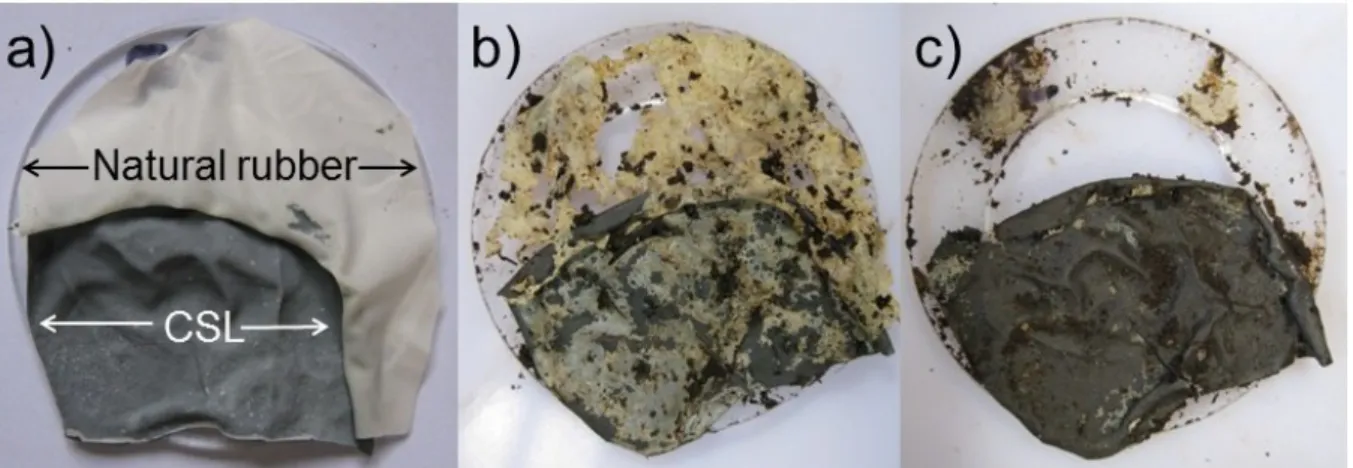
Figure 1 The effect of composting on CSL painted on the underside of natural rubber: a) before composting, b)
after four months and c) after six months.
rubber had almost completely gone to leave the CSL intact (Figure 1c), which suggests that CSL is not biodegradable under these conditions. For this reason alternative cathode materials were tested in terms of their power-producing capabilities and propensity to biodegrade.
Alternative biodegradable cathodes
Three alternative cathodes were developed and compared to CSL; an off-the-shelf non-toxic carbon-based conductive paint, a gelatine-based mixture and an egg-based mixture. After the MFCs were coated with each cathode material, the surface resistance was measured from top to bottom (6 cm) of each MFC. The conductive paint was the least resistive at 50 Ω (standard deviation (STD): 2.83) followed by CSL: 288 Ω (STD: 17.68), then the egg-based mixture at 318 Ω (STD: 123.03) and the gelatine-based mixture was the most resistive at 465 Ω (STD: 21.21).
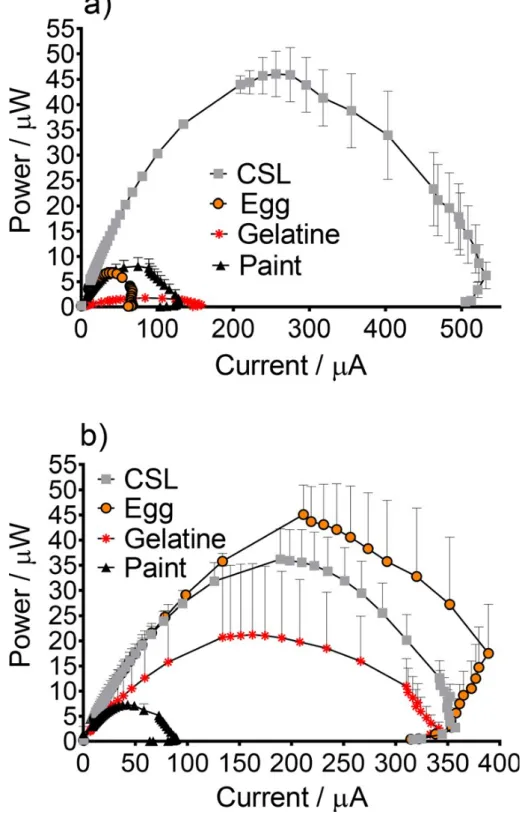
Figure 2 Power curves produced from different cathode types: a) after six weeks operation (before lanolin
application) and b) after eight weeks operation (following lanolin application). Data presented as mean and
range (n=2).
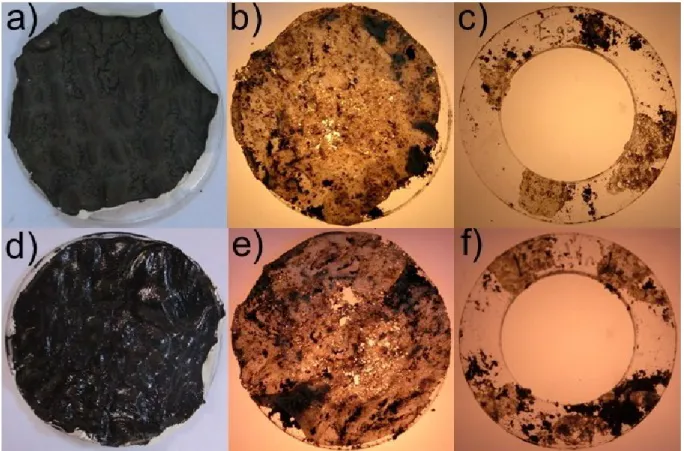
polyurethane as binder, which has been used previously as the sole diffusion layer in MFCs.[14] This could explain why the application of an additional diffusion layer did not improve the performance. In addition, there was little improvement in the conductive paint MFCs probably because----as it is water soluble----the paint became diluted both through operation and with the addition of lanolin. The improvement in both egg and gelatine is reflected in the power curves produced after eight weeks (two weeks after the application of lanolin), and the egg MFCs actually outperformed the CSL MFCs (Figure 2b). To verify that the new cathode materials were biodegradable, samples were tested in the ground. Natural rubber coated with gelatine, conductive paint and egg-based cathodes all degraded at the same rate.
Figure 3 Biodegradation of egg-based cathode on natural rubber. Without lanolin layer: a) before composting,
b) after two months and c) after four months. With lanolin layer: d) before composting, e) after two months
and f) after four months.
result, these were employed in the development of the biodegradable stack. The utilisation of egg yolk was inspired by its use as egg tempera in the preparation of paint. The earliest historic evidence of its use was in paints prepared by the ancient Egyptians and Greeks. Tempera paints were
particularly fashionable during the Renaissance and are still used by artists today. This is because egg yolk is a highly efficient emulsive binder that adheres well, dries quickly and is durable[25] with good protection against humidity and temperature changes. These characteristics will have contributed to the effectiveness of the egg-based cathodes and are also desirable traits in terms of the robustness of the biodegradable MFCs. For this reason, 40 MFCs were constructed using egg-based cathodes with the aim to produce a functional biodegradable stack.
Biodegradable stack of MFCs
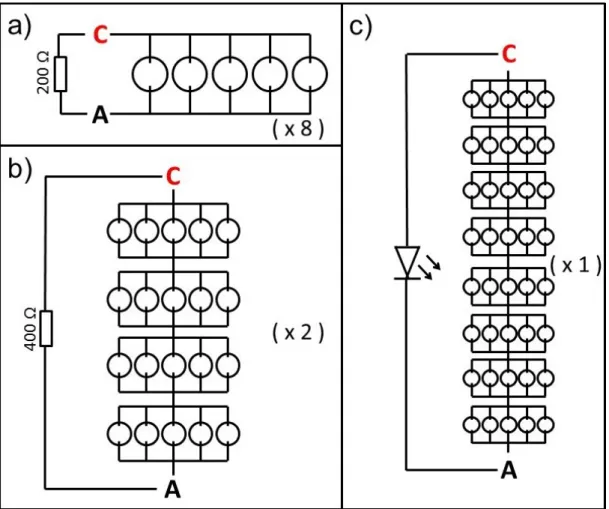
Figure 4 Stack configurations in which A=anode and C=cathode: a) parallel set-of-five MFCs, b) four parallel
Forty MFCs were constructed, with an eight stack formation, where each stack consisted of five MFCs connected electrically in parallel (Figure 4a); these will be referred to as parallel sets. After the first set of experiments, these were configured into two stacks that each comprised four of the parallel sets connected to each other in series (Figure 4b). Finally, all 40 MFCs were configured into one series/parallel configuration (Figure 4c). Power and polarisation curves that show the average from the eight parallel sets are shown in Figure 5a. There was considerable variation between the best performance (246 μW or 6.16 W m3) and the worst performance (54 μW or 1.35 W m3) of the parallel sets. After eight weeks of operation, the two larger stacks were formed (Figure 4b), and the power and polarisation curves are highlighted in Figure 5b. Finally, all eight parallel sets were connected together in series to result in one 40-MFC series-parallel configuration (Figure 4c), and the power and polarisation curves are displayed in Figure 5c. Over time and with each new configuration, the actual circuit current increases but the current density (based on the total volume of each stack) decreases. For example, at the point of maximum power, the average current calculated from the parallel sets-of-five MFCs is 750 μA (18 A m3) compared to 1 mA (6.25 A m3) for the stack of 20 and 1.05 mA (3.28 A m3) for the stack of 40. The stacks were operated in fixed configurations, but it has been reported recently that by dynamically switching between configurations, the performance can be optimised,[26] which ultimately prevents current density losses. However, the power density does improve such that the stack of 40 (320 mL) has a superior power density (4.08 W m3) than the average of the stacks of five (40 mL) at 2.87 W m3.
Figure 5 Comparison of different stack configurations if fed urine: a) five MFCs in parallel after three weeks
(n=8, mean and standard error of the mean, b) 20 MFCs in series/parallel after nine weeks (n=2, mean and
The biodegradable stack was able to keep the LED lit brightly provided that the MFCs were topped up with urine approximately once every three days. The long-term stable performance is emphasised in Figure 6a, which shows the stack behaviour over more than eight days.
Figure 6 Performance of biodegradable stack: a) attached directly to an LED after two weeks of starvation; b)
charge/discharge cycle of MFC stack and 0.75F capacitor bank. Arrows in both figures indicate when the MFCs
were topped up with fresh urine.
of 0.75 F and a voltage of 10.8 V). The hysteresis board discharged the capacitors at 8.5 to 5 V through a load, and the charge/discharge cycle over a 100 h period is shown in Figure 6b. Each discharge released enough energy (up to 20 J per discharge) to activate a range of useful
applications. Provided that the stack was fed with urine regularly, it maintained the cycle and on average discharged every 9 h and continued to operate beyond 24 weeks.
As proposed earlier, a biodegradable stack of MFCs could be used to power a biodegradable robot, perhaps to fuel locomotion or a pumping mechanism. Recently, biodegradable gelatine artificial muscles have been developed[28] that actuate within the same voltage and current range as produced by the biodegradable stack in this study. These are promising developments in the field of biodegradable robotics as it now appears that the right components are in place for actuation and power generation. A clear consideration with biodegradable MFCs is the length of time of operation. The data shown in Figure 6b were generated when the stack was close to five months old. Some visual signs of degradation could be seen, but the MFCs continued to generate useful power. The conditions in which an MFC operates (i.e., anaerobic internal environment, neutral pH, the use of specialist electro-active organisms) are very different to other natural environments, and so the lifetime of the materials might be prolonged during MFC operation. This is highlighted by the fact that if buried in the ground, the natural rubber with the egg-based cathode material and lanolin had degraded completely by the fourth month (Figure 3f) but as functioning MFC components in the stack, they were still intact and operational after six months. It was observed that if fuel was no longer fed and the MFCs ceased operation, biodegradation appeared to accelerate. This was apparent after the two-week period of starvation when, after feeding, there were leaks in some of the MFCs that were not present before the period of inactivity. Interestingly, after several days of operation, some of these leaks disappeared as the system seemed to “self-seal”, perhaps because of precipitation and biofilm growth.
mission, this valuable nutrient could either be released to the land or increase the biodegradability of the system in oligotrophic environments.
The coulombic efficiency (1.1 %) and power density (4 W m3) were low compared to those of previous studies in which MFCs were constructed from expensive, non-biodegradable and
unsustainable materials. For example, in studies using Pt-based cathodes, power densities of over 2 kW m3 have been reported with Coulombic efficiencies of above 80 %.[31] Clearly, a lot of further work is required to reach these levels using biodegradable components, but this study demonstrates that potentially any material can be employed to produce meaningful power. These are key findings for the progress of new sustainable technologies because they demonstrate that useful energy can be produced even using simple, inexpensive, non-hazardous materials. Furthermore, this was achieved using oxygen-breathing cathodes, free of any catalyst, and with urine as the fuel. Finally, in the current study, a complex mixed electro-active community was used to inoculate the MFCs. For practical implementation the user may require the system to degrade at a specified rate or begin to degrade at a designated time. For this reason an interesting avenue of work would be the
incorporation of specific species to accelerate biodegradation.
Conclusions
Experimental Section
Microbial fuel cell design
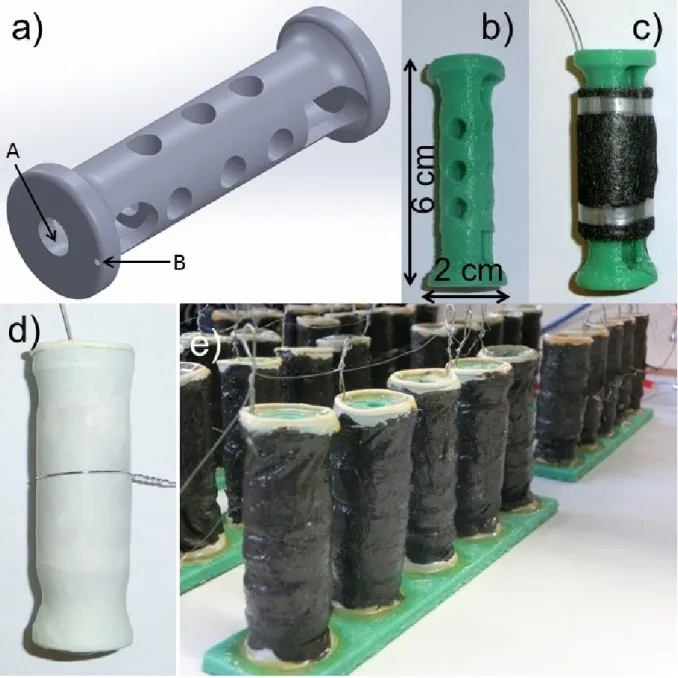
Figure 7 Construction of biodegradable MFCs: a) CAD drawing of the frame, A=feed hole and B=hole for anode
wire, b) 3D printed PLA frame, c) anode wrapped around frame threaded with current-collecting wire, d)
natural rubber “finger cot” that covers the anode and frame wrapped with current-collecting wire, e) stack of
completed MFCs after the application of cathodes.
second hole, 1 mm in diameter, was included in the top for the anode current-collecting wire. An internal feed channel passed through the length of the frame until it reached the sealed bottom. Sixteen holes were introduced into the design so that feedstock could permeate into the anode. The anode was a 50 × 3 cm piece carbon veil with PVA binder (20 g m2, PRF Composite Materials, Poole, UK). This was wrapped around the frame and held in place with two strips of biodegradable grafting tape (Agroforestry, Totnes, UK; Figure 7c). For current collection, nickel chrome wire (0.45 mm, Scientific Wire Company, UK) was pierced through the anode and threaded out of the pre-prepared hole. Latex rubber finger cots (generic suppliers, Ebay, UK) were slid up the anode-wrapped-frame before a small piece of nickel chrome wire was tightened around the centre (Figure 7d). Two coats of cathode solution (preparation detailed in the next section) were painted over the surface of the natural rubber. A stack of complete MFCs is shown in Figure 7e. Each MFC had an internal anode chamber volume of 8 mL.
Cathode preparation
Individual MFC inoculation and operation
MFCs were inoculated using mature microbial communities in the anolyte (tryptone yeast extract) removed from separate established, cubic MFCs. They were initially left in open circuit for 24 h before a 1 kΩ load was connected. MFCs were fed on a regular basis by injecting feedstock into the anode chamber. The anolyte did not need to be physically removed from the chambers at any stage because there was significant daily loss due to depletion and/or evaporation. The 8 mL MFCs needed to be topped up with approximately 2 mL of feedstock daily, which equates to a volumetric loading of 10 mL MFC-1 day-1. Feedstock (anolyte) was tryptone (1 % w/v) yeast extract (0.5 % w/v) for the cathode-comparison experiment, and fresh human urine was used for all the other experiments. Fresh urine (no more than 1 h old) was always used and had on average a pH of 7.14, conductivity of 14.2 mS cm-1, urea concentration of 1.82 mg L-1, ammonium concentration of 1 mg L-1, nitrate
concentration of 20.5 mg L-1, orthophosphate concentration of 1 g L-1 and a chemical oxygen demand (COD) of approximately 10 g L-1.The cathodes did not require hydration. All experiments were
performed at ambient temperature conditions (22 ± 1 °C).
Stack inoculation, configuration and operation
in series to produce a capacitance of 0.75 F at 10.8 V. The hysteresis board discharged the capacitors through a load (430 Ω resistor) from 8.5 to 5 V at which point the charging cycle started again. The time taken for the capacitors to discharge was approximately 170 s before the charge cycle started again.
Data collection and analysis
The MFC output [mV] was recorded against time by using an Agilent LXI (34972A) data acquisition/switch unit with a 2 min sample rate. Recorded data were processed and analysed by using the GraphPad Prism version 6 software package (GraphPad, San Diego, CA, USA). Current I [A] was calculated using Ohm’s law, I=V/R, in which V is the measured voltage [V] and R is the known value of the external resistive load in [Ω]. Power P [W] was calculated by multiplying voltage with current: P=I×V. For power/current density calculations, the total anode chamber volumes were used (i.e., one MFC = 8 mL, stack of five = 40 mL, stack of 40 = 320mL). Coulombic efficiency (CE) was calculated according to the method of Logan et al.[32] using average current data over a 72 h period based on the change in COD. The pH was measured by using a pH meter (HANNA pH209), and the conductivity was recorded by using a multi-range conductivity meter (HANNA Instruments HI 9033). For COD, the urine was filter-sterilised using 0.2 μm filters and analysed using COD HR test vials (CamLab, Cambridge, UK) and analysed by using a Lovibond MD200 Photometer. All other water analysis was performed using test kit reagents (Lovibond, Amesbury, UK) and a MC500 Camlab Colorimeter.
Polarisation experiments
Biodegradation
To examine biodegradation in nature, natural rubber samples as substratum matrix were coated with the cathode material and attached to ring-shaped acrylic tokens with an outer diameter of 5 cm and an inner diameter of 3 cm. The tokens were placed on a frame and buried in an outdoor compost pile (Botanic Gardens, Bristol). Approximately every two weeks, the frame was dug up for samples to be photographed and weighed before returning to the compost heap.
Acknowledgements
The authors would like to thank The Leverhulme Trust for their financial support through Project
Grant RPG-362. Thanks also go to Nick Wray, Andy Winfield and the Bristol Botanic Gardens who
provided access to their grounds and facilities for the biodegradation experiments. Ioannis Ieropoulos
is an EPSRC Career Acceleration Fellow supported by grant numbers EP/I004653/1 and EP/L002132.
References
[1] P.M. Cox, R.A. Betts, C.D. Jones, S.A. Spall, I.J. Totterdell, Nature 2000, 408, 184-187. [2] Z.W. Du, H.R. Li, T.Y. Gu, Biotechnol. Adv. 2007, 25, 464-482.
[3] B.H. Kim, I.S. Chang, G.C. Gil, H.S. Park, H.J. Kim, Biotechnol. Lett. 2003, 25, 541-545. [4] I. Ieropoulos, P. Ledezma, A. Stinchcombe, G. Papaharalabos, C. Melhuish, J. Greenman,
Phys. Chem. Chem. Phys. 2013, 15, 15312-15316.
[5] I. Ieropoulos, J. Greenman, C. Melhuish, I. Horsfield, Artificial Life XII, MIT Press, 2010, 733-740.
[6] I. Gajda, J. Greenman, C. Melhuish, C. Santoro, B. Li, P. Cristiani, I. Ieropoulos, Sustain. Energy
Technol. Assess. 2014, 7, 187-194.
[7] D. Pant, A. Singh, G. Van Bogaert, S.I. Olsen, P.S. Nigam, L. Diels, K. Vanbroekhoven, RSC Adv. 2012, 2, 1248-1263.
[8] M. Irimia-Vladu, Chem. Soc. Rev. 2014, 43, 588-610. [9] C.J. Bettinger, Z. Bao, Adv. Mater. 2010, 22, 651-644.
[11] N.J. Beecroft, F. Zhao, J.R. Varcoe, R.C.T. Slade, A.E. Thumser, C. Avignone-Rossa, Appl.
Microbiol. Biotechnol. 2012, 93, 423-437.
[12] H. Yi, K.P. Nevin, B. Kim, A.E. Franks, A. Klimes, L.M. Tender, D.R. Lovley, Biosens. Bioelectron,
2009, 24, 3498-3503.
[13] M. Behera, P.S. Jana, M.M. Ghangrekar, Bioresour. Technol. 2010, 101, 1183-1189. [14] F.F. Ajayi, P.R. Weigele, Bioresour. Technol. 2012, 116, 86-91.
[15] J. Winfield, J. Greenman, D. Huson, I. Ieropoulos, Bioprocess Biosyst. Eng. 2013, 36, 1913-1921.
[16] J. Winfield, L.D. Chambers, J. Rossiter, J. Greenman, I. Ieropoulos, Int. J. Hydrogen Energy,
2014, 39, 21803-21810.
[17] J. Winfield, L.D. Chambers, A. Stinchcombe, J. Rossiter, I. Ieropoulos, J. Power Sources, 2014, 249, 327-332.
[18] J. Winfield, I. Ieropoulos, J. Rossiter, J. Greenman, D. Patton, Biodegradation, 2013, 24, 733-739.
[19] E.S. Stevens in Green Plastics – An Introduction to the New Science of Biodegradable Plastics, Princeton University Press, USA, 2002.
[20] H. Liu, S.A. Cheng, B.E. Logan, Environ. Sci. Technol, 2005, 39, 5488-5493. [21] K. Ho, A. Pometto, J. Environ. Polym. Degrad. 1999, 7, 101-108.
[22] J. Winfield, L.D. Chambers, J. Rossiter, J. Greenman, I. Ieropoulos, J. Mater. Chem. A, 2015, 13, 7058-7065.
[23] Y. Ahn, F. Zhang, B.E. Logan, J. Power Sources, 2014, 247, 655-659.
[24] F. Zhang, T. Saito, S. Cheng, M.A. Hickner, B.E. Logan, Environ. Sci. Technol. 2010, 44, 1490-1495.
[25] R.J. Boyle, H. Brown, R. Newman in Milk and Eggs: The American Revival of Tempera Painting
1930-1950, University of Washington Press, Washington USA, 2002.
[26] G. Papaharalabos, J. Greenman, A. Stinchcombe, I. Horsfield, C. Melhuish, I. Ieropoulos, J.
Power Sources, 2014, 272, 34-38.
[27] I. Ieropoulos, J. Greenman, C. Melhuish, Int. J. Energ. Res. 2008, 32, 1228-1240. [28] L.D. Chambers, J. Winfield, I. Ieropoulos, J. Rossiter, Proc. SPIE 9056, 2014,
[29] C. Santoro, I. Ieropoulos, J. Greenman, P. Cristiani, T. Vadas, A. Mackay, B. Li, J. Power
Sources, 2013, 238 190-196.
[30] P. Kuntke, K. M. Smiech, H. Bruning, G. Zeeman, M. Saakes, T.H.J.A. Sleutels, H.V.M. Hamelers, C.J.N. Buisrnan, Water Res, 2012,46, 2627-2636.
[31] Y. Fan, S. Han, H. Liu, Energy Environ. Sci., 2012, 5, 8273-8280.
[32] B.E. Logan, B. Hamelers, R. Rozendal, U. Schröder, J. Keller, S. Freguia, P. Aelterman, W. Verstraete, K. Rabaey, Environ. Sci. Technol. 2006, 40, 5181-5192.