Quantitative and qualitative measures of student
learning at university level
David B. HayÆHarvey WellsÆIan M. Kinchin
Published online: 1 October 2007
ÓSpringer Science+Business Media B.V. 2007
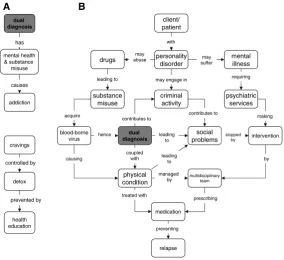
Abstract This paper reports the use of quantitative and qualitative measures of university student learning during teaching in psychiatry. Concept mapping, pre-and post test scores and performance in written assignments were used to measure the quality of change in personal understanding and to show the ways that the knowledge-targets of the course were achieved. The data show that: (1) Concept mapping can be used to explore personal understanding because it facilitates discrete statements of meaning. (2) These personal statements can be compared through time to assess change. (3) Specific criteria can be used to measure the quality of the change from one statement to another so that the different qualities of change that occur can be made-visible in the course of teaching. The approach is discussed in the broader context of learning theory and teaching practice. We show in particular, that prior-knowledge is an important determinant of learning because it affects the sense that can be made of taught material.
Keywords Concept mappingLearning and teachingHigher education Pedagogy
Introduction
There is now a broad literature that focuses on learning and teaching in higher education
(see for example, books by Biggs 2003; Nicholls 2002; Ramsden 2002; Prosser and
Trigwell 1999). Compared with other educational sectors, however, there is remarkably
little research that documents change in students’ personal understanding of specific
concepts in particular disciplines (Laurillard2002). This is probably because the process of
change is deemed intractable and because so few frameworks have been developed from
D. B. Hay (&)I. M. Kinchin
King’s Institute of Learning and Teaching (KILT), Kings College London, James Clerk Maxwell Building, 57 Waterloo Road, London SE1 8WA, UK e-mail: [email protected]
H. Wells
which criteria for the measurement of change are derived. The separate approaches of
Jarvis (1992) and Novak (1998), however, are notable exceptions. Recently, Hay (2007)
has shown that these models can be combined to provide criteria for the measurement of
learning quality. Moreover Novak’s concept mapping method (Novak1998) is a means by
which change in personal knowledge can be made visible during learning (see Hay,
Kinchin et al.in press). This is explained here in a single discipline of higher education
(psychiatry). The principles are general, however, and one of the purposes of the work described here is to show how concrete measures of student learning can be obtained in the course of teaching for any cognate discipline. This is because the approach (of this paper)
is grounded in definitions of learning as change rather than convergence on any given
target understanding (e.g. Jarvis 1992) and specific criteria for the measurement of the
quality of change have been developed by Hay (2007after Novak1998)). These issues are
explained below.
Jarvis’ approach is located in a wider scene of adult and continuing education. It is
preceded by the work of Kolb (e.g. Kolb and Fry1975), but although it shares a focus on
learning through experience it is also sufficiently different to claim an independent ante-cedence. Briefly, Jarvis’ definition of learning states that there are only two possible outcomes of experience. The person (learner) is either changed (learning) or they are not (non-learning). This is a succinct and useful definition because it suggests how learning should be measured (as personal change). The ontology of this definition is clear; learning is personal change. The definition is therefore applicable in any discipline.
Novak’s approach is a little more complex and focuses not on the ends-state of learning, but on the process by which learning is acquired. Novak’s work is grounded in Ausubel’s
theory of assimilative learning (Ausubel1963,1968; Ausubel et al.1978; see also Ausuble
2000) and suggests that all change in knowledge and understanding can be located
somewhere between the two extremes of rote and meaningful learning. According to
Novak (1998) these two ends of a single learning continuum are defined by the degree of
integration of newly learnt material with prior-knowledge. Thus measurement of change (to qualify new knowledge integration) is an empirical basis for the study of learning
quality (Hay 2007). The approach has an important corollary in the literature on deep
versus surface student learning (Sa¨ljo¨1975; Marton and Sa¨ljo¨1976,1984) but where the
literature on approaches to learning is grounded in the phenomenographic method (Marton
1981,1986) or psychometry (e.g. Biggs1993,2003; Entwistle et al.2001, Entwistle et al.
1991), Novak’s model is a basis for measurement of change in knowledge in particular
disciplines (Hay and Kinchin2007).
Using concept mapping to measure change
Concept mapping is one of a broad family of graphic organising tools that includes
mind-mapping (Buzan and Buzan 2000) and spider diagramming (Mintzes et al. 1997). Yet
Novak’s method (Novak 1998) has some very specific rules that set it apart from other
techniques and facilitates the measurement of learning quality. A concept map is a declarative model of personal understanding comprising concept labels to identify specific ideas and explanatory links that give these ideas meaning. Thus, concept maps comprise any number of propositional statements, each of them made up of paired and linked concepts. Each proposition is a statement of understanding and the validity of each assertion is laid bare. This is a powerful teaching tool since it facilitates the sharing of
students (Kinchin and Hay2007). Where the same person maps the same topic repeatedly then a comparison of two or more such ‘snap-shots’ facilitates measurement of the quality
of change (Novak and Mussonda1991; Hay2007). Those parts of the knowledge structure
that are new can be differentiated from those that are old and the degree of integration (of new ideas and extant parts of the prior-knowledge structure) can be measured.
Novak’s theoretical work on rote and meaningful learning is also a significant frame-work for the measurement of learning and teaching quality. The literature on student learning ‘styles’ and ‘approaches’ is well developed but this is not the same. Work on deep
versus surface student learning styles (Sa¨ljo¨1975; Marton and Sa¨ljo¨1976,1984) and on
approaches to learning more generally (Biggs1993; Entwistle et al.2001; Entwistle et al.
1991; Entwistle and Tait1994; Kember1996,2000) are useful since they inform a wider
understanding of issues in university learning and teaching, but they remain ‘proxies’ for learning quality. They measure approaches to learning or study strategies (and sometime
motivations) (Entwistle and McCune 2004), but they do not show how student’s
under-standing is changed as a consequence of learning). Novak’s approach is different because it is based on taking successive measures of personal understanding of particular concepts as
they are changed in the course of learning and teaching (Hay2007).
The work we present here has four aims: (1) to develop and explain an approach to the
measurement of learning quality that is grounded in the work of Novak (1998) and Jarvis
(1992); (2) to report the use of the method in a particular discipline (psychiatry); (3) to
explain the ways that concept mapping can be used to document knowledge-change in the normal course of teaching for any discipline, and; (4) to explore some of the weaknesses of the method as well as priorities for future research.
Methods
This study was done during a short-course in mental health taught at the Institute of Psychiatry, King’s College London. The teaching was done in twelve 6 h sessions over a period of 3 months. It comprised lectures, seminars and group activities in the classroom. Reading, independent study and project work in groups was also required in the students’ own time. The summative assessment was a 3,000 word essay due five weeks from the end of the taught course.
Eighteen students took part and all of them finished the course. All of them were health care professionals with at least 2 years of clinical practice behind them. Three ‘A’ level passes at grade C or above was also a course prerequisite.
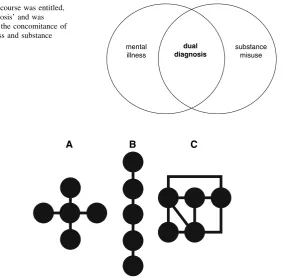
The course was entitled ‘Dual Diagnosis’ and it dealt with concomitant issues of mental
illness and substance abuse. Figure1 is a simple summary of the course content. The
cognitive topics for the course were as follows: substance abuse, mental health, personality disorder, treatment, social exclusion and the prevention of relapse. Practice and skills learning included: interview techniques, Bethient assessment, cognitive behavioural ther-apy, medical intervention, stress and vulnerability models and the wider aspects of health-care. Most of the teaching sessions combined theory and the development of practical skill through case study analysis and role-play.
For the purposes of the research, the first session began with an introduction to the concept mapping method. The students were taught the method as it was described by
Novak (1998) (none of them had encountered the method before). They were then given
students’ prior knowledge was further measured in a pre-course test. This comprised 15 short answer questions on the key-themes of the teaching that was to follow. Each question was worth a single mark and the students were informed of their score in the subsequent teaching session. The concept mapping activity and the short-answer test were repeated on the last day of teaching. Pre- and post-course test scores were compared and the changes in concept maps were assessed to document learning.
The concept maps that were produced individually before and after the course were
analysed in two ways. First, the approach of Kinchin et al. (2000), was used to typify the
gross morphology of each of the students’ knowledge structures. This is summarised in
Fig.2. Briefly, the ways in which the concepts and links were arranged were classified as
spoke, chain and network structures. The approach is now widely used in the literature and
there are a number of papers that attest to its validity (e.g. Hay and Kinchin 2006). In
particular, it offers a succinct measure of a student’s propensity for learning (Hay and
Kinchin 2006) and it avoids many of the pitfalls of quantitative concept map analysis
(Kinchin et al.2000).
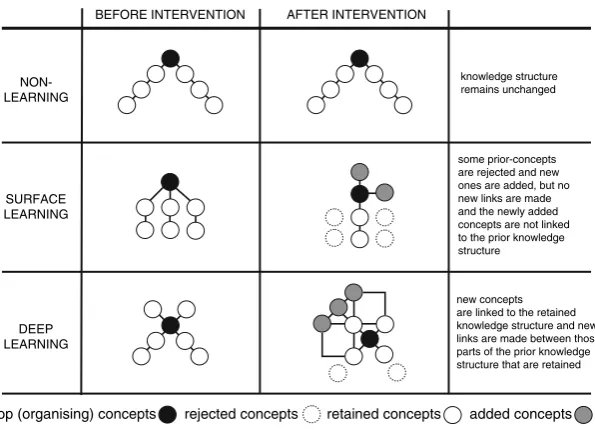
The second approach was used to measure the quality of change in the course of
learning. The method is summarised in Fig.3and was derived from work done previously
by Hay (2007). Specific criteria were developed a priori from the literature on non-learning
l a t n e m
s s e n ll i
e c n a t s b u s
e s u s i m
l a u d
s i s o n g a i d
Fig. 1 The course was entitled, ‘Dual Diagnosis’ and was focussed on the concomitance of mental illness and substance abuse
C B
A
(Jarvis1992,1998,2006; Jarvis et al.1998) and deep versus surface (Sa¨ljo¨1975; Marton
and Sa¨ljo¨1976,1984), strategic learning (Entwistle et al.1991; Entwistle and Tait1994) or
rote-learning versus meaning-making (Novak1998; Novak and Gowin1984; Novak and
Mussonda1991; Novak and Symington1982). The criteria were as follows:
1. Non-learning: was defined by an absence of cognitive change. Non-learning was therefore measured by the lack of new concepts in the second map and by an absence of new links in the extant prior knowledge structure.
2. Rote learning: was defined in two ways. First by the addition of new knowledge. Second by absence of links between the newly acquired concepts and those parts of the prior knowledge repeated in the second map.
3. Meaningful learning: was defined by a non-trivial change in the knowledge structure. Thus evidence of deep learning comprised the emergence of new links in parts of the prior knowledge structure developed in the course of learning and/or the meaningful linkage of new concepts to parts of the pre-existing understanding.
In the presentation of the results, all student identities are disguised by the use of pseudonyms. We show both qualitative and quantitative data for all 18 participants and a detailed case-by-case account for six of the students. The case studies are not used to extract generalities but to illustrate the ways in which the individuals learnt (or otherwise). Nevertheless, the cases that we have chosen are inclusive of all the types of learning change that we observed.
-N O N G N I N R A E L E C A F R U S G N I N R A E L P E E D G N I N R A E L s t p e c n o c ) g n i s i n a g r o ( p o
t rejectedconcepts retainedconcepts addedconcepts
N O I T N E V R E T N I E R O F E
B AFTERINTERVENTION
e r u t c u r t s e g d e l w o n k d e g n a h c n u s n i a m e r s t p e c n o c -r o i r p e m o s w e n d n a d e t c e j e r e r a o n t u b , d e d d a e r a s e n o e d a m e r a s k n il w e n e n e h t d n
a wlyadded d e k n il t o n e r a s t p e c n o c e g d e l w o n k r o i r p e h t o t e r u t c u r t s s t p e c n o c w e n d e n i a t e r e h t o t d e k n il e r a w e n d n a e r u t c u r t s e g d e l w o n k e s o h t n e e w t e b e d a m e r a s k n il e g d e l w o n k r o i r p e h t f o s t r a p d e n i a t e r e r a t a h t e r u t c u r t s
Results
Empirical measures of learning
Eighteen students took part in this study. Although no one dropped out during the teaching,
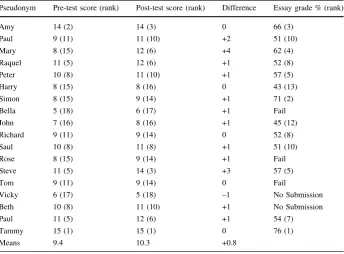
two (Betty and Beth) failed to complete the assignment. Table1shows a summary of all the
students’ scores in the pre- and post-course tests and their respective essay grades. Most students gained a higher score in the post-course test than they had done in the pre-test, but the average gain score was less than one mark (in 15). The differences in pre- and post-tests were not significant. Class ranks were also largely unchanged. Mary, Steve and Tom were the only students to move by more than a single place. Mary improved more than any other student moving from 15th in the pre-test rankings to 6th in the post-tests. Her test scores were 8/15 (pre-course) and 12/15 (post-course); her final essay grade was 62%. Steve also moved upwards; from 5th to 3rd in the pre- and post-tests respectively. Steve achieved an essay mark of 57% and he scored 11/15 before the course and 14/15 at the end. Tom scored nine in both tests but fell from 11th to 14th in the class-rankings. His essay was a fail grade. Concept map analysis showed that structural changes in students’ knowledge were rare
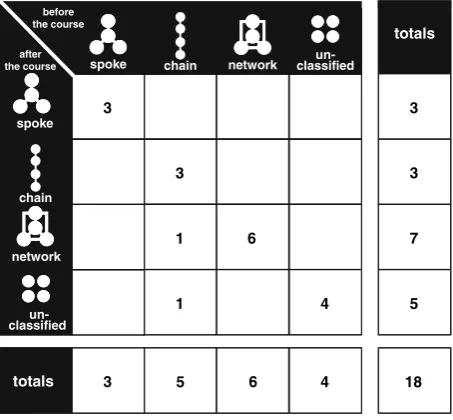
(Fig.4). Of the eighteen students participating, in the study, only two drew concept maps
of a different structural type before and after the course. One of these comprised change from a chain (prior to the course) to a network (afterwards). The other was a chain before the course but was unclassified afterwards because the concepts were not linked.
Table 1 Quantitative measures of learning
Pseudonym Pre-test score (rank) Post-test score (rank) Difference Essay grade % (rank)
Amy 14 (2) 14 (3) 0 66 (3)
Paul 9 (11) 11 (10) +2 51 (10)
Mary 8 (15) 12 (6) +4 62 (4)
Raquel 11 (5) 12 (6) +1 52 (8)
Peter 10 (8) 11 (10) +1 57 (5)
Harry 8 (15) 8 (16) 0 43 (13)
Simon 8 (15) 9 (14) +1 71 (2)
Bella 5 (18) 6 (17) +1 Fail
John 7 (16) 8 (16) +1 45 (12)
Richard 9 (11) 9 (14) 0 52 (8)
Saul 10 (8) 11 (8) +1 51 (10)
Rose 8 (15) 9 (14) +1 Fail
Steve 11 (5) 14 (3) +3 57 (5)
Tom 9 (11) 9 (14) 0 Fail
Vicky 6 (17) 5 (18) –1 No Submission
Beth 10 (8) 11 (10) +1 No Submission
Paul 11 (5) 12 (6) +1 54 (7)
Tammy 15 (1) 15 (1) 0 76 (1)
Means 9.4 10.3 +0.8
Overall, there were only two students that satisfied the criteria for meaningful learning (Amy and Tammy). Change in Amy’s maps is reported in the case studies below. Tammy’s knowledge change suggested a mix of rote and meaningful learning. She had learnt some parts of the course deeply and integrated new concepts with the prior knowledge, but other ideas had been added superficially and comprised chains unlinked to the rest of the structure. Nevertheless, Tammy came top of the class rankings before and after the course (scoring 15/15 on both occasions) and her essay grade (76%) was the highest in the class. There were seven cases where rote and non-learning outcomes were also combined. Rote learning occurred five times. Non-learning was the sole outcome on four occasions (in these cases the students simply replicated their prior knowledge maps in the second map-making exercise).
There were no obvious correlations between the quantitative and qualitative measures of student achievement. Rose for example, was one of only two students to produce an end-of-course concept map that was radically different from her first. She was in the lowest inter-quartile for achievement in her pre- and post-tests scores and her essay did not achieve the pass-mark. Tammy came top of the class in all quantitative measures but showed a combination of deep and surface learning outcomes. Amy made more mean-ingful sense out of what she was taught than any other student but her place in the post-tests ranking was not changed as a result and her essay grade was not different from a position in the class predicted by her pre-test result. Mary’s pre- and post-test scores showed more improvement than any other student, but the qualitative measures of her learning were indicative of superficial change. All of these outcomes are illustrated by the case studies below.
spoke chain network classified
un-spoke
chain
network
classified un-before the course
after the course
3
3
6
4 1
1
4 5
totals
5
18
totals
3
3
7
3 6
spoke chain network classified
un-spoke
chain
network
classified un-before the course
after the course
totals
totals
Case study analysis
Case one: Amy
Amy scored 14/15 in both pre- and post-course tests. Her final essay mark was 66%. Many of the concepts that Amy used in her map of the topic were common before and after the
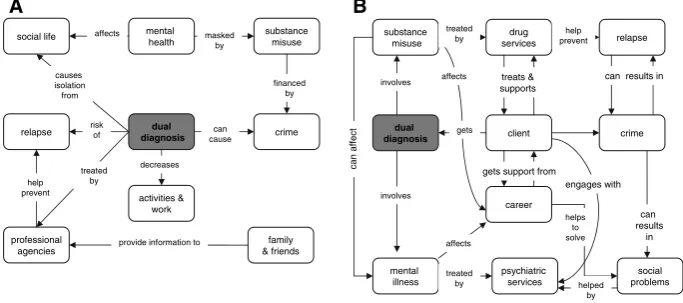
course and the overarching structure of her knowledge was the same (Fig.5). Her first map
was a network of nine concepts and the second, a network of ten. Moreover, these ten concepts were arranged on the page in positions that corresponded almost exactly to those used in the first map even where the concept labels themselves were changed. There was however, a considerable increase in linkage of her second map. There were 10 links in the first map and 20 in the second.
Apart from the top concept ofdual diagnosis(which was the given starting point for the
map), there were only three others that were carried forward verbatim from the first to the
second map. These weresubstance misuse,relapseandcrime. Four more concepts
how-ever, persisted despite alternative use of terminology. Thus for example, the concept of
mental healthwas replaced bymental illnessin the second map, but the two terms were
apparently used synonymously. Similarly, the concept ofprofessional agenciespersisted in
the guise ofpsychiatric services,social lifeassocial problemsandactivities and workwere
replaced by the concept ofcareerin the second. These substitutions were largely
advan-tageous and helped the second map to be both more explanatory and succinct. Only one
concept (the concept offamily and friends) was included in the first map but neglected in
the second. The second map comprised just two concepts that were entirely new (drug
servicesand the concept of theclient).
A comparison of Amy’s maps before and after the course shows evidence of meaningful learning. Overall, the second map was considerably superior to the first. Not only was it better linked it was also more parsimonious. New concepts were deeply integrated and the reorganisation of ideas was evidence of new and personal meaning. The definition of the
top concept for the course (the concept ofdual diagnosis) was considerably improved in
the second map. The second map showed considerable evidence of individual meaning
making in the course of learning. Where the concept ofactivities and workwas included in
the first map, this was done only as a single link from the concept ofdual diagnosis(‘‘[a]
B t n e il c e s p a l e r e m i r c l a i c o s s m e l b o r p c i r t a i h c y s p s e c i v r e s r e e r a c l a u d s i s o n g a i d e c n a t s b u s e s u s i m g u r d s e c i v r e s l a t n e m s s e n ll i & s t a e r t s t r o p p u s m o r f t r o p p u s s t e g n a c s t l u s e r n i n i s t l u s e r n a c p l e h t n e v e r p d e t a e r t y b s t e g s t c e f f a s e v l o v n i s e v l o v n i can affect s t c e f f a d e t a e r t y b s p l e h o t e v l o s d e p l e h y b h t i w s e g a g n e l a u d s i s o n g a i d e c n a t s b u s e s u s i m e m i r c y li m a f s d n e i r f & l a n o i s s e f o r p s e i c n e g a & s e i t i v i t c a k r o w e s p a l e r e f il l a i c o
s affects mheenaltathl masked y b s e s a e r c e d d e c n a n i f y b o t n o i t a m r o f n i e d i v o r p p l e h t n e v e r p k s i r f o s e s u a c n o i t a l o s i m o r f n a c e s u a c d e t a e r t y b A
dual diagnosisdecreasesactivities and work’’). The link was tentative and may be deemed
to imply undue causality. In the second map, however, the concept of [the]career was
given much greater prominence. It had become an ‘organising principle’ and provided an anchor for the development of newly acquired meaning. In the second map, the impact of
mental illness andsubstance misusewere described in terms of negative impacts on the
career of the client and the role that a career might have for both the support of the
individual (client) and the mitigation of social problems was explained. These are all
themes that were introduced and discussed in the teaching of the module, but the ways that Amy chose to describe them in her second map was unique. It shows that she has compared the knowledge she brought to the subject and the material that she was taught to develop a new and personal understanding. Her learning was personal and the change from her first to second map was indicative of meaningful learning.
Case two: Mary
Mary’s pre- and post-course test scores (8/15 and 12/15, respectively) improved more than any other student. Mary obtained a mark of 62% for her essay. Like Amy, however, there was a negligible change in the gross structure of her concept maps before and after learning
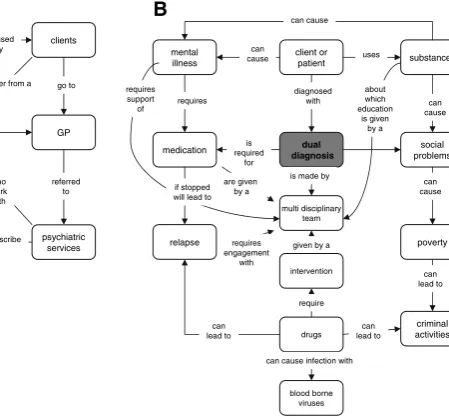
(Fig.6). Both of Mary’s maps were networks and they comprised 9 concepts (with 14
links) and 13 concepts (with 20 links) respectively. Like Amy, Mary’s second map also
included many concepts that were present in the prior knowledge structure (e.g.mental
illness, theclientorBethient,medication, themultidisciplinary team.Some concepts were
also retained but identified using different labels. The concept oftreatment wasreplaced by
the broader terminterventionin the second map), and the idea ofdrugswas expanded to
identifydrugs and alcohol. Nevertheless, Mary added more new concepts than Amy in her
second map. The concepts of social problems,poverty,criminal activities, relapseand
l a u d s i s o n g a i d s t n e il c P G c i r t a i h c y s p s e c i v r e s y r a n il p i c s i d i t l u m m a e t n o i t a c i d e m l a t n e m s s e n ll i s g u r d l o h o c l a & n a c e s u a
c misused
y b o t o g s i d e r i u q e r r o f t r a p s i f o t n e m t a e r t d e r r e f e r o t e b i r c s e r p n a c e v i g n a c t e g m o r f d e t a e r t s i h t i w a m o r f r e f f u s o h w k r o w h t i w l a u d s i s o n g a i d s e c n a t s b u s l a i c o s s m e l b o r p n o i t a c i d e m l a t n e m s s e n ll i r o t n e il c t n e i t a p n a c e s u a
c uses
n a c e s u a c s i d e r i u q e r r o f d e s o n g a i d h t i w s e r i u q e r y r a n il p i c s i d i t l u m m a e t s g u r d y t r e v o p l a n i m i r c s e i t i v i t c a e n r o b d o o l b s e s u r i v e s u a c n a c n a c e s u a c n a c o t d a e l y b e d a m s i d e p p o t s f i o t d a e l ll i w s e r i u q e r t r o p p u s f o h t i w n o i t c e f n i e s u a c n a c n a c o t d a e l n e v i g e r a a y b t u o b a h c i h w n o i t a c u d e n e v i g s i a y b n a c o t d a e l e r i u q e r a y b n e v i g s e r i u q e r t n e m e g a g n e h t i w n o i t n e v r e t n i e s p a l e r B A
blood-borne viruseswere all new in the second map. Conversely, the concept of theGP
(general practitioner) appeared in Mary’s prior knowledge structure, but was neglected after the module.
The changes in Mary’s map provide evidence of learning but most of the changes are superficial and indicative of rote learning. This is because they constitute the simple addition of new concepts, linked one to another or to surface parts of extant prior knowledge. They are not deeply integrated with what was known before. There is little structural reorganisation (the same concepts tend to appear in the second map in the same places that they did in the first) and there is little new development of linkage among persistent concepts. The prior knowledge structure has not been changed meaningfully and
addition has been made without evaluation. The new concepts ofpoverty,social problems,
criminal activities,relapseandblood borne viruses, for example, share between them, only three links to concepts that were present in the prior knowledge.
Mary’s second map also comprises structural inconsistencies that are a barrier to the
succinct explanation of meaning. Thus, for example, the termssubstances anddrugsare
both used in the second map. This is probably an infringement of the rules for concept
mapping (Novak1998, requires that a concept is used only once in a map) and it decreases
its parsimony. The problem is compounded by the use of the term medication as well.
Mary’s second map is in need of structural reorganisation to resolve these issues and this is further evidence of surface learning.
Case three: Harry
Harry achieved a bare-pass mark for his essay (43%) and scored 8/15 in both his pre- and
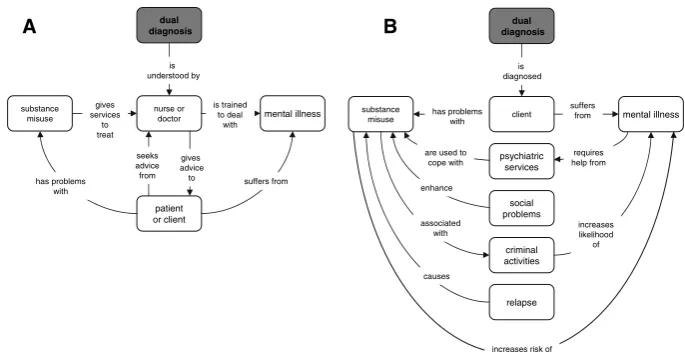
post-course tests. Figure7shows the changes in his knowledge and understanding before
and after the module. His first map was a simple spoke structure in which four concepts
(the concepts ofdual diagnosis,substance misuse,mental illnessand thepatient or client),
were arranged around the concept of thenurse or doctor. The map comprised a robust
l a u d s i s o n g a i d s s e n ll i l a t n e m t n e i t a p t n e il c r o e c n a t s b u s e s u s i m r o e s r u n r o t c o d s e v i g s e c i v r e s o t t a e r t s i y b d o o t s r e d n u s k e e s e c i v d a m o r f s e v i g e c i v d a o t d e n i a r t s i l a e d o t h t i w l a u d s i s o n g a i d s s e n ll i l a t n e m e c n a t s b u s e s u s i m s i d e s o n g a i d s r e f f u s m o r f l a n i m i r c s e i t i v i t c a e s p a l e r m o r f s r e f f u s s m e l b o r p s a h h t i w s m e l b o r p s a h h t i w c i r t a i h c y s p s e c i v r e s l a i c o s s m e l b o r p o t d e s u e r a h t i w e p o c e c n a h n e d e t a i c o s s a h t i w s e s u a c f o k s i r s e s a e r c n i s e r i u q e r m o r f p l e h s e s a e r c n i d o o h il e k il f o t n e il c B A
definition of the concept ofdual diagnosis, however, because substance misuse and mental illness were described as simultaneous patient or client problems.
Structurally, the second map was almost identical to the first. This was despite the fact
that the concept of thenurse or doctor, central to the first map, was absent in the second
and the concept of theclientnow took this central and organising role. Three new concepts
were added (social problems, criminal activities and relapse), but these were added
peripherally and were not linked to the top concept (of dual diagnosis), nor to the new
concept central (the client). These changes are indicative of a mix of non-learning
outcomes and rote learning.
Case four: Bella
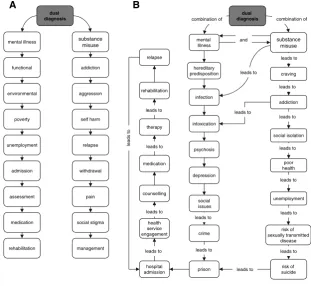
Bella was bottom of the student rankings in the pre-course tests (she scored only five marks of the 15 marks available). In the post-course tests she scored only one mark more (6/15) improving her position by just one place. Her essay was a fail grade. Before the course, her map was made of two chains (without linking statements), and afterwards these were
longer (and linked), but not substantively different (Fig.8).
The chains that Bella drew were initiated by the distinction between concomitant
diagnosis ofmental illnessandsubstance misuse. This was appropriate for the definition of
dual diagnosis that was developed by the course (Fig.1). In the first map however, there
l a u d s i s o n g a i d s s e n ll i l a t n e m l a n o i t c n u f l a t n e m n o r i v n e y t r e v o p t n e m y o l p m e n u n o i s s i m d a t n e m s s e s s a n o i t a c i d e m n o i t a t il i b a h e r e c n a t s b u s e s u s i m n o i t c i d d a n o i s s e r g g a m r a h f l e s e s p a l e r l a w a r d h t i w n i a p a m g i t s l a i c o s t n e m e g a n a m l a u d s i s o n g a i d e c n a t s b u s e s u s i m l a t n e m s s e n ll I y r a t i d e r e h n o i t i s o p s i d e r p n o i t c e f n i n o i t a c i x o t n i s i s o h c y s p n o i s s e r p e d l a i c o s s e u s s i e m i r c n o s i r p g n i v a r c n o i t c i d d a n o i t a l o s i l a i c o s r o o p h t l a e h t n e m y o l p m e n u f o k s i r d e t t i m s n a r t y ll a u x e s e s a e s i d l a t i p s o h n o i s s i m d a y p a r e h t n o i t a c i d e m g n il l e s n u o c h t l a e h e c i v r e s t n e m e g a g n e n o i t a t il i b a h e r e s p a l e r o t s d a e l o t s d a e l o t s d a e l o t s d a e l o t s d a e l o t s d a e l o t s d a e l o t s d a e l f o k s i r e d i c i u s o t s d a e l o t s d a e l o t s d a e l o t s d a e l o t s d a e l o t s d a e l o t s d a e l o t s d a e l f o n o i t a n i b m o
c combinationof
d n a leads to B A
were no cross-links between the two chains, and in the second, there were only four (among a total of 24 concepts). Each chain in each of the maps was indicative of a temporal sequence of events rather than an exposition of the meaning of the subject. Furthermore, many of the successive links in the concept chains implied undue causality.
Thus for example,social isolationwas shown to lead topoor healthandunemploymentto
an increased risk of sexually transmitted disease. The second map shows an important
cross-link (newly acquired), between the concepts ofmental illnessandsubstance misuse,
but this was not substantiated by linkage in other parts of the structure. Other cross-links in the second map were superficial because they were an obvious consequence of poor structural organisation (i.e. related concepts were unduly separated) or because the links
were untenable (e.g. arisk of suicideleads toprison).
Bella’s concept maps before and after the module cannot be compared empirically (because the first map lacked links). Nevertheless, the second map is so trivial in its explanation of the topic that the change must be considered indicative of rote learning at best. More likely, it is non-learning.
Case five: Rose
Rose scored eight and nine in her pre- and post-course tests. Like Bella, she failed the course. She was also one of only two participants to show a significant change in
knowledge structure. Figure9shows how the simple (and broken) chain that Rose drew for
her first map was replaced by a complex network in the second.
l a u d s i s o n g a i d h t l a e h l a t n e m e c n a t s b u s & e s u s i m n o i t c i d d a s g n i v a r c x o t e d h t l a e h n o i t a c u d e s a h s e s u a c y b d e ll o r t n o c y b d e t n e v e r p l a u d s i s o n g a i d s g u r
d personailty
r e d r o s i d l a t n e m s s e n ll i / t n e il c t n e i t a p e c n a t s b u s e s u s i m l a n i m i r c y t i v i t c a c i r t a i h c y s p s e c i v r e s e n r o b -d o o l b s u r i v l a i c o s s m e l b o r
p intervention
l a c i s y h p n o i t i d n o c y r a n il p i c s i d i t l u m m a e t n o i t a c i d e m e s p a l e r h t i w y a m e s u b
a may r e f f u s o t g n i d a e
l mayengagein requiring
e r i u q c a e c n e h g n i s u a c d e l p u o c h t i w o t s e t u b i r t n o c o t s e t u b i r t n o c g n i d a e l o t g n i d a e l o t d e g a n a m y b g n i k a m d e p p o t s y b y b g n i b i r c s e r p h t i w d e t a e r t g n i t n e v e r p B A
Rose’s first map comprised 6 concepts and four links. It was an appropriate definition of
the top concept (ofdual diagnosis) but otherwise it was indicative of little prior knowledge
of the subject. Her second map had 15 concepts and 19 links. At first glance these changes suggest considerable development of personal knowledge and understanding. Closer scrutiny, however, suggests that much of what Rose had newly acquired was poorly understood, and even her basic grasp of the subject had been lost by the end. Most
importantly, before the module, Rose understood that a dual diagnosiscomprised both
mental healthissues andsubstance abuse. By the end however, Rose was unable to define the concept in any succinct and appropriate way. Although she still apparently knew that both these issues were important, how this was so was confused and erroneously described.
Thus for example, Rose’s second map stated that the acquisition of ablood-borne virus
was a key determinant of a dual diagnosis and that a dual diagnosisled directly (and
causally) tocriminal activityor othersocial problems. Moreover, the concepts ofsubstance
misuseandmental illnesswere related to thedual diagnosisconcept only indirectly. The
only route from the concept of adual diagnosistomental illness, for example, was through
medication that was mediatedvia causal statements aboutcriminal activity, othersocial problemsand the treatment ofphysical condition. None of these were explanatory of the subject, nor were any of them sufficiently academic to merit inclusion.
Rose started with a superficial prior knowledge. By the end of the module her knowledge of terms had been increased but she had clearly failed to understand what she had acquired. She had added numerous misconceptions of the subject and was more confused than she had been before the course began.
Case six: Betty
Betty did not submit an essay for assessment. Her pre- and post-course test scores were 6/ 15 and 5/15 placing her at the bottom of the post-course test rankings. Her first map
comprised only three linked concepts, one of which was the top concept ofdual diagnosis.
There was only one proposition in her first map. This asserted thatsubstance misuse and
psychosis (listed together as a single idea), cause dependence and addiction. Betty also
listed the following terms in her first map: disorder, detoxification, health education,
therapy,Schizophrenia,epilepsy,disease, drug abuseandalcohol dependency. None of these were linked, however. Her second map was not linked at all. Instead it comprised a list of eleven different concepts. Eight of these had been present in the first map and three
were new (criminal activity, relapse and a multidisciplinary team). The concept of
dependency and addiction had been dropped. The change in Betty’s maps was therefore classified as non-learning. The second map explained less than the first and the concept list was not substantively changed.
A summary of structural change
Figure10is a summary of the structural changes documented in this study. Among the 18
students of this course there were only two who used different knowledge structures to describe their understanding before and after the course. All the others produced pairs of maps with remarkable structural homology, even where the content and its internal organisation were different (see Case One and Two, for example). The significant change
confused at the end of the course than she had been at the start, and she failed the assignment.
Discussion
Research of student learning
The data presented here suggest that Novak’s description of rote and meaningful learning
(Novak1998) and Jarvis’ model of learning versus non-learning outcomes (Jarvis1992)
provide robust frameworks for the assessment of learning quality. Moreover, that Novak’s concept mapping method makes it possible for lecturer’s to obtain sequential ‘snap-shots’ of their student’s personal understandings so that issues of learning quality can be exposed and discussed.
This paper also shows how the use of simple labels of learning quality (non-learning
(sensu Jarvis 1992) rote and meaningful learning (sensu: Novak1998)) can be extracted
from measures of change through concept mapping These labels are developed out of complex theories of learning (Jarvis; Novak; Ausubel ibid); all of which emphasise issues of personal difference, but there is still a risk that ‘labels’ mask the underlying richness of
learning as a continuum (Novak 1998; Kember2000). It is important, however, that our
approach shows how measures of learning quality can be attached to declarative statements of personal understanding (rather than personal ‘styles’ or ‘approaches’). The
C B
A
E D
case-commentary that is a large part of the results in this paper is derived from the actual discussions that took place between the teacher and the students who were party to the study. It exemplifies the complexity of discussion of learning quality that is made possible where real measures of personal understanding are successively declared. ‘Labels’ and ‘definitions’ (of learning) were important (in these discussions) as they focused attention
on particularvalues, but the real significance of the approach is better represented by the
view thatconcept mapping makes learning visible(Hay, Kinchin et al.in press).
Entwistle and Smith (2002) argue that personal and target understandings are
simul-taneously important in student learning. But university teaching and assessment strategies while generally good at measuring student achievement (against the ‘targets’ of formal assessment), are less good at showing how personal knowledge and target performance are
related (Kinchin and Hay 2007). As a consequence there is general concern that some
‘targets’ are achieved through rote learning (Kinchin et al. in press). One of the problems has always been that university teachers have not known how to acknowledge personal meaning-making; either in theory or in practice. Constructivism has led to widely used theories of learning that are personal, but if the theory is to be applicable in teaching then it must also find methods of practice that can be reconciled with the stated targets of teachers and the curriculum (Entwistle and Smith ibid). The data presented here show that lecturers
can measure personal knowledge-change and that they need-not radically alter their
teaching strategies to do so. Concept mapping is a practical method in the constructivist
tradition; it can be used by teachers tovisualisethe ways that their students make sense of
the knowledge targets of teaching but it also helps students incorporate new information towards personal understanding.
As we have shown, concept mapping can be used to document personal understanding
and doing so may show how troublesome ideas (Perkins2006) come into view or comprise
thresholds of new understanding (Meyer and Land2003,2005). Concept mapping can be
taught in about 20 min and satisfactory maps can usually be made in half-an-hour. This means that the method is realistic during normal university teaching. Some of the weak-nesses and limitations of the approach are discussed below, but the results reported here show how one teacher (of psychiatry) was able to use the method to integrate research of their students’ learning as part of their normal teaching practice. Our work draws particular attention to the role of prior-knowledge. Each case of meaningful learning was prefaced by a rich understand of the topic before teaching and rote or non-learning occurred where prior-knowledge was poor. This is an important issue for higher education, but one that is often neglected by theories of learning ‘style or ‘approach’. Meaningful (or deep) and rote
(or surface) learning approachesmay be consequences of ‘proximity’ (or the lack of it)
between prior-knowledge and the targets of teaching. Students who lack prerequisite knowledge may be compelled to adopt rote learning and learning approaches more
gen-erally may be proxy for understanding that is made possible (or denied) at a more
fundamental level of cognitive integration.
Towards an authentic pedagogy of higher education
used to share an understanding of a topic and to explore misconceptions (e.g. Novak and
Gowin1984; Novak1998, Kinchin and Alias2005; Fisher2000). If it is used as we have
used it here then it combines processes of teaching with research of learning. For a sector that purports to foster both the process of knowledge transfer and its creation, this is important.
Other important issues might also be better understood through long term concept mapping studies. The timing and nature of assessment, for example, is a much debated
topic (see reviews by Rowntree1987; Brown and Knight1994) and the case of Rose (this
study) provides a focus for many of these concerns. Rose failed the course and analysis of her final concept map explains why. She started from a poor prior knowledge structure but was clearly even more confused at the end of the course than she had been at the beginning. However, she was also the only student to radically alter her knowledge structure during her learning. She was tested in the middle of this process of change but this appears to have been done at a time when her knowledge had not yet ‘broken through’ into new under-standing. If she had been supported more, and tested later, then it is quite possible that she would have been able to restructure her learning sufficiently to pass the module. Her concept maps suggest that she was trying to learn in meaningful ways but that she had not
had time for this in the duration of the course (see Scheja2006, for a discussion of delayed
understanding). Others students (like Tammy) finished the course knowing little more than they did to begin with, but they still did well. Probably Tammy could have written her essay on the day she started and she still would have passed. In the context of widening participation it is clear that a university education now needs to provide more opportunities for all and not just for those who will do well anyway. Concept mapping has an important role to play because it is a means of identifying students at risk of failure (as a consequence of their prior knowledge structures) and it can be used to show the ways that they go about linking new knowledge to old in their learning.
Weaknesses and limitations of the method
absence of understanding. These are issue that are likely to be rich avenues of research in the future.
It is also possible that concept mapping produces artefacts that arise from familiarity with the method (rather than being genuine indicators of learning). In this case students second maps might be richer, not because they have learnt, but merely because they have mastered concept mapping. This is an important contention but it is not substantiated by our own research. To address this issue empirically, Hay (reported in Hay and Kinchin
2007), obtained concept maps from 277 students at the end of a 10 week course in
sta-tistics. Half of this student group had been taught concept mapping to begin with (and had made maps of their prior-knowledge), and half had not. At the end there were no quan-titative differences (using measures of concept or linkage richness and map complexity), nor were there obvious differences in map quality (using measures of map structure
(Kinchin et al.2000) or the validity of propositions (Hay, Kehoe et al.in press). Concept
mapping is so simple that there need-not be any significant learning-curve for the method. This does not mean that people don’t learn through concept mapping, however. Making concept maps is a process of rehearsal and if it is done often enough then people learn from the reflection this entails. As a method for researching learning, concept mapping is not objective because the process of learning measurement (using concept mapping) is bound-up with the learning process itself. If this is true of concept mapping, however, it is true wherever we accept that verbal expressions are indicative of innate aspects of mind and
abstract mental processes (Chomsky 1965). For use in teaching, however, this is also a
strength, because it means that teachers can encourage student-centred meaning-making and record its outcomes simultaneously.
Interviewing students repeatedly to discover their mental constructions of the topics they are learning may be richer than concept mapping (and is probably embedded in the one-to-one teaching methods of elite institutions), but interviews are more time-consuming than concept mapping.
Conclusion
This paper provides empirical evidence for change that is indicative of different qualities of learning. We find that for most students the quality of learning is mixed (combining meaningful learning with rote learning or rote learning with non-learning), and that the richness of student-prior knowledge is a significant determinant of the quality of student learning.
Further work needs to track students knowledge-change through time, and to develop and test concept mapping to these ends, but we suggest that the concept mapping method has a unique utility for longitudinal research of learning among university students.
Concept mapping is a means of engaging students and teachers in transfer of target
knowledge and the creation of personal understanding; it helps students to learn mean-ingfully and helps teachers research how the content of teaching is understood. It is therefore a bridge between processes of personal meaning-making and the acquisition of
targets acknowledged by the curriculum (Entwistle and Smith 2002; Kinchin and Hay
2007). Furthermore we attest that concept mapping is a ground for a pedagogy common to
all the cognate disciplines of higher education. This is because it rests on notions of personal change (as measures of learning) rather than psychological traits or ‘approaches’ to learning or the acquisition of targets per se. Novak’s concept mapping method and his
target knowledge in teaching and the personal meaning-making that must take place if teaching leads to learning.
Acknowledgements The work reported here was funded by a grant for the research of pedagogy from the Society for Educational Studies.
References
Ausubel, D. P. (1963).The psychology of meaningful verbal learning. New York: Grune and Stratton. Ausubel, D. P. (1968).Educational psychology: A cognitive view. New York: Holt, Rinehart and Winston. Ausubel, D. P. (2000).The acquisition and retention of knowledge: A cognitive view. Dordrecht: Kluwer
Academic Publishers.
Ausubel, D. P., Novak, J. D., & Hanessan, H. (1978).Educational psychology: A cognitive view. New York: Holt, Rinehart and Winston.
Biggs, J. (1993). What do inventories of students’ learning processes really measure? A theoretical review and clarification.British Journal of Educational Psychology, 63, 3–19.
Biggs, J. (2003).Teaching for quality learning at University: What the student does. Buckingham: Society for Research into Higher Education & Open University Press.
Brown, S., & Knight, P. (1994).Assessing learning in higher education. London: Kogan Page. Buzan, T., & Buzan, B. (2000).The concept map book. London: BBC Worldwide Ltd. Chomsky, N. (1965).Aspects of the theory of syntax. Cambridge: MIT Press.
Entwistle, N., McCune, V., & Walker, P. (2001). Conceptions, styles and approaches within higher edu-cation: Analytic abstractions, everyday experience. In R. J. Sternberg & L.-F. Zhang (Eds.), Perspectives on thinking, learning and cognitive styles(pp. 103–136). London: Lawrence Erlbaum. Entwistle, N. J., & McCune, V. (2004). The conceptual basis of study strategy inventories.Educational
Psychology Review,16, 325–345.
Entwistle, N. J., Meyer, J. H. F., & Tait, H. (1991). Student failure: disintegrated perceptions of studying and the learning environment.Higher Education, 21, 249–261.
Entwistle, N. J., & Smith, C. A. (2002). Personal understanding and target understanding: mapping influ-ences on the outcomes of learning.British Journal of Educational Psychology, 72, 321–342. Entwistle, N. J., & Tait, H. (1994). Approaches to studying and preferences for teaching in higher education.
Instructional Evaluation and Faculty Development, 14, 2–10.
Fisher, K. M. (2000). Overview of knowledge mapping. In K. M. Fisher, J. H. Wandersee, & D. E. Moody (Eds.),Mapping biology knowledge(pp. 5–23). Dordrecht: Kluwer Academic Publishers.
Hay, D. B. (2007). Using concept maps to measure deep, surface and non-learning outcomes.Studies in Higher Education, 32(1), 39–57.
Hay, D. B., & Kinchin, I. M. (2006). Using concept maps to reveal conceptual typologies.Education and Training, 48, 79–83.
Hay, D. B., & Kinchin, I. M. (2007). Using concept mapping to make concrete measures of learning quality in higher education.Proceedings of the European Learning Styles Conference, Dublin, Ireland, June 11–14, 2007.
Hay, D. B., Kehoe, C., Miquel, M. E., Kinchin, I. M., Hatzapinagos, S., Keevil, S. F., & Lygo-Baker, S. (in press). Measuring the quality of e-learning.British Journal of Educational Technology.
Hay, D. B., Kinchin, I. M., & Lygo-Baker, S. (in press). Making learning visible: the role of concept mapping in higher education.Studies in Higher Education,33(3).
Jarvis, P. (1992).Paradoxes of learning. San Francisco: Jossey Bass. Jarvis, P. (1998).From practice to theory. San Francisco: Jossey Bass.
Jarvis, P. (2006).Towards a comprehensive theory of human learning: Lifelong learning and the learning society,vol. 1. London & New York: Routledge.
Jarvis, P., Holford, J., & Griffin, C. (1998).The theory and practice of learning. London: Kogan Page. Kember, D. (1996). The intention to both memorise and understand: another approach to learning?Higher
Education, 31, 341–351.
Kember, D. (2000). Misconceptions about the learning approaches, motivation and study practices of Asian students.Higher Education, 40(1), 99–121.
Kinchin, I. M., & Hay, D. B. (2007). The myth of the research-led teacher.Teachers and Teaching: Theory and Practice, 33(1), 43–61.
Kinchin, I. M., Hay, D. B., & Adams, A. (2000). How a qualitative approach to concept map analysis can be used to aid learning by illustrating patterns of conceptual development.Educational Research, 42(1), 43–57.
Kinchin, I. M., Lygo-Baker, S., & Hay, D. B. (in press). Universities as centers of non-learning.Studies in Higher Education,33(1).
Kolb, D., & Fry, R. (1975). Towards and applied theory of experiential learning. In C. L. Cooper (Ed.), Theories of group processes(pp. 103–136). London: J. Wiley and Sons.
Lauirillard, D. (2002). Rethinking university teaching: A framework for the effective use of learning technologies(second ed.). London and New York: Routledge/Falmer.
Marton, F. (1981). Phenomenography—describing conceptions of the world around us. Instructional Science, 10, 177–200.
Marton, F. (1986). Phenomenography—a research approach to investigating different understandings of reality.Journal of Thought, 21(3), 28–49.
Marton, F., & Sa¨ljo¨, R. (1976). On qualitative differences in learning: I. Outcome and process.British Journal of Educational Psychology, 46, 115–127.
Marton, F., & Sa¨ljo¨, R. (1984). Approaches to learning. In F. Marton, D. Hounsell, & N. Entwistle (Eds.), The experience of learning(pp. 36–55). Edinburgh: Scottish Academic Press.
Meyer, J., & Land, R. (2003). Threshold concepts and troublesome knowledge: linkages to ways of thinking and practicing within the disciplines. (Occasional Report 4, Enhancing Teaching and learning envi-ronments in undergraduate courses, Edinburgh; ETL Project).
Meyer, J., & Land, R. (2005).Overcoming barriers to student understanding. London: RoutledgeFalmer. Mintzes, J. J., Wandersee, J. H., & Novak, J. D. (1997). Meaningful learning in science; the human
constructivist perspective. In G. D. Phye (Ed.),Handbook of academic learning(pp. 405–447). Orlando: Academic Press.
Nicholls, G. (2002).Developing teaching and learning in higher education. London: RoutledgeFalmer. Novak, J. D. (1998).Learning creating and using knowledge: concept maps as facilitative tools in schools
and corporations. Mahaw: New Jersey & London’ Lawrence Erlbaum.
Novak, J. D., & Gowin, D. B. (1984).Learning how to learn. Cambridge: Cambridge University Press. Novak, J. D., & Musonda, D. (1991). A twelve-year longitudinal study of science concept learning.
American Educational Research Journal, 28(1), 117–153.
Novak, J. D., & Symington, D. J. (1982). Concept mapping for curriculum development.Victoria Institute for Educational Research Bulletin, 43, 3–11.
Perkins, D. (2006). Constructivism and troublesome knowledge. In Meyer, J. H. F., & Land, R. (Eds.), Overcoming barriers to student understanding: threshold concepts and troublesome knowledge (pp. 33–47). London: Routledge.
Prosser, M., & Trigwell, K. (1999). Understanding learning and teaching: the experience in higher education. Buckingham: Open University Press.
Ramsden, P. (2002).Learning to teach in higher education. London & New York: Routledge. Rowntree, D. (1987).Assessing Students: How Shall We Know Them?London: Kogan Page.
Sa¨ljo¨, R. (1975).Qualitative differences in learning as a function of the learner’s conception of the task. Gothenburg: Acta Universitatis Gothoburgensis.