AMBIsome Therapy Induction OptimisatioN (AMBITION): High dose Ambisome for Cryptococcal Meningitis Induction Therapy in sub-Saharan Africa: Economic Evaluation Protocol for a Randomised Controlled Trial Based Equivalence Study.
Ponego Ponatshego ([email protected])1*
David S Lawrence ([email protected])1,2†*,
Nabila Youssouf ([email protected])1,2,
Síle F. Molloy ([email protected])3,
Melanie Alufandika ([email protected])4,
Funeka Bango ([email protected])5,
David R. Boulware ([email protected])6,7,
Chimwemwe Chawinga ([email protected])8,
Eltas Dziwani ([email protected])4,
Ebbie Gondwe ([email protected])4,
Admire Hlupeni ([email protected])9,
Mina C. Hosseinipour ([email protected])8,
Cecilia Kanyama ([email protected])8,
David B. Meya ([email protected])6,
Mosepele Mosepele ([email protected])1,
Conrad Muzoora ([email protected])6,
Henry C. Mwandumba (
[email protected])4,10,
Chiratidzo E. Ndholvu ([email protected])9,
Radha Rajasingham ([email protected])6,
Sumaya Sayed ([email protected])5,
Shepherd Shamu ([email protected])9,
Katlego Tsholo ([email protected])1,
Lillian Tugume ([email protected])6,
Darlisha Williams ([email protected])6,
Hendramoorthy Maheswaran ([email protected])11,
Tinevimbo Shiri ([email protected])10,
Timothée Boyer-Chammard ([email protected])12,
Angela Loyse ([email protected])3,
Tao Chen ([email protected])10,
Duolao Wang ([email protected])10,
David G Lalloo ([email protected])4,10,
Graeme Meintjes ([email protected])5,
Shabbar Jaffar ([email protected])10,
Joseph N Jarvis ([email protected])1,2* and
Louis Niessen ([email protected])10*
1. Botswana-Harvard AIDS Institute Partnership, Gaborone, Botswana
2. Department of Clinical Research, Faculty of Infectious and Tropical Diseases, London School of Hygiene and Tropical Medicine, London, UK
3. Research Centre for Infection and Immunity, St George’s University of London, London, UK 4.
Malawi-Liverpool-Wellcome Trust Clinical Research Centre, Blantyre, Malawi
5. Institute of Infectious Diseases and Molecular Medicine, University of Cape Town, Cape Town, South Africa
6.
Infectious Diseases Institute, Makerere University, Kampala, Uganda
7. Department of Medicine, University of Minnesota, Minneapolis, MN, USA 8.
Lilongwe Medical Relief Trust (UNC Project), Lilongwe, Malawi
9. Department of Medicine, University of Zimbabwe College of Health Sciences, Parirenyatwa Hospital, Harare, Zimbabwe
10.
Department of Clinical Sciences and International Public Health, Liverpool School of Tropical Medicine, Liverpool, UK
11.
Population Evidence and Technologies, University of Warwick, Coventry, UK
12. Molecular Mycology Unit and National Reference Centre for Invasive Mycoses, Institut Pasteur, Paris, France
†
Corresponding author: [email protected] +267 7652 4122
*Equal contribution
ABSTRACT
Introduction: Cryptococcal meningitis is responsible for around 15% of all HIV-related deaths globally. Conventional treatment courses with amphotericin-B require prolonged hospitalisation and are associated with multiple toxicities and poor outcomes. A phase II study has shown that a single high-dose of liposomal amphotericin may be comparable to standard treatment. We propose a phase III clinical endpoint trial comparing single, high-dose liposomal amphotericin with the WHO recommended first line treatment at six sites across five counties. An economic analysis is essential to support wide-scale implementation.
Methods and Analysis: Country-specific economic evaluation tools will be developed across the five country settings. Details of patient and household out of pocket expenses and any catastrophic healthcare expenditure incurred will be collected via interviews from trial patients. Health service patient costs and related household expenditure in both arms will be compared over the trial period in a probabilistic approach, using Monte Carlo bootstrapping methods. Costing information and number of life years survived will be used as the input to a decision-analytic model to assess the cost-effectiveness of a single, high-dose liposomal amphotericin to the standard treatment. In addition, these results will be compared to a historical cohort from another clinical trial.
Ethics and Dissemination: The AMBITION trial has been evaluated and approved by the London School of Hygiene and Tropical Medicine, University of Botswana, Malawi National Health Sciences, University of Cape Town, Mulago Hospital and Zimbabwe Medical Research Council research ethics committees. All participants will provide written informed consent or if lacking capacity will have consent provided by a proxy. The findings of this economic analysis, part of the AMBITION trial, will be disseminated through peer-reviewed publications and at international and country-level policy meetings.
STRENGTHS AND LIMITATIONS OF THIS STUDY
This economic analysis will provide evidence to inform policy decisions about the use of a more
expensive medication in cryptococcal meningitis.
This analysis will provide data that may justify initiatives to increase the availability of a more
expensive medication in cryptococcal meningitis
This approach will enable the development and application of country-level costing tools across five
African country settings which can be re-utilised for future studies and contribute to capacity building in the region.
The study is taking place at six large referral hospitals across five countries in East and Southern
INTRODUCTION
Cryptococcal Meningitis (CM) is a severe fungal infection of the brain which occurs in advanced HIV infection. It is estimated that there are roughly 220,000 cases of CM globally per year with 73% of these occurring in sub-Saharan Africa. Annual global deaths are estimated at 181,000 and CM is responsible for approximately 15% of all AIDS-related deaths(1).
The current recommended first line treatment for CM is amphotericin B deoxycholate (AmBd). AmBd is associated with multiple drug-induced toxicities including anaemia, impaired renal function, electrolyte abnormalities and infusion related reactions which make it unsafe to administer in high doses. AmBd is also difficult to administer, requiring hospitalization for 7 to 14 days of intravenous infusions, depending on which oral antifungal it has been paired with. In addition, treatment outcomes are poor with acute mortality at 10-weeks ranging from 30-55%(2). The use of a liposomal form of amphotericin called Ambisome (hereafter referred to as L-AmB) is associated with reduced drug induced-toxicities when compared to conventional AmBd(3). The long tissue half-life and effective penetration into the brain tissue of L-AmB has prompted research into the effectiveness of treatment with short courses of high-dose L-AmB(4). The AMBisome Therapy Induction OptimisatioN (AMBITION) phase II clinical trial conducted in Botswana and Tanzania found that a single, high-dose of 10mg/kg L-AmB was well tolerated and led to a non-inferior reduction in fungal burden in cerebrospinal fluid when compared to standard 14-day courses of 3mg/kg L- AmB(5). This dosing strategy is now being taken to a clinical endpoint trial.
The phase III AMBITION trial is a phase III open label randomised control non-inferiority trial to compare single, high-dose L-AmB treatment to the WHO first-line recommended regimen of a 7-day course of AmBd based treatment in avoiding all-cause mortality in HIV-associated CM (Figure 1) (6, 7). Eligible patients will be randomised to receive either:
(single dose) or
2. Amphotericin B deoxycholate 1 mg/kg/d for 7-days given with 7-days of flucytosine 100mg/kg/day followed by 7-days of fluconazole 1200mg/day (control arm).
After the 2-week induction phase all patients will receive fluconazole 800 mg/day to 10 weeks and 200 mg/day thereafter. ART will be commenced 4 to 6 weeks after initiation of antifungal therapy. The trial will enroll 850 patients across six sites in five countries in Africa: Gaborone, Botswana (90); Blantyre (230) and Lilongwe (110), Malawi; Cape Town, South Africa (80); Kampala, Uganda (110) and Harare, Zimbabwe (230). All participants will be invited to take part in the economic evaluation study.
The use of L-AmB has potential implications for both clinical outcomes and healthcare costs. The widespread availability of L-AmB has previously been limited by the high cost of therapy: currently the internationally listed price is $85 per 50mg vial compared to $8 per 50mg vial of AmBd. The listed cost per patient of the medication for the single dose arm in this trial will be $996 versus $132 for the control arm. However, the impact of a potentially more clinically effective intervention that is associated with fewer drug-induced toxicities and a reduced length of hospital stay may offset this expense. An argument for widening access to L-AmB has been strengthened since, in September 2018, Gilead announced as part of the expanded access preferential pricing programme for visceral leishmaniasis to include cryptococcal meningitis. While the normal cost in other countries varies from US$80 to US$400, the drug will now be available for US$16.25 in 116 low and middle-income countries(8). This could have a dramatic impact on mortality(9).
recruited patients in Cameroon, Malawi, Tanzania and Zambia and compared treatment outcomes among individuals receiving one of five different treatment regimens, including the control arm used in the AMBITION trial(10). The purpose of this comparison is to identify any change in costs over time, any gross variation in health service costs between the AMBITION and ACTA cohorts, and to enable comparison of the cost-effectiveness of the short course L-AmB with the other regimens tested in ACTA(11).
The hypotheses are that the short course treatment:
1. Will show a zero-net societal cost change or that there will be societal cost savings from the short L-AmB treatment and an equivalent or increased effectiveness of the treatment reducing mortality over a patient life time.
2. Will be cost-effective in terms of life years saved over a patient lifetime when compared to historical cohorts who received different combination treatment regimens in a recently completed clinical trial.
These analyses will aim to provide the economic evidence to support wide-scale implementation of short-course L-AmB treatment across sub-Saharan settings.
OBJECTIVES:
The main objective of the economic analysis is to assess the cost-effectiveness of single, high-dose L-AmB compared to the control arm treatment regimen for HIV associated CM across the five country settings in six sites.
Secondary Objectives:
To assess the cost-consequences from the societal and health service perspective of single,
high-dose L-AmB compared to the control arm across the five country settings.
To assess out-of-pocket expenses incurred by patients and households at all trial sites.
To assess the percentage of catastrophic household expenditure experienced by patients at each
trial site.
To compare the total societal costs per patient and cost-effectiveness of a single, high-dose L-AmB
with historical cohorts that received different treatment regimens within the ACTA trial.
METHODS AND ANALYSIS Study Design
The study is a prospective economic evaluation from the societal perspective – including both health service and patient related perspectives - comparing the costs and effectiveness of the two interventions at each of the six trial sites across the five country settings. The two key components of this study are the collection of data concerning personal expenditure on health and the development of country costing tools, which will be applied to data concerning health-service costs collected within the trial.
Household expenditure
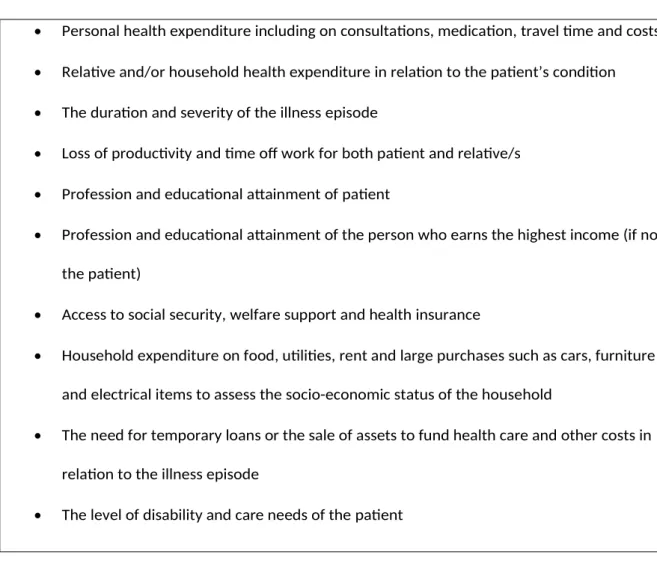
Table 1: Structure of the health economics questionnaire for the AMBITION study.
The interview questions will preferably be asked directly to the patient. If the patient is confused or has reduced consciousness due to CM, a relative or next-of-kin may provide proxy consent for them to enroll in the trial. It is unlikely that this person will be fully aware of the patient’s financial situation and in these cases, it may be necessary to wait for the patient to recover before asking them directly. In cases where patients have prolonged confusion or are felt to have a poor prognosis then these questions can be asked of the proxy. Data will be collected by study doctors and nurses and entered into the trial Electronic Data Capture (EDC) system: a uniform database to be utilised across all sites. An interview guide for those collecting data from patients will ensure that nuances and country specific idioms are acknowledged.
Personal health expenditure including on consultations, medication, travel time and costs
Relative and/or household health expenditure in relation to the patient’s condition
The duration and severity of the illness episode
Loss of productivity and time off work for both patient and relative/s
Profession and educational attainment of patient
Profession and educational attainment of the person who earns the highest income (if not
the patient)
Access to social security, welfare support and health insurance
Household expenditure on food, utilities, rent and large purchases such as cars, furniture
and electrical items to assess the socio-economic status of the household
The need for temporary loans or the sale of assets to fund health care and other costs in
relation to the illness episode
The above methods have been developed through an iterative process. Initially the lead Health Economist, who led on the ACTA cost-effectiveness analysis, and members of the Trial Management Group developed the data collection tools and integrated these into the wider trial EDC. This was later refined following a one-week meeting of health economists and study team members from across the AMBITION sites held in Blantyre, Malawi in November 2017. This provided the opportunity for experts working in this field and individuals who will collect data from patients to improve these tools by collecting and entering data from fabricated patients. Feedback was then integrated into both the data collection methods and the EDC and shared for final approval across the AMBITION consortium until a consensus was reached.
Country-specific costing approaches
Presently, each site has differing levels of experience with conducting economic analyses and has varied access to validated country costing tools. As stated, the preparation of the trial included a one-week workshop with at least two team members from each site to assess the face-validity and completeness of the questionnaire, to practice electronic data entry of the completed questionnaire, carrying costing computations, and to increase the knowledge and understanding of economic evaluation. In each country, resource use data will be collected using an ingredients-based approach. The data on individual resource use will be collected from all participants onto case-report forms. Overhead costs, including costs of admissions and laboratory tests, will be collated from the hospitals’ financial and utilisation documents.
Botswana Harvard AIDS Institute Partnership (BHP): Gaborone, Botswana
distribute pharmaceuticals and healthcare commodities to all government healthcare facilities. This package will provide an estimate of ‘patient specific’ costs of uncomplicated CM. ‘Hotel costs’ will determine the necessary hospital, staffing, capital and infrastructure requirements as the patient is admitted over a seven-day period. Data will be obtained from Princess Marina Hospital, which is the biggest, and main referral hospital in Botswana. Staff salaries will be taken from the Government of Botswana salary scales for health professionals. By combining this treatment costing data with the meningitis burden data generated through a previously completed audit we will also generate an estimate of the total current costs to the Botswana health service of treating CM. The data will complement the ‘Estimated resource needs for key health interventions offered under Botswana’s Essential Health Services Plan (2013-2018)’ that project the cost of all health programs, including the treatment of CM, from 2013 to 2018 and will also be used as a reference for the next version of this document to be published in 2019(14).
Malawi Liverpool Wellcome Trust Clinical Research Centre: Blantyre, Malawi.
Standardised national health costing data is not available in Malawi. An existing costing tool which was developed for a HIV testing study will be adapted(15). Patient-related health care costs will be obtained from the Central Medical Stores Trust, the only supplier mandated to supply government health facilities in Malawi. Personnel costs will be refined by referencing the Malawi government salary structures and payroll and estimating the proportion of health personnel time taken in the clinical care of the patient, as well as allowance costs for patients working out of working hours. Programme-related costs will be adapted using the results from recent costing studies within the Queen Elizabeth Central Hospital(15).
University of North Carolina Project: Lilongwe, Malawi.
local costing data as part of the Driving Reduced AIDS-associated Meningo-encephalitis (DREAMM) study, which will be shared with the AMBITION consortium.
University of Cape Town: Cape Town, South Africa.
There are currently no costing tools for primary data collection for disease specific costing of CM treatment in South Africa. A costing tool will be developed from validated disease specific costing tools for the South African context(16). Costs from the health service (Department of Health) perspective will be collected using the ingredients costing approach and captured in an Excel spreadsheet. The quantity of resources used to treat CM in each study arm will be estimated from the trial and patient records. Prices for these treatment related ingredients will be obtained from the various service providers within the Department of Health that are responsible for offering the products and services. Specific activities by staff will be identified and estimated through the review of routinely collected time sheets. Human resource costs as well as recurrent and capital costs will be allocated using hospital expenditure and financial records as well as records from the Provincial Department of Health. The average cost of each treatment component will be calculated by multiplying the quantity of resources used by the unit price. From this we can calculate the cost p e r case of CM treated by multiplying the average cost by the number of times a particular cost has been incurred.
Infectious Diseases Institute: Kampala, Uganda.
engage these organizations and other key stakeholders to ascertain the current costs of meningitis treatment and develop a costing tool which can be adjusted in the future should costs change.
University of Zimbabwe School of Health Sciences: Harare, Zimbabwe.
Clinical cost data will be collected alongside the clinical trial using micro-costing methodologies. The economic evaluation will be done from the societal perspective to enable the study to assess the overall household economic impact of CM and will enable us to determine the patient and provider unit costs. This study is powered enough to detect both country specific clinical and economic differences. Direct patient level clinical activity data such as drugs, staff time, diagnostics, pathology and radiology will be collected alongside the trial and relevant unit costs determined using the study protocol. In other cases, prices for drugs, diagnostic and radiology tests will be collected from the National Pharmaceutical Company of Zimbabwe, national reference diagnostic and radiology laboratories, and from consultations with experts. Indirect and overhead costs such as management and administration costs, utilities and other capital costs for in-patient days will be determined using data from Parirenyatwa Hospital, Harare financial records, the WHO Choice Database and from previous clinical trials that took place at the proposed site(18, 19).
Data collection and data management
where personal health information is available. The applications will have user profiles to control access to certain data and reports. The application and database layers will use a combination of hashing and encryption for sensitive and personal data. Mobile devices and the staff operating them will not be equipped with the encryption keys to decrypt selected sensitive data fields.
Confidentiality
The trial will be conducted in compliance with the approved protocol, the Declaration of Helsinki 2008, the principles of Good Clinical Practice and applicable national regulations. We plan to follow the principles of the UK Data Protection Act (DPA) regardless of the countries where the trial is being conducted. Consent forms will be stored under the supervision of each local primary investigator in a secured office and accessible to trial staff only. The database will not hold personal details as participants are identified by their study number throughout the trial.
Data analysis
As outlined above, information on resource use and number of units used will be collected at
patient-level through the EDC, as part of the trial, and through additional separate country
costing studies. To validate and refine the data collection process, an early analysis will take place
at each site after ten patients have completed the ten-week study follow-up period.
Next, the costing information and number of life years’ survival will be used in a decision-analytic model to assess the cost-effectiveness of the single, high-dose arm against the control arm and also against other combination treatment regimens from the ACTA trial. A Markov model has been chosen as it allows to explicitly account for passage of time to calculate time dependent costs and life years of the remaining life span. Results will be presented using incremental effectiveness ratios and cost-effectiveness acceptability curves generated by Monte Carlo bootstrapping methods. This approach avoids the stochastic fallacy and will determine if a single, high-dose L-AmB will be as or even more cost-effective compared to the current WHO recommended first-line treatment. An existing model will be adapted based on Jarvis et al., using the treatment sub-model (Figure 2)(21). The Markov model has a monthly cycle length, running the model for 12 cycles to calculate annual costs and annual life years. We will supplement the model to be able to extrapolate data beyond the period of observed follow-up. The Markov modelling framework also allows for the synthesis of data from secondary sources, like mortality risk from other causes and excess mortality risks(17). It also allows for probabilistic sensitivity analyses. We are going to use non-parametric bootstrapping to assess uncertainties, and both deterministic and probabilistic sensitivity analyses to examine the impact of all relevant parameters on the incremental cost-effectiveness ratio. The other country teams will be able to use an adapted model to enter their country specific data and costing information as well as estimated survival figures, while using the pooled effectiveness information. In this way, each country will arrive at valid country-specific economic estimates.
We will follow the CHEERS appraisal guidelines on economic evaluation(22). As our study is an equivalence study using empirical data in a model-based analysis these guidelines we will also include good modelling practice approaches(23).
publications will be allowed, using the whole five-country trial data base, complemented with local more detailed country-level costing studies.
We intend to use these findings to provide an economic argument for the adoption of single, high-dose L-AmB in low and middle-income countries and to help influence guidelines and policy. Another important component of this study is capacity building across the African sites through the delivery of a health economics course and the ongoing mentoring of individuals and teams at each of the sites.
Patient and Public Involvement
For the primary AMBITION clinical trial, a number of the sites have well developed community
groups and are experienced in engaging local communities when undertaking such studies. These
groups were consulted prior to trial implementation, and they will be consulted regularly during trial
conduct. To engage the wider community, we will work with community groups, HIV patient groups
and local Ministries of Health to provide information about the trial, disseminate the results, and to
develop health education materials aimed at dispelling the current beliefs around meningitis, and
encouraging early care-seeking.
ETHICS AND DISSEMINATION
Zimbabwe (MRCZ/A/2263). Any amendments will be submitted and approved by each ethics committee. All participants will provide written informed consent or if lacking capacity will have consent provided by a proxy. The findings of this economic analysis, which is embedded into the AMBITION trial, will be disseminated through peer-reviewed publications and at international and country-level policy meetings.
DISCUSSION AND CONCLUSION
This phase III clinical endpoint trial comparing single, high-dose liposomal amphotericin to the control arm treatment at six sites across five counties will provide valuable information on the comparative effectiveness with existing and other proposed strategies. This will be based on the effectiveness of simplified treatment strategies as well on the possibly increased safety. The proposed economic analysis of the equivalence trial for the Malawi situation will allow for a realistic comparison with settings where there is very limited coverage of appropriate treatment of CM in people with HIV. The estimates from other trial settings will help to document the generalizability of our findings. The economic information will be essential in the support of wide-scale implementation strategies and the formulation and testing of alternative delivery modes in all comparable sub Saharan setting.
A clinically effective and safer treatment for CM in sub-Saharan Africa could have a dramatic impact on HIV-associated mortality in the region. This economic analysis is essential to help justify any policy change towards increasing the availability of more expensive medication if is proven to be cost-effective. This process will enable the development of country-specific costing tools across five African sites, which can be utilised for future studies and will build capacity in the region.
and SFM is the trial epidemiologist and both have provided critical input into the data collection tools, electronic data capture system and this manuscript. DB, MH, CK, DM, MM, CM, HM, and CN are principal investigators at each of the sites and will oversee the development of costing tools and the collection of data at each site. MA, FB, CC, ED, EG, AH, CM, RR, SS, LT, KT and DW are all study team members or affiliated academics who attended the Ambition health economics course and are the focal individuals for the health economics study at their respective sites, as well as contributing to the refining of the data collection tools and the country specific sections of this manuscript. TC, and DW are statisticians for the study and have contributed to the database function of the electronic data capture system. TS and HM are health economists who have contributed to the development of the methodology and TS will perform the early reviews of data and the overall data analysis with DSL. TBC is an international clinical adviser and a monitor who performs data checks for the study. AL, DGL, GM and SJ provided expert input into the conceptualisation and design of both the broader study and this health economics study, particularly in terms of adopting a societal perspective. TH and JNJ conceived and designed the broader study and are the co-principal investigators. LN leads the health economics study and has provided oversight of the entire process. All authors read, critiqued and approved the final manuscript.
Funding: The study is jointly funded through the European Developing Countries Clinical Trials Partnership (EDCTP), the Swedish International Development Cooperation Agency (SIDA), and the Wellcome Trust / Medical Research Council (UK) / UKAID Joint Global Health Trials.
Competing Interests: JNJ and TSH were the recipients of a Gilead Investigator Initiated Award (completed). TSH has received speaker fees from Gilead Sciences and Pfizer.
REFERENCES
1. Rajasingham R, Smith RM, Park BJ, Jarvis JN, Govender NP, Chiller TM, et al. Global burden of disease of HIV-associated cryptococcal meningitis: an updated analysis. The Lancet Infectious diseases. 2017;17(8):873-81.
2. Jarvis JN, Harrison TS. Forgotten but not gone: HIV-associated cryptococcal meningitis. The Lancet Infectious diseases. 2016;16(7):756-8.
3. Hamill RJ, Sobel JD, El-Sadr W, Johnson PC, Graybill JR, Javaly K, et al. Comparison of 2 doses of liposomal amphotericin B and conventional amphotericin B deoxycholate for treatment of AIDS-associated acute cryptococcal meningitis: a randomized, double-blind clinical trial of efficacy and safety. Clinical infectious diseases : an official publication of the Infectious Diseases Society of America. 2010;51(2):225-32.
4. Lestner J, McEntee L, Johnson A, Livermore J, Whalley S, Schwartz J, et al. Experimental Models of Short Courses of Liposomal Amphotericin B for Induction Therapy for Cryptococcal Meningitis. Antimicrobial agents and chemotherapy. 2017;61(6).
5. Jarvis J, Leeme T, Molefi M, Chofle AA, Bidwell G, Tsholo K, et al. Short Course High-dose Liposomal Amphotericin B for HIV-associated Cryptococcal Meningitis: A phase-II Randomized Controlled Trial. CID. 2018;published online June 26, 2018.
6. WHO. Guidelines for the diagnosis, prevention, and management of cryptococcal disease in HIV-infected adults, adolescents and children. Geneva: World Health Organisation; 2018 March 2018.
7. Lawrence DS, Youssouf N, Molloy S, Alanio A, Alufandika M, Boulware DR, et al. AMBIsome Therapy Induction OptimisatioN (AMBITION): High Dose Ambisome for Cryptococcal Meningitis Induction Therapy in sub-Saharan Africa: Study Protocol for a Phase 3 Randomised Controlled Non-Inferiority Trial. Trials. 2018;In Press.
8. Gilead Sciences Announces Steep Discounts for Ambisome to Treat Cryptococcal Meningitis in Low - and Middle-Income Countries [press release]. Internet, September 7th 2018 2018.
9. Lawrence DS, Boyer-Chammard T, Jarvis JN. Emerging concepts in HIV-associated cryptococcal meningitis. Current opinion in infectious diseases. 2019;32(1):16-23.
10. Molloy SF, Kanyama C, Heyderman RS, Loyse A, Kouanfack C, Chanda D, et al. Antifungal Combinations for Treatment of Cryptococcal Meningitis in Africa. The New England journal of medicine. 2018;378(11):1004-17.
11. Chen T, Lakhi S, Chanda D, Mwaba P, Molloy S, Gheorghe A, et al. ACTA Trial Team. Health care costs and deaths prevented by ACTA trial treatments for cryptococcal meningitis: A comparison between 5 induction strategies in sub Saharan Africa. 22nd International AIDS Conference; 2018; Amsterdam2018.
12. Campbell SJ, Osei-Atweneboana MY, Stothard R, Koukounari A, Cunningham L, Armoo SK, et al. The COUNTDOWN Study Protocol for Expansion of Mass Drug Administration Strategies against Schistosomiasis and Soil-Transmitted Helminthiasis in Ghana. Trop Med Infect Dis. 2018;3(1):10. 13. Wellness MoHa. Handbook of the Botswana 2016 Integrated HIV Clinical Care Guidelines. Gaborone, Botswana; 2016.
14. Menon V, Iyer P, Mosime W. Estimated resource needs for key health interventions offered under Botswana’s Essential Health Services Plan (2013-2018). Washington, DC; 2014.
15. Maheswaran H, Petrou S, MacPherson P, Choko AT, Kumwenda F, Lalloo DG, et al. Cost and quality of life analysis of HIV self-testing and facility-based HIV testing and counselling in Blantyre, Malawi. BMC medicine. 2016;14:34.
16. Hendriks ME, Kundu P, Boers AC, Bolarinwa OA, Te Pas MJ, Akande TM, et al. Step-by-step guideline for disease-specific costing studies in low- and middle-income countries: a mixed
methodology. Global health action. 2014;7:23573.
2012;9(9):e1001316.
18. Medina Lara A, Kigozi J, Amurwon J, Muchabaiwa L, Nyanzi Wakaholi B, Mujica Mota RE, et al. Cost effectiveness analysis of clinically driven versus routine laboratory monitoring of
antiretroviral therapy in Uganda and Zimbabwe. PloS one. 2012;7(4):e33672.
19. WHO. Making Choices in Health: WHO Guide to Cost-Effectiveness Analysis. Geneva: World Health Organisation; 20003.
20. Span MM, TenVergert EM, van der Hilst CS, Stolk RP. Noninferiority testing in
cost-minimization studies: Practical issues concerning power analysis. International journal of technology assessment in health care. 2006;22(2):261-6.
21. Jarvis JN, Harrison TS, Lawn SD, Meintjes G, Wood R, Cleary S. Cost effectiveness of cryptococcal antigen screening as a strategy to prevent HIV-associated cryptococcal meningitis in South Africa. PloS one. 2013;8(7):e69288.
22. Husereau D, Drummond M, Petrou S, Carswell C, Moher D, Greenberg D, et al. Consolidated Health Economic Evaluation Reporting Standards (CHEERS)--explanation and elaboration: a report of the ISPOR Health Economic Evaluation Publication Guidelines Good Reporting Practices Task Force. Value in health : the journal of the International Society for Pharmacoeconomics and Outcomes Research. 2013;16(2):231-50.