University of South Carolina
Scholar Commons
Theses and Dissertations
2017
Inmate Time Utilization And Well-Being
Mateja VukUniversity of South Carolina
Follow this and additional works at:https://scholarcommons.sc.edu/etd Part of theCriminology and Criminal Justice Commons
This Open Access Dissertation is brought to you by Scholar Commons. It has been accepted for inclusion in Theses and Dissertations by an authorized administrator of Scholar Commons. For more information, please [email protected].
Recommended Citation
I
NMATET
IMEU
TILIZATION ANDW
ELL-B
EINGby
Mateja Vuk
Bachelor of Arts University of Zagreb, 2008
Master of Arts University of Zagreb, 2010
Master of Science Indiana State University, 2013
Submitted in Partial Fulfillment of the Requirements
For the Degree of Doctor of Philosophy in
Criminology and Criminal Justice
College of Arts and Sciences
University of South Carolina
2017
Accepted by:
Brandon Applegate, Major Professor
Barbara Koons-Witt, Committee Member
Tia Andersen, Committee Member
Franklin Wilson, Committee Member
ii
iii
DEDICATION
To my parents Mijo and Marija whose unconditional love and endless support
inspired me to make dreams come into reality. Without them, I would not be where I am
today.
To all men and women under the supervision of South Carolina Department of
Corrections, may they use their time wisely, find the right path, and get “through that
iv
ACKNOWLEDGEMENTS
This study would not have been possible without the support of many wonderful
people. First, I would like to thank my chair, Dr. Brandon Applegate, who was there to
guide me at every stage of the process. Without his constant support, wisdom, and belief
in me I could not have completed my dissertation. I will be forever indebted to him for all
of the effort he has put into this project. I also want to thank my committee members, Dr.
Barbara Koons-Witt for her vast knowledge in corrections, Dr. Tia Andersen for helping
me see the wood for the trees, and Dr. Frank Wilson for his continuous encouragement,
perspective, and good humor. Each member of the committee dedicated their time to help
me improve my study and become a better researcher.
I also thank the South Carolina Department of Corrections’ administration and
staff members for their enthusiastic support and cooperation on the project. I am thankful
for the financial support for the project by the Department of Criminology and Criminal
Justice at the University of South Carolina and the Association of Doctoral Programs in
Criminology and Criminal Justice.
Finally, I am blessed with a wonderful family who have been steadfast in their
love and support. I deeply appreciate my parents, sister, brother-in-law, nephew,
grandparents, uncles, aunts, and cousins for their encouragements and prayers for me. I
am also thankful to my friends who have always supported me through good times and
v
ABSTRACT
Qualitative studies about prison culture and examinations of correctional
recreation and programming offer a comprehensive understanding of prisons’ social
dynamics, including how individuals spend their free time while incarcerated. Theoretical
models and the extant research suggest that involvement in structured and prosocial
activities is associated with positive behavioral and emotional outcomes in offenders.
However, the majority of studies that provide the empirical evidence for these
conclusions do not examine all aspects of time utilization explicitly or do not provide
statistical evidence of the strength and significance of the associations. Additionally,
many of these investigations are dated.
To address these gaps, this study uses quantitative data to examine the
relationship between male inmates’ subjective perception of using time in prison
constructively and objective evaluation of participation in activities and emotional
well-being in contemporary correctional institutions in the United States. Specifically, this
study aims to determine how male inmates experience their time in prison, what activities
they engage in, and what motivates their involvement. In addition, this study explores
how inmate time use is associated with depression and anxiety using the stress-coping
model developed by Richard Lazarus (1966; Lazarus & Folkman, 1984).
This research was conducted with 503 randomly selected adult male inmates
vi
South Carolina Department of Corrections. Data were collected at a single time-point
using self-administered questionnaires. The results show that many male inmates are idle
and a large portion of time in prison is spent in unstructured leisure activities. Idleness
was associated with higher levels of depression and anxiety. However, greater
participation in structured activities was not associated with more positive emotional
outcomes. Furthermore, the findings demonstrate that different activities have different
functions of coping with stress and that personal characteristics are associated with the
type of coping inmates adopted. Finally, many incarcerated men are concerned with
spending their time in activities for self-improvement; however, many still employ
passive techniques such as escaping reality in their daily routines. Implications for policy
vii
TABLE OF CONTENTS
DEDICATION ... iii
ACKNOWLEDGEMENTS ... iv
ABSTRACT ... v
LIST OF TABLES ... x
CHAPTER 1: INTRODUCTION ... 1
CHAPTER 2: LITERATURE REVIEW ... 7
2.1. Inmate Well-Being ... 7
2.2. Inmate Time Utilization ... 30
2.3. The Relationship between Time Utilization and Well-being ... 66
2.4. The Present Study ... 71
CHAPTER 3: METHODS ... 74
3.1. Hypotheses ... 74
3.2. Sample Selection ... 77
3.3. Study Design ... 80
3.4. Data Collection Procedure ... 82
3.5. Ethical Considerations ... 86
viii
3.7. Analytical Procedure ... 98
CHAPTER 4: RESULTS ... 106
4.1. Descriptive Statistics ... 106
4.2. Hypotheses H1 through H3 ... 113
4.3. Hypotheses H4a and H4b ... 114
4.4. Hypotheses H5a and H5b ... 117
4.5. Hypotheses H6a and H6b ... 121
CHAPTER 5: DISCUSSION ... 165
5.1. Limitations ... 165
5.2. Perceptions of time in prison ... 169
5.3. Daily time utilization ... 172
5.4. Daily activities as predictors of well-being ... 174
5.5. Inmate characteristics as predictors of daily activities ... 176
5.6. Inmates’ preference of motivational factors ... 178
5.7. Inmate characteristics as predictors of motivational factors ... 180
5.8. Motivational factors as predictors of well-being ... 183
5.9. Daily activities and motivational factors ... 184
CHAPTER 6: CONCLUSION ... 188
REFERENCES ... 196
ix
APPENDIX B: ANNOUNCEMENT ... 231
APPENDIX C: INFORMED CONSENT SCRIPT ... 232
APPENDIX D: SCDC CONSENT FORM... 234
x
LIST OF TABLES
Table 3.1. Characteristics of the selected correctional institutions ...78
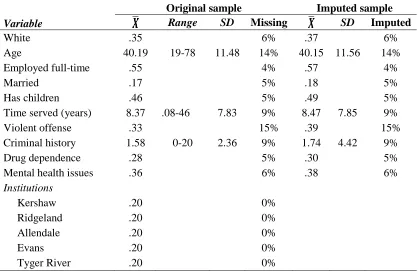
Table 4.1. Sample characteristics...107
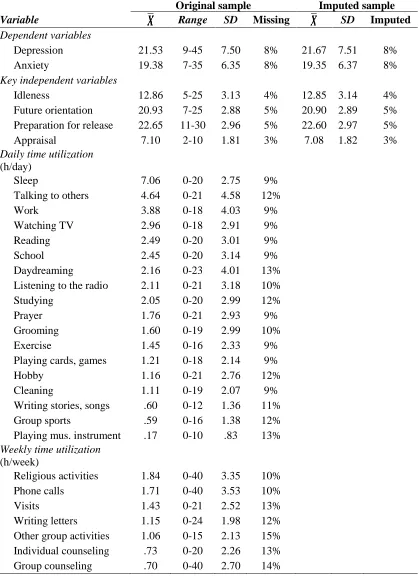
Table 4.2. Descriptive statistics for the dependent and key independent variables ...111
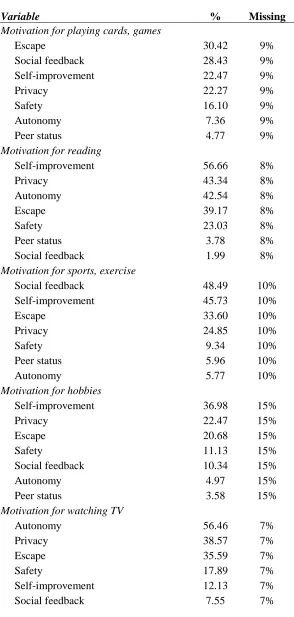
Table 4.3. Descriptive statistics for motivational factors ...112
Table 4.4. OLS regression: Depression and anxiety regressed on idleness, future orientation, and preparation for release ...125
Table 4.5. OLS regression: Depression and anxiety regressed on time utilization variables ...127
Table 4.6. Ordered logistic regression: Time utilization variables regressed on appraisal ...129
Table 4.7. Multinomial logistic regression: Time utilization variables regressed on appraisal ...135
Table 4.8. OLS regression: Depression and anxiety regressed on motivational factors ..137
Table 4.9. Binary logistic regression: Motivation for playing games, cards regressed on appraisal ...141
Table 4.10. Binary logistic regression: Motivation for reading regressed on appraisal ...143
Table 4.11. Binary logistic regression: Motivation for sports and exercise regressed on appraisal ...145
Table 4.12. Binary logistic regression: Motivation for hobbies regressed on appraisal ...147
xi
Table 4.14. Binary logistic regression: Motivation for work regressed on appraisal ...151
Table 4.15. Binary logistic regression: Motivation for rehabilitation
programs regressed on appraisal ...153
Table 4.16. OLS regression: Depression and anxiety regressed on
playing cards, games and motivation for playing cards, games ...155
Table 4.17. OLS regression: Depression and anxiety regressed on
reading and motivation for reading ...156
Table 4.18. OLS regression: Depression and anxiety regressed on
sports and exercise and motivation for sports and exercise ...157
Table 4.19. OLS regression: Depression and anxiety regressed on
hobbies and motivation for hobbies ...158
Table 4.20. OLS regression: Depression and anxiety regressed on
watching TV and motivation for watching TV ...159
Table 4.21. OLS regression: Depression and anxiety regressed on
work and motivation for work ...160
Table 4.22. OLS regression: Depression and anxiety regressed on
rehabilitation programs and motivation for rehabilitation ...161
Table 4.23. Ordered logistic regression: Time utilization regressed on
motivational factors ...162
1
CHAPTER 1: INTRODUCTION
This study seeks to address an area which has been neglected in corrections
research for the past several decades—inmate time utilization. Specifically, this study
aims to determine how male inmates experience their time in prison, what activities they
engage in, and what motivates their involvement. Broadly, I want to understand whether
male prison inmates serve their time by passing through it or by using it. In addition, this
study explores how inmate time utilization is associated with psychological well-being
(anxiety and depression). For instance, do inmates engage in certain activities in order to
cope with the stress of incarceration, and how successful are they in their coping efforts?
Current knowledge about time utilization in prisons comes from ethnographic
studies about inmate culture and experiences of incarceration (Clemmer, 1940;
Giallombardo, 1966; Sykes, 1958; Toch, 1977), other qualitative studies on specific
activities inmates engage in (Dye, Aday, Farney, & Raley, 2014; Gallant, Sherry, &
Nicholson, 2015; Winfree, Newbold, & Tubb III, 2002), and studies that examine inmate
participation in programing (Batchelder & Pippert, 2002; Courtenay & Sabo, 2001).
Early inquiries about the inmate social world focused on identifying key characteristics of
a male inmate subculture and its normative properties (i.e. the inmate code) (Clemmer,
1940; Sykes, 1958). More recent studies examine the utility of the inmate code identified
by the early researchers within modern prisons (e.g. Grosholz, 2014; Sexton, 2012).
Other authors have attempted to draw parallels between early ethnographies and modern
2
confinement (e.g. Hassine, Bernard, & Wright, 1996; Irwin, 1980). However, these
qualitative studies do not examine time utilization explicitly; rather, the aspects of formal
(programing) and informal (leisure) time utilization must be extrapolated from the
context of the inmate culture.
The researchers who examined the aspects of formal time utilization—activities
scheduled by prison administration—focused on availability of programs and on inmate
participation in work, educational, vocational, and treatment programs. Correctional
recreation/leisure is also a component of time utilization, but studies on the effects of
leisure on offender behavior are rare (Andrews & Bonta, 2010b; Link & Williams, 2015).
It is important to investigate these effects because despite of the “tough-on-crime”
movement that led to a reduction in many recreational opportunities, the majority of the
public supports allowing inmates to access many amenities and resources for spending
their time constructively (Applegate, 2001; Johnson, Bennet, & Flangan, 1997; Wozniak,
2016).
Additionally, inmates spend a larger portion of time in leisure and other informal
activities compared to the general U.S. population (Kelly, 2012; Wooldredge, 1999;
Zamble & Porporino, 1988). Therefore, exploring how engagement in these informal
pursuits is associated with inmates’ emotional well-being is crucial. Even though
criminologists recognize the importance of investigating conditions of confinement and
their effects on well-being and recidivism (see Andrews & Bonta, 2010b; Cullen &
Gendreau, 2001), it is not clear why they remained largely uninterested in the effects of
3
The importance of engaging in structured and prosocial activities has been
recognized by Hirschi (1969) in his development of social bonds theory and by Andrews
and Bonta’s (2010b) psychology of criminal conduct, where they introduced the
Risk-Need-Responsivity (RNR) model of offender classification and rehabilitation. While
these two frameworks were developed to explain offender behavior in the community,
they can also explicate how involvement in prosocial and structured activities can prevent
offenders from engaging in deviant behavior while incarcerated. Specifically, Hirschi
(1969) suggests that when a person invests time and energy in prosocial activities, he or
she will avoid deviant behavior because of the risk of losing the opportunity of enjoying
products of that prosocial activity. In addition, individuals who are involved in prosocial
activities lack time and opportunities to engage in misconduct (Hirschi, 1969).
Similarly, the RNR model identifies the lack of involvement in prosocial
recreational/leisure activities as one of the criminogenic risks/needs associated with
criminal behavior (Andrews, Bonta, & Hoge, 1990). Rewards and satisfaction with
leisure/recreation promote prosocial outcomes over antisocial behavior (Andrews &
Bonta, 2010b). However, even within these two frameworks, engagement of inmates in
leisure activities has not been studied to a large extent.
Although social bonds theory and the RNR model address how prosocial
engagement affects one’s behavior, they cannot explain how engagement in different
activities is associated with emotional outcomes. For this reason, this study uses the
stress-coping framework developed by Lazarus to explain the relationship between
inmate time utilization and psychological well-being (Lazarus, 1966; Lazarus &
4
behavioral outcomes are responses to stressors in the environment, and individuals cope
with these stressors by utilizing various coping methods (Lazarus & Folkman, 1984).
Pertinent to this study, inmates engage in various formal, leisure, and informal
activities to cope with idleness and other stressors of incarceration. Lazarus (1966) argues
that not every individual will react the same way to the same stressor; rather, stress is
contingent upon the extent to which an individual perceives the situation as threatening.
Therefore, individuals vary in how they perceive their prison experience, and this
perception influences their choice of coping strategies. For this reason, this approach
promises the most comprehensive model to explain the relationship between male inmate
time utilization and well-being.
In this study, I examine two domains of time utilization: inmates’ evaluation of
using time productively and their objective assessment of time spent in different
activities. The first domain includes the examination of inmates’ experience of idleness,
future orientation, and preparation for release. All of these dimensions indicate inmates’
subjective awareness of time and perception of constructive time use. I also examine how
these elements relate to inmate well-being. The second domain includes objective
measures of time utilization and motivation for engagement in activities, serving as
coping mechanisms in dealing with perceived stress.
This research contributes to the current literature in four distinct ways. First, due
to changes in policies, laws, and needs of the prison population, the way prisons are
managed today is different from several decades ago when first accounts of inmates’
routines were provided. Therefore, this study adds to the extant body of literature by
5
engagement in different activities as coping methods, this study examines what meaning
male inmates attribute to various activities and how this function of coping relates to
well-being.
Third, this study examines the motivation for engagement in activities as an
element of the stress-coping process. For example, it is important to understand whether
inmates spend their free time isolated because they are afraid for their safety or because
solitude provides them with an emotional retreat. Finally, knowing what time utilization
patterns are associated with positive outcomes can help administrators and policy makers
make decisions about investing in programs and services that facilitate these time use
patterns. Therefore, based on the findings of this study, prison administration can
implement evidence-based practices and advance prison management.
Given a renewed interest in criminal justice reforms that has emerged among
policy makers (U.S. House of Representatives, 2016), it is important to examine all
aspects of confinement in order to understand what effect idleness and time use have on
male inmates and their prospects for rehabilitation and well-being. This study adds
evidence to the literature that can be utilized to inform the public, policy makers, and
subsequently correctional personnel of the benefits of “human service” in modern
corrections (Johnson & Price, 1981). It helps to propagate an understanding that
providing services and resources that normalize the prison environment not only
humanizes the entire prison experience but also contributes to public safety (Andrews &
Bonta, 2010a; Van Voorhis & Salisbury, 2014).
In the chapters that follow, I outline the plan for my study. In Chapter 2, I provide
6
relationship between the two. More specifically, in section 2.1., I focus on defining
well-being with an emphasis on negative affect. This includes an overview of a range of
individual- and institution-level correlates of well-being and a discussion on how the
stress-coping model can explain how inmates deal with the stress of incarceration. In
section 2.2., I describe inmate time utilization in prisons. I focus on how inmates
experience time and what activities they engage in and why. In section 2.3., I address the
relationship between several elements of inmate time utilization and emotional
well-being. In Chapter 3, I discuss the data and methods used to complete this study. First, I
describe the sample, the location where the study was conducted, and the procedures used
to collect the data. Second, I introduce readers to the survey instrument and measures
used in this study. Finally, I lay out a plan for testing the hypotheses. In Chapter 4, I
present the findings of the data analysis and address each of the hypotheses. In Chapter 5,
I highlight the key discoveries and discuss them in the context of previous studies.
Finally, in Chapter 6, I summarize the findings and conclude with a discussion of study
7
CHAPTER 2: LITERATURE REVIEW
2.1. Inmate Well-Being
2.1.1. Introduction
In this section, I focus on how scholars define and operationalize well-being, with
an emphasis on research within institutional corrections. Further, I review individual- and
institution-level factors that are associated with the well-being of prison inmates. Next, I
introduce a stress-coping model that explains how the environment interacts with an
individual and how this interaction relates to well-being. Here I also provide evidence of
these associations for prison populations. Finally, I identify gaps in the current literature
and limitations of the studies reviewed.
Researchers, policy makers, and prison administrators have long recognized the
importance of inmate well-being for inmate management (Adams, 1992; Cullen, Johnson,
& Nagin, 2011; Toch, 1977). Specifically, by identifying how psychological factors
interact with inmate environment, practitioners can benefit from understanding what
psychological needs inmates have when making decisions about classification and
rehabilitation. For example, some inmates manifest positive emotional outcomes in a
stimulating environment, but for others, such environment can be stressful and amplify
emotional and behavioral issues (Toch, 1977). Moreover, acknowledging the
rehabilitative aspects of prisons promotes public safety because emotional well-being is a
key factor for successful reentry (Begun, Rose, & LeBel, 2011; Petersilia, 2003;
8
inmates are experiencing stress or manifest other psychologically detrimental outcomes
(Adams, 1992; Cullen et al., 2011). For this reason, in order to plan rehabilitation and
release effectively, it is crucial to understand the underlying emotional and personality
factors that drive inmate behavior.
In the psychology literature, well-being is often defined based on Bradburn’s
(1969) operationalization using two separate dimensions: positive and negative affect
(Bradburn, 1969; Ryff & Keyes, 1995; Thoits, 1983). Positive affect includes an
individuals’ self-evaluation of emotions of happiness, life satisfaction, accomplishment,
and optimism. Negative affect includes feelings of loneliness, depression, anger, anxiety,
and unhappiness (Bradburn, 1969; Davis, 1965; Ryff & Keyes, 1995). An individual is
considered high with regards to their well-being when the intensity and frequency of
positive affect outweighs the intensity and frequency of negative affect. In other words,
the level of well-being depends on the degree to which an individual’s experience of
pleasure predominates over pain (Bradburn, 1969).
In addition to these affective states, some authors include physical symptoms (e.g.
high blood pressure, stomachaches, and headaches) as indicators of poor well-being (e.g.
Davis, 1965; Lazarus & Folkman, 1984). Other conceptualizations of well-being include
measurement of satisfaction with one’s work, income, social relationships, and
neighborhood, or measurement of minor psychiatric problems, including depression and
anxiety (e.g. Cooper & Berwick, 200; Ryff & Keyes, 1995). In the correctional literature,
the most common way to operationalize well-being is by using some measure of negative
9
(e.g. Boothby & Durham, 1999; Gullone, Jones, & Commins, 2000; Parisi, 1982;
Wooldredge, 1999).
For example, in his study of Ohio inmates, Wooldredge (1999) conceptualized
psychological well-being as inmate perceptions of insecurity, stress, depression, anger,
low self-esteem, and loneliness. Similarly, Maitland and Sluder (1996) measured
well-being of inmates using items that address worries, energy level, life satisfaction,
depression, the extent of emotional-behavioral control, and anxiety. Listwan, Colvin,
Hanley, and Flannery (2010) utilized measures of posttraumatic cognitions and
symptoms of trauma as indicators of well-being. Researchers who did not exclusively
focus on negative affect investigated the effects of incarceration on personality (e.g.
Castellano & Sodestrom, 1997; Edinger, Reuterfors, & Logue, 1982; Silverman & Vega;
1990; Van Voorhis, 1993). Other authors focused on symptoms of severe mental health
issues such as self-mutilation, suicide, or psychological breakdowns (e.g. Bootby &
Durham, 1999; Harding & Zimmerman, 1989; Smith & Kaminski, 2010; Steadman,
Fabisiak, Dvoskin, & Holohean, 1987; Toch, 1975; Toch et al., 1989).
One reason why the correctional literature largely focuses exclusively on negative
affect may be that the goal of data collection on inmate populations is to predict negative
behavioral and emotional outcomes to identify treatment needs and prevent reoffending.
Given this focus, researchers’ access to data on positive affect of inmates is limited.
However, there is another reason why research on inmate well-being is more oriented
towards negative affect. Factors associated with positive affect include a high degree of
social participation, sociability, companionship with significant others, exposure to life
10
social roles (Bradburn, 1969; Thoits, 1983). Because prison experience includes limited
satisfaction, pleasure, social participation, and autonomy, the argument can be made that
there is little variability in positive affect among prison inmates. Besides, negative affect,
including anxiety and depression, is associated with social isolation and limited social
identities, both present in the prison environment (Thoits, 1983). This argument is
supported by the fact that negative affect is more prevalent in the offender population
than in the general population (Boothby & Durham, 1999; Castellano & Sodestrom,
1997).
Finally, some scholars used multidimensional measures of well-being. For
example, in their study of Dutch inmates, Van Harreveld, Van der Pligt, Claassen, and
Van Dijk (2007) measured both psychological and physical well-being, where they
examined psychological well-being on dimensions of optimism, stress, and depression,
and physical well-being by measuring the frequency of fatigue, headaches, and pain at
the chest, back, or stomach. To measure psychological outcomes, Van Tongeren and
Klebe (2010) used Wright’s (1985; 1991) framework which includes evaluation of
subjective perceptions of problems in relating to other people in prison, assessment of
coping with incarceration, and measures of severe physical problems.
In summary, there is no clear consensus among researchers about the best
measurement of psychological outcomes of an incarcerated population. Overall, we can
conclude that some scholars examine well-being as a psychological response to
incarceration, while making an assumption that well-being is constant throughout the
11
studies use a cross-sectional design, while trying to control for potential confounding
factors statistically.
Other studies, especially those that examine long-term effects of confinement,
examine psychological outcomes as they change over time during one’s prison term (e.g.
Andersen, Sestoft, Lillebaek, Gabrielsen, & Hemmingsen, 2003; O’Keefe, Klebe,
Stucker, Sturm, & Leggett, 2010). These studies use longitudinal designs and assume that
psychological outcomes are not constant. When studied in the context of how they vary
over time, these psychological outcomes are often referred to as adaptation or adjustment
to incarceration (Adams, 1992). They are based on the deprivation model that asserts that
the prison environment causes negative psychological outcomes (Goodstein & Wright,
1989).
Regardless of how the psychological outcomes are conceptualized, it is important
to note that many inmates suffer from preexisting mental conditions and that separating
the effects of incarceration from prior conditions may be challenging (James & Glaze,
2006). Unlike the deportation model, the importation model explains that these
preexisting psychological issues are one of the many personal and social characteristics
brought into the institution that influence inmates’ behavior (Irwin & Cressey, 1962). The
fact of the matter is that the prison population is characterized by a higher prevalence of
mental disorders than that found in the general U.S. population. Specifically, about 56%
of state inmates have a mental health problem, with about 23% of state inmates meeting
the criteria for major depression and 15% having symptoms of a psychotic disorder
12
Compared to the prevalence of serious mental illnesses in general U.S. population
where only 1% to 7% suffers from such disorders, researchers maintain that in general,
the inmate population suffers from mild depression and anxiety (Boothby & Durham,
1999; Castellano & Sodestrom, 1997; Chiles, Von Cleve, Jemelka, & Trupin, 1990;
Gullone et al., 2000; NAMI, 2015). It is important to remember, however, that some
inmates show more pronounced psychological problems than others. There are
individual-level characteristics and features of the prison environment that are correlated
with these elevated levels of negative psychological outcomes. The next two sections
provide a review of these factors and their relationship with inmate well-being.
2.1.2. Individual-Level Correlates
The importation model not only suggests where negative emotional responses
originate from, but it also provides a classification scheme for possible correlates of
negative emotional and behavioral outcomes (Gaes & McGuire, 1985; Gullone et al.,
2000; Irwin & Cressey, 1962; Kruttschnitt, Gartner, & Miller, 2000). These correlates
include gender, age, race, marital status, education, and personality features. Studies have
consistently confirmed that women are more likely to have psychological issues. In fact,
female inmates report they are more likely to be depressed than men and twice as likely
to have serious mental conditions overall (Binswanger et al., 2010; Boothby & Durham,
1999; James & Glaze, 2006). One of the explanations for this finding is that women are
more likely to come to prison with many psychological and substance abuse issues
resulting from physical or sexual abuse in the past (Browne, Miller, & Maguin, 1999;
Islam-Zwart & Vik, 2004; Owen, 1998). The deprivation model provides an alternative
13
inmates from their children and family (Foster, 2012; Kruttschnitt et al., 2000;
Kruttschnitt & Gartner, 2003; Lord, 2008).
Age is also associated with well-being. Specifically, young offenders are more
likely to be suicidal (Adams, 1992), depressed, and anxious (Boothby & Durham, 1999;
MacKenzie, 1987). Although some of these conditions may be chronic mental illnesses
that will extend into adulthood, there is reason to believe that young inmates perceive
stress differently and cope with their problems less effectively. This has been shown to
lead to negative emotional and behavioral outcomes (Feld, 1999; Piaget, 1971).
Furthermore, levels of depression, anxiety, and stress are greater among white
inmates, married inmates, those with higher levels of education, and those with less
criminal history (Adams, 1992; Linquist, 2000; Vuolo & Kruttschnitt, 2008; Wooldredge,
1999). Race may be important because whites are a numerical minority in many prisons
so they feel threatened and anticipate victimization causing more stress (Carroll, 1990).
Similarly, Wooldredge (1999) argued that inmates with these characteristics manifest
poor well-being because they are less similar to the mainstream prison population.
Because they are socially removed from other inmates, these inmates are less likely to be
integrated into an inmate social system, which contributes to negative psychological
outcomes (Wooldredge, 1999).
Social integration is associated with positive outcomes because while belonging
to a social group, individuals can obtain social support (Gibbs, 1982; Thoits, 1995;
Wooldredge, 1999). Social support can be defined as instrumental and/or emotional
assistance provided for the individual by significant others (e.g. family, friends,
14
their family and friends on the outside or they can develop supportive relationships inside
the prison by participating in group activities such as programing and recreation.
Wooldredge (1999) found that inmates who spent more hours in programs
(education, vocational training, counseling, work, recreation) and have more visits
experience better psychological well-being. Unwillingness to engage in recreational and
educational programs and a lack of friends outside the prison was associated with higher
depression and anxiety in English inmates as well (Cooper & Berwick, 2001). Social
support appears to be especially important in promoting the well-being of inmates at the
beginning of a prison term because it helps with transition and adaptation to prison norms
(Gibbs, 1982).
While these studies support universal notions that social support promotes
well-being, Lindquist (2000) found that maintaining social ties (both inside and outside jail)
did not promote well-being; rather it resulted in higher levels of depression and anxiety.
Additionally, she found that inmates who have greater social support inside the jail have
higher levels of hostility (Lindquist, 2000). Because these findings suggest that under
certain circumstances, social integration can provoke negative outcomes, the effects of
social support may depend on who provides it. Hochstetler, Murphy, and Simons (2004)
also failed to find evidence of the relationship between social support and distress.
Whereas some studies report that prior incarceration and violent offending are
related to self-injurious behavior and serious mental health issues (Gibbs, 1982; Toch et
al., 1989), others confirm that first time offenders are more likely to be depressed
15
symptoms fade as time passes. It may be that the initial depression is a result of an initial
shock due to loss of freedom and unfamiliarity with the prison social settings.
Other individual-level characteristics, including higher self-esteem, internal locus
of control, and perception of having autonomy are associated with better psychological
outcomes (Greve & Enzmann, 2003; Toch, et al., 1989; Van Tongeren & Klebe, 2010;
Vuolo & Kruttschnitt, 2008). However, inmate well-being can be compromised when
experiencing or anticipating victimization (Maitland & Sluder, 1996; McCorkle, 1993).
Specifically, inmates who are more fearful for their safety are more likely to be anxious
and depressed (McCorkle, 1993; Hochstetler et al., 2004). In addition, experience of
victimization is also associated with PTSD and trauma symptoms (Listwan et al., 2010).
In summary, the empirical evidence demonstrates that individual-level factors
such as age, sex, race, marital status, education, criminal history, and personality factors
are associated with psychological well-being (e.g. Boothby & Durham, 1999; Carroll,
1990; James & Glaze, 2006; Wooldredge, 1999). Some of these associations can be
explained by social factors such as levels of social integration and social support (Carroll,
1990; Cooper & Berwick, 2001; Wooldredge, 1999). The literature, therefore, suggests
that inmates’ well-being is a result of interactions of their personal characteristics and
social factors in their immediate environment. A detailed discussion about other factors
external to the inmates’ personal characteristics follows below.
2.1.3. Institution-Level Correlates
From the deprivation perspective, researchers have investigated the role of the
prison environment in psychological adjustment (Goodstein & Wright, 1989).
16
management style, and inmate perception of housing conditions on various emotional and
behavioral outcomes. However, I first review the studies that examined the overall effects
of incarceration on well-being over time, which did not focus specifically on
institution-level variables.
Longitudinal studies show that overall psychological well-being is not influenced
by sentence length (Gullone et al., 2000; Hurley & Dunne, 1991; Zamble & Porporino,
1988; Zamble, 1992). In fact, in their overview of the literature on the psychological
effects of incarceration, Bonta and Gendreau (1990) concluded that there is no conclusive
evidence that imprisonment is psychologically detrimental for all inmates over time.
When long-term inmates displayed psychological issues, they usually precede
incarceration (Wormith, 1984). While longer sentences do not appear to be stressful for
the majority of inmates, the beginning of the sentence is associated with distress and
pathological symptoms (MacKenzie & Goodstein, 1985; Parisi, 1982; Toch & Adams
1986; Wormith, 1984). Self-mutilations, suicide attempts, and prison misconduct are
most common during the early phases of incarceration (Adams, 1992; Kalinich & Klofas,
1986). This initial distress later recedes in relation to the use of more successful coping
methods (MacKenzie & Goodstein, 1985).
Other studies also showed that time served was associated with an improvement
on personality and psychopathology measures, including a reduction in symptoms of
depression and anxiety as well as increase in self-esteem (Brown & Ireland, 2006;
Ireland, Brown, & Ireland, 2005; MacKenzie & Goodstein, 1985; Wormith, 1984;
Zamble & Porporino, 1988). The reduction in symptoms of depression, anxiety, and other
17
well, but the decline was not evident for inmates with a history of mental illness
(Gonçalves, Endrass, Rossegger, & Dirkzwager, 2016). Because research shows that
older age is associated with better well-being (Boothby & Durham, 1999; MacKenzie,
1987), an alternative explanation of this association could be that passage of time leads to
better well-being due to the process of maturation.
On the other hand, Toch and his colleagues (Toch et al., 1989; Toch & Adams,
1986) argue that for long-term inmates, psychopathic symptoms are low at the beginning
but they steadily increase as their time passes in prison. This deterioration in well-being
when occurring closer to release has been documented by other researchers as well and
has been attributed to anxiety of an anticipated release from prison (Castellano &
Sodestrom, 1997; Cormier, Kennedy, & Sendbuehler 1967; Kruttschnitt et al., 2000).
Paulus and Dzindolet (1993) conducted a longitudinal study on 106 male and female
federal inmates, housed in a minimum-security institution. They measured stress-related
reactions at the beginning of the sentence and then 4 months after. Although they found
that anger, depression, anxiety, coping styles, and sense of autonomy did not differ
between the two time points, reported perceptions of environmental problems (crowding,
comfort, and noisiness) increased. In addition, inmates who reported high levels of
environmental problems tended to be more depressed, anxious, and angry (Paulus &
Dzindolet, 1993).
Other studies that directly examined environmental conditions found that,
characterized by rigid control and strict monitoring, the environment of
maximum-security prisons is conducive to various negative psychological responses (Grassian,
18
inmates in higher security units reported a higher level of hopelessness, although security
level was not associated with anxiety, depression, medical problems, or disciplinary
incidents. However, other studies showed that higher security levels are associated with
higher levels of officially reported misconduct, even after controlling for characteristics
of the inmate population (Huebner, 2003; Jiang & Fisher-Giorlando, 2002; Jiang &
Winfree, 2006; Steiner & Wooldredge, 2008).
Studies on solitary confinement yielded mixed results. In their longitudinal study,
Zinger, Wichmann, and Andrews (2001) found no evidence that over a period of 60 days
the mental health and psychological functioning of inmates in administrative segregation
significantly deteriorated. Similarly, Labrecque, Wooldredge, Cullen, and Latessa (2015)
and Morrris (2015) found that short-term solitary confinement does not have a significant
effect on inmate violence. However, these studies do not use comparison groups to
control for potential confounding variables.
Andersen and colleagues (2003), on the other hand, examined the effects of
solitary confinement compared to general housing using a longitudinal design and by
randomly assigning inmates to both housing conditions. They found that over time
inmates in solitary confinement did not experience a change in level of their psychiatric
symptoms, but when they were transferred to the general population, their symptomology
decreased (Andersen et al., 2003). In another study of the same design, Andersen et al.
(2000) found that solitary confinement increases the risk of developing non-psychotic
psychiatric disorders. Notably, Kaba and colleagues (2014), in their analysis of inmate
medical records, found that, after controlling for different individual factors including
19
Furthermore, Grassian (2006) evaluated forty-nine inmates housed in solitary
confinement at Pelican Bay State Prison and found that many inmates exhibited severe
psychiatric symptoms and in some cases, they were not indicative of preexisting
conditions. These disturbances included psychotic symptoms, suicidality, hallucinations,
impulsivity, anxiety, hypersensitivity, cognitive dysfunction, loss of control, irritability,
aggression, paranoia, and self-mutilation (Grassian, 2006). Similar symptomology was
reported in other studies on solitary confinement as well (e.g. Brodsky & Scogin, 1988;
Grassian, 1983; Haney, 1993).
While based on these studies one might conclude that solitary confinement has
either no effect or a negative effect on inmate well-being, some researchers found that
solitary confinement actually had positive effects on inmates’ psychological adjustment.
O’Keefe et al. (2010) examined inmates housed in both the general population and
administrative segregation. They examined levels of different psychological outcomes
including anxiety, depression, anger, and psychosis among mentally ill inmates and
inmates without mental illness, housed in both the general population and administrative
segregation. Controlling for pre-existing conditions, they found that all groups
demonstrated improvement in their psychological distress over five time points, separated
by three-month intervals. Therefore, not only did inmates with mental illness not
deteriorate while in administrative segregation, but also their overall functioning
improved (O’Keefe et al., 2010).
Similarly, Harding and Zimmerman (1989) found that after 60 days of detention,
psychiatric symptoms of inmates declined relative to the level of symptoms at admission.
20
to note that inmates could be placed in solitary confinement for administrative,
disciplinary, or protective reasons and criteria for placement often vary from one prison
system to another.
Conditions of confinement are shaped by the operational philosophy of prison
administration, and substandard conditions that result from poor management can
contribute to psychological distress. For example, qualitative examinations of inmate
well-being show that inmate perceptions of arbitrary use of discipline could lead to
higher stress regardless of inmates’ individual characteristics (Toch, 1977; Vuolo &
Kruttschnitt, 2008). In addition, violence in prison also leads to an increased sensitivity to
threats, hypervigilance, and anxiety. This is especially evident for inmates who anticipate
or experience victimization (Parisi, 1982; Toch, 1977; Toch et al., 1989). Moreover,
uncertainty of release was also found to be associated with stress (Crewe, 2015;
Goodstein, 1982; Irwin, 1980; Meisenhelder, 1985). Specifically, inmates who are
serving indeterminate sentences experience more stress than inmates who are serving
determinate sentences (Parisi, 1982). On the other hand, while some authors suggested
that inmates are more likely to experience psychological and physiological stress in more
crowded prisons (Bonta & Gendreau, 1990), there is no conclusive evidence that
overcrowding is directly associated with negative behavioral outcomes (Steiner &
Wooldredge, 2009).
The empirical studies on inmate well-being yield inconclusive findings regarding
institution-level factors such as time spent in prison and types of housing. While strong
evidence exists that inmates’ emotional well-being changes over time, different studies
21
change (Gullone et al., 2000; Ireland et al., 2005). Likewise, studies have shown that
housing in high security units does not have uniform effects on well-being across
different inmate samples (Andersen et al., 2003; Grassian, 1983; O’Keefe et al., 2010). In
conclusion, research reveals that institution-level factors exhibit different effects on
different individuals, suggesting, again, that inmates’ emotional outcomes are a result of
both the environmental factors and personal characteristics.
2.1.4. Stress-Coping Model
One of the most utilized approaches to studying stress and the carceral experience
is the stress-coping model developed by Lazarus (1966; Lazarus & Folkman, 1984). This
perspective explains interactions between individuals and their subjective reality.
Specifically, Lazarus (1966) maintains that the environment affects one’s personality,
emotions, and behavior, and if there is incongruence between individual characteristics
and demands of the environment, the person is more likely to manifest negative
behavioral and emotional responses (Lazarus & Folkman, 1984; Zamble & Porporino,
1988). Therefore, poor well-being results from coping ineffectively with the demands of
the environment. Researchers whose studies are based on this framework used
assessments of anxiety and depression as indicators of stress and assessments of coping
as mediators of the relationship between the stressors and emotional responses (e.g.
Brown & Ireland, 2006; Gullone et al., 2000; Zamble & Porporino, 1989).
The process of coping with stress starts with an environmental variable that
represents a stressor that an individual perceives as threatening (Figure 2.1). In the
context of prisons, the stressor can be incarceration itself, or various aspects of
22
cellmates). Next, the individual assesses the level of threat and his or her personal
capability to deal with the stressor. These assessments of threat and capability of handling
the stressors are called primary and secondary appraisal, respectively (Lazarus &
Folkman, 1984). Depending on personal characteristics (e.g. age, sex, race, education,
family), different individuals may evaluate the situation as threatening or not and based
on this evaluation they may predict if they can handle the situation or not. This cognitive
evaluation of the situation is a critical variable in stress research because the way people
perceive the environment will affect how they react to it (Lazarus & Folkman, 1984).
The relationship between the appraisal and the outcome is mediated by coping—a
process through which the individual deals with stress (Lazarus & Folkman, 1984).
Specifically, the choice of coping methods depends on how individuals perceive the
situation. For example, individuals who perceive that they cannot handle a stressful
situation may cope with it by using drugs, which may lead to reduced anxiety. Contrary,
individuals who feel like they can control the situation may want to reduce the stress
levels by working out, meditating, or seeking social support. If the perceived threat
surpasses the coping abilities of the individual, or his/her coping skills are poor and
ineffective, the individual will experience stress. Consequently, the final stage of the
process includes the individual’s response to such stress (Lazarus & Folkman, 1984).
23
The end result of the process can be term or long-term outcomes. The
short-term outcome is an affect or state of anxiety, and long-short-term outcomes include those
related to psychological well-being, physical health, and social functioning (Lazarus &
Folkman, 1984; Lazarus, DeLongis, Folkman, & Gruen, 1985). Therefore, stress is not a
result of environmental conditions alone; rather it is a product of the individuals’
assessment of “threatening” conditions and their ability to cope with such stress (Lazarus
& Folkman, 1984; Lazarus et al., 1985).
Depending on the function of coping, coping with a stressful situation can be
problem-focused and emotion-focused (Lazarus & Folkman, 1984). Coping methods are
not necessarily healthy or pathological; in fact, the effectiveness of a particular coping
method will depend on the type of the stressor, personal characteristics, and what
outcome is being measured (Lazarus, 1993). Individuals can employ different coping
strategies depending on the functions these strategies have. Therefore, coping functions
are the goals a coping strategy aims to achieve (Lazarus & Folkman, 1984). For example,
coping functions can include avoidance or escape from reality, reducing tension, or
maintaining autonomy, but individuals can apply different coping methods in pursuit of
any of these functions (Lazarus & Folkman, 1984).
While problem-focused and emotion-focused coping are general categories of
coping strategies, Lazarus and Folkman (1984) argue that there are coping functions that
are situation-specific. In that regard, Toch, Adams, and Grant (1989) describe different
goals of behavior of incarcerated individuals: gratifying impulses, seeking refuge,
enhancing esteem, pursuing autonomy, and maintaining sanity. A more detailed
24
discussion of inmate engagement in activities. For now, it is important to discuss
problem-focused and emotion-focused coping as broader concepts applicable both inside
and outside the prison walls.
The goal of problem-focused coping is to solve the issue that caused the stress
(Lazarus & Folkman, 1984). For example, stress associated with taking an exam could be
alleviated by studying for the exam. The goal of emotion-focused coping is to alleviate
negative emotions that result from a stressful situation (Lazarus & Folkman, 1984). Van
Harreveld and colleagues (2007) distinguished two different types of emotion-focused
coping of inmates: 1) sharing one’s negative feelings with others, i.e. seeking social
support; and 2) cognitive emotion-focused coping where an individual tries to redefine
the situation. Other methods of emotion-focused coping include avoidance of problem
situations, venting anger, drug/alcohol abuse, and engaging in activities to get one’s mind
off a problem (Lazarus & Folkman, 1984).
While problem-oriented coping is often perceived as superior to emotion-focused
coping because it addresses the source of stress, application of problem-focused coping is
limited within settings like prisons where individuals have little autonomy (Thoits, 1995).
More specifically, incarceration–the direct cause of stress for inmates–cannot be avoided
and inmates often have little or no control over situations that may be stressful. Escape
from prison or filing appeals in hopes of release or to alter the conditions of confinement
would be examples of problem-solving attempts (Van Harreveld et al., 2007). On the
other hand, we could consider indirect aspects of incarceration, such as deprivations of
goods, services, security, and privacy, as stressors. In that case, inmates may engage in
25
housing in order to reduce these deprivations. Nevertheless, inmates overall have little
autonomy, resources, and opportunities to deal with their stressors directly. Therefore, we
can argue that emotion-focused coping will be more prevalent in institutional corrections
(Lazarus, 1993; Thoits, 1995).
In fact, Van Harreveld and colleagues (2007) found that half of the respondents in
their study reported that they engaged in passive emotion-focused coping including
wanting to be left alone, trying to shut out any thoughts, and watching television.
Similarly, Zamble and Porporino (1988) found that more than half of the inmates they
interviewed used problem avoidance, physical removal from situations, or not thinking
about the problem, to cope with stress. However, only 18% of inmates reported that they
use filling time as a coping mechanism and only 16% of inmates reported that they use
problem-oriented coping. Surprisingly, more than 60% of inmates reported use of
palliative coping (e.g. using drugs) (Zamble & Porporino, 1988). Leban, Cardwell,
Copes, and Brezina (2016) similarly found that around 10% of the inmates in their study
used avoidance of stressful situations or emotion-focused coping such as spending time
alone, writing, drawing, or meditating, and physical activity.
The fact that so many inmates use palliative coping may be problematic because
there is evidence that passive, avoidant, emotion-focused coping is associated with poor
well-being (Van Harreveld et al., 2007; Ireland, Boustead, & Ireland, 2005; Gullone et
al., 2000). In fact, compared to other methods, passive emotion-coping in inmates was
found to be associated with poorer psychological and physical well-being, with feelings
of guilt, fear, regret, depression, low self-esteem, anxiety, and overall distress (Ireland et
26
An active type of emotion-focused coping is seeking social support from others.
Having a limited social network and social isolation are associated with poor
psychological and physical well-being (Thoits, 1995). When Maschi, Viola, and
Koskinen (2015) interviewed a sample of elderly inmates, they found that the majority
reported using social coping such as interactions with family or other inmates to deal with
stress. This finding varies from the results of Zamble and Porporino’s (1988) study and
Leban and colleagues’ (2016) study where only around 20% and 28% of inmates,
respectively, sought help from others to cope with stress. Perhaps, seeking social support
is more prevalent among elderly inmates who were in the minority in Zamble and
Porporino’s (1988) and Leban and colleagues’ (2016) sample. Other researchers also
found that seeking social support is associated with positive psychological and physical
outcomes (Maschi, Viola, & Morgen, 2014; Van Harreveld et al., 2007).
In addition to social support, many inmates in Maschi et al.’s (2015) study
reported that they use cognitive and spiritual coping (yoga, meditation, prayer).
Cognitive-based coping such as emphasizing positive aspects of the situation was
associated with better well-being and lower trauma and stress symptoms (Maschi et al.,
2014; Van Harreveld et al., 2007). Spiritual coping was also associated with better overall
well-being in elderly inmates (Maschi et al., 2014). Similarly, problem-oriented coping,
although rare in prisons, was associated with lower levels of stress, depression, and
anxiety, and high self-esteem and prosocial attitudes (Ireland et al., 2005, Gullone et al.,
2000; Toch, 1977; Zamble, 1992). Cognitive and problem-focused coping are effective in
dealing with stress for non-offender samples as well, while avoidance is related to
27
When individuals encounter situations that are perceived to be more severe, they
employ multiple coping methods (Lazarus & Folkman, 1984). In fact, Maschi and
colleagues (2015) found that almost two thirds of inmates reported using two coping
methods and nearly one quarter reported using as many as nine coping methods.
Furthermore, some authors observed how coping methods change over time (Brown &
Ireland, 2006; Gullone et al., 2000). For example, Brown and Ireland (2006) attributed
the improvement in psychological outcomes over time to reduced use of emotion-focused
coping and an increase in the use of avoidance-focused coping. Specifically, qualitative
properties associated with avoidance-focused coping—detachment and low emotional
expression—helped inmates adapt to the stress of incarceration (Brown & Ireland, 2006).
This finding supports the norm of the inmate culture that “doing easy time” can be
achieved by “minding one’s own business” and “staying out of trouble.” Similarly,
Zamble and Porporino (1988) found that over time, the choice of coping methods does
not vary, except for palliative coping, which increased between the first and the third
interview over a period of 16 months. Moreover, Lazarus (1993) maintains that the
choice of some coping methods (e.g. seeking social support) varies across different
situations while the choice of other methods was consistent over different situations (e.g.
cognitive reassessment).
The measurement of coping varies across studies. Zamble and Porporino (1988)
identified and classified coping patterns from their interview data. The researchers
presented three problems to each respondent and asked a series of questions about how
the respondent manages the problematic situation. Aiming at non situation-specific
28
do to deal with negative feelings. Brown and Ireland (2006) used a Coping Styles
Questionnaire (CSQ-3), which is designed to assess respondents’ reactions to stress,
including items such as “Try to forget the whole thing has happened” and “Try to find out
more information to help make a decision about things.” Similarly, Gullone et al. (2000)
used the Coping Inventory for Stressful Situations (CISS) where the respondents had to
report how much they engage in certain behaviors and reactions in stressful situations, for
example “seek out a friend” and “get away from the situation.”
2.1.5. Limitations and Gaps in the Literature
Some of the studies that examine psychological outcomes of inmate populations
are limited in their methodology. First, some rely on rather small samples (e.g. Gonçalves
et al., 2016; Hurley & Dunne, 1991; Van Harreveld et al., 2007; Zinger et al., 2001) or
short follow-up periods when measuring effects of incarceration (e.g. Hurley & Dunne,
1991). Therefore, it is not clear whether the outcomes they identified are short-term
effects, or they persist over the entire length of the sentence, or even after release.
Moreover, different studies measured psychological outcomes at different time intervals,
although there is no empirical evidence about the appropriate time lag—time necessary
for a change in behavior to occur.
Furthermore, some studies (e.g. Harding & Zimmerman, 1989) did not control for
any institution-level factors, or they controlled only for type of custody (e.g. Andersen et
al., 2000; Zinger et al., 2001). It is important to account for other institution-level factors,
such as access to treatment, recreation, or programing in assessments of the effects of
incarceration on inmate well-being. Lastly, Andersen (2004) argues that most
29
clinical settings or for the population outside correctional institutions, and many are not
validated within the prison setting.
In addition to evaluating the objective conditions of incarceration, it is important
to examine how inmates’ perceptions of confinement affect their adaptation, but the
number of studies that examine subjective evaluations of the environment is limited (e.g.
Parisi, 1982; Wright; 1991). As suggested by Lazarus and Folkman (1984) and discussed
above, it may be that the same prison conditions will have a different effect on different
individuals. For example, some inmates may regard a lack of programing as stressful,
while others will not be affected by it. Thus, there is a need for more research that
examines the effects of inmates’ perceptions of deprivations and strains of confinement,
instead of relying only on objective properties of the environment. In fact, the role of
cognition in correctional well-being research is yet to be recognized. As Greek
philosopher Epictetus stated: “Men are disturbed, not by things, but by the principles and
notions which they form concerning things” (2012, p. 2).
Finally, while some studies that examine the effects of confinement employ the
coping framework to explain the mechanisms through which the change is achieved (e.g.
Gullone et al., 2000; Zamble & Porporino, 1988), many studies do not examine the
underlying processes that lead to poor well-being, rather, they only investigate how time
spent in prison is associated with well-being. Coping skills that have been examined,
moreover, include a limited number of behaviors (e.g. avoidance, seeking social support),
and do not include the full range of activities inmates may undertake in order to cope
with incarceration. Therefore, it is important to examine the possible mediating effects of
30
interacts with individuals and their well-being. The prison environment is characterized
by specific rules and routines that shape how inmates experience their time in prison. I
discuss the aspects that are concerned with inmates’ routines and experiences in the next
section.
2.2. Inmate Time Utilization
2.2.1. Introduction
In this section, I focus on how inmates perceive their time in prison in terms of
idleness and boredom, orientation towards the future, and preparing for release. I also
review how inmates spend their free time and why they engage in certain activities, with
a focus on formal activities such as programing and work as well as informal or leisure
activities. Here I examine various individual and environmental factors that are
associated with different time utilization patterns. Gaps in the current literature and
limitations of these studies are also examined in the last portion of this section.
In anticipation of release, time is an unavoidable component of one’s prison
experience; it is a subjective and objective measure of one’s existence as a prison inmate.
Incarcerated individuals perceive time—past, present, and future—differently than
free-world citizens. There are several reasons for these incongruities. Based on life-histories
of medium security inmates, Meisenhelder (1985) concluded that time is perceived as a
burden rather than a resource in prison because it is characterized by constant waiting to
be released. Crewe, Hulley and Wright (2016) found that long-term male and female
inmates they interviewed in the United Kingdom use fixed points in the future to
calculate their time, such as transfers to lower-security institutions, halfway point of the
31
plan their time but instead they live moment-by-moment throughout their entire prison
term (Flanagan, 1981; Zamble & Porporino, 1988). Furthermore, constant anticipation of
visitors and letters from the free world adds to their strain by subjectively slowing time
down (Meisenhelder, 1985).
For some inmates incarceration decelerates time, while for others, it suspends it.
When Sexton (2012) interviewed inmates in Ohio state prisons, they reported struggles
with “owning time” because they felt that their punishment is stripped from temporality.
In other words, inmates felt like they do not have control over their time in prison
because objective measurements of the time left to serve in years, months, and days has
little meaning for these inmates. Similarly, Crewe and colleagues (2016) found that
inmates often lack capacity to conceptualize their own future at the beginning of their
sentences. For this reason, inmates engage in various activities and follow institutional
routines and personal schedules to “mark time” (Crewe et al., 2016; Meisenhelder, 1985).
More specifically, they use the schedule of work, leisure, eating, and sleeping to
distinguish one moment from another (Crewe et al., 2016; Meisenhelder, 1985).
While in prison, inmates can engage in various licit and illicit, formal and
informal activities. A typical schedule of prison routines starts early in the morning after
inmates wake up, make their beds, and have breakfast. After breakfast, general
population inmates who do not work or participate in educational or vocational programs
stay in their cells or dayrooms, while others spend several hours in programing (Austin &
Irwin, 2012; see North Carolina Department of Public Safety, 2012). Although the
majority of inmates participate in formally structured programs such as work or
32
Batchelder & Pippert, 2002; Bureau of Justice Statistics, 2004; Irwin, 1980; Zamble &
Proporino, 1988). The amount of time spent in work averages around 3 to 4 hours per day
and rarely exceeds 6 hours of a workday (Batchelder & Pippert, 2002; Glaser, 1969;
Steiner & Wooldredge, 2008, Zamble & Porporino, 1988).
Work schedules in modern prisons are quite different from those in early
penitentiaries. For example, in a 19th century prison the “House of young prisoners in Paris,” inmates worked 9 hours per day after which they spent 2 hours in religious
instruction (Foucault, 1977). Penal labor was a main characteristic of early prisons of the
18th and 19th centuries because of the belief that idleness and laziness were leading causes of crime—work was corrective (Foucault, 1977; Giallombardo, 1966). The first
American prison, the Walnut Street Jail, also included compulsory work in workshops
and a strict schedule. The rationale for the principle of work was that men should not
waste time that is “counted by God and paid for by men” (Foucault, 1997, p. 152).
Even in the Texas prison system in the 1970s, labor, especially fieldwork, was the
main activity inmates participated in (Crouch, Marquart, & Marquart, 2010). Inmates
were required to work up to eleven hours a day, sometimes late into the night (Crouch et
al., 2010). In fact, work in agriculture has been a characteristic of most institutions in
southern states since the early 1800s (McPherson, 2003). Additionally, it was common
practice following the civil war for inmate labor to be leased to private business owners
(Ayers, 1985). While hard labor and penal servitude today are deemed a violation of
contemporary standards of decency, some argue that prolonged idleness and isolation can
33
of idleness on well-being, it is important to understand to what extent inmates experience
idle time and boredom.
2.2.2. Inmate Experience of Time
Idleness. Inmates feel like they do not have control over their time and because of
that, they maintain that it is easier to “do time” by passing through it, rather than using it
(Sexton, 2012; Zamble & Porporino, 1988). In other words, it is easier to engage in
activities that help inmates forget the reality than to be aware of time by trying to use it
constructively. While many inmates at the beginning of their sentences report having a
goal they want to achieve during their prison term (e.g. obtaining education or behavioral
change), this enthusiasm decreases as time passes with the majority reporting that they
experience boredom (Zamble & Porporino, 1988). This desire for self-improvement at
the beginning of the sentence may be a product of the mindset that does not significantly
diverge from the values of the outside world, before fully accepting the antisocial nature
of the prison world (Clemmer, 1940). Nevertheless, there are inmates who truly see
prison as an opportunity to turn their lives around (Comfort, 2008; Visher & Travis,
2003).
However, even when inmates do engage in formal programing for
self-improvement or other reasons, they still have a lot of unstructured time. They have free
time on weekends and after their work or programing ends on weekdays (Cope, 2003;
Hassine et al., 1996; Irwin, 1980; Owen, 1998). In an average week, around 40% of their
waking time is free (North Carolina Department of Public Safety, 2012; Clemmer, 1940).
This is twice as long as the average free time free citizens have—around 20% of an