Example-based Spoken Dialogue System using WOZ System Log
Hiroya MURAO*,**, Nobuo KAWAGUCHI**,† Shigeki MATSUBARA**,†Yukiko YAMAGUCHI† Yasuyoshi INAGAKI‡
*Digital Systems Development Center,SANYO Electric Co., Ltd.,
Hirakata-shi, Osaka, 573-8534 Japan
**Center for Integrated Acoustic Information Research,Nagoya University,
†Information Technology Center, Nagoya University, Furo-cho, Chikusa-ku, Nagoya-shi, 464-8603 Japan
‡The Faculty of Information Science and Technology, Aichi Prefectural University, Nagakute-cho, Aichi-gun, Aichi, 480-1198, Japan
Abstract
This paper proposes a new framework for a spoken dialogue system based on dia-logue examples between human subjects and the Wizard of OZ (WOZ) system. Us-ing this framework and a model of infor-mation retrieval dialogue, a spoken dia-logue system for retrieving shop informa-tion while driving in a car has been de-signed. The system refers to the dialogue examples to find an example that is suit-able for generating a query or a reply. The authors have also constructed a large-scale dialogue database using a WOZ system, which enables efficient collection of dia-logue examples.
1 Introduction
Against the background of ever-increasing comput-ing power, techniques for constructcomput-ing spoken di-alogue systems using large-scale speech and text corpora have become the target of much research (Levin et al., 1998; Young, 2002). In prior re-search, the authors have proposed a spoken-dialogue control technique using dialogue examples with the aim of performing flexible dialogue control dur-ing information-retrieval dialogue and of achievdur-ing speech understanding robust against speech recog-nition errors (Murao et al., 2001). This technique uses input speech data and supplementary informa-tion corresponding to input speech such as retrieval formulas (queries) to form ”examples” that decide
system action. A system using this technique can-not run effectively, however, without a large volume of example data. Traditionally, though, collecting human-to-human dialogue data and manually pro-viding such supplementary information for each in-stance of input speech has required considerable la-bor.
In this paper, we address this problem and pro-pose a new technique for constructing an example-based dialogue system using, as example data, the dialogue performed between a human subject and a pseudo-spoken-dialogue system based on the Wiz-ard of OZ (WOZ) scheme. We also describe a specific spoken dialogue system for information re-trieval that we constructed using this technique.
2 Dialogue Processing Based on Examples
We first provide an overview of example-based dia-logue processing that we previously proposed (Mu-rao et al., 2001).
2.1 Model of information retrieval dialogue
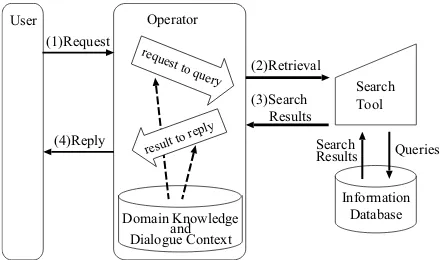
Given a scenario in which a human operator searches an information database and returns infor-mation to a user, dialog between the operator and user can be modeled as shown in Fig. 1. The ele-ments of this model are described below.
1. Request The user tells the operator the con-tents of an inquiry and demands reference.
Domain Knowledge and Dialogue Context (1)Request
(4)Reply
(2)Retrieval
(3)Search Results
Search Tool
Information Database
Queries Operator
User
requ est to
que ry
result to reply
Search Results
Figure 1: Information flow of information retrieval dialogue
and then processes the query indirectly by ma-nipulating a search tool such as an ordinary computer.
3. Search results The search tool generates search results.
4. Reply The operator returns a reply to the user based on search results and dialogue context.
Setting up information flow in this way allows us to view operator behavior in the following way. Specifically, the operator in Fig. 1 makes two deci-sions in the process of advancing dialog.
Decision 1: Generate a query after listening to user
speech
Decision 2: Generate a reply after receiving search
results
Here, an experienced operator would use more than just the superficial information obtained from user speech. To generate a query or reply that best suits the user’s need at that time, the opera-tor would also make use of domain knowledge, di-alogue context, and the search results themselves. In other words, this kind of dialogue processing can be viewed as a mapping operation from input infor-mation such as user speech and domain knowledge to output information such as a query. With this in mind, we considered whether a ”decision” to guide such dialogue could be automatically performed by referring to actual examples of behavior manifested by an experienced human operator. In short, we de-cided to store a large volume of dialogue examples,
i.e., mapping information, and to determine output information for certain input information on the ba-sis of mapping information stored in similar dia-logue examples.
2.2 Generation of queries and replies based on examples
2.2.1 Structure of example data
The two ”decisions” performed during the time of information retrieval dialogue between the user and operator can be expressed as a mapping between the following input and output information.
• Input/output information in the decision for generating a query:
Input User speech and dialogue context Output Query
• Input/output information in the decision for generating a reply:
Input User speech, dialogue context, and
search results
Output Reply
It is therefore sufficient to save those items that cover such input and output information. Specifi-cally, a large number of example data can be col-lected using the following information as elements to construct an example database.
1. Text of user speech
2. Query
3. Reply text
4. Search results
5. Dialogue context (past speech, grounding in-formation, conversational objects , etc.)
The following describes the procedure for gener-ating a query or reply with respect to input speech by referencing an example database.
2.2.2 Query generation process
2.2.3 Reply generation process
The system performs a search based on the gen-erated query and receives search results. It then ex-tracts the most similar example from the example database with respect to input speech, the dialogue context at that time, and the search results. Finally, the system adjusts the reply in that example to fit the current conditions and generates a new reply.
2.3 Problem points
Operating a dialogue system based on dialogue examples requires the construction of an example database as described above. Constructing a large-scale example database, moreover, requires a large volume of dialogue text in which supplementary in-formation such as queries and search results has been provided with respect to input speech.
Up to now, we have been constructing an exam-ple database by first collecting human-to-human di-alogue and converting speech to text and then as-signing queries, search results, and the like to each instance of input speech. This, however, is a labori-ous process. In addition, example data constructed on the basis of human-to-human dialogue data may have features different from those of human-to-dialogue-system dialogue data. In other words, we cannot call the above approach an optimal method for constructing example data.
3 Construction of an Example Database using the WOZ System
We propose the Wizard of OZ (WOZ) system as one means of efficiently collecting dialogue data that includes supplementary information attached to speech. Carrying on a dialogue using WOZ makes it possible to collect the information needed for constructing an example database while collecting speech data.
3.1 WOZ system
When carrying on a dialogue using the WOZ sys-tem, the user feels that he or she is talking to a com-pletely mechanical system despite the fact that a hu-man being is actually being used for some of the elements making up the dialogue system. Collect-ing dialogue data by WOZ should therefore result in
Touch Panel
Figure 2: Configuration of Wizard of OZ system
data that is closer to dialogue that would occur be-tween a human and a machine.
Collecting spoken dialogue data using the WOZ system has actually been performed a number of times in the past (MADCOW, 1992; Bertenstam et al., 1995; Life et al., 1996; Eskenazi et al., 1999; San-Segundo et al., 2001; Lemmela and Boda, 2002; Yoma et al., 2002). The objective of those stud-ies, however, was to collect, analyze, and evaluate dialogue data between people and artificial objects, and in many cases, only one of the artificial-object’s functions was taken over by a human, for example, the speech recognition function.
Our study, however, goes further than the above. In particular, we create special software (called WOZ software) that allows a human being to per-form the functions of interpreting user speech, gen-erating queries and executing searches, and generat-ing replies. We then propose a framework that en-ables the operator (wizard) to carry on a dialogue with the user while operating this WOZ software so that obtained data can be used later to perform di-rect control of a dialogue system. Specifically, we configure a pseudo-spoken-dialogue system (WOZ) consisting of WOZ software and an operator, hold information retrieval dialogue between this system and human subjects, and save the queries ,search re-sults and reply statements generated at this time as log information. We then use this log information and text-converted speech to construct an example database that can be used for dialogue control.
3.2 System configuration
keywords
search results type of
keywords
control buttons
Figure 3: An example of display of Wizard of OZ system (1): Query generation part
text input buttons
search results type of
keywords
control buttons & standard phrases
Figure 4: An example of display of Wizard of OZ system (2): Reply generation part
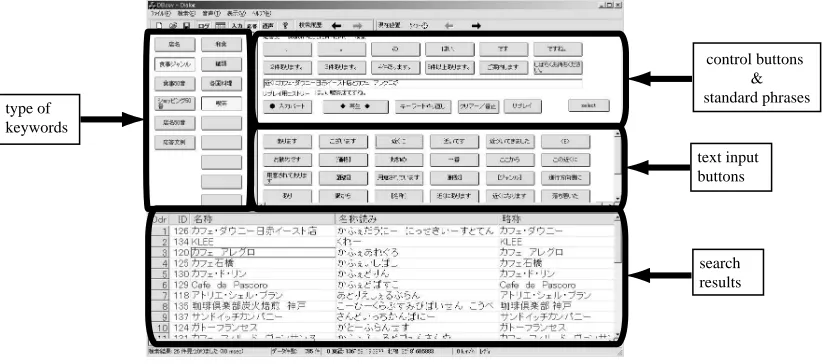
the WOZ software, which was created using the C++ language, runs on a personal computer under Windows2000. It consists of a screen for generat-ing queries (query part) and a screen for generatgenerat-ing replies (reply part). Figures 3 and 4 show sample screens of these parts. This GUI adopts a touch-panel system to facilitate operations — an operator only has to touch a button on one of these screens to generate a query, search an information database, generate a reply, or output synthesized speech.
WOZ software must feature high operability to achieve natural dialogue between the WOZ system and a human user. When designing WOZ software on the basis of a human-to-human dialogue corpus
that we previously collected, we used the following techniques to enable the system to operate in real time while carrying on a dialogue with the user.
First, the query part arranges keywords in a tree structure by search type so that appropriate key-words can be selected at a touch to generate a query and retrieve information quickly1 . Search results are displayed at the bottom of the screen in list form. Second, the reply part displays text-input buttons for generating replies and a list of search results. The text-input buttons correspond to words, phrases, and short standard sentences, and pushing them in
1
Hungry, but not enough time.
You want to eat Chineese noodle. Search Japanese food restaurant.
Figure 5: Examples of prompting panels
an appropriate order generates a reply in text form. The arrangement of these text-input buttons on the screen is based on connection frequency between text elements (reply-statement bigram) as previously determined from the human-to-human dialogue cor-pus mentioned above. In other words, each text-input button represents a text entry having the high-est frequency of following the immediately previous text entry to the left, which makes for quick genera-tion of a reply. Furthermore, to enable quick input, the section of the screen displaying the search results has been designed so that the name portion of each result can be touched directly and automatically in-cluded in the reply. The generated reply in text form is finally output in voice form via the speech synthe-sis section of the system.
Switching back and forth between the query and reply parts can be performed as needed using a switch button. The reply part also includes but-tons for instantly generating words and short phrases of confirmation and encouragement (e.g., ”yes,” ”I see”) while the user is speaking to create as natural a dialogue as possible.
3.3 Collecting dialogue data by the WOZ system
We targeted shop-information retrieval while driv-ing a car as an information-retrieval application based on spoken dialogue, and collected dialogue data between the WOZ system and human subjects (Kawaguchi et al., 2002). This data was collected within an automobile driven by subjects each of whom acted as a user searching for information. A personal computer running the WOZ software was placed in the automobile with the ”wizard” sitting in the back seat. All spoken dialogue was recorded using another personal computer.
Data collection was performed according to the following procedure for a duration of about five
min-Table 1: Collected WOZ data
Number of Speech length Speech Units sessions (min.)
User WOZ User WOZ
487 499 791 13,828 12,487
utes per subject.
• A prompting panel such as shown in Fig. 5 is presented to the subject.
• The subject converses freely with WOZ based on the prompting panel shown.
The wizard operates the WOZ system while lis-tening to the subject, that is, the wizard performs an appropriate search and returns a reply using speech synthesis2.
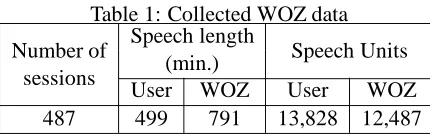
Table 1 shows the scale of collected data.
3.4 Constructing an example database using WOZ log information
WOZ software was designed to output detailed log information. This information consists mainly of the following items. All log information is recorded with time stamps.
• Speaker ID (input by the wizard when initiating a dialogue)
• Query generated for the input speech in ques-tion
• Search results returned for the generated query (number of hits and shop IDs)
• Text of reply generated by the operator (wiz-ard)
A saved WOZ log can be used to efficiently con-struct an example database by the following proce-dure. To begin with, a written record of user speech is made based on the voice recording of spoken di-alog with time information added. Next, based on
2
(Well, search convenience stores near here.)
(I found CIRCLE-K Makinohara store and SUNKUS Kamenoi store near here.)
Search results Dialogue history The most similar
example for query generation
The most similar example for reply generation
Input text (Result of speech
recognition) Reply
Figure 6: A view of example-based dialogue system
Table 2: Configuration of constructed example database
Number of Number of sessions examples
243 1,206
the time information in the log output by WOZ soft-ware, a correspondence is established between user speech and queries and between search results and replies.
We constructed an example database using a por-tion of dialogue data collected in the above manner. Table 2 summarizes the data used for this purpose.
Query and search-result correspondences were es-tablished for about 20% of all user speech excluding speech outside of the task in question and speech outside of query specifications.
4 Spoken Dialogue System using Dialogue Examples
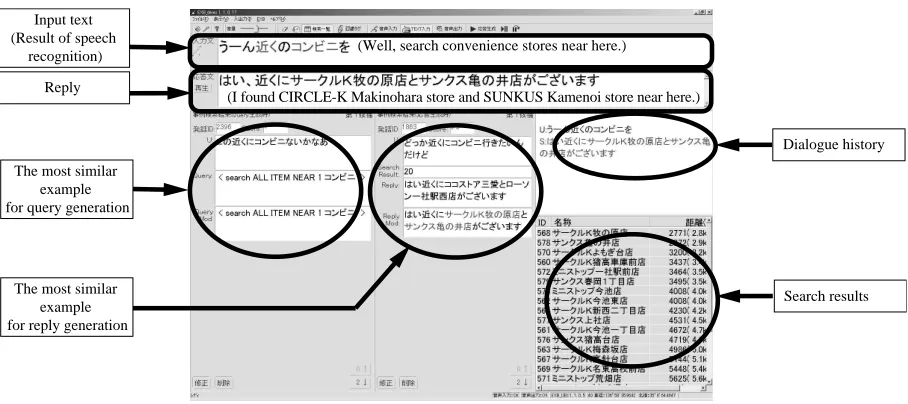
We here describe a dialogue system that runs using the example database that we constructed (see (Mu-rao et al., 2001) for details). The task is to search for shop information while inside an automobile. This system was implemented using the C++ language under Windows2000. Figure 6 shows a screen shot of this example-based dialogue system.
4.1 System configuration
The following describes the components of this sys-tem with reference to Fig. 7.
Dialogue example database (DEDB): Consists of
data constructed from dialogue text and log in-formation output from WOZ software. Dia-logue text is subjected to morphological anal-ysis3, and words essential to advancing the di-alogue (e.g., shop name, facility name, food name) are assigned word class tags based on classes given to these words beforehand ac-cording to meaning.
Word Class Database (WCDB): Consists of words essential to the task in question and classes given to them according to meaning. Word classes are determined empirically based on dialogue within the dialogue corpus.
Shop Information Database (SIDB): Consists of
a collection of information on about 800 restau-rants and shops in Nagoya, the same as that used in the WOZ system.
Speech Recognition: Uses “Japanese Dictation Toolkit(Kawahara et al., 2000)”. The lan-guage model was created from the previously collected human-to-human dialogue corpus.
3
Speech Input
Speech
Recognition Query Generation
Search
Synthesis Reply Generation
Figure 7: Configuration of example-based dialogue system
Query Generation: Extracts from the DEDB the
example closest to current input speech and conditions, modifies the query in that example according to current conditions, and outputs the result.
Search execution: Accesses the SIDB using the
generated query and obtains search results.
Reply Generation: Extracts from the DEDB the
example closest to input speech and search re-sults, modifies the reply in that example ac-cording to current conditions, and outputs the result.
Speech Synthesis: Outputs replies in voice form
using a Japanese TTS (Text To Speech) soft-ware “EleganTalk Ver. 2.1” by Sanyo Electric Co., Ltd. .
4.2 Operation
The following describes system operation (see Fig. 8 for a specific operation example).
Step 1: Extracting similar example for query
For a speech recognition result, the system extracts the most similar example from the DEDB. The robustness of the similarity cal-culation between the input utterance and the utterance in the DEDB should be considered against the speech recognition error. Therefore, a keyword matching method using the word class information is adopted. For a speech recognition result combined with a morpholog-ical analysis result, independent words and the
Input: Etto, spaghetti no omise ni ikitai na. (I'd like to go to a spaghetti restaurant.)
Keywords: [10: spaghetti],[omise (shop)],[iku (go)]
1st: U: <10:Curry> no [omise] ni [iki]tain desu kedo (I'd like to go to a curry restaurant. )
Q: search KEY=<10:curry>
2nd: U: <10: Ramen(noodles)> wo <tabe> ni [iki] taina (I'd like to eat noodles.)
Q: search KEY=<10:ramen>
3rd: U: [10: Spaghetti] de <yu-mei> na <tokoro> ga iidesu ( I prefer a popular resutaurant for spaghetti.) Q: search KEY=<10:spaghetti>
Step1: Extracting similar example for query
Step2: Query Modification
Query in the similar case: search KEY=<10:curry> Matched keywords pair: ( <10:curry> , <10:spaghetti> ) Output Query: search KEY=<10:spaghetti>
Step3: Search
Iutput Query: search KEY=<10:spaghetti> Search Result: RESULT=NONE
Input: Etto, spaghetti no omise ni ikitai na. (I'd like to go to a spaghetti restaurant.)
Keywords: [10: spaghetti],[omise (shop)],[iku (go)]
1st: U:<10: Ramen(noodles)> wo <tabe> ni [iki] taina (I'd like to eat noodles.)
Q: search KEY=<10:ramen>
S:<10:Ramen(noodles)> no [omise] wa chikaku ni arimasen ( There are no noodle restaurants near here.) A: RESULT=NONE
2nd: U:<10:Curry> no [omise] ni [iki]tain desu kedo (I'd like to go to a curry restaurant. ) Q: search KEY=<10:curry>
S:Hai, Curry no omise wa 5-ken arimasu (Well, I found 5 curry restaurants.) A: RESULT=5, ID1=120,..,ID5=565 Step4: Extracting similar example for reply
Search Result: RESULT=NONE
Figure 8: Example of query and reply generation
important words to which the word class tags are assigned according to the information in the WCDB are regarded as the keywords, and their similarity is calculated as follows. For each transcription of a user’s utterances in the DEDB, the number of matched words and the number of important words which belong to the same word class are accumulated with the correspondent weight and the result is treated as the similarity. The utterance which marks the highest similarity is regarded as the most similar one.
Step2: Query Modification The query for the
the input utterance. The modification is per-formed by replacing the keywords in the refer-ence query using word class information.
Step 3: Search The SIDB is searched by using the
modified query and a search result is obtained.
Step 4: Extracting similar example for reply
The system extracts the most similar example from the DEDB, by taking account of not only the similarity between the input utterance and the utterance in examples but also that between the number of items in the search result and that in the examples. Here, a total similarity score is computed by performing a weighted summation of two values: the utterance sim-ilarity score and the search-results simsim-ilarity score obtained from the difference between the number of search results in an example and that obtained in Step 3. The search-results similarity score is computed as follows.
When the number of search results by mod-ified query is 0: Give the highest score to examples in the example database with 0 num-ber of search results and the lowest score to all other examples.
When the number of search results by mod-ified query is 1 or more: Give the high-est score to examples in the example database with the same number of search results and an increasingly lower score as difference in the number of search results becomes larger (use heuristics).
For example, if not even one search result could be obtained by the modified query, examples in the example database with not even one search result constitute a match.
Step 5: Reply Modification The reply statement
for the extracted example is modified with ref-erence to the input utterance. The modification is performed by replacing the words in the ref-erence reply statement by using word class in-formation. Then a speech synthesis module is used to produce a reply speech.
4.3 Adding, modification, and deletion of example data
This system allows example data to be added, mod-ified, and deleted. When a failed operation occurs while carrying on a dialogue, for example, buttons located at the bottom of the screen can be used to modify existing example data, add new examples, and delete unnecessary examples.
5 Conclusion
This paper has proposed an efficient technique for collecting example data using the Wizard of OZ (WOZ) system for the purpose of guiding spoken di-alogue using didi-alogue examples. This technique has the following effects.
• Knowledge buried in the WOZ system log (conversions from input speech to query and reply, etc.) can be used as dialogue system knowledge.
• Because dialogue is collected using the WOZ system, the examples so collected are close to dialogue that would occur in an environment with an actual dialogue system. In other words, dialogue examples can be collected under con-ditions close to human-to-machine dialogue.
• The labor involved in recording speech neces-sary for construction of an example database can be reduced.
In future research, we plan to evaluate dialogue-processing performance and context dialogue-processing us-ing example databases constructed with the WOZ system.
References
Masayuki Asahara and Yuji Matsumoto. 2000. Extended models and tools for high-performance part-of-speech tagger. In Proceedings of COLING 2000, July.
Maxine Eskenazi, Alexander Rudnicky, Karin Gregory, Paul Constantinides Robert Brennan, Christina Ben-nett, and Jwan Allen. 1999. Data collection and pro-cessing in the carnegie mellon communicator. In
Pro-ceedings of Eurospeech-99, volume 6, pages 2695–
2698.
Nobuo Kawaguchi, Shigeki Matsubara, Kazuya Takeda, and Fumitada Itakura. 2002. Multi-dimensional data acquisition for integrated acoustic information research. In Proc. of 3rd International Language
Resources and Evaluation Conference (LREC-2002),
pages 2043–2046.
T. Kawahara, A. Lee, T. Kobayashi, K. Takeda, N. Mine-matsu, S. Sagayama, K. Itou, A. Ito, M. Yamamoto, A. Yamada, T. Utsuro, and K. Shikano. 2000. Free software toolkit for japanese large vocabulary contin-uous speech recognition. In Proceedings of
ICSLP-2000, volume 4, pages 476–479.
Saija-Maaria Lemmela and Peter Pal Boda. 2002. Effi-cient combination of type-in and wizard-of-oz tests in speech interface development process. In Proceedings
of ICSLP-2002, pages 1477–1480.
Esther Levin, Roberto Pieraccini, and Wieland Eckert. 1998. Using markov decision processes for learning dialogue strategies. In Proceedings of ICASSP98, vol-ume 1, pages 201–204.
A. Life, I. Salter, J.N. Temem, F. Bernard, S. Rosset, S. Bennacef, and L. Lamel. 1996. Data collection for the mask kiosk: Woz vs prototype system. In
Pro-ceedings of ICSLP-96, pages 1672–1675.
MADCOW. 1992. Multi-site data collection for a spo-ken language corpus. In DARPA Speech and Natural
Language Workshop ’92.
Hiroya Murao, Nobuo Kawaguchi, Shigeki Matsubara, and Yasuyoshi Inagaki. 2001. Example-based query generation for spontaneous speech. In Proceedings of
2001 IEEE Workshop on Automatic Speech Recogni-tion and Understanding (ASRU2001).
R. San-Segundo, J.M. Montero, J.M. Gutierrez, A. Gal-lardo, J.D. Romeral, and J.M. Pardo. 2001. A telephone-based railway information system for span-ish: Development of a methodology for spoken dia-logue design. In Proceedings of SIGdial-2001, pages 140–148.
Nestor Becerra Yoma, Angela Cortes, Mauricio Hormaz-abal, and Enrique Lopez. 2002. Wizard of oz evalua-tion of a dialogue with communicator system in chile. In Proceedings of ICSLP-2002, pages 2701–2704.