Western University Western University
Scholarship@Western
Scholarship@Western
Electronic Thesis and Dissertation Repository
8-27-2019 10:00 AM
ESL Teachers' Self-efficacy toward Pedagogical Use of Digital
ESL Teachers' Self-efficacy toward Pedagogical Use of Digital
Technologies: An Exploratory Case Study in the Ontario Context
Technologies: An Exploratory Case Study in the Ontario Context
Aide Chen
The University of Western Ontario Supervisor
Julie Byrd Clark
The University of Western Ontario
Graduate Program in Education
A thesis submitted in partial fulfillment of the requirements for the degree in Master of Arts © Aide Chen 2019
Follow this and additional works at: https://ir.lib.uwo.ca/etd
Part of the Bilingual, Multilingual, and Multicultural Education Commons
Recommended Citation Recommended Citation
Chen, Aide, "ESL Teachers' Self-efficacy toward Pedagogical Use of Digital Technologies: An Exploratory Case Study in the Ontario Context" (2019). Electronic Thesis and Dissertation Repository. 6422.
https://ir.lib.uwo.ca/etd/6422
This Dissertation/Thesis is brought to you for free and open access by Scholarship@Western. It has been accepted for inclusion in Electronic Thesis and Dissertation Repository by an authorized administrator of
ii
Abstract
Digital technologies have been intertwined with English language education
globally and have yielded ever-emerging opportunities and challenges. This research
aims to explore ESL teacher participants’ perceived abilities to use digital technologies
for pedagogical purposes, their implemented integration of technology in classrooms, as
well as possible solutions to some of the technology-related difficulties they have
experienced throughout their teaching practice. This qualitatively-driven mix-methods
study utilizes a constructivist theoretical framework and involves multiple bodies of
literature such as digital literacy and teacher self-efficacy. Surveys and semi-structured
interviews have been used for data collection. The findings show that teacher
self-efficacy beliefs are shaped by ones’ lived experiences and are fluid in nature.
Additionally, while it appears preferable to look at digital competencies and technologies
using a non-essentialist lens, being able to meaningfully integrate technology with
classroom activities and learner assignments merits English language instructors’ critical
attention. Wider implications and future directions have been discussed as well.
iii
Summary for Lay Audience
This study explores how English language teachers in Ontario view their abilities
to use digital technologies in and outside the classroom. There are eight survey
participants and two interview participants. They have to answer questions about their
teaching background, classroom practices related to digital technologies, barriers they
may have encountered and possible solutions, as well as needs of training. The findings
suggest that their perceptions vary from one another and can change over time. In
addition, many of them have experienced difficulties, such as technical issues, plagiarism,
student disengagement, in technology-assisted language teaching. The majority of them
would like to learn how to integrate technology with classroom activities and student
iv
Acknowledgement
My deepest thanks go to Dr. Julie Byrd Clark. Your ongoing support throughout
my graduate studies has been invaluable and life-changing, and I feel blessed to be able
to learn from and work with you. As a caring and expert mentor, researcher, and teacher,
you not only showed me a wonderful world of complexity, criticality, and creativity, but
also empowered me to overcome difficulties across all stages of this study and beyond.
I would also like to thank Dr. Zheng Zhang for serving on my advisory committee.
Your constructive feedback and detail-oriented standards made a difference in my
self-improvement as a student researcher. I particularly enjoyed the VR experience at
your class and cannot forget the valuable opportunity for me to witness the potential of
calligraphic research for engaging the local seniors.
Special thanks go to my research participants as well. You are the ones who made
my thesis a reality. Thank you very much for your patience and insights. This thesis
would not have been completed without you. Additionally, I am grateful to my
post-graduate instructors and peers who have enriched my knowledge in one way or
another. I am indebted to the rewarding coursework and our inspiring exchanges of ideas.
Finally, I want to extend my sincere gratitude to my parents. Knowing that you
will always have my back is reassuring. I greatly thank your unconditional faith in me
v
Table of Contents
Abstract ... ii
Summary for Lay Audience ... iii
Acknowledgement ... iv
Table of Contents ... v
List of Tables ... viii
List of Figures ... ix Chapter 1 ... 1 1 Introduction ... 1 1.1 Research Problems ... 1 1.2 Significance ... 2 1.3 Purpose of the Research ... 3 1.4 Research Questions ... 3 1.5 Thesis Structure ... 3 Chapter 2 ... 5 2 Literature Review ... 5 2.1 Digital Literacy ... 6 2.2 Task-Based Language Teaching ... 9 2.3 Digital Tools for Teaching EAP ...12 2.4 Teacher Self-efficacy...13 Chapter 3 ...17 3 Methodology ...17 3.1 Researcher Positioning and Biases ...17 3.2 Rationale ...19 3.3 Participants ...21 3.4 Data Collection Methods ...21
vi
3.6 Ethical Considerations ...26
3.7 Trustworthiness of Data ...27 3.8 Summary ...28 Chapter 4 ...29 4 Results ...29
4.1 Survey Results ...29 4.1.1 Demographic Information of the Participants ...29 4.1.2 Self-Perceived Teacher Efficacy ...30 4.1.3 Self-reported Teaching Practices regarding Technologies ...31 4.1.4 Barriers and Desired Training ...33 4.2 Interview Results ...36 4.3 Summary ...46 Chapter 5 ...47
5 Discussions and Conclusions ...47 5.1 Discussions ...47 5.1.1 How do in-service ESL teachers perceive their technological competencies in general and technological competencies for pedagogical purposes? ...47 5.1.2 How do in-service ESL teachers integrate (or not) technology in class and for
vii
Appendix D: Letter of Information and Written Consent for Survey Participants ...84
viii
List of Tables
Table 1: Teacher Participants' Profiles ... 29
ix
List of Figures
Figure 1. Situating the literature. ... 5
Figure 2. The sequential exploratory mixed-methods design. ... 20
Figure 3. Teacher participants’ self-efficacy levels. ... 30
Figure 4. Types of technology use in classrooms. ... 31
Figure 5. Served purposes of technology use in classrooms. ... 32
Figure 6. Barriers for effective technology use in classrooms. ... 33
Figure 7. Sources of technological pedagogical training. ... 34
1
Chapter 1
1 Introduction
Digital technology and education seem to be unprecedentedly interwoven these days.
Drawing upon a wide range of data sources (e.g., search engines, education websites,
social media) from western publications, Teach Thought (2018), an American
organization that aims to innovate K-12 educational practices, reports that the top 20
most recognized educational topics in the year of 2018 have widely involved
technological elements. For instance, digital citizenship/literacy, blended learning,
pushing back on education technology, gamification, adaptive learning algorithms, game
based learning, and mobile learning are ranked in fourth, eighth, eleventh, seventeenth,
eighteenth, nineteenth, twentieth place on the list, respectively.
Referring to the field of English as a Second Language (ESL) teaching and
learning, the past few decades have witnessed an explosive increase in the number of
newly developed digital technologies and relevant theories, such as synchronous chat,
augmented reality gaming, the interactionist theory (Chapelle, 1998), and new literacies
theories (New London Group, 1996; Gee, 2004). These digital technologies and theories
have significantly shaped ESL curriculum planning, implementation, and change on both
local and international levels (Blake, 2013). Empirical evidence shows that if employed
wisely, digital technologies can not only facilitate learners' development of language
proficiency, but also sharpen their abilities to work in teams, think critically, solve
problems effectively (Blake, 2013), as well as positively reinforce their cultural capital
and identities (Cummins, Brown, & Sayers, 2007).
1.1 Research Problems
While these potential benefits exist, digital gaps, also known as the digital divide, remain
at policy, practical and theoretical levels. For example, Howell and O’Donnell (2017)
2
educational technology available, and that there is also an imbalance in the access to
digital content and devices in K-12 education across different regions in Canada (e.g.,
school, district, province). At the practical level, many teachers are unwilling or
unprepared to integrate technology into teaching and learning for a variety of reasons
such as the lack of access, time, and skills (Tondeur et al., 2011; Martinovic & Zhang,
2012). A Canadian-specific study by Shapson (2007) reveals that due to the limited
access to ICT and training, most Canadian teacher respondents across disciplines are
holding a generally vague idea of what it really means by technology-mediated teaching,
thus negatively affecting their self-efficacy and teaching practice in this regard. Last but
not least, most studies under review in efforts to develop teacher self-efficacy theories
have examined students' and/or pre-service teachers' self-efficacy toward pedagogical use
of digital technologies in non-Canadian contexts, which leaves the perspectives of
in-service ESL teachers (those with teaching experiences) in Canada relatively
unexplored. Therefore, this research study seeks to shed more light upon in-service ESL
teachers' self-efficacy and their pedagogical use of digital technologies.
1.2 Significance
In response to these problems, the significance of conducting my research is also tri-fold.
First and foremost, this study is intended to fill in the aforementioned theoretical gaps by
studying my interested population of ESL teachers who teach English for Academic
Purposes (EAP) to prospective university students in Ontario. In addition, throughout
participating in this research, the target teacher participants may gain insights into their
perceived technological and teaching abilities, practices and needs, thus casting light on
their professional development in terms of the integration of teaching and digital
technologies. Also perhaps advantageously, teacher participants' responses in this study
could potentially serve as a valuable asset for the programmatic or even provincial policy
3
field of ESL and beyond.
1.3 Purpose of the Research
To provide an overview, the purpose of this qualitative research is to explore in-service
ESL teachers' self-efficacy towards the pedagogical use of digital technologies. Using a
constructivist lens, this study utilizes a research tradition of an exploratory case study.
The sources of data consist of surveys and interviews. The main research sites are adult
EAP programs affiliated to universities in Ontario, Canada, and each participant have at
least one year of experience in English language teaching.
1.4 Research Questions
My research questions thus include:
(a) How do in-service ESL teachers perceive their technological competencies in
general and technological competencies for pedagogical purposes?
(b) How do in-service ESL teachers integrate (or not) technology in class and for
assignments?
(c) What may be some of the possible solutions to the respondents’ difficulties of
using technology in their teaching practice?
1.5 Thesis Structure
This thesis has four remaining chapters. Chapter Two will look at relevant literature on
digital literacy, task-based language teaching, EAP technologies, and teacher
self-efficacy. Chapter Three will introduce the researcher’s positioning, the present
study’s methodological framing, the participants’ background, data collection and
analysis, trustworthiness, and ethical considerations. Chapter Four will present data
collected from the survey and interviews, separately. Finally, Chapter Five will make
connections between the data results, research questions, and relevant literature, and will
4
5
Chapter 2
2 Literature Review
This chapter looks at the existing literature regarding digital literacies’ historical
conceptualizations and presence in Canadian curriculum, task-based language teaching
(TBLT) as a pedagogy in English language education, the affordances of certain digital
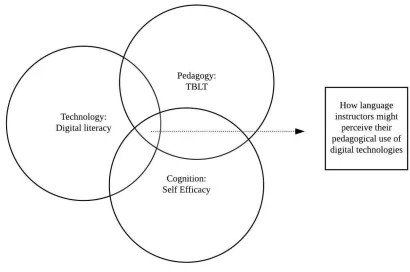
technologies, as well as teacher self-efficacy as an aspect of teacher cognition. As Figure
1 shows, the three labeled circles represent three major aspects of review concerning
technology, pedagogy, and teacher cognition, with each of them focusing on digital
literacy and specific educational technologies, TBLT, and teacher self-efficacy,
respectively. The center of gravity, which is the commonly overlapped area, points to
how English language teachers make sense of their abilities to incorporate (or to not
incorporate) digital technologies in classrooms.
6
2.1 Digital Literacy
Digital literacy represents one of the most important components in new literacies and/or
multiliteracies theories. Several alternate terms are sometimes used interchangeably,
including but not limited to media literacy (Buckingham, 2006), digital scholarship
(Pearce et al., 2010), digital competence (Vuorikari, 2016), and multiple technoliteracy
(Kahn & Kellner, 2005).
In order to understand what digital literacy is, it is necessary to look at the notions
of traditional literacy throughout historical contexts. Before the 1970s, within the United
States and other major English speaking countries, literacy as basic abilities to read and
write was barely stressed in schooling settings and it was closely connected with
disciplining problematic learners of illiteracy, particularly including youth and adults who
were unemployed, imprisoned, pregnant, mentally damaged, or substance-abusive
(Lankshear & Knobel, 2006). In other words, teaching literacy in the given time and
space almost equated to a type of social or even medical intervention to normalize the
behaviors of the illiterate.
After this period of time, literacy gradually came into play in formal curriculum
settings and eventually became wide spread for political, social, and academic reasons
(Lankshear & Knobel, 2006). Politically, Paulo Freire was one of the key contributors to
this literacy aspect of curriculum change. For the oppressed, marginalized groups of
people who were most likely to be illiterate to (re)gain power and achieve social justice,
Freire developed the framework of critical pedagogy in which literacy as ‘reading the
word and the world’ (Freire & Macedo, 1987) was an identical part of the
problem-posing model of education and it was purposefully emphasized as a means of
promoting reflexivity as a form of critical awareness (Byrd Clark & Dervin, 2014; Freire,
1972).
The change of perspectives to literacy also occurred at the societal level, which
7
& Knobel, 2006). Specifically, the populations educated by those First World schools
were found not literate enough to cope with the needs of rapidly changing postindustrial
world because they were not sufficiently trained to do so. As a result, to maintain the
status quo (i.e., public order and economic growth), governments of the First World
countries (e.g., the United States) exerted pressure on schools and the schools were thus
pushed to make curriculum change by incorporating literacy elements to better produce
literate members of society (Lankshear & Knobel, 2006).
There was also a paradigm shift in academia. In the 80s and 90s, a large number
of experts across social and humanities disciplines (e.g., applied linguistics, psychology,
sociology) were starting to move away from behaviorism and structuralism to
socio-cultural theories in an attempt to solve the aforementioned literacy crisis
unaddressed by prior paradigms (Gee, 1996). For example, "powerful literacies", "higher
order literacies", "new literacies" and ‘multiliteracies’ were developed in succession.
These are typical representations of how the understanding of literacy is extended from
traditional print literacy to something that is conceptually broader, more semiotic and
inclusive (Gee, 2004) such as “text as social practice” (Garcia, et al., 2018, p. 74). Digital
literacy, as part of new literacies, has also evolved from an initial view of
technology-centeredness to a new one that engages the use of information by assimilating,
evaluating, and reintegrating it (Gilster, 1997). On top of these skills, according to
Jenkins (2009), being digitally literate also means that one is able to disseminate
knowledge, take risks to solve problems, multitask, collaborate with others, and respect
multiple perspectives.
As new literacy studies develop, criticisms follow. One of the most voiced
perspectives against digital literacy is regarding its potential for increasing oppression
and social injustice (Mills, 2010; Mansell, 2010). Because it is developed and/or shaped
with political, economic or socio-cultural purposes, technology itself is never neutral
8
the producers, consumers, and other stakeholders. In addition, Edwards (2015) has
discovered that technology users in curriculum settings, especially learners, oftentimes
take technologies for granted in terms of how the information is pedagogically chosen,
planned, and implemented, which could reinforce students' role as passive receivers. In
fact, with or without the digital dimensions, novice teachers or traditionally-minded
teachers affected by teacher-centered apprenticeship of observation might consciously or
unconsciously reproduce obedient learners who lack critical thinking or meaning
negotiation skills (Lam, 2006; Kramsch & Thorne, 2002). For these reasons, digital
literacy-related practices in reality are not necessarily empowering to learners, teachers,
let alone to a potentially broader population.
In light of theorizing digital literacy in the Canadian context, Hadziristic (2017)
finds that the definition of digital literacy varies among individuals and proposes to
deconstruct the umbrella term of digital literacy into 3 skills which are technical skills,
cognitive skills, and critical thinking skills. An alternative framework titled Use,
Understand & Create: A Digital Literacy Framework for Canadian Schools by Media
Smarts (2019) emphasizes one’s abilities to use, understand, and create digital literacy
and highlights 7 criteria (i.e., ethics and empathy, privacy and security, community
engagement, digital health, consumer awareness, finding and verifying, making and
remixing) for evaluating Canadian K-12 students’ digital literacy (Media Smarts, 2019).
The practicality or usefulness of the proposed definitions is yet to be examined.
Canadian-specific research has also identified some of the variables that shape
one’s engagement with digital literacy, ranging from age, attitude, class, language, and
geography (Media Awareness Network, 2010), to gender (Information and
Communications Technology Council, 2016), and to access to technological services
(Howard, Busch, & Sheets, 2010). While older generations are less likely to be engaged
with digital technology compared with younger generations commonly known as “digital
9
overall underrepresented online compared with their English-speaking counterparts
(Media Awareness Network, 2010). Gender-wise, only around 1 out of 4 workers in the
Canadian technology industry are female, a comparatively low representation in contrast
to the situation in other major developed countries such as the United States (ICTC,
2016). As for rural and remote areas of Canada, a lack of broadband infrastructure and
relevant content services would require further funding (Howard, Busch, & Sheets, 2010).
Addressing these inequalities matters not only to the marginalized people, but also to the
country of Canada as a whole in the face of knowledge economy (Hadziristic, 2017).
2.2 Task-Based Language Teaching
Similar to the theoretical development of digital literacy, TBLT has been gaining
increased attention in the field of Second Language Acquisition (SLA) since the 80s, and
such attention can be categorized with primarily three perspectives which are
interactionist, socio-cultural, and ecological (Ortega, 2009). While an interactionist view
places its psycholinguistic emphasis on comprehensible input (Krashen, 1984) and
pushed output (Swain & Lapkin, 1995), a socio-cultural view looks at how different types
of scaffolding can be achieved through authentic, collaborative negotiation of meaning
(Lantolf & Beckett, 2009). Differently, an ecological approach moves beyond the scope
of humans and integrates environmental elements (e.g., place, nature) in language
learning (Kramsch & Steffensen, 2008). In spite of their differences, it is
well-documented that an SLA task should be communicative, meaning-focused, and
student-centered (Ellis, 2003).
Prior to the onset of TBLT studies, early curriculum theorists have also touched
upon some of the principles that are TBLT-compatible, such as the idea of “integral
education” (Doughty & Long, 2003, p. 58). For example, Dewey (1938) suggests that one
learns best through active experience and transaction with guiding purposes, rather than
10
which ignores the fact of knowledge mobility and fluidity. This is later on mirrored by
Bruner's (1960) stance of promoting discovery learning that is situated in real-life
communities and problems, as well as Vygotsky's (1978) constructivist views of
knowledge construction and learner agency. In short, these works' shared emphases on
participatory learning and interactions have shaped the development of TBLT theories to
some degree (Feryok, 2017).
There are many ways of categorizing tasks as well. According to Ellis (2009),
depending on whether or not linguistic items are specified to be used in communicative
activities, tasks can be focused or unfocused. It is noteworthy that even though certain
language use is expected in focused tasks, focused tasks are still different from exercises.
This is because language use is explicitly required as the goal in exercises, whereas it
remains a means rather than an outcome in tasks (Ellis, 2009). An additional influential
strategy of grouping tasks is gap-based. Gap, in this case, refers to the information or
meaning needed to be conveyed from one learner to another. In detail, a task may have
information gap (e.g., jigsaw reading, matching activities), reasoning gap (e.g., puzzles,
problem solving), or opinion gap (e.g., discussion, role play, storytelling) (Prabhu, 1987).
Until now, pedagogically, there are at least three ways of implementing TBLT,
including the needs-based approach, three-phase approach, and discovery-based approach.
While the needs-based approach in SLA employs needs analysis to identify tasks and task
sequence appropriate to learners' levels and needs (e.g., learning styles, target language
items and skills), it does not respond to the questions of how the analysis results can be
utilized or connected with the actual part of teaching (Bygate, 2016). To compensate this,
teaching practitioners can take into account both of the two remaining approaches. For
instance, the well-known three-phase approach proposed by Willis (1996) structures a
well-designed task of language learning with three phases which are pre-task (i.e., teacher
introduction and preparation), during-task (i.e., learners engage in tasks monitored and
11
comparison to Willis' task-as-work-plan model, a discovery-based approach is more
task-as-process (Ellis, 2003). Although a discovery-based approach still holds on to the
organization of the three steps, it replaces teacher-given model introduction with learners'
own exploration of meaning since the very beginning of a pre-task (Bygate, 2016).
Granted, TBLT is not without criticism given a number of limitations. For
example, Widdowson (2003) discusses that conceptually, tasks are loosely defined, and
that pedagogically, TBLT's overemphasis on authentic meaning negotiation and fluency
can sacrifice learners' attention toward language accuracy. Other pedagogical concerns
are related to teacher's potentially reduced control over a wide range of matters in and
outside the classroom such as learning materials beyond textbooks, learners' linguistic
progress in tasks, as well as lesson planning (Seedhouse, 2005). Moreover, the
practicality of implementing TBLT for English in some parts of the world such as Asia is
also questioned based on the local norms of large class sizes, overall population's
inadequate English language proficiency, and cultural beliefs of teaching which
altogether can be very different from western contexts in which TBLT is nurtured (Butler,
2011).
On a further note, within the recent two decades, the connections between TBLT
and technological applications (e.g., Web 2.0 and Web 3.0 tools) have been largely
strengthened. In this regard, integrating technologies in TBLT has been found to be able
to overcome the constraints of time and individual learning pace (Blake, 2013), and
facilitate positive L2 identity construction (Thorne, Sauro, & Smith, 2015), stronger
motivation and creative skills (González-Lloret & Ortega, 2014), and higher quality of
written production (Woo, Chu, Ho, & Li, 2011). Blending TBLT with technologies, on
the other hand, also makes it possible that those technological applications can be
operated in a pedagogically principled way to essentially benefit learners’ language
development. For example, compared with totally unstructured online discussions, the
12
sophisticated turn taking (Smith, 2003).
2.3 Digital Tools for Teaching EAP
In relation to EAP teaching, there is a broad array of technologies that can be used.
Because of the space limit, this section will only address some of the frequently used
ones, including blogs, wikis, Google Docs, as well as the integration of writing-focused
tools. A more comprehensive, detailed review of the given and other tools can be
retrieved from the edited book by Chapelle and Sauro (2017).
Blogging has been proved to be a useful tool for developing ESL learners'
individual writing meta-cognition regarding cognitive autonomy (Alm, 2009), decision
making (Bhattacharya & Chauhan, 2010) and reflective self-monitoring and
self-evaluation (Murray & Hourigan, 2008). However, given individual learning
preferences and styles, some learners might not find this web-based application desirable
for the reasons of the lack of interests in prescribed topics (Vurdien, 2013) and the fear of
being criticized (Alm, 2009).
A second asynchronous tool is wikis, which allows multiple learners, whether in
pairs or groups, to collaboratively produce and modify text-based content and track the
documented history of every editor's modifications. What differs wikis from blogging is
that wikis focuses more on team effort and the process of rhetorical construction of
writing (Cress & Kimmerle, 2008). It is commonplace that a wikis product can be rather
rich in content (e.g., history, culture) and can take various forms such as argumentative
essays or multimodal representations just as what blogging is capable of (Bryant, 2006).
Nevertheless, ineffective or even disturbing circumstances can happen when learners
overemphasize and spend too much time on making corrections on peers' wording or
grammar mistakes (Lee, 2010).
One of the technologically more advanced versions of wikis is Google Docs.
13
discussed tools. With authorized access, learners are able to modify the shared document
in real time. During this process, learners can be exposed to each other's representations
of digital literacy (e.g., techniques of content and format organization, visual and audio
use) and notice diverse linguistic and interpersonal exchanges through the output
constantly modified by one another (Schenker, 2016). However, students who strongly
value authorship may be unwilling to share works with others (Kessler, 2009). Another
concern regarding the use of Google Docs is that whether or not successful collaborative
writing is achieved can be in part dependent on team formation and particularly the
selection of group leader (Li & Zhu, 2017).To that end, Li and Zhu suggest that each
group should have mixed learners with different linguistic and cultural backgrounds, so
that the target language as a shared means will be frequently used throughout group
interactions.
Two additional points are worth mentioning regarding pedagogical use of
technology. First, it is important for teachers to train learners to use technologies for
learning purposes even though learners are personally familiar with such technologies
(Pritchard, 2013). This is for addressing the possible mismatch between learners’ personal
use and the principled use of technology for learning (Reinders & Hubbard, 2013).
Second, technology can be integrated into teachers’ assessment practices in a variety of
ways. For example, automated writing evaluation (AWE) tools can help improve learners’
research writing by providing immediate and useful feedback (Cotos, 2011). In order for
teachers to evaluate the effectiveness of their chosen technologies for language teaching
purposes, Jamieson and Chapelle (2010) have proposed a six-criteria framework that
takes into account language learning potential, meaning focus, learner fit, authenticity, positive impact, and practicality.
2.4 Teacher Self-efficacy
14
people’s beliefs of the extent to which they are able to accomplish certain behaviors.
One’s self-efficacy can be established by a handful of contextual factors, including
mastery experiences, social modelling, social persuasion, as well as physiological states
(Bandura, 2006). In addition to these factors, self-efficacy can also be shaped by whether
or not the measuring tools are valid, and whether or not self-evaluation is accurate
(Bandura, 2012).
To teachers, such beliefs can be very impactful not only to their life in general
(Bandura, 1994), but also to their job satisfaction (Klassen & Chiu, 2010), teaching
philosophy and practices (Wolters & Daugherty, 2007), thus eventually influencing
learner affect (e.g., motivation, anxiety) and academic achievement (Deemer, 2008).
Some research finds that teachers’ self-efficacy is positively correlated with learners’
academic achievement (Khan, 2012; Shahzad & Naureen, 2017), while other evidence
identifies no significant relationship between the two variables (Mahler, Groβschedl, &
Harms, 2018).
There is also a difference in one’s general self-efficacy and specified self-efficacy.
For instance, Sharma, Forlin and Loreman (2012) argue that teachers who have a high
level of general self-efficacy do not necessarily mean that their self-efficacy in specific
aspects such as the abilities to teach inclusively is strong. Because of this, self-efficacy
beliefs need to be specified. The categorized self-efficacy for this study includes teacher
self-efficacy of digital literacy and teacher self-efficacy of technological pedagogical
content knowledge. While the former stresses one’s overall competencies of
technological use and meaning making, the latter focuses more on technology-mediated
teaching.
A variety of studies indicate that teacher self-efficacy of their own digital literacy
can be used to predict whether or not a teacher will be able to use digital technologies in
general settings which are not necessarily educational (Oliver & Shapiro, 1993; Milbrath
15
anxiety, behaviors, and skills concerning digital technologies (Compeau & Higgins,
1995), and all of these aspects can be greatly shaped by one's experiences of prior
education and training (Montgomery & Mirenda, 2014). In the educational setting, after
assessing the relationships between computer self-efficacy and technological practices,
Ahmad and others (2010) maintain that teacher computer self-efficacy plays an important,
if not decisive, role in their computer practices in classrooms.
Another focus of self-efficacy directly related to education settings, however, is
on teachers' perceived technological pedagogical content knowledge (TPCK), which is a
relatively new concept that refers to how teachers view their abilities to use technologies
to facilitate teaching and learning in a specific subject domain (Harris, Mishra, & Koehler,
2009). Because this is an emerging area, the number of research directed at teacher
candidates and in-service teachers has been limited. With regard to in-service teachers,
shared findings from available literature express that teachers with strong abilities to use
technologies are not necessarily able to conduct technology-enhanced teaching
effectively, and that experienced teachers tend to report higher level of TPCK, and that
one's age can be negatively related to his/her TPCK self-efficacy (Kavanoz, Yuksel, &
Ozcan, 2015; Lee & Tsai, 2010).
Nevertheless, even though one's success in many cases can be more reasonably
predicted by one's perceived self-efficacy than by one's prior accomplishments (Bandura,
1994), in reality one's self-efficacy is not always consistent with his/her actual behaviors
and practices (Liu, 2011; Lim & Chai, 2008). This is because self-perceived efficacy can
change over time or be inaccurate (Bong, 2006). For instance, in a study grounded under
inclusive education for children with learning disabilities, western (e.g., Australian,
Canadian) and eastern (e.g., Indian, Chinese) teachers' self-rated efficacy scores were
both high, which should mean similar inclusive practices but the assumption was not
confirmed by evidence (Sharma & George, 2016). Therefore, if a qualitative research
16
trustworthiness. It would be preferable to take more than one type of triangulation into
account, including methods triangulation, data source triangulation, analyst triangulation,
and theoretical triangulation (Pandey & Patnaik, 2014).
To date, teacher self-efficacy has been predominantly measured by quantitative
research methodologies. A review of those studies published between 1998 to 2009 on
the very topic shows that 76.7% (i.e., 167 out of 218 studies) of them were quantitative,
in contrast to the figures for the qualitative (8.7%) and mixed-methods (14.7%) (Klassen,
Tze, Betts, & Gordon, 2011). This indicates huge potential for qualitative methods in the
given area. In fact, Klassen and others (2011) have urged more in-depth qualitative
exploration to showcase the operation of teacher self-efficacy. Widely used quantitative
scales for measuring self-efficacy include the Teacher Efficacy Scale (TES) (Gibson &
Dembo, 1987) and the Teacher Sense of Efficacy Scale (TSES) (Tschannen-Moron &
Woolfolk Hoy, 2001), but they and many other scales adapted from them have been
found failing to strike a balance between generalization and specificity (Bandura, 2006).
Because of these, the present study takes qualitatively-driven approaches to measurement
and develop most questions in a case-sensitive manner.
At last, identical gaps exist within this body of literature. For example, recent
reviews show that in-service teachers' perspectives toward pedagogical use of technology
are tremendously less researched compared with pre-service teachers' (Liu & Kleinsasser,
2015). Limited research findings directed at in-service teaching practitioners suggest that
a teacher's potential access to digital devices and services is positively correlated with
his/her digital self-efficacy (Lee & Tsai, 2010), which means that the more access a
teacher gains, the more likely a teacher can foster a strong level of digital self-efficacy.
However, Lee and Tsai’s study (2010) was conducted in the context of Taiwan, with a
focus on primary to high school teachers. Their findings might be greatly different from
the proposed context of this study, that is, ESL practitioners teaching adult learners in
17
Chapter 3
3 Methodology
3.1 Researcher Positioning and Biases
My personal experiences in digital technology use can date back to around two decades
ago. One of the most impactful examples was that I started to be engaged in digital
gaming since elementary school. Although the main purpose of such use at the time was
mainly for excitement and entertainment and it seemed far from educational, I did learn
teamwork, problem solving, and pragmatics in my mother tongue (i.e., Mandarin)
incidentally through the play. Shortly after this, there was a boom in the use of mobile
phones, search engines, and online shopping in my surrounding areas. These were
representative in my earlier exposure to digital technologies, which to a large extent
enabled me to stand ready and be open for trying out new technologies, but it was not
until the past five years that I began to notice the availability of many educational digital
technologies and how effective these technologies can be in second language education.
I must admit that my professional experiences have greatly shaped the start of this
study and my understanding of the relationships between language teaching and digital
technologies. I have been an occasional second language teacher over the years (e.g.,
teaching English and Mandarin to Korean middle school students in China, teaching
academic English to Chinese learners of English). In addition, I was trained in
technological integration in a graduate program of Teaching English to Speakers of Other
Languages (TESOL) in the Ontario province of Canada. From such professional
experiences I have been able to develop my digital competencies for second language
teaching purposes while having also identified a broad array of potential benefits and
risks of educational technologies. Therefore, conducting this study can be a golden
opportunity for me to combine the two matters of great interest to me (i.e., digital
18
perceived pedagogical use of technology.
As a native Mandarin speaker and an advanced English speaker, my linguistic
positionality has influenced this study’s many phases such as choosing research questions,
sampling, and data analysis. As Byrd Clark (2009) has argued, there is nothing neutral
about research, research is always situated. So, I wanted to ‘come clean’ and be up front
about my biases and experiences, as I understand and am aware of how they have shaped
the ways in which I have gone about doing this particular kind of research. Being a
linguistic insider researcher, which means I share “common languages, themes and
experiences” (Kim, 2012, p. 264) with my respondents, has made it advantageous for me
to be able to identify and respond to linguistic and contextual cues (Blackledge & Creese,
2010), access respondents and local contexts easily (Hult, 2014), gain informed consent
(Kim, 2012), and emphasize with respondents’ positioning and feelings (Perryman, 2011).
However, being an insider may also play a role in causing biases (Bilecen, 2013). An
example can be that respondents “may not give a detailed answer especially if they feel
the researcher knows what they mean” (p. 330). This actually happened during my
interview with Jo1. Because Jo and I share the same mother tongue and TESOL training
background, there were times in the interview that she was inclined to give short rather
than detailed responses. In order to not compromise data richness, I intentionally asked
for clarification under several interview questions (e.g., asking her to elaborate on the
learning management system she was using).
An additional biggest researcher bias of mine about technology lies in the
formation of my research questions, survey questions, and interview questions. For
example, most of the survey questions in section three and section four (see Appendix B:
Survey) were developed drawing upon my previous teaching, learning, and observation
experience as well as my beliefs toward pedagogical use of technology. A design of
survey based on my own untested perspective can be very biased as participants may had
19
encountered a wider range of technologies, barriers, or needs of training that I could not
think of. To manage such bias, I provided open-ended options under these questions in
the form of “Others (specify...)”, so that participants’ responses can remain as close as
possible to their ‘real’ practices or what they feel is real in that moment.
3.2 Rationale
As concerns my theoretical framing, I used a constructivist worldview and a
qualitatively-driven mixed-methods exploratory case study design because the central
phenomenon of this study is how ESL teachers perceive their abilities to use technologies
for pedagogical purposes. Methodologically, this research study is intended to achieve an
in-depth exploration of how certain groups of people make sense of "a bounded
phenomenon such as a program, an institution, a person, a process, or a social unit"
(Merriam, 1998, p. xiii), which is epistemologically qualitative, believing that “there is
no ‘objective’ social reality ‘out there’” (Hesse-Biber, 2010, p. 455). The constructivist
worldview believes that reality is socially constructed, multidimensional, and fluid. So is
one’s self-efficacy, as part of human identity.
Meanwhile, this study chooses an exploratory case study over other qualitative
research styles such as grounded theory and ethnography because the intent is to stress
“[the] episodes of nuance, the sequentiality of happenings, [and] the wholeness of the
individual” (Stake, 1995, p. xii) rather than to develop theories or identify cultural
patterns (Creswell, 2014). Exploratory case study aims to “define research questions of a
subsequent study or to determine the feasibility of research procedures” (p. 37) and is
oftentimes “a prelude to additional research efforts” (Hancock & Algozzine, 2011, p. 37).
Although this study is largely qualitative, there exists room for using quantitative
components. In fact, qualitative approaches to mixed methods practice do not have to be
anti-positivistic especially in inquiries such as qualitative inquiry (Lincoln & Guba, 1985).
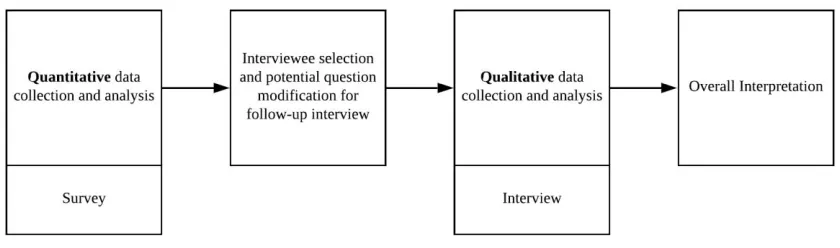
20
methods design (see Figure 2) is “to target a specific population of interest that may be
hard to locate” (Hesse-Biber, 2010, p. 465). As a result, it is possible to sub-sample
interviewees for more in-depth exploration.
Figure 2. The sequential exploratory mixed-methods design.
With the methodology being selected, it is also necessary to examine whether my
research questions are answerable with the chosen methods. This can be achieved by
looking at my research questions which are: (a) How do in-service ESL teachers perceive
their technological competencies in general and technological competencies for
pedagogical purposes? (b) How do in-service ESL teachers integrate (or not) technology
in class and for assignments? and (c) What are the solutions to the respondents’
difficulties of using technology in their teaching practices? Potentially, all of the three
questions can be addressed with the methods of qualitative case study such as individual
surveys and semi-structured interviews. There is no predetermined way of using a single
method to answer a particular question; instead, each question can and should be
investigated through multiple means of triangulation to increase trustworthiness.
The key aspect of my study is teachers' self-efficacy toward the pedagogical use
of digital technologies. To gain a holistic understanding of how in-service ESL teachers
perceive and cope with the integration of technology and teaching, an exploratory case
study was carried out to ESL teachers who might teach English for different purposes
(e.g., EAP/English for Academic Purposes, language test tutoring, etc.) in different
21
companies, freelance English language teachers). This indicates the means of maximum
variation sampling for conformability and richness purposes (Patton, 1990).
3.3 Participants
Ten in-service teachers had originally been planned to be recruited for this study;
however, only eight successfully participated in the study. Among the participants, two
were trainee teachers enrolled in two different graduate programs at South University2
in Ontario, while the other six were all in working conditions (e.g., at language institutes
affiliated to universities, language tutoring companies). One of the participants’ biggest
commonalities was that all of them had at least one year of experience in teaching
English as an additional language, including the two trainee teachers. However, the
participants’ focuses of teaching varied. As shown in Table 1, most of them (N=5) were
teaching EAP courses, whereas some of them (N=3) were mainly teaching test
preparation language courses (e.g., IELTS, TOEFL). The two interviewees, Anna from
North University with 34 years of experience and Jo from South University with 10 years
of experience, were both experienced teachers; yet they were at very different points in
their careers, and in age, which might play a part in their use of digital technologies as
well. All participants’ specific job titles, working locations, and names of institutions
were not collected for ethical reasons.
3.4 Data Collection Methods
This study’s data collection was carried out in the forms of survey and interview after the
approval of the ethics application. The entire data collection process spanned over two
months, and the overall sequence started with the survey and then the interview.
Collecting survey data before conducting interviews allowed survey results to help locate
2 Please note that “South University” and “North University” in this study are
22
interviewees, and allowed that part of the survey results could be used to form targeted
and in-depth inquiries in semi-structured individual interviews. Due to time constraints,
only two out of the eight survey participants were chosen and invited to participate in the
individual interviews. The interviewees were also selected in part for their dramatically
different self-rated results and their longer years of teaching experience compared with
others survey participants’.
Considering that most of the participants (N=7) were bilingual speakers of
English and Mandarin, the survey and the corresponding Letter of Information and
Written Consent were designed initially in English and translated into Mandarin. The
accuracy of the translation was verified by a person who is both a native Mandarin
speaker and an advanced English language speaker out of the research team to prevent a
conflict of interest. Similarly, the interview guide and the corresponding Letter of
Information and Written Consent were also prepared in bilingual manners. This effort
was to accommodate participants’ needs in case they found themselves more comfortable
with filling out a survey or being interviewed in Mandarin.
3.4.1 Survey
There were four sections of questions, and 14 questions in total (see Appendix B:
Survey). The first set of questions aimed to investigate background information about
participants’ years of experience in teaching English language in current institute and
throughout their entire career, course types that they had taught, typical numbers of
students in their classrooms, and self-identified gender and age.
The second section had two questions to ask participants to rate their
self-perceived technological abilities in daily life and for pedagogical purposes. A
five-point Likert scale, including the options of “strongly disagree”, “disagree”, “neutral”,
“agree”, and “strongly agree”, was used to directly connect with the first research
23
general and pedagogical settings. The reason for using a Likert scale is that such a scale
has been found useful in exploring human characteristics such as beliefs, perceptions, or
feelings by asking participants to respond to a set of statements (Fraenkel & Wallen,
1996). Moreover, the use of five points from “strongly disagree” to “strongly agree”
represents ample variances and helps increase internal consistency reliability (Comery,
1988).
The third section contained two questions aimed at discovering participants’
specified teaching practices related to technology. Specifically, participants had to mark
the frequency of technology use according to technology types and according to
pedagogical purposes under two separate tables. They were also allowed to specify any
types of technologies or purposes unmentioned but that did occur in their practices. These
two questions were intended to gain a basic understanding of the extent to which
technologies might actually be used, thus essentially addressing the second research
question.
The fourth section focused on their needs for professional training, including their
possible barriers of using educational technology effectively, preferred sources of training,
specified content of training, as well as any further comments they may have. In addition
to the available options in the given questions, participants can provide open-ended
insights wherever they feel necessary.
With regards to procedure, participants were recruited individually and they were
approached using the verbal recruitment script in a face-to-face manner. I met each of
them on workdays after they finished teaching or studying on campus. To be eligible to
participate in this study, they had to confirm that they had at least one year of experience
in English language teaching. After they read the Letter of Information, asked questions
related to the study, and signed the written consent, they started to complete the survey.
They were also able to ask questions when doing the survey for clarification purposes.
24
familiarity with the topical content and their understanding of the language used in
survey questions.
3.4.2 Interview
The survey alone tends to provide data limited in sophistication and scope
(Clough, & Nutbrown, 2012), lack internal validity due to design errors, and may require
a relatively large sample size to make sure that bias is neglectable (Mathiyazhagan &
Nandan, 2010). Therefore, the interviews were carried out to compensate what the survey
data might lack in depth, which means to explore more fully the perceptions of the
teachers and the questions under investigation.
The interview guide had 13 questions (see Appendix C: Semi-structured Interview
Questions). While the first three questions were more concerned about how comfortable
the participants felt with using technologies in daily life, the rest of the questions were
related to their perceptions toward the role and use of technology in classroom settings.
Participants were told before the interviews that improvised questions could also occur
and that they were able to decide whether to answer, what to answer, and how to answer
questions.
In light of the participants’ recruitment, because of the time constraint of the study,
not all survey participants were able to be interviewed. Therefore, two participants were
selected to be interviewees primarily because they were both teaching EAP in
university-affiliated English language institutes in the context of Ontario (though from
different institutes). A second reason for choosing them was that their entire span of
teaching as indicated in the survey were the most representative in length, while a third
reason was that they demonstrated very different or contrasting levels of self-efficacy in
survey results.
Two semi-structured interviews were conducted separately. For Anna, she signed
25
rescheduled an interview date on the day she met with the researcher on the campus of
North University. On a later date, the second key stage of data collection (i.e., the
interview) took place over the phone and lasted 30 minutes, the content of which was
documented in a note-taking manner. Given Anna’s self-identified native English
speaker’s identity, English versions of survey and interview questions were used for the
data collection. As for Jo, the interview lasted around 15 minutes in a face-to-face and
bilingual manner on South University campus and was audio-recorded. The interviewees’
names and university names are all pseudonyms for identification protection.
3.5 Data Analysis
Regarding data analysis, "consolidating, reducing, and interpreting" (Merriam, 1998, p.
178), rather than merely intuitive affective feelings, played an important role in making
sense of the data. The entire data analysis process, assisted by the software tool Microsoft
Excel, took place as the survey data was collected. Findings from the analyzed survey
results were also used to create additional questions to be asked in interviews such as the
question for Anna, “Have you always felt less comfortable with technology use in
education?”. The original and newly formed interview questions and improvised
interactions altogether shaped how an interview proceeded, representing constructivism's
nonlinear, dynamic construction of meaning-making (Merriam, 1998).
Specifically, with the survey data collected, I transcribed and visualized them
using one table and six figures. While Table 1 complied teacher participants’ profiles
based on the survey responses from question one to question six, Figure 3 to Figure 8
presented information in the order of the remaining survey questions, including teacher
participants’ self-efficacy levels, types of technology use in classrooms, served purposes
of technology use in classrooms, barriers for effective technology use in classrooms,
sources of technological pedagogical training, and aspects of technological pedagogical
26
noteworthy points for each graph including the central tendency, the most and least
chosen options, and some additional comments. Next, the interviewees were chosen for
the reasons aforementioned and topics such as “teacher education” and “plagiarism
prevention” which emerged from the survey data, were marked to be asked in interviews.
As for the analysis of interview data, I transcribed all the interview data into texts
with complete sentences using the notes taken from the interview with Anna and the
audio recording of the interview with Jo. Then I tried to identify patterns or themes of
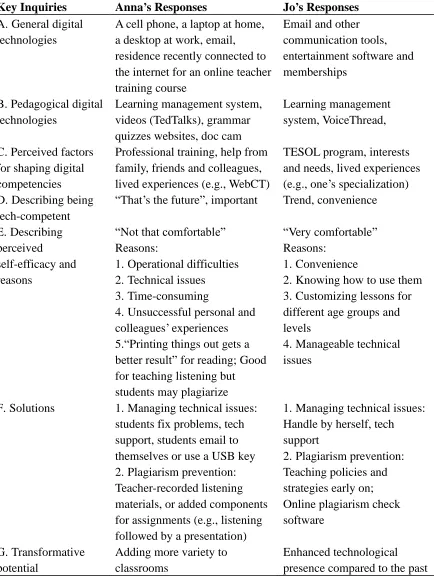
comparative value as shown in Table 2 such as general digital technologies, pedagogical
digital technologies, perceived factors for shaping digital competencies, describing being
competent in technologies, describing perceived self-efficacy and rationale, solutions to
pedagogical difficulties, and digital educational technology’s transformative potential.
Minimum interpretation was involved in Chapter 4 to clarify what the participants meant.
Afterwards, I started to see more connections between the collected survey and
interview data, literature and research questions (Peshkin, 2000). In fact, compared with
the previous two steps, this phase became more cognitively challenging as more in-depth
interpretations were required, just as Merriam (1998) asserts that “analysis becomes more
intensive as the study progresses, and once all the data are in” (p. 155). Only content that
might help in answering the research questions were presented in Chapter Five and in an
effort to establish robust discussions and conclusions. In short, data analysis was an
ongoing process throughout the writing of the last two chapters of this thesis.
3.6 Ethical Considerations
Informed consent was given, signed, and returned before the start of the survey and/or the
interview. There were no known risks to participants’ health, career, and/or study, and
there was also no known conflict of interests between the researcher and the participants
or between the research team and the participants. Further, no compensation was given to
27
Participating in this study was voluntary. If participants felt at any time
uncomfortable with participating in the survey and/or the interview, they were informed
by the researcher and the Letter of Information that they could withdraw their
participation without any negative effects on their career or study. In a similar vein, they
could choose to withdraw the collected data from the survey and/or interview at any
stages of the study. However, if this study was published, it could be potentially difficult
to achieve a successful data removal.
Each survey participant could create a pseudonym and provide an email if they
were willing to be reached by the researcher via email for a follow-up interview. Because
of this, the surveys were not fully unidentifiable to the researcher, as participants’ email
addresses could be used by the researcher in order to identify possible interviewees. Only
two participants were recruited for the interviews. All email addresses provided by the
survey participants would be protected, and thus their identifications were theoretically
safe with the research team and committee.
As for interview participants, all interview data was transcribed by note-taking or
from the audio-recording following the protocols of confidentiality and anonymity, which
meant that the identities of each participant would not be known to a third party other
than the researcher, researcher supervisor, as well as research committee. Only
pseudonyms (e.g., Anna, Jo) were used in the writing of this thesis.
3.7 Trustworthiness of Data
In terms of trustworthiness in qualitative research, in addition to credibility and
conformability which have been discussed, transferability and dependability warrant
equally close attention (Lincoln & Guba, 1985). For transferability, even though
qualitative case study is so context-specific that they are less likely to be directly applied
to other contexts or population, techniques such as "thick descriptions" can contribute to
28
cases (Lincoln & Guba, 1985). To ensure dependability, which refers to whether a study's
findings are reliable or replicable, Merriam (1995) suggests an "audit trail" technique that
allows outsiders (preferably with research background in shared areas) to question the
research process and findings after understanding detailed descriptions of the study
provided by the researcher. As a result, this thesis was proofread by several researchers
with different areas of expertise from a university in Ontario.
Triangulation also helped the increase of research trustworthiness. The main types
of triangulation used in this study were methods triangulation and theoretical
triangulation (Pandey & Patnaik, 2014). I used two methods, which were survey and
interview, when exploring the research questions. In addition, I combined a social
constructivist framework with varied aspects of literature, including but not limited to
digital literacy, task-based language teaching, some of the widely used EAP tools, and
teacher self-efficacy.
3.8 Summary
In this chapter, I began with discussing my researcher positionality and biases, and then
elaborated on the present study’s rationale that was situated in a constructivist lens and a
design of an exploratory qualitatively-driven mixed-methods case study. I also showed
background information of the participants, the methods and procedures of data
collection, detailed approaches to data analysis, ethical considerations, as well as data
trustworthiness. The next chapter will introduce the findings from the survey and
29
Chapter 4
4 Results
4.1 Survey Results
The collected survey results are shown below following a sequence based on the four
sections of the survey.
4.1.1 Demographic Information of the Participants
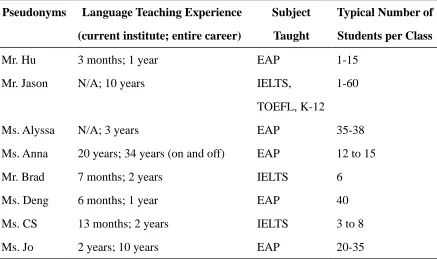
Table 1
Teacher Participants’ Profiles
Pseudonyms Language Teaching Experience (current institute; entire career)
Subject Taught
Typical Number of Students per Class
Mr. Hu 3 months; 1 year EAP 1-15
Mr. Jason N/A; 10 years IELTS,
TOEFL, K-12 1-60
Ms. Alyssa N/A; 3 years EAP 35-38
Ms. Anna 20 years; 34 years (on and off) EAP 12 to 15
Mr. Brad 7 months; 2 years IELTS 6
Ms. Deng 6 months; 1 year EAP 40
Ms. CS 13 months; 2 years IELTS 3 to 8
Ms. Jo 2 years; 10 years EAP 20-35
The mean years of teaching English language was 7.9 years. While the longest
time was 34 years, the minimum was one year, all of which matched the participant
selection criterion of one year teaching experience. There were two of them not in a
teaching status at the time when they completed the survey due to the fact that they
enrolled in graduate programs at South University. Moreover, five participants taught
EAP courses, and the other three had taught IELTS preparation courses. Their class size
30
4.1.2 Self-Perceived Teacher Efficacy
Figure 3. Teacher participants’ self-efficacy levels.
Figure 3 showed how the participants rated their teacher self-efficacy in using
technology for general and for pedagogical purposes. Most participants (N=5) strongly
agreed that they felt comfortable with using technologies in daily life; the other three
participants self-rated as “agree”, “neutral”, “strongly disagree”, respectively. In contrast,
when it comes to pedagogical digital competency, fewer participants (N=3) marked the
“strongly agree” option, while there were two people expressing “agree” and one
31
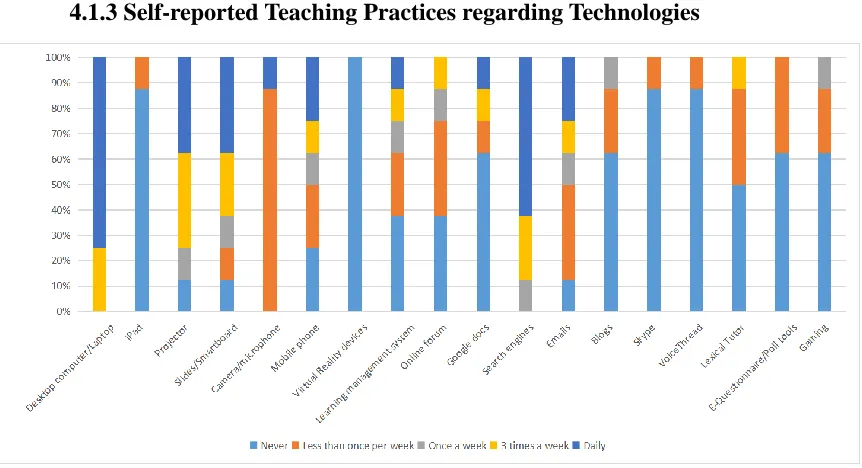
4.1.3 Self-reported Teaching Practices regarding Technologies
Figure 4. Types of technology use in classrooms.
Figure 4 presented information about how frequent certain technologies were used
in participants’ language classrooms. The most commonly used ones were (1) desktops
computer/laptops, (2) search engines, (3) projector, (4) slides/smartboard, (5) emails, (6)
mobile phone. In comparison, the less frequently used included (7) learning management
system, (8) online forum, (9) Lexical Tutor, (10) Google docs, (11) blogs, (12) gaming,
(13) e-questionnaire/poll tools, (14) iPad, (15) Skype, (16) VoiceThread, and (17)
camera/microphone. None of the participants had encountered virtual reality devices in
language classrooms. An additional comment indicated Zoom, an equivalent (even more
32
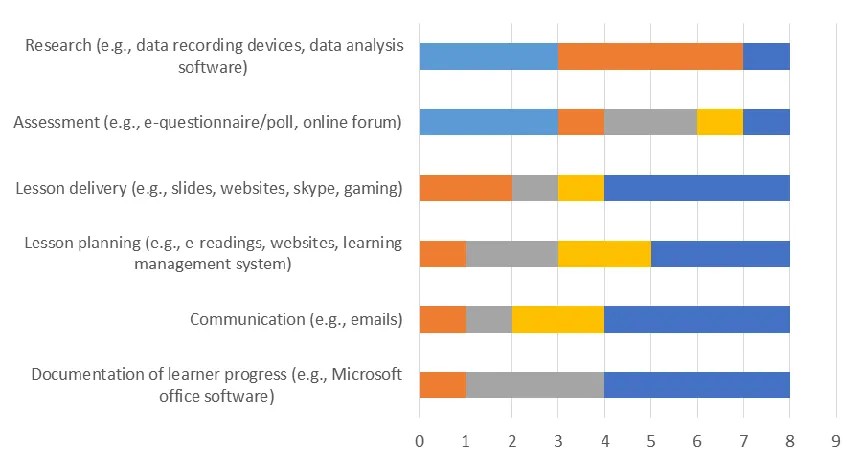
Figure 5. Served purposes of technology use in classrooms.
Figure 5 demonstrated participants’ self-reported frequency of technology use for
certain purposes. The more frequently to less frequently served purposes consisted of
communication, lesson delivery, lesson planning, documentation of learner progress,
33
4.1.4 Barriers and Desired Training
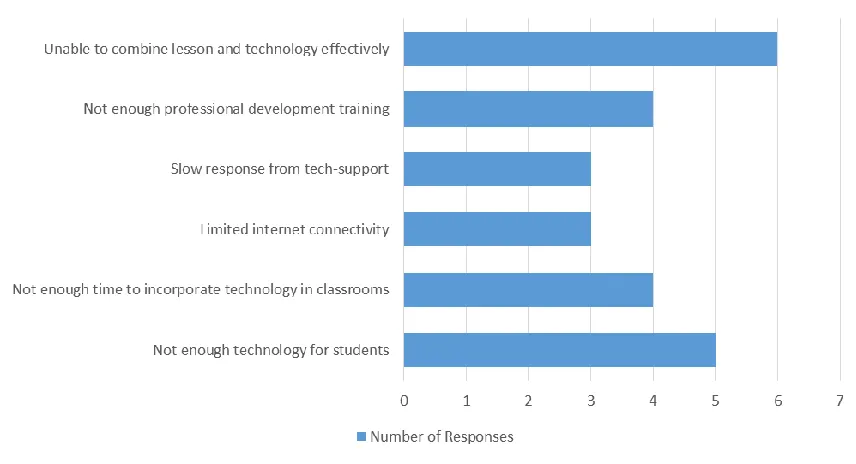
Figure 6. Barriers for effective technology use in classrooms.
Figure 6 focused on the main self-reported barriers of effective use of technology
in classrooms. The biggest reported barrier was that participants found it challenging to
integrate technologies with their lessons. A second barrier was the availability of
technologies for L2 students. Classroom time pressure and a lack of professional training
were also playing the role of obstacles, while slow response from the tech-support team
and limited internet connectivity were minor issues that sometimes negatively impacted
participants’ teaching practices.
On an additional note, two of the survey participants expressed that “the students
were not encouraged to use phones/tablets at school at all”, and that “personal skepticism
about the effectiveness of many technologies and insufficient to make sound judgments
34
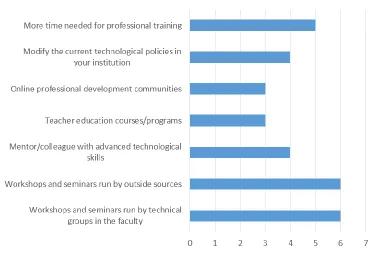
Figure 7. Sources of technological pedagogical training.
Figure 7 reported the types of potential training the participants would like to
access. An equal number of responses (N=6) indicated needs for workshops and seminars
run by both outside sources and technical groups within the faculty. Five participants also
found a lack of time for their professional training. In addition, changes in technological
policies and the assistance of technologically advanced mentors/colleagues were also
considered to be necessary. The options of online professional development communities
35
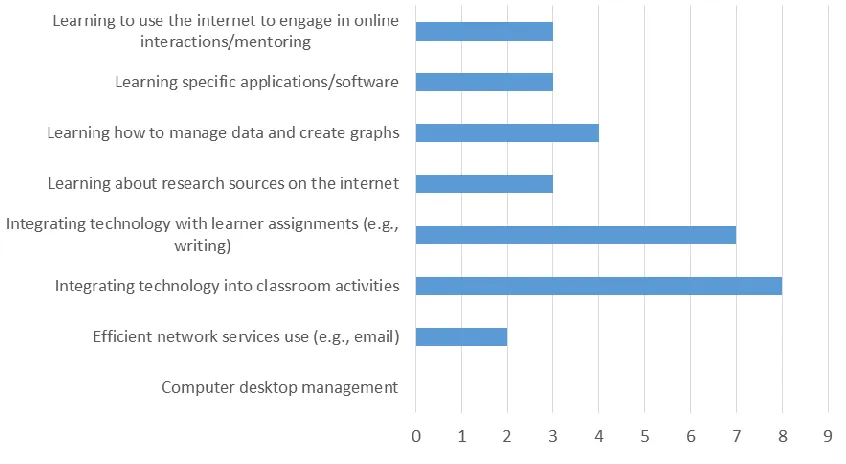
Figure 8. Aspects of technological pedagogical training.
Figure 8 looked at what the participants would like to learn in their future training.
The two most wanted were to integrate technology with learner assignments and to
integrate technology into classroom activities. A relatively less chosen area is to learn
how to manage data and create graphs. Learning to use communication tools effectively
was less stressed compared with learning to use the internet to engage in online
interactions/mentoring, to use specific applications/software, and to research via the
internet. None of them found it necessary to learn how to manage a computer desktop.
Additional comments from the survey reported the common use of technology in
language classroom and a risk. While the former addressed the importance of using slide
shows, the latter reported an “Increased risk for plagiarism as extensive resources are