IN NAIROBI CITY COUNTY, KENYA
LUGO LUCY MAWANG E83/27005/2014
SCHOOL OF EDUCATION
A THESIS SUBMITTED IN FULFILMENT OF THE REQUIREMENTS FOR THE AWARD OF THE DEGREE OF DOCTOR OF PHILOSOPHY IN
EDUCATIONAL PSYCHOLOGY OF KENYATTA UNIVERSITY
DEDICATION
This thesis is dedicated to my parents Norah Atieno and late John Mawang, for their love and devotion.
ACKNOWLEDGEMENTS
First, I would like to give all glory to the almighty God for His grace that has enabled me to successfully complete this study. I am indebted to my university supervisors, Dr. Edward M. Kigen and Dr. Samuel M. Mutweleli for their support, inspiration and professional guidance throughout the study.
My gratitude goes to the immediate former chairman, Department of Educational Psychology, Dr. Peter Mwaura, members of the teaching and non-teaching staff, for providing a conducive academic environment. I acknowledge the award of the research grants by the Deans’ Committee, School of Education, Kenyatta University, under the Chairmanship of the Dean, Professor Fatuma Chege.
I appreciate the assistance given by Prof. Walter P. Vispoel, Professor of Educational Measurement and Statistics, and Educational Psychology, University of Iowa, for allowing me to use The Music Self-Perception Inventory (MUSPI), as my research instrument. I also thank Dr. Myung-sook Auh, senior lecturer, School of Education, University of New England for permission to adapt the composition dimensions for my study. Thanks to my creative composition expert judges and enumerators among many others for their contribution in this study.
I would like to extend my appreciation to the principals of various institutions for allowing me to do this study in their institutions. Very special thanks to all the music teachers and their creative music students for their co-operation. Without their participation, I would not have completed this thesis successfully.
TABLE OF CONTENTS
DECLARATION ... ii
DEDICATION ... iii
ACKNOWLEDGEMENTS ... iv
LIST OF FIGURES ... xiii
ABBREVIATIONS AND ACRONYMS ... xiv
ABSTRACT ... xv
CHAPTER ONE: INTRODUCTION AND BACKGROUND TO THE STUDY 1 1.1 Introduction ... 1
1.2 Background to the Study ... 1
1.3 Statement of the Problem ... 9
1.4 Purpose of the Study ... 11
1.5 Objectives of the Study ... 11
1.6 Research Hypotheses ... 12
1.7 Assumptions of the Study ... 12
1.8 Limitations and Delimitations of the Study ... 13
1.8.1 Limitations of the Study ... 13
1.8.2 Delimitations of the Study ... 14
1.9 Significance of the Study ... 14
1.10 Theoretical Framework and Conceptual Framework ... 15
1.10.2 Conceptual Framework ... 19
1.11 Operational Definition of Terms ... 22
CHAPTER TWO: REVIEW OF RELATED LITERATURE ... 24
2.1 Introduction ... 24
2.2 Relationship between Musical Self-concept and Musical Creativity ... 24
2.3 Relationship between Achievement Goal Orientation and Musical Creativity ... 29
2.4 Relationship between Music Learning Strategies and Musical Creativity ... 34
2.5 Prediction of Musical Creativity from Musical Self-concept, Achievement Goal Orientation and Learning Strategies ... 41
2.6 Summary of Literature Review ... 46
CHAPTER THREE: RESEARCH METHODOLOGY ... 47
3.1 Introduction ... 47
3.2 Research Design ... 47
3.2.1 Research Variables... 48
3.3 Location of the Study ... 49
3.4 Study Population ... 51
3.5 Sampling Techniques and Sample Size Determination ... 52
3.5.1 Sampling Techniques ... 52
3.5.2 Sample Size Determination ... 53
3.6 Research Instruments ... 54
3.7 Pilot Study ... 59
3.7.2 Reliability of the Study Instruments ... 62
3.8 Data Collection ... 66
3.9 Logistical and Ethical Considerations ... 67
3.9.1 Logistical Considerations ... 67
3.9.2 Ethical Considerations ... 67
3.10 Data Analysis ... 68
CHAPTER FOUR: PRESENTATION OF RESULTS, INTERPRETATION AND DISCUSSION ... 71
4.1 Introduction ... 71
4.2 General and Demographic Information ... 71
4.3 Relationship between Musical Self-concept and Musical Creativity ... 76
4.4 Relationship between Achievement Goal Orientation and Musical Creativity ... 91
4.5 Relationship between Learning Strategies and Musical Creativity ... 106
4.6 Prediction of Musical Creativity from Musical Self-concept, Achievement Goal Orientations and Learning Strategies ... 119
4.7 Exploratory Analysis ... 134
CHAPTER FIVE: SUMMARY, CONCLUSIONS AND RECOMMENDATIONS ... 152
5.1 Introduction ... 152
5.2 Summary ... 152
5.3 Conclusions ... 157
5.4.1 Policy Recommendations ... 161
5.4.2 Recommendations for Further Research ... 163
REFERENCES ... 166
APPENDICES ... 176
Appendix A: Participants’ Consent Form ... 176
Appendix B: Questionnaire for Music Students ... 177
Appendix C: Consensual Musical Creativity Assessment Scale ... 184
Appendix D: Creative Composition Task ... 186
Appendix E: Sampled Creative Compositions ... 188
Appendix F: Linearity Plots ... 189
Appendix G: KCSE Music Enrolment and Performance in Nairobi County ... 195
Appendix H: Essential KCSE Statistics on Performance by Subjects ... 196
Appendix I: Permission to Adopt Research Instruments ... 197
Appendix J: Research Permit ... 198
Appendix K: Research Authorizations ... 199
LIST OF TABLES
Table 3.1: Sampling Fram ... 53
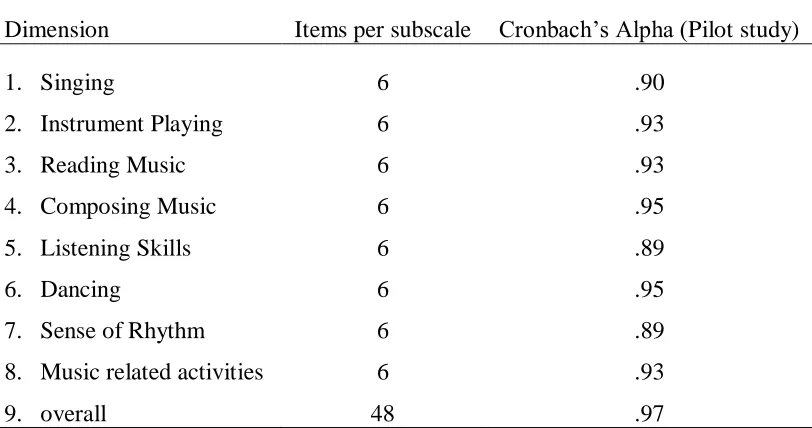
Table 3.2: Cronbach’s Alpha Reliability for the MUSPI-Version 2. ... 63
Table 3.3: Cronbach’s Alpha Reliability for the MAGQ. ... 64
Table 3.4: Cronbach’s Alpha Reliability for the MLSQ ... 65
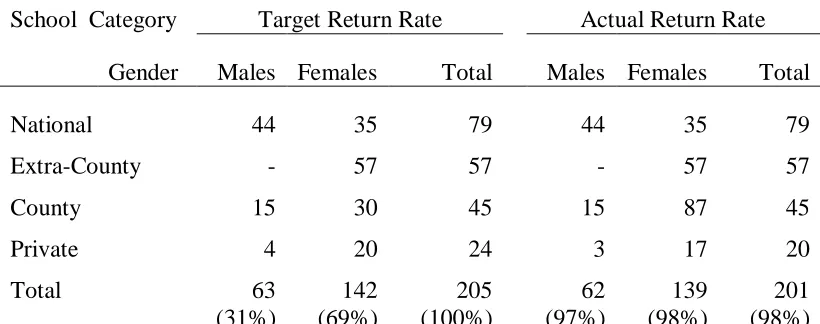
Table 4.1: Return Rate ... 72
Table 4.2: Description of Participants’ Age by Gender ... 73
Table 4.3: Description of Participants Age Category by Gender ... 74
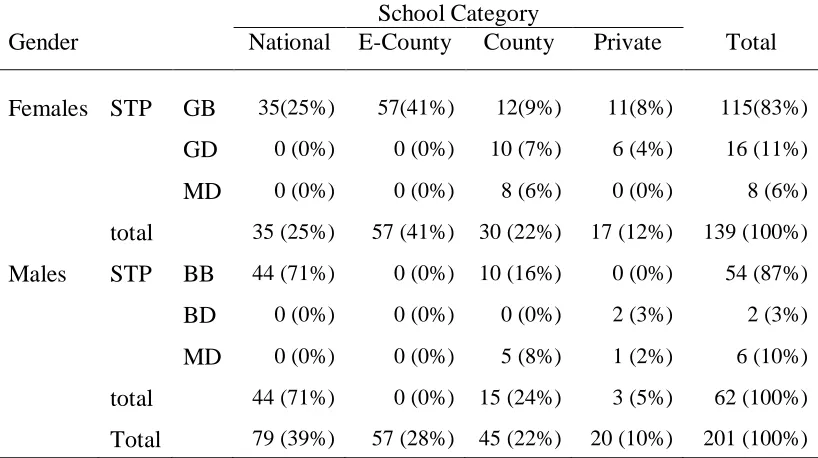
Table 4.4: Description of Participants’ Gender, School Type and Category ... 75
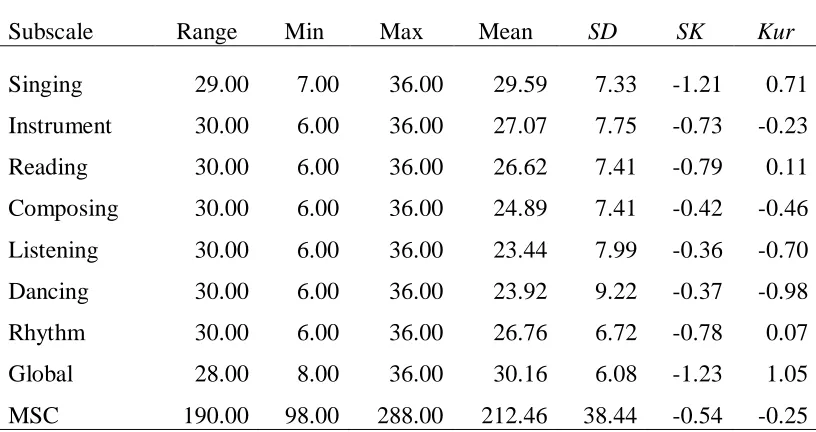
Table 4.5: Description of Participants’ Musical Self-concept Scores ... 77
Table 4.6: Participants’ Levels of Musical Self-concept ... 78
Table 4.7: Correlational Matrix for the Subscales of Musical Self-concept ... 80
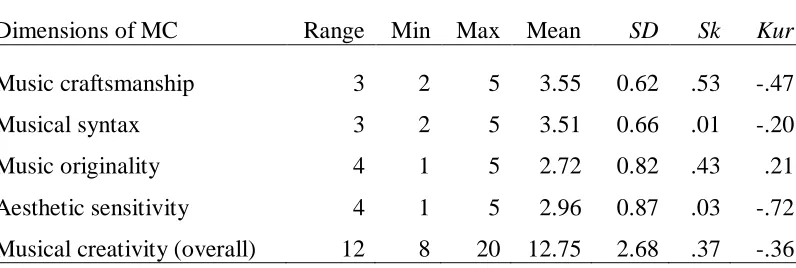
Table 4.8: Description of Participants’ Musical Creativity Scores ... 81
Table 4.9: Participants’ Levels of Musical Creativity ... 82
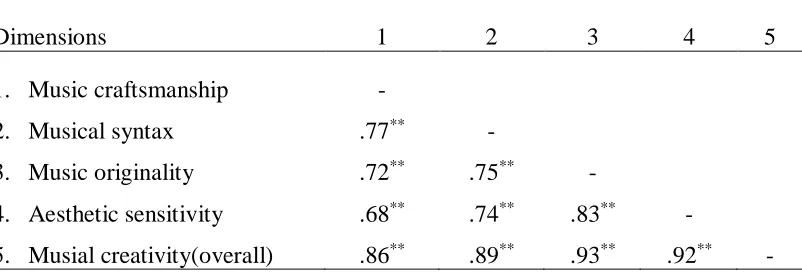
Table 4.10: Correlation Matrix for the Dimensions of Musical Creativity ... 83
Table 4.11: Relationships between Musical Self-concept Dimensions and Musical Creativity ... 85
Table 4.12: T Test for Musical Creativity for the Positive and Negative Musical Self-concept ... 86
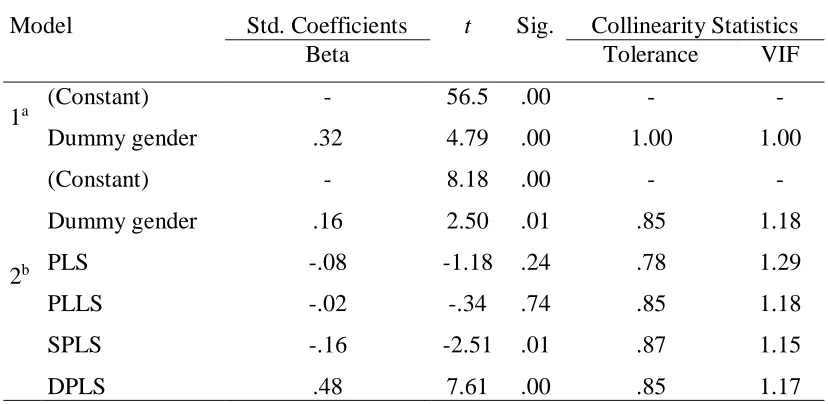
Table 4.13: Predicting Musical Creativity Based on Gender and Musical Self-Concept ... 87
Table 4.15: Participants’ Types of Achievement Goal Orientation ... 93
Table 4.16: Correlation Matrix of the Achievement Goal Orientation Subscales ... 94
Table 4.17: Relationships between Achievement Goal Orientation and Musical Creativity ... 96
Table 4.18: Musical Creativity Scores across the Achievement Goal Orientation .... 98
Table 4.19: ANOVA for Musical Creativity for the Different Achievement Goal Orientation ... 99
Table 4.20: Post-hoc Analysis of Musical Creativity for the Different Achievement Goals ... 99
Table 4.21: Predicting Musical Creativity Based on Gender and Achievement Goal Orientation ... 101
Table 4.22: Description of Participants’ Music Learning Strategies Scores ... 106
Table 4.23: Participants’ Types of Cognitive Learning Strategies ... 108
Table 4.24: Correlation Matrix of the Music Learning Strategies Subscales ... 108
Table 4.25: Relationships between Participants’ Learning Strategies and Musical Creativity ... 110
Table 4.26: T Test for Musical Creativity for the Deep and Surface Processing Categories ... 113
Table 4.27: Predict Musical Creativity based on Gender and Achievement Goal Orientation ... 115
Table 4.29: Correlation Matrix for the Subscales of Musical Self-Concept,
Achievement Goal Orientations and Learning Strategies ... 121
Table 4.30: Predicting Musical Creativity Based on Musical Self-concept, Learning Strategies and Achievement Goal Orientation ... 123
Table 4.31: Predicting Participants’ Musical Creativity Based on Musical Self-concept ... 125
Table 4.32: Predicting Participants’ Musical Creativity Based on Achievement Goal Orientation ... 126
Table 4.33: Predicting Participants’ Musical Creativity Based on Music Learning Strategies ... 128
Table 4.34: Predicting Musical Creativity Based on Gender, Musical Self-Concept, Achievement Goal Orientation and Learning Strategies ... 130
Table 4.35: Description of Participants’ Levels of Musical Creativity by Age Categor ... 134
Table 4.36: Relationship between Study Variables and Participants’ Age ... 135
Table 4.37: Levels of Musical Creativity by School Type ... 136
Table 4.38: Levels of Musical Creativity by School Category ... 137
Table 4.39: ANOVA for Musical Creativity for the School Categories ... 139
Table 4.40: Post-hoc Analysis for Musical Creativity for the School Categories ... 140
Table 4.41: Description of Participants’ Musical Creativity by Gender ... 141
Table 4.43: Predicting Males’ Musical Creativity Based on Musical Self-Concept, Achievement Goals Orientations and Learning Strategies ... 143 Table 4.44: Predicting Females’ Musical Creativity Based on Musical Self-Concept,
LIST OF FIGURES
ABBREVIATIONS AND ACRONYMS AGQ-R Achievement Goals Questionnaire -Revised AMMA Advanced Measures of Musical Audition APA American Psychological Association CAT Consensual Assessment Technique
CMCAS Consensual Musical Creativity Assessment Scale KCSE Kenya Certificate of Secondary Education KNEC Kenya National Examination Council MAGQ Music Achievement Goals Questionnaire MLSQ Music Learning Strategies Questionnaire MOEST Ministry of Education Science and Technology MSLQ Motivated Strategies for Learning Questionnaire MUPQ Music Participation Questionnaire
MUSPI Music Self-perception Inventory
NAME National Association for Music Education PCSC Perception of Child Self-concept
SEMA Self-esteem of Musical Ability
SPSS Statistical Package for Social Sciences SRL Self-regulated Learning
ABSTRACT
CHAPTER ONE
INTRODUCTION AND BACKGROUND TO THE STUDY
1.1 Introduction
This chapter focuses on background to the study, statement of the problem, purpose and objectives of the study. The research hypotheses, assumptions, limitations and delimitations as well as significance of the study are also outlined. The theoretical and conceptual frameworks as well as operational definition of terms are specified.
1.2 Background to the Study
Despite the current emphasis on creativity in education, over the last six years (2012 to 2017) there has been a declining trend in the Kenya Certificate of Secondary Education (KCSE) music performance. This is compounded with underachievement in prime creative areas like composition, aural and harmony, which signifies a decline in musical creativity among students (KNEC, 2017). Although these examinations have been on general music performance, musical creativity is implied because musical knowledge and skills are essential for musical creativity.
In educational context, low music performance is likely to have a direct and negative impact on musical creativity. Morin (2002) has reiterated this position by suggesting that for students to display musical creativity, they must have a fundamental knowledge of melody, harmony and rhythm. Similarly, Gordon (1993) stated that the degree to which a learner is musically creative is directly dependent on the learner’s tonal and rhythmic vocabulary. This is further corroborated by Elliott (1995) and Laycock (1992) who stated that music composition involves creative thinking in music, which basically requires the students to apply knowledge of musical elements such as melody, rhythm and timbre, and their governing principles in musical creation.
candidates attempted these questions and the few performed poorly (see Table H.1 of Appendix H). Though melody composition seemed difficult to most candidates it covers the most important skill of a musician. According to Burnard, Fautly and Savage (2010), musical creativity can be demonstrated through composition, improvisation, performing, listening, writing, and analysing. However, composition is considered a prime musical example of the creative act or a problem-solving activity, which involves the use of musical skills and understanding as well as original thinking or imagination in music creation (Burnard & Younker, 2004; Kokotsaki, 2012). Consistent underachievement in composition at the KCSE suggests that there is a decline in musical creativity.
In educational psychology, creativity has been understood as the students’ ability to produce work that is both novel and appropriate within a particular domain (Barbot, Besançon & Lubart, 2011; Sternberg & Lubart 1995). Creativity is usually considered a characteristic relating to a person, process or product. Ferrari, Cachia and Punie (2009) define creativity as a product or process that shows a balance of originality and value. Characteristics of the creative product can be examined to determine the creativity of the persons who made them (Laycock, 1992). Guildford (1968) highlighted four factors of creativity which include: fluency, flexibility, originality and elaboration. Fluency refers to the ability of an individual to generate a number of appropriate responses during a limited time frame; flexibility refers to the ability to generate different kinds of responses; originality on the other hand is the degree to which the responses produced are unique or unusual while elaboration encompasses the ability to extend or enhance a simple idea.
In educational context, musical creativity is viewed as a potential of all individuals which can be nurtured and measured (Amabile, 2012; Barbot et al., 2011). According to Elliott (1995), musical creativity is the ability to generate an original musical product that is appropriate for the musical context where it is produced. Musical creativity involves creative thinking in music with the objective of generating a novel musical product (Webster, 1990). A number of psychological variables including intelligence, cognition, knowledge, personality, motivation, emotions and the social environment have been identified as important predictors of general creativity (Barbot et al., 2011; Besançon & Lubart, 2008; Sternberg, 2006). Though, limited studies have investigated these constructs in relation to musical creativity.
Studies in music education have identified musical self-concept, achievement goal orientation and learning strategies as important social cognitive factors which regulate music students’ practice behaviour, effort and motivation towards music learning tasks and ultimately define their musical creativity, performance and achievement (Hallam, 2002; McCormick & McPherson, 2003; Miksza, 2011; Schmidt, 2005; Schmidt, Zdzinski & Ballard, 2006; Spychiger, Gruber, & Olbertz, 2009). Though, these studies were primarily conducted in the developed countries and are lacking in developing countries contexts.
his/her musicianship which is formed through their experiences and interpretation of the school environment (Bong & Skaalvik, 2003; Elliot, 1995). According to Hallam (2002), musical self-concept influences the extent to which a learner is motivated to pursue musical activities such as practice, which is seen to be an important determinant of the level of expertise attained in music.
Research in educational psychology indicates that in addition to academic performance, students’ academic self-concept impacts their learning strategies, motivation as well as subject choices (Bong & Skaalvik, 2003). In a study of American secondary school instrumental students, Schmidt (2005) found a positive correlation between musical self-concept and intrinsic motivation. A similar pattern of results was established by Schmidt et al. (2006) among undergraduate music education majors in America. Nonetheless, limited studies have investigated musical self-concept in relation to musical creativity of secondary school students, especially in African educational context.
Van de Kamp, Admiraal & Rijlaarsdam, 2015). Deep processing involves authentication, structuring and integration of encountered information with previous knowledge. Persistence refers to the determination to continue learning in the face of obstacles, while team learning involves using peers to collaboratively understand course material and in collective problem solving to enhance learning (Elliot et al., 1999; Pintrich, Smith, García & McKeachie, 1991). McPherson and McCormick (1999) findings suggested that instrumental students who reported higher levels of cognitive strategy use while practicing also reported higher levels of intrinsic motivation and were also more efficient with their learning. Unfortunately, literature review reveals limited studies on learning strategies in relation to musical creativity involving secondary school subjects in Africa.
success is best defined by mastery rather than performance orientation. A performance-approach goal orientation focuses on the demonstration of normative competence and is motivated by extrinsic factors such as competition and receiving incentives (Ranellucci et al., 2013). Previous research have linked performance-approach orientation to surface processing (Elliot et al., 1999; Elliot & McGregor, 2001; Ranellucci et al., 2013), which often results to temporary achievements. In contrast, performance-avoidance goal orientation motivates students to evade demonstrating normative incompetence (Ranellucci et al., 2013). Such students engage in surface learning and disorganization (Elliot et al., 1999). Due to fear of failure, they may avoid tasks such as music auditioning and public performance which would otherwise enhance their musical creativity (Schatt, 2011).
instrumental students’ creativity in performance, while there is a dearth of studies in other domains of musical creativity such as composition and improvisation.
Numerous studies in the developed counties have investigated musical self-concept, achievement goal orientation and learning strategies in relation to advanced collegiate and undergraduate instrumental students practice behaviour and musical creativity in instrumental performance. However, limited studies have specifically examined these variables in relation to musical creativity in composition among secondary school subjects. In Kenya, limited studies if any have examined how musical self-concept, achievement goal orientation and learning strategies may predict musical creativity and yet these variables have been reported to have influence on music achievement and creativity of students in developed countries. This study addressed these gaps by investigating how musical self-concept, achievement goal orientation and learning strategies predict musical creativity in composition among form four music students in Nairobi City County, Kenya.
1.3 Statement of the Problem
advanced music training and employment. Thus, there is need to study the factors that are associated with students’ music achievement and musical creativity.
Investigations by educational researchers in Kenya have indicated that the continued poor performance in KCSE music may be due to shortage of necessary facilities such as pianos, keyboards, and other relevant musical instruments. Consequently, most students have limited skills in musical instruments; insufficient number of music teachers; unfavourable teaching strategies; and reluctance by school administration to advance the use of computer technology in music teaching and learning at secondary school level (Akuno, 2005; Mbeche, 2010; Wanyama, 2006). The aforementioned contextual factors are generally not within control of the students. However, underachievement in music education and subsequent decline in musical creativity may also be attributed to social cognitive factors within the students. Research attention on how students’ social cognitive factors influence musical creativity will ensure that interventions to address music underachievement are learner-centered.
Schmidt et al., 2006). However, the evidence is from studies that mainly involved students in the developed countries. The studies have also not developed a prediction model to establish the relative predictive weight of the three constructs on musical creativity. Additionally, there is little focus on how the three constructs predict musical creativity among secondary school students in African educational contexts. The fundamental problem of this study was therefore to develop a prediction model of musical creativity from musical self-concept, achievement goal orientation and learning strategies of form four music students in Nairobi City County.
1.4 Purpose of the Study
The purpose of this study was to establish the relationship among musical self-concept, achievement goal orientations and learning strategies and musical creativity of secondary school music students in Nairobi City County, Kenya. The study also aimed at establishing a prediction equation of musical creativity from musical self-concept, achievement goal orientations and learning strategies. The information gained from this study may be used to guide music students in adopting and development of the construct which positively enhances musical creativity.
1.5 Objectives of the Study
This study sought to achieve the following objectives:
ii. To establish the relationship between students’ achievement goal orientation and musical creativity.
iii. To determine the relationship between students’ music learning strategies and musical creativity.
iv. To establish the prediction equation of musical creativity from musical self-concept, achievement goal orientation and learning strategies.
1.6 Research Hypotheses
The study was guided by the following research hypotheses:
Ha1: There is a significant relationship between students’ musical self-concept
and musical creativity.
Ha2: There is a significant relationship between students’ achievement goal
orientation and musical creativity.
Ha3: There is a significant relationship between students’ music learning
strategies and musical creativity.
Ha4: There is a significant equation for predicting musical creativity given
musical self-concept, achievement goal orientation and learning strategies.
1.7 Assumptions of the Study
produce different levels of musical creativity. Another assumption was that the participants’ responses to the questionnaire were honest and accurate. It was also assumed that the participating schools provided homogeneous environments for the development of musical self-concept, achievement goal orientation, learning strategies and musical creativity. This assumption was based on the fact that these schools followed a similar curriculum and were within the same county.
1.8 Limitations and Delimitations of the Study 1.8.1 Limitations of the Study
A key limitation of the current study is that it only involved form four music students in selected secondary schools within Nairobi City County. The findings may be generalizable to music students with similar characteristics but with caution. Another limitation was that the researcher mainly utilized students’ self-report questionnaires for data collection. Thus, a certain degree of subjectivity in the findings was unavoidable. Additionally, as links between the constructs in the present study were primarily correlational, larger claims of causality could not be made regardless of the conceptual framework and the effects implied by the prediction model.
1.8.2 Delimitations of the Study
The sample for this study was confined to 201 form four music students in 21 secondary schools in Nairobi City County, excluding the other classes. The study focused on social cognitive factors including musical self-concept, achievement goal orientation and learning strategies as predictors of musical creativity, out of the many factors that influence students’ musical creativity. In addition, musical creativity was based on the componential theory of creativity, although there are other creativity theories such as the generativity theory, investment theory and threshold theory which could have been relevant to this study. Moreover, musical creativity was solely inferred from participants’ aggregate scores obtained in a creative composition task. The other domains of musical creativity such as performance, improvisation, listening and analysis, were not incorporated in this study.
1.9 Significance of the Study
The findings may also enhance conceptual knowledge of musical creativity and inform educational stakeholders on how musical self-concept, achievement goal orientation and learning strategies relate to musical creativity. Thus, music educators may strive to nurture positive musical self-concept, promote deep processing learning strategies and mastery-approach achievement goal orientation among music students, to enhance their musical creativity. In addition, teachers and parents may use the findings as they structure conducive home and school learning environment to help music students accomplish musical expression, which could enhance positive musical self-concept. It is also hoped that music educators and researchers may capitalize on the study results to develop instructional methods that are effective in enhancing students' positive musical self-concept and adoption of mastery-approach achievement goal orientation and deep processing learning strategy.
1.10 Theoretical Framework and Conceptual Framework 1.10.1 Theoretical Framework
formed the main theoretical basis of the study. This section cites the propositions in these theories and demonstrates their link to the current study.
i) Musical Self-Concept Theory (Spychiger et al., 2009)
Spychiger et al. (2009) conceived musical self-concept as a person’s self-perception or self-evaluation with regards to general musical domain. They presented a multi-dimensional model of musical self-concept in which musical self-concept comprised both non-academic and academic dimensions. The non-academic dimension of musical self-concept deals with who the individual is in music. It is concerned with the emotional, social, physical, cognitive and spiritual notions of the individuals. The academic dimension on the other hand, entails what the individual can do in music. It comprises musical abilities such as singing, aural, harmony, arrangement and composition (Spychiger et al., 2009).
ii) The 2 x 2 Achievement Goal Theory (Elliot & McGregor, 2001)
This study adopted the (2 x 2) achievement goal conceptual framework advanced by Elliot and McGregor (2001). This model consists of four achievement goals. They include: mastery-approach, mastery-avoidance, performance-approach and performance-avoidance. Based on this model students who focus on mastery-approach goal are driven by task mastery and development of competence, whereas mastery-avoidance goal-oriented students are focused on evading the inability to maximize on learning. Performance-approach goal motivates students to demonstrate their capability to others, while performance-avoidance goal drives students to evade appearing incompetent to their peers (Ranellucci et al., 2013).
Elliot and McGregor (2001) also contend that mastery-oriented students are intrinsically motivated to learn a task, while those who focus on performance-approach and performance-avoidance goals are extrinsically motivated. Based on the mentioned suggestions, participants who embraced a mastery-approach goal in the current study were expected to be intrinsically motivated to music learning tasks. It was anticipated that they were likely to attain higher musical creativity than their extrinsically motivated counterparts, who adopted performance goal (Elliot & McGregor, 2001).
iii) Componential Theory of Creativity (Amabile, 2012)
creativity-relevant processes, intrinsic task motivation, and the social environment are all viewed as necessary components of creative performance.
According to this theory, one of the primary requirements for creativity is having specialized domain knowledge and creative strategies. Music learning strategies are essential for acquisition of music knowledge. Previous studies link students’ learning strategies including deep processing strategies, persistence and team learning to creativity (Hirst et al., 2009; Ruscio et al., 1998; Van de Kamp et al., 2015). In the previous studies, participants who adopted deep processing, persistence and team
learning strategies tended to achieve high musical creativity.
deep processing strategies and probably attain high musical creativity (Elliot et al., 1999; Hirst et al., 2009; Ruscio et al., 1998).
Similarly, participants who focused on performance-approach goal were likely to be extrinsically motivated to music learning tasks (Elliot & McGregor, 2001), adopt surface processing strategies (Elliot et al., 1999) and possibly attain high musical creativity when peer learning strategy was high (Hirst et al., 2009). On the other hand, the performance-avoidance oriented participants were likely to be extrinsically motivated, make use of surface processing strategies (Elliot & McGregor, 2001) and possibly attain low musical creativity.
1.10.2 Conceptual Framework
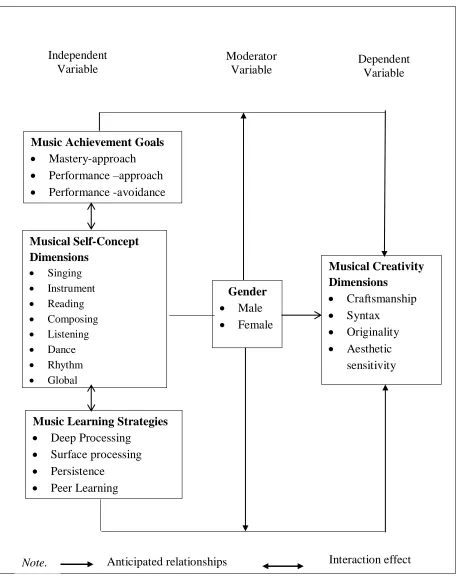
Figure 1.1: Conceptual model showing the relationship among study variables Independent
Variable Dependent Variable
Moderator Variable
Music Achievement Goals Mastery-approach Performance –approach Performance -avoidance
Musical Self-Concept Dimensions Singing Instrument Reading Composing Listening Dance Rhythm Global Musical Creativity Dimensions Craftsmanship Syntax Originality Aesthetic sensitivity Gender Male Female
Music Learning Strategies Deep Processing
Surface processing Persistence
Peer Learning
1.11 Operational Definition of Terms
Aesthetic musical sensitivity: The score at the interval level indicating the degree to which a participant’s composition is musically expressive and appealing as rated by Consensual Musical Creativity Assessment Scale (CMCAS). Higher scores indicated high levels of aesthetic musical sensitivity.
Music achievement goals: A measure at the interval level of a participant’s motivation orientation as assessed by Music Achievement Goal Questionnaire (MAGQ), which comprised of three subscales: mastery-approach, performance-approach and performance-avoidance. An aggregate score in a particular subscale indicated a participant's level of focus on the corresponding goal.
Music learning strategy: A measure at the interval level of the cognitive and motivational processes used intentionally by participants to achieve music learning goals as assessed by Music Learning Strategies Questionnaire (MLSQ). The cognitive strategies were measured by deep processing and surface processing subscales, while the motivational strategies were assessed by persistence and peer learning subscales. An aggregate score in each subscale showed a participant’s level of focus on the corresponding learning strategy.
demonstrate technical competence as rated by CMCAS. Higher scores indicated high technical mastery.
Musical creativity: A measure at the interval level of a participant’s ability to compose an original and useful music as rated by CMCAS which is comprised of four dimensions: musical originality, musical syntax, musical craftsmanship and aesthetic musical sensitivity. Higher aggregate scores indicated high levels of musical creativity.
Musical originality: The score at the interval level indicating the degree to which a participant’s composition is unique when compared to the existing melodies by other participants as rated by CMCAS. Higher scores indicated highly unique and different melody.
Musical self-concept: A measure at the interval level of a participant’s self-perception of their musical ability as assessed by Music Self-self-perception Inventory (MUSPI) which comprised of eight dimensions: singing, instrument playing, music reading, music composition, music listening skills, dancing, sense of rhythm and global. Higher aggregate scores indicated positive musical self-concept while lower scores indicated negative musical self-concept.
CHAPTER TWO
REVIEW OF RELATED LITERATURE
2.1 Introduction
In this chapter, studies on the relationships among musical self-concept, achievement goal orientation and learning strategies, and musical creativity were reviewed. In addition, a review of studies on prediction of musical creativity from musical self-concept, achievement goal orientation and learning strategies are presented. The chapter ends with a summary of the literature review and gap identification.
2.2 Relationship between Musical Self-concept and Musical Creativity
A few studies were found to have directly investigated the relationship between musical self-concept and musical creativity among secondary school students. Demorest, Kelley and Pfordresher (2017) examined the relationship between musical self-concept and students’ singing ability among high school students in the US. Participants were 319 (49% females and 51% males) with a mean age of 12.16 years. The Music Participation Questionnaire (MUPQ; Clements, 2002) was used in data collection. Singing ability was assessed by two independent judges.
musical creativity in singing performance. This presented a need to confirm the findings when creativity is measured through music composition in an African educational context like Kenya. This concern was addressed in the current study.
In a related study, Sanders (2010) examined the relationships amongst musical self-concept, music background and music aptitude. Participants were 84 (58 females and 26 males) undergraduate non-music majors in the US. Majority of participants (85%) were aged between 16 and 24 years, while 15% were 25 years or older. Data were collected using the Music Self-Perception Inventory, Advanced Measures of Music Audition, and the Music Background Questionnaire. Data were analysed using Pearson’s correlation and multiple regression analysis.
The study found that variables associated with affective aspects of the musical experience were strongly related to musical self-concept. The study concluded that greater emphasis on music performance, improvisation, and other music making may lead to higher student self-concept than listening. However, the research only focused on a sample of undergraduate non-music majors. The author recommends the use of other populations of music majors and age ranges to determine whether these findings may be generalized to other groups. To address this concern, the current study involved a sample of secondary school music students in Kenya.
participants' original compositions amongst undergraduate students in the US. A sample of 20 first year non-music majors, enrolled in a music composition course participated in the study. Quantitative data were collected using Self-Esteem of Musical Ability (SEMA; Austin, 1990), and Advanced Measures of Musical Audition (AMMA; Gordon, 1989). Participants' original compositions were rated by two independent judges. Qualitative data were obtained by coding and analysing participants’ Journal entries. Pearson’s correlation was used in data analyses.
The study results indicated significant relationships between all criterion measures and outcome variables. The study concluded that providing opportunities for social music-making may enhance interest in music, and musical creativity amongst students. However, generalizability of the study findings was limited by the small sample size. The author recommends a replication with larger sample and with samples of different age levels in other geographic areas. The current study therefore involved a larger sample of secondary school music students in Kenya.
Ability Questionnaire (SEMA), used in this study only provides a global measure of musical self-concept (Austin, 1990), and its results may not reflect specific dimensions of musical self-concept. The current study therefore used the recently developed (MUSPI-Version 2; Vispoel, 2017) among a sample of Kenyan secondary school music students. The MUSPI assesses perceptions of general music ability (global musical self-concept) as well as perceptions of specific skill in the music subdomains of singing, instrument playing, reading music, composing, listening, dancing and sense of rhythm. This facilitated in-depth analyses as well as comparison of the musical self-concept dimensions.
The MUSPI was developed in America and it was validated with a sample of American high school students. Morin et al. (2016) emphasized the need to conduct further research exploring the application of the MUSPI among students in Non-American contexts. However, the validity of the MUSPI as used to study secondary school students in African contexts where home and schooling conditions are different from those in Western countries remains unexplored. It also remains unclear whether musical self-concept as measured through the MUSPI, can reliably predict musical creativity of secondary school students. These challenges were addressed in the current study by investigating musical self-concept as measured by the MUSPI among a sample of Kenyan secondary school music students.
The relationship between self-concept and creativity is also reported in a
established the effect of self-concept on pupil’s creative ability. A sample of 71 pupils
(24 - experimental group; 25 - first control group; and 22 - second control group), aged
between 5 - 6 years participated in the study. The general hypothesis of the study was
that the stimulation of creativity can promote positive self-concept in children. The
experimental group was submitted to a programme that stimulated creativity based on
children’s stories. The Torrance Tests of Creative Thinking (TTCT) and Perception of
Child Self-Concept (PCSC) test were used as evaluation instruments.
The study findings indicated that the self-concept and levels of creativity in the
experimental group increased significantly as compared with the control groups,
suggesting a relationship between self-concept and creativity. However, the focus of
the study was confined within a population of early childhood education learners
which limited generalization of its findings to other levels of education. The gap was
addressed in the current study by investigating musical creativity among secondary
school music students in Kenya.
(87.5%) of the participants were aged between 16 and 20 while 12.5% were aged 15 years and below. Students’ self-report questionnaire and documents analyses were used in data collection. The study findings revealed that students’ academic self-concept significantly correlated to music education and music performance. Nevertheless, academic self-concept involves students’ perception of their general academic ability at school and therefore cannot give specific information on students’ musical concept. Additionally, the study did not establish how musical self-concept relates to musical creativity. This was a gap addressed in the current study.
The reviewed studies revealed relatively limited research on relationship between musical self-concept and musical creativity among secondary school students in African educational contexts. This present study was designed to investigate how musical self-concept as measured by the MUSPI related with musical creativity among secondary school music students in Kenya.
2.3 Relationship between Achievement Goal Orientation and Musical Creativity The reviewed literature established that limited studies directly investigated the
relationship between secondary school students’ achievement goals and musical
creativity. Wang, Tan, and Dairianathan (2018) concurrently examined the domain
specificity of Elliot’s 2 × 2 achievement goal framework across music, visual art, and
sports. Participants were 103 (37 males and 66 females) collegiate student in
Singapore. The mean age of participants was 26.98 years (SD = 4.79). Data were
orientation, implicit beliefs of intelligence, and intrinsic motivation. The study results
from MANOVA, ANOVA and multiple regressions analyses indicated that
achievement goals are domain-specific and are highest in participants’ area of
specialization; performance-approach and performance-avoidance achievement goals
in music were not significantly different; and mastery-approach goal positively
predicted enjoyment in each specialization. The study concluded that achievement
goals are not generalizable across different domains. However, the study did not
investigate how the components of achievement goal orientation influenced musical creativity, an interest of the current study.
broaden the understanding of the relationship between achievement goal orientation and musical achievement outcomes, an aspect of the current study.
In their study, Miksza, Tan and Dye (2016) conducted a cross-cultural examination of
achievement goal motivation for instrumental music among American and Singapore
students. Participants were 359 (217 high school students from the US and 142
polytechnic students from Singapore). Measures of the 2 × 2 achievement goal
orientation, flow in band rehearsal, determination in practising and commitment to
band were used in data collection. The study results from confirmatory factor analyses
established that the 2 × 2 achievement goal framework had satisfactory fit to the data.
No significant differences in achievement goal were found as a function of culture.
However, some differences were found between the achievement goal subscales and
flow, determination and commitment as a function of culture. In light of these findings,
a key objective of the current study was to establish the relationship between achievement goal orientation and musical creativity among secondary school students in Kenya.
In a replication and extension of Miksza et al. (2016) study, Tan and Miksza (2017) examined individual and collective achievement goal orientation in relation to three
adaptive learning outcomes: flow, grit, and commitment to band among collegiate
instrumental students from the US and Singapore. The purpose of the study was to
determine the cross-cultural validity of a collective achievement goal model, and
and commitment to band. Participants comprised 427 instrumental students.
Specifically, 227 (41% males and 51% females; mean age = 19.39, SD = 1.88) were
from the US, and 200 (47% males and 53% females; mean age = 21.66, SD = 2.23)
from Singapore. The revised achievement goal questionnaire (Elliot & Murayama,
2008); the short dispositional flow scale; the short grit scale; and the commitment to
band scale (Schmidt, 2005) were adapted and used in data collection.
Their results indicated that mastery-approach orientation was rated the highest by both
groups. Moderate to weak positive correlations were observed between
performance-approach orientation and grit and commitment to band. Additionally, a weak negative
correlation was revealed between performance-avoidance and grit. However, the study
only involved university students and did not investigate how the components of
achievement goal orientation influence musical creativity in composition. There was
a need to compare the findings with data obtained from secondary school students.
This was a major focus of the current study.
In yet another study, Miksza (2011) investigated the relationship between observed
music practice behaviours and achievement goal motivation of 55 (31 males and 24
females) undergraduate instrumental students in the USA. The study sought to
establish the impact of achievement goal motivation on practice effectiveness, and the
relationships between practice behaviours and achievement in music performance.
Participants completed the 2 x 2 Achievement Goal Questionnaire (Elliot &
there were significant correlations between achievement goal motivation subscales
and observed music practice behaviours. Generally, the sample endorsed mastery
orientation more than performance orientation, with the mastery-approach having the
highest mean among the achievement goal subscales. However, the study involved a
relatively small sample size of university students which limited its generalizability.
There was a need to compare the findings with data obtained from secondary school
students, an aspect of the current study.
To understand the relationship between achievement goal orientation and musical
performance, Diaz (2010) conducted a survey study among 169 (77 females and 92
males) university instrumentalists in the US. Self-report questionnaires were used in
data collection. Data were subjected to descriptive statistics and factor analysis. The
study results revealed relatively high means for variables associated with mastery goal
orientation, while relatively low means were associated with variables regarded as
performance goal orientation. The study concluded that instrumental students consider
mastery orientation factors to be more motivating for musical activities over
performance orientation. The study was confined to the dichotomous model of
achievement goal orientation and only focused on advanced instrumentalists in the US.
The current study therefore sought to establish how achievement goal orientation as
conceptualized under the trichotomous model related with musical creativity amongst
The reviewed studies revealed relatively limited research on relationship between achievement goal orientation and musical creativity among secondary school students in African educational contexts. This present study was designed to investigate how achievement goal orientation as measured by the Achievement Goal Questionnaire-Revised (AGQ-R) related with musical creativity among secondary school music students in Kenya.
2.4 Relationship between Music Learning Strategies and Musical Creativity The reviewed literature indicates that a few studies directly investigated the
relationship between music learning strategies and musical creativity. Recently,
McPherson, Osborne, Evans and Miksza (2019) used a multiple case study design, to
describe the development of self-regulated learning (SRL) amongst undergraduate
instrumental students in Australia. The purpose of the study was to apply
microanalysis technique to understand students’ self-regulated learning in the music
context. Two first year Bachelor of Music students aged 17 and 18 years participated
in the study. Video recording of the music practice sessions and guided interviews
were used in data collection.
The case studies demonstrated two broadly contrasting self-regulated learning profiles
of behaviour, cognition, and affect. The study concluded that microanalysis techniques
built on the three phases of self-regulated learning strategies can be adapted to study
where students’ learning strategies are analysed in relation to music performance
scores or other indices of music performance ability, an aspect of the current study.
In a pilot study, Green (2010) applied qualitative research method and related the
concept of learning style and learning strategy to the context of instrumental music
learning in the UK. Fifteen instrumental students, mainly drawn from Grade 2
standard and their teachers (4 females) participated in the study. The students were
aged between 10 – 17 years. Data were collected through participant observation and
audio recording of students’ learning activities.
The study findings demonstrated four potential learning styles and a range of learning
strategies that emerged spontaneous and unexpected among the participants. The study
concluded that the practice of playing by ear can reveal a range of spontaneous
learning styles and learning strategies amongst students that may provide new insights
for music teachers. However, the focus of the study was specifically confined to
performing learned music. Additionally, the learning processes highlighted were
highly individualized. There was need for a large-scale study to investigate learning
strategies in a music classroom context. This was a major focus of the current study.
In a replication and extension of Green’s (2010) study, Varvarigou and Green (2015)
used qualitative research method to discuss the emergence of learning styles and
learning strategies based on learners’ initial responses to music performance task.
preparatory, grade 1 and grade 2 standards and 15 teachers (13 females and 2 males)
in the UK. The students were aged between 11 and 14 years. Data collection involved
interviews and questionnaires for both students and teachers, and audio recordings of
one on one performance session from the students. The study findings from the
lessons’ transcriptions indicated that four learning styles were apparent amongst
instrumental music students. The analysis revealed that the learners adopted a variety
of learning strategies including listening without playing, playing isolated notes,
asking questions, listening and playing along with the recording and experimenting.
The study revealed a range of learning strategies in music education context, within
the limitations of a qualitative research. There was need to pursue a quantitative study
to establish how these learning strategies relate to musical creativity in a secondary
school music classroom context in Kenya. This gap was addressed in the current study.
To understand learning strategies in relation to music performance, Nielsen (2004) conducted a study involving 130 (55% females and 45% males) first-year music
students in Norway. The main purpose of the study was to determine the strategies
employed during music practice that are most appropriate to improving music
performance. The participants mean age was 20.80 years (SD = 6.30). The Motivated
Strategies for Learning Questionnaire (Pintrich et al., 1991) was adapted to assess
participants’ strategic learning and self-efficacy beliefs. The study results indicated
that music students generally applied cognitive and metacognitive strategies during
other strategies. Music students high in self-efficacy reported using more learning
strategies compared with students low in self-efficacy. However, relation between
learning strategies and musical creativity was not established. Accordingly, this
present study sought to determine whether learning strategies may predict musical
creativity among secondary school students in Kenya.
In yet another study, Nielsen (2010) examined epistemic beliefs and self-regulated learning among university instrumental students in Norway. Participants were 130 (71 females / 59 males) first-year music students aged between 18 - 43 years (M = 20.80; SD = 6.30). The main objective of the study was to establish the relationships among music students’ epistemic beliefs and self-reported learning strategies in practising a musical instrument. The Motivated Strategies for Learning Questionnaire (Pintrich et al., 1991) was adapted to assess participants’ learning strategies. The study findings indicated that beliefs about the control of knowledge acquisition and the simplicity of knowledge are significantly related to learning strategies. However, the study only involved university students in Norway and did not establish relations between learning strategies and musical creativity. This gap was addressed in the current study.
In a multiple case study, Nielsen (2015) established self-regulated learning strategies
of two instrumental students in Norway. Participants were third-year undergraduate
students enrolled in a music performance course. The gender and ages of the
participants were not revealed due to the ethical procedures relating to anonymity.
stimulated recall interviews. The study results indicated that music students use a
range of cognitive strategies and metacognitive strategies during practice. However,
the students did not always adapt their strategic activities based on their
evaluations during practice. The study concluded that providing instructions on
self-regulated learning strategies within music education may enhance students’ skills in
instrumental practice. The study reported results within the constraints of a multiple
case study amongst two undergraduate samples which limited its generalizability to
other music education contexts. The author recommends the use of survey study to
broaden the understanding of the relations between learning strategies and musical
achievement outcomes, an aspect of the current study.
In an experimental study, Miksza (2015) examined the effect of self-regulation
instructions on practice behaviour, performance achievement, and musical
self-efficacy of undergraduate instrumental students in the US. The participants were 28
music majors (54% males and 46% females) with a mean age of 20 (SD = 1.24) years.
The purpose of the study was to examine the relative effectiveness of two pedagogical
interventions on the practice behaviour, performance achievement, and musical
self-efficacy of instrumental students. The control group were only presented with
instructions about practice behaviours, while the experimental group received lessons
in practice behaviours in addition to self-regulation instructions. Participants
completed a questionnaire with items pertaining to their musical experience, practice
participants’ performance achievement prior to practice and after practice on days 1
and 5 of the study. The study results from analyses of mean differences between the
pre- and post-test performance achievement indicated that participants in the
experimental groups were able to make significantly greater gains in performance
achievement on day 5 than those in the control group. No significant differences were
detected (p > .05) in participants’ self-efficacy and the practice behaviours. The study
concluded that the self-regulation instruction helped the participants to be more
efficient and effective in their practicing. The author recommends replication of the
study with larger and more varied sample to enhance generalizability of the findings.
Moreover, there was a need to examine learning strategies as they relate to music
learning outcomes and musical abilities. This concern was addressed in the current
study.
In their study, McCormick and McPherson (2003) investigated learning strategies and
graded instrumental performance among elementary to advanced levels instrumental
students in Australia. The main objective of the study was to establish the relationships
between learning strategies and instrumental performance. Participants (N = 332) were
aged between 9 to 18 years (M = 12.8). The participants completed a self-report
questionnaire involving dimensions of music learning strategies (rehearsing,
elaboration, organizational strategies and effort management). Music performance
The study findings from using structural equation modelling indicated that learning
strategies did not significantly correlate with music performance. However, results of
the study were inconclusive. The authors recommend the use of refined instruments for measuring learning strategies. Accordingly, the current study adapted the
Motivated Strategy for Learning Questionnaire (Pintrich et al., 1991) to address this
concern. Construct validity and reliability of the (MSLQ) has been established in a
number of studies and is summarized in Pintrich et al. (1991).
In their study, Van de Kamp et al. (2015) used a quasi-experimental design to examine
the effects of explicit instruction of metacognition on creativity of secondary school
visual arts students in the Netherlands. The main objective of the study was to examine
the effects of explicit instruction of metacognition on students’ divergent thinking. The
participants were 147 (80 females / 67 males) aged between 16 to 17 years. The
experimental group attended one intervention lesson with explicit instruction of
metacognition, in addition to the regular lessons. Pre-test and post-test instances were
used to measure fluency, flexibility and originality as indicators of creativity.
The study findings indicated that metacognitive knowledge positively affects fluency
and flexibility dimensions of creativity, but not originality. The study only focused on
A step not taken in the reviewed studies was to investigate the relationship between learning strategies and musical creativity among secondary school students in African educational contexts. This present study was designed to investigate how learning strategies as measured by the Motivated Strategies for Learning Questionnaire (MSLQ) related with musical creativity among secondary school music students in Kenya.
2.5 Prediction of Musical Creativity from Musical Self-concept, Achievement Goal Orientation and Learning Strategies
Although no reviewed study directly investigated the prediction of students’ musical
creativity given musical self-concept, achievement goals and learning strategies, this
prediction was inferred from a few related studies. Nielsen (2008) investigated the
Recently, Demorest et al. (2017) reviewed earlier, examined musical self-concept, singing ability, attitude and family music participation as predictors of high school students’ future music participation in the US. The study results from multiple linear regression analyses indicated that musical self-concept, peer influence, and family music participation can predict students’ elective music participation with 74% accuracy. Musical self-concept was the only unique predictor of students’ singing accuracy, accounting for approximately 16% of the variance in singing accuracy. The findings were specifically confined to musical creativity in vocal performance amongst participants in the US. This presented a need to confirm the findings when creativity is measured through music composition in an African educational context like Kenya. This gap was addressed in the current study.
In a related study, Tan and Miksza (2017) reviewed earlier, examined collective and individual achievement goal orientation as predictors of three adaptive music learning outcomes: flow in band, grit, and commitment to band among collegiate instrumental students in the US and Singapore. The study results from hierarchical regression analyses indicated that collective achievement goal subscales explained 14% of the variance in flow in band. Mastery-approach and mastery-avoidance from the collective perspective were significant predictors of flow in band.
The achievement goal subscales from the individual perspective explained 17% of the variance in flow scores, with the scales from the collective perspective explaining an additional two percent. Mastery-approach had a significant positive predictive value on all the three adaptive music learning achievements, while performance-avoidance had a weak, but significant negative predictive value on commitment to band. In light of these findings, a key objective of the current study was to establish how achievement goal orientation may potentially predict musical creativity among secondary school students in Kenya.
rated by the music teachers. The study results indicated that instrumental performance and effort were strongly correlated with musical self-concept. Mastery orientation was positively correlated with instrumental performance achievement. Furthermore, performance orientation was negatively correlated with solo performance ratings. Differences by gender were nonsignificant. Nonetheless, the study was specifically confined to musical creativity in instrumental performance amongst participants in the US and did not investigate whether achievement goal orientation and musical self-concept could interact to predict musical creativity. This presented a need to confirm the findings when creativity is measured through music composition in an African educational context like Kenya. This gap was addressed in the current study.
students in an African educational context like Kenya. This was a major focus of the current study.
In their study, Schmidt et al. (2006) examined achievement motivation orientation and musical self-concept in relation to academic achievement among 148 (76 females/ 72 males) undergraduate music students in the US. Students’ self-repot questionnaire developed by the researchers was used in data collection. Their findings indicated that achievement motivation and musical self-concept were not correlated with academic achievement. However, the study only involved university students and did not investigate whether the two constructs could jointly predict musical creativity. There was a need to compare the findings with data obtained from high school students. This was a major focus of the current study.
2.6 Summary of Literature Review
Majority of the reviewed studies generally suggested that musical self-concept,
achievement goal orientation and learning strategies are correlated to musical
creativity. Research relating achievement goal orientation and musical achievement
were rather varied. Some studies reported significant positive correlations between
students’ mastery goal orientation and musical achievement. While others failed to
find significant differences in musical achievement as a function of goal orientation.
Similarly, studies on relationships between music learning strategies and musical
creativity were relatively scarce and inconclusive. Additionally, most of the reviewed
studies had been conducted with advanced collegiate and undergraduate instrumental
students in the USA, Singapore, Norway and Australia. Moreover, none of the studies
had taken an integrated approach to examine the extent to which musical self-concept,
achievement goal orientation and learning strategies predict musical creativity. Thus,
the current study examined the interaction of musical self-concept, achievement goal
orientation and learning strategies in predicting musical creativity of secondary school
CHAPTER THREE
RESEARCH METHODOLOGY
3.1 Introduction
This chapter focuses on the research design, variables and location of the study. The target population, sampling techniques, sample size, pilot study and the study instruments are also discussed. The chapter also describes data collection procedures, techniques for data analyses, as well as logistical and ethical considerations.
3.2 Research Design
3.2.1 Research Variables
This study comprised three independent variables: musical self-concept, achievement goal orientations and music learning strategies. Musical self-concept was categorized into eight dimensions of self-concept. They included: singing, instrument playing, music reading, music composition, music listening skills, dancing, sense of rhythm, and global self-concept. Participants’ musical self-concept was inferred from a total score at the interval level obtained in a self-report Music Self-perception Inventory, that sought to establish their perceived musical ability in the eight dimensions of self-concept.
Achievement goal orientation was categorized into three goals including: mastery-approach, performance-approach and performance-avoidance. Participants’ achievement goal orientation was inferred from a total score obtained in a self-report Music Achievement Goal Questionnaire, which sought to establish their motivation towards a particular goal, all measured at the interval scale of measurement.
creativity which incorporated four dimensions of music craftsmanship, musical syntax, musical originality and aesthetic musical sensitivity. Participants’ musical creativity was inferred from an aggregate score in creative composition task, measured at the interval level. The moderator variable was gender of the participants which was determined as either male or female at nominal scale of measurement.
3.3 Location of the Study
The study was located in Nairobi City County, Kenya. The County has 315 secondary schools out of which seven are national schools, nine extra county schools, 43 county schools, 28 sub-county schools and 227 are private schools. Seven percent of these schools offer music education comprising six national schools, five extra-county schools, seven county schools and five private schools (Directorate of Education, Nairobi City County, 2017).