An Accelerometer Based Digital Pen
Kalamathi.B
1, Praba.A
2, Vennila.V
3Assistant Professor, Department of Electronics and Communication Engineering, SNS College of Engineering,
Coimbatore, Tamil Nadu, India1
Department of Electronics and Communication Engineering, SNS College of Engineering, Coimbatore, Tamil Nadu, India2
Department of Electronics and Communication Engineering, SNS College of Engineering, Coimbatore, Tamil Nadu, India3
ABSTRACT: Due to marvellous development of computer technology, Human computer interaction (HCI) techniques have become an indispensable component in our daily life.HCI for static authentication with better password protection. we have developed a prototype of a MEMS based digital writing instrument which makes use of a micro inertial measurement units .we have proposed accelerometer 3D input digital pen for hand written digit and recognition which works on tri-axial accelerometer to sense hand movement, a microcontroller and an RF wireless transmission model for sensing and collecting acceleration of hand writing and trajectories. From this, the acceleration signals measured by this transmitter are transmitted to the computer by using wireless module. In this project we are using the algorithm known as trajectory recognition algorithm, because it gives the better recognition performance.
KEYWORDS: MEMS Accelerometer, A/D converter, handwritten recognition, Atmel Microcontroller.
I.INTRODUCTION
II.SYSTEM OVERVIEW
This system in which the schematic diagram may describes about the gloves system to represent the handwriting digits. Here we will develop the gloves – type portable device and a trajectory recognition algorithm. This gloves type portable device may consist of hardware’s like accelerometer, microcontroller and an RF wireless transmission module. From this , the moment of acceleration signals measured from the tri-axial accelerometer are transmitted to the computer through the RF wireless transmission system.Users can use this gloves to write digits and thus make the hand moments at a normal speed. The recognition procedure may consist of acceleration acquisition, feature generation, feature selection,feature extraction and signal pre-processing.The process of signal pre-processing procedure may consists of a moving average filter,high pass filter,calibration and normalization.
The main objectives of the feature selection and feature extraction methods is not only to eradicate the burden of the computational load but also to increase the accuracy of classification.By this process, the reduced features may be generally used as the input of the classifiers.The main aim of this paper includes the following(1)the development of portable device with the trajectory recognition algorithm it may generally give the information about the hardware module and it can give desired commands by hand motions to control the electronics devices anywhere without space limitations (2) an effective trajectory recognition algorithm used to select the significant features from the time and frequency domains of acceleration signals and produce their feature space into a smaller feature dimension to recognize the motion with high recognition accuracy.
HARDWARE DESCRIPTION
In this paper, the hardware parts may include the MEMS accelerometer, ATMEL microcontroller, power supply and an RF wireless transmission module.
Figure:1The block diagram of transmitter is showed in this figure.
Figure 3:The block diagram of receiver is showed in this figure.
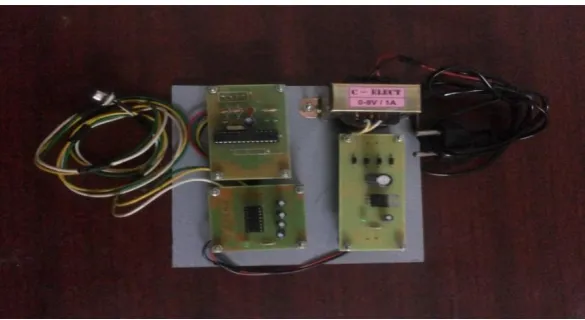
Figure 4:Experimental setup of Digital pen Receiver
Accelerometer
In this project, an accelerometer used which is known as MEMS accelerometer (Tri-axial accelerometer). It is generally used to detect and to measure the vibrations of the hand moment. The force caused by vibration or a change in motion (acceleration) causes the mass to “squeeze” the piezoelectric material which produces an electrical charge that is proportional to the force exerted upon it. Since the charge is proportional to the force, and the mass is a constant, then the charge is also proportional to the acceleration.
Table: Accelerometer specifications Features Specifications
Selectable Sensitivity 1.5g /2g / 4g / 6g
Low Current Consumption 500 µA
Sleep Mode 3µA
Low Voltage Operation 2.2V-3.6V
Microcontroller (ATMEL)
programmer.In addition, the AT89S52 is designed with static logic for operation down to zero frequency and supports two software selectable power saving modes.The Idle Mode stops the CPU while allowing the RAM,timer/counters, serial port, and interrupt system to continue functioning.The Power-down mode saves the RAM contents but freezes the oscillator,disabling all other chip functions until the next interrupt or hardware reset.
Table: Atmel specifications
Pin Diagram
LCD
LCD(Liquid Crystal Display) have materials which combine the properties of both liquids and crystals. It is an electronic display module and find a wide range of applications. A 16×2 LCD display is very basic module and is very commonly used in various devices and circuits. These modules are preferred over seven segments and other multi-segments LEDs. The reasons being:LCDs are economical; easily programmable;have no limitation of displaying special & even customcharacters, animations and so on. A 16×2 LCD means it can display 16 characters per line and there are 2 such lines. In this LCD each character is displayed in 5×7 pixel matrix. This LCD has two registers namely,Command and Data.
Table: LCD Specifications
RF Transceiver
CC2500 is wirelessly transmitter receiver developed by Texas instruments which is used in 2400-2483.5 MHz ISM/SRD band systems. This project shows how to configure registers of CC2500,how to give commands to CC2500
Features Specification
Operating Range 4.0V to 5.5V
Static Operation 0Hz to 33Hz
Internal RAM 256×8-bit
Timer/Counters Three 16-bit
Features Specifications
Power supply +5V(Also Available for
+3V)
Dots 5×8 dots with cursor
and how to activate transmission or receiver mode of CC2500 via SPI interfacing with avr microcontroller. The CC2500 RF module is a low cost 2.4 GHz transceiver used in very low power wireless applications. The RF transceiver is integrated with a highly configurable baseband modem. It supports OOK,2-FSK,GFSK and MSK modulations. It works in voltage range of 1.8-3.6v. Two AA batteries are enough to power it. It has 30m range with on board antenna. It is always used with microcontroller which supports SPI communication.
Table :RF Transceiver Specifications
RS232
In communications, RS-232 is a standard for serial binary data interconnection between a DTE(Data terminal Equipment) and a DCE(Data Circuit-terminating Equipment). It is commonly used in computer serial ports. It defines the purpose and signal timing for each of the 25 lines; however, many applications use less than a dozen.RS232 transmits positive voltage for a 0 bit, negative voltage for a 1. This interface is the Electronic Industries Association(EIA) standard for the interchange of serial binary data between two devices. In this, the signal transmission is bipolar, requiring two voltages, from 5 to 25 volts, of opposite polarity.
Table: RS232 Specifications
OVERVIEW OF ALGORITHM
The entire process is explained below in step by step method.
Step 1: The motion of accelerometer in any direction is send to Atmel microcontroller in the form of signal through wire connection
Step 2: These values may be pass through the process of calibration and the values moving averaging filter to make average values.
Step 3: The High Pass Filter process this data and then pass through the process of Normalization. Step 4:After this feature extraction is done here we use serial to USB communication for fast response. Step 5: Using Visual Basics Software PC will display the Motion in terms of characters.
III.EXPERIMENT RESULT
In this part, the proposed of using digital pen is validated by the following two experiments they are generally (1) Hand Written alphabetic recognition (2) motion recognition. The proposed recognition algorithm consists of acceleration acquisition, signal preprocessing. Here, we collected the acceleration signal in laboratory environment and displayed in the personal computer.
IV.CONCLUSION
This paper represents an accelerometer based digital pen for hand writing digits by recognition applications. In this, the digital pen consists of a triaxial accelerometer, Atmel microcontroller, RF wireless transmission module for sensing
Features Specification
Operating temperature
range
-40 ~ +85
Operating Voltage 1.8 ~3.6 volts
Hi sensitivity -101dbm@10kbps
Features Specification
High speed 460kbps
Appear COM ports
Bus powered No external power is
and receiving the signal of accelerations of hand writing. By this technology we can display the characters without using the keyboard for applying the human interaction to the computer.
ACKNOWLEDGMENTI would like to thank Mr.V.V.Karthikeyan, M.E.,(Ph.D) professor and HOD of electronics and communication engineering department, The SNS College of Engineering, Coimbatore for his valuable support to
develop this project.
REFERENCES
[1]Y. Luo, C. C. Tsang, G. Zhang, Z. Dong, G. Shi, S. Y. Kwok, W. J. Li, P. H. W. Leong, and M. Y. Wong, “An attitude compensation technique for a MEMS motion sensor based digital writing instrument,” in Proc. IEEE Int. Conf. Nano/Micro Eng. Mol. Syst., 2006, pp. 909–914
[2] N. C. Krishnan,C. Juillar , D. Colbry, and S. Panchanathan, “Recognition of hand movements using wearable accelerometers,” J. Ambient Intell. Smart Environ., vol. 1, no. 2, pp. 143–155, Apr. 2009.
[3]Jeen-Shing Wang and Fang-Chen Chuang, “An Accelerometer-Based Digital Pen With a Trajectory Recognition Algorithm for Handwritten Digit and Gesture Recognition,” IEEE Sens. J., vol. 59, no. 07, pp. 1543–1551, July. 2012.
[4]Y. P. Chen, J. Y. Yang, S. N. Liou, G. Y. Lee, and J. S. Wang, “Online classifier construction algorithm for human activity detection using a tri- axial accelerometer,” Appl. Math. Comput., pp. 849–860, Nov. 2008.
[5]T.Som, Sumit Saha, "Handwritten Character Recognition Using Fuzzy Membership Function", International Journal of Emerging Technologies in Sciences and Engineering, Vol.5, No.2, pp. 11-15, Dec 2011
[6] Velappa Ganapathy, Kok Leong Liew, "Handwritten Character Recognition Using Multi scale Neural Network Training Technique", World Academy of Science, Engineering and Technology, pp. 32-37, 2008.
[7] Renuka R, Suganya V & Arunkumar B,“Online Hand Written Character Recognition Using Digital Pen For Static Authentication”, Proceedings of IRAJ International Conference, 20th October 2013, Chennai, India. ISBN: 978-93-82702-34-4.
[8] S. J. Cho, J. K. Oh, W. C. Bang, W. Chang, E. Choi, Y. Jing, J. Cho, and D. Y. Kim, “Magic wand: A hand-drawn gesture input device in 3-D space with inertial sensors,” in Proc. IEEE 9th Int. Workshop Frontiers Handwriting Recognit., 2004, pp. 106–111
[9] J. K Oh, S. J. Cho, W. C. Bang, W. Chang, E. Choi, J. Yang, J. Cho, and D. Y. Kim, “Inertial sensor based recognition of 3-D characters gestures with an ensemble of classifiers,” in Proc. IEEE 9th Int. Workshop Fron- tiers Handwriting Recognit., 2004, pp. 112–117.
[10] A. D. Cheok, Y. Qiu, K. Xu, and K. G. Kumar, “Combined wireless hardware and real-time computer vision interface for tangible mixed reality,” IEEE Trans. Ind. Electron., vol. 54, no. 4, pp. 2174–2189, Aug. 2007.
[11] E. Sato, T. Yamaguchi, and F. Harashima, “Natural interface using pointing behavior for human–robot gestural interaction,” IEEE Trans. Ind. Electron., vol. 54, no. 2, pp. 1105–1112, Apr. 2007.