713
Studies on Production of Quality Billets for Constructional Steels
Sachin ahammed.c1 Dr. N. M. Nagarajan 2
1
Final Year M.Tech in Manufacturing Engineering, KMCT College of Engineering, Calicut, Kerala Email: [email protected] Mob: +919747353749
2
Professor & Head,Dept. of ME, KMCT College of Engineering, Calicut, Kerala Email: [email protected]
Mob: +91 9895281423
Abstract— Steel is an alloy of iron and carbon in plain
carbon steel. However alloysteel consists of Ni,Cr,Mo,W,Vetc apart from carbon and iron.The carbon is distributed throughout the mass of the metal occupying interstitial space. In the present work an attempt is made to analyse steel billets for the production of quality steel. This steel is known as constructional steel with wide application in building construction and other areas. As the informations available from the literature on quality steel production are insufficient, the present work is undertaken in steel complex at Calicut with the following objectives.
To study the defects in concast products.
To study surface defects and control methods.
To analyses the chemical composition.
To find out the mechanical properties of the billets.
To compile the data.
The quality of billet is one of the important factors for the production of structural steel which depends on various factors such as surface cracks, various elements present in the billet, strength of the billet, internal cracks etc..
The billets are collected to analyse the chemical composition and obtain various percentage of elements present in the billet by using optical emission spectrometer.
While conducting various Non Destructive Testing methods, it is observed that there are some surface cracks, some internal blow holes etc.. The mechanical properties of billet such as ultimate strength , yield point and percentage elongation are found by the help of UTM. Finally It is concluded that the billet is useful for rolling and manufacturing of structural steels.
I. INTRODUCTION
Steel is not any specific Element, it is an alloy of iron and other elements like carbon, chromium, nickel, vanadium tungsten etc. There are as many as few thousands of varieties of steel in use. They specifically differ in their chemical compositions. The chemical composition of steels broadly divides them into two group’s namely plain steels and alloy steels.
Steels may contain many other elements such as Al, Si, Mn, S, P, O etc... Which are not added specifically for any specific purpose but are inevitably present because of their association in the process of iron and steel making and cannot be totally eliminated during the known process of iron and steel making, these are known as impurities in steel. Every attempt is made to minimize them during the process of steelmaking but such efforts are costly and special techniques are required to decrease their contents below a certain level.
Steels are widely used in construction and other applications because of their high tensile strengths and low costs. Carbon, other elements, and inclusions within iron act as hardening agents that prevent the movement of dislocations that otherwise occur in the crystal lattices of iron atoms. Billets, or ingots (as they sometimes referred to), are not of practical use until they have been formed into more functional shapes and sizes. While they have already been put in the furnace, they still require a series of shaping and moulding procedures such as hot and cold working, milling and cutting before they are sold in hardware stores, or used for different applications. The unformed billets, however, can be used in striking currency such as coins and as reserves, similar to gold bars.
Steel billets became popular in the early 1800s, just after the British colonization of the United States ended and
714
II.EXPERIMENTAL DETAILS
A. MECHANICAL PROPERTIES
Tension test on mild steel billet can e carried out using universal testing machine. The various mechanical properties of steel are the following
Yield strength
Ultimate strength
Breaking stress
Percentage of elongation in length
Percentage of reduction in area
Test bar specimen are made as per ASTM E8 standard
Fig : Test specimen
B. Micro examination by SEM
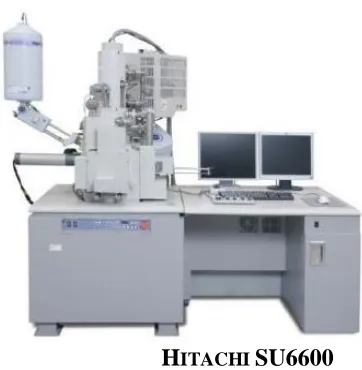
The scanning electron microscope (SEM) is a type of electron microscope that images the sample surface by scanning it with a high-energy beam of electrons in a raster scan pattern. The electrons interact with the shells in atoms that make up the sample producing signals that contain information about the sample's surface topography, composition and other properties such as electrical conductivity.
The types of signals produced by an SEM include secondary electrons (SE), back-scattered electrons (BSE), characteristic X-rays, light (cathodoluminescence), specimen current and transmitted electrons (STEM). Generally the most common or standard detection mode is SE imaging. The spot size in a Field Emission SEM is smaller than in conventional SEM and can therefore produce very high-resolution images.
Electrons are produced at the top of the column, accelerated down and passed through a combination of lenses and apertures to produce a focused beam of electrons which hits the surface of the sample. The sample is mounted on a stage in the chamber area and, unless the microscope is designed to operate at low vacuums, both the column and the chamber are evacuated by a combination of pumps. The level of the vacuum will depend on the design of the microscope
H
ITACHISU6600
C. Liquid Dye Penetrant Testing
Liquid Dye Penetrant is mainly used to detect fatigue and stress cracks in ferrous or non-ferrous materials. Penetrant testing will also reveal any cracks, pinholes, laps, seams, leaks as well as grinding cracks. This works on the capillary effect that small voids will draw in the dye. After the dye has been administered, the surface is cleaned. Then a developing agent is applied to expose the residual dye, and the void is revealed.
Fluorescent penetrants contain dyes that are visible only under black light. Black light is a special light with wavelengths between visible and ultraviolet light. Almost invisible, black light causes many materials such as the fluorescent dye to glow in the dark. This fluorescence is normally a brilliant yellow-green that catches the eye and magnifies the indication.
Visible dye penetrants contain dyes that can be seen in visible or white light. They are also known as color contrast or nonfluorescent penetrants. The dye is usually bright red, but different colors can be used for special applications. Of the two dye penetrants, the visible or color contrast is the simplest to use. No darkened area or black light is needed. However the primary limitation is getting enough contrast or dye into a discontinuity to form an indication. The best sensitivity can be obtained using the fluorescent penetrants. When using color contrast the surface is covered with penetrating liquid that seeks surface connected cracks. Liquid in cracks bleeds out to stain powder-coating applied to the surface after the removal of excessive liquid film from the surface of the test object.
715 weldments, joints, tubing, castings and billets. Fuel and
liquid-oxygen tanks and vessels, aluminum parts, gas turbine disks and blades and a variety of other components lend themselves well to inspection by the liquid penetrant method.
There are a few limitations such as access being required for surface cleaning and the discontinuity must be surface-connected and open. There may be false indications form shallow scratches and smearing and surface porosity may mask some indications.
There are six basic steps to follow when using the dye penetrant solvent removable method.
a) Pre-clean part.
This can range from grinding and wire brushing to merely wiping the part with a rag moistened with the cleaner/ remover. The surface needs to be free of dirt, rust, scale, paint, oil, and grease, and be smooth enough to wipe off the penetrant without leaving residue.
b) Apply penetrant.
This is generally done by spraying penetrant from the aerosol can or applying it with a brush. A dwell (soak) time needs to be observed to allow for the penetrant to permeate into cracks and voids. This is typically 5 to 30 minutes but should never be long enough for the penetrant to dry. The penetrant manufacturer’s recommendations and written procedure should be followed.
c) Remove penetrant.
All penetrant should be removed with clean, dry, lint-free rags until thoroughly clean. The part or material should be rubbed vigorously until the penetrant is not visible on the dry rags. Next, cleaner/ remover should be sprayed on another clean, dry, lint-free rag and used to vigorously rub the part again until there is no penetrant visible on the rag.
d) Apply developer.
A thin, light coating of developer should be sprayed on the part being examined. A dwell time needs to be observed to allow time for the dye to exit the flaws and create an indication (flaw) in the developer. The dwell time for developer is typically 10 to 60 minutes. The developer manufacturer’s recommendations and written procedure should be followed closely.
e) Evaluate indications.
It is critical to examine the part within the time frame designated in the written procedure. Length of an indication can grow over time as penetrant bleeds out, causing an acceptable indication to be a rejectable defect. Length of indication is measured for evaluation, not length of the flaw. Here, the two linear indications are rejectable defects. The round indication is nonrelevant.
Liquid penetrant testing cleaner,penetrant and developer
Liquid penetrant testing steps
D. Ultrasonic Testing
Ultrasonic Testing (UT) uses high frequency sound energy to conduct examinations and make measurements. Ultrasonic inspection can be used for flaw detection/evaluation, dimensional measurements, material characterization, and more. To illustrate the general inspection principle, a typical pulse/echo inspection configuration as illustrated below will be used.
716 screen. In the applet below, the reflected signal strength is
displayed versus the time from signal generation to when a echo was received. Signal travel time can be directly related to the distance that the signal traveled. From the signal, information about the reflector location, size, orientation and other features can sometimes be gained.
Ultrasonic Inspection
E. Spectrometer
It is an analytical chemistry technique that helps identify the amount and type of chemicals present in a sample by measuring the mass-to-charge ratio and abundance of gas-phase ions.
A mass spectrum (plural spectra) is a plot of the ion signal as a function of the mass-to-charge ratio. The spectra are used to determine the elemental or isotopic signature of a sample, the masses of particles and of molecules, and to elucidate the chemical structures of molecules, such as peptides and other chemical compounds. Mass spectrometry works by ionizing chemical compounds to generate charged molecules or molecule fragments and measuring their mass-to-charge ratios.
In a typical Spectrometer procedure, a sample, which may be solid, liquid, or gas, is ionized, for example by bombarding it with electrons. This may cause some of the sample's molecules to break into charged fragments. These ions are then separated according to their mass-to-charge ratio, typically by accelerating them and subjecting them to an electric or magnetic field: ions of the same mass-to-charge ratio will undergo the same amount of deflection.[1] The ions are detected by a mechanism capable of detecting charged particles, such as an electron multiplier. Results are displayed as spectra of the relative abundance of detected ions as a function of the mass-to-charge ratio. The atoms or molecules in the sample can be identified by correlating known masses to the identified masses or through a characteristic fragmentation pattern.
III. RESULTS & DISCUSSIONS
i SPECTRO METER TEST
From the given test report and standard chart it is concluded that the value of chemical composition of the billet is with in the standard value. So this can be used to produce steel bars for construction purpose and to produce steel plates.
iiUTM TEST
Test samples are taken from the billets and subjected to UTM test, The results are given below
RESULT
Yield stress = 429.22 N/mm2 Ultimate strength = 500.325 N/mm2 Nominal breaking stress = 495.625 N/ mm2 Actual breaking stress = 761.25 N/mm2 Percentage of elongation in length = 18.5 % Percentage reduction in area = 34.76 %
Even though the structural steel after rolling gives higher yield strength.The strength of the steels mentioned here is only for the purpose of control of producing quality billets as a semifinished product.From the above results it is noted that the yield strength of the billet is with in the range of standard value as per BIS
iii.MICROSCOPIC SURFACE PICTURE OF MILD STEEL BILLET FROM SEM
717 Microscopic surface structure of mildsteel billet
iv.
LIQUID PENETRANT TESTThe following is the cracks found on the surface of the billet, these are all hair line cracks and may be welded up during rolling.
Fig: Surface crack found on the billet
Small surface cracks will not affect in rolling process. But large cracks may leads to propagate while rolling and produces cracks.
v. ULTRASONIC SOUND TEST
Fig: defect analysis using ultrasonic testing
It is found that a small deflection is observed. From the result it is concluded that a small flaw is found inside the billet, But this flaw would be welded up during soaking and subsequent rolling.
IV .CONCLUSIONS
From the investigation, the following are the conclusions. 1) Spectroscopy analysis indicates that the elements
obtained for the mild steel used for construction work are within IS standard.
2) The strength of billet is also found to be within IS standard.
3) Ultrasonic and dye penetrant tests revealed that flaws found in the billet sample are very small in nature and would be welded up in subsequent rolling process
4)
From the overall analysis it is concluded that the billet is useful for rolling and manufacturing of structural steels without any flaws.REFERENCES
[1] dr. r.h tupkary and v.r tupkaryan "introduction to modern steel making .seventh edition
[2]dr.s.k goel“production of quality steel in mini steel plant”first edition
erika monica popa " assesssment of surface defects in the continuously cast steel” 2011
[3] k.h.j buschow, r cahn, m.flemings, b .iischner“continuous casting’2001
[4] dr thoguluva" continuous casting technology for ferrous and non- ferrous foundries”
[5] b .v.r raja" break out in continuous casting of steel”
[6]dr.ronaldj.selines"selection of stirring and shrouding gases for steel making applications’ 1988
[7]m. gornerup, m.hayashi, c.a dacker “mold fluxes in contonuous casting of steel-characterization and performance tuning” 2004
[8] j.k kromhout a.a kamperman“mould powder selection for thin slab casting”