AND SMARTPHONE INTEGRATION IN FACULTY DEVELOPMENT AND THE CLASSROOM: A CASE STUDY
by Jeanna R. Cronk
A dissertation
submitted in partial fulfillment of the requirements for the degree of Doctor of Education in Educational Technology
Boise State University
DEFENSE COMMITTEE AND FINAL READING APPROVALS
of the dissertation submitted by
Jeanna Renee Cronk
Dissertation Title: Faculty Perceptions of Smartphones and Smartphone Integration in Faculty Development and the Classroom: A Case Study
Date of Final Oral Examination: 25 March 2019
The following individuals read and discussed the dissertation submitted by student Jeanna Renee Cronk, and they evaluated the student’s presentation and response to questions during the final oral examination. They found that the student passed the final oral examination.
Ross Perkins, Ph.D. Chair, Supervisory Committee Patrick R. Lowenthal, Ph.D. Member, Supervisory Committee Lida J. Uribe-Flórez, Ph.D. Member, Supervisory Committee
iv DEDICATION
To my parents, Rick and Donna, whose love and guidance are with me in whatever I pursue.
To my grandmother, Florence, who would have been in the front row during my graduation.
To my loving and supportive husband, Jim, who is also the most helpful and most generous friend that I will ever have.
v
ACKNOWLEDGEMENTS
I would like to express my gratitude to my research advisor Dr. Ross Perkins, for his professional guidance and valuable support and to Dr. Patrick Lowenthal and Dr. Lida Uribe-Flórez for their useful and constructive recommendations on this research.
I would also like to thank all of my 2015 BSU EDTECH cohort members for the group emails and video calls that kept my stress levels in check. My thanks are also extended to my colleague Kerry Hannah, for the dissertation lunch dates that kept me on schedule, and to Ron Browne for his support of my career and education goals.
vi ABSTRACT
This research examined the perceptions of university faculty on the integration of smartphones in faculty development programs. The literature on higher education
smartphone integrations has focused almost exclusively on individual courses or mobile learning implementations limited to pre-service teacher education departments. Current practice indicates that faculty are electing to use smartphones for their own professional learning. This study advances our understanding of faculty perceptions, outside of education departments, to provide insight for faculty developers designing programs that incorporate smartphones by addressing the following research questions: (1) What are faculty perceptions of smartphones? (2) How are faculty using smartphone technologies for professional learning as a part of faculty development sessions? (3) What are faculty perceptions of the use of smartphones during faculty development sessions? (4) How are faculty integrating smartphone technologies in their teaching? The fourth research question was added during data collection.
Using a sample of full-time and part-time undergraduate college professors, this case study collected data from two sources. Survey and participant interviews were used to identify themes and determine how perceptions and faculty development experiences translated into smartphone technology classroom integrations by the participants. This study relied on Rogers’ diffusion of innovation theory (2003) to reflect upon the
vii
The findings from this research were clear regarding the faculty level of comfort and self-efficacy with their smartphone devices. The majority of respondents used a mobile phone at least on an hourly basis, and an average of 92% of respondents indicated a high level of self-efficacy with smartphones. Faculty were confident and willing to take risks with their own smartphone. The results also indicated that smartphones were a helpful and convenient tool that faculty have become dependent on in their everyday lives; however, for content production or composition, laptops were preferred. In addition, faculty were using smartphones for professional learning in a variety of informal (e.g., accessing online documents) and formal (e.g., connecting to conference apps) ways. If the purpose of a faculty development session was well served by
viii
TABLE OF CONTENTS
DEDICATION ... iv
ACKNOWLEDGEMENTS ... v
ABSTRACT ... vi
LIST OF TABLES ... xi
LIST OF FIGURES ... xiii
LIST OF ABBREVIATIONS ... xiv
CHAPTER ONE: INTRODUCTION ... 1
Background of the Study ... 1
Context of the Study ... 3
Purpose of the Study ... 7
Research Questions ... 8
Definition of Terms ... 9
Summary ... 10
CHAPTER TWO: REVIEW OF LITERATURE ... 13
Introduction ... 13
Learning Theories and Mobile Learning ... 14
Frameworks for Mobile Learning ... 17
Affordances of Smartphones ... 19
ix
Social Collaborative Learning... 20
Contextual Learning ... 21
Barriers to Smartphone Integration ... 23
Technology Access ... 23
Perception of Mobile Learning ... 24
Mobile Learning in Higher Education ... 26
Implementation Examples ... 27
Mobile Learning Adoption ... 28
Mobile Learning in Faculty Development ... 31
Summary ... 35
CHAPTER THREE: METHODOLOGY ... 37
Introduction ... 37
Research Methodology ... 40
Research Design ... 41
Data Management and Collection ... 43
Data Analysis and Procedures ... 48
Role of the Researcher ... 56
Ethical Considerations ... 57
CHAPTER FOUR: RESULTS ... 59
Introduction ... 59
Research Results ... 62
Research Question One... 62
x
Research Question Three ... 71
Research Question Four ... 73
CHAPTER FIVE: DISCUSSION ... 79
Overview ... 79
Discussion of Findings ... 80
Frameworks for Smartphone Acceptance and Use ... 84
Recommendations for Future Research ... 90
Recommendations for Practice ... 90
Limitations and Delimitations ... 92
REFERENCES ... 94
APPENDIX A ... 102
Survey ... 103
APPENDIX B ... 107
Interview Questions ... 108
APPENDIX C ... 109
Online Survey Consent Form ... 110
APPENDIX D ... 112
Emergent Themes ... 113
APPENDIX E ... 114
Survey Results ... 115
APPENDIX F ... 120
xi
LIST OF TABLES
Table 1.1 2016 University Operating Unit Information ...4
Table 1.2 University Faculty Development 2013-2018 Events ...7
Table 3.1 Research and Data Collection Questions ... 40
Table 3.2 Data Collection and Analysis Schedule ... 43
Table 3.3 Interview Candidate Rankings ... 47
Table 3.4 Frequency of Smartphone Use in Faculty Development ... 49
Table 3.5 First-Cycle Codes and Phrases ... 51
Table 3.6 Interview Data Themes, Codes, and Subcodes ... 55
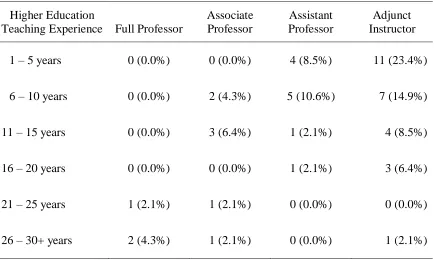
Table 4.1 Faculty Rank and Higher Education Teaching Tenure ... 60
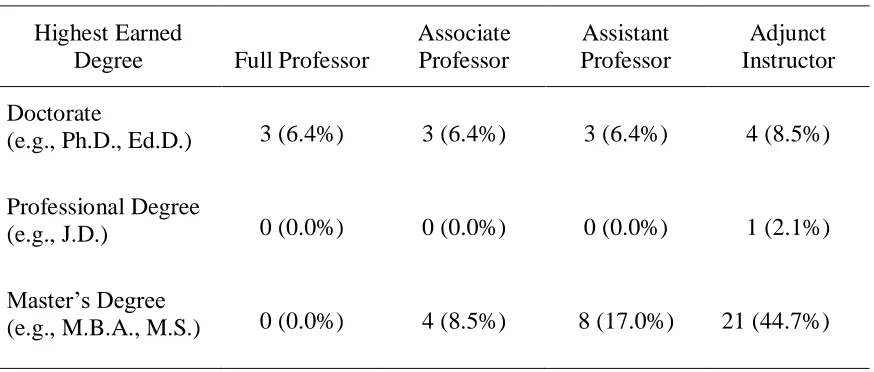
Table 4.2 Faculty Rank and Highest Earned Degree ... 61
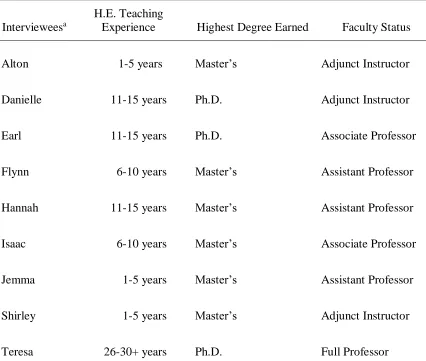
Table 4.3 Interview Participant Demographics ... 62
Table 4.4 Faculty Satisfaction Levels of Smartphone Personal Use ... 64
Table 4.5 Faculty Satisfaction Levels of Smartphone Professional Use ... 65
Table 5.1 Interviewee Class Smartphone Integrations... 83
Table 5.2 Interviewee Smartphone Self-Efficacy and Perceptions ... 86
Table E.1 Faculty Level of Use: Mobile Devices ... 115
Table E.2 Faculty Smartphone Data Plans ... 115
Table E.3 Faculty Smartphone Use ... 116
Table E.4 Faculty Smartphone Self-Efficacy ... 116
xii
xiii
LIST OF FIGURES
Figure 2.1. The FRAME Model. ... 18
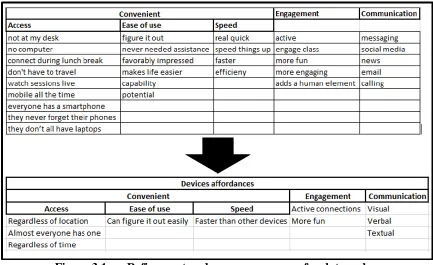
Figure 3.1. Refinement and summary process for data codes. ... 54
Figure 4.1. Frequency of faculty development modalities. ... 68
xiv
LIST OF ABBREVIATIONS BSU Boise State University
CPA Certified Public Accountant
CRK Cognitive Reconstruction of Knowledge
FRAME Framework for the Rational Analysis of Mobile Education
IRB Institutional Review Board
LMS Learning Management System
MBA Master of Business Administration PDA Personal Digital Assistant
QR Quick Response Code
CHAPTER ONE: INTRODUCTION
College students are constantly connected to their mobile devices (Rosen, Carrier, Miller, Rokkum, & Ruiz, 2016), carrying them in their pockets or bags to every activity or appointment, including their college classes. With mobile devices—like
smartphones—that have a “notable capability to support intense and ubiquitous
cooperative learning, social interaction, and sharing” (Kukulska-Hulme, 2012, p. 249), students expect to use these tools in the classroom (Kearney & Maher, 2013). Faculty may not recognize the pedagogical affordances of smartphones if they have not experienced mobile learning from a student perspective (Matzen & Edmunds, 2007). Higher education faculty development programs that incorporate mobile technology can help to bridge the divide between reluctant faculty and expectant students (Kearney & Maher, 2013).
Background of the Study
mobile learning was defined as learner engagement or assessment related to content that is accessed easily via a mobile device (with an emphasis on smartphones), both inside and outside of a designated location and stated times.
The proliferation of mobile technology is creating a sense of urgency to
implement it into education (Ally, Grimus, & Ebner, 2014). However, integrating mobile technology is a relatively recent phenomenon in higher education (Bennett, Bishop, Dalgarno, Waycott, & Kennedy, 2012). As such, most higher education faculty have little to no experience using mobile learning for teaching or learning (Burden & Kearney, 2017; Khaddage et al., 2015).
Traditionally new technologies at the university level are promoted, supported, and accompanied by some type of training before wide-spread implementation (Walsh et al., 2013). The ever-present nature of smartphones in higher education classrooms is creating a unique student-driven demand for integration that is leading to classroom integrations without fully developed lesson planning (Gikas & Grant, 2013). As such, faculty developers are working to help faculty adjust and prepare for mobile technology classroom implementations (Matzen & Edmunds, 2007) out of the belief that the success of these integrations is based on the instructor's pedagogical planning (Ekanayake & Wishart, 2014).
classroom practices and improve student achievement (Camblin & Steger, 2000), faculty development programs should exhibit mobile learning pedagogies that faculty can later imitate in their courses (Reeves & Li, 2012). This study examined faculty perceptions of smartphone technology during faculty development sessions to provide insight for faculty developers designing programs that incorporate smartphones. This case study used a survey and participant interviews to identify themes in faculty perceptions and determine how those perceptions translated into smartphone technology classroom integration.
The majority of research on higher education smartphone integration has reported on mobile technology within individual courses, like micro-blogging via Twitter© (Ebner,
Lienhardt, Rohs, & Meyer, 2010) or using social media (Gikas & Grant, 2013), or on mobile technology within pre-service teacher education departments (e.g., Kearney & Maher, 2013; Power & Thomas, 2007). The results of mobile implementation studies indicated that mobile learning "has the potential to take higher education aggressively in a flexible, student-centered direction" (Hargis, Cavanaugh, Kamali, & Soto, 2014, p. 46). A research gap exists among higher education faculty development programs integrated with mobile devices (Kukulska-Hulme, 2012). Faculty will need pedagogical training and guidance when leveraging ubiquitous mobile devices, such as smartphones, in their college classrooms. This study assists in understanding faculty perceptions for designing future smartphone-integrated faculty development programs.
Context of the Study
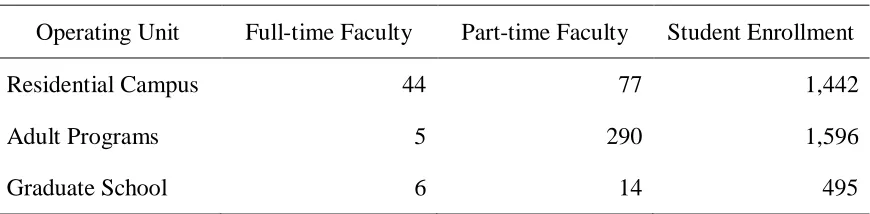
campus serves traditional 18-22-year-old college students in a mainly 16-week, face-to-face modality. The university adult program targets non-traditional working adults with 3-week or 8-week evening, hybrid courses and 8-week or 12-week online courses. The graduate program offers 8-week face-to-face daytime or evening courses, in addition to online. Table 1.1 provides a summary of the university’s 2016 faculty and student enrollments.
Table 1.1 2016 University Operating Unit Information
Operating Unit Full-time Faculty Part-time Faculty Student Enrollment
Residential Campus 44 77 1,442
Adult Programs 5 290 1,596
Graduate School 6 14 495
The offered programs of study are concentrated on the ideas of free enterprise, personal responsibility, and a competitive advantage in the global marketplace. The university degrees include the Bachelor of Business Administration (BBA), Bachelor of Science (BS), Master of Business Administration (MBA), and Master of Science (MS). The university primarily focuses on specialized programs, such as automobile dealership, fashion merchandising, or entrepreneurship, with the majority of faculty coming directly from their respective industry. At the time of this research, the undergraduate residential program employed 48 full-time and 74 adjunct undergraduate faculty.
course teaching loads to enable them to focus on the faculty development programs for the university. Representatives from the other two campuses also were included in regular conference calls and planning sessions. The group used a learning management system course shell to provide information for faculty and as a means of communication with all campus locations. The two group leaders offered workshops and one-on-one consultations with instructors from across the university.
As the university's landscape evolved, the two satellite residential campuses were dissolved or sold, and the previously structured trimester course schedule maintained by the university transitioned into a semester format. The faculty development office was then eliminated at the recommendation of the two faculty leads, due to both instructors wishing to return to the classroom full-time. In the summer of 2010, a faculty
development committee was established to continue the work of the past organization, but with the one residential campus as the primary focus. The newly established committee met throughout the academic year to organize and facilitate two faculty
development day-long workshops, one in the fall semester and one in the spring semester. These faculty development days loosely would follow a conference format with
administrative, informational sessions, breakout instructor or expert-led sessions, and a keynote-style presentation.
In addition to these annual development days, the university instructional technologist (the researcher for this case study) facilitated technology-focused
operating units. The adult program’s instructional designer presented a variety of faculty development for instructors teaching in that university operating unit. Beginning in 2013, the instructional technologist and the instructional designer began to offer faculty
development support in a collaborative effort. Each development session was optional for university faculty, except for the two faculty development days that were mandatory for full-time undergraduate faculty. Topics selected were based on a variety of factors, including end-of-course evaluations, academic dean/division chair input, faculty survey results, future/new university resources, and available session leaders. The university had not previously focused on, initiated, or directly promoted mobile learning with the faculty prior to this case study. Smartphone-based mobile learning had been included during ad-hoc faculty development sessions offered by the instructional designer and instructional technologist during the previous two academic years, but the university is in the
Table 1.2 University Faculty Development 2013-2018 Events
Academic Year Topics Modalities
2013-2014
LMS features, transformational
teaching, metacognition, social media, content management, web conferencing tools, video recording
Webinars, workshops, hybrid-course, whole day conference, open house style
2014-2015
LMS features, plagiarism, web conferencing tools, content management, social media,
Whole day workshops, webinars,
2015-2016 LMS features, Web 2.0 tools, social
media, plagiarism, online teaching Webinars, workshops
2016-2017
Grading, accessibility, copyright, principles of instruction, presentation software, LMS features, assessment, video production, curriculum mapping, online teaching
Webinars, workshops, whole day conference
2017-2018
Web conferencing tools, LMS features, accessibility, cloud computing, active learning, teaching satisfaction,
assessment, course design
Webinars, workshops, whole day conference
Note. All faculty development events are optional, except for a mandatory attendance requirement at the whole day conferences for full-time, undergraduate faculty.
At the time of this research, the instructional technologist and instructional designer were working to establish a Center for Excellence in Instruction and Learning at the university.
Purpose of the Study
The purpose of this research was to describe smartphone integration within higher education faculty development experienced by faculty at one Midwestern private
university. The general research problem explored by this case study was the advancement of faculty development programs that are incorporating smartphone technology to meet the needs of higher education faculty.
With the majority of past studies of smartphone integration in faculty
from this study provided a unique viewpoint. The study contributed to the field of mobile learning and faculty development by targeting faculty with no experience in pre-service teacher education departments. The study participants were from industry and were not formally trained by a teacher education program. In other words, the research participants earned degrees from their respective fields of study, not university education
departments.
Research Questions
Given the context of the faculty development history at the university, a case study approach was selected to provide an in-depth understanding and to advance the practice of higher education faculty development by addressing the three research questions:
1. What are faculty perceptions of smartphones?
2. How are faculty using smartphone technologies for professional learning as a part of faculty development sessions?
3. What are faculty perceptions of the use of smartphones during faculty development sessions?
4. How are faculty integrating smartphone technologies in their teaching? During the interview phase, each interviewee was asked whether they had already
the data collection phase. An important consideration in mobile technology integration, or lack thereof, is universal accessibility, this study did not address that.
To focus on the research questions, a case study utilizing survey, interviews, and emergent framework data analysis was used to frame the narrative surrounding the participants’ perceptions of smartphone integration within faculty development. A case study was appropriate for this research because the location was bound by the research site and the shared experiences of faculty at one university (Creswell, 2013; Stake, 2000; Yin, 2003). A case study is ideal when "a how or why question is being asked about a contemporary set of events" (Yin, 2003, p. 9). This research followed an instrumental case study design (Creswell, 2013; Merriam, 2009; Stake, 2000) because it was intended to provide an in-depth examination of faculty perceptions of smartphone integration within faculty development programs.
This research held three assumptions: (a) that higher education faculty and students had their own smartphones, (b) that faculty had access to faculty development programs that incorporated smartphone technology, and (c) that faculty were
incorporating smartphone technology in their teaching. This study assisted the
instructional technologist and the instructional designer at the university in implementing research results from related studies and reflecting upon participants’ perceptions of the faculty development programs they have experienced.
Definition of Terms
Faculty Development. Refers to guided, structured events organized by a faculty
developer. In practice, all faculty development events at the research site are referred to as Professional Development due to the close relationship between the university and the business industry.
Professional Learning. Refers to informal, self-driven, or degree-seeking
activities undertaken by the individual faculty members.
Smartphone Technology. Refers to any smartphone use, for example, applications,
internet access, or social media tools. Used interchangeably with the term, smartphone. Summary
The smartphone’s ever-present connection and its potential for enhanced teaching and learning through a student-centered, constructivist approach could offer authentic learning and anywhere, anytime student engagement possibilities in higher education (Ally et al., 2014; Kearney, Schuck, Burden, & Aubusson, 2012). The utilization of smartphones for mobile personalized learning also could produce social and
collaborative, new generation learning, with increased student engagement (Ally et al., 2014; Hargis et al., 2014). To attain these levels of mobile learning environments,
university faculty will need to help prepare students for the seemingly endless amounts of information available via smartphone (Koole, 2009). While research suggests that mobile technology has the potential to enable learning that is "collaborative, contextualized, customized, and personalized” (Baran, 2014, p. 27), merely using smartphones does not guarantee success. Faculty need assistance with mobile integrations in the form of faculty development that can bring about positive changes in faculty behavior and student
ongoing mobile learning opportunities for faculty that include modeling, collaboration, and reflection before classroom implementations to help promote adoption and ease the uncertainty (Rogers, 2003) of mobile learning.
Current research highlights a lack of focus on higher education faculty
development initiatives with mobile technology (Kukulska-Hulme, 2012) because the majority of mobile learning research has focused on individual courses or integrations that are limited to teacher education departments (e.g., Ebner et al., 2010; Gikas & Grant, 2013; Kearney & Maher, 2013; Power & Thomas, 2007). Current practice indicates that university faculty are using smartphones for their professional learning, but there is little research in the area of faculty development programs integrating smartphones (Kukulska-Hulme, 2012). The next chapter provides a review of the literature relating to mobile learning, including the affordances and barriers of smartphones and the personalized, authentic, and collaborative learning (Kearney et al., 2012) that can emerge through mobile learning. Also discussed in Chapter Two are specific instances of mobile learning within higher education courses and faculty development programs.
This research described smartphone integration within higher education faculty development as experienced by faculty at one Midwestern private university. Given the context of the faculty development history at the university, a case study approach was selected to provide an in-depth understanding and to advance the practice of higher education faculty development by addressing the following research questions: (1) What are faculty perceptions of smartphones? (2) How are faculty using smartphone
CHAPTER TWO: REVIEW OF LITERATURE
Introduction
College students are entering higher education classrooms having experienced a different relationship with mobile technology than that of their professors (Baran, 2014; Sharples, Taylor, & Vavoula, 2007), and coming of age in a time with instant access to resources and peers (Rosen et al., 2016). Such mobile devices as the ubiquitous
Learning Theories and Mobile Learning
When considering the process of learning, constructivism advocates an active practice where new ideas and information are built upon the learners’ past knowledge and experiences. This assimilation of the new and the old information translates into reaching a higher level of real understanding (Ali, 2005). The epistemological origins of
constructivism cross between rationalists and empiricists by focusing on the mind of the learner, yet also on the experiences of the learner: “like with the rationalists of Plato's time, the mind is believed to be the source of all meaning, yet like the empiricists, individual, direct experiences with the environment are considered critical” (Ertmer & Newby, 1993, p. 16).
The constructivist theory of learning places an instructor into the role of mentor or guide, instead of as the sole source of information, to encourage inductive learning based on discovery and interpretation of a learner’s experience (Ng’ambi & Lombe, 2012; Rieber, 1992). While serving as a learning guide, instructors can apply the following five principles from the constructivist theory of learning:
(1) An emphasis on the identification of the context in which the skills will be learned and subsequently applied;
(2) An emphasis on learner control and the capability of the learner to manipulate information;
(3) The need for information to be presented in a variety of different ways; (4) Supporting the use of problem-solving skills that allow learners to go beyond the information given;
(5) Assessments focused on transfer of knowledge and skills. (Ertmer & Newby, 1993, p. 19)
In a four-year mobile learning study, university instructors combined
feedback (Cochrane & Bateman, 2010). The implementation of these constructivist mobile activities “illustrated the potential to transform traditional teaching approaches and introduce context bridging teaching and learning scenarios” (Cochrane & Bateman, 2010, p. 8). This shift in teaching approaches was facilitated by offering support stages and three scaffolded faculty development opportunities that included theory-based preparation, integration, and reflection.
described as cold, and the inclusion of motivation and emotions in current research is creating a warming trend.
Jonassen and Easter (2014) also described the Cognitive Reconstruction of Knowledge (CRK) Model. The CRK model claims learners will be motivated to undergo a conceptual change process if (a) they are dissatisfied with their current knowledge, (b) the new concept is personally relevant, (c) the context is persuasive, and (d) their need for cognition is heightened. The following educational activities have been successful in bringing about conceptual change in learners: (a) simulations; (b) model building (which is deemed most effective when built by the learner); and (c) constructing arguments related to the content, including peer collaboration (Jonassen & Easter, 2014).
Some of the aforementioned smartphone activities, such as reflective journaling, real-time data capture, and data sharing in Cochrane and Bateman’s (2010) study, emerged in a large cross-institutional study conducted by Bennett et al. (2012) that was designed to explore the implementations of Web 2.0 technologies at the university level. Of the six implementations included in the research, the authors concluded that the faculty who closely aligned pedagogy with the technology and included student creation and sharing experiences were the most successful at affecting student learning (Bennett et al., 2012). These mobile learning pedagogical considerations include personalized
Frameworks for Mobile Learning
When considering the theories behind effective mobile learning, it is also essential for faculty to go further and utilize a “framework based on analysis of empirical
evidence” (Hsu & Ching, 2015, p. 2) to guide mobile learning integration. A “dynamic, theoretical set of criteria or a framework” (Khaddage et al., 2015, p. 632) can support educators in their mobile learning endeavors. By combining instructionism, social learning, constructionism, and collaborative learning, Laurillard (2009) created the conversational framework as a way to guide and examine the implementations of
computer-supported collaborative learning. The conversational framework is not focused solely on mobile learning; instead it covers all aspects of teaching and learning, including “conventional and digital, mobile and classroom-based, formal and informal” (Laurillard, 2009, p. 7) considerations.
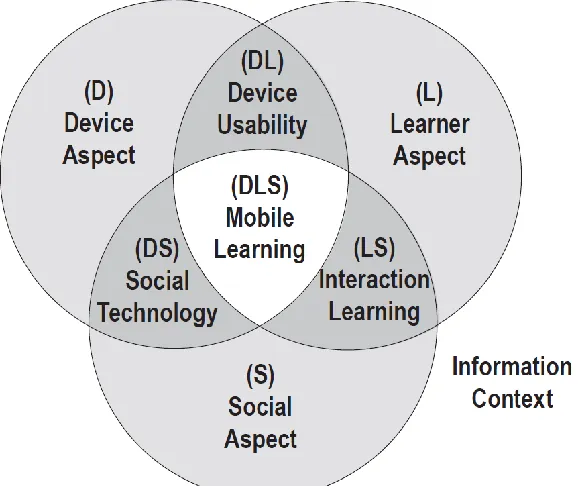
Koole’s Framework for the Rational Analysis of Mobile Education (FRAME) model “describes a mode of learning in which learners may move within different physical and virtual locations and thereby participate and interact with other people, information, or systems—anywhere, anytime” (2009, p. 26). This mobile-focused model considers the convergence of device aspects, learner aspects, and social aspects whereby portable, powerful, and intuitive devices and a learner’s motivation and prior knowledge combine with collaboration and communication to create “a deeper contextualization of learning” (Koole, 2009, p. 38).
control of input and output settings, device processing speeds, and user guides for file storage and retrieval methods. An ideal mobile device will enable the learner to focus on the tasks at hand, rather than on the device. Next, concerns of the mobile learning
activities themselves include assessing the current knowledge of learners, instructional design techniques, varying multimedia and stimuli, providing authentic contexts, the transfer of concepts to differing contexts, and the personalization of experiences. When these elements are included, mobile learning can allow convenient access to multiple formats of content from authentic situations. The third area of the FRAME model, social aspects, requires the contemplation of shared vocabulary, cultural etiquette, and
communication expectations or guidelines. Essentially, the learner’s consumption and creation of knowledge need to be culturally relevant.
When the three areas of device, learner, and social aspects overlap, each part needs to be considered in relation to the others. For example, when the device and learner zones combine, the device usability considerations will include durability and connect-ability, ease of use, and learner control of aesthetics. The device-social intersection results in social technology considerations that include setting a minimum wireless network expectation and the necessary collaboration platform. The social-learner combination contemplates the relationships, social interactions, and preferences of learners, as well as the mobile spaces needed to facilitate learning with mentors or experts. When all three aspects of Koole’s FRAME model combine, the resulting mobile learning system will impact interactions, information processing, life-long learner skill sets, and the roles of teachers and learners.
As mobile technology continues to advance, sometimes becoming out-of-date while research is still in progress (e.g., Lefoe et al., 2009), future researchers will need to focus on and examine the possibilities of newly emerging mobile affordances. Utilizing Koole’s (2009) FRAME model, higher education faculty can take into account all aspects of devices, learners, and social learning to design a mobile learning environment that can adapt with future changes in mobile learning and technology.
Affordances of Smartphones
Smartphones are ubiquitous (Havel, Powell, Cabaniss, & Arbuckle, 2017;
results also indicated that the type of mobile device selected could significantly impact learning based on the capabilities of the device (Wu et al., 2012). The smartphone is an ideal device for mobile learning because of its portability, computing capabilities, and real-time connections that enable ubiquitous, collaborative, and contextual learning (Hsu et al., 2014).
Ubiquitous Learning
Ubiquitous learning is a pervasive and seamless connection between “learning collaborators, learning contents, and learning services” (Yang, 2006, p. 188). Based on the ubiquitous nature of smartphones, Ng’ambi and Lombe (2012) conducted a case study of mobile podcasts used to scaffold learning and merge informal and formal learning. The results of the case study indicated that the participating students used the podcasts outside of the classroom setting for informal reflections on the course content. It has been noted that the ability to bridge formal and informal learning spaces is a distinct affordance of smartphones (Gikas & Grant, 2013). Similarly, the ability to offer
ubiquitous learning opportunities such as collecting in-the-moment feedback (Havel et al., 2017), enhancing instructor-learner interactions (Isiyaku et al., 2018), and enabling learner reflections (Ng’ambi & Lombe, 2012) are all characteristics of smartphone-based mobile learning.
Social Collaborative Learning
In social collaborative learning environments, self-directed learners and
Narayan, 2012). While synthesizing experimental research regarding mobile computer-supported collaborative learning, Hsu and Ching (2013) noted consistent reports of increased engagement and participation among the data.
Similarly, Sha, Looi, Chen, and Zhang (2012) researched a two-year smartphone integration based on the nature of self-regulated learning that included three phases for each lesson that directed students to consider their prior knowledge, personal learning goals, and metacognitive reflection after the learning activities concluded. The results indicated that levels of extrinsic motivation impacted the success of regulated, self-directed learning. These types of social collaborative learning environments made possible by smartphones also were present in the data sharing and peer critique of
Cochrane and Bateman’s (2010) study and the creation and experience sharing of Bennett et al. (2012).
Contextual Learning
An additional affordance of smartphone-based mobile learning is contextual learning. Contextual learning refers to the current situation of the learner, whether physically or mentally (Yang, 2006). The following examples of mobile learning illustrate how smartphones can be leveraged to bring about contextual learning
opportunities. First, the MOBIlearnTM museum scenario utilized mobile technology to enable conversational learning spaces in the context of an Italian art gallery (Sharples et al., 2007). Museum visitors could use mobile devices to learn more about the artwork on display and to engage with other visitors or art experts while examining specific works of art. Similarly, Cochrane and Bateman (2010) noted instances of contextual mobile
and geotagging (online information, photos, or videos that appear when a smartphone is in a specific geographical location).
Another example of contextual learning was the use of iPads by pre-service teachers who documented real-life scenarios for classroom lessons, organized
professional learning, accessed productivity apps, and evaluated, observed, recorded, and annotated reflections. The students’ use of the mobile devices displayed both authentic learning and personalization of learning. These instances took place inside and outside of the classroom, in both formal and informal environmentsall critical aspects of mobile learning (Kearney & Maher, 2013).
Additionally, in a study of a teacher-training mobile learning project, the student and faculty participants noted that it was fun to share and document contextual
experiences via image messages with other program members. The student participants used their mobile devices for educational purposes during their “in-between” moments for example, while riding the bus to class. The most beneficial aspect of this mobile project, as indicated by the student participants, was the immediacy of the mobile devices. On the other hand, the university faculty included in the study indicated a favorable aspect was the devices allowing for more flexibility in their use of class time (Seppälä & Alamäki, 2003).
As noted earlier, the smartphone's ubiquitous nature and readily-available
Isiyaku et al., 2018), they can impact course interactions, information processing, life-long-learner skill sets, and the roles of teachers and learners (Koole, 2009).
Barriers to Smartphone Integration
This section introduces some potential barriers to the successful integration of mobile learning in higher education, including access to technology and faculty
perceptions towards mobile technology. Some mobile learning barriers can be grouped into similar categories, such as access to technology, while others stand alone, like cell phone providers requiring extra fees for increased usage of internet data plans (Marinagi, Skourlas, & Belsis, 2013). Another example could be the rate of change with smartphone technology and faculty who are not familiar with quickly evolving Web 2.0 and mobile applications (apps) (Bennett et al., 2012; Isiyaku et al., 2018). Additionally, the disruptive and pervasive nature of smartphones raises concerns about classroom management and ethical considerations (Hsu et al., 2014; Peng, Su, Chou, & Tsai, 2009).
Technology Access
Various concerns of access have emerged as a barrier to mobile learning integration. For example, in Ng’ambi and Lombe’s (2012) study, student interviews revealed that the large file sizes of the podcast downloads were a significant access barrier for learners with certain mobile devices or connection speeds. Due to this concern, most learners attempted to use a laptop or desktop computer to download the files.
Additional access barriers include connecting to a wireless network and concerns of an institution’s broadband infrastructure (Isiyaku et al., 2018). Likewise, the
access. Further concerns include limited data wireless contracts and the costs associated with smartphones and unlimited data packages (Ally et al., 2014; Khaddage et al., 2015; Power & Thomas, 2007), as well as technical difficulties experienced by students (Gikas & Grant, 2013; Power & Thomas, 2007).
Perception of Mobile Learning
College faculty who do not understand the affordances of smartphones are hesitant to incorporate them in the classroom, perceiving too much time and effort required to master mobile integration (Kukulska-Hulme, 2012). Instructors value the opportunity to become comfortable with mobile technology before considering its impact on teaching and learning, and when given a chance to work directly with mentors or co-workers regarding mobile technology implementation, mobile device usage will increase (McFarlane, Roche, & Triggs, 2007). The most effective strategy is to begin with small instances of mobile technology integration that are fully planned out (McFarlane et al., 2007).
An important facet of overcoming a perception barrier to mobile learning is the amount of administrative support observed by higher education faculty. To this point, Isiyaku et al. (2018) found that “teachers expected more support from their school
Another part of this barrier to consider is the possible misalignment of
assessments and mobile learning. Secondary school teachers have raised concerns that mobile-enhanced classrooms will have an adverse effect on a school district’s
standardized test results because the modality of nationwide assessments is significantly different from the individualized and contextual experiences in a mobile learning
environment (Hargis et al., 2014). Teachers are afraid that student achievements will not transition from a flexible mobile-learning format to an unyielding standardized
assessment. Universities seeking accreditation may need to consider this implication because accrediting agencies often require program assessments in higher education as well (McFarlane et al., 2007).
prohibit the use of smartphones in the classroom; instead, universities should guide and assist faculty and students in incorporating them successfully.
Mobile Learning in Higher Education
Mobile technology can provide a shared space for conversational learning that is authentic, collaborative, and personalized for university students (Kearney et al., 2012; Sharples et al., 2007). An increase in learner engagement has been observed as students became empowered by using mobile technology to conduct research and decrease their dependence on the instructor (Hargis et al., 2014). Mobile learners can take control of their learning when there is an alignment of “sound educator pedagogy; relevant, lively generated content; continuous, task-focused student interaction; and low-cost, ubiquitous technologies” (Bere & Rambe, 2016, p. 195). Some of the benefits of using mobile technology for student learning are quick access to information, collaboration,
communication, variety, and authenticity (Gikas & Grant, 2013). Cochrane and Bateman (2010) identified the following five benefits of mobile learning, specifically for higher education:
(1) Exploring innovative teaching and learning practices. (2) Enabling the embodiment of authentic learning. . . .
(3) Engaging students with the affordances of mobile Web 2.0 technologies. . . . (4) Bridging the digital divide by providing access to learning contexts and user content creation tools that are affordable and increasingly owned by students. (5) Moving from a model of fixed, dedicated general computing to a mobile, wireless computing paradigm that turns any space into a potential learning space. (p. 2)
Implementation Examples
When considering the variety of mobile learning implementations within higher education, we can organize them based on Traxler’s (2007) six categories: (1) technology driven, (2) portable e-learning, (3) connected classrooms, (4) informal and situated, (5) performance support, and (6) rural access. The higher education faculty who are incorporating smartphones into their classrooms using SMS-message polling and feedback during lectures (Seppälä & Alamäki, 2003) are demonstrating a technology-driven implementation. The informal and situated mobile learning category includes having students utilize smartphones for self-reflection, peer assessment, peer support, and idea-sharing (Ally et al., 2014). Likewise, an informal and contextually situated, learner focused category emerged in a study on the use of instant messaging by students and faculty at the South African University of Technology (Bere & Rambe, 2016). The learners in this study were actively engaged with peers, experts, and mentors in mobile learning contexts that were convenient for the learner. Faculty who require students to create video journals, e-portfolios, wikis, and micro-blogs with mobile devices (Cochrane & Narayan, 2012) fall into the category of portable e-learning by using mobile
technology to re-enact a previously desktop-based technology.
As mobile integrations continue to advance, the implementation examples often fall into more than one category. For example, a mobile learning study across universities in New Zealand demonstrated instances of informal and situated mobile learning,
journaling, peer critique, situated learning, and formative feedback (Cochrane & Bateman, 2010).
Mobile Learning Adoption
Even with the majority of mobile learning studies reporting positive outcomes (Wu et al., 2012) mobile technology will not be adopted by all faculty, as is typical with the acceptance of educational technologies (Christensen, 2013). The diffusion and
adoption of mobile devices, like smartphones, require an element of social change within higher education (Rogers, 2003). Faculty-development mobile-learning initiatives
focusing on perceived enjoyment and mobility value, self-efficacy, and perceived
convenience may help to drive acceptance among higher education (Hsu & Ching, 2015). To encourage instructors to adopt mobile technology, school and university leadership also will need to incorporate and model mobile tools in administrative tasks to show public support of the technology (Grant et al., 2015; Herro, Kiger, & Owens, 2013). Similarly, it is important for administration to identify and collaborate with the early adopters on new materials (Rudd & Watts, 2008) as the opinions of prominent university personnel towards new technology could shape significantly an instructor’s intention of using that technology (Cheon, Lee, Crooks, & Song, 2012).
The diffusion of innovations theory argues that the adoption of a new idea, such as mobile technology in the higher education community, is influenced by four main elements: the idea/innovation, communication channels, time, and the social system in the community (Rogers, 2003). If applying these four elements to the adoption of mobile technology in higher education, (a) the innovation would include the mobile
development programs, email messages, and face-to-face conversations between administration and faculty or among faculty themselves; (c) the time element would incorporate the decision process of adoption or rejection, the speed at which someone adopts the idea (compared to others), and the time it takes for the innovation to become widely adopted within the system; and (d) the social system would include individuals who are all working towards a common goal—for example, the faculty teaching at one university or within one department. A common problem faced by universities when introducing new technology is the slow rate of acceptance or adoption by faculty (Rogers, 2003). The rate of adoption for innovations can be plotted as an S-shaped distribution curve, with the following categories for adopters: innovators, early adopters, early majority, late majority, and laggards.
Looking at mobile technology integration from the perspective of the diffusion of innovations model (Rogers, 2003), increasing the awareness of mobile integration successes can be expected to increase faculty adoption of mobile technology. The five factors specifically identified by Rogers (2003) as proving impactful on the rate of adoption are the perceived relative advantage, compatibility, trialability, observability, and complexity of the innovation. McFarlane et al. (2007) translated Roger’s adoption rate factors into a teacher’s prior experience with technology, their attitude and
While faculty development cannot affect past experiences, it can help influence the acceptance of mobile technology within an institution that is tasked with successfully integrating mobile learning (Gikas & Grant, 2013). In a cross-institutional study
conducted by Bennett et al. (2012) six implementation projects were explored from a variety of college programs, including science, education, journalism, and psychology. From the six implementations, those faculty closely aligning the selected mobile
In an international Delphi study that included 14 mobile-learning scholars, the examination of mobile learning and teaching strategies emerged as the highest ranking priority for future research needs in mobile learning (Hsu et al., 2014). Pedagogically focused mobile technology implementations can change the relationship between instructor and students, ultimately transforming the role of the college professor to one representative of a facilitator or mentor (Idrus & Ismail, 2010; Koole, 2009). Without guidance prior to and during mobile integration, faculty resort to traditional teaching methods, replicating old computer-based tasks with smartphones rather than modernizing them (Matzen & Edmunds, 2007). Faculty development likely will be necessary to enable this transformation of pedagogy (Peng et al., 2009). As faculty adapt their teaching strategies to better align with mobile pedagogies, the course activities advance from teacher-focused to learner-focused (Laurillard, 2009). These changes in activities could evolve professors into constructivist facilitators that are comfortable integrating mobile technology, using it in learner-centered ways (Matzen & Edmunds, 2007).
Mobile Learning in Faculty Development
institution (Phuong, Cole, & Zarestky, 2018). Regardless of how the faculty development initiative begins, faculty training programs can provide benefits for faculty, students, and the institution itself. Camblin and Steger (2000) posited that "faculty development is a significant key to the continued success of higher education" (p. 16) and that faculty development programs wanting to remain relevant must continue to evolve or risk generating outdated faculty practices. Modeling the pedagogies of mobile learning in faculty development sessions is an example of one such evolution that may offer faculty a model that could later be emulated within courses (Reeves & Li, 2012).
The research surrounding instances of formal faculty development that incorporates mobile learning has been primarily focused on pre-service teacher
preparation programs. Of these studies, Burden and Kearney (2017) suggested that they could be divided into one of two categories: either learning about mobile learning or learning with mobile learning. In their study of 46 mobile learning activities within university teacher education programs, only three of the reported activities fell into the category of learning through mobile learning.
instructional theme and its accompanying educational technology tools. The workshops were held in a face-to-face, hands-on format and participants also had access to online mobile-friendly resources for additional information regarding each topic. While the workshops were not well attended, the researchers still deemed them a success for aiding those faculty who participated.
While reviewing 111 faculty development initiatives that took place between 2006 and 2016, Steinert et al. (2016) noted that the majority of the programs were focused on acquiring specific skills rather than on "an opportunity for renewal and reflection on personal and professional growth" (p. 779). Mobile learning in faculty development goes beyond obtaining new skills: “seminars and workshops [can serve] as a potential way to inspire resistant academics to embrace the new” (Watty et al., 2016, p. 8). Kukulska-Hulme (2012) examined the impact on mobile learning adoption by the incorporation of mobile technology during faculty development programs. Instead of a focus on their students’ needs, the attending faculty experienced a learner’s perspective by using mobile technology to advance their own knowledge and career development. The research results revealed that a focus on learning with mobile technology, not only on how to use the technology, was valued by the attending faculty. The faculty
development elements that were deemed most helpful for learning with mobile devices were: (a) detailed activities, (b) hands-on experiences with the faculty's own device, (c) ample discussion, and (d) technical support (Kukulska-Hulme, 2012).
In another example of faculty development impacting mobile adoption,
three-day workshop series where the instructors used the designated mobile phones, worked in small groups, and planned (then evaluated) mobile learning lessons. The results of the faculty development series showed a threefold increase in mobile integration in the participants’ classes.
In addition to increasing integration, faculty development programs also can offer sustained support to instructors, as was evidenced in a long-term mobile learning
program conducted at the University of Wollongong where faculty were given
smartphones six months before a planned classroom integration (Lefoe et al., 2009). The researchers utilized those six months to enable faculty to make the device their own while examining new mobile learning pedagogies during a series of workshops. Lefoe et al. (2009) incorporated a constructivist approach to the faculty development series and identified five supporting elements: (a) participants understood a shared theoretical mobile framework, (b) there was ample time to develop mobile technology skills, (c) the inclusion of authentic practice of new mobile pedagogies, (d) the development of a shared language and the implications of mobile learning, and (e) opportunities for regular reflection practices at each stage of integration.
learner engagement and scaffolded support were crucial in shifting the participants’ teaching strategies to adopt similar mobile technology in their classes. The researchers also cited the inclusion of participant self-reflection opportunities as a pathway for future implementation considerations.
Summary
The combination of the smartphone’s ever-present connection and its potential for enhanced teaching and learning through a student-centered, constructivist approach is driving an emphasis on mobile learning (Ally et al., 2014). These potential enhancements include innovative pedagogical approaches, authentic learning, and anywhere, anytime student engagement possibilities (Kearney et al., 2012). The utilization of smartphones for mobile personalized learning could also produce characteristics of social learning and collaboration, new generation learning, just-in-time availability, and authentic learning experiences (Ally et al., 2014). As Hargis et al. (2014) observed, student engagement can increase as mobile technology empowers students to increase their independence as learners by conducting their own research. University instructors will need to help prepare students for the seemingly endless amounts of information available at their fingertips (Koole, 2009).
CHAPTER THREE: METHODOLOGY
Introduction
To date, the majority of research in the area of higher education smartphone integration have reported on individual courses or mobile technology integrated into teacher education departments (e.g., Ebner et al., 2010; Gikas & Grant, 2013; Kearney & Maher, 2013; Power & Thomas, 2007). Current practice indicates that faculty are electing to use smartphones for their own professional learning, but there is little research in the area of higher education faculty development programs integrating mobile devices, such as smartphones (Kukulska-Hulme, 2012).
The purpose of this research was to describe smartphone integration within higher education faculty development as experienced by the undergraduate faculty at the
research site. The research site was a private, non-profit Midwestern university with business-focused specialized programs, such as automobile dealership and
entrepreneurship, where the majority of faculty came directly from their respective industry. The university offers undergraduate and graduate degrees for residential
students and adult learners in online, hybrid, and in-person modalities. At the time of this research, the undergraduate residential program employed 48 full-time faculty and 74 adjunct undergraduate faculty.
on the residential campus that was led by two full-time faculty who offered workshops and one-on-one consultations with instructors from across the university. Then in the summer of 2010, the faculty development office was eliminated at the recommendation of the two faculty leaders, due to both instructors wishing to return to the classroom full-time. A faculty development committee was established to continue the work of the past organization by facilitating two faculty development day-long workshops each year. These faculty development days generally included administrative informational sessions, breakout instructor or expert-led sessions, and a keynote-style presentation.
In addition to the annual faculty development days, the university instructional technologist (the researcher for this case study) facilitated technology-focused
development opportunities for all faculty, and the adult degree program’s instructional designer presented a variety of faculty development for instructors teaching in that university operating unit. In 2013, the instructional technologist and the instructional designer began to collaborate and offer faculty development sessions to all instructors across the university. Each faculty development session had optional attendance, except for the two faculty development days that were mandatory for full-time undergraduate faculty. Session topics were driven by end-of-course student evaluations, academic dean/division chair input, faculty survey results, future/new university resources, and available session leaders.
smartphone-based tools used were: QR codes printed on a few workshop handouts for faculty to scan with their smartphone and access demonstration videos; faculty were encouraged to use their smartphones to contribute to free-response online brainstorming prompts during two of the educational technology workshops; and the online game-based website, Kahoot!®, was used during one in-person workshop to review active learning strategies with faculty attendees. Refer to Chapter One for additional information regarding the university.
Given the context of the faculty development history at the university, a case study approach was selected to provide an in-depth understanding and to advance the practice of higher education faculty development by addressing the research questions:
1. What are faculty perceptions of smartphones?
2. How are faculty using smartphone technologies for professional learning as a part of faculty development sessions?
3. What are faculty perceptions of the use of smartphones during faculty development sessions?
was already incorporating smartphones in their courses and the corresponding participant experiences became a significant portion of the collected data. As such, the fourth
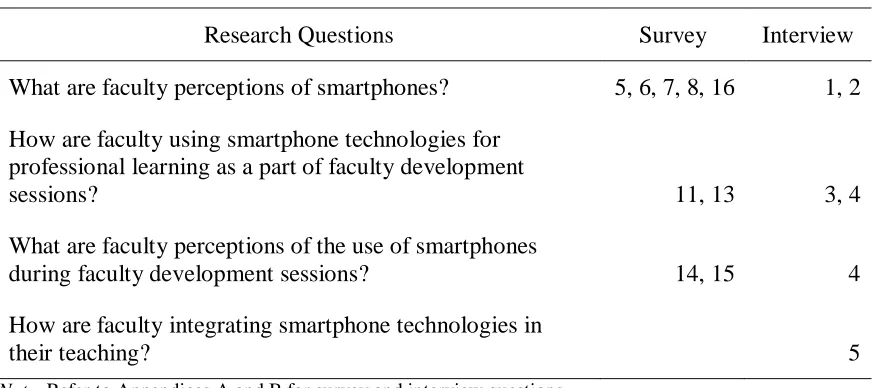
research question was introduced during the data collection phase. Table 3.1 indicates which questions on the data collection tools (refer to Appendices A and B for survey and interview questions) corresponded directly to the research questions.
Table 3.1 Research and Data Collection Questions
Research Questions Survey Interview
What are faculty perceptions of smartphones? 5, 6, 7, 8, 16 1, 2 How are faculty using smartphone technologies for
professional learning as a part of faculty development
sessions? 11, 13 3, 4
What are faculty perceptions of the use of smartphones
during faculty development sessions? 14, 15 4
How are faculty integrating smartphone technologies in
their teaching? 5
Note. Refer to Appendices A and B for survey and interview questions.
Research Methodology
The strengths of a case study are its capacity to incorporate various pieces of evidence (Yin, 2003) while researching a complex phenomenon that may include a variety of important factors (Merriam, 2009). The advantage of utilizing a case study is the opportunity to close in on real life and offer an insightful view of the issue so that readers experience a situation as though they were living it (Flyvbjerg, 2007).
The goal of this research was to explore and understand smartphone integration within higher education faculty development programs from a faculty perspective. A case study was appropriate for this research because the location was bounded by site and shared experiences of faculty at one university (Creswell, 2013; Stake, 2000; Yin, 2003). A case study is best suited for research when "a how or why question is being asked about a contemporary set of events, over which the investigator has little or no control" (Yin, 2003, p. 9). This research followed an instrumental case study design (Creswell, 2013; Merriam, 2009; Stake, 2000) because it was intended to advance the understanding and insight in faculty perceptions of smartphone integration within faculty development programs.
Research Design
questions included inquired about the faculty members’ educational background and length of teaching experience. The survey was piloted in late June 2018 with adjunct faculty members from the adult degree program operating unit of the university. This pilot group provided feedback on the relevance and flow of the questions and the online survey tool itself. The pilot participants suggested some grammar and style edits, but no changes to content or flow.
The responses received from the survey were examined and used to select a purposive sample of participants who experienced smartphone integration during faculty development. As viable interview candidates emerged from the survey submissions, invitations were emailed to schedule one-on-one interviews that followed a semi-structured format. These interviews averaged 25 minutes in length, and some were conducted via virtual video chat as chosen by the participant. The audio was recorded from in-person interviews via a smartphone application, and the virtual interviews were recorded through the web-conferencing system (WCS, a.k.a. BlueJeans Network) used by the university.
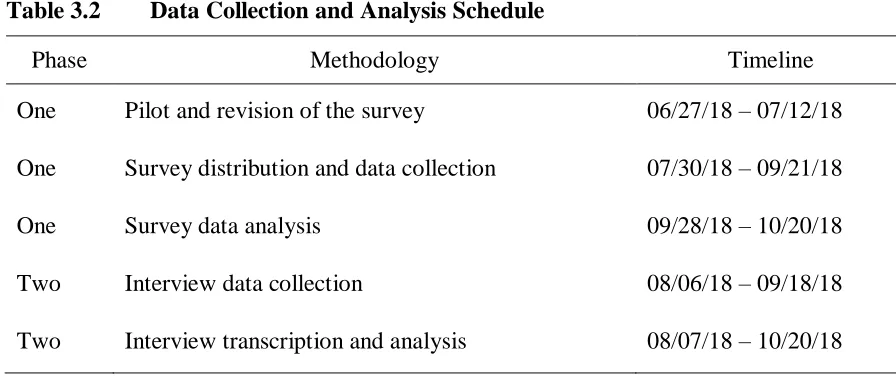
Table 3.2 Data Collection and Analysis Schedule
Phase Methodology Timeline
One Pilot and revision of the survey 06/27/18 – 07/12/18 One Survey distribution and data collection 07/30/18 – 09/21/18
One Survey data analysis 09/28/18 – 10/20/18
Two Interview data collection 08/06/18 – 09/18/18
Two Interview transcription and analysis 08/07/18 – 10/20/18
Data Management and Collection
This case study began with a survey that was distributed electronically to full-time and adjunct faculty who taught in a face-to-face modality on a residential undergraduate campus. The survey was created, distributed, and collected via Qualtrics®, including the initial email invitation and the sending of automated completion reminder emails. The Qualtrics question types used included multiple choice, multi-selection, and matrices. Upon opening the survey, respondents were presented with the Informed Consent Form (see Appendix C) as required by the Boise State University Institutional Review Board. After acknowledging and confirming informed consent, respondents saw questions about their skill level with smartphone technology and the format and frequency of their
The survey invitation was emailed to research candidates on July 30, 2018, with automated follow-up reminder emails sent to non-respondents on August 8, August 27, and August 31, 2018. During the initial stage of the survey response collection, it became apparent that the respondents were not reading carefully the answer choices on question #2, regarding whether or not they owned a smartphone. This response error caused an issue because if a participant indicated that their phone could make only calls and send short text messages, the survey tool would branch the participant to the end of the survey. Twelve participants had responded incorrectly to the question by the time the issue was realized; these erroneous responses made up almost a third of the total thus far (n = 42). To prevent any further user response errors, the survey collection was paused on the morning of August 27, 2018, before the automated distribution of the reminder emails on that date, and updated to require future participants who selected conflicting answers to confirm their selections before moving forward with the survey. This adjustment to the survey was agreed upon with the research faculty advisor and did not alter the data collection, but merely ensured future respondents would be branched appropriately to the next portion of the survey based on their smartphone ownership. This survey tool
adjustment was critical because the survey responses of those smartphone owners were used to select interview participants. If participants indicated their willingness to be interviewed, but incorrectly responded to the initial branching question, they were ineligible for the interview pool because they had not met the basic interview criteria of smartphone ownership. The last reminder email was sent to non-respondents on
completed surveys from the 121 potential participants, resulting in a survey completion rate of 49.6%.
The second phase of research consisted of one-on-one, semi-structured interviews to discuss faculty perceptions and experiences with smartphone technology during faculty development programs, to offer a variety of viewpoints and the opportunity for further examination of perceptions. The phase-one survey prompted respondents to indicate their willingness to participate in these interviews. All faculty who indicated interest were placed in a pool of participants for the phase-two interviews. The survey resulted in 25 of the 60 survey participants, or 41.7% of respondents, being placed in the interview
candidate pool. The target number of interviewees was eight to ten. When selecting the candidates to be invited to the interview phase, the participant survey responses were reviewed, specifically those that referred to past experiences with smartphones during the various modalities of faculty development sessions. If participants were interested in joining the interview stage but had not indicated any previous experiences with
smartphones during faculty development sessions, they were not invited to interview. If they had some past experiences, then additional responses were considered and compared with the other interview-interested candidates based on (a) years of teaching, (b) earned degree/major of study, (c) full-time/part-time status, (d) level of smartphone faculty development experience (low/medium/high), and (e) personal smartphone use
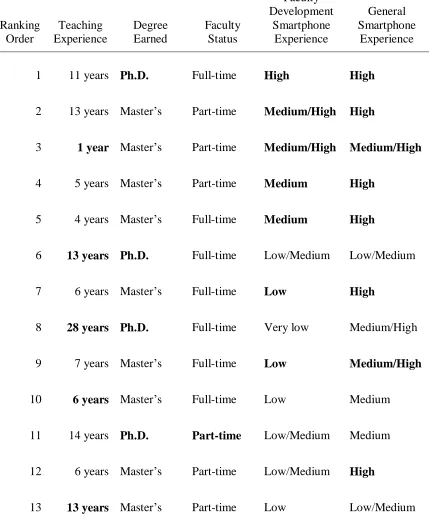
candidate failed to respond after two attempts the researcher extended an invitation to the next desirable candidate in the list. Due to a lack of responses by four of the candidates, each of the 13 survey respondents received an interview invitation. Purposive sampling was utilized in this case study (Simons, 2009; Stake, 2000) to select the greatest variety of possible interview participants; some candidates were desirable because of their degree or experiences, others because of their smartphone usage, but the overall picture of each candidate and the possible contribution to the research were the driving factors. Creswell (2013) similarly referred to this as purposeful maximal sampling since the selection also was intended to provide differing perspectives. To promote transferability of the research findings, faculty that selected to share their perspectives in the interviews were from the broadest possible variety of background, education, work experience, and university departments. Table 3.3 displays the characteristics of the faculty who were sent interview requests and the traits that were intended to provide the greatest variation in the sample. Of the 13 faculty who were invited to participate in the interview phase of the research, nine agreed to an interview during the early-August to the mid-September time frame. The remaining four faculty members did not respond to either of the two emailed
Table 3.3 Interview Candidate Rankings
Ranking Order
Teaching Experience
Degree Earned
Faculty Status
Faculty Development
Smartphone Experience
General Smartphone
Experience
1 11 years Ph.D. Full-time High High
2 13 years Master’s Part-time Medium/High High
3 1 year Master’s Part-time Medium/High Medium/High
4 5 years Master’s Part-time Medium High
5 4 years Master’s Full-time Medium High
6 13 years Ph.D. Full-time Low/Medium Low/Medium
7 6 years Master’s Full-time Low High
8 28 years Ph.D. Full-time Very low Medium/High
9 7 years Master’s Full-time Low Medium/High
10 6 years Master’s Full-time Low Medium
11 14 years Ph.D. Part-time Low/Medium Medium
12 6 years Master’s Part-time Low/Medium High
13 13 years Master’s Part-time Low Low/Medium Note. Bold indicates desirable candidate traits. No response was received from 2, 10, 12, or 13. Identifiying information was removed from the table.
technology during faculty development programs and their thoughts and perceptions regarding smartphone integration. Each interviewee was given the option to interview in-person or virtually via the university's WCS with web-camera and audio connections. Of the nine interviews, five were conducted in-person and four with the WCS, one of which included only audio due to the participant’s lack of a functioning web-camera at the time of the interview. Questions were directed towards the nature of the faculty development programs, the attitudes of those involved, and the participants’ past experiences with mobile integration (see Appendix B for interview questions). The interviews were all conducted between August 5, 2018, and September 19, 2018, and averaged 25 minutes in length. All in-person interviews were recorded via a smartphone audio recording
application. All virtual interviews were conducted on a laptop computer and recorded with the WCS recording tool. The audio files were transcribed by the researcher and saved as Google® Documents.
Data Analysis and Procedures
analysis. Summary tables, such as Table 3.4, were created in Microsoft Excel to get an overall picture of the viable survey responses (refer to Chapter Four for research results). Table 3.4 Frequency of Smartphone Use in Faculty Development
Smartphone Activity Frequently Often Occasionally Rarely Never Informal training, such as
online videos or articlesa
4 (8.5%) 3 (6.4%) 19 (40.4%) 9 (19.1%) 12 (25.5%) Informal collaboration with colleagues 3 (6.5%) 7 (15.2%) 13 (28.3%) 10