Geschke Center
Doctoral Dissertations Theses, Dissertations, Capstones and Projects
12-2018
Mission Enactment and Strategic Enrollment
Management at Jesuit Universities
Drew Roberts
Follow this and additional works at:https://repository.usfca.edu/diss
The University of San Francisco
MISSION ENACTMENT AND STRATEGIC ENROLLMENT MANAGEMENT AT JESUIT UNIVERSITIES
A Dissertation Presented to
The Faculty of the School of Education Department of Leadership Studies
In Partial Fulfillment of the Requirements for the Degree
Doctor of Education
ii
ABSTRACT
The larger neoliberal environment that is driving all of higher education has left
Jesuit universities and their leadership to face two problems. First, the ability for Jesuit
universities to uphold their social justice inspired mission and offer an affordable and
accessible liberal education is being threatened because they are pricing out those they
seek to serve. Second, there is a growing disconnect between the espoused mission of
Jesuit universities and the decisions that their leaders and administrators make to run the
enterprise.
This explanatory case study seeks to understand the ways senior-level strategic
enrollment officers at Jesuit universities experience and navigate tensions that exist
between espoused mission and neoliberal pressures, which throughout this study is
referred to as the space between. This study offers a descriptive analysis of recent IPEDS
data exploring variables related to access and affordability at Jesuit universities. More
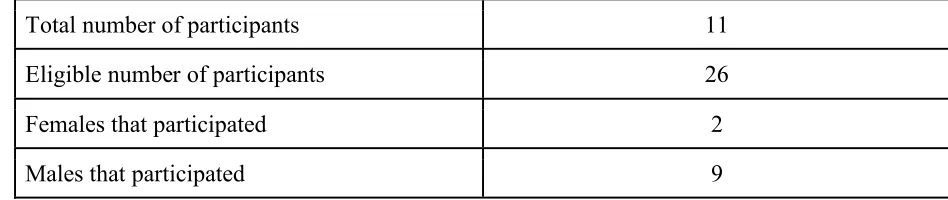
substantially, data for this study was collected through semi-structured interviews with 11
vice presidents of enrollment from Jesuit universities.
Key findings emerged through participant reflections and were organized into
three thematic sections. First, commitment to mission significantly impacts participants
experience navigating the space between. Second, without sufficient resources to run the
enterprise, Jesuit universities cannot enact their mission. Third, navigating the space
between espoused mission and neoliberal pressure is a complex endeavor. Ultimately
this study calls for a new paradigm that shifts the metrics by which Jesuit universities
measure success away from financial outcomes that are rooted in neoliberalism to
iii
SIGNATURE PAGE
This dissertation, written under the direction of the candidate’s dissertation committee
and approved by the members of the faculty has been presented to and accepted by the
Faculty of the School of Education in partial fulfillment of the requirements for the
degree of Doctor of Education. The content and the methodologies presented in this
work represent the work of the candidate alone.
Drew Roberts November 2, 2018
Candidate
Dissertation Committee
Desiree Zerquera November 2, 2018
Chairperson
Genevieve Negrón-Gonzales November 2, 2018
iv
ACKNOWLEDGEMENTS
Lin-Manuel Miranda’s musical Hamilton will forever be the soundtrack to this
work. The concluding remarks in the dissertation are introduced by a quote from
Miranda: “What is a legacy? It’s planting seeds in a garden you never get to see.” This
body of work is a seed that I have planted for my children Gracie and Jackson,whose
bright light inspires me to contribute something meaningful to the world that their
generation will inherit. At its core this work is my humble attempt to make a systemic
contribution to a more just, equitable, and inclusive world.
This work has grown in a garden that has been nurtured by family, mentors, and
friends who have planted seeds in my life and I am honored to thank here. First and
foremost, Krista Roberts, my best friend and partner in life who has been a constant
support through the highs and lows of this journey, and has made immeasurable sacrifice
over the past five years to pursue this dream together. Karen Roberts, my mother and
the first person to teach me that, love is love is love is love is love is love is love.
Lori Kerans and Rich Dunsworth, mentors who introduced me to the
transformational power of a liberal arts education, and have invested in my personal
growth for the last twenty years. Julie Orio, Lane Bove, and Stan Fasci, past
supervisors, whose commitment to my professional growth in Jesuit higher education has
directly contributed to every opportunity that I have ever had, including my doctoral
studies. Genevieve Negrón-Gonzales and Walt Gmelch, members of my dissertation
committee who took many meetings and provided tremendous support throughout this
process. Desiree Zerquera, my academic mentor and dissertation chair, who became my
v
drafts, providing thoughtful feedback, and challenging me to contribute something
meaningful to the academy.
Danny Richer and Andrew Perrone, longtime friends that reconnected to create
a homegrown cohort providing each other support as we struggled to write dissertations
as full-time employees, committed partners, and invested fathers. Jack Skalican, a
friend and academic companion, with whom I navigated the entire doctoral journey: from
new student orientation to dissertation defense.
Most notably, I thank the countless friends and family that have truly walked
with me on this deeply personal journey. Specifically, I offer sincere gratitude to those
who accompanied me in the sometimes-uncomfortable process of confronting and
wrestling with my privilege as a straight, white, able-bodied, Christian male. Moreover, I
have deep appreciation for those of you who have joined me in conversations about the
cultural movements our nation has experienced throughout this process, including the
Black Lives Matter and #MeToo movements. Finally, I am eternally grateful for, and
inspired by, those who share my belief that the Gospel of Jesus calls us to see, care for,
vi
TABLE OF CONTENTS
ABSTRACT ___________________________________________________________ ii
SIGNATURE PAGE ____________________________________________________ iii
ACKNOWLEDGEMENTS _______________________________________________ iv
TABLE OF CONTENTS _________________________________________________ vi
CHAPTER I: THE RESEARCH PROBLEM _________________________________ 1
Statement of the Problem _______________________________________________ 1
Background and Need __________________________________________________ 2
Purpose of the Study ___________________________________________________ 4
Research Questions ____________________________________________________ 4
Conceptual Framework _________________________________________________ 5
Limitations and Delimitations____________________________________________ 6
Significance of the Study _______________________________________________ 7
Definition of Terms____________________________________________________ 7
CHAPTER II: LITERATURE REVIEW _____________________________________ 9
Mission Matters ______________________________________________________ 9
Neoliberalism & Resource Dependence Theory _____________________________ 19
The Space Between ___________________________________________________ 28
Summary ___________________________________________________________ 37
vii
Restatement of the Purpose _____________________________________________ 40
Research Design _____________________________________________________ 40
Data Collection ______________________________________________________ 42
Method of Analysis ___________________________________________________ 45
Trustworthiness & Validity_____________________________________________ 48
Ethical Considerations ________________________________________________ 49
Summary ___________________________________________________________ 49
CHAPTER IV: FINDINGS ______________________________________________ 50
Case Context: The Landscape of Jesuit Colleges and Universities ______________ 51
Theme 1: Commitment to Mission _______________________________________ 54
Theme 2: No Money, No Mission _______________________________________ 66
Theme 3: Complexity of Navigatingthe Space Between ______________________ 77
Summary of Findings _________________________________________________ 89
CHAPTER V: CONCLUSIONS __________________________________________ 92
Introduction _________________________________________________________ 92
Summary of the Study ________________________________________________ 92
Major Findings ______________________________________________________ 94
Discussion of Findings ________________________________________________ 95
viii
Conclusion ________________________________________________________ 110
REFERENCES _______________________________________________________ 112
APPENDIX __________________________________________________________ 118
Appendix A: Case Protocol ___________________________________________ 118
CHAPTER I:
THE RESEARCH PROBLEM
Statement of the Problem
There are 28 Jesuit universities in the United States (Traub, 2008). The
curriculum of these universities is rooted in the liberal arts (Traub, 2008) and collectively
the Jesuit universities avow a shared mission and commitment to social justice (Traub,
2008). The Presidents of the 28 Jesuit universities have declared that they are
“committed to continuing the historic mission of educating first generation students”
(Presidents of the Association of Jesuit Colleges and Universities, 2010). Furthermore,
they have pledged a commitment to students from diverse “economic, cultural, ethnic,
religious, and geographic backgrounds” stating, “we prioritize the education of these
often vulnerable and underserved students at great financial sacrifice to our institutions
for the sake of their access to and success within our Jesuit colleges and universities”
(Presidents of the Association of Jesuit Colleges and Universities, 2010).
This mission, with a focus on access to an affordable liberal arts education exists
in tension, and often stark contrast to social, political, market, and economic forces that
are influencing the way American colleges and universities conduct business (Slaughter,
2004; Giroux, 2014). These tensions, which, in this study, are positioned under the
umbrella of neoliberalism, are inflating the cost of attending college at an unsustainable
rate. Senior-level strategic enrollment management professionals are left with the
daunting task of “integrating all of the university's program’s practices, policies, and
planning related to achieving the optimal recruitment, retention and graduation of
students” (Hossler, 2015, p 5). Jesuit universities and their senior leadership are part of
the ability for Jesuit universities to uphold their social justice inspired mission of an
affordable and accessible liberal arts education is being threatened because they are
pricing out those they seek to serve. Second, there is a growing disconnect between the
espoused mission of Jesuit universities and the decisions that their leaders and
administrators make to run the enterprise. In light of these problems, it is important to
explore in more depth the ways in which senior-level strategic enrollment management
officers at Jesuit universities are actively working to uphold a social justice mission that
is centered on an affordable and accessible liberal arts education.
Background and Need
As mentioned above, senior leadership at Jesuit universities have long advocated
that Jesuit education must be accessible and affordable (Presidents of the Association of
Jesuit Colleges and Universities, 2010). However, a recent review of Integrated
Postsecondary Education Data System (IPEDS) data indicate that both access and
affordability at Jesuit universities are being threatened (Roberts & Zerquera, 2016).
As previously mentioned, the Presidents of the Association of Jesuit Colleges and
Universities (2010) stated that they are committed to educating a diverse group of
students. While this statement is promising, Figure 1 (Roberts & Zerquera, 2016),
indicates that more work is needed in order to do so. Specifically, Black / African
American and Hispanic / Latino students have enrolled at Jesuit Universities at very low
rates without much growth over the course of ten years. Most concerning, Black /
African American students enrolled at the 28 Jesuit universities at a rate of approximately
5% in every year between 2003 and 2013.
When considering affordability, Figure 2 (Roberts & Zerquera, 2016) illustrates
reason for similar concern. In 2003 the average cost of attending a Jesuit University was
just over $30,000 a year, ten years later, in 2013 the average cost had jumped to over
$50,000; meanwhile the institutional aid offered each year only rose from $10,000 to
$20,000 (Roberts & Zerquera, 2016). The rising cost of attendance, and more notably,
the gap between institutional aid distributed to the average student and cost of attendance,
is making it increasingly difficult for students with financial need to attend Jesuit
universities.
If Jesuit universities are truly committed to upholding access and affordability as
central to fulfilling their mission, action must be taken. This study will examine the role
that senior-level strategic enrollment management officers play in upholding a mission of
access and affordability.
Purpose of the Study
The purpose of this explanatory case study was two-fold. First, this study
explored the ways tension in the broader neoliberal higher education environment is
experienced by senior-level strategic enrollment management officers at Jesuit
universities in their efforts to fulfill their espoused university mission. Second, this study
examined the ways in which senior-level strategic enrollment management officers at
Jesuit universities navigate the broader neoliberal higher education environment as they
seek to uphold institutional mission.
Research Questions
1. How are tensions between a social justice mission and neoliberal forces experienced
by senior-level strategic enrollment management officers at Jesuit universities?
2. How do senior-level strategic enrollment management officers navigate fulfilling a
social justice mission within a neoliberal environment at Jesuit universities?
Conceptual Framework
To help frame this study a conceptual framework has been developed, that is
presented in depth in Chapter II. The conceptual framework is divided into three main
sections that broadly fall under the following headings: (1) mission, (2) neoliberalism, (3)
the space between.
The mission section begins by exploring literature on mission statements and the
role they play in organizations. Next, the section provides an overview of the liberal
education, namely examining the purpose, structure, and need for an accessible and
affordable liberal education. Finally, the section closes with an overview of both the
apostolic Jesuit mission and the mission of Jesuit higher education.
The second section of the conceptual framework opens with an overview of
neoliberalism and examines the ways that neoliberalism has impacted universities. The
section introduces resource dependence theory (Pfeffer & Salancik, 1978), the enrollment
economy (Clark, 1956), and explores the ways in which both have been applied to
decision making at universities. Finally, the second section closes by examining the
concept of mission drift, which is arguably a byproduct of succumbing to neoliberal and
resource depend forces.
The final section of the conceptual framework, titled the space between, examines
tension. The section opens by introducing the concept of interest convergence (Bell,
1980) and briefly explores critical race theory (Bell, 1980). Second, this section
introduces strategic enrollment management (Hossler, 2015), which is both an academic
framework and a guide for praxis, that plays a foundational role in this study. Next, the
section introduces strategic response theory (Oliver, 1991). Finally, this section
examines the role that leadership and individual actors play in organizations. More
specifically, an introduction to agency (Battilana, 2011), institutional entrepreneurs
(DiMaggio, 1988; Becker, 1999) and servant leadership (Greenleaf, 1977) is provided.
Limitations and Delimitations
When preparing to launch this study there were several limitations that were
important to consider. First, it was possible that the interviews could be overly optimistic
and tell the victory story as opposed to the entire story, including shortcomings. In order
to account for this, the researcher, while conducting interviews, emphasized the valuable
nature of lessons learned through both success and failure, and specifically asked
questions about challenges that the subjects have faced. Additionally, because of the
public nature of the role interview participants (senior-level strategic enrollment
management officers) play at their institutions, and the scrutiny they are often under, it
could have been challenging to gain access and convince them to agree to participate in
the study. In order to respond to this limitation, the researcher emphasized the important
scholarly contribution this study will make to the field of strategic enrollment
management at Jesuit universities; furthermore, the researcher assured anonymity for all
The major delimitation is the fact that the 28 Jesuit universities are located all
across the United States, and as such, interviews were held via Zoom, a video conference
platform. While Zoom provides a reasonable medium for interviews to occur, it is
important to acknowledge the impersonal nature of video conferencing. The researcher
accounted for this by intentionally creating a welcoming environment that encouraged
participants to feel comfortable and reminded them how valuable this contribution is to
the study and work of strategic enrollment managers at Jesuit universities.
Significance of the Study
There are 28 Jesuit universities in America, 26 of which have a senior-level
strategic enrollment management officers, all of whom are seeking to uphold espoused
mission in the face of neoliberal and resource dependent pressures. As such, this study
aspired to contribute to both scholarship and praxis in two ways. First, this study sought
to provide insight into the ways in which senior-level strategic enrollment management
officers experience the tension between neoliberalism and mission enactment. Second,
this study sought to understand how that population navigates those same tensions.
Definition of Terms
The following terms hold specific meaning within this study:
AJCU – AJCU is an acronym for the Association of Jesuit Colleges and Universities.
Officially, the AJCU is a consortium of the twenty-eight Jesuit colleges and universities
in the United States.
Access - A student's admission enrollment, and matriculation through college. There are
of privilege, (2) cost of attendance that exceeds a student and their family’s financial
threshold, (3) inadequate student support services.
Affordability - The ability for a student to afford to attend college. Affordability can be
supported in several ways including federal, state, and institutional financial aid.
Access and Affordability - Within higher education literature access and affordability are
discussed independently, in this study, access and affordability will be thought of as a
singular concept since schools cannot be truly accessible if they are not affordable.
Jesuit Higher Education - This study focuses on the 28 Jesuit Colleges and Universities
in the United States, all of which are rooted in the liberal arts and have shared
commitment to mission rooted in social justice.
Jesuit Mission - An apostolic mission, mindful of the needs of the poor and marginalized.
Liberal Education - A post-secondary education that is rooted in cultivating critical
thought and cultivate students to be engaged citizens and participate in the democratic
process. At times in this study liberal arts education is used pseudonymously with liberal
education.
Mission Formation Activities – Activities that provide participants the opportunity to
CHAPTER II: LITERATURE REVIEW
This chapter presents a conceptual framework that frames this study, and creates a
lens, used to: (1) analyze the ways tension in the broader neoliberal higher education
environment are experienced by Jesuit universities in their efforts to fulfill their espoused
missions; (2) examine the ways in which individual actors at Jesuit universities can serve
as agents of social change helping fulfill institutional mission. The conceptual framework
developed in this chapter draws upon several existing theories and frameworks. The first
section focuses on mission, more specifically, institutional mission, the mission and
purpose of liberal education, Jesuit mission, and ultimately and most specifically, the
mission of Jesuit higher education. The second section provides an overview
of neoliberalism, resource dependence theory, enrollment economy and finally, mission
drift. The third section explores the tensions between mission and neoliberalism, and the
ways in which decisions are made in that space. Included in the third section are an
exploration of interest convergence, strategic enrollment management, critical strategic
response theory, resistance, agency, environmental factors, and servant leadership.
Together these concepts and theories create a conceptual framework that shapes this
study, which seeks to understand the complexity of mission fulfillment through strategic
enrollment management at Jesuit universities within the current context of higher
education.
Mission Matters
An understanding of espoused mission plays a foundational role in this study. As
such, this section presents existing theories and literature that shape the understanding of
describe an organization's purpose and act as a reflection of its members (Johnson, 2016).
Some organizations demonstrate a deep commitment to their mission statement, while
others drift away from it (Jones, 2007). While mission statements are viewed as an
important form of corporate communication to organizations, they often fail to move
beyond rhetoric (Swales & Rogers, 1995; Fairhurst, Jordan & Neuwirth, 1997). When
considering higher education, Bess and Dee (2008) argue that universities are diverse and
complex organizations that often have ambiguous missions.
In very few instances, organizations possess and cultivate mission mystique in
which “[t]he act of carrying out the mission itself kindles passion. Men and women work
hard and creatively because they want to make the most emphatic mark possible on the
community and world with respect to their mission” (Goodsell, 2010, p. 2). Jesuit
universities have long been organizations with clearly defined missions, many of which,
arguably conjure up notions of mission mystique because of their commitment to social
justice.
With mission in mind, this section will begin by drawing upon historical texts and
existing literature to provide an overview of the purpose and structure of liberal
education. Through emphasis on cultivating critical thinking skills and ultimately
engaged citizens who contribute to the public good, this section then connects liberal
education values to higher education more broadly and illustrates the ways in which
higher education can be a space that challenges equity and society. Finally, by providing
an examination of the history and mission of Jesuit universities, this section closes with
the argument that Jesuit universities are uniquely positioned to be spaces of equity and
On liberal education
For centuries scholars have worked to define and defend the value and purpose of
the liberal education. This section will draw upon literature that illustrates common
themes, which help fundamentally position the importance of liberal education within this
study. The themes presented in this section are: (1) the purpose of liberal education; (2)
the curriculum and functions of liberal education; (3) access to liberal education.
The purposes of liberal education
At its core, a liberal education should cultivate critical thinking and develop students who
become engaged citizens (Yale Report of 1828; Rosovsky, 1991; Ortega y Gasset, 1946;
Levin, 1993). Nearly 200 years ago The Yale Report of 1828, a summarizing document
recounting a meeting between the President and Fellows of Yale University on
September 11th, 1827, was published, providing the earliest guidance regarding the
purpose of a liberal education. The authors describe this education as “broad, and deep,
and solid” (Yale Report of 1828, 1828, p. 2). This is a lengthy process which requires
students to both read classic books and attend lectures (Yale Report of 1828). Ultimately,
the Yale Report argues that at its core, a liberal arts education must develop critical
thinking skills.
In 1993 a second iteration the purpose of liberal education is provided by Yale
University’s then-president, Richard Levin, in an address to the freshmen class titled On
Liberal Education. He begins by stating that a liberal education differs from professional
or vocational training and is “less obviously useful” (Levin, 1993). In the address Levin
(1993) provides a historic perspective on liberal education and then goes on to share his
think critically and independently, to cultivate one's mind to its fullest potential, to
liberate oneself from prejudice, superstition, and dogma” (p 15). While built on the same
foundation, that the liberal education is designed to cultivate critical thinking, Levin
(1993) takes this notion a step further when he speaks of liberating oneself from
prejudice. Levin goes on to speak about the role liberal education plays in our
democratic process and lives as citizens by arguing that a liberal education develops the
ability to think critically, reason, reflect, and ultimately leads to a fruitful democracy
(Levin, 1993). Furthermore, Levin (1993) discusses the role such academic training plays
in addressing societal ills: “a liberally educated citizenry is the most reliable source of
resistance to those forces of prejudice and intolerance that would undermine our nation's
commitment to free inquiry and free expression” (p. 18). Levin builds a strong argument
that liberal education can play an important role in social justice pursuits by cultivating
citizens who embrace such values.
Rosovsky (1991) provides the following vision for a liberally educated student:
First, “an educated person must be able to think and write clearly and effectively… To
put it another way: students should be trained to think critically” (p. 105). Second, “an
educated person should have a critical appreciation of the ways in which we gain
knowledge and understanding of the universe, of society, and of ourselves” (p. 105).
Third, “an educated American, in the last quarter of this century, cannot be provincial in
the sense of being ignorant of other culture and other times. It is no longer possible to
conduct our lives without reference to the wider world or to historical forces that have
shaped the present and will shape the future” (p. 106-107). Fourth, “an educated person
ethical problems” (p. 107). “Finally, an educated individual should have achieved depth
in some field of knowledge” (p. 107). This roadmap provides an enduring vision of what
a liberal education should be, aiming to teach students to think critically, be engaged
citizens, and wrestle with culture.
The curriculum and function of a liberal education
If the purpose of liberal education is to develop the ability to think critically and
cultivate engaged citizens, it is important to explore how this functionally occurs. Ortega
y Gasset (1946) concludes that the university teaching should incorporate three distinct
functions: “(1) the transmission of culture; (2) the teaching of the professions; (3)
scientific research and the training of new scientists” (p. 33). Such a perspective
incorporates critical thinking and inquiry, as well as developing skills which can be
applied to the workplace, both of which are cornerstones to Ortega y Gasset’s (1946)
central thesis.
Rosovsky (1991) asserts in more detail, what this curriculum should look like,
explaining that the four-year education can be divided into three parts: (1) a core
curriculum, or general education; (2) electives, or special interest courses; (3) a major
concentration or specialty. Thirty years later, this curriculum guides most university
policies and remains the roadmap for most academic advisors helping undergraduates
fulfill their degree requirements.
Access to liberal education
Authors of the Yale Report of 1828 warn of the dangers of not pursuing liberal
education, stating that those who don’t face, “a narrowness in his habits of thinking, a
attainments” (p. 6). While making the case that a liberal education is critical, the Yale
Report of 1828 also goes on to explicitly state that such an education is a privilege, not
accessible to all: “[w]e are aware that a thorough education is not within the reach of all.
Many, for want of time and pecuniary resources, must be content with a partial course”
(p. 7). Nearly 200 years ago, the authors wrote unapologetically about access and
affordability, or rather, lack thereof, and create the perfect illustration of the ways in
which universities are simultaneously sites of liberation and oppression.
When discussing who should have access to liberal education Rosovsky (1991)
takes an actively inclusive stance, as opposed to the authors of the Yale Report of 1828,
whom were explicitly exclusive. Rosovsky (1991) states:
“our universities have to search for accomplishment, ability, promise, and talent,
taking into account the peculiar diversities geographical, ethnic, and economic
-- in our society. We are tolerant at entry, recognizing that not all candidates start
the race equally advantaged. Our concern is how the race ends” (Rosovsky, 1991,
p. 111).
This understanding of the transformational nature of a liberal education and the
importance of equity when it comes to accessibility and affordability for students who are
often underserved and often marginalized is critically important, and represents the best
of what a liberal education should be.
With equitable intentions in mind, Rosovsky (1991) provides a warning that
change will be necessary to maintain the goals of a liberal education. Perhaps Rosovsky
foreshadowed some of the tensions universities are now facing, and are calling upon
in the midst of making decisions that are good for the bottom line. Ironically, or perhaps
prophetically, this dilemma threatens Rosovsky’s entire vision for an accessible and
affordable liberal education.
In summary, this section opened by using foundational literature to provide an
overview of the role of the liberal arts at American Universities and how the
understanding of this role has evolved over time. The resounding theme that emerged is
that a liberal education should cultivate critical thinkers, who have a breadth of
knowledge that will allow them to be engaged citizens. (Yale Report of 1828; Ortega y
Gasset, 1946; Rosovsky, 1991; Levin, 1993). Furthermore, a liberal education should be
a vehicle for social justice, equipping students to stand against marginalization (Levin,
1993). Additionally, this section provided a review of the curriculum that has guided
liberal education for centuries. Finally, this section argued that in order to fulfill the lofty
pursuits of a liberal education, it must be accessible and thereby affordable (Rosovsky,
1991). It is important to note that while significant literature exists on the mission of
public education and liberal education, relatively little has been written specifically about
Jesuit universities in that light. With this in mind, the next section will examine the
historic Jesuit mission, which is rooted in social justice intentions, and then the section
will go on to examine Jesuit higher education.
Jesuit mission and higher education
There are 28 Jesuit universities in the United States that are rooted in the liberal
arts and all share a commitment to social justice inspired missions (Kolvenbach, 2001).
In 2001, Reverend Peter-Hans Kolvenbach, S.J., who was then the Superior General of
University titled, The Service of Faith and the Promotion of Justice in American Jesuit
Higher Education. This address, which was given to leaders from all 28 Jesuit
universities, describes the liberal education offered at Jesuit universities:
Students, in the course of their formation, must let the gritty reality of this world
into their lives, so they can learn to feel it, think about it critically, respond to its
suffering, and engage it constructively. They should learn to perceive, think,
judge, choose, and act for the rights of others, especially the disadvantaged and
the oppressed” (2001, p. 8).
Father Kolvenbach casts a clear vision for Jesuit universities, insisting that they must
offer a liberal education that acts in resistance and opposition to the social, political, and
economic forces that oppress and marginalize our nation’s most vulnerable.
This section, drawing on the limited existing literature, will begin by examining
the foundational mission of the Society of Jesus, more commonly known as the Jesuits.
It will go on to explore the mission of Jesuit higher education. Finally, this section will
explore ways in which fulfilling Jesuit mission can be measured, but specifically focus on
the role that access and affordability play in doing so.
Jesuit mission
Jesuit Mission existed long before American Jesuit Universities were born (Traub,
2008). At its core mission of the Society of Jesus is an apostolic one, “a justice-based
mission mindful of the needs of the poor and marginalized, it seeks to understand
different cultures on their own terms” (Traub, 2008, p. 3). This posture moves far
beyond the liberal universities attempt to develop critical thinkers and citizens prepared
this organization it to cultivate the service of faith and the promotion of justice, a
colloquialism, well known by those associated with Jesuits. Father Kolvenbach (2001)
further unpacked this foundational tagline describing the service of faith as “the
counter-cultural gift of Christ” (p. 3). He went on to explain that St. Ignatius, the founder of the
Jesuits, believed that love was expressed in deeds, not just words, and as such, the
promotion of justice was to be “a concrete, radical but proportionate response to an
unjustly suffering world” (Kolvenback, 2003, p. 3). Clearly, the Jesuit mission is an
apostolic one, focusing on social justice in an unjust world. The 34th General
Congregation captured the importance of the apostolic nature of the Jesuit mission when
they declared, “as we look to the future we need consciously to be on guard that both the
noun “university” and the adjective “Jesuit” always remain fully honored” (Traub, 2008,
p. 134-135). The next section will focus on the university as an expression of this
mission.
Jesuit higher education
As illustrated in the previous section, the Jesuit mission is rooted in a commitment
to social justice, and schools, universities in particular, provide grounding and a place for
the Jesuits to enact these values (Traub, 2008). The founder of the Jesuits, St. Ignatius of
Loyola, knew that universities had the ability to widely influence culture and therefore
“chose to send Jesuits there, as places where a more universal good might be achieved”
(Traub, 2008, p. 133). Universities, providing a liberal education, became a great place
for the Jesuits to implement their apostolic mission.
Jesuit universities share a unique set of values and while each of them has their
2008). In 2010, the Association of Jesuit Colleges & Universities released a document
titled The Jesuit, Catholic Mission of U.S. Jesuit Colleges and Universities (2010) issuing
a “consensus reflection of the 28 presidents of U.S. Jesuit colleges and universities”. The
document states “our primary mission is the education and formation of our students for
the sake of the kind of persons they become and their wide influence for good in society
in their lives, professions, and service.” This statement is a clear indicator that Jesuit
universities intend to deliver a liberal education, cultivating engaged students who
embrace social justice values, and ultimately enforces the apostolic mission described in
the previous paragraph.
Measuring Jesuit mission
There are many ways that fulfilling Jesuit mission can be measured; Father
Kolvenbach (2001) described two, which are critically important to this study. First,
Father Kolvenbach (2001) stated clearly, “The real measure of our Jesuit universities lies
in who our students become” (p. 8). This statement, particularly when taking into
consideration his remarks that were previously presented in this chapter, makes it
explicitly clear that a Jesuit education is a liberal education that is teaching students to be
critical thinkers and engaged citizens who work for justice. Second, and more important
for this study, Father Kolvenbach (2001) speaks explicitly about the critical role that
creating a Jesuit education that is accessible and affordable plays in fulfilling the Jesuit
mission: “The first way, historically, that our universities began living out their
faith-justice commitment was through their admissions policies, affirmative action for
minorities, and scholarships for disadvantaged students; and these continue to be
accessible and affordable is challenging work, and this study explores mission enactment
through the work of senior enrollment managers.
As previously mentioned, this study explores tensions between espoused mission
and the neoliberal forces at Jesuit universities. This section presented existing theories
and literature which inform the understanding of espoused mission that is used in the
conceptual framework of this study. The next section of this literature review will
explore the social, political, and economic forces that often cause universities to drift
from their mission and threaten the ability of Jesuit universities to deliver an affordable
and accessible liberal education.
Neoliberalism & Resource Dependence Theory
Universities are becoming increasingly susceptible to the social, political, and
economic forces that are shaping the landscape of America (Giroux, 2014). In short,
neoliberalism is a hyper expression of capitalism in which profitability influences and
fuels all aspects of an organization. Jesuit Universities are no exception. In fact, Father
Kolvenbach (2001) addressed these threats:
“We can no longer pretend that the inequalities and injustices of our world must
be born as part of the inevitable order of things. It is now quite apparent that they
are the result of what man himself, man in his selfishness. Despite the
opportunities offered by an ever more serviceable technology, we are simply not
willing to pay the price of a more just and more humane society” (Kolvenbach,
2001, p. 7).
This profound statement provides a sobering introduction to this section, which will
to guide this study. Specifically, this section opens by defining and unpacking
neoliberalism and resource dependence theory, useful frameworks for understanding
these forces. Additionally, this section introduces the concept of an enrollment economy,
which made way for the emergence of strategic enrollment management. Finally, this
section expands upon the idea of mission drift, which this review argues can happen as a
result of giving into pressures of neoliberalism and resource dependency.
Introduction to Neoliberalism
Neoliberalism provides a theory, which is foundational to this conceptual
framework and the analysis that occurs in this study. Neoliberalism came to prominence
in the 1980’s during the Reagan and Thatcher era and nearly forty years later continues to
be a useful lens that can help explain many of the economic, social and political realities
our country faces (Giroux, 2014). This section will highlight four tenets that are central
to understanding neoliberalism and will help shape this study: (1) the free market drives
all and profit is the only measure for success (Giroux, 2004); (2) privatize everything
possible (Giroux, 2004, Kumashiro, 2012); (3) the government is not responsible for the
common good (Giroux, 2004); (4) America is a post-racial society (Dumas, 2013;
Giroux, 2009).
Tenet one: the free market drives all
Aligning perfectly with capitalism and the Reagan mentality of trickle-down
economics (more recently “Trumped up trickle down”), is the idea that the free market
should drive all. Giroux (2004) illustrates this mentality, “wedded to the belief that the
market should be the organizing principle for all political, social, and economic
welfare state, and non-commodified values” (p. 495). Such a mindset is in direct contrast
with the mission and intentions of higher education, and more specifically, the liberal
education, which were previously highlighted and focus on cultivating good and just
citizens who will work towards an equitable society (Levin, 1993). Giroux (2014) points
to the 2012 sexual abuse scandal at Penn State University to help illustrate this point. He
reveals that Penn State University officials attempted to hide sexual abuse, compromising
the values and integrity of the university, because public knowledge of the scandal would
jeopardize the revenue generated by the football program, including over $50,000,000 in
profit in the year 2010 (Giroux, 2014). When profits are more important than ethical
decision making and mission fulfillment, organizations are in trouble.
Tenet two: privatize everything possible
Not surprisingly, this sort of profit-driven mentality leads directly to the second
tenet, privatize everything possible. Kumashiro (2012) explains privatization as “the
restructuring of public services into a market-like industry that results in the shifting of
funds, oversight, and accountability from the government to individuals and
corporations” (p. 38). Notable examples of privatization included military defense
contracts and the for-profit prison system. As Giroux (2004) reminds readers, “under
neoliberalism, everything either is for sale or is plundered for profit: public lands are
looted by logging companies and corporate ranchers; politicians willingly hand the
public’s airwaves over to powerful broadcasters and large corporate interests without a
dime going into the public trust” (p. 495). Universities have experienced this as food
services, online courses, and even temporary faculty have been outsourced to private
the mission of a liberal education because students are sitting behind a computer screen
as opposed to in a classroom with peers while being forced to think critically and wrestle
with challenging cultural issues. Similarly, the launch of these programs, which are often
viewed as profitable, is a move towards an enrollment economy based on generating
revenue as opposed to investing in academic programs that are rooted in mission (Clark,
1956; Jaquette’s, 2013). Outsourcing food services and temporary faculty marginalizing
implications for those employees, who are often paid substantially lower wages and are
not eligible for university benefits (Slaughter, 1997).
Tenet three: government is not responsible for the common good
The third pillar central to neoliberalism is the idea that the government is not
responsible for the common good. This certainly connects to privatization; neoliberals
would argue that churches and private citizens can worry about philanthropy: “Public
services such as health care, child care, public assistance, education, and transportation
are now subject to the rules of the market” (Giroux, 2004, p. 496). If the government
doesn’t take responsibility for the wellbeing of its citizens, who will? Giroux (2004)
goes on to argue that, “neoliberal ideology produces, legitimates, and exacerbates the
existence of persistent poverty, inadequate health care, racial apartheid in the inner cities,
and the growing inequalities between the rich and the poor” (p. 496). This exploitation
represent the marginalization that Jesuit universities espouse to stand against, but because
of the larger landscape of higher education are susceptible to. Evidence of this tenet
playing out in higher education can be seen in massive cuts to state funding for higher
education including recent cuts of $151 million in Georgia and $135 million in Michigan
universities, including the 28 Jesuit institutions, however this is a misconception since
those schools rely heavily on both state and federal funds to create financial aid packages
that make attending a private university more affordable.
Tenet four: post-racial society.
Neoliberal ideology argues that America is a post-racial society in which America
has come to a point where race no longer matters and colorblindness is a worthy pursuit.
Giroux (2009) explains that “while ‘post-racial’ may mean less overt racism, the idea that
we have moved into a post-racial period in American history is not merely premature – it
is an act of willful denial and ignorance” (p. 574). Neoliberals will often cite the election
of Barack Obama as evidence that we have moved into a post-racial society, but Giroux
(2009) recalls that in the 2008 election President Obama mobilized 95% of
African-American voters and two-thirds of Latino voters. Furthermore, a majority of white
Americans voted for John McCain, whose campaign was fueled by racism and ultimately
led to the rise of white supremacist hate groups around the time of President Obama’s
election (Giroux, 2009).
The misguided position that we live in a post-racial society welcomes and
perpetuates a form of white supremacy that is sewn so deeply into the fabric of American
culture that it becomes indistinguishable from the air we breathe. Evidence shows up on
college campuses every year and university leadership struggles to adequately respond to
these atrocities. For example, according to the Boston College student newspaper
(2017), students recently defaced a Black Lives Matter poster writing the word don’t
Giroux (2009) argues that if we are to truly address the problems facing young
people in this country, which is arguably a fundamental pursuit of a liberal education,
“the political, economic, and institutional conditions that both legitimate and sustain a
shameful attack on poor minority youth have to be made visible, open to challenge, and
transformed” (p. 575). Jesuit universities that explicitly espouse a commitment to social
justice-oriented missions, rooted in a liberal education, must stand boldly against the
dismissive post-racial narrative that is perpetuated by neoliberalism.
Neoliberalism offers a useful framework for understanding many of the social,
economic, market, and political forces that are threatening liberal education, and
specifically Jesuit Universities, and plays a foundational role in guiding this study. While
it is important to highlight the structural ways in which neoliberalism plays out, the real
dangers of this ideology are invisible and sewn into the fabric of American culture.
The next section will explore resource dependence theory, which offers additional
insight into the role securing resources plays in running organizations (Pfeeffer &
Salancik, 1978). As universities, including Jesuit institutions, operate in a neoliberal
context in which the free market drives all, organizations are left seeking resources that
will allow them to be competitive in the free market. This review shines light on a
perspective, in which students are often viewed as resources, who individually represent
tuition dollars and collectively build multi-million dollar operating budgets. Such a
mindset leads to resource dependence theory (Pfeffer & Salancik, 1978), which is
Resource dependence theory
In their seminal book The External Control of Organizations: A Resource
Dependence Perspective, Pfeffer and Salancik (1978) tell readers “the key to
organizational survival is the ability to acquire and maintain resources” (p. 2). They go
on to argue that this becomes challenging because organizations are not self-contained,
rather reliant on many different stakeholders which provide or limit resources. For
example, “organizations are linked to environments by federations, associations,
customer-supplier relationships, competitive relationships, and a social-legal apparatus
defining and controlling the nature and limits of these relationships” (Pfeffer & Salancik,
1978, p. 2). All organizations are forced to interact with a myriad of stakeholders in
order to secure the resources needed to be successful. Resource dependence theory
makes a significant contribution to the conceptual framework that is used to guide this
study. Specifically, if neoliberalism explains forces that drive the larger landscape of
higher education, resource dependence theory can be used to explain the resulting
decision making and actions.
Enrollment economy
As previously mentioned, for many universities, students are highly sought-after
resource. Clark (1956) argued that many universities become dependent upon an
enrollment economy, in which “school income is largely set by student attendance” (p.
332). The concept of the enrollment economy will be revisited throughout this review
and is closely aligned with resource dependence theory.
Scott and Davis (2007) advance that one of the key tenets of resource dependence
“exchanges of resources create power / dependence relations that can leave organizations
vulnerable to the demands of resource providers” (Scott & Davis, 2007). One specific
example of what this looks like is the rapid growth of graduate programs and online
degrees. Simmons College offers an interesting case study (Straumsheim, 2017).
Simmons has long had more graduate students (4,000) than undergraduate students
(1,700), but recently they have begun launching online graduate degrees that have
generated significant revenue (Straumsheim, 2017). Straumsheim (2017) reports on the
fiscal resources online education has generated, stating that during the 2014 fiscal year
Simmons’s online graduate programs generated about $5.4 million in total tuition
revenue, three years later online programs generated $45 million in tuition revenue,
almost all of which comes from enrolling students in two high-demand programs, nursing
and social work. With an emphasizes solely on revenue generation, this model dismisses
the importance of a liberal education that cultivates critical thinking and engaged citizens.
Thirty years after resource dependence theory was introduced, Hillman (2009)
argues that organizations continue to be constrained by their environments and as such
continue to attempt to manage their resource dependencies. The Simmons College case
presented above validates Hilman’s claim and illustrates what an important role resource
dependency plays in organizational change as well as the power of an enrollment
economy.
Furthermore, the Simmons College case also illustrates how susceptible
universities are to market forces, and begs the question, just because there is market
demand for a degree program, does launching the program help fulfill mission, or cause
enrollment economy while simultaneously minimizing the role that mission plays in
shaping universities. As just mentioned, one outcome of succumbing to these forces is
mission drift (Jones, 2007; Jaquette, 2013), which will be explored in the next section.
Mission drift
Jones (2007) writes about the troubling concept of mission drift, which occurs
when, in the process of change, organizations lose track of their core missions. In
particular, Jones (2007) defines mission drift as “a diversion of time, energy, and money
away from a nonprofit’s mission” (p. 300). While mission drift can threaten all nonprofit
organizations, certainly universities must be aware of the danger.
In 2013 Ozan Jaquette published a study titled Why Do Colleges Become
Universities? Mission Drift and the Enrollment Economy, which directly connects the
concepts of neoliberalism, resource dependence theory, and mission drift. To begin,
Jaquette (2013) defines mission drift as “the transition from one organizational template
to another” (p. 537). To explore mission drift, Jaquette’s (2013) study explores and
analyzes colleges that changed their organizational name to become a university (e.g.,
Aurora College became Aurora University). Results of the study show that such changes
occurred as colleges, which only granted baccalaureate degrees were struggling with
enrollment and thus wanted to become universities and begin awarding graduate degrees
and expand their enrollment economy into new markets to capitalize on untapped
resources (Jaquette, 2013). Rather than reflecting a commitment to values of serving
their regional populations and providing access to graduate education, this rationalization
reflects the sort of mission drift that is the direct result of succumbing neoliberal
Neoliberalism, resource dependence and mission drift are theoretical frameworks
that are rooted in existing literature and directly contribute to the conceptual framework
used to guide this study. Furthermore, they are direct threats to fulfilling the apostolic
Jesuit mission defined in the previous section. Jesuit universities must be aware of these
threats and intentionally navigate them in order to fulfill their social-justice inspired
missions. The next section of this review will explore the decision-making process that
occurs in the midst of tension between mission and neoliberalism and the role that
leadership and individual actors play in this process.
The Space Between
The previous sections titled Mission Matters and Neoliberalism & Resource
Depended Theory present existing theories and literature that guide this study and
illustrate and an active friction between espoused mission and neoliberalism. This
section will add to the conceptual framework guiding this study by drawing on existing
theories and literature to further illustrate and define the tensions that exist, both
organizationally and for individual actors who are working at Jesuit universities and
striving to uphold espoused mission while resisting neoliberal and resource dependent
pressures. For the duration of this study, the aforementioned will be referred to as the
space between. This section begins by introducing the concept of interest convergence,
which provides a troubling insight into the way perceived justice is often enacted.
Second, this section will introduce strategic enrollment management, which is a useful
framework for navigating the enrollment economy. Third, an overview of critical
Finally, this section will explore leadership and the role that individual actors play in
being change agents.
Interest Convergence
Interest convergence was born out of Derrick Bell’s (1980) critical race theory,
which offers an important understanding of racism and marginalization in America and
calls for a commitment to social justice. Milner, Pearman & McGee (2013) state “the
interest convergence principle stresses that racial equality and equity for people of color
will be pursued and advanced when they converge with the interests, needs, expectations,
benefits, and ideologies of White people” (p. 342). Within education, this concept is
clearly illustrated by Dudziak (1988) in an article that argues that desegregation occurred,
not because policy makers were invested in creating equitable access to education for
people of color, but rather, because it alleviated social and political pressure being put on
the united states government. In the article Dudziak (1988, p. 399) recalls Bell’s (1980)
argument that Brown v. Board only passed because of Interest Convergence listing three
critical reasons: first, to advance American Cold war objectives as the United States was
looking for international loyalty (Dudziak, 1988; Bell, 1980). Second, to appease the
concerns of Black veterans who continued to see racial discrimination after serving in
World War (Dudziak, 1988; Bell, 1980). Finally, segregation was beginning to be
viewed as an economic barrier for the south and the government realized that
desegregation would lead to a positive financial path forward for white people in the
region (Dudziak, 1988; Bell, 1980). In essence, interest convergence suggests that
Interest convergence is introduced first in this section, because one of the aims of
this study is to understand if such practices also occur at Jesuit schools. Is the explicit
mission to educate the marginalized only fulfilled when it also meets the financial
interests of the university? Is interest convergence a strategy, or a response?
Strategic enrollment management
Within the context of higher education, strategic enrollment management (SEM)
can be described as a structural framework that is “simultaneously a set of processes and
policies associated with the recruitment and admission of college students, as well as the
retention, academic success, and graduation of students enrolled in postsecondary
education” (Hossler, et al., 2015, p. 4).
Hossler (2015) explicitly affirms the role neoliberalism played in the emergence
of SEM, citing public policy makers aligning themselves with virtues of the market and
competition. As a result, “colleges and universities, including public institutions, began
to recruit students— and their tuition dollars— more actively as a way of recovering
revenue lost from government appropriations (Hossler, et al., 2015, p. 9). Furthermore,
Hossler (2015) also states that resource dependence theory is often used to explain the
rise of SEM.
There are several principles, which Hossler (2015) identifies as central to SEM.
While a bit lengthy, his description of these principles deserves to be shared in full:
(They) include a marketing orientation toward admissions recruitment, an
understanding that student retention is as important a part of enrollment efforts as
student recruitment, a realization that campus-based financial aid could be used in
heavily upon empirical research and data analysis to guide its efforts, and finally
an understanding that SEM is a process that has organizational implications and
often requires structural change in how various university functions are integrated
and organized around efforts to enroll and retain a student body with a desired set
of characteristics. (Hossler, et al., 2015, p. 8).
When examining organizational structure, admissions, financial aid, and
registration and records are almost always housed within strategic enrollment
management divisions, and often student affairs departments are also included in that
group (Hossler, et al., 2015). These functions have become critically important to
running universities and their necessity and prominence on university campuses will
continue to grow (Hossler, 2015).
Strategic enrollment management also plays a crucial role when considering
access and affordability. Hossler acknowledges that, “colleges and universities face
serious challenges as they seek to meet the needs of aspiring students who are
increasingly diverse on a range of geographic, ethnic, economic, and educational
variables while simultaneously achieving the enrollment goals of the institutions they
serve” (p. 22). These challenges required skilled enrollment managers who are
committed to pursuits of equitable access and financial models.
Jesuit universities have a long history with SEM; in 1976 Jack Maguire was the
first to use the term enrollment management when describing his efforts to attract and
retain students at Boston College (Hossler, et al., 2015). A few years later Loyola
University Chicago partnered with the College Board to sponsor the first national
universities were so early to adopt strategic enrollment models sends two messages.
First, this indicates that Jesuit institutions have long been committed to trying to respond
to the challenges Hossler described in the previous paragraph and find strategic ways to
offer a more accessible and affordable education. At the same time, this early pursuit of
strategic enrollment management models also signals an acquiescence to the market and
resource dependent forces that have become so prevalent in neoliberalism. As such, this
may serve as an illustration of interest convergence, in which access and affordability
may become possible as the result of tapping into market forces which generate new
revenue.
Critical Strategic Response Theory
Oliver (1991) provides a useful framework for understanding the ways
universities make strategic decisions. More specifically, she presents five different types
of strategic responses to intuitional process (Oliver, 1991): (1) acquiescence, (2)
compromise, (3) avoidance, (3) defiance, (5) manipulation. The first strategic response is
acquiescence, which is illustrated through habit, imitation and compliance. Examples
could include “following invisible, taken-for granted norms,” mimicking institutional
models,” and obeying rules and accepting norms” (Oliver, 1991, p. 152). In summary, to
acquiesce, is to go with the flow and accept the status quo.
Compromise is also a strategic response that includes three specific tactics: (1)
balance, (2) pacify, and (3) bargain (Oliver, 1991). All three of these tactics are meant to
conform to and accommodate institutional norms and values (Oliver, 1991). Oliver
(1991) also notes that these balancing tactics are often activated in response to the
would view this response as strategic, the logic Oliver (1991) provides to describe
compromise is similar to interest convergence in that both rely on a certain level of
acquiescence in order to achieve an alternative agenda.
Oliver (1991) explains that avoidance is “the organizational attempt to preclude
the necessity of conformity; organizations achieve this by concealing their
nonconformity, buffering themselves from institutional pressures, or escaping from
institutional rules or expectations” (p. 154). While avoidance may provide short term
benefits, there are inherent risks associated with this tactic, such as damaging
relationships, and losing trust or respect.
At times, organizational actors move beyond avoidance into outright defiance,
which is another strategic response that is often enacted. Defiance is the act of
intentionally dismissing, challenging, or attacking institutional processes. Oliver (1991)
gives the example of intentionally ignoring affirmative action requirements in when
recruiting and hiring personnel.
The final strategic response, manipulation, can be defined as “the purposeful and
opportunistic attempt to co-opt, influence, or control institutional pressures and
evaluations” (Oliver, 1991, p. 157). This is the most active response to institutional
pressure and an active attempt to exert power to change outcomes (Oliver, 1991).
It is important to understand all five strategic responses and consider the ways in
which leaders and individual actors can use these tools to influence their organizations.
This is particularly true at Jesuit universities in spaces where tension exists between
upholding espoused mission and neoliberal and resource dependence forces that often
and place for each of the strategic responses. When thinking about mission enactment,
the role of individual actors and leadership is just as important as strategic response,
which will be explored in the next section.
Leadership
It is important to highlight the role leadership and individual agents play in
navigating the active tension between social justice inspired mission and neoliberal and
resource dependence pressures. Of particular interest is the way that leaders respond to
environmental pressures and the strategies they chose to enact in an effort to uphold
mission. The following paragraphs will explore the concepts of resistance and agency as
demonstrated by individual actors.
Agency and individual actors
In 2011 Battilana published a study that revealed social position within
organizations and the field influences the likelihood that individual actors are able to
activate change that deviates from institutional norms. While Battilana’s (2011) study
looked at clinical managers at the National Health Service in the United Kingdom,
arguably, the same premise holds true within American higher education, and more
specific Jesuit Universities. It is important to note that the power that comes with social
position could be used both to help fulfill institutional mission and to advance neoliberal
pursuits, and at times, both things could occur simultaneously. Battilana’s (2011)
findings demonstrate that in order to uphold and enact Jesuit mission, Jesuit universities
need leaders with organizational and industry credibility and power who will advance the